



Abstract
Talent Management (TM) has been derived from Western, mainly the US and there are gaps between westernized TM format and contexts of non-Western countries when they practice Western-format TM. Therefore, this article aims to explore South Korean-style local TM practices through a view of Resource-Based View. The local practices are also compared to foreign firms in South Korea in four areas: talent identification via performance evaluation system, South Korean style payment structure to include performance-related pay dispersion, non-monetary rewarding and training and development. This article conducted 55 semi-structured interviews from employees who are working for local and foreign companies in South Korea. TM practices in large local firms were more discriminative, and monetary focused rewards than foreign firms. Talent development programmes (e.g., a job rotation) were not practiced in local firms but in foreign firms. The TM practices are influenced by the local context and the traditional human resource management philosophies.
Keywords
Introduction
Talent management (TM) concept has evolved by a North American paradigm and research tradition (Vaiman & Collings, 2015), since a group of McKinsey consultants generated the terminology ‘war for talent’ in 1998 (Collings & Mellahi, 2009; Gallardo-Gallardo et al., 2013; Mathew, 2015). TM has come into the spotlight by practitioners and academic scholars (Chuai et al., 2008) with the fundamental belief that talented employees are essential to achieve organizational excellence (Michaels et al., 2001).
In line with this point, several empirical TM studies (Bhatnagar, 2007; Glaister et al., 2017) found that TM and talented employees are strategically significant to firm’s performance, and it justifies to adopt Resource-Based View (RBV) theory, and TM legitimacy (Garavan, 2012; Sparrow & Makram, 2015; Wright et al., 2001).
However, the assumptions of RBV are insufficient to explain why and how TM model in non-US countries often fails to implement effectively, as institutionalists mattered (Field, 1981; Zucker, 1987). For example, Sidani and Al Ariss (2014)’s empirical research found that TM process in the Arab Gulf region was symbolic comparing it in Western context which was not congruent with established TM literature. The beliefs of RBV are rooted in a view of organizations as stable (Bowman & Hird, 2014), however, TM can be in unstable organizations and context. Then TM can be a radical change when its exclusive nature is incompatible with their inclusive traditional employment systems in the non-Western context (Kang & Yanadori, 2011), such as in the South Korean (hereafter, Korean) context (Park, 2020).
TM was introduced during 1997 Asian Financial Crisis, throughout this bumpy contextual condition, TM should have been tasted a bitter and sweet experiences. Korea’s traditional human resource management (HRM) philosophies such as collective organizational culture, and historical HRM background where the country could successfully shift from the poor country to developed country (so-called, the Miracle on the Han River) through labour-intensive government-led industries influenced to TM practices.
It is also true that TM scholars have paid little attention to dynamic nature of context-specific TM in practices, such as, exactly how talented employees are identified, and the role of pay-for-performance concepts in exclusive TM system and peculiar pay structure (e.g., importance of team merits) in Eastern.
Therefore, to fill such research gaps, this author conducted an empirical study to understand how country-specific features such as collectivism shape the indigenous TM programmes. More specifically, this article aims to explore Korean-style TM practices which are compared to foreign firms in Korea.
As a result, this study contributes to extend the TM literature. First, by providing the specific evidences how firms in Korea identify talented individuals through measuring their performance. Second, this study is one of the first to reap the benefits of applying the RBV and performance management to the TM field. By looking at the role of team merits involved in payment system, this article contributes to a growing body of knowledge on context-sensitive applications of TM practices. Finally, TM literature is enriched by expanding the geographic scope of existing Western-dominant research. This study applies the sample of employees in Korea, as one of the non-Western emergent countries, to provide empirical evidence revealing how inclusive and exclusive TM perspectives are mixed together in real practices.
The article is structured as follows: a series of research questions are discussed in the next section with the literature of RBV and its limited application in traditional Korean context, and TM practices. Then a qualitative approach to collect and analyze data is presented which is followed by discussion and conclusion, including implications, limitations and possible direction for further researches.
Literature Review
Resource-Based View
The RBV of the firm is about how some firms are able to achieve sustainable competitive advantage, and as a result they are able to keep earning superior profits compared to rival firms (Barney, 1991; Sparrow et al., 2014; Teece et al., 1997) through owning and deploying valuable and unique resources (Scott-Jackson, 2009). The characteristics of firm’s idiosyncratic assets are rare, non-substitutable and valuable (Hinterhuber, 2013) in RBV which are similar with metaphors in TM emphasize talent ‘rarity’ and ‘conflicts’ over sourcing it, in terms of War for talent (Iles, 2013). Additionally, the activities of acquiring and maintaining resources in the RBV are consistent with functional TM activities. In a similar token, Dries (2013, p. 276) also defined talent as the human capital in an organization that is both valuable and unique through the RBV theory from a human capital view on talented individuals, therefore acquiring, developing and maintaining distinctive resources including talented individuals are competitive advantages in the competitive market because competitors are difficult to imitate (Garavan, 2012).
In RBV at individual level, managerial decisions about selecting and accumulating resources lead to supernormal profits, and firm variation (Barney, 1991) is based on economically rational choices within the constraints of limited information, cognitive biases and causal ambiguity (Amit & Schoemaker, 1993; Ginsberg, 1994; Lippman & Rumelt, 1982; Oliver, 1997; Peteraf, 1993; Reed & DeFillippi, 1990). However the rational choices from RBV cannot embrace the social context of resource selection in shaping organizations’ actions but institutional theory can include the impacts of institutional contexts and factors (e.g., rules, norms, beliefs) related resource decisions to the potential for firms profits (Oliver, 1997). Rather, institutional theories are interested in how organizational structures and processes become institutionalized over time thus the institutionalized activities are not explained by rational choice frameworks (Meyer & Rowan, 1977; Zucker, 1987).
Talent Management and Its Practices
The attention of TM has been driven from the work of McKinsey, where, as mentioned above, the term the ‘war for talent’ was coined in anticipation of imminent shortages in talent (Beardwell, 2017; Marchington et al., 2016). Since then, although the term has become popular, its meaning and concept has remained somewhat elusive (McDonnell & Collings, 2011). Also, organizations are still struggled with finding a best-fit successful TM approach (Thunnissen & Gallardo-Gallardo, 2017).
Although academic TM scholars suggest diverse TM practices and models as an important step towards effective TM performance such as a 360 degree appraisal and a rating system (Agrawal, 2022), it does not give much support in finding the right TM practices and degree of exclusiveness, and a balance between exclusive and inclusive TM approaches. Particularly, TM studies, which are based in the non-Western emerging countries, highlight their institutional distinctiveness to adopt Western-format TM practice (Park et al., 2022).
TM research has focused on outcomes (Duttagupta, 2005) including TM results (Thunnissen et al., 2013) and strategic TM (Stahl et al., 2012; Tansley et al., 2007) rather than activities and processes. Outcome focused studies tend to see TM from RBV (Bhatnagar, 2007; Bowman & Hird, 2014; Garavan, 2012; Höglund, 2012). However, it brings the unanswered questions ‘so, how do firms practice TM?’. Particularly, the research regarding how firms exactly identify talent, with measuring employees’ performance as a tool, remains limited (McDonnell et al., 2021).
Cappelli and Tavis (2016) claimed that leading global firms shifted their attention from individual’s accountability for past results to learning when it comes to performance management. Performance management was used to allocate rewards; however, the perspective has been changed to its usage to develop employees. Thus, currently performance management faces a momentum to shift its direction to be more effective. It leads to establish RQ1:
RQ1: How to identify talent through measuring their performance?
Moreover, there has been a scholarly calling to explore country-specific TM nature between internationalization and localization. The standardization of HRM system worldwide is important for achieving a competitive advantage (Nohria & Ghoshal, 1997) particularly in emerging markets. On the other hand, introducing new HRM systems that have proven to be successful in one country to another is often unsuccessful in reality and leads to hybridization of practices (Björkman & Lervik, 2007). Although the hybridization of HRM systems in East Asia has been observed in the past (Chung et al., 2014), few studies ask how hybridized HRM (including TM) is practiced and which distinctive variables of cultural context trigger the need for localization.
This research responds this scholarly inquiry through explore how specific Korean cultural features are influenced on the practice. After economic crisis in 1997, Korean companies shifted to a performance-based compensation system from seniority-oriented performance and compensation system.
The way to assess employees’ performances has been developed from the USA and Anglo-Saxon context (Murphy & Cleveland, 1995) as the samples and data have been coming from the countries-origin giant companies (e.g., General Electronics). However, the construct of performance is multi-dimensional and culture-sensitive (Varma et al., 2008). Particularly, still the context of Eastern like Korea is unknown how the cultures influence to their ways to measure employees’ performance. Yang and Rowley (2008) highlight performance system has been rooted in the seniority-based structure in Korea. This this article examine how local firms utilize payment system in TM progress, through comparing foreign firms’ payment systems in Korea.
RQ2: How do Korean firms utilize payment system, and what is the role of team merits considering Korea is a collective society?
Data and Method
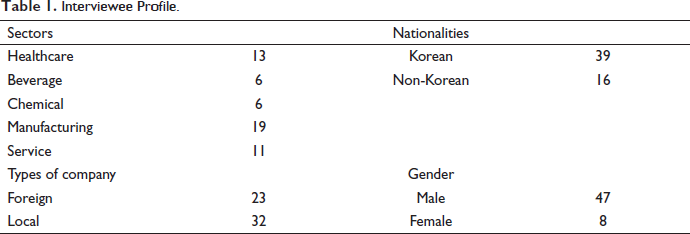
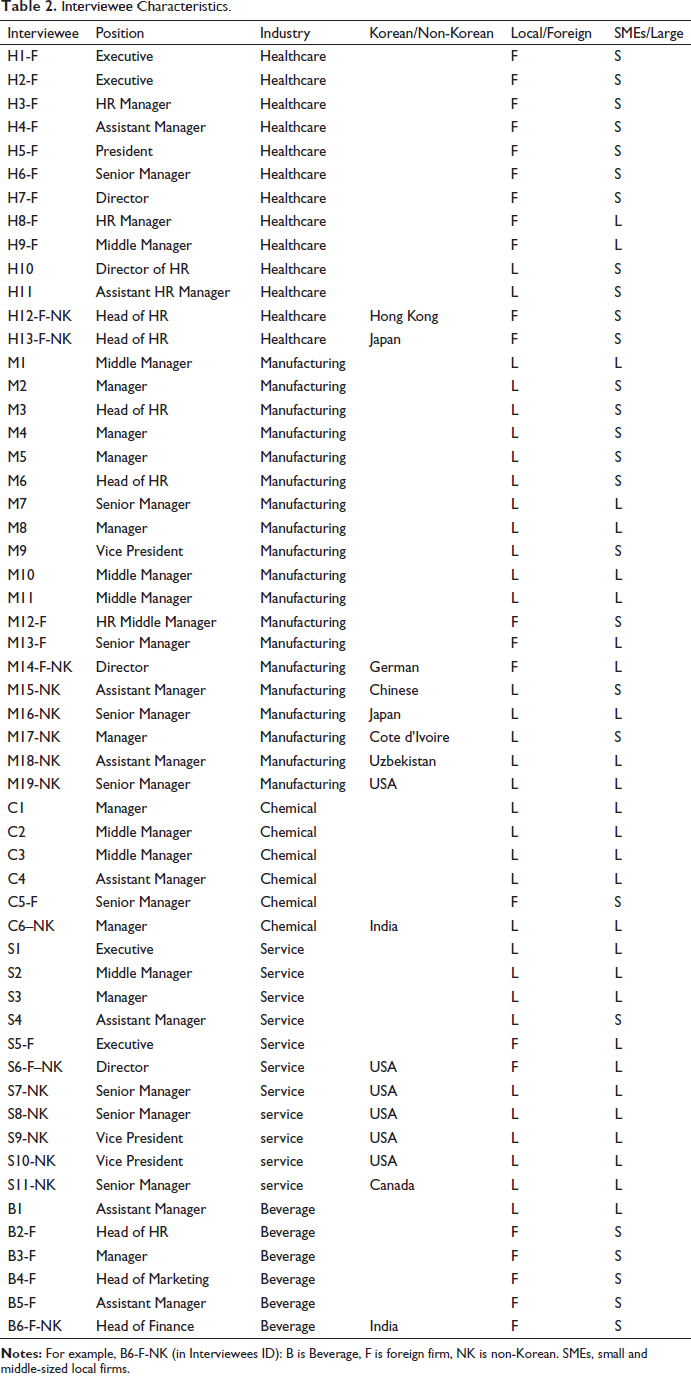
The author collected the data from semi-structured interviews with 55 employees, with multi-level positions (e.g., CEO, executive, HR, manager and junior level staff) from local and foreign firms in Korea. Interviewees are from five industries: Healthcare, Beverage, Chemical, Manufacturing and Service. It is suggested that the inclusion of multiple empirical data for the exploratory study is appropriate to increase the richness and robustness of the research and to support the plausibility of the result (Kim & Scullion, 2011, p. 512). Interviews were tape-recorded and transcribed by the researcher to build familiarity (Bazeley & Jackson, 2013) as transcribing involves transforming from an oral language to a written language with own set of rules (Kvale, 2008). Tables 1 and 2 show the participants’ characteristics based on data collection equivalence (Hult et al., 2008). The interviews were conducted in the respondent’s preferred language either Korean or English which enable to gain yielded valuable data (Mäkelä et al., 2010). Considering multi-level respondents’ participations, three types of interview questions were guided such as questions for HR practitioners, executives (including CEO level) and general employees. The interviews included questions such as ‘How would you describe about Talent Management in your organization?’ and ‘What factors do influence on TM practices?’ meetings, telephones, emails and SNSs were followed up to verify the analysis and update the information.
Interviewee Profile.
Interviewee Characteristics.
The transcripts of interviewing voice recordings, handwritten notes for those who did not agree to record, exchanged emails and received answer sheets from interview questions were analyzed using Thematic analysis though manually, using Nvivo version 11 and Cognitive mapping. The primary data were coded sentence by sentence to discover themes from the data (Rubin & Rubin, 2011). Thematic analysis which is a method for identifying, analyzing and reporting patterns within data and it assists to reflect reality (Braun & Clarke, 2006). Additionally, the sentence by sentence coding (Kim & Scullion, 2011) and conceptually ordered displays (Miles & Huberman, 1994, p. 127) were manually undertaken. Free-Mind software was finally utilized to confirm validity and reliability of conducted cognitive mapping analysis, and reduce researcher bias (Carter et al., 2014) as there is an increasing academic inquiry to adopt the validity and reliability process of qualitative.
Findings
This article examines how firms in Korea actually operate TM within companies through managing employees’ performance. Informants (including HRs and executives) were questioned about TM practices in their companies, and they shared information, their experiences and observations about what programmes were running, who was involved, decision-making processes, and strategies—all of which give some idea of the consequent effects of the practices currently in operation.
This research found that ‘all’ foreign firms commonly used similar terms and patterns when it came to TM programmes regardless of their firm size. Not only all foreign firms but also large local firms ran very similar TM programmes and used similar jargons like foreign firms. The additional processes to general HRM to identify talent and pivotal positions are included in TM activities to build a talent pool, such as 9-box talent review and succession plan.
Talent Identification
In foreign firms, talent pools were formally reviewed and inclusion in the pool was finalized through a management audit process. Foreign firms run a talent review session once or twice in a year, some foreign firms’ headquarters (HQs) renamed of meetings to review but their format, content and purpose of the session remained the same.
We have a process, OTA - Organisation Talent Management Association process where we formerly review the potential of associates, we are trying to identify talent in the given categories. The results of data are used by globally, regionally and locally to evaluate training capability, management…kind of things (B3-F).
We call it ‘IDP, Intensive Development Programme’, the talent pool comes from this [IDP] (H6-F).
Informants from foreign firms also described how their companies identify talent. Decisions in talent review sessions were based on a ‘9-box’ talent matrix. ‘We conduct a 9-box although it is subjective’ (H6-F).
The 9-box evaluates employees on their past performance (Y-axis) and future potential (X-axis). An example of the 9-box which was explained by B4-F is shown in Figure 1.
Certainly, we are [foreign MNC]’s subsidiary so HQ cascades a guideline. According to the instruction, we assess two elements: potential and performance. The key talent is the individual who are in the top grid in the boxes (H8-F).
An Example of the 9-Box.
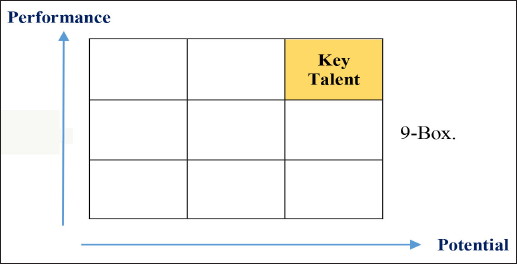
A combination of X and Y axes make up a 9 box grid, with TM typically focusing on a specified pool of employees who rank at the top in terms of potential and performance.
In foreign firms, talent classification, concepts and policies were cascaded from HQ. A female executive interviewee from the beverage company informed two types of human resources policies that she called the policies ‘N Leadership Framework’ as per her HQ instructions.
First, the foreign company categorized the entire workforce into four steps:
In the total of workforce pool, the company categorises the entire workforce into four boxes; high potential, talent, resource and others. ‘High potential’ is described as the core individuals who we have to keep, and ‘talent’ means the individuals who have the capability to grow into a next role. If the person needs any development programmes then we allow them to develop their skills but if we cannot see any development then the company has to officially suggest a resignation…we manage the workforce like this (B4-F)
Next, she illustrated the matrix (see Figure 2) to explain the evaluation criteria. She emphasized that the attitudes as well as the skills needed to move to the next hierarchical level tend to be different from those required by the present position.
Evaluation Matrix.
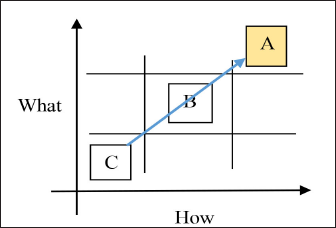
At the end of the year, there are performance management activities, we call them the PE (Performance Evaluation) process, the PDG (Progress and Development Guide) and 360-degree assessments. According to the results, if anyone has failed to show any performance for last two and three years, they will be categorised as ‘development required’, then the company keeps monitoring them carefully. In PE, 000 [company name] assesses two things, one is ‘what’, check whether this person achieved the set KPI objectives; and the other is ‘how’, i.e., the way to work, such as cooperation and behaviours. Actually, ’how’ is really important. In the matrix, the company rates employees from A to C, basing its rating on the rules, 20% of employees get A; B typically accounts for 60%; and the other 15-20% are evaluated as C. Additionally, the length of service in years is added to the PE results, and the total scores are calculated like this. Those total points are used to promote and identify talent (B4-F).
Thus, a foreign beverage related company largely divided the branch’s entire workforce into three groups—A, B and C (20:60:20%, respectively) using the indicators; ‘how’ one has worked and ‘what’ work has been done (marketing executive, B4-F). The group of employees ranked as A was called ‘talent’. This classification matrix and the explanations of each element in the 9 box of foreign firms was also similarly found in large local firms:
We implement two tracks, successor planning and high performers. We manage these two things separately. If we say a successor, then it means the employees who will take over the roles of team leaders and executives within the next 2~3 years, and high-performers are the ones who were rated ‘A’ last year on evaluation process (M10).
Although being ranked A indicates joining a talent pool and being a successor within next 2–3 years in large local firms, local firms tended to consider performance (‘what’) more important than potential (‘how’) in the evaluation system. Therefore, the ways that employees are assessed to identify talent are
Note that, in foreign firms, the list of talent in the talent pool is changed every year because they believe that the ‘identified talent cannot be the talent for ever’ (S5-F):
After identifying talented employees, they will be given the opportunities to develop. It is reviewed after one year to decide whether selected talent category is discontinued or not (H12-F-NK).
This movement in-and-out process of talent pools is a custom and routine job in foreign firms’ TM practices, so employees classified as talent this time may be non-talent in the next round of talent identification assessment.
By contrast, talent status is rarely changed in large local firms, ‘in 0000, I started my work as an S level talent but the level hasn’t been changed until now, seems 0000 keeps my classification’ (S8-NK). It is because the local firms try not to hurt or dis-incentivize talented individuals, as a way of retaining them in large local firms.
Differentiation and Compensation
In foreign firms, the talent evaluation system from HQs was applied to ‘all’ employees including both categorized as talent and non-talent, whereas in large local firms, the talent evaluation system was targeted only to talent candidates in the pool. In other words, talented individuals in local firms were assessed by a different evaluation system from general non-talented employees. This is reflected in two quotations of interviewees from local and foreign firm, ‘the performance criteria for excellent employees were different from non-talent’ (M1) in local firms. On the other hand, ‘special separated assessment process for talented individuals is not practiced’ (H8-F) in foreign firms.
Differentiation between talent and non-talent was more serious in local firms than foreign, ‘Yes, absolutely. I am treated differently and my performance review process including criteria was different from non-talent’ (S11-NK). Interviewed ‘A-star’ top-level Korean-American talented foreigner from a giant Korean MNC reflected the difference between Korean firm and American firm where he worked previously, especially regarding the segmentation in the local firm. My previous company in the USA, segmentation [for talent] was not systematised like here. Here 000-company [local leading company name] has a clear classification like S-level or H-level right from the hiring stage of talented employees. But in my previous work, the concept of classification was applied to all employees according to results of performance review every year, such as 360-degree, not only talent but also all employees were reviewed…so different (S8-NK).
Thus, in local large companies, HRM structure and policies are intentionally segmented and different treatment is officially built into the HR process. As an example, one local firm in the home appliances sector practiced radically segmented compensation systems:
The industry we belong to is so competitive, we currently rely on buying talent from outside…our competitor is 0000 [a leading local company in this industry]. The company’s President doesn’t like a free-ride, so the basic annual income structure is like this. A loss of E section’s people will be added to A section’s talent, each D and E section have to be charged each 10% and 5%, respectively, of total employee numbers. The President is a meritocracy supporter (HR manager, M1).
An interviewee of large local firm (M1) drew a graph (see Figure 3) to show how his CEO follows meritocracy.
Exclusive Payment Approach.
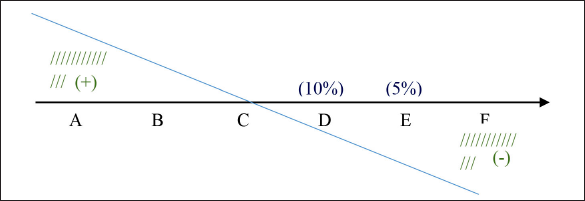
Korean home appliance (M1) company practiced a largely segmented compensation policy. This domestic company categorized their employees in five boxes, according to their year-end performance evaluation results.
The salary of F-ranked employees (in Figure 3) was deducted from previous year’s salary and then the deducted amount of money from F ranked employees was given to A ranked talented employees. This happened for almost 5% of entire workforce. The interviewee of local firm (M1) explained about this extremely aggressive payment competition between talent (gainers, according to expression of (M1) and non-talent (losers). He said his company’s CEO regarded F-ranked employees as ‘free-riders’ and wanted to show to employees that free riders were not acceptable in his company.
In contrast, a Western country-origin foreign subsidiary in the same industry (home appliance) recently announced their HR policies were transferred to integrate and engage inclusive way from exclusive HRM approach.
Another senior manager from a fashion-related local firm commented that high performer’s salary was only twice (not four times) that of a low performer at the same level and position in his company. He had previously worked at a large local company where the high-flyer’s pay was four times the lowest rate:
The basic salary increase depends on the performance achieved which is the categories, but we are not like Samsung, as you know Samsung makes the difference up to four times in the same level [same service year]. Our company’s difference is only just twice at the same level. Particularly, in our company, there is some amount of readily available money which executives or CEO can give more when they judge ‘additional’ is right [to certain talent] (M10).
These quotes show a serious segmentation between talent and non-talent in large local firms. By contrast, foreign firms do not take money away for low performance. Variation in individual salaries are very clear…there is some additional increase according to the individual performance rating…but anyway, at least we do not have subtract (−) from basic salary (M13-F). All employees’ salary increasing rate is same, namely flat rate increase. However additional individual increase is occasionally applied to the promoted people or exceptional high-achievers, the increase is really small, it is not like 10%, may be less than 5%. It is just for the talent’s motivation (M13-F).
Clearly, interviewees from foreign firms confirmed that deduction of salary is not practiced and even a 0% pay raise (no pay increase) cannot happen according to guidelines cascaded from the global HQ.
With regard to payment, this research found that small and middle-sized local firms (SMEs) still tend to maintain the traditional compensation philosophies. These try to avoid differentiating remuneration between talent and non-talent, or high-performers and low-performers.
Korean Style Payment Structure
The salary package in local firms was tailored to the traditionally institutionalized belief, ‘the employment for life’ model described below:
Our company views that annual base salary is the thing to afford a decent standard of living, so individual performance doesn’t influence this living wage, a so-called step-based salary system1 [employees receive set raises every year of established amounts]. All employees at the same level get the same amount of salary (M3).
Traditionally, Korean local firms believed that companies should take responsibility for the care of employees and their families’ living conditions in the society. Thus, local companies perceived wages as representing not only the value of the employees’ (hard) work but also the cost of maintaining a decent life. The amount of employee’s monthly wage was traditionally calculated by the price of a bag of rice—enough to live comfortably for one month. In the past, Koreans suffered from dire poverty due to their involvement in several wars, so the domestic firms had to protect employees and their families with the basic provision of food and other necessities. Interviewees from local SMEs were, therefore, reluctant to differentiate salaries between talented and non-talented employees.
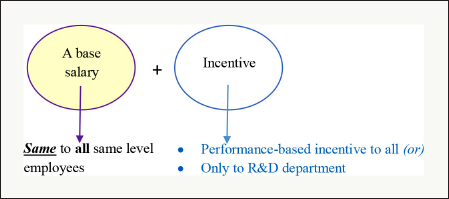
A senior HR manager from a local high-tech security camera company had conservative attitudes with regard to setting pay scales. It was ‘a single salary schedule’, a pay scheme based a year of experience at the company which means ‘We do not adopt a job-role remuneration system, the base salary is all the same regardless of their performance rates’ (M3). However, the company takes into consideration year-end profit sharing, the company usually offers 10% of annual business profits to all employees. Individual differences according to assessed performance rates were applied to this profit-sharing payment, a so-called performance-based bonus. Particularly, there is a different amount of ‘Profit Sharing’ by occupational group when we pay incentives, it was given more to R&D department (M3).
However, in business reality, talented individuals have benefited from the capitalist labour market introduced to Korea after the 1997 Asian financial crisis. Thus, domestic firms found their own ways to meet the need to pay market salaries for ‘talent’. In effect, local firms understood it as TM. However, expected salary in the labour market doesn’t fit to our payment structure to attract talented individuals then we have to supplement a deficit in other ways by a raft of benefits. It means that we need to manage it separately [from non-talent] such as how much, how long and to whom, this we call as talent management. The common way is paying incentives to talent which other employees don’t know this practice (M3).
In other words, although other local firms did not touch the base pay rate (i.e. add or subtract money), performance evaluation was connected to the additional incentives (performance-based pay) only for high-performers and according to how well they perform, as at the local security camera company.
Employees’ performance evaluation results only affected the bonus, not their base salary (see Figure 4), thus, basically talent and non-talent base pay grade and amount were kept the same.
Summary of Local Firms’ Payment System.
This research found that the above-mentioned security camera local company’s TM compensation practice and underpinned traditional idea were valid for other local SMEs’ practices. The basic salary or welfare benefits are almost same, every month, incentives are given to all employees, and the amount of incentives is depended on which level you are. There is no difference within the same level. However, the quarterly incentives will be given to all employees, we can offer a different treatment to talent through the incentives (M6).
This gap between traditional payment belief and basic labour market compensation rules for talent in reality, HR managers from local firms shared their financial difficulties to compensate to their talent. This confirmed by the below quote. The amount of incentives are fixed to be same to everyone so there was no available system to reward properly the talent who achieved the difficult project successfully [in our HR systems], so we just awarded a prize to the talent at the end of year event…we do not have a system where we can give only to a few employees…I know talented people want to be treated differently, but it is a shame that we are still not able to (C1).
Local firms fixed in flexible payment structures whose amounts are equal to same level’s entire workforce, which is the inclusive equal treatment, cannot be attractive to bring talented employees from the labour markets. As Figure 4 indicates, therefore, local firms put the salary differences for talent into the concept of incentives and bonus.
The Role of Team Merits: Inclusive Payment Structure in Local SMEs
Interestingly, in local SMEs, talented high-performers were defined according to their respective departments, as people who were working in Sales department or R&D centre as engineers, rather than individual’s achieved performance itself, ‘Talent are… engineers in R&D centre whose turnover rate is quite high. We don’t have talent management system in Sales and Management departments’ (H11). This means that collectivism shapes Korean companies’ TM practices, which is one of the differences between local and foreign firms.
However, again, the local SMEs did not apply a base salary variation within an occupational group. It means that base salaries of sales/engineers and manual workers are the same if they are at the same level in the organizational structures. Regardless of a job, our base pay band is same for all same level employees. We don’t take a system of ‘wage based on job function’, and the R&D department is no exception. General staff, Engineers…everyone is same (C3).
(M6) explained the reason why his company treated basic salaries equally between software engineers in R&D department (categorized ‘talent’ in the company) and other non-talent within the company, which was one of their HR policies. He highlighted a CEO’s pastoral management philosophy as below. There is no difference between engineers and manual workers. Of course, I understand if engineers in the R&D centre knows this fact, then they will feel bad because company treats them who handle complicated work similarly with kind of delivers who just convey boxes,…huh…thanks God, they [R&D talented engineers] don’t know…but it is because the CEO who has a thoughtful approach to all employees thinks… it is like the old saying, ‘Every child is dear to his parents,’ all of his employees are equally precious to him (Local firm-B-3).
However, the interview data show that one of compensation processes for talent retention was team merits in the incentive scheme for local SMEs. Team performance was included in individuals’ incentive decision-making process in local firms, in terms of team-based incentives. We don’t give a large amount of personal incentive, normally it ties with the concept of team work. In that case, somebody has to be rewarded, and then we think that a part of your achievement is from your supporters such as your team and other supporting departments so you have to do share your rewards. This is our basic idea and structure. In fact, only sales department associates can get incentives, so his/her in Sales department will get a half of the incentive and the other half of it is considered a team reward, and a certain % of the team rewards will be shared with repair and administration departments (H10).
In contrast, team merits were not considered when foreign firms set incentive values. Team’s performance and rating are not the criteria when it comes to my official performance evaluation, instead, if we have to appreciate the work which a certain team achieved then ‘award’ may be given to the team in the company events if the team exceptionally achieved something (M13-F).
The interviewee (M13-F) added that individualized foreign firms’ HR remuneration system, the shared example as below. Individual salary variations are very clear. Long time ago, all administrators got all 10% of incentives but now it has been changed. There is some additional increase according to the individual performance rating, as an example, for an administrator’s incentive, 10% is coming from your salary which is a fixed rate, but there is an additional performance-related incentive which we call an alpha (α) (M13-F).
Based on the comments, the individualized payment approach was compared with local firms, and summarized in Figure 5. In foreign firms, personal performance evaluation results are reflected to an administrator’s final incentive value.
Individualized Foreign Firms’ Payment System.
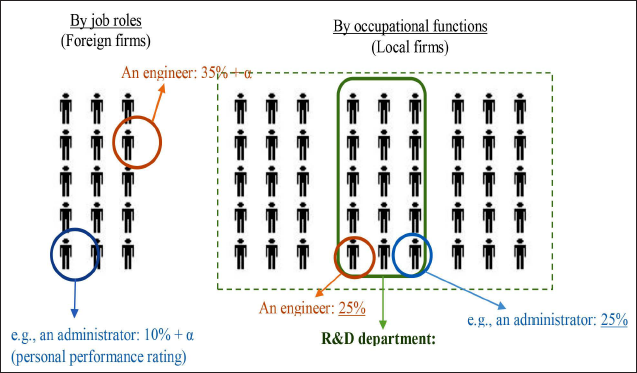
As can be seen in Figure 5, in foreign firms, incentives are different according to one’s job roles and performance evaluation results. However, in local firms, the incentives are decided by the department one belonged to, so an administrator and an engineer gets the same amount of incentives if they belong in the same department.
Rewards (Monetary Vs. Non-Monetary)
When it came to rewarding to retain talent, the respondents’ opinions were diverse. Large local firms had monetary and visible rewarding systems for talent who won in the competition within the company although the competition process was subjective and political. On the other hand, this research found that local SMEs as well as foreign firms had a tendency to focus more on non-monetary sides of rewarding.
As a rewarding example in large local firms, talented individuals were also offered an extra ordinary reward package in a giant local leading MNC such as a house and housekeeper supporting both in Korea and overseas, expatriates’ opportunities and language courses in foreign countries. I join this company as H level talent…yes…the housing, air tickets and so on were supplemented. Also, expatriates [for five years with a great benefits package] or language training for one year in overseas…yes as far as I know, these types of favours were established [for talent] (M19-NK).
A financial funding system for getting necessary degree to engineers in R&D department was regarded as one way to reward rather than talent development. We’ve just adopted a scholarship system for engineers although the implementation hasn’t been easy in reality but anyway we’ve built this system recently. [We] select some of the engineers and sponsor their tuition fee for Masters or Doctoral degrees in this country. They don’t need to work. For this year, initially three engineers have been nominated (C2).
Scholarships to obtain a higher educational degree in the USA and China and learn foreign languages in overseas companies’ target marketable countries were given to talented employees with several years’ leave of absences and annual incomes.
However, HRs from local SMEs were concerned with the exceptional monetary compensation practices ‘I think that money cannot motivate’ (M3) in a psychological way because there is no limit to people’ greed. According to an interviewee: The idea to link rewarding to the concept of motivation is not very nice…from the psychological perspective. Once a company absorbs this idea, the company cannot escape from this organisational culture. If the company gives money whenever talent achieve something, then you know, human greed is endless. Monetary rewards cannot fill their [endless greedy]. No matter how the company gives a lot of money, they always feel that the money is not enough and feel a sense of deprivation. So, try not to induce reward to this [financial] way (M6).
One executive from a foreign firm shared his opinion: ‘we are not compensating via money; many opportunities are proposed [rather than money]’ (M13-F). In particular, foreign firms considered offering a training programme as a component of on-going development to be rewarding. Foreign firms tend to understand that talent can be nurtured as presented previously. That is, foreign firms tend to commit to giving employees the opportunity to grow, evolve and contribute, and thus more often of these developmental opportunities are ‘preferentially offered to talented employees’ (H8-F).
In fact, regarding this view, which supports non-monetary ways such as opportunities to reward and motivate talent, one talented foreigner who moved from Canada to Korea and hired by a local giant company shared his story: I myself jumped from one company to another because of money… and it was a big mistake…[current company] offer me a lot of money, they offered giving me double of my basic salary, and I thought ‘wow’ a lot of money…but it wasn’t a good idea, because when I moved to the other company, and the people who had a good idea, a good relationship already with them, and the environment is different and the culture is very different, and confusing, so I think people will always want to move for the money… when they move, it is hard to know the culture whether it is right or not. Yes, probably they will consider after their decision (S11-NK).
He considered that ‘people are always motivated by money and it is human nature’ (S11-NK). His job-hopping was made by the amount of money which current company offered to attract him but he regretted that the decision was a mistake because he realized he missed people, systems and cultures of previous company. He complained the fact that Korean companies rarely listen to young employees’ good ideas, which he was not motivated because his suggestions were not accepted and initiated because of age. (S11-NK)’s reflection is in line with the background why some of local firms’ HR and foreign firms highlight non-financial rewarding and opportunities.
Training and Development
Once high potential candidates were identified in a talent review, the next step was to implement training programme for them as part of a succession plan. Talented candidates in the talent pool were considered as future leaders ‘Succession Plan will be built when we need, mainly Hi-Po [High Potential] is decided as a successor’ (M13-F), so ‘We do lots of things for Succession Plan…’ (H2-F) such as foreign assignments and rotational programmes. Rotations in particular can be useful in preparing candidates for more complex positions, giving them an understanding of different business units, work areas, change initiatives and so on. This would often involve talent spending a year in a field office and HQ, or rotations within a home office during which time they receive formal and informal training, networking opportunities and so on. Many foreign firms use such programmes to develop their high potential staff. Below is the experience of one interviewee who was identified as ‘talent’ and dispatched to the global rotation programme: A CFO (Chief Financial Officer) at the USA headquarter changes his jobs every 2~3 years. Within the Finance area, he has been in charge in Asia region and appointed for other countries. There is a rotation for talent, sometimes working for financial planning but transferring to an audit job. It is good to have the opportunities to tackle diverse jobs…diverse careers, so then the person can know many other things (M13-F).
Rotation within a local office, which is guided by HQ was also evidenced from the data analysis: Subordinates’ career moving is regarded as the line managers’ performance which a certain percentage of team members has to be in a cross functional move process. This is one of managers’ KPI items and the % is determined and cascaded from HQ. For example, this year some % of Marketing-team members will move to Sales department, and we have to accept some employees from Sales. The intent of this rotation is good because people can develop through this cross functional job experiences (B4-F).
Moreover, the global training and corporate leadership programmes helped talent development, and these programmes were also used to build networks: [This training] comes from ‘Zone AOA (Asia, Oceania and Africa)’ and the opportunity to attend to this mentoring programme is given to only some people. And… I have ever been in Thailand to get a training with other region’s financial specialists (B3-F).
Following this, it is important to note that the whole idea of talent development as an approach, and strategies like global training and rotation were not part of the TM practices of local firms. I have worked on this same job for five years, bored, honestly I want to learn and explore other new work,… technically I can say that I want to move to other team in current HR system but it is just a system. In reality, we cannot say good-bye with a smile to my boss. We all know our company’s situation cannot afford to run a job rotation program because we don’t have that much of spare workforce who can take over my work, this is why people on the top doesn’t approve. Then, imagine!, it will be awkward, my boss and other team members already know that I intended to leave this team, but I have to come back to stay and work with them when the approval fails by the top…that’s why we don’t ask the job rotation officially which is one of our complaints, my young colleagues feel like this, same like me (C4).
As that interviewee (C4) stated above, local firms did not practice job rotation because they lacked the staff to cover and switch roles and their culture was less favourable to job rotation. In the local firms’ collective organizational culture, expressing about an intention to transfer to other department to a line manager was interpreted as ‘I don’t like your supervision and want to be out from your belonging’ (C4). By contrast, foreign firms practiced talent development programmes even in home branches regardless of their sizes, ‘HQ asks us to allocate some local budget for talent development programmes, so we had that practices’ (H3-F).
That is, local companies, as many of interviewees perceived ‘company cannot nurture human-being’ (H1-F), did not address development stage. Thus ‘development and training are inefficient’ (H10), rather Korean companies mainly focused on retention and rewarding stages as an exclusive way in the TM processes, ‘we cannot do other steps, we just care R&D talent’s salary and promotion to stop their frequent turnover’ (HR, H11).
Discussion and Conclusion
The aim of this article was to shed light on how firms actually practice exclusive TM in the Korean context through the view of RBV. Although the universal belief of RBV in TM ‘the importance of best employees in achieving organizational excellence’ (Thunnissen & Gallardo-Gallardo, 2017) is accepted, the actual practices are heavily influenced by the inherited inclusive cultures. This empirical study relied on a unique sample of firms in Korea that had experienced after 1997 Asian Financial Crisis and been forced to adopt westernized TM (Kang & Yanadori, 2011). Through the qualitative interviews, three key areas were examined: talent identification via performance evaluation system, Korean style payment structure to include performance-related pay dispersion, non-monetary rewarding and training and development.
In fact, TM scholars have examined both drawbacks and benefits of exclusive TM practices and strategies. For example, Gladwell (2002) highlighted that TM should focus on team-working rather than paying attention to a few of talented individuals. Pfeffer (2001) suggested the TM generates internal competition, downplays the potential of those inside the organizations, and limits the opportunities given to those not considered talented (Park & Hughes, 2020).
This research found this dynamic debate in firms in Korea, to express ‘exclusiveness’ to best employees. Interestingly, large local firms put more emphasis on what performance was achieved rather than how that was achieved and large local firms’ TM practices were more segmented and exclusive than in foreign firms (Table 3). That is, TM practices in large local firms were more discriminative, and monetary focused rewards than foreign firms. Talent development programmes (e.g., a job rotation) were not practiced in local firms but in foreign firms.
Differences Between Foreign and Local (Large and SMEs) Firms in TM Practices.
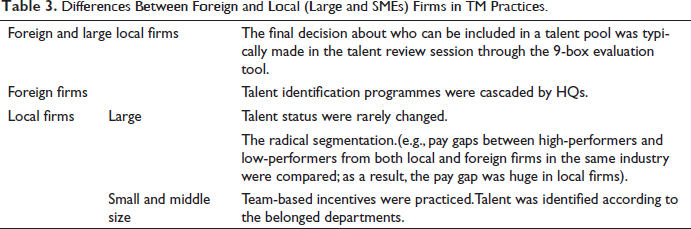
Key differences were also found between local large and SMEs. It reflects SMEs have fewer resources, their businesses are smaller, their knowledge pool is less comprehensive, and their access to specialist HR expertise is lower, compared with larger companies (Festing, 2007; Galan Mashenene & Kumburu, 2020). Hence, best practice in TM is developed mainly in large and global MNEs and generally not in SMEs (Bish & Jorgensen, 2016; Krishnan & Scullion, 2017). Therefore, the ideas in current TM literature are not applied widely in SMEs.
The short organization cycle of SMEs and their drive to grow in size means that they tend towards a high degree of instability in their structure and management processes (Child, 1973; Hanks & Chandler, 1994; Pugh et al., 1969). Indeed, SMEs show a greater degree of informality in the HRM process including TM practices (Dundon & Wilkinson, 2009; Park, 2022b).
Foreign and large local firms used formal talent review session and 9 box to identify talent. By contrast, in local SMEs firms, informal selection determined (Bae et al., 2011; Park, 2022a) which individuals were classed as key talent (McDonnell et al., 2017). In addition, local SMEs tended to implement the pay dispersion via incentives rather than in basic salary (Table 1). This reflects their traditional philosophy preferring team-based incentives based on team performance.
Local firms developed their own tailored TM practices to include their indigenous cultures (e.g., collective norms). The findings demonstrate TM is highly contextual (Thunnissen & Buttiens, 2017) from the fact that HR practices have to respond to changes in context (Cappelli, 2009, p. 179; Gallardo-Gallardo et al., 2020).
Implications
This study makes several valuable contributions: first, TM scholars defined the aim of TM as achieving firm’s performance such as Latukha and Selivanovskikh (2016) opine that TM is to ‘promote the goals of the company’ and McDonnell et al. (2017) mention ‘sustainable organizational performance’ as an ultimate TM goal. However, it rarely argues ‘how’, particularly in the non-Western context. This article bridges the gap between TM literature and practice, to increase the knowledge of dynamic nature of TM in practice. Second, there is still a strong body of US affiliated scholars in TM (McDonnell et al., 2017), this research is an initial attempt to explore TM empirically for Korea so contributes to expand the TM knowledge how TM is applied in non-US contexts.
Third, in terms of managerial implications, the findings show firms in Korea inter-mixed exclusive and inclusive TM practices in their own ways, and employees are discontented. Examples of good practices that enable development of existing TM programmes could be shared, in order that firms can learn from each other (Watson, 2008).
Limitation
Limitations of this article should be acknowledged. First, the author conducted the research based on interviews from employees working for firms in Korea only, thus the findings cannot be generalized (Mäkelä et al., 2010), and the applicability of the findings to other contexts may not be identical (Lewis & Ritchie, 2003; Li et al., 2022). Also, transferring to other settings can be judged via thoughtful hypotheses, therefore, in the future the method of research can expand to include a quantitative approach in more countries (Cronbach, 1975; Patton, 2002).
Future Research Directions
It is the hope that this research inspires other scholars to build on specific TM evidence from non-Western countries in order to augment our knowledge of an important and under-researched topic. The quantitative approach between TM and performance would be meaningful to postulate whether it is effective within the specific industries or restricted firm sized samples.
Footnotes
Acknowledgement
The author is grateful to the anonymous referees of the journal for their extremely useful suggestions to improve the quality of the article. Usual disclaimers apply.
Declaration of Conflicting Interests
The author declared no potential conflicts of interest with respect to the research, authorship and/or publication of this article.
Funding
The author received no financial support for the research, authorship and/or publication of this article.
