




Abstract
The aim of this study is to investigate the factors affecting cloud computing technology application by using technology acceptance model 3 (TAM3). The conceptual model was empirically analysed. While the experience of employees has no moderating effect on the relationship between subjective norm and perceived usefulness, the effect of perceived ease of use on perceived usefulness is moderated by experience. In other words, the higher the experience, the higher the effect of perceived ease of use on perceived usefulness. In addition, perceived ease of use, in terms of the perceived enjoyment and playfulness variables, has a mediating effect. Perceived usefulness and perceived ease of use in cloud computing have positive effect on behavioral intention. Research on cloud computing and technology acceptance model has overlooked the mediating and moderating effect of variables in TAM3, on which very little work has been done.
Keywords
Introduction
Technology is rapidly developing, and developing technology can cause significant changes in the applications of enterprises. It is a necessity for companies to invest in new technologies in their own sector under increasing competition conditions, in order to survive in a competitive environment beyond providing benefits. Although much work has been done to adopt newer technologies, it can be said that studies on cloud information technology using technology acceptance model 3 (TAM3) are insufficient. Rather than being an emerging technology, cloud computing is a new information service model using existing information communication technology (ICT) facilities. Cloud computing provides business owners some advantages such as including no initial investment, reducing maintenance, energy and personnel costs, increasing computing capacity, scalability and flexibility (ITCI, 2013). The impact of cloud computing on the outsourcing of information technology (IT) is significant (European Parliament, Directorate General for Internal Policies, 2012). As the development of cloud technologies has increased, IT outsourcing service providers have had to adopt cloud services as part of a presentation or delivery (Dhar, 2012). Otherwise, there is a risk that the service providers will lag behind in the competition (PwC, 2011). IT outsourcing service providers must consider cloud computing as a necessary competitive advantage, because cloud computing offers many benefits that IT outsourcing cannot provide. These benefits include: (a) paying for only what is used; (b) using and paying for only functionality that is really needed; (c) faster deployment of IT services; and (d) easier integration of IT services (Gartner, 2010). Because of these benefits, ICT companies started to provide most of their services through the cloud (Sultan, 2013). In addition, cloud services mean better performance for both the supplier and the customer. The reason for this is that cloud services reduce the supplier’s operational costs, and this decrease in costs is reflected to the customer as lower prices (PwC, 2011). It is envisaged that the cloud computing market may develop more strongly if an interventionist approach is taken to remove the obstacles to cloud computing within the framework of the economic analysis of the European Union (EU) cloud computing market. According to the model developed by the International Data Corporation (IDC), in the absence of any interference, cloud computing is expected to contribute €88 billion to the EU economy in the year 2020 and €357 billion in the period 2015–2020. To act within the framework of an action plan for the cloud computing in Turkey, it will be up to 250 billion euros of the amount of contribution to the economy in 2020. It is expected that this contribution will reach 940 billion euros in the 2015-2020 period (ITCI, 2013). In this study, by examining employees’ cloud computing technology application with TAM3, the moderating and mediating effects of variables in this model on perceived usefulness, perceived ease of use and behavioural intention related to cloud computing are revealed.
Literature Review
The Concept of Cloud Computing
Cloud computing, which emerged as a new information service model rather than a new technology, is a general purpose technology commonly used in the late 2000s (Etro, 2011). Cloud computing aims to reshape the way businesses acquire and manage their needs for computing resources in an effective and cost-efficient manner (Elragal & Haddara, 2012). The most widely used definition of cloud computing is that by the National Institute of Technology Standards (NIST). According to the definition of NIST, cloud computing is a technology that allows access to a common pool of configurable IT resources, at any time and from anywhere, under favourable conditions (Mell & Grance, 2011). Cloud computing is offered to technology users with three service models: Infrastructure as a Service (IaaS), Software as a Service (SaaS) and Platform As a Service (PaaS) (Mell & Grance, 2011). An application is a cloud software service, where both the object code and the underlying database support multiple clients at the same time (Cusumano, 2010). Infrastructure as a service is the provision of hardware (server, storage and network) and related software (operating systems virtualization technology, file system) as a service (Bharadwaj & Lal, 2012). In the cloud platform service, users cannot manage or control the background cloud infrastructure, including network, servers, operating systems or storage, but can control deployed applications and configuration settings for the application-hosting environment (Bharadwaj et al., 2010).
Cloud computing has some disadvantages. One of these is limited portability. Limited portability, also known as vendor locking, is a challenge due to the lack of cloud computing industry standards (Erl et al., 2013). In addition, there is a constant need for the Internet for the use of cloud computing services and applications. Failure to provide the web service between the user and the service provider in cases of network or hardware failures, natural disasters and cyberattack may result in service interruption (Kavzaoğlu & Şahin, 2012). If the user does not have an Internet connection, some disruptions may occur due to the lack of access to the data stored in the cloud. Broadband Internet infrastructure is needed for the constant and efficient operation of cloud computing services and applications (Kavzaoğlu & Şahin, 2012). Due to the large difference between the speed of data transfer over the Internet and the speed of data transfer through the local network, it can take a lot of time to transfer large amounts of data to cloud computing platforms (Özdaş, 2014). When organizations move to the cloud, data security becomes a shared responsibility between the user (consumer) and the cloud provider. Remote access to IT resources essentially requires the organization’s trust boundaries to expand to include the external cloud platform. This expansion, which usually includes a public cloud service, reveals the security vulnerability of the organization. Another consequence of the overlapping trust limit is the ability of cloud providers to access users’ data; this creates a situation where customers can attack commonly shared cloud-based resources and steal or damage sensitive business data (Erl et al., 2013).
Technology Acceptance Model 3
Although there are many studies on cloud technology acceptance, limited research has been conducted on interventions that could potentially lead to greater acceptance and use of cloud technology (Venkatesh, 1999). Technology acceptance model (TAM) is one of the most common models used to understand the adoption of new technology (Godoe & Johansen, 2012; Mortenson & Vidgen, 2016). In TAM, system usage behaviour is determined by the user’s intention to use, beliefs about the contribution this technology will make to his or her work or performance, as well as the ease of use, which describes the effort he or she makes while using this technology (Partala & Saari, 2015). Although there may be many variables that affect the use of a system—the reasons for people accepting or rejecting information technology—Davis (1989) stated that there are two determinants, perceived usefulness (PU) and perceived ease of use (PEOU). PU is expressed as a tendency to use or not use an application based on the belief that it will help his or her job performance better. PEOU is defined as the degree to which the user expects a particular system to be effortless. According to TAM, the PU and PEOU of a technology are core variables related to the intention of using a new technology. These variables are considered as two basic and different structures (Davis et al., 1989). Ease of use, perceived as a direct determinant of the intention variable for use in TAM, has shown a less consistent impact on intention across studies. In order to model the determinants of PEOU, determinants of PU have been relatively overlooked (Venkatesh & Davis, 2000). TAM has been criticized for being limited, and thus researchers have added different elements to the model (Abbasi et al., 2015; Legris et al., 2003) and expanded it (Legris et al., 2003). Venkatesh and Davis (2000) developed a new TAM by adding some variables that affect PU and intention to TAM and defined this new model as technology acceptance model 2 (TAM2). The objective of TAM2 is to extend the PU and intention structures to include additional key determinants and to understand how these determinants change with the increasing user experience over time with the target system (Venkatesh & Davis, 2000). Venkatesh and Bala (2008), who synthesized research in the TAM model, suggested TAM3 to address these criticisms (Faqih & Jaradat, 2015). While Venkatesh and Davis (2000) determined the general determinants of PU, Venkatesh (2000) determined the general determinants of PEOU. Since the two models were developed separately, there is no information about the crossover effects of the determinants of PU that may affect PEOU, and vice versa (Venkatesh & Bala, 2008). Exploring and theorizing or eliminating potential crossover effects is an important step in developing a more comprehensive nomological network around TAM. Furthermore, knowing the interventions to the determinants of PU and PEOU plays a key role in influencing the success of IT. In this way, managers can make effective decisions by implementing specific interventions (Rai et al., 2002).
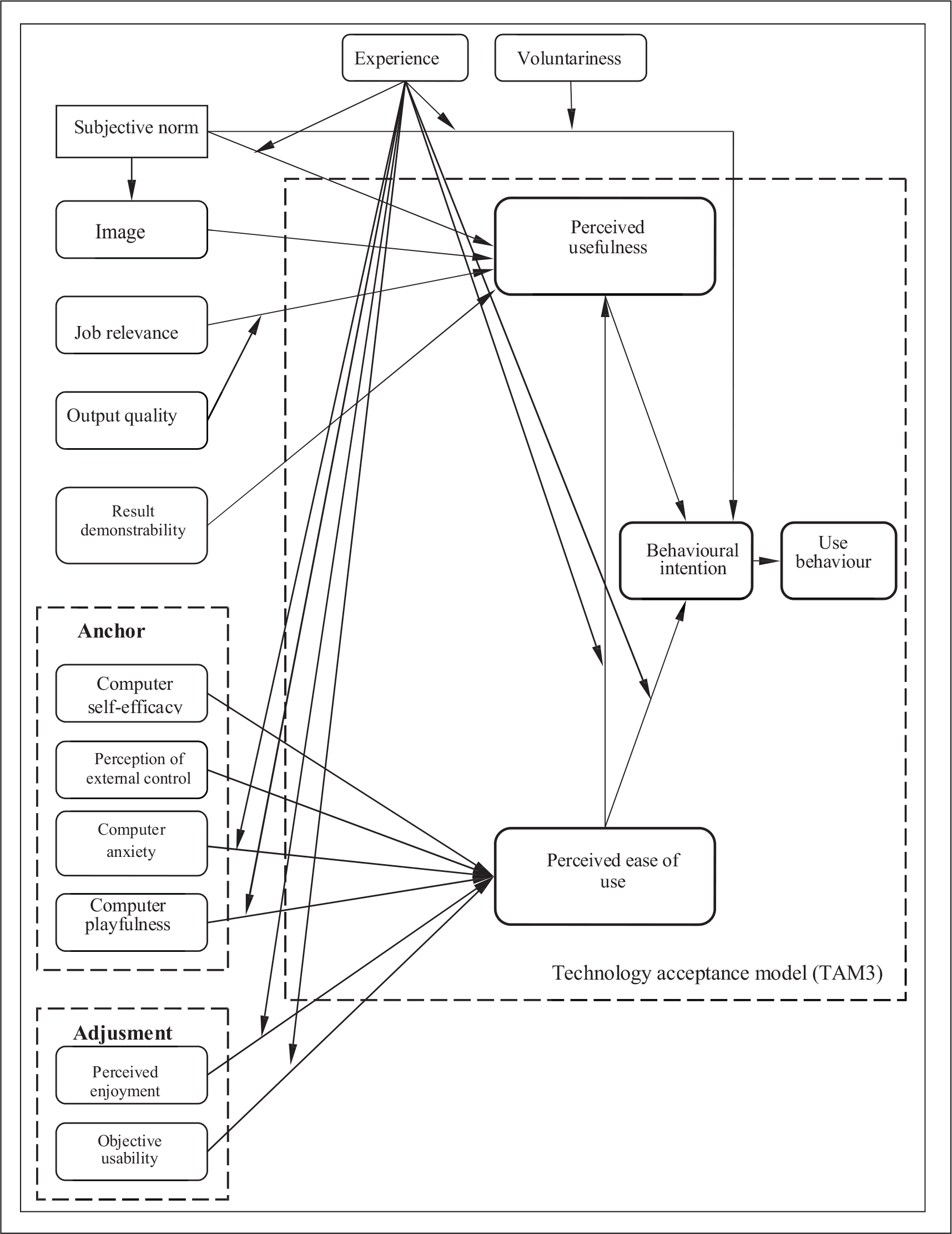
TAM3 reveals the moderating effect of experience, which was not empirically tested in Venkatesh (2000) and Venkatesh and Davis (2000). Experience moderates the relationships between: (a) PEOU and PU; (b) computer anxiety and PEOU; and (c) PEOU and behavioural intention (Venkatesh & Bala, 2008).
TAM3 has made important theoretical contributions through the determinants of PU and PEOU. In TAM3, there are complementary elements of context, content, process and individual differences (Venkatesh & Bala, 2008).
Related Works
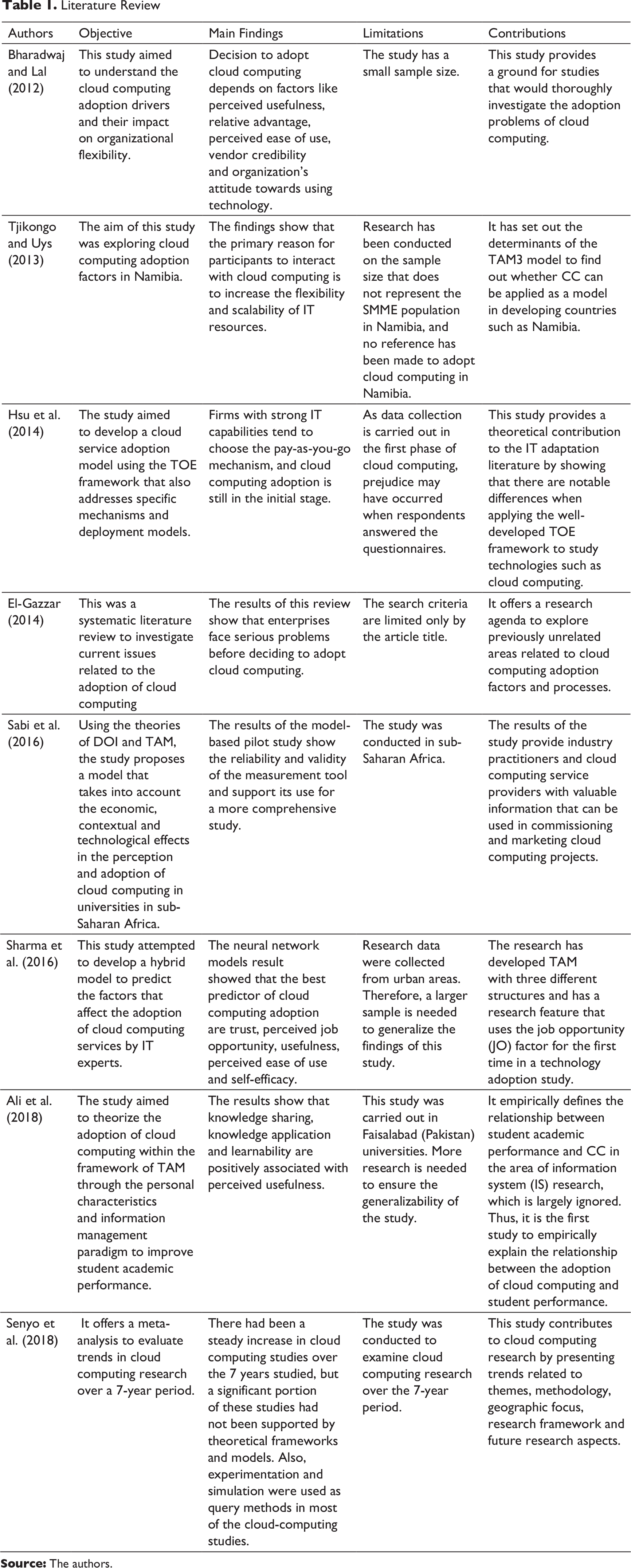
Since its inception, the cloud computing service has become the focus of interest for businesses. Various studies on cloud computing have been conducted in the related literature. These studies deal with internal and external issues of cloud computing (El-Gazzar, 2014). El-Gazzar (2014) examined 51 published studies on the adoption of cloud computing. Using the grounded theory approach, he classified the articles into eight main categories. These include: internal, external, assessment, proof of concept, adoption decision, implementation and integration, IT management and approval. Then, these eight categories were divided into two categories, cloud adaptation factors and processes, the latter influencing the former. This study shows that businesses face serious problems before deciding to adopt cloud computing.
Senyo et al. (2018) presented a meta-analysis of cloud computing research, with 285 articles from 67 peer-reviewed journals from 2009 to 2015. In their study, among the articles that utilized research frameworks, the technology-organization-environment (TOE) framework recorded 5.26 per cent, while TAM and resource based-view (RBV) had 1.40 per cent. Some studies also combined two frameworks in their investigation.
In their study, Bharadwaj and Lal (2012) aimed to find out the factors affecting the adoption of cloud computing in an organization and to find out how the adoption of cloud computing would affect organizational flexibility. The results showed that the decision to adopt cloud computing depends on the factors of relative advantage (RA), PU, PEOU, organizational reliability (VC) and positive attitude towards using technology (ATUT). The research also shows that the impacts of cloud computing on organizational flexibility can be categorized as economic flexibility, process flexibility, performance flexibility and market flexibility.
One’s intrinsic motivation factors influence the time taken to learn about the results one expects from the adoption of technological innovation. People with stronger entrepreneurship skills will be able to use cloud computing more when they focus on innovation, risk-taking and proactive technologies (Ratten, 2012).
Tjikongo and Uys (2013), in their research with 60 small and medium enterprises (SME) employees from different sectors in Namibia, found that the main reason for the transition to the cloud was to increase the flexibility and scalability of IT resources. In addition, it was revealed that employees have concerns about cloud security, data security, confidentiality and delay.
Cloud technologies offer new pricing and distribution strategies that are not found in traditional business solutions (Hsu et al., 2014). Hsu et al. (2014) conducted a study and found that PU business concerns and IT capability are important determinants of the adoption of cloud computing. In addition, it was shown that employees’ job anxiety is the most important factor affecting the choice of distribution model.
Dashti (2014) developed a model in which TAM for Turkish and Iranian users included PU, PEOU, subjective norm, facilitating conditions and behavioural intention, as well as perceived risk and compliance factors. It was found that all of the original factors in TAM had a significant effect on the use of cloud computing. However, the hypothesis for the intent variable was accepted for Turkish users and rejected for Iranian users. No significant results could be obtained for the perceived risk and compliance factors added to the model as experimental.
Few studies have been conducted on the adoption and use of cloud computing in educational institutions and the impact of contextual factors on the diffusion and adoption of cloud computing. Universities in developing countries face challenging socio-economic and political constraints that limit their ability to invest in expensive information systems to compete globally (Sabi et al., 2016). In a study conducted by Sabi et al. (2016), a model was proposed that considers the contextual, economic and technological effects on the perception and adoption of cloud computing in African universities. In addition, Ali et al. (2018) investigated how the adoption of cloud computing affects students’ academic performance by integrating knowledge management dimensions and individual characteristics into TAM. Based on the results of the research, they concluded that knowledge sharing, learnability and knowledge application were positively related to PU. Similarly, perceived self-efficacy and perceived enjoyment were found to have a positive effect on PEOU. In addition, PU and PEOU were found to have a significant impact on the adoption of cloud performance calculation, which positively affects academic performance (Ali et al., 2018).
Sharma et al. (2016) proposed a new model by expanding TAM with three external structures: computer self-efficacy, trust and business opportunity. Business opportunity, as a new structure, was presented in the technology adoption study. The results showed that computer self-efficacy, PU, trust, PEOU and business opportunities are effective in the adoption of cloud computing. Table 1 summarizes the research in cloud computing.
Objective
The main objectives of this research are: to examine the factors affecting employees’ cloud computing application based on TAM3; to test the moderating effect of employee experience and output quality variables; and to test the mediating effect of PEOU.
Conceptual Framework
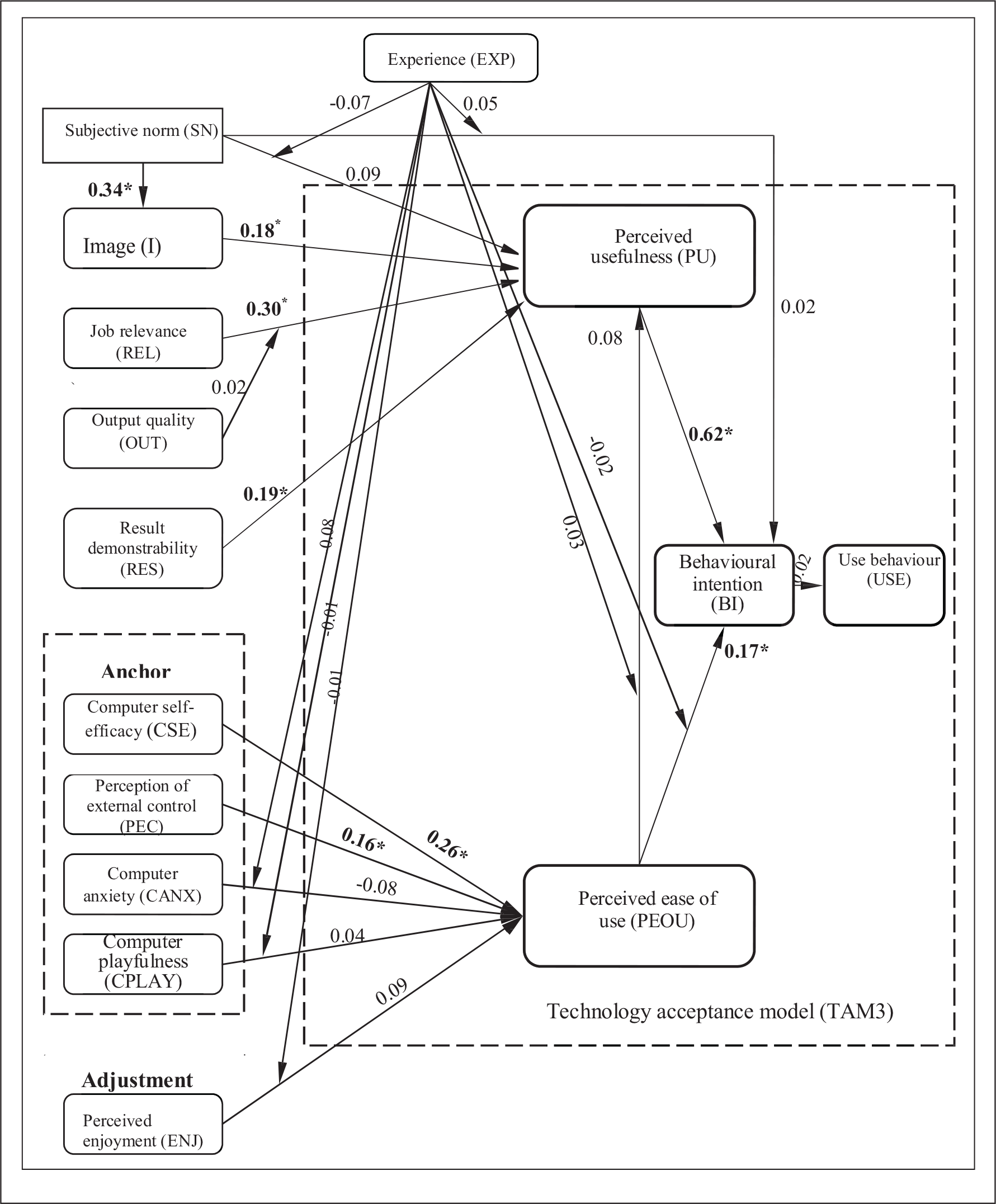
As a result of the literature review, TAM3 developed for the adoption of new technologies was determined as the research model. Since a standard variable for the different sectors cannot be defined for the objective usability variable, it is not addressed in TAM3. The conceptual model is shown in Figure 1 (Venkatesh & Bala, 2008).
Literature Review
Methodology
The research was conducted on employees of businesses using Microsoft Azure’s cloud computing technology. There were two main reasons as to why Microsoft Azure was selected in the research: this company has more territories than any other cloud provider; and 90 per cent of the Fortune 500 companies prefer Microsoft Cloud to run their business.
Data
The survey method was used as a data collection tool in the research. Data were collected between June 2017 and May 2018. All evaluations were performed based on 411 questionnaires. The study used the scale of Venkatesh and Bala (2008) to measure participants’ perception of and intent to use cloud computing technology. The scale has been used by different researchers in different studies, and reliability and validity evaluations must be made in these studies. The questionnaire was first translated from English to Turkish, and then a pilot study was conducted with 2 people. We were revised the statements forcing people to understand.
Sample Frame
According to the results of the analysis on demographic characteristics, the majority of the participants were male, and approximately 40 per cent of the participants were aged 29 and under. When examined in terms of education levels, it was seen that approximately 59 per cent of the participants were undergraduates, followed by 36 per cent participants at the graduate level. Looking at the work experience of the participants in the current workplace, it was seen that 30 per cent had a work experience of 4–6 years. The percentage of participants with a working period of less than 1 year was about 17 per cent. Thirty per cent of the participants worked in the positions of experts or assistant experts. Approximately 25 per cent of the participants worked in the executive position. In addition, it was seen that approximately 36 per cent of the employees were employed in the IT unit. The majority of the participants (approximately 67%) had a computer experience of 10 years or more. More than half of the participants (approximately 57%) did not receive any training in cloud computing before using cloud computing. In addition, it was seen that approximately 44 per cent of the participants had used cloud computing technology for 1–3 years.
Approximately 38 per cent of the surveyed enterprises were established between 1986 and 1999. When analysed in terms of enterprise size, it was seen that large-scale enterprises with 250 or more employees were in the majority (approximately 62%). It was also seen that approximately 80 per cent of the enterprises were established as national/international partnerships. Furthermore, more than half of the enterprises (approximately 54%) preferred the SaaS service model.
Analysis
Before the research model was analysed, the measurement model needed to be established and examined. After evaluating the measurement model in terms of the validity, reliability and fit indices, structural relationships had to be analysed. In this study, first the measurement model was analysed and evaluated. After the analysis, the moderating and mediating effects of some variables were evaluated, and structural relationships in the research model were tested.
The Measurement Model
The measurement model shows the correlations between latent variables, as well as to what extent the observed variables represent the latent variables (Schumacher & Lomax, 2004). The reliability and validity analysis results for the measurement model had a good goodness-of-fit index. Composite reliability (CR) was higher than the critical value (0.60) for other variables except the volunteer variable alone. Similarly, the Cronbach’s alpha value of all other structures, except the voluntary variable alone, exceeded the critical value of 0.60. The results show the internal consistency of the structures. In addition, the average variance extracted (AVE) for all structures was greater than the critical value of 0.50. Factor loads of the structures were between 0.39 and 0.95. These results show that the variables have construct validity and reliability (Table 2).
Moderation and Mediation Analysis
The mediating and moderating effects of some variables in the research model were evaluated. The findings of the model after analysis are shown below.
Measurement Model
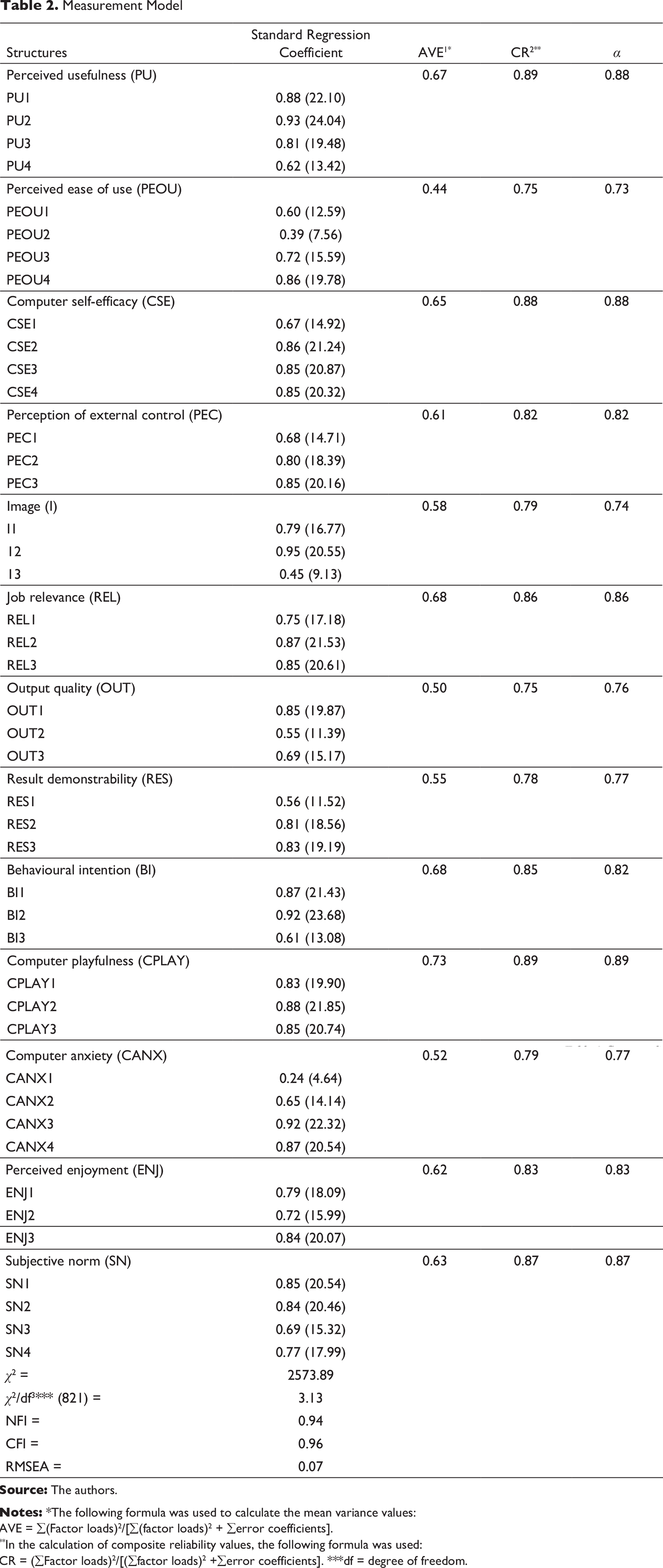
AVE = ∑(Factor loads)2/[∑(factor loads)2 + ∑error coefficients].
**In the calculation of composite reliability values, the following formula was used:
CR = (∑Factor loads)2/[(∑factor loads)2 +∑error coefficients]. ***df = degree of freedom.
Explanation of Perceived Usefulness
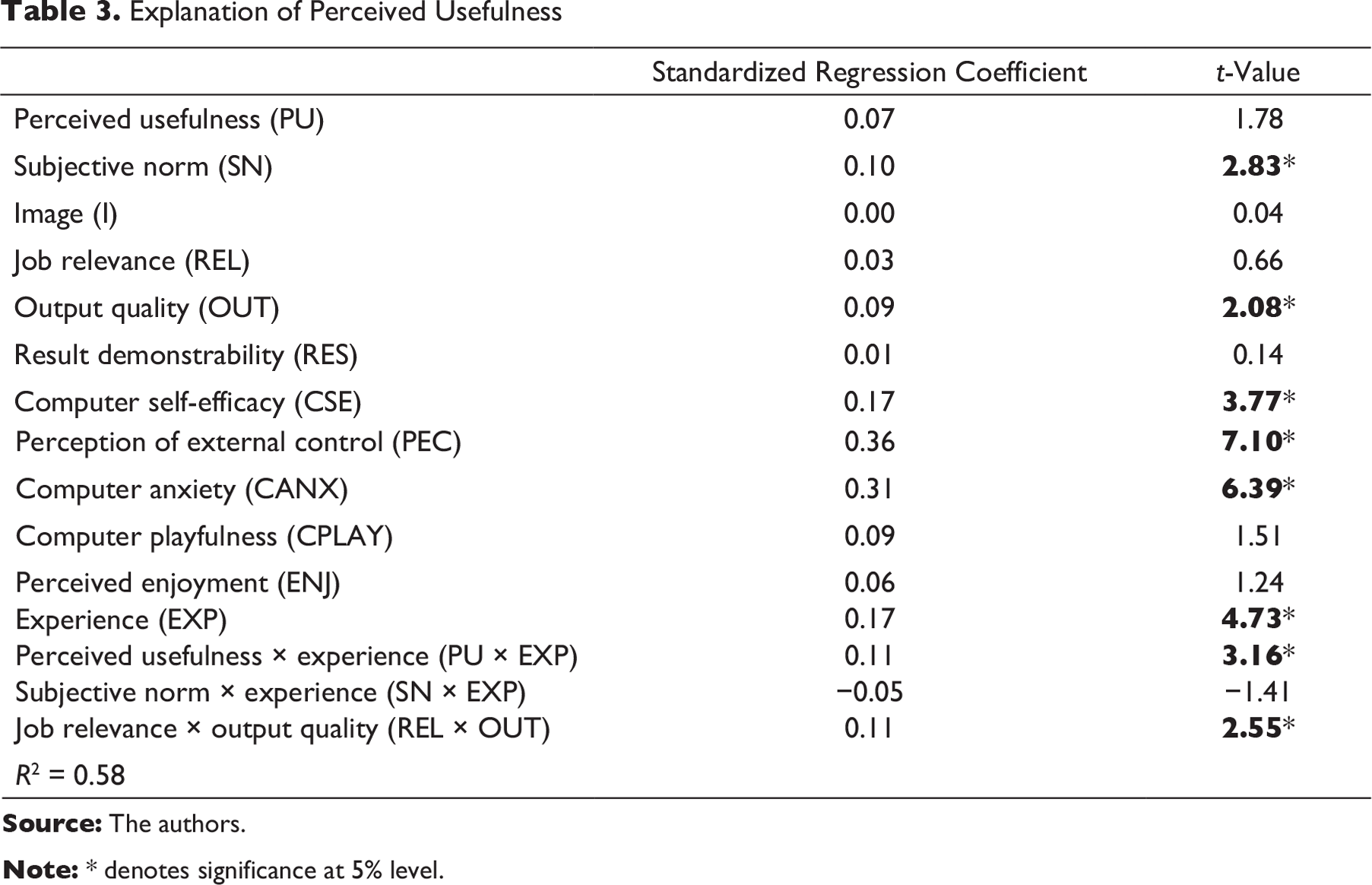
All determinative variables (self-efficacy, perception of external control, anxiety) excluding playfulness and perceived enjoyment, which are determinants of PEOU, have a significant effect on PU. In TAM, 58 per cent of the change in the PU variable is explained. In addition, the PEOU variable has no mediating effect in terms of the self-efficacy, perception of external control and anxiety variables, whereas it has a mediating effect in terms of the perceived enjoyment and playfulness variables.
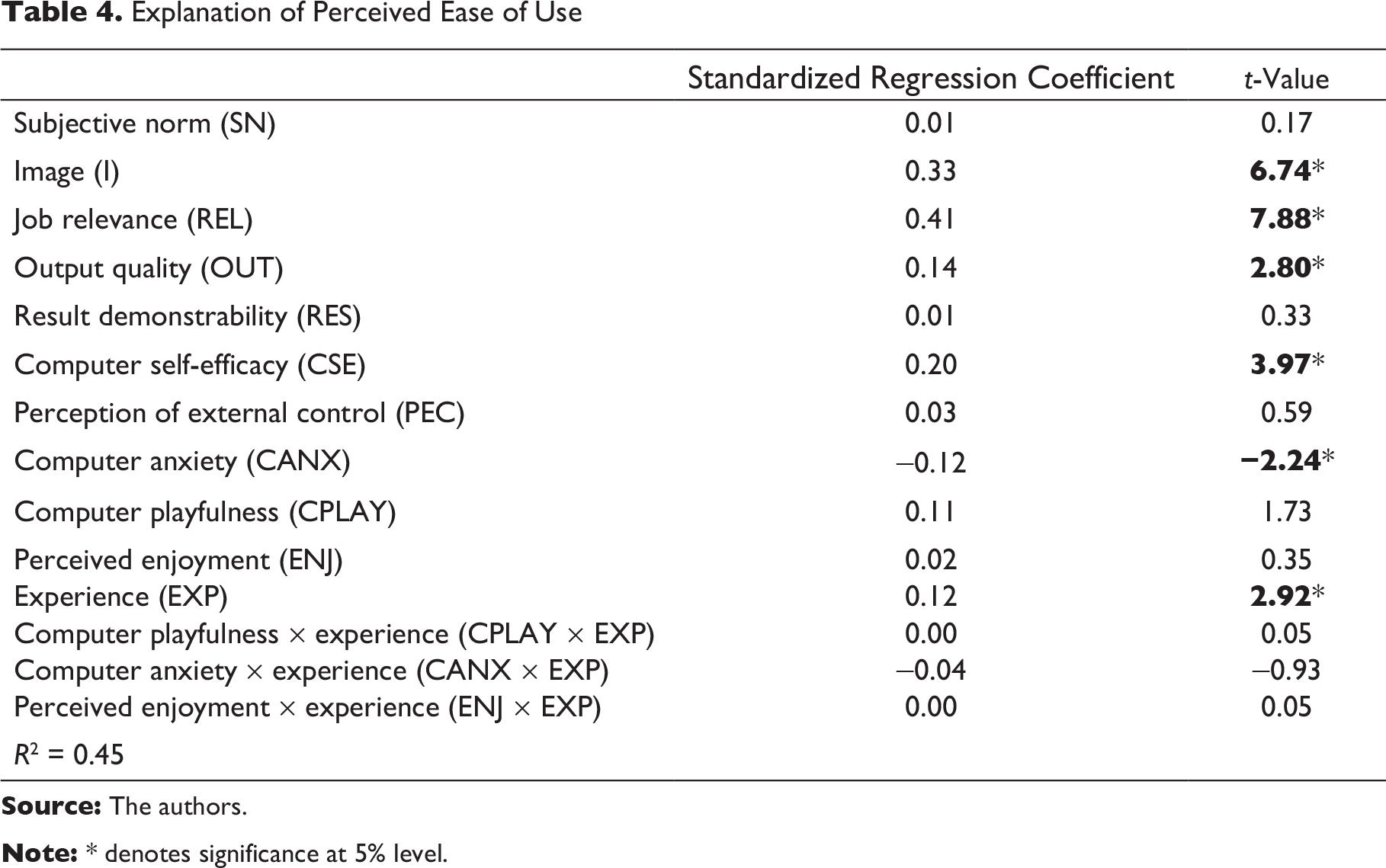
According to Table 4, only self-efficacy and anxiety, which are determinants of PEOU, affect the PEOU variable. The other determinant variables, perception of external control, playfulness and perceived enjoyment, do not have a significant effect on PEOU. The experience variable does not regulate the effect of anxiety (anxiety × experience), playfulness (playfulness × experience) and perceived enjoyment (perceived enjoyment × experience) on PEOU. According to the results of the analysis, the variables of image, job relevance and output quality, which are determinants of the PU variable, have a significant effect on PEOU. TAM explains 45 per cent of the change in PEOU.
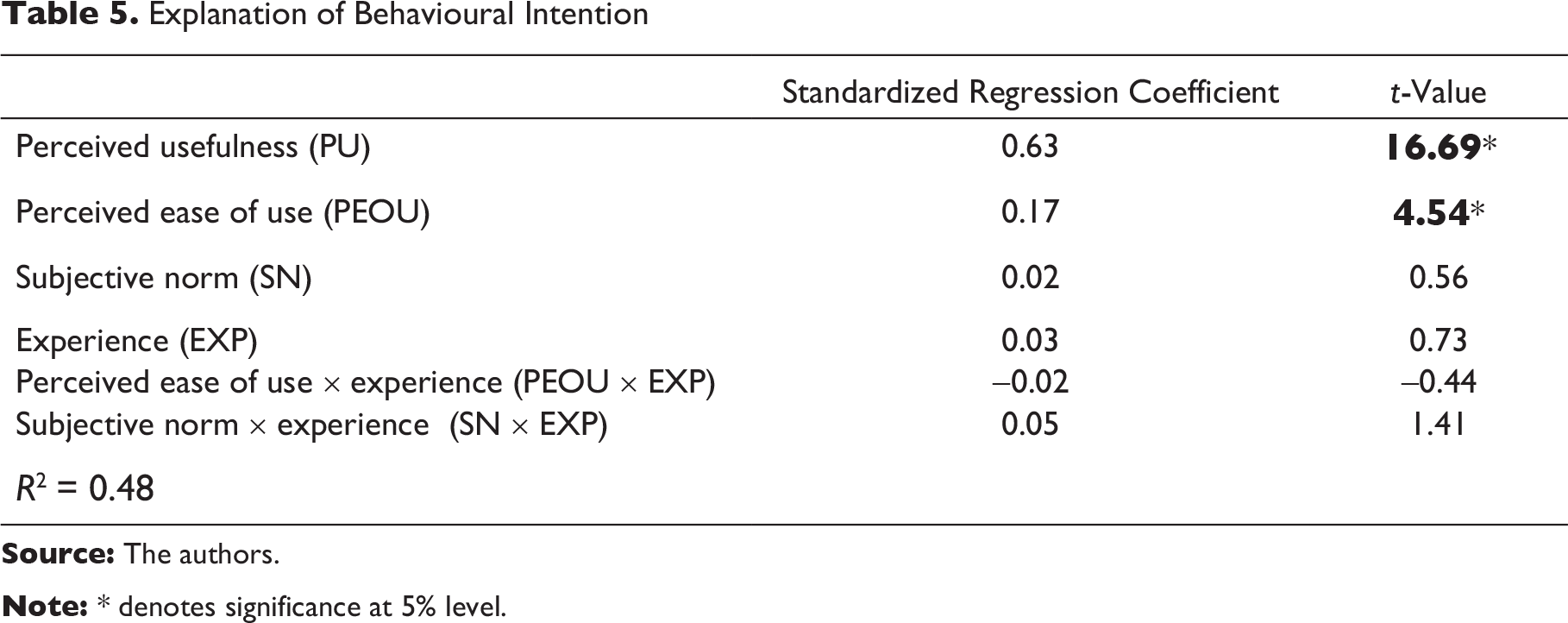
When the standardized regression coefficients in Table 5 are taken into consideration, it is seen that the PU variable affects behavioural intention the most. The experience variable has no regulatory effect on the relationship between PEOU and behavioural intention, as well as on that between subjective norm and behavioural intention. Furthermore, the experience variable has no significant effect on the behavioural intention variable. TAM explains 48 per cent of the change in behavioural intention.
Analysis of Structural Relations
Fit indices for the structural model are χ2 = 566.52; χ2/SD = 9.2; root mean square error of aproximation (RMSEA) = 0.14; comparative fit index (CFI) = 0.90; and normed fit index (NFI) = 0.90.
Explanation of Perceived Ease of Use
Explanation of Behavioural Intention
Description of Use Behaviour

Behavioural intention does not affect cloud computing usage behaviour (Table 6).
Conclusion and Discussion
Cloud computing is an advanced technology that businesses can use to reduce costs and increase productivity (Lee, 2019). It is an integral part of businesses trying to ease the burden of large ICT investments (Sharma et al., 2020). As a result of cloud computing and businesses reducing operating costs by using on-site hardware, data storage and data centre networks, the IT industry and commercial business logic have changed dramatically. In addition, cloud computing has enabled businesses to create new business models and values (Mezgár & Rauschecker, 2014). In this way, cloud computing has become a platform for entrepreneurship and the driving force of corporate productivity (Kushida, 2011). Businesses make serious investments to benefit from such advanced technologies. This necessitates that employees of organizations adapt to new technologies. The effective use of a new technology in an enterprise is closely related to the attitudes of the employees who would use that technology and are accepted as the internal customers of the enterprise. Studies on the quality of existing systems draw attention to the degree of satisfaction of users with the expectation of the system or information. System quality is important, as it leads to user satisfaction and intention to use in achieving system success (DeLone & McLean, 2003; Nelson et al., 2005). The results of this research have various implications for cloud service providers, users and business executives, who are leaders for users. From a business perspective, it is very important that an organization sees the key issues that it needs to address when moving to a cloud platform. The study highlights the elements that cloud service providers need to invest in order to increase the adoption of cloud computing. Priyadarshinee et al. (2017) revealed that cloud computing adoption had a strong input effect on business performance. Therefore, business performance and cloud computing were considered equivalent in their study.
According to the results of the structural model, PU has the most effect on behavioural intention. This finding was compared with those of other studies in the literature. Lee et al. (2005) and Martínez Torres et al. (2008) found that the usefulness perception was a much stronger predictor variable than the ease of use perception, whereas Behrend et al. (2011) found that the ease of use perception was a much stronger predictor variable than the usefulness perception. Although it is a useful tool due to differences in users' ability to use advanced technology, their willingness to learn a new tool is different. Businesses wishing to transition to cloud computing will have a positive impact on the adoption of this technology through explaining the benefits of this technology to users and training them in its application. PU and PEOU regarding cloud computing technology have affected users' behavioral intention to use cloud computing. This finding is in parallel with the literature (Gangwar & Date, 2016; Sabi et al., 2016; Yadegaridehkordi et al., 2019). The experience variable moderated the effect of PEOU on PU. A study by Yadegaridehkordi et al. (2019) found that PU had a significant effect on intention and showed that although PEOU had no direct effect on intention, the indirect effect of PEOU on the relationship between intention and PU was remarkable. It was also concluded that the intention to adopt and use a technology was influenced directly by PU and indirectly by PEOU. In cloud computing, it is the job relevance variable that affects PU the most. The subjective norm and output quality do not affect PU. Cloud service providers need to pay attention to increase system availability when investing in ease of use. Another important finding of the study is that behavioural intention does not affect cloud computing behaviour. A similar result was found by Behrend et al. (2011). In their study conducted among students, they stated that students have impressions about technology in line with their urgent needs rather than their expected future needs. The case is similar in the business perspective. The behavioural intention of cloud computing technology does not affect the subjective norm. It was concluded that PEOU of cloud computing technology was not affected by the anxiety, playfulness and perceived enjoyment variables. It is self-efficacy that affects PEOU the most. Computer self-efficacy is seen as an important factor affecting users’ decision to adopt computer-related technology (Sharma & Govindaluri, 2014). Yang and Lin (2015) showed that self-efficacy is a key determinant of the continuous use of cloud computing services. Similarly, Ali et al. (2018) showed that self-efficacy and playfulness have a significant impact on PEOU. In addition, the subjective norm variable has a statistically significant effect on image.
Future Research
This research has some limitations. The first is the limited number of businesses using cloud computing technology. Second, the research was conducted on the basis of a single company providing cloud computing services. In future studies, other service providers can be included in the research, thereby making comparisons between service providers and research on a larger sample possible. The majority of the participants in the study consisted of large enterprises with 250 or more employees. Again, with the widespread use of this technology in SMEs, a more comprehensive research can be made on the basis of enterprise sizes. It is seen that the majority of the participants did not receive training in cloud computing before using this technology. It was observed that employees only have information about the cloud computing technology they use and that they do not have enough information about the concept of cloud computing. As the majority of the participants used the software service model, the study did not make comparisons in terms of cloud service models. In future studies, the same research can be conducted on businesses in different countries. Comparisons can be made between the prevalence of cloud computing technology and the perceptions of the participants by making the classification of developed, developing and underdeveloped countries. The research was applied to business employees using cloud computing technology. By using the classification of those using cloud computing technology and those not using it, perceptions of employees who do not use this technology can be measured and evaluated in terms of differences.
Employees may feel that a new system will threaten existing routines and habits, alter the nature of their work and relationships with others and reduce their status in the organization (Markus, 1983). Technologies such as cloud computing, which enterprises adopt by making large investments, cause companies to suffer losses due to resistance to these technologies or lack of necessary training. Therefore, interventions that ensure the proper perception of the features and instrumental benefits of a system are of great importance. Proactive implementation of interventions is necessary to minimize such resistance (Venkatesh & Bala, 2008). The findings of the research can guide managers to make appropriate decisions about the adoption and use of cloud computing by employees.
Footnotes
Acknowledgements
The authors are grateful to the anonymous referees of the journal for their extremely useful suggestions to improve the quality of the article. Usual disclaimers apply.
Declaration of Conflicting Interests
The authors declared no potential conflicts of interest with respect to the research, authorship and/or publication of this article.
Funding
The authors received no financial support for the research, authorship and/or publication of this article.
