




Abstract
In the month of May 2019, Ms Priya Vaidehi who works as a chartered accountant in a small firm in the city of Pune was pondering about her personal investment. While surfing on social media on the sunny hot afternoon of 2 May 2019, she came across the news of the biggest merger deal in the Indian telecom sector. The news was about how Britain’s Vodafone Group merged its Indian subsidiary with Idea Cellular, to create the country’s largest telecom firm. They mentioned how the combined entity will accelerate the pan-India expansion of wireless broadband services and also expand financial inclusion through mobile money services. Since the merger, the network has an outreach of 92 per cent of population of India.
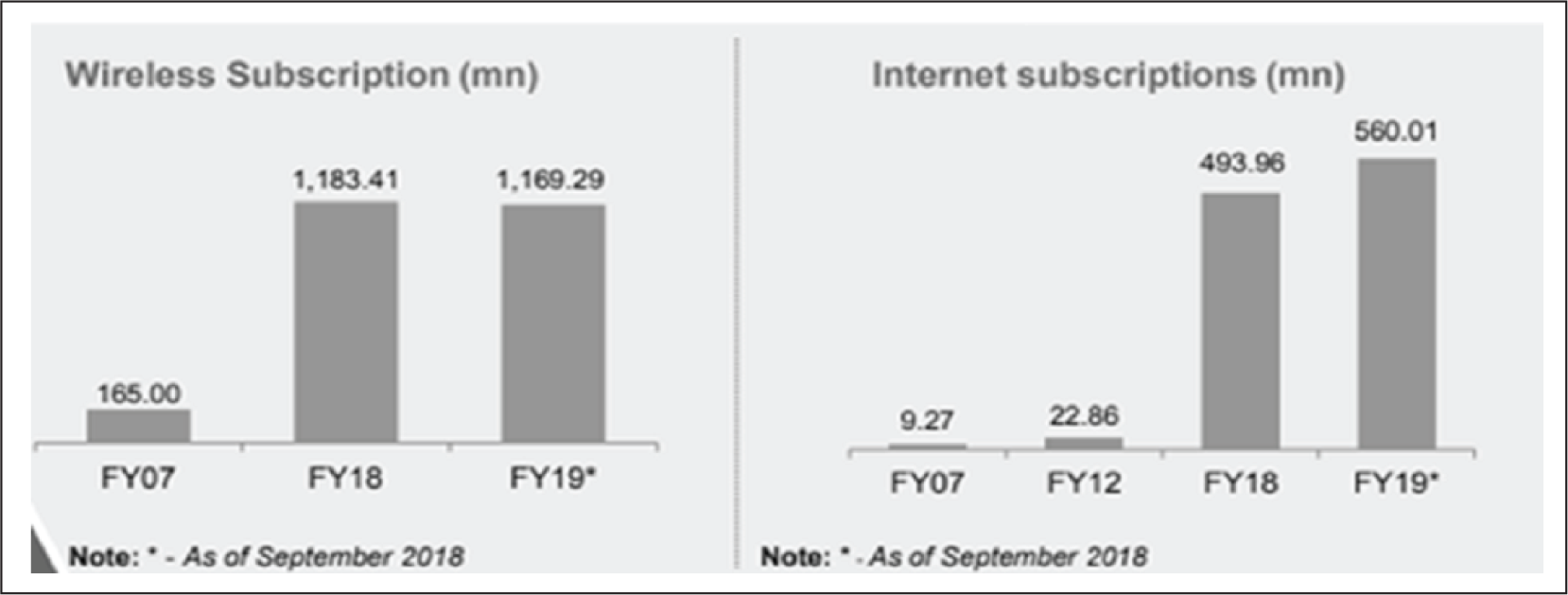
Ms Vaidehi planning for her future investments narrowed down her investment search to do a deeper analysis of the merger of two telecom giants Vodafone and Idea. The Indian telecommunication market has a subscriber base of 1.20 billion and is rapidly growing. The country’s wireless subscriptions has witnessed compound annual growth rate (CAGR) of 19.62 per cent to reach 1,183.41 million in the year 2018. Over the past few years, from the announcement of merger to the declaration of completion of merger, she has noticed that there has been volatility in the share price of Idea Cellular. Though the subscriber base of Vodafone, Idea’s is around 400 million, and sales had gone up 53.5 per cent in the third quarter of FY 2018–2019, but the share price had been plunging to an average fall of 14 per cent. She was in deep thought whether she should invest in buying the shares of Vodafone Idea? Will her instinct help her or the knowledge of financial markets aid in taking the right decision?
Learning Objectives
to evaluate the strengths, weakness, opportunities and threats of the Vodafone idea merger;
to analyse the financial performance (financial statements and ratio analysis) of the investment target;
to evaluate the Vodafone and Idea merger and its impact on the share price; and
to understand the impact of merger and acquisition on operating efficiencies of the organizations involved.
Case Prelude
On 2 May 2019, sitting in her office in the suburb of Pune, Ms Priya Vaidehi came across news about how Britain’s Vodafone Group merged its Indian subsidiary with Idea Cellular, to create the country’s largest telecom firm. India has over 1.418 billion subscribers, making it the world’s second-largest telecommunications market. During the initial announcement of the merger between Idea Cellular and Vodafone, the Aditya group company in their disclosure to National Stock Exchange (NSE) and Bombay Stock Exchange (BSE) had mentioned that they propose the merger of Vodafone India limited (VIL) and Vodafone media services limited with Idea Cellular on 20 March 2017, filed with National Company Law Tribunal (NCLT), and the merger became effective from 31 August 2018. Now, Vodafone Idea can take on other major players in a fiercely competitive telecom market.
Since the merger, the network has an outreach of 92 per cent of population of India. For the quarter ending of Dec 2018 (3 QFY2019), net profit was up by 292.7 per cent (YOY), but share prices have changed from ₹84.7 last year to ₹29.8 in 2019. She was contemplating on investing her hard-earned money in the shares of Vodafone Idea. She read that the company had registered a loss of 64.9 per cent compared to last year (Moneycontrol.com, 2018). As a chartered accountant, she always made investment in number of shares, but only few had given her good returns. With heavyweights like Bharti Airtel and Reliance Jio giving a cut-throat competition to Vodafone Idea., will her decision to invest in Vodafone Idea pay off? Will this be a good investment?
Indian Telecom Industry Landscape
In the past decade, there has been a rapid growth in the Indian telecom sector. The demand by the consumers has been on the rise and the policies of the Government of India have been instrumental (Kathuria, 2000). Also, the deregulation of Foreign Direct Investment (FDI) norms to 100 per cent from 74 per cent has been critical for the growth of this sector. Consumers are able to utilize the telecom services at very affordable prices as the government has a fair and proactive regulatory framework. It has also enabled an easy market access to telecom equipment (Exhibit 1).
According to the study conducted by Ranstand India, the Indian telecom sector will be crucial in the generation of employment. By 2020, this sector is expected to generate around 4 million jobs, mobile subscribers are estimated to reach 1 billion and revenues are expected to grow to US$ 26.38 billion. The report submitted by GSM Association (GSMA) in collaboration with the Boston Consulting Group (BCG) stated that there was a rise of 215 per cent in the number of app downloads since 2015. The government had come up with the National Telecom Policy 2018 with the main aim to increase penetration in rural areas. The policy also envisaged on attracting investments worth US$100 billion by 2022.The rapid technological development in this sector had contributed substantially to India’s gross domestic product (GDP) (Indian Brand Equity Foundation, 2018).
Vodafone Ltd.
On 1 January 1985, Vodafone had started their operations in the UK, and, today, they are spread across the globe with more than 500 million customers. A small operator in Newbury now operates in around 30 countries and partners with networks in over 50 more nations. The company provides a number of voice and non-voice services to its customers. They earned 62 per cent of their total revenues from Europe and 32 per cent of total revenues from Africa, Middle East and Asia Pacific geographical areas. Before the merger with Idea, Vodafone operated in India under the aegis of Vodafone India and was a significant portion of the Africa, Middle East and Asia Pacific businesses (Vodafone, 2020).
Idea Cellular Ltd.
It was in the year 1995 that Idea Cellular was incorporated, with its earlier name being Birla Communication Ltd., which was changed to Birla AT&T Communications Ltd. the following year (Banik & Nag, 2016). Later in the year 2002, the name of the company was further changed to Idea Cellular Ltd. They provided pan-India integrated wireless broadband services, offering 2G, 3G and 4G services .It was listed on the NSE and the BSE in India (Business Standard, 2019).
Vodafone Idea Merger
A global provider of telecommunication service and an Indian telecommunication provider with their merger have created a new entity, a behemoth in Indian telecom industry, of US$23.2 billion enterprise value. Vodafone Idea Ltd. will be jointly and equitably controlled by Vodafone and Idea.
Disruption has been the new mantra in the technology-driven world in this twenty-first century. The disruptive entrant in the telecom industry has been Reliance Jio supported by a large chunk of licenses and backed by the Indian billionaire Mukesh Ambani. It has not only rattled the telecom industry with cheap rates and tariffs, free calls and data plans but also was able to add a 100 million subscriber base within 6 months of entering the 4G spectrum market in September 2016.The response of incumbents was only consolidation, and companies like Etisalat have left the industry due to hyper-competitive pressures. One of the largest telecom players, Idea Cellular responded to this pressure by proposing a merger with the Vodafone Group (Idea Cellular, 2019).
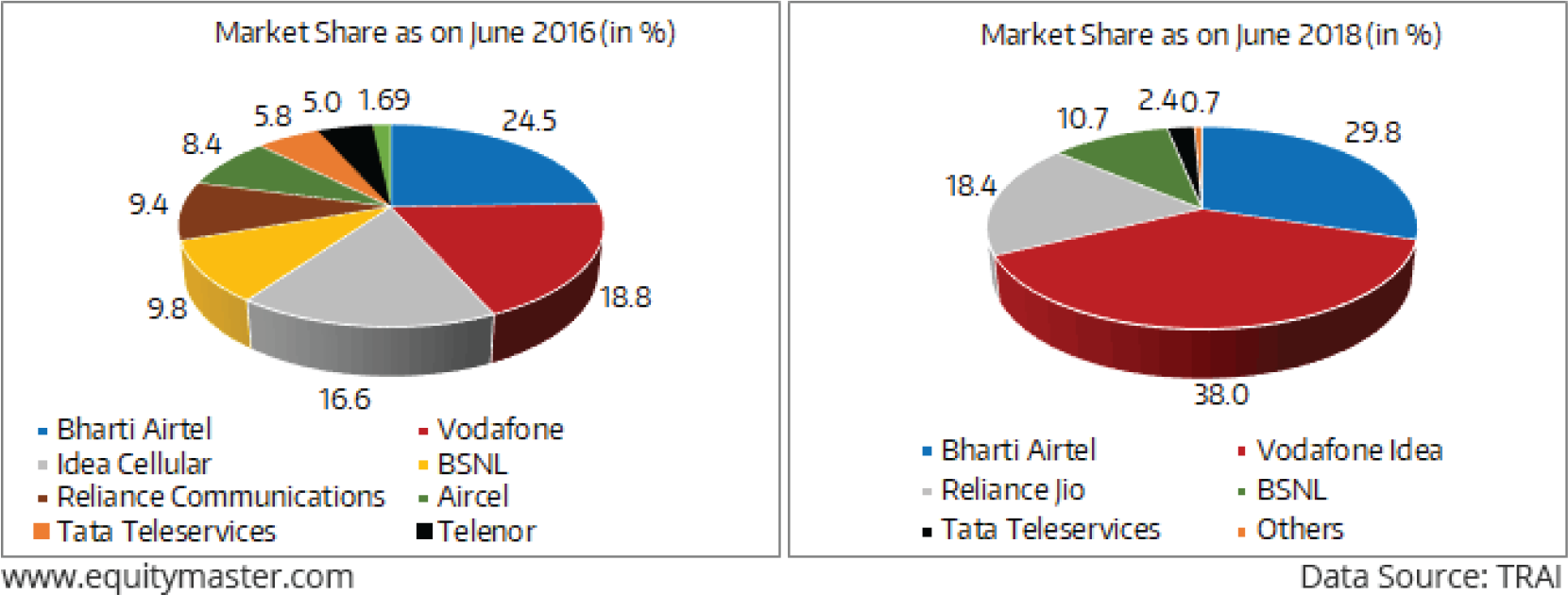
The merger has created India’s largest network with 408 million subscribers and around 41 per cent share of the industry revenue. Bharati Airtel generates around 36 per cent revenue with 268 million subscribers, closely followed by Reliance Jio with 100 million subscriber base (Exhibit 2). Vodafone Idea Ltd. has the largest voice network of over 2,00,000 unique Global System for Mobile GSM Communication sites, giving coverage for over 1.2 billion Indians—approximately 92 per cent of the population (Economic Times, 2018).
Merger Deal Structure
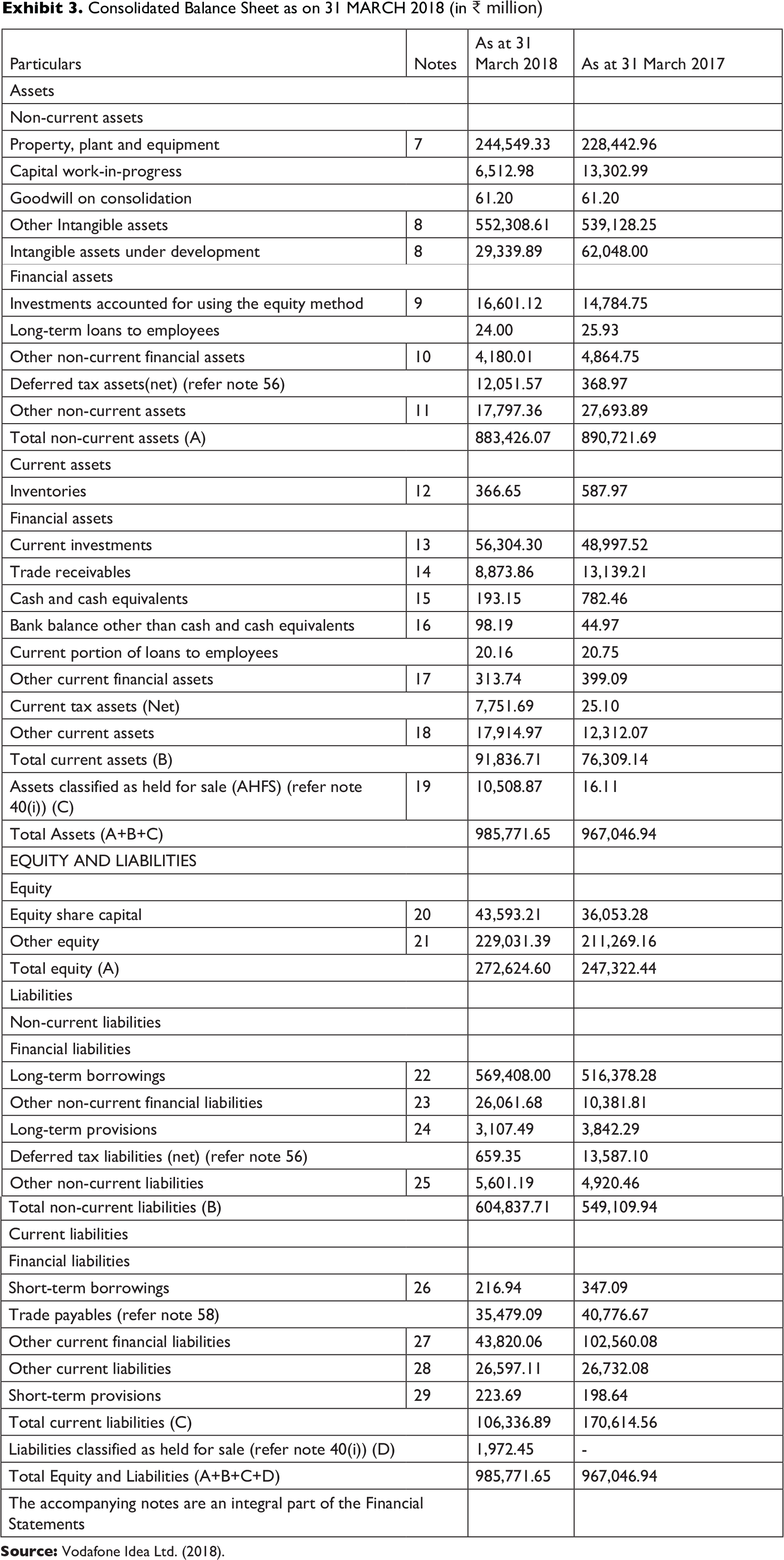
To understand the overall deal Ms Priya Vaidehi looked up on excerpts from the Vodafone Idea annual report 2017–2018 and other websites (Exhibit 3).
Vodafone and Idea agreed to merge their operations into Vodafone Idea Ltd. with a share swap ratio of 1:1. The merger, from the beginning of proposal and announcement of talks, always had both the companies as equals, and they also retained both the names after the merger. The swap ratio promises one share of the merged company for every share existing in Idea Cellular Ltd. Analysts suggested Vodafone India’s business could be valued at ₹828 billion and Idea Cellular business could be valued at ₹722 billion. Book Value approach has been used for approaching the valuation details of both Idea and Vodafone. Book value is the company’s common stock equity as it appears in the balance sheet, which is equal to total assets minus liabilities and preferred stock.
Though Vodafone could be worth more than Idea Cellular, the cut-throat competition, in the second largest telecom subscriber base country, has indeed forced organizations into mergers and other forms of consolidation.
Vodafone, as evident from the scheme of amalgamation, is a dominant partner in the merged entity with a stake of 45.1 per cent and will transfer stake of 4.9 per cent to Aditya Birla Group for ₹38,740 million in cash to complete the merger deal. Aditya Birla Group owns 26 per cent stake in the merged entity, and the rest will be held by Idea’s existing shareholders before the merger (Hindustan Times, 2017).
Market Reaction to Merger
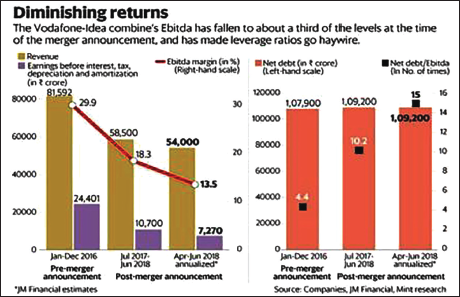
The merger of Vodafone and Idea (two debt-ridden firms) was expected to give them relief from hyper-competition in the telecom industry and some breathing space. They have projected US$1.3 billion operational savings, and their annualized profit for June Quarter 2018 stood at ₹72,700 million, as per the reports of JM financial analysts, and in the same period, Vodafone Idea net debt was 15 times its profit, the earnings before interest, taxes, depreciation, and amortization (EBITDA) ratio roughly being 4.4 times.
Figure 1 of JM Financial Mint Research clearly shows the fall of EBITDA margins of the combined firm and also weakening of leverage ratios as both the firms were debt ridden at the time of merger.
Scheme of Amalgamation
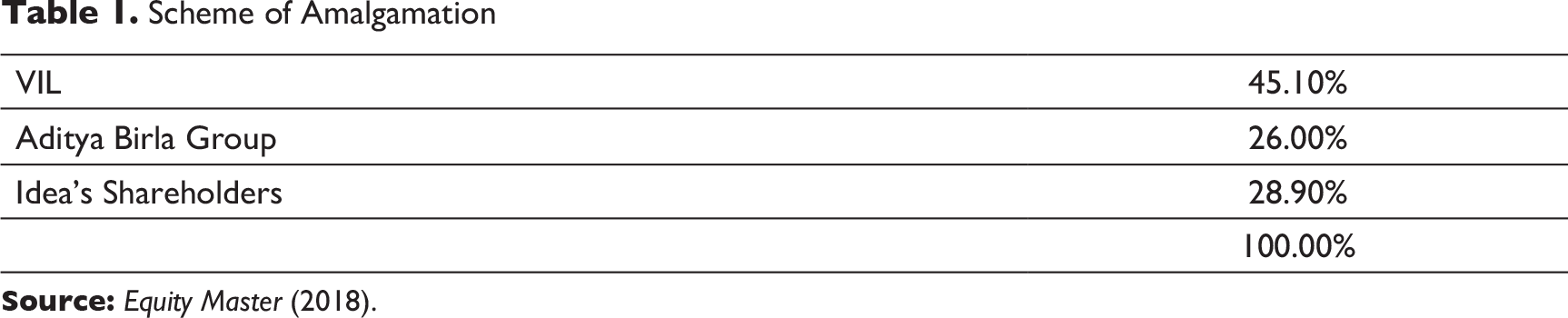
On 20 March 2017, the announcement made by Idea Cellular to the bourses about amalgamation of the company with VIL (Table 1), Vodafone Mobile Services Limited (VMSL) with the company, Idea Cellular share trading on BSE at ₹100.70 per share at 10.45 h fell as low as ₹92 per share, down by over 14 per cent compared to the previous closing price. On the NSE, the stock was trading at ₹101.35 at 10.45 h, reaching as low as ₹92.35.
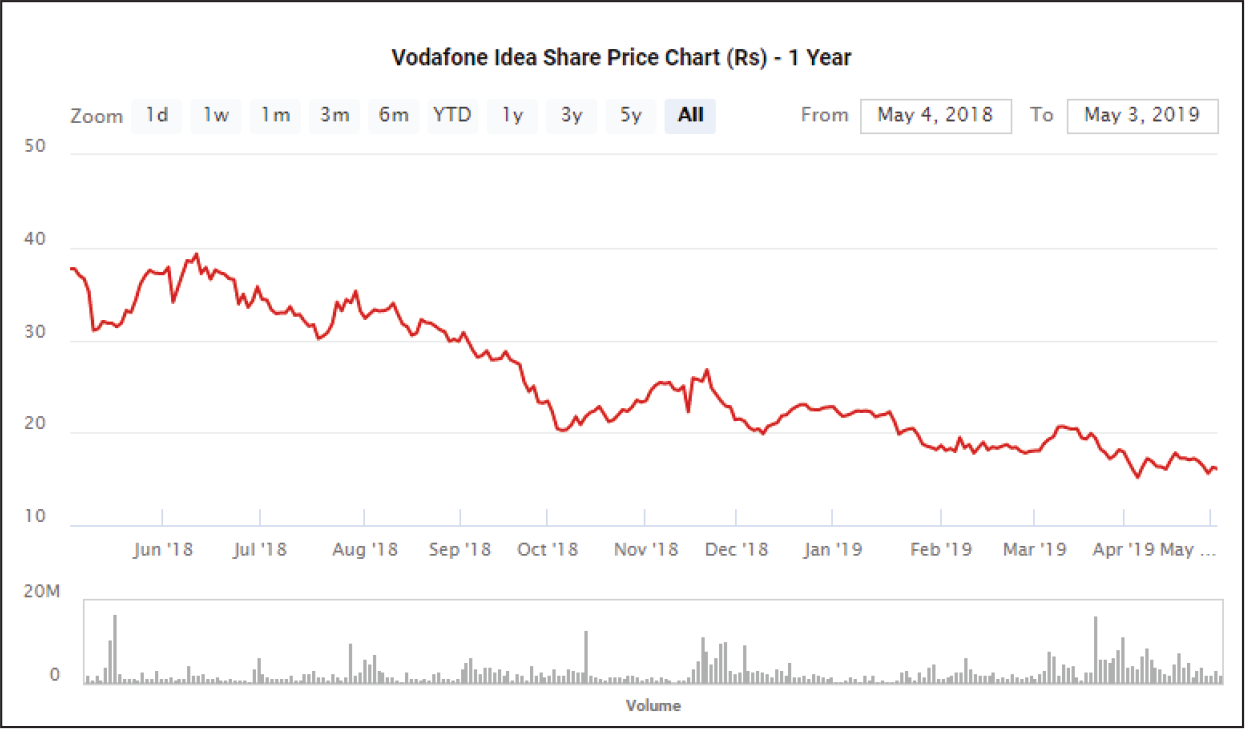
After the completion of merger to the present, the share prices of Vodafone Idea have been tumbling down. Figure 2 provides the chart of stock price behaviour of Vodafone Idea for the last year (Pal, 2018).
Current Valuations
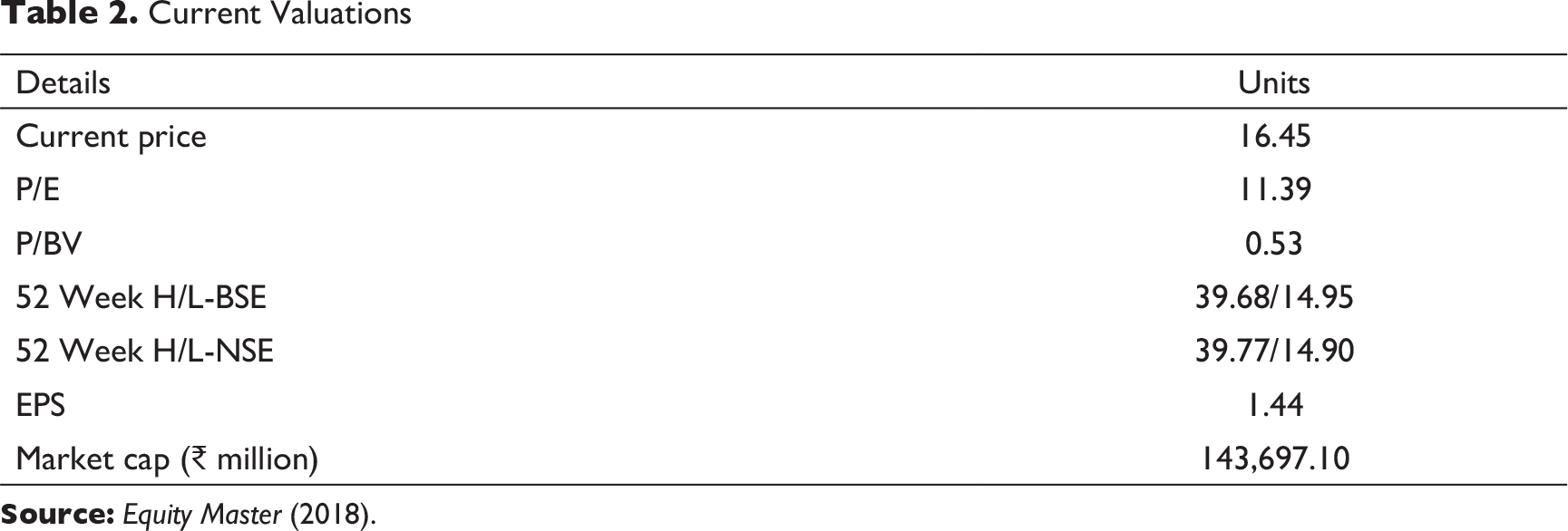
Figure 2 clearly shows the falling of share price from Jun 2018 to April 2019. Though there was some recovery and support during July 2018 to August 2018, the recovery was for a very short period, and the stock kept plunging downwards later. The current valuations in the month of May 2019 are presented in Table 2.
Vodafone Idea earnings per share stands at 1.44, a considerable improvement over the last year recorded EPS value (−1.1). The price to earnings (P/E) ratio, at current price of ₹16.49 (6 May 2019), stands at 11.39. The price to book value at the current price level stands at 0.53 times. The key ratios of Vodafone India of the FY 2018–2019 relative to FY 2017–2018 are presented in Table 3.
The
The
Key Ratio Analysis—Vodafone India Limited
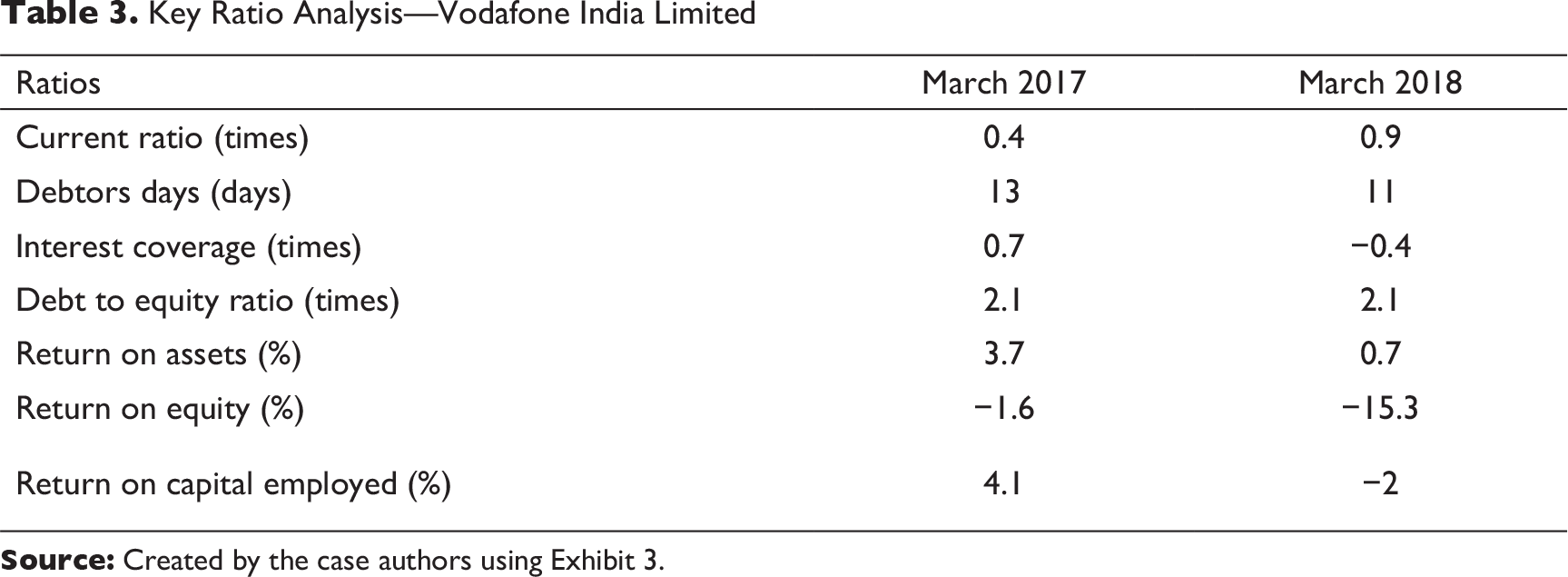
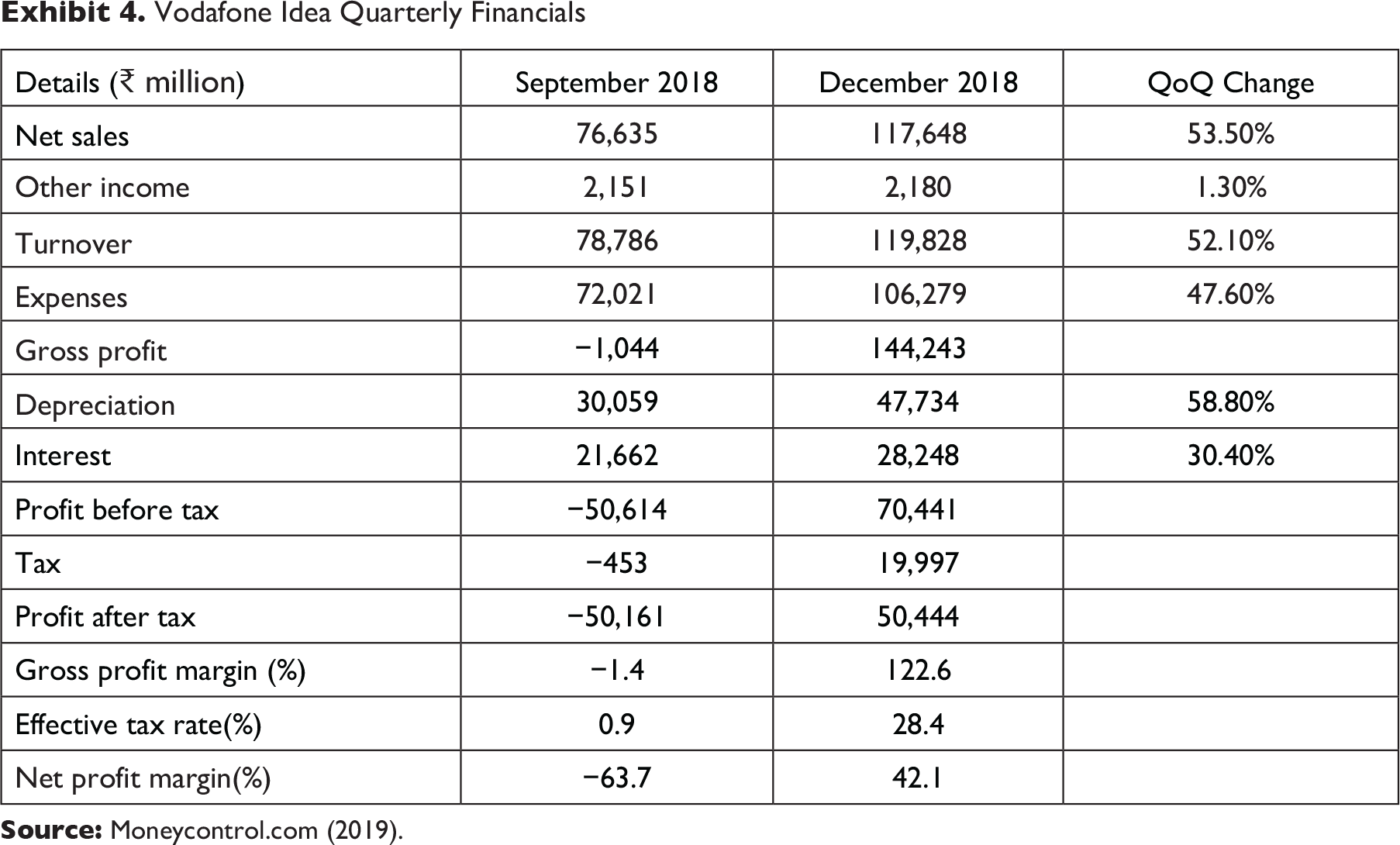
VIL completed the process of merger in August 2018 . The Quarter results after the merger, in the September and December Quarter, show that the expenses were up by 47.6 per cent and the operating income appreciated by 53.5 per cent (Exhibit 4).
The growth of profit margins in the quarter ending December 2018 as compared to Quarter ending September 2018: operating profit margin has witnessed a growth of 122.6 per cent as against 1.4 per cent in 2 QFY 2018. Net profit margin has a shown a substantial change of 200.6 per cent QoQ, changing from −63.7 per cent in the second Quarter to 42.1 per cent in the third Quarter (Equity Master, 2018).
Potential Synergy of Merger
The numerous mergers and acquisitions in the telecom sector in India in the past few years clearly indicate consolidation in the telecom sector. It is projected that by 2020, the industry will have very few major players that will dominate the Indian telecom sector. Idea and Vodafone too felt the need for restructuring and identified their compatible partner so that they would maximize their value creation through synergies. The following synergies are expected to arrive form this merger:
Operational synergies: This merger will make Vodafone Idea a low-cost operator in the Indian telecom sector. They would operate at low cost and supply to high-value Indian telecom markets. This would increase Idea Vodafone profitability manifold.
Manpower synergies: This merger opens up access to technically sound professionals from both renowned organizations of Idea and Vodafone. This will enable leveraging of technical skills, knowledge, work culture exchange, know-how and management expertise between both the companies.
Marketplace synergies: Idea and Vodafone are well placed in the Indian telecom sector with an extensive customer base. This merger will boost their customer base and increase their revenue and leverage the combined skills for maximizing market share (Sarkar, 2018).
Struggle Continues
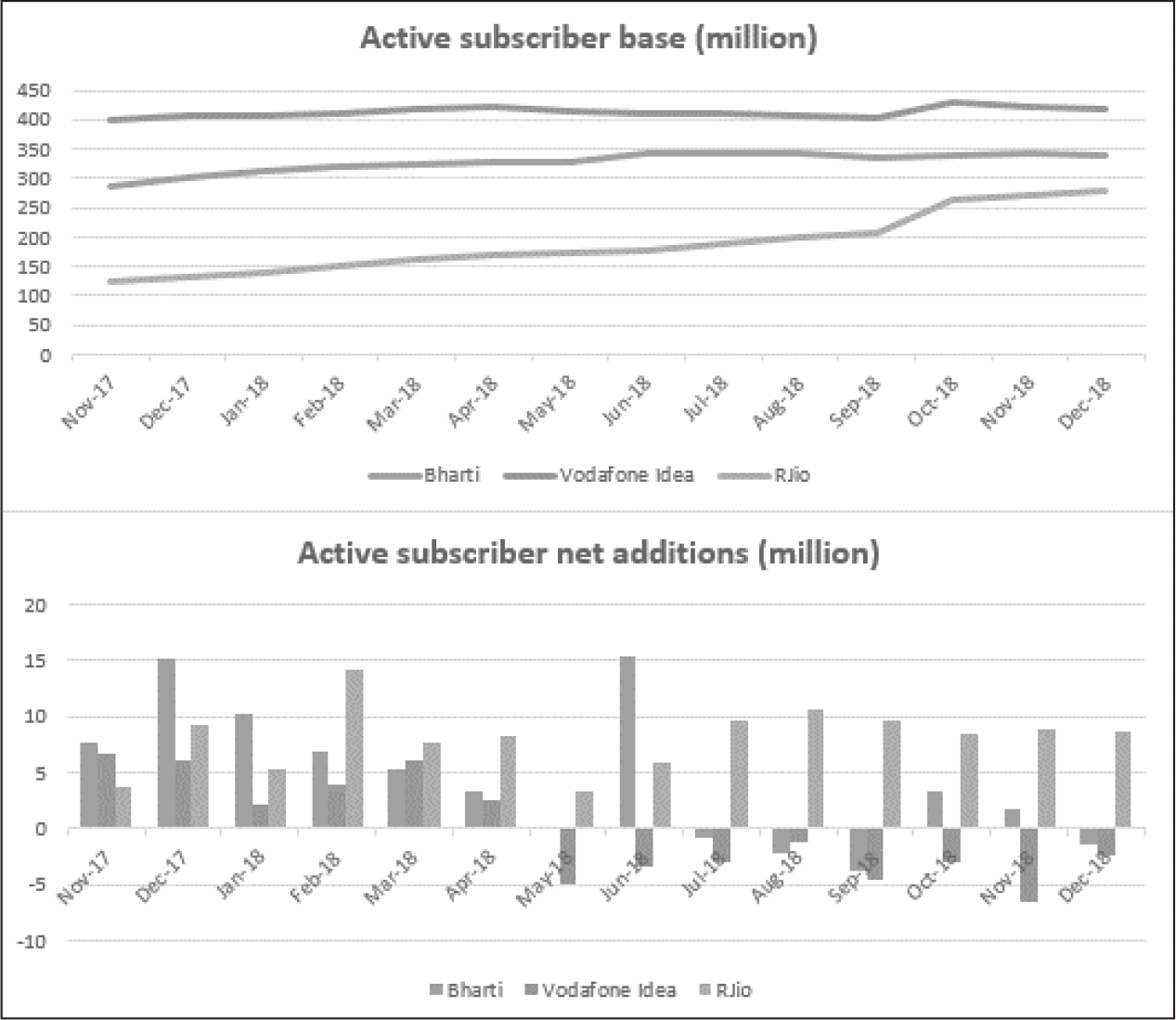
A report submitted by Moneycontrol speaks about how Vodafone Idea is losing their market share to Bharati and Jio. It reports that they have lost 29 million subscribers, and market share has shrunk by 656 bps over the last 8 months. In December 2018, they have lost 2.3 million subscribers (Exhibit 5).
With all the information available with her, Ms Priya Vaidehi was mulling over the decision, if she should really invest in the shares of Vodafone Idea, which is still struggling to reach its summit.
Consolidated Balance Sheet as on 31 MARCH 2018 (in ₹ million)
Vodafone Idea Quarterly Financials
Synopsis
In the month of May 2019, Ms Priya Vaidehi who works as a chartered accountant in a small firm in the city of Pune was pondering about her personal investment. While surfing on social media on the sunny hot afternoon of 2 May 2019, she came across the news of the biggest merger deal in the Indian telecom sector. The news was about how Britain’s Vodafone Group merged its Indian subsidiary with Idea Cellular, to create the country’s largest telecom firm. They mentioned how the combined entity will accelerate the pan-India expansion of wireless broadband services and also expand financial inclusion through mobile money services. Since the merger, the network has an outreach of 92 per cent of the Indian population.
Ms Vaidehi, planning for her future investments, narrowed down her investment search to do a deeper analysis of the merger of two telecom giants Vodafone and Idea. The Indian telecommunication market has a subscriber base of 1.20 billion and is rapidly growing. The country’s wireless subscriptions have witnessed CAGR of 19.62 per cent to reach 1,183.41 million in the year 2018. Over the past few years, from the announcement of the merger to the declaration of completion of merger, she has noticed that there has been volatility in the share price of Idea Cellular. Though the subscriber base of Vodafone Idea is around 400 million and sales had gone up by 53.5 per cent in the third quarter of FY 2018–2019, the share price had been plunging to an average fall of 14 per cent. She was in deep thought whether she should invest in buying the shares of Vodafone Idea? Will her instinct help her or the knowledge of financial markets aid in taking the right decision?
Learning Objectives
to evaluate the strengths, weakness, opportunities and threats of the Vodafone Idea merger;
to analyse the financial performance (financial statements and ratio analysis) of the investment target;
to evaluate the Vodafone and Idea merger and its impact on the share price; and
to understand the impact of merger and acquisition on operating efficiencies of the organizations involved.
Position in Course
MBA-, MBA executive and BBA-level programmes. The case can be used in a finance course on valuation in an undergraduate or MBA programme.
Footnotes
Acknowledgement
The authors are grateful to the anonymous referees of the journal for their extremely useful suggestions to improve the quality of the article. Usual disclaimers apply.
Declaration of Conflicting Interests
The authors declared no potential conflicts of interest with respect to the research, authorship and/or publication of this article.
Funding
The authors received no financial support for the research, authorship and/or publication of this article.

Assignment Questions
Teaching Plan
This teaching note accompanies the case study titled
Teaching this case begins by asking students/participants to individually read and think about the case prior to class. A 10-min introduction to the case by the instructor may be useful before beginning the discussion.
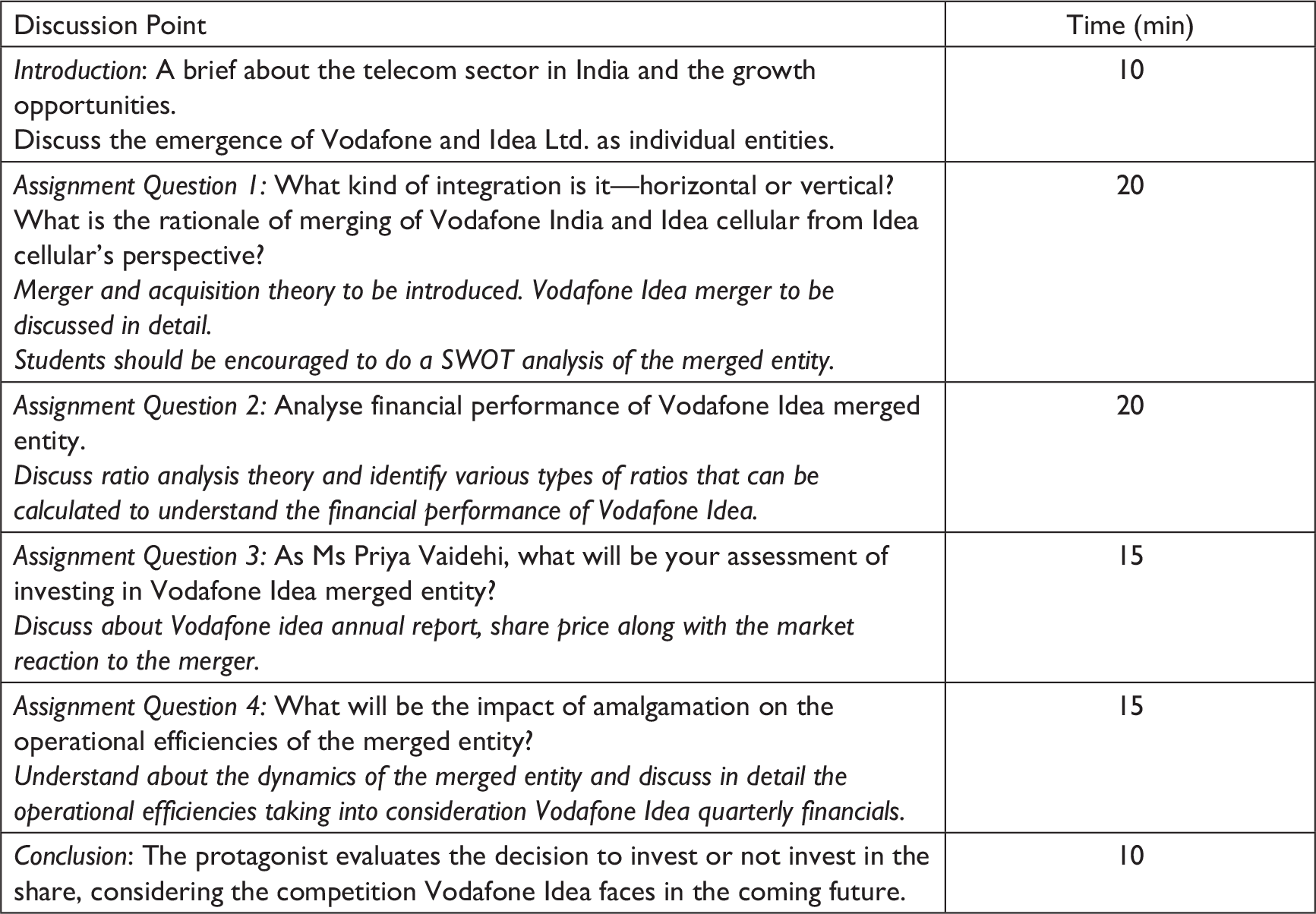
| Discussion Point | Time (min) |
| Introduction: A brief about the telecom sector in India and the growth opportunities. Discuss the emergence of Vodafone and Idea Ltd. as individual entities. | 10 |
| Assignment Question 1: What kind of integration is it—horizontal or vertical? What is the rationale of merging of Vodafone India and Idea cellular from Idea cellular’s perspective? Merger and acquisition theory to be introduced. Vodafone Idea merger to be discussed in detail. Students should be encouraged to do a SWOT analysis of the merged entity. | 20 |
| Assignment Question 2: Analyse financial performance of Vodafone Idea merged entity. Discuss ratio analysis theory and identify various types of ratios that can be calculated to understand the financial performance of Vodafone Idea. | 20 |
| Assignment Question 3: As Ms Priya Vaidehi, what will be your assessment of investing in Vodafone Idea merged entity? Discuss about Vodafone idea annual report, share price along with the market reaction to the merger. | 15 |
| Assignment Question 4: What will be the impact of amalgamation on the operational efficiencies of the merged entity? Understand about the dynamics of the merged entity and discuss in detail the operational efficiencies taking into consideration Vodafone Idea quarterly financials. | 15 |
| Conclusion: The protagonist evaluates the decision to invest or not invest in the share, considering the competition Vodafone Idea faces in the coming future. | 10 |