




Abstract
As a consequence of the current COVID-19 pandemic, online learning is provided to most undergraduate students. This study aimed to determine the impacts of online learning and factors affecting academic performance and mental health among undergraduate students. This study employed a cross-sectional research survey. An online self-administered questionnaire was distributed to collect data from 219 undergraduate students in June 2020. Twelve items assessed student performance and mental health status and determined any association to online learning elements. Descriptive statistics were used to analyse the data. Moreover, associations between elements of online learning and the 12 items were explored using Chi-square and Kendall’s tau-c tests. The results showed: (a) all students’ academic performances were rated positively as the majority reported their perception level as sometime to always; (b) prevalence of stress, tiredness, anxiety and burnout syndrome were reported at 97.3%, 92.7%, 92.2% and 63.9%, respectively; (c) daily study time played a major factor affecting all mental health statuses and exhibiting a positive relationship; and (d) teaching methods, formative assessment, workload and support equipment significantly influenced relation to student performance. This study provides useful data for university administrators’ decisions concerning implementing online learning courses. Relevant elements of online instruction could be reorganised to reduce risks regarding student achievements and mental health status.
Introduction
During the Coronavirus disease 2019 (COVID-19) pandemic, traditional teaching programmes were interrupted and teaching and learning processes were dramatically transformed from face-to-face classes to distance learning (Alsoud & Harasis, 2021; Bączek et al., 2021). Distance learning is widely known by various names such as e-learning, online learning and distance education (Armstrong-mensah et al., 2020). These learning approaches are defined as a method using a wide range of tools and technologies to enrich student learning experiences (Pavel et al., 2015). Recently, many researchers focused on investigating the impacts of distance learning on educational skills and found they offered a number of advantages including ensuring the continuity of education without violation, decreasing the challenges of lifelong learning and reducing costs regarding flexibility (Akinbadewa & Sofowora, 2020; Alharthi, 2020; Thompson & Mcdowell, 2019). On the other hand, evidence showed that the prevalence of stress, anxiety and other mental health problems were higher compared with those of related epidemics (Islam et al., 2020a). This rapid transformation has resulted in various challenges for both instructors and students (Crawford et al., 2020; Realyvásquez-Vargas et al., 2020). Studies conducted by Ahmed and Sifat (2020, 2021) indicated that the mitigations to the COVID-19 pandemic directly resulted in obstacles in education, difficulties in self-discipline and future careers as well as human stress. The success of online learning depends on many factors including accessibility, course content, assessment methods and the use of appropriate programmes (Bączek et al., 2021). The study of Yadav (2021) conducted among Indian students in 2020 revealed students were unsatisfied with content delivery using online teaching and experienced mental illness and eye problems. Moreover, much related research has shown that students face new conditions of university life that consequently impact their academic performance (Aristovnik et al., 2020; Demuyakor, 2020; Haider & Al-salman, 2020; Realyvásquez-Vargas et al., 2020). Similarly challenging, marked declines in student mental health were observed in many countries after encountering situations involving COVID-19. A high rate of anxiety and many types of stress disorders have been reported (Pierce et al., 2021; Xiong et al., 2020b). For example, one study conducted among private university students showed about 60% experienced anxiety, depression or panic, but only 4% did not report any psychiatric episodes (Saha et al., 2021). The study by Islam et al. (2020b) reported prevalence rates of moderate to extremely severe levels of depression and anxiety, 69.5% and 61%, respectively. Among Thai university students during traditional situation, the prevalence of depression and anxiety ranged from 19% to 50% and 26% to 69%, respectively (Boonvisudhi & Kuladee, 2017). However, during the COVID-19 pandemic, research quantifying mental health remains limited.
The Thai government ordered higher education institutions to start knowledge distribution using distance learning modes and reschedule assessment processes and methods to assist students while the crisis continues. Presently, 100% of undergraduate classrooms are forced to operate online comparing 2020 with 2021. In response to significant demand, a few recent research studies have explored the challenges and opportunities involving distance learning. This study aimed to determine the effects of online classes among Thai undergraduate students through their academic performance and mental illness status. An additional objective was to identify factors associated with student performance and mental health status. The results could help organisations create mitigating measures to reduce the potential risk for low educational performance and mental health among students.
Methodology
Cross-sectional Survey
To determine the association of online learning class and student performance as well as their mental health status, a self-administered questionnaire was used as a tool to collect information. The study was conducted in June 2021 among undergraduate students from years 2 to 4 (bachelor) experiencing online learning during the COVID-19 outbreak. At the study time, an overall population of 500 students was reported (Education Service, 2021). Following the Krejcie and Morgan table at a population of 500 sample units, the sample size was determined to be 217 respondents (Krejcie & Morgan, 1970). The inclusion criteria to select the population were full time bachelor’s degree students in academic year 2020 and more than six months’ experience in online class study. Participants reported their demographic information, learning behaviours and mental health status using questionnaires. The tool was validated by experts and evaluated to determine whether the items effectively captured the topics under investigation. The instrument consisted of four parts. In the first part of the survey, students reported their demographic details (sex, age, year of study, weight and height), described their lifestyle behaviours (hours of sleep daily) and described their online class participation (duration per session and per day). In the second part, respondents reported details of online learning and critical elements of online class modified from their related previous study (Gavarraju, 2010; Sun & Chen, 2016; Wittaya et al., 2020). In the third part, respondents were given eight options regarding their student performance from online learning and rated their achievement using a scale from 1 to 5 (1 = never and 5 = always). In the last part, students were asked to rate the level of mental health effects corresponding to their previous study including stress, tiredness, anxiety and burnout syndrome (1 = none of the time, 2 = a little of the time, 3 = some of the time, 4 = most of the time and 5 = all of the time) (Lister et al., 2023; Pierce et al., 2021; Saha et al., 2021; Stephan et al., 2019).
Statistical Analysis
First, descriptive statistics were used to analyse the data including frequency, mean, percentage and standard deviation. Associations between online learning elements to student achievement and performance and mental health status were investigated using Chi-square analysis. A p value less than 0.05 revealed significance in all statistical analyses. All were performed using SPSS Statistics version 18.0.
Ethical Considerations
This study protocol followed the principles of the Declaration of Helsinki and was approved by the Ethics Committee for Research Involving Human Subjects (COA. No. 2021-076) before collecting field data. Subjects provided written consent after being informed of the study objectives and procedures.
Findings
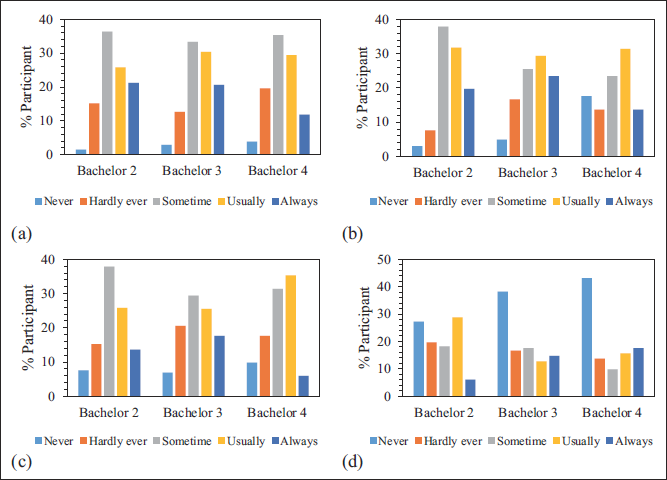
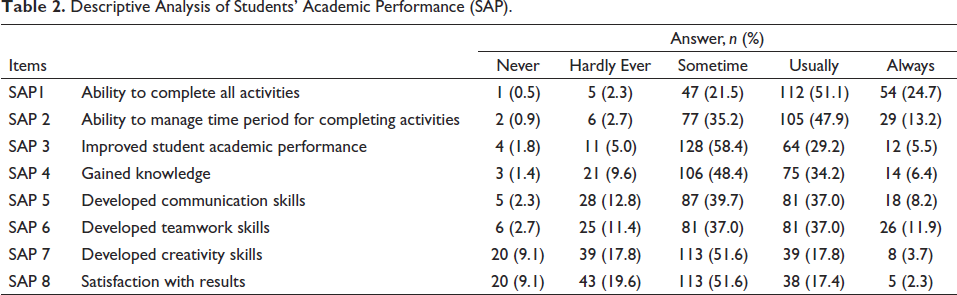
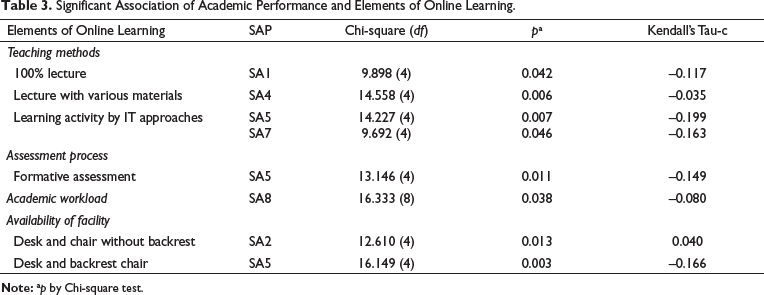
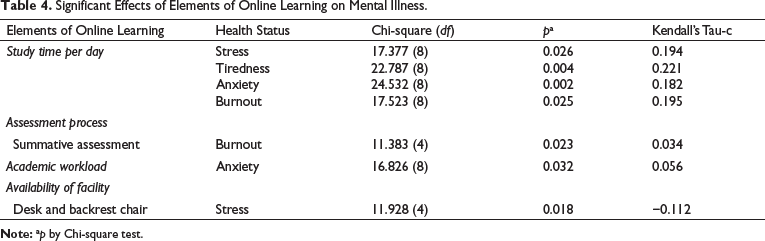
In all, 219 individuals responded to the survey. The sample included more females (87.2%) than males (12.8%), and the average age was 20.0±1.2 years. The demographic characteristics of the sample are presented in Table 1. Among them, 66 students were in bachelor 2 (30.1%), 102 students were in bachelor 3 (46.6%) and 51 respondents were fourth year students (23.3%). The mean and standard deviation values of their weight and height were reported as 50.0±11.4 kg and 158.0±7.0 cm, respectively. More than three quarters (76.3%) slept less than 8 hours daily. A total of 143 (65.3%) students studied more than 3 hours per session, whereas 76 (34.7%) studied less than 3 hours. Most respondents (96.3%) reported their daily study duration as less than 8 hours, 43.8% reported 6 to 8 hours and 52.5% reported 3 to 6 hours. Only 3.7% (eight respondents) studied more than 8 hours daily. About 82.2% and 51.6% of students reported class learning management by lecture with various types of teaching materials and learning activity using IT approaches, respectively. Only a small amount, 39.7%, reported 100% using lecture. Most participants indicated their academic workload significantly increased as a result of the shift to distance learning (79.5%). Results concerning devices and technology connectivity during online learning are presented in Figure 1. Regarding access to technology at home for online classes, students indicated that they accessed using multiple devices. The iPad/Tablet/Kindle served as the major devices (214 respondents), followed by smartphone, laptop and desktop PC of 169, 105 and 62 respondents, respectively. Concerning mental health effects, the prevalence of stress, tiredness, anxiety and burnout syndrome were reportedly 97.3%, 92.7%, 92.2% and 63.9%, respectively (Figure 2). Figure 3(a) shows the occurrence of stress symptoms among participants and mostly presents at moderate (sometime) level. Figure 3(b) indicates the difference from others for bachelor 2 subjects showing a left skew trend. Anxiety syndrome was found in all bachelor levels whereas burnout syndrome presented more at the never option as shown in Figures 3(c) and 3(d), respectively. Table 2 shows the participants’ academic performance from online class. One half of the student were usually able to complete all activities according to the learning topics (51.1%). Almost one half (47.9%) usually managed their time to complete all activities during class. They mostly reported a moderate level (sometime) for improved academic performance (58.4%), gained knowledge (48.4%), communication (39.7%), teamwork (37.0%) skills developed, creativity enhanced (51.6%) and satisfaction with results (51.6%). The results of the Chi-square test analysis between students’ achievement and performance and elements of online learning are presented in Table 3. No significant association was found between elements of online learning and SA3 (p > .05). However, the results indicated communication skills (SA5) were significantly associated with learning activity by IT approaches, formative assessment and the plentiful of desk and backrest features (p < .05). The teaching method of 100% lecture was significantly related to the ability to complete all learning topics (SA1) while gained knowledge (SA4) was associated with a teaching process using various materials. Creativity skill was related to learning activity using IT approaches. Academic workload was found to correspond to satisfaction with results among participants. Results from analysing students’ mental health statuses and learning elements revealed daily study time constituted a significant factor to all health statuses as summarised in Table 4. Availability of desk and backrest features related to stress symptoms and workload were related to anxiety syndrome.
Demographic Data of the Participants (n = 219).
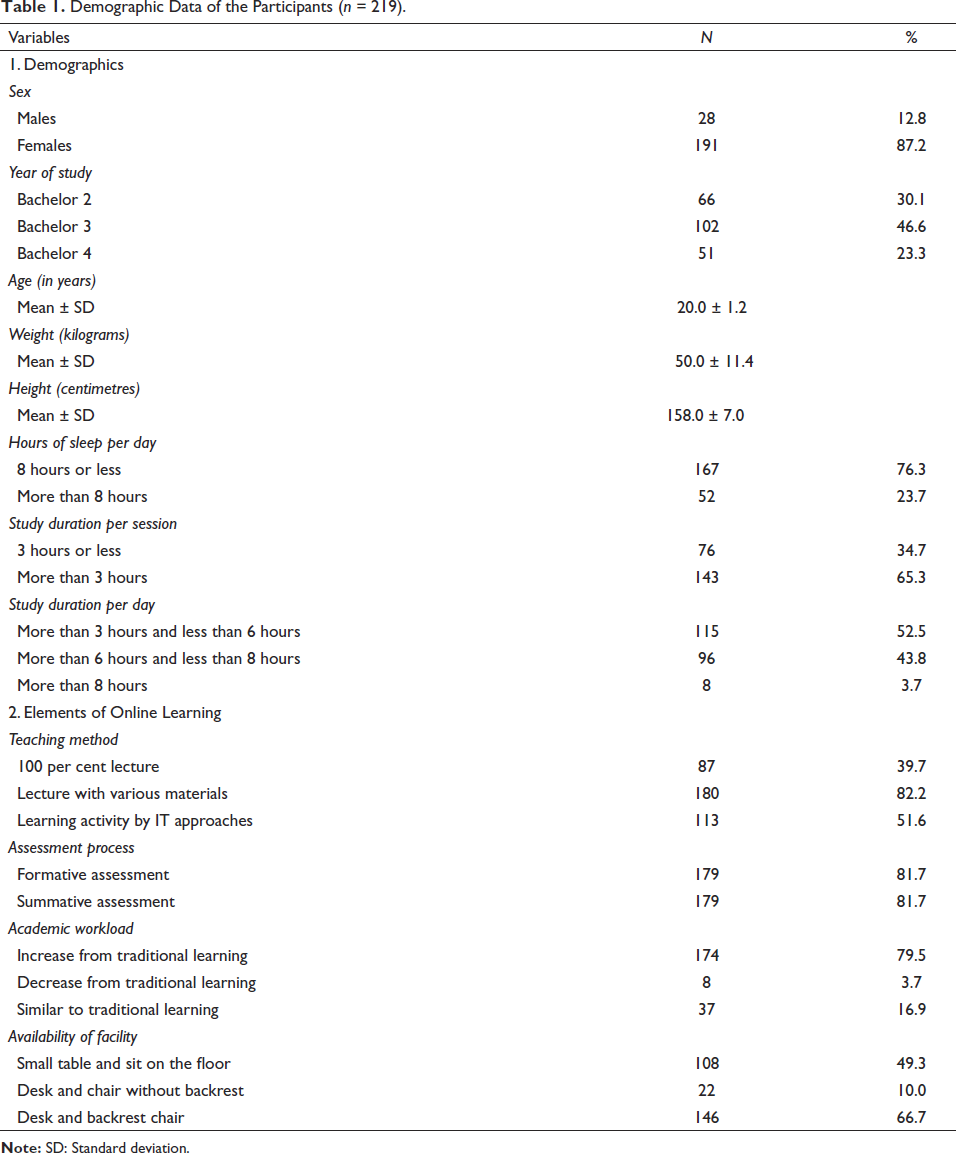
Devices Connectivity for Attending Online Class.
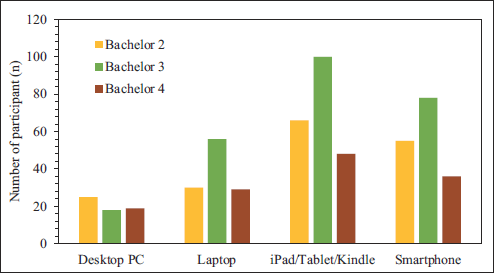
Prevalence of Mental Health Symptoms Among the Undergraduate Students.
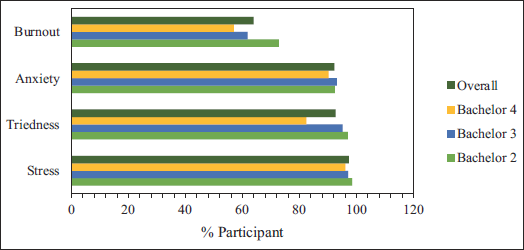
Mental Health Status among Participants: (a) Stress; (b) Tiredness; (c) Anxiety and (d) Burnout syndrome.
Descriptive Analysis of Students’ Academic Performance (SAP).
Significant Association of Academic Performance and Elements of Online Learning.
Significant Effects of Elements of Online Learning on Mental Illness.
Discussion
The results regarding student achievement revealed all positive performances as students were still processing and adjusting themselves to the new style of learning experiences. The findings were consistent with the study of Armstrong-mensah et al. (2020) in that many students adapted to not physically attending university. They reported positive outcomes resulting from the closure of campus such as less time commuting, more time to complete assignments and more time with family members. Students used mostly tablets rather than laptops, smartphones or desktop PC. The phenomenon is common among Thai students due to convenience and low cost. Notably, a large number used smartphone devices for learning (second in rank), but these were unsuitable or incompatible to participate in long interactions (Saha et al., 2021). Related studies have recommended the most suitable time to obtain the best outcomes should be one hour of classes (Nitu et al, 2020; Rahman, 2021). In this study, the Chi-square test was used to determine the associations between students’ performances and elements of online learning. The results revealed that the communication skills among undergraduates had an opposite relationship to learning activities using IT approaches, formative assessment and availability of desks and chairs with backrest features. This was indicated by applying the Kendall rank correlation coefficient (Kendall’s tau-c; tau-c) to analyse data based on non-square or rectangular contingency tables (Berry et al., 2009). That means when instructors wished to develop students’ communication skills, they should provide fewer learning activities by IT and formative assessment. Also, the satisfaction with online learning results presented the converse value of tau-c (−0.080) for academic workload. Similar to the study of Haider and Al-salman (2020) and Aristovnik et al. (2020), the volume of assessments and homework by e-learning led to confusion, frustration and worth in academic performance. Hence, more academic workloads and assignments could imply less satisfied outcomes among students.
Numerous studies have shown that online learning places mental pressure on students (Lister et al., 2023; Yadav, 2021). The prevalence of stress was found at comparable levels for all bachelor levels. This finding corresponded to those of a study conducted among the young students (15 to 24 years) in that their ongoing characteristics changed in physical, psychological and social dimensions. During this growth, many types of behaviours developed which could lead to mental health illness such as normalcy or mental effects (Das et al., 2016; Omari et al., 2020). Moreover, a peak in stress syndrome at 98.5% among second year students was similar to those of tiredness, anxiety and burnout syndrome. This outcome showed a relationship of illness and study experiences at the bachelor 2 level as this constituted the first time facing a new situation while lacking experience in the learning process. However, the prevalence of mental illness among students during the COVID-19 pandemic shifted from normal to 51.1% for stress and 41.2% to 42.1% for anxiety (Al-Abbudi, 2019; Malak & Khalifeh, 2018). Based on the results and those of related literature, such a given statistic signals the need for regular screening of undergraduates for mental illness during distance learning. Moreover, other key findings of this study suggested that some elements of online learning could cause a prevalence of major mental health symptoms including daily study time, summative assessment, workload and equipment/features. For daily study time, the test results indicated this impacted stress, tiredness and anxiety levels and burnout syndrome (p < .05). The Kendall’s tau-c results revealed all positive values at 0.194, 0.221, 0.182 and 0.195 for stress, tiredness and anxiety levels and burnout syndrome, respectively. This could imply that these relationships were perceived in a positive way or presented similar tendencies. Also, summary assessment and academic workload presented a tau-c as a positive sign in relationships whereas the availability of desk and chairs with backrests gave opposite ones.
Limitations
Limitations were encountered in this study. The study design was only able to determine significant risk factors and could not draw cause and effect relationships between the variables. For further research, using large-scale office studies in various curricula and faculties are recommended.
Conclusion
This study revealed positive feedback from undergraduate students regarding distance learning during the COVID-19 pandemic. All performance items were assessed and indicated a moderate perception level. Students’ performances and elements of online learning indicated that teaching methods, formative assessment processes, academic workload and availability of features while distance learning were significantly associated (p < .05). The prevalences of stress, tiredness, anxiety and burnout syndrome among affected students were 97.3%, 92.7%, 92.2% and 63.9%, respectively. The shift from traditional classes elicited approximately twice as much stress and anxiety. Bachelor 2 (second year student) reported a peak of mental illness due to encountering this learning approach for the first time. Moreover, it reinforced that risk of mental illness was positively associated with factors of daily study time, summative assessment and academic workload while negative in relation to the availability of desk and chairs with backrests. Thus, these results could help policymakers to promote approaches for instructors to strengthen course outcomes and provide monitoring programmes to regularly screen undergraduates regarding mental health status while distance learning.
Footnotes
Acknowledgement
This work is part of a research project, ‘The impacts of online class and environmental factors on student’s academic performance and physical health status; a case study among undergraduate students of the Faculty of Public Health, Mahidol University’ supported by Mahidol University. The authors would like to thank all students and lecturers of Mahidol University Faculty of Public Health for the data provided to this study. We also acknowledge contributions from the Faculty of Public Health International Relations Unit.
Declaration of Conflicting Interests
The authors declared no potential conflicts of interest with respect to the research, authorship and/or publication of this article.
Funding
The authors received no financial support for the research, authorship and/or publication of this article.