




Abstract
This article shifts discussion of the medieval in South Asia away from conversations about ‘what’ took place towards ‘how’ it is studied. Following a brief review of what defines the South Asian medieval, this article starts with the premise that the entire period has not been studied archaeologically and that there is a great deal of potential in doing so. This potential is explored with reference to recent work in Central India, which has investigated a particular set of developments in which socio-economic histories first located the transition from the ancient to the medieval in South Asia, namely, royal grants of land to Hindu temples in the fourth to seventh centuries
Introduction
This article stems from longer-term concerns with how we might best study the early medieval in South Asia archaeologically. For those not familiar with the South Asian context, ‘the medieval’ appears as both a term and some sort of civilisational ‘middle period’ in nineteenth century European scholarship on South Asia.
1
There, it has continued to exist as a concept and a period that is understood as being markedly different from what came before. It is characterised by a series of societal and cultural developments including: (a) a change in political rule, with the appearance of new dynasties and kingdoms across the Indian subcontinent from the fourth to seventh centuries
In South Asia, there is little consensus about the nature of the transition to the medieval or, for that matter, the social formation that defines it.
3
Since the late 1960s when ‘the medieval’ was first problematised in historical research in India,
4
research on the early medieval has centred on the royal grants of land and its revenue to religious groups. These grants were recorded in Sanskrit, on copper plates (Figure 1). This practice began with the Guptas—a large and powerful dynasty who ruled large parts of North India between the third and sixth centuries

Debate about these two models of societal change obsessed historical scholarship on the early medieval for at least four decades. This debate has now largely played out, but the idea that these charters and the practices, intentions and strategies behind them were in some way transformative has persisted. It is now generally accepted that royal grants of land and its revenue was the practice by which people who existed outside ‘society’ were brought into a new and emerging social order. It was also through this process of integration that the caste system, with kings and priests at core, is understood to have become entrenched in society, and religious cults, enshrined in Hindu institutions, became part of the state. The marshalling of people and resources to cultivate land for new landowners is also believed to have led to a significant expansion of the agrarian base to the economy and a proliferation of villages.
All of this is a large topic and I am discussing these developments in the most general of terms. While the precise details of individual arguments are undoubtedly important, the chief concern of this article is, instead, how the period has been studied. This has just as much impact on our understanding of past as what is said about it. When considered in this light, fixating on questions of societal level transition, debated only in terms of two opposing models, has had a serious effect on scholarship on the medieval in general. It led to a disjuncture between different scales of approach. On the one hand, we have histories that continue to operate at the broad societal scale and focus on the socio-economic or socio-political dimensions of early medieval India. 10 These tend to incorporate evidence from across the subcontinent to construct meta-narratives, without necessarily getting to grips with what was going on at the regional level of the histories of individual kingdoms or cultural units that existed in the past, or specific aspects of society in particular places and times. If ever they examine developments at the level of individual regions, it is to look at the same large-scale topics (agricultural production, property relations, feudalism or state formation) with regions used as case studies to either prove or disprove ideas formed at the meta-level. 11 On the other hand, we have a smaller, yet far more disparate collection of studies that are concerned with other aspects of society and culture that are often deemed ‘less important’ by socio-economic histories. These may be the rule of particular dynasties and the cultural dimensions of their kingdoms, 12 studies of religious history, 13 focused examinations of particular literary works and genres 14 or language. 15 Many of these overlap with studies of stone sculptures and architectural remains and are also concerned with the development and spread of religious ideologies and practices. 16 Yet, because they are not concerned with ‘bigger’ questions and deal instead with perhaps more ‘cultural’ aspects of society, they are either seen as peripheral to mainstream socio-economic histories or ignored completely. 17
This disjuncture, problematic though it may be, is only the tip of the iceberg. When we also consider the evidentiary bases of the interpretations being made, we soon realise that there are other major concerns that are rarely mentioned and remain unaddressed. The most significant of these, at least from my own perspective, is that there is no archaeological examination of the period. Despite making repeated recourse to the ideas put forward in historical scholarship, 18 archaeologists have neither studied these developments nor the idea that land grants were transformative. 19 Archaeological investigations of this entire period extend only as far as excavating monuments prized for their artistic merits or one or two large obtrusive settlements. 20 As such, most of the archaeological evidence from and for the period amounts to the artefacts that are found by chance while digging down to the earlier layers that are deemed more interesting by archaeologists. 21
The reasons for this are complex and difficult to tease out. On the one hand, there is a traditional unequitable relationship between history and archaeology, wherein the perceived value of archaeology lies in its ability to provide physical ‘proof’ of the existence of things at fixed points in time. In many respects this is similar to epistemological relationships in the study of the medieval elsewhere. 22 Yet, beyond this, in South Asia archaeology is still a sub-discipline of history. This means that its main value is still defined (institutionally) as a subject best suited to the study of pre-historic periods, while textually-oriented historical approaches are deemed better equipped to study historical periods. Outside South Asia, on the other hand, archaeologies of South Asia are constrained by an unashamedly colonial approach to the categorisation of the human past and the organisation of the discipline. Archaeologists working in South Asia are expected to research, teach and provide expertise on the sum and total of every aspect of South Asia’s past in ways that correspond to mainstream archaeological theories born from the examination of other areas. 23 Within that framework, ‘the medieval’ also continues to be understood as something peculiarly European.
However explicable the situation might be, and without wishing to sound polemic, this absence of an archaeology of the medieval in South Asia is extremely problematic. Not only does it mean that we are missing one whole category of evidence but also that everything we know is based on a small sample of sources produced by an even smaller group of people for one section of society. While we can glean a lot from these sources, we cannot escape the fact that a great deal of our historical understanding is based on: (a) how the sources are read; and (b) recourse to a wide range of unavoidable assumptions that (due to the nature of the sources) have to be made concerning what various presumed universals such as ‘trade’, ‘economy’ or ‘society’ were and how they functioned. These are precisely the things that archaeology has the potential to elucidate.
Locating the Archaeological Point of Enquiry
Grounding the Charters in Space
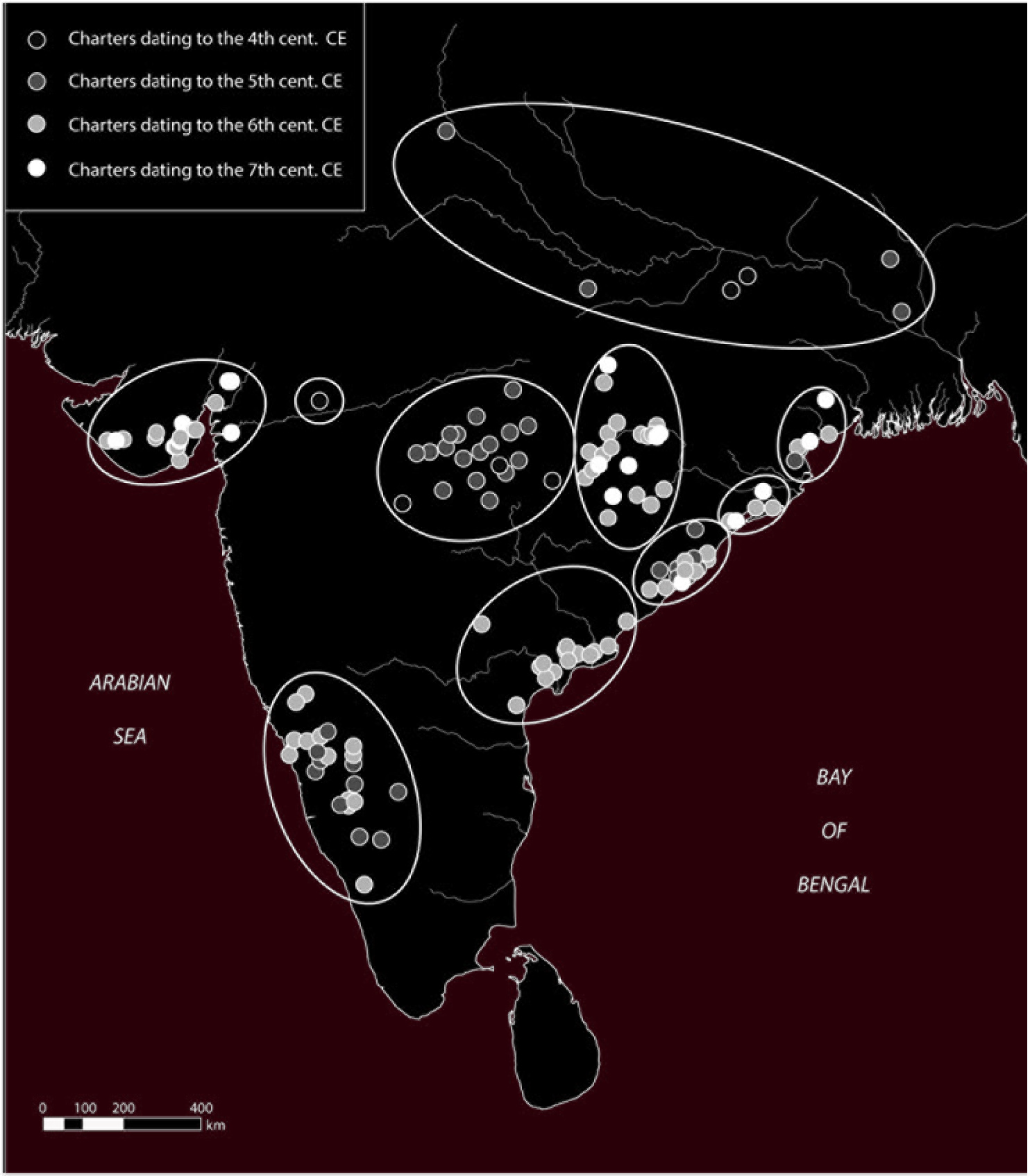
It is in response to this that my research has explored what an archaeological approach to the study of the early medieval might involve, where it might be located geographically and conceptually, and what it might focus on. Given the centrality of the land grant charters to existing scholarship on early medieval society, these texts provide an obvious starting point. Archaeologically and historically we know that texts exist as material entities—as physical objects that can embody and materialise ideas, and that have agency of their own. One of the most effective ways to ‘read’ these text objects archaeologically is to ground them in their landscape settings—to place them into the spatial, temporal and societal context in which they were made and used. This is because for archaeology, the context of any object, whether that be its stratigraphic position during an excavation, or its relative proximity to other objects, locations and areas of the surrounding landscape, can fundamentally transform our understanding of that object’s meaning and use in the past. The first step in doing this is to map where these charters were found as a crude but effective way of seeing where they were used in the past (Figure 2). Doing so instantly provides a picture of their distribution that has never been considered and gives us insight that had rarely been appreciated in earlier historical scholarship. 24 Locating these charters on the ground shows that they cluster in relatively small areas across the subcontinent and appear to reflect only small pockets of activity. Their distribution raises a number of questions as to how representative these inscriptions (and all they are assumed to signify) might be of all the societal developments that took place across South Asia. Instead, it appears that they are more representative of the uptake of a new shared cultural practice by a very limited section of the overall population—one that involved a commonly agreed legal language, a way of expressing and negotiating power, and religious legitimation. Further, while not denying the potential societal impacts of the advent of this new ‘Sanskrit culture’, or the grants of land themselves, this distribution of the evidence shows just how skewed large elements of the existing historical picture are, and just how much it may not account for—at least during this earliest formative period of the early medieval. Recognising this immediately forces us to pay attention to the effects of these land grants on a regional, as opposed to a pan-South Asian scale.
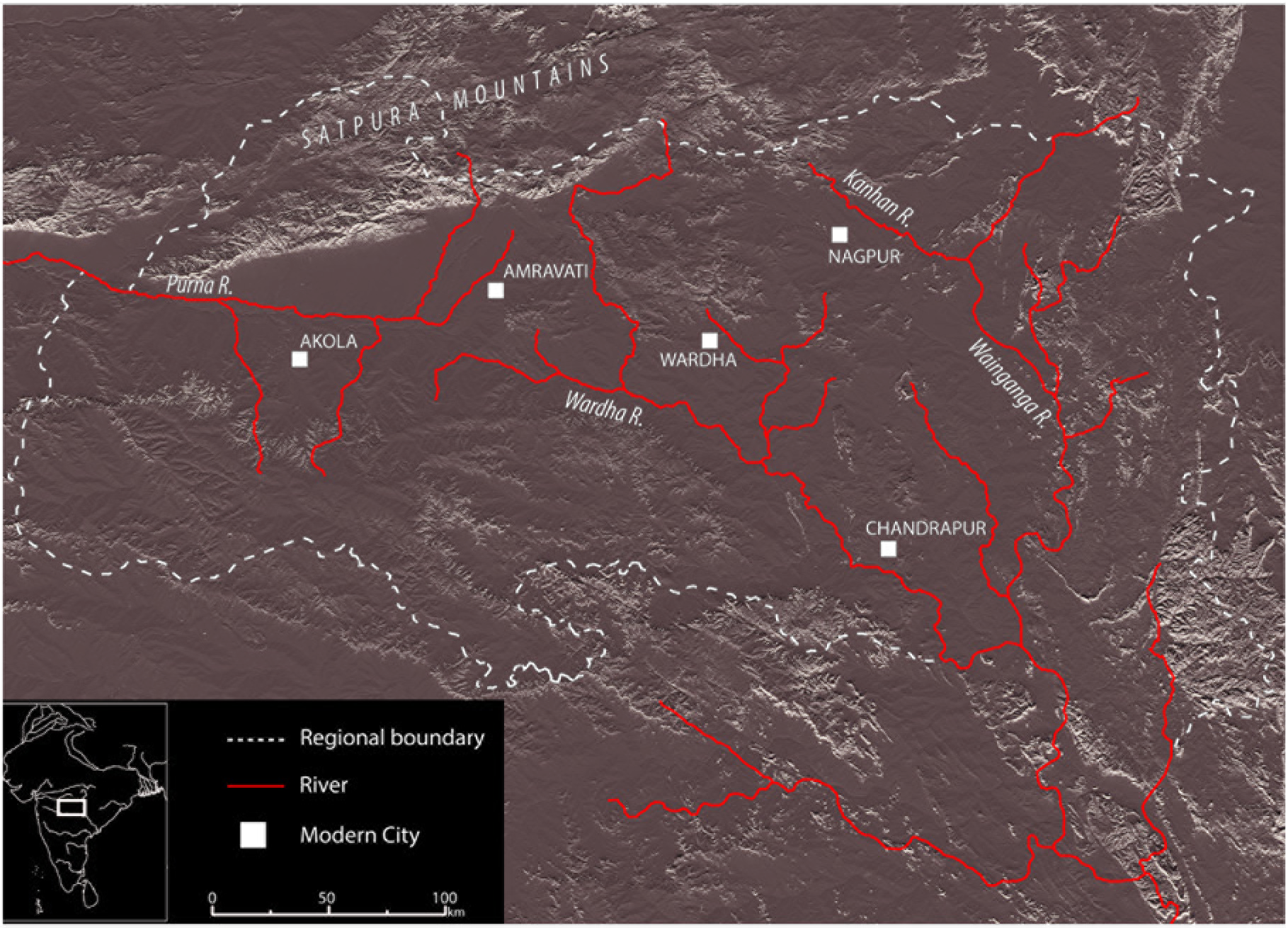
My own research has focused on one of these areas where we see a cluster of land grants: the region of Vidarbha. This is both a geographically bounded and historically defined region within the modern state of Maharashtra, India (Figure 3). Between the late-third and sixth centuries
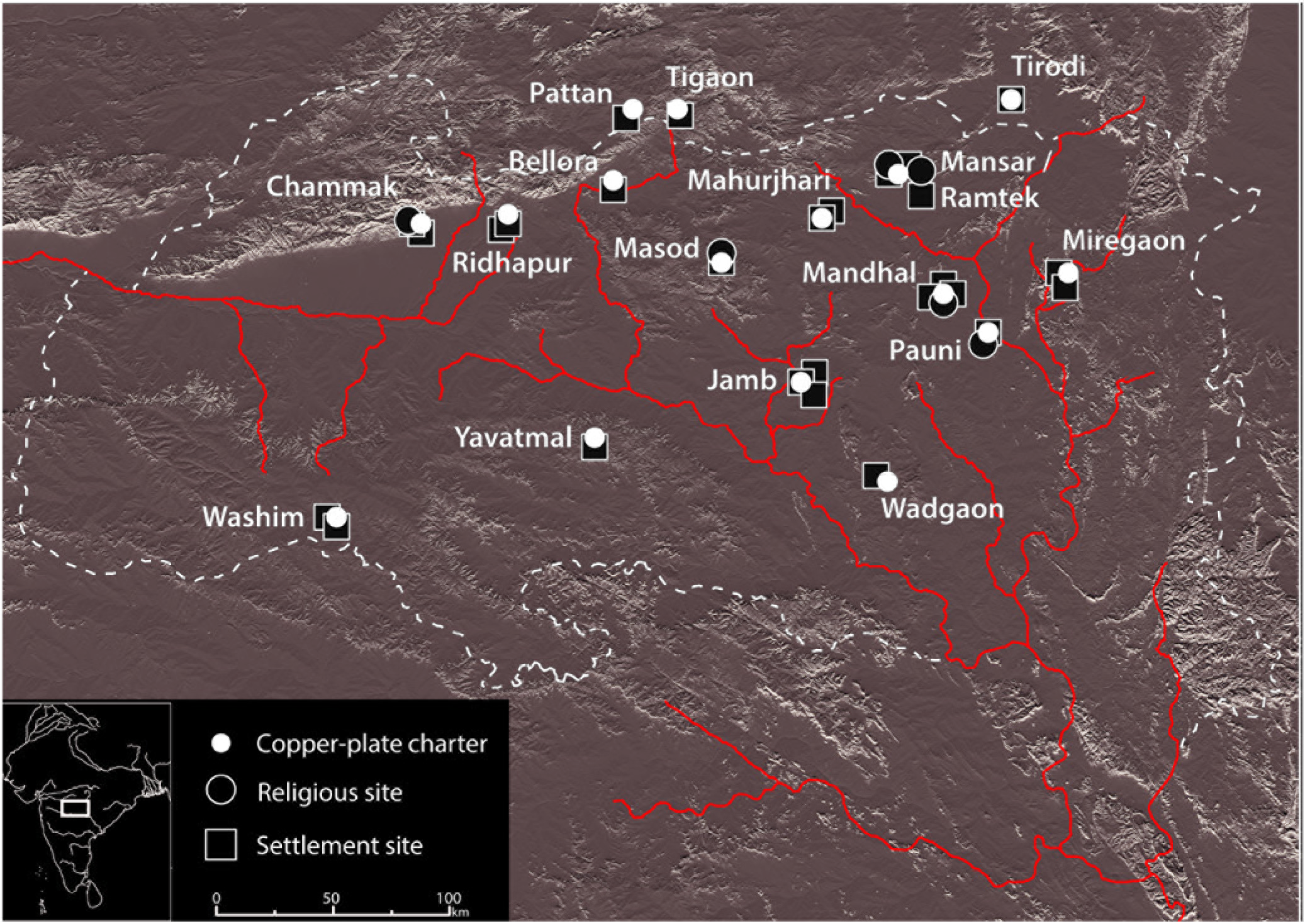
In terms of the charters themselves, we know that twenty-nine copper plates have been found in this region since the nineteenth century. Many of these can be connected to the places where they were granted and kept by relating them to their archaeological context. Unfortunately, this is not possible in every instance because some were not found in the ground, but in the hands of private individuals with no record of where they came from or where they were found. For these charters, we have little idea of where they might have been used in the past. Even the traditional historical geographical practice of correlating place names mentioned in inscriptions with those of modern towns and villages does not work in this instance. Charters found in the ground, however, usually encountered while digging or ploughing a field, allow us to postulate that their provenience may relate in some way to the location of the donees or the land being donated. 27 This proposition is further supported by names of places in the charters relating to some nearby. Perhaps most striking is the case of a grant mentioning ‘Charmanka’ being found in a village called Chammak. 28 Taking this group of inscriptions and simply going to the places where they were found resulted, in every single instance, in the discovery of archaeological sites in the nearby vicinity (Figure 4). 29
Before proceeding further, it is important to recognise that the value of looking at the archaeological remains dating to this period in this region has not been entirely ignored. The late Ajay Mitra Shastri was well aware of the importance of both the textual sources and the sculptural and architectural remains that accompanied them. 30 Further, Hans Bakker’s research in the area understood perfectly the relationship between text, material and visual culture in considering material traces of Vakataka rule and spread of ideology in the region and more than appreciated the need for foundational archaeological research. 31 The first steps in this direction were undertaken by Harriet Lacey whose field surveys around the scared centre of the Vakatakas at Ramagiri, or Ramtek, represent the first archaeological investigation of the settlement archaeology of this period in the region. 32
Considering the Archaeological Landscape of the Region
A review of the explorations and investigations in Vidarbha over the last 190 years reveals a surprising amount of information that has rarely been taken into account in historical scholarship.
33
There are at least 1200 known archaeological sites and individual artefactual remains dating to the first millennium
Having established what is known in the region, we can then peel back some of these layers of archaeological evidence and focus on those sites and remains that pre-date and are contemporary to the rule of the Vakatakas to reveal something of the landscape in which they existed. Most published reports of the discovery of archaeological sites and remains are frustratingly brief. The results of only two archaeological surveys (of a total of eighty-four) have been explicit about the methods they used and are published in any detail.
36
The rest are either summarized in journals and reports or are safely locked away in doctoral theses that exist only in hard copy. Of the one hundred excavations that have taken place in the region, the reports of only four excavations at three sites have been published.
37
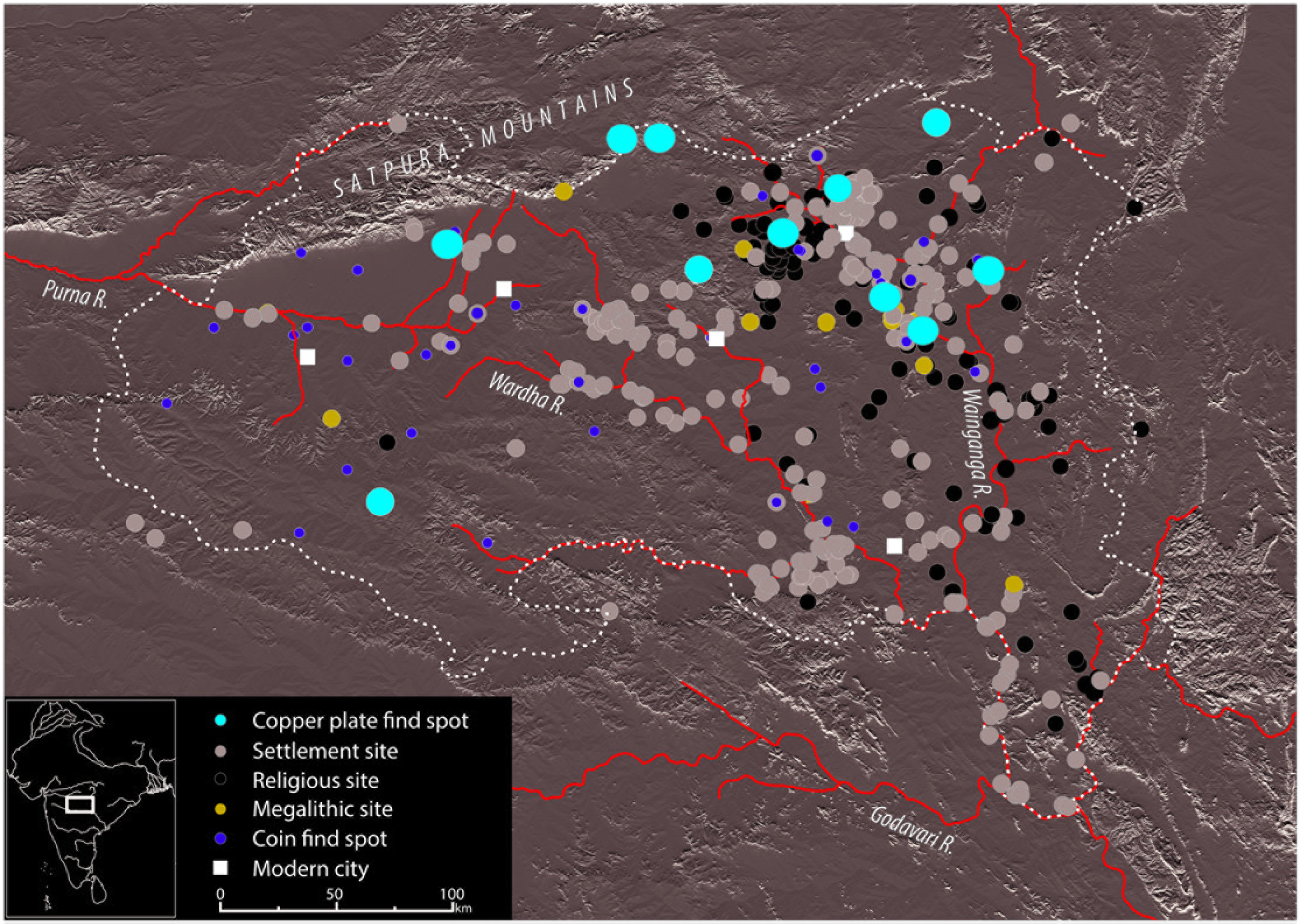
Yet, for all these constraints, we can still categorise the sites and remains into three broad categories, namely: (a) settlements of varying sizes indicated by scatters of artefacts spread across the surface of sites or highly visible and obtrusive mounds of accumulated habitation deposits; (b) religious sites belonging to various religious groups, which can be identified on the basis of the sculptures or architectural remains that define them; and (c) spot finds—essentially individual artefacts such as inscriptions or coins that are found on their own, removed from other remains. We can also date the known evidence into broad chronological brackets, albeit with similar constraints that limit the precision with which we can assign them to particular centuries or periods. Lack of published details means that we can only group the known evidence into broad brackets: the ‘megalithic’, or early Iron Age from the tenth to the third century
Doing so allows us to see the wider settlement context in which the practice of royal grants of land took place. Looking at the locations of the copper-plate charters in relation to those of the settlements and religious sites that already existed in the region we can clearly see that land was granted and charters were issued in areas that had been settled for at least one thousand years. Many pre-Vakataka settlements were themselves pre-dated by an earlier ‘megalithic’ tradition dating back to the early to mid-first millennium
Identifying Regional Patterns
With the known archaeological landscape as our backdrop, we can delve further into the archaeological contexts of these land grants and investigate what was taking place around them. Here, recent work has involved a series of archaeological surveys in the areas immediately surrounding the find-spots of three copper plates to reveal their archaeological contexts and reconstruct the societal and cultural dynamics of the areas where they were issued. This work has been described in detail elsewhere, 41 and the methods need not be repeated here. Briefly, these surveys focused on the areas surrounding the find-spots of charters in three different parts of Vidarbha that (based in part on earlier historical work on the region) were hypothesised to have witnessed differing trajectories of societal and cultural developments (Figure 6).
The first surveys were carried out around Pauni, where a grant of land measuring 50 ‘nivarttanas’ (a unit of land measuring approximately 120 m 2 ) 42 was made by king Pravarasena II to an individual brahmin. 43 Pauni was already a vast fortified city that had dominated the surrounding area for many centuries, 44 and was probably the centre of an as yet unidentified polity long before the Vakatakas arrived on the scene. The second survey area centred on the settlement and temples at Mandhal, which we know was an important religious centre during the rule of the Vakatakas. This is evidenced not only by three grants of land that were made to temples in this place 45 but also the remains of those temples. 46 The third survey area centred on the site at Chammak, mentioned earlier, in the west of the region. Together with the area around Ramtek that was surveyed by Lacey, the survey zones around Pauni and Mandhal appear to represent the ‘core’ area of Vakataka rule. It is from within or near these three zones that most of the existing evidence for the Vakatakas has emerged—including a series of temples and sculptures found at Hamlapuri, Mandhal, Mansar and Ramtek, 47 and what eventually came to be their capital city art Nandivardan, or Nagardhan. 48 Further, it is along this north–south axis, from Pauni, to Mandhal to Ramtek that it has been suggested the Vakatakas moved and gradually established their power base during their rule. 49 The area around Chammak, however, while still part of the geographically confined ‘cluster’ of charters in the region, appears to have been very much on the periphery of that ‘core’ zone.
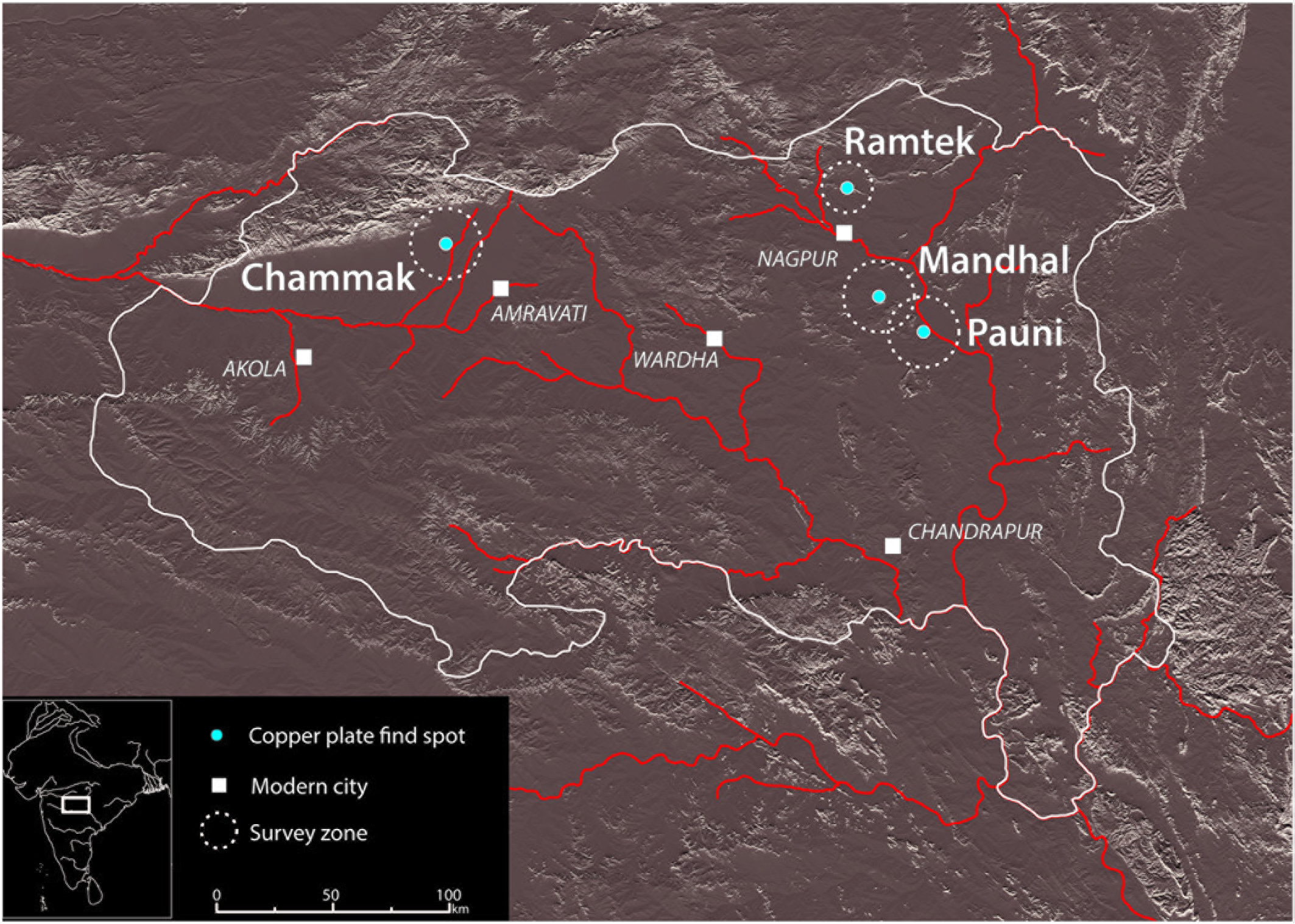
These surveys resulted in the discovery and documentation of 268 archaeological sites, that varied in date from the early Iron Age to the later phases of the early medieval period. Thanks to the systematic survey modes adopted,
50
it was possible to categorise these sites with more precision than is possible for the wider region. Here, we were not only able to identify the existence of settlement sites but also their approximate sizes. Due, however, to the fact that the original extents of some sites were obscured by modern buildings and the fact that we only collected samples of surface material (instead of collecting everything from the entire visible surface), we could not discern the sizes of settlement during every phase of occupation. Instead, we used the density and range of surface remains as proxies for levels of activity at these sites and ranked them in order of the scale of activities that took place within them.
51
While recognising the limitations of such an approach, we note that in almost every instance the highest levels of sherd density and variation correlate to the maximum extent of settlements in as much as they could be ascertained on the ground. Further, a new regional pottery typology developed from fresh analyses of the pot sherds found across these sites enabled us to date them with a lot more precision than had been possible so far, with five clear chronological brackets: the tenth to the fourth century
Consideration of the distribution of archaeological sites in these four survey zones together with those in the wider region reveals significant aspects of change over time in Vidharba. 54 The earliest settlements and religious sites in our survey zones and wider region are those dating to the ‘megalithic’ (though we know from isolated excavations that people were living in the region even earlier). These sites are distributed fairly widely, often in association with stone circles, monoliths and burials—the material traces of (probably various) beliefs and ritual practices, and mechanisms of negotiating and maintaining social relations at the time (Figure 7). 55
Obviously, these megalithic remains pre-date the beginnings of the early medieval by quite some time but they usefully demonstrate the shifts afoot in the period. Between the third and first centuries
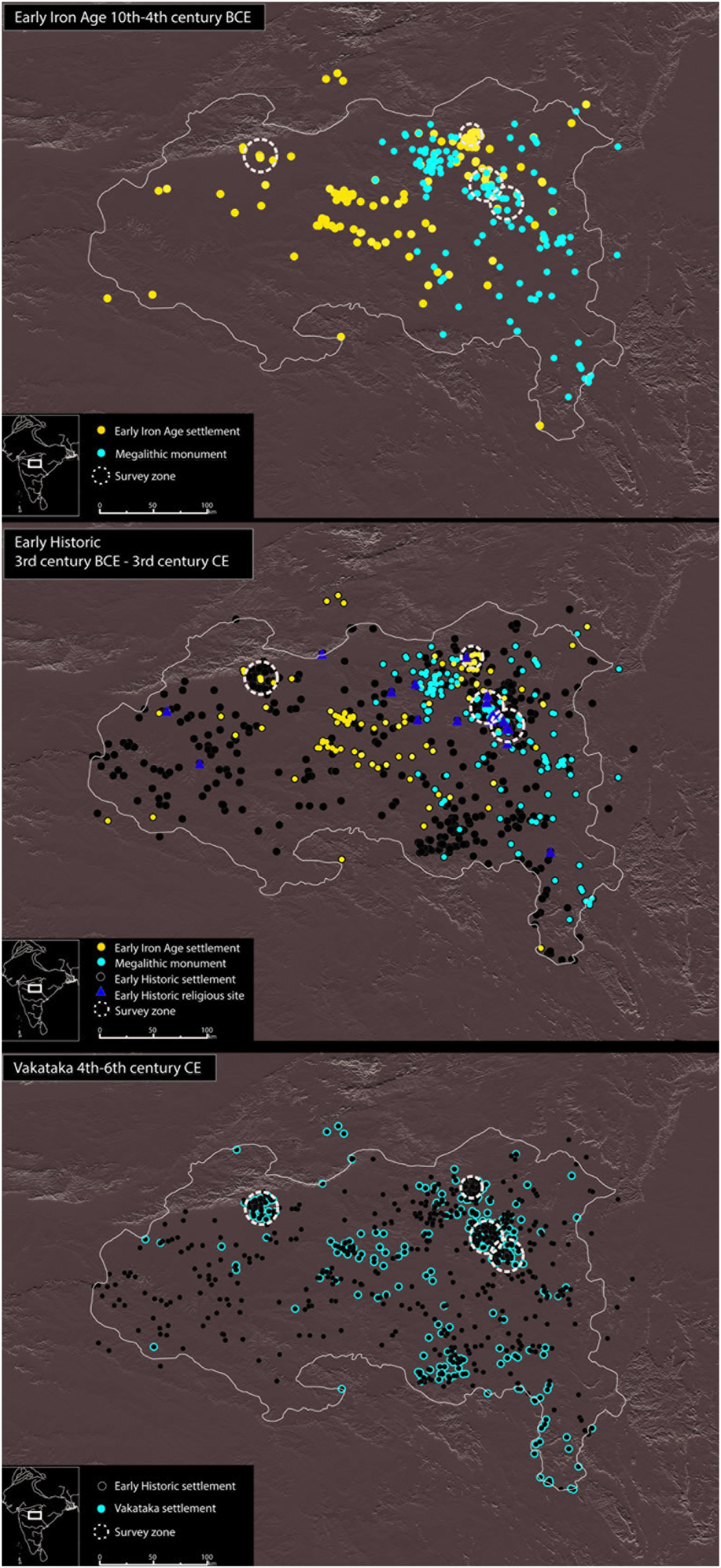
Importantly, however, and contra certain narratives that posit an expansion of agricultural production and associated settlement, the archaeological evidence does not bear out the increase in settlement that has been suggested to have stemmed from grants of land and a concomitant expansion of an agrarian economy.
Towards an Archaeological Approach to the Study of Societal Change
Micro-regional Surveys and Local Variation
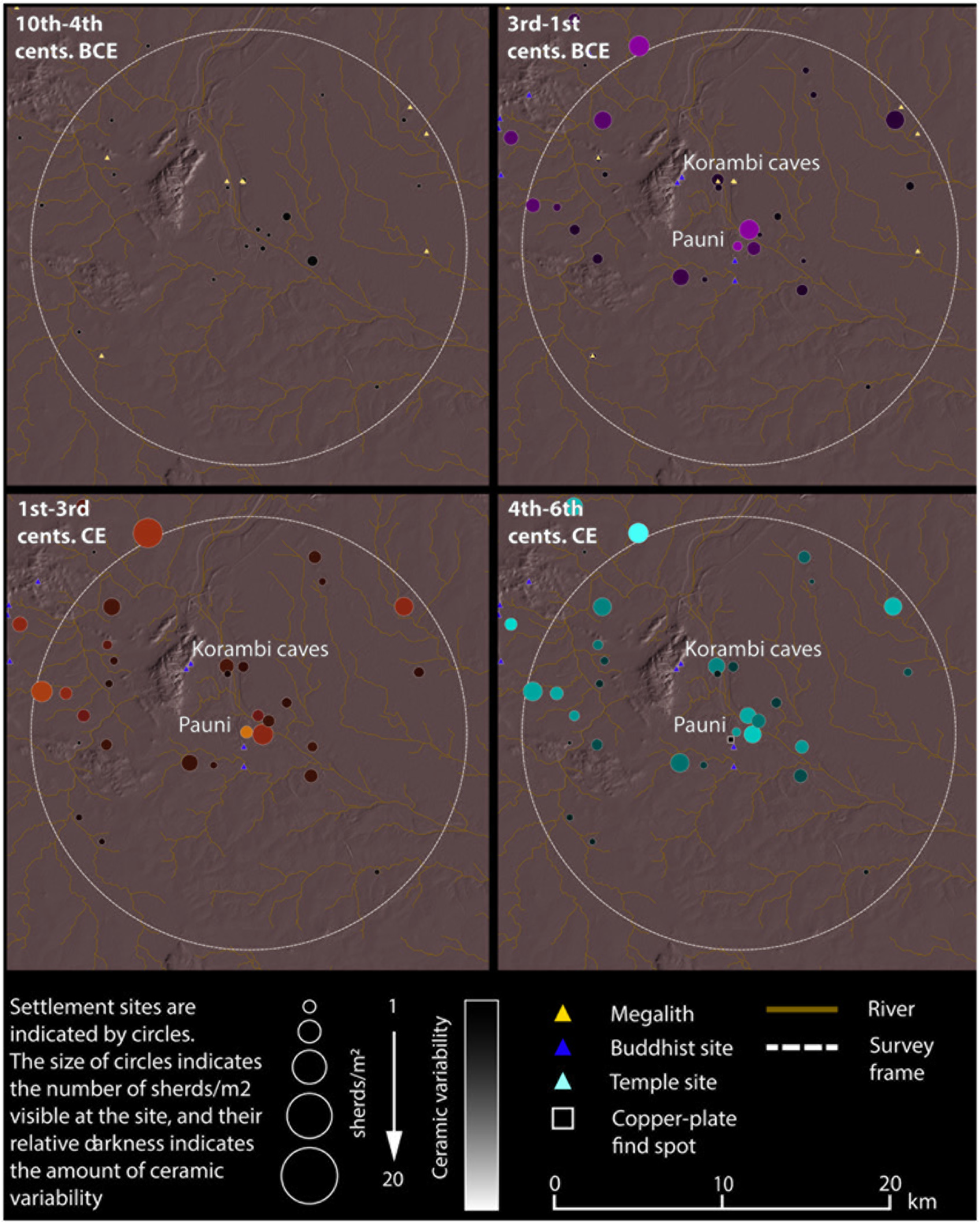
Turning to the results of recent targeted surveys of our micro-regional areas, we can add more nuance to these broad patterns and identify new trends. Immediately apparent is that there was considerable variation across the region in the distribution of sites. Looking at each area in turn, analysis of the survey data from around Pauni showed that prior to the Vakatakas, settlement patterns conformed to what might be considered the ‘classic’ early historic urban model, with small village settlements nucleated around the massive 180 ha fortified city of Pauni.
58
This was clearly the base of pre-Vakataka local political and administrative power, presumably a city-state or small kingdom, and may have been related in some way to the early historic Satavahana dynasty that ruled over much of the wider Deccan Peninsular between the second century
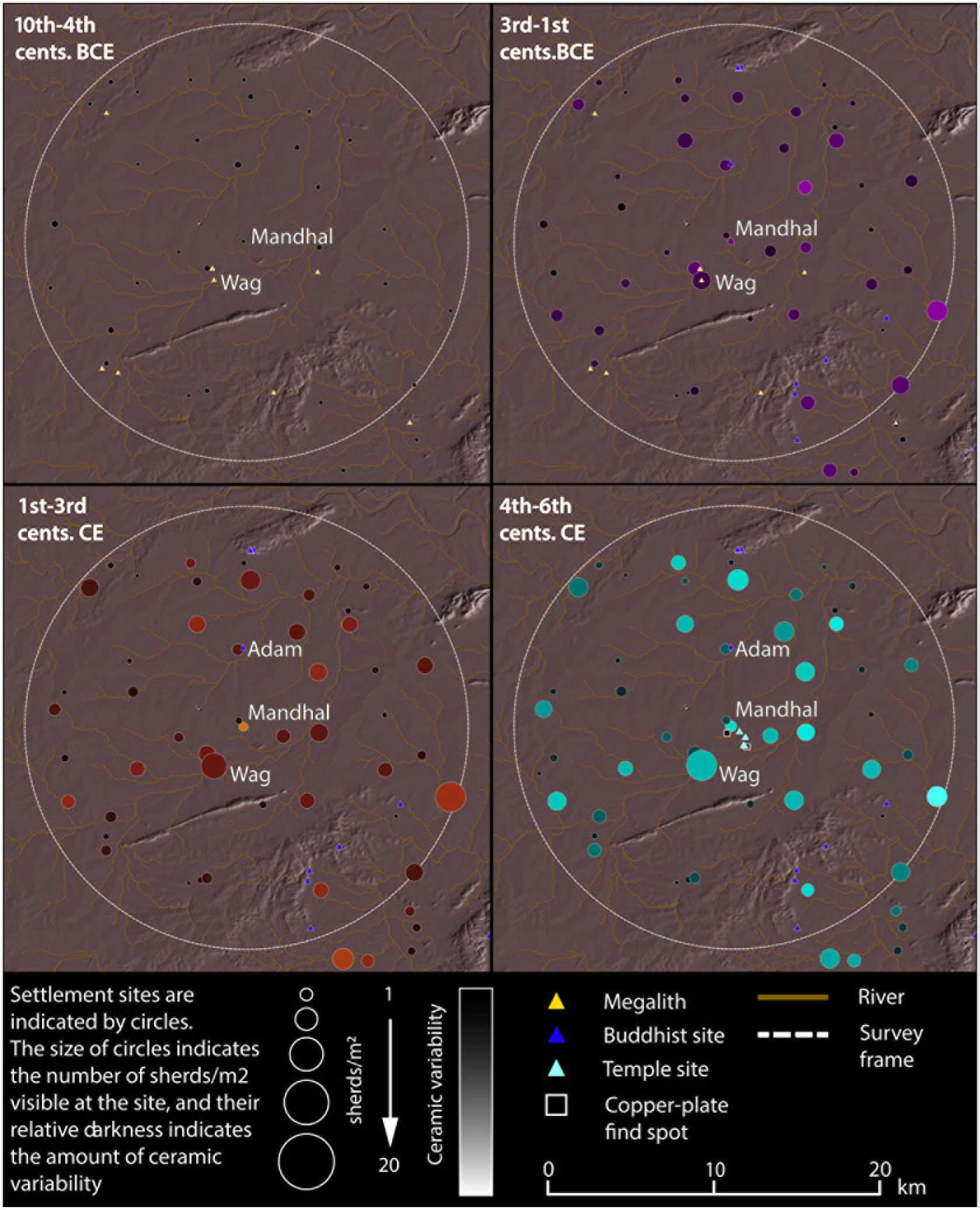
In the Mandhal area, 25 km to the northwest, settlements were always more widely distributed (Figure 9). Here, we can identify a number of widespread villages that surrounded a smaller (c. 50 ha) fortified settlement at Adam, which was almost certainly the central ‘core’ settlement in the area. 62 Judging by the proximity of this site to Pauni, Adam may have functioned in its own right as the centre of a small polity that was independent from Pauni or was a secondary centre carrying out local administrative functions for it. This settlement too appears to have been associated directly with a Buddhist stupa monument and monastery. 63 Like the distribution of sites in the Pauni area, this stupa complex was accompanied by a number of small Buddhist caves in surrounding hilly areas. 64 Archaeological surveys reveal a small increase in the number of settlements over time, and the range and amount of activities that took place within them, as well as a contraction of activities at the former centre of Adam and the contemporary growth of settlement at Mandhal and the nearby settlement at Wag. Then, during the reign of the Vakatakas these trends continue, with marked growth at Mandhal and Wag—the latter becoming home to a significantly greater range and amount of activity. 65 These changes were accompanied by the construction of at least three new temples dedicated to both Shaivite and Vaishnava deities in and around Mandhal. 66
Further north still, around Ramtek, we again see a different pattern of settlement and trajectory of urban development (Figure 10). Here, we do not have quite the same degree of chronological precision to our phasing of the settlement data as we have in the other three areas. Yet, it is still possible to see that, following the initial widespread expansion of settlement during the later centuries
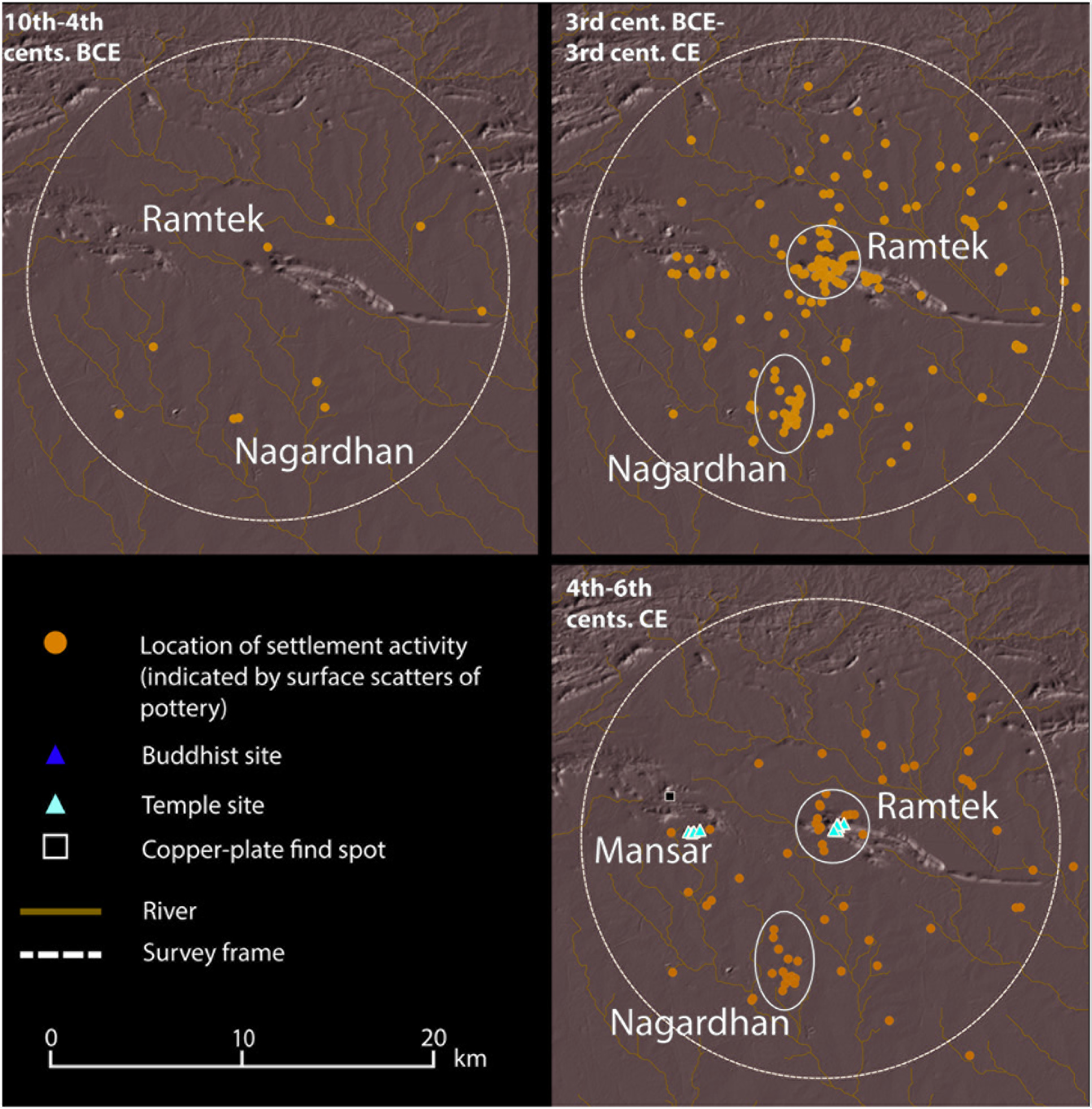
In broad terms, the changes in settlement in these three ‘core’ zones of Vakataka rule appear to mirror changes that we know took place politically with the movement of the Vakatakas into the region and their conquest of it. During their reign, we can see: (a) a change in the distribution of settlements around the earlier centre at Pauni, reflecting some sort of a realignment of the activities that took place there; (b) a marked shift away from an earlier centre of local power at Adam towards Mandhal, which appears to have become a centre of religious activity, while Wag became a centre of economic activity; and (c) the growth of what came to be the Vakataka capital at Nagardhan, the construction of a palace at Mansar and associated investment in the religious landscape at Hamlapuri, Mansar and Ramtek. 72 While the broad chronologies of our archaeological surface surveys cannot be correlated precisely with the dates recorded in the textual sources, these developments would appear to correspond with and bear out the suggestions made by previous historical studies, in particular those of Hans Bakker, who has reconstructed the gradual movement of the Vakatakas northwards through the region during their rule in the area.
In the west of the region, however, the archaeological evidence surrounding Chammak exhibits an altogether different distribution of settlements (Figure 11). 73 Here, prior to the rule of the Vakatakas, we see a much more diffuse and widespread pattern of small-scale settlements occupying optimal environmental locations on the alluvial soils close to the main riverine tracts that run through the area. The largest site exhibiting the widest range of activities was the small local centre at Chachondi, which, given the diffuse distribution of settlement in the area around it, was probably home to a limited range of functions. This pattern of the distribution of settlements remains remarkably unchanged over several centuries. The only change in the archaeological record contemporary to the reign of the Vakatakas appears to have been the construction of a temple, indicated by a mound of brick fragments at Chammak, close to where the copper-plate charters were found. 74
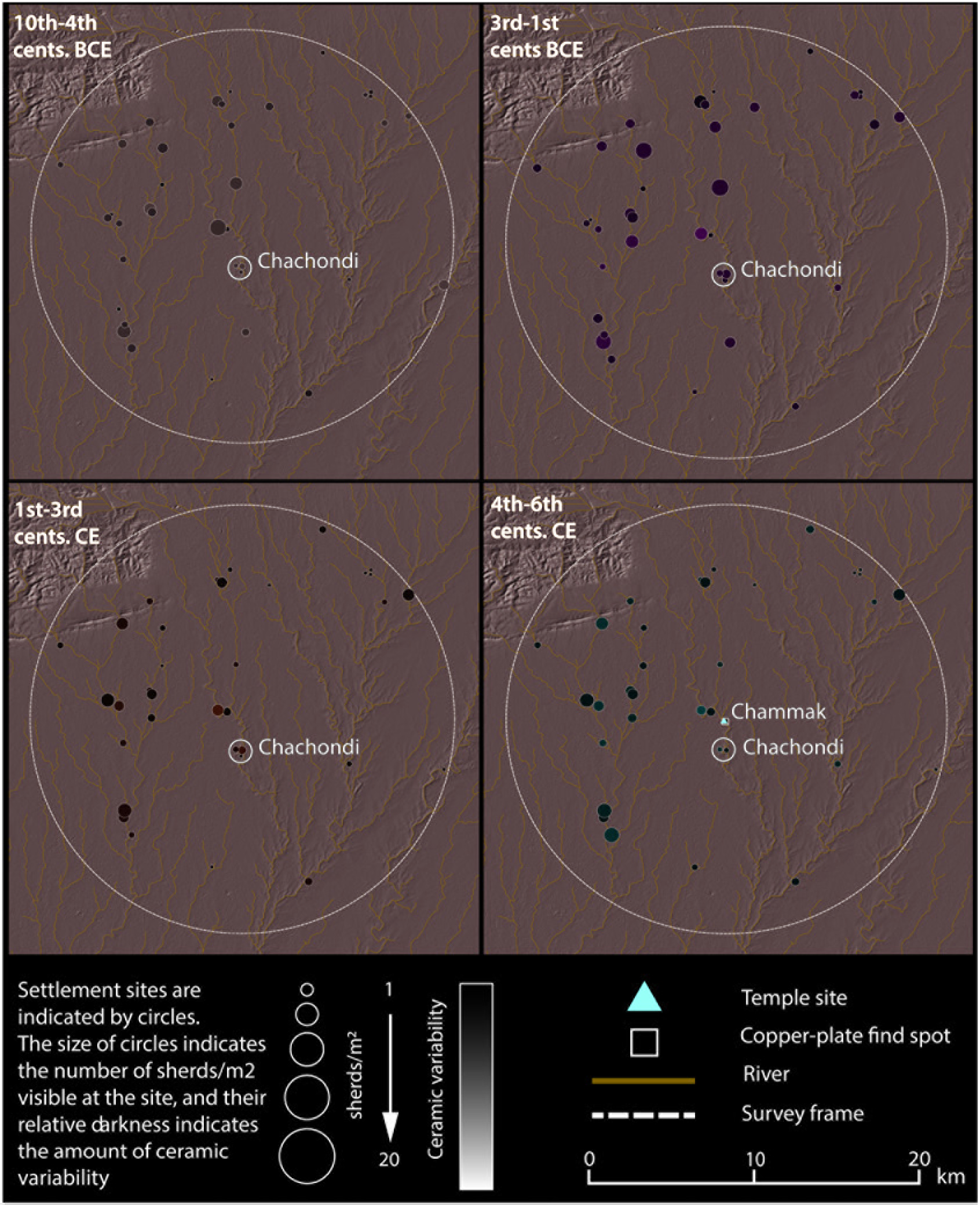
This variability has not been recognised or accounted for in the historical scholarship on this period in the region. Yet, it is highly significant for our conception of just how complex the societal and cultural developments that took place were. First of all, it demonstrates that the Vakataka kings moved into and came to rule over what appears to have been a socially diverse area; one that was likely home to a number of different modes of social and political organisation, economic practices and systems, and possibly cultural affiliations. This has implications for how we understand the nature of both early medieval social formation and kingship. We know from the charters that the Vakatakas made grants of the ownership of small parcels of land and the revenue from that land to communities of priests and temple institutions. 75 From these texts, we can surmise that the Vakatakas already owned the land that they granted (though the extent to which this ownership was ‘inherited’ from the region’s previous rulers or was simply assumed following the conquest of the region is still unknown); and that there was a mechanism for collecting this revenue, likely involving tax collectors. Yet, the variation that we can see in the settlement patterns of the region indicates that this was neither a single coherent region before the Vakatakas, at least in terms of local organisation and economic networks nor does it appear to have become so during their rule. We thus have to question the extent to which we can imagine the Vakatakas to have been able to devise a single standard set of rules and regulations flexible enough to account for all of the different pre-existent practices, structures and systems that already existed throughout the region. Indeed, this variation makes it more likely that their rule across the region may have extended only as far as making proclamations.
This continued variation in the distribution of both settlements and religious foundations throughout the region also suggests that the wider societal and cultural developments that took place during the reign of the Vakatakas were not solely related to their rule, or the grants of land that they made. If we think about just the changes in social and political organisation that can be inferred from the changing settlement patterns reviewed above, they all seem to have begun before the Vakatakas even arrived in the region. It was during the first two centuries
A great deal has been made of the significance of the creation of the development of a ‘Sanskrit culture’ that was adopted by the Vakatakas and other contemporary dynasties. 76 This new way of governing, or at least of defining kingship and royal power with reference to both an emerging legal framework and the patronage of new religious ideologies recorded in Sanskrit was undoubtedly a powerful cultural phenomenon that spread throughout the subcontinent during the fourth to sixth centuries. In Vidarbha this new ‘cultural package’ seemed to be apparent primarily at the institutional level and less in how individuals, groups and communities continued to live; at least in so far as these other facets of society and culture are reflected in the distribution of archaeological sites. This takes us back to the point made above, namely that given the nature of the available sources, it is only with archaeological investigation that we can begin to reconstruct other aspects of society and culture, and the ways they changed over time.
What Can Archaeology Tell Us?
What, then, can the archaeological evidence from the region tell us about what was happening ‘on the ground’? Based on the evidence that we currently have at our disposal, the honest answer is both ‘a great deal’ and ‘not very much at all’! Analyses of both the results of archaeological surveys and previous investigations in the region do allow us to make certain inferences about a number of facets of society and culture that are either assumed or wholly unaccounted for by textual histories. Yet, at the same time, there is only so much that we can say on the basis of the distribution of archaeological sites, their surface remains and a random sample of excavation data.
Looking at what the archaeological evidence can tell us, the changing settlement patterns speak directly to the changing socio-economic relationships. We have seen that despite the veneer of uniformity afforded by the Sanskrit charters, the early medieval social formation comprised a patchwork of local social and economic systems that all had much earlier origins. In the west of the region, the widespread distribution and diffuse pattern of small settlements that we see during the later centuries
Then, during the early centuries
Whatever their origin, however, we can see that the gradual realignment of economic activities reflected in the surface archaeology continued during rule of Vakatakas. This is evident in the growth of new centres at Mandhal and Nagardhan, and an increasing range of activities in surrounding settlements. Here, we might note the evidence from the archaeological site at Mahurjhari, immediately to the west of the modern city of Nagpur, roughly in between Mandhal and Ramtek. Signs of occupation and religious activity at Mahurjhari date back to the early first millennium
The archaeological evidence also enables us to say something about the religious developments that occurred in the region. This is a topic that has occupied a great deal of scholarship on the region. We know a great deal about the beliefs of particular cults, their association with emerging Hindu sects, the politics of patronage, and what is assumed to have been the social and economic role of religious ‘elites’ (the brahmins that were granted land) and their associated temple institutions. 82 Archaeologically, we have already seen that we can add to this picture by plotting the distribution of temple sites in the landscape (Figures 8–11). Doing so enables us to contextualise the extent of temple foundations during this period. Based on the current evidence, there do not seem to be very many of them, and all are associated with instances of copper-plate charters. In other words, we do not find temples dating to the Vakataka period without copper-plate charters. This immediately gives us an idea of the possible (limited) scale of this particular religious institution and makes us question the primacy afforded their study. We also know that ‘Hindu’ temples were not the only religious institutions that existed. Sculptural evidence from Hamlapuri attests to the continued presence of Buddhism in the area, as does the existence of one or two stray artefacts, such as an engraved carnelian seal with a Buddhist inscription in Vakataka-style script that was found at Mahurjhari. 83
We can also comment on the societal dimensions of institutional religion during Vakataka rule. Here, the archaeological evidence usefully enables us to reconstruct the outlines of the societal matrix in which brahmins and temples existed. It enables us to see that the brahmins who were the recipients of grants of land from kings were already living within a rich economic landscape. On the one hand, this puts the grants of land they would have received into more context. Land, within an agriculturally and commercially productive landscape would, of course, have had an economic value. Yet, when we read the charters we see that most grants were extremely small—usually only a field or two, or (rarely) a single village at most. 84 This being the case and given what we have seen of the archaeological landscape, we perhaps need to recalibrate our sense of the wealth that communities of priests would have accrued. Financially, they would barely have afforded more than what was needed for subsistence. Rather, the real ‘value’ of the grants would probably have lain in the other forms of capital that would have accumulated from superior rights over land and institutional association with endowed temples. While for the Vakataka royal family, who, let us not forget, had only recently moved into the region, the benefit of making such grants probably lay in the legitimation that patronising pre-existing religious communities and promoting new religious ideologies would have brought.
Thought about in these terms, the granting of land to communities of brahmins and temples raises a number of questions as to what exactly was purportedly being spread and to whom. As noted above, the recipients of land grants are usually recorded as already living in the locations where grants were received. 85 On the one hand, we can think about this in purely socio-economic terms, and consider the social and economic implications of changes to the ownership of and rights to the land being granted. Yet, what is also important is the nature of the religious status of these brahmins. They may have been engaged in religious activities on a small scale, perhaps custodians of and officiating at local shrines; or they may have belonged to the priestly ‘caste’ but engaged in altogether different activities, including crop cultivation or craft production. By the same degree, it is also possible that they may not have even self-identified as brahmins at all but were instead affiliated with local cults and subsumed into that category and labelled with reference to that nomenclature by the incoming Vakatakas. Indeed, given the clear existence of multiple different social systems across the region that were being subsumed into this new social order, the latter is more likely. 86
This last point is important here because religion, as it might perhaps be understood archaeologically, is not always a matter of institutions, structures and monuments. Rather, it can be thought of as a set of practices and ‘doings’.
87
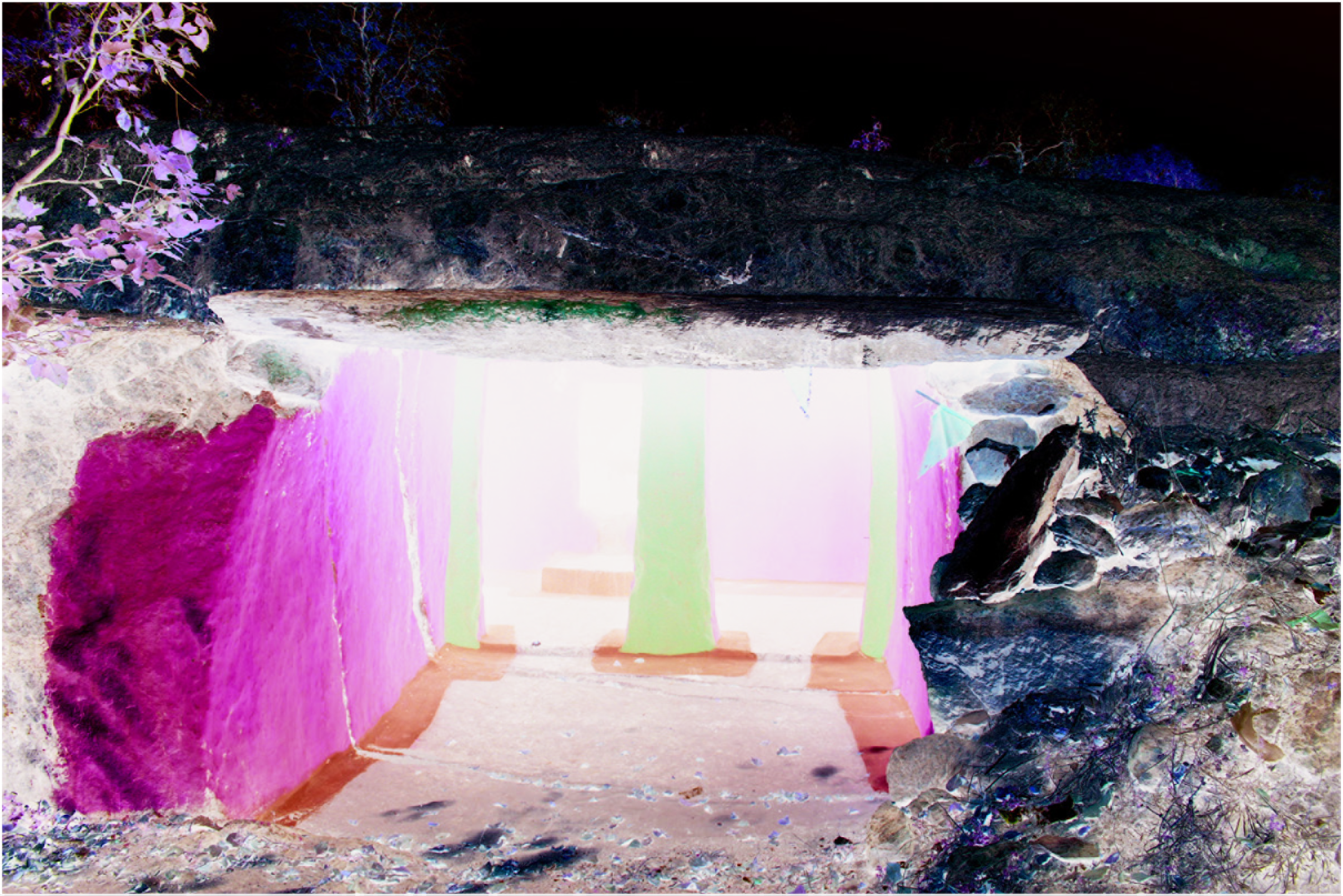
The existence, then, of various beliefs and practices that predated the Vakatakas (and their incorporation of these beliefs into Hindu frameworks) instantly forces us to consider the social and cultural context from which this religion grew. The available archaeological evidence attests to the existence of numerous religious traditions and practices that predated the Vakatakas. Perhaps the most obvious of these is the presence of Buddhism across large parts (but not all) of the region during the later centuries
Discussion and Conclusion
We have seen that approaching the charters—the very texts that ideas of the medieval have been based on—from an archaeological perspective and situating them in the landscape in which they had salience has a clear benefit. On the one hand, looking at the archaeology of the region has added to our understanding of existing historical questions regarding the Vakatakas, the nature of their rule and spread of new religious ideologies and institutions. It has done so by providing the all-important social, economic and material cultural context in which the practices embodied by the land grant charters took place. At the same time, looking at the archaeology on a regional scale has also provided significant new evidence. In particular, it has revealed social and economic variation on a scale that has been unaccounted for by historical scholarship. With none of these previously invisible social, economic and cultural systems producing texts, it is only through archaeology that we will be able to find out more about them.
Yet, just as much as an archaeological examination of the region has clear value, there are limitations to what can be inferred from the existing evidence at our disposal. This is not through any inherent limitation in the archaeological approach. Rather, it is due to a deficit in the available evidence and the absence of any sort of coherent archaeological examination of the period. It is hard to overstate the scale of this issue. At over 97,000 km 2 , Vidarbha alone accounts for an area that is larger than many European countries. Yet, until our surveys, 90 only Lacey had targeted the settlement archaeology of the period. 91 To this we can now add the recent excavations at Nagardhan between 2015 and 2018, the results of which are beginning to be published. 92 Otherwise, all the other sites that we know about are either chance discoveries, or they are from the poorly recorded (and frequently discarded) layers of occupation material that came from excavations at sites with earlier phases of activity deemed to hold more interest. This is typical of the archaeological study of the early (and, for that matter, the later) medieval in general. 93
That there is an urgent need for more archaeological work should, by now be beyond question. Yet, this exigency does beg the question: what should archaeologists who want to study the medieval in South Asia examine? Simply beginning to look at the period is not itself a fully-formed archaeological approach to the medieval in South Asia. Nor is archaeology something that can just be ‘done’ by archaeologists. It is, at root, an inherently destructive process—the same trench can never be dug again and the same artefact, once removed from its depositional context can never yield as much information as it originally could. The question of what an archaeology of the medieval in South Asia might be is thus entirely apposite and germane to this discussion. Yet, we are still left with various questions about where we might work, which sites or regions should be examined, why are they being studied and how are they being investigated? It is no longer enough for the justification of archaeological work to be simply ‘because it is there’. While the scale of the challenges facing archaeology in South Asia during the twenty-first century are positively Himalayan in scale, they are not going to be solved by excavating large obtrusive sites and grandly proclaiming that its cultural sequence has been ‘fixed’. There is much potential danger in jumping into the investigation of the period feet-first and asking the first questions that come to mind. Doing so is not necessarily going to take us, collectively, very far. The scale of the lacunae is such that there is not only an opportunity but also an obligation to construct a coherent body of questions, methods and theories under the broad umbrella of a ’medieval archaeology’ (or archaeologies) for South Asia.
In thinking about the form that a ‘medieval archaeology’ for South Asia could take, the inclination might be to look to existing medieval archaeologies—most obviously those in northwest Europe, the Mediterranean and Scandinavia—all of which have their own sense of what the ‘medieval’ means. 94 Greater engagement with this research would undoubtedly be of benefit to those working on related themes in South Asia—or, for that matter, those engaged in archaeological research on any other historical period. Yet, there can be no doubt that the questions that are asked of the South Asian context have to be based on the specifics of that context. They cannot be transposed from those deemed most theoretically ‘current’ in other schools of archaeological research elsewhere in the world, nor derived solely from text-based historical scholarship.
With this in mind, it is useful to return to the question we started with: What is it that defines the medieval in South Asia? Archaeologically, the evidence from Vidarbha allows us to make some general observations about the early medieval social formation and transition to the medieval in that region. There, the evidence attests to a fundamental change in patterns of urbanism, with a shift away from earlier ‘ancient’ modes of social organisation and economic activities. Some of these were centred on large fortified urban centres, while others were based on smaller local centres. The patterns of urbanism in each of these different social and economic systems then became more disaggregated or diffuse. This appears to have involved an increasingly more widespread distribution of settlement and related activities in formerly ‘urbanised’ areas, which is evident in both the distribution of settlements and their surface remains; and a greater degree of connectivity and interaction (and perhaps economic interdependence) between different parts of the region. These changes appear to have gone hand-in-hand with a realignment of networks of trade and exchange and would undoubtedly have involved and precipitated a renegotiation of various social and economic relationships within and between local areas. Changes in craft production, evident in the development of regional ceramics across the region and the bead production at Mahurjhari, would have involved various people across socio-economic scales, as involved in different activities for different purposes, providing different services for different consumers. Such transformations would also have involved new ways of interacting with the environment. We also see the creation of new social hierarchies, with existing groups being incorporated into and subsumed by new categories that would, presumably, have had different meanings and significances for different people. Some of these are reflected in the grants of land to religious sects and the institutionalisation of temples. These, in turn, were related to new forms of kingship instituted by a new and mobile dynasty that was adapting to this changing landscape, with new legal frameworks iteratively and reflexively emerging as a result.
My own sense is that if archaeologists working in South Asia start focusing on the nature of such changes, then the choices of where to investigate, how to intervene and what techniques to employ will follow. These questions, however, will have to be frequently revisited in order that this new and emerging field of archaeology might flourish with purpose and direction. So too will the wider relationships between history and archaeology as well as between the written word and material objects undoubtedly change as a result.
Footnotes
Declaration of Conflicting Interests
The authors declared no potential conflicts of interest with respect to the research, authorship and/or publication of this article.
Funding
The authors received no financial support for the research, authorship and/or publication of this article.