




Abstract
In the early medieval period, many Chinese viewed the growing popularity of Buddhism, and the rapid integration of Buddhism into Chinese religious life, as a challenge to their own civilisation. A major aspect of the resistance to the growing dominance of Buddhism was a discourse known as the ‘conversion of the barbarians’. This basic narrative of this discourse claimed that Laozi had journeyed west to India where he either became the Buddha or taught the Buddha. This discourse, which was elaborated in several Daoist texts into complex cosmological and mytho-historical narratives thus asserted the primacy of Daoism and relegated Buddhism to a secondary teaching, inferior to Daoism, suitable for ‘barbarians’ but not for Chinese.
This article discusses the development of this discourse, focusing on texts written by Daoists during the fifth century when this discourse was particularly vehement. In this article I will show that this discourse was not merely resistant to Buddhism, but was also critical of various Daoist groups that had accepted Buddhist ideas and practices. Significantly, this discourse associated Daoism with the essence of Chinese civilisation, rather than as a distinct teaching.
Get full access to this article
View all access options for this article.
References
 (Rites for Transmission of Precepts and Scriptures, with Comments) CT 1236.
 (Commands and Admonitions of the families of the Great Dao) CT 789.
 (Treatise of the Two Teachings) T. 2013: 52.136b-143c.
 (Records of Spreading and Clarifying [Buddhism]) T. 2102.
 .
.  (398–445) et al.,
  .
.  (579-648)
 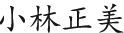 .
.  [A Study of the History of the Taoist Religion during the Six Dynasties],
  (Scripture of Laozi’s transformation in the Wuji year) CT 1195.
 .
. 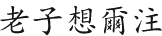 (Xiang’er Commentary to the Laozi) S 6825.
 .
.  [The Composition and Daoist Ideology of the
  .
.  [A Discussion of Gu Huan’s Yixia lun and the Distinction between Chinese and Barbarians],
 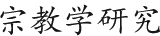 vol. 1998 (3): 5–14,
  .
.  [A Discussion of the Date of Composition of the
  .
.  in
in  (Liaoning jiaoyu chubanshe): 613–34.
  .
.  ’ [Daoist Huahu discourse and ‘Treatise on the Origins of Dao’ during the Tang], in
  (ed.),
  ,
, 
 [
[ .
.  [A Study of Daoist Sources used in the
  , (
, ( (Historical Outline of the Daoist Ritual Before the Tang),
  .
.  (
(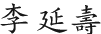 completed between 643 to 659,
  .
.  (
(

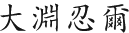 .
.  (Dunhuang Daoism),
  ,
,  , Tokyo.
 (Pearl Satchel of the Three Caverns) CT 1139.
 (Inner Explanations of the Three Heavens) CT 1205.
 .
.  (441–513),
  ,
,  .
.  [The Historical Background for the Composition of Gu Huan’s Yixia lun],
  ,
,  (Scripture of Jade Purity of the Great Dao from the Most High) CT 1312.
 (Scripture of the Wondrous Beginning of the Most High) CT 658.
 (
( (Sutra of the Original Endeavour of the Prince in Accordance with All good Omens) T.185.
 (Treatise Laughing at the Dao) T.2013: 52.143.c-152c.
 (Siddham Treasury) by
  , T.2702.
 (Scripture and Chart of the Mystic Vision of Manbird Mountain) CT 434.
 (Origins of The Wondrous Gateway, Complete Daoist scriptures with phonetic and semantic glosses) CT 1123.
 (Discussion of Barbarians and Chinese) in
  (History of the Southern Qi) 54.931–932 and
  (History of the Southern Dynasties) 75.