




Abstract
The present article examines how classical, early medieval and medieval Taoist sources theorise inequality as an outcome of cosmogonic processes, and how these same sources project eliminating inequality through a reversal of those processes. The first part of the article considers utopias from the Laozi daode jing 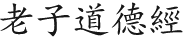 (Laozi’s Scripture on the Way and its Virtue) and Zhuangzi
  (Book of Master Zhuang) and from the early medieval writings of Ji Kang
  (223–262) and Bao Jingyan
 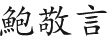 (3rd to early 4th centuries). From these, a number of themes common to Taoist utopias emerge, namely communitarian primitivism, the condemnation of knowledge, and the endorsement of a de-civilising programme of cosmogonic reversion which aims for a return to the golden age of natural spontaneity. The second part of the article is devoted to the mature utopian vision of the ninth-century Wunengzi
 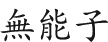 (The Incapable Master). In addition to elaborating on previous themes, the Wunengzi contributes two new ideas to Taoist utopian discourse: first, the distinction between intelligence, which develops naturally, and human knowledge, which is an artificial contrivance; and second, the conviction that an ideal society is achievable through engagement with existing political structures. The conclusion examines basic similarities between Taoist utopias and early modern to modern European counterparts, challenging the validity of Eurocentric notions of a ‘Taoist anarchism’.
Get full access to this article
View all access options for this article.
References
 . (317)
  [Annotated Critical Edition of the Inner Chapters of the
  (ed.),
  . (317)
  [Annotated Critical Edition of the Outer Chapters of the
 (ed.). (ca. 3rd century BCE) (
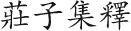 [Collated Critical Edition of the
  . (3rd century)
  [A Refutation of the Essay on the Intrinsic Fondness for Learning], in
  (ed.),
  [Annotated Critical Edition of the Collected Works of Ji Kang],
  (ed.). (4th century BCE)
  . [Annotated Critical Edition of
  .
.  [The Ideology of ‘Return is the Movement of the Dao’],
  ,
,  .
.  :
: [Chinese Immortals: the Thought of the
  .
.  [Early Taoism],
  .
.  [Kou Qianzhi’s conceptions of immortality],
  ,
,  in Daoist Internal Alchemy and Its Relation to Xing
  or Human Nature
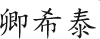 . 1988–95.
  [History of Chinese Taoism], 4 vols.,
  . (4th century BCE)
 [Annotated Critical Edition of the Book of Lord Shang],
  (ed.),
  . (ca. 91)
  [Records of the Historian],
  (
( ,
,  . (11th century)
  [‘Record of the Land of Sleep’], in
  (ed.),
  (Collected Works of Su Shi),
 .
.  [The work and thought of Kou Qianzhi],
 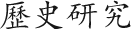 ,
,  . (421)
  [‘Spring of the Peach Blossom’], in
  (ed.),
 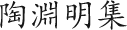 [Collected Works of Tao Yuanming],
  (ed.). (887)
  . [Annotated Edition of the
  (ed.). [ca. 300(?)]
 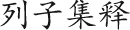 . [Critical Edition of the
  (2nd century)
 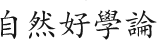 [Essay on the Intrinsic Fondness for Learning], in
  (ed.),
  [Annotated Critical Edition of The Collected Works of Ji Kang],
  . [Commands of the Celestial Masters from the One and Orthodox Canon]. (ca. 255) 1923–26. Taoist Canon CT 789.