




Abstract
This article discusses Buddhism’s conflicting relation with kingship through an analysis of the figure of the Mahāsammata, the first mythical ruler according to Buddhist scriptures and canonical commentaries. The Mahāsammata, literally the ‘Great Elect’, was a human being elected by the people and entrusted with keeping order in a society that was gradually becoming more complex; as such, this myth expresses an idea of kingship that is very different from Indic and East Asian theories of divine sovereignty. The Mahāsammata has been studied within the South Asian context, but very little is known about its role in East Asian Buddhism. This article offers an analysis of this figure based on sutras translated into Chinese and subsequent literature in Chinese and Japanese. It aims to show some of the ways in which the Mahāsammata and the political ideas it represents were interpreted and transformed in East Asia, also in order to gain a better understanding of the varieties of Buddhist political thought, including those with the oppositional potential (if not actual oppositional praxis) to become conceptual bases for social and political resistance.
Get full access to this article
View all access options for this article.
References
 , T. 2483.
 .
.  , in
, in (eds).
  (Chronicles and Legitimate Genealogy of the Divine Emperors),
  (Additional Mirror [of History]) (series Nihon koten bungaku taikei
  ,
,  (eds).
  ,
, , T. 23 .
 .
.  , T. 2131.
 , T. 191.
 , T. 2035.
 (
( version).
  ,
,
 ,
,
 (eds).
  (series Nihon shisō taikei
  ,
,  , T. 2497.
 .
.  , in
, in  ,
,  (eds),
  .
. 
 ,
, 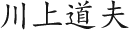 .
.  ,
,  , T. 2410.
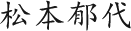 .
.  ,
,  (also
(also  ), T. 25.
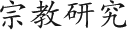 ,
,  .
.  (series
  ,
,  , vol. 4]),
  , T. 1.
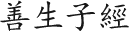 , T. 17.
 , T. 16.
 . (eds). 1
 (
( .
.  (series
  ,
,  ,
,  , in
, in  , T. 1.
 .
.  , T. 2478.
 , T. 1.