Accounts of Buddhist monks and laymen who made offerings of their bodies by fire or other means often hint at larger themes of resistance to state authority and millenarian or Utopian hopes on the part of religious communities. I will put some of these sources, drawn from hagiographical collections and commemorative inscriptions, into dialogue with each other and with other historical materials in order to reveal some of the larger forces at work behind (apparently) individual acts of self-immolation.
Get full access to this article
View all access options for this article.
References
1.
GuBan (32–92), compil., 58–761962. Han shu [Book of the Han], Beijing.
2.
BennJames A.1998. ‘Where Text Meets Flesh: Burning the Body as an “Apocryphal Practice” in Chinese Buddhism’, History of Religions, vol. 37(4): 295–322.
3.
BennJames A.2006. ‘Written in Flames: Self-immolation in Sixth-century Sichuan’, T’oung Pao, vol. 92(4–5): 117–72.
4.
BennJames A.2007a. Burning for the Buddha: Self-immolation in Chinese Buddhism, Honolulu.
5.
BennJames A.2007b. ‘Fire and the Sword: Some Connections between Self-immolation and Religious Persecution in the History of Chinese Buddhism’, in StoneJacquelineCuevasBryan (eds), The Buddhist Dead: Practices, Discourses and Representations, Honolulu: 234–65.
6.
BennJames A.2009. ‘The Lotus Sūtra and Self-immolation’, in StoneJacqueline IlyseTeiserStephen F. (eds), Readings of the Lotus Sūtra, New York: 107–31.
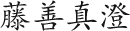
7.
BennJames A.2012a. ‘Multiple Meanings of Buddhist Self-immolation in China—A Historical Perspective’, Revue Des Études Tibétaines, vol. 25: 203–12.
8.
BennJames A.2012b. ‘One Mountain, Two Traditions: Buddhist and Taoist Claims on Zhongnan shan in Medieval Times’, in BennJamesChenJinhuaRobsonJames (eds), Images, Relics and Legends: The Formation and Transformation of Buddhist Sacred Sites. Essays in Honour of Professor Koichi Shinohara, Oakville: 69–90.
BoodbergPeter A.1939. ‘Marginalia to the Histories of the Northern Dynasties’, Harvard Journal of Asiatic Studies, vol. 4(3–4): 230–83.
11.
ChenJinhua. 2002. Monks and Monarchs, Kinship and Kingship: Tanqian in Sui Buddhism and Politics, Kyoto.
12.
ChenJinhua. 2006. ‘“Pañcavārsika” Assemblies in Liang Wudi’s Buddhist Palace Chapel’, Harvard Journal of Asiatic Studies, vol. 66(1): 43–103.
13.
DemiévillePaul. 1984. Poèmes chinois d’avant la mort, Paris.
14.
De RauwTom. 2008. ‘Beyond Buddhist Apology: The Political use of Buddhism by Emperor Wu of the Liang Dynasty (r. 502–549)’, PhD thesis, University of Ghent.
15.
De RauwTomHeirmanAnn. 2011. ‘Monks for Hire: Liang Wudi’s Use of Household Monks (jiaseng)’, The Medieval History Journal, vol. 14(1): 45–69.
16.
MasumiFujiyoshi. 2002. Dōsen den no kenkyū [Studies on the Biography of Daoxuan], Kyoto.
17.
TōruFunayama. 1995. ‘Rikuchō jidai ni okeru bōsatsukai no juyō katei, [On the Acceptance of the Bodhisattva Precepts during the Six Dynasties Period], Tōhō gakuhō, vol. 67: 1–135.
18.
TōruFunayama 船山徹. 2002. ‘Shashin no shisō—Rikuchō bukkyō shi no ichi danmen, ’ [The Thought of ‘Abandoning the Body’: One Aspect of Six Dynasties Buddhist History], Tōhō gakuhō, vol. 74: 358–311 (reverse pagination).
19.
GernetJacques. 1960. ‘Les suicides par le feu chez les bouddhistes chinois du Ve au Xe siècles’, Mélanges publiés par l’Institut des Hautes Études Chinoises, vol. 2: 527–58.
20.
GernetJacques. 1995. Buddhism in Chinese Society: An Economic History from the Fifth to the Tenth Centuries, New York.
21.
Han’guk Pulgyo chŏnsŏ. 2000 [1979]. [Complete Works of Korean Buddhism], 12 vols. Seoul.
22.
Hōbōgirin. Dictionnaire encyclopédique du Bouddhisme d’après les sources chinoises et japonaises: fascicules 1 (1929), 2 (1930), 3 (1937), 4 (1967), 5 (1979), 6 (1983), 7 (1994), 8 (2003).
23.
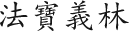
HurvitzLeon.1980.Chih-i (539–597): An Introduction to the Life and Ideas of a Chinese Buddhist Monk,Brussels.
24.
AtsushiIbuki. 1990. ‘Zoku kōsōden no zōkō ni kansuru kenkyū, ’ [Research on the expansion of the Xu gaoseng zhuan], Tōyō no shisō to shūkyō, vol. 7: 58–74.
25.
Yün-huaJan. 1965. ‘Buddhist Self-immolation in Medieval China’, History of Religions, vol. 4: 243–65.
26.
JanouschAndreas. 1999. ‘The Emperor as Bodhisattva: The Bodhisattva Ordination and Ritual Assemblies of Emperor Wu of the Liang Dynasty’, in McDermottJoseph (ed.), State and Court Ritual in China, Cambridge: 112–149.
27.
KieschnickJohn. 1997. The Eminent Monk: Buddhist Ideals in Medieval Chinese Hagiography, Honolulu.
28.
KingSallie. 2000. ‘They Who Burned Themselves for Peace: Quaker and Buddhist Self-immolators during the Vietnam War’, Buddhist Christian Studies, vol. 20: 127–49.
29.
LiuShufen. 2000. ‘Death and the Degeneration of Life: Exposure of the Corpse in Medieval Chinese Buddhism’, Journal of Chinese Religions, vol. 28: 1–30.
30.
XuLiu. (887–946) completed in 945
1975. Jiu Tang shu [Old Book of the Tang], Beijing.
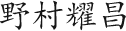
NomuraYōshō. 1968. Shubu honan no kenkyū [Research on Zhou Wudi’s Persecution of Buddhism], Tokyo.
33.
OhnumaReiko. 2007. Head, Eyes, Flesh, and Blood: Giving Away the Body in Indian Buddhist Literature, New York.
34.
XiuOuyang (1007–72),
QiSong (998–1061),. 1974. Xin Tang shu [New Book of the Tang]. Beijing: 1043–60.
35.
PearceScott. 2000. ‘Who, and What, Was Hou Jing?’ Early Medieval China, vol. 1: 49–73.
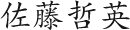
36.
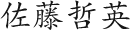
SatōTetsuei. 1961. Tendai daishi no kenkyū [A Study of Great Master Tiantai (i.e., Zhiyi)], Kyoto.
37.
SatōTetsuei. 1981. Zoku Tendai daishi no kenkyū [A Continued Study of Great Master Tiantai (i.e., Zhiyi)], Kyoto.
38.
GuangSima. (1019–86), ., compil., 1084. 1963. Zizhi tongjian [Comprehensive Mirror for the Aid of Government], Beijing.
39.
JunjirōTakakusu, .(eds). 1924–32. Taishō Shinshū Daizōkyō (Great [Buddhist] Canon, Newly Compiled in the Taishō Era [1912–26]), 100 vols. Tōkyō.
40.
TeiserStephen F.1988. ‘“Having Once Died and Returned to Life”: Representations of Hell in Medieval China’, Harvard Journal of Asiatic Studies, vol. 48(1988): 433–64.
41.
TonamiMamoru. 1990. The Shaolin Monastery Stele on Mount Song, Kyoto.
42.
XiongVictor Cunrui. 2000. Sui-Tang Chang’an: A Study in the Urban History of Medieval China, Ann Arbor.
43.
SilianYao, compil., 629–36. 1973. Liang shu [Book of the Liang], Beijing.
44.
YongZhang. 2000. Fu dashi yanjiu [Research on Mahāsattva Fu], Chengdu.





 (32–92), compil., 58–76
 [Book of the Han],
  .
.  [Studies on the Biography of Daoxuan],
  .
.  [On the Acceptance of the Bodhisattva Precepts during the Six Dynasties Period],
  ’ [The Thought of ‘Abandoning the Body’: One Aspect of Six Dynasties Buddhist History],
  [Complete Works of Korean Buddhism], 12 vols.
  .
.  .
.  ’ [Research on the expansion of the
  ,
,  . (887–946) completed in 945
 [Old Book of the Tang],
  .
.  [Research on Zhou Wudi’s Persecution of Buddhism],
  (1007–72),
 (998–1061),
 [New Book of the Tang].
  .
.  [A Study of Great Master Tiantai (i.e., Zhiyi)],
  .
.  [A Continued Study of Great Master Tiantai (i.e., Zhiyi)],
  . (1019–86), ., compil., 1084.
 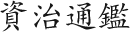 [Comprehensive Mirror for the Aid of Government],
  , .(eds).
  (Great [Buddhist] Canon, Newly Compiled in the Taishō Era [1912–26]), 100 vols.
  , compil., 629–36.
  [Book of the Liang],
  .
.  [Research on Mahāsattva Fu],