



Abstract
This study investigates how employment type (entrepreneurship vs paid employment) and individual characteristics (demographics and career motivations) jointly influence financial well-being (FWB) in Trinidad and Tobago. It moves beyond traditional income-based indicators, adopting a subjective, contextualised approach to assess FWB for individuals in the abovementioned setting. A survey was administered to a sample comprising full-time entrepreneurs, full-time paid employees and hybrid entrepreneurs (n = 364). Full-time entrepreneurs reported significantly higher levels of FWB than paid employees. However, hybrid entrepreneurs—who simultaneously engaged in entrepreneurship and paid employment—did not report significantly higher FWB than wage earners. This suggests that the intensity of entrepreneurial engagement plays a crucial role in shaping an individual’s FWB. Employment type interacted with other demographic variables to shape FWB, reiterating the complexity and multidimensionality of FWB. Intrinsic motivations for choosing one’s career path (passion and self-efficacy) were stronger determinants of FWB than extrinsic factors (financial motivations). The study introduces nuanced perspectives on subjective well-being theory and the theory of planned behaviour, which, to date, remain underexplored in mainstream entrepreneurship and FWB literature. Additionally, its findings underscore the importance of critically assessing individual motivations prior to entrepreneurial entry, thus offering valuable practical implications for aspiring entrepreneurs and policymakers.
Keywords
Introduction
Financial well-being (FWB) has gained considerable attention recently (She et al., 2022). The Consumer Financial Protection Bureau (2015) defines FWB as the ability to effectively manage one’s finances, withstand financial uncertainty, progress towards financial targets and acquire financial freedom. Thomas and Gupta (2021) define it as satisfaction with one’s financial condition, while Brüggen et al. (2017) describe it as positive perceptions of one’s ability to obtain desired living standards and financial freedom. FWB is therefore indispensable to overall well-being (Vlaev & Elliott, 2014) and is sometimes regarded as the greatest predictor of subjective well-being (SWB) (Netemeyer et al., 2018).
Workers are the foundations of economies, as they provide human capital and labour, which drive economic activity (Tleuberdinova et al., 2021). Entrepreneurs—who contribute significantly to economic growth (Gaba & Gaba, 2022)—are often motivated by financial gain as suggested by numerous scholars (Carter et al., 2003; Gódány et al., 2021). Financial motive aligns with necessity entrepreneurship, which arises when individuals with limited employment options are thrust into entrepreneurship (Lim et al., 2024). Such ventures often take the form of survival businesses with low income, low marginal profits (O’Donnell et al., 2023) and diminished well-being (Guo & Huang, 2023). However, financial motivations may vary across the entrepreneurial life cycle. In early stages, financial goals dominate as individuals seek stability, but as ventures mature, motivations often shift towards legitimacy, market positioning and broader goals (Picken, 2017). Psychological factors, such as self-realisation and independence, along with social influences such as recognition, also play key roles (Carter et al., 2003). For these reasons, opportunity entrepreneurs—who pursue entrepreneurship for greater autonomy and more meaningful work experiences—often report higher well-being than necessity-driven entrepreneurs (Atalay & Tanova, 2022). Yet, this does not discount financial gain as a pull factor for opportunity-driven entrepreneurs (Borozan & Pfeifer, 2014).
External factors such as the rise of the global gig economy and increased ease of launching new ventures have resulted in shifting labour patterns, with more individuals now pursuing entrepreneurial career paths. Thus, understanding the factors which contribute to their FWB, as well as the levels of FWB they experience relative to paid employees—equivalent to wage earners in this study—enables the development of evidence-based initiatives which secure their success as entrepreneurs, and foster the longevity of their enterprises (Cumming et al., 2016). Notwithstanding shifting labour trends in favour of entrepreneurship, paid employees comprise a substantial percentage of the labour force, and research indicates that satisfied employees display higher levels of task performance and organisational citizenship behaviours (Diener & Seligman, 2004). Thus, FWB is also a critical issue for examination among paid employees.
FWB measurements are clustered into three approaches (Brüggen et al., 2017). The first approach emphasises objective measures such as income. The second approach is more subjective and evaluates people’s perceptions regarding their financial circumstances. The third sees FWB as dependent on objective and subjective elements. While most FWB studies apply an objective approach (Brüggen et al., 2017), some contend that a subjective approach is better suited for FWB assessments given the personal nature of the phenomenon, which often depends on factors such as life stages and personal risk tolerance (Malone et al., 2010).
The FWB of entrepreneurs versus paid employees has long attracted scholarly interest but has largely been approached from an objective standpoint (e.g., Carter, 2011; Catherine, 2022; Dvouletý et al., 2021; Pantea, 2022), often returning inconsistent findings. Some scholars report better FWB among entrepreneurs; others argue that paid employees enjoy greater FWB. These discrepancies reiterate the need for a subjective approach to evaluate FWB for entrepreneurs versus paid workers. Prior research suggests that entrepreneurs display more risk tolerance than paid employees (De Blasio et al., 2021) and that age (Parker, 2009) and other demographics are predictors of both entrepreneurship behaviour and FWB. These findings further support calls to assess FWB through a subjective approach to account for such occupational and demographic differences. It is also vital to explore how the aforementioned factors intersect to influence FWB for individuals across both employment groups. Finally, to determine whether/how people’s motivations for engaging in each employment type affect their FWB, it is necessary to investigate the link between drivers of employment choice and perceived financial outcomes.
Trinidad and Tobago (T&T) presents a compelling case for this research given its developing nation status and its heavy financial investment towards entrepreneurship advancement. However, little is known about entrepreneurs’ FWB in this context, leaving policy recommendations starved of evidence-based foundations to justify these expenditures. To bridge this gap, the following research questions are addressed:
How does FWB vary for entrepreneurs versus paid employees in T&T? How do demographic characteristics interact with employment type to impact FWB? How do career choice motivators associate with FWB among entrepreneurs and paid employees in T&T?
By addressing these questions, this study makes key contributions to the field. First, in response to Garg et al. (2024), who called for the development of alternative FWB measures, this study extends the discourse on subjective FWB within a developing country context. A new measure of FWB is developed to evaluate individuals’ self-perceived abilities to meet basic and discretionary expenses. This approach offers a more contextually relevant perspective—particularly for developing economies where needs are prioritised over wants—and addresses the scarcity of studies focusing on subjective measures of FWB.
Second, this study’s originality lies in the comparative analysis of FWB between entrepreneurs and paid employees. Previous studies have largely examined both groups independently. This study aims to provide a comparison within a single context, allowing insights into whether/ how employment type shapes FWB. Finally, this work offers insights into how demographic factors—age, sex, education and ethnicity—shape FWB, thus building on the work of Brüggen et al. (2017) to help policymakers identify at-risk groups for interventions that enhance FWB.
Theoretical Perspectives on FWB
SWB Theory
SWB theory posits that well-being is determined by people’s self-evaluations of their lives, further compartmentalised into emotional experiences, such as happiness, and cognitive judgements such as life satisfaction (Diener, 1984). SWB also includes markers within one’s life, such as job, health, relationships and finances (Diener, 1984). Van Praag et al. (2003) extended this work on SWB to identify six life domains in which SWB can be achieved: job, finances, housing, health, leisure and the environment. FWB has, therefore, emerged as a recurring component of overall SWB (Mathew et al., 2024; Netemeyer et al., 2018).
Entrepreneurs often associate FWB with financial autonomy, which leads to happiness and pleasure, reflecting a hedonistic view of SWB (Lukeš & Zouhar, 2024). Conversely, paid employees may link FWB to income stability, aligning with the eudaimonic perspective, which associates SWB with purposeful living and optimal functioning (Ahamed, 2024). These differences highlight the subjective nature of FWB across career paths, supporting SWB theory as a useful framework in this study.
Theory of Planned Behaviour
The theory of planned behaviour (TPB) (Ajzen, 1991) is another widely used framework for evaluating FWB (Bashir & Qureshi, 2023; Mathew et al., 2024). TPB contends that behaviours are shaped by three factors: attitudes towards the behaviour, perceived behavioural control (PBC) and subjective norms. Research indicates that people’s attitudes/perceptions regarding finances, PBC (confidence in their financial management skills) and social norms (societal pressures regarding financial decisions) significantly predict FWB (Kaur & Singh, 2024). Attitudes regarding finances may differ between entrepreneurs and paid employees, as entrepreneurs often prioritise long-term investment and risk-taking while employees may focus more on income stability and financial security (Bahaw, Smith, et al., 2025). PBC over finances tends to be higher among entrepreneurs, who feel greater autonomy when making financial decisions (Kaur & Singh, 2024). Social comparisons—often influenced by role models—can shape financial perceptions, affecting how employees and entrepreneurs view themselves within financial hierarchies (Bashir & Qureshi, 2023). TPB provides a useful framework for this research, as some of this study’s independent variables closely align with its core sub-dimensions: (a) ‘financial considerations’ with attitudes; (b) ‘passion and self-efficacy’ with PBC and (c) ‘role models’ with subjective norms.
Financial Well-being Framework
The financial well-being framework (FWBF) (Brüggen et al., 2017) offers a comprehensive view of FWB by integrating both subjective and objective measures. It considers external influences such as political, legal and economic conditions, as well as socio-demographic characteristics (Garg et al., 2024) and other determinants of FWB (e.g., financial literacy, financial behaviour and psychological factors).
Regarding demographics, FWBF explicitly highlights several variables such as sex, age, occupation type, income and education as critical influencers of FWB (Brüggen et al. (2017). For example, women tend to be more risk averse, which, according to Brüggen et al. (2017), may contribute to their lower FWB. Similarly, wealth accumulation over time influences FWB at different life stages. While the full scope of the FWBF extends beyond this study, some core elements (demographics, traits and life events) inform the current analysis.
Determinants of Entrepreneurial Engagement in T&T
In T&T, entrepreneurial engagement is influenced by a combination of economic, subcultural and familial factors. Many individuals pursue entrepreneurship for personal economic advancement (Frederick, 2018). Cultural and familial factors are mainly seen among Indo- and mixed-Trinidadians who participate in entrepreneurship to a greater extent than Afro-Trinidadians, the latter less likely to pursue entrepreneurship given systemic barriers grounded in colonial legacies (John & Storr, 2013).
Personal characteristics also influence whether individuals in T&T pursue entrepreneurship. Women in T&T are less likely to become entrepreneurs (Frederick, 2018) due to fear of failure, societal norms which disfavour female entrepreneurship, limited access to financial capital and other hurdles (Bahaw, Stephens, & Mack, 2025). However, men are more likely to become entrepreneurs. Similar trends are observed for other demographic variables such as age, where older versus younger persons participate in entrepreneurship to varying extents (Grundall & Mack, 2023; Stephens et al., 2024). The goal of the present study was to explore these trends and to understand how they influence FWB for individuals in T&T. The next section explores these dynamics in detail and presents several hypotheses based on the emerging discussions.
Hypothesis Development
Employment Type
Income variability has become a prominent theme in comparisons bet-ween entrepreneurs and paid employees. Dvouletý et al. (2021) found that entrepreneurs earned 22% more than paid employees. Others (Cagetti & De Nardi, 2006; Quadrini, 2000) argue that entrepreneurs are significantly wealthier than paid employees and typically have more assets and higher net worth averages than wage earners (Carter, 2011).
However, most scholars have reported lower incomes and earning potentials for entrepreneurs relative to paid employees (Binder & Coad, 2013; Blanchflower & Shadforth, 2007; Catherine, 2022; Dawson, 2017; Douglas & Shepherd, 2002; Hamilton, 2000; Hyytinen et al., 2013; Pantea, 2022; Shane, 2008). These contend that entrepreneurs bear greater financial costs and income losses than wage earners (Hessels et al., 2011; Mindes & Lewin, 2021; Schonfeld & Mazzola, 2015; van Praag & Versloot, 2007). Work conducted in T&T (Frederick, 2018) alludes to the existence of feast or famine—frequent and pronounced fluctuations in income—and other financial setbacks among entrepreneurs. Since income is directly associated with FWB (Ng & Diener, 2014; Sargent-Cox et al., 2011; Zyphur et al., 2015), it is predicted that:
H1: Entrepreneurs will report lower FWB than paid employees.
Education
Investments in higher education often produce higher returns than those in secondary education (Psacharopoulos, 1985, 1994), as persons with advanced degrees typically secure higher incomes and greater prospects for future wealth and success (Boshara et al., 2015; Wood & Breyer, 2017). Thus, overall, education is viewed as a solid investment which is rew-arded in the labour market with higher salaries (Zhang et al., 2024).
An inverse relationship exists between education and entrepreneurial innovativeness, as persons with higher educational credentials are less likely to become entrepreneurs (Li et al., 2018). Significant investments in education and higher certifications can discourage risk-taking; under-investment in education tends to produce an antithetical effect (Davidsson & Honig, 2003; Li et al., 2018). Entrepreneurship is predominantly practised among individuals with low to intermediate education (Poschke, 2013), while many pursue higher education, hopeful of landing a dream job in paid employment (Wood & Breyer, 2017). Individuals pursuing graduate programmes, particularly within specialised fields, often have better opportunities within the framework of salaried employment and face greater losses when they fail to seize such opportunities (Blume-Kohout, 2016). The authors therefore hypothesise that:
H2a: Paid employees will have higher education levels and FWB than entrepreneurs. H2b: Entrepreneurs will have lower education levels and FWB than paid employees.
Sex
Women are still less inclined than men to launch a new venture (Wilson et al., 2004; Zhao et al., 2005) and thus remain under-represented in the entrepreneurial space (Pounder, 2022). Entrepreneurship is often considered a male undertaking (Eddleston & Powell, 2008; Frederick & Esnard, 2019). Women may also feel less confident than men about their entrepreneurial abilities, given cultural paradigms which disfavour female entrepreneurship involvement (Dempsey & Jennings, 2014). Furthermore, female enterprisers may face different realities than male entrepreneurs, such as increased marginalisation (Caliendo et al., 2012; Esnard, 2022). Finally, despite its positive benefits to individuals, economies and societies (Esnard & Stephens, 2023), Caribbean women remain less alert to entrepreneurial opportunities (Pounder, 2022).
A reversal of this trend is seen for education, with women outnumbering men at all levels of higher education (Dickson & Tennant, 2021). Still, gender pay disparities are common and, on average, women continue to earn less even when performing similar professional roles as their male counterparts (Lips, 2013). It is, therefore, anticipated that:
H3a: Men will engage more in entrepreneurship but will report higher FWB than women. H3b: Women will engage more in paid employment but will report lower FWB than men.
Ethnicity
Some ethnic groups show higher rates of new venture formation and ownership than others, given differences in cultural values, social networks, access to opportunities and entrepreneurial tendencies (Aldrich & Waldinger, 1990; Ozafsarlioglu, 2024). Research conducted in the United States reveals historically low levels of entrepreneurship among African Americans relative to White Americans (Fairlie & Meyer, 2000). Likewise, in the United Kingdom, most entrepreneurs were found to be White (89.9%), while smaller percentages identify as Black (4.4%) or from Asian or other minority groups (5.9%) (British Business Bank, 2020).
Three ethnic groups comprise 98% of T&T’s population: Indo-Trinidadians (40%), Afro-Trinidadians (37.5%) and mixed ethnicities (20.5%) (Meighoo, 2008). While these ethnic groups are idiosyncratically different from those in the United States and United Kingdom, similarly lower rates of entrepreneurship are observed within the Afro-Trinidadian (Black) community relative to Indo- and mixed communities (John & Storr, 2013), as Afro-Trinidadians tend to exploit opportunities less frequently given sociohistorical (e.g., the effects of colonisation) and other influences. It is therefore expected that:
H4a: Indo- and mixed-Trinidadians will display higher levels of entrepreneurial activity and lower FWB. H4b: Afro-Trinidadians will display lower levels of entrepreneurial activity and higher FWB.
Age
The relationship between age and entrepreneurship activity remains unclear (Zhang & Acs, 2018), as entrepreneurship has become attractive among younger and older persons (Zhao et al., 2021). On the one hand, younger persons are more likely to transition from opportunity identification to entrepreneurial intentions; however, older persons are more inclined to transition from entrepreneurial intentions to new venture creation (Gielnik et al., 2018).
Some argue that entrepreneurial opportunities and tendencies increase with age (Lee & Vouchilas, 2016; Mack & Honig, 2024; Ruiu & Breschi, 2019; Velilla et al, 2018; Zhang & Acs, 2018), as individuals amass more of the needed resources—financial and otherwise —to successfully pursue entrepreneurship as they age (Mack & Honig, 2024). Another argument is that younger persons are more likely than older individuals to participate in entrepreneurship due to a lack of opportunity for alternative employment (Grundall & Mack, 2023). Young people also tend to be more creative and energetic than older individuals (Liang et al., 2018). These and other factors which contribute to new venture development are inversely correlated with age, leading to reduced entrepreneurial engagement among older people (Lévesque & Minniti, 2006; Liang et al., 2018). Research conducted in the Caribbean suggests that the average age of entrepreneurs is 25 years (Devonish et al., 2010), while persons >55 years old are typically less involved in entrepreneurship (Pounder, 2022). Similarly, results from the Global Entrepreneurship Monitor 2015/16 Global Report suggest that younger people are more entrepreneurial by nature when compared with older persons (Kelly et al., 2016). Accordingly, the authors anticipate that:
H5a: Younger individuals (<40) will engage more in entrepreneurship and will report lower FWB. H5b: Older individuals (≥40) will engage more in paid employment and will report higher FWB.
Financial Considerations
Income is an important determinant of occupational choice (Leitão et al., 2013). Work provides people with the opportunity to earn an income (Lim & Sng, 2006) to support themselves and their dependents. Classical theorists like Cantillon emphasised the profit-seeking tendencies of entrepreneurs (Bridge & O’Neill, 2018). Since then, other factors which inspire new venture development have been uncovered: necessity, opportunity, independence, passion and so on (Block & Koellinger, 2009; Boudreaux & Nikolaev, 2019; De Clercq et al., 2012; Frederick, 2018). Still, some argue that entrepreneurs engage in new enterprise development primarily for financial gain (Stephens et al., 2024). However, there is a much lesser emphasis on financial considerations as a determinant of career choice among wage earners. As such, the following hypotheses are offered:
H6a: Financial motivations will be stronger among entrepreneurs. H6b: Financial motives will positively predict FWB.
Role Models
Role models play a crucial role in inspiring career choices (Gibson, 2004; Valero et al., 2019) as explained in social cognitive theory (SCT) (Bandura, 1977). SCT contends that individuals acquire new competencies through observational learning. By observing others, they also become knowledgeable about the consequences of specific actions (Schunk & DiBenedetto, 2022). Finally, role models provide social support, which boosts the self-efficacy of their role aspirants (Valero et al., 2019).
Role models positively impact role aspirants’ PBC towards entrepreneurship (e.g., Bosma et al., 2012; Fellnhofer, 2017; Hoffmann et al., 2015) and, therefore, their overall entrepreneurial intentions and behaviours (Austin & Nauta, 2016; Van Auken et al., 2006). Literature surrounding the effect of role models on career choice and career success among paid employees is equally voluminous and indicates that role models are a major source of learning which influences individuals towards non-entrepreneurial careers (Amalba et al., 2016; Harun et al., 2022; Hill & Wheat, 2017; Passi et al., 2013; Shumba & Naong, 2012). On this basis, it is expected that:
H6c: Role models will influence career choice equally across all employment groups. H6d: Role model encouragement will positively affect FWB.
Passion and Self-efficacy
Passion is a strong inclination towards an activity that one likes, considers important and invests effort into (Vallerand et al., 2003), while self-efficacy is an individual’s self-assessment of his/her ability to perform a task (Bandura, 1977). Both are important for understanding career choices (Arghode et al., 2021; O’Keefe et al., 2022) as they motivate individuals to work in occupations that connect with their identities (Quimby & De Santis, 2006). Pursuing one’s passion is considered vital for achieving career success and fulfilment (Astakhova et al., 2024; O’Keefe et al., 2022). In contrast, people whose occupations are misaligned with their passions experience dissatisfaction, frustration and other unfavourable outcomes (Budjanovcanin & Woodrow, 2022). Self-efficacy has been shown to have similar positive effects, as it increases career satisfaction and success (Rigotti et al., 2020; Spurk & Abele, 2014).
Research largely emphasises the relevance of passion and self-efficacy to the pursuit of entrepreneurship (Cardon et al., 2009; De Clercq et al., 2012; Murnieks et al., 2014). Scholars argue that the most common characteristic among successful entrepreneurs is a passion for their pursuits (Santos & Cardon, 2019), which allows them to earn by doing what they love (Bhansing et al., 2018; Frederick, 2018). Entrepreneurial self-efficacy has also been widely explored, with studies overwhelmingly suggesting its strong association with entrepreneurial behaviour and success (McGee & Peterson, 2019; McGee et al., 2009; Newman et al., 2019). The following hypotheses are thus presented:
H6e: Passion and self-efficacy will more strongly influence entrepreneurs’ career choices. H6f: Passion and self-efficacy will positively affect FWB.
Conceptual Framework
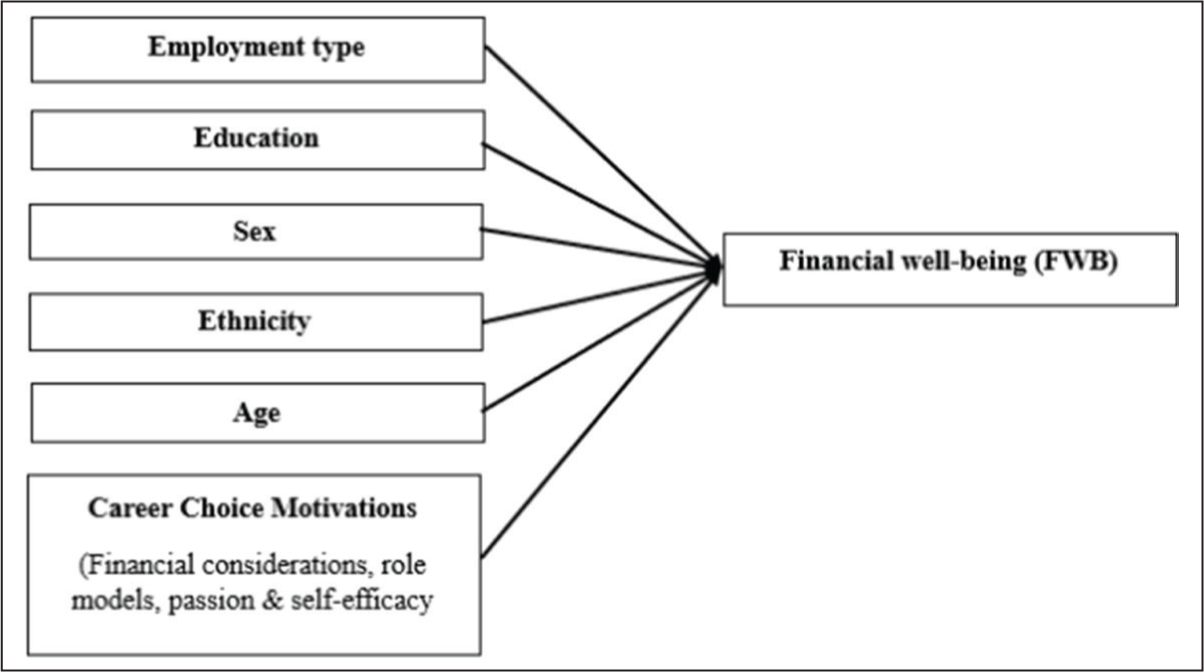
Figure 1 summarises the relationships between the variables in this study.
Proposed Conceptual Framework.
Methods
Design and Participants
A cross-sectional survey was administered via SurveyMonkey to a sample of entrepreneurs and paid employees using convenience and snowball sampling. For paid employees, professionals and skilled workers were targeted; for entrepreneurs, the focus was on small and medium-sized enterprises (SMEs). Both groups reported similar income levels, allowing for comparison across employment types with comparable economic profiles.
The survey link was disseminated to SME owners listed in the business section of the T&T telephone directory. It was also sent to Chambers of Commerce for distribution to their members. This approach was necessary since, as in many developing countries, access to information poses a major barrier. Thus, acquiring a database of entrepreneurs for random sampling proved futile. The methods employed generated a pool of SME owners with varied demographic and business features.
Paid employees were recruited by emailing the survey link to professional associations for distribution to their members. Respondents were also asked to disseminate the survey link to other paid employees. The survey was further shared with members of the public via LinkedIn and Facebook. This multi-pronged approach ensured that a broad cross-section of participants spanning various industries, ages, educational backgrounds and ethnic groups was captured.
In addition to income levels, several constants were maintained to enhance methodological consistency. Respondents were required to be residents of T&T, actively engaged in entrepreneurship and/or paid employment and ≥18 years old. All respondents were administered the same survey.
Instrument
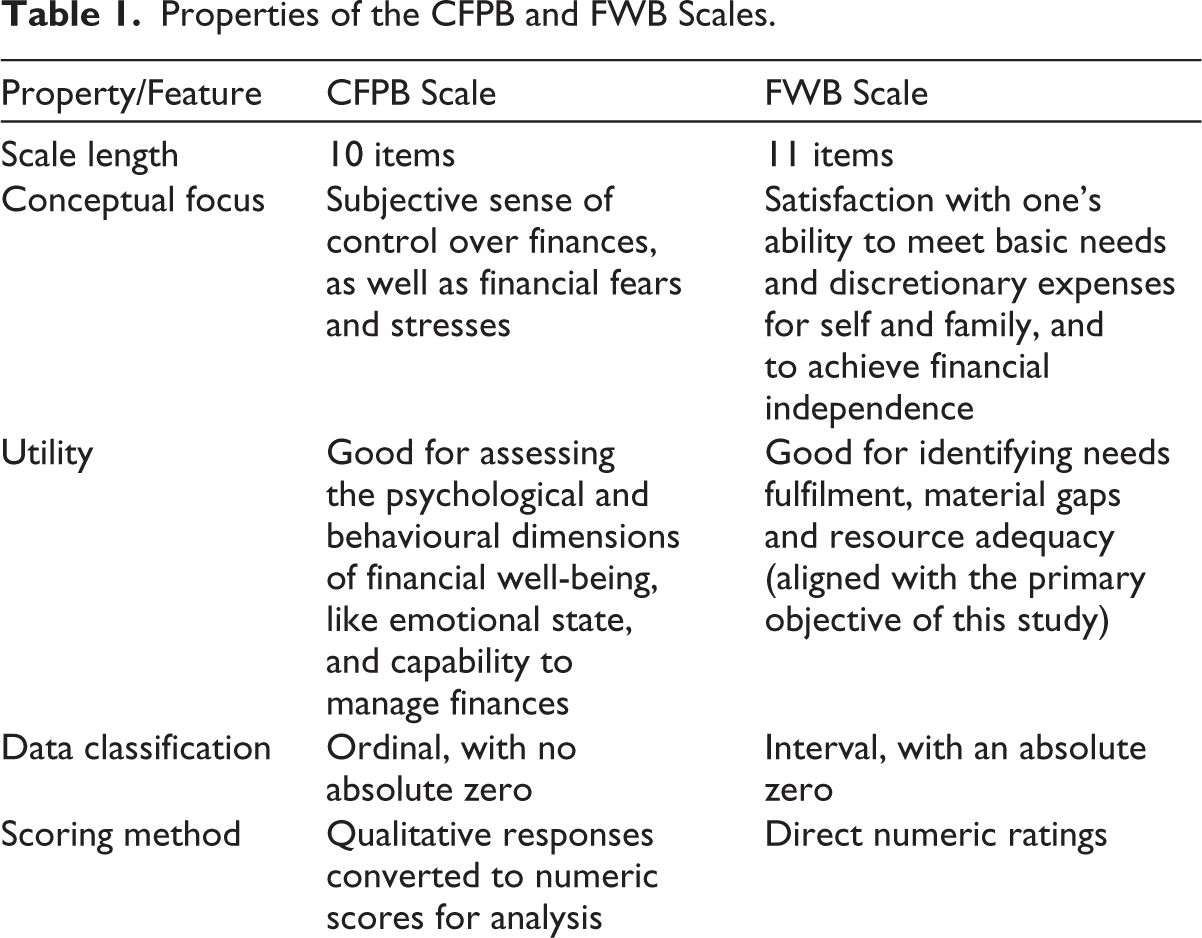
FWB instruments are few, and those available are inappropriate for achieving this study’s objectives. For example, the Consumer Financial Protection Bureau (CFPB), possibly the most renowned FWB scale, does not assess FWB through one’s ability to cover basic or discretionary expenses. The scale features items like ‘Because of my money situation, I feel like I will never have the things I want in life’. While such items allow for a glimpse into the respondents’ financial circumstances, they fail to capture the extent to which their wants and needs are satisfactorily met through income earned from their employment activities. Other statements like ‘I am securing my financial future’ offer little utility in understanding the financial circumstances of this study’s participants.
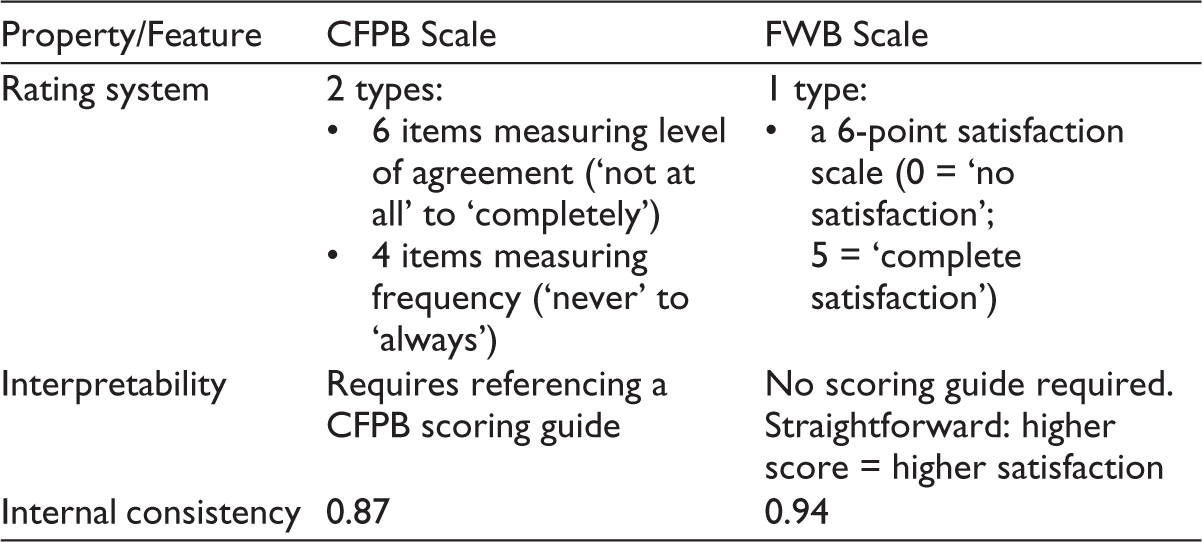
A structured survey was developed for use in this study. Scale items were developed using interview data captured from 20 participants, in which the interviewees’ perspectives regarding the essential aspects of FWB were recorded. Because individual differences play a formative role in FWB, and given people’s unique interpretations of economic needs, goals and expectations (Zyphur et al., 2015), this approach proved useful for developing an instrument which was fit for purpose. The survey comprised closed questions requiring categorical responses and scaled items. While the use of interview data in survey development helped to ensure face and content validity, these were also enhanced by having the survey evaluated by a subject matter expert and by a statistician. The survey was also pilot tested with 57 respondents before administering the final instrument. Table 1 compares the FWB survey developed for use in this study with the CFPB scale based on their conceptual focus, utility, interpretability, internal consistency and other properties.
Properties of the CFPB and FWB Scales.
Measures
Dependent Variable (DV)
FWB was assessed using self-reported data on how much the respondents were satisfied with their current financial conditions (the extent to which they could fund several basic and discretionary expenses, and to which they could achieve their financial goals). The scale featured items such as adequate food, needed clothing, healthcare coverage, financial independence, savings and investments and returned responses from ‘0’ (no satisfaction) to ‘5’ (complete satisfaction) for each item.
Independent Variables (IVs)
The IVs were sex (male and female); age (18–24, 25–40, 41–55, and ≥55); ethnicity (Afro-Trinidadian, Indo-Trinidadian, mixed ethnicity and ‘other’); education (primary or less; secondary; technical/vocational/ certificate training; professional tertiary degrees [MD, MBBS, LLB, etc.] and non-professional tertiary degrees [e.g., Associate’s, BA/BSc, MA/MSc, PhD]); and employment type (full-time entrepreneurs, full-time wage earners and hybrid entrepreneurs). Career choice motivations (CCM) were assessed using a scale which captured self-reported data on the extent to which participants were influenced to engage in their professions by factors like encouragement from family and friends; family members in the same activity; personal passion for the activity; perceived skill needed to succeed in the activity; and financial considerations. Items on this scale returned responses from ‘0’ (‘no influence’) to ‘5’ (‘maximum influence’).
Analysis
The dataset was exported to SPSS for analysis. Categorical variables were reported as frequency distributions. Correlations between the variables were tested via Pearson’s correlation and χ2 tests. Means, standard deviations and reliability statistics were generated for each scale. The resulting α values suggested adequate reliability: FWB (0.943) and CCM (0.649).
Psychometric validation of the scales was conducted via exploratory factor analysis using principal components extraction and orthogonal rotation. A similar approach to that of Leng et al. (2025) was followed. Before EFA, the Kaiser–Meyer–Olkin (KMO) and Bartlett’s test were conducted to determine the scales’ suitability for factor analysis. EFA was then performed using the following criteria: identification of items with factor loadings <0.4 for removal; elimination of cross-loaded variables; and removal of items with a communality <0.3, indicative of an item’s theoretical or conceptual inconsistency with the scale’s measured constructs (Leng et al., 2025).
All assumptions of normality, independence and homoscedasticity of the residuals and of the IVs were tested and satisfied. Accordingly, parametric tests were used to analyse the data. One-way ANOVA was performed to ascertain whether entrepreneurs and paid employees differed significantly in their career choice motivations. Factorial ANOVA with LSD post hoc analyses was conducted to determine main and interaction effects of the categorical IVs on the DV. Factorial ANOVA allows for examination of the unique contribution of each categorical variable while statistically holding the other variables in the model constant. This is often loosely interpreted as a form of control (Field, 2024). Stepwise regression was used to determine how each career choice motivator impacted FWB. Two models were examined. In the first, only scale variables (financial considerations, role models, and passion and self-efficacy) were entered as predictors. In the second, regression was controlled for age and sex, as both variables have been shown to influence employment choices, income levels, employment tenure and ultimately FWB.
In this study, hybrid entrepreneurs were analysed as a discrete category across the ANOVA and regression models. Theoretically, hybrid entrepreneurship represents a distinct employment configuration characterised by risk diversification, dual income streams and potentially lower levels of commitment to entrepreneurial ventures when compared with full-time entrepreneurship (Folta et al., 2010; Petrova, 2012; Ribeiro et al., 2023). Hybrid entrepreneurship, therefore, enhances an individual’s capacity to mitigate financial risks associated with full-time entrepreneurship, thus impacting the overall FWB experience. For this reason, employment type was not treated as a dichotomous choice between entrepreneurship and waged work. Rather, it was disaggregated into three subgroups (entrepreneurs, paid employees and hybrid entrepreneurs). Distinguishing hybrid entrepreneurs as a discrete subgroup in the analysis was expected to provide nuanced insights into how varying degrees of entrepreneurial commitment influence FWB outcomes. The results are presented in the next section.
Results
Frequency Distributions
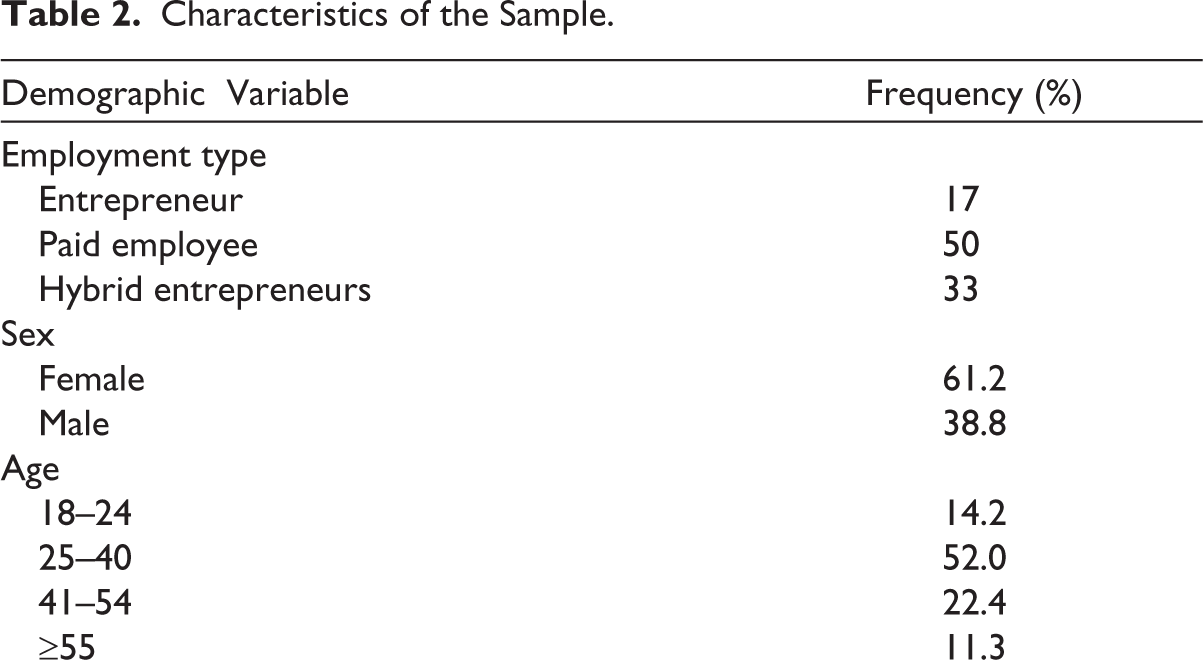
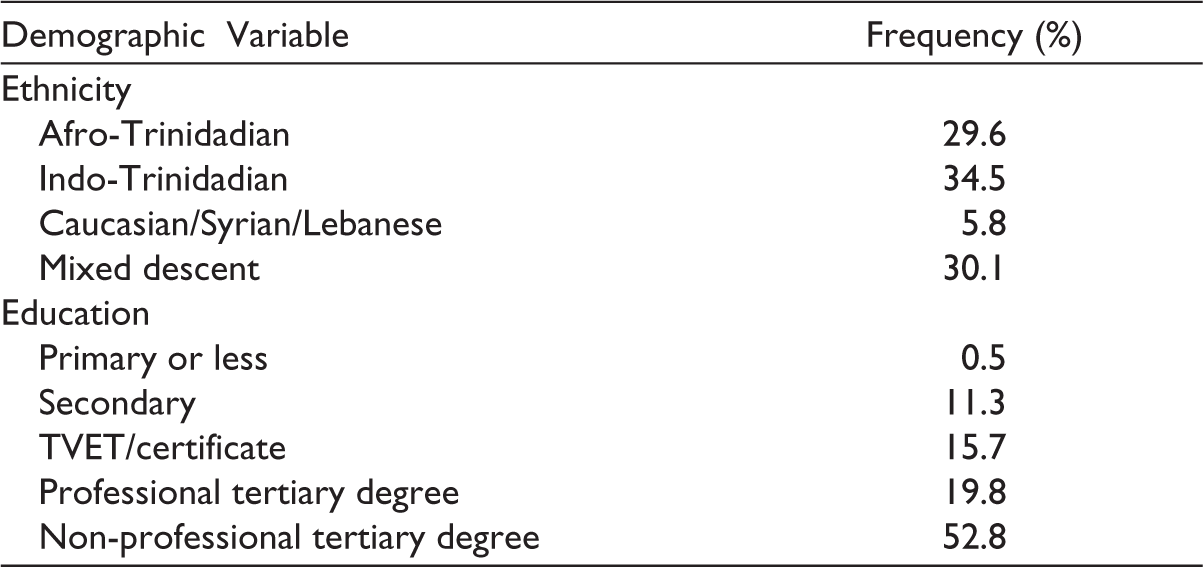
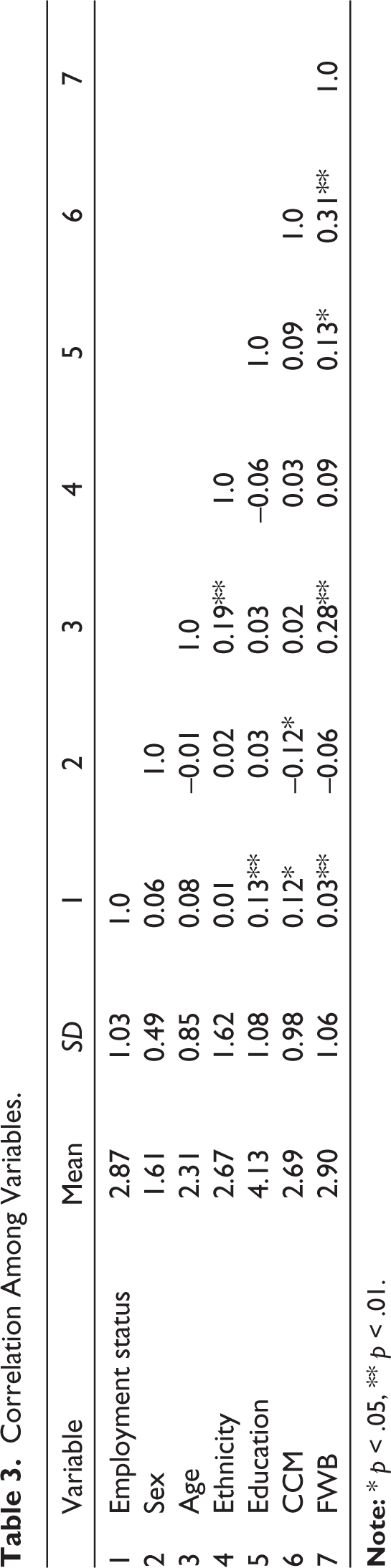
A total of 415 responses were captured from a mixture of full-time entrepreneurs, paid employees and hybrid entrepreneurs in T&T. Of these, 364 were deemed usable. Of the usable responses, 50% were paid employees, 17% were entrepreneurs and 33% were hybrid entrepreneurs. Respondents were mainly female (61%), 25 to 40 years old (52%), and of Indo-Trinidadian ethnicity (35%)—Table 2. Over half (53%) of the respondents held non-professional tertiary degrees. Some IVs correlated with each other and with the DV—Table 3.
Characteristics of the Sample.
Correlation Among Variables.
χ2 Test of Association
When employment type was correlated against the other variables of Table 1 in several χ2 tests, some significant associations (≤0.05) emerged. 22% of men versus 10% of women were entrepreneurs, but 55% of women were paid employees compared to 27% of men χ² (1, N = 408) = 22.475, p = .000. More older persons (≥55 [36%] and 41–55 [20%]) than younger individuals (25–40 [11%] and 18–24 [2%]) were entrepreneurs χ² (3, N = 408) = 12.535, p =.006; none of the age groups were overrepresented among paid employees. 60% of entrepreneurs were of mixed ethnicity, but paid employees were almost equally distributed among the three ethnic groups (29% African, 36% East Indian and 36% mixed) χ² (3, N = 408) = 11.175, p = .000. Persons of African, Indian and mixed ethnicities were equally represented among hybrid entrepreneurs (33% for each ethnic group). None of the categories for education were overrepresented in any of the three employment groups χ² (4, N = 408) = 4.821, p = .306.
The FWB Scale
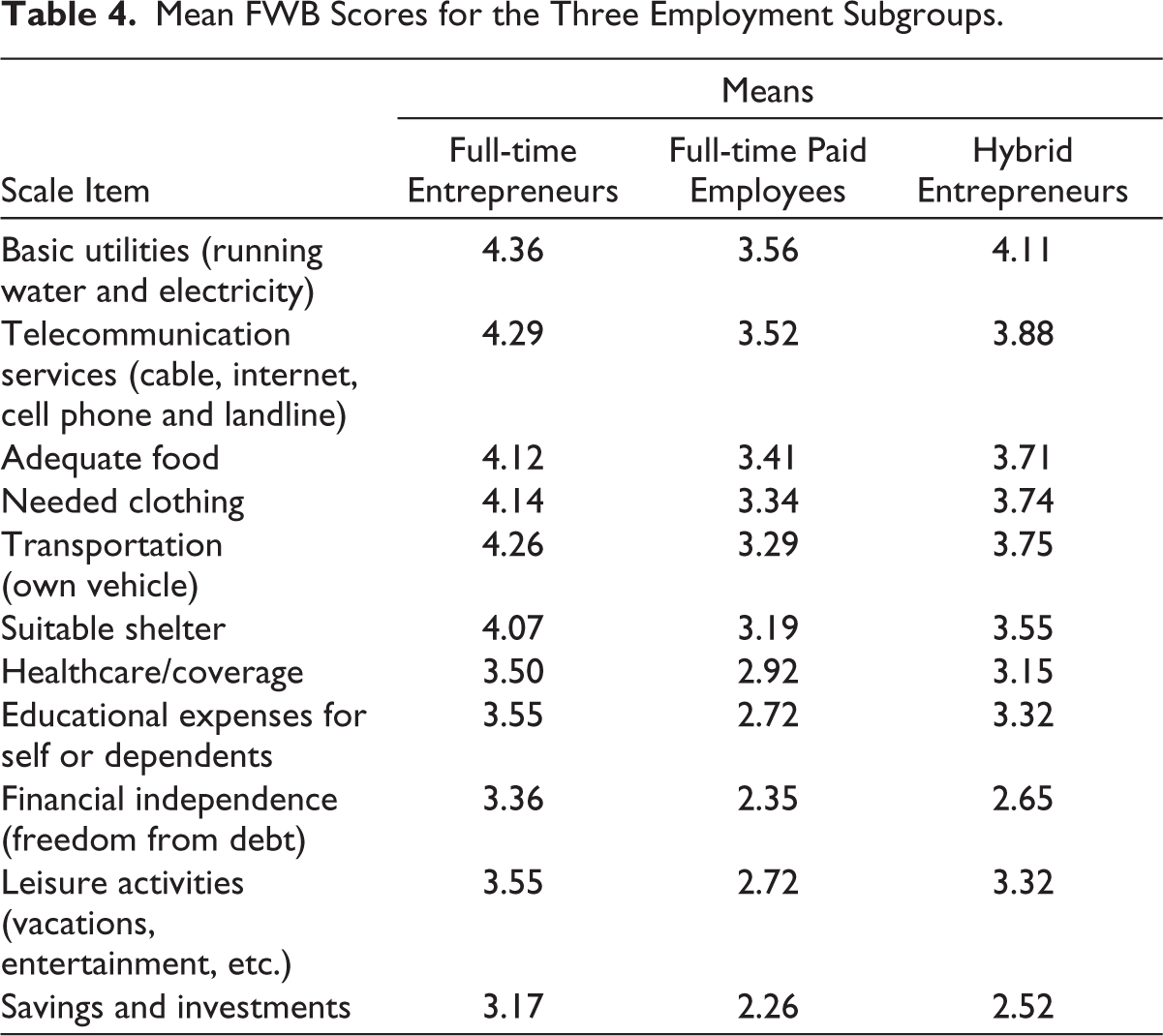
The highest mean on this scale was for the item ‘ability to pay for basic utilities’. This pattern was seen for the combined sample (M = 3.83), as well as the disaggregated sample: entrepreneurs (M = 4.36), paid employees (M = 3.56) and hybrid entrepreneurs (M = 4.12). Overall, the respondents were least satisfied with their ‘ability to save and invest’ (M = 2.49). When the sample was broken out by employment type, this pattern held for entrepreneurs and hybrid entrepreneurs. Paid employees, however, were least satisfied with their ‘ability to fund leisure activities’ (M = 2.21). Table 4 compares the mean scores for each scale item across the three employment subgroups.
Mean FWB Scores for the Three Employment Subgroups.
The CCM Scale
Overall, the participants were most strongly influenced to pursue their professions by the prospect of financial gain (financial considerations) (M = 3.63). Pressure from family members had the smallest influence on career choice (M = 0.99). When the data were broken out by employment type, full-time and hybrid entrepreneurs were mostly influenced by passion and perceived skill for the activity in which they were engaged (M = 3.80 and M = 3.89, respectively). Conversely, the highest mean for paid employees was for financial considerations (M = 3.82). Pressure from family and friends was the weakest motivating factor among entrepreneurs (M = 0.56), while ‘family members in the same activity’ was the weakest motivator among wage earners (M = 0.81) and hybrid entrepreneurs (M = 1.06).
Exploratory Factor Analysis
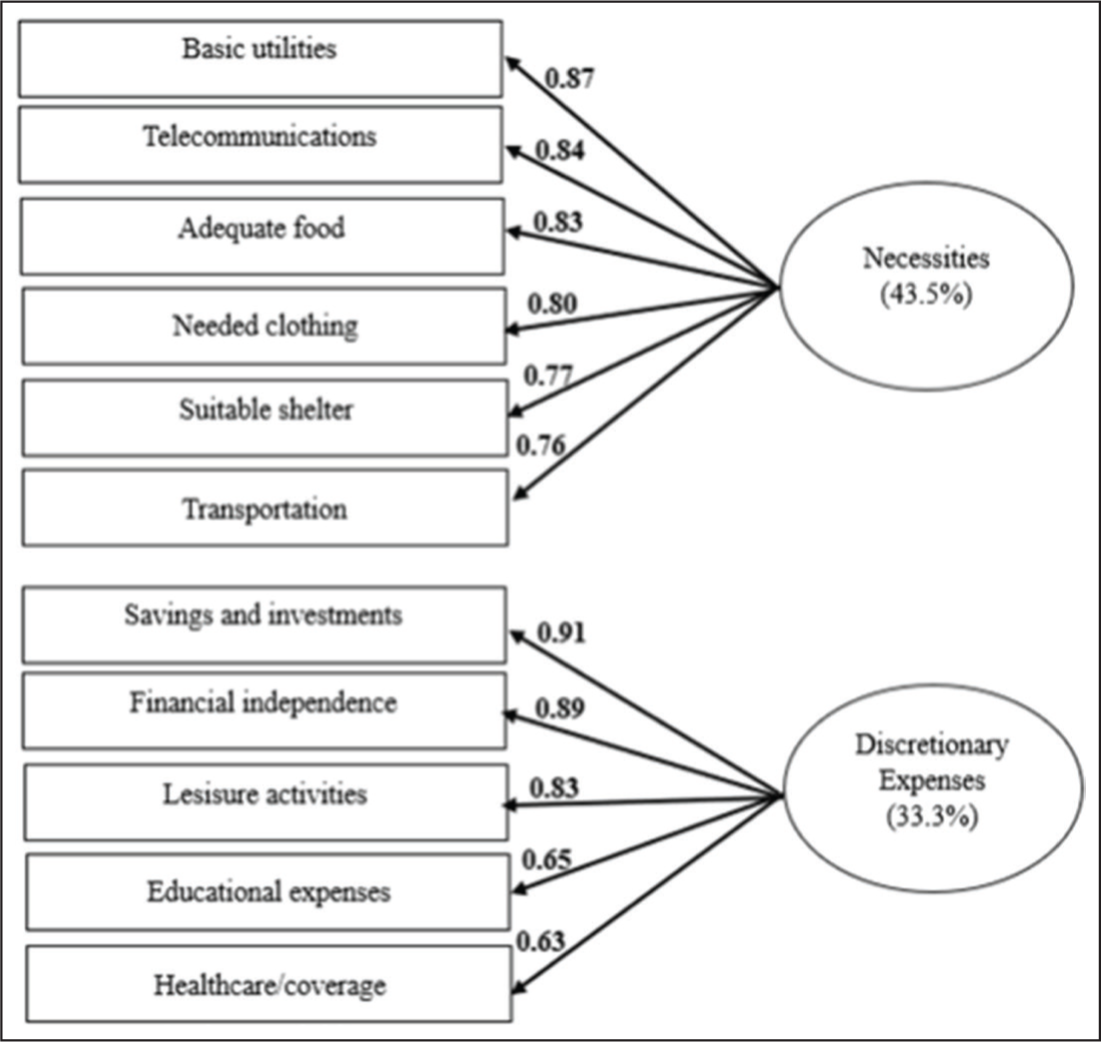
The FWB scale yielded a two-factor solution, with six variables loading onto the first factor, Necessities, and five loading onto the second factor, Discretionary Expenses. The resulting factor solution, including factor loadings for each observed variable, is shown in Figure 2. Both factors together explained 76.8% of the total variance in the respondents’ FWB scores.
Factor Solution for the FWB Scale.
Factor Analysis of the CCM Scale
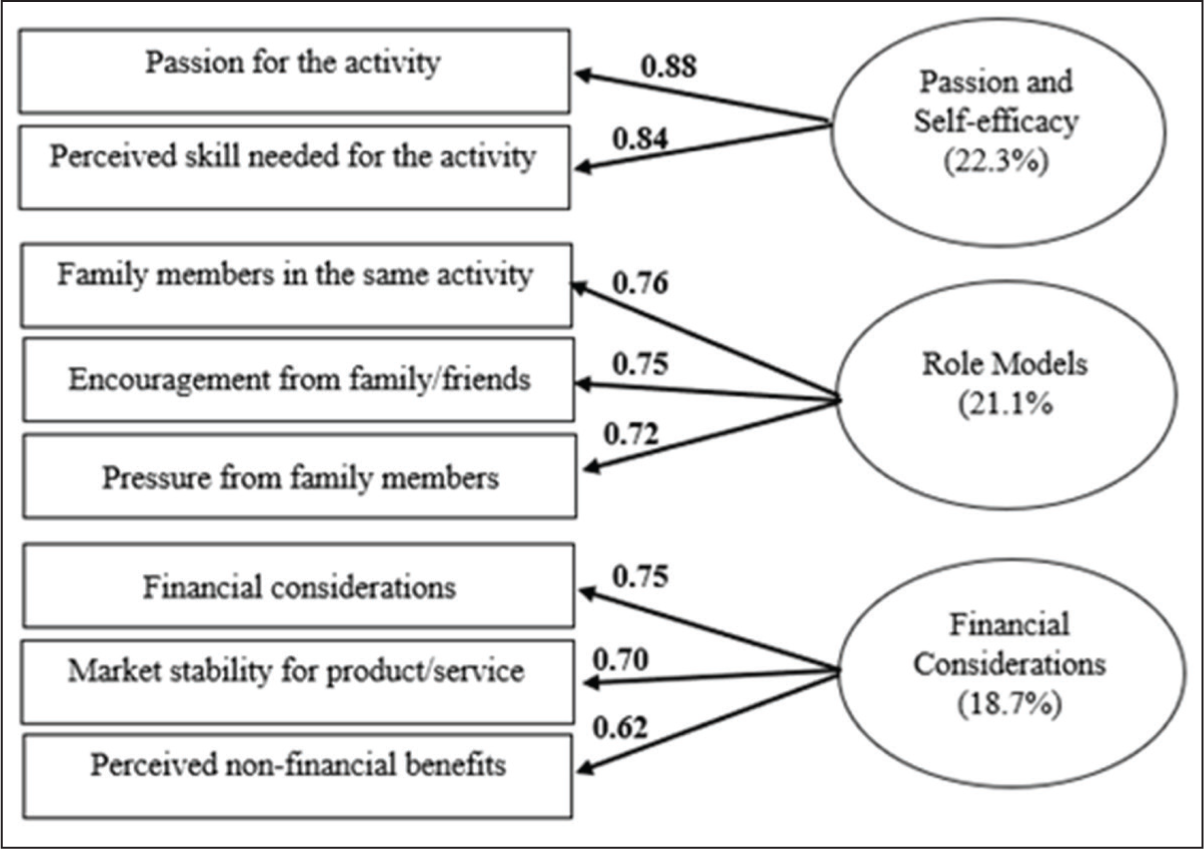
The CCM scale produced three factors with eigenvalues >1.0: Passion and self-efficacy (22.3%), role models (21.1%) and financial considerations (18.7%). These three factors explained 62.1% of the variance in the respondents’ scores. The resulting factor structure is given in Figure 3.
Factor Solution for the CCM Scale.
Career Choice Motivators Across Employment Types
One-way ANOVAs were conducted to determine whether the three career choice motivators differed significantly for individuals in different employment subgroups. A significant result was obtained for passion and self-efficacy (F(3,356) = 11.55, p = .000), with LSD post hoc analysis showing significant differences for entrepreneurs (M = 4.54) and paid employees (M = 3.29). No significant differences were observed for role models (p = .058) and financial considerations (p = .061).
Correlation Analysis
A moderate and positive statistically significant correlation was found between the CCM and FWB scales (r = 0.31, p = .000). To determine the extent to which each of the uncorrelated factors of Figure 3 is associated with FWB, a subsequent correlation analysis was performed. Two significant correlations were observed: passion and self-efficacy (r = 0.303; p ˂ .001) and financial considerations (r = 0.158; p = .009). The correlation between role models and FWB was negative, weak and nonsignificant (r = −0.040; p = .513).
Results from Factorial ANOVA
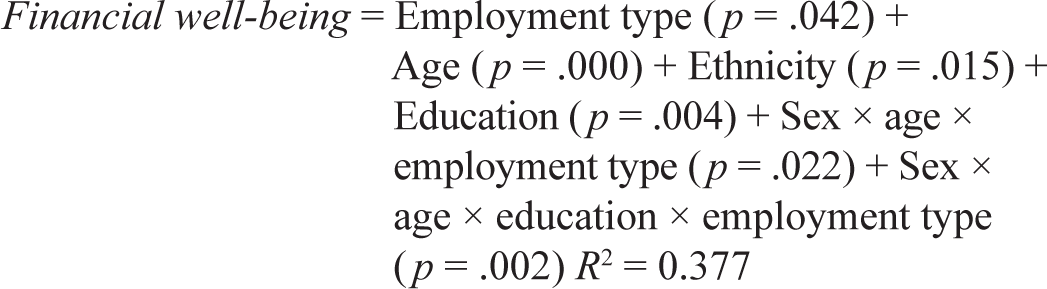
Significant main and interaction effects obtained from factorial ANOVA are summarised in Equation (1). Collectively, the variables captured by the model (employment type, age, ethnicity, education and sex) explained 38% of the variance in the respondents’ FWB scores.
Main Effects
Apart from sex (p = .709), all categorical IVs had a significant effect on FWB (p < .05). The main effect for employment type yielded an F ratio of F(2,269) = 7.565, p = .000, with LSD post hoc analysis uncovering significant differences between mean scores for entrepreneurs (M = 3.44) and paid employees (M = 2.69). No significant differences were found when the mean scores for the abovementioned groups were compared with those of hybrid entrepreneurs (M = 3.04).
The main effect for age returned a statistic of F(3,269) = 7.325, p = .000. Pairwise comparisons revealed that the mean score for the 18–24 age group (M = 2.40) was significantly lower than those of the 41–55 (M = 3.12) and ≥55 (M = 3.49) age groups and also pointed to a significant difference in mean scores for the 25–40 (M = 2.79) and ≥55 (M = 3.49) age groups. All other differences were nonsignificant.
Ethnicity also had a significant effect on FWB, F(3,269) = 3.855, p = .010, with post hoc pairwise comparisons revealing that the mean score for mixed respondents (M = 3.58) was significantly larger than those for Afro- and Indo-Trinidadians (M = 2.83 and M = 2.47, respectively). There were no significant differences in mean scores for the remaining ethnic groups.
Education returned the following F statistic: F(3,269) = 5.633, p = .000). Persons with professional tertiary degrees (M = 3.33) reported significantly higher FWB than those with secondary education (M = 2.43) and technical/vocational training (M = 2.66).
Interaction Effects
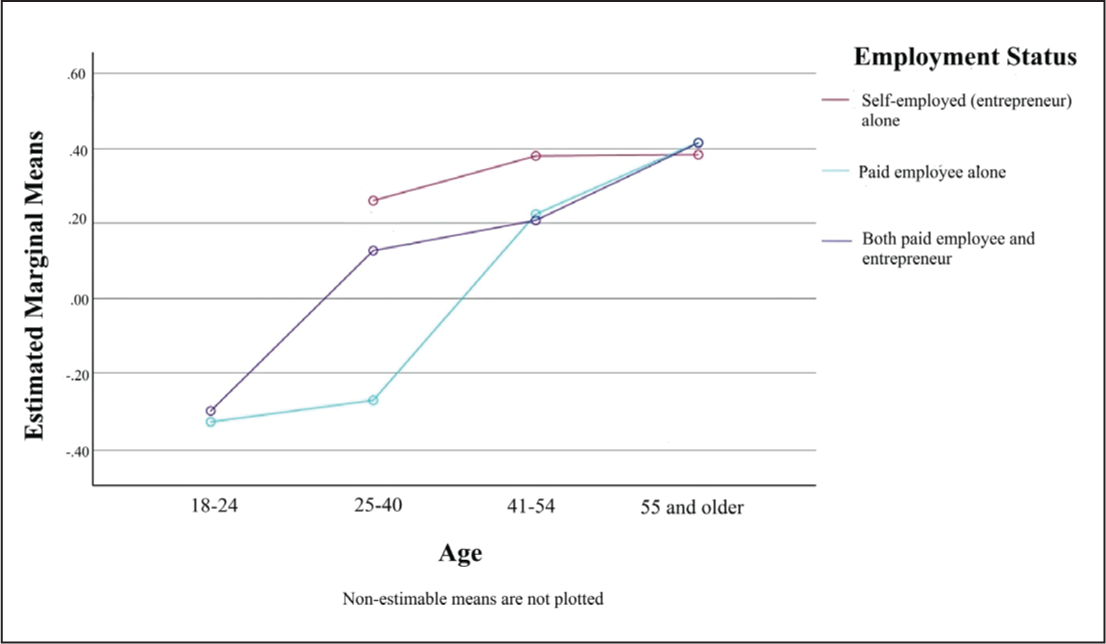
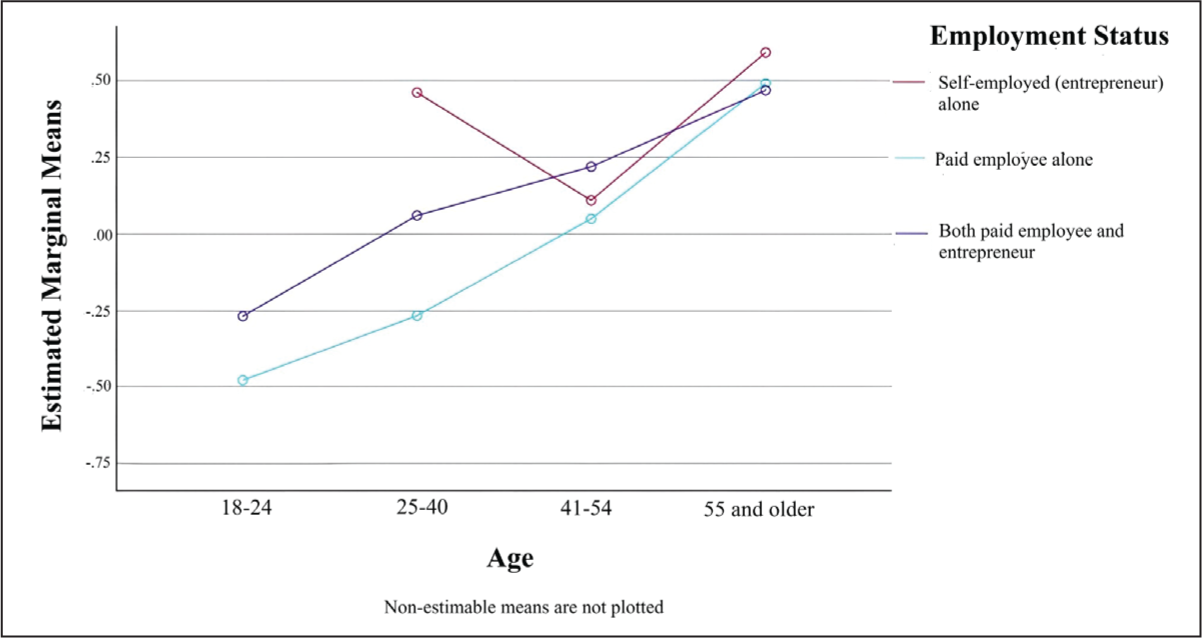
Sex did not have a significant main effect on FWB but featured in a three-way interaction (sex × age × employment type) which was significant at the 5% level (F(6,269) = 15.402, p = .022)—Figures 3 and 4. A second interaction effect (sex × age × education × employment type) also emerged. It is challenging to generate four-way interaction plots. Therefore, it is difficult to see how education changes the three-way patterns displayed in Figures 4 and 5. An essential takeaway from this finding, however, is the extent to which FWB is complicated by an individual’s demographic make-up.
Interaction Plot for Sex × Age × Employment Type (Male Subsample).
Interaction Plot for Sex × Age × Employment Type (Female Subsample).
Regression Analysis
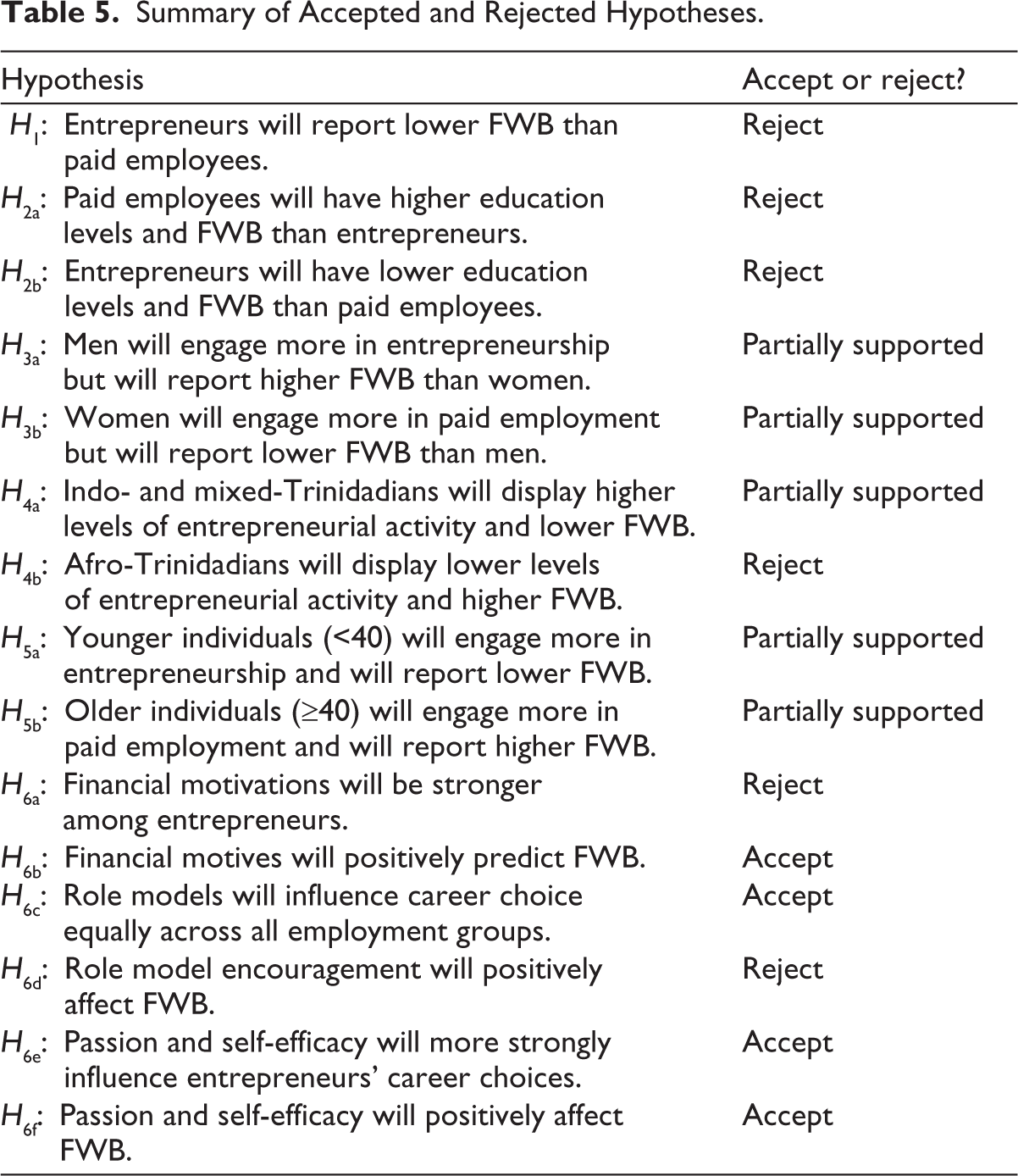
Results from the factorial ANOVA suggest that the demographic variables tested accounted for 38% of the total variance in the respondents’ FWB scores and indicate that missing variables account for further variance. Stepwise regression was therefore performed with FWB as the DV, and the three CCM sub-dimensions as predictors. Two models were examined. The first model (with scale variables only) explained an additional 4.7% of the variance in the respondents’ FWB scores. The second model (with regression controlled for age and sex) accounted for an additional 11.4% of the variance in FWB. Passion and self-efficacy (β = 0.31, p = .000) and financial considerations were significant positive predictors of FWB (β = 0.17, p = .006), but role models (β = 0.03, p = .592) did not significantly predict FWB. In Table 5, the accepted and rejected hypotheses are reported based on the foregoing analyses. Notably, some hypotheses could only be partially supported by the findings.
Summary of Accepted and Rejected Hypotheses.
Discussion and Implications
This study examined how employment type, demographics and CCM shape FWB in T&T. Contrary to Hypothesis 1, the analysis revealed that FWB was significantly higher among full-time entrepreneurs than among full-time paid employees. This result challenges the longstanding narrative that entrepreneurship is associated with diminished financial satisfaction due to income instability and financial precarity (e.g., Binder & Coad, 2013; Hamilton, 2000). It also opposes the conventional assumption that income stability is the primary source of an individual’s financial satisfaction, as implied by the hedonic view of SWB (Dawson, 2017; Douglas & Shepherd, 2002; Pantea, 2022). Rather, results from this study provide clear empirical support for the eudaimonic interpretation of SWB theory, arguing that non-pecuniary factors like purpose and autonomy are important determinants of FWB. It also extends SWB theory by demonstrating the dominant role of intrinsic motivations over extrinsic financial motives as predictors of well-being. The assertion that psychological fulfilment serves as a more significant determinant of FWB than financial factors introduces a nuanced perspective that remains underexplored in mainstream entrepreneurship and FWB literature.
In this study, hybrid entrepreneurs—who combine paid work with self-employment—were analysed as a discrete subgroup across all models, given the unique characteristics of this employment type: multiple income streams and risk diversification, features that are typically absent from traditional entrepreneurship and paid employment (Folta et al., 2010). Interestingly, this study revealed that, while full-time entrepreneurs had significantly higher levels of FWB than full-time paid employees, hybrid entrepreneurs did not differ significantly from paid employees in this regard. The fact that full-time entrepreneurship was the single most financially satisfying choice for individuals in this sample, outperforming both waged and hybrid entrepreneurship, suggests that mere participation in entrepreneurship—whether part-time or as a side venture—is insufficient to achieve superior FWB. Instead, it proposes that full-time entrepreneurial commitment is pivotal for achieving significantly higher financial satisfaction. Thus, entrepreneurship will more likely lead to greater feelings of economic empowerment and enfranchisement for individuals who fully dedicate themselves to it. Such positive feelings will likely enhance FWB among these individuals and will positively impact the longevity of their entrepreneurial enterprises. This nuanced insight and its practical implication empirically validated the need to disaggregate the employment type variable into three distinct categories (entrepreneur, paid employee and hybrid entrepreneur).
The regression model revealed that ‘passion and self-efficacy’ was a stronger predictor of FWB than financial considerations. This coincides with (and explains) this study’s finding that entrepreneurs, whose careers were more aligned with their personal interests and self-beliefs, were more financially satisfied than wage earners who were largely motivated by financial gain. Thus, why people engage in entrepreneurship is also central to their FWB. Pursuing entrepreneurship purely for financial gain, rather than for an opportunity to ‘do what one loves’, can have a limiting effect on FWB. The nonsignificant beta value for the ‘role models’ variable also suggested that pursuing one’s career—whether full-time entrepreneurship, full-time wage employment or hybrid entrepreneurship—based on encouragement from loved ones had no impact on an individual’s FWB. These findings suggest an alternative avenue for applying the TPB. In line with established patterns in TPB literature, the study found that attitudes and PBC (conceptualised as passion and self-efficacy) were stronger predictors of FWB than subjective norms (represented by role models). While TPB is traditionally applied to explain individual decision-making, the results indicate that its explanatory scope may extend to downstream outcomes such as FWB. This extension broadens the theoretical utility of TPB and offers a novel perspective for future research applications.
Age, ethnicity and education were significant main predictors of FWB. Older persons, those of mixed ethnicity and those with tertiary qualifications reported greater FWB. This finding also has important implications. For example, the significant effect for age suggests that when people participate in entrepreneurship is crucial. Although entrepreneurship is regarded as a panacea for unemployment and poverty among youths in developing economies (Olufemi, 2020), this study suggests that there may be merit in deferring entrepreneurial entry until a later stage in life. This aligns with the finding that passion and self-efficacy were the strongest predictors of FWB among the three career choice motivators. Since passion and self-efficacy are often cultivated over time, postponing entrepreneurial entry to allow for the discovery of personal interests and the acquisition of pertinent resources (such as education and experience) may enhance the likelihood of entrepreneurial success and well-being.
Importantly, these findings revealed several risk factors which associate with lower FWB in T&T. Specifically, persons in full-time paid employment, younger individuals, Indo-Trinidadians, persons with lower educational qualifications and those with a lack of intrinsic motivation (passion and self-efficacy) for their careers were more predisposed to lower financial satisfaction. While they align with previous works (e.g., Gutter & Copur, 2011), which argue that certain demographic factors make individuals more susceptible to lower FWB, they also signal the need for policy interventions to support these at-risk individuals.
Some of the demographic variables also interacted with each other to impact FWB. In particular, the three-way interaction effect of sex × age × employment type and its corresponding interaction plots unearthed some nuanced insights. FWB typically increased with age for men and women across all employment groups, but a drop in FWB was observed for female entrepreneurs 41–54 years old. For men and women ≥55 years, satisfaction means were even across all employment types. One anomaly was seen for male entrepreneurs in the sample; those 41–54 years old and ≥55 had equivalent levels of FWB. This differed from the overall trend in which FWB consistently rose with age for men and women across the various employment subgroups and signalled a possible plateau in FWB for male entrepreneurs beyond 40 years old.
In summary, this research contends that FWB is a complex construct influenced by personal characteristics, occupational choices and motives for choosing one occupation as opposed to another. It demonstrates that full-time entrepreneurship, when intrinsically motivated, can lead to superior FWB for individuals belonging to specific demographic groups. Beyond its theoretical contributions, the study also helps to fill existing methodological and contextual gaps through its adoption of a subjective, context-sensitive approach to assessing FWB and its emphasis on a developing country.
Limitations and Future Work Recommendations
This study, despite its theoretical and practical implications, has several limitations which must be acknowledged. First, a cross-sectional design was employed. Thus, causal relationships between the explanatory and outcome variables could not be established. Subsequent studies should employ a longitudinal design to trace FWB differences for different employment groups over time. Second, the data analysed in this study were captured from respondents in a single setting; hence, this study’s findings may be inapplicable to other contexts, particularly those in which the prevailing institutional environments differ from that found in T&T. This limitation is particularly noteworthy, and may offer an alternative explanation for the comparatively higher FWB reported by entrepreneurs in this study—namely, the influence of contextual factors specific to T&T. T&T is an economy where specific industries—like the upstream energy sector in Trinidad and the tourism sector in Tobago—play a significant role in shaping entrepreneurial earnings (Bahaw, 2015). Many entrepreneurs operate in high-margin industries and are driven by opportunity rather than necessity, leading to greater financial stability compared to salaried employees. Another explanation lies in the region’s socio-cultural structure. Unlike Western contexts, where entrepreneurship is often riskier due to individualistic structures, the Caribbean fosters a more collectivist approach. Many entrepreneurs run family-owned businesses, benefiting from strong familial support, shared business resources and reduced operational expenses, which help alleviate financial burdens (Bahaw, 2025b). Future studies should therefore be conducted in various settings to assess whether these findings are consistent across contexts.
A third limitation is the exclusive reliance on self-reported data, which are often prone to social desirability bias. It is also possible that the entrepreneurs in this study reported greater levels of FWB for reasons other than those explored in this study. For example, given the plethora of works which report higher earnings among paid employees relative to entrepreneurs, the observations made in this study could be due to the more optimistic personalities of entrepreneurs (Fatma et al., 2021; Lukeš & Zouhar, 2024). Future studies can therefore produce more robust findings by capturing a combination of subjective and objective data from participants. A fourth limitation is its use of non-probabilistic sampling techniques. While convenience and snowball sampling were necessary given the challenges of accessing formal business registries in T&T, non-random sampling methods may introduce selection biases, such as the overrepresentation of well-networked individuals and the underrepresentation of persons in rural communities. Accordingly, the current study’s findings may not fully generalise to the broader national workforce of T&T. Where possible, future research should employ randomised or stratified sampling techniques to improve representativeness and enhance generalizability. A final limitation is that the variables tested explained only 50% of the variance in FWB for the respondents, suggesting that other untested variables account for additional variance in FWB. Therefore, future works should consider a wider range of variables as possible predictors of FWB. These may include marital status and family structure, debt levels, financial literacy levels, spending habits, industry and/or sector, support systems, geographic location of residence and others.
Marital status and family structure, for instance, can both impact household income. Dual-career couples usually create higher household incomes and opportunities for shared financial responsibility. Similarly, having fewer dependents can change one’s FWB circumstances. Higher debt levels, low financial literacy and poor spending habits will also likely reduce FWB. Individuals who participate in high-growth, stable sectors, as well as sectors with greater employment benefits, will likely experience greater FWB; one can also expect people in low-growth or volatile sectors to experience lower FWB. Support systems are also critical to an individual’s ability to maintain FWB, as individuals who receive financial assistance from family and friends during periods of financial strain are likely to maintain positive feelings of FWB even when financial challenges arise (Frederick, 2018, 2020). Finally, as it relates to geographic location, studies (e.g., Campbell, 2021) have found that residing in larger urban areas is generally more costly than living in smaller rural areas. Thus, future research can benefit from exploring differences in residence as a potential predictor of FBW.
Footnotes
Declaration of Conflicting Interests
The authors declared no potential conflicts of interest with respect to the research, authorship and/or publication of this article.
Funding
The authors received no financial support for the research, authorship and/or publication of this article.