



Abstract
Balancing explorative and exploitative innovations poses a significant challenge for small- and medium-sized enterprises (SMEs) due to resource limitations. Strategic entrepreneurship behaviour offers a potential solution; yet an understanding of specific behaviours fostering these innovations remains limited. This study proposes that strategic entrepreneurship behaviour, synthesised from innovation attitude, perceived innovation control and subjective innovation norms, influences SMEs' explorative and exploitative innovation activities. These innovation activities, in turn, are expected to impact new product development and market performance. Data collected, with government permission from 244 SMEs and analysed using SmartPLS, revealed significant effects of innovation attitude and perceived innovation control on both types of innovations. However, subjective innovation norms show no influence. Findings exhibit that explorative and exploitative innovation activities have a favourable influence on new product performance, with the latter significantly affecting the market performance. This study uniquely integrates strategic entrepreneurship behaviours from the Theory of Planned Behaviour and innovation activities from the resource-based view, promoting performance enhancement and offering insights into strategic management and policy formulation.
Keywords
Introduction
The implementation and practice of innovation are crucial determinants of competitive advantage, and firms that excel in innovation aspects tend to achieve greater success in today’s competitive business landscape (Ferreira et al., 2020; Haseeb et al., 2019). The integration of strategic entrepreneurship behaviour with explorative and exploitative innovation activities offers the potential to strengthen firms’ performance, positioning them to compete effectively in the contemporary marketplace (Hughes et al., 2021). However, challenges lie in choosing an effective innovation strategy, which involves generating new ideas, improving existing processes or technologies or developing new products/services that might affect long-term operational efficiency (Limaj & Bernroider, 2019; Lin et al., 2007). This is cogent particularly for small- and medium-sized enterprises (SMEs) due to their resource constrains and substantial financial limitations (Andrade et al., 2023; Rahman et al., 2017; Spithoven et al., 2013). Among several significant factors contributing to a firm’s competitive advantage, documented in strategic management and entrepreneurial research, scholars observed that entrepreneurship behaviour is a significant predictor of firms’ performance (Anderson et al., 2019; Hughes et al., 2021). Entrepreneurship behaviour comprises actions, attitudes and mindset exhibited by individuals in entrepreneurial activities. It has been proven that entrepreneurs’ behaviours and characteristics are fundamental factors in entrepreneurial firms’ success (Hughes et al., 2021; Schumpeter & Backhaus, 2003).
Entrepreneurial behaviours enable SMEs to successfully introduce new products to the market and achieve competitive advantage and sustainability of innovation (Rahman et al., 2024; Schaltegger & Wagner, 2011; Tóth et al., 2020). Entrepreneurs’ behaviour is a valuable resource for any firm that contributes to achieving an effective value-creation strategy (Aksoy, 2017; Markman et al., 2001). Most scholars agree that entrepreneurship behaviour is related to innovation activities. For instance, Hughes et al. (2021) conceptualised strategic entrepreneurship behaviour as a combination of opportunity and advantage-seeking behaviours that impact explorative and exploitative innovation activities of technology-based firms. In this vein, the current study expands the concept of strategic entrepreneurship behaviour by incorporating behavioural factors from the Theory of Planned Behaviour (TPB) and integrating them with innovation activities derived from the resource-based view (RBV). However, there is a gap in the literature on exploring the additional strategic entrepreneurship behaviour that fosters explorative and exploitative innovations of SMEs. Therefore, this study aims to shed light on the intricate relationship between strategic entrepreneurship behaviour—synthesised from innovation attitude, perceived innovation control and subjective innovation norms—retrieved from TPB and SMEs’ explorative and exploitative innovation activities (from RBV). Innovation attitude, perceived innovation control and subjective innovation norms also have been studied in previous research (Taghizadeh et al., 2022; Unsworth et al., 2009, 2012).
Explorative innovation and exploitative innovation are two different concepts that require firms to formulate different strategies (Benner & Tushman, 2003; Gabriel Cegarra-Navarro et al., 2011). While explorative innovation intends to introduce new products or services, exploitative innovation produces incremental ones (Limaj & Bernroider, 2019). Therefore, strategic entrepreneurship behaviour can be shaped differently for each activity, providing separate prescriptions for explorative and exploitative innovation activities (Hughes et al., 2021). This presents fewer challenges forz SMEs, as their innate capacity for innovativeness and flexibility (Aragón-Correa et al., 2008; Eikelenboom & de Jong, 2019) allows them to operate with less bureaucracy and more agility and responsiveness to the rapidly changing market needs (Chang et al., 2011). Though strategic entrepreneurship behaviour has been conceptualised in the literature (Hughes et al., 2021), this study expanded upon the concept that entrepreneurs’ innovation attitude, subjective innovation norms and perceived innovation control shape their behavioural intention for explorative and exploitative innovation activities. This can eventually lead to enhanced new product and market performance of SMEs, especially in the context of Oman.
Traditionally, Oman has been severely dependent on oil and natural gas exports as a primary driver of its economy and market condition. Oman is adapting to transform its economy into a knowledge-based economy from a petroleum-based economy (Rahman et al., 2021). This transformation is a key component of Oman’s Vision 2040 emphasised in the National Program for Enhancing Economic Diversification of Oman. Recently, there has been a notable focus on nurturing innovation and entrepreneurship in Oman. Thus, promoting innovation activities among SMEs in Oman could be vital for economic diversification and its long-term propensity for innovation. Omani SMEs can position themselves as competitive players in the global economy by fostering a culture of innovation while reducing reliance on oil and gas revenue. The actions and initiatives of SMEs in identifying, pursuing and capitalising on opportunities for innovation may offer additional growth and competitive advantage. This empowers Oman to mitigate challenges in the global economy by creating opportunities for innovation, job creation and sustainable development.
This study provides a logical theoretical framework for shaping strategic entrepreneurship behaviour aimed towards explorative and exploitative innovation activities through the behavioural constructs outlined in the TPB, aiming to understand which one acts as a catalyst for both explorative and exploitative innovation activities, eventually impacting a firm’s performance positively. This study also advances the conceptualisation of strategic entrepreneurship behaviour different from proposals in literature (Anderson et al., 2019; Hughes et al., 2021). The framework offers a flexible approach that can be applied in various contexts, extending its relevance beyond specific industries or regions.
Theoretical Framework
Explorative Innovation and Exploitative Innovation
The innovation strategies of firms have been divided into explorative and exploitative innovations that create adaptive challenges for firms (Hughes et al., 2021; March, 1991). While firms are trying to build their capability through these two types of innovations simultaneously (Cao et al., 2009; He & Wong, 2004; Wu & Peng, 2020), they require contradictory knowledge processes, challenging firms to differentiate their resources and capabilities to introduce successful innovation (Chang et al., 2011; Taghizadeh et al., 2020b).
Explorative innovation is associated with radical change, creativity, disruption of current competencies and presenting to a new market that generates a high level of risk (AlAbri et al., 2022; Christensen et al., 2006; Wu & Peng, 2020). Explorative innovation denotes tacit knowledge bases and signifies technological innovation activities aimed at developing new products/services or marketing trajectories for emerging customers (Benner & Tushman, 2003; He & Wong, 2004; Jansen et al., 2006). The process of explorative innovation capability is risky with large-scale investment, because it relies on experimentation and the discovery of new products or services (March, 1991). This creates challenges for firms in reacting to environmental trends such as opening up new technologies, creating new designs and developing new products or services (Jansen et al., 2006; Kollmann & Stöckmann, 2014).
In theory, exploitative innovation relies on incremental changes to existing products or services to meet current market demand (Amason et al., 2006; Schamberger et al., 2013). The exploitative innovation approach is based on cost improvements, incremental additions and new refinements that are introduced by employing the existing competencies and activities in a firm (Mueller et al., 2013; Schamberger et al., 2013). The base of exploitative innovation is explicit knowledge (He & Wong, 2004; Wu & Peng, 2020), and it aims to respond to present environmental trends through additional technological advancements (Jansen et al., 2006; Kollmann & Stöckmann, 2014). Compared to explorative innovation, exploitative innovation is less risky and requires smaller investments (Jansen et al., 2006; Schamberger et al., 2013).
Firms that engage in both innovation activities can successfully meet customers’ needs and achieve a competitive advantage (He & Wong, 2004; Taghizadeh et al., 2020b; Wu & Peng, 2020). For example, Warby Parker, an American eyewear company, has disrupted the traditional eyewear market by offering affordable and stylish glasses online (exploitative innovation). They have also explored innovative retail experiences, such as their physical stores equipped with virtual try-on technology. In the context of Oman, Tawoos Agriculture, a hydroponics farming company, uses innovative techniques to grow fresh produce locally (explorative innovation). They also employ sustainable and resource-efficient practices to meet market demand (exploitative innovation). Similarly, Omani Vegetable Oils & Derivatives Co. produces edible oils (exploitative innovation) while also exploring environmentally friendly processes and sustainable sourcing for their products (explorative innovation). Presumably, both explorative and exploitative innovations create challenges for SMEs, thereby greatly affecting their innovation activities due to the inherent resource limitations. However, strategic entrepreneurship behaviour perhaps holds the key to overcoming this barrier and providing more effective outcomes.
Strategic Entrepreneurship Behaviour and Explorative and Exploitative Innovations
Although it has been well established in the literature that there are significant impacts of explorative and exploitative innovations on firm performance, little is known about what strategic entrepreneurship behaviour contributes to SMEs. Scholars agree that the entrepreneurial behavioural intention and owners’ characteristics are related to the firm’s innovation decisions (Chang et al., 2011; Kickul & Gundry, 2002; Storey & Hughes, 2013). In response to the changes in today’s uncertain market, firms should develop new organisational capabilities. This depends on managerial behaviours and beliefs on how to respond to the changes (Osiyevskyy & Dewald, 2015; Tripsas & Gavetti, 2000). This is indeed applicable to SMEs whose focus is to develop new products/services to enhance their performance. Whether SMEs intend to practice explorative or exploitative innovation, each practice requires various organisational skills, knowledge and capabilities (Jansen et al., 2006; March, 1991). For example, while explorative innovation requires firms to formulate a new and high-risk strategy, exploitative innovation concerns existing skills and knowledge to improve the current strategy (Mueller et al., 2013). Therefore, strategic entrepreneurship behaviour and their intention for innovation could be successful factors in this regard.
Behavioural decisions for doing something have been well explained in TPB where Ajzen (1991) discussed that attitudes, norms and perceived behavioural controls are influential in shaping individual intentions to act. Theory of Planned Behaviour has become one of the most influential patterns for predicting individual behaviour in several fields of studies, including the managerial decision-making process (Armitage & Conner, 2001; Sommer, 2011). It has been well discussed that behavioural constructs of TPB are the key influential aspects of the innovation-decision process (Delshab et al., 2022; Kim et al., 2009; Taghizadeh et al., 2022) and in the adoption of innovation (Chou et al., 2012; Weigel et al., 2014). Therefore, this article conceptualises strategic entrepreneurship behaviour as a synthesis of innovation attitude, perceived innovation control and subjective innovation norms rooted in TPB influence that are in both explorative and exploitative innovation activities undertaken by firms.
Attitude represents the evaluative outcomes of individuals’ feelings that respond to a specific behaviour (Fishbein & Ajzen, 1977). It involves individuals’ inclination towards engaging in a particular behaviour (Hagger et al., 2002). Individuals’ attitude plays an important role when it comes to predicting both innovation and innovativeness of firms (Delshab et al., 2022). An individual’s attitude influences their overall perception of a certain behaviour, thereby affecting their degree of acceptance, interest and engagement. When applied to firm-level innovation, positive attitude of entrepreneurs can foster an environment of creative thinking, risk-taking and the adoption of new ideas (Taghizadeh et al., 2022). Consequently, this can contribute to the SMEs’ ability to generate novel solutions, adapt to changing market dynamics and eventually enhance firms’ competitive advantage. Therefore, managing an innovation attitude can be crucial for driving SMEs’ innovation activities. Therefore:
H1: Innovation attitude is positively associated with SMEs’ explorative innovation activities. H2: Innovation attitude is positively associated with SMEs’ exploitative innovation activities.
The TPB argues that even when an individual may not initially be inclined towards a particular behaviour and its consequences, other influential behavioural factors can shape their intention. This concept underlines the dynamic nature of individual decision-making where various aspects come into play to influence the choices individuals make. For instance, from TPB, subjective norms represent another important aspect of the social and environmental factors that predict the behavioural intention of an individual to take action (Fishbein & Ajzen, 1977). It highlights that individuals are not isolated decision-makers, but they are influenced by the perceptions of what others expected in a given context. Kim et al. (2009) also highlighted that in the adoption of any decision, subjective norms are one of the critical factors that perform significant roles. These norms are not only a reflection of societal expectations but also serve a significant role in determining how to be responsible in adopting innovation activities. Subjective innovation norms help to guide individuals by providing them with social expectations that in turn shape their behavioural intention to act towards innovation activity. Through establishing a link between individuals’ choices and societal expectations, subjective innovation norms may shape a bridge between the entrepreneur and the broader innovation culture. Therefore:
H3: Subjective innovation norms are positively associated with SMEs’ exploitative innovation activities. H4: Subjective innovation norms are positively associated with SMEs’ exploitative innovation activities.
In addition, sometimes individuals might encounter limitations in exerting comprehensive control over their behaviour and intention to act. The concept of perceived behavioural control can deal with such circumstances (Ajzen & Madden, 1986; Taghizadeh et al., 2022). As perceived behavioural control is about the perceived ease or difficulty of performing any behaviour, it is expected to reflect previous experience and anticipate barriers and obstacles in the adoption processes (Ajzen, 1991). It serves as a cognitive mechanism that individuals use to pilot through uncertainties and challenges affecting their intended behaviour. The concept of perceived innovation control delves into how entrepreneurs within a firm perceive their ability to manage and influence the innovation process. It involves their confidence to overcome barriers and capitalise on opportunities that result from the pursuit of both explorative and exploitative innovations. A higher degree of perceived innovation control can foster a proactive approach to innovation activity (Taghizadeh et al., 2022). Entrepreneurs with greater control over their innovation activity are more likely to venture into unfamiliar areas and capitalise on their existing strengths influencing the trajectory of their innovation accomplishments. Therefore:
H5: Perceived innovation control is positively associated with SMEs’ explorative innovation activities. H6: Perceived innovation control is positively associated with SMEs’ exploitative innovation activities.
Innovation Activity and New Product Performance
The RBV theory is widely recognised for explaining the differences in performance among firms (Barney, 1991). RBV posits that unique resources and capabilities specific to each firm underpin competitive advantage and improved performance (Wernerfelt, 2014). Resources are assets linked to the firm, acting as inputs for operations and capabilities encompassing coordinated skills and knowledge that become ingrained in organisational routines, optimising resource utilisation (Barney, 1991; Zawislak et al., 2023). The resource-based view suggests that firms achieve competitive advantage by leveraging their distinct resource and capability combinations, and it emphasises the significance of these internal factors in driving superior performance (Barney, 1991; Dost & Umrani, 2024; Lisboa et al., 2011). Numerous studies have investigated how a firm’s strategic orientation, including its market, technology, learning, and entrepreneurial focus can impact its performance (Lisboa et al., 2011; Miller & Ross, 2003; Pant et al., 2022; Rahman et al., 2021; Taghizadeh et al., 2020a). Centring on entrepreneurial focus, this study suggests that incorporating strategic entrepreneurship behaviour factors from the TPB and integrating them with the concept of innovation as a firm resource derived from the RBV could potentially yield improved performance. Numerous scholars have extensively examined the significant influence of innovation, as an intangible resource of firms, on firm performance (Aggrey et al., 2022; Devaux et al., 2018; Zawislak et al., 2023).
Innovation as a firm’s resource is a key factor that has a significant impact on performance and success in the market (Aggrey et al., 2022; Basly & Cano-Rubio, 2024; Hult et al., 2004; Lee & Hemmert, 2023; Taghizadeh et al., 2020a). This is highly important in the SME context because SMEs normally do not have sufficient resources to practise both innovation activities (Lin et al., 2007; Yang et al., 2014). In the relationship of exploration and exploitation innovations with performance, McDermott and Prajogo (2012) found that ambidextrous innovations positively affect performance where there is no direct effect of exploration and exploitation innovations on the performance of SMEs individually. Scholars agree that if a firm focuses on either explorative or exploitative innovation, it may cause pressures on its performance improvement (Gibson & Birkinshaw, 2004; March, 1991). For instance, if a firm overemphasises only exploitative innovation, the results could be of little benefit to the firm outcome. On the other hand, if a firm overemphasises explorative innovation, the results could be a reduction in the firm’s capability to exploit innovation (Freytag & Young, 2014). Therefore, both explorative and exploitative innovations are complementary for firms, and firms that practise both are likely to introduce new product performance and sustainable performance (He & Wong, 2004; Xie & Gao, 2018). Therefore:
H7: Explorative innovation is positively associated with SMEs’ new product performance. H8: Exploitative innovation is positively associated with SMEs’ new product performance.
New Product Performance and Market Performance
New product performance includes upgrading features of products, improving the quality of products and offering a shorter time from concept to full-scale delivery of the products to customers. The outcome of these internal successes could have a greater impact on external success such as firms’ market performance. Commercial results of developed internal projects such as customer satisfaction, market share and financial aspects are the components of market performance (Blindenbach-Driessen et al., 2005; Garcia et al., 2008). However, scholars advise that there is an association between internal and external success (Blindenbach-Driessen et al., 2005; Garcia et al., 2008), and internal success of product development leads to market success of the firm. For instance, scholars found that product innovation is positively related to the sales growth of manufacturing firms and market performance (Aksoy, 2017; He & Wong, 2004). Also, new product success is directly and positively related to changes in the market share of firms (Baker & Sinkula, 2005). Following the work of Garcia et al. (2008), this study distinguishes between internal and external success and measures each separately, proposing that the internal success of new product performance may influence the external (market) success of firms. The market performance of new products has been measured by customer retention, capturing market share, attracting new customers, opening up new markets and customer satisfaction (Ottenbacher, 2007; Sin et al., 2005). Therefore:
H9: New product performance is positively associated with SMEs’ market performance.
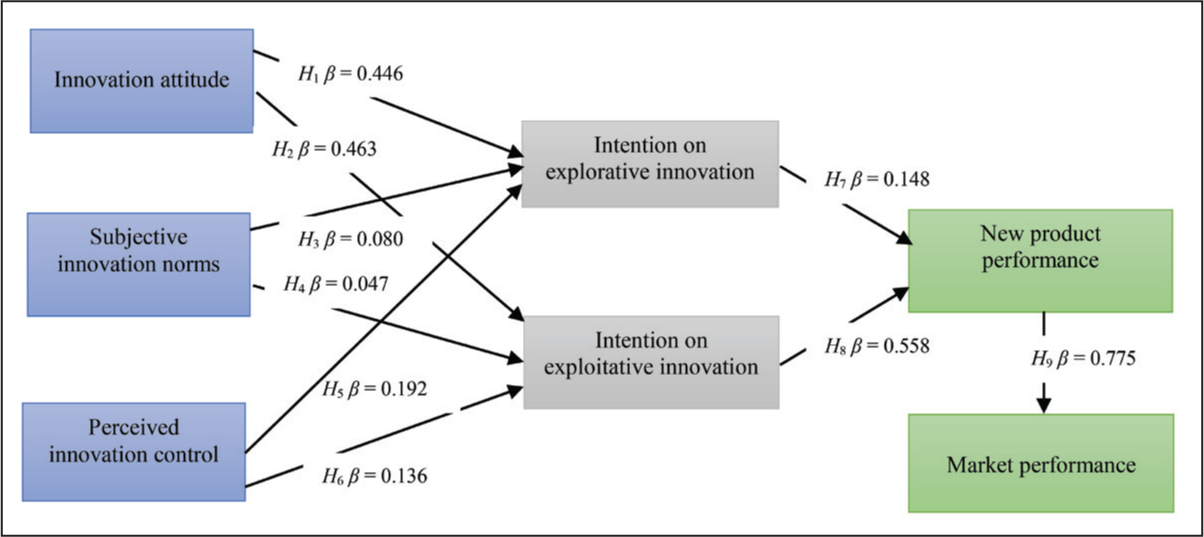
Drawing from the literature discussed above as well as insights form the TPB and RBV theories, this study offers the following research framework (Figure 1). This framework incorporates dimensions aimed at guiding SMEs towards achieving a competitive advantage.
Research Framework.
Research Methodology
Instrument Development
Items measuring the variables have been adapted from previous studies that are theoretically grounded and validated by TPB theory and RBV. These items have undergone rigorous testing for validity and reliability that can increase the confidence in the measurement instruments used in the current study. A 5-point Likert scale (from 1 = strongly disagree to 5 = strongly agree) has been used to measure the variables. The respondents were asked, ‘To what extent do you agree with the following statements?’ Strategic entrepreneurship behaviour with three constructs, including ‘innovation attitude’ with 4-item, ‘perceived innovation control’ with 3-item and ‘subjective innovation norms’ with 3-item scales have been adapted from Lee (2009). Exploitative and explorative innovations each with 7-item scales have been adapted from Jansen et al. (2006). The new product performance scale with five items has been adapted from Hull and Tidd (2003) and market performance scale with five items from Ottenbacher (2007) and Sin et al. (2005). Table 2 shows all the items.
This study used a set of questionnaires for data collection. The measurement items were translated from English to Arabic to ensure clarity and accuracy. Successively, face validity of the questionnaire was conducted involving individual interviews with three SME owners and two academicians to validate questionnaire items. They were asked to provide their feedback on the sequencing, consistency and ambiguity of the questionnaire items. Afterwards, the interviewees were asked to offer their feedback on the questionnaire measuring the variables. Incorporating insights and suggestions from the interviewees, the final version of the questionnaire was employed for data collection using a random sampling approach. The list of registered SMEs was obtained from government officials in Oman. Subsequently, from the list of registered SMEs, a total of 500 SMEs were randomly chosen. Following these steps, the research questionnaires were distributed among the selected SMEs.
Sample Selection
To test the research framework, data were collected from SMEs in Oman in three governorates, including Muscat, Ad Dakhiliyah and Al Batinah North as these three governorates hold 60% of the total SME establishment. By leveraging government records, the study obtained a list of registered SMEs that served as reliable sources of information for identifying potential participants and ensuring a true reflection of the SME landscape. However, due to confidentiality concerns, they decided to restrict the information shared with us to a subset of 500 SMEs. This decision might have been made to protect sensitive or proprietary information about the SMEs or to ensure compliance with data privacy regulations. A random sampling method was applied to select SMEs from the population to reduce bias and increase the likelihood of capturing a diverse range of SMEs. To do so, a unique identifier (a number) was assigned to each SME to ensure that each firm had an equal chance of being selected. Firms from the population were randomly selected using a randomisation method. Double-checking of the sample selection was performed to ensure accuracy and the selected sample members, and their identifiers were recorded for future reference.
SME owners were invited to participate in this survey because they play a crucial role in the decision-making process. As the primary decision-makers, SME owners possess unique insights and perspectives that directly influence the strategic direction, operational choices and overall success of their enterprises. Their involvement in the survey provides valuable information that is essential for testing the research objectives.
Data Collection
An online survey method utilising Google Forms was applied and distributed to SME owners via email, leveraging the email addresses obtained from the government’s official list. A total of 244 (48.8%) usable data were received justifying that the sample size of 244 SMEs out of 500 targeted SMEs as suitable for data analysis and representative of the broader SME population. According to Sekaran (2003), a sample size of 217 out of a population size of 500 is adequate for analysis. However, collecting a larger sample size always presents challenges for researchers due to time and budget constraints.
After data collection, a non-respondent analysis was performed to assess whether any significant differences existed between non-respondents and respondents in terms of key characteristics. To review potential non-respondent bias, an independent sample t-test was conducted to compare the seven variables in this study. The dataset was categorised into two groups: the initial 50% of responses (122 samples) were categorised as early responses, while the next 50% (122 samples) were considered as late responses. The result of the analysis indicated that the p values resulting from the independent t-test were not statistically significant; hence, non-response bias was not a main problem having the homogeneity between early- and late-response groups.
Findings
Appendix A shows the frequency analysis of the SMEs’ demographic profiles. The majority of SMEs were established between 2011 and 2020 (56.97%), and the rest (43.03%) were established between 2000 and 2010. About 61.1% of SMEs were of small size and 38.9% of SMEs were of medium size. According to Gulf Business, a small-sized enterprise has 6–25 employees (or OMR100,000–500,000 of revenue) and a medium-sized enterprise has 26–99 employees (or OMR500,000 to less than OMR3m of revenue) (Mansoor, 2020).
Statistical reports on the type of ownership show that 60.25% of SMEs had a partnership structure of business, followed by 36.89% as sole proprietorships and 2.87% as joint ventures. Out of 244 SMEs, 75% were primarily engaged in services, while the remaining 25% were involved in manufacturing or agriculture. In terms of the market served by the business, 50% of SMEs were mixed (local and foreign), 45.9% were local and 4.1% were only foreign. About 65.6% of respondents had a bachelor’s degrees, 18.4% had high school certificates, 11.1% had a master’s degrees and 4.9% had diploma certificates.
To ensure that common method bias (CMB) is not a concern in this research, Harman’s single-factor test was applied as suggested by scholars (Podsakoff et al., 2003; Podsakoff & Organ, 1986). The principal component factor analysis was used to identify underlying factors within a set of observed variables. The results revealed seven factors with eigenvalues (a measure of variance) greater than 1, indicating that these factors explain a significant portion of the variance in the data. Specifically, these seven factors collectively accounted for 68.44% of the total variance observed in the dataset. In addition, one of the seven factors, the first factor, only explained 39.89% of the variance, falling below the 50% threshold. This suggests that a single dominant factor did not account for the majority of the variability in the data, which is often an indication that CMB may not be a significant concern.
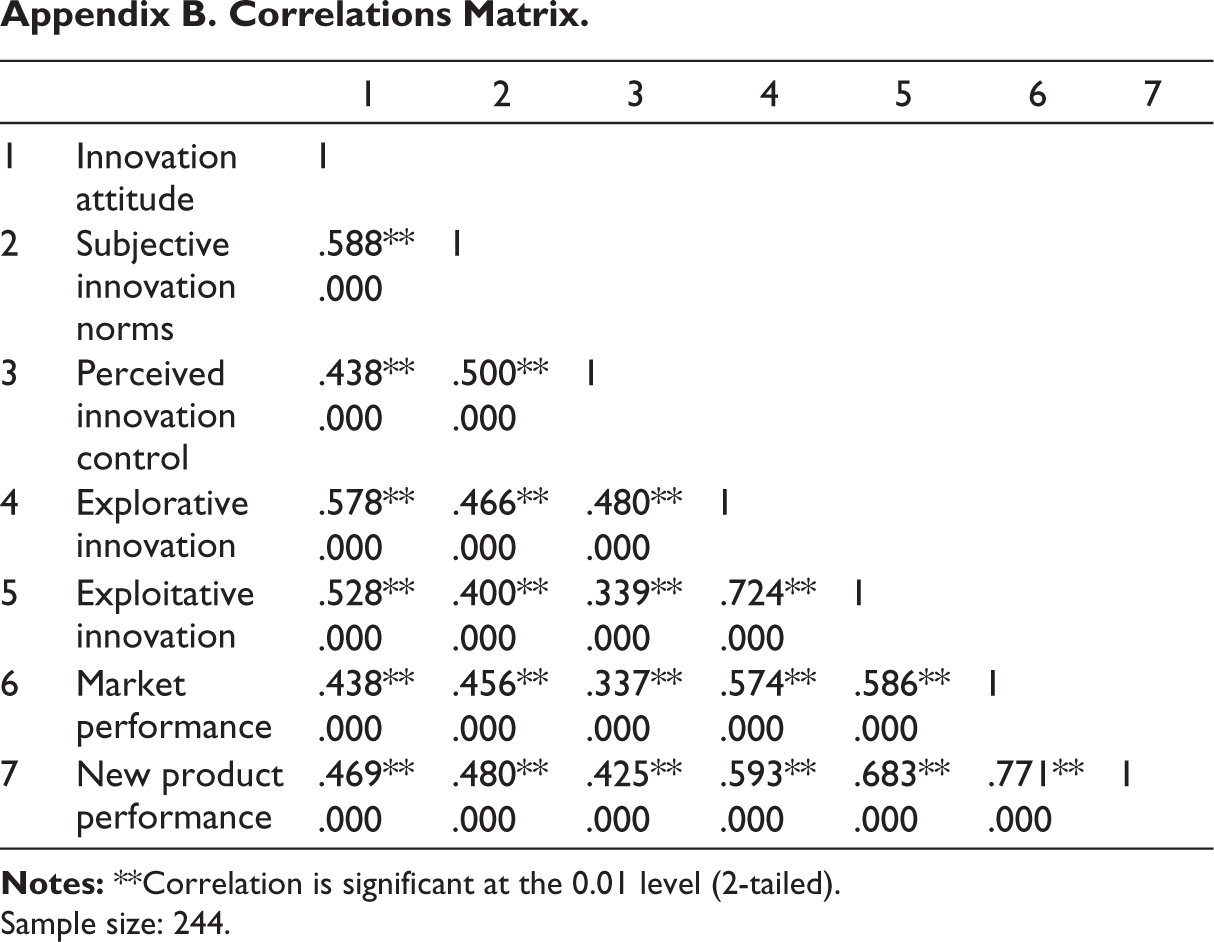
However, to ensure robustness, other approaches such as the correlation matrix and the variance inflation factor (VIF) were tested as suggested by scholars (Alin, 2010; Bagozzi et al., 1991; Kock & Lynn, 2012). The correlation matrix test was conducted to confirm that the correlation among variables is less than 0.90, and there is no multicollinearity issue (Alin, 2010; Bagozzi et al., 1991). The highly correlated variables could be considered as evidence of CMB. The results of this study indicated that no variables highly displayed correlation, with the maximum correlation being 0.771 (Appendix B).
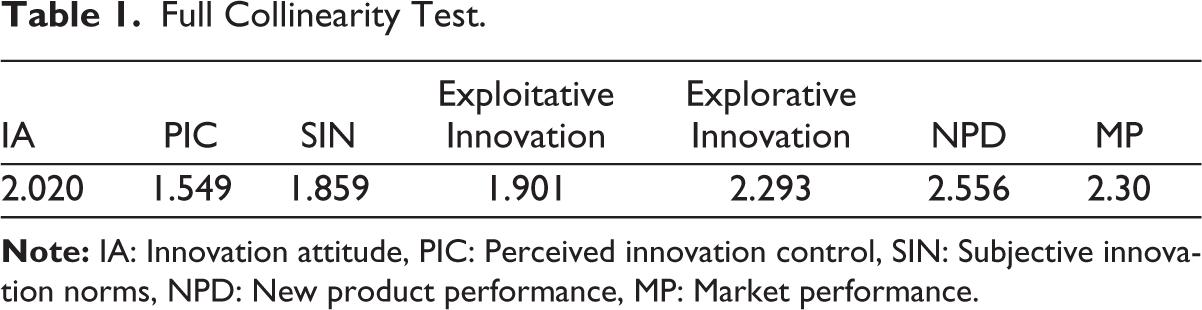
In addition, the full collinearity method was employed, acknowledging the recommendations of Kock and Lynn (2012) and Kock (2015). A VIF value of equal or less than 5 indicates that there is no bias from the single source of data (Lin et al., 2020; Sheather, 2009). To adhere to the more conservative criteria set by Kock and Lynn (2012) and Kock (2015), a VIF value of ≤ 3.3 was adopted. In the full collinearity method, all the variables have been regressed against a common variable (the education level used). The result of the analysis shows that VIF values remained below 3.3, with the highest being 2.55. Therefore, single-source bias is not a serious issue and is deemed negligible within this dataset. Table 1 provides the results of the full collinearity test.
Full Collinearity Test.
The study employed structural equation modelling (SEM) using the partial least squares (PLS) modelling approach to analyse the data (Ringle et al., 2005). Over the past two decades, SEM as a second-generation technique has become more widely recognised among researchers to overcome the weakness of regression-based statistical techniques. Structural equation modelling allows us to include unobservable variables measured indirectly by indicator variables. Moreover, it facilitates the accounting of measurement errors in observed variables (Chin, 1998; Hair et al., 2017). Also, in SEM, complex models can be analysed with multiple independent and dependent variables (Gefen et al., 2000).
Structural equation modelling has two methods to measure the relationships among variables, that is, a CB-SEM (covariance-based) and PLS-SEM (variance-based). For CB-SEM, software such as AMOS, LISREL and EQS are used to test and confirm theory and the comparison of alternative theories, whereas SmartPLS software is used for the variance-based approach to extend a theory and predict or identify key driver constructs. As the objectives of the current study are to find new relationships among variables, SmartPLS software was employed to assess the measurement model (reliability and validity measurement) and the structural model (hypothesis testing).
Measurement Model
In the measurement model, the convergent validity and discriminant validity were assessed. In convergent validity, the factor loadings above 0.70, average variance extracted (AVE) more than 0.50 and the composite reliability (CR) above 0.70 were assessed (Hair et al., 2017). Table 2 shows the results of the convergent validity. The factor loading of all the items is more than 0.7, the AVEs of all the variables are higher than 0.5 and the CRs of all the variables are more than 0.7. However, five items (Exploitative 7, Explorative 1, Explorative 2, NPD4 and NPD5) were dropped due to their loading values being less than 0.7.
Convergent Validity.
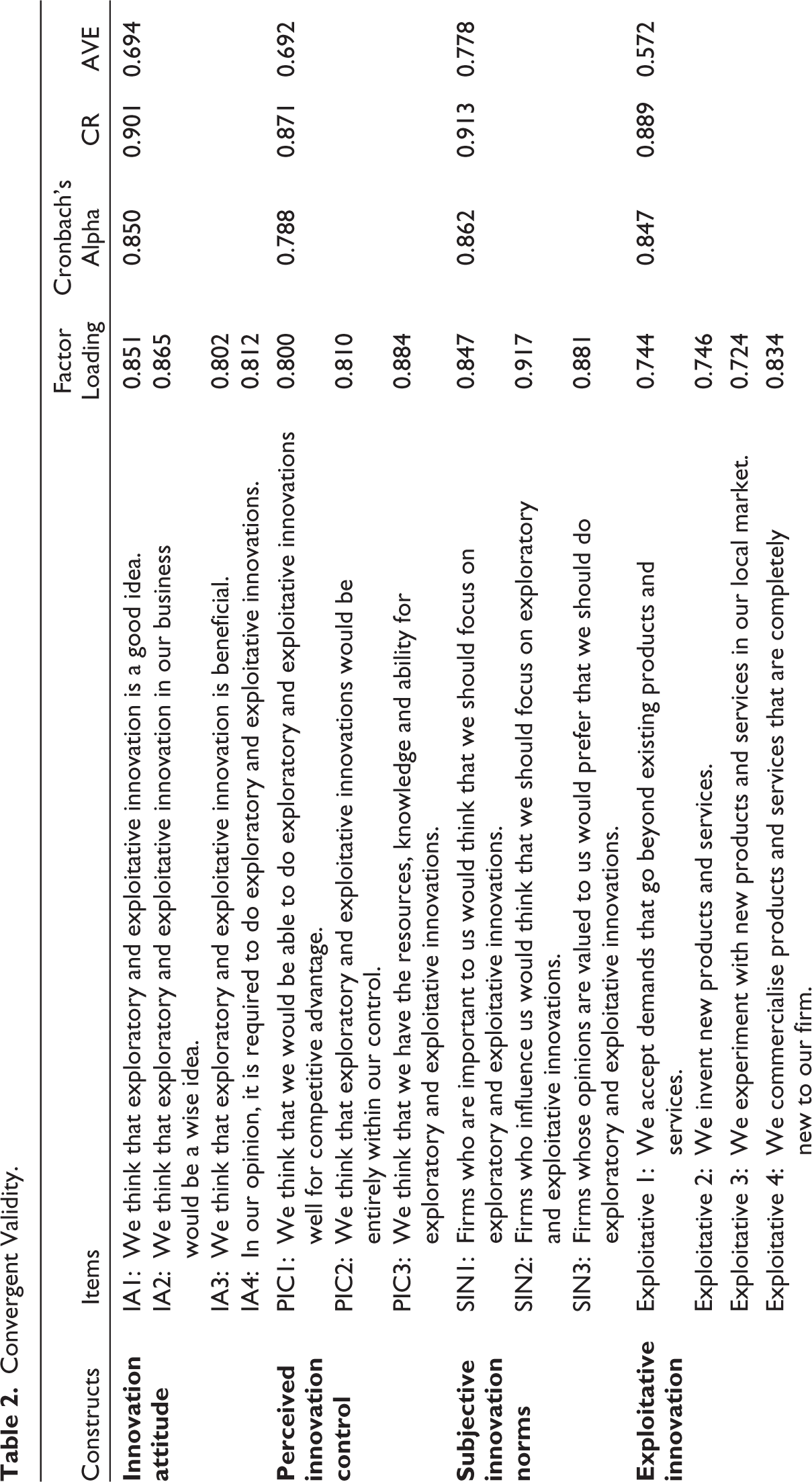
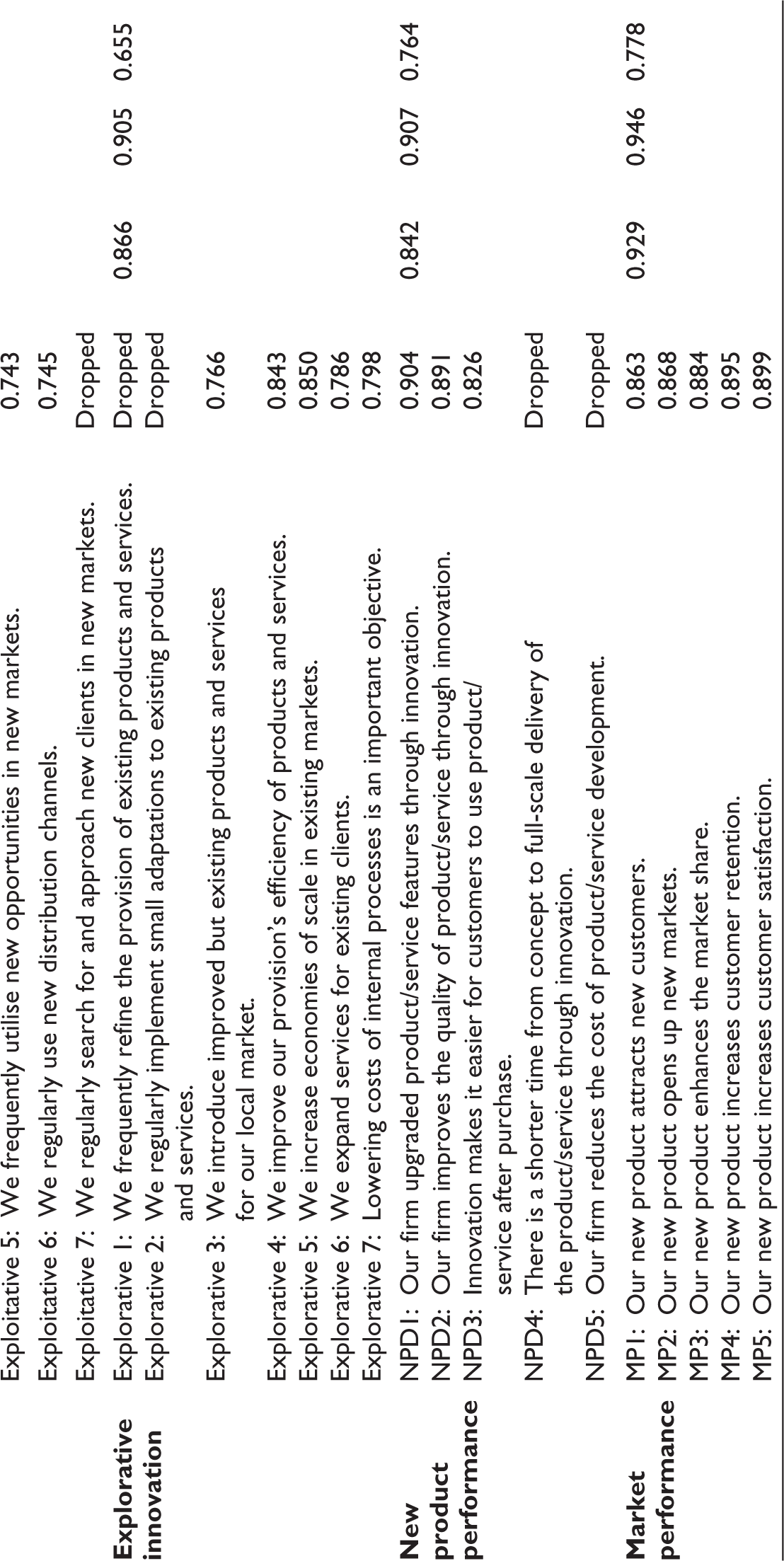
The reliability of scales was measured through Cronbach’s alpha by calculating the corrected item–scale correlations and the analysis of the impact on Cronbach’s alpha values. According to scholars, Cronbach’s alpha value of 1.0 is the highest internal reliability, but a value of less than 0.5 is reflected to be poor, and more than 0.70 is considered to be good for the consistency of data (Sekaran, 2003). Therefore, the reliability was confirmed for all the constructs in the present study, as evidenced by the lowest Cronbach’s alpha coefficient observed stood at 0.788. Table 2 summarises the Cronbach’s alpha score of instrument scales.
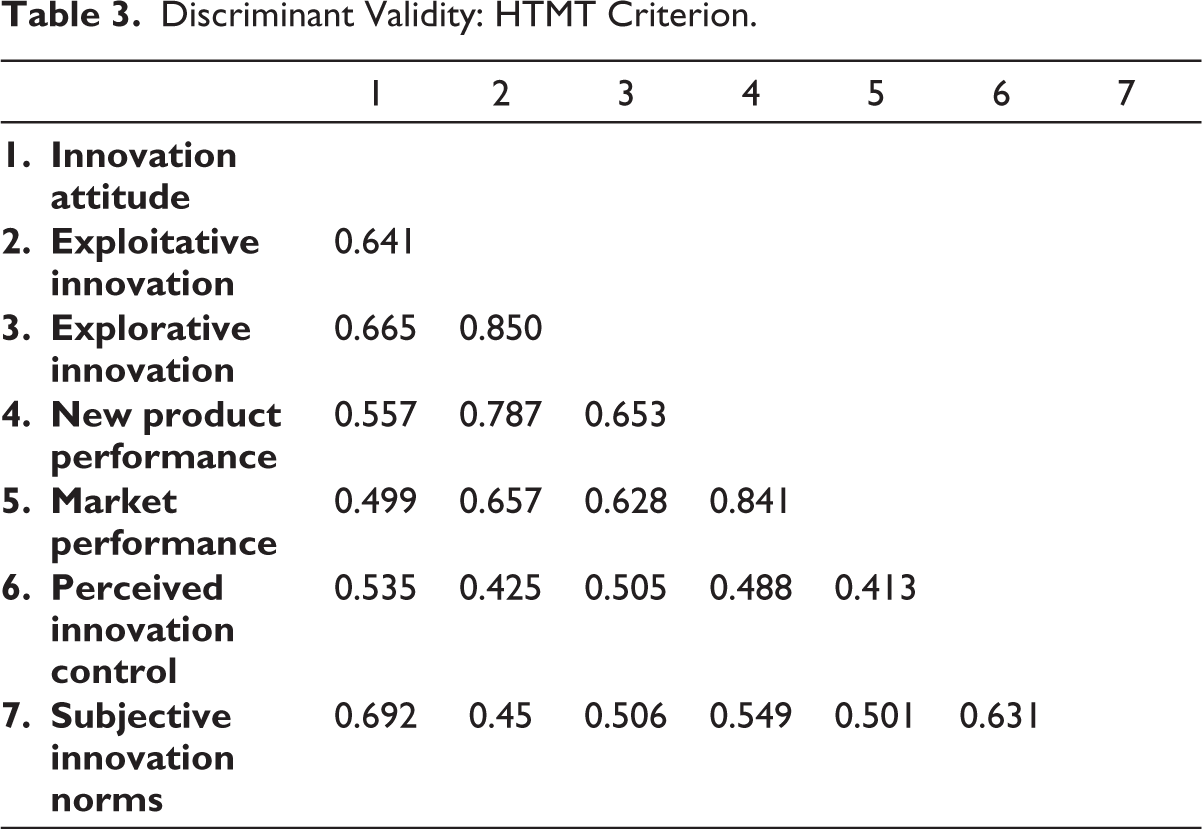
After measuring the convergent validity, the discriminant validity was measured using the Heterotrait–Monotrait ratio of correlations (HTMT) criterion recommended by Henseler et al. (2015). The criteria are that the HTMT values should be equal to or less than the value of 0.85. The results of the analysis show that (Table 3) the values of HTMT are equal to or lower than the cut-off value of 0.85, meaning that the respondents of this study understood that the seven constructs are distinct.
Discriminant Validity: HTMT Criterion.
Structural Model
To evaluate the structural model and test the hypothesis relationships, the results of the path coefficient, the standard errors and the results of t-value and p-values running bootstrapping with 5,000 resamples were reported as recommended by Hair et al. (2019). Regarding reporting p values, Hahn and Ang (2017) suggest that assessing only p values is not a good criterion to evaluate the significance of a hypothesis, rather using a combination of criteria such as p values, confidence intervals and effect sizes is suggested. The results of the structural model and summary of the criteria can be found in Table 4.
Structural Model
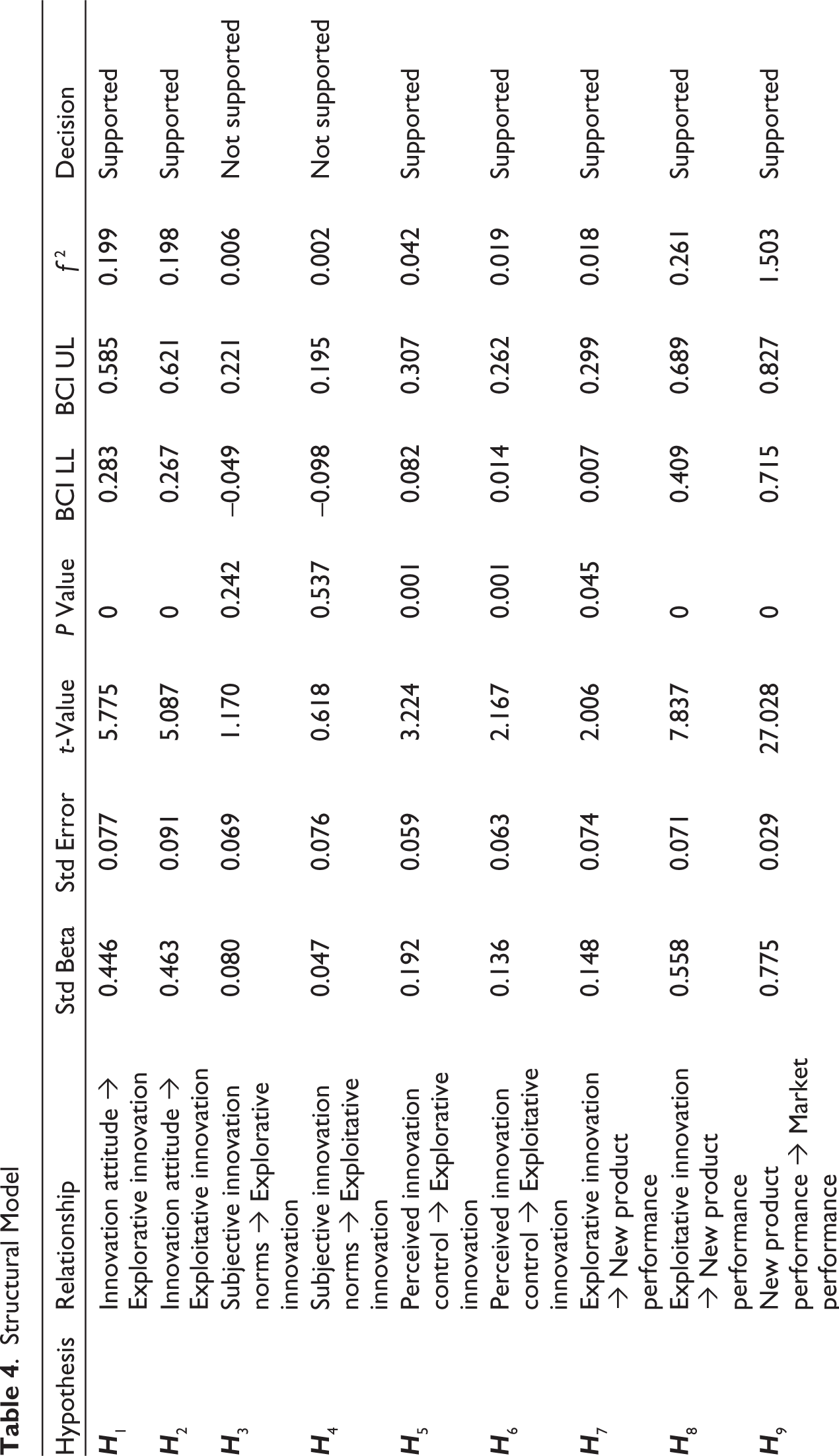
The first group of the research hypothesis attempted to examine the relationship of strategic entrepreneurship behaviour factors with explorative innovation and exploitative innovation activities. The findings show that entrepreneurs’ innovation attitude has a positive effect on explorative innovation (β = 0.446, p < .01) and exploitative innovation (β = 0.463, p < .01). These results support H1 and H2. Dissimilarly, the subjective innovation norms do not affect either explorative innovation (β = 0.080) or exploitative innovation (β = 0.047). Hence, H3 and H4 were not supported. Perceived innovation control has a significant effect on both explorative innovation (β = 0.192, p < .01) and exploitative innovation (β = 0.136, p < .05), which support H5 and H6. Further, the results indicate that the R2 value for explorative innovation is 0.376, indicating that these three behavioural constructs explained 37.6% of the variance in explorative innovation. The R2 value for exploitative innovation is 0.323, indicating that these three behavioural constructs explained 32.3% of the variance in exploitative innovation.
The second set of hypotheses were to test the relationship between explorative innovation and exploitative innovation activities with the new product performance of SMEs. The findings show that explorative innovation with β = 0.148, p < .05 and exploitative innovation with β = 0.558, p < .01 have a positive effect on new product performance. Remarkably, it can be realised that exploitative innovation has a substantial impact on new product performance. Thus, H7 and H8 were supported. The R2 value of new product performance is 0.456, indicating that explorative innovation and exploitative innovation activities explained 45.6% of the variance in new product performance.
Finally, the effect of new product performance on the market performance of SMEs was tested. The result shows that there are very considerable relationships with β = 0.775 and p < .01, which support H9. The R2 value of market performance is 0.600, indicating that new product performance explained 60% of the variance in market performance.
The final analysis was to assess the predictive relevance of the model. It has been tested by the blindfolding method (Stone–Geisser’s Q2) to measure the research model’s capability of prediction. Based on the results, the Q2 values of explorative innovation (Q2 = 0.234), exploitative innovation (Q2 = 0.176) and new product performance (Q2 = 0.216) are more than 0, indicating that the model has adequate predictive relevance.
Discussion
The objective of this study was to find out the influence of strategic entrepreneurship behaviour (innovation attitude, subjective innovation norms and perceived innovation control) on explorative and exploitative innovations, and to find out the association of explorative and exploitative innovations with SMEs’ performances. While empirical studies highlight that strategic entrepreneurship behaviour can have a diverse effect on explorative and exploitative innovations of firms (Anderson et al., 2019; Hughes et al., 2021), this study conceptualised the strategic entrepreneurship behaviour based on the TPB.
The findings showed that innovation attitude is positively related to both explorative and exploitative innovation activities. These relationships can be attributed to the fact that entrepreneurs with a higher positive innovation attitude are more willing to practise both explorative and exploitative innovations. Other scholars (e.g., Delshab et al., 2022; Hughes et al., 2021; Taghizadeh et al., 2022) also found a significant and positive relationship between entrepreneurs’ attitude and their intentions for innovation. Exploratory innovation entails foraying into new and undiscovered sectors to find untapped markets, technologies or possibilities. An openness to new ideas, a readiness to take reasonable risks and a desire to accept change all describe a positive innovation mindset. This mindset is suited to encouraging exploratory innovation. Amabile et al. (1996) found that having a favourable attitude towards innovation boosts exploratory efforts. This is consistent with the key characteristics of exploratory innovation, in which a proactive mindset promotes the production of breakthrough concepts. Exploitative innovation involves enhancing current processes, goods or services by refining and optimising them. While this form of innovation is primarily concerned with efficiency and refinement, a favourable attitude towards innovation can nevertheless fuel its adoption. Nie et al. (2022) emphasise the relationship between innovative mentality and exploitative activities. Employees with a proactive innovation mindset are more likely to critically review present procedures, discover possibilities for improvement and push incremental changes that increase efficiency and effectiveness.
The results of this study also show that perceived innovation control is positively related to both explorative and exploitative innovation activities. Perceived behavioural control means the ‘cognitive evaluations of personal capabilities about the specific tasks of entrepreneurship’ (Chen et al., 1998, p. 312). Entrepreneurs who are confidently capable of recognising the skills needed to advance their business are more likely to practise both explorative and exploitative innovations. Various studies have emphasised the importance of perceived behavioural control as a significant determinant factor affecting entrepreneurial intentions (e.g., Boyd & Vozikis, 1994; Sivarajah & Achchuthan, 2013), which eventually led to a decisive action (Autio et al., 2001). The findings also indicate that the perceived ease or difficulty in innovation is derived from previous experience of SMEs. This experience eventually assists the entrepreneurs in anticipating barriers and obstacles in the adoption processes of innovation. Exploratory innovation entails venturing into unexplored territory in search of innovative possibilities and technology. A high degree of perceived innovation behaviour control shows a person’s belief in their capacity to begin and carry out creative behaviours even in uncertain settings. This confidence can motivate people to participate in exploratory innovation efforts. Chen et al. (1998) discovered that perceived behavioural control affects exploratory innovation. Exploitative innovation entails improving current processes, goods or services incrementally. Even in this case, perceived innovation behavioural control is important in promoting the adoption of exploitative innovation activities. Chao and Yu (2022) discovered a link between perceived innovation behavioural control and exploitative innovation. According to their findings, those who have a better sense of control are more aggressive in pursuing and implementing incremental improvements.
However, this study found that subjective innovation norms have no relationship with both explorative and exploitative innovation activities. This finding is inconsistent with previous studies that have revealed that subjective norms are one of the critical factors and perform a significant role in the adoption of any decision in an organisation (Kim et al., 2009; Rahman et al., 2019). Subjective norms that refer to ‘personal beliefs about the support of others in the environment’ (Mirjana et al., 2018, p. 1457) have been found to be insignificant predictors of entrepreneurs’ intention to practise both types of innovations. This can be justified by several reasons: the first one deals with the contextual factors associated with the Omani entrepreneurial environment. According to the Global Innovation Index 2021, Oman ranked 76th globally, which indicates that Oman’s business environment is still relatively weak in terms of preference for entrepreneurial activities. Second, cultural factors and tradition can be possible explanations for the absence of a link between subjective innovation norms and exploitative and exploratory innovations in Oman. Third, the innovation ecosystem is yet to flourish compared to other countries. Last but not least, an impeding element could be risk aversion and the fear of failure. Omani culture places a high value on stability and risk avoidance, which may hinder entrepreneurs from taking on creative ventures owing to the possible social and economic ramifications of failure.
In addition, the findings indicate a significant and positive relationship between explorative and exploitative innovations with new product/service performance. This is in line with other studies arguing that firms practising both explorative and exploitative innovations are expected to introduce new products/services (He & Wong, 2004; Xie & Gao, 2018). It is important to highlight that in the current study, the influence of exploitative innovation on new product performance is higher with β = 0.558 and p < .01. Introducing improved products/services is most likely to facilitate SMEs to achieve higher new product performance in this context.
Finally, this study has revealed that new product performance has a significant impact on the market performance of SMEs. As reviewed in the extant literature, new product performance has been considered as the internal success of the firm, and market performance has been considered as external success. Therefore, this study highlights the importance of internal success factors in triggering external factors, which are in line with previous claims (Blindenbach-Driessen et al., 2005; Garcia et al., 2008). Scholars have also demonstrated that sales growth and market share can be improved by new product success (Aksoy, 2017; Baker & Sinkula, 2005; He & Wong, 2004). Adoption and commercial success are enhanced when new goods are aligned with consumer value. Successful products provide a competitive advantage by distinguishing and positioning firms. Launching new items begins the process of market learning and adaptation, allowing for the refinement of offerings and the development of loyalty. Success may have far-reaching consequences, such as improving brand reputation and fostering trust. Positive client experiences increase happiness, loyalty and word of mouth, resulting in an increased consumer base. The association between new product performance and market success is closely regulated by several processes in Oman’s unique business environment. Innovation fit or matching new product offers to local customer demands and cultural preferences is essential.
The significant impact of new product performance on the market performance of SMEs is a fundamental aspect of this research. Drawing from RBV, the development and introduction of new products denote a key resource and capability that SMEs can leverage to gain a competitive advantage in today’s turbulent markets. As SMEs successfully utilise their unique resources and capabilities, they can more efficiently penetrate and excel in this new marketplace. This understanding underlines the significance and strength of this research that focuses on examining the influence of new product performance on new market performance.
Implications
Theoretical Implications
The main theoretical contribution of this study suggests that strategic entrepreneurship behaviour factors influence individuals’ actions to practice explorative and exploitative innovations resulting in performance improvement. Utilising TPB and RBV theories facilitates a clear understanding of the relationships of innovation attitude, perceived innovation control and subjective innovation norms, with both exploratory and exploitative innovations and their subsequent impact on new product performance and market performance of SMEs. This study adds to entrepreneurial theories by studying the unique role of strategic entrepreneurship behaviour on the possibility of explorative and exploitative innovation activities. Using TPB in this context has proven to be relative and robust, particularly in the prediction of new business intentions and their consequent behaviours (Kautonen et al., 2015). As noted also by several scholars (Armitage & Conner, 2001; Sommer, 2011; Taghizadeh et al., 2020a), TPB and RBV are the most dominant theories for the prediction of the managerial decision-making process. As discussed, entrepreneurs’ innovation attitude and perceived innovation control are two main factors that influence the explorative and exploitative innovation activities of SMEs in the context of Oman. This study also confirms the importance of having a further application of intention-based models of TPB to better understand the entrepreneurial process. Increased exploratory and exploitative innovations are related to a favourable attitude towards innovation. Small- and medium-sized enterprises with a positive attitude towards innovation are more likely to see the benefits of innovation-related activities, which encourages them to invest time and money in both exploratory and exploitative innovation projects. Another crucial concept in TPB is perceived behavioural control that promotes both exploratory and exploitative innovations effectively. A firm’s confidence in executing fresh ideas and handling the inherent risks involved with innovation can be increased by higher levels of perceived innovation behaviour.
The performance of new products is positively correlated with both exploratory and exploitative innovations. These results can be interpreted within the TPB framework by considering the role of behavioural intention. Small- and medium-sized enterprises with a strong intention to innovate may engage in both types of innovations, potentially leading to a diverse product portfolio that meets various market demands. This diversity enhances the organisation’s ability to target specific market niches, thereby improving new product performance. Additionally, the findings contribute to the literature on entrepreneurship by providing insights into how exploratory and exploitative innovation activities drive new product success. This study clarifies how such innovations can improve new product performance and expands knowledge on how internal success (i.e., new product performance) influences external success (i.e., market performance) in SMEs.
Managerial Implications
This study also has various practical implications that can help both entrepreneurs and funding institutions. The former can better understand how some behavioural characteristics such as innovation attitude and perceived behavioural control can be reassessed to exert more efforts towards practising explorative and exploitative innovations that can reflect positively into having more developed products and hence better market performance. On the other hand, the latter can benefit by having an extra tool to assess the adequacy of entrepreneurs’ funding requests.
The study helps SMEs to identify which components of strategic entrepreneurship behaviour are important for explorative and exploitative innovations to achieve desirable performances. Innovation is important for SMEs, which offers the basis for the survival and accomplishment of firms. The study also helps SMEs in formulating their business strategies and procedures to be aligned with market changes and current business trends.
The study’s findings undoubtedly highlight the importance of psychological aspects in SMEs’ ability to innovate and operate well. The following practical suggestions will help company owners, business support groups and policymakers transform these findings into effective strategies. It is important to promote an entrepreneurial mindset among SMEs. Stakeholders can organise seminars and workshops to emphasise fostering an entrepreneurial attitude among SME owners and staff. Risk-taking, adaptation and accepting failure as a learning opportunity may be stressed throughout these sessions. By teaching these principles, SMEs may promote an innovative culture where staff members feel empowered to come up with and carry out new ideas. Additionally, establishing incubators or innovation centres can provide spaces for SMEs to collaborate, exchange ideas and receive guidance. These networks and knowledge-sharing platforms enable SMEs to leverage diverse perspectives and expertise to support their innovation initiatives.
To promote research and development (R&D) efforts of SMEs, policymakers can establish grants, subsidies or tax incentives. Financial support may help SMEs invest in experimenting with novel concepts and technology by drastically reducing the costs associated with innovation. The relevant stakeholders could simplify and expedite the registration processes and protection of intellectual property (IP). Entrepreneurs are more likely to feel inspired to engage in research and development if they can protect their creations from being copied without proper credit. Small- and medium-sized enterprises could be encouraged to cooperate with larger businesses or organisations in adjacent fields. These relationships can provide SMEs access to tools, information and technology they might not otherwise have, allowing them to innovate and perform better.
Conclusion, Limitations and Scope for Future Research
It is important to emphasise that this study has helped gain a new understanding regarding how SMEs’ explorative and exploitative innovation activities can be driven by strategic entrepreneurship behaviour (i.e., innovation attitude and perceived innovation control). Both types of innovations present an important role in helping SMEs achieve greater performance and compete in today’s fiercely competitive market. For SMEs, innovation is essential for survival, forming the foundation of economic development and employment growth. Thus, realising the behavioural factors for innovation activities helps SMEs in implementing a competitive strategy. By leveraging these behavioural resources, SMEs can differentiate themselves and capture market opportunities.
Entrepreneurs indeed have an extraordinary opportunity to employ the competence of strategic entrepreneurship behaviour to drive innovation and establish a sustainable competitive advantage within their industries. Entrepreneurs are usually dynamic, innovative and risks-takers and by leveraging strategic entrepreneurship behaviour can position themselves to drive innovation, overcome challenges and succeed in the ever-evolving competitive markets.
The insights derived from this study are relevant in the context of current business trends and technological advancements. This study provides valuable guidance for SMEs operating in the context of digital entrepreneurship and recent market disruptions, which can help SMEs adapt to technological advancements, incorporate customer-centricity, innovate, mitigate risks and build collaborative ecosystems to be competitive in the marketplace.
Like any other research, this study has some limitations that future research can address. First, this research has examined the relationship of strategic entrepreneurship behaviour with innovation activities using TPB and RBV. Perhaps extending the model by integrating other theoretical perspectives (e.g., social cognitive theory and theory of systematic innovation) would provide more contributing results. Therefore, future research may consider this and add more behavioural factors to this study’s model. Second, as the target participants were SMEs, the strategic entrepreneurship behaviour could be different from young entrepreneurs, or those firms that have transferred to digitalisation. Therefore, future studies can find out the behavioural factors in young entrepreneurs or the context of digital entrepreneurship. Third, the study design is cross-sectional to explore relationships between variables at a particular time. Thus, future research might consider a longitudinal design to delve deeper into the insights and dynamics over time. Finally, organisational culture and organisational learning capability as moderating or mediating factors could impact these relationships, and future research would offer the opportunity to examine deeper into this aspect and address this potential avenue for development.
Footnotes
Declaration of Conflicting Interests
The authors declared no potential conflicts of interest with respect to the research, authorship and/or publication of this article.
Ethical Consideration
We assured the respondents about the privacy of their data and emphasised that their information would be kept confidential and secure.
Funding
The authors disclosed receipt of the following financial support for the research, authorship and/or publication of this article: This research is funded by Sultan Qaboos University. Project Grant Number: IG/EPS/MNGT/ 20/01.
Appendices
Correlations Matrix.
| 1 | 2 | 3 | 4 | 5 | 6 | 7 | ||
| 1 | Innovation attitude | 1 | ||||||
| 2 | Subjective innovation norms | .588** | 1 | |||||
| .000 | ||||||||
| 3 | Perceived innovation control | .438** | .500** | 1 | ||||
| .000 | .000 | |||||||
| 4 | Explorative innovation | .578** | .466** | .480** | 1 | |||
| .000 | .000 | .000 | ||||||
| 5 | Exploitative innovation | .528** | .400** | .339** | .724** | 1 | ||
| .000 | .000 | .000 | .000 | |||||
| 6 | Market performance | .438** | .456** | .337** | .574** | .586** | 1 | |
| .000 | .000 | .000 | .000 | .000 | ||||
| 7 | New product performance | .469** | .480** | .425** | .593** | .683** | .771** | 1 |
| .000 | .000 | .000 | .000 | .000 | .000 |
Sample size: 244.