



Abstract
Sustainable values have been enforced in societies, given individuals’ awareness of the societal challenges faced by current and future generations. Building upon the theory of planned behaviour and the value literature, this article examines whether and how sustainable values, specifically pro-environmental and solidarity values, influence sustainable entrepreneurial intentions in two different cultural contexts: Ecuador and Germany. About 297 university students were recruited to test the hypotheses. The findings reveal cultural differences in how sustainable values are associated with the behavioural mechanism that leads to sustainable entrepreneurial intentions. Surprisingly, pro-environmental values are not related to the behavioural mechanism that leads to sustainable entrepreneurial intentions in either Germany or Ecuador, whereas the solidarity values—sustainable entrepreneurial intentions relationship is fully mediated by behavioural mechanisms in Ecuador, and in Germany, the attitude towards sustainable entrepreneurship and perceived behavioural control towards sustainability partially mediate this relationship. These findings demonstrate the importance of contextualising entrepreneurial intentions in the context of sustainable entrepreneurship.
Keywords
Values are standards that guide individual efforts, justify individual actions and beliefs, and serve as criteria for action selection and guiding principles in life (Rokeach, 1973). Therefore, values are considered key determinants of an individual’s ecological behaviour (Steg, 2016). For researchers and policymakers aiming to achieve sustainable development through entrepreneurial activities (Johnson & Schaltegger, 2019; United Nations, 2020), it is critical to study individuals who potentially become sustainable entrepreneurs. Understanding the values that drive individual orientation or the intention to address societal problems with ventures becomes primordial.
Studies have endeavoured to understand the role of sustainable orientation and entrepreneurial intentions (Kuckertz & Wagner, 2010), and, more specifically, the relationship between values and sustainable entrepreneurial intentions (Thelken & Jong, 2020; Vuorio et al., 2018). According to Shepherd et al. (2009), sustainable values refer to the ‘measure of the fundamental values that underlie sustainable development’ (p. 247): pro-environment, solidarity, freedom, equality, tolerance and shared responsibility could influence entrepreneurial actions. Muñoz and Cohen (2018) argue that the values encountered by individuals should be considered when studying the creation of sustainable ventures. This is largely because values are the baseline for shaping individual actions. A range of environmental and social behaviour-specific beliefs, attitudes, intentions and actions can be influenced by activating certain values (Groot & Thøgersen, 2018; Steg, 2016). However, the transmission of values varies across cultural contexts influencing the type of ventures created (Hechavarría, 2016) because culture is the underlying value system specific to a particular group or society that motivates individuals in one society to adopt behaviours (Looi, 2020; Mueller & Thomas, 2001).
In the sustainable entrepreneurship field, Thelken and Jong (2020) observed that universal values are antecedents of attitude towards sustainable entrepreneurship (ATSE) using German and Dutch samples. Vuorio et al. (2018) found that in Finland, Austria and Lichtenstein, work values such as altruism, security and intrinsic and extrinsic rewards influence the behavioural mechanism that leads to sustainable entrepreneurial intentions. Additionally, using cross-country data from Global Entrepreneurship Monitor, Hechavarría (2016) observed that secular and self-expressive values increase the prevalence of social entrepreneurship. Besides the advancement of the topic in the field, these studies primarily focused on European countries or compared the direct effects of values on social and conventional entrepreneurship (with the exception of Agu et al. (2021), who studied intentions to become sustainable entrepreneurs in Nigeria). Although the literature has overlooked the role of sustainable value, sustainable values guide political decisions, organisational actions and individual behaviours influencing the life quality of people and the preservation of the social and natural environment (Shepherd et al., 2009). Consequently, it is observed that two gaps in the literature. First, little is known of the behavioural mechanisms influencing sustainable entrepreneurial intentions in ‘larger and less sustainability-oriented countries’ (Vuorio et al., 2018, p. 374). Second, there is a call for more complex models that investigate how individuals internalise values at the societal level, affecting the relationship between values and sustainable entrepreneurship in different cultural contexts (Hechavarría, 2016).
To fill these two gaps in the literature, it is examined the perceptions of students from two different countries, Germany and Ecuador. It is examined whether and how different cultural contexts influence the relationship among sustainable values, attitudes, beliefs and intentions to become sustainable entrepreneurs. This allows getting insights into the role of cultural contexts in the behavioural mechanisms leading to sustainable entrepreneurial intentions (Stephan & Uhlaner, 2010; Vuorio et al., 2018). It also helps explain how sustainable values influence students’ intentions to become sustainable entrepreneurs may differ across cultural contexts (Shepherd et al., 2009). To address these research questions, the theory of planned behaviour is used (Ajzen, 1991, 2002), which has shown the ability and robustness to predict entrepreneurial intentions and actions (Kautonen et al., 2015; Schlaegel & Koenig, 2014) and value literature (Rokeach, 1973). Thus, it is incorporated pro-environmental and solidarity values within the theory of planned behaviour that allows explaining how behavioural mechanisms (ATSE, subjective norm and perceived behavioural control towards sustainability [PBCTS]) act as mediators that lead to intention formation in sustainable entrepreneurship (Ajzen, 1991). Next, it is observed the role of culture in creating differences in the mechanisms because culture refers to a set of ‘shared meanings of significant events that result from common experiences of members of collectives and are transmitted across age generations’ (House et al., 2004, p. 57). Differentiating between two higher order dimensions of culture (i.e. cultural practices)—socially supportive culture and performance-based culture—Stephan and Uhlaner (2010) argued that cultural context could be used to predict behavioural outcomes at the entrepreneurial level. These cultural differences lie in the value priorities or hierarchies in society, which, in turn, guide individual occupational interests or goals (Rokeach, 1973). To acknowledge these cultural differences, it was collected primary data from 297 master’s students in 2019 in two different countries, specifically Germany (120 university students) and Ecuador (177 university students), using validated scales adapted from the literature. These countries differ greatly in culture. Germany is considered a performance-based culture, described as a culture that rewards individual accomplishments, focuses on goal achievement, favours competition and supports individual development and progress (Stephan & Uhlaner, 2010). Ecuador is considered a socially supportive culture, which is represented by high human orientation and low assertiveness, promotes traditionalism and a positive societal climate in which people support each other and encourage an external locus of control (Gimenez-Jimenez et al., 2022; Stephan & Uhlaner, 2010).
It is made the following contributions to the literature. The current literature on sustainable entrepreneurship and entrepreneurial intentions was extended (Arru, 2020; Thelken & Jong, 2020; Vuorio et al., 2018). It is done by explicitly considering the formation of behavioural mechanisms influencing sustainable entrepreneurial intentions (Donaldson et al., 2021; Fayolle et al., 2014) and shedding light on how sustainable values, as the guiding principles, influence individuals’ sustainable entrepreneurial attitudes, beliefs and intentions. By considering behavioural mechanisms, it is highlighted the interplay between sustainable values, beliefs and intentions as missing pieces for forming sustainable entrepreneurial intentions, which differ across cultural contexts. The findings show the importance of contextualising in the sustainable entrepreneurship field (Welter, 2011) because culturally influenced values are collectively transmitted across generations (Krueger et al., 2013). It is shown that solidarity values drive ATSE, subjective norm and PBCTS, constructs related to the personal aspects and socialisation process, but their effect varies between cultural contexts.
Theoretical Framework
Values and Sustainable Entrepreneurial Intentions
Values related to sustainable development influence sustainable actions (Leiserowitz et al., 2006) and, as such, are important antecedents of sustainable entrepreneurial intentions. Research in the domain of sustainable development emphasises the importance of values in understanding an individual’s attitude and behaviour towards sustainable development (Shepherd et al., 2009). Consequently, sustainable entrepreneurship benefits from individuals’ attitudes and values linked to sustainability, motivating individuals to engage in socially and environmentally friendly solutions positively and increase their intention to engage in sustainable entrepreneurship (Schaltegger et al., 2018). In line with this, sustainable entrepreneurship differs from traditional entrepreneurship in combining different types of values, namely, social, environmental and economic values (Vuorio et al., 2018). Intentions, considered the best predictor of behaviour (Ajzen, 1991), are influenced by these values (Gorgievski et al., 2017). This is largely because ‘much of human behaviour appears to be under volitional control […] the best single predictor of an individual’s behaviour will be a measure of his/her intention to perform that behaviour’ (Fishbein & Ajzen, 1972). Values refer to ‘an enduring belief that a specific mode of conduct or end-state of existence is personally or socially preferable to an opposite or converse mode of conduct or end-state of existence. A value system is an enduring organisation of beliefs concerning preferable modes of conduct or end-states of existence along a continuum of relative importance’ (Rokeach, 1973, p. 5). Values represent the: (a) general concepts or beliefs, (b) pertain to desirable end states or behaviours, (c) transcend specific situations, and (d) guide selection or evaluation of behaviour and events’ (Schwartz, 1992, p. 4). Therefore, values represent guiding principles (Schwartz & Bilsky, 1990) that influence individuals’ decision-making (Bardi & Schwartz, 2003), attitudes (Falke et al., 2021) and future actions (Fishbein & Ajzen, 1972). Nonetheless, a connection exists between values and personal goals influenced by socialisation processes, simultaneously related to cultural dimensions (Fischer & Schwartz, 2010). Recently, the United Nations has focused on changing individuals’ values towards more sustainable ones (United Nations, 2015), which may drive their attitudes and behaviours.
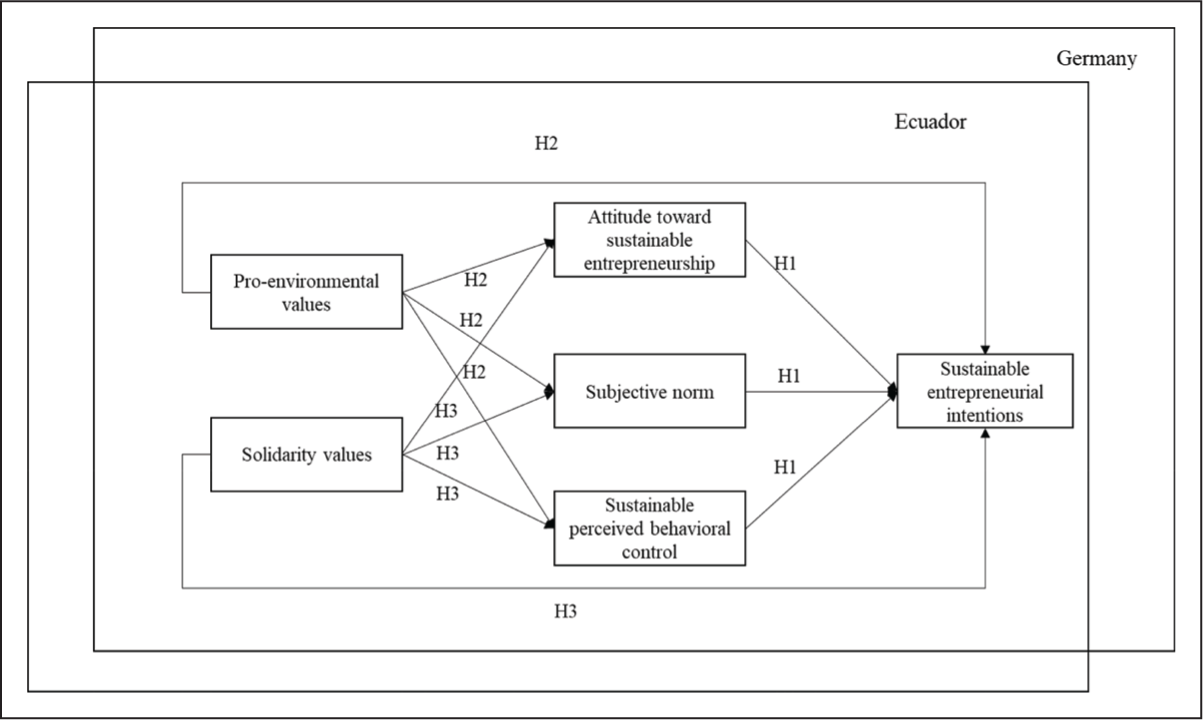
It is argued that two types of values are especially likely to be associated with sustainable entrepreneurial intentions: pro-environmental and solidarity values. Pro-environmental values represent respect for nature: ‘prudence must be shown in the management of all living species and natural resources, following the precepts of sustainable development. Only in this way can the immeasurable riches provided to us by nature be preserved and passed on to our descendants’ (Shepherd et al., 2009, p. 248). By contrast, solidarity values refer to solidarity considerations in which ‘global challenges must be managed in a way that distributes the costs and burdens fairly in accordance with basic principles of equity and social justice. Those who suffer or who benefit the least deserve help from those who benefit most’ (Shepherd et al., 2009, p. 248). Individuals with higher levels of pro-environmental and solidarity values are the ones ‘likely to have previously internalised norm and values related to helping and the importance of other’s needs’ (Eisenberg et al., 1989, p. 63), thus translating them into sustainable entrepreneurial intentions. This article is only focused on environmental and solidarity values because these values are closely related to the goals of sustainable entrepreneurs, which are economic, social and environmental gains, considering that these two values are aligned with the aims of individuals who intend to engage in sustainable entrepreneurship. It is also acknowledged cultural differences because entrepreneurial intentions vary across countries (Bosma et al., 2020) and culture plays a key role in these variations (Santos et al., 2016; Stephan & Uhlaner, 2010; Stephan et al., 2015). Acknowledging these differences, Figure 1 shows the theoretical model.
Theoretical Model.
The Mechanism Catalysing Sustainable Values in Sustainable Entrepreneurial Intentions
This article draws on the theory of planned behaviour (Ajzen, 1991, 2002) to understand the mechanisms through which values are related to sustainable entrepreneurial intentions. Although several other models have been used to explain entrepreneurial intention, such as the entrepreneurial event model (Krueger, 1993; Shapero & Sokol, 1982) or the model of entrepreneurial intentionality (Bird, 1988; Boyd & Vozikis, 1994), several recent studies have used the theory of planned behaviour model to explain the mechanisms related to entrepreneurial intentions (e.g., Gorgievski et al., 2017; Kruse et al., 2019; Thelken & Jong, 2020; Vuorio et al., 2018). Regarding the ability to predict entrepreneurial intentions, the theory of planned behaviour is one of the most frequently used models, consistently validated, coherent and generally applicable theories that enable us to model entrepreneurial intention formation (Krueger et al., 2000; Liñán & Chen, 2009; Moriano et al., 2011). According to the theory of planned behaviour, three antecedents explain entrepreneurial intention: attitude towards entrepreneurship, the subjective norm and perceived behavioural control (Ajzen, 1991). First, attitude towards behaviour refers to the degree to which an individual holds an overall positive or negative personal valuation of being an entrepreneur (Liñán & Chen, 2009). The second antecedent of entrepreneurial intention refers to the subjective norm, which represents the influence of the social environment on individual behaviour, defined as the individual’s perception of the social pressures to engage (or not engage) in entrepreneurial behaviour (Ajzen, 1991). In general, subjective norm has the weakest effect on entrepreneurial intentions (Krueger et al., 2000; Liñán & Chen, 2009). The third antecedent of entrepreneurial intention, perceived behavioural control, refers to the perceived ease or difficulty of becoming an entrepreneur (Ajzen, 2002).
Based on the cultural context, it was purposely selected two countries, each representing an opposite cultural configuration, following Stephan and Uhlaner’s (2010), scores, namely Ecuador (performance-based culture value = 3.30, socially supportive culture value = 4.24) and Germany (performance-based culture value = 4.01, socially supportive culture value = 3.33). Ecuador represents a socially supportive culture, in which human orientation is high and assertiveness is low, meaning that ‘individuals care about others and are sensitive towards others, kind and generous, tolerate mistakes, and provide a positive climate in which they support each other’ (Stephan & Uhlaner, 2010, p. 1351). Germany represents a performance-based culture in which individual achievements, in contrast to collective achievements, are highly rewarded, future orientation is seen as a way to achieve high performance, and individuals avoid uncertainty because it may truncate their future-oriented planning. Several assumptions can be made when integrating this cultural context with the theory of planned behaviour. The assumptions are as follows: (a) attitude towards entrepreneurship is a personal-level construct (Ajzen, 1991). On the one hand, previous work has found that in developing countries, individuals exhibit a higher attitude towards entrepreneurship than individuals in developed countries (Iakovleva et al., 2011) because entrepreneurship is seen as a good alternative to difficulties in entering the labour market (Puente et al., 2019). On the other hand, findings from European countries (Thelken & Jong, 2020; Vuorio et al., 2018) and Nigeria (Agu et al., 2021) indicate that ATSE is positively related to sustainable entrepreneurial activities. Following this line of argument, it is considered that the relationship between ATSE and individuals’ intentions can be expected to be stronger in Ecuador than in Germany. (b) Socially supportive culture provides a positive environment in which individuals support each other (Stephan & Uhlaner, 2010) in which family ties play a strong role in supporting young entrepreneurs (Gimenez-Jimenez et al., 2022). Moriano et al. (2011) found that in collectivist cultures, subjective norm is positively related to entrepreneurial intentions compared to individualistic cultures. However, using a Nigerian sample, Agu et al. (2021) found that subjective norm is not associated with sustainable entrepreneurial intentions, similar to the findings from Thelken and Jong (2020). Besides these findings, it is expected that Ecuadorian culture has a strong tendency towards social support. It is thus proposed that subjective norm is strongly related to individuals’ intentions to become sustainable entrepreneurs in Ecuador compared to individuals in Germany. (c) Bandura (2002) argued that culture influences the development of individual self-efficacy, showing that in societies focused on individual achievement, individuals tend to develop high academic self-efficacy and coping efficacy. In this article, PBCTS thus refers to individual beliefs and confidence in solving ecological and social challenges because evidence shows that overall sustainability influences students to become entrepreneurs in Germany (Kuckertz & Wagner, 2010). Previous work found that generally perceived behavioural control (Agu et al., 2021; Vuorio et al., 2018) and more specific confidence measures to create sustainable ventures (Thelken & Jong, 2020) are positively related to sustainable entrepreneurial intentions. However, a socially supportive culture provides a sense of support from the society (Gimenez-Jimenez et al., 2022) that allows individuals to increase their confidence. It can thus be suggested that German individuals would have a weaker relationship between PBCTS and intentions to become sustainable entrepreneurs than Ecuadorian individuals would. Therefore, following the theory of planned behaviour and considering the different cultural contexts and perceptions found in the recent literature (Stephan & Uhlaner, 2010; Stephan et al., 2015), it is proposed the following hypothesis:
The Role of Pro-environmental and Solidarity Values in the Behavioural Mechanism
The article now looks at the role of values. Individuals attracted to sustainable entrepreneurship have an intrinsic motivation to take care of the natural environment and believe that it could be done by creating a venture. Therefore, some individuals develop pro-environmental values, which the United Nations describes as respect for the natural environment as ‘prudence in the management of all living species and passed on to our descendants’ and believing that ‘current patterns of production and consumption are unsustainable and must be changed’ (United Nations, 2002). Because entrepreneurs are motivated not only by economic or self-centric reasons, researchers have shown that they could be motivated by several reasons beyond economic ones, such as helping others or reducing damage to the environment (Muñoz & Cohen, 2018). Therefore, it is argued that these pro-environmental values influence sustainable entrepreneurial intentions through ATSE, subjective norm and PBCTS because these values are related to reducing harm to the natural environment (Shepherd et al., 2012), and individuals could intend to create a venture to fulfil their desire to protect the natural environment.
Based on these contextual differences, it is expected that pro-environmental values will vary among cultures. On the one hand, evidence shows that individuals who endorse hedonic or egoistic values tend to act less pro-environmentally than those who show altruistic and biosphere values (Steg, 2016). Environmental values are also closely related to social connectedness and cohesion (Duff et al., 2022). Thus, socially supportive societies, such as Ecuador, may show more of these values than performance-based societies because socially supportive societies emphasise the connection and commitment with others, values needed for developing environmental values (Duff et al., 2022). On the other hand, Inglehart (1981) suggests that post-materialistic societies such as Germany have already achieved their human rights, and these cultures could focus on more environmental and global issues. Therefore, performance-based societies and environmental values are endorsed in a mixed way because individuals’ accomplishments are highly rewarded (Stephan & Uhlaner, 2010) but pro-environmental values are embedded in their societies as they have already achieved a high stage of development (Inglehart, 1981, 2003). In sum, social norm shapes environmental behaviour such that individuals in a society with good environmental behaviour from all stakeholders tend to conform to these norms (Meek et al., 2010). Biel and Thøgersen (2007) argue that, in a society in which environmental behaviour is well seen, individuals align with these societal norms. Thus, socially supportive culture endorses environmental values (Duff et al., 2022); individuals may have a more positive attitude towards sustainable behaviour (Chiappetta Jabbour et al., 2019), strong support from their families (Nikolaou et al., 2018), perceive that they can solve societal problems with their actions, and will intend to become sustainable entrepreneurs (Kuckertz & Wagner, 2010; Vuorio et al., 2018). It is argued that in performance-based culture, individuals may develop higher ATSE and perceived higher support from their social environment (subjective norm) than individuals in socially supportive cultures because of the embeddedness of these values in the society. In addition, pro-environmental values would increase PBCTS in Germany as the environmental orientation of German students (Kuckertz & Wagner, 2010) may lead them to perceive that they can solve environmental problems through entrepreneurial activities. Therefore, the following hypothesis proposed:
Individuals’ perceptions of social inequalities in society can trigger social and sustainable entrepreneurial intentions (Dacin et al., 2011). This is particularly interesting because sustainable entrepreneurs need to balance economic, social and environmental gains, which are highly complex (Muñoz & Cohen, 2018) and this balance may come from the perception of social inequalities. The United Nations’ ‘2030 Agenda for Sustainable Development’ (United Nations, 2015) stated to strengthen global solidarity, in particular, to focus on ‘the poorest and with people in vulnerable situations’. These values are related to solidarity considerations and reduce the suffering of others and social inequality. In the context of social entrepreneurship, individuals sensitive to the problems of others and who believe that their actions may help others (Bacq & Alt, 2018) may perceive that creating a venture could help alleviate the problems of others. Therefore, it is considered solidarity values as a key antecedent for developing sustainable entrepreneurial intentions.
It is proposed that solidarity values are supported in socially supportive cultures, while solidarity values are not embedded in performance-based cultures, leading Ecuadorian students to have higher intentions to become sustainable entrepreneurs than German students. Ecuadorian students with strong social connectedness and proximity to social problems, such as food insecurity, climate crisis, persistent poverty and biodiversity loss—so-called difficult problems (Dentoni & Bitzer, 2015), should have higher solidarity values that increase the attractiveness of entrepreneurial activities to solve these problems. Furthermore, social cohesion enables them to perceive social support (Duff et al., 2022) and personal perception of being able to solve these problems (Bacq & Alt, 2018), thus developing intentions towards sustainable entrepreneurship. While German society endorses more hedonic or self-centred values (Steg, 2016), connectivity and social cohesion are not present, so solidarity values are not strongly endorsed. Based on these arguments, it is considered that in socially supportive cultures, individuals may develop higher ATSE because they have closer contact with social problems than individuals in performance-based cultures. Additionally, given that in socially supportive cultures, family ties play a strong role and individuals tend to support each other (Stephan & Uhlaner, 2010; Stephan et al., 2015), individuals may perceive an environment where helping others is well seen and appreciated. Therefore, solidarity values would lead them to perceive a high subjective norm and high PBCTS, leading them to engage in entrepreneurial activities that help solve societal problems. Therefore, the following hypothesis is proposed:
Methods
To test these ideas, it is used primary data collected from a public university in southern Germany between July and December 2019. The data was also collected from several universities in Ecuador between October and December 2019. Data from two different contexts was collected for three reasons. First, this article investigates the mechanisms by which values influence individuals’ perception of the social world (Bakan, 1966); thus, including two countries, how individuals see their context. Second, it followed a strategy similar to previous studies on individual entrepreneurial intentions (e.g., Bacq & Alt, 2018; Fitzsimmons & Douglas, 2011). Third, it was purposefully collected data from these two countries because of their high level of entrepreneurial activity and opposite cultural configuration. (a) The Global Entrepreneurship Monitor project identified Ecuador as one of the most active ‘hives’ of entrepreneurial activity in the world, with more than 35% of total early-stage entrepreneurial activity, while Germany is one of seven economies where more than 1% of adult entrepreneurs are introducing new products and services to the world (Bosma et al., 2020). (b) These countries each represent the opposite cultural configuration scores (Stephan & Uhlaner, 2010), Ecuador represents a socially supportive culture and Germany is categorised as a performance-based culture.
A questionnaire survey was distributed among master’s students, and it was collected from a sample of 349 students. Responses were eliminated where respondents did not reply to the questions used for the dependent, independent, mediating, and control variables. Thus, the final usable data of 297 responses was obtained, specifically the German sample consisted of 120 university students and the Ecuadorian sample included 177 university students. The sample consisted of master’s students who had just started or were in the middle of their studies. In this way, it was observed their intentions for future careers (Fitzsimmons & Douglas, 2011). Before collecting this sample, a pre-test questionnaire was completed in November 2018. It was conducted a focus group of eight German students. After this procedure, it was revised the survey and distributed among the final sample.
It is also tested for common method bias because the variables analysed were self-reported (Podsakoff, 2003). It was first considered that respondents were assured that their answers would be anonymous. Second, the questionnaire was designed to avoid desirability bias; therefore, there were no right or wrong answers. Third, the fatigue of the respondents was accounted for; therefore, it was avoided including similar common scale setups and predictors, and the main variables were not measured in proximity. Fourth, Harman’s one-factor method was used. Exploratory factor analysis was used, which included all items of the independent, mediating and control variables. The analysis indicated that there were six factors with eigenvalues greater than two, and the first factor did not account for the majority of the variance (this factor accounted for 20.4% of the total variance). This indicates the absence of common method bias. To confirm construct validity, it was also conducted a confirmatory factor analysis (CFA). The six-factor model (sustainable entrepreneurial intentions, ATSE, subjective norm, PBCTS, pro-environmental values and solidarity values) showed that the model fits the data well (χ2 (104) = 199.975; χ2/df = 1, 92; CFI = .953; RMSEA = 0.05; SRMR = 0.047; TLI = 0.939) (Hu & Bentler, 1999). Comparing this model to a one-factor model, it is observed that the one-factor model has a poor model fit (χ2 (119) = 1,229, 349; χ2/df = 10,918; CFI = 0.457; RMSEA = 0.178; SRMR = 0.137; TLI = 0.379). Hence, it was concluded that the model is well suited to assess the hypotheses. The results of this procedure indicate that the constructs are unidimensional.
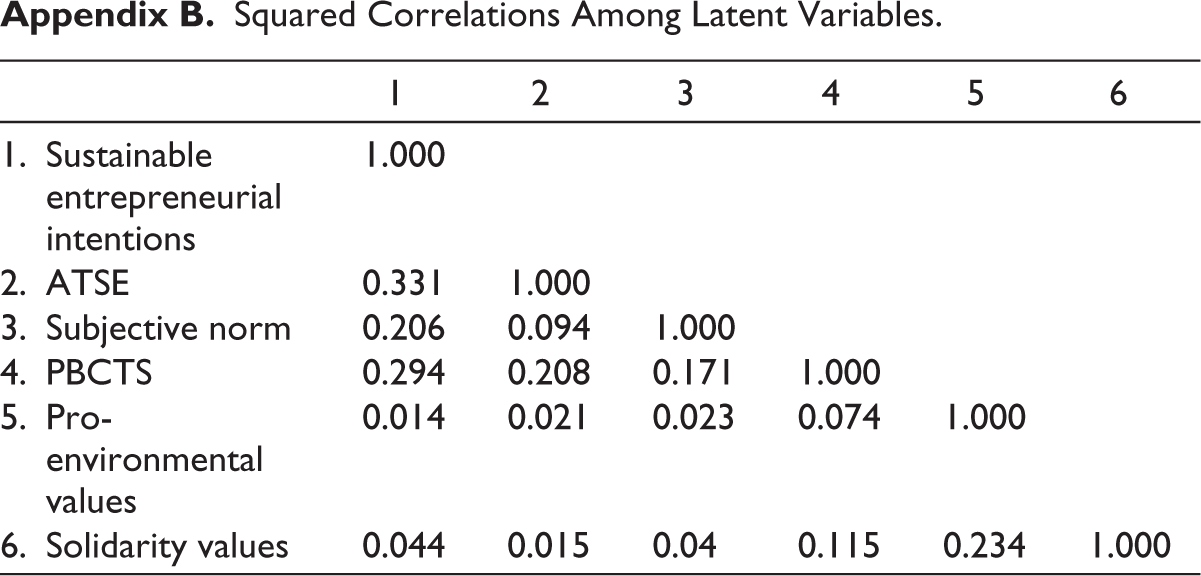
As the theoretical model consists of several constructs, and each construct includes several items, the high internal consistency of each construct becomes relevant. To ensure that all constructs used have high internal consistency, the Cronbach alpha, mean-variance extracted and composite reliability of the scales used were calculated. Cronbach’s alphas are acceptable with the measures ranging from 0.724 to 0.872. Composite reliability from the measures range from 0.524 to 0.810 meeting the acceptable levels as suggested by Fornell and Larcker (1981). The average extracted variance indicates the amount of variance in the measures are in general about the acceptable measure 0.40, two constructs, subjective norm and solidarity values are below this threshold. However, it was decided to keep these constructs because the rest of the reliability and validity constructs are above the acceptable levels, so there are still adequate (Fornell & Larcker, 1981) (for further information, please see Appendix A & B).
Dependent Variable
Independent Variables
Mediating Variables
As previously explained, three antecedents explain entrepreneurial intention, attitude towards entrepreneurship, subjective norm and perceived behavioural control (Ajzen, 1991). These items were adapted to capture to what extent individuals perceived sustainable ventures and their willingness to tackle societal challenges.
ATSE
In this article, ATSE refers to the degree to which an individual holds an overall positive or negative personal valuation of being a sustainable entrepreneur (Liñán & Chen, 2009). To capture ATSE, a 7-point Likert-type scale from Kautonen et al. (2015) and three questions on their attractiveness to start a sustainable venture were adapted.
Subjective Norm
In contrast to ATSE, subjective norm refers to the social environment and individuals’ perception of social pressures (Liñán & Chen, 2009). To capture subjective norm, the items of Liñán and Chen (2009) and three items using a 7-point Likert-type scale were asked.
PBCTS
PBCTS denotes an individual’s beliefs about the perceived ease or difficulty of contributing to solving current societal challenges (Hockerts, 2017; Kautonen et al., 2015). Given that researchers agree that perceived behavioural control and self-efficacy constructs are similar (Ajzen, 2002), the items used by Hockerts (2017) were adapted. Therefore, three items were asked using a 7-point Likert-type scale to capture the PBCTS.
Control Variables
To account for other factors that influence individuals’ future career choices, the following controls were included. Previous work has observed that age influences future career choices, particularly succession intention (Minola et al., 2016). Therefore, age as a control variable was included (a numeric variable ranging from 18 to 34 years). Yadav et al. (2022) found that there is a sex difference in sustainable ventures. Thus, it was controlled for sex (a categorical variable coded as 1 = female and 0 = male). Researchers have observed that the field of study plays a role in how individuals engage in entrepreneurial intention (Kuckertz & Wagner, 2010; Wagner, 2011). Therefore, the field of study as a control variable was included (categorical variable coded as 1 represents the study of business and economics, 0 indicates other subjects such as life science, natural science, health science and medicine, and social science). Parker and van Praag (2012) observed that the level of study affects entrepreneurial decisions. Thus, it was controlled for the semester of study (a categorical variable coded as 1 indicating ‘first semester’, 2 indicating ‘second semester’, 3 representing ‘third semester’, 4 indicating ‘fourth semester’, 5 representing ‘fifth semester’). Given that, an individual’s desire to earn money is important for starting a business and is a driver of sustainable entrepreneurial intentions (Vuorio et al., 2018), it was controlled for the desire to earn money (a numeric variable that is a 7-point Likert-type scale).
Statistical Procedure
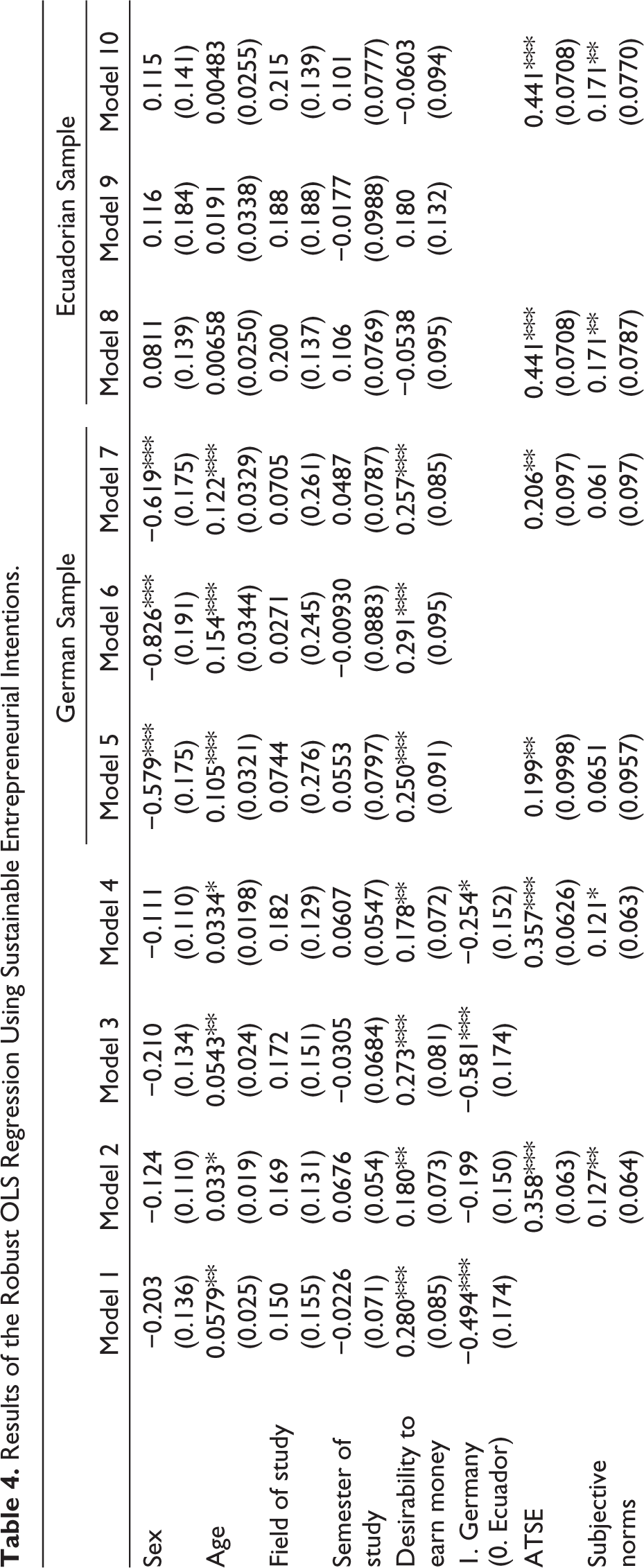
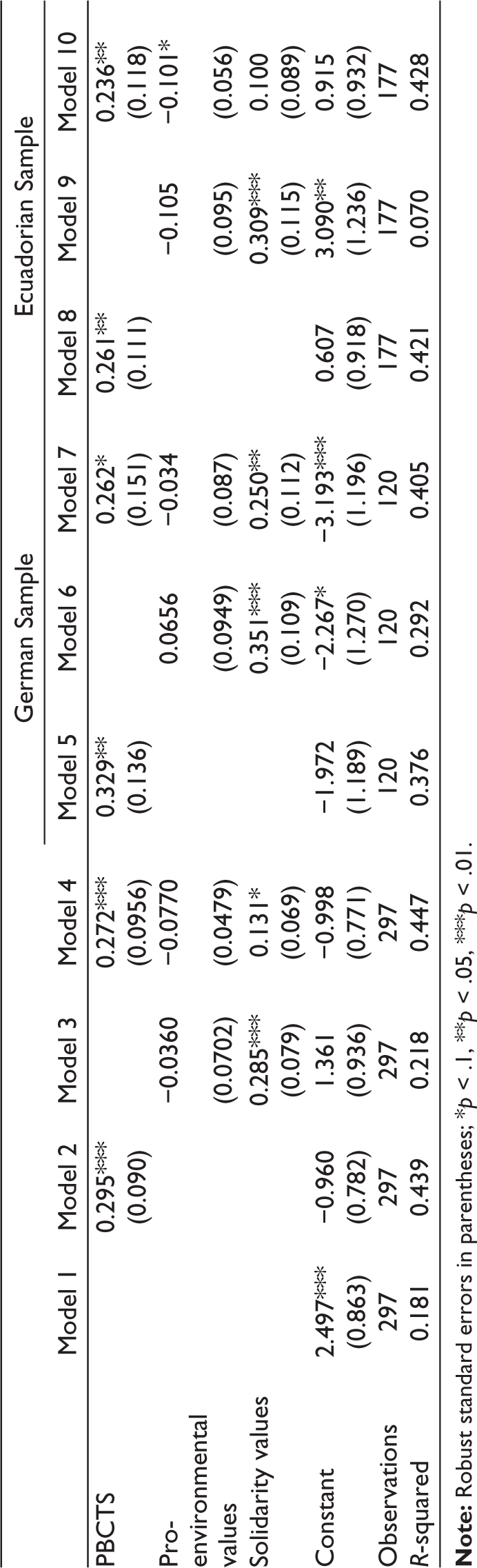
To test the hypotheses, robust OLS regressions and Hair Jr et al. (2017) procedure were used to test for mediating effects. According to Hair Jr et al. (2017), the following conditions must be present to support a mediating relationship: (a) a relationship between the independent variable and the dependent variable must be present, (b) a relationship between the mediating variables and the dependent variable must be present and (c) if these two criteria are met, then the relationship between the independent, mediating and dependent variables can be tested. If all paths from criteria to predictor via mediator are positive and significant, it constitutes complementary partial mediation. If the signs are negative and significant, then it is competitive/ inconsistent mediation. When the direct relationship is insignificant, and only the indirect association is significant, then it is considered to be full mediation. To follow this procedure, it was first tested the relationship between ATSE, subjective norm, PBCTS, and sustainable entrepreneurial intentions. In Table 4, Models 2, 5 and 8 provide these results. Second, the effect of pro-environmental and solidarity values on sustainable entrepreneurial intentions is tested. In Models 3, 6 and 9, these models were tested. Lastly, Mediating (ATSE, subjective norm and PBCTS) and independent variables (pro-environmental and solidarity values) were included in the same model to examine whether there was complementary partial or competitive mediation. In Models 4, 7 and 10, the effect of the mediating variables and independent variables on the dependent variable are provided.
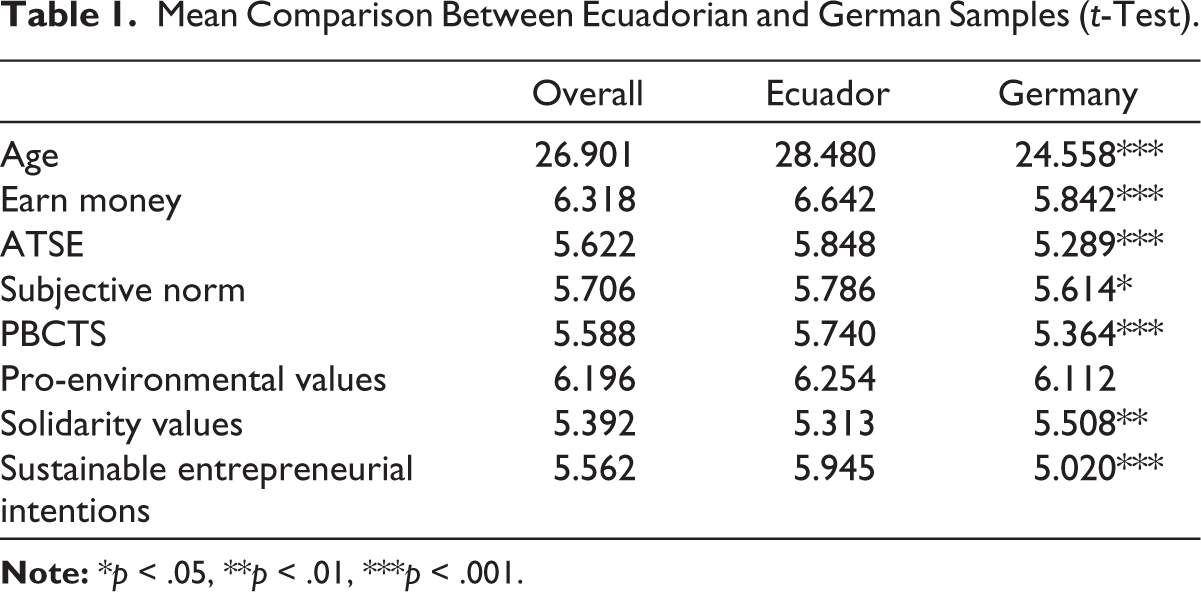
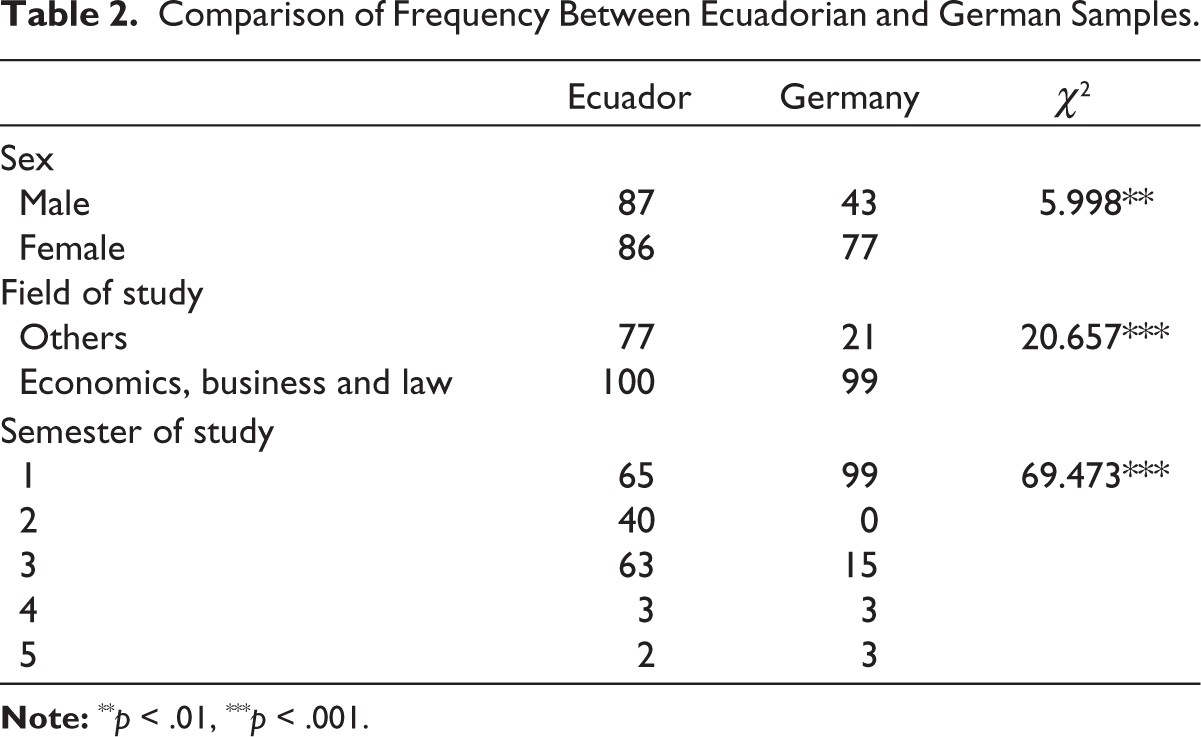
Since the main objective was to observe whether there were cultural differences, a procedure similar to Gimenez-Jimenez et al. (2022) was followed. To guarantee that splitting the data was a reliable procedure, in Tables 1 and 2, a t-test and chi-square test were used to determine whether there was a significant difference between the sample means. The sample reveals notable differences in terms of age and sex among students in the two countries. In Ecuador, the average age of students is 28.48 years, whereas in the German sample, the mean age is 24.55 years. In terms of sex distribution, an equal proportion of female (86) and male (87) students is observed in Ecuador. However, the German sample shows a higher percentage of female students (65%) compared to male students (35%). Moreover, the Ecuadorian sample indicates that students have a significantly stronger inclination towards earning money (6.642) compared to German students (5.289). In both samples, the majority of students pursue business, economics or law studies. However, it is worth noting that 43.50% of Ecuadorian students, in contrast to 17.21% of German students, are studying fields other than economics, business and law. When running the overall sample, the country as a dummy variable was included to observe whether there are differences between countries (please see Table 4, Models 1, 2, 3 and 4). This procedure allowed us to split the data between the German and Ecuadorian samples and run the models separately. The models were tested using each country sample only. In Table 4, Models 5, 6 and 7 provide the results of the overall models on the German sample, while Models 8, 9 and 10 show the results of the behavioural mechanisms on the Ecuadorian sample. STATA 17.0 was used for analysis.
Mean Comparison Between Ecuadorian and German Samples (t-Test).
Comparison of Frequency Between Ecuadorian and German Samples.
Results
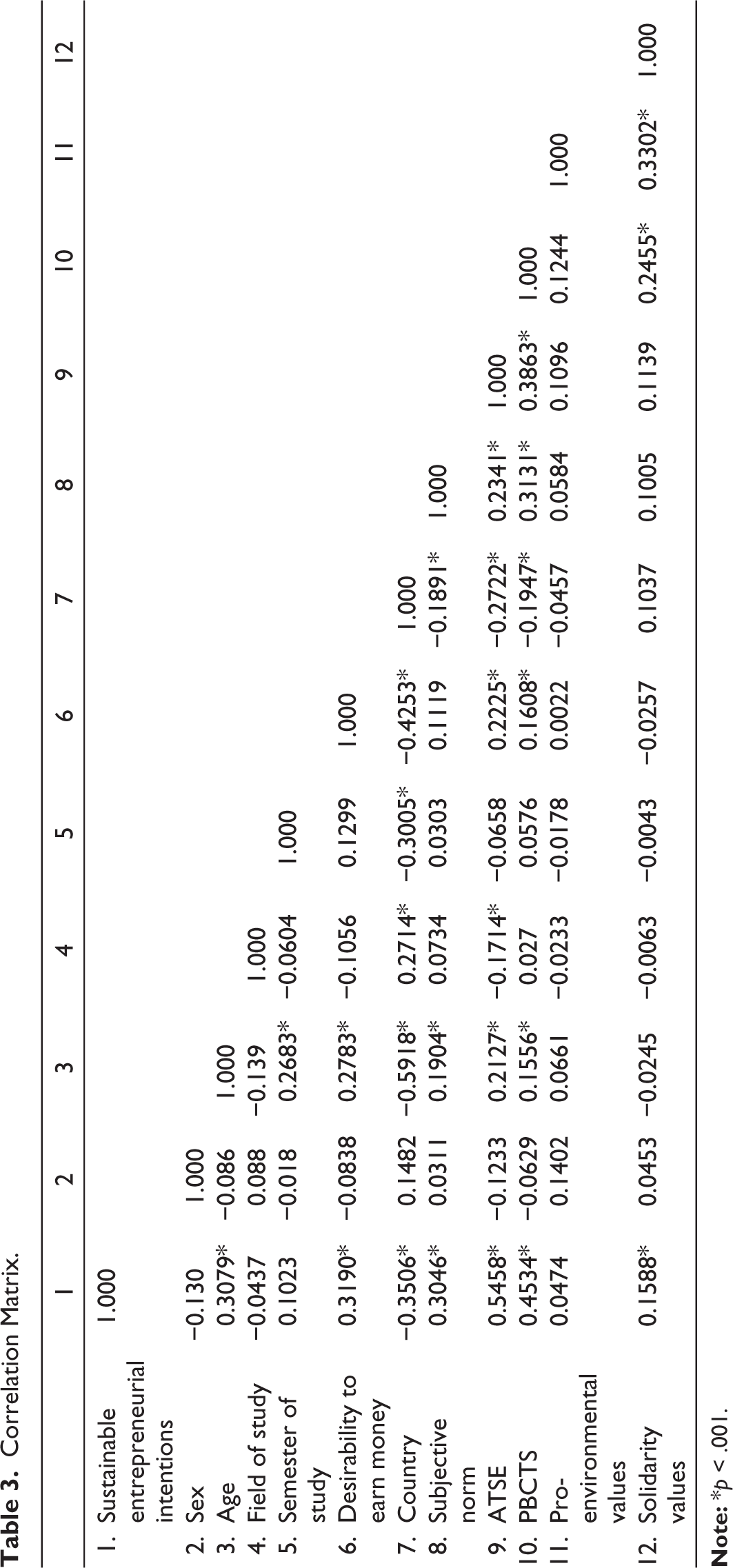
Table 3 presents pairwise correlations for the variables used. It was observed that ATSE and PBCTS were positively correlated with sustainable entrepreneurial intentions, whereas subjective norm, pro-environmental and solidarity values had a moderate correlation with sustainable entrepreneurial intentions. The variables show low or moderate correlation values among the independent and control variables, indicating a low risk of confronting collinearity issues or redundancies with this set of values. This was confirmed by an analysis of the variance inflation factor (VIF). The maximum VIF value is 2.04, which is below the cut-off of 10, indicating that there are no multicollinearity issues in the model (Hair, 2011).
Correlation Matrix.
In Table 4, Model 1 shows that being a German student was negatively and significantly associated with sustainable entrepreneurial intentions when compared to Ecuadorian students. The result shows that country of origin was negatively and significantly related to sustainable entrepreneurial intentions (β = −0.494, p < .001). Model 2 indicates that the behavioural mechanisms differed between Germany and Ecuador. However, when it was included ATSE (β = 0.358, p < .001), subjective norm (β = 0.127, p < .05) and PBCTS (β = 0.295, p < .001) in the model, there was no significant relationship between the country of origin and sustainable entrepreneurial intentions (β = −0.199, n.s.). Model 3 shows that pro-environmental values were not significantly related to sustainable entrepreneurship (β = −0.0360, n.s.), while the relationship between solidarity values-sustainable entrepreneurial intentions was positive and significant (β = 0.285, p < .001), country of origin was negative and significant (β = 0.581, p < .001). In Model 4, country of origin kept being negative and significant (β = −0.254, p < .1), and solidarity values (β = 0.131, p < .001) were partially mediated by ATSE (β = 0.357, p < .001), subjective norm (β = 0.121, p < .1) and PBCTS (β = 0.272, p < .001). After this procedure, the sample was split to examine the cultural differences.
Results of the Robust OLS Regression Using Sustainable Entrepreneurial Intentions.
Summary of Hypothesis Results.
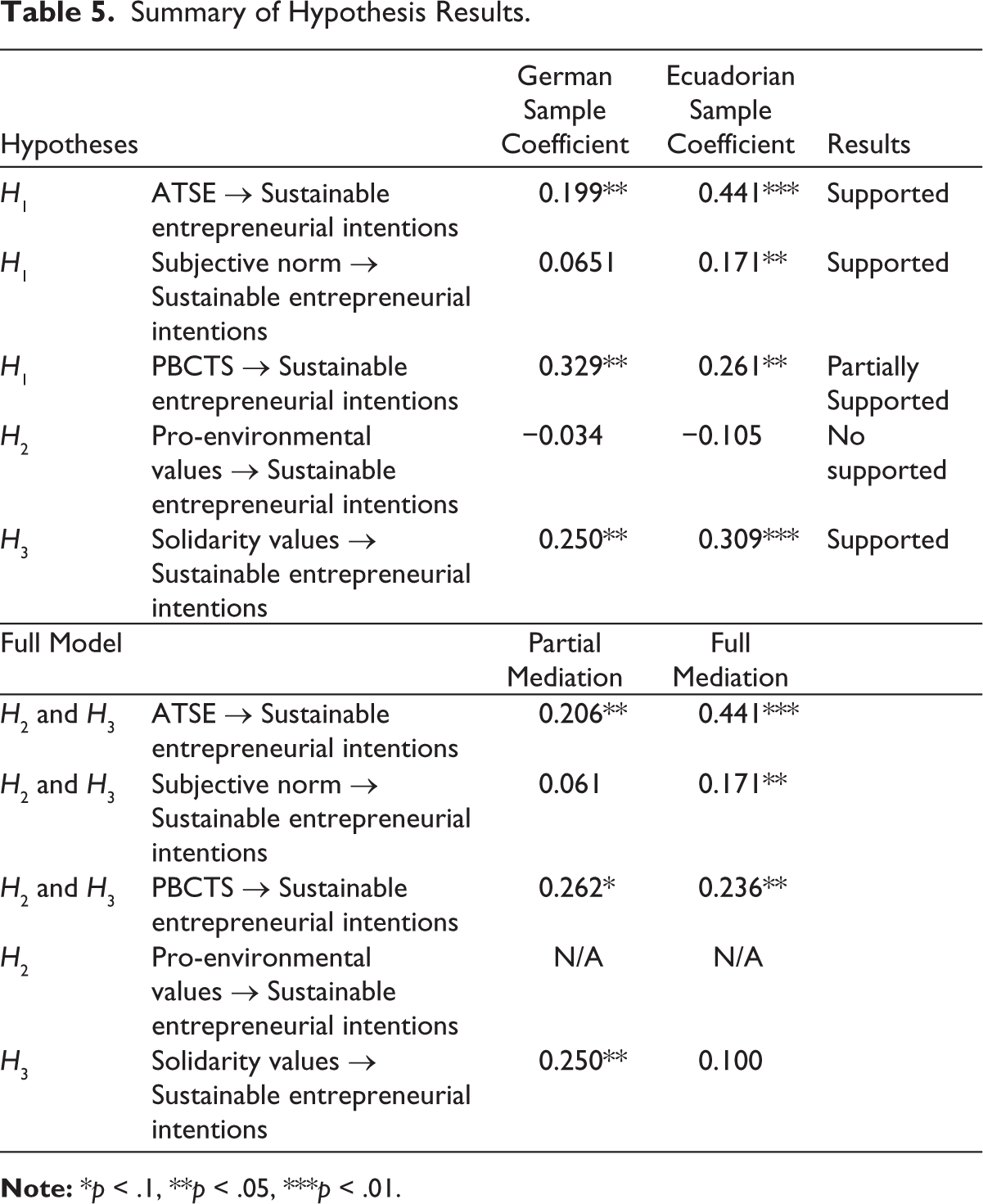
Models 5 and 8 show the German and Ecuadorian samples, respectively. The results show that in Germany, ATSE (β = 0.199, p < .05) and PBCTS (β = 0.329, p < .05) were positively and significantly associated with sustainable entrepreneurial intentions, but this was not the case for the subjective norm-sustainable entrepreneurial intentions relationship (β = 0.065, n.s.). In contrast, in Ecuador, ATSE (β = 0.441, p < .001), subjective norm (β = 0.171, p < .05) and PBCTS (β = 0.261, p < .05) were positively and significantly related to sustainable entrepreneurial intentions. These results partially support hypothesis H1 because German students seem to have higher PBCTS than Ecuadorian students.
In Models 6 and 9, pro-environmental values as antecedents of sustainable entrepreneurial intentions were included. Model 6 indicates that there was no direct relationship between pro-environmental values and sustainable entrepreneurial intentions (β = 0.066, n.s.) in the German sample. Similarly, Model 9 shows that in the Ecuadorian sample, the result shows there was no significant relationship between pro-environmental values and sustainable entrepreneurial intentions (β = −0.105, n.s.). This indicates that pro-environmental values were not associated with sustainable entrepreneurial intentions. Therefore, H2 is not supported.
However, solidarity values as antecedents of sustainable entrepreneurial intentions were found to be significantly associated with sustainable entrepreneurial intentions. First, Model 6 and 9 show that solidarity values are positively and significantly associated with sustainable entrepreneurial intention in Germany (β = 0.351, p < .001) and Ecuador (β = 0.309, p < .001). However, the results show how solidarity values relate to the German and Ecuadorian samples differently.
Model 7 indicates that ATSE (β = 0.206, p < .05), PBCTS (β = 0.262, p < .10) and solidarity values (β = 0.250, p < .10) were positively and significantly related to sustainable entrepreneurial intentions, whereas subjective norm did not have a significant relationship with sustainable entrepreneurial intentions (β = 0.061, n.s.). Therefore, these results indicate that the ATSE and PBCTS partially mediated the relationship between solidarity values and sustainable entrepreneurial intentions in the German sample. In Model 10, the Ecuadorian sample shows different results concerning solidarity values. Model 10 shows that ATSE (β = 0.441, p < .001), subjective norm (β = 0.171, p < .05) and PBCTS (β = 0.236, p < .05) were positively and significantly related to sustainable entrepreneurial intentions. However, in this model, solidarity values were not significantly related to sustainable entrepreneurial intentions (β = 0.100, n.s.). These results indicate that in Ecuador, ATSE, subjective norm and PBCTS fully mediated the relationship between solidarity values and sustainable entrepreneurial intentions, indicating that ATSE, subjective norm, and PBCTS were necessary conditions for sustainable entrepreneurial intentions formation in Ecuador. Therefore, H3 is supported. ATSE, subjective norm and PBCTS fully mediated the relationship between solidarity values and sustainable entrepreneurial intentions in Ecuador, while ATSE and PBCTS only partially mediated this relationship in Germany.
Robustness Checks
Several robustness tests were performed to confirm the results. Both samples were tested, using only pro-environmental values and once including only solidarity values. These results are the same as the main results. The German and Ecuadorian samples show there was no significant relationship between pro-environmental values and sustainable entrepreneurial intentions. The German sample shows that the solidarity values–sustainable entrepreneurial intentions relationship remained significant and positive, while ATSE and PBCTS partially mediated the solidarity values–sustainable entrepreneurial intentions relationship. The Ecuadorian sample shows that the solidarity values and sustainable entrepreneurial intentions relationship was fully mediated by ATSE, subjective norm and PBCTS. These results support the main findings. A bootstrapping analysis was conducted using 1,000 replicates, and the results were the same as those of the main analyses.
The full model was rerun with each of the items used for the construct of the dependent variable and ordered logistic regression was used. First, the item ‘I expect to be involved in launching a sustainable venture that pursues economic social/ecological goals’ was tested. The German sample shows that PBCTS partially mediated the solidarity values-sustainable entrepreneurial intentions relationship only. The results show that in the Ecuadorian sample, ATSE, subjective norm and PBCTS fully mediated the relationship between solidarity values and sustainable entrepreneurial intentions. When the ‘I intend to be involved in launching a sustainable venture, which pursues economic social/ecological goals’ was tested, the results were slightly different. In the Ecuadorian sample, ATSE and PBCTS were the only constructs that fully mediated the relationship between solidarity values and sustainable entrepreneurial intentions, while in the German sample, ATSE partially mediated the solidarity values-sustainable entrepreneurial intention relationship. Overall, these robustness checks provide additional support for the initial findings because they show the main hypothesis that cultural differences influence the indirect role of sustainable values in the development of intentions to become sustainable entrepreneurs. In addition, these results from the robustness checks show how behavioural mechanisms helped catalyse these values and their variation across cultures.
Discussion
This article provides a novel explanation of the mechanisms through which sustainable values, such as pro-environmental and solidarity values, motivate sustainable entrepreneurial intentions by building on the value literature (Rokeach, 1973). Motivated by the need to further explore the determinants of sustainable entrepreneurial intentions, several results are worth discussing. A summary of the results can be found in Table 5.
First, the findings reveal that behavioural mechanisms influencing an individual’s sustainable entrepreneurial intentions differ from cultures. In Ecuador, sustainable entrepreneurial intention is significantly and positively related to ATSE, subjective norm and PBCTS, while in Germany, ATSE and PBCTS are the only constructs relating to it. These findings contradict previous studies on sustainable entrepreneurship (Agu et al., 2021; Kruse et al., 2019; Thelken & Jong, 2020) and show that ATSE and PBCTS are significantly related to the intention to become sustainable entrepreneurs, whereas the subjective norm is often not supported. However, this article shows that in a socially supportive culture (such as Ecuador), subjective norm is positively and significantly associated with sustainable entrepreneurial intentions, which is consistent with previous work that found subjective norm to be related to overall entrepreneurial intentions in developing economies (Engle et al., 2010; Iakovleva et al., 2011; Looi, 2020). One explanation for this result may be that in a socially supportive culture, connection and commitment to others are enhanced, which means that Ecuadorian students perceive that the support of family and friends is important in the turbulent process of thinking to create a venture (Gimenez-Jimenez et al., 2022) and lean on others using them as references. By contrast, German society rewards individual actions, so the perceived support of family and friends may not seem necessary to embark on a sustainable entrepreneurial career.
Second, the results indicate that there is no direct relationship between pro-environmental values and sustainable entrepreneurial intentions in either sample. This finding is contrary to expectations, and despite previous studies showing that social connectedness and cohesion are related to environmental values (Duff et al., 2022). Given that pro-environmental values relate to the natural environment to diminish the intrinsic value of the physical world such as land, biodiversity, ecosystems (Parris & Kates, 2003) and the reduction in the mean of life-sustaining resources and services for current and future generations (Daily, 1997), this result is surprising. In spite of the great efforts to raise awareness of environmental issues, it seems that students are not able to relate it to the possible creation of sustainable ventures.
Third, the findings also indicate the relationship between solidarity values and sustainable entrepreneurial intentions and this relationship is fully mediated by ATSE, subjective norm and PBCTS in Ecuador only. One explanation for this finding could be that, in Ecuador, social connectedness and cohesion are not related to biosphere values (Steg, 2016); instead, social support is associated with other family members and friends, so altruistic values are mainly human-centred. In Germany, the relationship between solidarity values and sustainable entrepreneurial intentions is partially mediated by ATSE and PBCTS. In the case of the German sample, only solidarity values fill individuals’ perception of having skills to solve societal problems, indicating that German students still do not have a holistic perspective of the current societal problems. This partial mediation represents that another construct may influence the sustainable entrepreneurial intentions of German students. Overall, this finding can be explained by arguing that sustainable values are not centred on the individual but have a global perspective involving people’s quality of life and the preservation of the social environment (Shepherd et al., 2009). It was observed that social factors and past experiences in their socialisation process as part of the behavioural mechanisms (Ajzen, 1991; Levenburg & Schwarz, 2008) have a stronger effect on the relationship between solidarity values and sustainable entrepreneurial intentions in Ecuador than in Germany. In addition, students’ intentions to start a sustainable venture may begin with a social problem instead of an environmental problem (Belz & Binder, 2017).
In summary, the findings, which are supported by the robustness tests, are in line with those of previous studies, which have found that values are important for developing sustainable entrepreneurial intention (Hechavarría, 2016; Thelken & Jong, 2020; Vuorio et al., 2018). Given the growing global awareness of social injustice (e.g., #Blacklivesmatter, Friday for Future), individuals perceive the development of skills and abilities to cope with current social challenges, their willingness to change comes from themselves and they do not want to wait for the response of others. The literature discusses whether the subjective norm construct is a predictor of social or sustainable entrepreneurial actions (Muñoz & Cohen, 2018) as previous studies did not find a relationship (Kruse et al., 2019; Thelken & Jong, 2020). It is shown that subjective norm is a catalyst for sustainable entrepreneurial intentions, but its effect varies across cultural contexts.
Practical Implications
The findings also have practical implications for entrepreneurship education. As the findings do not support the relationship between pro-environmental values and sustainable entrepreneurial intentions, adopting an outcome-oriented teaching approach is suggested. Educators should consider organising field trips to forests or parks where students can actively participate in garbage collection or visit areas facing deforestation issues. Students can therefore develop a close connection with environmental issues in both cultural contexts. Because the findings highlight the significance of solidarity values in fostering sustainable entrepreneurship, entrepreneurial education should prioritise and encourage group work among students. To further promote solidarity values, educators are encouraged to engage with NGOs that work with vulnerable populations, such as women who have experienced domestic violence, refugee camps and homeless people. Collaborating with these organisations and visiting such communities can significantly increase students’ intentions and actions to pursue sustainable entrepreneurship. Given the importance of the role of subjective norm in Ecuador, fostering co-working spaces in this context is suggested. Co-working spaces are good places for sharing with other peers, and this may increase the perception of further support. Additionally, it is recommended that lecturers invite entrepreneurs who have established ecological, social and sustainable ventures to share their experiences with students in both contexts to serve as role models for students. Finally, the study’s implications extend to governments and educational institutions. Integrating the development of sustainable values into the entrepreneurial curriculum and effectively teaching them can greatly contribute to fostering sustainable entrepreneurship. This approach might be particularly relevant for countries aiming to boost sustainable entrepreneurship and/or employment creation by enhancing entrepreneurial education.
Limitations and Future Research
This article has some limitations. First, although the pro-environmental and solidarity values are those that fill the triple bottom line of sustainable ventures, future research should add other values, such as freedom, equality and tolerance, which may help to understand why some individuals intend to create ventures that tackle sustainable development goals, in particular women and migrant entrepreneurs. Future research should examine solidarity values more deeply. In particular, examining the role of family, friends and social media in developing such values and whether the perception of these values differs from the Global North and Global South, or urban and rural regions would be a fruitful line of research. Social cognitive theory or other motivational theories such as expectancy theory from Vroom (1964) could also be interesting approaches for comparing potential conventional and sustainable entrepreneurs. Second, the sample is restricted to university students more educated than other people of similar ages in the overall population. Thus, further research should use data from actual entrepreneurs to understand their values and whether they still hold after starting and running their ventures. Third, it was hypothesised that all these relationships were positive, but it would be interesting to examine whether these values could harm entrepreneurial teams and their relationships due to differences in their values. In the survey, it was not asked to what extent students intend to become entrepreneurs in a general form. Using similar approaches as Bogatyreva et al. (2019), future research should collect panel data and examine this issue by studying whether intentions to become entrepreneurs influence students’ sustainable entrepreneurial intentions and actions. Finally, this article used the value literature as an umbrella to explain the mechanism. Nonetheless, other lenses could be applicable; for example, a contextual approach could help to observe how changes in cultural beliefs affect sustainable entrepreneurial intentions (Welter, 2011).
Conclusions
This article aimed to shed light on the impact of values related to sustainable development on the behavioural mechanisms that lead to individuals’ intentions to start creating a sustainable venture between cultural contexts. Despite the advancement of the literature on the antecedents that influence sustainable entrepreneurial intentions, researchers have investigated individuals in one culture (Agu et al., 2021; Arru, 2020) or similar cultural contexts (Thelken & Jong, 2020; Vuorio et al., 2018). This article advances the literature by investigating sustainable entrepreneurial intentions in two distinct cultural contexts: Germany, a performance-based culture, and Ecuador, a socially supportive culture, responding to the call from Vuorio et al. (2018). This article also answered the call made by Hechavarría (2016) to examine more complex models that go beyond direct effects and investigate the role of values in entrepreneurship. By understanding the behavioural mechanisms through which values influence sustainable entrepreneurship, it is provided a deeper understanding of this phenomenon. In addition, analysing these cultural contexts allows us to observe that solidarity values are the only values consistently associated with the behavioural mechanisms that lead to sustainable entrepreneurial intentions in both contexts. However, these values have different influences on German and Ecuadorian students. Surprisingly, pro-environmental values are not significantly related to intentions to become sustainable entrepreneurs. Given the nature of sustainable entrepreneurial intentions, pro-environmental and solidarity values are required to motivate individuals to exploit entrepreneurship opportunities that focus on economic gains, and gains for others (Shepherd et al., 2009). Therefore, this finding led us to provide implications for entrepreneurial education. This article adds to the current conversation on which and how values influence sustainable entrepreneurial intentions (Thelken & Jong, 2020; Vuorio et al., 2018), showing that sustainable entrepreneurial intention formation is not solely actor-centred but also influenced by social and global perspectives. Finally, it was added to the recent call of contextualising entrepreneurial intentions (Donaldson et al., 2021) by incorporating specific behavioural mechanisms into the theory of planned behaviour within different cultural contexts. This approach provides a clearer understanding of potential sustainable entrepreneurs and uncovers the factors that distinguish sustainable entrepreneurs.
Footnotes
Declaration of Conflicting Interests
The authors declared no potential conflicts of interest with respect to the research, authorship and/or publication of this article.
Funding
The authors received no financial support for the research, authorship and/or publication of this article.
Appendix
Squared Correlations Among Latent Variables.
| 1 | 2 | 3 | 4 | 5 | 6 | |
| 1. Sustainable entrepreneurial intentions | 1.000 | |||||
| 2. ATSE | 0.331 | 1.000 | ||||
| 3. Subjective norm | 0.206 | 0.094 | 1.000 | |||
| 4. PBCTS | 0.294 | 0.208 | 0.171 | 1.000 | ||
| 5. Pro-environmental values | 0.014 | 0.021 | 0.023 | 0.074 | 1.000 | |
| 6. Solidarity values | 0.044 | 0.015 | 0.04 | 0.115 | 0.234 | 1.000 |