




Abstract
This study addresses the underrepresentation of women and the so-far neglected process perspective in empirical entrepreneurial research. It aims to identify the personality traits that differentiate successful female entrepreneurs from their less successful peers and to determine which traits are crucial for pre-launch, launch, and post-launch success. Independent t-tests on 305 female entrepreneurs (and 476 male entrepreneurs) from the DACH region highlight the role of self-efficacy, proactivity, locus of control, and need for achievement for female entrepreneurs. Multiple regression analyses further reveal the importance of self-efficacy for every phase of women’s entrepreneurial journey. While the need for autonomy was critical during pre-launch and launch, locus of control significantly predicted female entrepreneurial success in the pre-launch and post-launch phases. Contrary to previous research, risk-taking was not a crucial trait for female entrepreneurs when compared to their male counterparts, while both showed similar levels of need for autonomy, proactivity, need for achievement, perseverance, self-control, and locus of control. The study offers valuable insights into successful entrepreneurship and highlights the need for female- and phase-specific support programs to enhance self-efficacy among female entrepreneurs.
Only approximately 16% of entrepreneurs who launch start-ups are female (Kollmann et al., 2020). In Germany, the ratio of male to female entrepreneurs is 0.6, which means there are 60 female entrepreneurs per 100 males (Bosma et al., 2020). In a European and North American comparison, Germany ranked 13th out of 23. In the leading nations, Spain and the United States, the ratio of female to male entrepreneurs exceeds 0.9. Thus, the potential of female entrepreneurs, especially in Germany, has not yet been realised.
To facilitate women’s entry into self-employment and thus increase their start-up rate, European Directives (e.g., Directive 2010/41/EU on Equality between Men and Women in Self-Employment) and national initiatives (e.g., Bundesweite Gründerinnenagentur, BGA, since 2004) have been implemented and adopted for decades. Among these initiatives, specific measures to support females include the reconciliation of family and career, the creation of female networks, and advice for prospective female entrepreneurs. While support programs traditionally focus on practical knowledge, they fail to consider psychological components, such as personality, which could influence individual start-up decisions. However, this is important as personality, for example, is a major area of interest within the field of entrepreneurial and psychological research (Baum et al., 2007; Frese & Gielnik, 2014; Gorgievski & Stephan, 2016) and has been studied in several meta-analyses and reviews (Brandstätter, 2011; Rauch & Frese, 2007b; Zhao & Seibert, 2006; Zhao et al., 2010). This research elaborated, for example, the importance of both, broader and more specific personality constructs, such as the Big Five, proactivity, risk-taking, or the need for autonomy for entrepreneurial success.
To best support entrepreneurs in launching a business, holistic support offers should not only consider interindividual differences but should also take into account differences in the validity of different personality traits throughout the entrepreneurial journey, as entrepreneurship is a multi-phased, dynamic process. The entrepreneurial journey can be regarded as a three-stage process in which each phase imposes different demands on the individual: pre-launch, launch, and post-launch (Baron, 2007). Although conceptual works (Frese & Gielnik, 2014; Gorgievski & Stephan, 2016) have highlighted the importance of a dynamic process perspective, only a few empirical studies (e.g., Hell et al., 2016) indicated that the relevance of personality traits differs for different phases of the process.
To provide the best possible support for prospective female entrepreneurs, three major aspects need to be considered: First, personality is an important success driver for entrepreneurs (e.g., Baum et al., 2007; Frese & Gielnik, 2014; Gorgievski & Stephan, 2016). Second, it is necessary to adopt a process-oriented perspective to entrepreneurship that takes into account the unique challenges individuals face during each stage of their entrepreneurial venture (Frese & Gielnik, 2014; Gorgievski & Stephan, 2016). And third, a gendered perspective should be embraced to specifically address the concerns of female entrepreneurs (Cabrera & Mauricio, 2017). Only if one looks at successful female entrepreneurs in all phases of the entrepreneurial process can one also understand what less successful female entrepreneurs are missing, and how they can be supported in an optimal way. To date, there has been no research that pulls all of these three strings together. Therefore, the present study investigates the differences in personality traits between successful and less successful female entrepreneurs. Moreover, it adopts a process perspective to identify which personality traits are important for female entrepreneurs at each stage of the entrepreneurial process.
The present study expands the entrepreneurship literature in the following key ways. First, the authors build theoretical arguments for a gender-specific perspective of the entrepreneurial journey and for investing empirical efforts into investigating female entrepreneurs specifically. Next, in a substantial empirical sample including both female and male entrepreneurs, the researchers first showcase gender differences and similarities in the context of personality traits and entrepreneurial success. Subsequently, they analyse the distinguishing traits of successful female entrepreneurs more specifically. The examination of specific personality traits among female entrepreneurs, such as risk-taking and self-efficacy, provides valuable insights for researchers who aim to understand and practitioners who aim to facilitate female entrepreneurship. Finally, by integrating entrepreneurial phases and phase-specific success factors, the importance of temporal considerations in the literature on (female) entrepreneurship is highlighted.
Interindividual Differences in Personality Traits
To understand what drives successful female entrepreneurship, research has approached this question from two angles: (a) What are the characteristics of successful founders in general? (b) What is known about female entrepreneurs compared to male entrepreneurs?
First, the current state of research should be approached from the first angle: Regardless of gender differences, researchers have identified personality traits that are important for both, start-up intentions and later start-up success in numerous meta-analyses (Brandstätter, 2011; Pérez-Macías et al., 2021; Rauch & Frese, 2007b; Zhao & Seibert, 2006; Zhao et al., 2010). Whilst earlier studies and meta-analyses focused on the Big Five personality traits (Zhao & Seibert, 2006; Zhao et al., 2010), other studies shifted to specific personality traits that are more relevant for the context of entrepreneurship, such as need for achievement, self-efficacy, innovativeness, proactivity, stress tolerance, need for autonomy, locus of control, and risk-taking (e.g., Frese & Gielnik, 2014; Hell & Gatzka, 2018; Rauch & Frese, 2007b). This shift is reasonable because business success showed stronger correlations with more specific personality traits than with the broad Big Five personality traits (Frese & Gielnik, 2014; Hell & Gatzka, 2018). Also, Rauch and Frese (2007a) stated that specific, more proximal personality traits are preferable to broader and more distal personality traits because they are nearer to actual, specific behaviour. Therefore, tasks that correspond to starting a business might require more specific than general behaviours (for more information, also see their model of an entrepreneur’s personality characteristics and success, p. 47). Focusing on specific personality traits may also be more effective in addressing the obstacles faced by female entrepreneurs and providing the best possible support for their personal growth.
Previous research also approached successful female entrepreneurship from a second angle and observed that female entrepreneurs differed from male entrepreneurs. Studies showed that female entrepreneurs tended to be more risk-averse (Fossen, 2012), more motivated by a higher need for autonomy (Sullivan & Meek, 2012), and had a greater fear of failure than their male counterparts (Koellinger et al., 2013). Furthermore, women felt less self-efficient (Molino et al., 2018; Sullivan & Meek, 2012), less confident in their entrepreneurial capabilities than men (Koellinger et al., 2013), and showed lower levels of internal locus of control than males (Molino et al., 2018). However, the existing studies predominantly focus on why women have lower entrepreneurial intentions than men, without providing insights into the personality traits that distinguish male and female entrepreneurs during their later success, or indicating whether the observed differences are crucial for entrepreneurial success at all. Thus, it remains unclear which personality traits are characteristic of successful female entrepreneurs. Are the same personality traits important for women as they are for men, or do successful female entrepreneurs possess different traits?
Taking previous findings together, it becomes obvious, that research on successful entrepreneurs lacks a female-specific perspective (e.g., Brandstätter, 2011; Frese & Gielnik, 2014; Rauch & Frese, 2007b; Zhao & Seibert, 2006; Zhao et al., 2010). Moreover, research on gender comparisons of entrepreneurs either did not consider entrepreneurial success variables (e.g., Sharma & Sahni, 2020; Verheul et al., 2012) or only investigated single phases of the entrepreneurial journey, such as entrepreneurial intent (e.g., Koellinger et al., 2013; Molino et al., 2018; Roy & Das, 2020). Even studies investigating gender differences in entrepreneurial activities have suffered from an overemphasis on male entrepreneurs as women are still underrepresented in the start-up scene (Bosma et al., 2020; Kollmann et al., 2020; Metzger, 2020). Therefore, when looking at gender differences in entrepreneurship, males are overrepresented in most samples, and research does not sufficiently consider specific female characteristics. However, this is important because both males and females can be successful (Abouzahr et al., 2018), although they might have different personality profiles. Consequently, a gendered and female-specific perspective of entrepreneurship is required. Therefore, this study compared women with women, not women with men, to better understand and help female entrepreneurs and investigated the differences in personality traits between successful and less successful female entrepreneurs. The following research question is stated:
Validity of Personality Differences Throughout the Entrepreneurial Journey
Most studies view entrepreneurship as a single-phased phenomenon and assume that personality is equally important in all entrepreneurial phases (Furtner & Baldegger, 2013). However, a process view suggests that specific individual-level variables have different importance for the different phases of entrepreneurship as the demands on the individual vary across phases (Baron & Markman, 2005). More recent reviews on the psychology of entrepreneurship emphasised the process perspective and the importance of phase-specific personality traits (Frese & Gielnik, 2014; Gorgievski & Stephan, 2016). Empirical evidence indicated that self-efficacy, innovativeness, stress tolerance, need for autonomy, achievement motivation, and proactivity are important for both phases of entrepreneurial intent and later business success (Rauch & Frese, 2007b). However, risk-taking, for example, was only positively associated with entrepreneurial intentions, but not with later business success (Brandstätter, 2011; Zhao et al., 2010). Although these findings hint at phase-specific success criteria in terms of personality, the mentioned reviews and meta-analyses (Brandstätter, 2011; Rauch & Frese, 2007b; Zhao et al., 2010) only divide the entrepreneurial process roughly into two phases: (a) entrepreneurial intentions and (b) later entrepreneurial performance.
More conceptual works also point to the possibility that the relevance of personality traits might change throughout the different phases of the entrepreneurial process, with the importance of emotional stability increasing and the importance of the need for achievement, conscientiousness, and openness to new experiences decreasing over the phases (Furtner & Baldegger, 2013; Rathgens, 2012). The importance of extraversion remains constant. Although these studies (Furtner & Baldegger, 2013; Rathgens, 2012) recognised the entrepreneurial process as a multi-staged process, they only concentrated on the Big Five and neglected the more important specific traits for entrepreneurs. Also, findings from other research studies were reviewed, but not empirically tested.
Again, research also points to the fact, that the importance of specific personality traits for entrepreneurial success differs for male and female entrepreneurs (e.g., for risk-taking see the study of Fossen, 2012). Unfortunately, most of the studies that directly compare male and female entrepreneurs, limit their scope to the first phase of the entrepreneurial journey and do not consider other phases.
In summary, the process perspective has gained attention and acceptance throughout entrepreneurial research (Baron, 2007; Shane, 2007). As the phases differ in their nature, they also pose different demands on the individual. Hence, it is likely that the relevance of personality traits changes during the entrepreneurial process. However, research that empirically tests the importance of specific personality traits holistically across the entire entrepreneurial journey is scarce. Corresponding research focusing on women entrepreneurs is even more rare, although specific personality traits may be particularly important for female entrepreneurs at different points in their entrepreneurial journey. Therefore, it is important to consider both, the process and a female-specific perspective, when pursuing the goal of creating meaningful support offers for female entrepreneurs. Therefore, the following, exploratory research question is proposed:
Method
Sample
The total sample of this study was composed of N = 2,429 individuals from the DACH region who voluntarily participated in the Entrepreneur Check. In terms of participants’ entrepreneurial progress, the majority of the sample (n = 1,284) assigned themselves to the pre-launch phase. 182 participants classified themselves as being in the launch phase and 607 participants stated that they were in the post-launch phase. As the study focused on entrepreneurs, the final sample excluded individuals in the pre-launch phase as they had not yet founded their businesses. Thus, the final sample was composed of N = 789 entrepreneurs (launch & post-launch phase), of which 305 (39%) were female entrepreneurs and 476 (60%) were male entrepreneurs. Eight entrepreneurs did not provide information related to their gender. The average age was M = 42.3 years, with the youngest participant being 15 years and the oldest 80 years. 114 out of 305 female entrepreneurs were classified as successful, while among male entrepreneurs, 165 out of 476 individuals were identified as successful.
Measures
Personality
Data for this study was collected using the personality module (EC-P) of the Entrepreneur Check (EC) developed by Swiss researchers (Hell et al., 2016; Hell & Kressler, 2020). The EC is a self-assessment tool for prospective and already active entrepreneurs and provides them with feedback on their strengths and weaknesses with regard to their self-employment.
The scales of the personality module (EC-P) were developed mainly based on meta-analytic results from Zhao and Seibert (2006) as well as Rauch and Frese (2007b) concerning the relationship of personality traits with business creation and success. The EC-P-scales measure twelve personality traits important for business creation and entrepreneurial action, including the following constructs: innovativeness, openness, proactivity, need for autonomy, assertiveness, risk-taking, self-control, perseverance, need for achievement, resilience, self-efficacy, and locus of control. All personality traits were measured with a five-point Likert scale, ranging from 1 = strongly disagree to 5 = strongly agree. According to the authors, the internal consistencies of EC-P scales are at least α = 0.70. For a deeper insight into scale development and description see Hell and Gatzka (2018).
Entrepreneurial Journey
Founding a company or becoming an entrepreneur can be viewed as a process with different stages, not as ‘a single event or a series of unrelated events’ (Baron, 2007, 19). Following Baron’s approach, entrepreneurship in this study is conceptualised as a three-phased process: pre-launch (preparation phase), launch (foundation phase), and post-launch phase (operational phase). When surveyed, participants were asked to indicate which of the three phases they were in.
Perceived Success
Success criteria were developed for each phase based on relevant literature (Baron, 2007; Frese & Gielnik, 2014; Hell et al., 2016) and included items related to the entrepreneurs’ perceptions of business ideas, resource acquisition, financial success, growth goals, and satisfaction. Perceived success in the pre-launch phase was measured with one item, in the launch phase with three items, and in the post-launch phase with four items. All items were evaluated with a five-point Likert scale ranging from 1 = strongly disagree to 5 = strongly agree. Different success measures were calculated for the analyses. Perceived, phase-specific success was calculated as the mean of phase-specific items (used as a dependent variable in the regression analyses). For the group comparisons of successful versus less successful entrepreneurs, phase-specific success was z-standardised. The sample was then divided into successful and less successful entrepreneurs in that phase by using a cut-off value for phase-specific success of z = 0.842, which is equivalent to a 20%–80% distribution. Individuals who were above the cut-off value and thus belonged to the top 20% of the sample were classified as successful in that phase. Individuals who were below this cut-off value and thus belonged to the bottom 80% were classified as less successful in that phase. The entrepreneurs had to be successful in at least one phase in order to be assigned to the group of successful entrepreneurs. For the correlative analyses, overall success was calculated as the sum of the phase-specific 20:80 distribution based on the aforementioned cut-off-value, resulting in values ranging from 0 to 3, with 0 = no success, 1 = success in one phase, 2 = success in two phases, 3 = success in three phases.
Analytical Approach
The analytical approach consisted of a set of preliminary analyses and a set of analyses to elaborate the research questions. The preliminary analyses consisted of a factor analysis for structuring and reducing the complexity of the various traits that have been investigated. Furthermore, independent t-tests (with Bonferroni corrected alpha level) were conducted to examine possible differences in the personality traits of (successful) male and female entrepreneurs in general. These independent t-tests ensured that a gendered perspective on entrepreneurship was justified, before carrying on with the main analyses.
The elaboration of the research questions consisted of two main strategies. First, an independent t-test was carried out on each of the personality traits to compare less and more successful female entrepreneurs. To avoid alpha error accumulation, the Bonferroni correction to reduce the alpha level of each test was used. Second, a stepwise regression analysis was conducted to test the importance of the personality traits across the three entrepreneurial phases, using the personality traits as predictors and phase-specific success as the criterion. Due to reasons of parsimony regarding the final model, the authors decided on a stepwise regression analysis. All analyses were conducted with SPSS, version 28.
Results
Preliminary Analyses of Gender Differences Between (Successful) Male and Female Entrepreneurs
The mean comparison of personality traits of female versus male entrepreneurs showed that they differed in their personality profiles (Table 1). On average, male entrepreneurs showed higher mean scores for all personality traits than women, except for self-control. The largest differences between male and female entrepreneurs were observed regarding risk-taking (t(779) = –5.06, p < .05, d = –0.37), self-efficacy (t(779) = –4.86, p < . 05, d = –0.36), and resilience (t(779) = –4.20, p < .05, d = –0.31), with men having higher mean scores than women. Male and female entrepreneurs did not differ significantly regarding the traits of proactivity, perseverance, need for achievement, self-control, need for autonomy, locus of control, and success.
Mean Comparison of Male Versus Female Entrepreneurs.
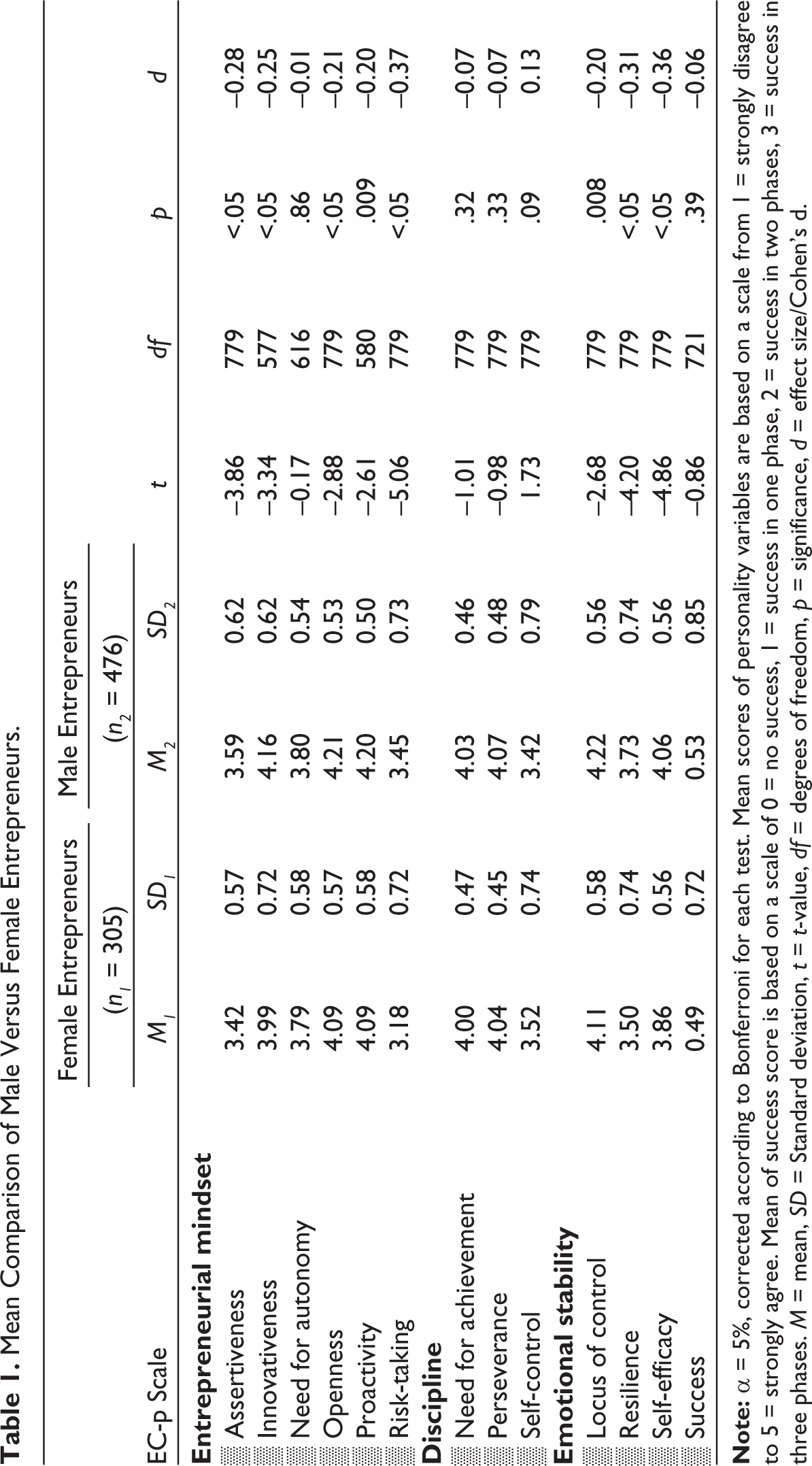
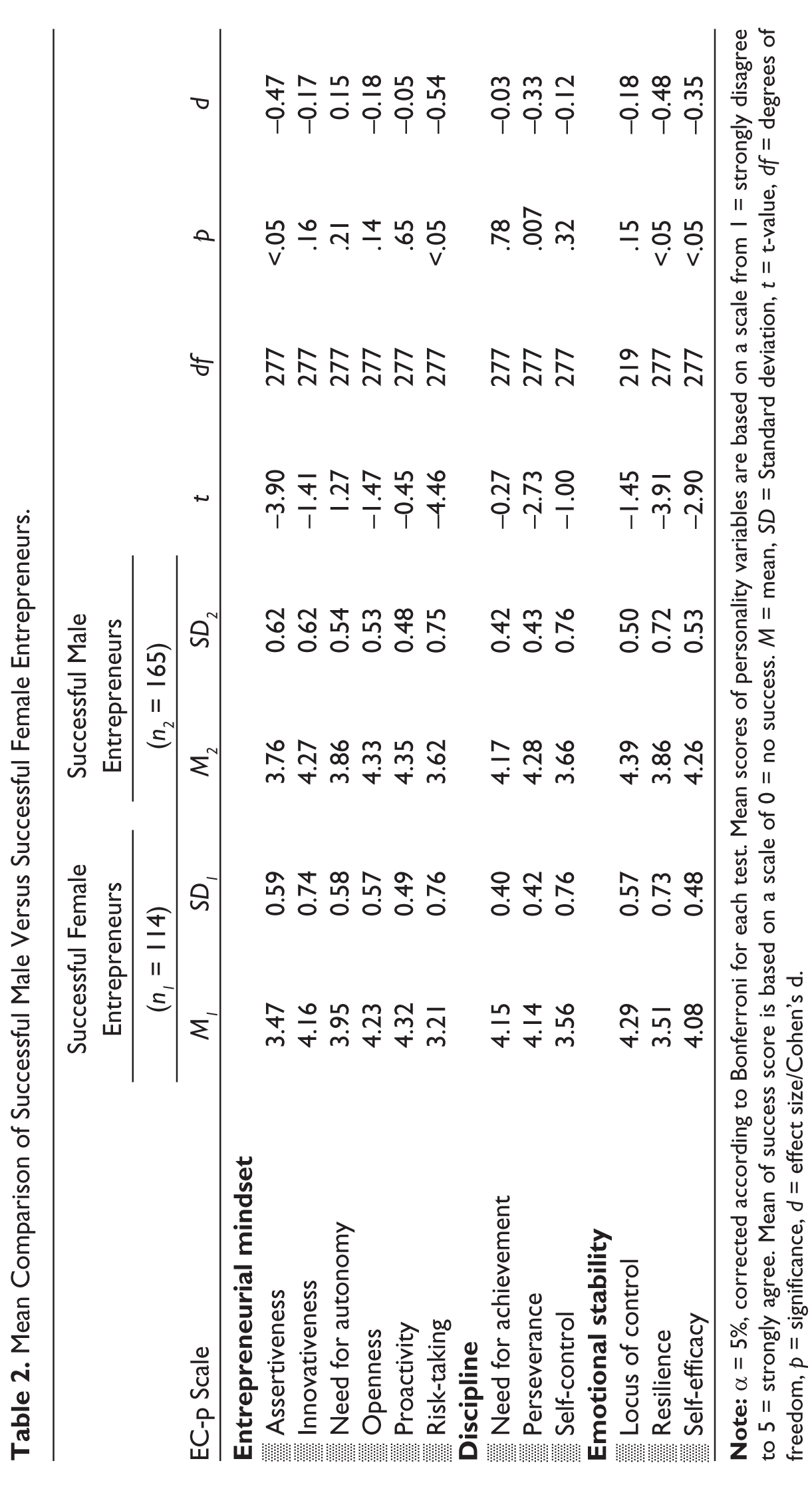
The differences between male and female entrepreneurs were stronger when comparing successful male entrepreneurs with successful female entrepreneurs (Table 2). Successful male entrepreneurs differed significantly from female entrepreneurs in their levels of risk-taking, resilience, assertiveness, and self-efficacy, again with males having higher mean scores than females. Successful female entrepreneurs only scored higher in need for autonomy, compared to their male counterparts; however, this difference was not statistically significant (t(277) = 1.27, p = .21). Taken together, the authors conclude that the observed gender differences among successful male and female entrepreneurs justify a female-specific analysis. Male and female entrepreneurs exhibited contrasting levels in half of the examined personality traits with these distinctions becoming more pronounced when considering solely successful entrepreneurs. This suggested that successful female entrepreneurs differed from their male counterparts and thus, argued for a comprehensive exploration of female entrepreneurs. All significant results were below the Bonferroni-corrected p value of p = .0042.
Mean Comparison of Successful Male Versus Successful Female Entrepreneurs.
Descriptive Statistics and Correlations
Intercorrelations and reliabilities of the EC-P scales for the female sample are shown in Table 3. Overall, reliabilities (Cronbach’s α) were satisfactory. Nearly all personality traits showed significant intercorrelations. Self-efficacy (r = 0.30, p < .05) showed the highest correlation with success among female entrepreneurs, while proactivity (r = 0.29, p < .05) had the second strongest correlation for females. Success did not correlate with resilience, assertiveness, risk-taking, and self-control (r = |0.01–0.07|, p > .05) for female entrepreneurs.
Intercorrelations and Reliabilities of the EC-p Scales and Overall Success.
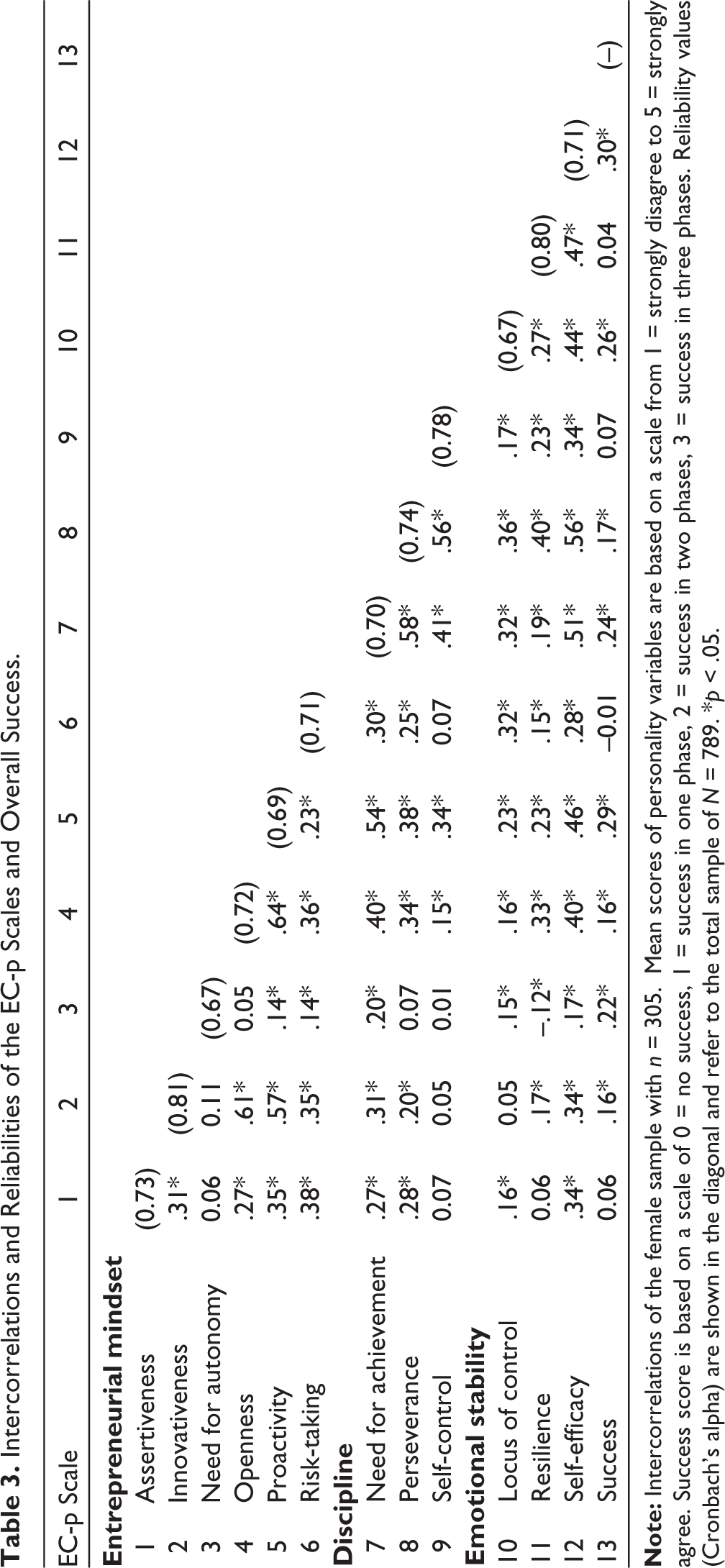
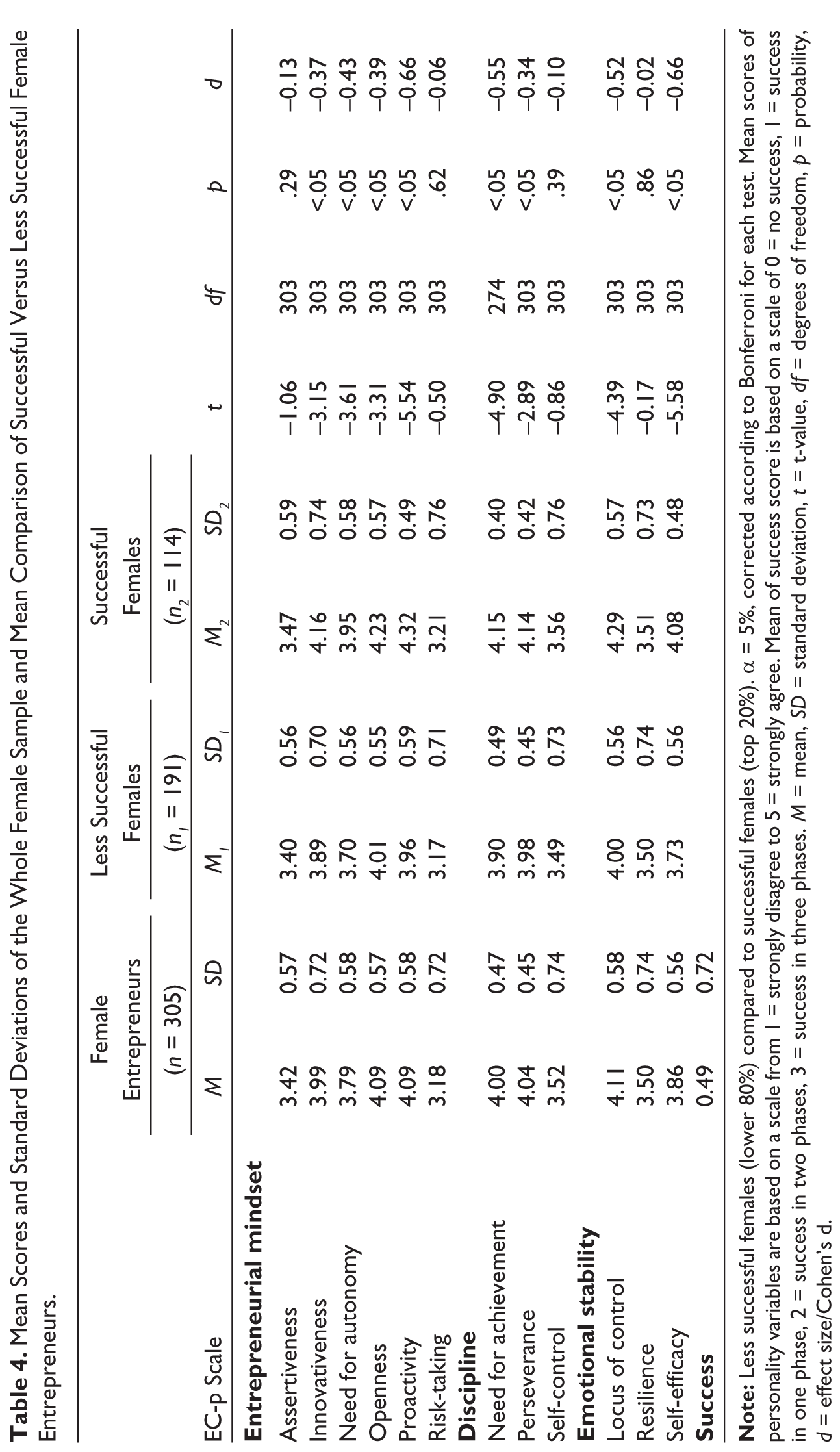
The intercorrelations for the male and female samples are presented in the appendix, Table A1. The mean scores and standard deviations for the EC-P scales for female entrepreneurs in general are presented in Table 4.
Interindividual Differences of Successful and Less Successful Female Entrepreneurs
To compare successful female entrepreneurs with less successful female entrepreneurs independent t-tests with Bonferroni-corrected alpha level were conducted (see Table 4). Research question 1 examines the difference in personality traits for successful and less successful female entrepreneurs. The analyses revealed that successful female entrepreneurs were more persevering, more innovative, more open, more proactive, and showed higher scores for locus of control, need for achievement, self-efficacy, resilience, and need for autonomy compared to less successful female entrepreneurs. The differences in self-efficacy, proactivity, locus of control (t(303) = |4.39–5.58|, p < .05, d = |0.52––0.66|), and need for achievement (t(274) = –4.90, p < .05, d = –0.55) showed the largest effect sizes, followed by need for autonomy, openness, innovativeness, and perseverance (t(303) = |2.89–3.61|, p < .05, d = |0.34–0.43|). All significant results were below the Bonferroni-corrected p value of p = .0042. No differences were found for resilience, assertiveness, risk-taking, and self-control. For exact values, see Table 4.
Mean Scores and Standard Deviations of the Whole Female Sample and Mean Comparison of Successful Versus Less Successful Female Entrepreneurs.
Validity of Personality Differences Throughout the Entrepreneurial Journey
To analyse the importance of personality during the entrepreneurial process for female entrepreneurs, stepwise regression analyses have been conducted (see Table 5). Multicollinearity could be excluded, as the variance inflation factor did not exceed a value of five (Backhaus et al., 2016).
Stepwise Regression Analysis with Phase-specific Success Criteria for Female Entrepreneurs.
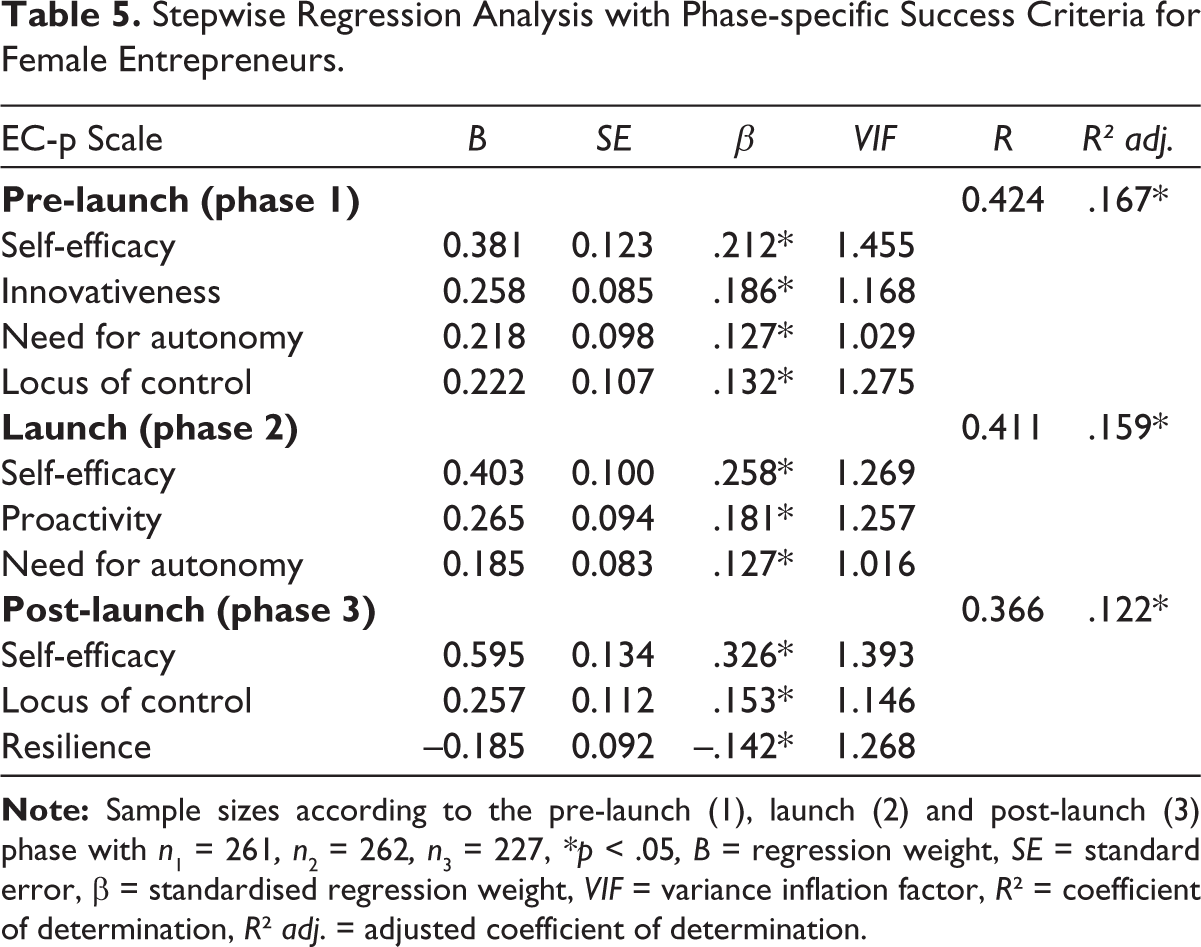
For the launch phase, again self-efficacy and need for autonomy were important as well as proactivity (R² adj. = 0.159, p < .05). During the post-launch phase, self-efficacy, locus of control and resilience reached significance (R² adj. = 0.122, p < .05). Unexpectedly, resilience showed a negative relationship with phase-specific success (β = –0.142, p < .05). Altogether, the regression analyses revealed different patterns of personality traits for the different phases.
Discussion
What do females need to become a successful entrepreneur? As research on this question is sparse, the present study was designed to gain a better understanding of successful female entrepreneurship, specifically on the role of personality traits in female entrepreneur’s overall and phase-specific success.
Preliminary analyses indicated that adopting a female-specific perspective is justified, as male and female entrepreneurs exhibited divergent personality traits while displaying similar levels of success. Additionally, successful female entrepreneurs demonstrated distinct personality traits when compared to their male counterparts, with risk-taking being particularly notable. This implied that successful female entrepreneurs differed from their male counterparts, and thus enabled us to deep dive into the personality traits of female entrepreneurs. Concerning the main analyses, this study found that successful female entrepreneurs differed from their less successful peers in several key personality traits. Proactivity, self-efficacy, need for achievement, and internal locus of control were found to be the most important traits for success, along with a higher need for autonomy, higher innovativeness, openness, and perseverance. Risk-taking, a commonly studied trait in entrepreneurial research, was not found to be a significant success driver for female entrepreneurs in this study. Furthermore, the importance of these personality traits varied across different phases of the entrepreneurial journey. Self-efficacy was important in every entrepreneurial phase, whereas the need for autonomy was only important for the pre-launch and the launch phase. Locus of control was relevant for pre- and post-launch, but not during the launch phase. In addition to the aforementioned traits, pre-launch success was significantly positively related to innovativeness and launch success was positively related to proactivity. Post-launch success was significantly related to resilience, however, negatively.
Theoretical Implications
The findings offer four major theoretical implications. First, the majority of the results were in line with previous research. The study emphasised the crucial role of self-efficacy, need for autonomy, and internal locus of control, proactivity, and innovativeness for overall and phase-specific success. Second and third, the unexpected findings and the resulting implications regarding risk-taking for female entrepreneurs and the negative impact of resilience on post-launch success will be discussed. Fourth, the general role of personality for entrepreneurial success will be discussed.
First and in line with previous results, this study especially emphasised the importance of self-efficacy for female entrepreneurs for both, overall and phase-specific success. Previous research suggests that in contrast to males, females suffer from a less pronounced self-efficacy and belief in their entrepreneurial skills (Cabrera & Mauricio, 2017; Koellinger et al., 2013; Molino et al., 2018; Sullivan & Meek, 2012; Wilson et al., 2009). A possible explanation for this may be that females experience lesser social support and role models relevant to entrepreneurship than males (Karimi et al., 2013; Rey-Martí et al., 2015; Zhao et al., 2005). Research has also found that self-efficacy is especially pronounced in successful entrepreneurs (Baron et al., 2016). Thus, a high level of self-efficacy is especially important for successful female entrepreneurs as well. While previous research emphasised the relevance of self-efficacy for successful entrepreneurs (e.g., Cabrera & Mauricio, 2017; Koellinger et al., 2013; Molino et al., 2018; Sullivan & Meek, 2012), this study reinforced the importance of this trait as a key success factor for female entrepreneurs.
In line with previous research, successful female entrepreneurs showed a higher need for autonomy than their less successful peers. Also, the need for autonomy was only important for the first two phases of the entrepreneurial journey. Earlier studies found, for example, that this personality trait is a special pull factor for females and that they are more inclined to start their own businesses because of their desire for autonomy than males (Cabrera & Mauricio, 2017; Nguyen et al., 2020; Sullivan & Meek, 2012). Women often view running their own businesses as a means to achieve autonomy, independence, and a better work-life balance. Additionally, self-employment allows them to pursue tasks that they find meaningful and break free from societal structures that restrict them (Baron et al., 2016). Furthermore, drawing from self-determination theory, engaging in entrepreneurial activities can enhance a person’s sense of autonomy, which, in turn, can contribute to their well-being (Shir et al., 2019).
Another trait that was found to be crucial for females’ overall and phase-specific success was an internal locus of control. This complies with previous research on successful (female) entrepreneurs (Baron et al., 2016; Brandstätter, 2011; Frese & Gielnik, 2014; Mitchelmore & Rowley, 2013; Pérez-Macías et al., 2021). In this study, an internal locus of control was especially important before and after the launch of the business, but not crucial for the launch phase itself. The belief in one’s own skills and activities might be especially important when deciding to launch a business in the first place and then to sustain a business in the long term. However, the launch phase itself is characterised by operational activities and busyness and other traits might become more important than having this belief in one’s skills, such as proactivity. This study indeed showed that proactivity was positively associated with launch success and with overall success. Various empirical and conceptual works highlighted proactivity as one of the key assets of successful (female) entrepreneurs (Frese & Gielnik, 2014; Mitchelmore & Rowley, 2013; Pérez-Macías et al., 2021; Sullivan & Meek, 2012). Because women are stereotypically rather seen as shy, restrained, and less competitive (e.g., Grosse et al., 2014; Rudman & Phelan, 2008) a proactive personality, especially in a highly competitive environment like the start-up scene, is crucial for female entrepreneurs’ success.
This study also reaffirmed the importance of innovativeness and openness as central traits for female entrepreneurs. This finding is in line with previous research that highlighted the importance of those traits for successful entrepreneurs (Brandstätter, 2011; Frese & Gielnik, 2014; Rauch & Frese, 2007b; Zhao & Seibert, 2006; Zhao et al., 2010). Especially during pre-launch, innovativeness is crucial, as new business ideas and opportunities have to be detected, developed, and pushed forward (Baron & Markman, 2005).
Overall, most of the results are in line with previous research and this study reaffirmed the relevance of the mentioned traits for female entrepreneurs. However, future research and practitioners should ideally focus on a process view and not contemplate entrepreneurship as a mono-phased phenomenon.
The second theoretical implication made in this study concerns the role of risk-taking for female entrepreneurs. The results suggest that risk-taking is not a driver for success among female entrepreneurs, contradicting previous research that attributed the lower entrepreneurial intentions, activities, or success of females to their higher risk-aversion (Fossen, 2012; Koellinger et al., 2013; Mitchelmore & Rowley, 2013; Rey-Martí et al., 2015). This finding may be explained by the fact that risk-taking might be more important for the preference for self-employment only, but not for actual involvement (Verheul et al., 2012; Zhao et al., 2010). In the current study, the authors analysed data from actual female entrepreneurs in phases two (launch) and three (post-launch), that is, those who have actually already started a business and not those who only intend to do so. Another possible explanation for this finding could be the definition of risk-taking. Other researchers point to an entrepreneur’s characteristics in such a way that he or she, especially in the beginning, needs to have ‘the ability to function under uncertainty and risk’ (Minniti & Naudé, 2010, p. 280). Thus, maybe it is not risk-taking per se that is important for (female) entrepreneurial success, but rather the willingness to take risks as well as being able to tolerate and cope with uncertainty and risks (Mitchelmore & Rowley, 2013). An internal locus of control could be helpful in this regard as well as high levels of self-efficacy (Cabrera & Mauricio, 2017; Nikolić et al., 2020). The importance of these two personality traits for female entrepreneurs has also been highlighted in this study. It may be possible, that female entrepreneurs’ ‘lack’ of risk-taking may be buffered by higher self-efficacy and internal locus of control. Further studies should investigate this possibility.
The third implication pertains to the role of resilience. Contrary to expectations, resilience negatively influenced post-launch success. This finding may be explained by a suppressor effect that may occur when the observed traits (resilience, self-efficacy, and locus of control) are highly intercorrelated. As these three traits were assigned to the same superordinate factor of ‘emotional stability’ in the factor analysis, there is likely a substantial overlap among them. When all three traits were included in a joint regression analysis, resilience caused a negative suppression, leading to a significant, but non-existent negative influence on post-launch success. Furthermore, the negative suppression increased R², because parts of the error variance of self-efficacy and locus of control were bound in resilience. Another explanation for this finding might be that certain aspects of resilience, such as rigid adherence and endurance, may have a negative impact, particularly when the joint variance of locus of control and self-efficacy is subtracted. Overall, these results highlight the need for further investigation into the specific aspects of resilience that are relevant to entrepreneurial success.
The fourth and last implication concerns the role of personality for entrepreneurial success in general. Between approximately 12% and 17% of the variance in phase-specific success could be accounted for personality, indicating that factors beyond personality are relevant when founding a company. The variance accounted for also got smaller from phase to phase, suggesting that the importance of personality traits may decrease over time. This is consistent with previous research that has highlighted the decreasing importance of personality traits during the launch and post-launch phases of entrepreneurship (Korunka et al., 2010; Rathgens, 2012). Personality seems to be more relevant in the decision to pursue an entrepreneurial career, rather than during the later stages of business development.
Practical Implications
The study has several practical implications. First, a female-specific lens for both, practice and research, is needed. For female entrepreneurs, different specific personality traits seem to operate as success drivers. Therefore, female-specific coaching formats are recommended.
Second, self-efficacy is crucial for overall and phase-specific success for female entrepreneurs. Hence, training or coaching programs should focus on increasing self-efficacy and belief in their entrepreneurial skills, particularly through entrepreneurial education, which has been shown to be particularly beneficial for female entrepreneurs (Pérez-Macías et al., 2021; Wilson et al., 2009). Practitioners can draw on Bandura’s (1997) self-efficacy framework to strengthen self-efficacy by providing mastery experiences, role models, and social persuasion, and by training in the awareness of physiological and affective states. Additionally, the proposed framework on entrepreneurial education of Günzel-Jensen et al. (2017) to foster entrepreneurial self-efficacy in students could be helpful, when designing support offers to foster self-efficacy in female entrepreneurs.
Furthermore, coaching and training should be tailored to the needs of female entrepreneurs at different stages. Not only self-efficacy, but also other traits, for example, innovativeness, proactive behaviour, and an internal locus of control can be increased via training as research in different areas has shown (Abdullah et al., 2014; Huang & Ford, 2012; Tyler et al., 2020; Verheul et al., 2012). In general, the results highlight the importance of considering the entrepreneurs’ personality and the stage of the entrepreneurial process when designing entrepreneurial coaching and training programs.
Limitations and Future Research Directions
Although the present results clearly support a female-specific process design, at least five potential limitations should be taken into consideration. First, this study is based on cross-sectional and self-reported data. Future research should enhance a longitudinal design and rely on multiple data sources to avoid common method bias. Second, the data might be influenced by the overrepresentation of successful entrepreneurs. It is reasonable to assume that only those entrepreneurs who participated in the study were rather successful. Third, the study focused on the perceived success of female entrepreneurs as the outcome variable. Although financial indicators are important in the assessment of entrepreneurial success, various studies showed that start-up success can also be operationalised by other aspects, such as entrepreneurs’ sense of well-being, their subjective perception of success, or their personal fulfilment (Baron et al., 2016; Molino et al., 2018; van der Steege & Stamm, 2014; Wach et al., 2016). Also, financial indicators are only of little informative value, especially in early start-up phases, and do not sufficiently depict phase-specific entrepreneurial success (Hell & Gatzka, 2018). For this reason, this study focused on perceived success as an outcome variable instead. However, future studies should consider subjective and objective assessments of entrepreneurial success to gain a better understanding on both, the soft and hard success factors for female entrepreneurs.
Fourth, this study had a close focus on personality. In reality, founding a company is a complex and multiply determined activity (Rauch & Frese, 2007a). Therefore, there are far more aspects influencing early and later start-up success than only personality, for example, access to funding, team composition, personal socio-economic status, and micro- and macroenvironmental country-specific factors (e.g., Cabrera & Mauricio, 2017). The last aspect in particular is highly important, considering that self-employment is strongly influenced by country-specific or cultural aspects. Since the respondents came from the DACH region, the results are mainly applicable to the Western cultural area.
Fifth, while advocating for a female-specific perspective in entrepreneurial practice and research, the preliminary analyses of this study also revealed an overlap in the personality traits crucial for both male and female entrepreneurs’ success (e.g., need for autonomy, proactivity, need for achievement, perseverance, self-control, and locus of control). Females and males therefore can attain equal levels of success when they score high on this set of personality traits. Nevertheless, the present analyses also underscore that certain personality traits either lack nuance for predicting entrepreneurial success or manifest differently among successful female entrepreneurs compared to their male counterparts, especially risk-taking. Consequently, future research should frequently incorporate gender as a variable to deepen the understanding of the shared similarities and distinctive differences between male and female entrepreneurs.
Conclusion
The present study aimed to identify crucial personality traits for successful female entrepreneurs and how the importance of different personality traits changes throughout the entrepreneurial journey. The study further provided insights into differences as well as overlaps in the personality traits that are conducive to male and female entrepreneurial success. The results of the study suggested that self-efficacy is a critical success factor for female entrepreneurs in all phases of the entrepreneurial process, while other personality traits, such as proactivity, locus of control, need for autonomy, innovativeness, and need for achievement are of particular importance for specific phases. In contrast to previous research and to their male peers, risk-taking was not found to be crucial for female entrepreneurs who have already decided to start a business. It is important to note that the identified personality traits should not be seen as a certain typology of ‘the’ female entrepreneur, but should rather be interpreted in terms of a strengths-and-weaknesses profile. Overall, this study highlighted the need for future research and entrepreneurial practice to consider the dynamic process perspective to best support female entrepreneurs before, during, and after the launch of their start-ups.
Footnotes
Acknowledgements
The authors thank Aleksandra Cremer from the University of Applied Sciences Bonn-Rhein-Sieg (Germany) for her preparatory work.
Data Availability Statement
The data presented in this study are available from Benedikt Hell upon reasonable request.
Declaration of Conflicting Interests
The authors declared no potential conflicts of interest with respect to the research, authorship and/or publication of this article.
Funding
The authors received no financial support for the research, authorship and/or publication of this article.