




Abstract
This study focused on the context in which entrepreneurship in the cultural and creative industries (CCI) takes place. We investigated entrepreneurs’ inspiration, which refers to a specific type of motivation that allows the transformation of creative ideas into creative products. To explain this, we operationalised ‘passion for work’, which measures how passionately engaged entrepreneurs are with their work, as well as ‘localised passion’, which measures the passion others in one’s proximity have for their work. Ten locations throughout the Netherlands composed of creative entrepreneurs made up the setting of this study. Our results show that localised passion has two components (passion atmosphere and passion in others), which have a positive effect on inspiration. Moreover, there is a mediating role of passion for work in this relationship.
Scholars studying entrepreneurship are increasingly interested in the context in which entrepreneurship takes place (e.g., Hindle, 2010; Parkinson, Howorth, & Southern, 2017; Williams & Vorley, 2015; Wright & Marlow, 2011). Traditionally, scholars studying entrepreneurs have focused on individual traits and behaviours (Brockhaus, 1982) in an effort to investigate who the entrepreneur is. This approach has delivered, among other things, the understanding that autonomy plays a central role (Brockhaus, 1982) and that the personal drive of entrepreneurs is key to their success (Cardon, Wincent, Singh, & Drnovsek, 2009). However, despite their need for independence, entrepreneurs are still individuals who generate ideas and perform their activities embedded in social and professional environments. Context, or in other words, the ‘circumstances, conditions, situations or environments that are external to the respective phenomenon and enable or constrain it’ (Welter, 2011, p. 167), may be an important factor in many entrepreneurial activities. A focus on the context may generate a deeper understanding of particular traits and behaviours and may highlight the influence of environmental elements such as location, while also providing insights into how entrepreneurs implement mechanisms related to their entrepreneurial drive.
An entrepreneur’s motivational state of mind plays a central role in his/her organisational success (Amabile, 1997; Shane, Locke, & Collins, 2003) and context may influence that motivational state. How entrepreneurs feel about their entrepreneurial activities is highly important in connecting an entrepreneur’s creativity to innovative organisational outcomes (Cardon et al., 2009). Connecting context to motivational aspects is not uncommon. For example, in social psychology research it has been well established that the presence of others influences the performance of tasks (Zajonc, 1965). The economic geography literature mentions the influence of the buzz or feel of a location, created by interactions between individuals (Bathelt, Malmberg, & Maskell, 2004). Nevertheless, while entrepreneurs’ attitudes, feelings and emotions have received considerable attention, it is still unclear how such motivational factors are formed and sustained (e.g., Baum & Locke, 2004; Foo, Uy, & Baron, 2009; Segal, Borgia, & Schoenfeld, 2005) and how other individuals may provide a context for entrepreneurs’ motivations (Carsrud & Brännback, 2011).
In this study, we focus on entrepreneurs working in the cultural and creative industries (CCI), co-located in creative business centres (CBCs) and the relationship between contextual factors and motivation. We refer to ‘inspiration’ as the motivational state of the entrepreneur that is ‘evoked in response to getting a creative idea and that compels the individual to transform the creative idea into a creative product’ (Thrash, Maruskin, Cassidy, Fryer, & Ryan, 2010, p. 470). As individuals arguably do their most creative work when they feel passionate (Amabile & Fisher, 2000), it becomes imperative in studying entrepreneurs in the CCI to understand passion and the relationship between passion and inspiration. Passion is at the heart of entrepreneurship (Cardon, Gregoire, Stevens, & Patel, 2013) and is defined as ‘consciously accessible intense positive feelings experienced by engagement in entrepreneurial activities associated with roles that are meaningful and salient to the self-identity of the entrepreneur’ (Cardon et al., 2009, p. 517). It can nurture creativity and the recognition of new opportunities (Baron, 2008), enhance mental activity and provide meaning to everyday work and has been argued to be the fuel for entrepreneurial activities (Brännback, Carsrud, Elfving, & Krueger, 2006). We propose to add contextual attributes concerning place to the conceptualisation of passion. This ‘localised passion’ has two components: the first is passion as a characteristic of the CBC (passion atmosphere) and the second is the perceived passion in other entrepreneurs in the CBC (passion in others). Next to this, we operationalise ‘passion for work’ as a type of passion that is personal.
We take on the assumption that the motivations of entrepreneurs in the CCI are complex, as their activities are not strongly founded in the exploitation of opportunities, but more in creative entrepreneurs’ need for autonomy and creativity (Amabile, Conti, Coon, Lazenby, & Herron, 1996; Hesmondhalgh & Baker, 2010; Neff, Wissinger, & Zukin, 2005). These entrepreneurs may be somewhat different from those in other industries as they may be less concerned with providing solutions to the needs and wants of consumers when deciding on the characteristics and constructing the quality of the product or service (Colbert, 2003). We argue that localised passion and passion for work are antecedents for inspiration in the processes of new product and service development and will show that passion in others is contagious and inspiring.
Theory
Inspiration
Motivation refers to being energised or activated to do something. In general, motivation theories explain why individuals perform activities in a certain way. We link to the research of Deci and Ryan (2008a), who approach motivation at a macro level; as such, it relates to activities and goals that are not singular, for example, personality development, self-regulation, life goals and aspirations. They discuss types of motivation and social conditions that enhance or diminish motivation for specific activities, rather than amounts of motivation. Their basic assumption is that human motivation is related to culture and the social environment. Furthermore, Deci and Ryan (2008b) argue that intrinsic and extrinsic motivation are tied in with the need for autonomy and competence and that motivational processes are influenced by context, such as social climate and the ambience of a situation. Therefore, we argue that the drive that someone has for his or her entrepreneurial activities is not easily explained by the activity’s intrinsic enjoyment or its extrinsic instrumental value. Motivational mechanisms that allow a broader perspective, rather than a narrow focus on specific tasks and short-term goals, may better explain entrepreneurs’ motivational traits and states in the span of their career. For example, role models can motivate an individual to achieve success. The accomplishments of star athletes, musicians and award-winning scientists are often showcased in an attempt to enhance people’s long-term goals and aspirations (Lockwood, Jordan, & Kunda, 2002). Thrash and Elliot’s (2003) conceptualisation of inspiration, as a motivational state, offers such a broad perspective with respect to the creation of products and services.
In the CCI, entrepreneurs can be seen as persons who are in need of a continuous state of motivation with respect to their work. Artists and other creative individuals are involved in an ongoing creative process and attribute their best work to unknown forces and mechanisms (Ghiselin, 1952; Harding, 1940). Such accounts are generally perceived as ‘inspiration’. Thrash and Elliot (2003) identify three characteristics of inspiration. Inspiration is evoked and triggered by a stimulus object. The individual has little control over this state and it seems to arise without an apparent cause. It implies transcendence beyond the ordinary concerns and limitations of routine human behaviour and an increasing awareness of new possibilities. Moreover, inspiration entails motivation; it compels individuals to realise their ideas. As such, inspiration may be applied directly to the specific domain of creative activity (Oleynick, Thrash, LeFew, Moldovan, & Kieffaber, 2014). Thus, inspiration is the motivational response to a creative idea and the process that transforms creative ideas into creative products and services, rather than the source of the creative idea (Oleynick et al., 2014).
Early studies referencing inspiration did not fully conceptualise inspiration as a motivational state and were more concerned with its origins. Rothenberg and Hausman (1976) noted that in Greek mythology, the Muse was known to whisper into a poet’s ear, delivering knowledge and the skills to communicate it. In the organisational literature, early studies of inspiration were simplified and focused on the inspiring qualities of leaders (e.g., Shamir, House, & Arthur, 1993). Taylor and Lobel (1989) demonstrated how one’s peers may inspire. They found that cancer patients are inspired by other patients who are doing better than they are. Other studies indicate that inspiration may also be evoked by specific objects when an actor is open to perceiving or experiencing inspiration (May, 1975; Rogers, 1961). Recent empirical studies on inspiration have mostly been concerned with its role as a mediator or moderator of eudemonic states. Souitaris, Zerbinati and Al-Laham (2007) found that feeling inspired is central to entrepreneurship education and increases students’ intention to start a business. It is closely related to personal growth and optimal functioning in the work place (Straume & Vittersø, 2012), is key in obtaining goals (Milyavskaya, Ianakieva, Foxen-Craft, Colantuoni, & Koestner, 2012) and influences positive affect and vitality (Thrash, Elliot, Maruskin, & Cassidy, 2010). Moreover, Thrash, Maruskin et al. (2010) investigated writing processes and established that generating creative ideas and being inspired are distinct and that ideas precede inspiration. In this study, we build on these more recent studies and Thrash and Elliot’s (2003) work by approaching inspiration as a specific type of motivational state that is connected to the realisation of ideas.
In addition, studies in the field of geography hint at the importance of location as the context of inspiration. Drake (2003) provides anecdotal evidence for the relationship between place and individualised creativity and argues that the attributes of localities can be considered a catalyst for creativity. He suggests that next to visual materials and stimuli, the creative atmosphere created by co-located creative enterprises is conducive to individual creativity. Within economic geography, it has been argued convincingly that creative entrepreneurship needs to be understood as a socially and spatially embedded process, resulting in certain places at certain times developing as foci of remarkable creativity and entrepreneurship (Audretsch & Belitski, 2013; Pratt & Jeffcutt, 2009; Scott, 2006). They suggest that the entrepreneurs co-located in a place can be seen as an attribute of such locations, which may subsequently be important in evoking inspiration as a motivational state.
Passion
It is argued that passion fuels motivation, enhances well-being and provides meaning (Vallerand et al., 2003). Earlier studies discuss passion in relation to creativity (Goldberg, 1986) and have asserted that passion is linked to personal goals and emotions (Frijda, Mesquita, Sonnemans, & Van Goozen, 1991). Vallerand et al. (2003, p. 757) define passion ‘as a strong inclination towards an activity that people like, they find important, and in which they invest time and energy’. For an activity to be recognised as something about which the individual is passionate, it has to be a significant part of an individual’s life. When the individual accepts this as being an important part of him or her, such activity is internalised in the identity of the individual (Vallerand et al., 2003). Passion was an underdeveloped concept before Vallerand et al. (2003) established a tool to measure how harmonious or obsessive individuals’ passion is for their favourite activity. This in turn allowed further conceptualisation and measurability of types of passion concerning activities that are reoccurring or ongoing, such as entrepreneurial passion (Cardon et al., 2013) and passion for work (Baum & Locke, 2004; De Clercq, Honig, & Martin, 2013).
Individuals who are passionate about their work act in accordance with their ‘pre-existing capacity for a particular way of behaving, thinking or feeling’ (Linley, Govindji, & West, 2007, p. 9). They use their full potential and are more likely to internalise their work in their identity, being willing to dedicate time and resources to their work (Forest et al., 2012). Liu, Chen and Yao (2011) studied the employees of large commercial banks and a porous metal company and found that harmonious passion mediates the effects of autonomy on creativity. This confirms the assumption that the fundamental human need for autonomy yields motivational forces that can release the human creative potential (Amabile, 1997; Ryan & Deci, 2000) and suggests a crucial role for passion in motivational processes.
Cardon et al. (2009) argue that passionate entrepreneurs may have increased levels of creativity and persistence. Recent studies in the management and organisational literature have developed measures underscoring that passion is a central element in entrepreneurial activities (Cardon et al., 2013), while the passion of entrepreneurs can positively influence the investment decisions of venture capitalists (Chen, Yao, & Kotha, 2009). According to Cardon et al. (2013), passion is the heart of entrepreneurship. It can nurture creativity and the recognition of new opportunities (Baron, 2008), enhance mental activity and provide meaning to everyday work, and it has been argued to be the fuel for entrepreneurial activities (Brännback et al., 2006). Moreover, Cardon (2008) argues that a manager or entrepreneur can positively affect an employee with their passion for work in such a way that passion acts in a contagious manner, inciting the creativity of others. She developed a conceptual model for passion contagion that is based on transformational leadership, emotional mimicry and social comparison.
Passion for Work in the CCI
Entrepreneurial passion in the creative industries may differ from that in other industries as the creator of the product is involved in the development of a product or service from the generation of the idea to deciding on what the marketable characteristics are of a product. Passion in the context of cultural and creative entrepreneurs not only refers to the passion they have for running a business, which is more prevalent in other industries (Thorgren & Wincent, 2015), but more the desire to have their creative processes result in marketable products. These activities may consist of routinisable and non-routinisable activities (Burton, 2003), meaning that passion in this setting includes the day-to-day work of creative entrepreneurs performed in order to turn creative ideas into creative products. In this line, we link to the work of Baum and Locke (2004), De Clercq et al. (2013) and Richie et al. (1997) and their conceptualisation of passion as the ‘extent to which people experience feelings of pleasantness and joy when engaging in intensive work-related activities’ (De Clercq et al., 2013, p. 656). Using this conceptualisation, De Clercq et al. (2013) confirm, for example, that passion for work is related to entrepreneurial intentions.
Localised Passion
We argue that the contagious nature of passion makes it likely that entrepreneurs are affected by the passion of others in their environment and thus the context in which they work. Mowday and Sutton (1993) characterise context as ‘stimuli and phenomena that surround and thus exist in the environment external to the individual’ (p. 198). For Johns (2006), such contextual factors serve as a main effect or interact with personal variables such as states and affect behaviour. Although entrepreneurs have a high need for achievement and independence (Brockhaus, 1982), they of course do not operate and realise their ideas in a vacuum. They are individuals functioning in social and professional environments, influenced by experiences, objects and—more importantly in this study—other people. Social facilitation theory (Zajonc, 1965) confirms that the presence of others improves the performance of simple tasks and undermines the performance of more complex activities. Nevertheless, a larger number of solutions are generated in the presence of others when they are experienced as pleasant (Perry-Smith & Coff, 2011). Moreover, the effects of social facilitation do not always require the direct presence of others. Building on social facilitation theory, Kilduff, Elfenbein and Staw (2010) argue that having rivals benefits tasks for which success is more founded on effort than on precision or accuracy. The early work of Allport (1920) showed that when one person is working visibly hard, others will follow. More recently, as mentioned before, Cardon (2008) has pointed out how passionate employers can transfer this passion to their employees.
We propose that passion exists as a type of local ‘buzz’ that is created by the presence of a larger group of peers centralised in a specific place and that this affects the motivational state of the entrepreneur. It is widely acknowledged that the creative industries are concentrated in cities that provide a creative milieu (Grandadam, Cohendet, & Simon, 2013), which should result in high-quality creative outputs. Similarly, co-located firms are expected to perform better (Asheim, Cooke, & Martin, 2006) than comparable firms that are not co-located. Drake (2003) emphasises the role of place in the creative industries and shows that creative workers characterise the feel of a place or locality as its ‘buzz’. According to Bathelt et al. (2004, p. 38) ‘buzz refers to the information and communication ecology created by face-to-face contacts, co-presence and co-location of people and firms within the same industry and place or region’. One can argue that local buzz has its own characteristics related to its own outcomes; for example, innovative buzz may lead to the creation of innovative products. Buzz consists of specific information and continuous updates of this information and intended and unanticipated learning processes in organised and accidental meetings. Actors continuously contribute to and benefit from the diffusion of information, gossip and news by just ‘being there’. We particularly argue that face-to-face contact, co-presence and co-location are the windows through which passion is recognised and affects inspiration. In locations with a high concentration of entrepreneurs, buzz may take on the characteristics of these entrepreneurs as they make up the activity of the location. We conceptualise localised passion as an accumulation of the passion of individuals centralised in one location that can be noticed as ‘something in the air’. This consists of two dimensions: a ‘passion atmosphere’ indicating the particular feel of a place and ‘passion in others’ denoting the appreciation of passion for work of other entrepreneurs in the location.
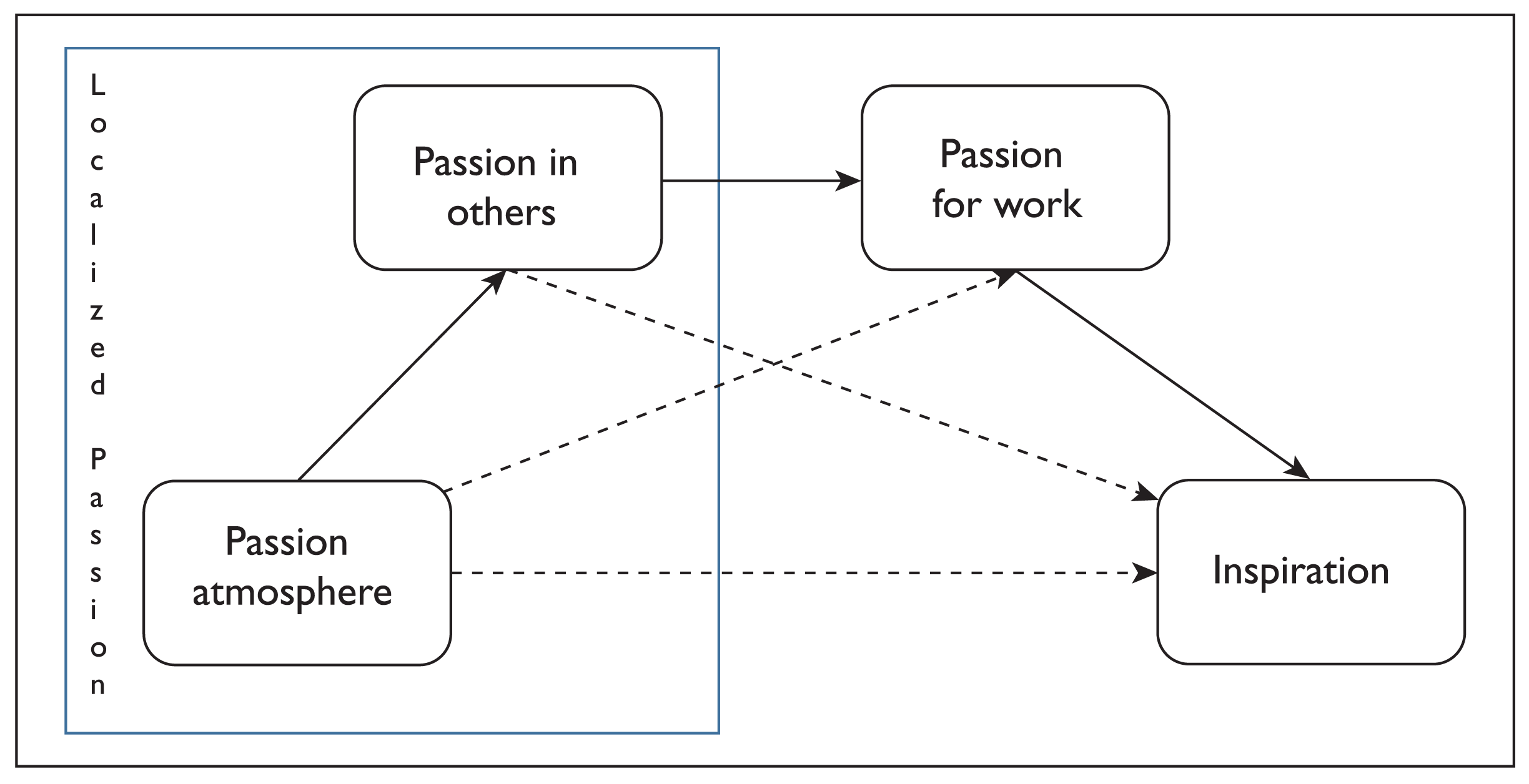
Taking into account that one entrepreneur may be more open to experiencing local buzz than another and that one may be more passionately engaged in entrepreneurial work than others, we investigate if localised passion has a positive effect on inspiration and if this is mediated by the entrepreneur’s passion for work. As mentioned before, inspiration is evoked and sustained by a trigger or stimulus, which can be an object, act or person (Thrash & Elliot, 2003). We argue that the locality and its characteristics are also a stimulus for feeling inspired to turn creative ideas into creative products. As such, localised passion may serve as a context that evokes inspiration. In addition, the passion that the entrepreneur has for his/her entrepreneurial activities, such as new product and service development, may already motivate, that is, inspire, the realisation of their ideas. We propose a three-path model (Figure 1) in which passion atmosphere is mediated first by passion in others and second by passion for work before it influences inspiration. [insert figure]
Research Setting and Data Collection
We examined entrepreneurs in 10 CBCs in the Netherlands. These 10 locations are members of the Dutch Creative Residency Network, a partner in our research project. At the time of data collection (April 2015 to August 2015), the Dutch Creative Residency Network had 24 members and represented 1500 creative entrepreneurs. Our partner CBCs were spread throughout the Netherlands and were of different sizes. The managers of these locations rent out office and/or work spaces to creative entrepreneurs. The smallest CBCs in our sample accommodate 50 entrepreneurs and the largest CBC houses 400 entrepreneurs; in combination, our partner CBCs house 998 entrepreneurs.
The backgrounds of the creative entrepreneurs are diverse, including visual arts, preforming arts, food, design and creative marketing companies. These creative entrepreneurs are typically exposed to uncertain and competitive market environments and scarce resources, which demand a high level of radical or incremental innovative efforts. Traditionally, the entrepreneurs renting space at CBCs desire a relatively low-cost housing option and low economic search costs. Furthermore, CBCs have been widely used as a strategy for urban renewal and the reuse of vacant office buildings and factories (Evans, 2009). The CBCs are found across Europe and North America.
All data used in the analysis were obtained through administering the Cultures of Innovation in the Creative Industries (CICI) Survey Part I. The questionnaire mainly focuses on motivational concepts, interactions and housing satisfaction. It was developed based on visits to the participating CBC locations, 10 interviews with managers of the locations, 40 interviews with entrepreneurs housed at these locations, existing scale measurements and a focused literature review. We used existing scales as much as possible. The existing scales were adapted to our setting and translated and back translated, thereby reducing the risk of comprehension problems. In addition, the questionnaire was tested by four entrepreneurs located in CBCs which were not partners in our research project. The questionnaire was available only in Dutch and in an electronic and print version.
Our units of analysis were creative entrepreneurs in CBCs, in other words, those individuals who rent work spaces in CBCs. The managers of the CBC locations were instrumental in notifying the entrepreneurs about our study. In most CBCs, the management distributed an email informing the residents about the CBC’s relationship with the research project and with instructions guiding them to the online questionnaire. After 2 weeks and 4 weeks, follow-up reminders were distributed by the locations’ management and after 6 weeks our research team approached the residents by telephone, requesting them to complete the questionnaire, or the locations were visited and entrepreneurs were personally asked to complete the questionnaire. At one location, the management choose to inform the residents by delivering them a mail package which included a paper version of the questionnaire and an accompanying letter with instructions on how to guarantee their anonymity and informing them about the availability of the online version. The study was framed as an investigation of the importance of CBCs in entrepreneurs’ processes of creativity and innovation. We received 358 responses of which 319 were usable. This makes the response rate 32 per cent.
Measures
Dependent Variable
We measured inspiration using the eight-item scale developed by Thrash and Elliot (2003). This instrument measures the frequency and intensity of inspiration. It contains four stem statements (e.g., I experience inspiration), each followed by an intensity item (how deeply or strongly?) and a frequency item (how often?), measured on a seven-point Likert-type scale. The internal consistency of this scale was high with Cronbach’s α = 0.91. Oleynick et al. (2014) argue that the inspiration scale may be used to assess trait or state inspiration. We treat inspiration as a motivational state with respect to the activities of creative entrepreneurs housed in a specific location.
Independent, Mediator and Control Variables
We developed a new instrument to measure localised passion. This measurement aims to capture (a) the degree to which individuals notice that other individuals at a specific location are passionate about their work and (b) the extent to which the feel of the location is characterised by passion. This instrument was constructed from our personal impressions of CBCs, interviews with location managers, interviews with creative entrepreneurs in our CBC partner locations, the literature (Drake, 2003) and existing scales for entrepreneurial passion (Cardon et al., 2013; Chen et al., 2009). From our own impressions and initial interviews with location managers, we ascertained that these locations may have ‘something special in the air’ and in the interviews preceding our questionnaire we asked participants specifically to describe the ‘buzz’ in the location. The responses indicated the presence of passion and motivation.
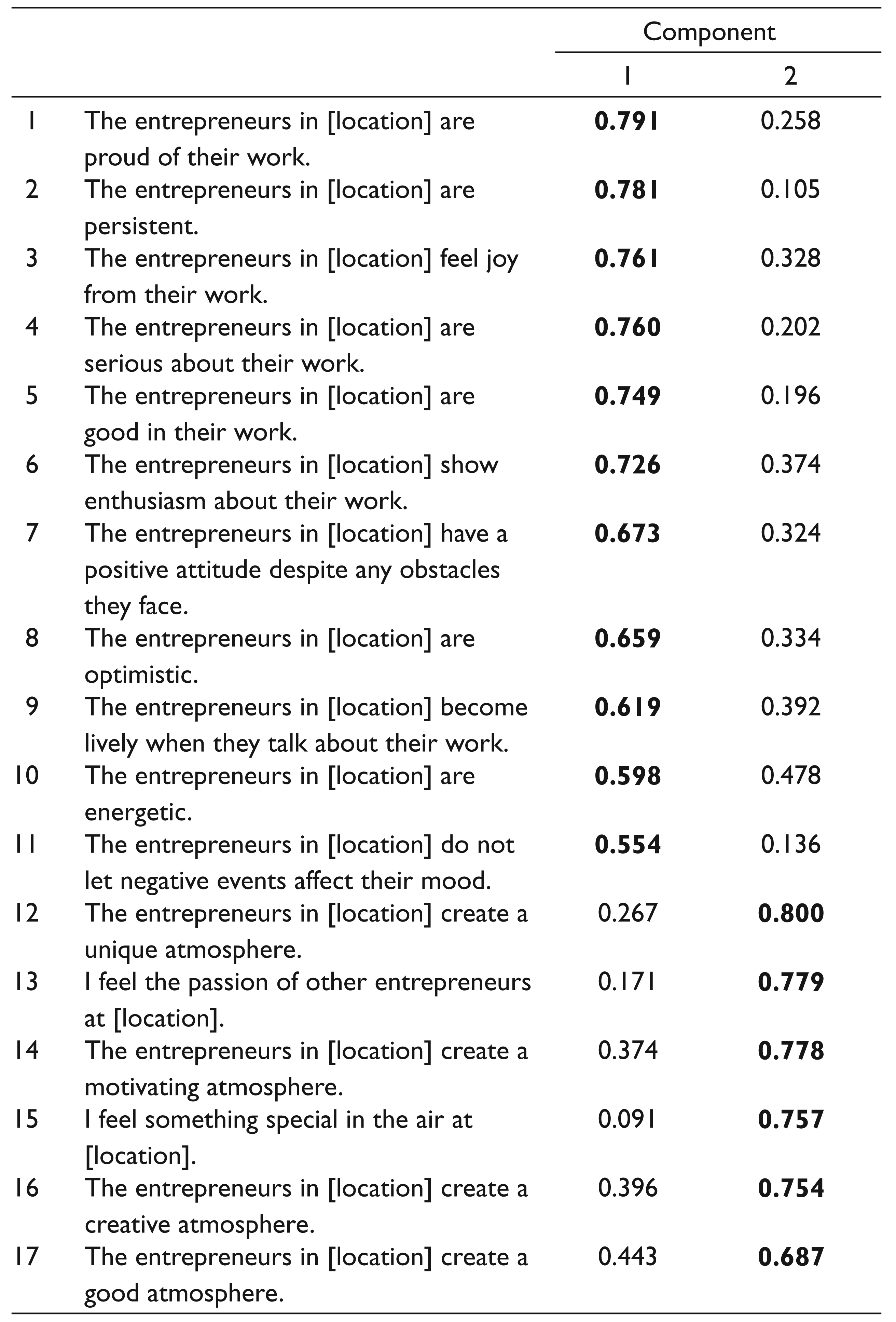
We developed 17 statements and asked our respondents their level of agreement using a seven-point Likert-type scale. Principal component analysis (PCA) was conducted on the 17 items with orthogonal rotation (varimax). The Kaiser–Meyer–Olkin measure verified the sampling adequacy for the analysis: KMO = 0.93 (‘superb’ according to Field, 2009). Bartlett’s test of sphericity (χ² (136) = 3790.54, p < 0.001) indicated that correlations between items were sufficiently large for PCA. An initial analysis was run to obtain eigenvalues for each component in the data. Two components had eigenvalues over Kaiser’s criterion of 1 and in combination explained 61.78 per cent of the variance. Table 1 shows the factor loadings after rotation. The items that cluster on the same components suggest that component 1 represents the passion atmosphere and component 2 the perception of passion in other entrepreneurs. Reliability analysis showed Cronbach’s α = 0.897 for a six-item scale for the first component and resulted in the exclusion of one item (Table 1 item 7) from the second component, providing a scale with Cronbach’s α = 0.925.
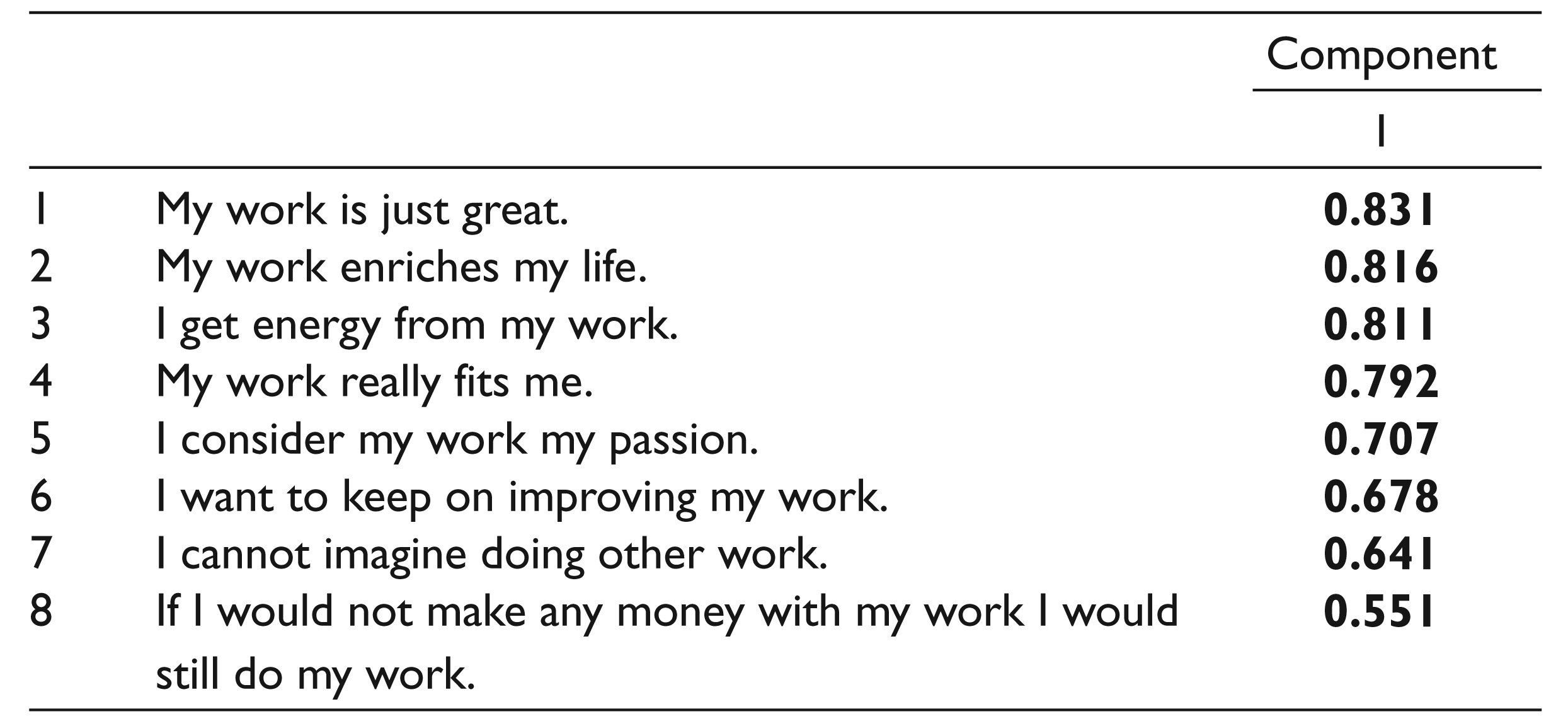
We developed a new instrument to measure passion for work, that is, how passionate the creative entrepreneurs are about their work with respect to their daily product and service development activities. The passion instrument was constructed on the basis of interviews with creative entrepreneurs in our CBC partner locations. The interviewees often revealed how passionate they were about what they do, for example, ‘I am really passionate about …’, ‘it is just great to…’ and ‘I can’t imagine not doing this’. We developed eight statements from the interviews and sought our respondents’ level of agreement using a seven-point Likert-type scale. PCA was conducted on the eight items. The Kaiser– Meyer–Olkin measure verified the sampling adequacy for the analysis: KMO = 0.898 (‘great’ according to Field, 2009). Bartlett’s test of sphericity (χ² (28) = 1114.27, p < 0.001) indicated that the correlations between items were sufficiently large for PCA. An initial analysis was run to obtain eigenvalues for each component in the data. Table 2’: One component had eigenvalues over Kaiser’s criterion of 1 and explained 53.95% of the variance. Table 3 shows the factor loadings. Reliability analysis resulted in the exclusion of one item (Table 1 item 8) for the component and provided a seven-item scale with Cronbach’s α = 0.854.
Rotated Factor Loadings Localised Passion
Rotated Factor Loadings Passion for Work
This instrument differs from Cardon et al.’s (2013) entrepreneurial passion scale, which in essence measures an entrepreneur’s contentment with starting new ventures and investigating market opportunities, but shows similarities with Houlfort et al.’s (2015) passion for work scale, which is an adapted version of Vallerand’s et al. (2003) harmonious and obsessive passion scale. Because entrepreneurship in the CCI enables a high rate of new product development that is often detached from consumers’ needs and wants and closer to the mission of the entrepreneur (Colbert, 2003), our concept of passion work is closer to previous studies (Baum & Locke, 2004; De Clercq et al., 2013) than measured passion that reflects the extent to which people love their work.
In addition we constructed control variables for the respondents’ age, the number individuals working in the organisation (organisation size), how often the entrepreneur interacts with other entrepreneurs in the location (interaction, measured on a six-point scale starting with ‘less than once a month’ and ending with ‘twice a day or more’) and dichotomous variables for gender (1 for male and 2 for female) and CBC location.
Results
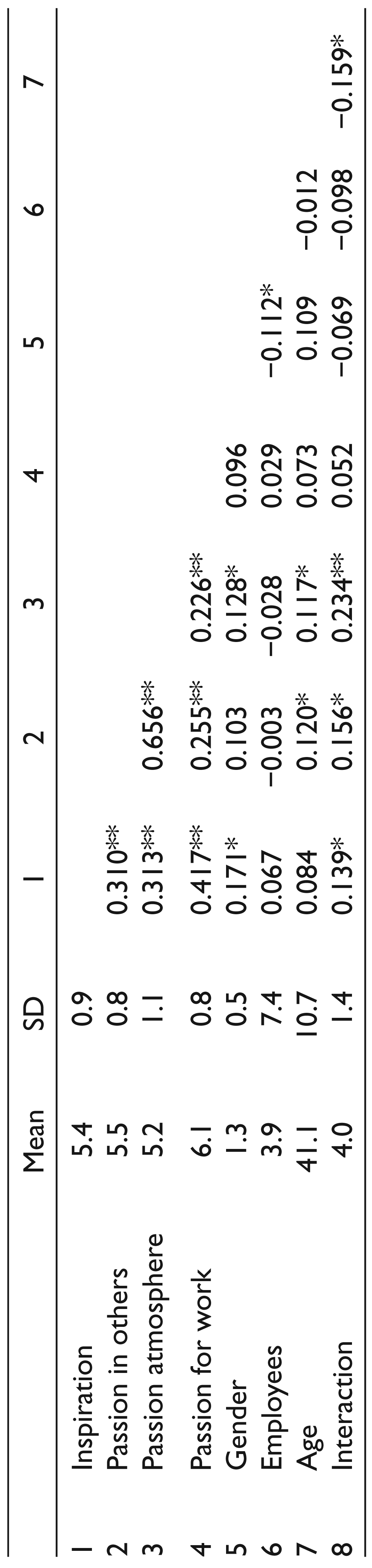
Table 3 reports the means, standard deviations and correlations of the variables. The table shows significant correlations between the dependent, independent and mediator variables. Inspiration is significantly correlated with passion in others (r = 0.313), passion atmosphere (r = 0.310) and passion for work (r = 0.417), with p < 0.01 in all cases. Passion atmosphere is significantly correlated to passion in others (r = 0.656) and passion for work (r = 0.226), with p < 0.01. Also, passion in others is significantly correlated to passion for work (r = 0.226, p < 0.01).
Correlations
We tested a three-path mediation model (passion atmosphere → passion in others → passion for work → inspiration) using a causal step approach, see Table 4.. We extended Baron and Kenny’s (1986) single mediator method to a three-path model, as the total effect of our dependent variable (passion atmosphere) on our independent variable (inspiration) was significant (Taylor, MacKinnon, & Tein, 2008) (Model 3a: β = 0.245, p < 0.001). We also found that the relationship between the independent variable and the dependent variable and the first mediator variable and the second mediator variable became non-significant and the β value was reliably reduced when controlling for the mediator. We found significant relationships between passion atmosphere and passion in others (Model 1: β = 0.658, p < 0.001), passion in others and passion for work (Model 2b: β = 0.188, p < 0.01) and passion for work and inspiration (Model 3c: β = 0.338, p < 0.01). As expected, our statistical analysis shows that all paths are positive and significant, indicating that passion atmosphere effects inspiration first through passion in others and second through passion for work. In addition, it is interesting to note that our results do not show a significant relation between our interaction variable and inspiration in the models tested.
Discussion and Conclusion
Turning creative ideas into creative products or services is a crucial activity for the creative entrepreneur. We consider inspiration to be the motivational response to a creative idea, preceding this process of transformation (Oleynick et al., 2014). This article has investigated the role of the context in which the motivations of entrepreneurs take shape. For this, we approached motivations at the macro level to gain a better understanding of the realisations of creative ideas with respect to new product and service development. Overall, entrepreneurs are often characterised as being motivated by a high need for achievement and independence (Brockhaus, 1982) and this is generally connected to a theoretical perspective that focuses on individual characteristics. However, we argue and show that individuals in the entrepreneur’s environment also influence the entrepreneur’s motivation or drive in the realisation of creative ideas.
Multiple Regression Analysis
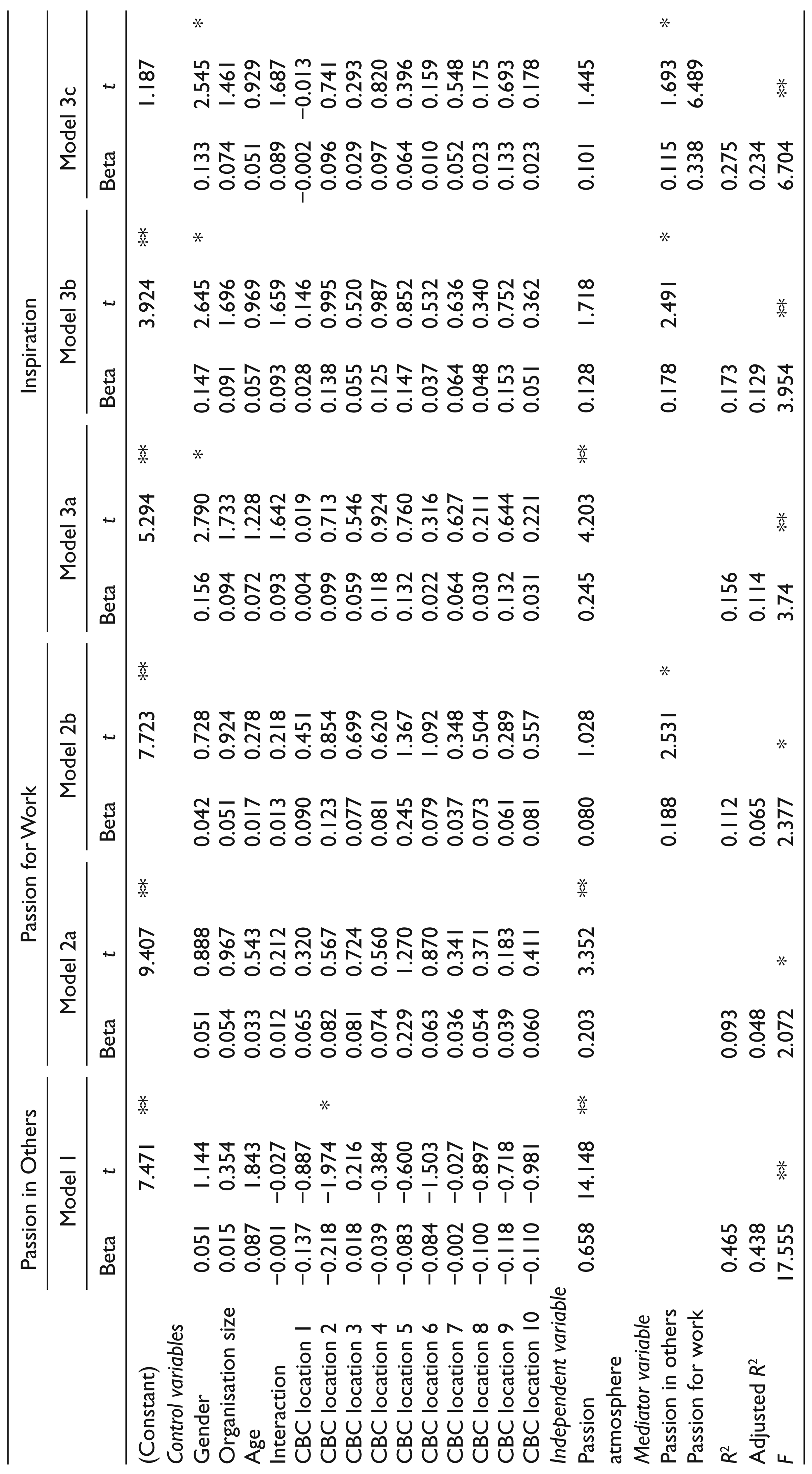
Based on literature from psychology (Zajonc, 1965) and economic geography (Bathelt et al., 2004), we conceptualised the influence of other individuals in a specific location as ‘localised passion’. The results of our study suggest two factors of localised passion: passion atmosphere and passion in others. The survey items measuring the first may be considered a new instrument for ‘something in the air’ or ‘buzz’ or the aggregate level of passion that can be noticed in a specific location and those measuring the second address the perceived passion for work in other entrepreneurs. In addition, we developed a measurement for passion for work as a way of measuring entrepreneurial passion. This measure does not directly relate to starting a (new) business (Cardon et al., 2013) or displays of passion (Chen et al., 2009). Passion for work is more in line with Vallerand et al.’s (2003) measurement of harmonious passion and Baum and Locke’s (2004) and De Clercq et al.’s (2013) approach to passion. It comprises how involved an entrepreneur is with a broader range of professional activities, which we considered to be more appropriate for the CCI.
Our main finding is that there is a relationship between localised passion and inspiration. Moreover, our results provide empirical support for our expectation that passion has a positive significant influence on inspiration. This relationship follows a three-path mediation model for the creative entrepreneurs located in CBCs. First, the passion in the atmosphere that the entrepreneur notices has a positive influence on perceiving passion in other entrepreneurs at the location. Second, the perceived passion of other entrepreneurs influences how passionately engaged the entrepreneur is with his/her own creative work. Finally, the more passionately engaged the entrepreneur is in professional activities, the more inspired he or she will feel. This means that the more the location as a whole is characterised by passion (localised passion), the more the individual entrepreneurs are inspired to turn their creative ideas into creative products or services.
Our results suggest that passion is an antecedent for inspiration. Localised passion seems to be internalised in the way entrepreneurs feel about their professional activities and this positively increases the individual passion of the entrepreneur. This suggests that the context in which entrepreneurs try to realise their ideas affects the motivational process and that the mere presence of passionate peers in the nearby environment has a positive effect. In our setting, the other entrepreneurs are located in the same building, but do not necessarily observe the professional activities of other entrepreneurs directly. It seems that the entrepreneurs are aware of other entrepreneurs, that these entrepreneurs may face similar issues and barriers and that they are involved in similar creative processes. Moreover, our results suggest that this awareness is not significantly influenced by the degree of interaction the creative entrepreneur has with other creative entrepreneurs within the building. Our study provides new evidence that motivation is a complex, but also a deeply social process; social facilitation occurs not only when others observe activities directly but also by knowing that peers are working passionately in their environment.
In addition, our findings also suggest that inspiration may be evoked by people and the feel of an environment. This way of evoking inspiration may stand next to the objects that Vallerand et al. (2003) mention in their conceptualisation of inspiration. As entrepreneurs are involved in making new combinations and the development of new products and services, surrounding themselves with a passionate environment and individuals may provide a more controlled and steady supply for the evocation of inspiration. This also underscores, next to the high need for autonomy, the importance of the social aspects and the context of entrepreneurship. The co-located working environments offered by the CBCs in our study thus prove to be essential for entrepreneurship in the creative industries. They provide a passionate environment for many of the small businesses which are typical of these industries. Our results corroborate earlier indications that creative entrepreneurs need specific contexts and the presence of others to be inspired (cf. Drake, 2003).
Limitations and Future Research
This study has some limitations that offer opportunities for further research. First, our focus has been on entrepreneurs housed in CBCs. Although this allows us to take into account the context of these entrepreneurs, other studies may want to focus on sources of inspiration for entrepreneurs working from home or in regular office buildings. Such types of location may not provide an ample supply of passion and for this reason entrepreneurs may be less inspired, or alternatively they may set other mechanisms in place. Second, this study is limited to one country and one—albeit very heterogeneous—industry. Other effects may be found by replicating this study in countries that are less individualistic or in industries that rely less on the creative capital of the entrepreneur. In such a context, sharing and interaction may have a stronger influence on inspiration. Finally, future studies could attempt to investigate creative entrepreneurs in greater depth within the context of CBCs. Next to sourcing inspiration, this context may provide other key factors for creative entrepreneurs, such as identity, brand and reputation. This would further explain the key elements for success in the context of creative entrepreneurs in CBCs.