




Abstract
The transportation sector’s heavy reliance on fossil fuels poses significant sustainability challenges, necessitating a shift toward environmentally friendly alternatives such as e-taxis. This study investigates the factors influencing the adoption of e-taxis in India. A conceptual model integrating the theory of planned behavior (TPB) and norm activation model was employed to analyze consumer behavior. Based on the survey of 272 people who frequently travel in taxis, the empirical results validated the proposed model, confirming that personal norms, attitudes, and social norms significantly influence the intention to book an e-taxi. The study found that awareness of consequences and ascribed responsibility play a crucial part in forming personal norms. Stronger personal norms were associated with more favorable attitude toward e-taxis and a greater propensity to book one. Interestingly, it was discovered that behavioral intentions were not significantly impacted by perceived behavioral control, a crucial TPB construct. These findings offer critical insights for policymakers and industry stakeholders aiming to promote sustainable transportation. The study underscores the need for improved infrastructure and supply to address market barriers, facilitating the transition to sustainable mobility solutions.
Keywords
Introduction
Climate change represents an unprecedented threat facing humanity today and necessitates immediate collective action. It is characterized by rising global temperatures, unpredictable weather patterns, and the depletion of natural resources. This does not only harm the environment but also creates challenges to the well-being of society. The extensive use of cars plays a pivotal role in environmental degradation, contributing significantly to air pollution, greenhouse gas emission, and noise pollution. The rise in CO₂ emissions from transportation highlights a significant challenge in addressing climate change (Haldar et al., 2025). As per Statista (2024), fossil fuels in transportation cause about one fifth of carbon emissions globally. India ranks Number 3 in global carbon emission after China and the United States (Jain & Rankavat, 2023). In India, road transportation contributes to more than 90% of the total CO₂ emission (Singh et al., 2022). Transportation, thus, apart from being a modern age convenience, poses a huge environmental, climate, and health hazard.
In the view of this serious issue, there is an urgent need for transformative action that will accelerate the transition to sustainable transport at the global level. Electric vehicles (EVs) are among the most promising substitute for conventional petrol- and diesel-powered vehicles. Studies shows that EVs can cause only about one tenth of carbon emissions per kilometer of vehicle running in certain regions (Das et al., 2024; Reichmuth, 2020). In fact, studies of life cycle analyses estimate that EVs could reduce overall emissions by an average of 16% (Michaelides, 2021; Simpkins, 2023; Singh et al., 2023). Moreover, when comparing energy efficiency, traditional internal combustion engine cars only utilize 16%–25% of fuel energy to move the vehicle, with 75%–86% lost due to engine, drivetrain, and auxiliary losses. In contrast, EVs use 65%–69% of electrical energy to propel the wheels, with 31%–35% lost to charging, accessory, and drivetrain inefficiencies. Furthermore, the “energy to wheels” ratio in electric cars can increase to 77%–82% with regenerative braking, which recovers energy during braking (CNBC, 2024). Given this, EVs have captured worldwide interest for their potential to promote both environmental sustainability and energy security (Bera & Maitra, 2021). Thus, EVs can offer an effective way of lowering the carbon footprint of transportation industry, while also improving urban air quality (Xie et al., 2024). No wonder, worldwide, realizing their importance as a sustainable and energy-secure alternative, the governments are gearing up to transitioning to EV transportation systems (Das et al., 2024; Singh et al., 2023; Wappelhorst & Cui, 2020; Xie et al. 2024) and thus aligning with the commitment to decarbonization and tackling global climate challenges spelled out by global fora like the Paris Climate Agreement.
Taxis have long played an important role in urban transportation (Phun et al., 2019) and thus when an overall urban mobility transition from conventional fuel-based cars to electric cars is happening, taxis are also witnessing a transformation by getting electric motor–based mobility and hence the phenomenon of electric taxis (e-taxis). E-taxis offer advantages in terms of less dependence on fossil fuels and low carbon emissions and subsequently are environmental friendly urban mobility options. The Indian market has witnessed emergence of organized e-taxi fleet operators such as Ola Electric, Uber Electric, BluSmart Mobility and EEE Taxi. On the other hand, people become more aware about the perils of environmental degradation and climate change, and they are actively seeking sustainable alternatives to conventional products and services (Paul et al., 2016). Growing environmental awareness among people, coupled with rising concerns about air quality and pollution, has fueled the demand for sustainable alternatives (Paul et al., 2016). People’s adoption of e-taxis also gels with their concerns about sustainable consumption behavior. This, in a way, is also in alignment with the United Nations’ climate action–related Sustainable Development Goal (SDG) 13.
However, it is noteworthy to mention that consumers’ ultimate action and decision-making toward adoption of e-taxis is not a simplistic phenomenon—especially in a lower middle income country like India. There may be many variables impacting this. Some recent studies have identified variables affecting adoption of e-taxis. Exploring prospective adoption of e-taxis, a study by Sukthankar et al. (2025) aims to analyze the factors prompting the behavioral intention to adopt EVs by motorcycle taxi pilots in Goa, India, focusing on six key determinants: charging infrastructure, effort expectancy, performance expectancy, price value, social influence, and satisfaction with incentive policies. A study by Yuan et al. (2022) looks into e-taxi drivers’ need to compete with each other not only for passengers but also for limited charging points due to frequent and time-consuming charging activities. By investigating cost and revenue data of both electric and conventional taxi vehicles, as well as by interviewing taxi drivers and carriers, a study by Hagman and Langbroek (2018) examines the feasibility of using EVs in a taxi company in Greater Stockholm, Sweden. Similarly, Wang et al. (2020) conducted a longitudinal measurement study to understand the long-term evolution of mobility and charging patterns by utilizing 5-year data from Shenzhen electric taxi network in China. The study advances the understanding of the evolution patterns of electric taxi networks and is also a pointer to analyzing future shared autonomous vehicles. Wu et al. (2023) attempted at investigating taxi license owners’ intentions of purchasing EVs for operational use and the driving behavior of taxi drivers with the aim to study the feasibility of introducing e-taxis in Hong Kong in the next decade. A recent study by Liu and He (2025) deals with culling out e-taxi drivers’ charging behavior from the large-scale GPS trajectory data of a fully electrified taxi fleet, considering two major concerns of e-taxi drivers, that is, charging and ridership, and scrutinizes the specific nonlinear, threshold, and interaction effects of the built environment, temporal factors, and taxi ridership on e-taxi drivers’ usage of charging stations. These studies are focused on drivers’ adoption point of view and necessary infrastructure point of view. However, there is a lack of studies focused on investigating the factors (psychological, societal, and environmental) affecting the adoption of e-taxi by consumers. It is critical for the successful market penetration and societal integration of e-taxi.
This study is contextual with the overall background of sustainable mobility, thus investigating the factors influencing consumers’ decision-making regarding the adoption of e-taxis in a lower middle income country like India. Toward achieving this aim, our study is based on the bedrock of two fundamental psychological models, namely the theory of planned behavior (TPB) (Ajzen, 1991) and the norm activation model (NAM) (Schwartz, 1977). With the help of these two theoretical models, we developed a research framework that shall help us understand the drivers—psychological, societal and environmental—that have influence on consumers’ decision-making regarding sustainable transportation. Our study focused on the following research objectives:
To study the impact of the integrated constructs of the TPB (attitude, subjective norm, and perceived behavioral control (PBC)) and the NAM (personal norms, awareness of consequences, and ascribed responsibility) on consumers’ intention to book e-taxi services To study the impact of awareness of consequences (AC) and ascription of responsibility (AR) on the formation of personal norms (PN) regarding e-taxi use among consumers
The study shall attempt to address the issues of consumer behavior toward e-taxis and their adoption from multiple angles from a lower middle income economy perspective. Thus, it will attempt to fill the gap in existing literature and provide new insights into how sustainable transportation is adopted in a lower middle income country like India. The outcomes of the study, in addition to contributing to the existing knowledge, shall also be of applied significance to stakeholders, such as regulating authorities, e-taxi fleet operators, policymakers, and professionals.
The article has seven sections. It starts with the Introduction section; the second section contains a critique on the theoretical constructs of TPB and NAM, leading to hypotheses development toward investigating the factors that influence people’s intention to book e-taxis. The detailed methodology has been discussed in the third section. The fourth section deals with outcomes of the primary study conducted toward the research problem followed by the fifth section, which incorporates discussions on the study outcomes and managerial and policy implications of the study. The sixth section, apart from mentioning the conclusions of the research work, provides a summary of important insights and contributions of the study. Finally, the seventh section discusses limitations of the study along with prospects for future studies in this area.
Theoretical Framework
Norm Activation Model and Theory of Planned Behavior
In recent years, NAM, developed by Schwartz (1977), has gained considerable popularity to explain prosocial behavior like booking of an e-taxi. This model explains the process by which individuals develop prosocial behavior based on their moral norms. In the context of this study, there are three variables in NAM that explain the intention to book an e-taxi: AC, AR, and PN. AC posits that the likelihood of people’s booking of e-taxi increases when they are aware of negative impacts of traditional non-electric taxis compared to e-taxis. AR refers to acknowledgment of personal responsibility for these adverse impacts; when individuals feel more responsible for environmental harm, they are more likely to choose environmentally friendly alternatives like e-taxis. On the other hand, personal norm refers to an internalized moral duty, which significantly influences their environmentally friendly behavior like booking of an e-taxi. According to NAM, these PN are activated when individuals are both aware of the consequences and feel a sense of responsibly toward preventing negative outcomes (Schwartz, 1977; Schwartz & Howard, 1984). Thus, this activated PN directly influence one’s decisions to engage in sustainable actions, such as opting for an e-taxi (Steg et al., 2005).
Previous studies have consistently shown that PN and environmentally responsible behaviors are strongly positively correlated. Examples of these behaviors include energy conservation (Delaroche, 2020; Fornara et al., 2016), water-saving measures (Yıldırım & Semiz, 2019), environmentally conscious tourism behavior (Han et al., 2019; Han & Hyun, 2017; Landon et al., 2018; Luo et al., 2020) and more general eco-friendly consumer practices (Doran et al., 2017; Rezvani et al., 2018; Shin et al., 2018). These studies demonstrate empirically that PN plays an important role in ascertaining people’s intentions toward making eco-friendly choices. Thus, people’s intention to book e-taxis is also likely to be explained by PN.
The TPB has often been deployed to understand pro-environmental actions (Sharma & Foropon, 2019). In this study, we used both TPB and the NAM to investigate environmentally responsible practices, like booking of e-taxis. Liu et al. (2017) have also postulated that the integration of both TPB and NAM is important as TPB failed to consider the norm activation process linked to environmentally responsible behavior. Studies that integrate TPB and NAM have shown that doing so provides a more profound understanding of the pro-environmental behavior (Chan et al., 2022; Morren & Grinstein, 2021). Therefore, our study shall also attempt to explore how the components of TPB, that is, attitude, subjective norms, and PBC, may explain the role of PN in influencing the booking of e-taxis. These may extend insights into the connection between PN and pro-environmental behavior in the context of sustainable travel choices.
Hypothesis Testing
Precursors of Personal Norm
Past studies have shown that environmentally responsible behavior is influenced by three crucial components of NAM—AC, AT, and PN (Liu et al., 2017; Zhang et al., 2020a). In this study, we have adopted these components to understand the booking intention of e-taxi.
AC refers to what people know about the adverse effect of their transportation choice on the environment. People who have more knowledge of the adverse effects of conventional fuel-based taxis may be motivated to consider options that are less e-polluting such as e-taxis. Nguyen et al. (2017) found that people’s knowledgeable about the negative effects of their actions (e.g., choosing a vehicle for transportation—fuel-based or EV) on environment triggered their PN for responsible behavior. This activated PN motivates them to behave in an environmentally sustainable manner. People with high AC tend to regard their actions as having more (or less) impact than those with lower AC and are thus more motivated to pursue pro-environmental behavior (Landon et al., 2018; Sweldens et al., 2014; Zhang et al., 2020b). The construct of AC, thus, can be used to explain people’s attitude toward adoption of e-taxis. Alternatively, it can be said that as people’s awareness toward harmful after-effects of conventional fuel-powered (and hence more environmentally harmful) vehicles increase, they are more likely to look for better, less environmentally harmful transportation alternatives (like e-taxis).
On the other hand, AR refers to people’s conviction that they are personally responsible for mitigating harmful environmental consequences. AR helps people develop a sense of obligation to act in way that promotes sustainability. Referring to e-taxis, AR is an important variable to explain the motivation people may have in opting for e-taxis. Studies have pointed out that AR acts as a determining factor that activates the PN that lead to sustainable actions (De Groot & Steg, 2008; Stern, 2000).
PN refers to internalized beliefs and expectations about how to behave in a certain situation (Bamberg et al., 2007; Severijns et al., 2023). It is considered to be especially relevant in the context of pro-environmental actions because it can inspire people to act in ways that are consistent with their environmental values, even if it is not socially or monetarily beneficial to do so. According to NAM, AC and AR are directly connected with PN. When people understand the consequences of their own action (AC) and take responsibility of the harm done by that action (AR), their PN is activated (Gkargkavouzi et al., 2019; Shin et al., 2018). So an individual with activated PN will be motivated to book an e-taxi to protect the environment. As precursors to PN, AC and AR encourage people to seek out environmentally friendly modes of transportation such as e-taxi. Therefore, the following hypotheses are proposed:
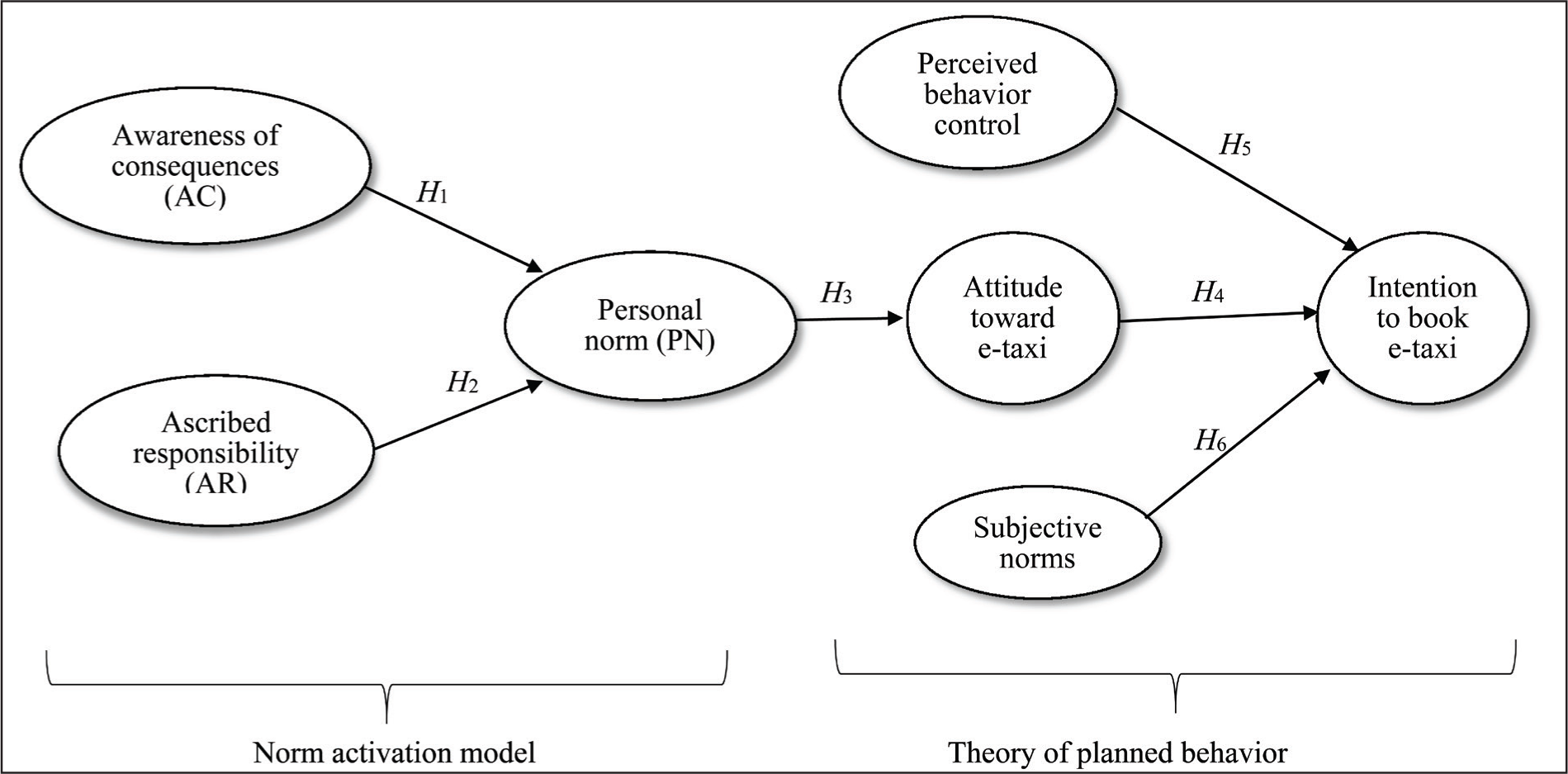
H1: When people book an e-taxi, PN is being positively affected by AC. H2: When people book an e-taxi, PN is being positively affected by AR.
Personal Norm and Attitude
According to the NAM, the variance in people’s attitudes toward particular things stems from their own PN (Schwartz, 1977). Those with a strong moral obligation to environmental sustainability tend to have more positive attitudes toward sustainable behaviors (Hong at al., 2024). The relevance of PN in shaping attitudes toward e-taxis is increasingly salient. This becomes increasingly relevant when it comes to book e-taxis. When individuals internalize a moral responsibility to mitigate environmental harm, they are more likely to develop positive attitudes toward e-taxis and a greater inclination to use them. Therefore,
H3: People’s attitude toward e-taxis is positively affected by their PN.
Attitude and Intention to Book an e-taxi
Attitude describes how people view and evaluate e-taxis. It includes their general opinions of e-taxis, whether favorable or unfavorable. When people have a favorable opinion of something, like e-taxis, they are more likely to behave in a manner that supports that opinion (Nguyen et al., 2017). Research has consistently demonstrated that attitude shapes behavioral intention (Diamantopoulos et al., 2003). People are more likely to use e-taxis as a form of transportation when they have a positive attitude toward them as an environmentally friendly option. Therefore, we suggest:
H4: The intention to book an e-taxi is positively affected by users’ attitude.
Perceived Behavior Control and Intention to Book an e-taxi
PBC describes an individual’s perception of their capacity, aptitude, and control over their specific behavior (Zhang et al., 2018), such as booking e-taxis. Research has indicated that PBC significantly influences behavioral intention (Odou & Schill, 2020). In this study, we assume that PBC might have a significant impact on people’s intention to book e-taxis as a form of transportation. People are more inclined to book e-taxis when they believe they have greater control over their ability to access and use them conveniently (Azimi et al., 2021; Motsi & Chipangura, 2024). Therefore, the following is hypothesized:
H5: The intention to book an e-taxi is positively affected by PBC
Subjective Norm and Intention to Book an e-taxi
A person’s motivation to perform certain activities is influenced by subjective norms, which are their opinions about how important members of their reference group such as family, friends, or colleagues view their behavior (Ajzen, 1991). Therefore, people may be swayed by the views of others they regard as significant who advocate for or support eco-friendly choices, like using e-taxis. Past studies have also supported that people’s pro-environmental behavior is positively impacted by subjective norms (Doran & Larsen, 2016; D’Souza et al., 2020; Hu et al., 2019; Liu et al., 2019). Therefore, we propose the following hypothesis:
H6: The intention to book an e-taxi is positively affected by SN.
Methodology
Sampling and Data Collection
A quantitative research methodology was adopted for this study, employing a cross-sectional design to evaluate the model illustrated in Figure 1. The target population included individuals who frequently use taxis as their primary mode of transportation. Data were gathered through a survey questionnaire using convenience sampling, with the support of students who assisted in reaching out to potential participants. The fieldwork was conducted between June and August 2024.
Proposed Research Model.
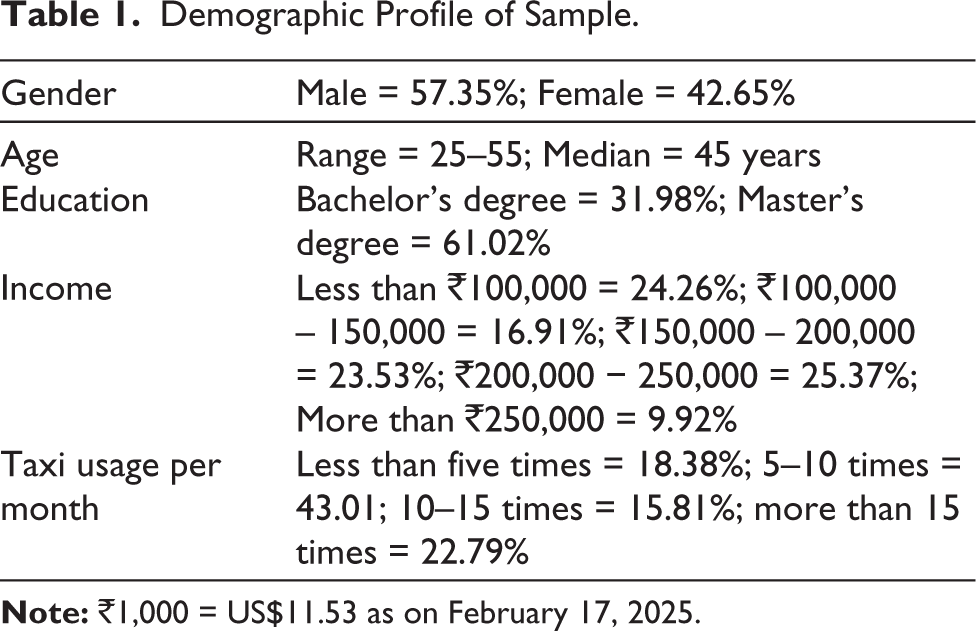
The study initially collected 284 responses; however, 12 were incomplete and excluded, leaving a final valid sample of 272 participants. Among the respondents, 57.35% identified as male, and 42.65% identified as female. The participants’ ages ranged from 25 to 55 years, with a median age of 45. Regarding taxi usage, 22.79% reported using taxis more than 15 times per month, while 43% used them 5–10 times per month. Additional details on the respondents’ demographic profile are presented in Table 1.
Demographic Profile of Sample.
Instruments
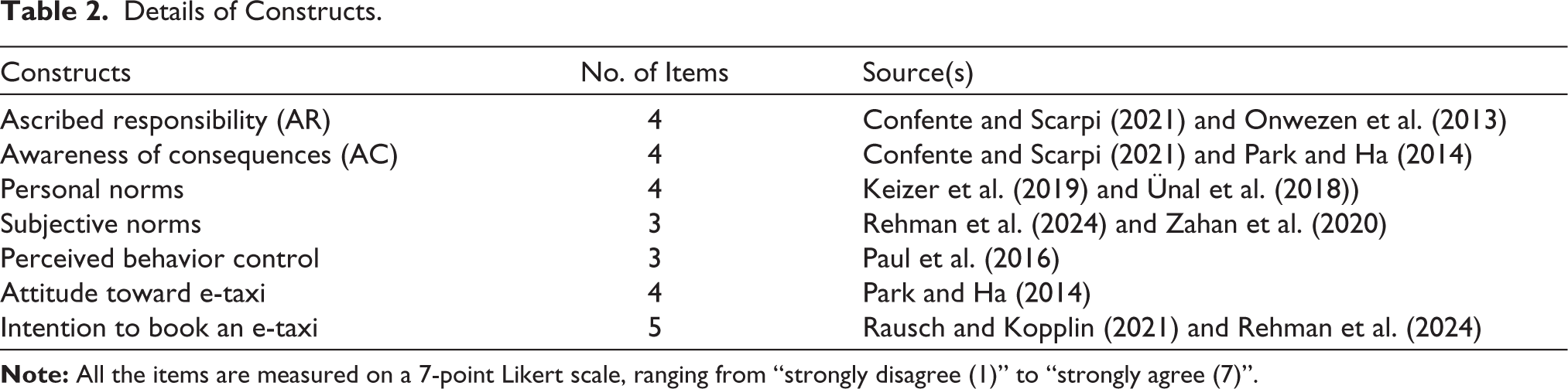
Data were collected using structured questionnaire. Section A of the questionnaire focused on collecting demographic information from the respondents, such as gender, education level, age, monthly income, and the frequency of weekly trips. Section B outlined the various constructs utilized in this study. These constructs were adapted from previous studies and modified to fit the study’s requirements. The constructs, their sources, and the number of measurement items are shown in Table 2.
Details of Constructs.
Data Analysis
Data analysis was carried out using the PLS-SEM technique with the SEMinR package in the open source software R. First, the measurement model was examined to confirm the reliability and validity of the constructs used in the study. Following this, the proposed hypotheses were tested using the PLS-SEM technique.
Measurement Model Analysis
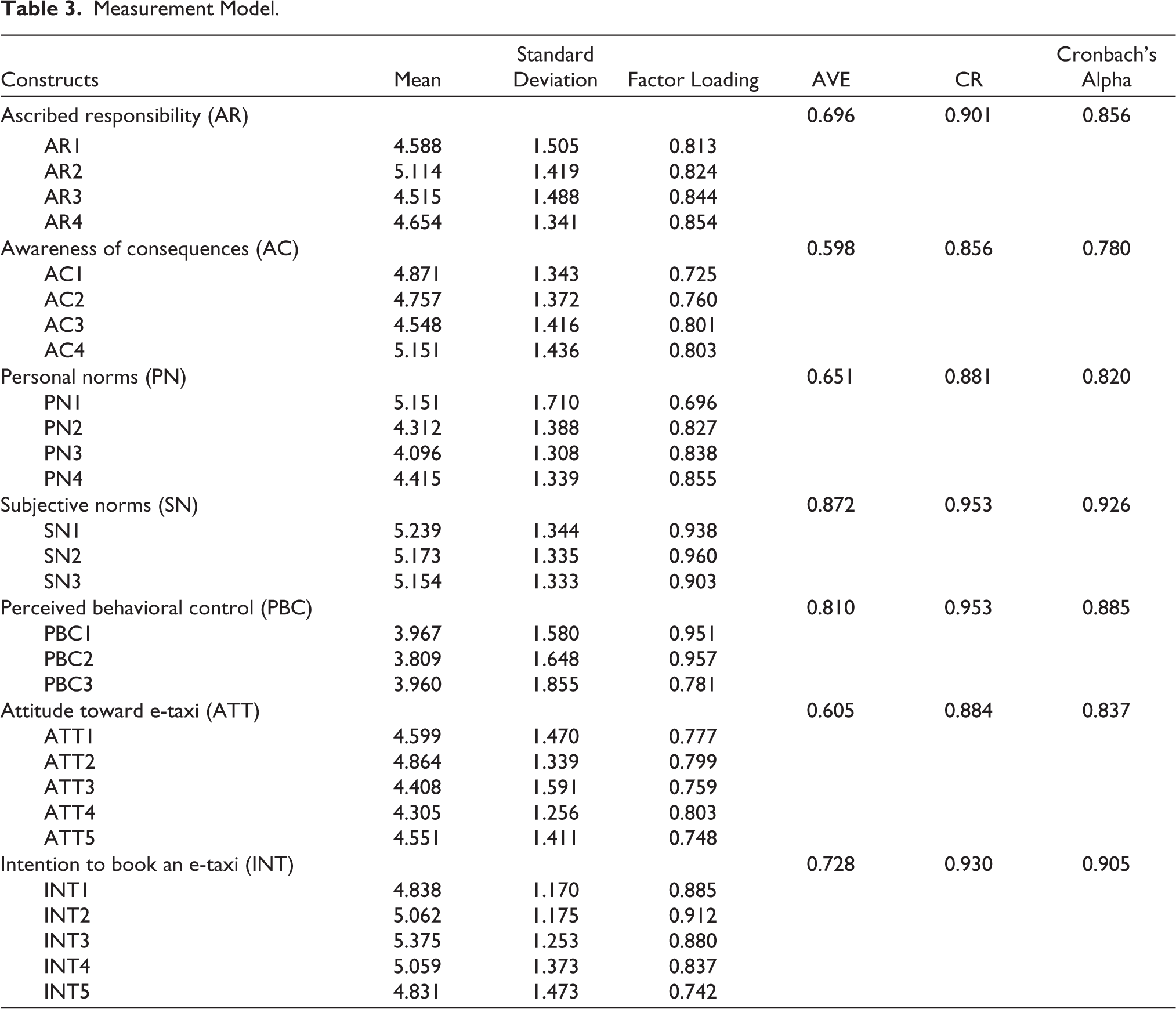
Following the guidelines outlined by Hair et al. (2010), reliability and validity of the constructs used in the study are confirmed. As shown in Table 3, the lowest Cronbach’ α value is 0.780, which meets the minimum criterion of 0.7. Similarly, the minimum acceptable CR value of 0.70 is satisfied, with the lowest CR value in the model being 0.856. For convergent validity, the minimum AVE value should be 0.50 and the current model meets this requirement, with the lowest AVE value being 0.598. Additionally, factor loadings are also used to further confirm convergent validity, and as shown in Table 3, all factor loadings exceed the recommended threshold of 0.50, indicating strong convergent validity for the constructs (Malhotra et al., 2015).
Measurement Model.
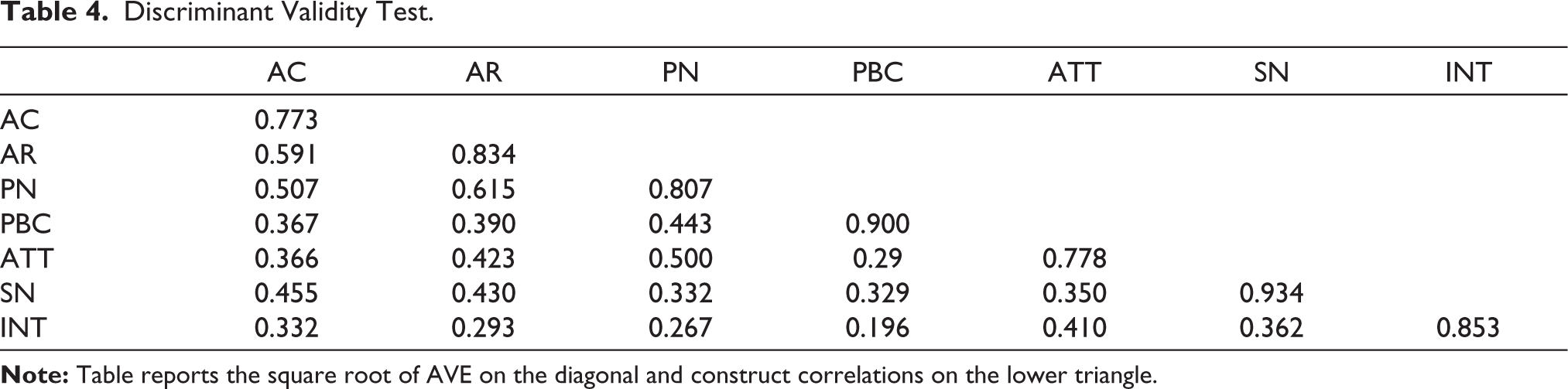
Furthermore, as presented in Table 4, the square root of AVE for each construct clearly exceeds its correlation coefficients with other constructs, demonstrating sufficient discriminant validity (Fornell & Larcker, 1981).
Discriminant Validity Test.
Hypothesis Testing
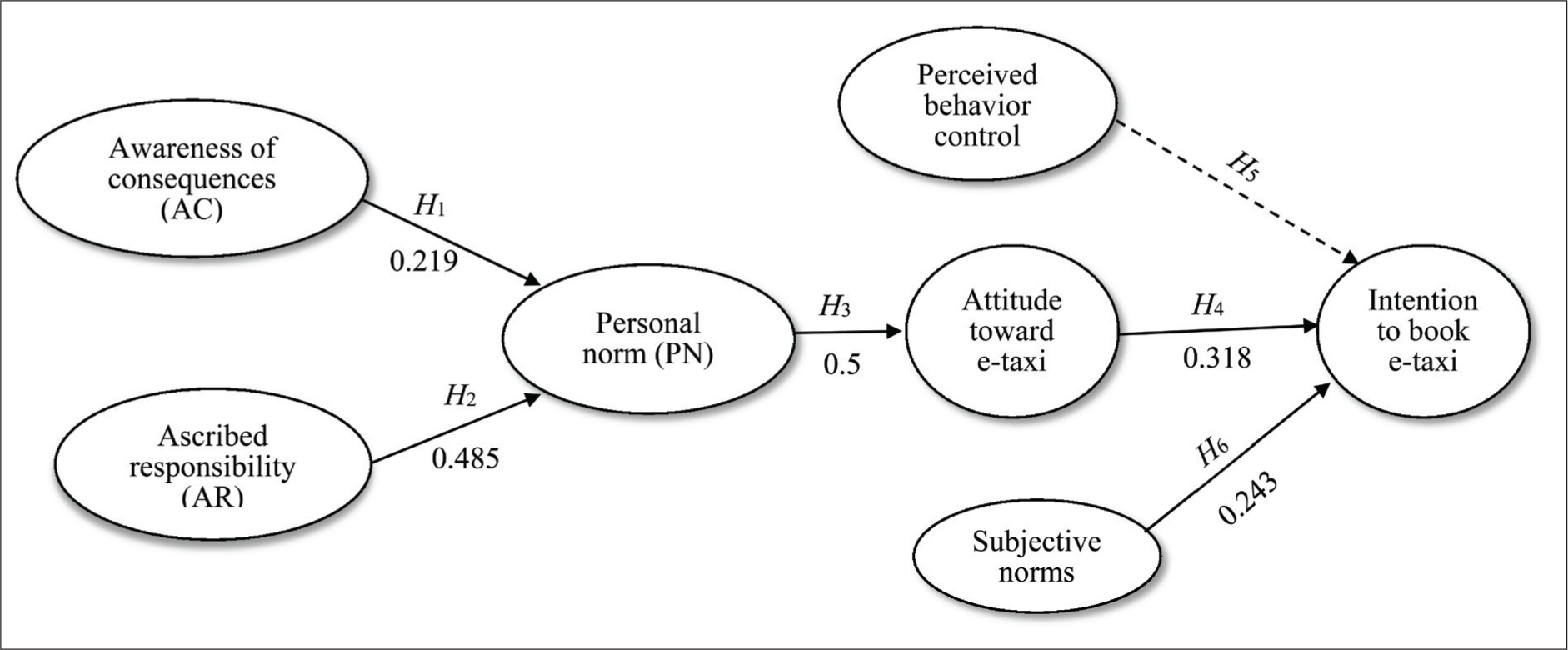
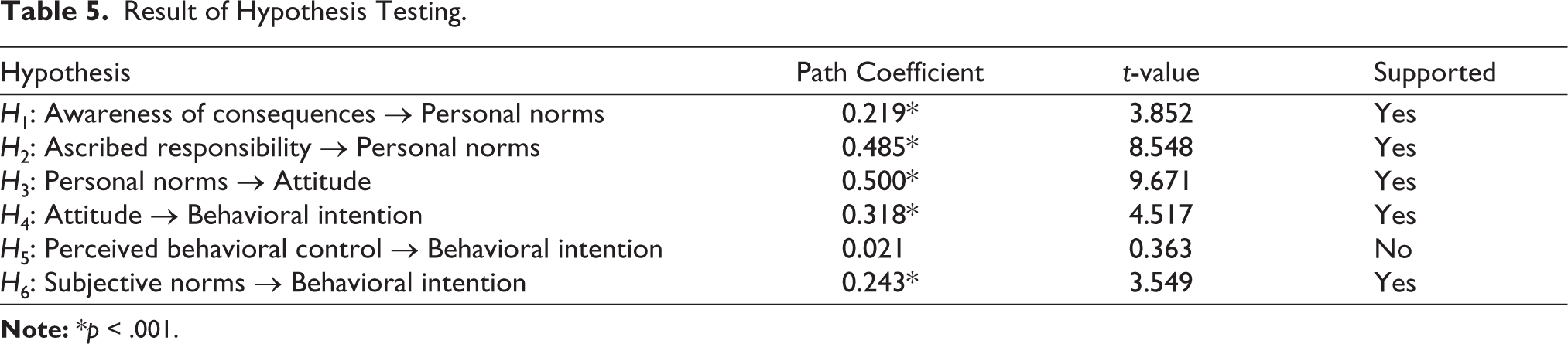
The study employed PLS-SEM using the SEMinR package in R to test the proposed hypotheses. The results shown in Figure 2 demonstrate significant relationships among several constructs of the study. Specifically, AC (β = 0.219, p < .001) and ascribed responsibility (β = 0.485, p < .001) were found to significantly influence PN, thereby supporting H1 and H2. PN, in turn, exhibited a significant positive effect on attitudes toward e-taxis (β = 0.5, p < .001), confirming H3. Furthermore, both attitude (β = 0.318, p < .001) and subjective norms (β = 0.243, p < .001) significantly influenced behavioral intentions to book e-taxis, supporting H4 and H6. Contrary to expectations, PBC did not demonstrate a significant effect on behavioral intentions, leading to the rejection of H5 (Table 5).
Result of Path Model.
Result of Hypothesis Testing.
Discussion and Conclusions
The current modes of transportation are heavily reliant on fossil fuels, which is unsustainable. As a result, adopting more environmentally friendly transportation solutions, such as e-taxis, has become increasingly important. Experts and policymakers widely agree on the need to foster a proactive attitude toward embracing sustainable transportation to facilitate the transition away from etraditional energy sources. This shift aims to enhance the population’s quality of life while achieving environmental sustainability. This study focuses on the adoption of e-taxis in India, an emerging economy that has received relatively little attention in this context. For the same, an empirical model was tested to analyze the factors affecting the e-taxi booking intention. The findings strongly supported all the proposed hypotheses. Moreover, these findings also align with findings from other published studies that examine similar constructs in different business sectors within high-income economies. This implies that the findings of the study have the potential for generalizability.
The result confirmed that the AC and ascribed responsibility have a positive impact on PN, which is in line with the findings from earlier studies (Landon et al., 2018; Nguyen et al., 2017). Additionally, the current study confirms earlier findings that customers who have high levels of PN are more likely to have favorable attitude toward e-taxis and to plan to use them (Onwezen et al., 2013; Song et al., 2019; Zhao et al., 2020). The results indicate that e-taxi booking intention is influenced by PN from NAM in addition to attitudes and social norms from TPB. These findings align with earlier research by Zhang et al. (2017), Chan et al. (2022), and Setiawan et al. (2020). We anticipated that the intention to book an e-taxi would be positively impacted by PBC. Remarkably, the study’s findings indicate that PBC had no significant impact on the intention to book an e-taxi. This might be because there are not enough e-taxis available in the market. Even though people may feel that they have the resources and are willing to use an e-taxi, non-availability of enough e-taxis reduces their perceived ability to book an e-taxi. As a result, PBC becomes less important in shaping their intentions.
Implications of the Study
This study offers valuable insights into successful communication tactics to promote e-taxi adoption for governments, policymakers, and advocacy groups and businesses who offer e-taxi services. It is recommended that these stakeholders aggressively promote positive benefits of using e-taxis. Public education regarding the advantages of e-taxis for the environment, such as reduced emissions and improved air quality, should be the main goal of communication campaigns. The decision to book an e-taxi is highly influenced by PN of people. Communication campaigns should appeal to people’s sense of moral obligations in order to target their moral obligation. These strategies can strengthen public awareness and re-affirm people’s moral obligations to choose environmentally sustainable mode of transportation. Furthermore, subjective norms are found to influence people’s intention to book an e-taxi. Therefore, it would be beneficial to communicate social expectations from the usage of e-taxis. Highlighting social expectations and endorsements from influential groups or individuals can enhance consumers’ willingness to adopt e-taxis. Marketing campaigns should stress the sense of belonging and social approval by using e-taxis. Here, advocacy groups can play an important role by organizing community events or campaigns centered on sustainability to promote social benefits of usage of e-taxis. Social media platforms should be actively used to promote environmental and social benefits of using e-taxis. Collaborating with social media influencers, creating engaging content and running targeted advertisements can help to spread these messages to a wider audience, particularly, younger, tech-savvy individuals.
This study found no significant effect of PBC on booking of e-taxis. This may be due to the limited availability of e-taxis on the road. Companies should focus on expanding their fleet to ensure higher availability of e-taxi services to improve the adoption of the same. This will strengthen people’s perceptions of behavior control if there are more e-taxis on the road, and they will be more likely to feel that they can get e-taxi access when needed.
In terms of theoretical contribution, this study addresses the need for further research on the factors influencing the consumer adoption of e-taxis in emerging economies such as India. The findings provide empirical support that combining the two theories explains the intention to use e-taxis, emphasizing the pivotal role of PN alongside attitudes and social norms. This contributes to the existing literature by offering deeper insights into environmentally friendly behaviors.
Limitations and Future Studies
While the findings of the study provide valuable insights, it is essential to interpret them with caution due to several limitations. The research was conducted in Gujarat, India, which may limit the generalizability of the results. Consumer behavior toward e-taxis could vary significantly across different cultural, economic, and social contexts. Additionally, e-taxis are still in a nascent stage in India, making it challenging to account for future shifts in perceptions, attitudes, or market dynamics. Although behavioral intention was used as a proxy to measure behavior, the findings are based on consumers’ intentions to book an e-taxis in the future rather than on their actual booking behavior. To strengthen these findings, longitudinal research that examines the relationship between the proposed model and actual e-taxi booking behavior over time would be a valuable complement to this study.
Footnotes
Declaration of Conflicting Interests
The authors declared no potential conflicts of interest with respect to the research, authorship, and/or publication of this article.
Funding
The authors received no financial support for the research, authorship, and/or publication of this article.