




Abstract
Purpose:
This study investigates the issues surrounding work-life balance (WLB) and its relationship with job satisfaction (JS) among middle-level female employees in the service sector in Ahmedabad, India.
Design/Methodology/Approach:
Using purposive sampling, data were collected through a structured questionnaire. The study employs hierarchical cluster analysis to classify employees into high- and low-level WLB groups.
Findings:
The findings of the present study align with the job demands-resources (JDR) theory. The results reveal that higher levels of WLB correlate positively with greater JS. Among factors influencing WLB, family care ranked highest, followed by personal expectations.
Research Implications:
This study provides actionable insights for HR practitioners to develop gender-inclusive policies that enhance retention and employee satisfaction in the service sector.
Keywords
Introduction
The intersection of work and personal life represents a critical balancing act for employees, particularly for working women. Post-pandemic shifts, including the widespread adoption of work-from-home (WFH) models, have intensified challenges related to work-life balance (Mehtha, 2012). This is particularly relevant in India, where the service sector contributes over 55% of GDP (IBEF, 2021) and female participation in this sector is on the rise. WLB is only one of the most in-depth issues that female agents in the twenty-first century looked into (Mehtha, 2012). Employees occasionally find it difficult to balance their personal and professional lives because of how dynamic and interconnected they are (Haung et al., 2004). The Indian government has also placed a strong emphasis on strengthening and enlarging the ecosystem of all service sectors. Between April 2000 and June 2021, the service industry received a significant amount of FDI of US$ 88.95 billion (IBEF, 2021). This gives the Indian service sector a chance to grow and prosper along with certain issues (Kakkar & Bhandari, 2016).
WLB illustrates the dynamics of a person's life between work and personal responsibilities, along with the influence of each. From the perspectives of the employee and the organisation, the qualities of both work life and job satisfaction (JS) have their own unique worth (Testa, 2001). Job satisfaction is heavily influenced by one’s ability to control one’s emotions as well as the social support one receives at work (Mérida-López et al., 2019). Job satisfaction is positively impacted by the quality of work life. Job commitment, job motivators, organisational culture, work environment and employee satisfaction are just a few of the factors that might affect JS (Dhamija et al., 2019). The degree to which an employee reconciles their professional and personal lives lowers their level of JS (Boisvert, 1977; Ference, 1982; Poser et al., 1983). According to Manojlovich and Laschinger (2002), a number of socio-demographic parameters (gender, age, education, income, work experience, designation and marital status) also have an impact on how satisfied an employee is with their job and how well their work life is managed.
Despite the fact that WLB and JS have been the subject of several research papers, the current research highlights distinct disparities in the variables that were taken into account. Studies on WLB and JS for female service industry employees are scarce. Thus, assessment and promotion of WLB and JS have received invariable consideration in the field of individual differences.
In light of the growing economy, this study specifically looks at WLB and JS for female employees working in the service industry (Kakkar & Bhandari, 2016). For analysis, the chosen constructs from the literature review are taken into account. In Ahmedabad, a structured questionnaire was given to working women in the service industry. Purposive sampling was employed to select the respondents in this study, who were female workers in Ahmedabad’s service industry. The research objective was addressed via hierarchical cluster analysis. The study seeks to add to the body of knowledge already available in lower-middle income countries in order to provide a fresh field of inquiry for future study.
The study’s findings aim to make two significant contributions to the literature. India’s economy, one of the fastest to emerge, is the subject of the study. As most research is done in high-income countries, this encourages research. Second, the survey placed particular emphasis on women working in the service industry. Over half of the GDP in India is contributed by the service sector. However, in the service industry, female employees’ contribution increased. By examining the WLB issues, this work aims to partially fill this vacuum. Human resource managers will benefit from the findings as they better grasp the challenges faced by female employees and how this affects JS.
Existing research highlights a direct link between WLB and JS, with socio-demographic parameters such as age, marital status and work tenure further shaping this relationship (Mérida-López et al., 2019). However, limited studies focus exclusively on female employees in the Indian service sector. Addressing this gap, this study evaluates the factors influencing WLB and JS, offering practical insights for lower-middle income countries. Key research questions include:
RQ1: Which factors significantly affect the work-life balance and job satisfaction of female employees working in the service industry? RQ2: How these factors classify the female employees in high/low-level work-life balance groups?
The remainder of this article is structured as follows: With a review of significant literature and the creation of hypotheses, the second section discusses work-life balance in the service industry. The research methodology and methods for data analysis are described in the third section. Data analysis is covered in the fourth section before discussion of the findings and their implications is covered in the fifth section. The study is concluded in the final section, along with recommendations for further research.
Review of Literature
Work-Life Balance
In the twenty-first century, WLB has become an important concern. According to Naithani (2010), WLB refers to the effective management of many tasks both at work and on a personal level. Different authors have defined WLB. It is defined as ‘An individual is equally engaged in and evenly satisfied with his or her work role and family role’ according to Greenhaus et al. (2003). Das and Baruah (2016) refer to WLB as maintaining the ideal balance between one’s personal and professional lives. According to Felstead et al. (2002), WLB helps employees better balance their personal and professional lives.
In agreement with previous authors, Clarke (2004) also claimed that WLB achieves harmony in life by maintaining symmetry between the time a person devotes to his or her professional and personal pursuits. Work and family obligations are intertwined and interfere with one another; therefore, they are like two sides of the same coin (Padmini, 2017). By placing an emphasis on health and well-being, it aids in achieving the Sustainable Development Goals (SDGs) (KPMG International, 2017). Researchers are paying more attention to WLB because of how lives changed during COVID-19. During COVID-19, the roles of women significantly increased (Anderson & Kelliher, 2020). Women struggle because they must strike a balance between their personal and professional lives. Rekha Balakrishnan (2020) stated how the burden on women has increased as a result of the lack of domestic aid during lockdowns for childrearing or household tasks. On the one hand, working women now shoulder all domestic responsibilities; there are no restrictions on working hours while working from home. Employees are forced to work harder, longer hours and still not complain out of fear of losing their employment or having their compensation reduced. Maharani and Tamara (2024) stated that work-life balance has a considerable positive impact on job satisfaction. Work-life balance is directly or indirectly correlated with child care, workload, JS, family support, stress, attrition and turnover (Allam, 2017; Tavassoli & Sune, 2018). Yunita et al. (2023) explored the career development of millennials, focusing on work-life balance, job satisfaction and affective commitment as factors influencing their professional growth. The findings show that work-life balance and job satisfaction positively influence affective commitment, which in turn positively affects career development. However, work-life balance alone does not directly impact career development; its effect is significant only when mediated by job satisfaction. It concludes that work-life balance is crucial for enhancing job satisfaction, emotional commitment and career advancement.
Current Scenario of the Service Sector in India
The Indian government’s ‘Startup India’ initiative, the technical infrastructure required for such an ecosystem, the low startup costs and the developed markets all these elements make the Indian service sector a profitable ecosystem for both investors and entrepreneurs. According to IBEF (2021), the Indian service sector has had phenomenal growth and generated 55.39% of India’s gross value added in FY20. The IT industry, hotel, insurance, telecom, health care, transportation, financial services, real estate and public administration make up the majority of the Indian service sector. According to IBEF’s 2021 report, India was the eighth-largest exporter of commercial services in the world in 2019.The service industry holds a key place in the Indian economy and business. It is one of the industries with the fastest growth rates globally during the past three decades. According to Amutha and Juliet (2017), the expansion of the Indian economy is mostly driven by the service sector. The service sector saw a 34% increase in FDI inflows from 2020 to 2021. The years 2020–2021 saw a lot of significant structural changes. According to the most recent World Investment Report 2020 (UNCTAD), India moved up one spot from 12th in 2018 to 9th in 2019 on the list of the major FDI beneficiaries worldwide.
Work-life balance in the Service Sector
According to Guru Vignesh Sridhar (2017), the major challenge for any IT sector executive is work-life balance, which puts a lot of stress physically as well as mentally. Kshirsagar (2018) outlined how to strike a balance between the two in order to prevent JS in working women in the service sector. Working women are being hit very hard by the contradiction of roles and the uncertainty. According to Wu et al. (2013), supervisors can help the service industry attain WLB and improve working conditions. The association between workplace variables and WLB among employees in a particular service industry is examined by Wong et al. (2017). The findings indicate a beneficial association between work-life balance and flexible scheduling, co-worker support and supervisor support. The current study intends to investigate WLB among female workers of the service sector in India. According to García-Salirrosas et al. (2023), improving job satisfaction in remote work requires supervisor behaviour, work-life balance and good work-life spillover. The results of this study suggest that in order to enhance the well-being of remote workers, companies should implement work-life policies and supportive supervisory techniques.
According to Manoharan et al. (2023), preserving a positive work-life balance dramatically raises job satisfaction, which boosts organisational performance and gives IT companies a competitive edge. The past literature addressed very limited construct to understand WLB and JS. Current study incorporated comprehensive variables along with hierarchical cluster analysis. It helps to evaluate the current state of WLB and JS among working women.
Construct Identification and Hypothesis Development
Support from Family
In their study, Uddin et al. (2020) evaluated the moderating effects of social support on WLB among Bangladeshi women who work in banks. The study found that WLB amongst females is promoted by social support. The significance of family support is amplified to a higher extent by insufficient formal support and WLB policies (Bosch et al., 2018). In Andhra Pradesh, the effect of family support on WLB among female police officers was evaluated by Padma and Reddy (2013). Results show a positive correlation with those of earlier outcomes. The study found that women who are in charge of their parents’ health needed assistance in juggling their professional and personal lives. Women employees believed they had a less favourable work-life balance if they had younger children or had health obligations. According to Adams et al. (1996), the relationship between job and family can have a major impact on both. Additionally, employee involvement impacts relationships between the workplace and the home. Recent studies continue to underscore the pivotal role of family support in enhancing WLB for women. An article in Forbes (2022) emphasises that WLB initiatives often place the onus of managing family responsibilities solely on women, thereby highlighting the necessity for robust support systems to alleviate this burden. Furthermore, a study in Bian and Sukor (2024) explores the mediating effect of work-life balance on the relationship between work–family conflict and psychological well-being. The research indicates that effective work-life balance strategies can alleviate the negative impacts of work–family conflict. Family support has a positive impact on WLB (Setyorini et al., 2023).
Dependent Care
Support for child care has a favourable effect on employee retention (Suman Babu & Bhavana Raj, 2013). Child care assistance is a WLB practice that has low expenses for the employers while offering numerous benefits to the bottom line, including improved employee performance, less stress among staff members and greater retention. Although more females are being included in workforce, the major burden for child care still falls on females, who may have to juggle it while working. Regardless of the age of the children, women are generally more responsible for child care. For instance, studies show that mothers are more likely than fathers to stay at home when a kid is ill (Northcott, 1983), which leads to more frequent absences from work for women (Klein, 1986). Work from home provides independence and flexibility, but it also urges employees to put in longer hours. The quality of life is significantly influenced by the surroundings at home. When a woman is in charge of small children, it can sometimes get stressful. A Boston Consulting Group (BCG, 2024) study revealed that childcare benefits could yield returns of up to 425% by boosting retention and reducing absenteeism.
Self-management
For a better work-life balance, Almuth (2013) clarified the significance of individual-level self-management techniques. Communication and time management are two important self-management abilities. Additionally, managing a team that works remotely requires a new set of skills (Almuth, 2013). Varatharaj and Vasantha (2012) focused on how to balance personal and professional life and how emotional intelligence might help. Having better emotional control makes it easier to accomplish daily goals. Guest (2002) highlights the many features of workaholics who choose to put in long hours even when they do not have to, often at the expense of other pursuits.
Personal Life Expectations
Female managers began prioritising their individual goals while maintaining their commitment to their family responsibilities (Metcalfe & Afanassieva, 2005). It frequently leads to complexity, which leads to sentiments such as stress, dissatisfaction and personal failure. Pocock (2003) has beautifully explained how longer workdays provide employees with less time for personal time and leisure pursuits. This impedes both spiritual and personal growth. Women place a higher value on their jobs and families than they do on themselves (Burke, 2002). When family care is neglected in favour of a professional position, dejection, disappointment and frustration follow. The lines between job and family should be clearly drawn, and neither should cross the other.
Workplace Support and WLB Policies
To attain a goal, teamwork and workplace support are crucial (Lee et al., 2019). Ganguli and Padhy (2023) also confirmed that workplace motivation has a significant effect on retention with reference to Indian organisations. Additionally, managers should act as a team’s leader in order to help members achieve work-life balance. For workers in the service industry, Ahmad et al. (2023) have investigated the association between emotional intelligence, work-life balance and job stress, with a focus on working women who frequently experience significant difficulties as a result of the combined demands of professional and personal obligations. Flexible work arrangements (FWAs) have a significant positive impact on employee well-being, particularly for women in radiology (Mazaheri et al., 2023). FWAs, such as flexible hours, telecommuting and part-time work, help reduce stress, improve job satisfaction and enhance work-life balance. These arrangements are crucial for women, who often face challenges in balancing work and family responsibilities, thereby reducing burnout and promoting career retention.
Wong et al. (2017) discovered a strong correlation between WLB and the encouragement of co-workers and managers as well as a flexible work environment. Many organisations offer family-friendly benefits, such as job sharing, flexitime and telecommunications, which are necessary to reconcile life and work (Ganapathi, 2016). According to Santhi and Sundar (2012), facilities including alternative work schedules, child care and recreational opportunities are secondary variables for a better work-life balance, whereas supportive work environments and welfare measures are important determinants.
Perceived workplace assistance includes things such as ‘alternative work schedule and arrangements, dependent care services, leave policies, job security, supportive work environment and other formal benefits,’ according to Lapierre and Allen (2012). A study was carried out by Theelagavthi (2019) to categorise the WLB level of female teachers and related variables. The number of teaching hours and the mode of transportation were discovered to be significantly correlated with WLB. Focusing on the importance of human resource development in work-life integration difficulties, Polach (2003) asserted that a few initiatives for WLB include flexible work arrangements, competitive pay and other programmes such as elder care and nursery care.
Workload
According to Suhaimi et al. (2018), work-life balance is negatively impacted by workload. Employees who are given more work have more conflicts between their personal and professional lives. According to Shah et al. (2011), organisations should make sure that employees consistently receive a reasonable amount of workload. Employees should be given work in a way that ensures their workload does not exceed what is reasonably anticipated of them. To evaluate the effects of role conflict and workload on WLB, Omar et al. (2015) conducted a study among staff members of Malaysia’s enforcement agency. Workload was found to be the primary factor affecting WLB. Work-life balance suffers when workload is higher.
Job Satisfaction
According to Arunashantha (2019), it is challenging for employees to maintain a work-life balance when they are not happy with their jobs. JS has a strong and positive relationship with WLB. The results of a study conducted by Sahrawat & Rawat (2021) among young adult corporate employees in India are consistent with earlier studies and show a positive relationship between WLB and JS. The impact of WLB on organisational involvement and work satisfaction among faculties of Universities of Gujarat was examined by Arif and Farooqi (2014). They investigated the bond between WLB and JS. According to Malik et al. (2014), WLB mediates the link between job benefit and JS. The study by Haar et al. (2014) examined the impact of WLB on job satisfaction, life satisfaction, anxiety and depression across seven cultures: Malaysian, Chinese, New Zealand Maori, New Zealand European, Spanish, French and Italian. The results showed that WLB positively influences job and life satisfaction and negatively affects anxiety and depression in all cultures
Job Demand-Resource Model
The job demand-resource (JDR) model posits that every occupation has associated risk factors that can be categorised as job demands and job resources. Job demands are aspects of the job that require sustained effort, leading to psychological or physiological costs, while job resources help in achieving work goals, reducing job demands and promoting personal growth. The model suggests two psychological processes: job demands lead to strain by exhausting mental and physical resources, while job resources foster motivation by helping individuals meet goals and promoting development. Additionally, job resources buffer the impact of job demands, reducing strain and mitigating the harmful effects of stressors.
Kataria and Rashmi (2021) examined the mediating role of WLB in the relationship between job resources (job autonomy, supervisor support and co-worker support) and job satisfaction among Indian nursing professionals during the COVID-19 pandemic, using the JDR theory. The findings revealed that job resources positively impact WLB, which in turn enhances job satisfaction. WLB partially mediated the relationship between job autonomy and supervisor support with job satisfaction, emphasising the importance of job resources in managing work-life conflict and improving employee well-being during high-stress situations like the pandemic. In a study conducted by Patel et al. (2013), the JDR model is used to explore the dual role of information technology (IT) in the workplace, focusing on both its stress-inducing and stress-reducing effects. The study further investigates how IT’s stress-reducing aspects moderate the relationship between job demands and work exhaustion. By applying the JDR model, the research offers a comprehensive view of how both stressors and resources from IT influence employee outcomes such as work exhaustion and turnover intention. The study by Loh et al. (2018) investigated the role of psychosocial safety climate (PSC) as a moderator within the JDR model, specifically how it influences the effects of emotional demands on workers’ psychological health.
Based on construct identified and elaborate with literature review, the study investigates the following hypotheses.
H1: Family support has a significant impact on work-life balance.
H2: Family care has a significant impact on work-life balance.
H3: Self-management has a significant impact on work-life balance.
H4: Personal life expectation has a significant impact on work-life balance.
H5: Workplace support has a significant impact on work-life balance.
H6: Work-life balance has a significant impact on job satisfaction.
Research Methodology
Participants
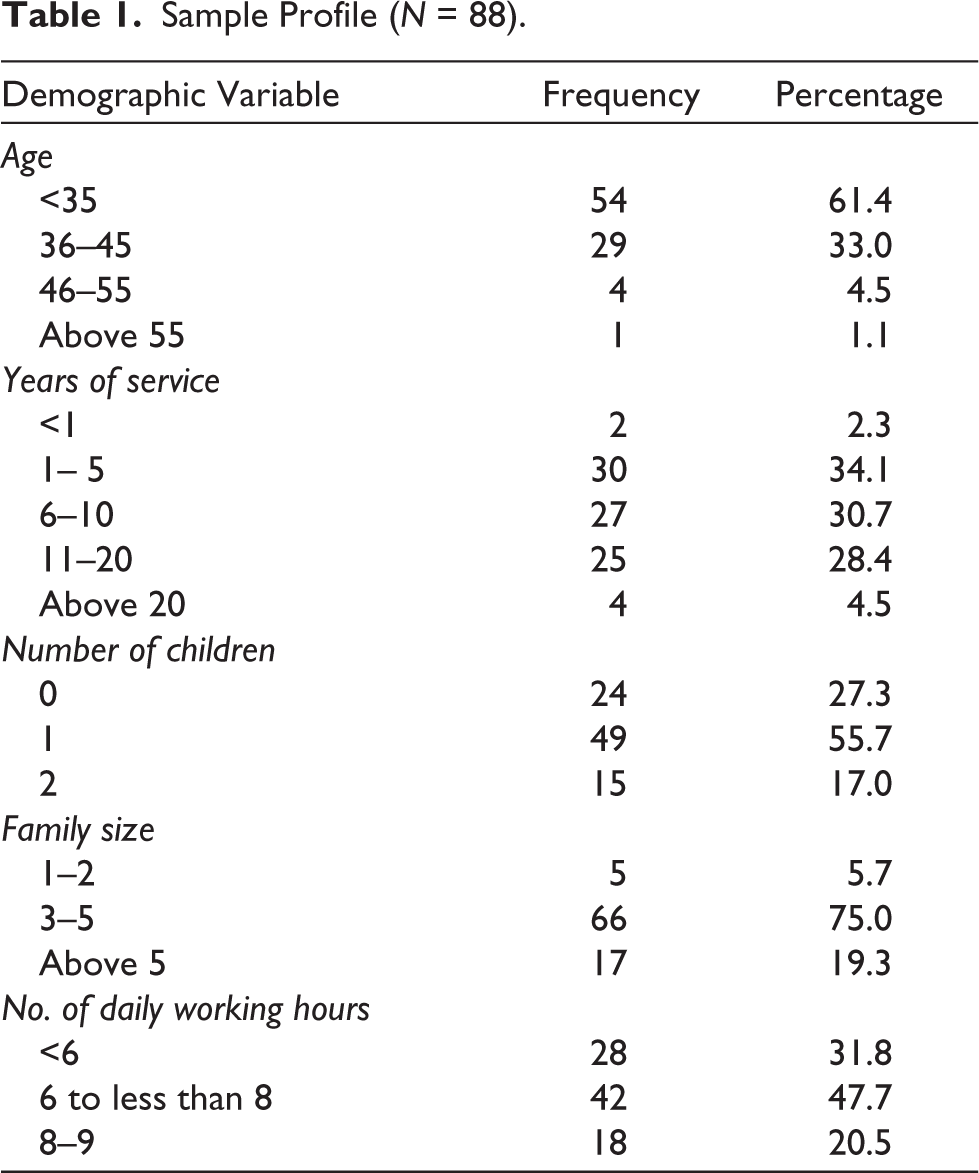
Data were collected from 88 middle-level female employees in Ahmedabad’s service sector using a structured questionnaire. Convenience sampling ensured a representative demographic distribution (Table 1).
Sample Profile (N = 88).
Collection Instrument and Procedure
The target area of respondents is Ahmedabad city. The constructs were found in earlier publications. The questionnaire comprised two sections: (1) opinions on WLB and JS and (2) socio-demographic details. Responses were measured on a five-point Likert scale (1 = strongly disagree to 5 = strongly agree). Reliability testing using Cronbach’s alpha yielded values between 0.585 and 0.877, confirming internal consistency (Field, 2006).
Data Analysis
Data were analysed using SPSS 25.0, with regression and hierarchical cluster analyses applied to test hypotheses and classify WLB levels.
Results and Discussion
Using Cronbach’s alpha, the data were evaluated for reliability (Eswaramoorthi et al., 2011). Table 2 contains the Cronbach’s coefficient derived for several groupings of questions. In cases of exploratory study, the acceptable value for Cronbach’s can be as low as 0.6 (Field, 2006). The Cronbach’s alpha value lies between 0.585 and 0.877. The gathered information is analysed to examine working women’s work life concerns and their effects on JS.
Cronbach’s α Values, Descriptive Statistics and One-way ANOVA for Groups of WLB.
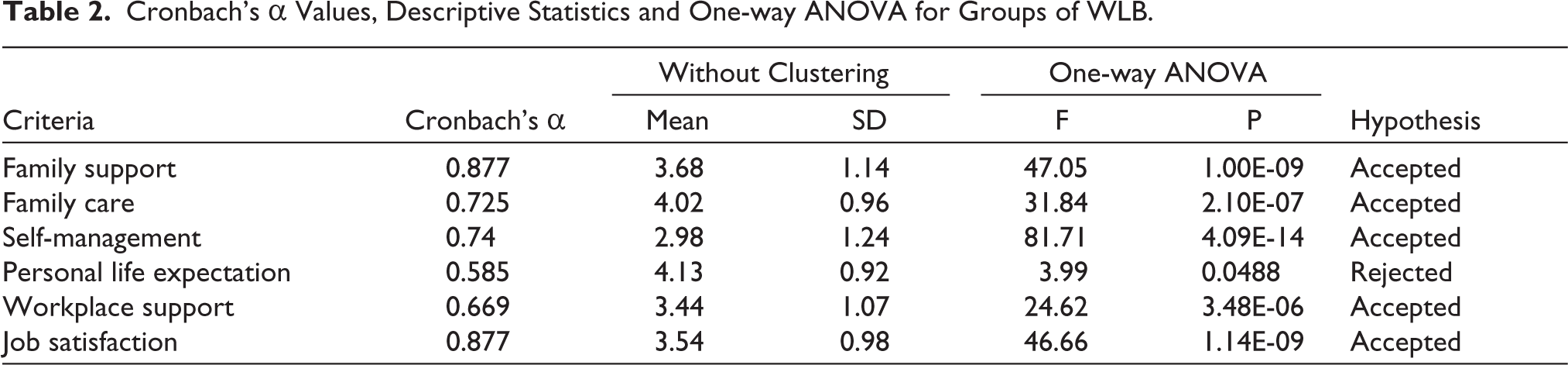
The mean values and SD of the responses are executed for each statements. The results show that the statement ‘I want to spend quality time with my family’ has the highest mean (4.43; SD = 0.657), followed by ‘I can give my family healthy food’ (mean = 4.27; SD = 0.784) and ‘I want to have nice sleep of at least 8 hours at night’ (mean = 4.26; SD = 0.837). In addition, before using cluster analysis, Table 2 shows the mean and SD for each group. The highest mean belongs to personal life expectations (4.13; SD = 0.92), followed by family care (4.02; SD = 0.96) and family support (3.68; SD = 1.14). This demonstrates the shifting priorities of working women by showing how they balance their job life with personal expectations and family responsibilities. The shifting perspective on work-life balance focused more on how to meet individual expectations with the help of family support and care.
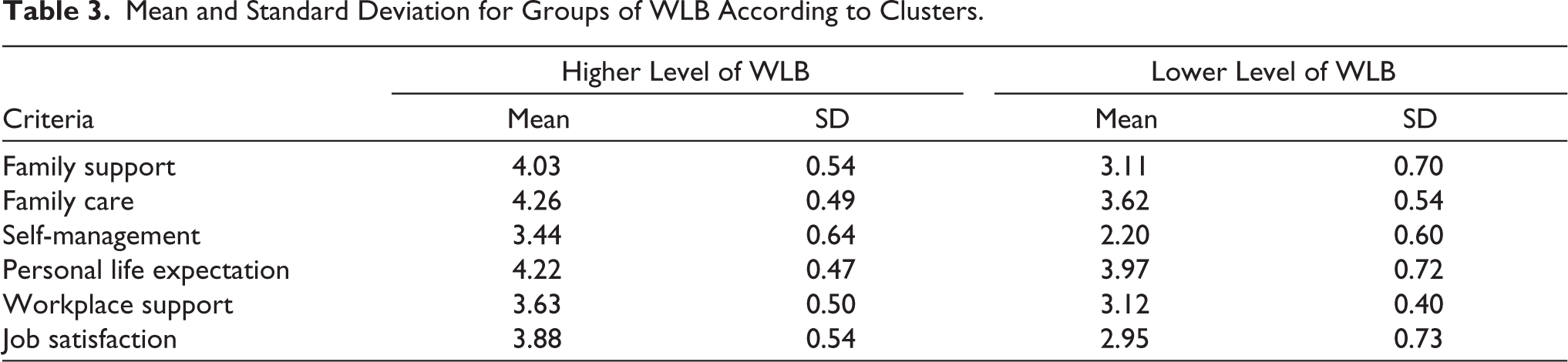
Each person has their own priorities for both JS and WLB. Ward’s method identified two clusters: high-level and low-level WLB groups. Employees in the high-level group reported greater JS and better support across all constructs (Table 3; Figure 1). Personal life expectations and family care scored highest overall, according to Figure 1, supporting the findings of Padma and Reddy (2013).
Mean and Standard Deviation for Groups of WLB According to Clusters.
Mean Scores of Higher and Lower Levels of WLB Groups.
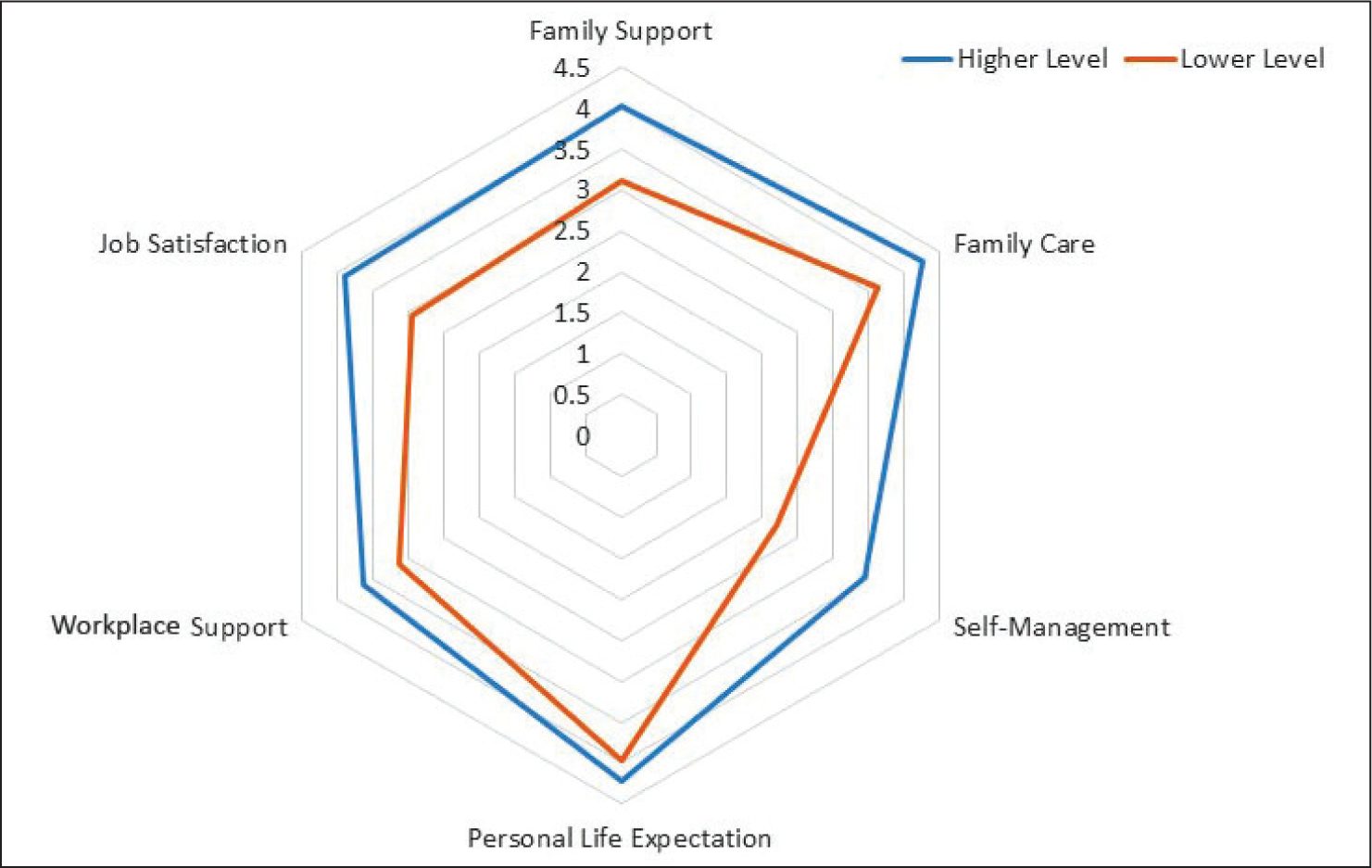
The two groups with the lowest scores were workplace support and self-management. Rhoades and Eisenberger’s (2002) study and Irfan et al.’s (2023) study both support this outcome. If any of these mean differences are significant, the one-way ANOVA test is run to strengthen the conclusions.
The findings of the present study align with the JDR theory, which posits that job resources—such as job autonomy, supervisor support and co-worker support—help mitigate the impact of high work demands on employees (Bakker & Demerouti, 2007; Haar et al., 2019; Kataria & Rashmi, 2021; Schaufeli & Bakker, 2004). The results indicate that job resources have a significant positive impact on WLB in the Indian service sector. As shown in Table 4, there is a notable difference between the two clusters across all six components, with the results confirming the descriptive statistics (p < .05). Additionally, the study reveals that the impact of WLB on female employees’ job satisfaction increases with the cluster level. Positive perceptions of WLB among female employees foster a healthier work environment, leading to improved work-related outcomes such as job satisfaction. Therefore, the study’s results are consistent with the JDR theory, supporting the relationship between WLB and job satisfaction as reported by Kataria and Rashmi (2021), Haar et al. (2019) and other scholars such as Bakker and Demerouti (2007) and Schaufeli and Bakker (2004).
One-way ANOVA for WLB Groups.
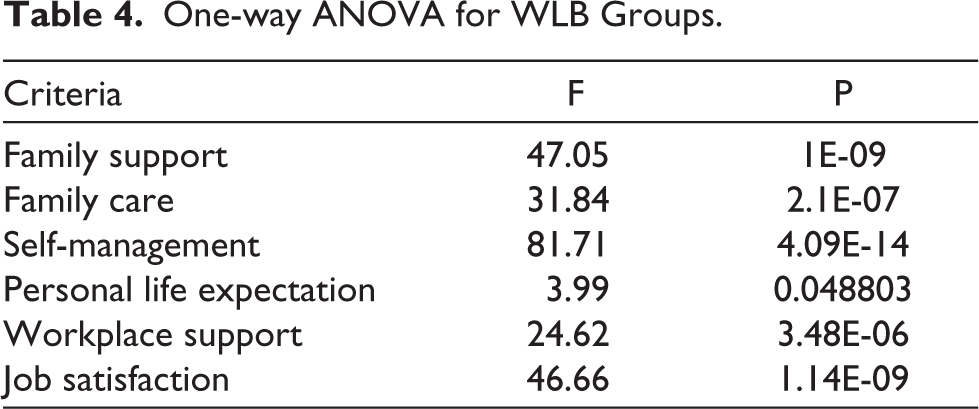
Regression analysis confirmed that all proposed factors significantly influenced WLB (p < .05), except personal life expectations, which were rejected at p = .048 (Table 4).
Conclusion
According to the theory of work-life boundary, incongruence leads to work-life conflict. When people’s desired boundaries differ from their real boundaries, incongruity results (Kreiner et al., 2009). The greatest obstacles to family devotion and finding a work-life balance were faced by working women (Desai, 1996; Rosser, 2004). Earlier research examined how career-related assistance in the workplace and outside of it affected women’s ambitions for career advancement (Kang & Kaur, 2021). Past research has concentrated on a small number of parameters related to women’s JS in India and their relationship to WLB. By examining the role of support from several domains in work and non-work, such as family support and family care, self-management and personal expectations and workplace support and job happiness, the current study broadens the body of literature. Indian families are changing their attitudes as a result of urbanisation, socioeconomic development and economic pressure, forcing men and women into the workforce. Families can help dual-career couples by providing housing, child care and other services (Buddhapriya, 2009; Valk & Srinivasan, 2011).
This study highlights the integral role of WLB in enhancing JS among female employees in the service sector. Key drivers include family care and workplace support, while self-management and personal expectations require further exploration. Future research should extend the scope to include comparative analyses across genders and sectors to validate findings.
Implications and Limitations
The findings of the study have significant ramifications for families, spouses, organisations and societies. The study demonstrate that healthy WLB leads to JS. The company’s human resources team can take initiatives to promote appropriate WLB policies and its implementations. Healthy WLB leads to improvising organisation performance. By using a signalling approach to comprehend working women’s behavioural features, the study advances the body of knowledge. The study adds to the idea by incorporating change into work dimensions and interpreting human resources as signals. In this direction, the study suggested that managers employ counsellors and develop employee support policy for WLB. A favourable climate will be created by the collective effort, paving the way for better future for women. This pathway helps governing bodies to promote macrolevel policies and helps in achieving SDG. Working women of only service sector are included in this study. The study could not account for the variations in HR practices and systems in manufacturing sectors. Further study can compare WLB amongst men and women to examine any disparities. The study can be extended by incorporating various constructs of the JDR model to further investigate the impact of job environment on work-life balance of the employees within various service and manufacturing setups. Future research may combine multiple mediator models to evaluate the relative mediating power of such variables, enhancing the literature and being useful to managers. By allowing for flexible and remote working, organisations may encourage a healthy work-life balance. By practicing excellent time management, adhering to a schedule and setting boundaries, employees can enhance their work-life balance. Practical implications include the necessity for organisations to:
Implement flexible work arrangements Enhance workplace support systems Design targeted HR policies for female employees
Footnotes
Declaration of Conflicting Interests
The authors declared no potential conflicts of interest with respect to the research, authorship and/or publication of this article.
Funding
The authors received no financial support for the research, authorship and/or publication of this article.