




Abstract
With the rapid innovation of technology and the cheaper internet, e-commerce is swiftly reaching new heights. The latest form of e-commerce, called online classified business, has emerged based on a consumer-to-consumer e-commerce model. It is mainly used to deal with posting ads online on classified portals. However, in the contemporary world, it also facilitates and fosters consumers to buy and sell brand-new and used merchandise from each other without any intermediary. A long-standing and overlooked form of e-commerce has lately caught researchers’ interest. Facebook marketplace, launched by Facebook, is one of the latest portals augmenting online classified business. The present study is the first of its kind, which intends to integrate the technology acceptance model with two critical theories, namely Theory of Diffusion of Innovations and theory of planned behaviour, to study the adoption of an online classified portal like Facebook marketplace. The research used structural equation modelling to test the hypothesized relationships. The study asserts that Perceived ease of use is the most vital determinant, followed by Subjective Norm and Perceived Usefulness, which affects the Intention to use the Facebook marketplace. Visibility was found to play no role in influencing Intention to use. The study can have many implications for the Facebook marketplace and other stakeholders.
Introduction
In recent decades, the field of commerce has undergone a significant shift towards e-commerce. This rapid emergence of online marketplaces has caught the attention of investors and researchers alike, who recognize the vast potential of this new frontier. As a result, some of the worldʼs largest companies have invested heavily in this promising marketplace. In recent years, Facebook has emerged as a significant player in the world of e-commerce with the launch of Facebook marketplace. This platform allows users to buy and sell items with ease, creating a virtual marketplace that is accessible to billions of people around the world. With its massive user base and powerful algorithms, Facebook marketplace has quickly become one of the most popular online marketplaces in the world. One of the most significant advantages of Facebook marketplace is its ease of use. Unlike traditional e-commerce platforms, Facebook marketplace is integrated directly into the Facebook app, making it incredibly easy to find and purchase items. Users can browse a wide range of items, from clothing and accessories to electronics and home goods, all from the convenience of their Facebook account. They can search for specific items using keywords or filters and even message sellers directly to ask questions or negotiate prices. Another advantage of Facebook marketplace is its focus on local buying and selling. Unlike other online marketplaces that may require expensive shipping or delivery fees, Facebook marketplace is designed to facilitate transactions between buyers and sellers in the same geographic area. This makes it more convenient for users to purchase items, helps support local businesses, and reduces the environmental impact of shipping and transportation. In addition to its ease of use and local focus, Facebook marketplace offers high safety and security for buyers and sellers. The platform uses advanced algorithms to detect and prevent fraudulent activity and allows users to report suspicious behaviour or items. Sellers can also verify their identity and add ratings and reviews to their profile, helping build trust with potential buyers. Overall, Facebook marketplace represents the future of online shopping, offering a convenient, local, and secure platform for buying and selling items. As the platform continues to evolve and expand, it has the potential to revolutionize the way we shop and do business online. The research on Facebook marketplace is still meagre, and the authors could hardly find any concrete evidence of the adoption of Facebook marketplace among the large populace. The technology acceptance model (TAM), Theory of Diffusion of Innovations and theory of planned behaviour (TPB) to study the adoption of the Facebook marketplace would help understand the penetration of the Facebook marketplace among internet users effectively. The integration of prominent research theories makes the conceptual framework of the research robust, solid and comprehensive. The research would be one of the initial attempts to study the effectiveness of the Facebook marketplace as an alternate selling platform for its users.
In past studies, researchers have used the TAM to explore the factors contributing to users’ Intention to use any technology (Agarwal & Karahanna, 2000; Davis, 1989; Davis et al., 1989). In other words, TAM has also been used to elucidate the users’ adoption or acceptance of a technology. Numerous researchers established that Perceived Usefulness and Perceived ease of use are the critical determinants for measuring the acceptance of technology (Agarwal & Karahanna, 2000; Davis, 1989; Davis et al., 1989; Mathieson, 1991); at the same time, other researchers affirm that we need to explore more factors which may influence the users’ behavioural intention. In other words, an intense need exists to investigate how individual users adopt and accept new technology (Bhattacherjee, 1998; Frambach & Schillewaert, 2002; Venkatesh & Davis, 2000). A few researchers state that individual factors from varied theories and models impact an individual’s adoption and acceptance of technology (Lewis et al., 2003; Venkatesh & Davis, 2000). Therefore, the current study intends to fill this gap and explore the factors using TAM vis-a-vis other theories.
Furthermore, this phenomenon of buying and selling used merchandise based on the customer-to-customer model has only developed recently, and more studies need to be conducted on the subject. Studies in the past have primarily been conducted on the conventional form of e-commerce and its allied topics, but online classified portals, mainly Facebook marketplace, have been ignored. This research article has tried to study this long-standing but overlooked topic by finding out the factors which influence the shopping behaviour of users of the Facebook marketplace.
Theoretical Background and Hypotheses
The present study has integrated the TAM with the TPB and the Theory of Diffusion of Innovations. The reason for integrating these two theories with the TAM is because of the factors that the researcher needed to study the adoption of the Facebook marketplace. Davis believed that Perceived ease of use and Perceived Usefulness have crucial applications in the TAM. Ever since Davis came up with these core factors, these have been extensively used to measure usersʼ adoption and acceptance trends towards different types of technologies. These are considered as the cornerstone of the TAM. A recent study has also proven that in the case of online classified businesses, Perceived value and ease of obtaining the products have come up as critical factors, which are related to Perceived Usefulness (Sarker et al., 2019). Another study (Dakduk et al., 2017) found that attitudes towards e-commerce determine the Intention to purchase online, which, in turn, is explained by Perceived ease of use, Perceived Usefulness and Subjective Norms. Now, based on the novelty of the Facebook marketplace, including Subjective Norm from the TPB would be significant. This is because people tend to use the technology if any acquaintance recommends it (Taylor & Laohapensang, 2009). Also, people use new technology if they see others around them using it (Kurnia et al., 2006), and this factor is called Visibility, making it essential to integrate the Theory of Diffusion of Innovations with TAM. Moreover, a recent study by Jahangir et al. (2021) has used a novel concept of combining a literature review and Incident method to find more relevant factors for studying the adoption of the Facebook marketplace. This study also emphasized using the TAM and Visibility to study the Facebook marketplace adoption.
Factor Taken from TPB
Subjective Norm
TAM has been developed by making the TPB as the basis. However, while developing TAM, the Subjective Norm was excluded by Davis et al. (1989) from integrating with it. It was excluded because there was found to be the least correlation with Intention and due to ‘its uncertain theoretical and psychometric status’ (Davis et al., 1989). The Subjective Norm in the context of the present study can be defined as the perception a Facebook marketplace user holds about what people important to him think about using the marketplace. It can also be defined as an individualʼs perception of the opinion of important people in his life (Fishbein & Azjen, 1975). According to these definitions, an individual acts in a way s/he perceives others think s/he should do. The opinion of others matters in this case while adopting a technology. In e-commerce studies, the Subjective Norm has been found to significantly influence Intention to use as people tend to be affected by the attitude of other people surrounding them (Taylor & Laohapensang, 2009). The suggestions put forward by other people surrounding a user influence the Intention of shoppers (He et al., 2008).
Nevertheless, some studies came up with contrasting results; these studies did not find a relationship between Subjective Norm and Intention to use (Davis et al., 1989; Mathieson, 1991). However, it is worth mentioning that the majority of studies which have been conducted in the area of online shopping have found a positive influence of Subjective Norm on Intention to use (Al-Maghrabi et al., 2011; Jamil & Mat, 2011; Lim et al., 2016; Limayem et al., 2000; Xie et al., 2011). In the Indian context, the same conclusion may apply as the Indian populace regards their customs and culture; hence, based on these studies, the current study also hypothesizes the relationship between Subjective Norm and Intention to use under:
H1: Subjective Norm will positively influence Intention to use Facebook marketplace.
Factor Taken from Theory of Diffusion of Innovations
Visibility
The factor Visibility has been taken from Rogersʼs Theory of Diffusion of Innovations (1983). The factor is also named Observability, but Kurnia et al. (2006) used the term Visibility in their study. Many researchers have used the theory in the past to study the adoption and acceptance of e-commerce (Kurnia et al., 2006; Lertwongsatien & Wongpinunwatana, 2003; Ostlund, 1974). Visibility is an essential factor when a new innovation is brought into the public domain. People tend to use a new technology if they see others around them using it. In the context of the present study, Visibility can be defined as the extent to which a user of the Facebook marketplace finds others using it. It can also be defined as ‘the degree to which an innovation is apparent to the potential adopters’ (Rogers, 1983). This ever-presence of technology makes an impact on a personʼs mind and prompts him/her to explore and use this ubiquitous technology. Visibility has been found to be an essential determinant of intention in the case of early adoption studies. However, once a user gets his personal experience, Visibility loses its impact on intention (Karahanna et al., 1999). Kurnia et al. (2006) even though suggested that Visibility is an essential determinant for studying the adoption of new technologies; but they found an insignificant impact of Visibility on Intention to use. Based on the past literature, the current study also intends to study the influence of Visibility on intention hence, hypothesizes a positive influence of Visibility on Intention to use.
H2: Visibility will positively influence Intention to use Facebook marketplace.
Factors Taken from TAM
Perceived Usefulness
Perceived Usefulness is considered one of the most critical and essential factors for measuring the acceptance or adoption of any technology (Agarwal & Karahanna, 2000; Davis, 1989; Davis et al., 1989; Mathieson, 1991). In the context of the current study, Perceived Usefulness can be defined as the extent to which users of the Facebook marketplace find it useful and valuable while shopping through it. Additionally, it can also be defined according to the user’s standpoint as something which would improve and perk up the performance of a user while using a technology (Davis, 1989; Liao et al., 2013). As per these definitions, a user or consumer will use the Facebook marketplace if they perceive it to be valuable, beneficial and helpful while shopping online. Past studies have found that Perceived Usefulness directly impacts Intention to use (Agarwal & Karahanna, 2000; Gefen et al., 2003; Taylor & Todd, 1995; Venkatesh & Davis, 2000). A few studies, like one conducted on social networks, found contradicting results where no relationship was found between the two variables (Pinho & Soares, 2011). Following the results of past studies, the present study also postulates that Perceived Usefulness has a direct positive influence on Intention to use. Other than the studies mentioned above, there are various other studies as well, explicitly conducted related to e-commerce, which have found a positive impact of Perceived Usefulness on the intention to shop through the internet (Bigné-Alcañiz et al., 2008; Kim & Song, 2010; Xie et al., 2011). Perceived Usefulness persuades a consumer to shop online despite risk (Xie et al., 2011). The Perceived Usefulness of a portal should be higher than the Perceived Usefulness of other competitive portals; otherwise, a potential shopper may switch to other existing competitive portals (Kim & Song, 2010).
H3: Perceived Usefulness will positively influence Intention to use Facebook marketplace.
Perceived Ease of Use
Perceived ease of use is another crucial determinant for studying the acceptance and adoption of any technology (Davis et al., 1989; Mathieson, 1991). In the context of the present study, it can be defined as how effortlessly and easily a user of the Facebook marketplace learns to use it. As far as the point of opinion of a user is concerned, Perceived ease of use can be defined as the degree to which a user finds using and adopting a technology simple and uncomplicated (Davis, 1989). TAM proposes a positive impact of Perceived ease of use on Purchase Intention, meaning if shoppers find a system or shipping portal easy to use, they are more likely to shop from that portal. The possible reason is that the effort and time saved due to the ease and user-friendliness of a portal may lead a user to accomplish more tasks (Pinho & Soares, 2011). If a system is perceived as challenging or complex to use, it is more likely that users may not use it even if the technology has many benefits. The more shoppers find the Facebook marketplace easy to use, the more it will be accepted and adopted. Nevertheless, a few studies in the past have found no direct relationship between Perceived ease of use and Intention to use (Davis, 1989; Moon & Kim, 2001; Yu et al., 2005). However, based on the majority of studies from the literature review, the current study also hypothesizes Perceived ease of use to have a direct positive influence on Intention to use (Agarwal & Karahanna, 2000; Gefen et al., 2003; Venkatesh & Davis, 2000).
H4: Perceived ease of use will positively influence Intention to use Facebook marketplace.
Intention to Use
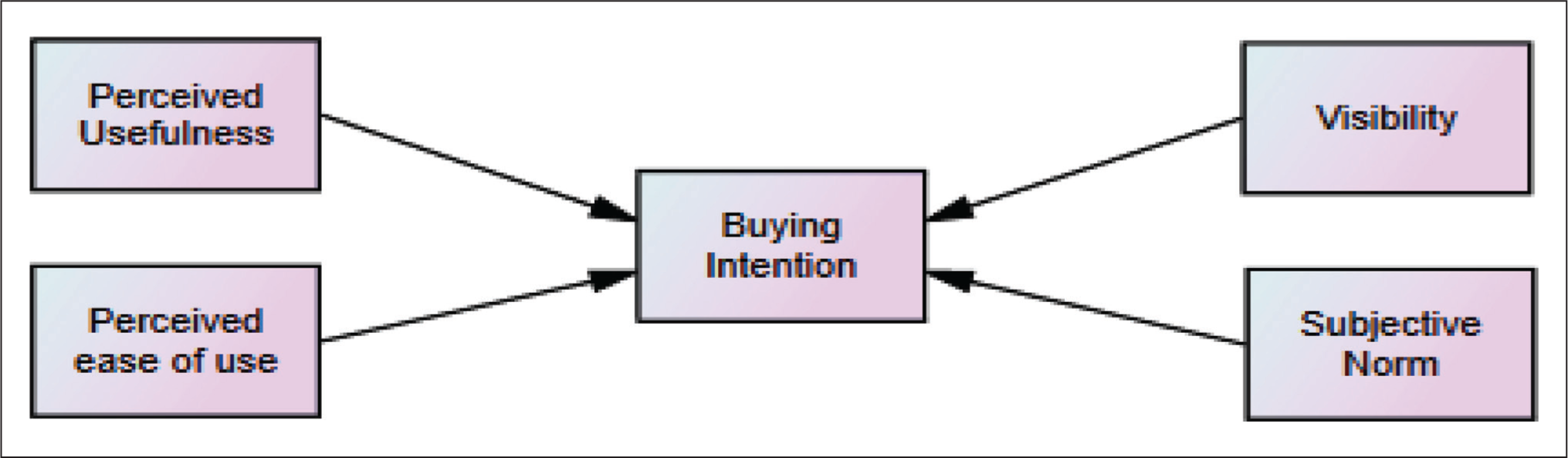
The later versions of TAM included Intention, which may be influenced by Perceived ease of use and Perceived Usefulness (Davis, 1989). The above literature reveals that Intention to use has been found to be influenced by other individual factors from other models and theories as well. Based on the above review of literature, the new conceptual framework is developed, as shown in Figure 1.
Conceptual Framework.
Materials and Methods
Measurement Scales
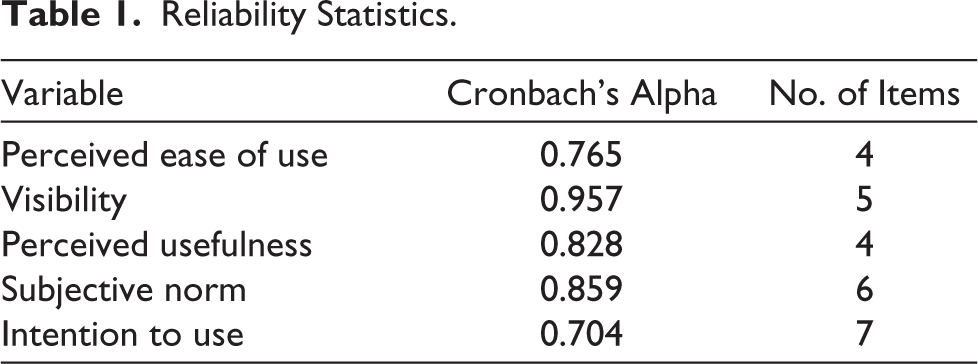
In order to understand the acceptance of the Facebook marketplace through the constructs under study, the researcher operationalized the theoretical constructs using validated multi-item measures from prior research. The items were slightly customized in order to adapt to the context of the Facebook marketplace. The items were measured on a five-point Likert scale from strongly agree (1) through neutral to strongly disagree (5). The scales for Perceived Usefulness and Perceived ease of use were adopted from Davis (1993), and Subjective Norm was measured by using the scale developed by Mathieson (1991) and Taylor and Todd (1995). Scale measuring Intention to use was formed by reframing the scale developed by Venkatesh et al. (2000), while the scale for measuring Visibility was adopted from Rouibah and Abbas (2006). Before going for the main study, the questionnaire was checked for content validity with the help of some experts, and then it was pretested for reliability on 30 consumers through a pilot survey. The reliability checked through Cronbachʼs Alpha for all adopted scales was higher than 0.7, as suggested by Nunnally (1978) (refer to Table 1).
Reliability Statistics.
Data Collection
The data was collected from the Indian users identified through the ads or responses posted on the Facebook marketplace. The questionnaire was distributed directly to them through the Facebook. Out of 5,100 online questionnaires distributed, the survey yielded 893 valid responses comprising respondents from cities of different tiers.
Descriptive Analysis
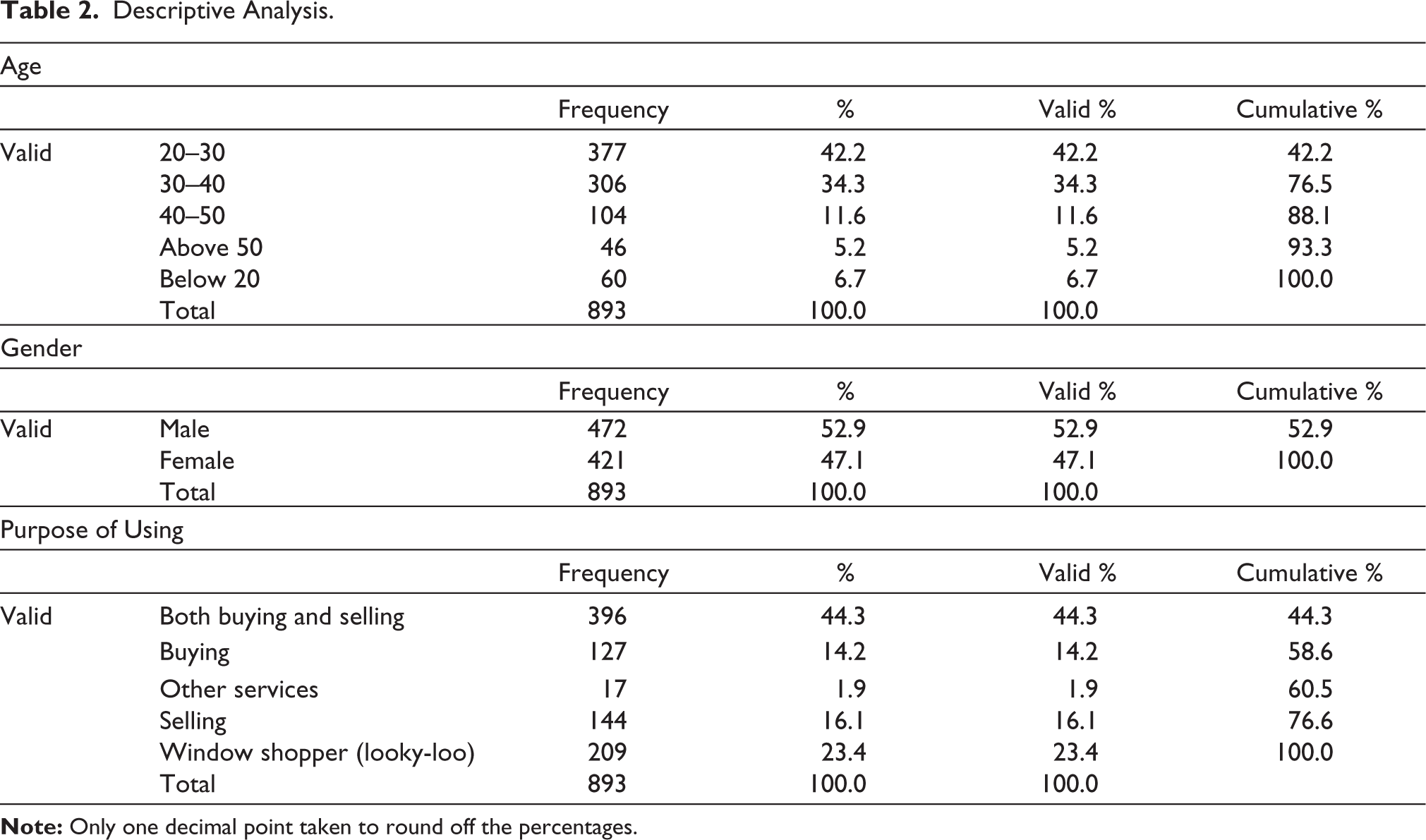
As per the descriptive analysis in Table 2, 42.2% of users fall in the age group of 20–30 years, which means a majority of the users are youth, followed by 34.3% of users from the age group ranging from 30 to 40. Users between the age group of 40–50 comprise 11.6% of total shoppers, while the users falling into two age groups of above 50 and below 20 have the most diminutive presence on the Facebook marketplace with a percentage of 5.2% and 6.7%, respectively. Gender-wise, there is not much difference, as 52.9% of users are males and 47.1% are females. The purpose of using the Facebook marketplace for 44.3% of users is both buying and selling their merchandise. Only 14.2% of shoppers use it only for buying and prefer other portals for selling their merchandise. Likewise, 16.1% of shoppers use it for selling their products only and prefer other competitive portals at the time of buying. Other than these shoppers, a good percentage of users use the Facebook marketplace for looky-loo or window shopping only and do not shop on it at all. Additionally, a small percentage of users (1.9%) use Facebook marketplace for other services as well.
Descriptive Analysis.
Normality of Data
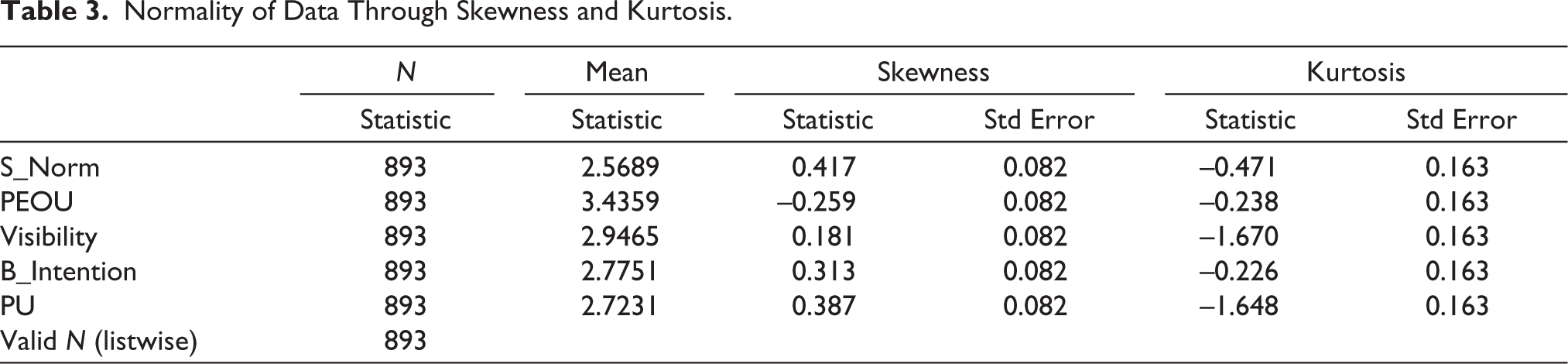
Before going for data analysis through the structural equation model, the normality of data was checked through skewness and kurtosis. As per Table 3, the values for all the variables are within the range of +1.96, proving the dataʼs normality.
Normality of Data Through Skewness and Kurtosis.
Results
Structural equation modelling has been used to analyse the data and test the hypotheses. The said statistical technique is appropriate in cases of finding structural relationships in multivariate studies and is a single tool that combines factor analysis and multiple regression analysis.
Measurement Model
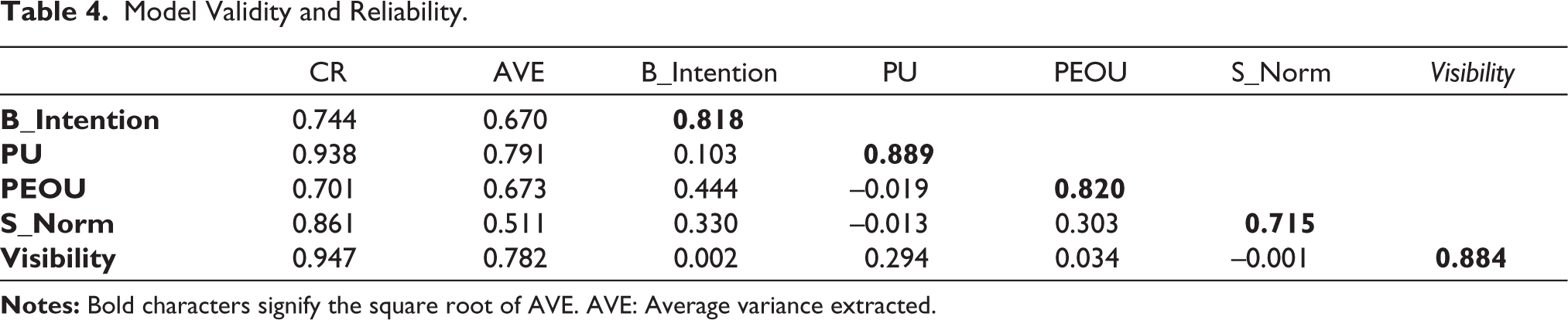
Analysis through the structure equation model is carried out in two steps, which include the analysis of the measurement model and the analysis of the structural model. Through the measurement model, the validity of the model is evaluated by examining reliability, convergent validity and discriminate validity. Besides the model fit indices are also checked to check how well the model fits the data. Table 4 reveals the composite reliability for all the constructs is higher than 0.7, the convergent validity was checked through average variance extracted (AVE), and the values were greater than 0.5. For discriminant validity, the square root of AVE (mentioned in bold characters in Table 4) was compared to the correlation estimates between two constructs, and the values of the square root of AVE were greater than the square root of values of AVE providing evidence of discriminant validity. The fit statistics are very well as per the thresholds. The chi-square of 4.7 (p value .000) of the model at 1,158.703 with 242 degrees of freedom (Marsh & Hocevar, 1985) is acceptance. The fit indices from each type of index, like Goodness of Fit Index (GFI) at 0.904 (a type of absolute fit index), Comparative Fit Index (CFI) at 0.924, Tucker Lewis Index (TLI) at 0.914 (types of incremental fit index), AGFI at 0.880 (a type of Parsimony fit index) and Root Mean Square Error of Approximation (RMSEA) at 0.06 (type of badness-of-fit index) are acceptable (Hair et al., 2010).
Model Validity and Reliability.
Results and Discussion Based on Structural Model Estimates
Figure 2 depicts that the four independent variables explain only 0.52% of variance against the dependent variable ‘Intention to use’, and there is a vast scope for other variables to be included in the study in future. Table 5 depicts the estimates of the structure model, and as per the results, hypothesis 1 (H1) having β = 0.216 and p value < .05 proves Subjective Norm significantly influences Intention to use; hence, H1 was supported. The result is in congruence with the past studies (Al-Maghrabi et al., 2011; Jamil & Mat, 2011; Lim et al., 2016; Limayem et al., 2000; Xie et al., 2011). It may be because, for most Indians, the opinions of family, friends, colleagues, etc., have a bearing on them. Besides, as the Facebook marketplace is relatively new, they prefer to adopt it based on the opinions and advice of others. The insignificant p value of .048 for H2 shows that Visibility does not have a significant relationship with Intention to use; therefore, H2 was not supported. The finding is analogous to past studies (Kurnia et al., 2006; Ostlund, 1974). The result, in hindsight, is not unexpected, as the Facebook marketplace has low Visibility in India; hence, Indian users do not seem to adopt technology based on Visibility; rather, they value the advice, opinion and knowledge of usage of the Facebook marketplace from close acquaintances.
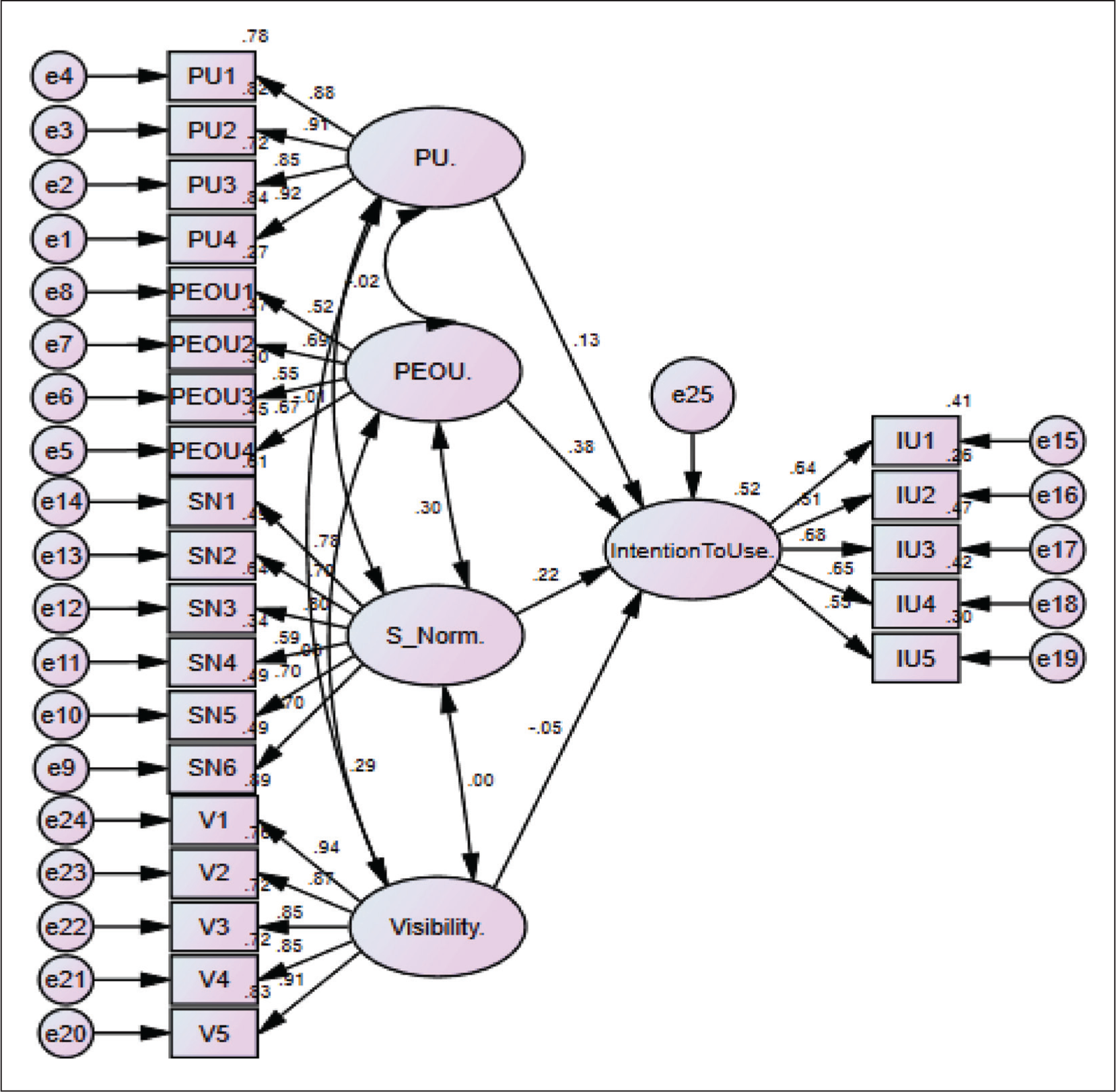
Results of Structural Model.

Hypothesis 3 (H3), postulating the relationship between Perceived Usefulness and Intention to use, was accepted as β value of 0.127, and a p value of .001 affirms a significant relationship between the two variables. The result again has a similarity with past studies (Gefen et al., 2003; Kim & Song, 2010; Taylor & Todd, 1995; Venkatesh & Davis, 2000; Xie et al., 2011). The result indicates that Indian users find the Facebook marketplace useful, hence making a significant impact on the adoption and acceptance of the Facebook marketplace. Estimates against hypothesis 4 (H4) in Table 5 (β = 0.383 and p value < .05) attest that Perceived ease of use also has a significant relationship with Intention to use; thus, H4 is supported as well. Previous studies have also come up with resembling results (Agarwal & Karahanna, 2000; Gefen et al., 2003; Venkatesh & Davis, 2000). As the Facebook marketplace is a recently developed platform, so for accepting it, easiness and user-friendliness of the Facebook marketplace hold the most crucial place among Indian users. In the present study, Perceived ease of use is the most vital determinant among other determinants, followed by Subjective Norm. Perceived Usefulness holds the last place based on the importance of adopting the Facebook marketplace. Here again, the same reason holds that Indian users are still in the phase of getting acquainted with the Facebook marketplace. Once they learn the benefits or risks associated with it, Perceived ease of use and the Subjective Norm will add up to the usefulness of the Facebook marketplace, and it may be the most critical factor among all the factors to impact Intention to use. Hence, the opposite findings can be expected between these variables in future studies.
Conclusion
The present study attempted to study the factors which influence the Intention to use the Facebook marketplace using an integrated model formed from three split models. The integrated model was empirically investigated using data collected from Indian users of the Facebook marketplace. The study verified that there is a scope for studying many more variables in the future based on the variance explained by the determinants considered in the present study. The study affirmed that Perceived ease of use is the most vital determinant of Intention to use the Facebook marketplace, followed by Subjective Norm and Perceived Usefulness. Visibility had no role in determining the Intention to use.
Even with the above findings, the current study has few limitations, as only four determinants were taken into consideration. In future studies, additional factors can also be studied. The present article did not study the mediating role of Perceived Usefulness or Perceived ease of use between other determinants and Intention to use. In the future, researchers may study the mediating role of these two factors.
Footnotes
Declaration of Conflicting Interests
The authors declared no potential conflicts of interest with respect to the research, authorship and/or publication of this article.
Funding
The authors received no financial support for the research, authorship and/or publication of this article.