



Abstract
Purpose:
The research paper aims to understand the influence of specific triggers derived from entrepreneurship education programs (EEPs) on students’ intentions. Additionally, it extends the theory of planned behavior by including an additional construct of perceived social support (PSS) as a determinant of students’ entrepreneurship intention (EI).
Methodology:
A sample of 395 university students from the Indian state of Gujarat, who had previously attended EEPs, was selected. A convenient sampling method was employed to validate the scale, which was further refined using confirmatory factor analysis in the first stage and through the measurement model in Partial Least Squares Structural Equation Modeling (PLS-SEM) in the second step.
Findings:
The triggers derived from assessed EEPs had a significant impact on EI and its antecedents. While PSS did not have any significant impact on attitude, it did have considerable influence on perceived behavior control and subjective norms.
Practical Implications:
Universities should extensively address the trigger component in EEPs. It is the trigger derived from these programs that raises attitudes and intentions toward entrepreneurship. This article also confirms that PSS is essential for the development of EI, owing to which, policy support from government and universities does enhance the students’ enthusiasm to pursue sustainable entrepreneurship.
Originality/Value:
This research makes unique contribution to entrepreneurship literature by considering the role of ‘triggers’ that are acquired from EEPs because they raise the attitudes and intentions among students.
Introduction
Today, there is broad consensus on the considerable need of promoting entrepreneurship to increase and uphold economic competitiveness and productivity. With an aim to promote entrepreneurship culture among the young generation, investments in number of activities all over the world can be observed (Wilson et al., 2009). Interestingly, India being the sixth largest economy also ranks among the top five places in the world to launch a new business (Shukla et al., 2023). This revival of entrepreneurship in the country truly reflects its soaring rankings to 20th position in Global Startup Ecosystem Index in 2020 (Startup Blink, 2021), 63rd position in ease of doing business in 2019 (World Bank, 2019), and 48th position in Global Innovation Index in 2020 (Soumitra et al., 2020). In this study, we considered graduate students from several universities across the Indian state of Gujarat. The reason may be attributed to the fact that for ages Gujarat has been known to be the ‘land of entrepreneurs’. In fact, the state backs 17% of its adult population who are engaged in total entrepreneurial activities (GEM Report, 2021).
Universities have endeavored to build startup capacity with support of the Student Startup and Innovation Policy (SSIP) in Gujarat. Supporting over 1,000 student-led innovations annually, they have been engaged with a wide spectrum of Entrepreneurship Education Programs (EEPs). Naysayers may ask, but why are the government and universities focusing on college students? Is it that they can be educated to be an entrepreneur more easily? Previous research highlights that university students are seen to have the most potential for innovation and entrepreneurship, as they can learn independently; besides, fostering entrepreneurial competencies and traits are simpler in their case (Byun et al., 2018; Jiang et al., 2017). From lessons and reflections learned during EEPs, students learn to nurture their intentions to start their own ventures (Hsiao et al., 2012; Walter & Block, 2016). Hence, we do see a wide spectrum of topics that are covered including career opportunities awareness program, startup funding opportunities, inspirational programs, such as industry trips, entrepreneurs talk, and formally offered skill-based credit courses (Dehghanpour Farashah, 2013; Gorman et al., 1997; Solomon et al., 2002). Based on 395 samples, this article looks at understanding whether EEPs can actually trigger and improve students’ learning and Entrepreneurship Intention (EI). We considered target population of students from 18 universities in Gujarat, which are considered nodal institutions (NIs) under the startup assistance scheme of the Gujarat government. An email with a link to the online questionnaire, along with brief information about the research was sent to a total of 4,040 respondents between January and March 2021. The questionnaire was completed by 457 students or 9.7% of the total. Among them 26 responses were found to be not eligible since they did not take part in EEP, 19 responses seemed to be inconsistent and were omitted. In total, 17 responses were found to be incomplete and were discarded. In the end, 395 valid cases were considered.
Our research makes the following two significant contributions: First, it highlights that merely teaching entrepreneurship as a subject, with theoretical approach is not sufficient to impact the students’ intention to start their own business. Universities and policymakers must also consider the ‘trigger’ or inspiration with ‘change of heart’ during conceiving such programs. As a result, while designing such programs, the mentors’ teaching style, innovative teaching methods, like using digital technologies and AI, dedicated interactive sessions with successful entrepreneurs and/or external industry experts should be encouraged, so that students can actually understand and imbibe the realities and the global dynamics at play. Secondly our findings enrich theoretical knowledge surrounding sustainable entrepreneurship, which has been gaining significant research momentum (e.g., Belz & Binder, 2017; Esteves et al., 2021). Moreover, we found that favorable support mechanisms like crowdfunding, impact investments, educational programs on sustainable enterprises, availability of sustainable business partners and NGOs tend to support and invigorate the students’ intentions. The remainder of the article is divided into four major sections, including the conclusion. Following the introduction, the literature review and model construction come next, followed by research methodology and discussion of the findings. Finally, limitations and implications for future research are included.
Literature Review and Hypothesis Development
Entrepreneurship Intention
Entrepreneurship Intention (EI) has been proposed as the most crucial aspect in the launch of a new business (Kolvereid, 1996). Bird (1988) defined intention as ‘a state of mind directing a person’s attention toward a specific object or a path in order to achieve something’ (p. 442). This study used the theory of planned behavior (TPB) to examine students’ intentions to pursue entrepreneurship. Understanding how EIs are created can give insights into the venture formation process because intentions can predict a person’s behavior (Galanakis & Giourka, 2017). Going by TPB, the following three factors add up to form behavioral intentions: First, attitudes toward behavior (a person’s cognitive and psychological assessment of whether a particular behavior is desirable or not); second, subjective norms (including social pressure coming from people who are important, like friends, family, or close relatives); and third, perceived behavioral control (a person’s perception about his own ability to control over a situation).
Attitude toward Entrepreneurship (ATE)
Attitude is ‘a learned predisposition to respond to a given object in a favorable or unfavorable manner’ (Fishbein & Ajzen, 1975, p. 6); hence, it becomes an evaluation of certain behaviors that are appealing or advantageous (Gieure et al., 2019). Being less stable than personality traits, ‘attitudes’ do have the tendency to change with time and settings (Robinson et al., 1991). For example, if a person has developed a positive attitude toward something, it may be safe to assume that s/he would be more likely to carry it out in the future too (Liñán et al., 2011). Lortie and Castogiovanni (2015) collated 16 studies that affirmed a favorable association between attitudes and intentions after reviewing several relevant literature studies on the subject. Thus, we assume that educators and practitioners may also have an impact on the students’ entrepreneurial attitude (EA), and based on this understanding, we posit:
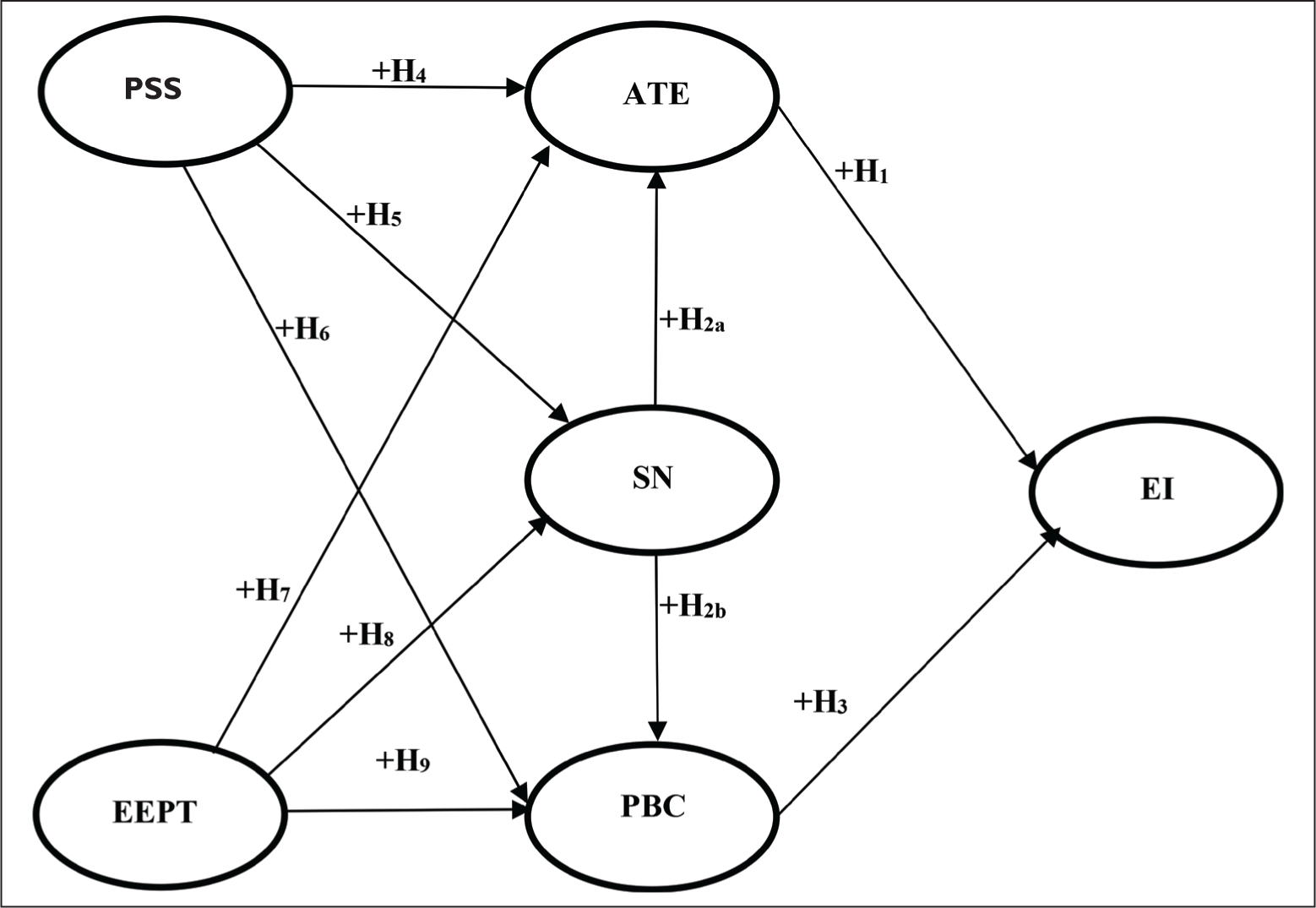
H1: ATE and entrepreneurship intention are positively related.
Subjective Norm (SN)
Ajzen (2002) observed that, in addition to one’s attitude toward behavior, one’s decision to engage in or refrain from engaging in a particular behavior might be influenced by the opinions of one’s parents, spouse, friends, and other significant reference groups. When a person decides to start a business, for instance, these very norms include how they judge the values that others regard as important. However, some researchers (e.g., Autio & Acs, 2010; Miralles et al., 2017) argue that norms are among the lowest predictors for EIs. Other studies have shown the influence of SNs on attitude and perceived behavioral control (PBC) (Kolvereid & Isaksen, 2006; Liñán & Chen, 2009). Thus, we propose the following:
H2a: SN influences ATE positively. H2b: SN influences PBC positively.
Perceived Behavioral Control (PBC)
Bird (2015) defined PBC as, ‘perception of the respondent that they can carry out a particular behavior’ (p. 154). Ajzen (2002) propounded that if a person observes a high level of perceived control and finds new firm creation easy, then it’s possible that s/he would be more engaged in that behavior; it highlights the sense of capacity to perform an activity. As a result, for an entrepreneur, it is not only the ability to manage and run a business that is important but access to external resources plays an equally important role (Tsai et al., 2016). Additionally, previous research has revealed that one of the most significant factors influencing EI is PBC (Trivedi, 2016). Based on this discussion, we posit the following:
H3: PBC and EI are positively related.
Perceived Social Support (PSS)
By incorporating more sustainability initiatives, entrepreneurial endeavors aid in the creation of new markets and products and also help in modifying existing ones (Anna et al., 2000; Pacheco et al., 2010; Schaltegger & Wagner, 2011). PSS describes how supportive the external environment is of the initiative’s specific cause (Hockerts, 2015). External support mechanisms, such as crowdfunding, impact investments, training programs on sustainable startups, and nongovernmental organizations all play a vital role (Esteves et al., 2021; Klofsten et al., 2019; Petruzzelli et al., 2019). The theoretical argument for the inclusion of PSS in the TPB is when constructing TPB, little consideration was paid to the continuously weak function of SN, which is the only social influencing element. Entrepreneurs need to create connections to resources and market niches to take advantage of business opportunities, hence social support should be considered as a significant variable (Tornikoski & Maalaoui, 2019). This study adopted TPB and alongside integrated PSS to predict the students’ willingness to start their own venture. Based on this understanding, we posit the following:
H4: PSS influences entrepreneurship attitude positively. H5: PSS influences SNs positively. H6: PSS influences perceived behavior control positively.
Triggers Derived from Entrepreneurship Education Program (EEPT)
EEPs include any educational program or procedure that focuses on building an individual’s entrepreneurial knowledge, skills, and talents (Fayolle et al., 2006b, p. 702). These not only make the students aware of the possibility of entrepreneurship as a career (Kolvereid, 1996) but also emphasize the significance of entrepreneurship for economic development (Kuratko, 2005). One of the purposes of this research is to advance the paradigm of entrepreneurship education by outlining the significant benefits that students receive from these programs and evaluating their impact on attitudes and intentions. Thrash and Elliot (2003) proposed that inspiration is elicited from a stimulus rather than being initiated by a conscious act of will. Branzei and Zietsma (2003) further added that inspiration describes provoked feelings and has an emotional component. The stimulus object (which could be a person or concept which in our case is an education program) that evokes inspiration is referred to as a ‘trigger’. This brings us to the next purpose of our research, which is to identify the specific EEP triggers that students get, explain how these triggers inspire students and influence intention. Thus, we propose the following three hypotheses:
H7: Triggers of EEP and the ATE are positively related. H8: Triggers of EEP and SNs relate positively. H9: Triggers of EEP influence perceived behavior control positively.
Considering the literature review mentioned earlier, the following research model is proposed (Figure 1).
Research Framework—Proposed.
Methodology
Target Population
University students are highly inclined toward entrepreneurship (Zhang et al., 2014); hence, the participants of our study include students from 18 universities in Gujarat that are serving as NIs under the startup assistance scheme of the Gujarat government. These universities offer students a broad scope of fields, including engineering, management, sciences, commerce, and social sciences, and do have incubation support. Data were collected by surveying students who have previously attended an EEP. Specifically, under EEPs, we considered programs, as well as credit courses that were designed to increase awareness and prepare aspiring entrepreneurs to start their venture. Using convenient sampling, an email with brief information about the objectives of the survey and link to the online questionnaire were circulated. Importantly, due to the large geographic scope of this study, we utilized online surveys to maximize the number of respondents (Zikmund, 1997).
Sample Size and Composition
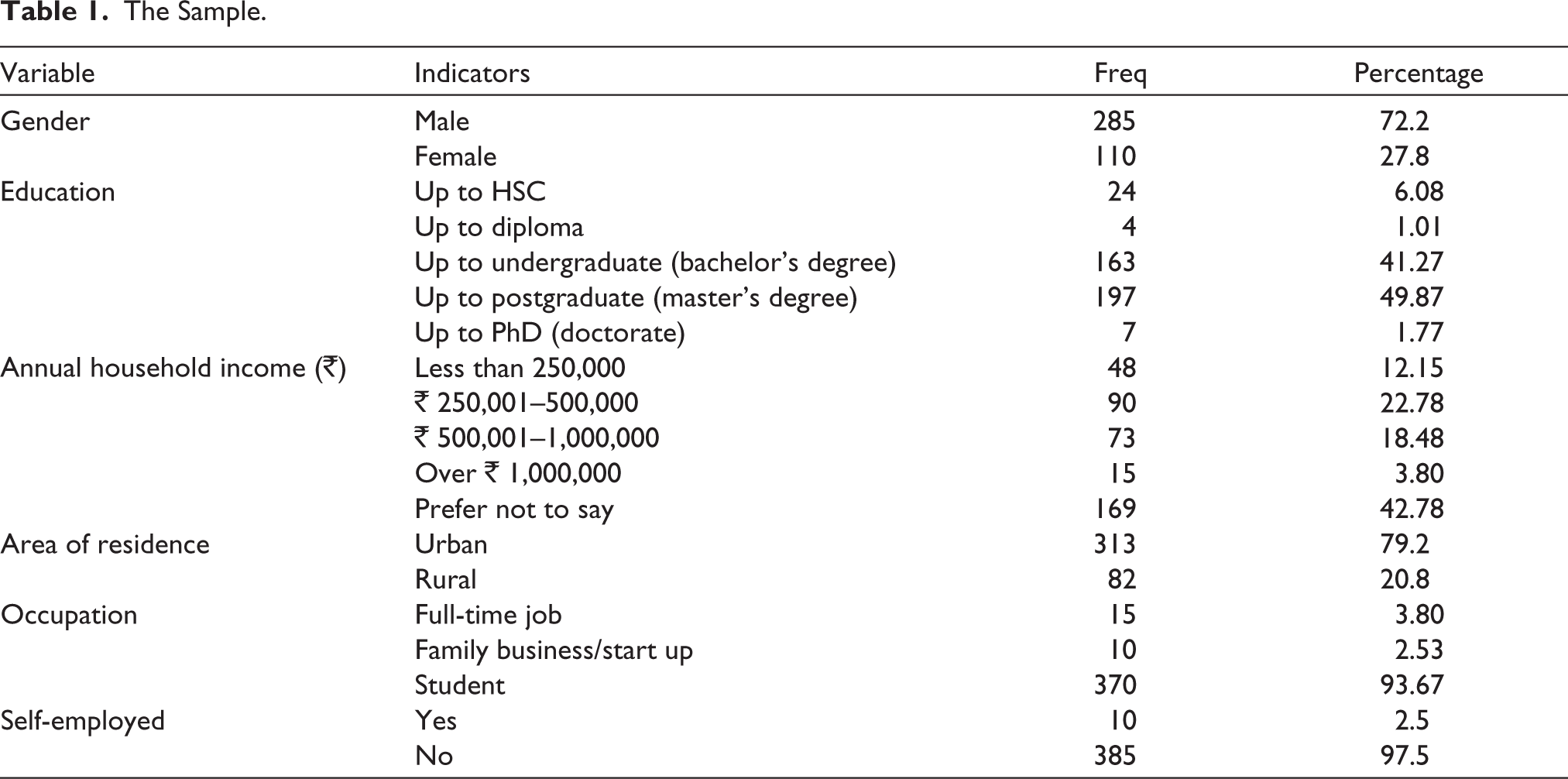
Data were collected between January and March 2021 from students in a variety of academic fields at universities in Gujarat. Initially, we reached out to 4,040 students; among them, 457 students completed the survey, yielding thereby a 9.7% response rate. Further, we discarded 62 responses as they were invalid or incomplete. Thus, for our final data analysis, we had 395 usable responses. Table 1 shows that most of the respondents were men, who were not yet employed, were educated, and lived in urban areas; on an average they had a yearly household income of over ₹2.5 lacs. Most of the participants were aged between 19 and 30, while the average age was noted to be 22 years. We had 32 items in our study that were further divided into the following seven constructs, viz. attitude (5 items), SN (6 items), PBC (6 items), EEP triggers (5 items), PSS (4 items), and EI (6 items).
The Sample.
Measurement of Constructs
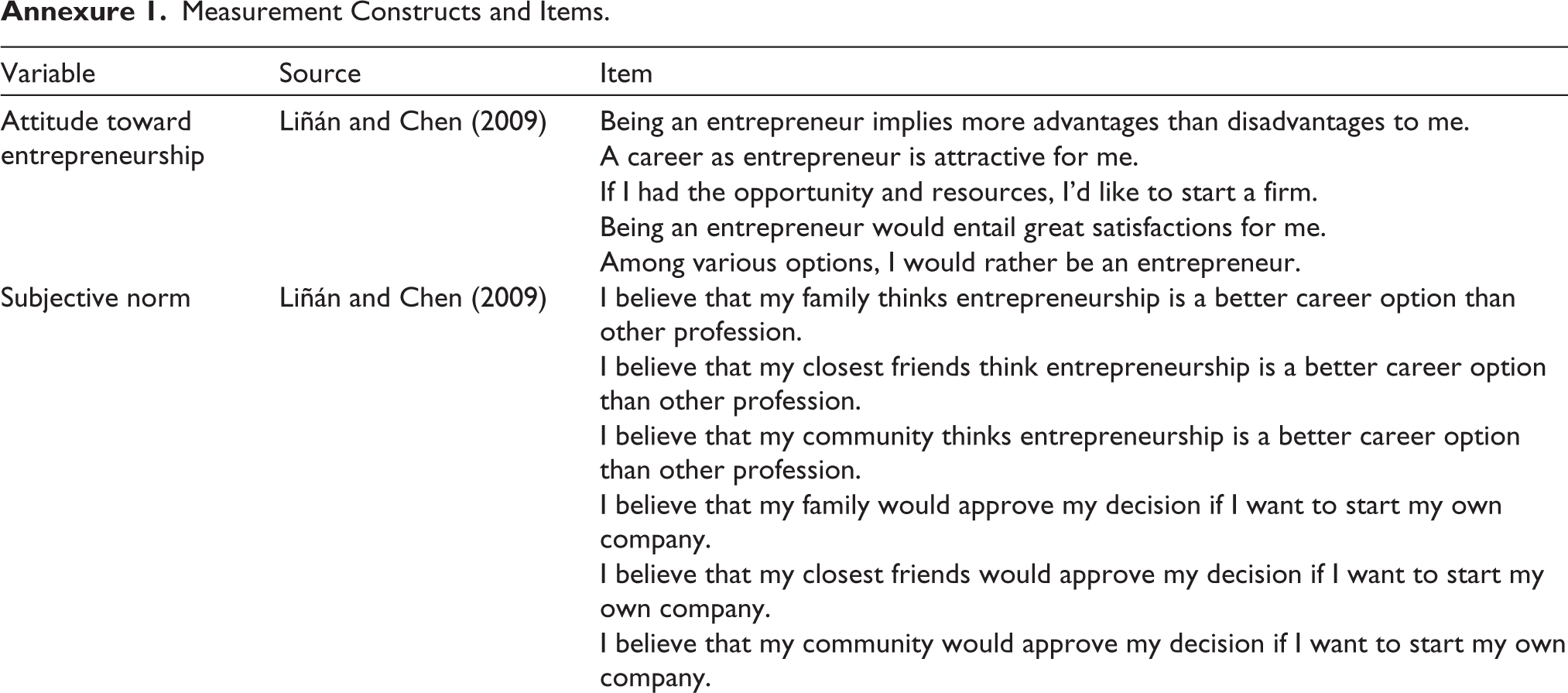
The study made use of measurement scales that had previously been validated. For instance, for the intention questionnaire (EIQ), the Liñán and Chen (2009) and modified Liñán et al. (2011) scales were used. Specifically, four constructs in EIQ were used; they include attitudes toward entrepreneurship (ATE), SN, PBC, and EI and were measured separately using 5 items, 6 items, 6 items, and 6 items, respectively. Further, to assess the triggers derived from the EEP, we used the Souitaris et al. (2007) scale, measuring: ‘views of a professor’, ‘views of an external speaker’, ‘views of a visiting entrepreneur’, ‘preparation of a business plan competition’, and ‘views of an industry expert’ on a 5-point scale. Johnson and Hörisch (2021) 4-item scale was employed to measure ‘perceived social support’. All the above constructs were measured on a 5-point Likert scale, 1 = ‘strongly disagree’ and 5 = ‘strongly agree’ (Annexure1).
Scale Reliability
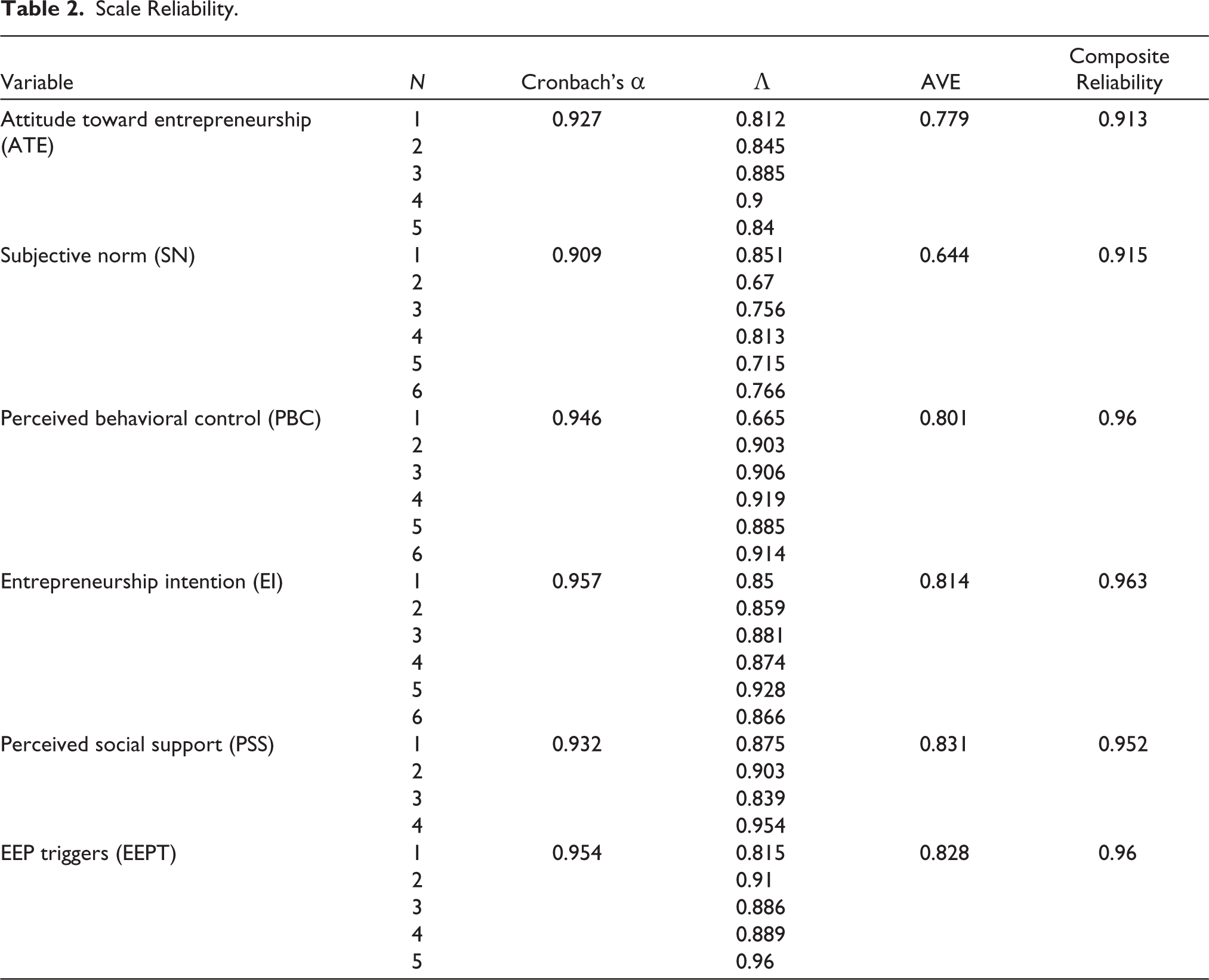
By using SPSS 20.0 to calculate Cronbach’s alpha, we examined scale reliability. All constructs’ Cronbach’s alpha values were discovered to be higher above the cutoff point 0.7 (Nunnally & Bernstein, 1994) (Table 2).
Scale Reliability.
Data Analysis
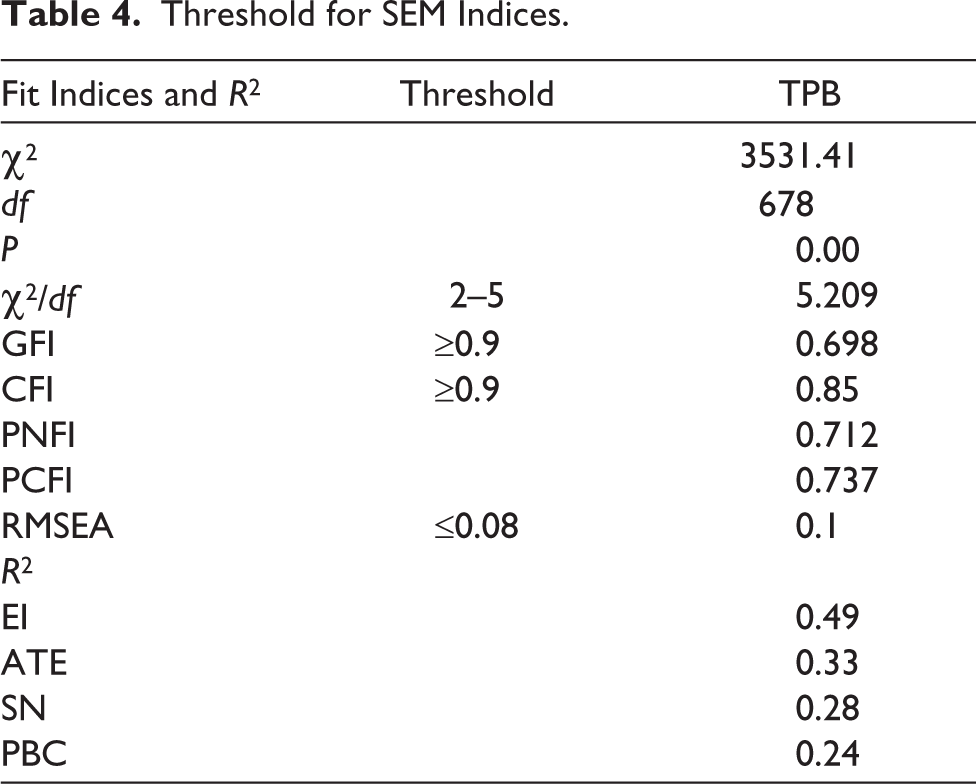
We performed SEM analysis, using a two-stage technique using AMOS software 19.0 (Arbuckle, 2006). First, the quality and sufficiency of the measurement were assessed through CFA by ensuring reliability, convergent validity, and discriminant validity. Second, using SEM, the causal relationship between latent variables was examined. Maximum likelihood estimate (or ‘MLE’) was used at each stage (Byrne, 2001). Notably, the model fit was found to be ‘good’ when indices ≥ 0.90, χ2/df = 2 and 5 and RMSEA is ≤ 0.08 (Browne & Cudek, 1993).
Validity of Measurement Model
MLE was utilized to estimate CFA in order to test the model. Herein, the GOF statistics were close to the limit that was acceptable (χ2 = 3531.41; df = 678; p < .001; χ2/df = 5.209; GFI = 0.698; TLI = 0.764; CFI = 0.85; RMSEA = 0.1). Concurring with Chou and Bentler (1993) suggestion for modification indices to improve fit statistics, additional paths were added, resulting in the highest decrease in chi-square value. Moreover, in light of the suggestions made by Jöreskog and Sörbom (1993), we discovered that all parts had factor loadings values greater than 0.5 (t > 2.58), making them significant. Convergence and discriminant validity were also verified (Hair et al., 1998).
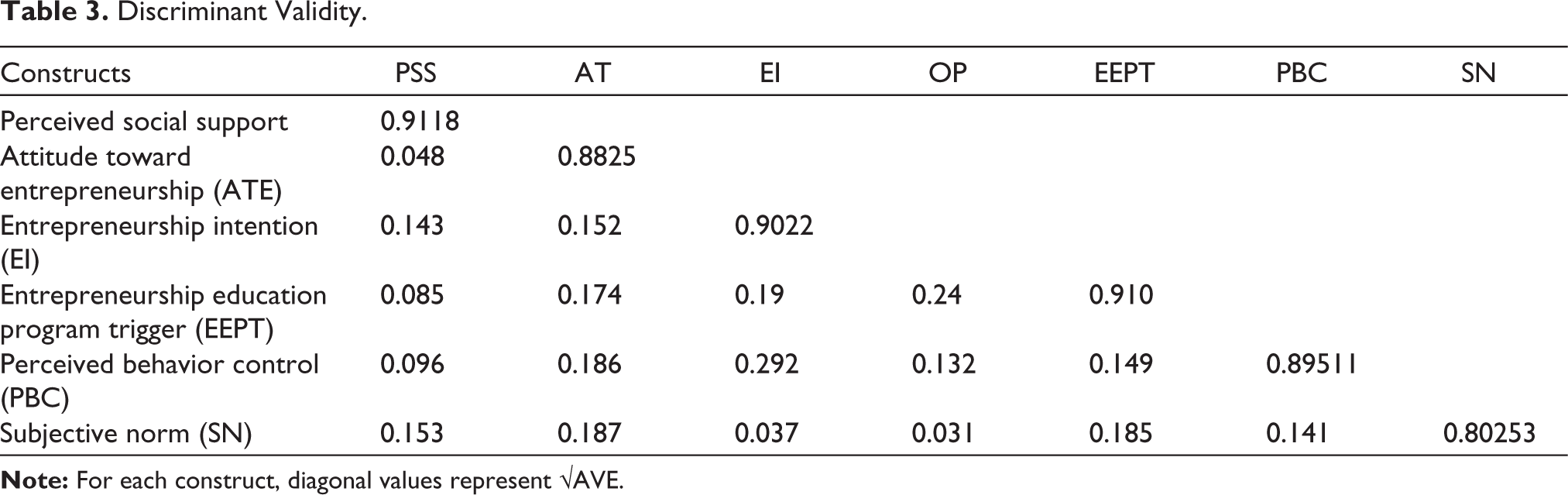
Additionally, the following two methods were used to achieve converging validity: (1) From factor loading, we observed all the values to be significant (i.e., more than 0.5), which in effect establishes convergent validity. (2) From the average variance extracted (AVE), which is characterized as variation in the indicators or observed variables that are accounted for by the latent constructs. AVE > 0.5 and CR > 0.7 (Table 2) and hence were found satisfactory. To prove discriminant validity, we contrasted squared correlations between constructs with squared √AVE (Fornell & Larcker, 1981). Since √AVE is greater than correlation coefficients, the construct’s discriminant validity is achieved (Table 3).
Discriminant Validity.
Structural Model Put to Test
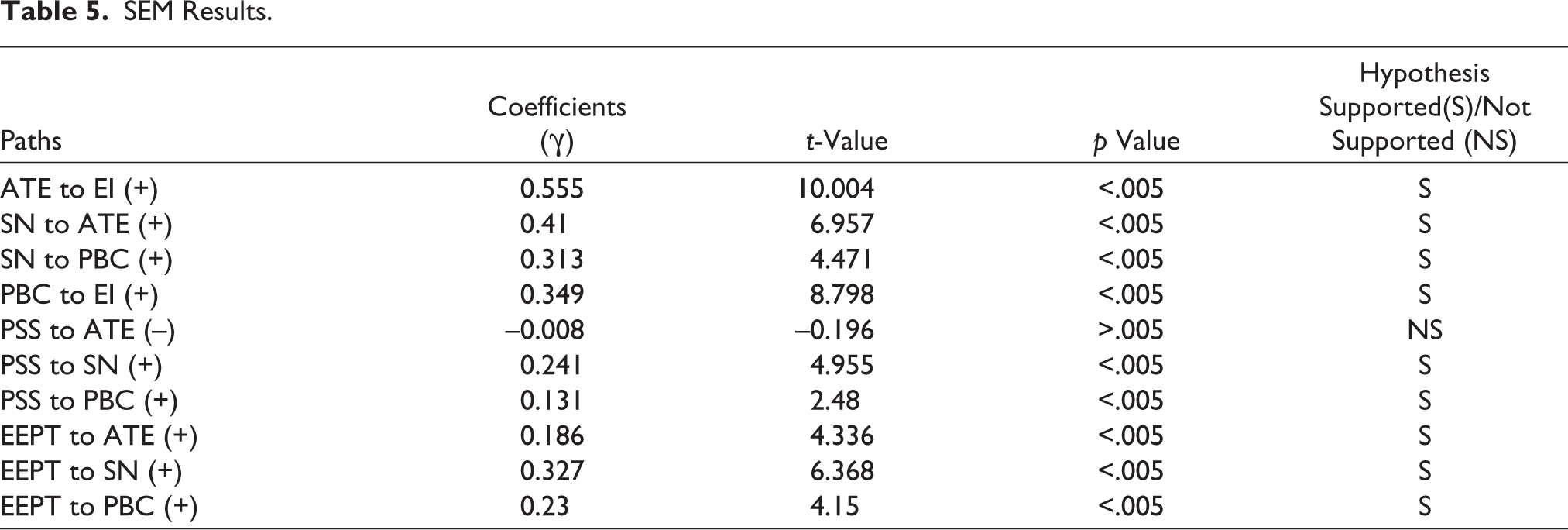
We computed the models prior to examining the structural model (Table 4) using SEM; the result was close within acceptable fit (χ2 = 3531.41; df = 678; p < .001; χ2/df = 5.209; GFI = 0.698; TLI = 0.764; CFI = 0.85; RMSEA = 0.1). We thereby infer that EIs for students who have taken an EEP were predicted by using the TPB framework. The estimates of the standardized coefficients suggested that these paths were significant and positive, and they included: path between ATE and EI (γ = 0.555; t = 10.004; p < .005), SN and ATE (γ = 0.41; t = 6.957, p < .005), SN and PBC (γ = 0.313; t = 4.471, p < .005), PBC and EI (γ = 0.349; t = 8.798, p < .005), PSS and SN (γ = 0.241; t = 4.955, p ≤ .005), PSS and PBC (γ = 0.131; t = 2.48, p < .005), EEPT and ATE (γ = 0.186; t = 4.336, p < .005), EEPT and SN (γ = 0.327; t = 6.368, p < .005), and finally EEPT and PBC (γ = 0.23; t = 4.15, p < .005) (Table 5). Importantly, this also implies that most of our hypotheses are supported and accepted. However, for the path between social support and ATE p value > .005; hence, the hypothesis H4 was not supported.
Threshold for SEM Indices.
SEM Results.
Results and Discussion
The results obtained for the proposed model are discussed in this section (refer Figure 2). Conventional wisdom states that TPB is a useful conceptual framework for predicting EIs, and this is supported by our findings. The estimated coefficients for ATE and PBC are 0.555 and 0.349, respectively. This study supports that students would have more motivated intentions to launch their own firm if their perceptions of behavior control and ATE are favorable. The best predictor of intention among the three constructs of TPB was found to be ATE (γ = 0.555, t-value = 10.004), followed by perceived behavior control (γ = 0.349, t-value = 8.798). The significant coefficients indicate that H1, both H2a and H2b, along with H3 are all supported. In line with Liñán et al. (2011) findings, we also affirm that SN does influence both ATE and PBC; however, it has no significant influence on EI. In fact, this is further supported by earlier studies, which found that the SN measures nonsignificant influence on EI (Autio et al., 2001). Further, our results suggest that adding the ‘social influence’ element to TPB would enhance its use, specifically in entrepreneurship studies.
Structural TPB Model.
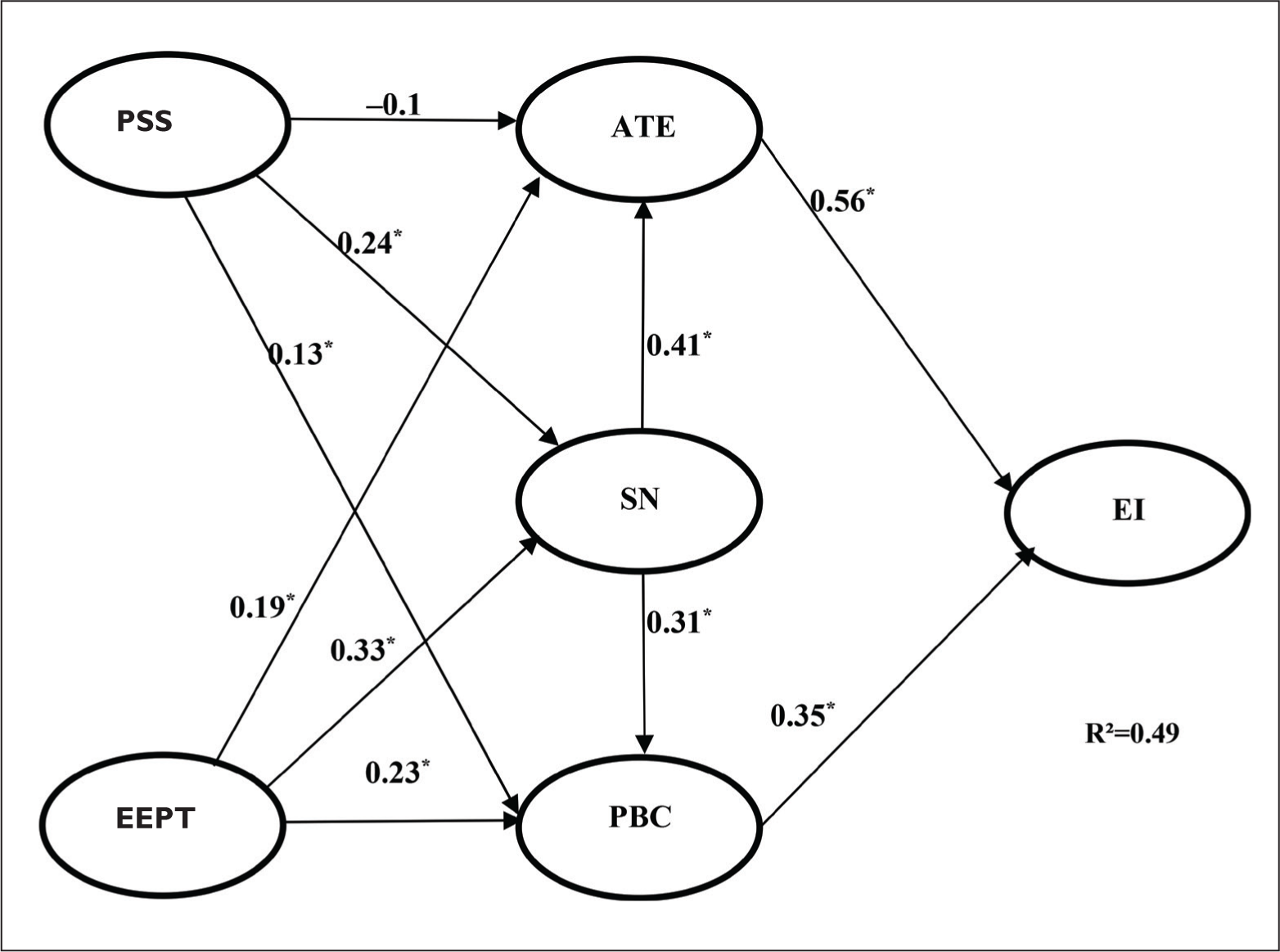
Our study brings to light another important question: is there any significant connection between the antecedents of EI and perception of social support for sustainable ventures? Along with the TPB model we used PSS for predicting EI; and from our findings, we suggest that both PBC (γ = 0.131, t-value = 2.48), and SN (γ = 0.241, t-value = 4.955) were positively influenced by PSS, supporting thereby hypotheses H5 and H6. One possible explanation for this could be that people feel more secure in their behavior when they receive favorable external support, which interestingly concurs with findings of Liñán and Chen’s (2009). In same vein social support shows positive influence on entrepreneurship behavior (Sahban et al., 2016). As a result, PSS can help in increasing the students’ confidence to take up sustainable ventures. Interestingly, however, PSS does not significantly contribute to ATE.
The key contribution of the study is the observation that triggers derived from entrepreneurial education programs are substantial and advantageous for EI, SN, behavioral control, and attitude. EEPTs were found to be significantly correlated with ATE, where r was 0.19 and p < .005, with SN, where r was 0.33 and p < .005, and with PBC, where r value was 0.23 and p < .005. Therefore, hypothesis H7, H8, and H9 were fully accepted. In summary, this benefit derived from the program further raises EAs and intentions. As a result, when designing an EEP, it is necessary to keep in mind the type of pedagogy used, the teaching style of the professor, the perspectives of external speaker or of classmates and friends or of visiting entrepreneur, involvement of students in business plan competitions, and evaluations from judges of such competition.
Conclusion
The purpose of this article was to investigate how university students’ intentions toward starting their own businesses are affected by programs that teach entrepreneurship. The results suggest that triggers derived from entrepreneurial education programs significantly influence the students’ intention, along with their antecedents (ATE, SN, and PBC). As a result, universities should extensively address the trigger component in entrepreneurship education. It is the trigger derived from these programs that raises attitude and intention toward entrepreneurship. Our findings contribute to the understanding that PSS does positively influence both PBC and SN. Thus, we assume that this study may be beneficial to the TPB development, and in the process, improves our understanding that with positive social support toward sustainable entrepreneurship the intention toward entrepreneurship does increase considerably.
This study obviously is not without limitations; first, the study considered only effects of EEP’s on intention. Hence, future study should focus on unique characteristics and design components of EEPs, contents and teaching approaches of EEPs, and their relation on intentions leading to entrepreneurship. The study should be replicated using a variety of samples from the student and nonstudent populations. Future research should also consider the adoption of innovative teaching methods, such as digital technology and AI. Future studies could also address why EEPs promote PBC and ATE, but not SN. Finally, our data were collected only from one Indian state, which possibly brings about bias, and thereby calls for a greater comparative analysis, encompassing multiple states, even if it is largely restricted to India.
Footnotes
Declaration of Conflicting Interests
The authors declared no potential conflicts of interest with respect to the research, authorship, and/or publication of this article.
Funding
The authors received no financial support for the research, authorship, and/or publication of this article.
Appendix
Measurement Constructs and Items.
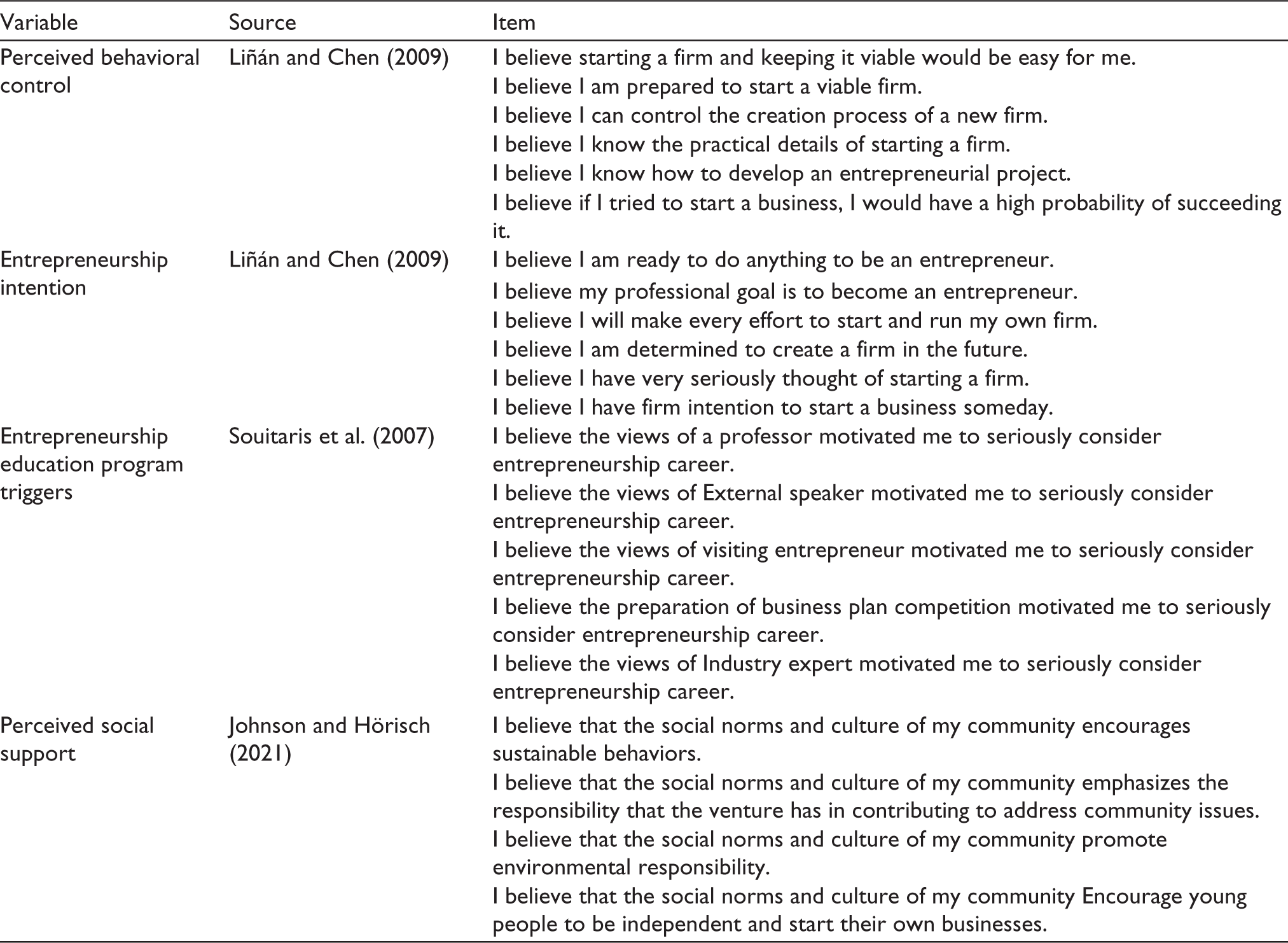
| Variable | Source | Item |
| Attitude toward entrepreneurship | Liñán and Chen (2009) | Being an entrepreneur implies more advantages than disadvantages to me. |
| A career as entrepreneur is attractive for me. | ||
| If I had the opportunity and resources, I’d like to start a firm. | ||
| Being an entrepreneur would entail great satisfactions for me. | ||
| Among various options, I would rather be an entrepreneur. | ||
| Subjective norm | Liñán and Chen (2009) | I believe that my family thinks entrepreneurship is a better career option than other profession. |
| I believe that my closest friends think entrepreneurship is a better career option than other profession. | ||
| I believe that my community thinks entrepreneurship is a better career option than other profession. | ||
| I believe that my family would approve my decision if I want to start my own company. | ||
| I believe that my closest friends would approve my decision if I want to start my own company. | ||
| I believe that my community would approve my decision if I want to start my own company. | ||
| Perceived behavioral control | Liñán and Chen (2009) | I believe starting a firm and keeping it viable would be easy for me. |
| I believe I am prepared to start a viable firm. | ||
| I believe I can control the creation process of a new firm. | ||
| I believe I know the practical details of starting a firm. | ||
| I believe I know how to develop an entrepreneurial project. | ||
| I believe if I tried to start a business, I would have a high probability of succeeding it. | ||
| Entrepreneurship intention | Liñán and Chen (2009) | I believe I am ready to do anything to be an entrepreneur. |
| I believe my professional goal is to become an entrepreneur. | ||
| I believe I will make every effort to start and run my own firm. | ||
| I believe I am determined to create a firm in the future. | ||
| I believe I have very seriously thought of starting a firm. | ||
| I believe I have firm intention to start a business someday. | ||
| Entrepreneurship education program triggers | Souitaris et al. (2007) | I believe the views of a professor motivated me to seriously consider entrepreneurship career. |
| I believe the views of External speaker motivated me to seriously consider entrepreneurship career. | ||
| I believe the views of visiting entrepreneur motivated me to seriously consider entrepreneurship career. | ||
| I believe the preparation of business plan competition motivated me to seriously consider entrepreneurship career. | ||
| I believe the views of Industry expert motivated me to seriously consider entrepreneurship career. | ||
| Perceived social support | Johnson and Hörisch (2021) | I believe that the social norms and culture of my community encourages sustainable behaviors. |
| I believe that the social norms and culture of my community emphasizes the responsibility that the venture has in contributing to address community issues. | ||
| I believe that the social norms and culture of my community promote environmental responsibility. | ||
| I believe that the social norms and culture of my community Encourage young people to be independent and start their own businesses. |