



Abstract
Drug-facilitated sexual assault (DFSA) is a serious global forensic and public health concern in which victims are incapacitated through the covert administration of psychoactive substances. Timely and reliable identification of these drugs is essential for forensic investigation and legal prosecution. This narrative review summarizes traditional and emerging analytical techniques used for detecting drugs associated with DFSA. A total of approximately 60 peer-reviewed studies published in major scientific databases, including PubMed, Scopus, and Web of Science, were reviewed to evaluate current forensic detection approaches. Conventional analytical techniques such as gas chromatography–mass spectrometry (GC–MS), liquid chromatography–tandem mass spectrometry (LC–MS/MS), and capillary electrophoresis remain the gold standard for identifying DFSA drugs in biological matrices. Recent advances in sensing technologies, including microfluidic devices, biosensors, and nanomaterial-based assays, have improved the speed, sensitivity, and portability of drug detection methods. These innovations show potential for rapid on-site screening in forensic investigations. Strengthening analytical capabilities and awareness of DFSA can improve evidence collection, support prosecution, and enhance protection for victims. This review was not registered in the International Prospective Register of Systematic Reviews (PROSPERO) database.
Introduction
Drug-facilitated sexual assault (DFSA) represents a serious global public health and forensic concern in which perpetrators administer psychoactive substances to incapacitate victims and facilitate sexual assault. These substances are often covertly added to beverages or consumed in combination with alcohol, resulting in sedation, confusion, impaired judgment, and memory loss. Victims frequently experience partial or complete amnesia regarding the event, which complicates both clinical management and forensic investigation.1–3 Rape-related injuries should always be documented and interpreted using forensic medicolegal experts for court testimonials. 4 Forensic toxicology can support DFSA cases, detecting narcotic and synthetic drugs, helping with real-time analysis in criminal investigations. 5 The clandestine nature of DFSA makes detection particularly challenging, especially when there is a delay between the assault and medical examination. A variety of substances have been implicated in DFSA cases, including alcohol, benzodiazepines (e.g., flunitrazepam), gamma-hydroxybutyrate (GHB), ketamine, and other sedative or psychoactive drugs.6–8 Many of these compounds are colorless, odorless, and tasteless when added to drinks, allowing perpetrators to administer them without the victim’s knowledge. Once ingested, these substances may rapidly metabolize and be eliminated from the body, resulting in a limited detection window. Consequently, accurate identification of these drugs requires sensitive analytical techniques and timely biological sample collection.9, 10 Forensic toxicology plays a crucial role in the detection and confirmation of drugs used in DFSA cases. Conventional laboratory techniques such as gas chromatography–mass spectrometry (GC–MS), liquid chromatography–tandem mass spectrometry (LC–MS/MS), and capillary electrophoresis remain the gold standard for detecting drugs and their metabolites in biological matrices, including blood, urine, hair, and beverages.11–13 However, these methods often require complex sample preparation, expensive instrumentation, and specialized expertise. In recent years, emerging technologies such as biosensors, nanomaterial-based detection systems, and microfluidic devices have been explored as rapid and portable alternatives for on-site drug detection.13–16 Despite advances in analytical technologies, several challenges remain in the detection of DFSA drugs, including low drug concentrations, complex biological matrices, rapid metabolism, and the use of multiple substances simultaneously. These limitations highlight the need for continued research into more sensitive, selective, and portable detection techniques that can improve forensic investigations and support legal proceedings.
Aim of the Review
The aim of this review is to summarize and critically evaluate traditional and emerging analytical techniques used for the detection of drugs involved in DFSA. Particular attention is given to commonly implicated substances such as flunitrazepam, GHB, ketamine, and alcohol. This review also examines advances in forensic toxicological methods, including chromatographic, spectrometric, and sensor-based detection approaches, and highlights current analytical challenges and future directions for improving DFSA drug detection in forensic investigations.
Materials and Methods
Search Strategy
This study was conducted as a narrative review of previously published literature on drug detection techniques in DFSA. A comprehensive search of scientific literature was performed using electronic databases including PubMed, Scopus, and Web of Science. The search was conducted to identify relevant articles published between 2000 and 2024. The search strategy used combinations of keywords such as “DFSA,” “date rape drugs,” “forensic toxicology,” “drug detection techniques,” “biosensors,” “chromatography,” and “drug analysis in DFSA.” Additional relevant articles were identified through manual screening of reference lists from selected publications.
Inclusion and Exclusion Criteria
Studies were included if they met the following criteria: Articles focusing on analytical techniques used for detecting DFSA drugs Studies describing forensic toxicology methods or drug detection technologies Research related to commonly implicated DFSA substances such as flunitrazepam, GHB, ketamine, benzodiazepines, and alcohol Peer-reviewed journal articles published in English
Studies were excluded if they: Were not related to the DFSA drug detection methods Were editorials, conference abstracts, or non-peer-reviewed reports Did not provide sufficient methodological or analytical information relevant to forensic toxicology
Data Extraction and Analysis
Relevant information from the selected studies was reviewed and synthesized to evaluate traditional analytical techniques, emerging sensing technologies, and challenges associated with DFSA drug detection. Particular emphasis was placed on analytical sensitivity, detection limits, sample preparation methods, and applicability of these techniques in forensic investigations.
Drugs Associated with DFSA
The profile of DFSA drugs can be summarized as follows:
A class of drugs found in DFSA comprises different psychoactive or disorienting substances, which are the main sources of such cases. Such drugs are commonly employed by the perpetrators in a bid to render the victim unconscious and, in turn, facilitate sexual assault. Some of the most prevalent DFSA drugs include:
Rohypnol (Flunitrazepam)
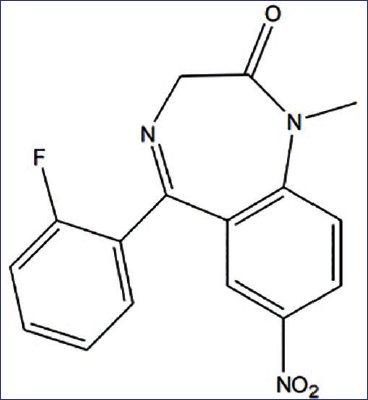
Rohypnol (flunitrazepam), commonly referred to as “Mexican Valium,” is a benzodiazepine that can be easily added to beverages without altering their taste, color, or odor, making it particularly dangerous in DFSA cases. Due to these characteristics, the drug can be covertly administered into drinks without the victim’s awareness. 17 Pharmacologically, flunitrazepam produces strong sedative effects, including drowsiness, dizziness, confusion, and significant memory impairment. These effects often lead to disorientation and temporary loss of awareness, making victims highly vulnerable. 18
Gamma-hydroxybutyrate

GHB, often referred to as “liquid ecstasy,” is a central nervous system depressant that produces effects such as relaxation, euphoria, and drowsiness. 17 At lower doses, GHB may induce mild mood elevation and a sense of well-being; however, higher doses can lead to pronounced sedation, confusion, disorientation, and in severe cases, loss of consciousness. Offenders may exploit these pharmacological properties to incapacitate victims, rendering them unable to resist or recall the events surrounding the assault. 18
Ketamine
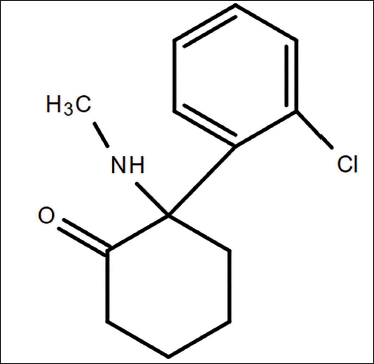
Ketamine, commonly known as “Special K,” is a dissociative anesthetic widely used in medical practice but also misused illicitly as a recreational drug and in cases of DFSA. 19 The drug produces dissociative effects characterized by feelings of detachment from reality, altered perception, and hallucinations. Furthermore, ketamine is often colorless, odorless, and tasteless when dissolved in beverages, which enables it to be administered covertly. Such characteristics, combined with its ability to induce memory loss or blackouts, make ketamine a substance frequently associated with DFSA cases. 20 A comparison of DFSA case characteristics is summarised in Table 1 (Comparison Between Proactive and Opportunistic DFSA).
Comparison Between Proactive and Opportunistic DFSA.

Traditional and Modern Screening Processes for DFSA Cases.

Alcohol
Alcohol, although commonly consumed as a legal beverage, is one of the substances most frequently associated with DFSA cases. A retrospective study conducted in Imphal, India, reported that 18 (8.0%) of 210 rape cases were classified as DFSA, with 13.4% of the cases occurring in 2009. 14 Various psychoactive substances have been implicated in DFSA incidents, including GHB, gamma-butyrolactone (GBL), ketamine, and benzodiazepines such as diazepam, alprazolam, and clonazepam. Other substances, including marijuana and certain antihistamines, have also been reported, although they occur less frequently than GHB and ketamine. 15 The pharmacokinetic properties, including half-life, metabolites, and neural binding sites of commonly implicated DFSA drugs, are summarized in Table 3.
. DFSA Associated Drugs, Their Half-life, Metabolism, Effect on the Brain, Clinical Usage, and Current Status in India.

Analytical Techniques for Detection
The forensic detection of drugs involved in DFSA presents significant analytical challenges for toxicologists and forensic scientists. One of the primary difficulties arises from the very low concentrations in which these substances are typically administered. DFSA drugs are often delivered in small doses, resulting in trace levels in biological samples such as blood and urine, which complicates their identification using conventional analytical techniques.17, 18 Screening methods are summarised in Table 2 (Traditional and Modern Screening Processes for DFSA Cases).
Another important challenge is the complexity of biological matrices. Biological fluids contain numerous endogenous compounds that may interfere with the detection of target analytes, thereby affecting the accuracy and reliability of toxicological analyses. 19 In addition, many DFSA drugs undergo rapid metabolism and elimination, substantially reducing the time window for detection. As a result, delays in medical examination or sample collection may lead to false-negative toxicological findings.20, 21 Furthermore, several substances associated with DFSA share structural similarities and overlapping metabolites, making differentiation between compounds difficult when using traditional screening methods. 22 Medicolegal examination of sexual assault victims for the analysis of injury patterns can also facilitate the legal procedures in addition to biological matrices. 23 In the DFSA case, screening of mental health with psychological consultation should be provided to assault survivors. 24
Strategies for Detection and Confirmation
To overcome these analytical limitations, forensic laboratories employ a range of advanced analytical strategies aimed at improving the sensitivity, specificity, and reliability of DFSA drug detection. Highly sensitive instrumental techniques such as GC–MS and LC–MS/MS remain the gold standard for identifying trace levels of drugs and their metabolites in biological specimens.25–28 Techniques such as solid-phase extraction, liquid-liquid extraction, and enzymatic hydrolysis are commonly used to isolate target compounds from complex biological matrices and enhance analytical sensitivity.29, 30 Effective identification and interpretation of toxicological findings require coordinated efforts among forensic toxicologists, medical professionals, law enforcement agencies, and legal authorities. Such collaboration facilitates accurate evidence interpretation and strengthens the investigative and prosecutorial processes in cases of suspected DFSA.31–33
Novel Methods for Detection
The forensic investigation of DFSA relies heavily on the appropriate selection of biological matrices and sensitive analytical methods for drug detection. However, considerable variability exists among toxicological studies due to differences in inclusion criteria, sample availability, and analytical protocols. Most investigations employ both blood and urine samples for toxicological screening, although variations in sampling protocols and the absence of urine samples in some cases may lead to underestimation of DFSA incidents.34–38 Therefore, standardized sampling procedures and comprehensive biological sample collection are essential for improving the accuracy of toxicological investigations. Another major challenge in DFSA investigations is the time delay between the assault and biological sample collection. Because many DFSA drugs undergo rapid metabolism and elimination, delays in reporting can significantly reduce the likelihood of detecting the drug in biological specimens. Previous studies have demonstrated that longer intervals between assault and toxicological examination are associated with lower detection rates, particularly in blood samples.39–42 Furthermore, the absence of precise information regarding the timing of sample collection may result in false-negative findings and complicate the interpretation of toxicological evidence. 43 Consequently, prompt medical examination and timely biological sample collection remain critical for reliable forensic analysis. Traditional screening techniques for DFSA drugs include immunoassays and GC–MS. While immunoassays allow rapid screening, they may produce false-positive or false-negative results because of limited analytical specificity. 44 For this reason, confirmatory techniques such as LC–MS/MS are widely recommended for DFSA investigations due to their ability to detect a wide range of drugs and metabolites at very low concentrations. 45 In addition, enzymatic hydrolysis of urine samples is frequently applied to improve the detection of conjugated metabolites. Recently, liquid chromatography–high-resolution mass spectrometry has emerged as a powerful analytical technique capable of improving sensitivity and expanding the scope of toxicological screening. Advanced deoxyribonucleic acid extraction methods from various biological evidence play a pivotal role in the identification of suspects in sexual assault cases. 46 Nevertheless, the routine application of these advanced technologies requires standardized analytical protocols and improved coordination among forensic laboratories.
Future Direction
Looking forward, there are several critical areas for progression in fighting DFSA. First, the improvement of the detection devices technology is of prime importance. Such devices need to be equipped with early warning systems that can be easily activated in low-light areas and should mainly be in public locations such as bars and markets. The sensitivity of the sensors is the next important factor that should be considered for the prevention of cross-reactivity with other substances except date rape drugs, and lower limits of detection are the second factor for enhanced sensitivity even after prolonged use.
Second, there is a need to incorporate cutting-edge nanotechnological tools into DFSA diagnostic techniques. Application of technologies, such as quantum dots, perovskites, or ion beam technology-based sensors, can primarily boost the detection rate. Nanoparticles with these properties can be used for electrocatalytic and fluorescent purposes that lead to quicker detection and an enhanced display of analytes, even in trace amounts. Utilizing the latest developments in the field of nanotechnology, nanotechnology-based DFSA detection tools can be more effective and reliable.
Conclusions
As a result of all these, tackling DFSA necessitates determined efforts in different spheres. Although the above-mentioned steps, such as creating public awareness, strengthening laws, and providing support for the victim, are important, the future plan of action should be directed to the employment of state-of-the-art detection devices and the use of next-gen nanotechnological tools. Along with those, having legal amendments and strict enforcement will be a great contribution to the fight against the existence and impact of DFSA in the communities. By setting priorities for these areas of the future, we can contribute to the creation of safe environments and deliver justice to the victims of DFSA.
Footnotes
List of Abbreviations
AIDS: Acquired immunodeficiency syndrome
APA: American Psychiatric Association
AuNP: Gold nanoparticles
BHB: β-hydroxybutyric acid
CDs: Carbon dots
CE: Capillary electrophoresis
DFSA: Drug-facilitated sexual assault
DNA: Deoxyribonucleic acid
DSM-5: Diagnostic and Statistical Manual of Mental Disorders, Fifth Edition
ECL: Electrochemiluminescence
GBL: Gamma-butyrolactone
GC–MS: Gas chromatography–mass spectrometry
HNK: Hydroxynorketamine
HIV: Human immunodeficiency virus
HRMS: High-resolution mass spectrometry
KET: Ketamine
LC–MS/MS: Liquid chromatography–tandem mass spectrometry
LOD: Limit of detection
MIP: Molecularly imprinted polymer
NMDA: N-methyl-D-aspartate
PCED: Pulse current electrodeposition
PTSD: Post-traumatic stress disorder
Acknowledgments
Not applicable.
Authors’ Contribution
DB: Literature survey, compilation of data in a table, editing, and assisting in manuscript writing, overall compilation of draft, and finalizing the manuscript. SB: Literature survey, editing, and assisting in manuscript writing.
Availability of Data and Material
Since this is a review, no new experimental data were included apart from what is already stated in the literature.
Consent for Publication
The corresponding author affirms that all authors have provided consent for publication.
Declaration of AI
AI has been used for paraphrasing and for increasing the readability of the manuscript.
Declaration of Conflicting Interests
The authors declared no potential conflicts of interest with respect to the research, authorship, and/or publication of this article.
Ethics Approval and Consent to Participate
As this is a review, it does not involve new data collection. Therefore, manuscript reporting does not require any ethical permission and consent of participation as neither human nor animal was directly involved.
Funding
The authors received no financial support for the research, authorship, and/or publication of this article.