




Abstract
Jatropha curcas, a member of the Euphorbiaceae family, is a widely distributed plant with highly toxic seeds. The primary toxic compounds—phorbol esters and curcin—induce severe gastrointestinal distress upon ingestion. Accidental ingestion of these seeds, particularly in children, is a frequent yet underreported cause of poisoning in regions where the plant grows abundantly. Here, we present a case of six children (aged 8–15 years) who developed acute gastrointestinal symptoms after ingesting Jatropha curcas seeds while playing in a garden. The children experienced multiple episodes of vomiting and diarrhea but remained hemodynamically stable. Immediate medical intervention, including gastric lavage and intravenous (IV) fluid therapy, led to full recovery. This case highlights the toxicity of Jatropha curcas seeds, its clinical presentation, and the importance of public awareness and preventive measures.
Introduction
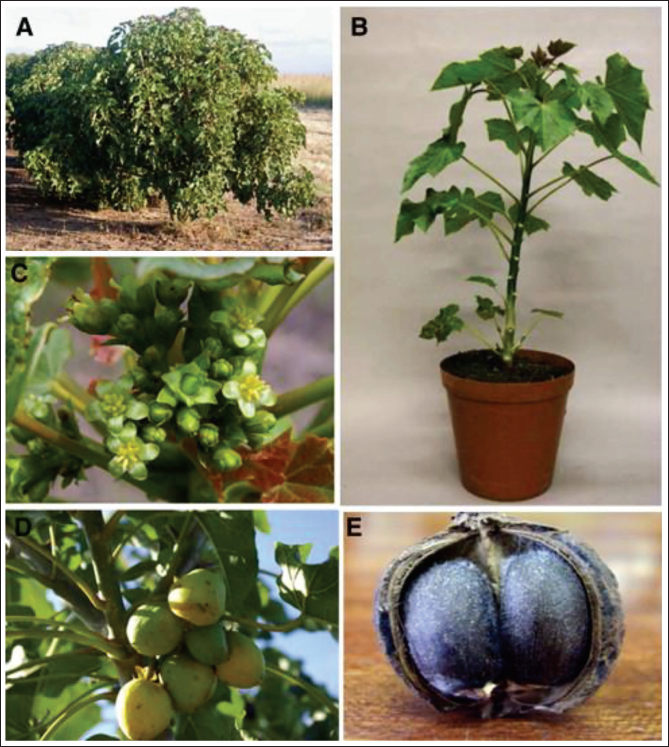
Jatropha curcas is a large, glabrous shrub belonging to family Euphorbiaceae, with greenish white, smooth bark that peels off in thin flakes. Leaves measured up to 15 mm in diameter, and are entirely or palmately lobed. Flowers are yellowish green in color (Figure 1). 1 Jatropha curcas, also known as the physic nut, Barbados nut, or purging nut, is a drought-resistant plant used in biodiesel production, medicinal applications, and traditional remedies. Despite its economic value, the plant contains toxic compounds, including phorbol esters, curcin (a ribosome-inhibiting protein), diterpenes, and lectins, which contribute to its acute toxicity in humans and animals. 2 Children are particularly susceptible to accidental ingestion due to the attractive appearance of the seeds and their initially sweet taste. Reports from India, 3 South Africa, 4 Kenya, 5 and other regions indicate that Jatropha curcas poisoning is a growing concern. The primary clinical manifestations of poisoning include gastrointestinal distress (vomiting, diarrhea, abdominal pain), dehydration and electrolyte imbalance, and rare systemic complications (hepatic, renal, and central nervous system involvement). Previous studies highlight mass poisoning incidents involving children who unknowingly consumed the seeds, necessitating urgent medical intervention.6–8 This case report adds to the growing body of literature by documenting a cluster of Jatropha curcas poisonings in India and emphasizing the need for preventive strategies and public health awareness.
Case Details
Patient Demographics and History
Six children (male and female, aged 8–15 years) were playing in a garden around 4:00 PM when they discovered groundnut-like fruits and seeds. Upon tasting them, they found the seeds sweet and proceeded to consume two to five seeds each. Approximately 30 minutes postingestion, all six children developed the following symptoms: Multiple episodes of vomiting (5–7 episodes per child), loose stools (watery, nonbloody), and mild epigastric discomfort. The vomitus was nonprojectile and nonbilious. Importantly, the children exhibited no fever, loss of consciousness, altered sensorium, or respiratory distress. Concerned parents brought them to the emergency department for evaluation. They also brought the fruits for identification which helped us in diagnosing the cases.
Clinical Examination
Upon arrival, the children were assessed for vital signs, hydration status, and systemic involvement. General condition: Mild dehydration was noted in some children and mild congestion in eyes was present. Vital signs: pulse were increased, blood pressure was stable, respiratory rate was normal, temperature was afebrile. Abdominal examination: Soft, nontender, mild discomfort in some cases. Neurological examination: No altered sensorium, normal reflexes.
Management and Treatment
Prompt supportive treatment was initiated: gastric lavage, intravenous (IV) fluids, and other supportive measures like antiemetic and oral rehydration solution (ORS) were given and then were kept in close observation for 24 hours.
Outcome and Follow-up
All six children recovered within 24–36 hours, with symptoms resolving completely. Parents were educated about Jatropha curcas toxicity and advised to remove the plant from the vicinity.
Discussion
Jatropha curcas seeds contain phorbol esters, which act as potent gastrointestinal irritants, leading to vomiting and diarrhea.9, 10 Curcin, a toxic lectin, has cytotoxic effects, inhibiting protein synthesis and potentially damaging liver and kidney cells. 11 Several studies have reported Jatropha curcas poisoning in children, emphasizing similar clinical manifestations and outcomes: Gupta et al. (2016) 3 —Mass poisoning in North India; severe gastrointestinal distress required hospitalization. Moshobane et al. (2017) 4 —Cases in South Africa highlighted the need for early fluid replacement therapy; Joubert et al. (1984) 6 —Early documentation of Jatropha poisoning in children, stressing the purgative effects; Mukungu et al. (2015) 5 —Kenyan case series demonstrating successful gastric lavage and IV fluid therapy; Choudhary et al. (2022) 8 —Family-wide Jatropha poisoning in rural India, reinforcing the need for community education. Though self-limiting in most cases, Jatropha curcas poisoning can lead to severe dehydration and electrolyte imbalance, metabolic acidosis (in rare cases), liver and kidney involvement (if large quantities are consumed). Fortunately, early medical intervention significantly improves outcomes, with most patients recovering fully within 24–48 hours. 7
Conclusion
Jatropha curcas poisoning remains an underrecognized public health concern, especially in tropical and subtropical regions. This cluster of pediatric poisonings highlights the toxicity of Jatropha curcas seeds and the importance of early supportive management. Education, awareness, and preventive strategies are key to reducing future poisoning incidents. Given the growing number of Jatropha curcas poisoning cases, the public health and preventive strategies that can be taken into consideration can include public awareness campaigns—educating communities on the toxicity of Jatropha curas, eradication of Jatropha plants—especially in school gardens and playgrounds, and supervised outdoor play—preventing accidental ingestion of toxic plants.
Footnotes
Declaration of Conflicting Interests
The authors declared no potential conflicts of interest with respect to the research, authorship, and/or publication of this article.
Ethical Approval
Ethical approval for this study was obtained from the College Ethical Review Committee prior to its commencement.
Funding
The authors received no financial support for the research, authorship, and/or publication of this article.
Informed Consent
Informed consent was obtained from the parents/guardians of the children before conducting the examinations.