




Abstract
Gas geysers have emerged as a cost-effective method for heating water at homes. These appliances run on liquefied petroleum gas, which generates various gaseous by-products on combustion. When liberated into an enclosed and ill-ventilated small space, these asphyxiants can lead to serious morbidity and mortality in the exposed victims. We report a case of a 22-year-old male found dead in a bathroom. The autopsy of a deceased individual was performed, and a 9 cm × 5 cm scald on the back of the left palm was noted. The body exhibited cherry red discolouration in the back, upper and lower limbs and internal organs. Tissue and blood samples were collected for further analysis. Water heaters, stoves and boilers are examples of household appliances that could leak carbon monoxide (CO) and result in fatalities. Installing gas geysers in bathrooms with limited ventilation can be dangerous. Hence, implementing effective preventive measures is essential to reduce the mortality and morbidity associated with them.
Introduction
Gas geysers have emerged as a cost-effective method for heating water at homes. These appliances run on liquefied petroleum gas, which generates various gaseous by-products on combustion. These asphyxiants can lead to serious morbidity and mortality in exposed victims when liberated into an enclosed, ill-ventilated small space. 1
Gas geysers, also known as gas water heaters, have become increasingly popular in households worldwide due to their ability to provide a constant and efficient hot water supply. These appliances use natural gas or propane as a fuel source to heat water, providing a cost-effective alternative to electric water heaters. In addition to their cost-effectiveness, gas geysers are also known for their ability to provide instant hot water, which is particularly beneficial for households with high demands for hot water. 1 Despite the advantages of gas geysers, there is an ongoing debate regarding whether they are a boon or a bane. On the one hand, gas geysers are seen as a boon as they are efficient, cheap and provide a constant hot water supply. On the other hand, gas geysers can be hazardous if not installed or maintained properly, posing a risk of gas leaks, explosions and carbon monoxide (CO) poisoning. Additionally, it is important to consider the impact of gas geysers on the environment, including their carbon footprint and the potential for gas leaks to contribute to air pollution. 2
The debate over whether gas geysers are safe is ongoing and requires a comprehensive assessment of the advantages and disadvantages of these appliances. While gas geysers are efficient and cost-effective, they can also be hazardous if improperly installed or maintained. Therefore, it is important to consider all factors when deciding whether to install a gas geyser in your household. Proper installation and maintenance of gas geysers are essential to avoid safety hazards. Gas geysers are recommended to be installed and serviced by licensed professionals to ensure safety. 3 Regular maintenance, such as checking for gas leaks and ensuring proper ventilation, can also reduce safety risks associated with gas geysers. Herein, we report a case of a 22-year-old male found dead following the use of a gas geyser in the bathroom.
Case Report
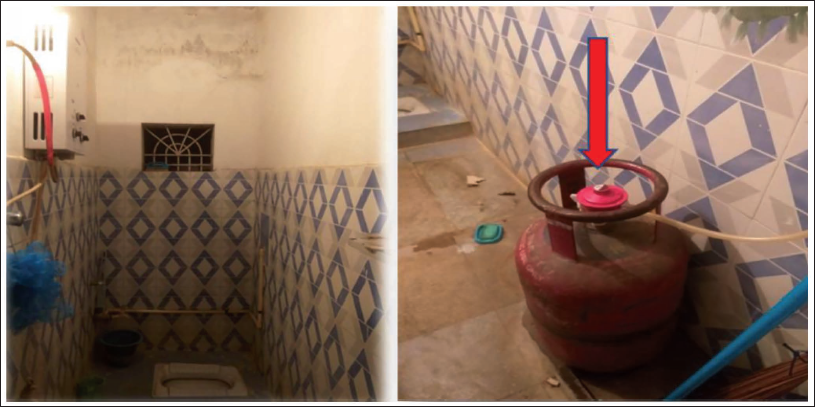
A 22-year-old male was found unresponsive in a bathroom, and despite being taken to the hospital, he was declared dead (Figure 1). The case was booked under 174 CrPC, and the body was brought to JSS Medical College mortuary for autopsy. The following report presents the autopsy findings and the Regional Forensic Science Laboratory (RFSL) investigation to determine the cause of death.
The Figure Illustrates the Scene of Occurrence.
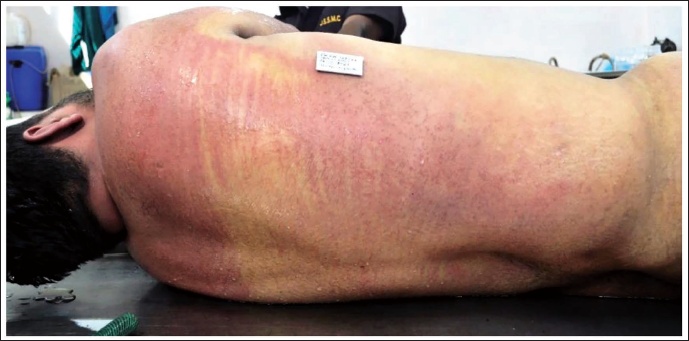
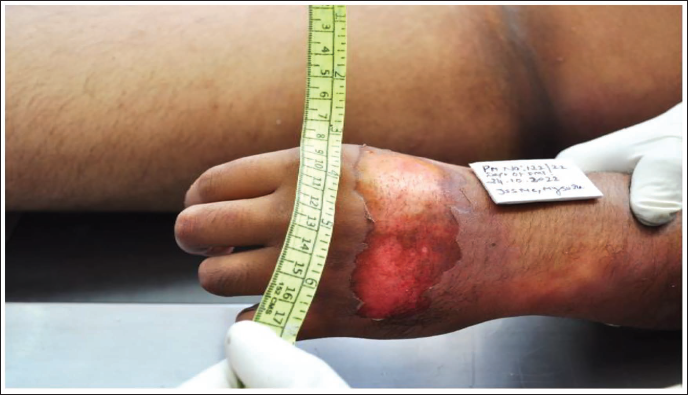
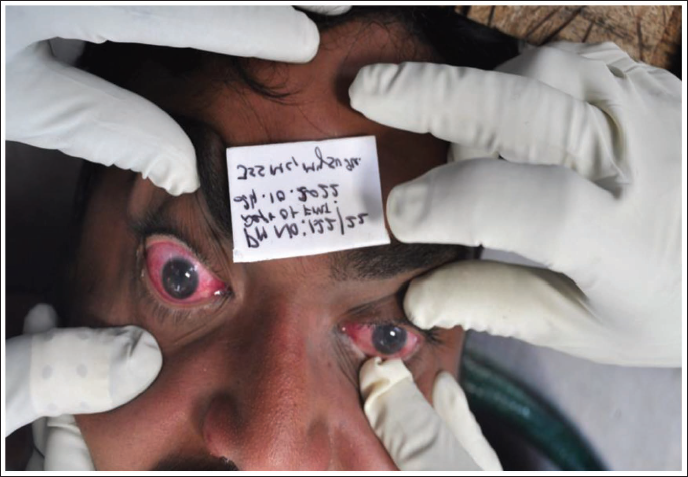
The autopsy revealed cherry red-coloured post-mortem lividity over the back, which was not fixed (Figure 2). An antemortem scald injury measuring 9 cm × 5 cm was present on the back of the left hand, indicating exposure to hot water (Figure 3). The face and conjunctival congestion were noted in both eyes (Figure 4). The liver, spleen and kidneys showed congestion and were pinkish upon the cut section. The brain was intact, oedematous and pinkish. Routine viscera, including the stomach and proximal intestine with contents, 500 g of the liver with gall bladder, and one-half of each kidney, were sent to RFSL for chemical analysis and report. A blood sample of 10 ml was also preserved under a paraffin wax seal and sent to RFSL for analysis. The RFSL conducted colour tests and UV-spectrophotometry to determine the presence of any toxic substances in the blood sample. The results confirmed the presence of CO, and carboxyhaemoglobin saturation was estimated to be 67.5%.
Post-mortem Staining: Cherry Red.
Ante-mortem Scald.
The Figure Illustrates the Congestion of Both Eyes.
Based on the autopsy and the RFSL report findings, it was concluded that the cause of death was asphyxia due to CO inhalation. The antemortem scald injury on the back of the left hand could have been caused by exposure to hot water from the bathroom tap. CO inhalation could have occurred due to incomplete combustion of any fuel source present in the bathroom, leading to the release of CO. The death was determined to be due to asphyxia due to CO inhalation. This case highlights the importance of ensuring proper ventilation in enclosed spaces and the need for caution when using hot water or other fuel-burning appliances. It also emphasises the role of forensic science in determining the cause of death in cases where the circumstances are not immediately apparent.
Discussion
CO poisoning is a significant cause of death worldwide, with the World Health Organisation (WHO) estimating it is responsible for approximately 20,000 deaths annually. 4 The case presented highlights the importance of proper ventilation and the risks associated with the incomplete combustion of fuels, leading to the release of CO. The autopsy findings, in this case, showed cherry-red post-mortem lividity and congestion of the liver, spleen and kidneys, typical of CO poisoning. 5 Additionally, the RFSL report confirmed the presence of CO and estimated carboxyhaemoglobin saturation to be 67.5%, further supporting the diagnosis of CO poisoning. In contrast, the lethal or fatal dose of CO can vary depending on factors such as exposure duration, concentration and individual susceptibility. However, concentrations of CO above 9–25 to 35 parts per million (ppm) in the air are considered potentially hazardous. 6 Prolonged exposure to higher levels, such as several hundred ppm, can lead to severe health effects, including death. Immediate medical attention is crucial for anyone suspected of experiencing CO poisoning. 7
The antemortem accidental scald injury on the back of the left hand was observed in this case. As individuals begin to feel the effects of CO, they may attempt to open windows or doors to improve ventilation or seek relief by immersing their hands or face in the water, leading to scalding injuries. 8 Thus, antemortem accidental scald injuries, particularly on the hands and face, should prompt consideration of CO poisoning as a potential cause of death.
The importance of CO testing in cases of suspected poisoning cannot be overstated, as its presence can help confirm the diagnosis and guide the investigation. In a study of 150 cases of CO poisoning, Chiew et al. found that carboxyhaemoglobin levels were significantly higher in fatal cases than in non-fatal cases, highlighting the role of carboxyhaemoglobin saturation as a predictor of outcome. 9
CO poisoning remains a significant cause of death, and its presence should be suspected in unexplained deaths, particularly when antemortem scald injuries are present. The use of CO testing, as demonstrated in this case, is crucial in confirming the diagnosis and guiding the investigation.
Conclusion
The case presented highlights the importance of proper ventilation and the risks associated with the incomplete combustion of fuels leading to CO poisoning. The findings from the autopsy and RFSL report, underscore the importance of CO testing in suspected poisoning cases. CO poisoning from gas geysers remains a significant cause of death worldwide, and its presence should be suspected in unexplained deaths, particularly when antemortem scald injuries are present. Promoting awareness of the dangers of CO poisoning and emphasising caution when using hot water or fuel-burning appliances in enclosed spaces is essential. The role of forensic medicine with ancillary investigations in determining the cause of death in cases where the circumstances are not immediately apparent cannot be overstated. Overall, this case highlights the importance of continued research and education to prevent CO poisoning and improve diagnosis and management of this deadly condition.
Footnotes
Declaration of Conflicting Interests
The authors declared no potential conflicts of interest with respect to the research, authorship and/or publication of this article.
Ethical Approval and Informed Consent
The informed consent was collected from the relatives and proper ethical guidelines set by the university were followed.
Funding
The authors received no financial support for the research, authorship and/or publication of this article.