




Abstract
Poisoning represents a critical public health issue worldwide, with a significant burden of morbidity and mortality, particularly affecting low and middle-income countries. Poison control centres (PCCs) have emerged as essential entities in addressing this issue, providing specialised toxicology advice and support for diagnosis, treatment and prevention to both healthcare professionals and the public. This article highlights the evolution and impact of PCCs globally, focusing on their functions and roles in promoting public awareness. The establishment of PCCs began in the mid-20th century, with initiatives in various countries leading to a global network of centres. India’s journey in establishing PCCs started off with the National Poisons Information Centre, New Delhi, followed by other centres, notably the AIMS (Amrita Institute of Medical Sciences) PCC at Cochin which exemplifies the commitment to addressing poisoning incidents comprehensively. The analytical capabilities of such centres, coupled with community engagement and training programmes, accentuate their vital role in mitigating poisoning incidents. Overall, PCCs play a crucial role in reducing healthcare expenses, improving patient care and minimising future poisoning incidents, thus emphasising their significance in public health.
Introduction
Poisoning is an important public health issue responsible for a considerable number of cases of morbidity and mortality worldwide, especially in low and middle-income countries, posing significant public health risks, particularly to children. 1 According to the World Health Organisation (WHO), more than 350,000 people die every year due to poisoning, and 81,410–137,880 people die each year from a single entity-snakebite.2, 3
In many countries, poisoning is one of the main causes of emergency attendance at hospitals, and like infectious diseases, requires a specialist for appropriate diagnosis and treatment. The easy availability of poisonous chemicals and drugs plays a prime role in suicidal poisoning cases, while negligence accounts for the vast majority of accidental exposures. 4
Due to growing concerns over rising poisoning cases worldwide, coupled with a lack of public awareness about its gravity, as also the fact that most health professionals were unfamiliar with the clinical management of poisoning, the need for specialist toxicology advice became increasingly evident, which served as the primary stimulus for the establishment of poison control centres (PCCs) around the world. It was after World War II, that the role of such centres began to be really acknowledged in the prevention, diagnosis and treatment of poisoning, facilitating the dissemination of genuine information on toxicological issues to health facilities, medical professionals and the general public. 5
Ideally, PCCs should provide information in a timely and systematic manner mainly with regard to first aid measures, and referral of the patient to a hospital for further medical management whenever required. Referrals to healthcare facilities must later be followed up with phone calls to assess progress and provide additional recommendations until all medical problems related to the poisoning are resolved.
The laboratory service of a PCC is meant to provide assistance in the identification and characterisation of toxic substances in both biological and non-biological samples, for accurate diagnosis and treatment of the patients. Fulfilling these goals improves the quality of patient care, helps reduce the incidence of poisoning cases and also minimises future accidental poisonings. Thus, poison control services are highly cost-effective as timely interventions can scale down healthcare expenses due to unnecessary admissions and/or prevent prolonged hospitalisation.6–8
Evolution of the PCC Movement
Poisons Information Services made their first advent in the Netherlands in 1949. In 1950, an enquiry into accidents in children was undertaken by the Accident Prevention Committee of the American Academy of Paediatrics. The completed survey showed that 51% of accidents were due to acute poisoning. As a result, in 1958 at the annual meeting of the American Academy of Paediatrics, the American Association of Poison Control Centres (AAPCC) was founded. This helped establish poison centres across the country along with a national poison helpline number. In 1963, an information centre was opened by the Illinois Chapter of the American Academy of Paediatrics in Chicago, USA. The National Poison Database System (NPDS) came into being in the year 2006, which provided a more solid data collection, transmission and analysis system for all poison centres and their partners. NPDS is the current database in use today by all 55 poison centres in the United States and continues to serve an important role in poison centres and public health operations in that country.9, 10
In 1961, a telephone answering service was introduced in Leeds, England, which provided information to medical professionals and others about the poisonous attributes of a variety of household, agricultural and pharmaceutical substances. On 2nd September 1963, a National Poisons Information Service was established at Guy’s Hospital, London. This development was due to an official report on ‘Emergency Treatment of Acute Poisoning in Hospitals’ by a special committee set up under the Central Health Services Council. The service comprises four Units based in Birmingham, Cardiff, Edinburgh and Newcastle. In contrast to many other countries, the British Poisons Information Service handles calls only from healthcare professionals, and enquirers can gain access to the service via a single national telephone number.11–14
In 1966, the NSW Poisons Information Centre was established in Australia. It is located in the Children’s Hospital at Westmead, New South Wales, Australia and provides the latest poison information to the public, as well as toxicology advice to health professionals on the management of poisoned and envenomed patients. Telephone advice is available from anywhere in Australia. This centre also liaises with poison centres from around Australia and the world. 15
Since then, all around the world, similar centres have come up, performing the invaluable functions of promoting public awareness of poisoning, and delivering much-needed toxicological diagnostic and therapeutic assistance to medical professionals. All the certified centres provide information within seconds through the use of toxicology databases such as POISINDEX, TOXBASE or TOXINZ on thousands of poisonous products.8, 16, 17
India made a belated entry with the establishment of the National Poisons Information Centre in the Department of Pharmacology, All India Institute of Medical Sciences, New Delhi in February, 1995. 18 A second centre was subsequently started at the National Institute of Occupational Health, Ahmedabad. Numerous additional Regional Centres have since come up in cities like Cochin, Chennai, Kolkata, Manipal, Vellore, and others, with efforts ongoing to establish similar centres in other parts of the country.16, 17
A national-level professional organisation dedicated to toxicology, the Indian Society of Toxicology, was started in 2004 and currently has hundreds of members from various fields.
Evolution of PCC of AIMS Cochin
A full-fledged PCC was established at Cochin, Kerala (in Amrita Institute of Medical Sciences or AIMS, a multispecialty teaching hospital) with poison information as well as analytical services in July 2003 by Dr VV Pillay, Professor of Forensic Medicine & Toxicology, who was given the additional charge of Chief of the PCC. It is today one of only a handful of PCCs of India listed in the WHO’s global directory of PCCs (YELLOW TOX Directory, details given on page 143 at
Analytical Toxicology Laboratory of AIMS Cochin PCC.
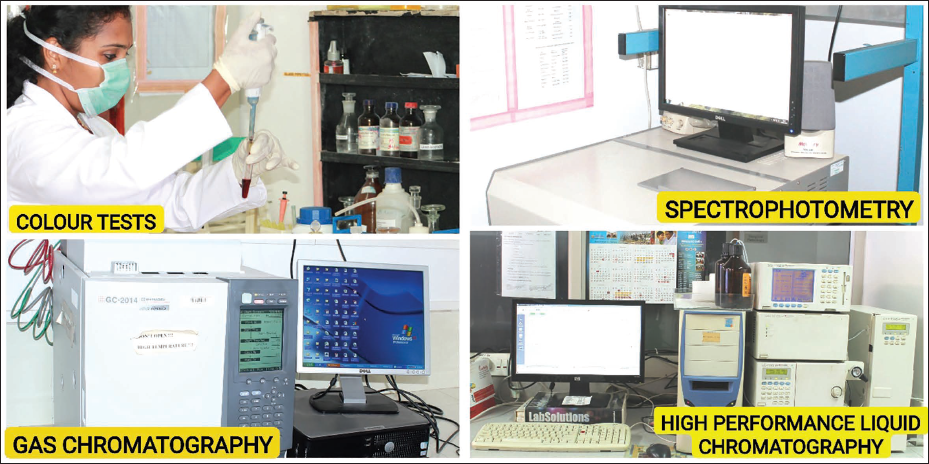
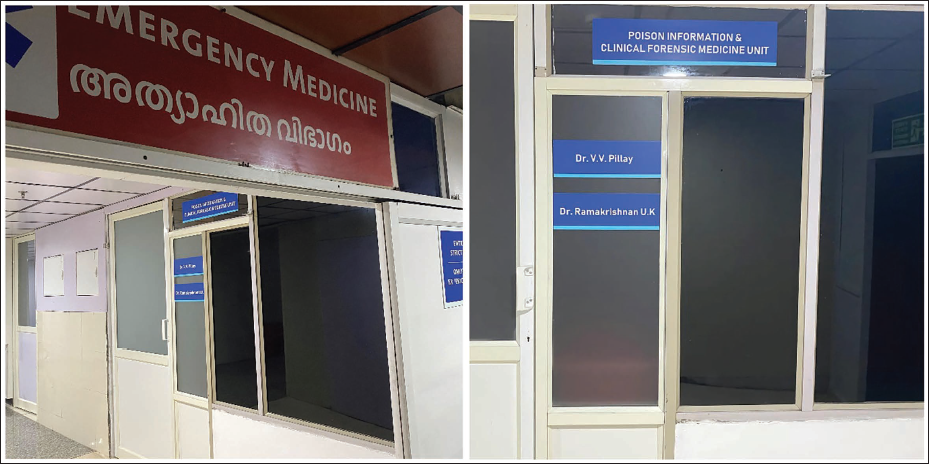
The Cochin Centre has state-of-the-art software packages that have detailed information on more than 1 million poisons and drugs encountered worldwide. Thus, the centre has the capability to answer virtually any query related to poisons/poisoning/drug overdose/substance abuse/envenomation posed by hospitals, government doctors, private practitioners, as well as the lay public of Kerala State and neighbouring regions. The Poison Information Unit functions 24×7 and is located in the Emergency Medicine Department of the main hospital (Amrita Hospital) (Figure 2). Information services are provided through telephone, email, postal mail, etc., and free expert guidance is offered on diagnosis and treatment of all kinds of poisoning. 19
Poison Information Unit of AIMS Cochin PCC.
The centre also has an advisory role in the Kerala State Disaster Management Authority, and periodic training is given to medical officers in the industrial sector with regard to responding to a chemical emergency. The PCC also provides a certificate course on analytical toxicology for the benefit of clinical, forensic, biochemistry, chemistry and pharmacology students and practitioners.
The centre works in collaboration with the Emergency Medicine Department of AIMS hospital and the Indian Society of Toxicology to provide mannequin-based training on managing common poisonings to medical students.5, 16
The AIMS PCC is the only centre from India that has been added as an individual entity in Wikipedia which can be accessed via two separate links:
The PCC of AIMS Cochin has also been consulted by the Indian police in connection with several high-profile poisoning cases of a forensic nature, as well as external investigative agencies with regard to some international cases.20, 21
Conclusion
The evolution of the PCC marks a significant milestone in public health and safety worldwide. From its humble beginnings to its current status as a vital resource in poisoning management, PCC has demonstrated remarkable growth and impact. Through dedicated efforts in research, education and community outreach, PCC has saved countless lives, prevented injuries and contributed to a greater understanding of toxicological hazards. The PCC of AIMS Cochin stands as a testament to the evolution and consolidation of India’s premier toxicology centre. Through its pioneering efforts, dedication to public health, and commitment to excellence, the centre has played a crucial role in mitigating the risks associated with poisoning incidents across the nation. Its multidisciplinary approach, cutting-edge research and collaborative partnerships have not only enhanced the quality of patient care but also contributed significantly to the advancement of toxicology science in India. As we look to the future, it is essential to continue supporting and expanding the reach of these invaluable institutions, ensuring that they remain at the forefront of toxicology management, ready to address emerging challenges and protect the well-being of individuals and communities around the globe.
Footnotes
Declaration of Conflicting Interests
The authors declared no potential conflicts of interest with respect to the research, authorship and/or publication of this article.
Ethical Approval and Informed Consent
Not applicable.
Funding
The authors received no financial support for the research, authorship and/or publication of this article.