




Abstract
Forty micro and small steel products manufacturing enterprises in Salem District of Tamil Nadu, South India faced problems in value addition of the steel products like windows, grill gates, truss work and panel boards manufactured by them. They formed M/s Salem Steel Cluster Pvt Ltd; Salem, a special purpose vehicle, in 2012 by getting funds from the Government of Tamil Nadu and the Government of India through the Tamil Nadu Small Industries Development Corporation under Micro Small Enterprises Cluster Development Programme of Ministry of Micro, Small and Medium Enterprises, Government of India. The objective is to find the physical and financial performance of the Steel Product Fabrication Cluster (SPFC) before and after Cluster Development Approach (CDA) to find the productivity of the cluster by taking independent variables like number of units, employment and production and dependent variable like turnover, and to find the performance of SPFC before and after CDA. To find business analytics models like Diagnostic Analytics, Descriptive Analytics, Inferential Analytics, Predictive Analytics, Prescriptive Analytics and Decision Analytics. The methodology adopted is by collecting primary data like number of units, employment in numbers, production in crores and turnover in crores before and after CDA and analysing using Compound Annual Growth Rate, Descriptive Analysis, Correlation Analysis, Trend Analysis, Regression Analysis, Structural Equation Modelling and T-Test. There is a Difference in Difference between controlled units which have not adopted CDA and experimental units which have adopted CDA, where there is an increase in number of units, employment, profit and turnover. To conclude, there is an increase in number of units, employment, production and turnover after CDA when compared to before CDA, which leads to an increase in productivity thereby Sustainable Development Goals of 1, 4, 5, 8 and 9 are achieved.
Keywords
Introduction
In the UNIDO context, clusters are defined as ‘geographical concentrations of inter-connected enterprises and associated institutions that face common challenges and opportunities’. UNIDO’s approach to cluster development contributes to achieving Sustainable Development Goals (SDGs) in various ways. UNIDO helps cluster entrepreneurs to overcome barriers to growth by increasing their collective efficiency and helping them to access new markets, thereby promoting inclusive and sustainable economic growth (SDG 8). Cluster development encourages cluster firms to develop new products and improve production processes. It thus contributes to innovation and ensures inclusive and sustainable industrial development (SDG 9). Cluster initiatives can thus also have a positive impact on improving education in project countries (SDG 4). In cluster initiatives, UNIDO often works with micro-enterprises in peripheral areas and marginalised populations, in particular, young people and women. Supporting them will hence have a positive impact on reducing poverty (SDG 1) and enhancing gender equality (SDG 5). By promoting the development of agro-food, tourism and creative industries, which are often concentrated in peripheral regions, the Integrated Cluster Approach contributes to reducing regional inequalities within national borders (SDG 10). Better communication between stakeholders of the three sectors together with a collaborative decision-making and governance structure fosters regional development not at the expense of but by preserving natural and cultural heritage, through raising awareness about the importance of biodiversity and sustainable utilisation of resources for the valorisation of territorial assets (SDG 15) (UNIDO, 2020).
Technical Survey
Significance of Clusters in Developed Economies
Economist Alfred Marshall (1880) has commented on the gains of clustering to enterprises in the textile and metal-working regions of England and Germany (Humphrey & Schmitz, 1996). The observations on ‘Clusters and Competition’ by Porter (Porter, 1990, 1985) have also extensively considered the contributions of clusters in giving developed nations a competitive advantage (NI-MSME, 2006).
Significance of Clusters in Developing Economies
Nadvi and Schmitz (1994) observe that sector-specific and geographically bounded clusters are frequent in SSE manufacturing in developing countries. One of the export successes is Sialkot stainless steel surgical instrument cluster. This cluster targets markets in the United States and Europe. The Pakistani clusters of electrical fans (Gujarat) and farm machinery (Daska) are also well known. Brazil’s leather shoe exports, Franca and the Sino’s Valley specialising in footwear for men and women, the roof tiles manufacturing clusters in Central Java, Indonesia and the carpenting and metal-working clusters of Ghana are examples of sectorally specialised clusters. Mexico’s footwear industry is also clustered around Leon and Guadalajara (NI-MSME, 2006).
Significance of Clusters in India
In India, regionally concentrated industry and specialised clusters of small firms produce hand block printed textiles in Jaipur, locks at Aligarh, machine tools at Batala, leather footwear at Agra and Kanpur, power looms at Bhiwandi, roofing tiles at Morvi, diesel engines at Phagwara, Rajkot and Coimbatore, electronics at Noida, hosiery at Tirupur, coir at Alleppey, brass parts at Jamnagar and diamond polishing in Surat. These are all examples of the 350-odd industrial clusters and over 1,700 artisan clusters in the country (NI-MSME, 2006).
Significance of Cluster in Tamil Nadu
The Ministry of Micro, Small and Medium Enterprises (MSME), Government of India (GoI) has adopted the Cluster Development Approach (CDA) as a key strategy for enhancing the productivity and competitiveness as per Micro Small and Medium Enterprises Development Act, 2006 (Ministry of Micro, S. a. (2023) as well as capacity building of Micro and Small Enterprises (MSEs) and their collectives in the country. Government Policies on CDA will improve Entrepreneurship in India.
Many studies have been made to identify performance for clusters under CDA like match, printing, auto components, leather, plastic, hosiery, textile, lorry body building, pharmaceutical, ceramic, wet grinder, jewellery and rice mill. Tamil Nadu is the first to implement 24 clusters in India as per Figure 1, which includes Steel Product Fabrication Cluster (SPFC), Salem (Micro, 2022).
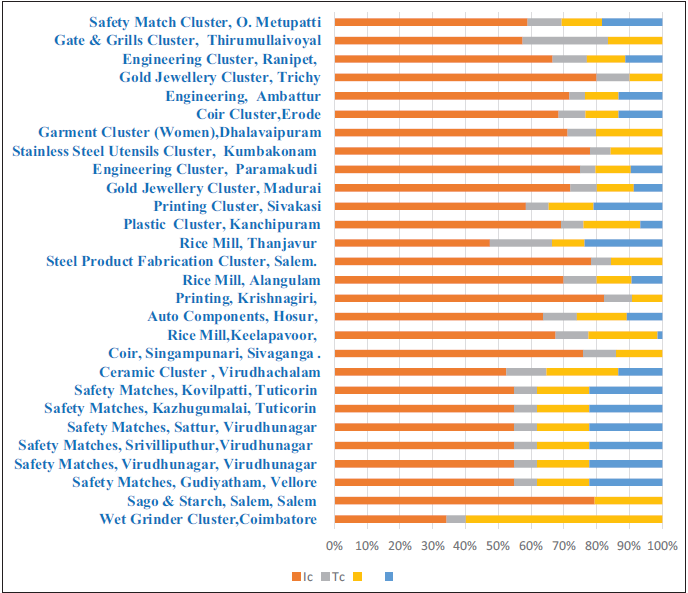
Forty micro and small steel products manufacturing enterprises in Salem faced problems in the value addition of the steel products (window, grill gate, truss work and panel board) manufactured by them. They manufacture stainless steel pipes are and also involved in various sheet metal processes like laser cutting, bending, forming, fabrication and material testing. They currently serve defence and aerospace, agricultural implements, rigs, railways, automotive, etc. They are also looking forward to doing business with the marine and shipbuilding sector (Limited, 2022).
The special purpose vehicle (SPV) approached the Government of Tamil Nadu (GoTN) and GoI through Tamil Nadu Small Industries Development Corporation (TANSIDCO) and formed M/s Salem Steel Cluster Pvt Ltd; Salem in 2012 at Salem, Tamil Nadu. The performance of the SPFC, Salem is to be studied for the benefit of MSMEs and policymakers like the GoI and the GoTN. However, the SPFC is not studied yet and this leads to a study on the performance of SPFC before and after CDA.
Objectives of the Study
The objectives of the study are to:
Find the physical and financial performance of SPFC before and after CDA. Find the productivity of the SPFC by taking independent variables like number of units, employment, and production and dependent variable like turnover. Find the integrated performance of SPFC before and after CDA. Find business analytics models like Diagnostic Analytics, Descriptive Analysis, Inferential Analytics, Predictive Analytics, Prescriptive Analytics and Decision Analytics. Find the Difference in Difference (DID) on control variable where the units have not adopted CDA and experimental variables where the units have adopted CDA.
Methodology of the Study
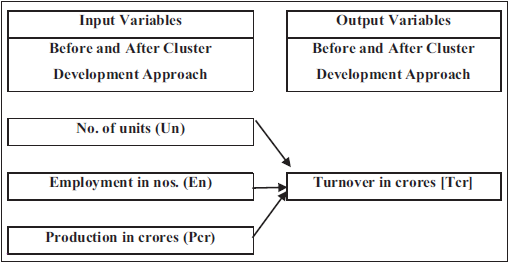
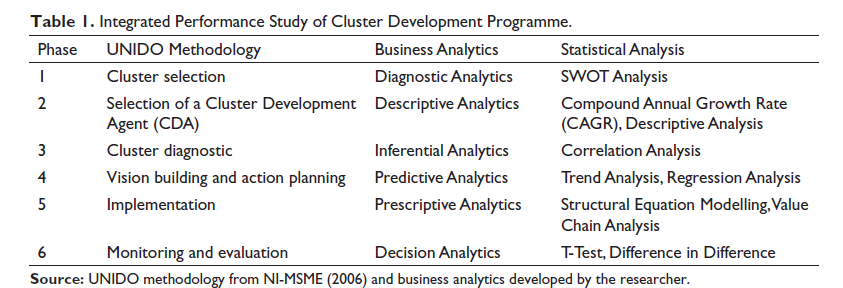
The methodology adopted by collecting the primary data like number of units (Un), employment in numbers (En), production in crores (Pcr) and turnover in crores (Tcr) from the SPFC before and after CDA and analysing using Compound Annual Growth Rate (CAGR), Descriptive Analysis, Correlation Analysis, Trend Analysis, Regression Analysis and Structural Equation Modelling (SEM), T-Test, Value Chain Analysis and also using DID. Diagnostic Analytics, Descriptive Analytics, Inferential Analytics, Predictive Analytics, Prescriptive Analytics and Decision Analytics are studied in detail. The conceptual framework is given in Figure 2 and the performance study of Cluster Development Programme is given in Table 1.
Conceptual Framework.
Integrated Performance Study of Cluster Development Programme.
Technical Analysis and Results
Diagnostic Analytics
The diagnostic study was conducted and the primary data collected are shown in Table 2.
Status of the Steel Product Fabrication Cluster (SPFC).
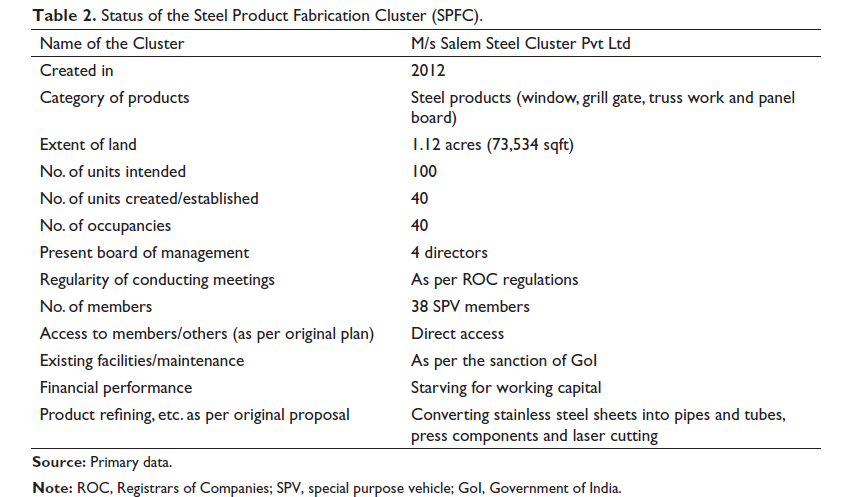
The diagnostic study was conducted to know the various interventions needed for empowering the entrepreneurs engaged in SPFC in the areas of social, technological, infrastructure-related, financial and marketing for the successful promotion of the cluster.
Before adopting the CDA, the MSEs manufactured some parts, and the majority of them were outsourced.
SWOT Analysis
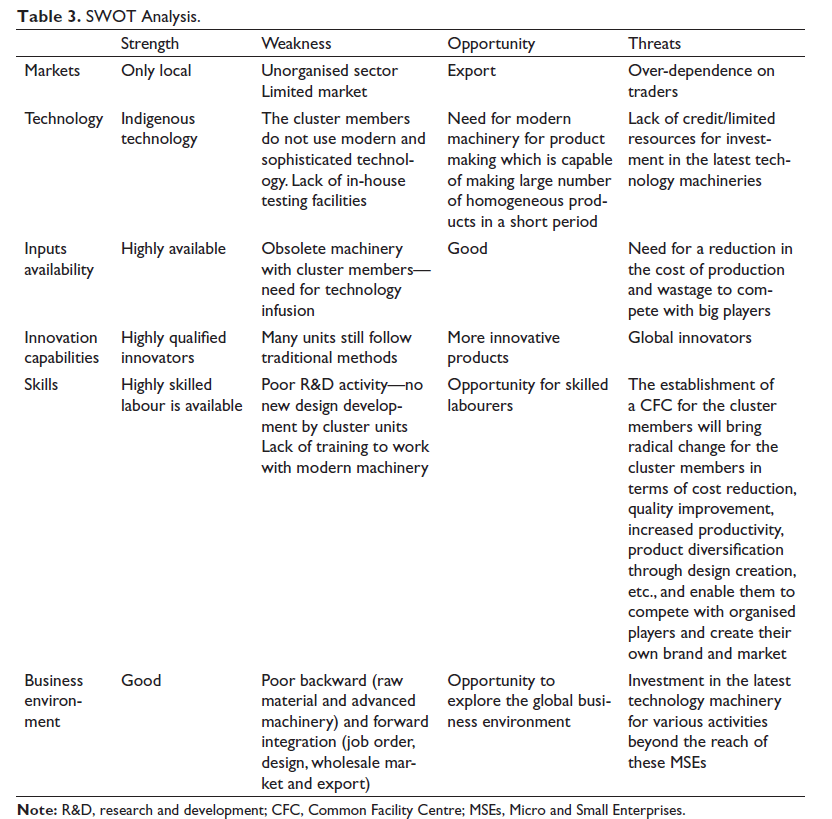
SWOT Analysis is given in Table 3.
SWOT Analysis.
Works at Cluster Units Before CDA
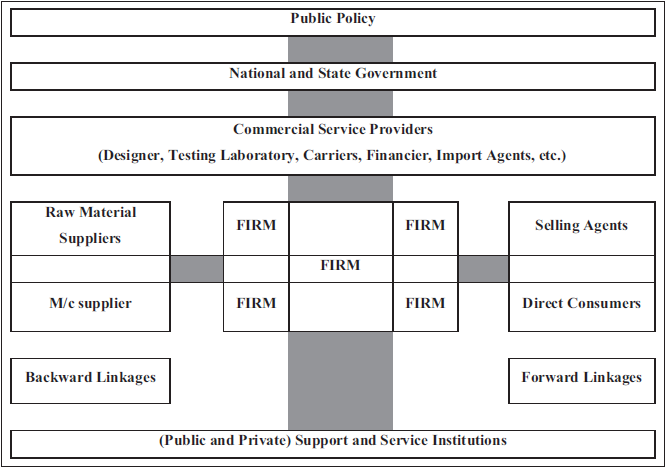
The process was done before CDA using machines like computer numerical control (CNC), lathe, welding, etc. Figure 3 also depicts a map indicating various linkages and actors that exist in a cluster.
Map Indicating Various Linkages and Actors That Exist in a Cluster.
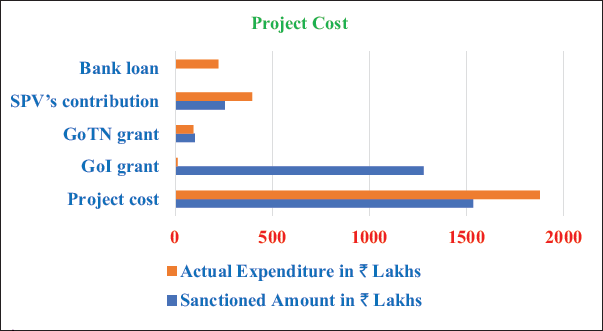
Under the Micro Small Enterprises Cluster Development Programme (MSE-CDP) of the Ministry of MSME, GoI, the SPFC has got funding from the GoI and the GoTN (MSME, 2022). The SPV also contributed and obtained a bank loan to finish the project of about ₹3.56 crore (Micro, 2022). The details of the project cost are given in Figure 4.
Need for a Common Facility Centre (CFC)
Facilities Created in CFC
To improve productivity, the following facilities were created in the cluster during 2017, also shown in Figure 5.
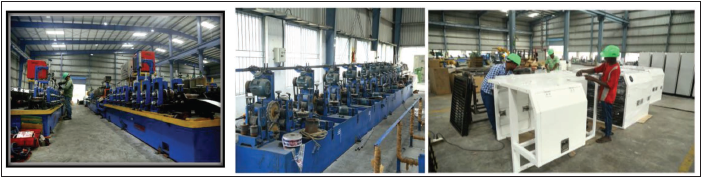
The CFC has a laser cutting, shearing machine, power press, bending hydraulic, milling shaping and slitting machine for manufacturing steel pipes for sectors like agriculture, defence, engineering, etc. After CDA, there is an increase in the productivity of individual MSMEs.
Physical Performance
The physical performance is shown in Figure 6.
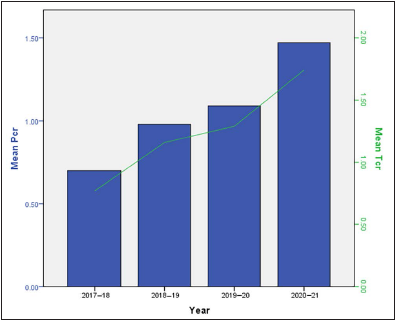
Financial Performance
The financial performance is shown in Figure 7.
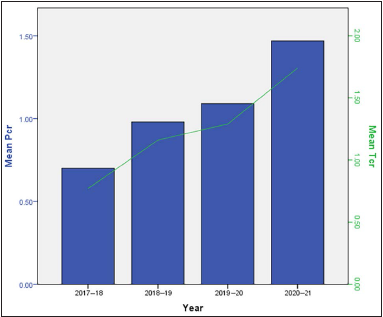
Descriptive Analytics
The descriptive analysis is given in Table 4.
Descriptive Analysis.
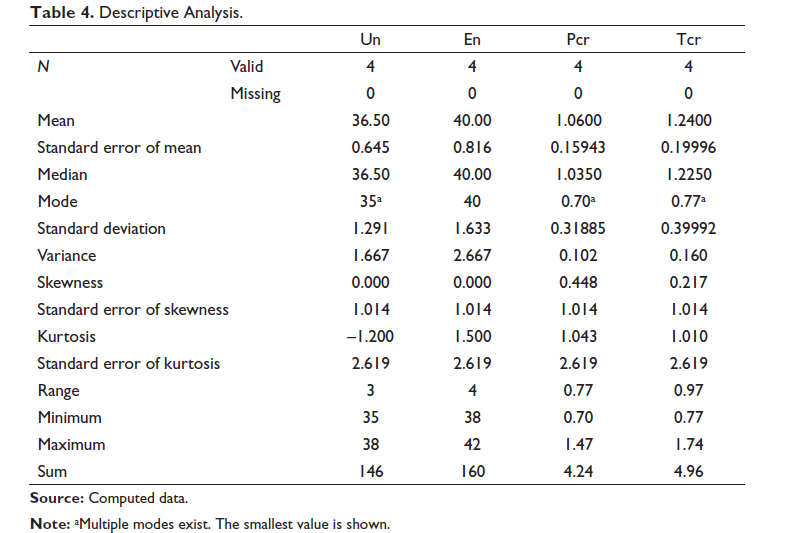
In descriptive analysis, what happened is there was an increase in the mean value of number of units, employment, production and turnover after the CDA.
Correlation Analysis/Inferential Analytics
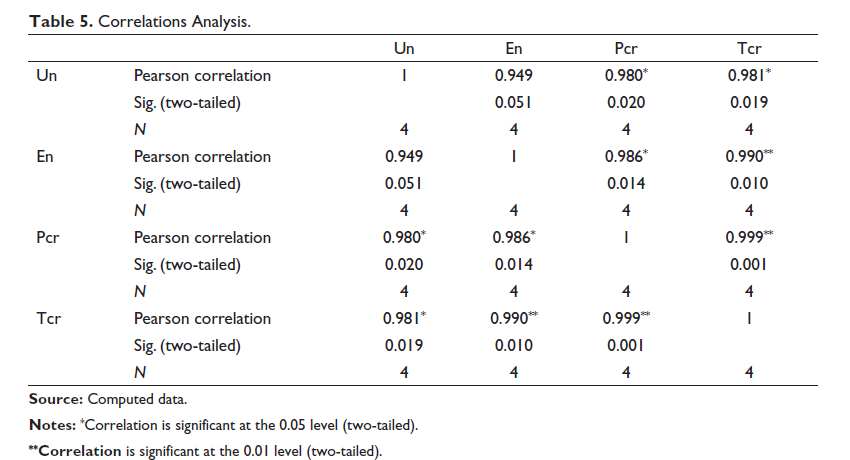
The correlation analysis is given in Table 5.
Correlations Analysis.
**Correlation is significant at the 0.01 level (two-tailed).
Ho1: There is no relationship between number of units and turnover (Rejected: r = 0.949, p = .05).
Ha1: There is a relationship between number of units and turnover (Accepted).
Ho2: There is no relationship between employment and turnover (Rejected: r = 0.98, p = .02).
Ha2: There is a relationship between employment and turnover (Accepted).
Ho3: There is no relationship between production and turnover (Rejected: r = 0.98, p = .19).
Ha3: There is a relationship between production and turnover (Accepted).
Trend Analysis

The annual average increase in number of units is 1.

The annual average increase in employment is 1.

The annual average increase in production is ₹0.24 crores.

The annual average increase in turnover is ₹0.95 crores.
In diagnostic analysis, why it happened was due to the usage of the CFC, there is an annual average increase in number of units, employment, production and turnover in the after-CDA.
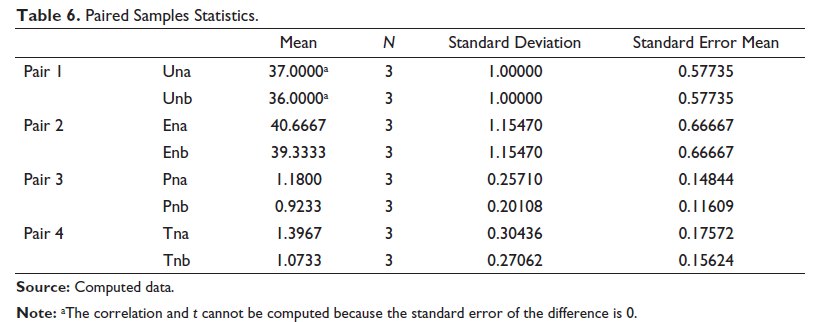
As per Table 6, there is increase in no. of units, employment, production and turnover after Cluster Development Approach when compared to before Cluster Development Approach.
Paired Samples Statistics.
As per Table 7, it is revealed that there is moderate relationship between before and after Cluster Development Approach on number of employments. However, there is high degree of relationship between before and after Cluster Development Approach on production and there is also high degree of relationship between before and after cluster development approach on turnover.
Paired Samples Correlations.

As per Table 8, the T-Test reveals that there is no significant difference between before and after cluster development approach on number of employments. However, there is significant difference between before and after cluster development approach on production and there is significant difference between before and after cluster development approach on turnover.
Paired Samples Test.
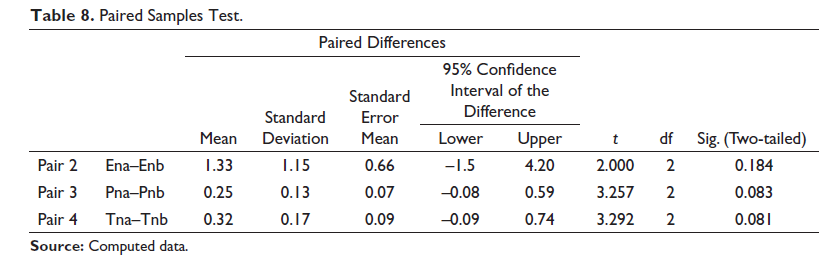
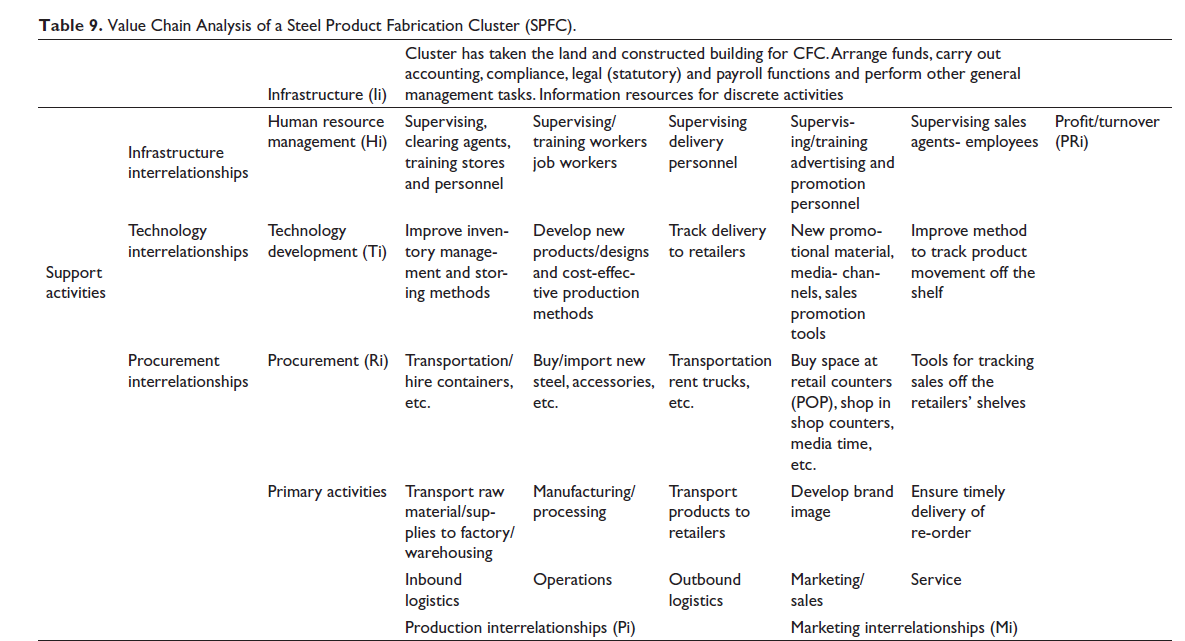
Table 9 exposes the Value Chain Analysis of the cluster wherein the profit/ turnover is calculated based on infrastructure cost, technology cost, procurement cost, production cost and marketing cost.
Value Chain Analysis of a Steel Product Fabrication Cluster (SPFC).
SEM
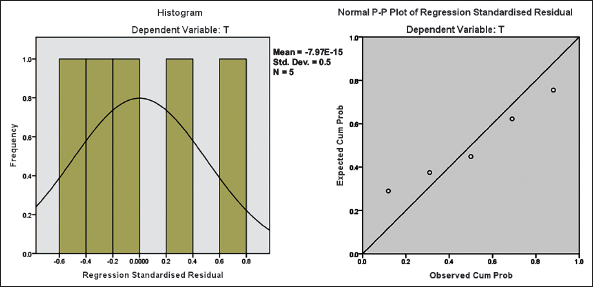
The SEM is given in Figure 8..
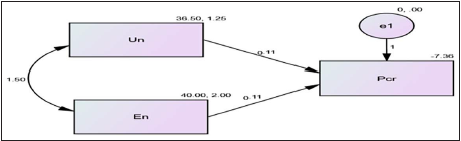

For one unit increase in number of units, turnover increases by 0.064, for one unit increase in employment, turnover increases by 0.079 and for one unit increase in production, turnover increases by 0.60. The regression graphs are given in Figure 9.
Regression Analysis/Predictive Analytics

For one unit increase in units, production increases by 0.11 units and one unit increase in employment, production increases by 0.11 units.

For one unit increase in production, turnover increases by 1.25 units.
In predictive analysis, what will happen is there is/there will be an increase in number of units, employment, production and turnover after the CDA.
T-Test Paired Two Samples for Means
Ho4: Una = Unb, p = .01 < .05 (Rejected)
Ha4: Una # Unb (Accepted) Una > Unb
Ho5: Ena = Enb, p = .184 > .05 (Accepted)
Ha5: Ena # Enb (Rejected); however, Ena > Enb and Mean Ena > Enb
Ho6: Pcra = Pcrb, p = .083 < .10 (Rejected)
Ha6: Pcra # Pcrb (Accepted) Pcra > Pcrb
Ho7: Tcra = Tcrb, p = .081 < .10 (Rejected)
Ha7: Tcrb # Tcrb (Accepted) Tcra > Tcrb
Prescriptive Analytics
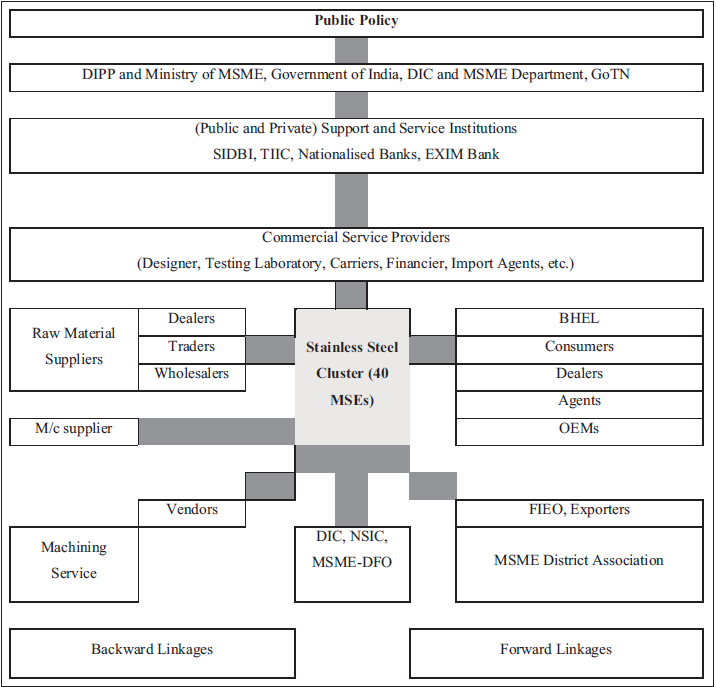
In prescriptive analysis, how can we make it happen by networking all micro manufacturing steel fabrication enterprises so as to increase individual units on employment, production and turnover after the CDA which is proved in DID. Figure 10 gives a cluster map indicating various linkages and actors that exist in a cluster and Table 9 exposes Value Chain Analysis of an SPFC
Cluster Map Indicating Various Linkages and Actors that Exist in a Cluster.

As per equation (8), there is an increase in profit of individual unit after CDA.
DID/Decision Analytics
The DID is used to find the difference between the control variable (firms that have not adopted CDA) and the experimental variable (firms that have adopted CDA) which is given in Table 10.
Difference in Difference (DID).
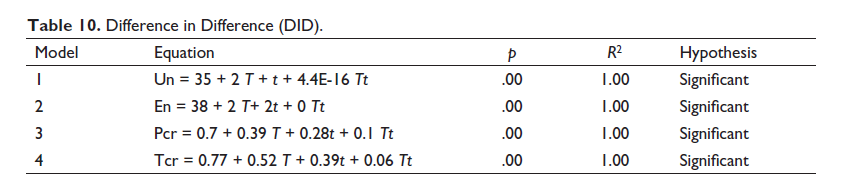

As per equation (9), there is not much difference in number of units after CDA.

As per equation (10), there is not much difference in employment after CDA.

As per equation (11), there is difference of decrease of ₹0.1 lakhs on profit after CDA.

As per equation (12), there is difference of increase of ₹0.06 lakhs on turnover after CDA.
As per table 10, Model 1 to 4 are significant, where there is significant increase in no. of units, employment, production and turnover after Cluster Development Approach.
Findings, Suggestions and Conclusion
A study was conducted to find the productivity of SPFC before and after CDA. There is an increase in CAGR after CDA. There is an increase in mean value after CDA. There exists a strong relationship between dependent variables like turnover and independent variables like number of units, employment and production. There is an annual average increase in number of units, employment, production and turnover. There is an increase in number of units, employment, production and turnover after CDA.
There is DID between controlled units which have not adopted CDA and experimental units which have adopted CDA, where there is an increase in number of units, employment, profit and turnover. There is cost reduction in individual unit after CDA. Due to CDA, steel fabrication products are diversified, new design has been developed, direct export by cluster units has taken place and brand creation has been developed in steel fabrication products. To conclude, by using business analytics techniques like Diagnostic Analytics, Descriptive Analytics, Predictive Analytics, Prescriptive Analytics and Decision Analysis, it is found that there is an increase in turnover and productivity, thereby SDGs of 1, 4, 5, 8 and 9 are achieved.
Footnotes
Acknowledgement
The author acknowledges Department of Industries and Commerce, Government of Tamil Nadu where he is working as Joint Director (Engineering)/General Manager, DIC for sending him for UNIDO, New Delhi’s Cluster Development Agent (CDA) training at EDII, Ahmedabad and acknowledges University of Madras for giving Ph.D. in Industrial Cluster Development Approach.
Declaration of Conflicting Interests
The author declared no potential conflicts of interest with respect to the research, authorship and/or publication of this article.
Funding
The author received no financial support for the research, authorship and/or publication of this article.
