




Abstract
Background
Globally, ethics is recognized as a critical component for ensuring equitable and sustainable genomic healthcare. However, prior research has largely overlooked the ethical aspects when assessing nurses’ genomic competence.
Research aim
This study aimed to assess the genomic competence of nurses in Finland, with a specific focus on their perspectives regarding ethics in genomics.
Research design
This was a cross-sectional study conducted among registered nurses in Finland.
Participants and research context
The data were collected via an online survey between October 30 and December 31, 2023, using the Canadian Adaptation of the Genetics Genomics Nursing Practice Survey (GGNPS-CA), which evaluates attitudes, receptivity, confidence, competency, knowledge, social systems, and the decision adoption process in genomics with ethical dimensions. A total of 234 registered nurses participated.
Ethical considerations
The study was ethically approved by the Ethics Committee of the Tampere Region, statement number 46/2023.
Results
While 76.8% of nurses rated their self-assessed understanding of genomics as poor, their actual Knowledge Score was relatively good (mean 9.12/12, SD 1.44). In addition, nurses reported limited understanding of the ethical issues associated with genomics, particularly concerning equity. The majority (59.4%) believed it was very important for nurses to become more educated on ethical issues, while 28.6% considered it somewhat important.
Conclusions
The findings suggest a strong perceived need among nurses for further education in both genomics and its ethical implications. The discrepancy between self-assessed and actual knowledge may reflect low confidence, which was additionally reported in the ethical issues. Low confidence is possibly influenced by the early stage of genomics integration into nursing practice.
Introduction
Genomics has become an increasingly present part of healthcare in different sectors. 1 It is a comprehensive field of science that requires competence among all healthcare professionals, including registered nurses, midwives, and public health nurses, regardless of their degree level or clinical setting.2,3 As the largest group of professionals in the health sector, 4 nurses are well placed to help integrate genomics into routine health care, in order to maximize its benefits and opportunities effectively for society. 5 This article examines the genomic competence of nurses in Finland, with a focus on their perspectives regarding ethics in genomics. Investigating this topic is crucial because sensitive genomics-informed nursing cannot be effectively provided without incorporating ethical considerations. This study is the first in Finland to explore genomic competence among practicing nurses. The research utilized the revised Canadian Adaptation of the Genetics and Genomics in Nursing Practice Survey (GGNPS-CA) instrument, which incorporates an important new dimension: ethics. 6
Background
Nurses’ preparedness to utilize genomics can be assessed by their attitude and competence, and these qualities are associated with their confidence to provide genomics-informed healthcare. 7 However, even if professionals possess a high degree of self-assurance in their knowledge and capabilities, the integration of genomics into clinical practice may remain low,8–10 and vice versa, the widespread and developed applications of genomics do not necessarily ensure increased belief in one’s abilities. Carpenter–Clawson et al. 5 reported a decline in nurses’ confidence levels despite the ongoing mainstreaming of genomics in England.
However, competence forms the foundation for confidence and implementation of knowledge. The genomic competence of registered nurses has been assessed globally in recent decades, using different instruments,11,12 and these studies have shown low-to-moderate competence and knowledge levels.10,13–16 There has also been little change in knowledge levels over the years, and the results have been consistent in different studies and countries. 16 In terms of methodology, the genomic competence of nurses has been assessed in quantitative, qualitative, and mixed-method studies with cross-sectional and longitudinal approaches.11,12 In a few countries, namely, in USA, England, and Australia, researchers have carried out multiple studies. In contrast, in other countries such as Canada, 6 China, 17 Israel, 9 Italy, 18 Japan, 19 Oman, 16 and Turkey, 10 only a few competence surveys have been conducted. In addition to the competence studies of registered nurses, there have also been several studies assessing the competence of undergraduate students,15,19,20 the development of genomic education,21–23 and effectiveness of education interventions for genomics-informed nursing.24,25 Nevertheless, the literature reveals a significant gap in evidence regarding the nursing workforce’s competence in genomics.
Ethics is acknowledged as an important part of genomics competence,2,12,26 and ethical elements are strongly present in care in the genomic era.27,28 In addition, some educational interventions have included ethics as a part of the objectives and contents of the courses conducted for bachelor and master level nurses.19,25,29,30 However, ethics is inconsistently integrated into competence assessment tools. 12
Ethical considerations in the education of genomics and in procedures in practice are essential for nurses to work in an appropriately ethical way. 31 Without the ability to understand ethical issues in genomics, nurses may encounter ethical distress and conflicts similar to those experienced by professionals in the field of genetic counselling.32,33 The sources of distress have been identified to involve other providers, family members, issues of responsibility, beliefs, and access to services. 33 Although genomics is a relatively new innovation and its implementation remains incomplete and in developmental stages, the identification of ethical challenges related to genomics among nursing professionals dates back to the early 2000s. Informed decision-making, informed consent, privacy of information, and preventing discrimination were identified immediately as examples of ethical issues associated with genomics. 34 In addition, some old and new competence and curricula guidelines incorporate genomic related ethical responsibilities and practice skills for nurses.2,3,26 The challenge of ethics in genomics is described in Williams and Dale’s 35 study, where confidence in resolving ethical problems was identified as one of the weakest areas of competence among nurses.
The absence of ethical dimensions in many competence assessments has been criticized in recent reviews.12,36 Therefore, it is a positive move that this important element of genomics has been addressed further in the refining of one widely used instrument – The Genetics and Genomics in Nursing Practice Survey (GGNPS). 6 This new ethics-enhanced Canadian Adaptation of the Genetics and Genomics in Nursing Practice Survey (GGNPS-CA) is used in this study to assess genomic competence and its ethical perspective. In particular, the lack of research on genomic competence among nursing professionals in Finland is a significant hindrance in integrating genomic knowledge into nursing skills and implementing genomic information into healthcare practices. This study aims to fill this gap by assessing the genomic competence and ethical awareness of nurses in Finland using the newly refined GGNPS-CA instrument, thereby supporting ethically sound healthcare delivery in the genomic era.
Aims
This study aimed to assess the genomic competence of nurses in Finland, with a specific focus on their perspectives regarding ethics in genomics.
Research design
This was a cross-sectional study conducted among registered nurses in Finland. The descriptive survey utilized the Canadian Adaptation of the Genetics and Genomics Nursing Practice Survey (GGNPS-CA), a modified version of the original Genetics and Genomics Nursing Practice Survey (GGNPS). 6 Research Electronic Data Capture (REDCap 14.5.8) software was utilized to build and manage the online survey. The Finnish Nurses Association, The Finnish Association of Public Health Nurses, and The Federation of Finnish Midwives granted the research permission for the research.
Participants and research context
The data were collected between October 30 and December 31, 2023. The three professional associations delivered invitations via newsletter, e-mail, or closed Facebook group. The invitation was projected to reach all members including students, nurses, educators, researchers, and other support members. Due to the absence of disaggregated membership registries, it is not feasible to provide a precise estimate of the potential target population. Eligible participants for the survey were Finnish-speaking nurses with a registered nursing degree. The study accepted nursing professionals from all healthcare sectors and levels of expertise, with a minimum requirement of holding a registered nurse degree. This also included public health nurses, midwives, and paramedics who have a registered nursing degree as a basis of their double degree in Finland. In total, 234 registered nurses participated in the study.
Ethical considerations
Although the invitation and link to the survey were delivered through the nursing associations, it was not a requirement to be a member of any professional organization to participate in the survey. The privacy and voluntary participation of respondents were ensured. Responses were anonymous, and the data was stored in the Tampere University cloud service behind a two-step authentication security protocol. The study was ethically approved by the Ethics Committee of the Tampere Region, statement number 46/2023
Instrument
The instrument utilized in this study is the Canadian Adaptation of the Genetics and Genomics Nursing Practice Survey (GGNPS-CA). This is a modified version of the Genetics and Genomics Nursing Practice Survey (GGNPS). The GGNPS is used to assess the genomic knowledge and competence of nursing professionals. 13 It includes domains of attitudes, receptivity, confidence, social system, adoption, and genomic knowledge based on the theory of knowledge dissemination by Rogers’ Diffusion of Innovation (DOI), 37 previously explained in detail in Calzone et al.8,13 and Plavskin et al. 38 surveys. In addition, GGNPS is aligned with the competency guidelines for nurses. 13 It is available on the National Human Genome Research Institute 39 website. Studies using this instrument have been conducted widely, for example, in the United States, China, and Turkey.8,10,17
The development work for GGNPS-CA was done in Canada, responding to needs for modifying the instrument. 6 The new instrument retains the original framework while incorporating an important new dimension: ethics. The face and content validity of the revised instrument were confirmed with a sample of 10 nurses who were recruited through the professional networks of the research team. 6 The development and structure of GGNPS-CA have been reported in a study of Limoges et al.. 6
The GGNPS-CA was chosen for this study based on conceptual literature and existing instruments. Literature reviews have demonstrated that many instruments used to assess genomic competence among nursing professionals often neglect the ethical dimensions,12,36 despite ethics being recognized as an important aspect of genomic competencies2,3,40 and included in several education intervention studies.19,24,35,41 GGNPS-CA emphasizes the overall competence of all nurses without focussing on any specific genetic area. 6 Therefore, it serves as a crucial initial assessment in the absence of prior studies involving practicing nurses in Finland. Especially, this tool offers a valuable foundation for developing strategies to implement ethical genomics into Finnish nursing practice.
The GGNPS-CA was translated into Finnish by the first author of this study with support from the research teams expertise. Reviewers were consulted for specific terminology. The Finnish version of the instrument was evaluated using a sample of five nurses from diverse professional backgrounds. An official language reviewer translated the Finnish version back into English. This translated version and the content of the instrument were discussed with the GGNPS-CA developers, and the use of Finnish version of GGNPS-CA in this context was collectively approved.
The ethical questions incorporated in GGNPS-CA and GGNPS.
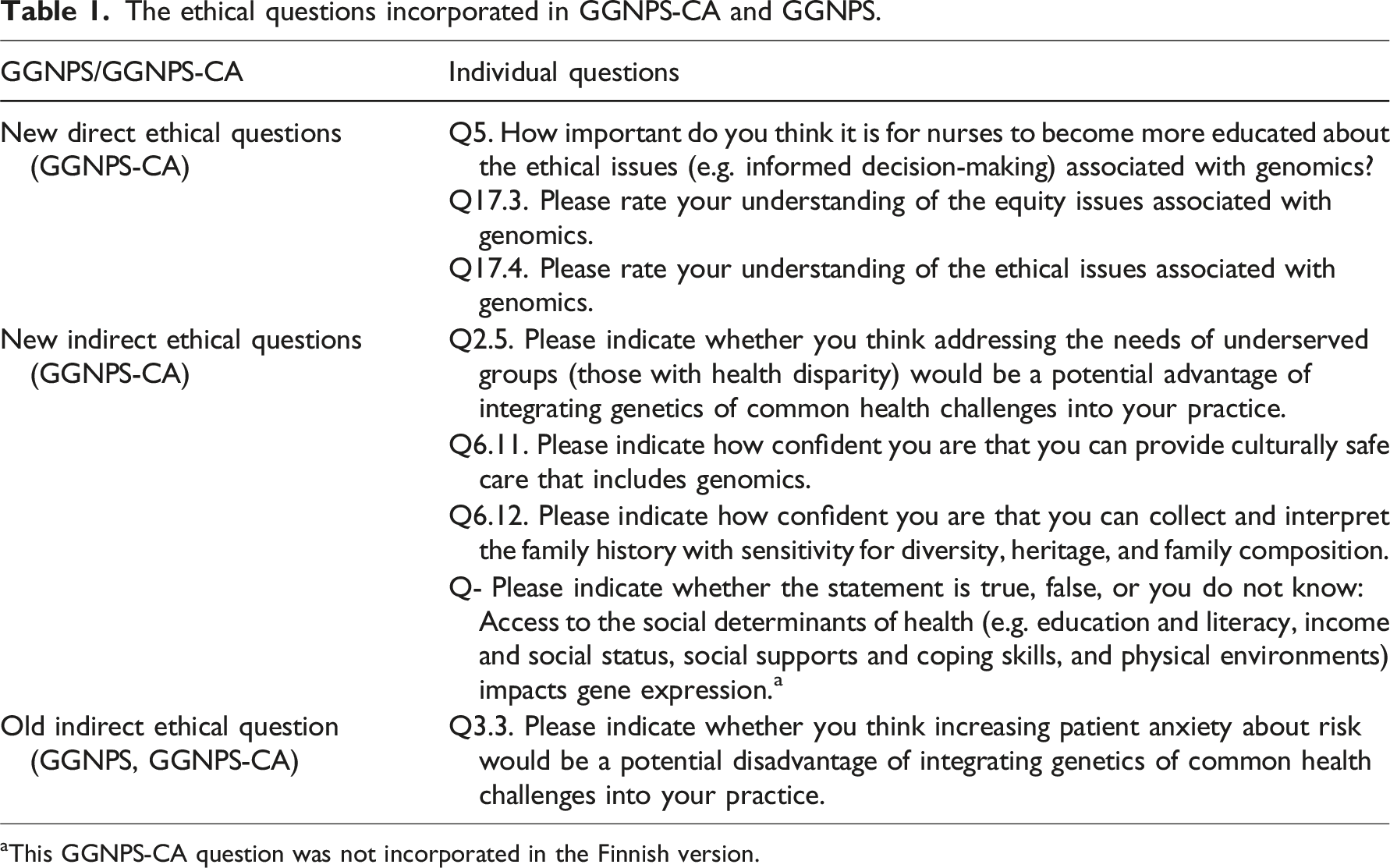
aThis GGNPS-CA question was not incorporated in the Finnish version.
Knowledge Score Questions (KSQ) in Finnish version of GGNPS-CA and frequencies.
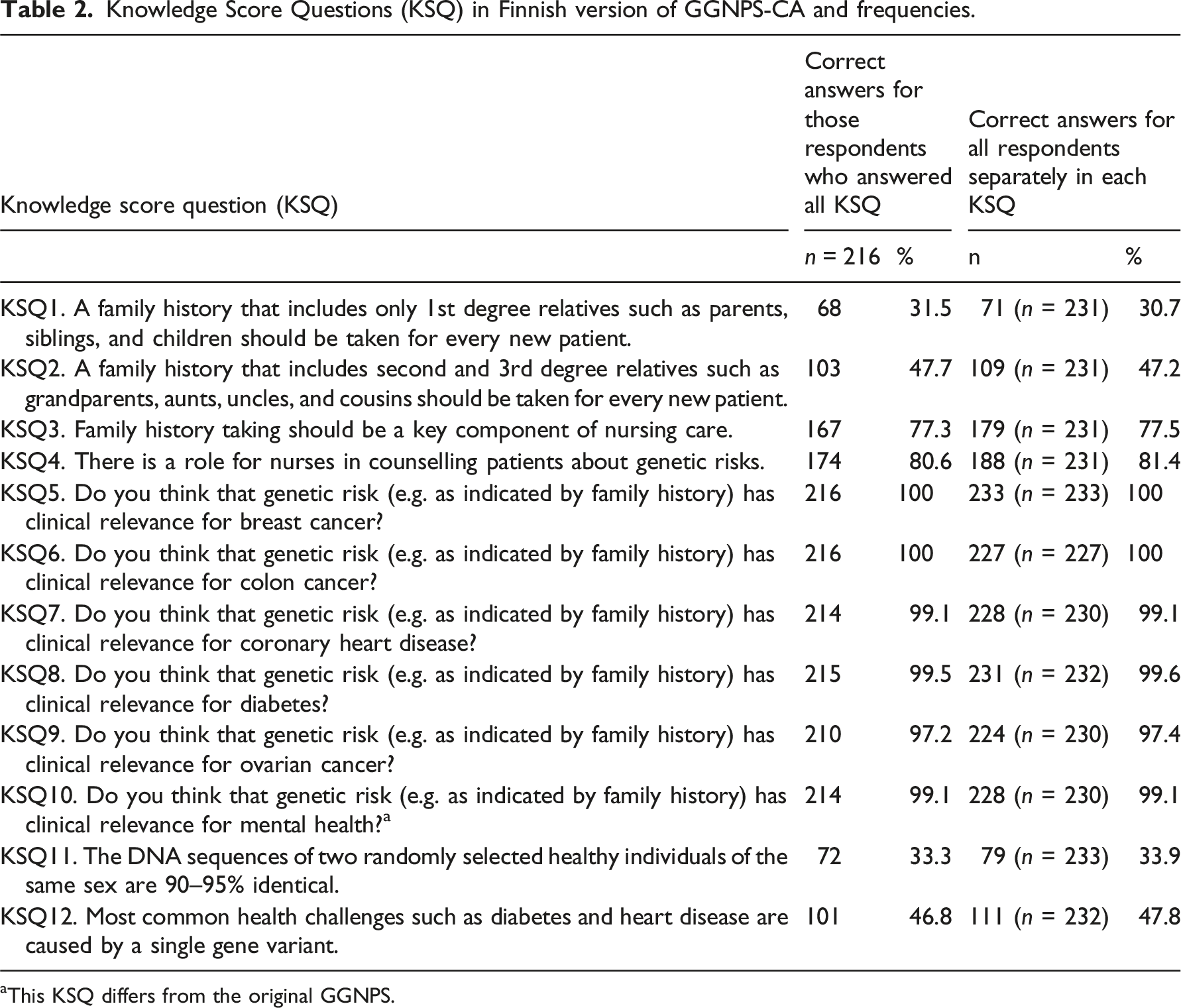
aThis KSQ differs from the original GGNPS.
The Finnish version of GGNPS-CA includes 18 main questions. Some of these questions contain sub-questions or statements. In total, 59 individual questions, sub-questions, or statements were included in the instrument divided into the same domains as GGNPS: attitudes, receptivity, confidence, genomic knowledge, social system, and adoption. 13 The questionnaire included various types of questions, such as multiple choice, dichotomous, and Likert scale. Seven demographic questions were adjusted to fit the Finnish education degrees and healthcare context. Information concerning the channel through which the survey was found, age, gender, working role, highest level of nursing education, years in practice, and practice setting was collected.
Statistical analyses
All collected data were exported from REDCap and imported into IBM Statistical Packages for the Social Sciences (SPSS) (29.0.1.0) for analysis. Categorical variables with sparse responses (1–3 responses in a category) were reclassified to improve analytical power. Specifically, three-level scales (excellent–good–poor) were collapsed into two-level categories (excellent/good–poor) for items Q5, Q17.1, Q17.2, Q17.3, and Q17.4.
The continuous Knowledge Score (KS) variable, ranging from 0 to 12, was calculated only for participants who completed all 12 knowledge items. Information about the individual questions of the KS is presented in Table 2.
Descriptive statistics, including frequencies, percentages, means, and standard deviations were computed. The normality of distributions was visually assessed to decide between employing parametric and non-parametric tests. For analysis of variance, the assumption of equality of variances was tested using Levene’s test. The KS and one demographic question (age) were quantitative and followed a normal distribution allowing analyses for T-test or One-way ANOVA, depending on the number of groups to compare. If the variances were not equal, Brown-Forsythe test statistics were used in One-way ANOVA. If the analysis of variance indicated differences in group means, Tukey’s pairwise comparison was used for further testing. Categorical associations were analyzed using the Chi-square test. A p-value of <0.05 was considered statistically significant.
Results
Demographics
Demographic features of the participants.
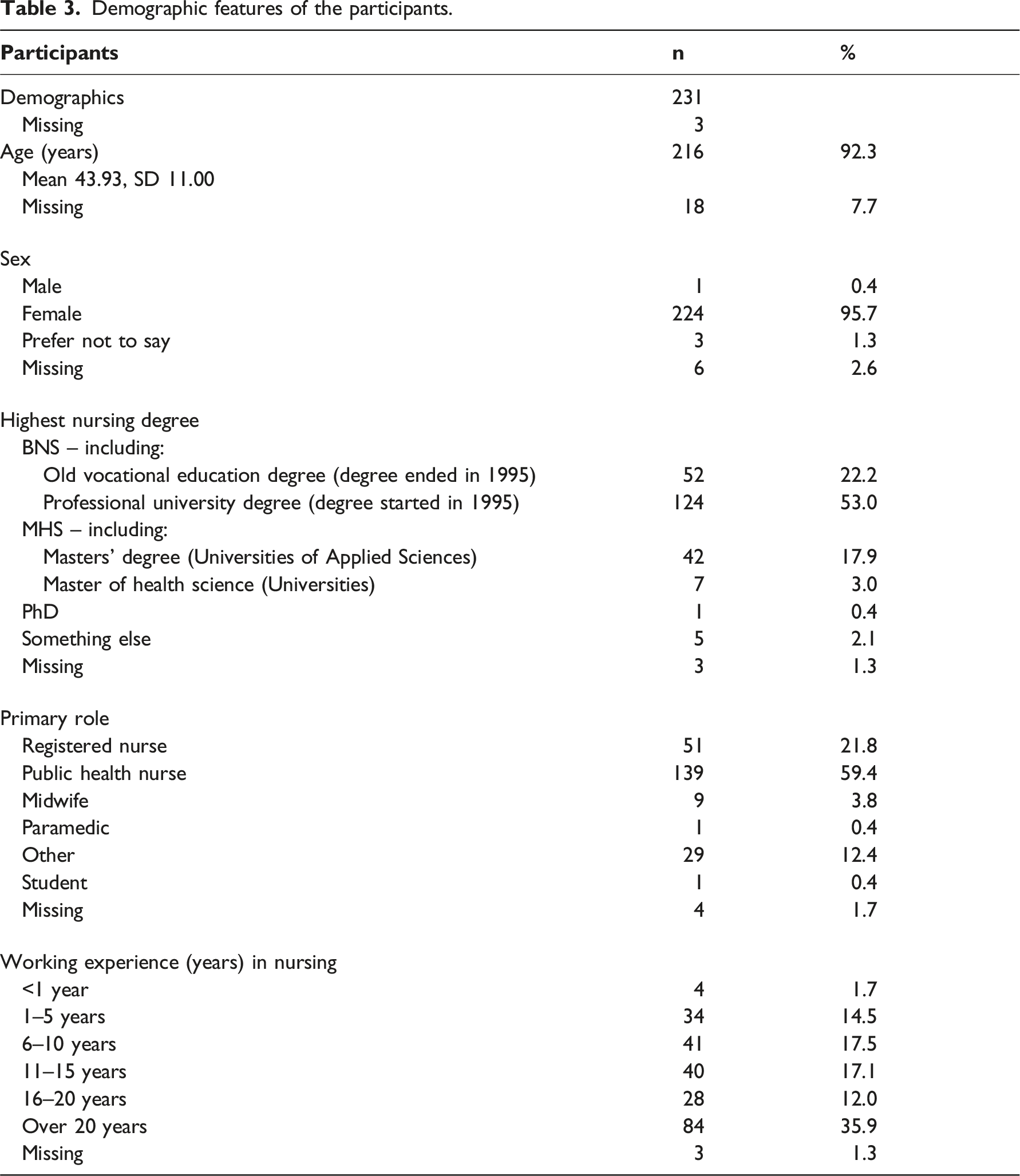
Genomic knowledge
Of the respondents, 21% (n = 49) assessed their general genetic/genomic understanding in two-level variable as excellent/good, while 79 % (n = 184) assessed their understanding as poor. In comparison, the distribution of responses was more balanced regarding their understanding of the genetics of common health challenges such as diabetes and heart disease (excellent/good 43.8%, n = 102 and poor 56.2%, n = 131).
A total of 216 nurses (92.3%) answered all the questions in KS, and the mean KS was 9.12 (SD = 1.44). The minimum score received was 6/12 and the maximum 12/12. All respondents answered KSQ5 and KSQ6 correctly, acknowledging that genetic risk (e.g. as indicated by family history) has clinical relevance in breast and colon cancer. The most challenging questions were KSQ1 and KSQ11, with only 30.7% and 33.9% of respondents providing correct answers, respectively. KSQ1 addressed taking family history that includes only 1st degree relatives, and KSQ11 addressed the similarity of DNA between persons.
Associations between variables and Knowledge Score
When a two-level classification (excellent/good – poor) of self-reported understanding of general genomics/genetics is compared to the KS, there is a statistically significant difference (p = .005) in means between the groups, according to the T-test (mean difference 0.68). Those who perceived their understanding as poor had a lower overall KS on average (n = 171, mean score 8.98) compared to those who perceived their understanding as good (n = 44, mean score 9.66). In addition, understanding of the genetics of common health challenges revealed a similar pattern (p = .001, mean difference 0.63). Those who perceived their understanding as poor had a lower overall KS on average (n = 120, mean score 8.83) compared to those who perceived their understanding as good (n = 95, mean score 9.46).
Knowledge Score (KS) association to variables.
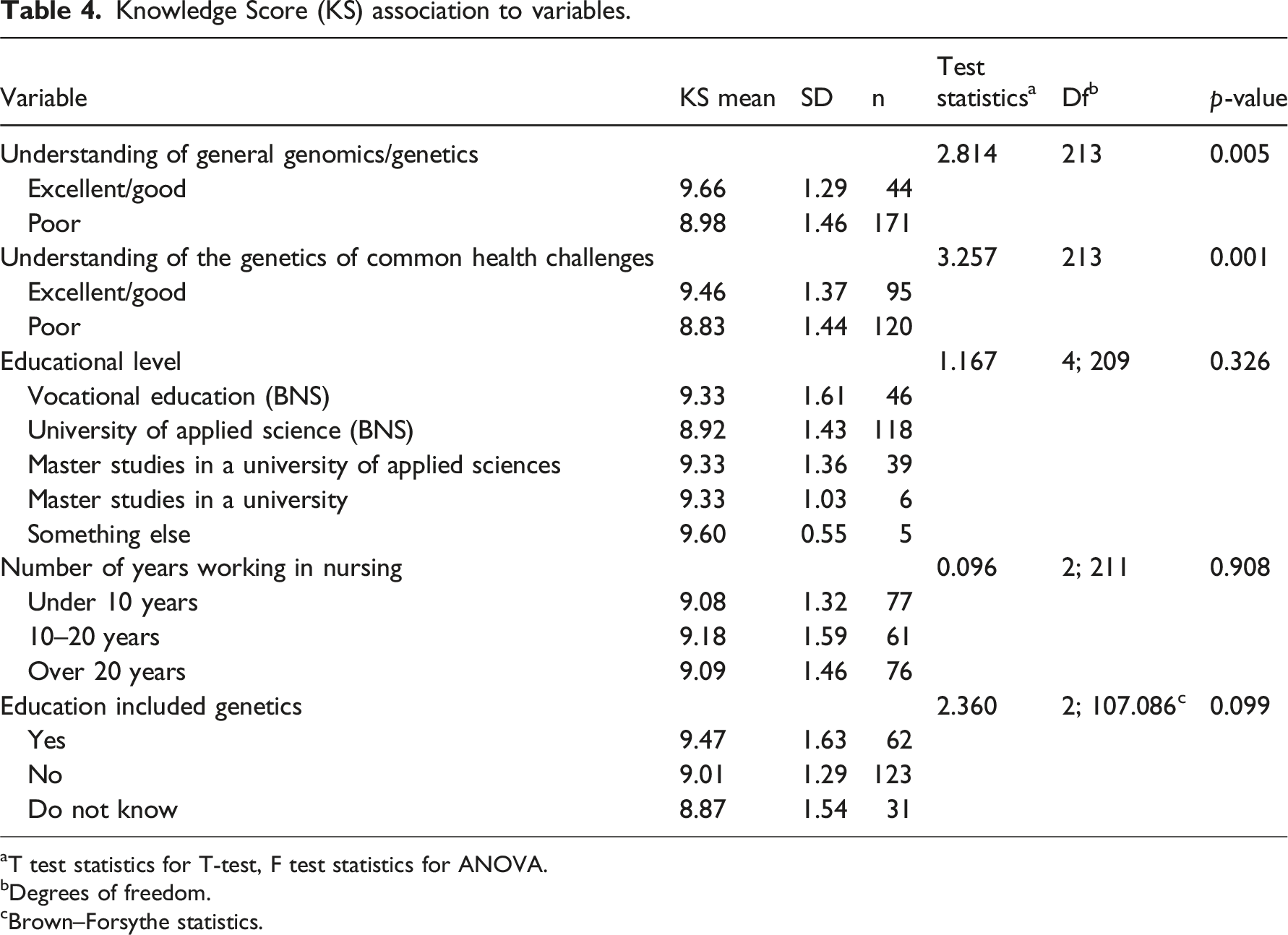
aT test statistics for T-test, F test statistics for ANOVA.
bDegrees of freedom.
cBrown–Forsythe statistics.
Ethical issues
Most nurses (59.4%) stated that it is very important for nurses to become more educated about the ethical issues (e.g. informed decision-making) associated with genomics, and 28.6% saw this as somewhat important. Only a minority felt that becoming more educated about ethics is not very important (3%) or not at all important (0.4%), while 8.6% of respondents felt neutral or did not know.
Majority (75%) reported their understanding of ethical issues associated with genomics to be at a poor level, while 25% stated it to be excellent/good. Regarding self-reported understanding of equity in genomics, only 15.2% of nurses rated their understanding as excellent/good, while 84.8% rated it as poor.
A Chi-Square test indicated the statistically significant association (p < .001) between understanding ethical issues and understanding equity. 56.1% of those who classified their understanding of ethics related to genomics as excellent/good also felt their understanding of equity in genomics to be at the same level. Conversely, nearly as many of the same respondents (43.9%) rated their comprehension of equity as poor. Vast majority of nurses (98.3%) who indicated that they understand ethics poorly, also perceived their comprehension of equity issues as weak.
Indirect questions of ethics included potential consequences and confidence in practicing ethical genomics. Addressing the needs of underserved groups divided nurses’ opinions. Half of the respondents (52.6%, n = 122) saw integration of genomics as beneficial for underserved groups. Most of the nurses (63.4%, n = 144) identified an increasing anxiety of patients due to genomics risk as a potential disadvantage. However, nurses lacked confidence. A significant majority (82.3%, n = 190) did not feel confident providing culturally safe genomic care. Additionally, 75.3% (n = 174) reported low confidence in collecting and interpreting family histories with sensitivity to diversity.
Ethical issues and genomic knowledge
A statistically significant association between the importance of ethics education and KS (p = .003) was found. Based on Tukey’s pairwise comparisons, a significant mean difference of 1.22 (p = .004) was noticed between two groups. The respondents who rated ethics education as important scored higher on the KS (mean score 9.22) than those who stated neutral (mean score 8).
Knowledge Score (KS) association to ethical variables.
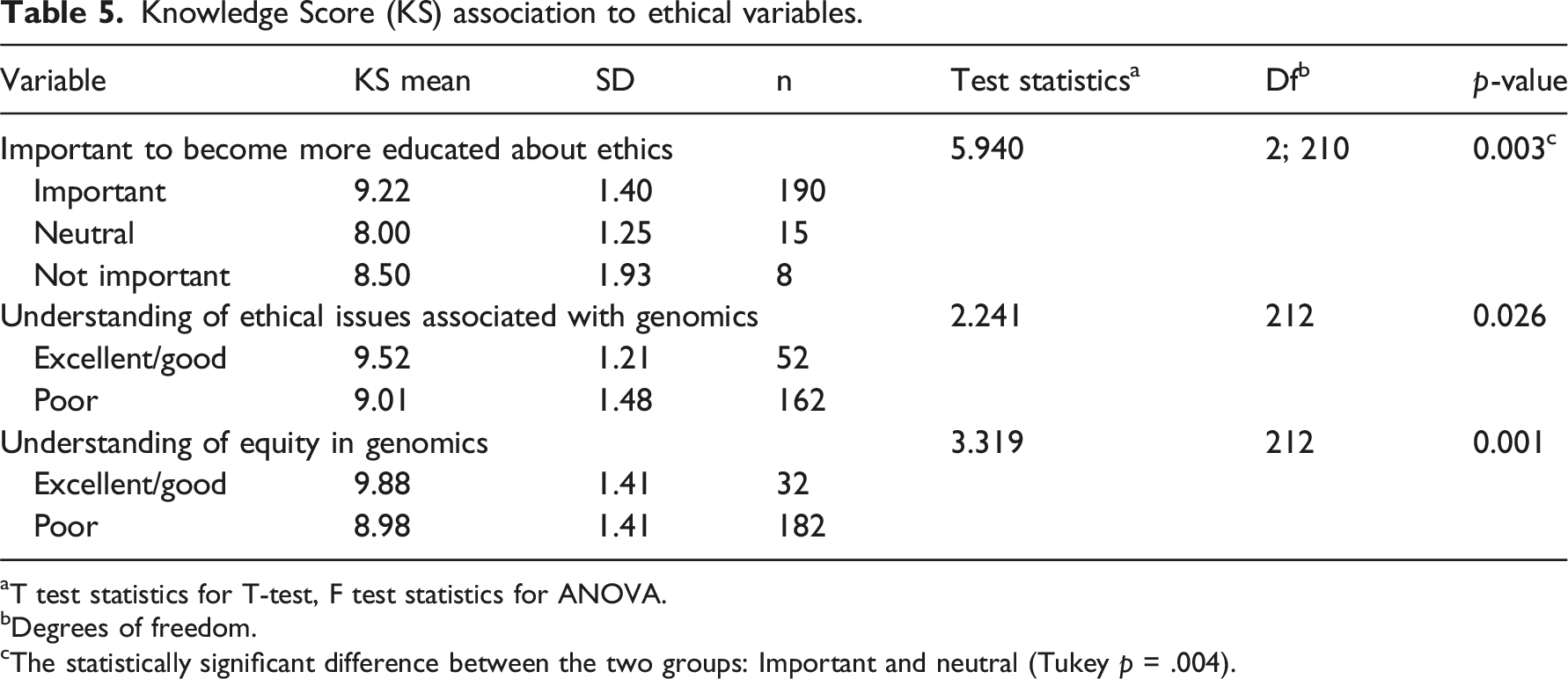
aT test statistics for T-test, F test statistics for ANOVA.
Degrees of freedom.
cThe statistically significant difference between the two groups: Important and neutral (Tukey p = .004).
Ethical issues and demographics
Association between working experience, age, and understanding ethical variables.
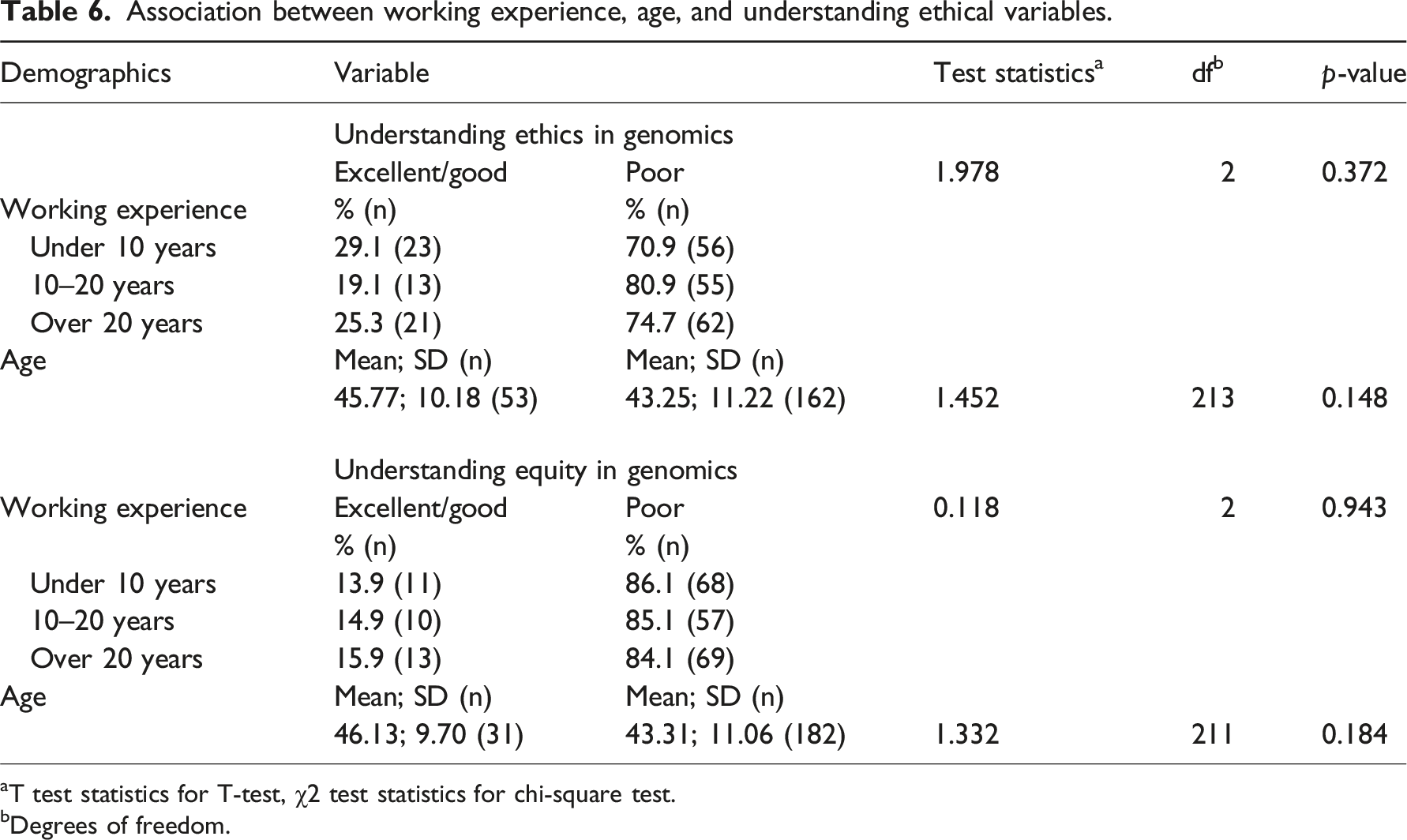
aT test statistics for T-test, χ2 test statistics for chi-square test.
bDegrees of freedom.
Summary of the main results
• Nurses self-assessed their understanding of genomics as poor, although their mean KS was relatively good (9.12/12). • Nurses who rated their understanding of genomics or ethics as excellent/good scored significantly higher on the KS than those who rated their understanding as poor. • Nurses perceived their understanding of ethical issues and equity as poor, but they felt it was important to become more educated about ethical issues related to genomics • Nurses did not feel confident providing culturally appropriate care in genomics
Discussion
This study aimed to assess genomic competence and ethical issues associated with genomics among registered nurses in Finland. It showed that nurses critically self-evaluated their understanding of genomic knowledge compared to the KS test. The KS in this study was relatively good (mean = 9.12). A comparable score (9.36) was reported in a recent Turkish study, 9 although the authors classified it as moderate. Similar levels were found in China (7.35) and in Canada (8.59).6,17 The threshold values were not mentioned in any previous studies. Given the absence of a universal standard for classification of KS, we implemented a 3-tier system based on percentage ranges 42 : Less than 50% (0–6) was considered as low, 51–75% (6.12–9.0) was considered as moderate, and 76–100% (9.12–12) was considered as good. 42 However, these KS thresholds may not be directly comparable to previous studies, which did not specify categorization criteria, and one question (KSQ10) differed.
Most of the nurses in this study reported a limited understanding of ethics and equity in genomics, highlighting the importance of ethics education in this field. Ethics, in general, has long been regarded as an integral part of everyday nursing,43,44 and a vital part of quality healthcare. 45 Ethical competence has been defined in terms of ethical awareness, moral judgement skills, the willingness to do good, and of character strength. 46 In addition to these partly internal personal attributes, ethical competence is seen as developing within a social context. 47 For nurses, this social context is the healthcare organization in which they work. Understanding healthcare professionals’ perceptions of ethics in genomic era enables nurse leaders and management to offer support that strengthens ethically robust genomics-informed practices. Ethics rounds in work settings could effectively support and train nurses by facilitating discussions on genetic related ethical issues. These interprofessional, low-hierarchy sessions allow professionals to engage in reflection48,49 providing them with self-confidence to resolve ethical questions independently later on. By using tools such as storytelling, ethics rounds can provide an effective educational platform for nurses 50 to increase knowledge and confidence both needed for implementation of genomics.
This research contributes to understanding the current state of genomics and nursing in Finland. Internationally, it provides valuable benchmarks, highlighting the importance of ethically competent care for healthcare delivery in the genomic era. To date, ethics has been underrepresented in assessments of genomic competence. Our findings indicate that ethics should be integrated throughout the genomics implementation process, from curricula recommendations and educational tools to clinical practice, nursing leadership education, and interdisciplinary healthcare collaboration.
Limitations
Some limitations are recognized in this study. The GGNPS-CA has not yet been validated, but the original GGNPS has been validated with test–retest reliability 51 and validity evaluation. 39 Due to changes in the utilized Finnish version of GGNPS-CA, direct comparison to other surveys using the original GGNPS and GGNPS-CA requires precision. However, instruments should always evolve in response to changing information, emerging needs, and different societal contexts. The added ethical questions ensure that all aspects of genomic competence are considered in the future.
The authors acknowledge the potential for response bias, which may arise from the likelihood that nurses with a greater interest in genomics were more inclined to respond. Additionally, the distribution of nursing professional groups responded the survey does not fully correspond to the workforce composition in Finland. The largest group completing the survey was public health nurses, whereas the largest group of working professionals are registered nurses. However, the results remain generalizable because, in Finland, public health nurses are also qualified and licensed to work as registered nurses.
Because the study was not limited only to hospital or outpatient settings, the primary field of practice of the respondents expanded to encompass the entire healthcare sector. The majority of nurses reported working in an outpatient setting. Thus, the survey results reflect better outpatient nurses’ perceptions and competence. However, this study provides essential information about the state of genomics-informed nursing, being the first of its kind in Finland. The results may be utilized to develop educational interventions, frameworks, guidelines, and to raise awareness of ethical genomics among all nurses. A broad and interprofessional approach is considered advantageous in education, 52 and this study offers the perceptions of various nursing professionals. Therefore, the comprehensive results are valuable for establishing general genomics training, including ethics, for all nurses, regardless of discipline. Although the study was conducted in only one country, it promotes ethical discussion globally.
Conclusions
Nurses self-evaluated their understanding of genomics as poor, although the average score in KS indicated a good level of knowledge. Nurses who perceived their understanding to be poor tended to receive lower scores in KS, while those who stated they had a good understanding performed better. Thus, the self-evaluated question and the scored knowledge test complemented each other. The results indicate that nurses have a relatively accurate awareness of their genomic competence although they may underestimate their abilities.
A significant majority reported poor understanding of ethics and equity in genomics. Nurses did not feel confident in ethical issues and emphasized the need for additional training for nursing professionals. Low confidence may be influenced by the early stage of genomics integration into nursing practice in Finland.
As the first study of its kind in Finland, this research provides a foundation for creating a national genomics-informed nursing strategy. By addressing both genomic knowledge and its ethical dimensions, nursing education can better prepare practitioners for the growing demands of genomics-informed care. Future research should aim to validate ethical assessment instruments and evaluate the effectiveness of educational interventions in both genomics and its ethical implications.
Footnotes
Acknowledgements
The authors would like to thank all of the nurses who participated in the study, and professionals who evaluated the Finnish version of GGNPS-CA. We would especially like to acknowledge Professors Jacqueline Limoges and Kathleen Calzone for their conversations on GGNPS-CA and GGNPS. This study received no special funding.
Declaration of conflicting interests
The authors declared no potential conflicts of interest with respect to the research, authorship, and/or publication of this article.
Funding
The authors received no financial support for the research, authorship, and/or publication of this article.
