




Abstract
Background
Professional values create a basis for successful collaboration and person-centred care in integrated care and services. Little is known about how different health and social care workers assess their professional values.
Research aim
To describe and compare professional value orientation among different health and social care workers in Finland.
Research design
A quantitative cross-sectional study.
Participants and research context
We carried out an online survey of health and social care workers from 8 March to 31 May 2022, using the Finnish version of the Nurses’ Professional Values Scale-3. The data were analysed using descriptive and advanced statistics.
Ethical considerations
Permission was received from all participating organizations and those who completed the survey provided informed consent.
Results
A total of 1823 health and social care workers, representing seven professional groups and students, took part. The overall level of professional values among the participants was relatively high. Commitment to providing patients and clients with equal care was more important than engaging with society and professional responsibilities in the work environment. Professional values were strongest among professionals with higher educational degrees and training in professional ethics. The same was true for workers who received organizational support for ethical practice, were satisfied with their work and had shorter work experience.
Discussion
Our results showed shared professional values among different health and social care workers and students. These results are meaningful for integrated care and services. At the same time, a clear need for strengthening engagement with society and professional responsibilities for developing work environments were identified.
Conclusions
Health and social care workers and students need training in professional ethics and organizational support for ethical practice and work satisfaction to maintain their professional values at different stages of their career.
Keywords
Introduction
Professional values create the foundation for health and social care workers’ daily practice. They are based on mutual goals and the values of individual professions. However, there is an increasing focus on the shared values of different professions in order to ensure that patients and clients benefit from ethical person-centred care and services.1,2 Professions are expected to produce integrated, joint and accessible services.3,4
Health and social care have increasingly used integrated strategies to respond to care and service needs, due to changes in demographics, 5 staff shortages 6 and collaboration in various environments and service systems.7,8 In addition, collaboration is required to provide safe and open practices as patients develop greater knowledge about their rights to make decisions about their own care.1,9
Professional values indicate the starting point for work and what it should be based on. They also show what drives a profession and what is important for its members. These values provide a framework for the duties, rights and responsibilities that individuals and professionals, as a group, have to comply with to meet their care and service obligations. 10 Professional values are described in professional ethics11,12 or codes of conduct, 13 to guide professionals’ ethical decision-making. Professional ethics is a form of self-regulation and members of the profession commit to the values voluntary.10,14,15 Health and social care workers display their professional value orientation by the importance they place on professional values. 15
Health and social care professionals need to understand the legal requirements, professional ethics and values when they perform their own work and operate in integrated work environments. There are a large number of health and social care professionals and that is why providing care and services according to professional values is extremely important, as this ensures the best care for patients and clients. Despite this, little is known about how different health and social care workers assess the professional values that guide their work.
Background
Professional values have been investigated in individual health and social care professionals, such as registered nurses16,17 and nursing students.18,19 But they have not been studied to the same extent among different health and social care workers. 20 In previous studies, the importance of professional values among nurses and nursing students referred to the degree of the workers’ commitment to care, how active they were in society and how they conducted their responsibilities in practice.15,16,18 Values have been linked to workers’ personal characteristics, such as age and gender, educational and work-related issues and personal values. 21 When they were actioned, professional values related to good patient care, patients’ satisfaction with the care they received and professionals’ job satisfaction. 22
In social care, professional values have highlighted respect for human dignity, integrity and the right to justice and equality. 12 In physiotherapy, the meaning of equality, confidentiality and caring were the most important professional values that were addressed. 23 Professionals providing health and social care and services shared values, such as human dignity, equality and justice, and promoted the health, wellbeing and safety of patients and clients.1,2 Professional values were important in relation to the development of professional identity, 24 clinical competence and implementing evidence-based practice 25 and ethical decision-making. 26
Successful mutual collaboration requires awareness of, and respect for, the professional values of other professions. 27 However, integrating the different professions that provide patient care and services has been challenging, because they have had little knowledge and understanding of each other’s professional values. 28 Thus, collaboration between different professions has exposed ethical issues.20,29,30 Ethical issues in care have been connected to different caring roles among various health and social care workers 20 and the realization of patients’ autonomy and rights during the care process.20,29 Also, the professionals’ commitment to care, 20 and the relative strength of professions,20,30 have been related to ethical issues. This hindered providing good quality person-centred care.
Aim
The aim of this study was to describe and compare professional value orientations among different health and social care workers. This knowledge can be used to enhance collaboration to secure good quality care and services for clients and patients. It can also be used to develop training programmes on professional ethics and to support professionals in their daily work.
The research questions in this study were: (1) What were the professional values among different health and social care workers? (2) How were professional values associated with the personal characteristics of health and social care workers?
Methods
Design
Our quantitative, cross-sectional online survey and data collection were carried out in Finland, from 8 March to 31 May 2022. The data were analysed by descriptive and advanced statistical methods and reported according to the Strengthening the Reporting of Observational Studies in Epidemiology guidelines. 31
Sample and recruitment of participants
Convenience sampling was used to ensure the representativeness of different health and social care workers. 32 The potential participants that we targeted had a degree or were degree students, were working in health and social care, and were members of professional trade unions during the data collection period. The fact that at least 10 participants responded to each survey item indicated that there were an adequate number of participants. 33 We sought as many participants as possible, so that we could cover the various health and social care professions.
The participants were recruited with the help of 13 Finnish trade unions and professional associations. Eleven of these represented health professionals: bioanalysts, dental assistants, dental hygienists, dental technician, laboratorians, midwives, nurses, occupational therapists, optometrists, pedicurists, physiotherapists, podiatrists, public health nurses and radiographers. One represented social care professionals: social workers with Bachelor degrees, care and assistive workers, geriatric nurses, social advisors, and social care workers. One represented both health and social care professionals: care and assistive workers, childcare and youth workers, nurses and practical nurses. The contact person at each trade union shared a letter about the study with their members using emails, monthly newsletters and/or private social media groups. The letter described the aim of the study, invited people to take part and provided a link to online questionnaire. It was sent to 111,085 health and social care workers.
Data collection
The study used the Finnish version of the Nurses Professional Values Scale-3 15 (F-NPVS-3) to collect data and measure professional values among different health and social care workers. The scale was developed based on previous literature 15 and ethical codes. 14 It comprises 28 items with a five-point Likert-scale from one for not important to five for most important. The items are grouped into three factors. Caring reflects the professional’s fundamental commitment to providing equal care for patients and clients as individuals, families, groups, communities or populations. Activism reflects the professional’s duties in activities that advance their profession and its responsibilities to the public. Professionalism relates to responsibility for the work environment and practice. The total scale can range from 28 to 140. Caring and activism can both range from 10 to 50 and professionalism from 8 to 40. Higher scores reflect the higher importance that participants place on professional values and indicate what Weis and Schank 15 described as stronger professional value orientation. The authors 15 reported Cronbach’s alpha of 0.940 for the total scale and other studies have reported alpha values of 0.910 34 and −0.967. 16
A five-phase cross-cultural translation process 35 was used to adapt the scale to the Finnish context and to ensure the translated scale matched the original. The first phase was for a qualified translator to translate the original scale from English to Finnish. The second phase was synthesis, where the translator and research group reached a consensus on the concepts related to the phenomenon. The third phase was the backward translation to English by another qualified translator. The fourth phase was shared decisions by the expert research group on the translation, culture and language of the scale. The final phase was a pilot study 35 to evaluate the clarity of the scale instructions, items, response options and background variables. The 20 participants who were recruited were qualified health and social care professionals. As a result of this, minor corrections were made to expressions by the expert group to improve the substantive clarity of the items. 35 The pilot study data were not included in this study.
Data analysis
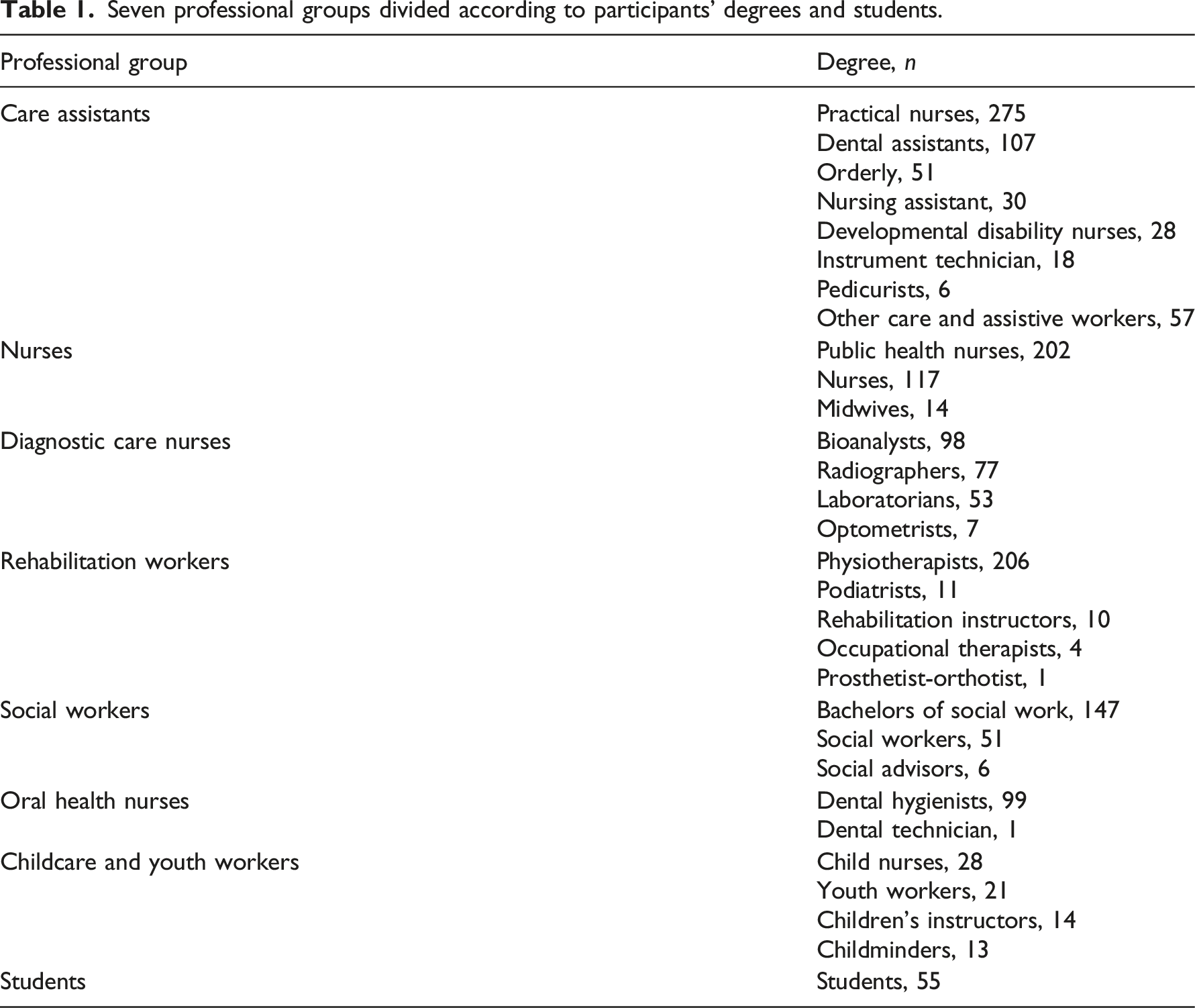
Seven professional groups divided according to participants’ degrees and students.
Validity, reliability and rigour
The Kaiser–Meyer–Olkin test (0.963) and Bartlett’s sphericity test (p < 0.001) were used to verify the suitability of the data for factor analysis. Exploratory factor analysis (EFA) was used, the principal axis factoring as extraction method, with Varimax rotation. 15 Eigenvalues higher than one were judged to be acceptable and the required communality for items was set at >0.30. The EFA for the F-NPVS-3 produced three factors, as in the original scale model by the developers. 15 These three factors explained 50.108% of the total variance: caring (40.676%), activism (6.412%) and professionalism (3.019%). Factor structure was also confirmed with scree plots. Factor loadings ranged between 0.436 and −0.747. Communalities in items ranged between 0.332 and −0.631. Nine of the items simultaneously loaded more than one factor due to possible conceptual redundancy in the provisions of the American Nurses Association codes. 14 This was also reported by the developers. 15 In the EFA for the F-NPVS-3, three items were primarily loaded differently to the developers, but they simultaneously loaded to the original factors. Item 21 loaded to the activism instead of caring factor, item 27 loaded to the caring instead of activism factor and item 28 loaded to the caring instead of professionalism factor. After discussions in the research group, we decided to remove these items back to factors as in the original scale, 15 due to the theoretical structure of the F-NPVS-3. In addition to the EFA, we conducted inter-item correlation (0.533–0.745) and item-to-total analyses (0.507–0.717) to ensure the construct validity of the F-NPVS-3. Cronbach’s alpha for entire scale was 0.929 (n = 1.823) and it was 0.878, 0.912, and 0.865, respectively, for caring, activism and professionalism.
Ethical considerations
The principles of research ethics were followed throughout the study process. 37 According to Finnish legislation, studies need ethical approval. 38 However, this type of study did not need this, as the study participants were legally competent adults. 39 All the organizations that took part evaluated the study and provided permission for their members and students to take part. The participants were informed about the aim and voluntary, anonymous and confidential nature of the study. They were told that they had the right to withdraw participation during any phase of the study. 40 Informed consent was obtained electronically in the first instance and was further confirmed by completing the survey.
Results
Personal characteristics
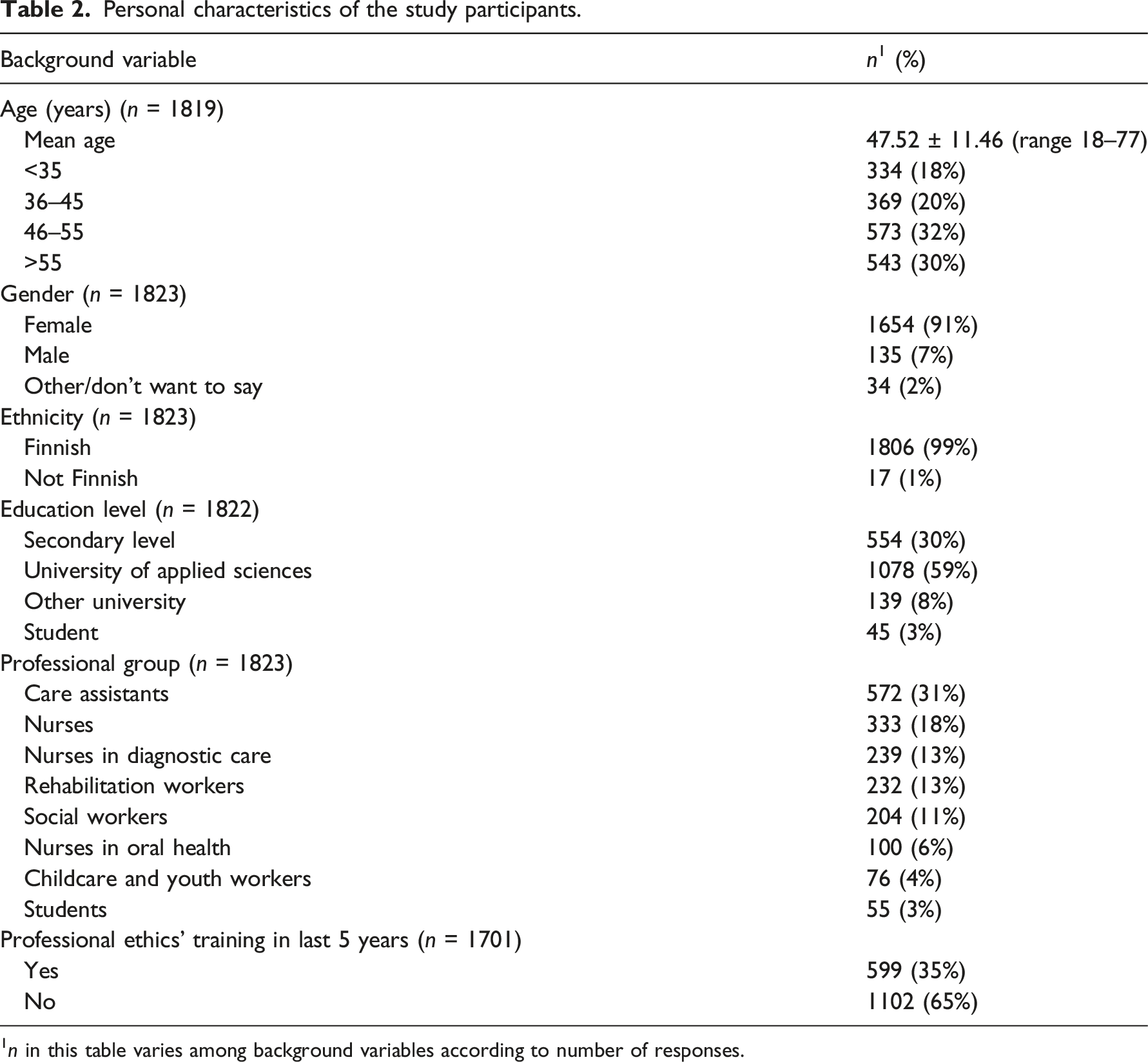
Personal characteristics of the study participants.
1n in this table varies among background variables according to number of responses.
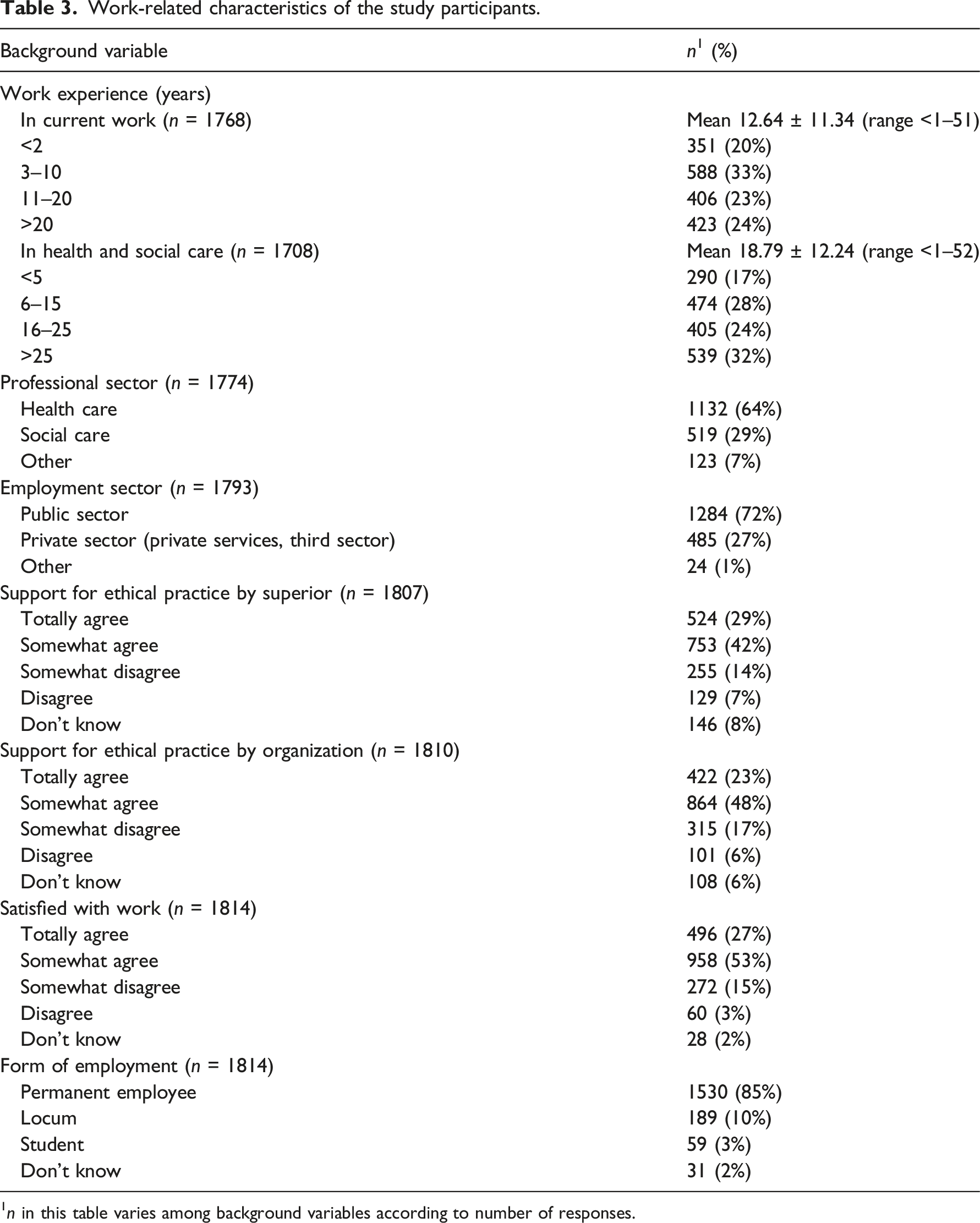
Work-related characteristics of the study participants.
1n in this table varies among background variables according to number of responses.
Professional values among different health and social care workers
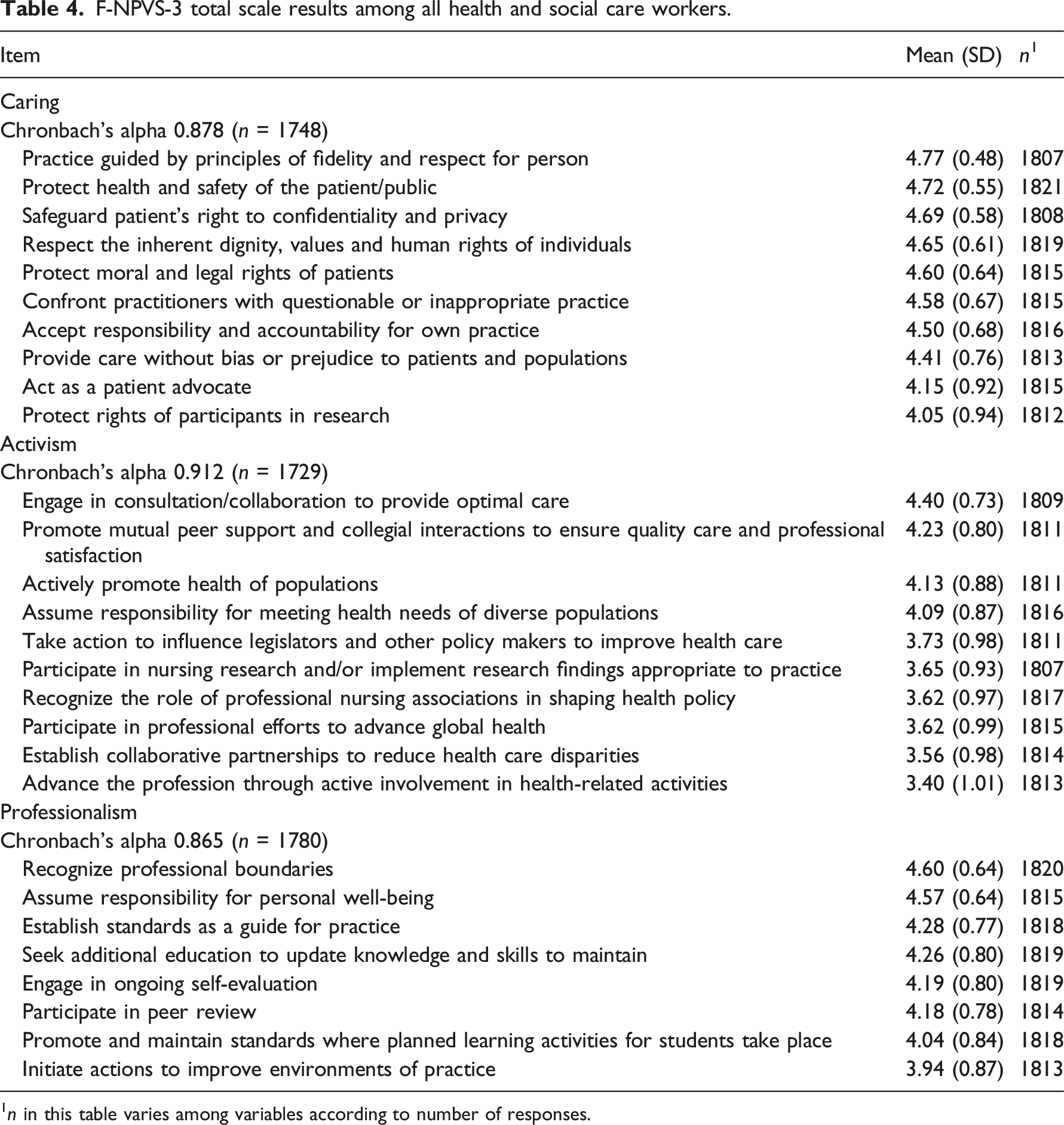
F-NPVS-3 total scale results among all health and social care workers.
1n in this table varies among variables according to number of responses.
Associations between professional values, professional groups and education.
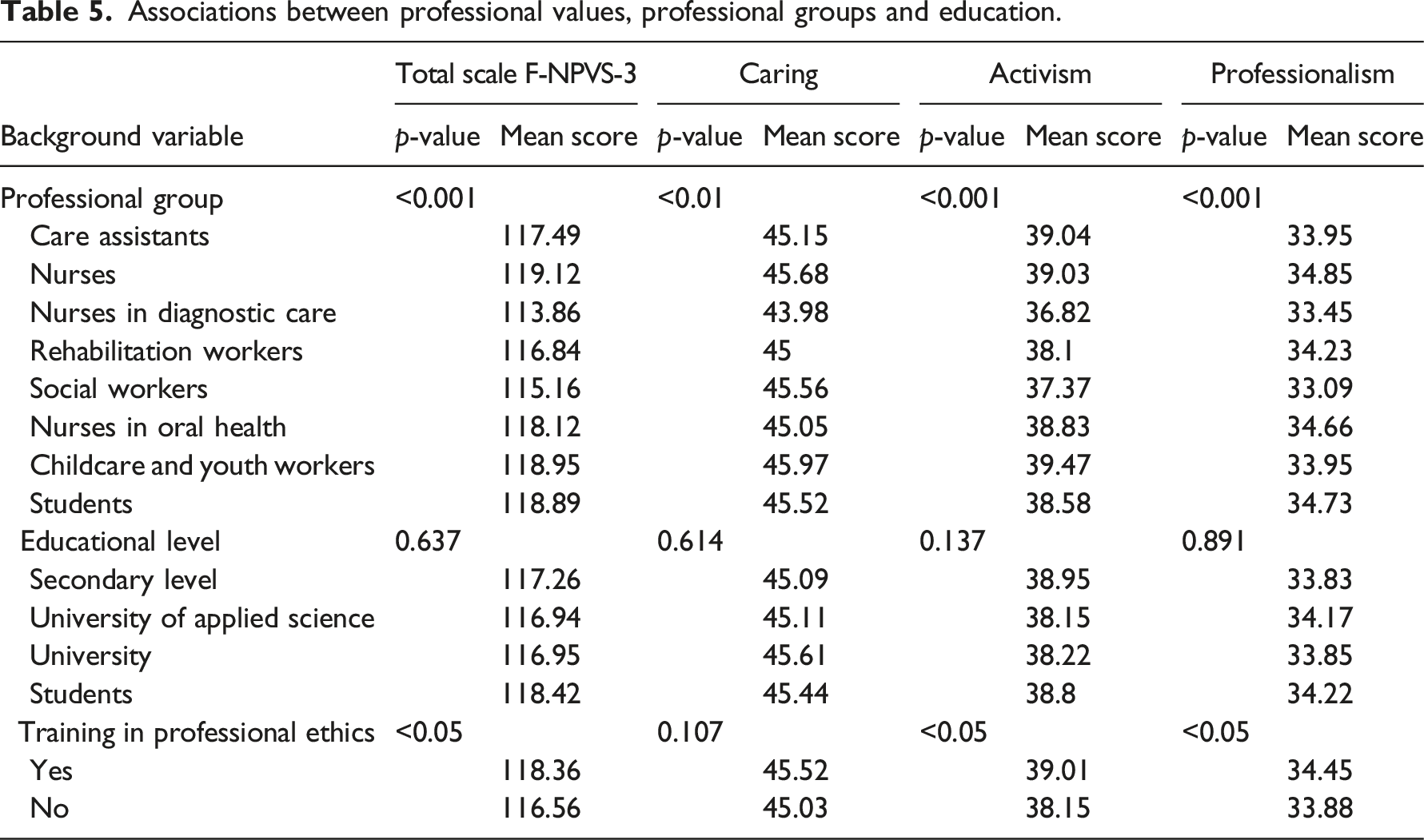
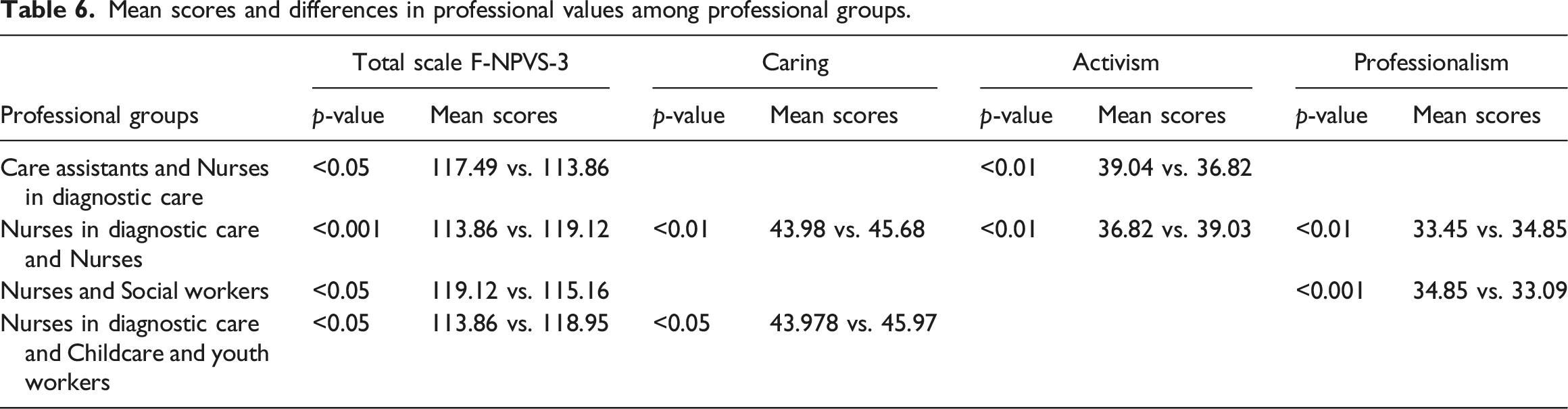
The most important factor for all the professions was caring, as this reflected values of fidelity, respect and personal and public safety and safeguarding the patient’s rights (Table 4). We found statistically significant differences when we compared the professions, as nurses and childcare and youth workers felt that caring was more important than nurses in diagnostic care (Table 5).
The least important value for all the professions was activism, which reflected their duties and responsibilities in relation to influencing society, reducing healthcare disparities and advancing global health (Table 4). When we compared the professions, we found that activism was more important to care assistants and nurses than nurses working in diagnostic care (Table 5). The differences were statistically significant.
The most important values in professionalism for all the professions were recognizing professional boundaries and an individual’s responsibility for their personal well-being. Taking action to improve the environment in which they practiced was less important (Table 4). When we compared the professions, we found that nurses reported that professionalism was more important than nurses in diagnostic care and social workers. These differences were statistically significant (Table 5).
Personal characteristics associated with professional values
Mean scores and differences in professional values among professional groups.
Associations between professional values and work-related characteristics.
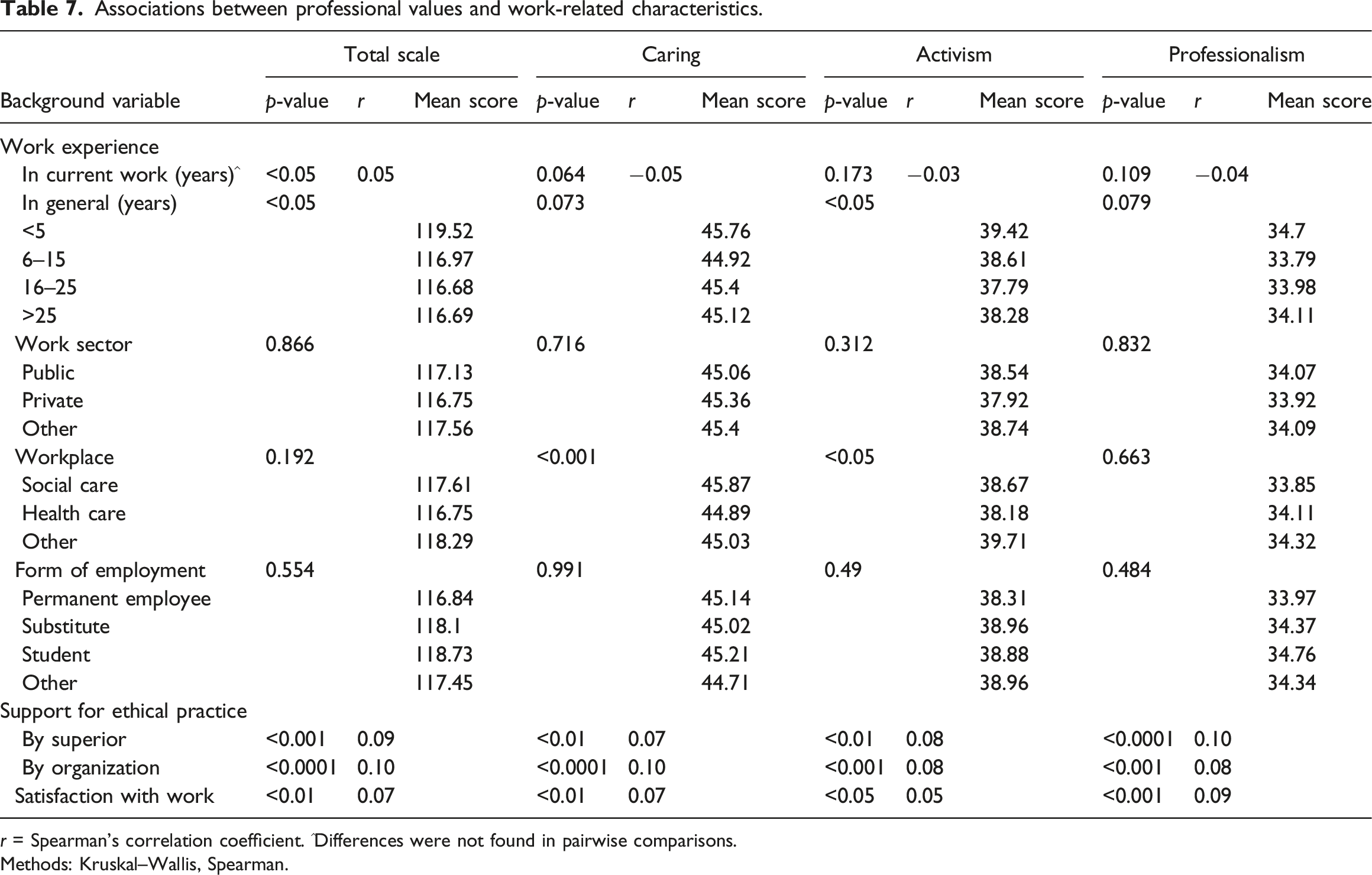
r = Spearman’s correlation coefficient. ˆDifferences were not found in pairwise comparisons.
Methods: Kruskal–Wallis, Spearman.
Caring, activism, professionalism and professional values, in general, were more important to participants who reported receiving support for ethical practice from their superior or organization than to those who got no such support or were not satisfied with their work (Table 7). The same was true for those who were satisfied with their work.
Linear regression analysis of variation in professional values and related characteristics among health and social care workers.
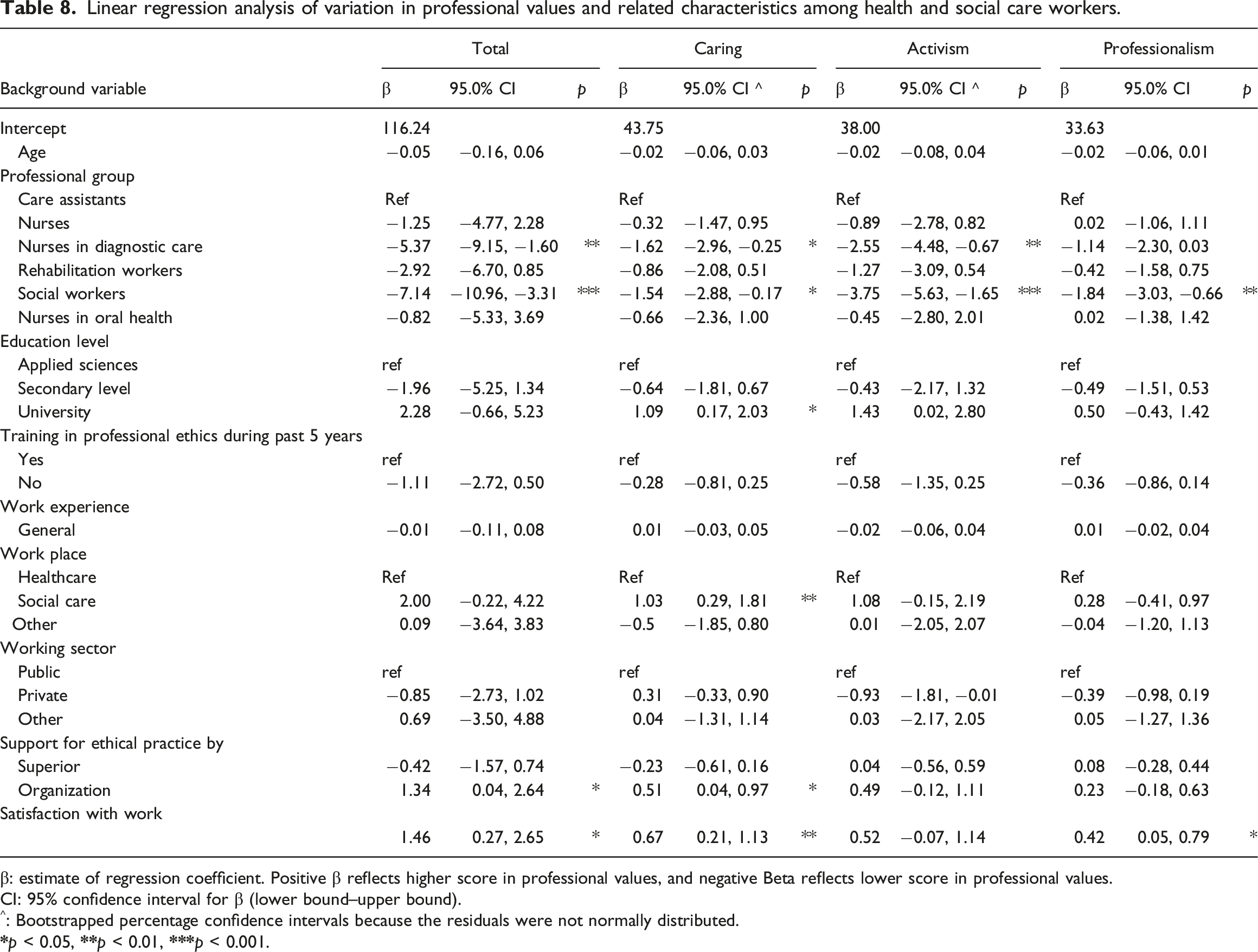
β: estimate of regression coefficient. Positive β reflects higher score in professional values, and negative Beta reflects lower score in professional values.
CI: 95% confidence interval for β (lower bound–upper bound).
˄: Bootstrapped percentage confidence intervals because the residuals were not normally distributed.
Discussion
This study provides new knowledge on the professional values of health and social care workers. We were unable to find any other studies on this or any associated personal characteristics. Previous studies have focused on the professional values of individual professions.12,15,16,23 Our findings showed that health and social care workers evaluated their general professional values as high. They showed strong commitment to caring, which Weis and Schank 15 said reflected providing patients with equal care and services. This provides a meaningful basis for integrating care and services. Societal activism and professionalism in the work environment were less important professional values. These findings indicate a clear need to clarify how common values can further improve professional collaboration and the good quality care provided to clients and patients.
Shared professional values on care and services for patients and clients
Based on our findings, all health and social care workers recognized the importance of caring, considering ethical values, such as patient’s rights and fidelity, respect and safety. Our results indicate a strong commitment to providing equal care and services. These are values that have been described in connection with the professional ethics of health and social care workers11,12 and multi-professional ethics. 41 The results are also in line with previous studies that showed that the highest importance was placed on caring values.15,21 This is particularly meaningful in patient groups where professionals typically work together, for example, in older people’s care. Respecting the dignity, worldview views and human rights of each other is essential in this area. As a result, a crucial part of professional value orientation is the shared understanding of professional values in care, as this will result in integrated person-centred care. 18
Health and social care workers agreed that less important professional values were engaging with wider society and responsibilities related to the work environment and nursing practice. These results were in line with previous studies.21,25 However, it is important to consider societal engagement in future,17,25,34 because it would influence the quality of local and global care and services. Traditionally, changing the culture of practice and learning how to influence society has not actually played much of a role in the content of health and social care and services. One study reported that participatory governance supported and empowered workers’ engagement in decision-making and developing practice. 42 We need to clarify societal engagement, responsibility for the work environment and promoting practice as a professional value, and incorporate these into ethics and leadership education.
Health and social care workers considered their own well-being as highly important values in professionalism, as well as recognizing their professional boundaries. In line with previous studies, the new generation of health and social care workers are particularly likely to take their own well-being into account.6,43 Traditionally, health and social care workers have placed patients above everything, based on their calling to provide care and services. They were expected to forget their own well-being and yield to professional boundaries.43,44 However, the COVID-19 pandemic is one factor that has seriously challenged health and social care workers with regard to their own well-being.45,46 Taking care of themselves and setting professional boundaries has helped workers to cope with new situations at work. 47 In addition, leadership styles have affected the well-being of workers. 48 Therefore, although the well-being of patients and clients is still the primary concern, health and social care workers must also focus on their own well-being and their ability to stay in their job. These need to be openly discussed, without any guilt, in both organizations and society.
Importance of education and organizational support to professional values
The results of this study, that training in professional ethics strengthened perceptions of professional values, agreed with previous studies.17,49 However, the result that professional values were highest after graduating, but weakened when work experience increased, was at odds with other studies.21,49,50 These studies found that educational courses, scientific meetings and self-directed learning in ethics may have affected the perceptions of nurses and health care workers with regard to their professional values. Our results clearly challenge education providers to strengthen training in professional ethics among health and social care workers, as this will strengthen their shared values at different stages of their careers. Shared values will enable them to meet the requirements of integrated services and provide high-quality person-centred care in collaboration with other health and social care workers.
In this study, organizational support for ethical practice and work satisfaction was associated with professional values for all health and social care workers. According to Poikkeus et al., 51 organizational support was related to nurses’ possibilities to practice in accordance with their professional values. However, they also reported that nurses and nurse leaders reported low knowledge of values in other professions. The authors 51 also indicated that professionals received more support to work in accordance with their professional values in larger organizations than small care units. 51 In line with a previous study, 22 high levels of professional values increased work satisfaction among nurses as well as patients’ satisfaction in the care they received. Health and social care organizations of all sizes need strategies to guide and support their workforce to maintain strong professional value orientation and ethical values during daily practice need to be highlighted. In an organizational context, ethical committees 51 have addressed how to enable professionals to reflect on shared values, as well considering and learning about the mutual basis of values.
Limitations
The limitations of this study concerned the recruitment, participation rate and representativeness of the participants. More than 100,000 members were contacted by their trade unions and professional associations about the study, but only 2609 enrolled in the study and less than 2000 fully completed the questionnaire. Reminders were sent, but they did not result in any significant increase. Probability sampling might have increased the response rate, but we used convenience sampling because we wanted to make sure that everyone who was approached had the chance to take part. It is worth noting that there was a national nursing strike during the study as well as the COVID-19 pandemic. It is also possible that only those who were interested in the study phenomenon took part. The NPVS scale was originally designed 15 and used to measure the development and sustainability of professional values in nurses 15 and nursing students.15,34 Compatibility between the F-NPVS-3 and the ethical codes and shared ethical principles of Finnish health and social care workers were assessed. No discrepancies were observed between the original and target cultures or professions. The number of female participants who took part in the study was high, but this was in line with the Finnish target population. In addition, the study data were skewed when we compared the representation of different health and social care workers and the relative strengths between their professions in the field. 52 However, the data were comprehensive, covered seven different professional groups, plus students, and satisfactorily represented different health and social care workers and students in Finnish health and social care. 52 This improved the generalizability of the results.
Conclusions
This study produced highly positive findings on professional values among different health and social care workers, with regard to providing integrated care. The findings indicate a commitment to providing patients and clients with equal care and services. However, they also highlight a clear need for further training in professional ethics and values, especially in relation to the ability to engage society and the professional skills needed to develop work environments and practice. This study shows that it is important for health and social care organizations to provide their staff with support, so that they can practice their profession in an ethical way. They also need to be provided with professional training at different stages of their careers, so that they can support shared professional values and thus implement person-centred care in collaboration with other professionals. Future studies should focus on professional values among different health and social care workers in relation to changes in society and services. In addition, similar professional value orientation does not explain ethical issues in daily practice. That is why it is meaningful to explore collaboration among different health and social care workers and how their shared values could help the common goal of providing high-quality care to clients and patients. In future, we need to examine how leadership could support professional values among different health and social care workers and evaluate the types of organizational support that are most effective. It is also necessary to examine how patients and their close relatives perceive professional values in care and services.
Footnotes
Acknowledgments
The authors are grateful to the health and social care workers, students and organizations that took part in this study.
Declaration of conflicting interests
The author(s) declared no potential conflicts of interest with respect to the research, authorship, and/or publication of this article.
Funding
The author(s) received no financial support for the research, authorship, and/or publication of this article.
