




Abstract
From 1939 to 1945, the Spanish archipelago of the Canary Islands became an alternative battleground for the intelligence services of the warring powers. US intelligence operated through diplomatic, military, and strategic channels such as consulates, the Office of Naval Intelligence, and the Office of Strategic Services. The archipelago was integrated into the US intelligence network in Spain but was also considered important in relation to operations in North Africa. This article interprets the role played by US intelligence in the Canary Islands as a case study of Allied intelligence operations in the North Atlantic Ocean during the Second World War.
Introduction
With the outbreak of the Second World War, geostrategy and ideological positioning became undisputed protagonists in international relations. Owing to its geostrategic position, Spain was always viewed as a strategic enclave for war, being among the most important neutral countries in Europe. Despite its declaration of neutrality in September 1939, the Spanish Government of Francisco Franco did not rule out its involvement in the international war. It maintained close relations and collaboration with Nazi Germany through the sale of strategic assets, provision of access to ports, dissemination of propaganda, and assistance with intelligence activities. 1 After the fall of France in June 1940, Franco adopted a policy of ‘non-belligerence’, which translated into open support for the Axis powers and the development of Spanish-German negotiations for Spain's war participation manifested, for example, through the trips made by the Spanish Minister Ramón Serrano Suñer to Berlin between 1940 and 1941 and the meeting held between Franco and Hitler in Hendaye in October 1941. 2 This phase of Spain's temptation towards belligerency was later intensified with the German advance in the Soviet Union and the revival of Spanish anti-communism, which justified renewed Spanish interest in the war, as evidenced by the dispatch of the Blue Division to the Eastern Front. 3 To maintain Spain's neutrality and prevent its collaboration with the Axis, Great Britain and the United States resorted to propaganda campaigns, diplomatic and economic pressure, bribery, and an important oil embargo in 1942, in which the United States interrupted the export of crude oil to Spain and began negotiations to control its supply. The pressure exerted by the Allies, together with their continued progress in the war, forced Spain to return to a new position of neutrality in autumn 1943. 4
Along with other peripheral territories of Spain, such as Galicia and Andalusia, the Spanish archipelago of the Canary Islands became an alternative battleground for the Second World War. The islands were natural hubs of foreign intelligence and propaganda activities, naval movements, and military planning.
Along with requesting the cession of one of its islands, Germany used the Atlantic archipelago to deploy its naval operations. 5 Many German ships and tankers sought temporary refuge in the Canary Islands’ ports. A second group of ships remained in the archipelago in the service of the German Etappenorganisation (EO, the secret service of the Abwehr and Kriegsmarine) which organised the supply of oil and food to submarines, surface warships, and auxiliary cruisers in neutral waters. At the beginning of the conflict, the EO went so far as to organise supply operations for Nazi submarines directly at the dock of La Luz (Las Palmas). 6 The Third Reich also deployed intelligence, counterintelligence, and sabotage activities which directly connected the archipelago to Río de Oro and Ifni, two Spanish colonies in Africa. Their missions pursued four main objectives: to collect operational information that could guarantee the execution of supply operations; control the naval activities of the enemy in the Atlantic; implement information and material-smuggling networks that connected the islands with South America and the Iberian Peninsula; and prepare sabotage activities in the Spanish archipelago and subversive movements in the French protectorate in Morocco. 7
Great Britain was the Allied power that devoted the most attention to the Canary Islands. Between March 1941 and autumn 1943, the archipelago was placed at the centre of important British military and sabotage plans (Operation Chutney, Pilgrim, Adroit, Tonic and Warden) as the most effective solution to combat German naval operations in the Atlantic and the possible loss of Gibraltar. 8 British intelligence activities in the Canaries pursued three objectives: to observe and obstruct German naval movements; keep a record of suspicious agents; and collect operational information that could be used in military campaigns. Thus, for instance, the British compiled operational reports such as the ISIS Report on the Canary Islands. 9
Contrary to its ally in the war, the United States did not contemplate a direct invasion of the Canary Islands. The proximity of the archipelago to the African coast meant that, unlike the Azores and Cape Verde, the Spanish archipelago was not perceived as a serious and immediate threat to US interests. Therefore, the United States left military planning in this area of the Atlantic to Great Britain. 10 However, it did not entirely neglect the Canary Islands. North American powers not only perceived these Spanish islands as a useful location from which to monitor and control enemy movements in the Atlantic but also as a potential strategic enclave for the postwar period. Indeed, the archipelago became the object of US pressure, diplomacy, and intelligence operations, especially after the United States entered the war in December 1941.
The United States did not establish intelligence operations on the archipelago until late 1942 and hid its clandestine efforts under diplomatic cover, particularly through Naval and Oil Observation posts. However, US intelligence on the Canary Islands grew rapidly, and particularly from 1944, it began to lead Allied activities. US activities in the Canary Islands were integrated into larger intelligence networks, not only as a host to subsidiary stations of secret and diplomatic missions located in Madrid, but also as a key component of Allied intelligence operations in North Africa. This article analyses the intelligence and counterintelligence operations deployed by the United States in the Canary Islands between 1939 and 1945, a much-overlooked case study of critical importance within the broader intelligence narrative of the Second World War.
US Intelligence in Spain During the Second World War
Between 1939 and 1945, US intelligence was channelled through numerous agencies and subdivisions in continuous evolution. They included agencies organised by the US War Department in the field of military intelligence, such as the Military Intelligence Service (MIS), known until 1942 as the Military Intelligence Division (MID), and the Naval Intelligence Service (NIS), 11 as well as agencies mobilised in the field of US secret services, such as the Office of the Coordinator of Information (OCI) and the Office of Strategic Services (OSS), which became the main US intelligence agency during the war. The OSS was organised into various subdivisions, such as the Secret Intelligence Branch (SI) and the Counterintelligence Division (X-2). 12
Before the establishment of the first OSS office in Madrid, US intelligence in Spain was already operating through US diplomatic entities, naval and military attaché offices, and especially through an existing Oil Mission concerned with controlling the supply and distribution of oil in Spain. 13 According to Grandío Seoane and Rodríguez Lago, the first movements of the OSS in Madrid began at the end of 1942. However, the real expansion of the OSS in Spain took place at the beginning of 1943, after the reactivation of the OSS Spanish Desk in Washington, the consolidation of the offices in Madrid and Barcelona, and the mobilisation of a network of agents who expanded the impact of the organisation to the rest of the country, including the Canary Islands. 14
The OSS office in Madrid was initially coordinated by Jack Pratt and the Chicago businessman, Daniel Donald Steele. However, in March 1943, the OSS appointed a new director in the Spanish capital, Herbert Gregory Thomas (alias ‘Argus’ or agent 857), an important businessman with legal knowledge and extensive contacts within the European perfume industry. 15 However, aiming to guarantee the survival of clandestine activities in this ‘neutral’ country, a large part of OSS activities in Spain continued to be camouflaged through the American Oil Mission and, therefore, under the supervision of the oil attaché in Madrid, Walter Smith (agent 245). 16
In 1941, in anticipation of the imminent involvement of the United States in the war, the ONI began rapidly placing US naval observers and maritime consular advisers in military and intelligence hotspots throughout Spain, its archipelagos, and colonies. 17 US missions in Spain also resorted to information and espionage organisations established in North Africa, especially those organised in French territories, such as the ComMorSeaFronForces in Morocco, the JICA Naval Section in Casablanca, and the African section of the OSS.
The objectives of US intelligence in Spain were the following: to compile and secure strategic information on enemy economic, military, and political activities; control and prevent Germany from using the coast of Spain and the Atlantic as a base for its supply operations, through port observation and oil control; collect and compile information on the personnel, methods, and activities of enemy or enemy-controlled espionage, counterespionage, sabotage, and subversive organisations operating through Iberia, its archipelagos, and Spanish Morocco. 18 In addition to establishing networks of agents, naval observers, and oil controllers, the OSS office in Spain utilised agents and clandestine couriers operating on the trans-Pyrenean routes to France, Belgium, and Germany. 19 Moreover, the OSS in Spain cooperated with anti-Franco and Spanish nationalist groups such as the Basque Information Service – a Spanish intelligence and resistance organisation that operated from 1936 to 1959. 20
During the last years of the war, Allied intelligence in Spain focused on counterintelligence activities, resorting, for example, to the seizure of German documentation, and the detention and interrogation of German agents who operated in the Atlantic. However, the interrogations of Spanish messengers in Germany's service were also important, especially those detained on Spanish ships. 21 The latest objectives of North American intelligence in Spain also included the persecution of Nazism in the country and the repatriation of many Germans residing in the territory.
US Intelligence in the Canary Islands (1939–1945): Diplomacy, Oil Control, and Surveillance
A prominent part of US intelligence in Spain was directed towards the Canary archipelago, which not only has one of the most important coastal and port areas, but was also strategically positioned at the crossroads of continents and shipping lines. The archipelago welcomed many foreign communities, while Nazism had a considerable impact on the extended group of Germans residing there. German intelligence and sabotage activities organised from and for the Canary Islands acquired increasing importance. Furthermore, Tenerife was home to Spain's first major refinery, established in Santa Cruz de Tenerife in 1930. Therefore, US intelligence placed the Atlantic archipelago at the centre of important clandestine operations promoted by the US State Department, the US Oil Mission, the ONI, and OSS, along with other Allied military organisations established in North Africa.
The United States perceived the Canary Islands as a strategic enclave in the Atlantic – an alternative battleground that had to be controlled, especially in relation to the clandestine activities deployed by the Germans. The US oil embargo particularly affected the Canary Islands, which experienced a major energy crisis and shortages that completely paralysed the oil refinery in Tenerife. 22 To resolve this situation, the Spanish Petroleum Company (CEPSA) accepted control of the production and distribution of crude oil on the islands by US authorities, particularly through the Oil Observer post – a key cover which was also employed for the deployment of intelligence operations. When Great Britain's interest in the islands decreased in 1943 that of the United States increased. During the latter years of the conflict, the United States showed increasing concern regarding the coming postwar period, with a dual focus on ensuring the effective disappearance of Nazism and limiting the influence of its new rival, the Soviet Union. In this context, the islands emerged as a potential strategic base for the US Army Air Force (USAAF). 23
Compared with Britain, which had a historical influence in the archipelago and an extensive British community in the islands, prewar ties of the United States to the Canary Islands were limited. While Great Britain strengthened its strategic involvement in the islands, especially between 1940 and 1942, secret US activities in the Canaries were not officially established until late 1942. However, its activities in the archipelago experienced gradual growth during the second half of the conflict, culminating in an almost undisputed leadership of the United States in the field of Allied intelligence by the end of the war. The main objectives of US intelligence in the Atlantic archipelago were the collection of operational information, control of enemy movements in the Atlantic (particularly in the vicinity of the African coast and the Strait of Gibraltar), monitoring and influencing foreign communities in the archipelago, and the surveillance of German intelligence activities. US intelligence on the islands supervised the control of oil distribution in the Atlantic, which also involved direct control of the enemy's naval movements and tracking port communication and smuggling systems.
Although, in general, bureaucratic competition plagued the US intelligence system during the Second World War, on the ground in the Canary Islands, the secret activities of the United States were well coordinated, and communication was fluid. Thus, for example, all intelligence agents were previously accepted and contracted by the State Department and they used the diplomatic cover of the US Consulates on the islands, both in terms of the positions and the facilities they used. The intelligence reports received and sent by these branches were also shared interdepartmentally between the islands, Madrid, Casablanca, and Washington, revealing the multiplicity of positions adopted by the agents and their regular cooperation. The agents supervised by the Navy and OSS – located in Gran Canaria and Tenerife, respectively – were ordered to maintain internal communication and assistance. This collaboration was such that ONI's main intelligence agent in Las Palmas was also recruited as an indirect agent of the OSS at the end of the war. Some intelligence and diplomatic agents shared previous personal and professional ties, which paved the way for closer relations. Moreover, cooperation was directly reinforced by the limited spatial room for manoeuvring on the islands, as well as the constant interference of the Spanish authorities. However, this integrated machinery was not exempt from internal administrative deficiencies. This was especially important, for example, within the OSS, which, as I establish ahead, was characterised by a lack of integration of its subdivisions and foreign offices. The OSS also adopted an ineffective internal communication system between peripheral territories such as the Canary Islands and Casablanca.
The Allies also collaborated on the Canary Islands. Spanish counterintelligence highlighted the extent of this Anglo-American collaboration on the islands through the internal distribution of confidential material and regular meetings between intelligence agents, influential businessmen, and American and British consular employees. 24 Allied military intelligence also benefitted from cooperation, not only by passing on secret information and counterintelligence, but also through the creation of joint organisations such as the Allied Force Headquarters (AFHQ). Thus, for instance, on 21 May 1944, the intelligence section of the AFHQ (G-2), produced a substantial report on German intelligence in the Canary Islands, Ifni, and Rio de Oro, which compiled all the Allied information available to date. 25
US State Department in the Canary Islands
Owing to this historical, strategic, and commercial importance of the Canary Islands, foreign governments have established their consular representation on the islands since the seventeenth century. With the outbreak of the Second World War, the power and competencies of the foreign consulates – particularly those representing belligerent countries – on the islands were remarkably enhanced.
As transpired during the American Civil War and First World War, when the US State Department functioned as a hub for collecting intelligence reports and information, the US consular offices in the Canary Islands were the first to collect and transmit information once the war broke out in 1939. The US Consulates on the islands had been established since the beginning of the century, and therefore, their consular facilities and communication channels were already consolidated when the war started. The consular corps were directed by career diplomats who complemented their daily tasks with activities related to the conflict. The US Consuls even held official positions as intelligence agents of the State Department, under the label of ‘IS-State Department Representative’. 26 The Consuls were well acquainted with the islands, and were also helped by US, British, and Spanish assistants who brought the war closer to the archipelago. Diplomatic facilities guaranteed secrecy and coverage for intelligence activities, a factor that was especially important when facing the surveillance imposed by Francoist authorities. Diplomatic cover not only granted the US Consuls greater immunity but also greater freedom of movement, which explains why the intelligence agents selected by the Navy and the OSS used diplomatic cover to operate on the islands.
The US Consulate in Las Palmas mainly comprised diplomatic employees who had lived in Gran Canaria since the beginning of the 1930s. Its activities were initially promoted by Clifton Reginald Wharton (1899–1990), 27 the Consul on the island from 1932 to January 1942, and Vice-Consul William C. George. 28 Lillie Maie Hubbard (1898–1997), the Consul’s secretary and personal assistant, aided the diplomats in preparing political reports and gathering information. Hubbard was an unusual Black American woman with a pioneering career in the US Foreign Service. On the island, she established important contacts and social relationships, which favoured the organization of information networks during the war. 29 At the beginning of 1942, Wharton was replaced by Robert Foss Fernald (1890–1962), who would be the US Consul in Las Palmas until the end of the war and one of the most prominent informants of the US mission on the Canary Islands, under the code name ‘Gumbo’. 30 The US Consulate in Santa Cruz de Tenerife was directed by Winfield H. Scott until the fall of 1941, when he was replaced by Dr Richard Bernard Haven (1889–1976). 31 Although less frequently than Fernald, Haven also sent regular intelligence reports to the State Department and collaborated with other secret organisations under the code name ‘Beard’. 32 From the summer of 1942, the position of Vice-Consul in Tenerife was occupied by the OSS intelligence agent Thomas Alfree Weir (1901–1945). 33
US State Department intelligence activities on the Canary Islands were especially focused on the preparation of operational information and the compilation of telegrams and weekly reports on the archipelago's political and socioeconomic situation. 34 Consular activities also included the organisation and supervision of information networks, usually established among foreign communities in the islands but also between the pro-Allied sectors of Spanish society. The US Consulates monitored the sending of encrypted data and the dispatching of diplomatic packages, and established clandestine communication platforms.
Consular activities also revolved around monitoring German propaganda and the reception and distribution of persuasive pro-Allied material. Despite the interference of Franco's authorities, US-printed propaganda was widely distributed on the islands through booklets, pamphlets, and magazines such as En Guardia and Selecciones del Reader's Digest. Part of the propaganda material was distributed manually through consular staff hired by Office of War Information (OWI) clerks and couriers. 35 The first Allied film screening (Mrs Miniver) took place on the islands in the summer of 1944 at the US Consulate in Tenerife. Additionally, the Americans also organised 24 screenings of The White Legion throughout the last year of the war. 36 Compared to German and British propaganda, American propaganda was characterised by a much narrower and more popular approach that included the distribution of propaganda objects with a clear patriotic component. The large batches sent to the consulate raised suspicion among local authorities who regularly implemented surveillance controls. 37
Agent ‘Washburn’: Thomas Weir and the OSS
The Canary Islands were also an important field of action for the OSS, which, since 1942, employed specialised agents under the cover of diplomacy and oil observation. The mission of the OSS was centred on the island of Tenerife, where the Spanish had opened their first refinery and the Germans had established an efficient system of surveillance and police control under the guidelines of the Third Reich's police organisations. Thomas Alfree Weir (1901, Indianapolis–1945, Maryland), an engineer and employee of the Socony Vacuum Oil Company, was the main OSS agent on the islands (Figure 1) 38 He was first assigned as Oil Observer – also known as Oil Products Adviser – under the cover of the Vice-Consul in Santa Cruz de Tenerife and the direct supervision of oil attaché Walter Smith in Madrid. 39 However, on 1 July 1942, Weir strengthened his involvement in the secret war by accepting a verbal agreement with the Western Europe Division of the OSS. 40
Weir's first major assignment in the Canary Islands was to supervise the production, receipt, and distribution of crude oil in the archipelago. 41 The engineer conducted regular inspections of the oil refinery established in Tenerife and visited foreign ships. 42 However, Weir's OSS activities also pursued the following objectives: the uncovering of German activities that could facilitate enemy submarines operating off the North African coast and in the Strait of Gibraltar, the deployment of counterintelligence activities, and the surveillance of enemy communities residing on the islands, including their collaboration with Spanish citizens. 43 To hide his connection with the OSS, Weir operated under the cover names ‘Washburn’, Agent #249 and informant ‘Z’. 44 Weir was assisted by US consular clerk James Joseph Mone, who had been acting as a night watchman at the US Consulate since the summer of 1942. 45
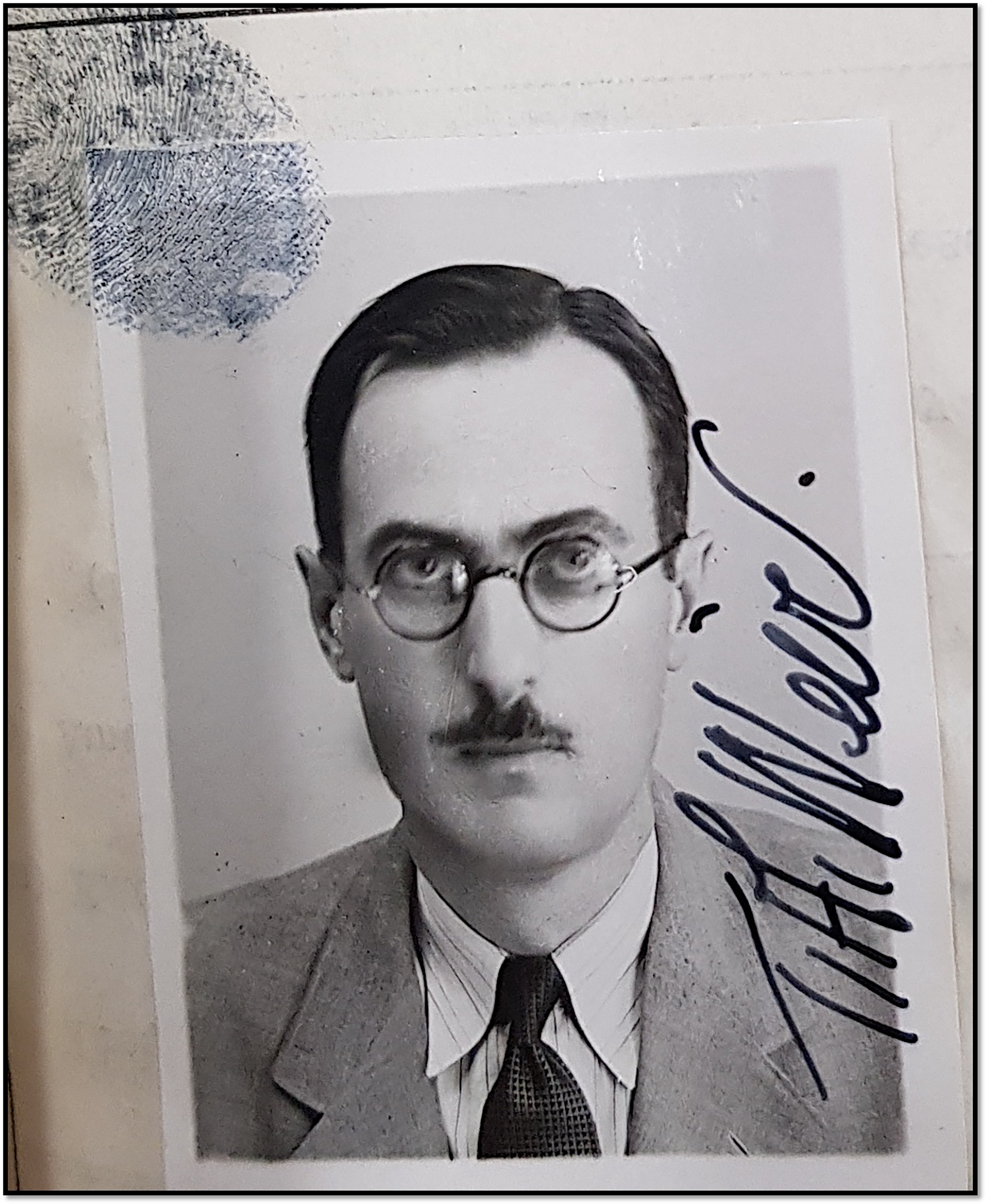
Thomas Alfree Weir (NARA, RG 84/2247/28).
The attention and consideration rendered by the African section of the OSS to the Canaries increased considerably from 1943, when the islands had already become a key centre of enemy activity, in constant relations with North Africa. Although Weir's formal connection with the OSS had begun in July 1942, the leaders of the African section of the OSS's SI branch were only aware of his diplomatic position as Vice-Consul of Santa Cruz de Tenerife. Moreover, at the beginning of 1943, the African section demanded the hiring of a specialised agent for the Canarian–North African region, a position that was to improve the inadequate communication between the Spanish islands and Casablanca. Before the end of autumn, Weir was definitively integrated into the African Section of the SI, complementing his profile as an intelligence agent in the Canary Islands with new functions dedicated to intelligence and counterintelligence in this wider region. 46 Subsequently, the OSS intensified its efforts on the Spanish archipelago, although Weir was advised to avoid the use of dangerous firearms and the theft of secret documentation by enemy couriers. Agent ‘Washburn’ had to track the enemy without arousing the Spanish Government's suspicions. 47
Weir organised a widespread network of local informants 48 primarily comprising British citizens and anti-Franco Spaniards, who provided ample information on enemy activities. 49 For example, American and British intelligence services on the Canary Islands collaborated with a group of Basque citizens residing on the islands who comprised a network of anti-Franco and anti-fascist agents from the Basque Information Service. 50
In spring 1944, Weir suffered from repeated pneumonia that damaged his lungs.
51
The engineer was evacuated from Tenerife on 28 November after a daring rescue that – according to Americans – caused an uproar among the Canarian population.
52
However, shortly before his final discharge from Bethesda Military Hospital (Maryland), the agent contracted another severe bout of pneumonia and died on 28 April 1945.
53
After the evacuation of ‘Agent #249’, the position of Vice-Consul and Oil Observer in Tenerife was occupied by the US citizen William F. McCormack.
54
Aiming to obtain a posthumous decoration for Weir and financial compensation for his family, in August 1945, the Consul of the US State Department in Santa Cruz de Tenerife sent a detailed report on Washburn's war contributions to Washington: […] Beside oil control, Mr. Weir was especially concerned with matters pertaining to Strategic Services. He was conscientious in his work which often called for an 18-hour day […] Being alone in his branch he could not lay off for it was a question of preventing enemy submarines from refuelling in a wide area of the Atlantic. Weir was also trying to stop German exchange of secret information between continents.
55
The head of the SI branch in Washington, Whitney H. Shepardson, also dedicated an extensive report underlining Weir's mission: The subject was employed by OSS as its representative in Tenerife on 1 July 1942 and continued in that post until November 1944. His principal duties and successes were to uncover German activities from the Canary Islands that had to with the refuelling, provisioning and otherwise facilitating enemy submarines operating off the North African coast and in the Straits of Gibraltar […] Information about submarines and vessels was relayed to the Navy in Casablanca. In conjunction with similar information gathered at Tangier and along the French Moroccan coast it contributed greatly to the ultimate elimination of submarine activities off the coast of North Africa.
56
Thomas Weir's mission was finally recognised with the Presidential Medal of Freedom. 57
The Secret Mission of the US Navy: Surveillance and Interdepartmental Cooperation
However, US intelligence was not only channelled through diplomatic and strategic sections, but was also activated through military channels. Although Washington's attention to the islands began at the beginning of the war, it was not until mid-1941 that US military intelligence divisions endeavoured to expand their knowledge of the islands. The year 1941 became most crucial to the history of the islands during the war, with Germany intensifying its submarine supply operations and Great Britain evaluating the possibility of invading the islands. US military divisions in Washington compiled what would be their most extensive intelligence monographs on the islands: the Field Monograph of Canary Islands, produced by the ONI in August 1941, and the Survey of the Canary Islands, produced by the MID at the end of the year. As was the case with the British ISIS Report on the Canary Islands, the data compiled by the US military divisions described the archipelago from geographical, sociocultural, and military perspectives. 58
From 1943, US naval intelligence was also activated directly in the Canary Islands when the ONI started stationing Naval Observers in overseas territories. With the aim of complementing and balancing the clandestine action deployed by the OSS in Tenerife, the ONI located its intelligence agents in the city of Las Palmas. The Naval Observer position was held by military officers who, under the diplomatic cover of the US Consulate, implemented intelligence and counterintelligence activities. Their positions were also protected under the role of Oil Observer, which guaranteed the agents greater freedom of movement and favoured their interrelationship with the OSS. 59
Military Lieutenant Richard Morris Stites oversaw the US naval mission in Las Palmas from April to December 1943 60 but was later replaced by Lieutenant Harry Clifton Jordan (1900–1991) (Figure 2). 61 Jordan was an active Oil Observer in the province of Las Palmas under Weir's general supervision. However, since his establishment in the islands, he also acted as an indirect agent of the OSS, especially from mid-1944 and after the evacuation of ‘Washburn’. To camouflage his clandestine activities, Jordan acted under the code name ‘River’. 62 Starting in June 1944, he was assisted by Lieutenant Williams C. Schmitt Jr. (United States Naval Reserve, USNR), who acted under the alias ‘Chief Yeoman’. 63
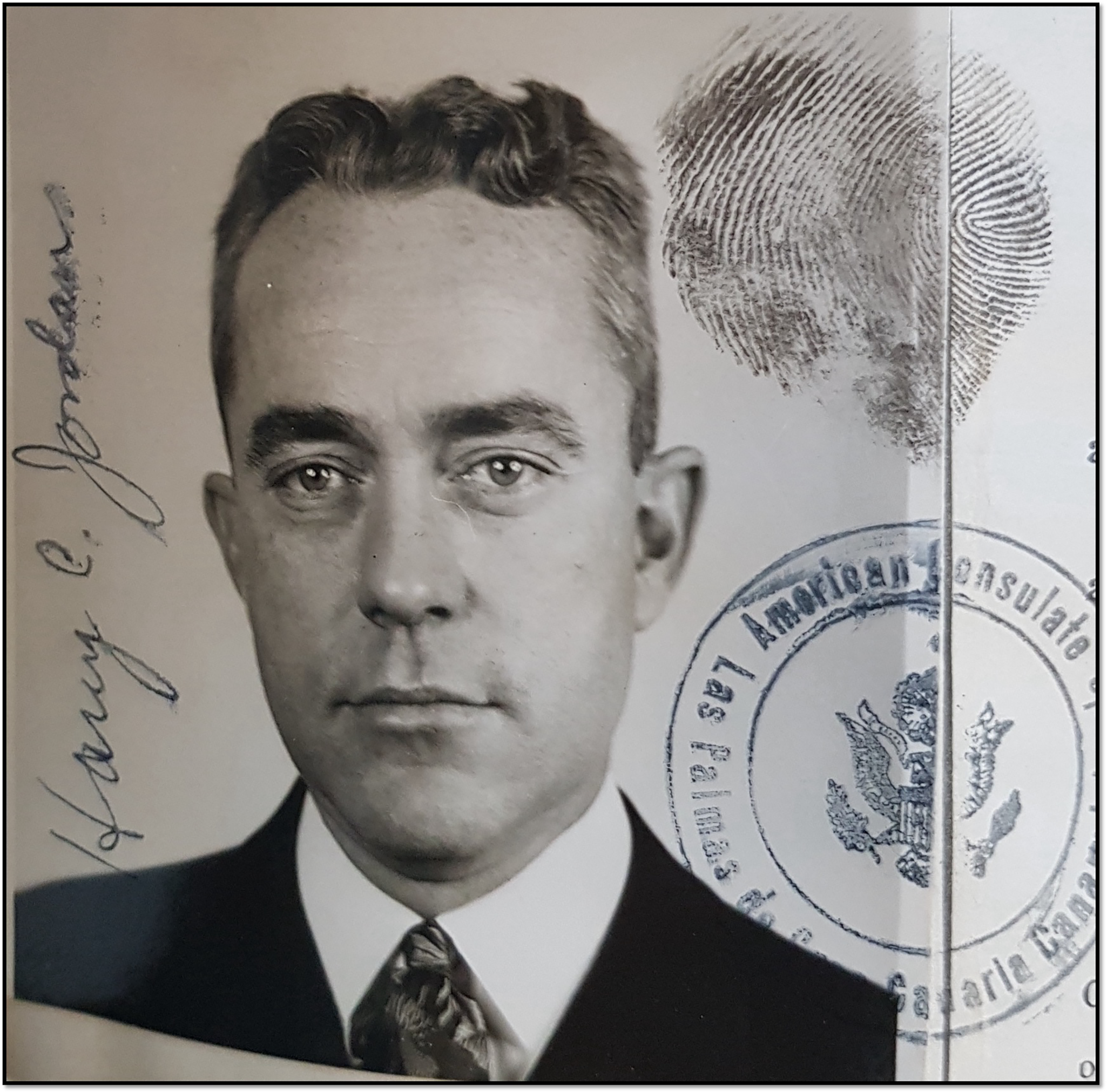
Harry Clifton Jordan (NARA, RG 84/2245/30).
Naval observer tasks in Las Palmas were usually shared with the activities carried out by the OSS in Tenerife. These could be classified into two categories: first, those related to the control of petroleum products dispatched to ships and their movements in the Port of La Luz; and second, the collection of information about the islands, the enemy, the conflict, and the Atlantic region. 64
Both Jordan and Weir focused on the control and surveillance of clandestine German activities aboard Spanish vessels, especially when these were connected to German transatlantic smuggling networks. 65 To avoid British interference in the wider region from its base in Gibraltar and the logistical difficulties imposed by the interruption of the Spanish air service with the Canary Islands, German intelligence created a smart system for smuggling information, propaganda, and secret material between South America, the Canary Islands, and the Spanish mainland. German agents transmitted contraband and intelligence materials from countries such as Argentina through officers, passengers, operators, or crew members of Spanish merchant ships who, after arriving in the Canary Islands, transferred them to Axis agents for information or subsequent shipment to the peninsula. The OSS informed US Oil Observers on the islands about the arrival of Spanish ships suspected of transporting clandestine material. Thus, US intelligence agents on the islands conducted regular inspections of Spanish ships such as Monte Montjuich, Rita García, Monte Inchorta, Monte Jardino and Buque Volcano. 66 Similar to other strategic places in Spain, these types of controls could not only help to immediately interrupt some of the exchanges but also favour the subsequent arrest and interrogation of some of the Spanish messengers travelling on board, which, ultimately, could have also paved the way for the progressive dismantling of German transatlantic networks. 67
Jordan and Weir controlled a joint network of official informants, who were initially coordinated, interviewed, and financed indirectly. However, over time, US agents systematised their activities by hiring regular informants identified by an elementary code system (such as #1, #2, and #3). 68 Moreover, US intelligence agents also collaborated with improvised informants from a multitude of sectors, including doctors, telegraph operators, fishermen, foreign sailors, and members of foreign communities. 69
The information sent by US intelligence agents in Madrid, the Canary Islands, and Casablanca also provided Washington with extensive records – sometimes overestimated – of the archipelago's defences and physical characteristics, as well as regular monitoring of the German community residing in the islands. 70 The reports sent by Weir and Jordan also included descriptions of the enemy communication systems and the impact of foreign propaganda on the islands. Weir and Jordan also sent general reports on the archipelago's economic, political, and strategic situations. 71
Particularly after 1943, US intelligence agents also redoubled their interest in the airfields and landing strips available on the islands in preparation for a new postwar scenario, whereby the Canary Islands were envisaged as a future air base for US forces. 72 The strategic interest of the United States in the Canary Islands during the Cold War was never comparable to that of the Portuguese archipelagos. However, since 1945, the Canary Islands were conceived as excellent alternatives to the intended establishment of US bases in Casablanca-Port Lyautey and the Azores, whose rights were finally approved in 1950 and 1951, respectively. In 1947, for example, US negotiations with the Spanish Government included the following concessions: ownership of an air base in Gando (Gran Canaria), open facilities for naval manoeuvres, use of logistics infrastructure, and mediation by a US civil contractor. 73 Although the preference for the Azores and the initial weak relations with Franco's government gradually dissipated US interest in the Canary Islands, the collection of strategic information on the Spanish archipelago continued until 1950–1951, when the United States finally secured rights to the bases of the Azores and Port Lyautey. See, for example, the volume of operational information compiled in 1950 by the Atlantic Fleet Intelligence Center, which included part of the information compiled by the US military intelligence in 1941. 74
Allied Counterintelligence and Denazification in the Canary Islands
The control of German naval movements in the Atlantic, preparation for possible military operations, and distribution of oil were not the only objectives of US intelligence in the Canary Islands during the Second World War. US clandestine activities in this section of the Atlantic were also directed towards enemy observation. It was crucial to observe, record, and limit the potential of the enemy's intelligence, especially in relation to its ability to discover, intercept, and hinder clandestine Allied movements. Towards the end of the war, the Allies attempted to carry out a process of dismantling enemy intelligence, through direct communication with the Spanish authorities.
According to multiple reports – including those sent by US agents from the Canary Islands, Morocco, and Madrid, which were also corroborated with German and Spanish material – the intelligence mission of the Third Reich in the Canary Islands was channelled through three interconnected branches. First, the intelligence missions of the German Honorary Consuls Jacob Ahlers and Walter Sauermann, and the Vice-Consuls, Ernst Groth and Harald Flick. Second, the military intelligence network of the EO – conceived as a complement to German naval supply operations – which employed diplomatic agents, technicians, and influential figures from the Canary Islands, both German and Spanish. Third, the mission controlled by the Abwehr which coordinated a complex network of agents for the purposes of intelligence, interception, counterintelligence, and sabotage that extended from the Canary Islands to the Spanish Morocco and Sahara (Ifni, Cabo Juby, and Río de Oro). Although German sabotage plans on the islands were not successful, especially because of the surveillance and pressure imposed by the Allied powers, the German mission did manage to penetrate French Morocco. 75 The Abwehr intelligence network in the Canaries was led by Edmund (Nehrkorn) Niemann, an influential German who had lived in Las Palmas since 1939, and it comprised more than 60 German and Spanish members. 76
The activities of German agents in the Canarian-African region were considered highly dangerous to the Allied cause by US strategists. This explains why the chief of naval operations, Captain N. R. Hitchcock, of the ComMorSeaFron Forces in Casablanca, was anxious about capturing them, particularly after 1944. The plan to stop the actions of Niemann's network was integrated into Operation Snatch, which was designed by the African section of the OSS and military intelligence divisions between March and May 1944. Its main objective was to arrest Niemann and some of his collaborators under the pretext of their alleged illegal crossing of the Spanish-French border. 77 In April 1944, the OSS sent an agent, Captain Greene, to Agadir, where he contacted a military agent known as LeGuenec and arranged a meeting with Captain Lepine, a soldier agent of the French intelligence service in the Moroccan city of Guelmim (also spelt Glaimim, Goulimine, or Guelmin), who became committed to organising and activating the capture of Niemann's network. Greene also contacted Commander Gardiner, the head of the Naval Aviation Base in the city, to inform him about the plan and arrange for air assistance. The agents involved in Snatch created a secret code for internal communication, and the OSS financed their equipment such as cameras, film materials, and weapons. 78
Between the spring and summer of 1944, Allied military units and intelligence services in Morocco arrested groups of Spanish agents who had been captured by the French while crossing the border illegally, including the Caramés Caballo group, captured in Guelmim, and the Pablo Piñeiro Manos group, captured in Casablanca. Although they were subjected to extensive interrogations that yielded new information about Niemann's network, there is no available evidence to suggest that Operation Snatch was definitely actioned against any of the agents operating from the Canary Islands. Nevertheless, in 1944, the Americans prepared and presented formal complaints to the Spanish Government demanding the expulsion of Niemann's network from Africa and the Canary Islands. 79 Between February and May 1945, US consular representatives in the Canary Islands continued to present their diplomatic demands to the Spanish Ministry of Foreign Affairs. 80
Allied intelligence services also maintained an active record of the enemy population residing on the islands, not only to limit their clandestine activities during the war, but also to ensure the postwar eradication of Nazism. In 1945, Fernald and Jordan – who was then the Consul's naval assistant – prepared a final counterintelligence file containing biographical reports and photographic material on German agents and citizens residing in the Canary Islands, especially in Gran Canaria. 81 The file, which collated much of the information compiled by Allied intelligence throughout the war, constitutes one of the most complete intelligence materials ever produced in the Spanish archipelago. It includes more than hundred individualised reports containing multiple data: the typology and origin of the information, a physical description of the German citizens and their membership in political and military organisations, their connection with the war and Nazism, and their network of contacts or related circles, among other things. 82 Some of the information collected during the war was later included in classified reports compiled by the Central Intelligence Agency (CIA) and the Federal Bureau of Investigation (FBI), which to date had played little role in the Canary Islands. 83
Although not all German communities that lived in the Spanish archipelago between 1930 and 1945 shared the ideals of National Socialism, the Canary Islands were among the most active areas of the Nazi regime in Spain. The importance that Germany attached to the islands was reflected, for example, in the rapid establishment of local groups of the Nazi Party, the early formation of youth groups, the systematic mobilisation of the German colony in the service of the Third Reich, the significant extension of sociocultural activities, the positive electoral results of Nazism, and the widespread number of affiliates existing in the archipelago. 84
At the end of the war, the Allies initiated a slow process of denazification, which meant controlling the influence and economic potential of the German population, seizing official property and facilities, and repatriating German citizens, especially those connected to the Third Reich and war operations. By 1946, US intelligence agents in the Canary Islands, Casablanca, and Washington had compiled detailed lists and records of the German community residing on the islands, including repatriation lists. 85 The repatriation of the German community was jointly promoted by North American and British organisations in collaboration with the Spanish Government. This required an extensive exercise involving consulates, naval intelligence divisions, secret intelligence services, and the British-American Repatriation Center for Germans based in Madrid. Although efforts were initiated in the spring of 1945, the first effective measures were not implemented until one year later. 86 The first repatriation directly affected the crew of ships taking refuge in the Canarian ports. However, the repatriation also affected the civilian population. Some Germans voluntarily left the islands, whereas others were forced to leave. 87 Some individual departures by air were made under police custody, such as that of Edmund (Nehrkorn) Niemann in August 1946. 88 Those responsible for US diplomacy and intelligence in the Canary Islands also collaborated in the Allied Safehaven Project, an initiative aimed at avoiding the worldwide resurgence of Nazism through the registration and control of the family and business assets of the German community abroad. 89
Conclusion
In the middle of the Atlantic Ocean, the strategic position of the Canary Islands favoured its conversion into an indirect theatre of the Second World War. Although the United States did not plan any military intervention in the Canary Islands, the archipelago was nevertheless directly included in US war strategy. Between 1943 and 1945, US intelligence dominated the Allied side of operations in the Spanish archipelago in an effort carried out through diplomatic legations, military divisions, and secret services that not only operated on the islands but also in French Morocco. US intelligence in the Canary Islands hid its clandestine efforts behind a diplomatic cover under the posts of Vice-Consul and Naval/Oil Observers.
The operational information compiled by the United States on the Canary Islands was seen as valuable in Allied military planning in the area, complementing the information collected by British secret services. The US control of oil and the activation of secret port surveillance movements in the Canary Islands were not only conceived as operations to maintain Spanish neutrality but as an instrument to control and obstruct the enemy: its naval movements in the Atlantic, the supply of oil and goods, the clandestine exchange of material and information between America and Europe, the Spanish-German collaboration, and finally, German acts of espionage, intelligence, sabotage, and subversion operations in both the Canary Islands and North Africa. US intelligence reports and records were therefore conceived as a strategic instrument of pressure – both during the war and in its immediate aftermath – with which to hinder German intelligence, request the expulsion of enemy agents, and plan and execute Allied denazification and German repatriation. US intelligence also paved the way for the creation of subsequent intelligence networks and the compilation of operational reports for the postwar period, when the US considered the islands as a potential air base for the Cold War. However, US intelligence reports produced before 1945 also became historical sources in themselves, contributing to the analysis of Nazism and German intelligence in the Canary Islands. Some German and Spanish material which is currently available includes extremely scarce, disguised, or codified information.
The success of the US intelligence mission in the Canary Islands was mixed. The surveillance, military planning, and diplomatic pressure imposed by Great Britain between 1940 and 1941 was sufficient to paralyse submarine supply operations carried out directly from any of the Canary Islands’ ports. However, the Atlantic archipelago continued to function as a strategic enclave for both the organisation of supply operations in the North Atlantic Ocean and the transregional exchange of materials and secret information. To some extent, US intelligence, surveillance, and control operations were able to exert some pressure on both Germany and Spain. It could be said that US operations were able to partially limit the total freedom with which the Germans had acted at the beginning of the war and prevented the Canary Islands from becoming a German naval base for the Battle of the Atlantic between 1942 and 1943. Most German attempts to sabotage and subvert Allied activities in the Canary Islands and French North Africa failed because of the maintenance of Allied surveillance. Although Spanish-German collaboration in the Canary Islands and Spanish Africa continued until the end of the war, the surveillance imposed by the Allies limited its blatant manifestation. Some Spanish couriers used by German intelligence to exchange secret material and information between Latin America and Spain were discovered, interned, and interrogated, clearly limiting the effectiveness of these transatlantic information networks.
This article contributes to our understanding of both the Second World War and US intelligence history. On the one hand, it provides a new case study of the strategic importance of the Atlantic scenario in general and the Canary Islands in particular. It also provides a detailed example of the important relationships among intelligence, strategy, diplomacy, and war. Focusing our object of study on a delimited geographical area, this article includes a broader view of US intelligence. It not only favours the observation of patterns of specialisation and differentiation but also the existence of important interactions between objectives, typologies, and intelligence divisions. In contrast to the competition that pervaded US intelligence in the Second World War, US efforts in the Canary Islands were largely cooperative, as evidenced by the collaboration between different US agents and organisations and the joint action of US and British intelligence. Although cooperation could have been frequent in neutral scenarios – where intelligence, war, and diplomatic organisations had to share objectives and work spaces under clandestine cover – the geographical and strategic particularities of the Canary archipelago justified it even further. The islands were located far from the US leadership commands in Madrid, the archipelago faced considerable internal fragmentation, and the Allied movements were closely limited by a pro-German Spanish Government. Foreign powers deployed their movements in considerably reduced and shared spaces, making it difficult for both intelligence organisations and Allied governments to deploy individualised operations.
The medium-term outcomes of US intelligence efforts on the Canary Islands extended until the first years of the Cold War. Between 1945 and 1950, the United States maintained its foreign intelligence leadership in the Canary Islands, valuating yet again, the strategic importance of the Spanish archipelago. Both the experience and information acquired and compiled in the Canary Islands during the Second World War were important elements of the US struggle against the Soviet Union in the Atlantic. However, the Canary Islands’ position during the Cold War yet remains unexplored, calling for fresh research.
Footnotes
Funding
The author(s) disclosed receipt of the following financial support for the research, authorship, and/ or publication of this article: This work was supported by the Ministry of Universities of the Government of Spain and the European Union (Next Generation) under the Margarita Salas Research Grant 2021 for the Requalification of Teaching and Research.
