




Abstract
Women faced significant barriers to pursue education in the 19th century, yet modern history has witnessed bold women overcoming insurmountable odds in this quest. To this end, Anandi Joshi braved monumental odds to successfully become the first female physician in India. Born in 1865, Anandi was one of 10 children. Her zeal for knowledge was noted early by her father, who ensured that his daughter was well-educated. She married Gopalrao Joshi as a child when she was nine; a practice that was common at the time. Anandi's quest to become a physician stemmed from a traumatic event which saw the death of her child due to the lack of medical care. Despite the numerous prevalent barriers which prevented women from indulging in education, Anandi was determined. She travelled to the United States, where through sheer persistence, she was admitted to the Women's Medical College of Pennsylvania, where she graduated with a Doctor of Medicine (MD) degree in 1886. She subsequently returned to her home country, making her the first female physician in India. Despite her untimely death, Anandi became immortalised as a legend, a beacon of hope, and continues to serve as an inspiration for generations of Indian women.
Introduction
Modern history has witnessed women face numerous insurmountable hurdles in the pursuit of education. Prior to the 19th century, a plethora of institutional, societal and cultural barriers prevented the participation of women in mainstream education. These barriers were exacerbated by bias, patriarchy, and the conventional societal expectations of the role of women. 1 Nonetheless, modern history has also witnessed many women brave such odds in their quest for education. To this end, an epitome is Dr Anandi Joshi, a trailblazing Indian woman who braved insuperable odds to become the first woman in her country to receive a degree in Western medicine (Figure 1). 2
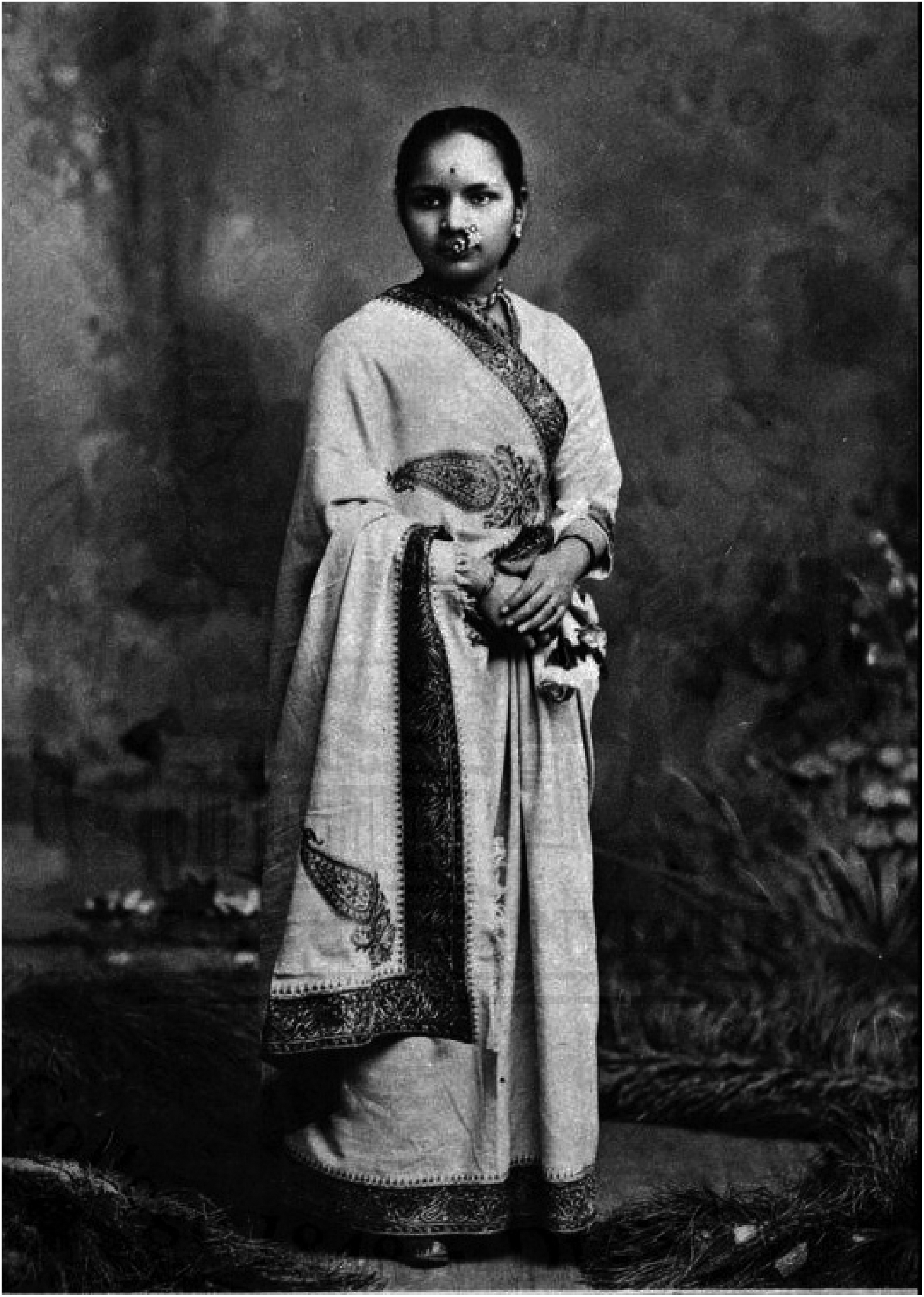
Dr Anandi Gopal Joshi. 3
Born in 1865 in Kalyan, India, young Anandi not only became the first female Indian physician, but was also regarded as a pioneering figure in Indian healthcare, and a beacon for the advancement of women’s rights. She contributed significantly to the elimination of gender stereotypes, and her life story paved the way for women within the South Asian Subcontinent to indulge in healthcare systems as practitioners. She continues to serve as an inspiration for subsequent generations of Indian women. 4 To this end, this piece aims to narrate her tumultuous journey.
Breaking barriers: Dr Anandi Joshi's upbringing in contemporary 19th-century India
Prior to the latter half of the 19th century, mainstream Indian society, as with the rest of the world, was plagued with practices that promoted a patriarchal atmosphere. This meant that vices; practices that were oppressive to women, including Sati (where a widow sacrifices herself by burning herself alive on the funeral pyre of her husband), child marriage, and female infanticide were rampant. In addition, women were prohibited from inheriting property from their ancestors, and were prohibited from partaking in gainful economic activity; in the limited ventures they were allowed to partake in, they often received unequal pay. During Dr Joshi's era, women in India often did not have the right to choose their partners. Furthermore, widows were strictly prohibited from remarrying. Women were completely excluded from education, were banned from partaking in caste rites, and were completely excluded from political endeavours. 5 In some Indian states, the accomplishments of a Prince were indicated by the number of women who sacrifice themselves on his funeral pyre. 6 In essence, during this era, Indian women were forced into the lower echelons of society where they held no significant rights.
During such tumultuous times, young Yamuna (former name of Dr Anandi) was born on the 31st of March 1865 in Maharashtra, India and was raised in a family that complied with the Hindu Chitpavan Brahmin tradition. 7 Her parents, Gunputrao Amritaswar Joshi and Gungabai Joshi came from a long lineage of wealthy landlords, based in the Kalyan region of the Bombay Presidency, however, their wealth was waning at a fast pace. In a family of 10 children, Yamuna was the sixth in line; she had four brothers and five sisters, two of whom had succumbed to illnesses. Early on, her father took note of her zeal for knowledge, and was immensely proud of Yamuna; he went to great depths to ensure that his daughter was well educated – a practice that was very uncommon at the time. Her childhood mansion in the Bombay province had a specific segment where a school had been established, and Gunputrao ensured that Yamuna was taught and well-educated in Marathi – the native language of the region.7,8
Following her child marriage to Gopalrao Joshi, who was a postal clerk (and was a widower who was nearly 20 years elder than her) her husband renamed her from ‘Yamuna’ to ‘Anandi’, which meant the ‘one who brings happiness, bliss and joy’. 9 Child marriage was a customary practice in India at the time. During her marriage, despite their rapidly dwindling reserves, Gunputrao gifted Anandi's newlywed husband with wealthy heirloom items, jewellery, and many such expensive offerings as ‘Dowry’ – a customary tradition at the time, aimed to financially support the newlywed couple in their new life together. Compared to most Indian men, Gopalrao was a progressive thinker and a reformist; he strongly believed in the power of education, and according to Anandi's biography, had agreed to marry her on the condition that he would be able to educate her.8,10–12
Not much is known about the early life of the newlywed couple. However, what is known for certain, is that Gopalrao was firm in his resolve – he wanted to ensure that Anandi was thoroughly educated. Gopalrao was a governmental clerk – his job involved frequently moving extensively across the country; during the first few years following marriage, they shifted frequently – firstly to Alibaug, then to Kutch, Serampore, and finally the eastern coastal town of Calcutta.8,12 The constant relocation meant that Anandi was not able to fully immerse herself into a specific educational institution; on many instances, Gopalrao tried to enrol Anandi into missionary schools, but institutional norms at the time meant that missionary schools would not routinely accept students who had indulged in child marriage, hence he was not successful in this endeavour.8,12 Regardless, Gopalrao was determined. He strived to ensure that Anandi was well-versed in English and Sanskrit. Many texts have reported that Gopalrao often taught Anandi himself at home. Arguably, Gopalrao did not pay much heed to institutional norms; at the time, even going for a leisurely stroll with one's wife was strictly forbidden. However, Gopalrao challenged such restrictions and frequently engaged in activities considered strictly forbidden. Consequently, their family often attracted a great deal of criticism and abuse.8,12
Despite being progressive and generally supportive of his wife's zeal for education, Gopalrao was not without his flaws. Gopalrao's untrammelled ambition meant that he possessed extremely high expectations from his young wife. Consequently, in numerous instances, Anandi was at the receiving end of his depredations. He was not only incredibly stern, but on multiple occasions, would also resort to physically harming his wife.12–14 Gopalrao was undoubtedly a liberal man for his time. However, his deep-rooted feeling of superiority over his wife would manifest itself on numerous occasions. Years later, in a written correspondence to her husband, Anandi noted: It is very difficult to decide whether your treatment of me was good or bad. If you ask me, I would answer that it was both. It seems to have been right in the view of its ultimate goal; but in all fairness, one is compelled to admit that it was wrong. It was too severe for the age, body and mind.
When Anandi turned 14, she witnessed an incredibly traumatic event. She gave birth to a baby boy, but the child barely lived for 10 days due to complications, and a lack of medical treatment. 7 Anandi noted that there was not only a severe shortage of medical practitioners at the time; there were very few gynaecologists who were sensitive to the needs of pregnant women, and there were virtually no female practitioners. This proved to be a watershed moment in Anandi's life, inspiring her to pursue a career as a physician. However, there were no institutions in the nation that would accept female students at the time. In addition, the myriad encounters of hostility and discrimination the couple faced led Gopal and Anandi to believe that she could only pursue medical education overseas. 5 Hence, began her quest to study medicine abroad.
Journey to the United States and the relentless pursuit of medical education
Even outside the Indian subcontinent, opportunities for women in medicine were extremely scarce during the middle of the 19th century. There were very few female role models or mentors for those aspiring to enter the medical field, and medical schools and hospitals were largely male-only institutions. In the United States, the first medical schools for women were established in the mid-1800s, but they faced significant opposition from male physicians and society at large. In 1849, Elizabeth Blackwell became the first woman in the United States to receive a medical degree. However, it would take several more decades for female practitioners to become ingrained in mainstream American practice. Such disparities in opportunities between men and women at the time were a result of broader societal perceptions of the roles and abilities of women; while some of these barriers were broken by the efforts of trailblazing women, sexism and discrimination in the medical field persisted.13,15
Anandi was quite fortunate in one aspect; despite the abuse he inflicted, her husband strongly supported her quest to study medicine abroad. As previously elucidated, at the time, it was quite unusual and uncontemporary for husbands to support the education of their wives. In 1880, he sent written correspondence to Royal Wilder; a well-known American missionary at the time, in which he wrote of his wife's interest in pursuing medicine, and highlighted the societal barriers that prevented her from doing so in India. He requested apt opportunities for his wife in the United States, in addition to employment opportunities for himself. Royal Wilder had initially accepted, but only on the condition that their family converted to Christianity – which was strictly unacceptable to the couple, despite them being aware of the prudential benefits of doing so. Anandi noted:
‘A convert who wears an English dress is not much stared at. Native Christian ladies are free from the opposition and public scandal which Hindu ladies like me have to meet within and without the zenana’, said Anandi, referring to the inherent practices of gender segregation in contemporary Hindu and Muslim households at the time.
Despite their refusal, Wilder however published the letter in Princeton's Missionary Review. Not long after, the letter happened to be incidentally read by Theodicia Carpenter, a resident of Roselle, New Jersey, whilst waiting for a dentist’s appointment; she was thoroughly impressed, not only by Anandi's interest in medicine but also by her husband's support. She promptly wrote back. 12
Over the next two years correspondence between Theodicia and Anandi flourished, and the two women frequently exchanged letters; they discussed the differences between American and Indian cultures, analysed Hindu customs, discussed Christianity, and commented on the patriarchal practices within their respective societies. Consequently, Anandi became eloquent in self-expression, and Theodicia offered to invite her to study in the United States. Gopal at the time had been transferred to Serampore, and could not support the travel for both him and Anandi monetarily. In addition, Anandi's health at the time was severely declining; she frequently suffered from headaches, fever and breathlessness. Theodicia sent her medications from the United States, however, they were of no avail. However, despite her declining health, Anandi decided to set sail for the United States.16,17
Naturally, Anandi was heavily criticised for her decision; she defied every rule of oppression that women were condemned to at her time. 11 Anandi exhibited her strong-willed character as she made a public speech to the society, at Serampore College Hall, pertaining to ‘My future visit to America and public inquiries regarding it’. There, she explained the significance behind her decision to study medicine in the United States, emphasising the discrimination she experienced at the time, and the dire need India had of female physicians. However, Anandi vowed to adhere to Hindu customs – to remain a vegetarian and dress in a saree. ‘I will go as a Hindu and come back here to live as a Hindu’, 6 she declared, as she shared her dream of the betterment of healthcare for women in India. Gopalrao Joshi could not afford to fund this expedition at the time; in order to fund her education, Anandi sold her bangles – this was coupled with charitable funds she received from across India from supporters and wellwishers. As would be seen later, she would also receive a scholarship from the institution, which would further assist her financially.12,17
Anandi Joshi set sail from Calcutta (Kolkata) to New York in 1883.
18
She was chaperoned by two English women, who were acquaintances of the Thorborns; a physician couple in the United States, who were strongly moved by Anandi's resolve. They supported her travel to the United States, and helped her with her application to the Women's Medical College of Pennsylvania (WMCP), now called Drexel University, which was one of the only programmes for women waiting to become medical practitioners at the time. She was received by Theodicia and resided with her during her initial days in America.18,19 In her application to the WMCP, she wrote: The purpose for which I came is to render to my poor suffering country-women, the true medical aid they sadly stand in need of and which they would rather die than accept at the hands of a male physician. My soul is moved to help the many who cannot help themselves.
This was written in her recognition of a pattern of Indian women refusing care from male gynaecologists, leading to worsened outcomes for women and children. 11 Greatly moved by her determination, pursuit and resolve, and thoroughly impressed by her expedition across the world to fulfil her quest, Rachel Bodley, the then dean of the WMCP, enrolled her into the two-year MD programme and also offered her a scholarship of several hundred dollars. 10 Thus, following a plethora of struggles, and after journeying across the world, Anandi had finally been successful in pursuing her quest to study medicine. At the institution, Anandi's colleagues included monumental figures such as Kei Okami and Tabat Islambooly, who then went on to become the first female physicians in Japan and Syria respectively (Figure 2). 10
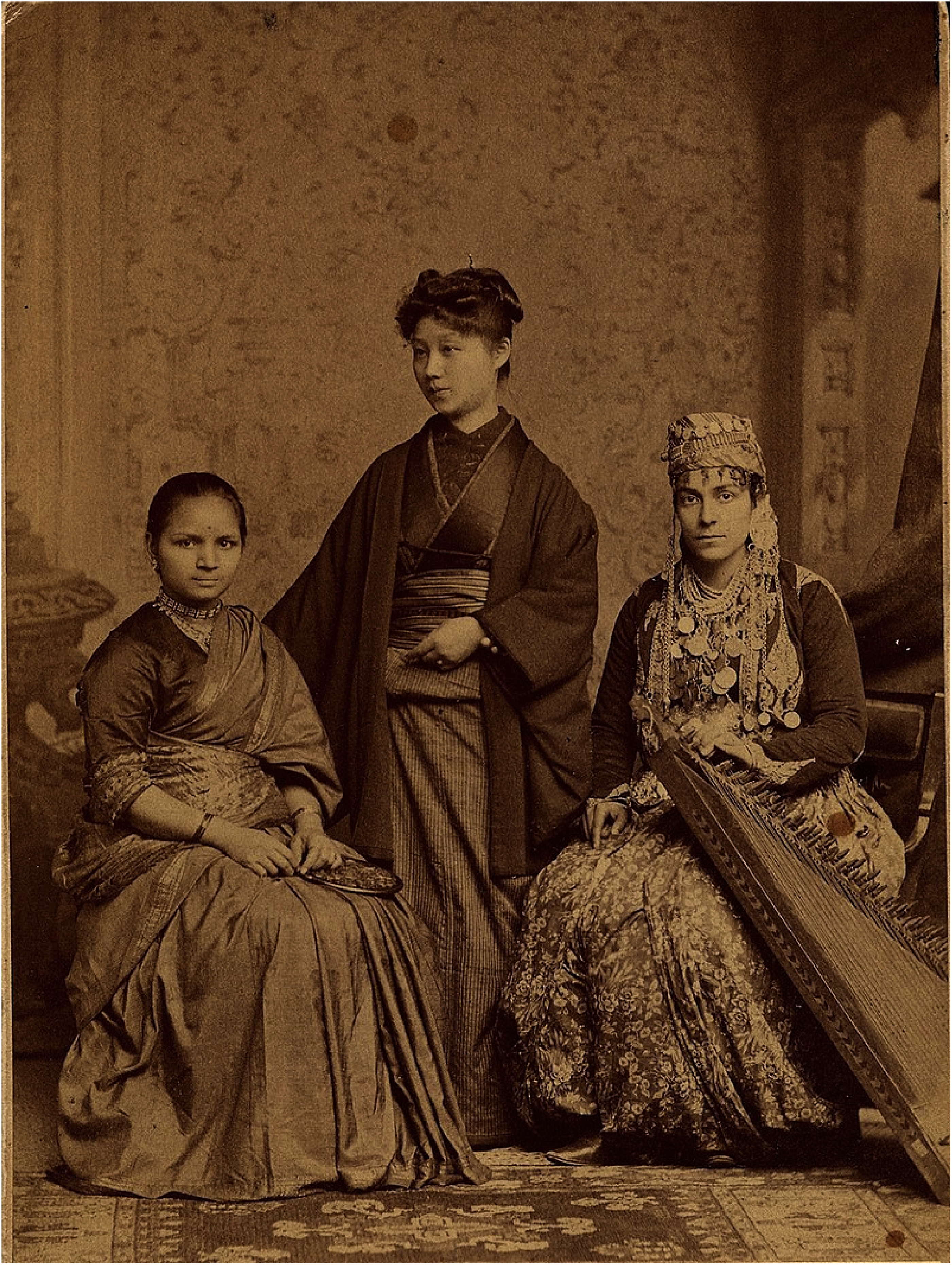
Dr Anandi Gopal Joshi, pictured along with Kei Okami (centre) and Tabat Islambooly (right) at the Women’s Medical College of Pennsylvania in 1886. 20
Dr Anandi graduated from the WMCP with an MD in 1886, and was honoured with a congratulatory letter from Queen Victoria, then the Empress of India, in recognition of her accomplishment. 10 Anandi had written her thesis on “Obstetrics among the Aryan Hindus” containing references from both the traditional Ayurvedic texts of India and American medical literature. 12 Unfortunately, her health declined severely during her stay in the United States (she had contracted tuberculosis), owing to the harsh, cold climate and the unfamiliar diet.12,18
Return to India
In late 1886, Dr Anandi returned to India, where she was wholeheartedly welcomed; she received praises from all across the subcontinent, and was honoured by governmental institutions and prominent members of her society. Soon, she was appointed as the physician in charge of the female ward of the local Albert Edward Hospital, in the princely state of Kolhapur, and also took up the role of an educator of medicine for young women in India. 11 Consequently, Anandi had successfully achieved what she had set out to do – become the first female physician in India, representing one of the most significant moments in the history of the nation. Anandi's persistent resolve and indomitable spirit broke down cultural boundaries, challenging deeply set gender norms and biases that had long constrained women to traditional positions. Her accomplishment inspired countless aspiring female doctors and paved the door for future generations of women to pursue careers in medicine while defying societal expectations and stereotypes.
Anandi's unique achievement had ramifications well beyond her own personal journey. It caused a profound shift in the nation's collective psyche, redefining what was deemed feasible for women in a male-dominated culture. Her trailblazing achievement challenged and destroyed long-held preconceptions, not only within the medical profession but also throughout Indian society. Anandi became a symbol of empowerment, resilience, and advancement for women all throughout India, after fighting the difficulties and bursting through the glass ceiling. However, unfortunately, by this time her condition exacerbated to its terminal stages, and Dr Anandi Joshi tragically succumbed to tuberculosis on the 26th of February, 1887.12,17,21
Dr Anandi Gopal Joshi was a passionate advocate for women's healthcare and education, and her work had a significant impact on the perception and societal acceptance of women in India. She not only recognised the importance of education but also believed that women should have equal access to it. She also recognised that achieving gender equality and elevating women in Indian society required improving their health. She had aspirations of founding a women's medical college, but she was never able to fulfil them. Despite having well-intended ambitions of uplifting and improving the health of the women and children of her country, her untimely death meant that she was unable to do so. Regardless, by becoming the first Indian female physician Dr Anandi Joshi became an inspiration to many in her nation.8,19,21,22
Legacy and impact
Dr Anandi Gopal Joshi is widely regarded as the first Indian woman to have become a physician. Despite the unfortunate deterioration of her health and her untimely death, Dr Joshi significantly influenced women's education and healthcare in India.
During many instances of her short life, Dr Anandi displayed indomitable courage. Prior to her departure to study Western medicine in the United States in 1883, Dr Joshi displayed immense courage during her public speech in Serampore, announcing her pursuit of medical education overseas with her reasons, and declaring her allegiance to Hindu customs and determination to improve healthcare for women in India. Her speech garnered support as she defied the gender roles that were defined in the patriarchal structure of 19th century India.11,12 During her education in medical school in the United States, Anandi served as a cultural interpreter. On the one hand, she greatly disseminated and spread awareness of the great Indian culture and Hindu customs to her American peers; she gifted dolls dressed in traditional Hindu clothes to her confidants. In addition, she analysed American culture and advancements in technology and shared her findings with the natives of her country through written correspondence in Marathi, which was shared across a plethora of newspapers in India. 22 Her strength, tenacity, and courage inspired the hearts of many young women in India. Anandi's tact, demeanour, resolve and depth of knowledge made a remarkable impression on Americans, dispelling the stereotype that Indian women were uneducated and reliant on their partners. This led Americans to invest in her cause to educate young Indian widows soon after. This was a significant step in the eradication of gender roles in 19th century India. 23
Dr Joshi firmly believed that there were insufficient midwives in India. Additionally, she also believed that midwives were taught in an extremely conservative manner. Regarding the mainstream practice of medicine in India, Dr Joshi had observed a dangerous pattern – women often refused care from male gynaecologists, leading to adverse health outcomes for women and children. She strongly advocated for a greater recognition of women in healthcare, and called for systems to be put in place to address the factors that discriminated against them. In light of their profound friendship, Theodicia, residing in New York, received the ashes of Anandi after her untimely demise, and was deeply saddened by the news. 18 Theodicia placed Anandi's ashes in her family graveyard; the Poughkeepsie Rural Cemetery in Poughkeepsie, New York. There, on her gravestone, is etched a description of Anandi that will continue to inspire many generations of Indian women to come: ‘First Brahmin woman to leave India to obtain an education’. 11
Posthumously, Anandi's legacy lives on. In 1888, Dall, an American feminist, who deeply respected Joshi, wrote her biography. 12 A Hindi biographical series, highlighting the many accomplishments of her life, aired on the Doordarshan Broadcast Network in India. 24 The Symbiosis International Deemed-to-be University implemented the flagship ‘Dr Anandi Gopal Scholarship Scheme’ in 2020, whereby scholarships are awarded to five women who score the highest on the medical entrance exam annually. 25
The Institute for Research and Documentation in Social Sciences, an Indian non-governmental organisation based in Lucknow, has posthumously honoured her by naming an award after her; the institution grants the Anandibai Joshi Award for Medicine to individuals who empower healthcare and medical science in India. 24 She had been honoured posthumously by many state governments in India, who often award fellowships named after her to individuals who further that cause of healthcare in the country. 26 In addition, till date, a plethora of movies and plays on her have been directed and played, immortalising the many contributions she made to the betterment of women in her nation.27,28
Footnotes
Authors’ Notes
We would like to credit Hareesha Rishab Bharadwaj, Priyal Dalal, Joecelyn Kirani Tan, Trishtha Agarwal, and Mahnoor Javed equally (as co-first authors) for equal contribution in the drafting of this article.
Declaration of conflicting interests
The author(s) declared no potential conflicts of interest with respect to the research, authorship, and/or publication of this article.
Funding
The author(s) received no financial support for the research, authorship, and/or publication of this article.

