




Abstract
Gladys Mary Wauchope was a pioneering woman physician and general practitioner in London and Brighton. Descended from an ancient Scottish family, she was the second female medical student at the London Hospital Medical College after Elizabeth Garrett Anderson, enrolling during the brief period from 1918 to 1928 in which women were permitted to study medicine in mainstream London medical schools due to shortages of doctors caused by the First World War. Unperturbed by opposition to her gender from male colleagues, she was initially house physician on the firm of Sir Robert Hutchison at ‘the London’, and went on to hold an array of posts in large London hospitals at a time when finding such work was challenging for women doctors. She settled in Hove as a general practitioner in 1924, later becoming a consultant physician at several major Brighton hospitals. Made only the eighth female fellow of the Royal College of Physicians, she also set up the first diabetic clinic in Sussex and Kent. Gladys authored several books, including her autobiography ‘The Story of a Woman Physician’, which documents life through two world wars and the introduction of the National Health Service, whilst keenly observing the changing landscape of medicine and its place in society.
Keywords
Gladys Mary Wauchope (Figure 1) was born in Westminster on 7 July 1889 to Mary, neé Wilson (b.1847), and Edward Wauchope (1847–1917). 1 She was the eldest of four children, sister to Kathleen, Charles and Colin. Mary, of Sevenoaks in Kent, was raised in comfort and afforded the privilege of an education from visiting ‘masters’ from London, though little else is known of her background. 1 A venerable Scottish pedigree stretched back to the 14th century on Gladys’ father's side – the Wauchope clan members included historical figures such as the grandson of William Wallace and decorated military heroes like Major-General Andrew Wauchope (1846–1899).1–5
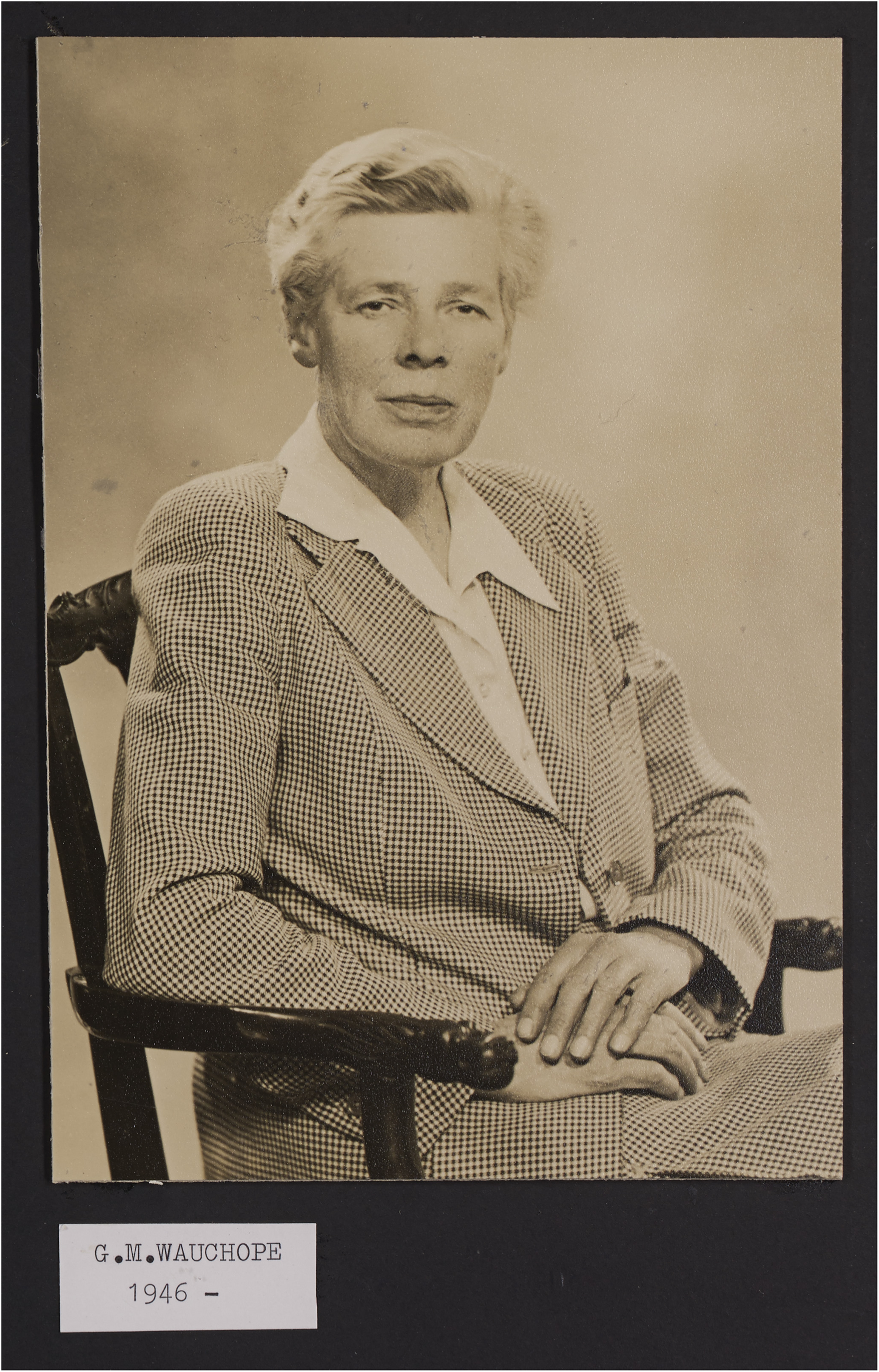
Dr Gladys Mary Wauchope BM, BS, MD, MRCP, MRCS, FRCP. Taken in 1946. From a photograph album of the consultants of the Royal Sussex County Hospital, held by The Keep, East Sussex. (ESRO B 41/9)
Indeed, Edward’s father, Major-General Charles Wauchope (1802–1871), served in the Honourable East India Company and Madras Native Infantry, taking part in the First and Second Anglo-Burmese Wars (1824 and 1852).1,4 His youngest son, Edward (Gladys’ father), was raised in Edinburgh whilst Charles and his wife still lived in India. Following Wauchope tradition, Edward aspired to a career in the military but was prevented by a congenital dislocation of the hip. Instead, he attempted to train as a surgeon by ‘walking the wards’ – as training was then called – of the Edinburgh hospitals. He was, however, unable to complete this due to continued poor health. 4 Having been advised to go to sea to improve his health issues, he found a post instead as a ‘purser’ and ‘assistant surgeon’ on a ship bound for the Cape.1,4 Thus began several years of working for trading companies, attempting (and failing) to start a ranching business in Argentina, followed by work with a tea-growers firm in Calcutta. 4 He later transferred to their offices in London and in 1888 married Mary. 4 The following year Gladys was born. 1
Six months following her birth, Edward made the decision to leave London as he believed it ‘no place to raise children’, instead relocating the family to Loughton, Essex, close to Epping Forest. 1 Gladys’ accounts of the two properties they resided at during her childhood paint scenes of a bucolic, privileged life filled with adventure in the forest and surrounding countryside, both with her siblings and their servant’s children. Her early years were dominated by her love of horses, who were ‘the centre of [her] life’, learning to ride at age 4 on a 25-year-old Shetland pony. 1
School life, St Andrews (1900–1907)
Much of the next stage of her life took place in St Andrews, Scotland. Indeed, she could not know at the time how crucial a stepping stone this Scottish town, close to her father's ancestral home of Niddrie, would be along her journey into medicine.2–4 Aged 11 she was sent to St Andrew’s to begin formal schooling at the independent preparatory school St Katharine's, a well-regarded boarding school in Scotland that exists to this day. 6 This was a profoundly unwelcome change for Gladys. 1 Life at St Katharine’s was far removed from daily horse riding with her sister and the weekly Loughton hunt. She found the sudden containment within the school grounds unsettling; in the first weeks of term, she ‘escaped’ to walk through the city for hours at a time, returning much later unnoticed by her new peers or teachers. 1 This began for her the dawning realisation of being an outsider, an English student among predominantly Scottish schoolgirls: ‘I was the only ‘London girl’…No one welcomed me or took the slightest notice’. 1 She went on to suffer from ‘sustained bullying’. 1 She summarised her experience at the school:
I learnt three lessons at St. Katharine's. First, that no one can make you do what you won't do, and secondly, that a person is responsible for his own misdeeds and must take the consequences. Thirdly, in the unhappy, homesick and seemingly interminable twelve weeks of each term, I learnt the truth of the Chinese [sic] proverb: “This also shall pass”. 1
In 1903, she progressed to St Leonard’s School, also in St Andrews. 1 Here was an environment entirely counter to St Katharine’s. St Leonard’s catered for young women from highly privileged backgrounds. 7 It was also the first independent boarding house for girls that took the same model as Cheltenham Ladies’ College, based upon the elite institutional model of boys’ public schools. 7
Gladys’ ‘eager and almost headlong interest in everything’ ranged from Classics, to school plays, to editing the house magazine, to sports – including lacrosse, swimming, cricket, tennis and hockey. 1 Science at this time held no special allure, though she achieved well in the Higher Certificate Examinations. 1 She developed an affinity for Latin, savouring certain lines of Virgil’s The Æneid during quieter moments at school, such as ‘conticuere omnes intentique ora tenebant’, meaning ‘all were at once quiet and listened with intent’.1,8
Finishing school, Lausanne, Switzerland (1907–1908)
It was with sadness that in July 1907 she completed her education at St Leonards. 1 Her preference would have been to attend Oxford University to study Classics formally, with the ultimate goal to become an academic. This was a wish her parents did not grant her. Instead, she was sent to La Casita finishing school in Lausanne, Switzerland for 10 months to acquire the desirable attribute of speaking fluent French. 1
Gladys, however, rather than putting her efforts into French language and history, found greater satisfaction in learning Greek after class to better read The Iliad in its original form. 1 Not even the enticement of the mountains and outdoor activities allowed her to fully enjoy this period. Indeed, her esteem for the school and its purpose is perhaps summarised when, having returned from dinner with her visiting parents in Lausanne, she found La Casita’s gates already locked for the evening. Undeterred, she climbed over the spike-topped gates in full evening dress and carried on up the drive to be let in by the Principal, full of consternation at the door exclaiming ‘Oh là là!’. 1
A young woman at home, Goldings Manor, Essex (1908–1914)
For 6 years, she lived again at Goldings Manor, her family home in Loughton. She was joined in 1910 by her younger sister Kathleen (b.1892), who had herself finished at St Leonard’s. 1 She described her sole responsibilities during this time as ‘to feed the five dogs, to do the flowers and to entertain our guests’. 1 For both sisters, the local hunt remained a weekly cornerstone of their lives, punctuating a leisurely existence of reading, dog walking and visiting acquaintances in the village. Gladys described her interest in hunting not as rooted in the blood sport, but in the beauty and grandeur of the countryside and the thrill of riding through it. 1 This was a passion that spanned her entire life.
Despite having no requirement for further education, she continued to teach herself Greek.1,9 She often visited the British Museum to gaze upon the Parthenon Frieze, or attended the theatre alone to watch Iphigenia – the Greek myth detailing Agamemnon's sacrifice of his daughter in order to summon the winds to carry his fleet to Troy. 1 Edward's shock at hearing that his daughter had journeyed unaccompanied to central London for such an activity only amused her. She reflected that, had her intention instead been to go shopping, her actions would have been seen as ‘quite proper’. 1 These unwritten expectations for a woman of her age were quite at odds with the curious and academically minded young Gladys.
The advent of war and return to St Andrews (1914–1918)
The story of Iphigenia perhaps holds more parallels with Glady's life than she realised. In some versions of the fable, Iphigenia is saved from the fate decided by her father through the intervention of the goddess of the hunt, Artemis, and becomes instead her high priestess. 10 For Gladys, now 25, the announcement that Germany had declared war upon Russia in August 1914 and the consequent tumult of the First World War bent the arc of her life forever, saving her from the unremarkable fate of a well-educated housewife. This ultimately was the beginning of her calling to medicine.
With the dawning of war, Wauchope’s family life changed irrevocably, watching as their treasured horses were requisitioned and Gladys’ two younger brothers were called up to the army and Royal Navy. 1 She and Kathleen began work in one of the 90,000 Voluntary Aid Detachments (VADs) located across the country under the management of the Red Cross. Their detachment was based at a Braeside convalescent hospital in Loughton, a converted Victorian villa which received patients from Colchester Military Hospital.1,11 The sisters discovered the inadequacies of their upbringing for the more practical aspects of life, unable even to make breakfast for the soldiers, but learned quickly how to bandage and dress wounds, as well as slowly turning to more menial tasks such as cleaning. 1
It was in 1915 that Gladys first heard of the shortage of doctors caused by the war. After tutoring a female friend in mathematics, who intended to apply for medicine, she caught the idea first unfurling in her mind:
One night the thought flashed upon me: ‘I could do this medical work’. It was as though a call came and I answered: ‘Here am I, send me’. 1
More open to the idea of his eldest daughter becoming a doctor than an academic, her father agreed ‘at once’, his disposition perhaps altered by the necessity and pragmatism created by war and the centuries-long involvement of his family in the military.1,3,4 From here, Glady’s resolve hardened rapidly and she made arrangements to, firstly, pass the necessary ‘matriculation’ entrance examinations and, secondly, to find an institution which would permit her entry as a woman.
After sitting the ‘matric’ in January 1916, enquiries to the London School of Medicine for Women, her first choice of medical school, proved frustrating – they would not admit her until October. 1 Impatient, Gladys found that St Andrews University would allow her to join the pre-clinical course early, starting in May. 1 In the interim, she split her time between VAD work and a Tutorial College in London, where she prepared for the scientific education, she would receive at St Andrew’s. She still managed to horse -ride in the forest at 7 a.m. before setting out on the train for classes.
The next seven academic terms at St Salvator’s College, St Andrews University, were spent in ‘arid’ study, living under the dark shadow of war and the ‘fear of the casualty lists’. 1 This was not without due cause – her brother Charles (b.1896) was to survive the Battle of the Somme later in 1916, fighting with the 41st Brigade Royal Field Artillery. Likewise, their youngest brother Colin (b.1900), of the Royal Navy, was Midshipman aboard H.M.S. Royal Sovereign, which was present at the surrender of the German Fleet in 1918. 4 Glady’s intention when setting out to train had been to join the war effort post-qualifying, as part of the Scottish Women's Hospitals in France, which were independent hospitals staffed fully by female medics, nurses and auxiliaries.1,12 They were famed for providing efficient care and inspiring several of their auxiliaries to take up medical training following their experiences. 12 By the time Gladys qualified, however, the war was reaching its end.
University life offered few social activities to take part in. This suited her, however, allowing time to dedicate to laboratory work and the study of anatomy – the aspect of the BSc she found most challenging. 1 The Professor of Chemistry, Sir James Irvine (1877–1952) discovered her intention to pursue medicine. 13 One afternoon following a demonstration in the science laboratories, he commented to her rather prophetically:
Convinced of her own ineptitude, Gladys was somewhat intimidated by other students seemingly ‘more learned’ than her, including Stewart Duke-Elder (1898–1978) the famed Scottish ophthalmologist.1,14 Nevertheless, she sat her examinations successfully, leaving St Andrews once again in the summer of 1918, with a pang of wistfulness for the city that advanced her education so far. 1
Student at the London Hospital Medical College (1918–1921)
Only weeks after completing her BSc at St Andrews, Gladys knocked on the door of Professor Wright, Dean of the London Hospital Medical College in Whitechapel, to request permission to complete clinical training on the wards of The London Hospital.1,15 This being granted, she was appointed as ‘surgical dresser’ for the summer and began working several days later. 1 She was apparently the first woman to officially be granted medical student status at ‘the London’ since Elizabeth Garett Anderson had been permitted to attend ward rounds and midwifery for less than a year at the hospital in 1864.1,15
Strikingly, 1918 was also the year in which ‘propertied’ women over 30 gained the vote, the first toehold on the ladder of equality for women which would lead a decade later to voting rights broadly equivalent to men.16 The single mention Gladys makes of suffrage was that in her youth:
I took no part in the Suffragette movement, mainly because I knew no suffragettes, and had not begun to think for myself. I accepted the current opinion that their exploits were outrageous and unnecessary. 1
The decision to admit women came about due to war-related workforce depletion of the almost all-male medical staff and students, causing London medical schools to admit small quotas of women (10–20% per cohort) for a short period. This occurred mostly between 1918 and 1922, though some continued into the later 1920s. 15 The London Hospital Medical College was the oldest medical school in England at the time, an institution particularly resistant to the admission of women.17,18 This was a trend seen more acutely in the London medical schools in comparison to a more relaxed attitude to co-education in those outside of the capital.17,18
Gladys experienced a baptism of fire into the world of medicine and surgery, working as a ‘dresser’ for three months in the firm of Sir Hugh Rigby (1870–1944), the Serjeant-Surgeon to King George V. 19 Assisting in theatres she scrubbed up often, sometimes staying until the early hours of the morning and waking again at 7 a.m. 1 By the end of those summer months, she had given the old-fashioned ether and chloroform ‘rag and bottle’ to such a number of patients that she felt she had already become ‘a confident anaesthetist’. 1
Gladys remained the only female student until October of that year (1918) when nine further women arrived and formal teaching began. 1 Lecturers routinely ignored the women students at first and nurses became frosty in their presence. She remarked that ‘the feeling of being on sufferance may have depressed and irked some [of the women], but I was too busy and too happy to think about it’. 1 In the midst of a tumultuous few months, several weeks into her studies the Armistice was agreed, freeing Britain of the yoke of war and prompting the anatomy lecturers to permit students an early finish to celebrate. 1 They were then faced by another threat – the Spanish influenza epidemic, which took the lives of several students and filled the hastily transformed surgical wards with the ‘lilac faces’ of the afflicted.1,20
Gladys began her clinical clerkships in earnest, first in the hospital laboratory, and subsequently to the medical firm of Sir Robert Hutchison (1871–1960) and Sir Alun Rowlands (‘Bobby Hutch’ and ‘Daddy Rowlands’ to many, such was their students’ affection towards them).1,21 She then progressed onto surgery, obstetrics and gynaecology, ‘mental diseases’ at Bethlem and paediatrics at Great Ormond Street Hospital. 1 Hutchison, author of the textbook Clinical Methods, was a family friend who aided Gladys in her quest to find a teaching hospital that would accept her. 21 They remained friends for years, a father figure and one of many teachers whom she revered for their clinical prowess, erudite lectures and ‘Hippocratic’ bedside teaching. 1 The two went on to publish several research papers together, as well as an anthology of writings regarding the practice of medicine entitled ‘For and Against Doctors’, ranging from Plato and Pope to Thackeray and Molière.22,23
Rotating through different departments and firms, she encountered life in the Docks and East End in all forms, most especially while in the Outpatient Department. 1 Spending a month on maternity duty, cycling between the ‘insect-infested tenements’ and attending births alone, she saw acutely the poverty of the area. 1 Gladys was barely able to wash her hands in the scant water provided by families who sourced their meagre supply from street pumps, where the gaslights would go out at crucial moments, the meter demanding another penny. This often necessitated a ‘messenger running to a neighbour’ to speedily request one. 1 Despite the unhygienic conditions she never recalled seeing a case of post-partum septicaemia, nor felt unsafe travelling at night to another call-out on her own. 1
The armistice eventually brought home those surviving doctors and students who had suspended their careers and studies to fight. This raised the issue of whether to continue allowing women entrance to the Medical College. It was apparently thought that the women's presence was off-putting to graduates of Oxford and Cambridge, who might forego ‘the London’ and instead apply to Bart's or Guy's.1,18
In January 1921, Gladys qualified as a Registered Medical Practitioner, 1 joining a slowly expanding number of officially recognised women doctors in Britain. In 1891, there had been only 25 women on the Medical Register; by 1921, there were 2100. 24 Despite her achievements, she was not without trepidation:
My main feeling was inadequacy and unworthiness. How could I have ‘got through’? I knew so little. 1
By 1922, women were no longer permitted to apply for medical education at ‘the London’, following suit with many other medical schools in the metropolis.17,18 The gains won for women medical students during the First World War were, thus, largely lost.
Early working life – London, Norfolk (1921–1923)
The following month Gladys began her medical career in the ‘lowest post in the medical hierarchy’ at The London Hospital: clinical assistant in medical and subsequently surgical outpatients, regarded so lowly in her mind that she considered herself a ‘clinical ass’. 1 Early in 1922, she was appointed as house physician to the firm of Hutchison and Rowlands, her ‘ambition since my first clinical clerkship’. 1 This caused uproar amongst the other doctors of the firm who threatened to resign en masse upon learning that a woman was to join their team. 1 When confronted, one stated that they ‘did not object to her personally, but it was the principle’. 1 The Chairman of the Board, Lord Knutsford (1855–1931), lent her his support and on her commencement, no one resigned and tensions diffused.1,25 During her 6 months in this post, she marvelled at how many patients recovered despite the limited investigations or interventions available, crediting it to the ‘superb’ nursing care. 1 She felt it was ‘anxious work having so many new and urgent cases in quick succession’. 1 The departments were still busy with soldiers suffering from diseases contracted during war, such as endocarditis lenta, which Gladys published several studies on after noticing its prevalence amongst those who had been in the trenches in France.26,27
In July 1922, she left London for Norfolk to spend some months as an assistant in general practice for the uncle of a female surgeon she had dressed for at ‘the London’. 1 This was her first taste of general practice, though she found that the ‘ratio of roadwork to medicine was too high’ due to the rural location. 1 When she saw an advert for District Medical Officer at Queen Charlotte’s Maternity Hospital in London, Gladys applied and was appointed with a small salary of £80 per annum. 1 She was based on the labour ward, called out to labouring mothers’ homes mainly for instrumental deliveries or post-partum sutures. 1 She recalls this time as full of noise, the rumble of trains underneath and traffic outside constant. The neighbourhoods the hospital served felt ‘drab’ and ‘wicked’, so she spent time between calls (she was never off-duty) with the Hutchisons, indulging in gramophone concerts and lively discussion. 1
Six months at Queen Charlotte’s were followed by another clinical assistant role in paediatric outpatients at Great Ormond Street Hospital. 1 Here she also took part in Infant Welfare Clinics, which were a relatively new phenomenon and aided greatly in reducing the prevalence of rickets and scurvy amongst children. 1 It was also at this time that her interest in medical writing was further developed, having researched the literature while caring for a patient undergoing precocious puberty, which was poorly understood. She came then to appreciate how medical learning is built ‘little by little through shared knowledge’. 1
Late in the summer of 1923, she returned to ‘the London’ for the last time by taking up a post as Receiving Room Officer. 1 Here she again witnessed the injuries and ailments endured by the working classes of the East End – ‘mangled hands’ from cart accidents, tailor's machinists with needles buried in their fingers, a brewer's drayman with a ‘caved-in sternum’ after his horses charged him, and sailors with malaria and anthrax. 1 She learned ‘to be surprised at nothing’ that may come through the busy hall of the receiving room, calculating the average time per patient as barely 2 minutes each. 1 The impression these patients left on her was of the fundamental, unifying request for succour and the corresponding requirements of those medics who answered it:
The same unending procession of people needing help calls for the same alert and open mind in the young doctors who serve them. Time does not change them nor the way the hospital receives them. 1
‘General practice is like the roads: you never know what is coming round the corner’, Brighton and Hove
By 1924, now 35 years old, Gladys felt it was ‘time for [her] to launch into practice’. 1 After gaining a position as an assistant to a general practitioner (GP), Dr Florence Edmonds (1879–1974), she moved to the accommodation above the practice at 5 Brunswick Place, Hove1,28 (see Figure 2).
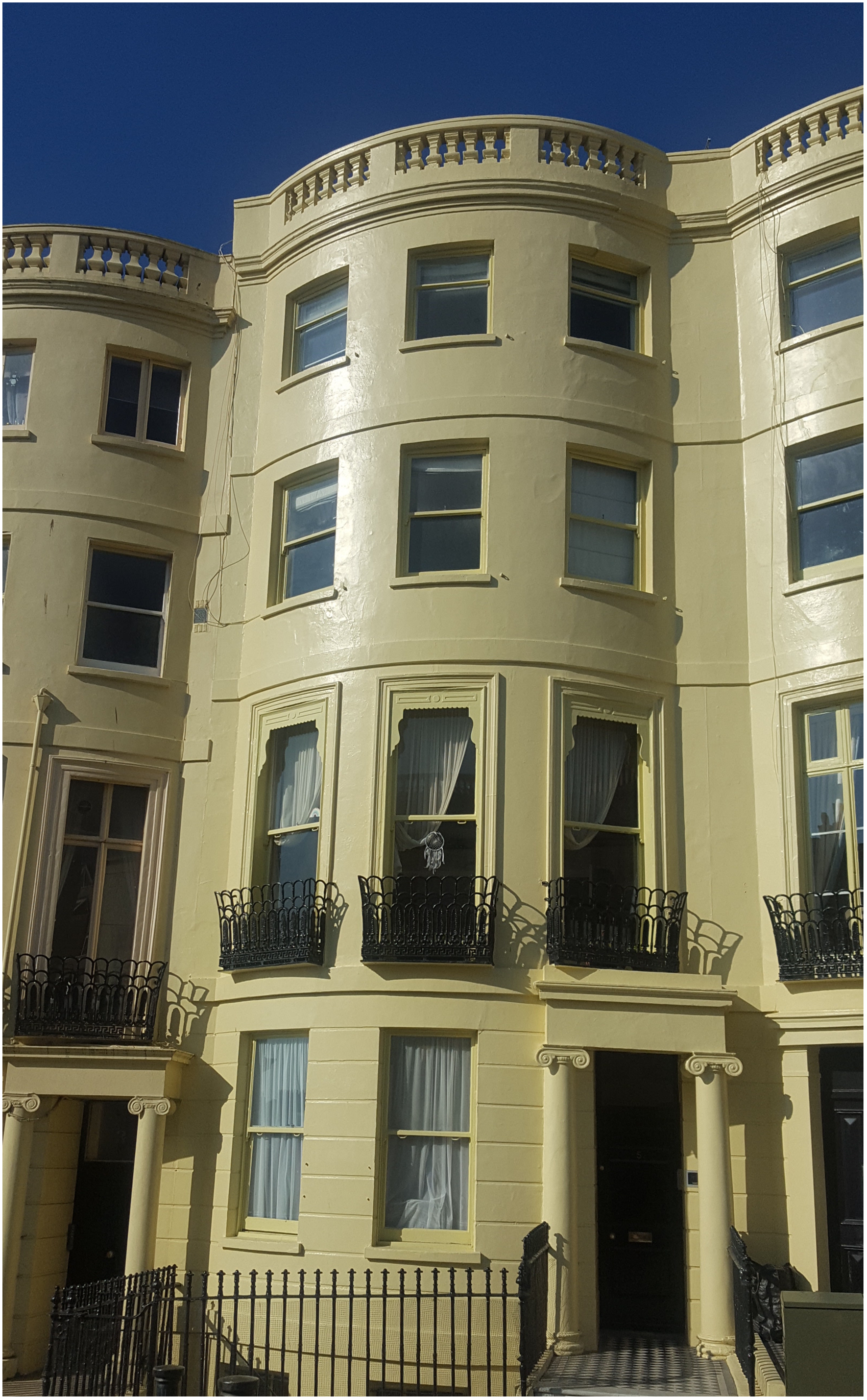
5 Brunswick Place, Hove. Former GP practice and accommodation of Dr Florence Edmonds and Dr Gladys Wauchope. Taken in 2021 by authors.
In general practice, she encountered diseases London hospitals had not revealed to her; realising the naivete of her knowledge of ‘psychosomatic diseases’, she felt ‘humiliated’ that patients felt better merely upon her entering the room, so unfamiliar was this to her sense of duty and application of skill. 1 Winter brought the same pervasive bouts of influenza, however, during which she and Dr Edmonds carried bunches of keys to let themselves into the homes of up to 40 patients a day, also taking prescriptions to the chemist and knowing that only a few weeks later would follow the corresponding epidemics of childhood infections. 1
The proximity to the sea and the Sussex Downs, with their hunts, were an appealing draw of the region for her. During the summers she woke at 7 a.m. to run down the wide pavements of Brunswick Square to the sea and swim before breakfast, savouring the cream Regency façades lit ‘almost to gold’ by the awakening sun and thinking of ‘Odysseus landing on the Phaeacian shore’ as she scrambled over the stones back onto land. 1
In 1926, several notable events occurred. Gladys firstly passed the membership exams to join the Royal College of Physicians in London, the only woman candidate of her cohort. She shortly added to her repertoire of work in Brighton by taking a position as assistant physician in outpatients at the New Sussex Hospital for Women and Children, founded by fellow woman doctor Louisa Martindale (1872–1966).1,29,30 That year Gladys also diagnosed herself with Type 1 diabetes, a condition she would go on to study for four decades. 1 Indeed, many of the insulin regimes she set out in later published works were in fact tested on herself, having convinced some colleagues to observe her symptoms after self-administering hypoglycaemia-causing doses of insulin. 1
As it became obvious to her that diabetics required more focused, ongoing monitoring, in 1934 Gladys assisted in setting up an ongoing diabetic specialist clinic at the New Sussex Hospital. This was the first such clinic in Sussex or Kent and she often saw fifty patients in a single session. In 1938, she again made history, gaining a position as an Honorary Registrar at the Royal Sussex County Hospital, when it was common knowledge that the hospital would accept no women on their medical staff. She held two outpatient clinics a week. 1 She was accepted as a full consultant physician when she was made a Fellow of the Royal College of Physicians in London in 1946, only the eighth woman to ever be bestowed this honour at the time. 29 Notably, several of the other women recipients following her were also alumnae of St Leonards school. 1
Second World War (1939–1945), Brighton
When Gladys faced war for the second time in 1939, she endured it more pragmatically. Twenty-five years older, ‘the anxieties were not so crushing’ and she felt ‘used to shocks and uncertainties’. She described medical practice in Brighton and Hove during this time thus:
The character of our work was altered, partly because the younger consultants and practitioners joined the Services, and partly because the population of the two towns changed and many of our patients, especially old ladies and the richer families with young children, departed. 1
Though those families able to leave did so, many others evacuated from London were billeted with her neighbours and friends. Some of them asked to be certified as medically unfit to take unaccompanied children, so as to avoid housing child evacuees. 1 Sometimes up to a hundred children would arrive in Brighton without prior warning, billeting officers struggling to find them homes. 1
In 1940, Gladys began lecturing for the St John Ambulance Brigade, the expectation of invasion having increased significantly and the south coast becoming potential a front line. 1 General practice work ‘melted away’ with the exodus of the local population seeking safety and 5 Brunswick Place was turned into an Air Raid Warden post. 1 She asserted that were there an invasion by air, it was thought that parachutists would drop into isolated areas. Doctors still being permitted to use petrol and therefore travel to patients in more remote parts of Sussex, Gladys prepared herself by storing in her car an African wooden club and a bottle of morphine solution to stun and then tranquilise any enemy troops she may encounter. 1 The closest she came was the regular ‘tip and run’ raids made by German planes, sometimes meeting Royal Air Force fighters high in the sky over the city. Others would swoop so low in formation over the houses of the seafront that the Swastikas painted on their undersides loomed large while the ‘spattering rattle of machine-gun fire on the pavement’ sounded around her. 1
Fortunately, the bombing offensives witnessed in London were not replicated in Brighton, therefore the need for Gladys to assist with mass casualties in the hospitals did not arise.1,31 However, attending patients during the enforced blackouts proved challenging, the lights of her car shrouded in several layers of newspaper, making finding addresses incredibly difficult once night fell. When victory was declared, she drove up the wide roads of Hove with headlights blazing and thought ‘this surely is like paradise’.1
National Health Service
The dawning of the NHS in 1948 brought with it the disjunction of general practice and ‘consultant’ doctors, hardening the lines between primary and secondary care into a precursor of the system seen today. 32 Gladys was therefore forced to choose between her roles, ultimately deciding to relinquish general practice. She took up a consulting room in Wilbury Road, Hove, accepting patients referred by their GPs, while also retaining her clinics and some inpatient work at three of the city's hospitals. 1 She observed the changes wrought by the sweeping away of charitable institutions that ran hospitals prior to the welfare state’s establishment noting, at first, the grumbling of consulting clinicians losing out on private fees, then the slow realisation that clinical investigations were now easier to obtain and patient notes transferable between hospitals, facilitating greater continuity of care. 1
Retirement in Ripe, 1954–1966
In 1954 at the age of 65 years, Gladys retired from hospital work, retaining her private consulting practice mainly for her long-term diabetic patients. 1 Her centuries-old cottage in the village of Ripe near Lewes, which she bought in 1946, was often furnished by friends and visitors 1 (see Figure 3). Her constant companions were an Afghan dog and two Siamese cats, who would ‘lie together on the cooler lid of the Aga’, whilst outside a paddock of bees, hens and pigs meandered between the fruit trees. 1 Teaching science and Greek at Brighton and Hove High School, anatomy and physiology to student nurses at the New Sussex Hospital and also at the St John’s Ambulance Brigade kept her busy, as well as her Presidential post within the Brighton and Sussex Medico-Chirurgical Society. 1 Gladys continued to be academically active, penning short histories of the two 13th century churches in her surrounding parish, St John the Baptist and St Bartholomew. 33 Despite this interest and the multiple uses of biblical quotations in her writings, little is known of her religious beliefs.
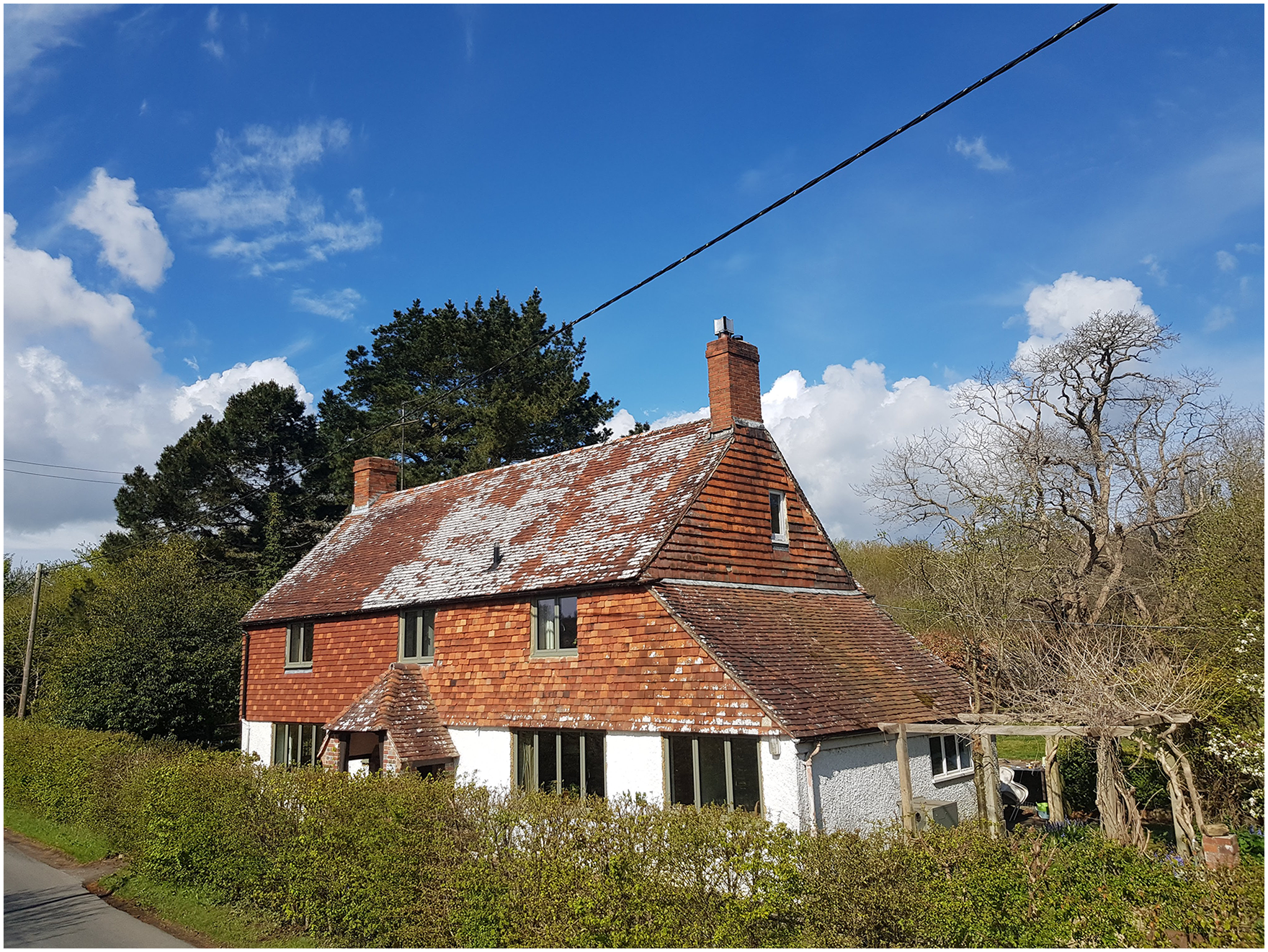
Brook Cottage, Ripe, East Sussex. Former home of Gladys Wauchope. Taken in 2021 by authors.
In the remaining years of her life, she became increasingly disabled, though she ‘faced [this] with remarkable fortitude’ and died on 16 May 1966 after a short, unspecified illness. 34 She neither married nor had children. Friends, however, remembered her as an ‘energetic and restless character with a brilliant brain’, who had ‘indomitable courage’ that ‘never faltered’ and a legacy of accepting every situation as a challenge. 34
Conclusion
It has been noted elsewhere that ‘a sense of unease about gender is present in almost all the accounts of women doctor's lives’ from the mid-1800s into the 20th century. 17 In contrast to some of her contemporaries, it is curious that Gladys did not position feminism or negative experiences in the foreground of her own narrative. She is conspicuous in the absence of any personal commentary on this, the reasons for which are unclear. She does, though, admit that her approach to writing her autobiography was such that when it came to personal matters, she ‘adopted the sundial motto “Horas non numero nisi serenas”, which loosely translates to “I count only the bright hours”’.1,35 This perhaps hints at greater challenges and sorrows faced than revealed in her writings. It should also be recognised that living through two devastating world wars may have influenced Gladys in her ability to focus on those ‘brighter hours’ of life, part of a generation of women that endured great hardship and felt it serendipitous to work at all. She was also empowered by her privileged upbringing in being more easily able to overcome obstacles.
These factors ultimately fed into how she viewed her career and life, not dwelling upon what had come before or the seeming impossibility of a task but observing only the way forward. In her writing, she continually returned to certain themes which ran perhaps more deeply in the seam of her life even than medicine: fox hunting and a love of Greek mythology. It is fitting that these two strands entwine within the alternative version of Iphigenia via the inclusion of Artemis, goddess of the hunt. Gladys is the young protagonist who narrowly escapes a fate supposedly preordained by higher powers, with the hunt and her roots in the countryside rippling quietly throughout the scenes of her life. It is perhaps these lost worlds that encapsulate the life of a woman who was not held back by the hurdles that presented themselves. She remained adaptable and undaunted in traversing the new world of women in medicine, a terrain with no set path but ultimately navigated through sheer determination:
In one sense I have just drifted, taking opportunities as they came, with no set object or ambition; but in another sense I have been like a rider to hounds, with my eye always on the line of the hunt, choosing my fences, and scanning each field as I jumped into it for the best way to get out and onwards. 1
Footnotes
Declaration of Conflicting Interests
The authors declared no potential conflicts of interest with respect to the research, authorship and/or publication of this article.
Funding
The authors received no financial support for the research, authorship and/or publication of this article.
