




Abstract
This research actively explores the potential of near infrared spectroscopy (NIR) for analyzing the chemical composition of emulsion-type sausages, focusing on critical factors like residual nitrite, moisture, protein, and fat content. To establish robust and generalizable models, we utilized a dataset of 100 experimentally prepared sausages encompassing a wide range of pork back fat replacement levels (5%, 15%, 30%, 45%, and 60%) and added sodium nitrite amounts (0, 80, 125, 250, and 375 ppm). An external validation set of 20 commercially sourced sausages further assessed the model’s real-world applicability. Partial least squares (PLS) regression calibration models with multiplicative scatter correction (MSC) pre-treatment demonstrated impressive accuracy for moisture (RMSECV = 0.57%, RPD = 9.8), fat (RMSECV = 1.17%, RPD = 9.5), and protein (RMSECV = 0.30%, RPD = 7.6). While residual nitrite prediction presented challenges due to its inherent complexity, the external validation yielded a competitive root mean square error of prediction (RMSEP) of 12.02 ppm, surpassing the average performance reported in similar studies (RMSEP ∼15 ppm) by 3 ppm. Importantly, sample homogenization did not significantly affect parameter prediction, highlighting the robustness of the NIR-based approach. These findings suggest that NIR spectroscopy, with its non-destructive, rapid, and cost-effective nature, could provide valuable tools for quality control and monitoring in the emulsion-type sausage industry. More importantly, improved nitrite prediction could pave the way for enhanced precision and control in sausage production, ultimately contributing to improved food safety and sustainability.
Keywords
Introduction
Emulsified sausage, such as Frankfurt, is a processed meat product popular worldwide because of its convenience. Pork back fat is often used in emulsified sausage production due to its technical advantages, such as providing final product taste, flavor, and texture.1,2 A simple solution to reduce costs is to reduce the amount of lean meat and increase the pork back fat content of the formula, resulting in high-fat sausages. Commercial sausages typically have high levels of animal fats, about 30%, which contribute to the quality of meat sausages and enhance the appeal of meat products. However, due to consumer health concerns, several sausage manufacturers have attempted to produce healthier sausages with less fat and more protein. The protein and fat content of commercial Frankfurt sausages in Thailand ranged from 6 to 15% and 4 to 57%, respectively. 3
Nitrite (
Near infrared spectroscopy (NIR) has demonstrated its efficacy in analyzing diverse food products, often outperforming traditional methods due to its speed and non-destructive nature. 7 While its application to meat products like ham8,9 and sausages10–12 for components like protein, fat, and moisture is well-established, accurate NIR prediction of residual nitrite content, particularly in emulsion-type sausages, remains understudied.13,14 Sample presentation, chemical differences (particularly moisture, protein, fat, and residual nitrite), and biological variations between samples significantly influence NIR spectra. 13 Therefore, obtaining representative spectral data for accurate analysis depends on presenting the samples to the instrument in a way that reflects their true composition, particularly ensuring alignment with reference values used for model calibration. This is especially crucial for intact sausages, where inherent inhomogeneity poses challenges in accurately predicting these key chemical components. 14 However, the sausage industry prioritizes analyzing intact sausages to minimize product waste and alteration. Further research is essential to develop NIR models that accurately analyze intact sausages while accounting for their inhomogeneity and effectively address the industry’s need for rapid, non-destructive quality control.
This work investigates the potential of using NIR spectroscopy for non-destructive prediction of key chemical components in emulsion-type sausages, including residual nitrite, moisture, protein, and fat contents. Analyzing intact sausages throughout the production and distribution stages would offer a rapid and efficient quality control tool. Therefore, the study focused on examining the applicability of NIR with intact samples as the presentation form.
Materials and methods
Sausage sample preparation
The sausage ingredients, including chicken breast, pork back fat, salt, sucrose, and monosodium glutamate, were purchased from a local processor in Bangkok, Thailand. All subcutaneous fat and visible connective tissue were removed from the chicken breast, and the trimmed pieces were then ground using a mincing plate (10 mm diameter), placed in polyethylene bags, vacuum packaged, and stored at −21°C until manufacture. Sodium nitrite and sodium tripolyphosphate were purchased from Krungthepchemi Ltd, Bangkok, Thailand.
Twenty-five distinct emulsified sausage formulations were prepared by varying lean meat-to-pork back fat ratios (5%, 15%, 30%, 45%, and 60%) and nitrite additions (0, 80, 125, 250, and 375 ppm). Four replicates of each formulation were prepared on different days, yielding a total of 100 samples. These internally produced sausages served as the foundation for building the NIR calibration model. To assess the model’s generalizability to real-world applications, 20 commercially purchased sausages with diverse brands and formulations were obtained from a local supermarket. This additional dataset provided independent validation of the model’s performance beyond the controlled environment of the experiment.
Within the laboratory, each batch followed a consistent protocol. Chicken breast and pork back fat were thawed at 4°C for 4 h. Twenty-five 3-kg batches of meat batter were then prepared with specific fat and nitrite contents according to the chosen ratios. Lean meat, pork back fat, and sodium nitrite were emulsified using a silent cutter (CM-14, Mainca, Spain) and minced with ice (500 g), salt (50 g), sucrose (50 g), monosodium glutamate (10 g), and sodium tripolyphosphate (7.5 g) per 3 kg of meat batter. This meticulously blended mixture was then stuffed into collagen casings (24 mm diameter, PTK Solution and Supplies Ltd, Thailand) using a stuffer (FC-12, Mainca, Spain). Sausages were cooked and smoked using a smoke chamber (CS700, Kerres, Germany) with oak wood at 65°C–77°C until their core temperature reached 72°C. Cooled sausages were vacuum-packed and stored at 4°C until further analysis. Each sausage weighed approximately 50 g, with each batch yielding around 50 samples.
Spectral acquisition
NIR spectra of sausage samples were collected in reflectance mode using a SpectraStarTM 2500 NIR spectrometer (Unity Scientific, Melbourne, Australia) at ambient temperature (25 ± 2°C) with 32 scans, covering a wavelength range of 680 to 2500 nm. The instrument had a scanning interval of 2 nm, resulting in 911 spectral bands. InfoStar software (version 3.10.0: Unity Scientific, Melbourne, Australia) was used for spectral data acquisition and instrument control. The spectral data were exported for chemometric analysis using the Unscrambler software program (version 10.5: CAMO AS, Oslo, Norway).
Prior to spectral acquisition, sausage samples were equilibrated at ambient temperature for 1 hour to ensure consistent temperature and address potential concerns about the influence of surface features on NIR spectra. A gentle cleaning step using a lint-free paper tissue minimized the effects of extraneous factors like dust, food particles, or surface debris, which could potentially distort the spectra. This practice is commonly employed in NIR analysis of meat products to improve measurement consistency and data quality, as demonstrated by studies like those by Thygesen et al. 15 and Alander et al. 16
NIR spectra were acquired on intact sausages without removing the casing to maintain sample integrity and reflect the actual product analyzed in real-world applications. Six spectra were scanned per sample, three on each side, to capture potential variations across the sausage. The average values of the three measurements for each side were then obtained, providing a representative spectrum for each sample.
Reference analysis
Reference values for moisture, fat, and protein content were determined on minced samples according to established AOAC methodologies (Methods 925.10, 2003.05, and 960.52). 17 Residual nitrite analysis followed BS EN 12014-4 protocol18,19 using HPLC with a limit of detection (LOD) of 0.27 ppm and a limit of quantification (LOQ) of 0.89 ppm. Triplicate measurements for moisture, fat, and protein, and duplicate measurements for nitrite, were performed per sample within each batch.
Data analysis
Partial least squares (PLS) regression with full cross-validation was employed to construct individual NIR calibration models for the prediction of moisture, fat, protein, and residual nitrite contents in sausages. PLS excels in identifying fundamental relationships between spectral data and chemical components by reducing them to a set of uncorrelated PLS factors.20,21 The optimal number of PLS factors for each model was determined during model development to maximize predictive performance while minimizing overfitting. PLS regression was performed using the Unscrambler.
To ensure robust model development and validation, the dataset of 120 samples (100 internally produced and 20 commercially purchased) was divided into two distinct sets: a calibration set of 100 samples and a prediction set (an external test set) of 20 samples. The calibration set was used to develop the models, while the external test set was used to evaluate their generalizability to real-world settings.
We employed partial least squares regression (PLS) to identify potential outliers within the calibration set of 100 samples before constructing NIR calibration models. This method analyzes leverage and residual values to flag data points potentially impacting model performance. Gratifyingly, the PLS analysis did not identify any significant outliers within the calibration set. This finding suggests a well-distributed and representative subset suitable for model development.
Multiplicative scatter correction (MSC) was applied to pre-treat the spectral data. MSC effectively addresses both chemical and physical variations by minimizing the influence of light scattering and other optical effects, ultimately improving model predictability. 22 Various statistical analyses were undertaken to assess predictive performance, employing metrics such as the coefficient of determination of calibration (Rc2), coefficient of determination of prediction (Rp2), root mean square error of calibration (RMSEC), root mean square error of cross-validation (RMSECV), root mean square error of prediction (RMSEP), and the prediction to deviation ratio (RPD). RPD is a widely accepted measure for evaluating model fitness and accuracy, determined by dividing the reference data’s standard deviation (SD) by RMSEP. As Nicolai et al. 23 noted, models with RPD values exceeding 2.5 exhibit excellent or satisfactory predictive accuracy. Hence, models demonstrating RPD values falling between 2.0 and 2.5 are effectively suited for making approximate quantitative predictions.
The optimal and dependable model for each chemical composition was identified based on the highest R2 and the lowest values of RMSEC, RMSECV, and RMSEP. Calibration accuracy and precision were further verified through paired samples t-tests (significance level 0.05) conducted using SPSS for Windows (version 29, IBM, USA).
Results and discussion
Chemical composition
Figure 1 depicts the proximate composition and residual nitrite outcomes for chicken sausages formulated with distinct pork back fat and ingoing sodium nitrite levels. Sausages contained approximately 40.19%–70.62% moisture, 8.69%–45.00% fat, 9.36%–19.10% protein, and 0–109.12 ppm residual nitrite. Increasing pork back fat content while maintaining a constant amount of ingoing sodium nitrite was associated with a progressive decrease in both moisture (p < 0.05) and protein (p < 0.05) content, while fat content exhibited a statistically significant increase (p < 0.05). Conversely, increasing ingoing sodium nitrite with constant pork back fat led to a significant rise in residual nitrite content (p < 0.05). This can be attributed to the role of sodium nitrite as a reducing agent, reacting with meat proteins and amino acids to form nitric oxide, which contributes to the characteristic color and flavor of sausages. Higher initial nitrite levels lead to increased nitric oxide production and residual nitrite content. The relatively lower chicken breast content used in our study may have further contributed to the observed increase in residual nitrite. Meat batter naturally contains less protein than pork back fat, offering less substrate for sodium nitrite to react with, potentially leading to higher residual levels. Importantly, sausage formulation should ensure residual nitrite content remains below the maximum allowable limit of 80 ppm, as excessive nitrite can convert to carcinogenic nitrosamines. These findings underscore the importance of carefully controlling sodium nitrite addition, particularly when using low-fat meats like chicken breast. (a) Moisture, (b) fat, (c) protein, and (d) residual nitrite content of calibration set (100 internally produced) emulsified sausage samples with different ingoing sodium nitrite and pork back fat levels. Different lowercase letters (a)-(e) on the bars indicate significant differences (p < 0.05) between treatments within the same amount of ingoing sodium nitrite. Different uppercase letters (A)-(D) indicate differences between treatments within the same amount of pork back fat (PBF). nd: Residual nitrite was not detected in any treatments with 0 ppm ingoing sodium nitrite.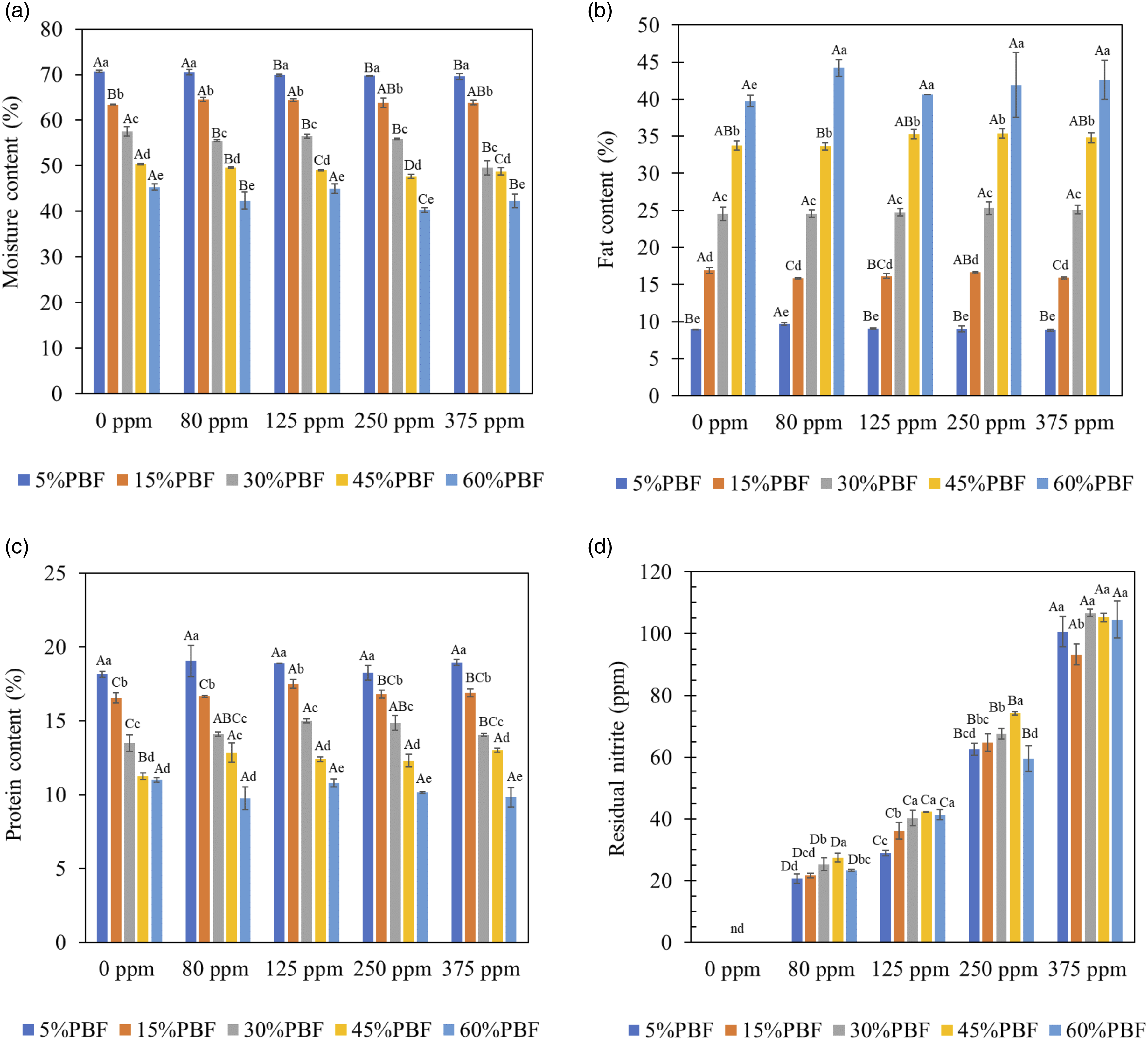
Understanding how variations in meat composition, especially protein levels, affect sausage characteristics is crucial for interpreting NIR spectra. Higher meat content typically translates to greater water retention and a more desirable moist and appealing texture, which are reflected in specific features of the NIR spectra. 24 Conversely, excessive water content or insufficient protein can lead to undesirable qualities like a rubbery or spongy texture and altered NIR patterns. This relationship is further supported by studies incorporating meat substitutes like bean meal and lupin flour.25–27 For example, Dzudie et al. 25 observed a reduction in both moisture and protein content, and concomitant changes in NIR spectra, when substituting up to 10% beef with bean meal. Similarly, Leonard et al. 26 reported decreased protein content and altered NIR patterns indicative of water distribution and texture changes when replacing beef with hydrated lupin flour (0%–36%). In our study, the observed variations in moisture, fat, and protein content due to changing pork back fat and sodium nitrite levels (Figure 1) are likely to be reflected in specific NIR spectral features. Examining these features in relation to sausage characteristics can provide valuable insights into the underlying compositional and textural properties.
While the importance of nitrite for color, flavor, and safety in sausages is undisputed, its residual content raises concerns due to the potential formation of carcinogenic nitrosamines. Notably, the amount of meat used indirectly influences this risk. Lower meat content can lead to less myoglobin available to react with nitrite, potentially resulting in higher residual nitrite levels.28,29 The effect of meat quantity on residual nitrite levels is primarily related to dilution. Adding more meat to the sausage formulation dilutes the overall concentration of nitrite in the mixture. As shown in Figure 1(d), the residual nitrite levels in the final sausages may appear lower due to the greater volume of meat present (lower pork back fat amount). However, other factors also influence residual nitrite levels, such as the initial amount added, the processing conditions (including pH and temperature), and the interaction of nitrite with other sausage components like fat and protein.30,31 Nitrite can bind to various compounds during processing, affecting its availability for curing and subsequent levels in the finished product. 30 As Choi et al. 31 attributed, the initial decrease in residual nitrite content could result from thermal treatment at pasteurization temperature and reactions with meat compounds like myoglobin, proteins, and lipids. Andrée et al. 32 have reported that assuming an estimated addition of 80–100 mg ppm, only about 11%–14% of the added nitrite will be found in the cured meat product. In our current research, the initial nitrite addition falls within the range of 80 to 250 ppm, resulting in sausages containing no more than 80 ppm of residual nitrite, thus satisfying the established standards set by the Thailand Ministry of Public Health. 6 Understanding these factors influencing nitrite residue is crucial for accurate prediction and interpretation of NIR spectra in relation to sausage composition.
Near infrared spectroscopy spectral features
Figure 2(a) and (b) showcase the raw and MSC-pretreated NIR spectra of 100 internally produced chicken emulsified sausage samples (680–2500 nm). MSC effectively removes baseline variations due to physical attributes, revealing pronounced features associated with key compositional elements, particularly moisture, proteins, and fats. The prominent noise observed in the 1900-2500 nm region likely arises from several factors: limited penetration depth of light at these wavelengths, leading to weaker signal intensity, and inherently higher absorption by various sausage components. This absorption amplifies noise fluctuations, including scattering phenomena like Mie scattering from fat globules and potential localized variations in fat or water content within the homogenized matrix. Despite these noise challenges, the observed NIR features demonstrate excellent alignment with previous reports on various sausages, highlighting the remarkable sensitivity of NIR analysis to compositional variations in chicken sausages.11,12,33 This sensitivity stems from the combined influence of factors like fat content, protein levels, and the proportion of water bound to macromolecules, as documented by Chung et al.
34
and Wold et al.
35
For example, increased fat content can be discerned through altered absorption peaks associated with specific fatty acid profiles, offering the potential for NIR analysis to differentiate types of fats and quantify their presence in chicken sausages. This opens exciting avenues for further exploration and quantification of chicken sausage composition, particularly by leveraging advanced data analysis techniques like chemometrics and multivariate analysis alongside sophisticated spectroscopic models. Such refined interpretation would facilitate extracting detailed information about fat distribution, protein types, and moisture levels within the sausages, ultimately unlocking doors for more precise quality control and product development in the chicken sausage industry. NIR spectra of calibration set (100 internally produced) emulsified sausage samples: (a) raw spectra, (b) spectra after MSC pre-treatment, and (c) absorbance spectrum of sodium nitrite.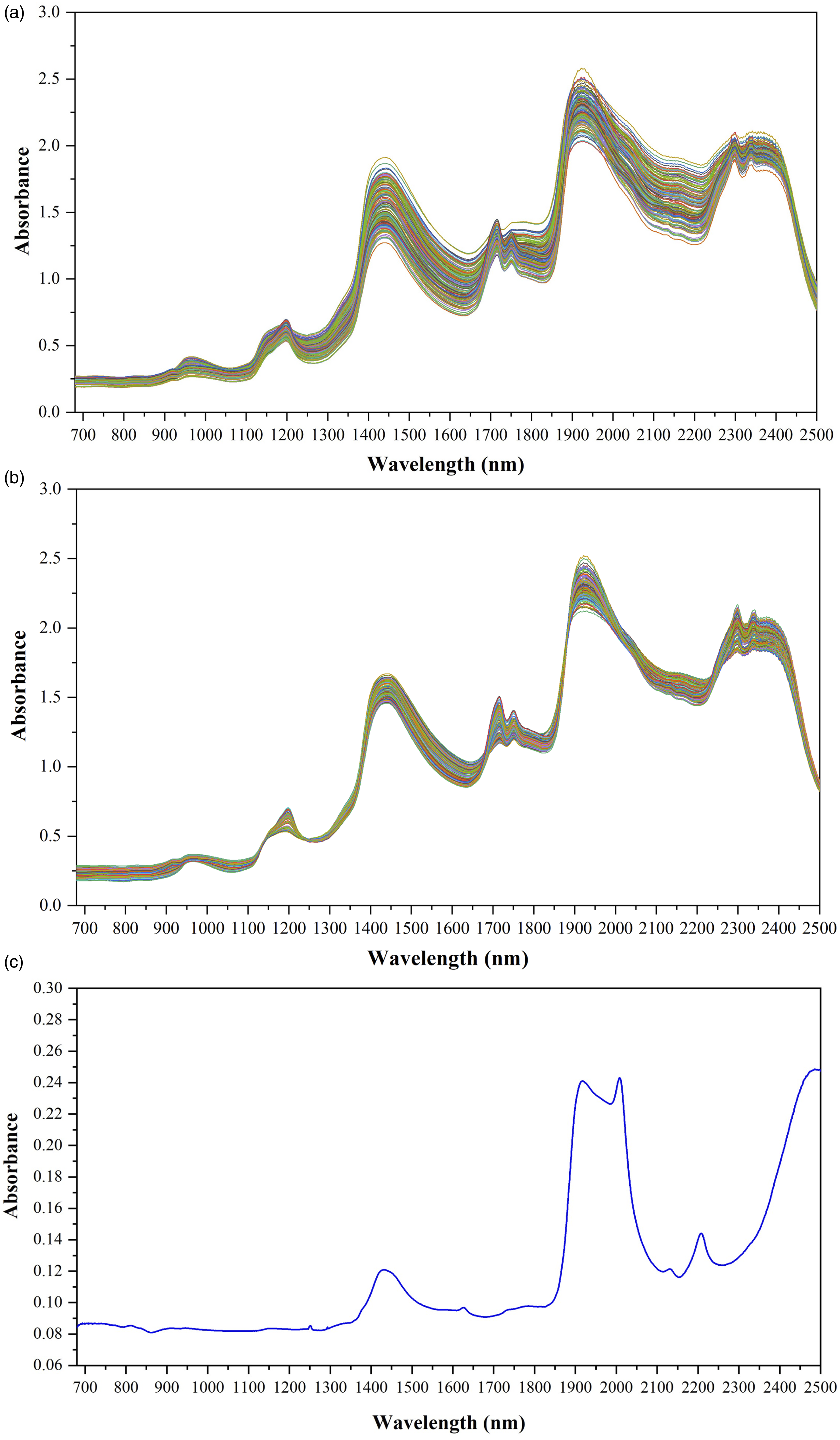
Moisture constituted the major component of the sausages, reflecting its prominent absorption throughout the NIR region. Specific bands at 980, 1450, and 1940 nm corresponded to OH second and first overtone stretch, and OH bend second overtone, respectively, directly highlighting water content within the samples.36,37 However, the absorption at 980 nm also encompasses double-frequency vibration of the NH group, potentially influenced by both water and the presence of various nitrogen sources like amino acids, proteins, and nitrite.38–41 Notably, Jamshidi and Yazdanfar 41 suggested that NIR measurements of nitrite may predominantly detect NH absorbance.
Beyond moisture, the broad absorption region between 1400 and 1619 nm likely results from the combined influence of several factors: the first overtone of OH stretching associated with moisture, the first overtone of CH and CH2 stretching in fat, and the first overtone of symmetric and asymmetric NH stretching in proteins.16,42 While the first overtone of NH stretching in proteins typically occurs around 1500 nm, this peak was somewhat obscured and less prominent in our sausage samples, likely due to their high moisture content. 43 Additional bands associated with fatty acids and fat composition were evident around 1200 nm (CH second overtone), 1726 and 1760 nm (CH first overtone), and 2308 and 2335 nm (CH combination and deformation in CH2 group), as described by Williams. 44
The pure nitrite spectrum was acquired by scanning sodium nitrite (98%, KemAusTM, Australia) with a reflectance near infrared spectrometer. As shown in Figure 2(c), the spectrum exhibits characteristic peaks at 1430, 1627, 1917, 2010, 2132, and 2208 nm, consistent with literature reports on nitrite.45,46 These peaks arise from stretching and bending vibrations within the nitrite molecule. While the exact wavelengths can vary due to instrumental factors, sample preparation, and nitrite concentration, their absence in Figure 2(a) and (b) suggests low nitrite levels in the sausage samples, potentially masked by the significant water signal. 47 Further analysis demonstrates that solutes like sodium nitrite impact the near infrared (NIR) absorption of water molecules. Upon dissociation in solution, sodium nitrite forms hydronium (H+) and nitrite (NO2-) ions, which can perturb the NIR water band, particularly in the 2200–2300 nm region.48,49 This phenomenon forms the basis for NIR-based determination of nitrite concentration in various food products, including processed meats, fish, and vegetables.50–52
The MSC-pretreated NIR spectra of the sausages (Figure 3) exhibit similar peak patterns, but their intensities vary. Specifically, absorption peaks at 1200, 1726, 1760, 2308, and 2335 nm, associated with fat, increase in intensity with higher pork back fat content. Conversely, a prominent moisture peak around 1450 nm shows a noticeable decrease in intensity, reflecting a reduction in moisture content with increasing pork back fat content. This likely arises from water displacement by fat as the fat content increases.
53
While smaller water peaks exist at 980 and 1940 nm, they are less sensitive to moisture changes due to their origin as weaker overtones (harmonics of the fundamental vibration) and potential influence from other factors like fat and protein.
54
Representative spectra of emulsified sausage samples at different pork back fat (PBF) levels (0 ppm ingoing sodium nitrite).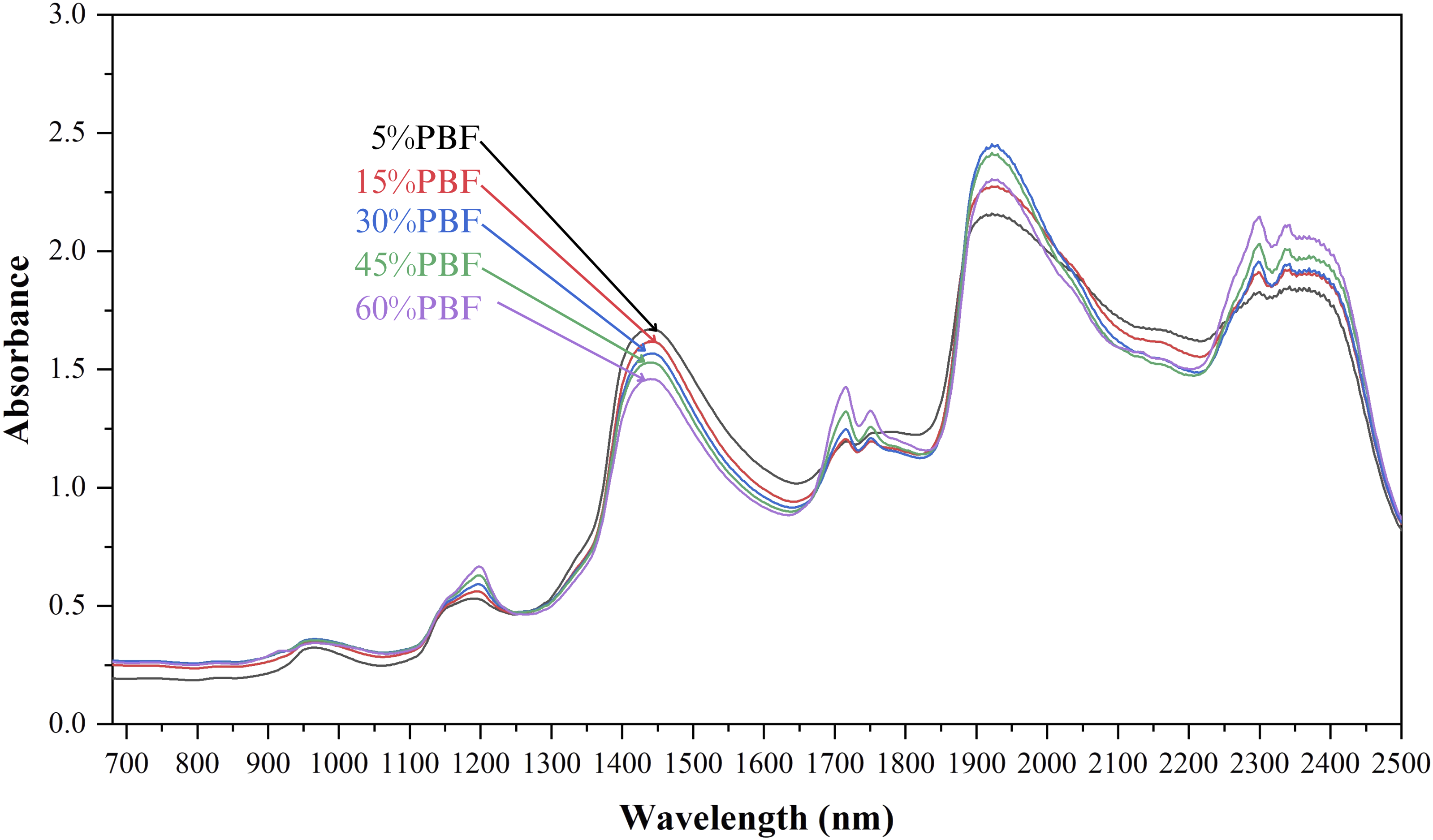
Figure 4 reveals a subtle shift in color shades towards lighter tones, with L* values significantly increasing (p < 0.05) from 78.49 to 81.30 (data not shown), alongside potentially smoother textures for sausages with higher pork back fat (PBF) levels. This visual lightening directly aligns with the increasing intensity of fat-related peaks in the NIR spectra, likely arising from the enhanced scattering of light by fat particles, particularly affecting shorter wavelengths and contributing to the perceived brightness of the sausages. This observation is consistent with the findings of Sinha and Roy,
54
who also reported a positive correlation between fat content and L* values in meat products. Similarly, Wold et al.
55
observed that increased fat content led to lighter and smoother appearances in sausages analyzed using NIR spectroscopy. Emulsified sausage samples with different pork back fat (PBF) levels (0 ppm ingoing sodium nitrite).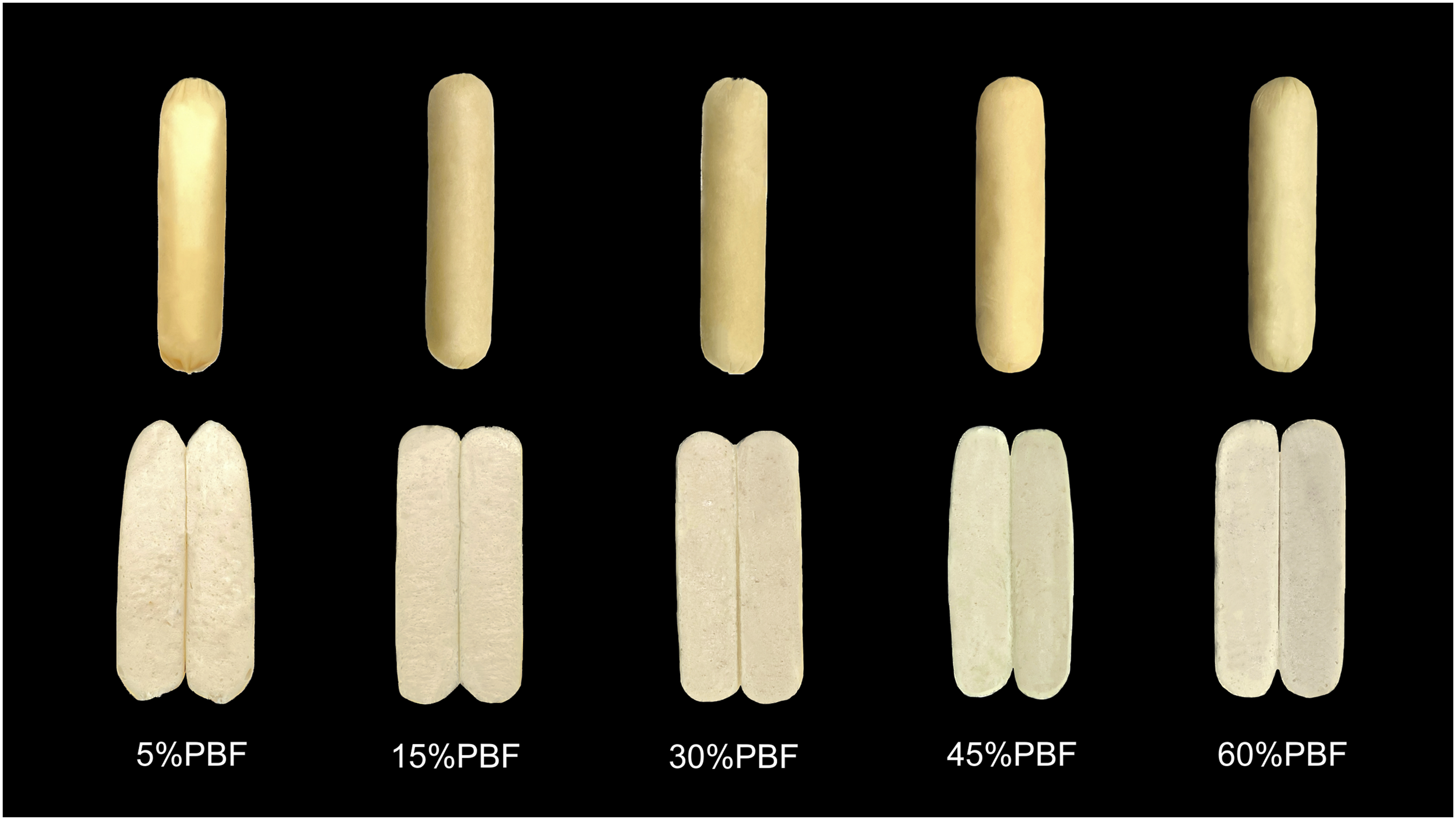
Near infrared spectroscopy calibration results
Chemical compositions of emulsified sausage samples within the calibration and prediction sets.
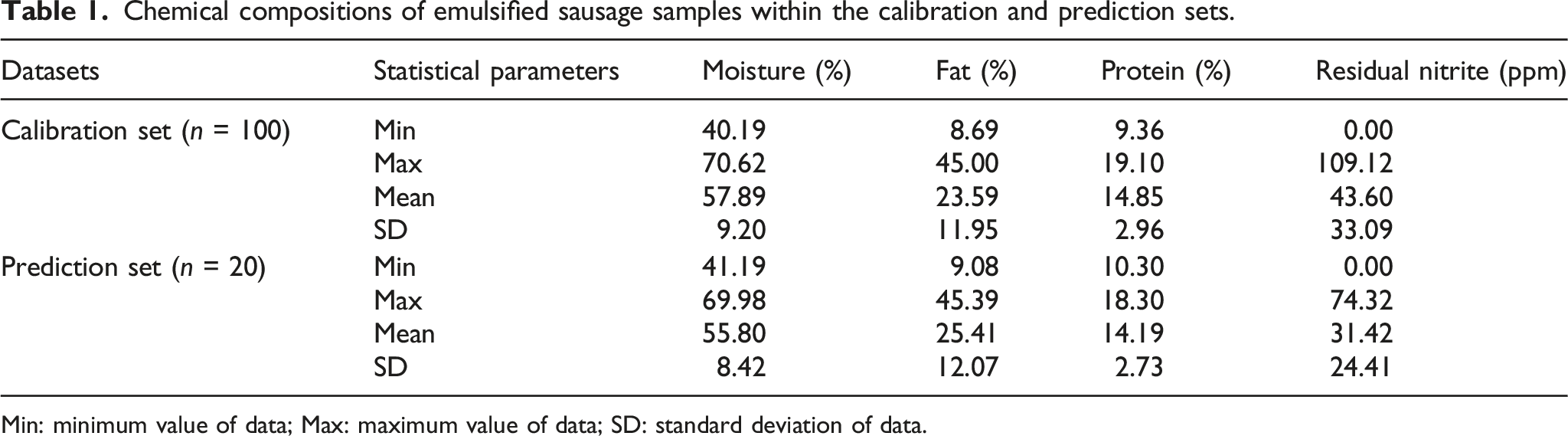
Min: minimum value of data; Max: maximum value of data; SD: standard deviation of data.
Summary statistics for the PLS calibration and prediction models.
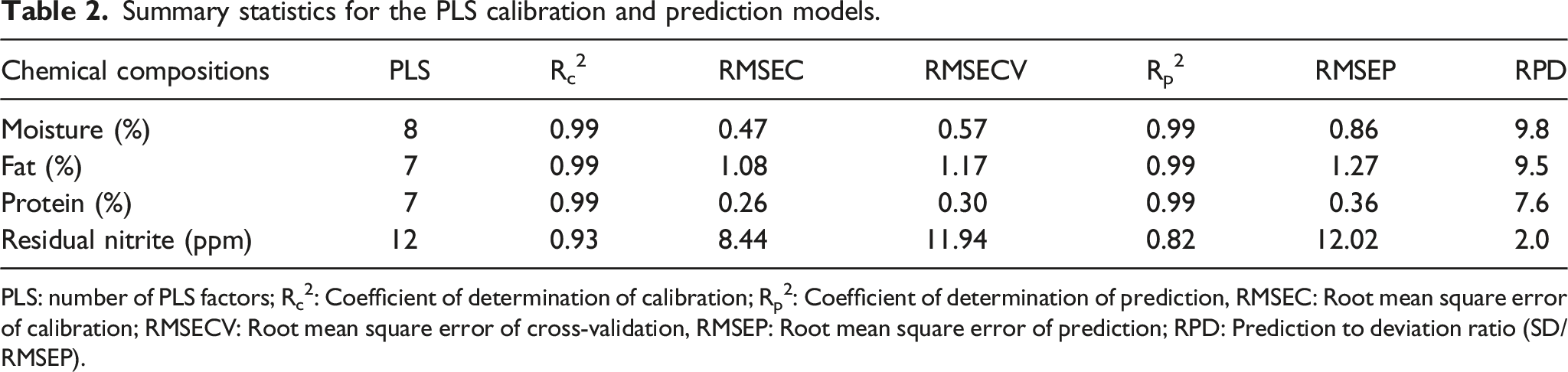
PLS: number of PLS factors; Rc2: Coefficient of determination of calibration; Rp2: Coefficient of determination of prediction, RMSEC: Root mean square error of calibration; RMSECV: Root mean square error of cross-validation, RMSEP: Root mean square error of prediction; RPD: Prediction to deviation ratio (SD/RMSEP).
The results showcase exceptional performance for the developed PLS models across all four analyzed constituents: moisture, fat, protein, and residual nitrite. This is evidenced by high R2 and RPD values, indicating their high predictive accuracy for the chemical composition of emulsion-type sausages. These R2 values align well with previous studies utilizing NIR for predicting chemical compositions in meat products.
While high RPD values (>3 for moisture, fat, and protein) suggest potentially reduced sensitivity to homogenization variations, they do not conclusively prove insensitivity. Further studies specifically testing the impact of varying homogenization levels on model performance are necessary for conclusive confirmation. Exploring additional metrics like standard deviation ratios (SDRs) and prediction repeatability across different sample preparation levels could provide further insights into model robustness.
The achieved RPD values suggest strong potential for practical applications, as defined by Conzen 38 : RPD >3 for screening, RPD >5 for quality control, and RPD >8 for advanced analytical tasks. The extraordinary RPD values for moisture and fat (both >9) qualify them for all analytical tasks, while the protein RPD of 7.6 falls within the range suitable for screening and basic quality control. Its slightly lower RPD compared to moisture and fat (7.6 vs 9.8 and 9.5) suggests further investigation might be needed to optimize its accuracy for advanced quality control tasks. This could involve exploring strategies like data augmentation, feature engineering, or model architecture refinement. The RPD for residual nitrite (2.0) falls within the screening range, but its higher RMSEP (12.02 ppm) reflects the inherent challenges in measuring it using NIR compared to the other constituents.
The difference between the RMSECV and the RMSEP of the prediction set was minimal for all constituents, ranging from 0.06% to 0.29% for moisture, fat, and protein, and 0.08 ppm for residual nitrite. This small difference indicates the robustness of the developed models, suggesting their accuracy in applying prediction equations to independent samples. As mentioned earlier, the acceptable difference between RMSECV and RMSEP depends on the application. Generally, a difference of less than 10% is considered acceptable, with even lower percentages desired for high-accuracy tasks. 57
The performance of the developed PLS models was assessed by analyzing the root mean square error of prediction (RMSEP) values, which were relatively low for all four constituents listed in Table 2: moisture (0.86%), fat (1.27%), protein (0.36%), and residual nitrite (12.02 ppm). These results are comparable to those reported in previous studies utilizing NIR for prediction in various meat products, such as Tantinantrakun et al. 58 on intact chicken breast meat (RMSEP = 0.03%, 0.44%, and 0.28% for moisture, fat, and protein, respectively), Prieto et al. 59 on intact beef meat (RMSEP = 0.40%, 0.50%, and 0.29% for moisture, fat, and protein), da Silva et al. 60 on intact fermented sausages (RMSEP = 0.20%, 0.27%, and 0.17% for moisture, fat, and protein), and Sivrikaya et al. 61 on intact cooked sausages (RMSEP = 0.19%–0.27%, 0.18%–0.26%, and 0.17%–0.25% for moisture, fat, and protein).
The RMSEP for residual nitrite, while within the screening range, was slightly higher at 12.02 ppm compared to the other constituents. This reflects the inherent challenges associated with measuring residual nitrite using NIR compared to the relatively more straightforward measurements of moisture, fat, and protein. Notably, despite using a smaller dataset (n = 100) compared to Tantinantrakun et al. 62 (n = 200), our PLS model achieved a lower RMSEP (12.02 ppm) for residual nitrite compared to their NIR-HSI model (15.60 ppm). This suggests that our model may be more efficient and potentially generalizable to a broader range of samples. This might be due to the smaller dataset used in our study (n = 100) compared to theirs (n = 200), suggesting potential for even greater accuracy with larger datasets in future studies.
Figure 5 visually demonstrates the strong correlation between measured and predicted values for all four constituents, further confirming the model predictive accuracy. This high level of agreement is further supported by paired samples t-tests, which revealed no statistically significant differences (p = 0.617 for moisture, 0.444 for fat, 0.681 for protein, and 0.099 for residual nitrite) between measured and predicted values. These results provide strong evidence for the model reliability and its ability to accurately predict the key constituents of emulsified sausages. Therefore, this study demonstrates the remarkable accuracy of PLS models in predicting key constituents of emulsified sausages, empowering manufacturers with real-time monitoring capabilities and enabling precise control over composition during production. Consequently, compliance with quality standards and adherence to consumer preferences for specific nutrient profiles become effortless, paving the way for consistent high-quality sausage production. Furthermore, the potential for process optimization through continuous adjustments based on predicted constituent levels presents exciting opportunities to minimize waste, maximize yield, and enhance overall product consistency. Scatterplot of prediction results for (a) moisture, (b) fat, (c) protein, and (d) residual nitrite (the diagonal line is 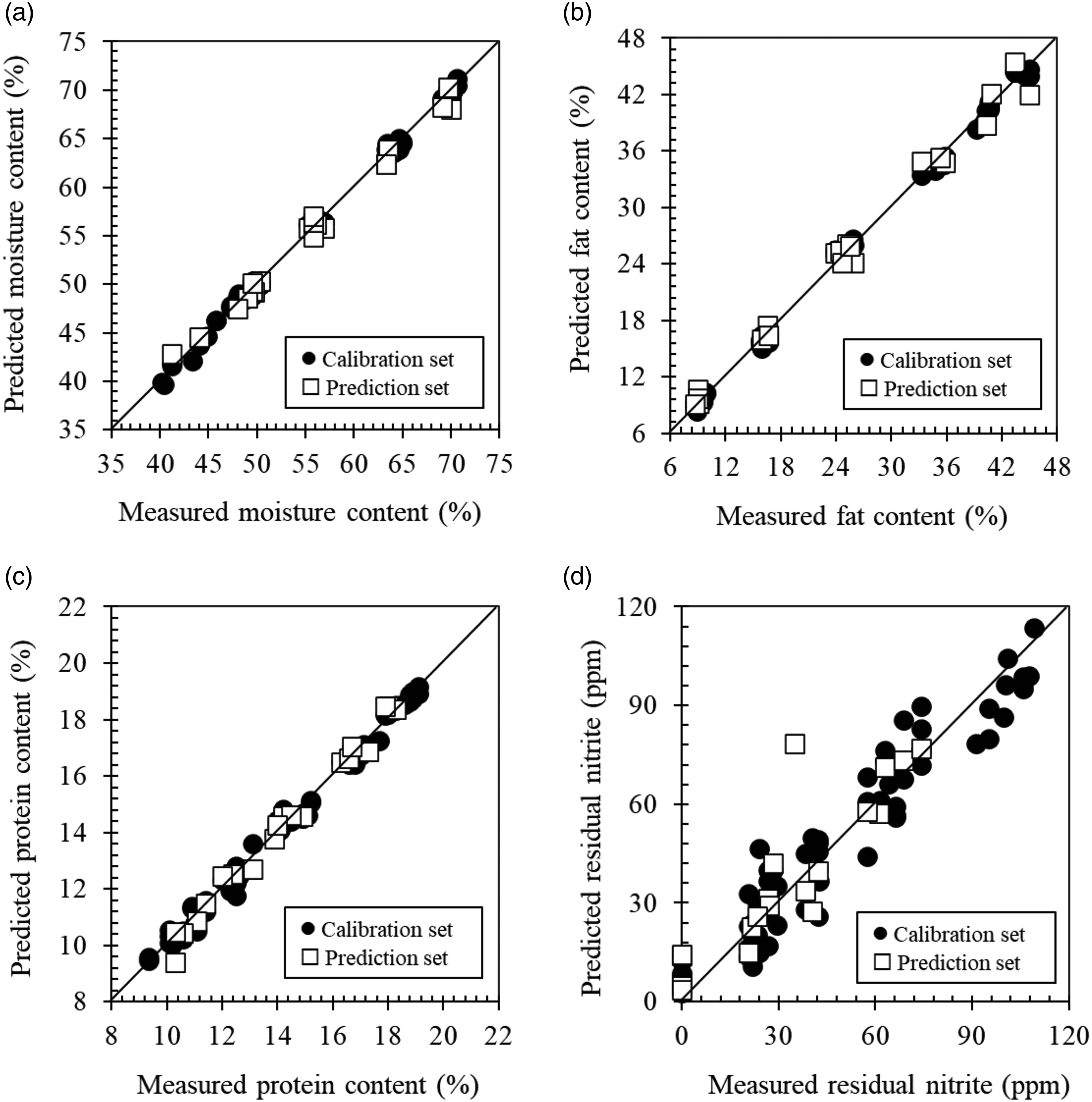
Conclusion
Ensuring consistent quality and adherence to strict regulatory requirements are crucial aspects of the sausage industry. This research presents NIR spectroscopy as a transformative tool with the potential to significantly impact these areas. By enabling rapid, non-destructive analysis of key chemical constituents (moisture, protein, fat, and residual nitrite), NIR offers a versatile solution for comprehensive quality control throughout the sausage production chain.
Our study utilized diverse samples of emulsified chicken sausages with varying pork back fat and sodium nitrite levels. Robust pre-treatment and PLS calibration models yielded exceptional predictive accuracy for all components, demonstrated by high RPD values and minimal discrepancies between RMSECV and RMSEP. Furthermore, the paired samples t test confirmed the technique’s reliability with no statistically significant differences between measured and predicted values.
This research surpasses current industry standards and builds upon previous findings, showcasing the immense potential of NIR for revolutionizing quality control practices. The developed models offer several advantages, including: • Enhanced accuracy and speed compared to conventional methods. • Non-destructive analysis, eliminating the need for sample preparation. • Potential for real-time monitoring and process optimization. • Reduced waste and improved sustainability through precise ingredient control.
These advancements contribute to ensuring regulatory compliance, optimizing production efficiency, and developing new products with enhanced safety and quality. Ultimately, NIR paves the way for a future of consistent, high-quality sausage production that meets evolving consumer preferences and adheres to stringent regulations.
Footnotes
Acknowledgements
We are grateful to the Kasetsart Agricultural and Agro-Industrial Product Improvement Institute (KAPI), Kasetsart University, Thailand, for providing us with the Spectra StarTM 2500 NIR instrument. We would also like to express our sincere gratitude to Dr. Kraireuk Ngowsuwan for his invaluable assistance in preprocessing the NIR spectra using chemometric techniques, which proved instrumental in developing our PLS models.
Declaration of conflicting interests
The author(s) declared no potential conflicts of interest with respect to the research, authorship, and/or publication of this article.
Funding
The author(s) disclosed receipt of the following financial support for the research, authorship, and/or publication of this article: This work was financially supported by the Kasetsart University Research and Development Institute (KURDI), Bangkok, Thailand through Fundamental Fund-Basic Research Fund 2022: Project FF(KU) 6.65.
