




Abstract
This study was conducted to evaluate the ability of near infrared (NIR) spectroscopy to estimate oil content, and per cent of cake, resin and residue in beauty leaf tree (Calophyllum inophyllum L.) kernel samples. Fruits were collected from various geographical locations of tropical Australia (from Rockhampton to Darwin) and air dried before the kernels were manually separated from the fruits. Kernel samples were oven dried, crushed (5–10 mm) and their NIR spectra collected using a Fourier transform (FT) NIR instrument where the same batch of kernels were used to extract oil using a screw press. Calibration models between the NIR spectra and reference data were developed using partial least squares (PLS) regression. The cross-validation statistics including the coefficient of determination (r2) and standard error in cross validation (SECV) were 0.83 (SECV: 2.39%) for oil content, 0.89 (SECV: 2.81%) for cake, 0.88 (SECV: 1.92%) for resin and 0.79 (SECV: 2.15%) for residue, respectively. This research showed that NIR spectroscopy can be used as an alternative, faster and low-cost technique to predict oil content, per cent of cake, resins and residues in various genotypes of beauty leaf tree. Further studies should be carried out to increase the sample size and chemical variation, as well as to evaluate different methods of oil extraction (e.g., solvent extraction) to improve the reliability of the calibration models.
Introduction
Botanically, the beauty leaf tree (Calophyllum inophyllum L.) fruit is a ‘drupe’, as it contains an outer layer of soft tissue, middle layer of soft shell plus spongy tissue, and an inner layer defined as kernel where the kernel has the highest content of oil.1,2 However, in the literature, the kernel is mistakeably referred to as seed or nut.1,2 The seed includes both the kernel and the soft shell along with the spongy tissue (Figure 1, Panel A). It is therefore appropriate to use the term ‘kernel’ (as opposed to seed or nut) when referring to beauty leaf tree as the seed is rarely used during oil extraction.1,2 The fatty acid methyl esters and blends originating from the oil of these seeds meet most of the biodiesel requirements in the United States (ASTM D 6751), and European Union (EN 14,214).1,2 Therefore, its economic importance as alternative and sustainable source of feedstock to produce biofuel in tropical and subtropical regions.1,2 Kernel and shell of in the beauty leaf tree (Calophyllum inophyllum L.) seed samples analysed. Panel A. Panel B. layers of oil, resin and residue of the beauty leaf tree (Calophyllum inophyllum L.) seed samples after centrifugation.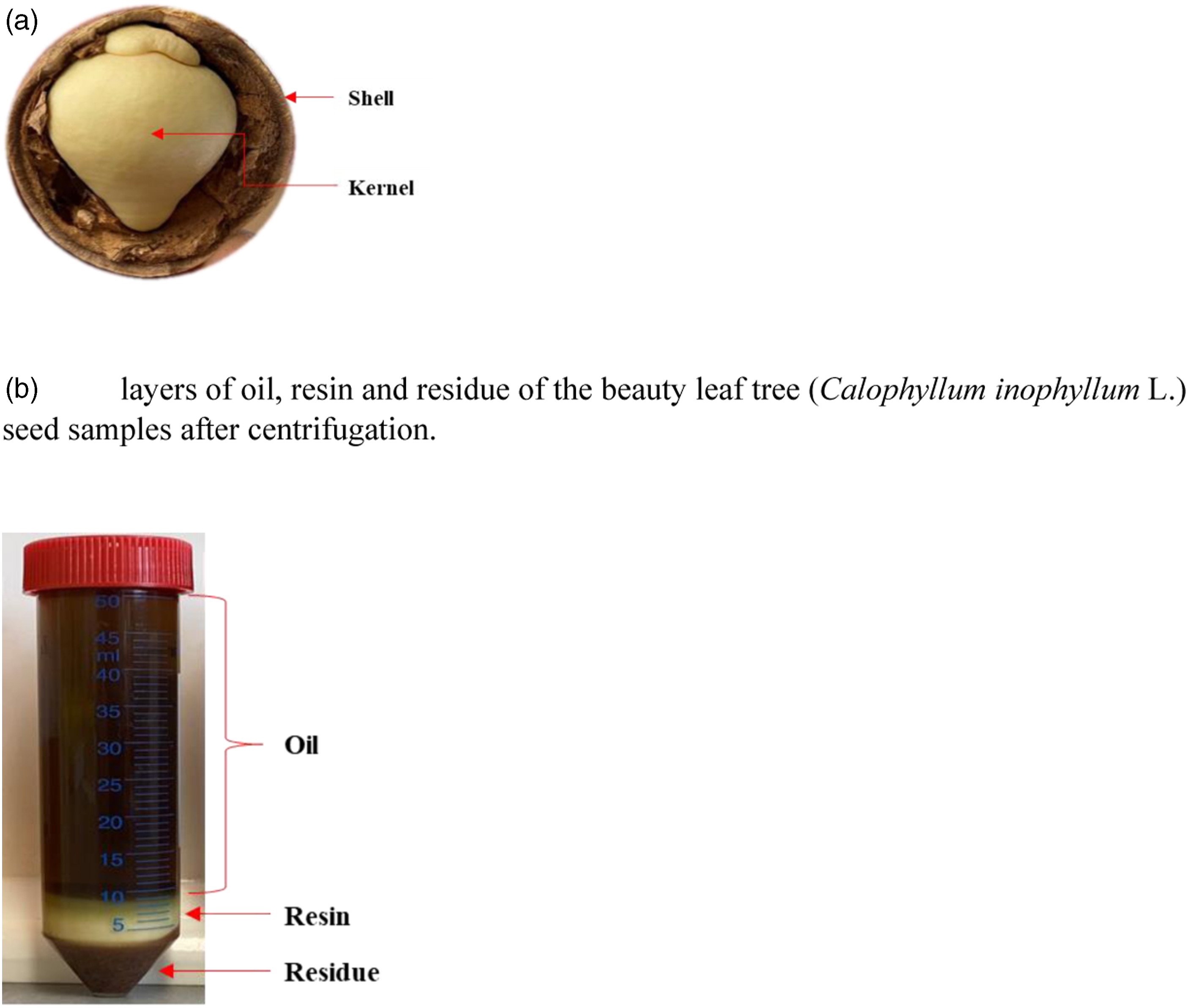
During the processing of beauty leaf tree fruits, the kernel is separated from the fruit either manually or mechanically.1,2 The mechanical separation involves the drying of the kernel to a desirable moisture content (approximately 15%) where a screw press is used to extract the oil. In recent years, other methods have been evaluated and utilized to extract oil such as solvent extraction, aqueous enzymatic oil extraction (AEOE), microwave assisted extraction (MAE), accelerated solvent extraction (ASE), and supercritical fluid extraction.1–6 However, these methods are time consuming, laborious, and involve the use of harmful chemicals. 4 Furthermore, these methods are also destructive and cause irreversible damage to the kernel samples. 7 Hence, these methods are not suitable to either screen different genotypes for breeding purposes or for tree improvement programs which require retention of the kernel for future propagation.1,2
Rapid, non-destructive techniques such as near infrared (NIR) spectroscopy are proposed and used to estimate oil content, fatty acids and lipids in different type of samples (e.g. rapeseed, safflower, olive oil, corn or maize).8–13 This method is fast, simple, inexpensive, does not require costly hazardous chemicals, and uses low manpower. 14 Most importantly, NIR spectroscopy is a non-destructive technique and could be utilised to predict oil content in a large number of samples (e.g. intact seeds).8,9 NIR spectroscopy has been widely used in oilseed research for rapid estimation of oil, fatty acids, and other quality properties (e.g. phenolic compounds, moisture, etc.).4,8–13,15,16
NIR spectroscopy works on the principle of irradiating the samples with NIR light (780 to 2500 nm) and recording the reflected or transmitted light to quantify the organic compounds present in the sample.14,15,17 For the most part, the reflected, or absorbed NIR spectra originates from three hydrogen containing chemical bonds, viz., N-H (found in protein), C-H (generally found in oils and fats) and O-H (in water).18,19 To extract the information contained in the spectra, different chemometric methods and techniques are applied.20–22 Various regression models or algorithms have been used to develop relationships between the reference data and the absorbed spectra (e.g. calibration development).20–22 Techniques such as partial least squares (PLS) regression and principal component regression (PCR) are commonly used.20–22 Once a calibration model is developed, the NIR is used to predict the corresponding target parameter from the spectral data of unknown samples.20–22
Modern instruments have incorporated Fourier-Transformation (FT) to NIR instruments (or FTNIR) to reduce the signal to noise ratio.14,19,23 The use of FTNIR spectroscopy has been reported for the prediction of oil content, fatty acids, moisture, and protein in different plant species such as Brassica napus,24–26 Camelina sativa, 27 Carthamus tinctorius, 23 Olea europaea, 10 Glycine max (soyabeans), 28 Paeonia sect Moutan, 13 Sesamum indicum, 29 Silybum marianum, 7 and Theobroma cacao 30 and Zea mays. 4 However, no studies have been conducted or reported on the utilization of FTNIR spectroscopy to analyse beauty leaf tree samples.
The present study aims to assess the potential of using FTNIR spectroscopy combined with chemometrics to estimate oil content, and the per cent of cake, resin and residue of beauty leaf tree (Calophyllum inophyllum L.) kernel samples that were collected from various biogeographic regions of tropical Australia.
Materials and methods
Samples and sample preparation
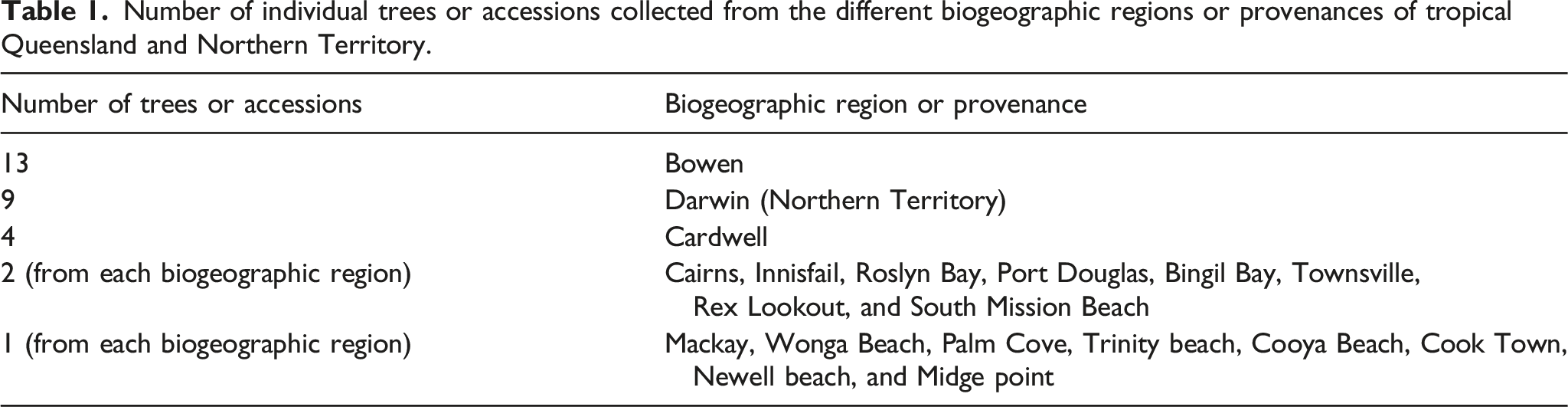
Number of individual trees or accessions collected from the different biogeographic regions or provenances of tropical Queensland and Northern Territory.
Oil extraction
Oil extraction was carried out using a ‘Komet’ screw press (IBG Monforts Oekotec GmbH & Co. KG, Germany). Initially, the oil press was pre-heated for 5–8 min by attaching the metal heating ring onto the end of the shaft. When the temperature of the shaft reached around 150°C, the heating ring was removed, and the screw press was turned on and the kernels were manually fed through the hopper. The screw conveyor with its forward rotary motion pressurised the kernels and this facilitated squeezing of the oil from the perforated section of the barrel. Then, the squeezed oil was collected in an aluminium tray and transferred to a plastic container. The press cake was pushed as a ribbon, and this was collected separately. Some kernels, particularly those which had dried to below 10% moisture content were squeezed out of the barrel, as fine particles and mixed once with the oil. At the end of the process, the oil was collected from the aluminium tray and centrifuged to separate the oil, resin and residue (Figure 1, Panel B). The initial temperature of the expelled oil was around 90°C–95°C while the expelled cake was around 75°C–95°C. After extracting the oil from an individual accession, the screw press barrel was dismantled, and thoroughly cleaned with 70% ethanol to prevent sample cross-contamination. The extracted oil was centrifuged for 30 min at 1000 rpm to separate oil from the residues that were deposited at the bottom. After centrifuging, a layer of resin was observed between the oil and residue (see Figure 1, Panel B).
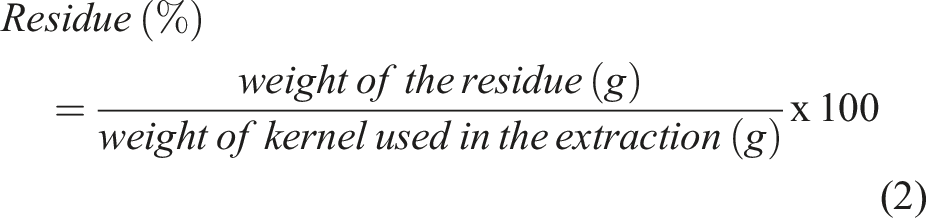
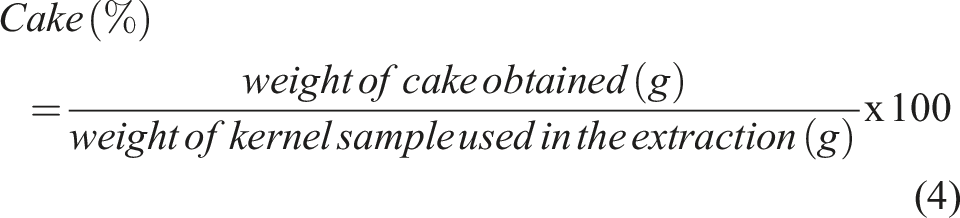
The fractions namely oil content (equation (1)), residue (equation (2)), resin (equation (3)), and cake (equation (4)) were separated manually by pipetting, where the weights of each fraction were recorded, and the content as well as the per cent of each of the constituents were calculated using the equations below.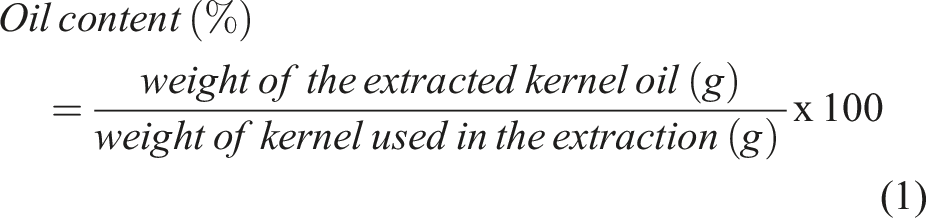

Fourier transformation near infrared spectroscopy
The NIR spectra of the air-dried kernel samples were acquired using an Antaris II Near Infra Red Analyzer (Nicolet, Thermo Electron Corporation, Madison, WI, USA) equipped with a indium gallium arsenide (InGaAs) photodiode detector. Before the NIR spectra were acquired, the samples were kept overnight in an oven at 65°C and then transferred to a desiccator to minimise the effect of moisture. During each scan, the kernel samples (approx. 5 g) were placed in an auto-spinning sample cup and spectra acquired with the integrating sphere. Each sample was repacked and scanned three times. Each recorded spectrum of the sample was an average of 32 scans at 8 cm−1 resolution. The spectral data were acquired in absorbance mode with a wavelength ranging from 4000 to 10,000 cm−1. The RESULT 3 SP8 Build 60 software (Thermo Fisher Scientific Inc., USA) was used to control the instrument and to record the FTNIR spectral data. After scanning, the sample cup was cleaned using isopropyl alcohol and dried using paper wipes (Kimwipes®, Kimberley-Clarks worldwide Inc., USA) to prevent cross-contamination between samples.
Spectral data processing and analysis
The NIR data was exported in Excel format (*.xlsx) into The Unscrambler (version X, CAMO, Norway) for data analysis and pre-processing. The NIR spectra were pre-processed using the Savitzky-Golay second derivative (21 smoothing points and second polynomial order) prior to spectra interpretation and chemometric analysis. 33 Partial least squares (PLS) regression models were developed between the NIR and reference data for the prediction of oil content, per cent of cake, resin and residue in the beauty leaf tree samples. The calibration set was used to develop the PLS regression models using full (leave one out) cross validation.20–22 The sample set was split into two groups, namely calibration (n:100) and validation (n:50) using the Kennard-Stone (KS) algorithm where replicates were distributed between the calibration and validation sets. 34
Quantitative PLS models were evaluated using the coefficient of determination in cross validation (r2CV), the standard error in cross validation (SECV), bias, slope and residual predictive deviation (RPD). RPD is the ratio of standard deviation (SD) and SECV and was used for testing the reliability of the calibration model.35,36 The RPD value for a given NIR calibration indicated how well the calibration models predict the reference data of the parameter evaluated.35,36 According to Williams 35 a RPD value higher than 3 is considered sufficient for screening.
Results and discussion
Descriptive statistics for oil content and percent of cake, resin and residue in the beauty leaf tree (Calophyllum inophyllum L.) kernel samples analysed and used to develop the calibration models (n = 100).
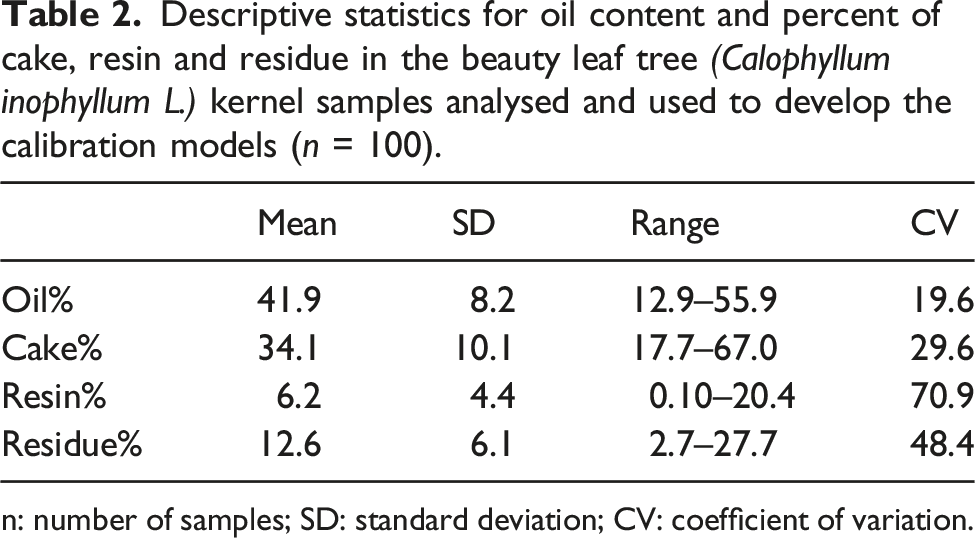
n: number of samples; SD: standard deviation; CV: coefficient of variation.
The average and SD of the second derivative FTNIR spectra of the kernel samples analysed is shown in Figure 2. The average FTNIR spectra showed three main absorbance bands between 8550 and 8200 cm−1 associated with C-H2 bonds, between 7200 cm−1 and 6900 cm−1 associated with O-H (water content) bonds and C-H (aromatic groups) bonds.
37
At 5816 cm−1 and 5669 cm−1 these bands are associated with C-H2 methylene groups.
37
The band at 5199 cm−1 is associated with O-H bands associated with water content, at 4863 cm−1 associated with N-H and CONH2 (e.g. protein content), at 4686 cm−1 associated with C-H and C=O combination bands of lipids, and at 4366 cm−1 and 4231 cm−1 associated with C-H combination bands of aromatic groups.
37
The main variation (SD) was observed in the wavenumber region between 6000 and 5590 cm−1 associated with differences in C-H, O-H and C=O bands, related to the content of oil in the kernel samples.
37
Average NIR spectrum and standard deviation of the second derivative of the beauty leaf tree (Calophyllum inophyllum L.) seed samples analysed samples analysed using near infrared spectroscopy.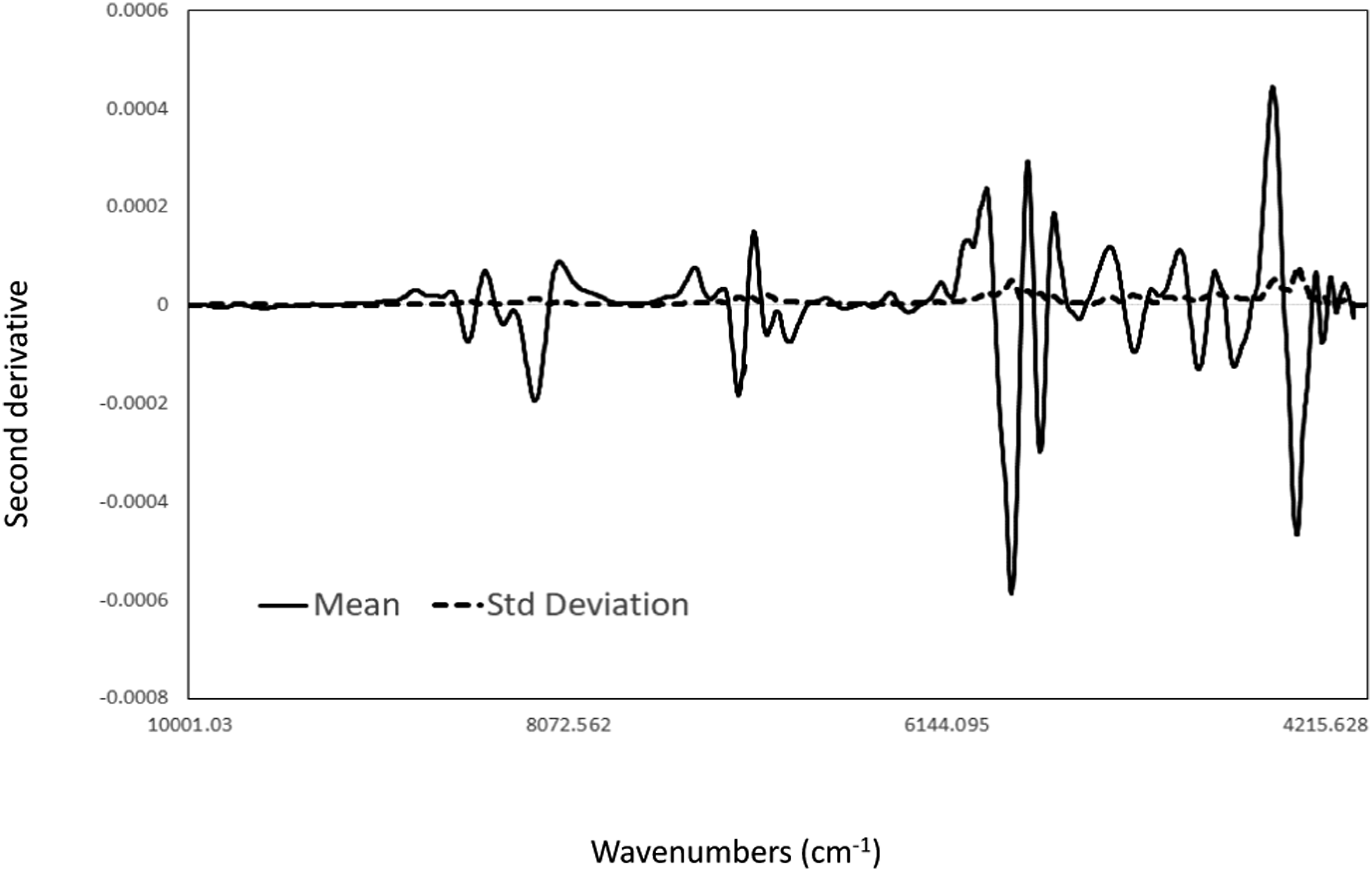
Cross validation statistics for the measurement of oil content and percent of cake, resin and residue in the beauty leaf tree (Calophyllum inophyllum L.) samples analysed using near infrared reflectance spectroscopy.
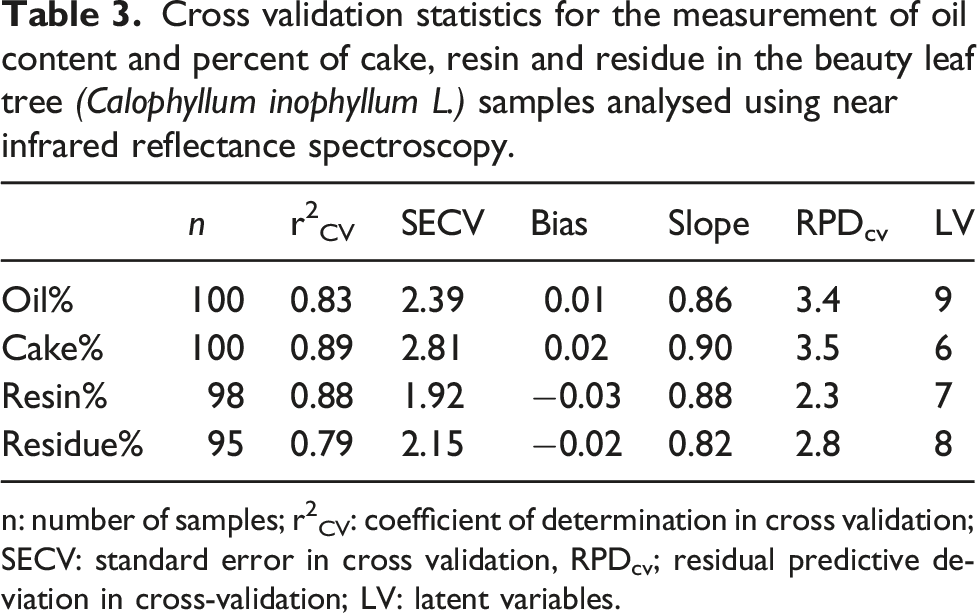
n: number of samples; r2CV: coefficient of determination in cross validation; SECV: standard error in cross validation, RPDcv; residual predictive deviation in cross-validation; LV: latent variables.
Prediction statistics for the measurement of oil content and percent of cake, resin and residue in the beauty leaf tree (Calophyllum inophyllum L.) samples analysed using near infrared reflectance spectroscopy (n: 50).
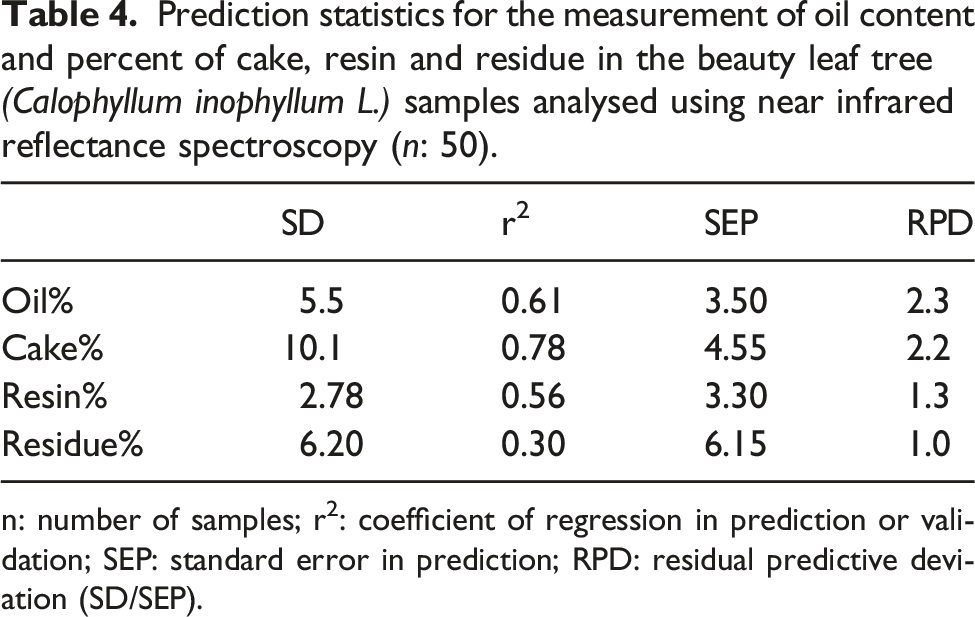
n: number of samples; r2: coefficient of regression in prediction or validation; SEP: standard error in prediction; RPD: residual predictive deviation (SD/SEP).
The NIR region comprises of the combination of overtones of the fundamental molecular vibrations absorbing in the IR region.37,38 It is well known that NIR is more sensitive to anharmonic vibrations, such as C‐H, N‐H and O‐H vibrations. 37 This information is used during the development of PLS regression models. Therefore, once the model is developed, the PLS loadings should be interpreted in addition to the calibration and prediction statistics. 20 Overall, the analysis and interpretation of the loadings obtained from the PLS calibration models can shed light on the main NIR wavenumbers or wavelengths used by the model to measure the chemical parameters in the set of samples analysed. 20 Beebe and collaborators 39 also indicated that the loadings might also help to detect unusual variables as well as assists in establishing intrinsic dimensionality of the data set.
Different loadings were observed for each of the PLS regression models developed and shown in Figure 3. The highest loadings were observed in the same NIR regions as those observed in the second derivative reported in Figure 2. However, the magnitude of each of the PLS loadings was different depending on the parameter measured (calibration development). Noticeable, the highest loadings for the measurement of per cent cake were inverse to those observed for the prediction of oil content and per cent of resin. The highest loadings for the measurement of percent of residue were also different and shifted from those observed for the prediction of oil content and per cent of resin. Partial least square loadings for the measurement of oil, residue, resin and cake percentage in the beauty leaf tree (Calophyllum inophyllum L.) seed samples analysed using near infrared spectroscopy.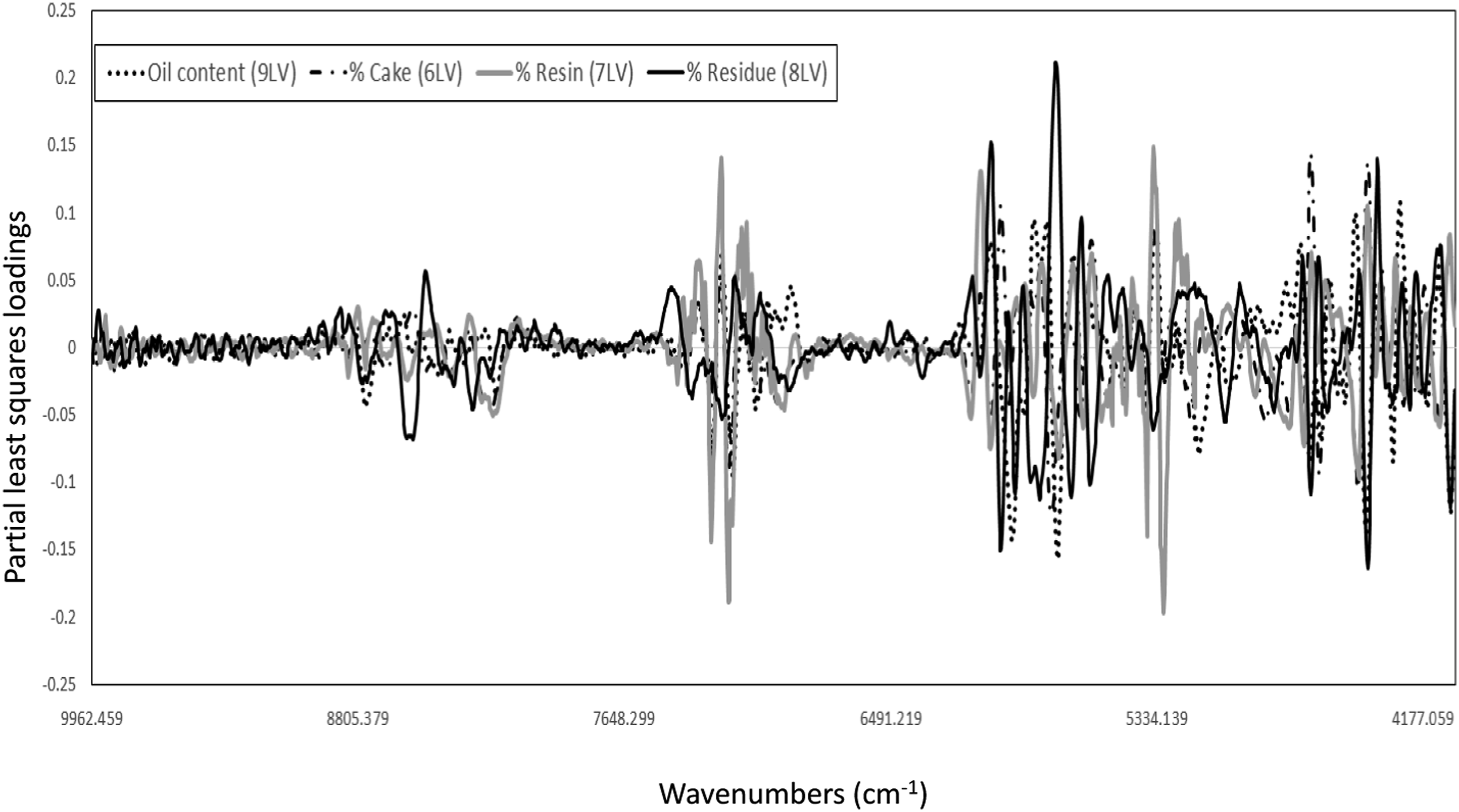
The poor cross-validation statistics for the prediction of percent of resins and residue can be explained for various reasons. The percent of residue varies between samples (accessions) depending on the conditions used of extraction in the screw press (e.g. whether the barrel is cold or hot, the pressure imposed via the quantities of the kernel packed into the hopper, among other). The release of residue particles also varies with the water content of the kernel samples. It is noted that seeds that contain less than 8% moisture are difficult to extract oil from (Ashwath N; personal communication) as they crumble in the screw and extrude through the tiny holes of the barrel. Since the kernel samples used in this study were stored for more than a year, and they were collected from the floor of the forest, it is possible that some of the samples had dried out to below 8% moisture content. Such kernels are likely to contain higher proportion of residue than those having between 10 and 15% moisture. Other issues such as pipetting of the oil and other fractions (e.g. moisture content) will also affect the calibration statistics.
The oil content, as well as the per cent of cake of the kernel samples are interdependent parameters and hence their prediction proved to be more reliable, than for the per cent of residue and resin. Although the calibration models may not be used for a precise analysis of the oil content in the kernel sample analysed, they can be used as rapid screening tool to identify trees that contain high, medium and low oil content. The screening of samples based on the non-destructive analysis of the kernel will be invaluable in plant breeding and selection, as they will equip the breeder with the ability to assess large number of seeds (genotypes or accessions) for seed oil content, with the view to selecting superior genotypes. This technique will also be invaluable in agronomic, ecological and phenological studies wherein the variations between kernels of different maturity stages, seasonal variations (e.g. temperature, rainfall) or agronomic conditions such as fertilizers, irrigation or salinity could be readily elucidated using this non-destructive method.5,40
Conclusion
This research showed that NIR spectroscopy can be used as an alternative, faster and low-cost technique to characterise oil content, per cent of cake, resins and residues in various genotypes of beauty leaf tree. Non-destructive determination of both oil content and per cent of cake of the kernel is of great significance in plant breeding, as the analysed kernel samples will be utilised in producing superior or adapted genotypes. These results can also assist to analyse and evaluate different phenotypes or accessions as well as agronomic responses of beauty leaf tree, as large number of kernels can be screened no-destructively at low-cost. Further studies should be carried out to increase the sample size and chemical variation, as well as to evaluate different methods of oil extraction (e.g. solvent extraction) to improve the reliability of the calibration models.
Footnotes
Declaration of conflicting interests
The author(s) declared no potential conflicts of interest with respect to the research, authorship, and/or publication of this article.
Funding
The author(s) received no financial support for the research, authorship, and/or publication of this article.
