




Abstract
Individuals formerly involved in armed groups are positioned in the victim–perpetrator binary by legal systems and societies. Media participates in this process and influences the relationship between law and society by reproducing or challenging legal and social designations. We assess the relationship between the International Criminal Court's (ICC) prosecution of Dominic Ongwen, a former child soldier in Uganda's Lord's Resistance Army (LRA), and media representations of Ongwen. We conduct a content analysis of 779 Ugandan, African, and international newspapers’ English-language articles published between January 2005 and October 2022. We find that media coverage focuses on Ongwen's adult roles in the group, including as an LRA leader, largely reproducing the ICC's portrayal of the accused. A minority of articles acknowledge a more complex status and increase in frequency once Ongwen's ICC trial is underway. An important faction challenges the ICC's narrative, with non-Africa-based media presenting a more complex depiction of Ongwen.
Keywords
Introduction
How societies and legal systems label individuals associated with armed groups influences where they are positioned in the victim–perpetrator binary. Media participates in this process and influences the relationship between law and society by producing, reproducing, or challenging the legal and social designations adopted by courts. This article explores the politics of representation through the labels that are applied to individuals who have an ambiguous and/or contested status in armed conflict: former child members of armed groups. In particular, we focus on the indictment and prosecution of Dominic Ongwen at the International Criminal Court (ICC) and examine to what extent media outlets reproduce or challenge the ICC's representation of Ongwen. This analysis is significant because scholars have argued that simplistic international legal conceptions—in particular of victimhood and of perpetration—are not representative of how violence and post-violence processes are experienced in reality by affected communities and individuals (Akenroye and Clarke, 2022).
Eleven years after his indictment, and following more than 4 years in court, the ICC found Ongwen guilty of 25 crimes against humanity and 32 war crimes committed between July 2002 and December 2005 while he was a senior member of the Lord's Resistance Army (LRA). The LRA is an anti-government militant group led by the charismatic Joseph Kony. The group initially adhered to an extremist Christian millenarianism; however, the motivations of both the group and its members are multifaceted (Vinci, 2007). The conflict between the LRA and the Ugandan government extends well beyond the period covered by Ongwen's trial, as the LRA's violence began in 1988 shortly after President Yoweri Museveni seized power. This conflict is unique in part due to the widespread recruitment of children into the LRA ranks. The LRA abducted at least 20,000 boys and girls over a period of 20 years, including Ongwen's abduction as a youth in the late 1980s (Kelly et al., 2016). The dual role of children as both victims and perpetrators is a key feature of LRA culture, structure, and command (Akhavan, 2005; Strandberg Hassellind, 2021).
The legacy of the extensive inclusion of children, many of whom reached the age of majority while associated with the LRA, is central to our research in two ways. First, the prevalence of child soldiering has been a challenge for post-conflict justice both in Uganda and at the ICC. Ongwen's indictment, prosecution, and sentencing spurred extensive debate and scholarship on complex perpetrators at the domestic and international legal levels. Second, Uganda is also the genesis of the “mediatization of child soldiers” through social media campaigns such as Kony 2012, which provided a singular framing of the LRA conflict (Karlin and Matthew, 2012). We leverage this unique context to examine how the media engages with and reproduces local and international narratives about child soldiering within the LRA and, in particular, Ongwen's ambiguous status in the conflict as an adult “child soldier.”
Except for the work of a select few authors (Baines, 2009; Beier, 2015; Wagnsson et al., 2010), children as something more than civilian victims of conflict have been left out of international relations and security studies scholarship, even though feminist scholar Enloe pointed out the centrality of children to security years ago (Enloe, 2010; Zalewski and Enloe, 1995). Beier (2011, 2015, 2020), for instance, has shown that investments in children's leisure time is central to militarization. Even scholarship which sought to emphasize the political agency of women by separating “women” from “women and children” (see, for instance, Sjoberg and Gentry, 2007, 2011; Steflja and Trisko Darden, 2020) unintentionally neglected children as political agents. According to Brocklehurst, “despite an emerging and substantial literature on the vital political capital of children - the discipline of [International Relations] has not yet exhibited much interest in them. Their security remains unrealized, and their relevance too is relatively undertheorized” (2015: 38).
Our approach does not assume Western society's mainstream approach to childhood, which equates it with innocence and holds that children are not yet political subjects (rooted in Rousseau's, (2009) approach to childhood in Emile). Building on Shepler (2014; see also Beier, 2015), we recognize that children affiliated with armed groups are political actors; a “child soldier” is as political an agent as a “soldier.” We also build on Bouris’s (2009) theory of complex political victims and Baines’ (2009) work on complex political perpetrators. Baines (2009: 163) applies her concept of complex political perpetrators to Ongwen and more generally to “youth who occupy extremely marginal spaces, settings of chronic crisis, and who use violence as an expression of political agency.” Weber (2021) extends the complex political perpetrators concept to female ex-combatants in Colombia and Guatemala, many of whom joined armed groups as minors. For Baines (2009: 163), “Ongwen represents a troupe of young rebels who were ‘bred’ in the shadows of illiberal war economies. Excluded from the polity, or rather never having been socialized within it, such complex political perpetrators must be recognized in the debate on transitional justice after mass atrocity, lest cycles of exclusion and violence as politics by another means continue.” Both Bouris and Baines emphasize the need to break out of the moral values and categories assigned to what are constructed as homogeneous groups of “victims” and “perpetrators,” while Weber emphasizes the role of structural violence in inciting agency and victimization at the same time.
Recognizing the complexity and agency of individuals who were affiliated with armed groups as children and the connectedness between victimhood and perpetration are important for a number of reasons. First, this complexity has implications for both punitive and restorative justice approaches. The immunity associated with the label of “child soldier” suggests that childhood is equated with victimhood, which encompasses helplessness, vulnerability, and the need to be rescued. However, victims, including child soldiers, can be collaborators, can resist and challenge the passivity associated with being victimized, and can use victim status as a political tool. Second, access to post-conflict resources has often been determined by how an individual is categorized in the victim–perpetrator binary. Yet, perpetrators can occupy extremely marginal and vulnerable places. Violence may be the only currency for survival and social mobility. Third, the post-conflict configuration of political power is often shaped by conflict dynamics. In this context, failing to recognize the complexity of certain conflict actors is extremely problematic, as it means that numerous individuals involved in conflict could a) be excluded, b) be vilified, or c) adopt a distorted narrative of their lived experience in order to fit themselves into the most rewarding label in post-conflict processes. How individuals like Ongwen are understood in the Ugandan context and the broader international environment has implications for the tens of thousands of children associated with armed groups around the world because Ongwen serves as a model for the future treatment of adult child soldiers.
We focus here on the labels created and applied at the level of international criminal law through the ICC and the ways that local and international media organizations adopt, reproduce, or challenge those labels. Specifically, we ask whether media organizations adopt and reproduce a binary victim–perpetrator framing or whether child members’ lived experiences are represented in a more inclusive and intricate way. Previous research has established that the media plays an important role in debates about the (in)justice meted out by the ICC, at the expense of victims (Maweu, 2019). Given the prominence of the Ongwen case and his multifaceted role in the LRA, we assess whether there is evidence that the media's understanding of complex perpetrators has evolved or grown more nuanced as a result of this case. Drawing on Ugandan, African, and international newspaper coverage of Dominic Ongwen, we identify important variations in Ongwen's depiction over time and across sources. Our analysis highlights the impact of the ICC's legal approach to complex perpetrators on broader social understandings of children associated with armed groups.
Our research contributes to several significant literatures in the fields of legal studies and political science. We contribute to research on the ability of international criminal trials to establish historical narratives that are often permeated with dissent (Heller and Simpson, 2013; Wilson, 2011) and shape post-conflict outcomes (Herz, 2022; Kendall, 2014; Sagan, 2010). We also contribute to research that emphasizes the role of the ICC as a discursive battleground (Ba, 2015; Ball, 2019; D’hondt et al., 2022; Sander, 2018). We build on Strandberg Hassellind's argument that Ongwen's defense team “ruptured” the binaries in international criminal law by exposing alternative narratives as to how the victim–perpetrator binary as well as the conflict in Uganda should be interpreted and contextualized historically, socially, and politically (Strandberg Hassellind, 2021: 791–792).
By analyzing publications in Ugandan and African sources, we contribute to the literature examining how conflict-affected post-colonial societies respond to retributive international interventions (Betts, 2005; Clark, 2018; Hopgood et al., 2017; Kamatali, 2003; Snyder and Vinjamuri, 2004; Steflja, 2018a, 2018b). Local communities often participate in challenging international criminal law's one-sided interpretation of conflicts, demanding a more nuanced approach inclusive of factional, regional, and colonial struggles. We contribute to the literature on media framing of political violence and civil war (Galtung, 2000; Lee, 2020), with a particular focus on whether the media adopts and contributes to the “rupturing” of international criminal law's binaries (Strandberg Hassellind, 2021: 2). We build on previous work on how international and national media report on defendants who challenge existing institutions of international criminal law, their Western origins, and interests they serve (Maweu, 2019; Steflja, 2018b). Finally, our research adds to the growing body of work on children as agents of political violence as we seek to emphasize the central role they play in armed groups (Barber, 2009; Bloom and Horgan, 2019).
We proceed by contextualizing the Ongwen case within scholarship on the ICC generally, as well as the ICC's specific approach to the LRA conflict. We then present our analysis of media reporting on the Ongwen case. We find evidence that media coverage has largely focused on Ongwen's adult roles within the LRA such as his status as a military commander and as one of the group's leaders. His primary label, therefore, is as a member of the LRA who possessed significant agency. However, we do find that a notable minority of references to Ongwen acknowledge a more complex status as a child soldier, abductee, or victim of the LRA. These references to Ongwen's complex status increase once his trial at the ICC is underway. The regional origin of the media source has an important influence on whether an article's description of Ongwen adheres to the ICC's binary framing. We find that non-Africa-based sources are more likely to adopt a complex approach in their labeling of Ongwen.
Complexifying Children in Armed Groups through the Ongwen Case
The Ongwen case enables us to examine the broader impact of the ICC's legal narratives regarding complex perpetrators. Such individuals do not fall neatly into the victim–perpetrator binary nor into the normative framework of Western-led international justice. After being forcibly conscripted by the LRA sometime between the ages of 10 and 14, Ongwen was indoctrinated into the group and rose through its ranks as a fighter, major, and brigadier, before becoming part of the group's core leadership. Ongwen was indicted by the ICC along with four other LRA leaders, including Joseph Kony, in 2005. He surrendered to US forces in Central African Republic in January 2015.
The ICC subsequently found Ongwen guilty of 61 counts of crimes against humanity and war crimes committed in Northern Uganda between July 1, 2002, and December 31, 2005 (ICC, 2021). This verdict was only a slight deviation from the initial charges, which covered 70 counts of war crimes and crimes against humanity, including murder, rape, sexual slavery, forced marriage, torture, conscription, and use of children under the age of 15 in armed conflict (ICC, 2005). Ongwen was found guilty as both a direct perpetrator and an indirect co-perpetrator for ordering and participating in attacks on internally displaced persons camps. Notably, the ICC verdict included the first guilty verdict for the crime of forced pregnancy, which highlights the gendered nature of the LRA's violence.
The Ongwen case exemplifies what an extensive body of research on the ICC has identified as a problematic binary approach to accused individuals that results in a stalemate between structure and agency arguments. For individuals who were associated with armed groups as children, a structure-centered approach focuses on the circumstances that placed the child in the position to become a child soldier and commit violent actions, thereby leading to a “victim” label. Focusing on agency leads to a perpetrator-centered approach that emphasizes the agency of the child or former child soldier to become violent. For those who make their way up the ranks of a rebel or militant organization, the label of “commander” furthers the agency approach because it adds a degree of hierarchy and command authority.
Scholars analyzing international law's capacity to deal with complex perpetrators note that the law operates in black and white. Drumbl (2016), for instance, argues that “the representational iconography, and the symbolic economy, of the criminal law is one of finality, disjuncture, and category: guilty or not-guilty, persecuted or persecutor, abused or abuser, right or wrong, powerful or powerless. … International law hinges on these antipodes which, in turn, come to fuel its existence” (2–3; see also Sehmi, 2022). Drumbl (2016) continues that in Ongwen's case, “the linkage between the accused's past as a child soldier and his present as a former child soldier was seen as discontinuous and contingent. Whereas the defense sought to link Ongwen's conduct as an adult to his horrid experiences as a child, the Pre-Trial Chamber only examined his agency as an adult—as if he had never been a child, let alone a child in the LRA. In rejecting the duress submissions in Ongwen, the Pre-Trial Chamber elided Ongwen's status as a former child soldier. It's as if he lost that status, or ceded it. Hence, there is a proper way to be a victim. Victimhood is contingent, so to speak, even aleatory” (25–26).
The ICC's treatment of Ongwen marked a shift from its previous approach to child soldiers. For example, The Prosecutor v. Thomas Lubanga Dyilo case (ICC-01/04-01/06) constructed the child soldiering experience as one that damages the victims for life and establishes their identity as child soldiers as primary (Drumbl, 2016). The ICC recognizes the impact of childhood victimization on those it deems ‘victims’ but fails to do so for perpetrators. Minkova (2021) argues that the ICC excessively stigmatized Ongwen by presenting him as “the ‘cause’ of crimes committed in Northern Uganda” (223) and vilifying him as “one of the most notorious and ferocious perpetrators of crimes in Northern Uganda,” even though he was not the most senior nor the most notorious leader in the LRA (226). The ICC thus emphasized his agency with complete disregard for his responsibility in comparison to other LRA commanders and other actors in the conflict, or his own lived experience as a child soldier. Minkova accuses the ICC of the symbolic prosecution of the LRA through Ongwen given its inability to prosecute the LRA leader, Kony, who remains at-large. One could argue that the ICC objectified and othered Ongwen as Black and as an African warlord, which is not the first time an international court seemed to suggest a “savage” portrayal of a defendant (Steflja and Trisko Darden, 2020; Sagan, 2010).
Sociolegal scholars have suggested that Ongwen's case points out the need for “a new legal subject comprised of the hybrid, entangled subject position of the victim-perpetrator” (Strandberg Hassellind, 2021: 792). Unfortunately, they find that Ongwen's trial illustrated international criminal law's continued commitment to the victim–perpetrator binary. While the defense focused on fitting Ongwen into the victim category, the prosecution focused on squeezing Ongwen into the perpetrator category (Akenroye and Clarke, 2022; Anderson, 2021). Turok-Squire argues that the language in the ICC judgment against Ongwen maintained and legitimized the victim–perpetrator binary (Turok-Squire, 2022: 54). The trial ended with the ICC casting Ongwen as a perpetrator and sentencing him to 25 years in prison.
The binary view of Ongwen constructed by the ICC contrasts with scholarship on Ongwen as a political agent, especially by those who emphasize the local socio-political environment in Northern Uganda. In particular, Akello (2019) argues that while international NGOs constructed former child soldiers in Northern Uganda as innocent, they were not seen as such by local communities. Akello calls for criminal sanctions in order to avoid the alienation and stigmatization of former child soldiers. Alternatively, Carlson (2021) and Ramos (2019) argue against the ICC's guilty verdict for Ongwen because the court misunderstood the socialization dynamics in the LRA. Although these authors may not agree on the repercussions Ongwen should face, they conclude that Ugandan perspectives on childhood and crime and punishment should be taken into consideration.
Evidence from Uganda suggests that Ugandans are split on the issue of Ongwen's prosecution and punishment by the ICC (Atingo, 2021; Nortje, 2017). Benyera (2021) advocates for the use of local justice systems and, in particular, mato oput because it resonates more with the survivors of the violence—both victims and perpetrators. Mato oput is a process and a ritual of the Acholi people that restores relationships between clans that participated in intentional or unintentional killing. It seeks to establish forgiveness and restoration through a number of steps to restore relationships and social harmony rather than the singling out of the guilty individual (Liu Institute et al., 2005). Benyera (2021) argues that the mato oput approach is better for dealing with complex perpetrators as “the agent would have been cleansed, pardoned, and reintegrated into the community” (1). Yet, at times, Benyera's argument seems to rob Ongwen of any agency through a structuralist approach that argues that “Ongwen lost his agency before it was even fully developed … whatever Ongwen did or did not do from the day that he was abducted onwards was not to be brought upon him as he was structured to perform or not that way by the war” (Benyera, 2021: 8).
Many among the Acholi people, whose communities suffered most at the hands of the LRA, did not support Ongwen's ICC prosecution. Instead, they preferred a process of forgiveness and reconciliation that involved bringing abducted individuals back to the communities and the mato oput ceremony for Ongwen upon his return from The Hague (Loyle et al., 2021; Nortje, 2017: 15). Some Ugandans emphasize selective justice and wonder why Ongwen, as opposed to other commanders, was indicted (Kasande, 2021). Others, such as those in Lukodi, called for Ongwen to face trial because he “went overboard” in taking advantage of his agency in the LRA (Drumbl, 2016: 23; Fox, 2016; Nyeko and Aloyocan, 2015). The Amani Institute Uganda (2021) found that respondents in their study saw Ongwen as guilty. However, the respondents also believed that the number of charges against him was disproportionate. Respondents were critical of the ICC's lack of understanding of the conflict's complexity and the role of the Ugandan government in it, as well as the government's critical influence on the evidence presented to ICC investigators. ICC justice was effectively seen to be state-centered justice, with one respondent noting that the judgment “read like it was a judgement of a General Court Martial of the Uganda People's Defence Force (UPDF) sitting in Makindye, Kampala. In a way, the ICC judgment appears to strictly follow the Government of Uganda's narrative against the LRA. The language of the Court's judgment was carefully written to avoid imputing any responsibility to the Ugandan State for its own atrocities committed during the war but also its failure to protect Dominic Ongwen and the other LRA abductees” (Amani Institute, 2021: 13; see also Nyeko and Aloyocan, 2015).
Analyzing Media Labeling of Dominic Ongwen
Our analysis focuses on the complex interaction between the transnational legal narratives forwarded by the ICC and local and international media narratives about victims and perpetrators. Given evidence that the social and political complexity of Ongwen (and that of thousands of other individuals abducted by the LRA) is recognized by local communities in Uganda, to what degree do media narratives about Ongwen reflect this complexity? Do local or international newspaper stories go beyond the ICC's binary approach and recognize the presence of multiple labels in Ongwen's case? In asking these questions, we follow the recommendation that “safeguarding the human rights of young people without patronizing them or demonizing them has proven to be an extraordinarily difficult project…A more nuanced perspective rooted in data driven analysis would yield better policy” (Rosen, 2019: 170).
Ball (2019) observes that “the [ICC] requires the sincere spectatorship of a broad public, building moral meaning from the administration of international criminal law” (111). As part of this function, the ICC provides information to media agencies, which then disseminate that information to their respective audiences. Recent work has examined the relationship between the ICC and newspapers’ reporting and political cartoons in the context of ICC prosecutions of Kenyan politicians Uhuru Kenyatta and William Ruto (Gachigua et al., 2015; Maweu, 2019; Simiyu, 2013). Stewart (2021) examines Ugandan newspapers to identify how the state has influenced narratives that portray an archetypal abducted Acholi girl as “innocent, victim, vulnerable and desexualised” as part of an effort to situate these girls within the development discourse of children's rights, which is central to the state's image as a modern nation (642).We build on this scholarship by comparing Ugandan media's labeling of Ongwen with regional and international sources, as well as examining changes in newspaper coverage.
Ongwen was indicted and stood trial as an individual perpetrator. However, he can also be understood as a member of different categories of individuals involved in the Ugandan conflict: victims, militants, and leaders. We therefore examine descriptions of Ongwen with an eye to how those descriptors enhance or limit the contextualization of the conflict and Ongwen's role in it. Ongwen's indictment, trial, and sentencing were closely followed by the media in Uganda and abroad. The trial lasted more than four years and included 231 hearing days and the testimony of 130 witnesses and experts. We focus on the period between the announcement of Ongwen's arrest warrant in 2005 and his appeal of his 2021 sentence and examine media coverage from January 1, 2005 through October 31, 2022. In particular, we identify descriptors relating to Ongwen's roles within the LRA through a manifest content analysis of 779 English-language newspaper articles. To obtain these articles, we conducted a keyword search for “Ongwen” in the headline and lead paragraph of English-language articles using Dow Jones Factiva as an aggregator service. 1
Newspapers remain a significant source of media in Uganda. There are three English-language dailies, two of which are included in our data: the government-owned New Vision, which has Uganda's highest circulation at about 30,000 copies per day, and The Daily Monitor, an independent paper with a circulation of about 26,000 (Sobel Cohen and McIntyre, 2020). Both have a nation-wide readership due to their use of English, as opposed to a local language (Acayo and Mnjama, 2004). Although Uganda has a diverse media landscape, journalists identify areas—particularly surrounding the president—in which they are not able to write critically (Sobel Cohen and McIntyre, 2020). Given the Museveni government's involvement in the conflict with the LRA, we anticipate potential pro-ICC bias in New Vision articles, though it is unclear how this bias may affect descriptions of Ongwen specifically. We include other Africa-based press sources and international sources to provide diverse points of comparison with Ugandan-based narratives about Ongwen. Our Africa-based sources include All Africa, Cape Times, The Citizen, The East African, and Sudan Tribune, among others. International sources based outside of Africa include Agence France Press, Associated Press, BBC, New York Times, Reuters, and Xinhua, among others. In total, our dataset contains 115 different news sources.
Figure 1 illustrates the regional distribution of the articles in our dataset. Ugandan sources comprise 14.4% of the articles. These are concentrated in the Daily Monitor (5.6%) and New Vision (6.5%). Other Africa-based sources comprise 25.8% of the articles and are largely represented by All Africa articles, which amount to 14.7% of the dataset. The majority of articles (59.9%) come from sources outside of Africa. International sources include both Western and non-Western media and are less concentrated in a single media source. For instance, Reuters articles make up 4.6% of the dataset while Agence France Presse constitutes 8% of the dataset.
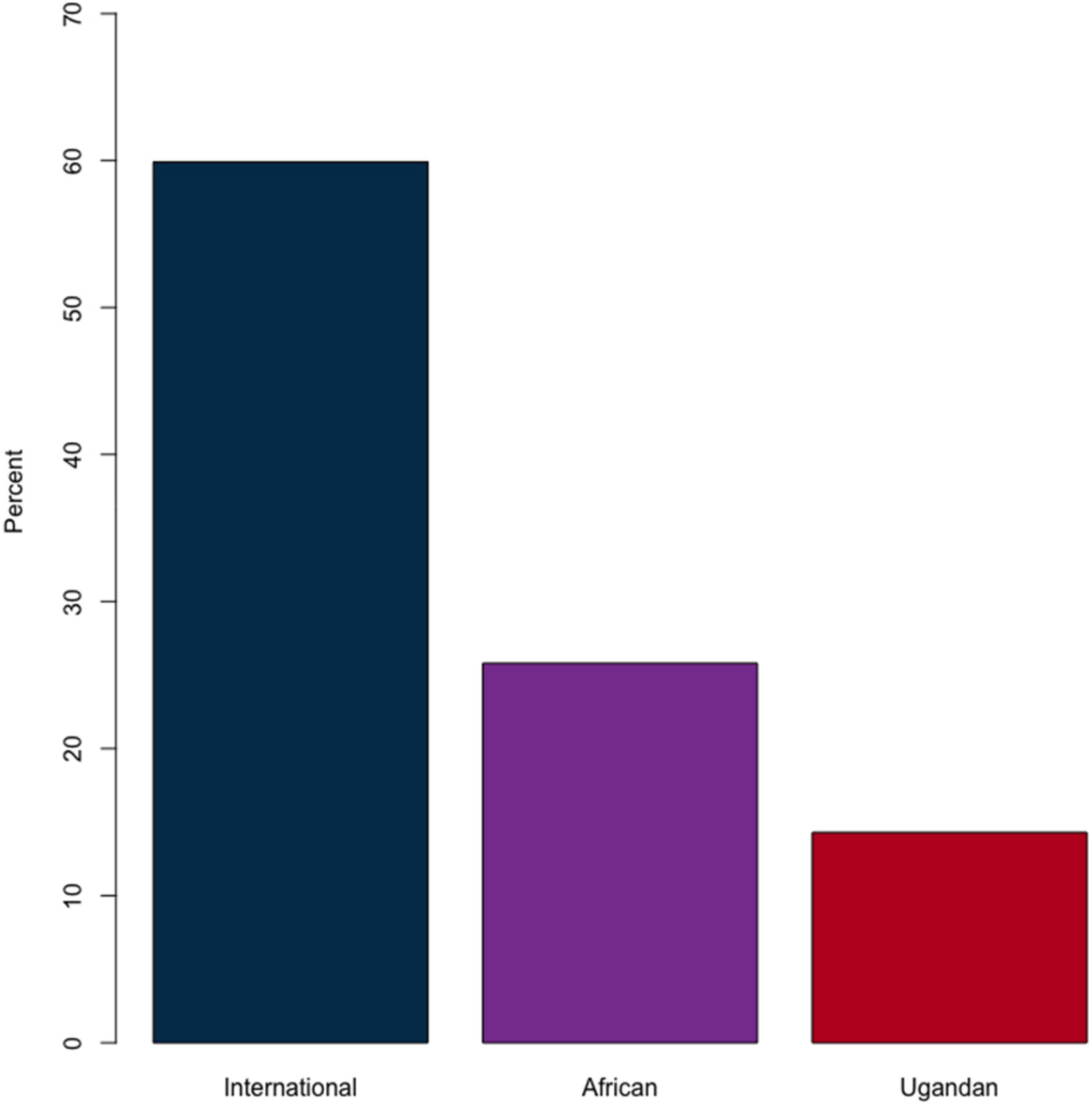
Distribution of Articles by Media Region (N = 779).
Using these full-text articles, we looked for key descriptors of Ongwen in each article's text. We adopted an iterative coding process. In the first stage, research assistants coded a subset of the articles. We began with an inductive approach; we did not establish a pre-set coding rubric for descriptors as we did not want to exclude potentially novel descriptors. Following the initial qualitative coding of role descriptors, we inductively developed six different categories. A different research assistant then coded the full sample of articles according to the established codebook with these descriptive categories: a) child soldier, b) abductee, c) victim, d) warlord, e) leader, and f) military. We adopted this approach because of the similarity of many role descriptors, such as “ex-child soldier,” “former child soldier,” and “forcibly conscripted,” which referred to a shared central descriptor—that of a child soldier. We coded each category to be exclusive in nature. Therefore, the military category refers exclusively to descriptors associated with Ongwen's participation in the LRA as a combatant, including “rebel,” “lieutenant,” “commander,” “brigadier,” and “general.” The leader category includes role descriptors that were differentiated from a purely military role and included references to his position in the hierarchy of the LRA, such as “senior,” “top,” “second-in-command,” “high-ranking,” “leader,” “chief,” and “deputy.” These two categories were often combined in terms such as “senior commander,” which would lead the article to be coded as containing both a military descriptor and a leader descriptor. 55.45% of the articles in our dataset used both the categories of military and leader when referring to Ongwen. Finally, 25% of the sample was coded by an additional coder. Cohen's kappa was used to calculate intercoder reliability scores for each variable. As reported in TAble 2A in the Appendix, the kappa scores ranged from 0.754 to 1, well within the appropriate range of agreement. 2
Figure 2 reports the percentage of articles using each role descriptor, according to the newspaper's area of publication. Table 1A and Figure 1A, in the appendix, provide additional details on the distribution of the role descriptors. Most articles referred to more than one role descriptor. The most frequent were those associated with Ongwen's military participation in the LRA, including “lieutenant,” “commander,” “brigadier,” and “general.” 88.2% of articles referred to Ongwen in his military role. The next most frequent set of role descriptors (59.4% of articles) referred to Ongwen's leadership role in the LRA. The label of abduct was applied in 42.9% of articles, referring to some aspect of Ongwen's forced recruitment into the LRA. Similarly, 39.4% of articles used child soldier descriptors. The fifth-ranked category was victim. Only 25.8% of articles, 201 in total, explicitly referred to Ongwen as a victim of the LRA. This term was applied more widely by non-Africa-based press sources: 5.5% of Africa-based articles and 2.5% of Ugandan articles acknowledged Ongwen's victim status explicitly while 17.8% of international press articles did so.
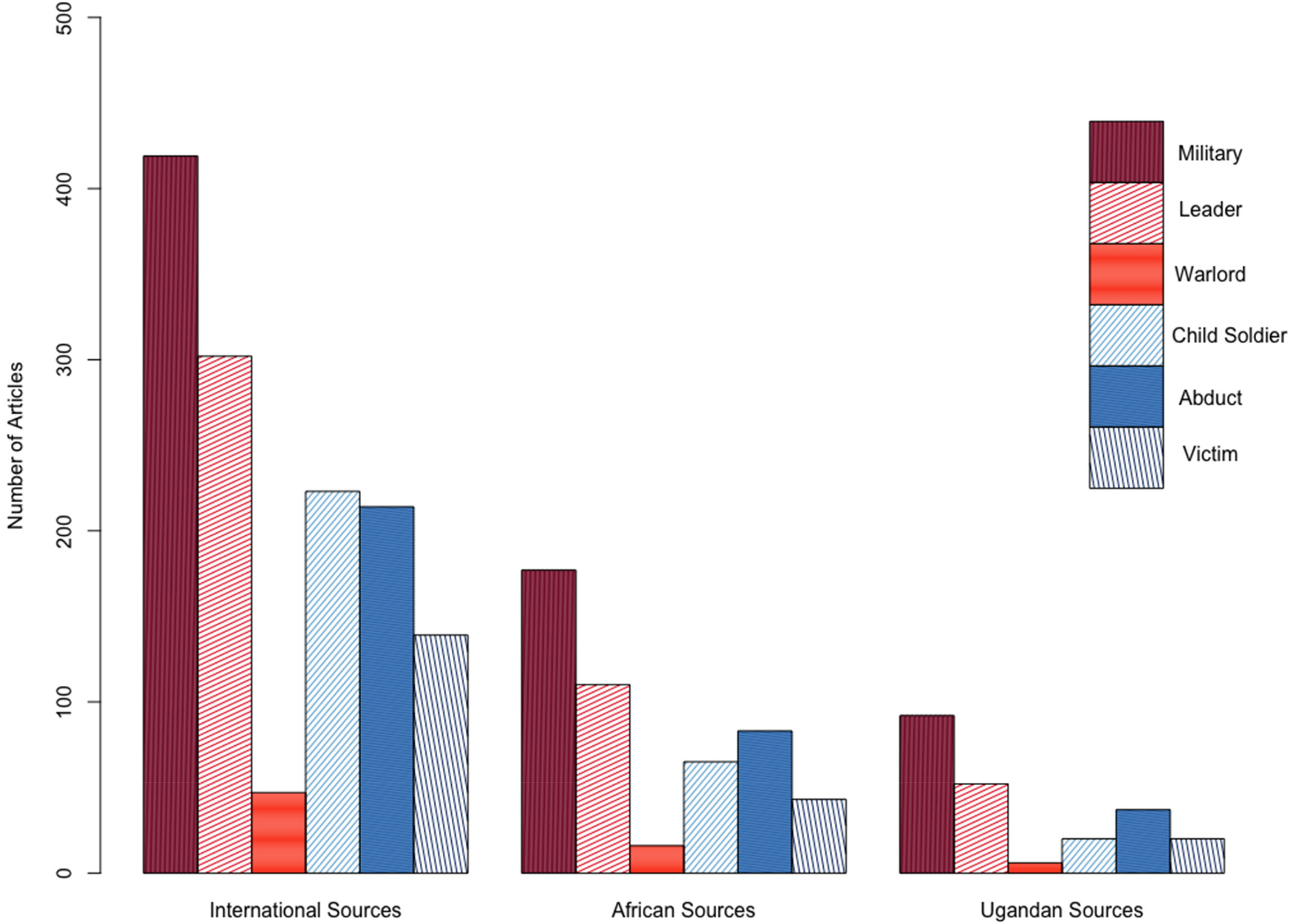
Use of Role Descriptors by Region.
Distribution of Role Descriptors.
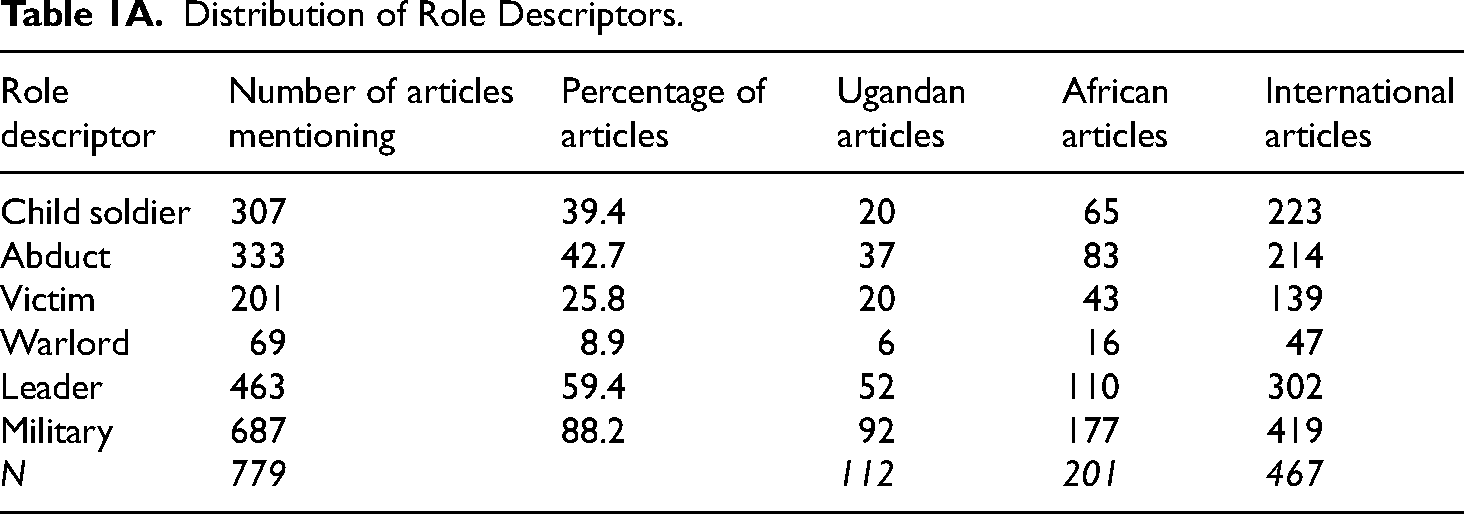
Intercoder Reliability Scores.
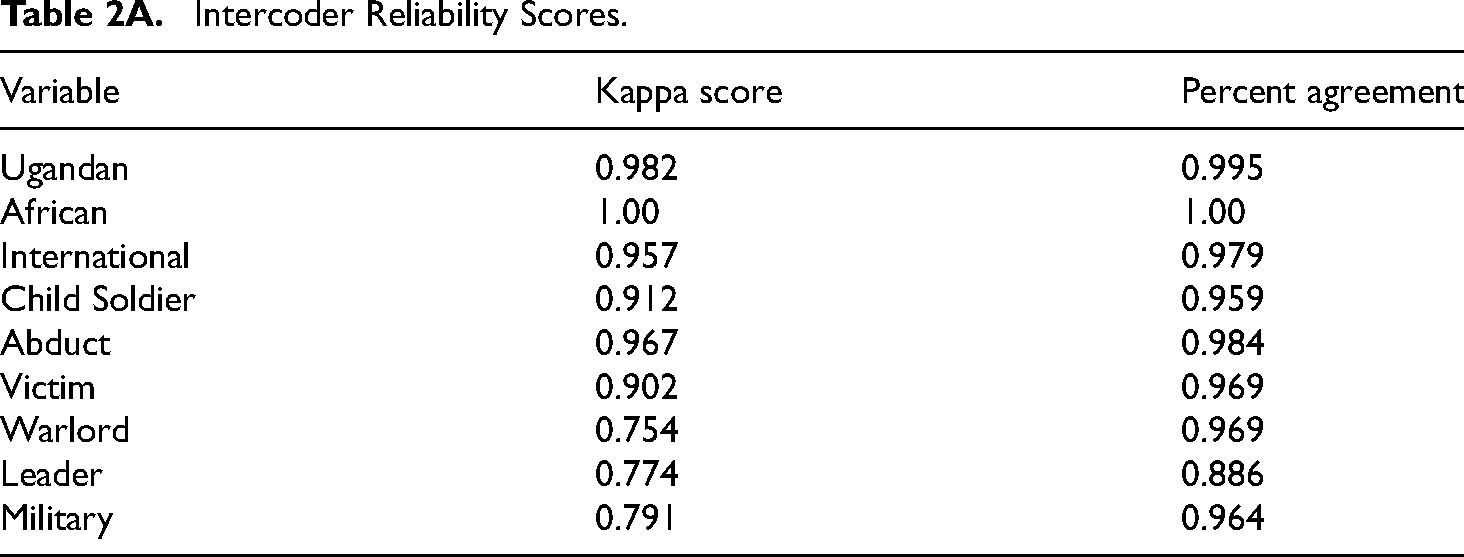
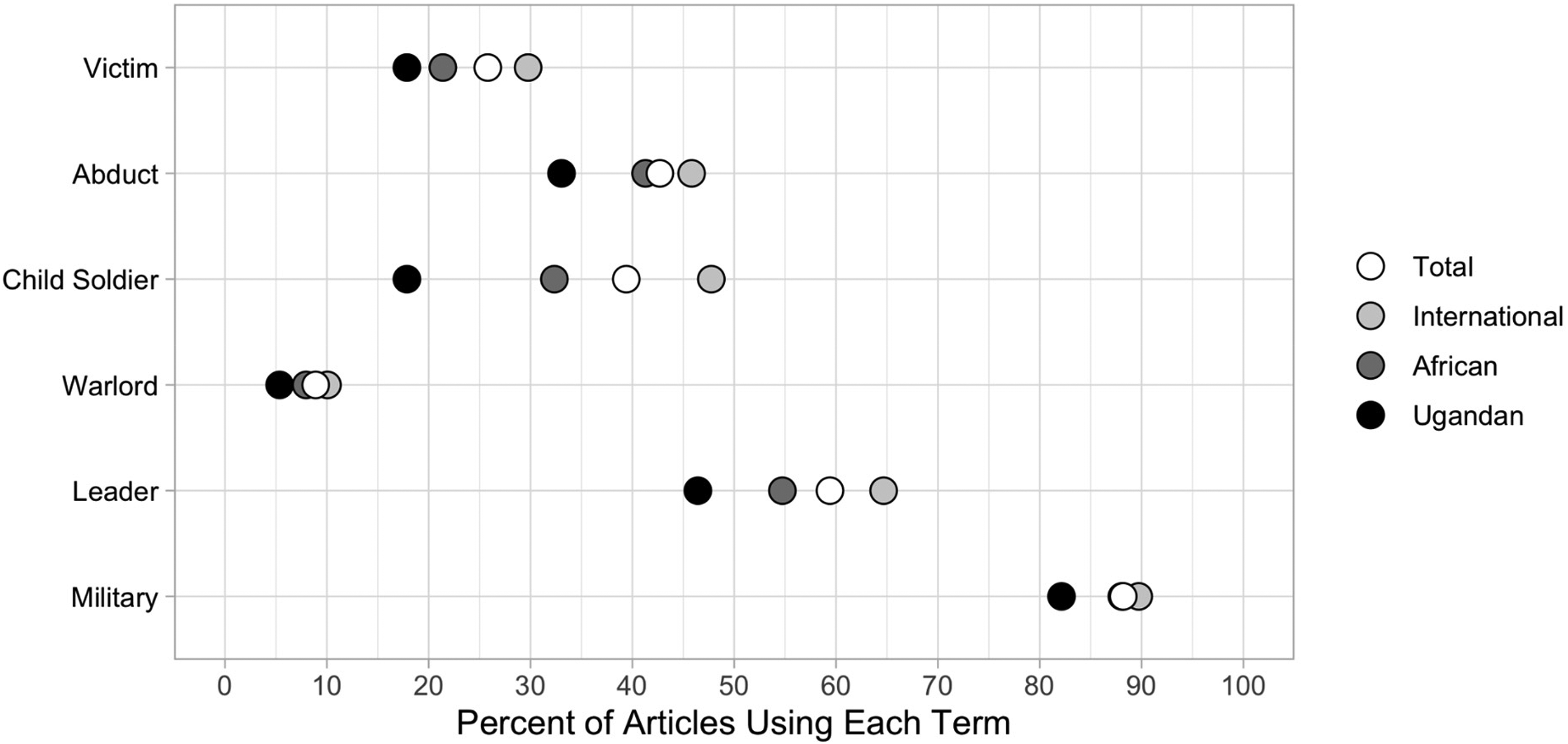
Role Descriptors in Articles by Media Region.
For a deeper analysis of differences in the labeling of Ongwen, we turned to sources that were representative of local and regional reporting. As the majority of our non-Ugandan Africa-based news articles came from All Africa, we compare those articles with coverage in the Ugandan papers New Vision and Daily Monitor to determine how local and regional news sources framed Ongwen during the course of his ICC indictment, trial, and sentencing.
As Figure 3 illustrates, all three sources referred most frequently to Ongwen's military and leader roles within the LRA. However, we see variation in the use of other role descriptors—most notably child soldier and abductee. Although All Africa articles were far less likely to use these role descriptors than military or leader, child soldier and abductee were used with similar frequency in articles published by All Africa, appearing in roughly 36% and 47% of the 115 articles. While Ongwen was primarily described as an agent of the LRA, his complex status within the group was acknowledged in some articles.
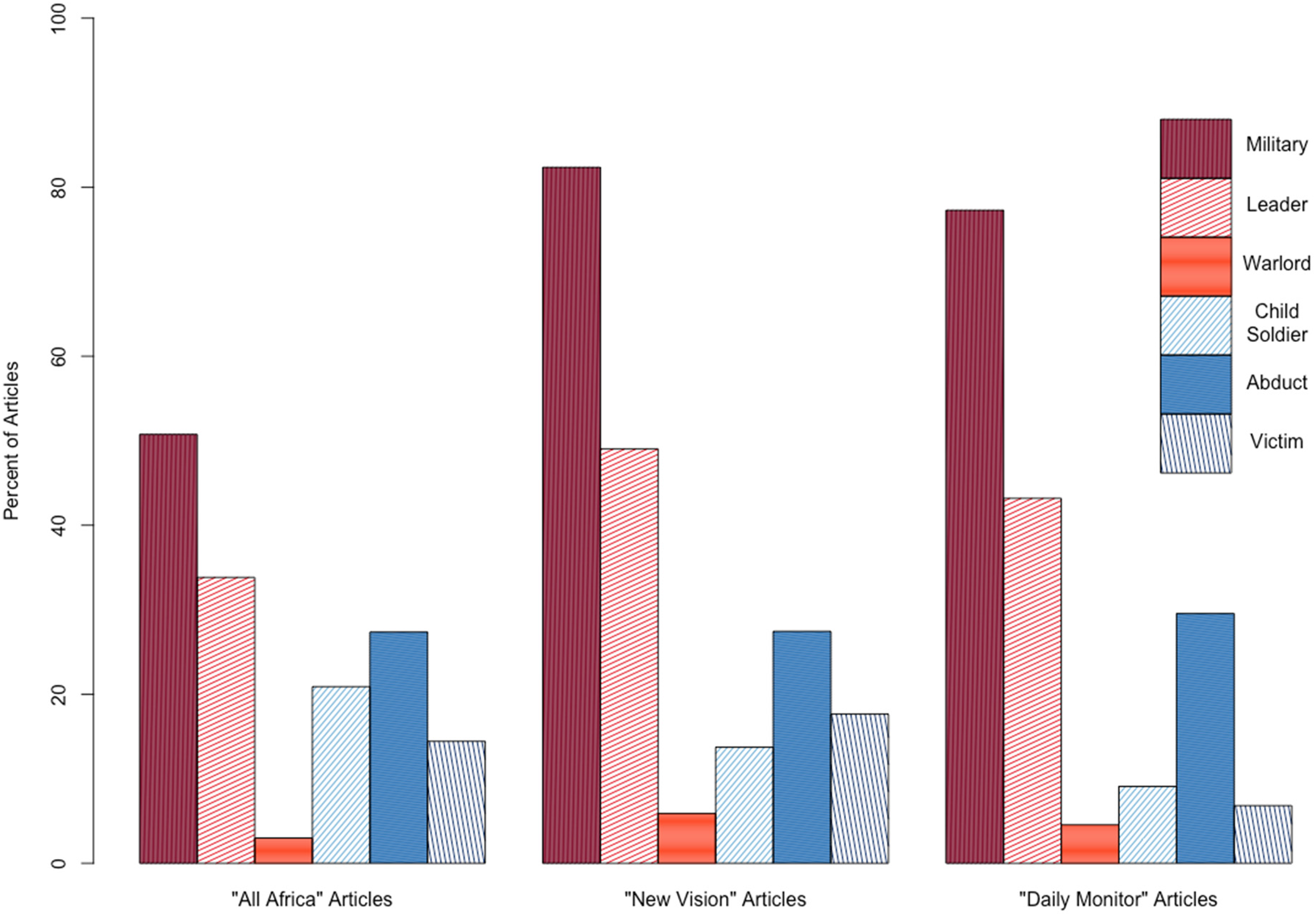
Role Descriptor Usage by News Source, 2004–2022.
In the case of Ugandan government-owned New Vision (51 articles), child soldier appeared in almost 14% of articles on Ongwen. This is far more frequent than in the Daily Monitor (44 articles), which referred to Ongwen as a child soldier in only 9% of articles. New Vision's use of the term child soldier suggests that the term may have a different connotation when adopted by a government-aligned source. Alternatively, it may suggest that a government-aligned source supports the government by emphasizing the brutality of the LRA by reminding its audience of the LRA's widespread conscription of children. Both Ugandan papers were also less likely than All Africa (36.14%) to mention Ongwen's status as an LRA abductee, as this term appeared in 27.45% of New Vision articles and 29.55% of Daily Monitor articles. The three sources frame Ongwen as a victim at a variable rate as well: 14.43% for All Africa; 17.65% for New Vision; and a mere 6.82% in the Daily Monitor.
In sum, our examination of two Ugandan newspapers and a pan-African publication indicates that there is not necessarily significant anti-Ongwen bias in the government-owned newspaper. There is some willingness among these sources to acknowledge Ongwen's complex status, but only very limited reference to his victimhood. In this context, it is possible that the role descriptor child soldier does not convey victim status in the way that it is understood in Western usage.
To answer the question of how ICC proceedings may have affected the labeling of Ongwen, we further collapsed the role descriptors into two categories reflective of the perpetrator-victim binary. The perpetrator category includes the role descriptors military, leader, and warlord, while the victim category includes child soldier, abduct, and victim. Figure 4 illustrates the use of the perpetrator category in reporting over time for International (i.e., non-African) news sources and African (including Ugandan) news sources, respectively. Figure 5 illustrates the use of the victim category.
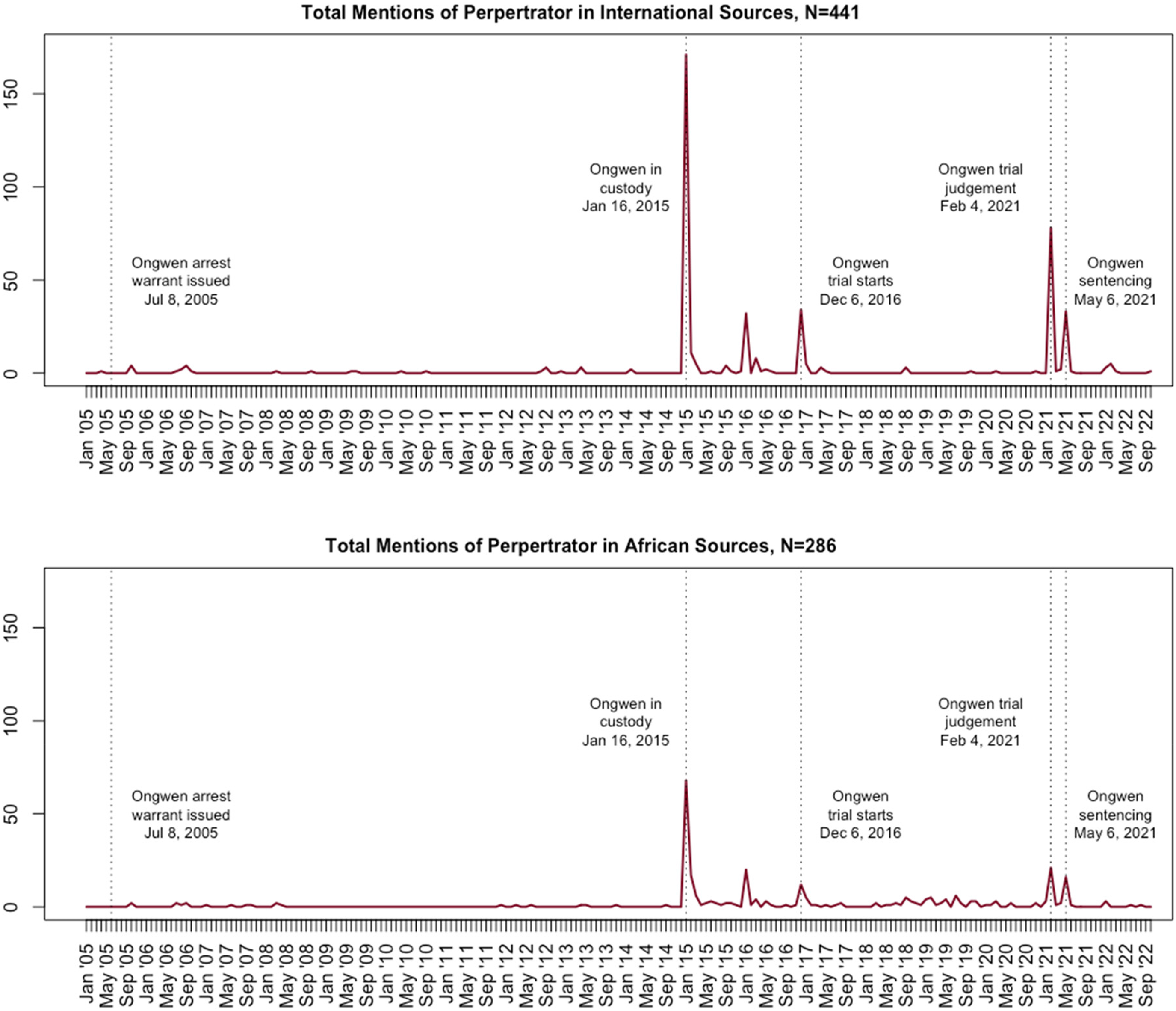
References to Perpetrator in News Stories, January 2005–October 2022.
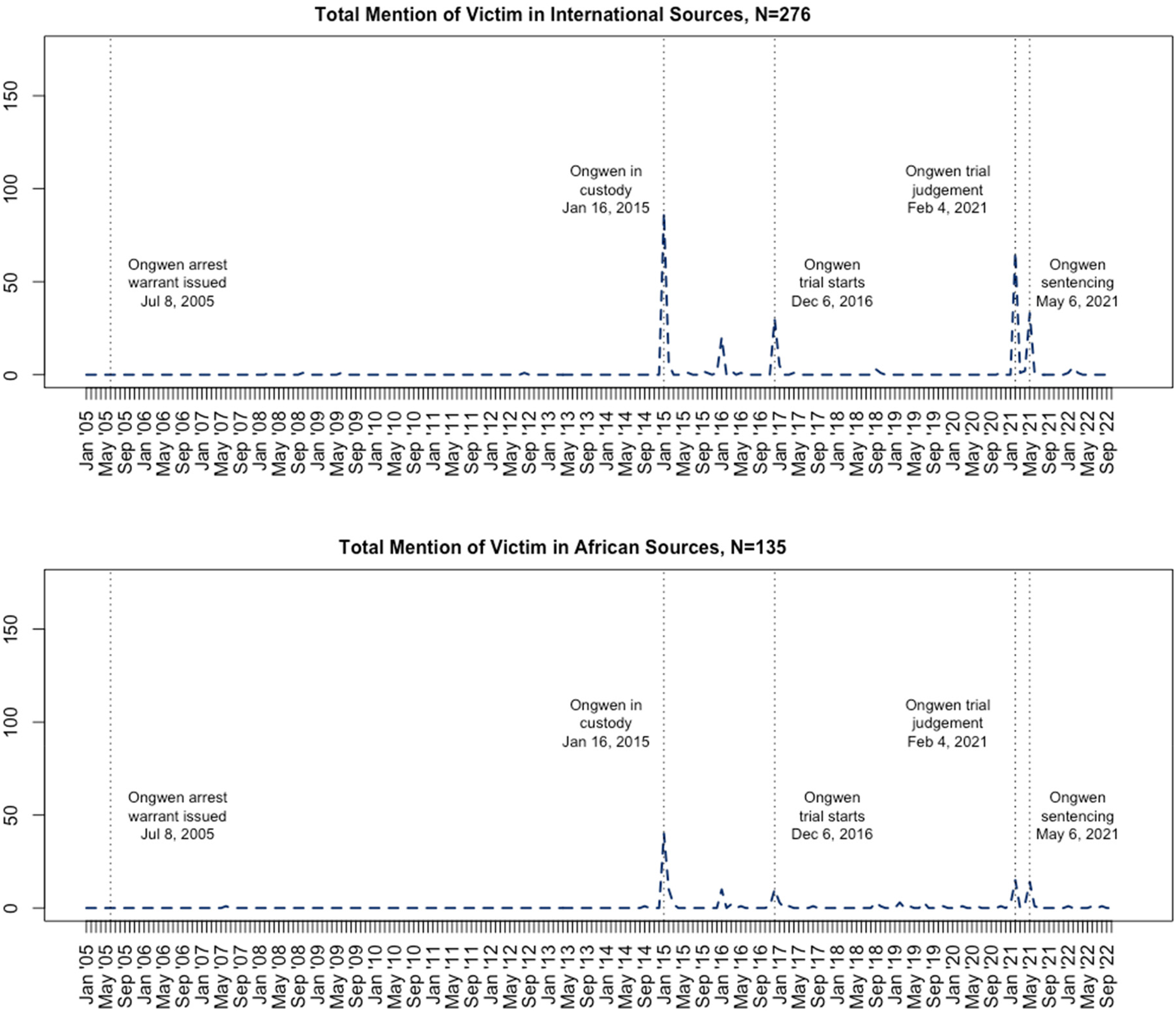
References to Victim in News Stories, January 2005–October 2022.
Of the 467 articles from international sources, 276 mention a term in our victim category and 441 mention a label in our perpetrator category at least once. Moreover, 272 articles (58.24%) have at least one mention of both victim and perpetrator terms. Four articles (0.85%) mention only a victim label and 169 (36.19%) mention only a perpetrator label. Additionally, there are 311 articles from African sources. Of these, there is at least one mention of a perpetrator label in 286 articles. 135 articles have at least one mention of a victim label. 129 articles (41.47%) mention both victim and perpetrator labels at least once, 6 (1.93%) mention only a victim label, and 157 articles (50.48%) mention only a perpetrator label. International media coverage therefore reflected narratives of Ongwen as a victim and perpetrator more frequently than African coverage (58.24% vs. 41.46% of articles). However, both international and African coverage were unlikely to identify Ongwen solely as a victim (0.85% and 1.93%, respectively).
Figures 4 and 5 show a notable consistency in the volume of news media coverage over the course of the Ongwen case. A major spike in coverage occurred following Ongwen's entrance into custody on January 16, 2015. Smaller increases in coverage occur around notable developments in the case, including the start of the trial in December 2016, the judgment in February 2021, and the sentencing in May 2021. 3 In the early years of coverage, the adoption of role descriptors relating to the perpetrator and victim categories is relatively consistent. At the time of Ongwen's arrest, articles in both African and international media overwhelmingly describe Ongwen in terms of the perpetrator category, although references are also made to his role as a victim. However, beginning in 2017, the balance of reporting shifts between African-based and international media sources. International sources increasingly use language associated with the victim category in coverage of Ongwen. Reporting in 2021 adopts language identifying Ongwen as a victim slightly more frequently than it references his role as a perpetrator in the LRA.
The shift toward a more victim-centered approach to Ongwen in international reporting, beginning in 2017, could be attributed to several factors. One possibility is that portraying Ongwen in a more complex way may simply make the story more compelling to audiences less familiar with the LRA conflict. A second possibility is that the labeling of Ongwen as a former child soldier may be more effective way of situating Ongwen and the LRA conflict more generally in the Western imagination, harkening back to media coverage of civil conflicts in Africa as well as the advocacy surrounding child soldiers in the early 2000s.
Our findings about the increase in international portrayals of Ongwen as a complex victim–perpetrator are an important break from past international media reports on defenses at international criminal tribunals. International Criminal Tribunals for Former Yugoslavia (ICTY) defenses that used the “rupture” approach to present counter-narratives of the conflict in question, expose inherent contradictions, and delegitimize international trials as political maneuvers to bolster certain Western-supported regimes were outright rejected or not covered in international (and especially Western) press (Steflja, 2018b). In ICTY cases, several defendants sought to portray themselves as symbolic victims of the imperial West and alter the prosecution's understanding of the historical, political, and military context of the conflict. While national media often validated and transmitted the defendants’ claims, international media showed no sympathy (Maweu, 2019; Steflja, 2018b). Ongwen's extensive lived experience of direct (rather than symbolic) victimhood as a child within the LRA might be the reason why the international press paid more attention to the existence of an alternative account of events.
Discussion
Our approach encourages looking beyond moral value categories and recognizing political agency in child soldiers both before and after they turn eighteen. However, our study suggests that, in general, the media oversimplifies Ongwen's role to that of an adult perpetrator in the form of a military leader. While the ICC tries individuals, the fact that Ongwen was indicted as part of a group indictment against the LRA's top leadership, including Kony, and that Ongwen's trial was the first LRA trial at the ICC, contributed to his identification by the press as a symbol of the LRA's most horrific crimes. Our analysis suggests that media sources often adopt the binaries of guilt and innocence set by legal processes (with more than a third of articles in international sources and half of the articles in African sources following the ICC's lead and casting Ongwen solely as a perpetrator). This finding is alarming because of the implications for tens of thousands of children associated with armed groups who may face criminalization in court and in the public eye upon reaching the age of adulthood. These individuals may make decisions out of fear, vilification, or an expectation of incarceration. Their outcomes could be similar to youth criminalization patterns documented in domestic justice systems that are overly focused on penal rather than restorative approaches to justice.
The fact that patterns in reporting on Ongwen follow the ICC's timeline of the case is not surprising for a court that has built an impressive structure to support media relations. The importance of public outreach was a lesson that the ICC learned from its predecessors, the tribunals for former Yugoslavia and Rwanda, which both faced criticism for being too closed off to journalists and the public (International Center for Transitional Justice, 2009; Kamatali, 2003). The ICC website includes a page dedicated for tools to assist the media in reporting on the court, including stock photos. Journalists can sign up for mailing lists to receive press releases, and find ample information on visiting the ICC, watching and attending hearings, and press conferences. The ICC's public outreach is critical for its perceived legitimacy and support (Clark, 2018; Dutton, 2017), as well as continued funding by member states and voluntary contributions from governments, international organizations, and individuals (International Criminal Court, 2020). While scholars have argued that the projection of transparency by the ICC is staged (D’hondt, 2021), arguably, its structured relationship with the media contributes to convenient, and perhaps less critical, reporting—one that uses the language of the ICC in numerous cases, including Ongwen's.
While the ICC as an entity is engaging external audiences, such as the media, the individual judges who constitute the ICC are also shaped by their interaction with different constituencies and audiences. As Baum (2009) argues in the context of American courts, “judging can be understood as a self-presentation to a set of audiences” (158). Baum emphasizes that the approval of other people is not only important to judges, but also consciously or unconsciously shapes their choices on the bench: “The news media may be relevant in themselves or as an intermediary between judges and other audiences” (2009: 163). Baum notes that judges prefer to be cast in a positive light in the media and may interact with reporters in order to win favorable coverage as well as to correct what they see as inaccuracies in reporting (136–138).
Media's influence is often intertwined with other interested parties, such as governments, organizations, and victims’ groups who want accountability for a notorious rebel group that has caused havoc on the populations in the region. The fact that some African states have withdrawn from the ICC and others have contemplated withdrawing their membership from the court (Magliveras, 2019) does not escape the ICC nor the media. Ugandan newspapers’ casting of Ongwen primarily as an adult perpetrator that is a high-ranking military and political leader in the LRA supports the Ugandan state's discourse which juxtaposes the LRA leadership with the protection of vulnerable and innocent children. The Ugandan state has made children's rights the central discourse in its political propaganda on several matters, including its recent anti-gay laws (Latif Dahir, 2023). Reporters may fear that a more nuanced approach to labeling Ongwen denies the gravity of the LRA crimes or runs afoul of the government. The Ugandan newspapers’ low rate of recognition of Ongwen as a victim, child soldier, and abductee does not reflect the reality found in affected Ugandan communities, which are split on Ongwen's prosecution and punishment. Further clarity on this mismatch is required (especially considering limited press freedom in Uganda where according to Reporters Without Borders, (2023) journalists face intimidation and violence from government forces daily) but cannot be reached using our methodological approach.
Our understanding of Ugandan newspapers’ reticence to see Ongwen as a victim is informed by looking at the relationship between the media and high-profile cases in domestic settings. Meringolo (2010/11) explains that media disseminates factual information that predominantly comes from the prosecution, but also preys on public emotions by, for example, emphasizing negative statements about the defendant, captivating public interest in the process (982–983). This process begins in pretrial coverage with intangible, emotionally charged effects on public opinion, as well as judges and jurors. While legal practitioners and social scientists encourage the use of counteracting measures to ensure a fair trial, the defense narrative is often seen to be at an inherent disadvantage (Meringolo, 2010/11: 1000). Following this line of thinking, once an emotionally-charged narrative that portrayed Ongwen as a brutal LRA leader was set, it would have been difficult to refocus that narrative toward a more victim-centered interpretation of Ongwen, even if that narrative was present in Ugandan communities.
Pushback against complexifying perpetrators of hideous crimes in the media is well documented in responses to Arendt's (1963) coverage of Adolf Eichmann's trial in which she emphasized the “banality” of perpetrators. The pressure of women's and children's rights groups and human rights organizations impacted decisions of international courts previously in, for example, the tribunal for Rwanda's ruling of rape as genocide and a crime against humanity (Steflja and Trisko Darden, 2020: 66). Pressure from such groups may also be considered by reporters who want to emphasize the LRA's, and in turn Ongwen's, guilt in conscripting children as well as crimes of a sexual and gendered nature, such as the guilty verdict for the crime of forced pregnancy.
Conclusion
Our research demonstrates the media's reinforcement of the legal victim/perpetrator binary and modest, yet important, attempts by a faction of sources to rupture this binary through a more nuanced representation of Ongwen. The limited efforts to recognize a simultaneous perpetrator-victim in Ongwen in international sources (58.24%) as well as African sources (41.47%) illustrates the importance of further advocacy and media engagement on the part of academics, policymakers, and groups representing local communities interested in developing a more nuanced and contextualized approach. Such groups will need to gain a louder voice if they are going to instigate a broader response in the media.
The media labels that we document are objectifying. “Child soldier” can imply victimhood while “rebel commander” can imply aggression. Both are to an extent “othering” (Spivak, 1988). These labels are also very much about how conflicts are framed politically and involve a Western-centric frame. For instance, the term “rebel commander” only makes sense in a Westphalian state-centered view of the LRA conflict where, beginning at the age of eighteen, Ongwen became a political agent and obtained a rank where he led organized armed forces against the Ugandan state. The label of “commander” is especially important because it emphasizes command responsibility and leadership, and it places Ongwen at the top of a hierarchy with other violent political entrepreneurs. We find that this is the primary frame through which local, regional, and international media sources understood Ongwen—as an agent of the LRA and a perpetrator of violence through his military and leadership roles.
At the same time, references were made to concepts that undercut this emphasis on Ongwen's agency as an LRA member. In Ugandan, African, and international reporting, the third most common role descriptor was that of a child soldier. While acknowledging a military role, the “child” aspect of this term implies both a lack of agency and potential, if not explicit, victimhood. Our analysis suggests that this term may be understood differently based on the context and interest of the media source. Although Ugandan and African sources applied the child soldier label to Ongwen, they were less willing to adopt specific labels such as victim or abductee. Further research is needed to assess how child soldiers are situated in terms of the perpetrator–victim spectrum in the Ugandan context, and whether conceptualizing this constructed binary as a spectrum is even appropriate. Research has already established that the frame emphasizing universal child rights of youth who participated in the LRA conflict does not align with local, on-the-ground perceptions of these individuals (Akello, 2019).
We find that references to Ongwen that acknowledge a more complex status as a child soldier, abductee, or victim of the LRA are primarily concentrated in international reporting and increase once Ongwen's trial at the ICC is underway. The trial presented Ongwen and his legal team with their first opportunity to construct a narrative about Ongwen and his actions that stood in contrast to that of the ICC and the Ugandan government. The increase in victim-centered references to Ongwen suggests that Ongwen and his legal team offered a viable alternative to the ICC's narrative or, at the very least, required international media organizations to acknowledge an alternative narrative. We provide evidence that the understanding of Ongwen presented by international media evolved as the trial progressed. However, the relative continuity in African media sources indicates that local dynamics made the labeling of Ongwen as a victim less salient in those contexts. As others have suggested, the Ugandan government's support for the ICC's prosecution of LRA members suggests that the ICC can be politicized in ways that benefit the regime's narrative. Local and regional media clearly play a role in this dynamic and research should pay greater attention to the interaction between legal and media narratives.
Our assessment of the broader impact of the observed shift in international media coverage of Ongwen can only be speculative. The future application of the label of “child soldier” is undoubtedly complicated by the Ongwen ruling. As the Amani Institute argues, “by convicting Dominic Ongwen for all the possible crimes committed by the LRA, the judgment undermines the chilling impact of war crimes committed against children in their childhood, without evidence to the contrary. It declares that a child abducted and who grew up in captivity retains full mental faculty and agency. It equates every child conscript, who rises through the rank and file, to the levels of their senior top commanders who initially abducted them in the first place” (Amani Institute Uganda, 2021: 15). It is possible that the conviction of Ongwen in spite of his child soldier status simply reflects the international realities of the ambiguous roles, agency, and moral accountability of the many individuals who are grouped together under this quasi-legal category.
Future trials may break the blind faith in the binaries of international criminal law and bring courtroom historiography into public debate. One in eight children is currently vulnerable to recruitment and use in armed conflict (Østby et al., 2023), and there are a range of non-state armed actors who are their primary recruiters. Therefore, if international criminal law is to stay relevant it needs to become open to the larger contextual realities and go beyond upholding a Westphalian frame that bolsters certain regimes and maintains a hopeful universal child rights approach.
Footnotes
Acknowledgments
The authors gratefully acknowledge Naireen Khan, Eric Tanguay, Morgan Deckert, and Grace St. Germain for their help coding data as paid research assistants. We thank participants in the “Lights and Shadows in the Ongwen Case at the International Criminal Court” conference for their comments on a previous version of this article.
Declaration of Conflicting Interests
The authors declared no potential conflicts of interest with respect to the research, authorship, and/or publication of this article.
Funding
The authors disclosed receipt of the following financial support for the research, authorship, and/or publication of this article: We acknowledge funding from Wilfrid Laurier University (Grant #240552) and the College of Humanities and Sciences at Virginia Commonwealth University.
