




Abstract
Studies of procedural in-court judicial discretion have highlighted a dilemma between the imperative to reduce it owing to its potential misuse and preserve it owing to its importance in protecting vulnerable groups. This article offers a new framework with which to enter this debate and new quantitative empirical evidence that favours the former position over the latter. Drawing upon 240 in-person observations of Britain’s First Tier Tribunal (Immigration and Asylum Chamber), the article demonstrates that judicial discretionary behaviour that is either vulnerability-neutral, vulnerability-amplifying or correlated with extraneous factors outweighs vulnerability-redressing behaviour, despite the sensitivity of this particular jurisdiction and the guidelines that consequently exist for judges. These findings lend support to calls to limit judicial procedural discretion. The article concludes by offering some cost-effective suggestions about how to do so.
Keywords
Introduction
Impartiality is essential to the proper discharge of the judicial office. It applies not only to the decision itself but also to the process by which the decision is made.
The realization that process has a significant influence over both actual and perceived fairness raises important questions in relation to judicial procedural discretion. Should judges be afforded the autonomy to conduct legal proceedings in the way they see fit? Or are there reasons to suppose that rule makers are in a better position to decide on the fairest processes?
This article enters the debate by providing an original framework with which to distinguish between different types of procedural judicial discretion in relation to litigants’ vulnerabilities. Drawing on a large-scale, in-person survey of the First Tier Tribunal (Immigration and Asylum Chamber) of England and Wales (henceforth the ‘First Tier’), we provide a rare opportunity to empirically evaluate the arguments of both the sceptical view of procedural judicial discretion and the supportive view.
We begin by reviewing the cases for extending and limiting judicial procedural discretion. Rather than reify the debate into ‘for’ and ‘against’ arguments, we develop a typology of different sorts of judicial procedural discretion based on litigant vulnerabilities. We then outline our methodological approach. We go on to examine the evidence that our survey generated and discuss the implications for both the First Tier and procedural discretion more broadly.
The primary contributions of the article are the development of a novel typology of judicial discretion, the development of an innovative methodology that combines surveys with intensive in-court observations and the generation of unique empirical evidence that bears directly upon the issue of procedural judicial discretion.
Debating Procedural Discretion
Most legal definitions of procedure recognize that some aspects of procedure are directed by formal rules and others are not. Some legal dictionaries, for instance, differentiate between ‘form’ or ‘rules’ on one hand and ‘manner’ on the other as constituents of procedure. This is the case with Black’s Law Dictionary, which describes procedure as ‘The judicial rule or manner for carrying on a civil lawsuit or criminal prosecution’ (Black et al., 1999: 1221). Jowitt’s Dictionary of English Law, having directed us from ‘procedure’ to ‘practice’, also outlines ‘The form and manner of conducting and carrying on suits, actions or prosecutions….’ (Jowitt et al., 1977: 1400). Other dictionaries reflect a comparable dichotomy but with a different lexicon, such as Nolo’s Plain English Law Dictionary (Hill and Hill, 2009) that defines procedure as the ‘method or act that furthers a legal process’ (n.p.) and Osborn’s Concise Law Dictionary that defines procedure as ‘the mode or form of conducting judicial proceedings, civil or criminal’ (Woodley, 2009: 326). There is, then, typically a dual meaning associated with procedure, incorporating both a rule-based element and a more contextually variable element. Two points follow.
First, since aspects such as the ‘manner’ of judges in the conduct of cases is an element of procedure, then in principle procedure is a broad category. It does not just include steps in legal processes in themselves – such as filing complaints, serving documents, setting the dates and locations of hearings, giving notice to parties and holding hearings, as well as many more activities that make up the mechanics of the legal process – but also how these are undertaken. Even taking just the last of these for instance – holding hearings – procedure could include a wide variety of aspects that make up a trial or hearing event, including introductions, court etiquette, the schedule of the hearing, the timing of breaks, the treatment of adjournment requests and the method of communication (both verbal and non-verbal) between the judge and the other parties. As sociolegal scholars have argued, it is the ‘minutiae’ (Moorhead and Cowan, 2007: 316) of these arrangements that often exert a disproportionate influence over fairness, both perceived and actual (Blanck, 1996).
Second, the nature of procedure as partly governed by rules – but partly not – raises the question of what balance can and should be struck between regulating procedure and allowing it to be discretionary. Black’s Law Dictionary defines discretion as ‘[a] public official’s power or right to act in certain circumstances according to personal judgment and conscience’ (Black et al., 1999: 479), and Jowitt’s Dictionary of English Law offers the (unfortunately gendered) definition of ‘a man’s own judgment as to what is best in a given case, as opposed to a rule governing all cases of a certain kind’ (Jowitt et al., 1977: 624). In the United Kingdom, there are civil, criminal and family procedure rules, a body of law that is referred to as adjective law (see Ministry of Justice, 2017). But is the balance between that portion of procedure that is discretionary and that which is regulated correct? Should we, for example, look to legislate and regulate procedure as much as possible in order to reduce the irregularities associated with human predilections, or should we aim to preserve and enlarge the amount of procedural discretion available to judges on the basis that they are the experts in matters of their own court process and will know best how to conduct it on a case by case basis?
In relation to substantive issues of law, judges as well as many legal scholars have defended judicial discretion passionately. Cravens (2011: 33), for example, writes that ‘in order to achieve justice in particular cases, the law must…allow judges flexibility to do justice in the cases to which the general rule does not seem to apply’. Indeed, the very essence of judging requires a degree of choice, so it is unsurprising that ‘judges value their discretion very highly’ (Bone, 2007: 1976). In this light, attempts to ‘promote consistency’ (Jacobs, 2012: 255) have been seen to threaten judges’ ‘space to render…rightful decisions’ (269).
That judges and the craft of judging requires a reasonable degree of substantive discretion is not under dispute in this article. The question of procedural judicial discretion, however, is separate, at least in principle, because it refers to the leeway that judges have to determine the way that the legal process is conducted, as distinct from doctrinal and substantive legal reasoning about the decision at which they arrive.
Arguments to defend and enlarge judicial procedural discretion include considerations related to moral factors as well as litigant vulnerability or disadvantage. In relation to moral factors, commentators point out that judges’ room for manoeuvre to exercise discretion is an important defence against questionable policy or norms. In the context of administrative law in particular, it has historically often proven difficult to maintain the independence of judges from the state, which may be supportive of procedural rules that are insufficiently democratic or socially inclusive because the state itself favours particular decisions or processes (Jacobs, 2012; Taylor, 2007). Deviations from the model of an ‘umpire’ judge (Moorhead, 2007) who simply ‘applies pre-existing general rules’ (Galanter et al., 1979: 702) might be laudable if they might otherwise favour such state-backed rules. Over-adherence to rules, in this light, undermines the basis for ‘judicial activism’ (Fielding, 2011: 99) when necessary in pursuit of the ‘social good’ (98). The autonomy of judges has consequently been cited as central defences against ‘bad law’ (Fielding, 2011: 98) and ‘wrongheaded legislation’ (98).
Another argument in favour of procedural discretion concerns the fact that litigants themselves are different and may face different disadvantages in attempting to access the legal process, requiring the judge to treat them differently. Kritzer (2007: 332) outlines the nature of judicial craft, suggesting that although consistency is a ‘fundamental goal of the legal system’ (332) we should be wary of sweeping standardization of legal practice. ‘One of the challenges of judging is to…exercise the vast discretion granted judges in a way that achieves a just consistency. What this means is something more than simply treating ‘like cases alike’ because while two cases may be alike in formal legal ways, they may be very different in ways that are crucial for our understanding of justice’. (Kritzer, 2007: 333)
This argument resonates with the Judicial College (2013), which also discusses judgecraft in the Equal Treatment Bench Book. ‘Treating people fairly’, the Judicial College (2013) writes, ‘requires awareness and understanding of their different circumstances, so that there can be effective communication and so that steps can be taken, where appropriate, to redress any inequality arising from difference or disadvantage’ (Judicial College, 2013: foreword). Elsewhere, it discusses ways judges can ‘compensate’ (Judicial College, 2013: various instances in section 6) and ‘ameliorate’ (section 6-3) the disadvantage introduced by specific individual characteristics and circumstances such as disabilities. For Zorza (2004: 431), it is imperative for judges to be active in undertaking this sort of compensation to address the risk that specific vulnerabilities might impede the ability of the litigant to put forward their full and complete case. If the ‘whole story does not get before a passive judge because of that judge’s passivity’ Zorza argues, ‘then, notwithstanding the judge’s apparent even-handedness, the result cannot be neutral’ (2004: 431).
These laudable motivations for promoting the active case specific use of judicial procedural discretion are at odds with a series of counter-posed concerns including the risk of abuse of power, the sensitivity of fairness – both actual and perceived – to variances in judicial in-court behaviour and competency concerns. Concerning the abuse of power, judges who are afforded unchecked discretion might use it to pursue their own interests or agendas. They may use discretion to make the job of the judge easier by using emotion strategically to pacify litigants, for instance (Tata, 2007), or as a way to manifest ‘middlebrow morality upon judicial evaluations of litigants’ (Fielding, 2011: 101). ‘Many judges’ Riesman (1957: 651) writes, ‘resent the straitjacket that codes and legislation seek to impose on their wish to maintain an easy or “muddling through” fluidity’. For Fielding (2011: 114), it is this desire rather than more noble impulses that produce an ‘occupational culture…[of] resistance to outside influences’.
Concerning fairness, empirically informed North American scholarship has emphasized the disproportionate effect that seemingly minor variances in judicial behaviour can have over cases and the prominence of consistency in litigants’ perceptions of fairness. The non-verbal discretionary in-court behaviours of judges, which can be as subtle as a nod of the head or a facial expression, are often crucial to juries’ decisions (Blanck, 1996). Furthermore, research has shown not only that litigants ‘react to the procedural justice of the decision-making process at least as much, and often more, than they react to the decision itself’ (Tyler, 1988: 128) but also that litigants’ perceptions of fairness rely most heavily on perceived consistency of the decision-making authority, based on previous experiences, expectations and what happens (or is thought to happen) to others. Both the sensitivity of cases to judicial behaviour, illustrated by Blanck’s research, and the centrality of consistency to perceived fairness, illustrated by Tyler’s, raise the stakes of any argument that proscribes a departure from rule-bound judicial in-court procedure.
A third argument for limiting judicial procedural discretion concerns the possibility that, ‘since judges are human beings and not robots, they are inevitably, to some extent, the product of their own upbringing, experience and background’ (Bingham, 2011: 93), meaning that they can be ‘subject to personal predilections or prejudices’ (93) as well as ‘extraneous consideration that might bias their judgement’ (93). In particular, recent work in behavioural psychology has emphasized the importance of heuristics and psychological schema to the processing of complex information, with important implications for judicial procedural discretion (Bone, 2007). ‘It is past time to examine procedural discretion critically’ Bone (2007: 2023) writes. ‘The naïve assumption that trial judges have the institutional expertise and experience to exercise discretion well ignores serious and unavoidable bounded rationality, information access, and strategic interaction obstacles that impair the quality of case-specific decision-making. The fact is that rulemakers are often in a better position than trial judges to assess the data and make the necessary global judgements’
Bone, 2007: 2023
This is not to say that the sceptics necessarily have the upper hand. As Bone (2007) concedes, although the theoretical objections voiced by sceptics are serious and important, ‘very little reliable empirical research has been done in the procedure field’ (2007: 1976). In the area of asylum law, for example, the focus of sociolegal studies has been on consistency of outcomes and decisions rather than on consistency of process. A series of excellent studies have demonstrated persistent statistical disparities in success rates of asylum claims across courts, countries and judges (Neumayer, 2005; Rehaag, 2012; Ramji-Nogales et al., 2009). As Legomsky (2007) has pointed out, however, the establishment of such disparities, whilst ‘admittedly shocking’ (413), should only be used sparingly to provoke reform, because measures to rein in judges based on their judgements, such as proscribing maximum and minimum asylum grant rates, could ‘too severely compromise decisional independence’ (413). By shifting the focus away from outcomes towards process, this article aims to chart a course past this difficulty.
Conceptual Approach and Surveying the First Tier
We begin by distinguishing between different sorts of judicial procedural discretion. The arguments in support of judicial procedural discretion imply that, where discretionary actions are available to judges that would help litigants participate fully in the legal process, we might expect to see more of these sorts of actions when the litigant is vulnerable. The Judicial College (2013), for instance, discusses various forms of vulnerability including gender-, disability-, age- and ethnicity-related factors. Where these factors are present, there is a risk that appellants will not be able to fully and effectively participate in hearings owing to physical, psychological, educational, linguistic and cultural barriers, so, if judicial procedural discretion is indeed a way to redress, or compensate for, disadvantage, we would expect to see more frequent remedial judicial actions in these situations. We refer to helpful judicial actions that are undertaken more frequently under conditions of appellant vulnerability as vulnerability-redressing.
Alternatively, if the sceptics are right, rather than seeing a correlation between beneficial judicial discretionary behaviours and litigant vulnerability, we might see no correlation, a negative correlation or correlation with factors that are unrelated to the legal process. We refer to these three conditions as vulnerability-neutral, vulnerability-amplifying and extraneous correlations. Vulnerability-neutral discretionary judicial behaviour is identifiable when judges decide not to take the helpful discretionary action available to them to redress evident disadvantages. Vulnerability-amplifying behaviour refers to judges undertaking fewer helpful judicial actions in the presence of litigant vulnerability. And extraneous correlations refer to judicial behaviours correlated with non-relevant factors that we would hope and expect to not influence judicial conduct, such as the day of the week or attire of the litigant.
We watched for numerous helpful discretionary judicial behaviours and analysed their correlation with appellant vulnerabilities across 290 observed cases. 1 Some of the behaviours constitute practical checks to make sure that the appellant can follow the hearing. Other behaviours are related to showing the appellant respect during the difficult and often intimidating appeals process. Other measures are designed to ensure the comfort of the appellant during the process. We focused on behaviours that were unambiguous to observe from the public gallery.
We drew these behaviours from various sources. Adjudicator Guidance notes for the First Tier (e.g. Arfon-Jones, 2004; Hodge, 2002; 2003) give advice to judges on various matters not contained in the formal, and binding, rules that cover the First Tier (Tribunals and Enquiries: The Tribunal Procedure (First-tier Tribunal) (Immigration and Asylum Chamber) Rules 2014SI 2014/2604(L.31)). The guidance notes cover unrepresented appellants, withdrawals, unaccompanied asylum-seeking children and introducing the hearing among other things. The recommendations we distilled from them included asking and checking whether parties understand each other, explaining the purpose of the hearing and how it will proceed, offering guidance for communication 2 and offering the opportunity to say if the appellant does not understand something. The Judicial College (2013) also provides advice to judges outside of the formal binding legislation to which they are subject. The Equal Treatment Bench Book (Judicial College, 2013) discusses ensuring modes of address are accurate, giving time for breaks when appropriate and checking understanding during the proceedings. Lawyers and academics have made further non-binding suggestions and observations about how judges can conduct cases fairly and effectively in the First Tier, such as in relation to checking that the parties have the correct documentation, introducing themselves and stating their independence (Henderson and Pickup, 2014; Thomas, 2011: 108).
We chose asylum hearings for three reasons. First, in previous work, we collected anecdotal evidence of the variability in judicial conduct during asylum appeals and saw further investigation of this as important (Gill et al., 2012). Second, discretionary judicial behaviour is particularly important in this jurisdiction owing to the manifold challenges appellants face in participating in the Tribunal (Thomas, 2011). Baillot et al. (2012) have established how ‘the intersection of race, ethnicity, gender, culture, religion, language and nationality’ (269) presents formidable challenges to vulnerable asylum seekers attempting to participate in legal processes. Asylum appellants are often traumatized, operating in a second language via an interpreter, talking about events that may be painful to recall, operating in a cultural context that is extremely unfamiliar to them and battling against the social stigma that has come to be associated with seeking asylum in various Western developed countries (Johnson, 2011). Third, there is no public written or audio record kept of First Tier asylum appeal hearings in England and Wales, meaning that our work constitutes an important historical archive and signalling mechanism for judges and other legal professionals in this jurisdiction.
We are aware that, perhaps more than other Tribunals, the operation of the Immigration and Asylum Tribunal is impacted not only by judicial rules but also by external governmental rules that can influence not only the grounds for asylum but also the caseloads that judges have to contend with and the procedures that immigration matters go through. The Immigration Act (2014), for example, required foreign nationals who have served a prison sentence to appeal against a negative decision on their claim from outside the United Kingdom. The Immigration Act (2016) applies a similar logic but to the normal administrative process rather than solely for foreign nationals who have served a prison sentence. This feature that has become known as ‘remove first, appeal later’ (Immigration Law Practitioners’ Association, 2016). Both provisions are subject to various exceptions including if they involve issues of asylum or protection under Articles 2 or 3 of the European Convention on Human Rights (protecting the right to life and prohibiting torture and ill treatment), meaning that most of the cases we report on below would be unaffected by the changes. 3 Nevertheless, the external influences over the Immigration and Asylum Tribunal are considerable, and although they are outside the immediate scope of the present article, they form important context.
Our access was confined to the public areas of hearing centres. The clerks’ and judges’ areas were inaccessible to us as was the paperwork pertaining to cases. We also did not pursue the outcome of cases we observed (decisions are usually delivered by post after the hearings), guaranteeing that our study is focused on process rather than outcomes, and remains distinct from work that employs outcomes as a proxy for inconsistency. Before fieldwork, we notified Her Majesty’s Courts and Tribunals Service (HMCTS) of our intentions. We received an acknowledgment in reply, but upon reaching the hearing centres were confronted with surprise by clerks and judiciary, which indicated that our subjects were not forewarned about our presence.
We sat in the public gallery at the back of hearing rooms (appeals are heard in Tribunal hearing centres which are not technically courts but in this article we follow convention among practitioners by treating ‘hearing room’ and ‘court’ interchangeably). We remained as inconspicuous as possible, although when appropriate we would explain our purposes to the parties present, which usually included the appellant, their legal representative, the interpreter, the judge and the Home Office Presenting Officer (HOPO). HOPOs make the case for the Home Office (the government) in the hearings. At most of the cases we observed there was a HOPO present, but occasionally there would be a Home Office Barrister (HOB) who fulfilled the same function but has more legal training and is generally not a civil servant. Hearings are ordinarily open to the public unless there are specific exceptions, such as owing to the personal vulnerabilities of the appellant or discussion of content that could put the appellant at risk if in the public domain.
We designed a 19-page pro forma covering a comprehensive range of variables for each observed hearing (Figure 1), such as case details, actors present, schedules and the behaviours of the actors present. In the early stages of the design of the pro forma, various organizations were consulted through electronic communication, meetings with knowledgeable individuals or through presentations to groups. 4 Often, there was little choice about which hearing to observe on a given day, since many of the hearings in the hearing centres were not asylum appeals. Where there was a choice of which case to observe on a given day we ensured a diversity of judges, representatives and hearing rooms were observed. 5
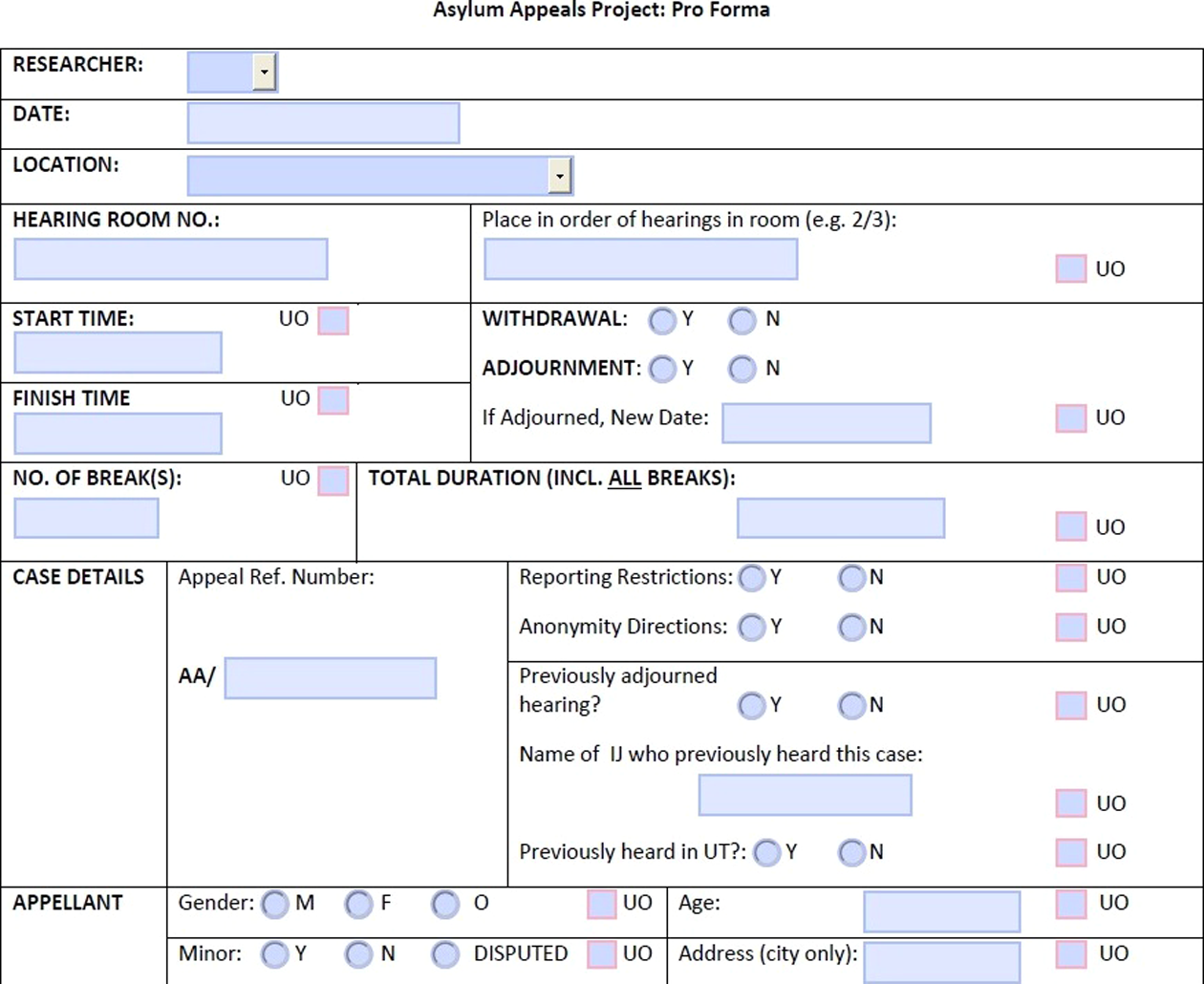
Extract from pro forma. Note: ‘UO’ in the Figure refers to ‘unobserved’; ‘‘IJ’ refers to ‘immigration judge’, ‘UT’ refers to ‘upper tribunal’; ‘AA’ refers to ‘asylum appeal’.
The pro forma was produced as a fillable .pdf questionnaire with closed questions (tick boxes) and open-ended questions (text boxes). Three researchers observed 240 substantive asylum appeal hearings at a London court (81 hearings), a non-London urban court (80 hearings) and a non-urban court (79 hearings) during 2014. We use the word ‘urban’ in this context to refer to towns or cities: where courts are described as urban, they are easily accessible from the town or city centre. One researcher observed a further 50 substantive hearings of Detained Fast Track (DFT) asylum appeals at a different hearing centre between September and December 2014. 6 We observed hearings in their entirety. The majority proceeded on the day, but many, as discussed below, were withdrawn or adjourned.
The researchers finalized the design of the pro forma together at an intensive 3-day workshop during which content and question meaning were discussed. Subsequently, they regularly conferred via e-mail, Skype, telephone and in-person to ensure a uniform approach and also met seven times to observe hearings together during designated training observations (excluded from the data below), completing separate surveys and conferring afterwards to check uniformity of understanding. 6130 asylum appeals were determined in 2014 (Refugee Council, 2015), so our sample of 290 appeals (240 mainstream and 50 DFT) accounts for roughly 4.7% of appeals determined in 2014. 7
During the 240 observations, we observed over 90 different judges; 153 hearings involved a male judge and 87 a female judge, but this ratio differed by centre. At the non-London urban court, 49% of cases involved a female judge; at the London court, 41% and at the non-urban court, 19%. There are no juries at these hearings: the decision rests with the (single) immigration judge. The Home Office was represented in every hearing, by either a HOPO or HOB. In 15% of the cases, the appellant was unrepresented, but this varied by hearing centre: at the London court, 6% were unrepresented; at the non-London urban court, 13% and at the nonurban court, 25%. Appellants originated from over 35 countries, the main being Afghanistan (49 cases), Iran (23), Pakistan (21), Sri Lanka (19), Albania (16), China (11), Iraq (11) and Zimbabwe (10). In 22 of the 240 cases, it was not possible to unambiguously record whether an interpreter was present, for example because there were issues relating to the match between the interpreter’s language and that of the appellant. Aside from such instances, an interpreter was present in 79% (173/218) of cases. This includes a small number of cases where the hearing took place in English, but the interpreter was retained in case communication difficulties arose.
Figure 2 illustrates the frequency with which the behaviours we watched for were undertaken in the 240 cases we observed outside the DFT. The counts (the ‘n’ s) in Figure 2 and subsequent Figures are less than 240 because of various exclusions. Generally, cases that were either withdrawn or adjourned, or when the appellant was not present, are excluded. Cases are also excluded from the counts of individual behaviours if the occurance or non-occurance of the behaviour was not observed by the researcher. Counts are typically around 150 as a result. Some counts are lower because the question being asked is conditional. For example, one can only ‘check interpreter-appellant understanding using [a] short dialogue’ when an interpreter is being used. In these situations, only cases that fulfil the conditions are reported. There are also occasional miscellaneous reasons for exclusion of data from the calculations. For example, in one case, the judge allowed the partner of an appellant suffering post-traumatic stress disorder to speak for them in the Tribunal, prompting us to exclude this case from many of our calculations because the courtroom dynamics we were examining were affected. It is also owing to these exclusions that we ran logistic univariate regressions in the calculations reported on below, since these can account for them.
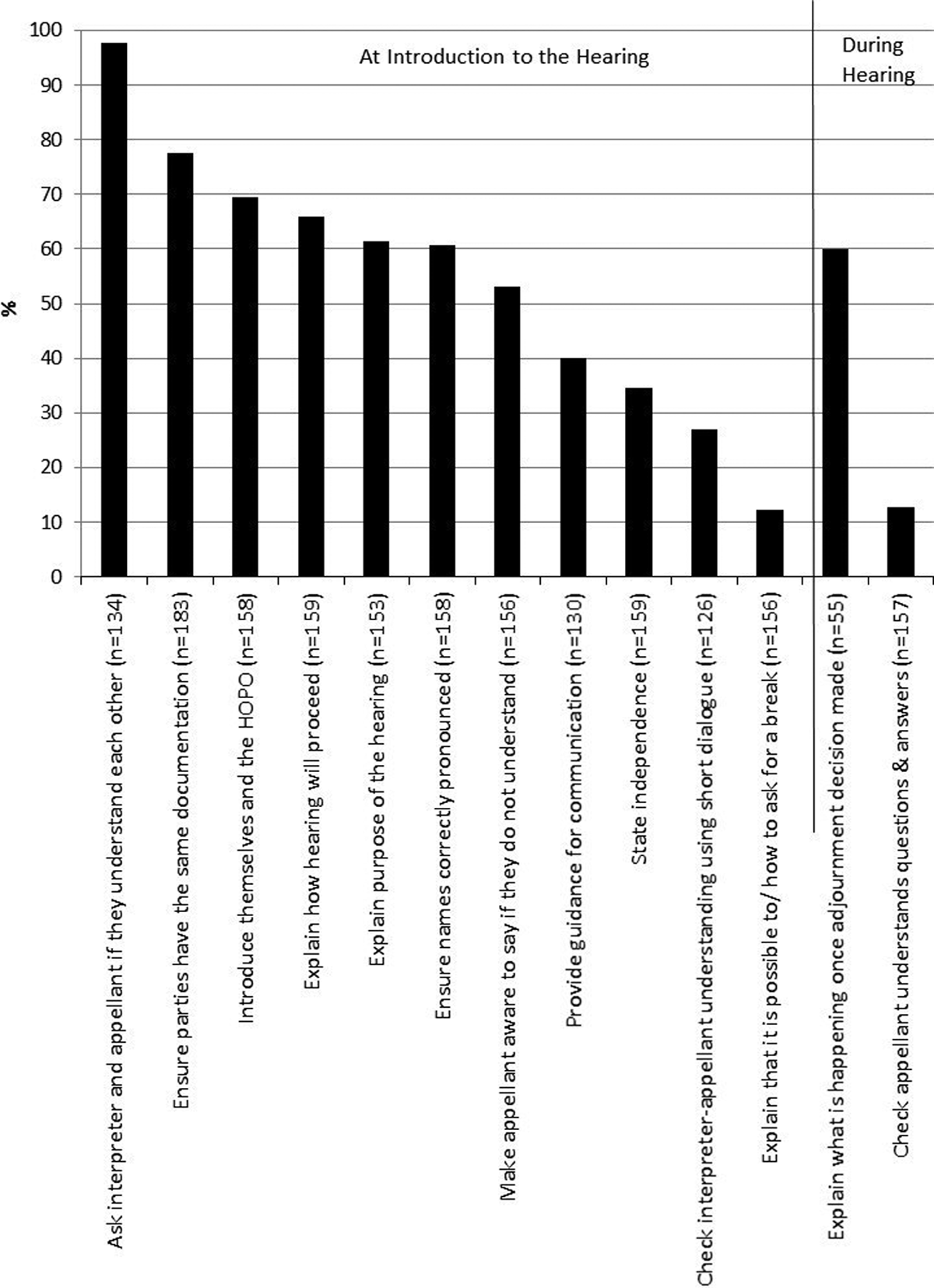
Frequency of observed judges’ behaviours.
On average, the 13 helpful behaviours we watched for were undertaken 51.8% of the time. For some behaviours, judges were relatively consistent. For example, in 97.8% of cases, judges asked the interpreter and the appellant if they understood each other, while in most cases (88%), judges did not inform the appellant that they could request a break. More often there was a disparity in judge behaviour, however. Judges stated, their independence in around a third of cases (35%), explained that the appellant should say if they do not understand anything around half the time (53%) and explained the purpose of the hearing (61%) and how it will proceed (66%) in roughly two-thirds of cases. It is when some judges follow guidance or implement advice and others do not that procedural inconsistency emerges.
A limitation of our methodology was its focus on spoken forms of communication. Scholars have pointed towards the importance of what goes unsaid in court room settings (Johnson, 2011) and long recognized the importance of myriad forms of communication such as ‘facial expressions, gestures and nonverbal communications’ (Blanck, 1996: 893) that are in danger of being overlooked if too narrow a focus on the written or spoken word is adopted (Conner, 1967).
A second limitation was that we did not address race – of either judges or appellants – in the analysis. While the results would no doubt have been interesting, to do so would have required researchers to infer racial characteristics from the appearance of actors which constitutes a form of judgement that was not appropriate or necessarily accurate. Similarly, we did not feel confident or comfortable estimating judges’ ages from the public gallery, and data on judges’ ages or years of service were not otherwise available to us. We also did not address nationality of appellants in the analysis, since their nationalities were so diverse that the minimum counts necessary to conduct systematic analysis were usually not attained. 8
A strength of our method, however, lies in utilizing a quantitative approach to investigate the specifics of courtroom dynamics. Most published studies of judicial behaviour rely upon (i) information from judges themselves in response to interviews, questionnaires or in formal written opinions; (ii) the judgements reached in actual cases; or (iii) experimental results (Conley and O’Barr, 1988). Observational methods, for their part, have often been seen as separate to quantitative analysis rather than as complementary to it (Mack and Anleu, 2007). Our approach fuses observational work with quantitative methodologies, offering innovative new insights.
Findings
We performed tests for correlation as well as both univariate and multivariate logistic regression analyses. Logistic regression is a regression model where the dependent variable is categorical: In our case, either the behaviour was conducted or it was not. Although our composite (discussed below) involves multiple questions per case, each question is binary and so it is still appropriate to apply logistic regression modelling to these data. Univariate analysis isolates the variables under examination and has the advantage of clarity, but it does not account for all the interaction effects between the variables, whereas multivariate analysis is more complex but does account for interaction effects. We discuss the tests for correlation and univariate analyses first, followed by the multivariate analysis. Where possible, we interpret the findings intuitively in terms of odds.
Correlation Testing and Univariate Analysis
Vulnerability-Redressing Discretionary Judicial Behaviour
We found strongest evidence of vulnerability-redressing discretionary judicial behaviour in relation to appellant age. 9 To determine whether specific individual judicial behaviours shared a correlation with the independent variable (in this case appellant age), we used a Fisher’s exact test, which gives an exact statistical probability even when working with small sample sizes. Online Appendix 1 shows the results of the Fisher’s tests for these and subsequent correlations discussed.
We also explored the overall difference between behaviours executed when the appellant is of different ages. To do this, we created a composite variable which assigned a score between zero and 13 to each case, based on how many of the (possible) 13 practices that we watched for were carried out. We then calculated the difference between cases involving appellants of different ages and performed a univariate regression analysis, giving us estimates of the proportions of possible helpful judicial behaviours that are carried out for different appellant age groups. In cases where some practices were not possible, they were scored out of a number lower than 13. In the calculations that follow, we assign an equal weight to the 13 variables in order to construct our 13-variable composite. We did this because, although some of the behaviours might intuitively feel more important than others to a fair hearing, any weighting that we chose that gave preference to a particular behaviour would reflect a subjective value judgement. We recognize, however, that an equal weighting also embodies a certain sort of value judgement. Future work might therefore refine our methodology by surveying court users, judges and other legal professionals about the weighting they would give to the various behaviours based on their perceived importance, and including these weightings in the statistical analysis. Online Appendix 2 gives the outcomes of the univariate regression analyses we performed.
Figure 3 illustrates the significant results from the Fisher’s tests and the model estimates from the regression analysis in relation to appellant age. As with the other Figures that come later in the article, we have not graphed results that show no significant difference (for these, see the Online Appendices). Following statistical convention, in this article *** is used to denote significance at the 0.1% confidence level, ** at the 1% confidence level and * at the 5% confidence level. In the graphs in the article, we have also included results at the 10% confidence level, denoted by a superscript dot (‘˙’), although these would generally not be seen as significant according to statistical convention. These confidence levels are associated with test results (called p values) that are less than 0.001, 0.01, 0.05 and 0.1, respectively. The p values represent the probability of obtaining a result equal to or more extreme than what was actually observed under the assumption that no relationship exists. Results at the 0.1% confidence level are the strongest, meaning that there is a 0.1% probability of obtaining a test statistic more extreme than the one observed if there was no relationship between the variables.
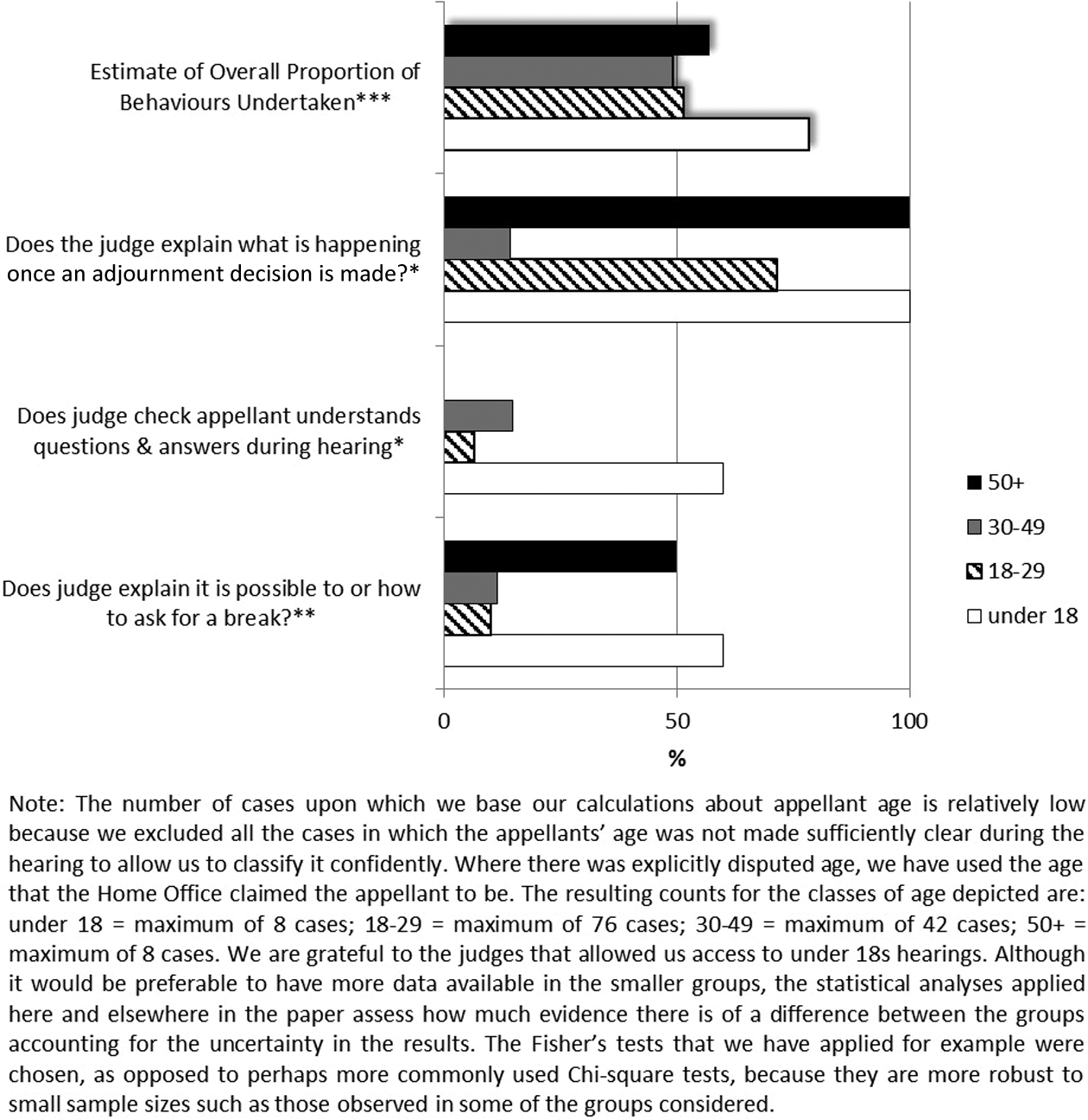
Differences in judicial behaviour by appellant age.
Figure 3 suggests that judges tend to undertake the helpful behaviours we watched for more frequently when appellants are under 18. The uppermost, shadowed, collection of bars indicates that judges undertake nearly 80% of the helpful behaviours available to them (out of the ones we watched for), in comparison to less than 60% for other age groups. Phrased in terms of odds, when judges are hearing appellants who are aged 18–29, we estimate that the odds of a helpful judicial behaviour are 70.6% lower than for under 18s. For the age group 30–49, the odds are 73.0% lower, and for the age group 50+, 63.2% lower. These odds and the others reported in this section of the article refer to the univariate analysis; the odds from the multivariate analysis are reported separately in Online Appendix 3.
The bottom three collections of bars in Figure Three (not shadowed) show that three specific behaviours – explaining what is happening once an adjournment decision is made, checking that the appellant understands the questions and answers during the hearing and explaining that it is possible to or how to ask for a break – are particularly more likely to be undertaken by judges hearing young appellants. Appellants aged over 50 also seem more likely than ‘middle-aged’ appellants to benefit from some of the helpful judicial behaviours we watched for.
Vulnerability-Neutral Discretionary Judicial Behaviour
A variety of judicial behaviours were not correlated with observable vulnerabilities, however. Being unrepresented at one’s appeal hearing was not usually a significant correlate with individual helpful judicial behaviours, for example. Although Figure 4 illustrates that judges are more likely to explain how the hearing will proceed (result only significant at 10% confidence level though: p value = 0.076) and explain the purpose of the hearing (p value = 0.0419) when there is no appellant representative, what is most notable about the figure are the number of results that were not significant and therefore do not appear on the graph. 10 Judges in our sample were not more likely to ask whether the interpreter and the appellant understand each other, introduce themselves and the HOPO, ensure names are correctly pronounced, make the appellant aware to say if they do not understand anything, provide guidance for communication, state their independence, check that the interpreter and appellant understand each other with a short dialogue, explain that it is possible to or how to ask for a break, explain what is happening once an adjournment decision is made or check that the appellant understands the questions and answers during the hearing when the appellant is unrepresented (see Online Appendix 1), despite guidance urging judges to ‘give every assistance [that they] can give to the appellant’ (Hodge, 2003: 7) when they are unrepresented. Our composite variable of 13 helpful judicial behaviours also displayed no statistical evidence of an association with the legal representation of the appellant: A univariate regression of representation and the composite measure of judicial behaviour returned a p value of 0.3491 (see Online Appendix 2).
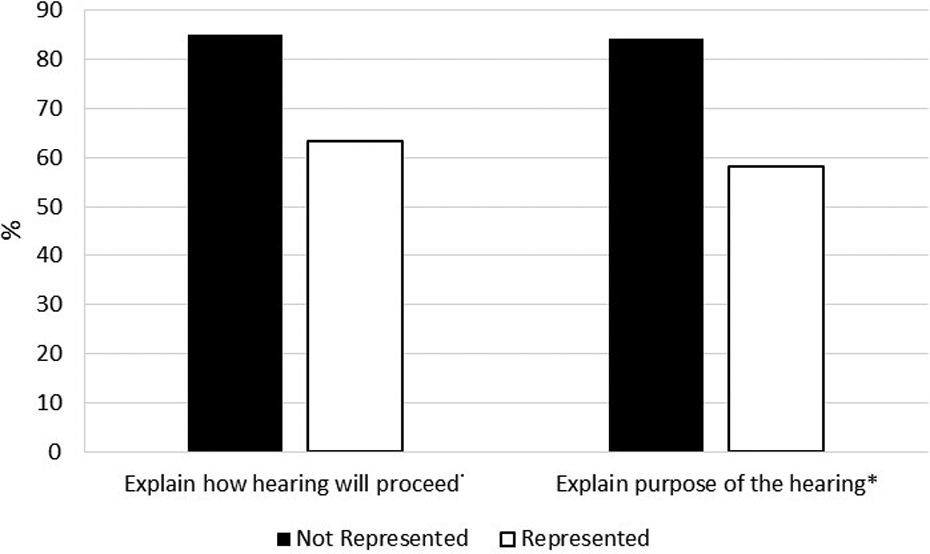
Judicial behaviour by appellant representation.
Vulnerability-Amplifying Discretionary Judicial Behaviour
We found most evidence of vulnerability-amplifying judicial behaviour in relation to appellant gender.
The top couplet of bars in Figure 5 (shadowed) show that there is a difference between the overall proportion of helpful judicial behaviours carried out during hearings of male and female appellants, and the single * following the text label to the left of the two bars suggests that the difference is statistically significant at the 5% confidence level (p value = 0.0159). The difference between the two estimates is 5.7 percentage points, meaning that there is around a 6 percentage point premium associated with being male. Phrased in terms of odds, we estimate that the odds of a helpful judicial behaviour when the appellant is female is 20.5% lower than when the appellant is male. The three other couplets of bars show specific behaviours that are particularly prone to being carried out when the appellant is male. This is clearest in using a short dialogue to check that the interpreter and appellant understand each other, the likelihood of which was statistically significantly different across appellant genders at the 1% confidence level. None of the 13 helpful behaviours we watched for were statistically more likely to be carried out when the appellant was female.
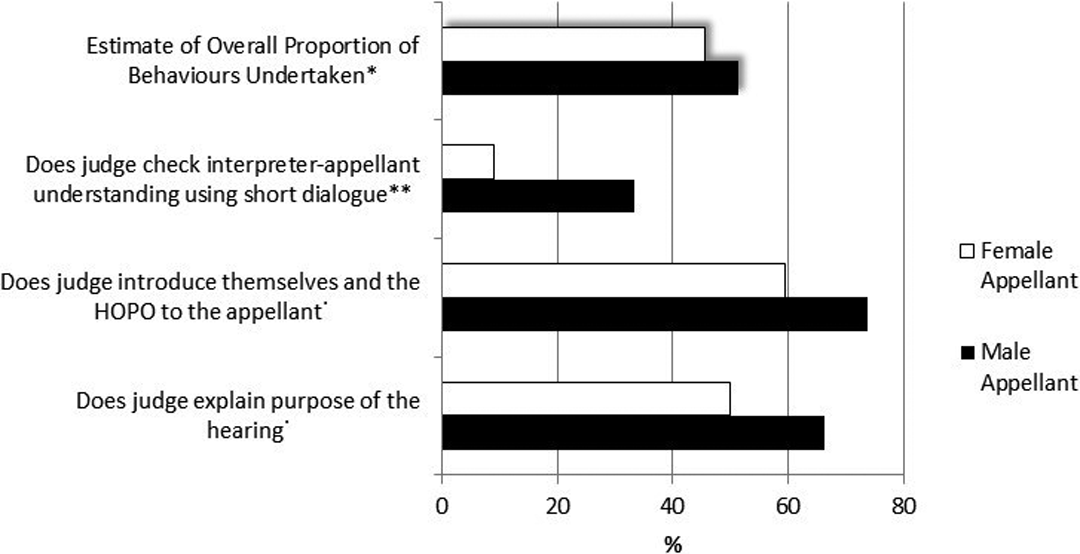
Differences in judicial behaviour by appellant gender.
Extraneous Correlations with Discretionary Judicial Behaviour
We also found evidence that four extraneous factors are correlated with the helpful discretionary judicial behaviours we watched for – judge gender, appellant dress, the scheduling of the case and, more weakly, hearing location. Female judges in our sample were more likely than male judges to execute the helpful practices we watched for, for example.
The rightmost, shadowed, couplet of bars in Figure 6 report the overall difference between behaviours executed by male and female judges, which is highly significant (p value <0.0001). The estimates for female judges (59%) and male judges (44.3%) differ by over 14 percentage points. Phrased in terms of odds, the odds of a helpful judicial behaviour when the judge is female is estimated to be 80.7% higher than when the judge is male. Figure 6 illustrates how 6 of the 13 behaviours we observed are more likely to be undertaken by female judges. None were more likely to be undertaken by male judges.
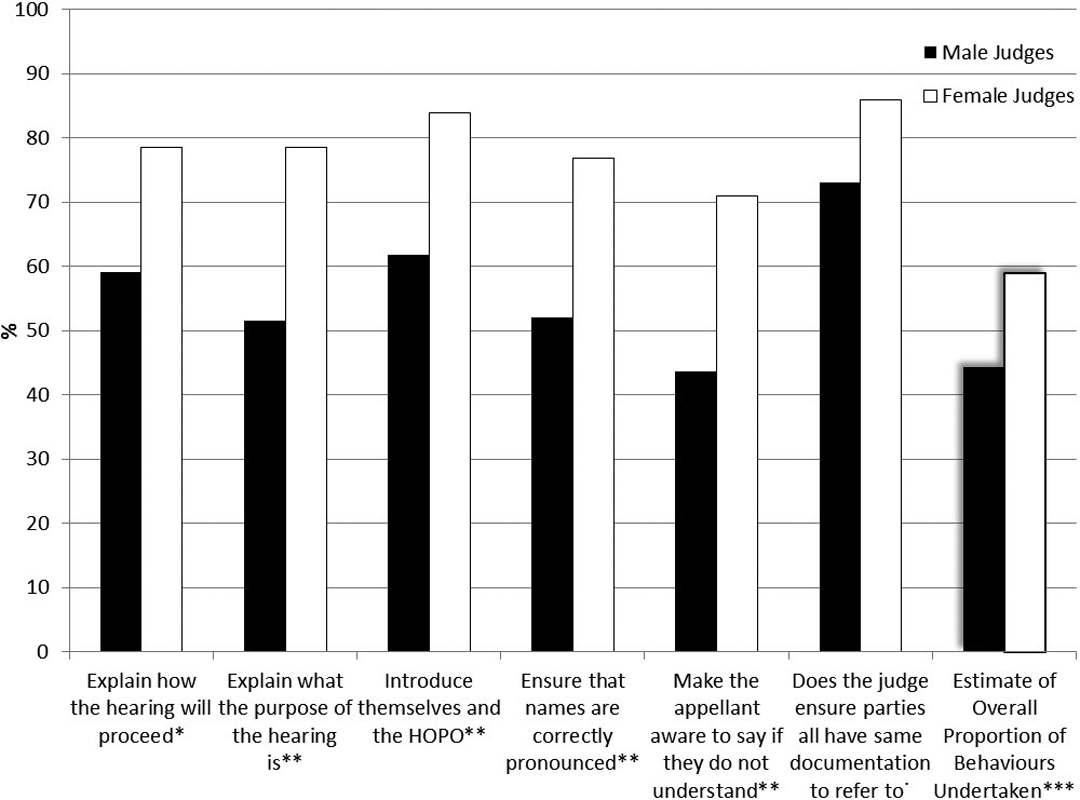
Differences between male and female adjudicators.
Figure 7 illustrates the way that judicial behaviours differed according to appellant dress. We defined ‘formal’, ‘smart/casual’ and ‘casual’ as corresponding to prevailing British norms. Casual dress may include tracksuits, shorts, jeans, sportswear, trainers, flip-flops and tank tops. Smart casual dress may include shirts, blouses and culottes. Formal dress may include suits, blazers and traditional dress. We recognize that deciding whether certain garments should be classified as smart or casual sometimes required a degree of judgement on the part of the researchers. Future improvements to our methodology could involve asking court users, judges and other legal professionals what they consider to be smart or casual.
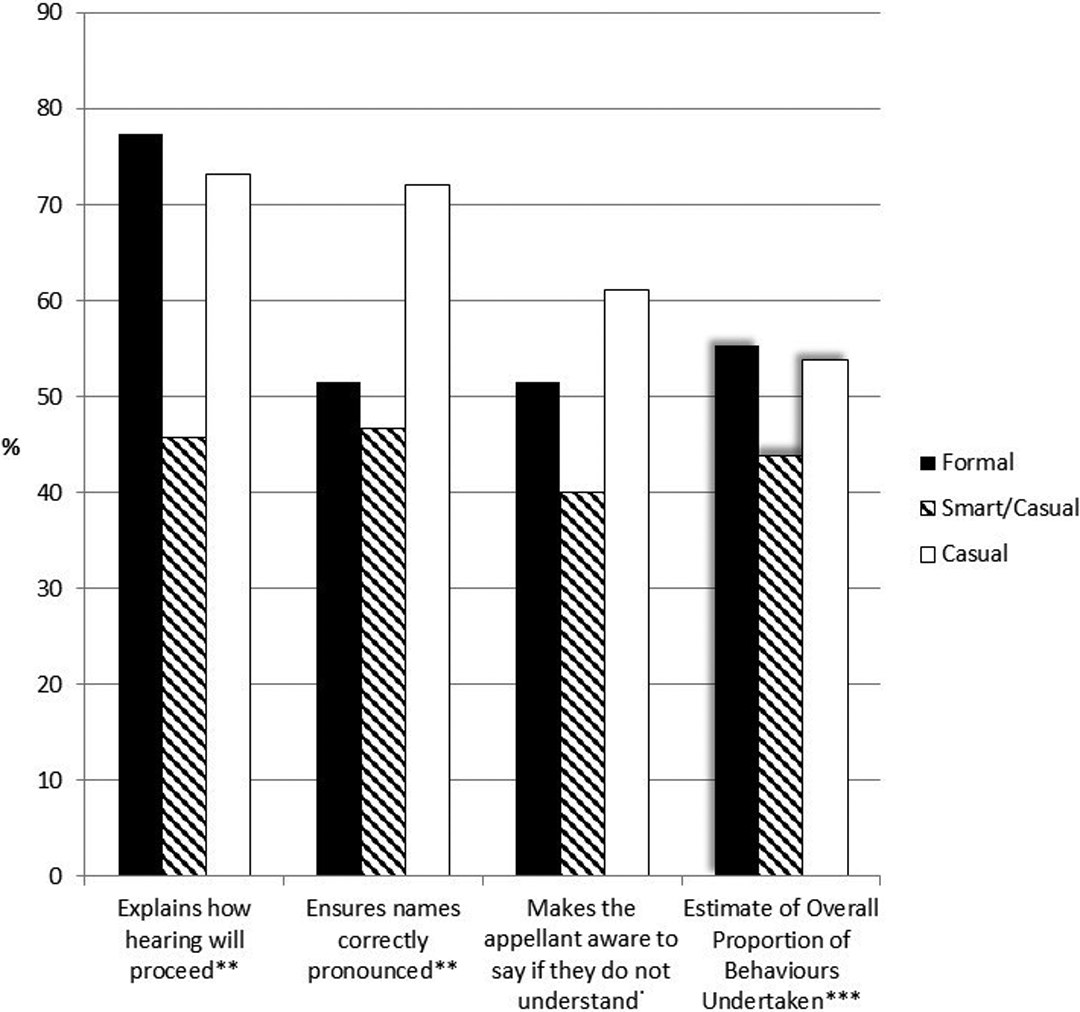
Differences in judicial behaviour by appellant dress.
Our findings indicate that judges are more likely to undertake the helpful behaviours that we watched for if the appellant is either casually or formally dressed as opposed to smart casual. The analysis of the composite of judicial behaviours (the rightmost, shadowed, triplet of bars) returned a highly significant result (p value <0.0001). We estimate that the odds of a helpful judicial behaviour when the appellant dress is casual is 49.6% higher than when the appellant is smart casual, and when the appellant is smart, it is 59.7% higher than when the appellant is smart casual. Three specific behaviours appear more likely when the appellant is casually or formally dressed as opposed to smart casual, including ensuring names are correctly pronounced, explaining how the hearing will proceed and making sure the appellant is made aware that they can say if they do not understand anything.
Figure 8 illustrates the difference in estimates of the proportion of possible helpful behaviours judges are likely to undertake throughout the week. The difference is highly significant (p value = 0.0019). Aside from the anomaly of Thursday, we estimate that the proportion of possible helpful judicial behaviours undertaken declines through the week, from around 54% on a Monday to around 43% on a Friday, a reduction of around 11 percentage points. Compared to Monday, we estimate that the odds of a helpful judicial behaviour is 14.7% lower on a Tuesday, 31.3% lower on a Wednesday, comparable on a Thursday and 35.0% lower on a Friday. The specific individual behaviours we watched for did not return significant results, however.
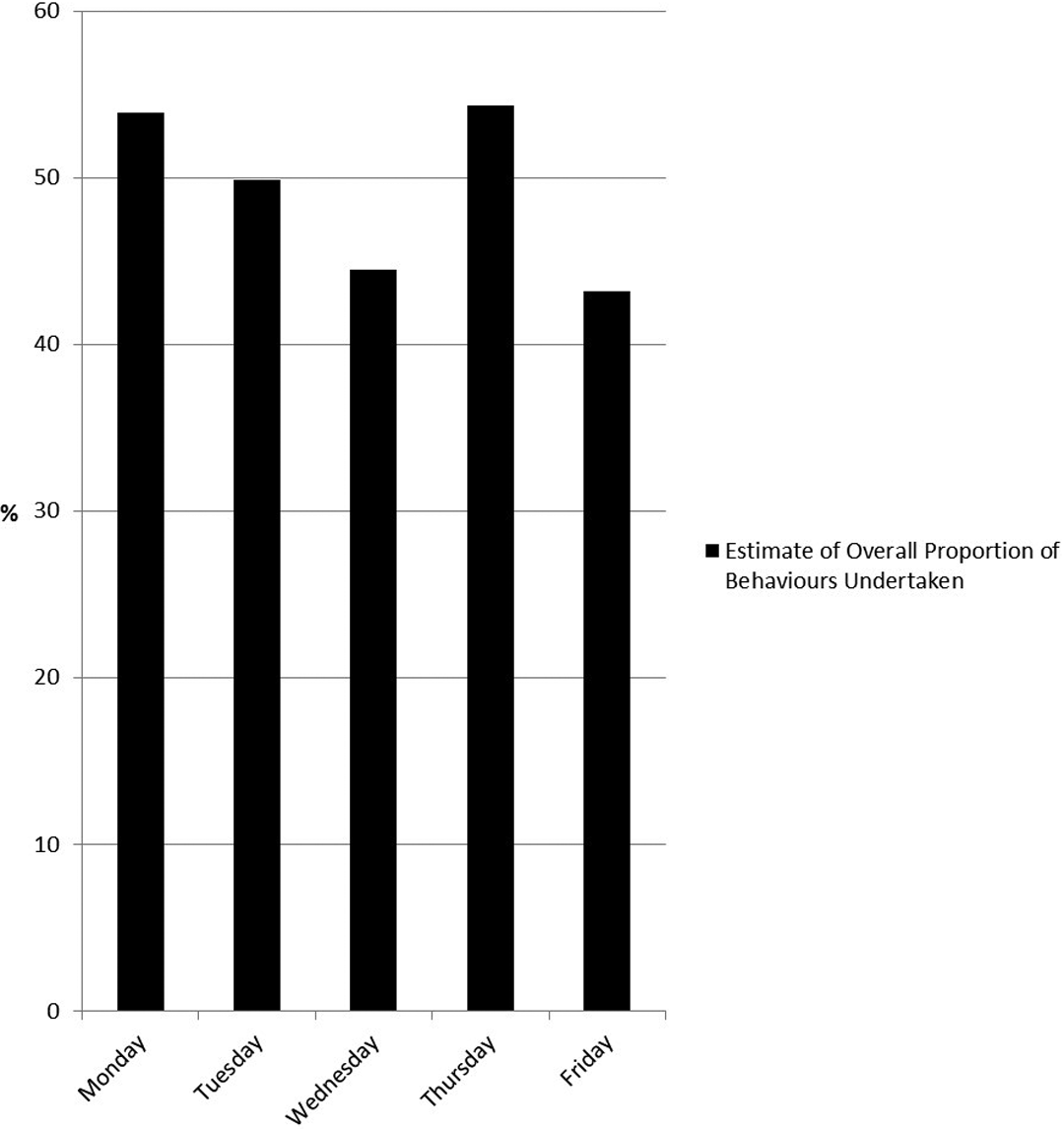
Scheduling.
We also tested for statistical differences in the proportion of helpful judicial behaviours undertaken in the morning and afternoon, and by hearing order (i.e. whether the hearing was the first or otherwise to be heard by the judge that day), and found insufficient evidence to conclude that there is a statistical difference in both cases.
Figure 9 suggests that judges at some hearing centres are less likely to undertake helpful behaviours than at others. The overall estimates (the uppermost triplet of bars with shadows in Figure 9) show a difference of 6.3 percentage points between centres (the non-London urban hearing centre’s estimate is 46.5% and the London centre’s is 52.8%). It should be noted however that the significance of the difference in the overall proportion of behaviours undertaken is weaker than the other three extraneous correlations we have discussed: It is only significant at the 10% level and therefore would not ordinarily be counted as statistically significant (p = 0.0628). This weak overall result masks larger, and more significant, discrepancies at the level of individual behaviours though. Judges at the London court were statistically significantly less likely than judges at the other two hearing centres to ensure the correct pronunciation of names, for example (p value <0.0001), but they were statistically significantly more likely to state their independence (p value = 0.0126). Judges at the non-London urban court are more likely than at the other two courts to check the understanding between the interpreter and the appellant using a short dialogue (p value <0.0001).
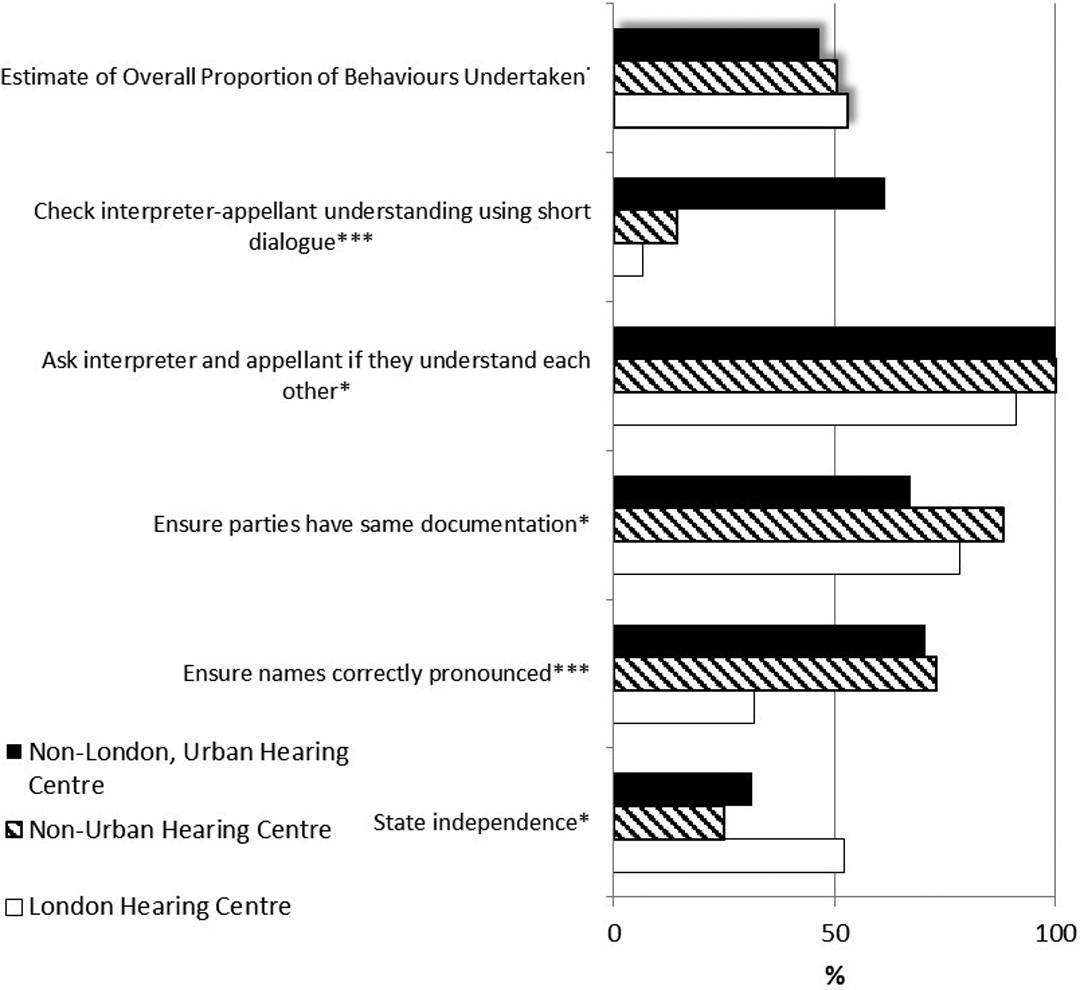
Differences in judicial behaviour by hearing centre.
Multivariate Analysis
We performed a backward stepwise logistic regression analysis, treating our composite measure of overall possible judicial behaviours as our dependent variable. We started with a model that contained judge gender, appellant gender, start time of the hearing, appellant dress, appellant representation, the presence of the interpreter, court location, day of the week of the hearing and appellant age as independent variables. We then excluded variables that did not add to the explanatory power of the model in stages by calculating the same model but dropping each of the variables in turn, giving us various submodels to select between. Basing our decision on Akaike’s Information Criterion (AIC), which is commonly used to discriminate between models, we selected the model with the lowest AIC, thereby dropping the variable that contributed least to the overall explanatory power. We continued this process until dropping more variables from the model produced no improvement in the AIC. AIC is a way of selecting a model from a set of models. It produces a measure of the relative quality of statistical models for a given set of data. AIC not only rewards goodness of fit via a likelihood term but also incorporates a penalty that is an increasing function of the number of parameters of the model. This penalty discourages over-complexity and ensures that amongst a group of similarly performing models, the simplest will be selected.
Online Appendix 3 shows the resulting model. The variables that still feature in the model are judge gender, appellant gender, appellant dress, day of the week and appellant age. This means that court location, interpreter present, start time and appellant represented were dropped at various stages of the model. The variables that were retained in the model are the ones that we find to be most significant. 11
Discussion
The univariate and multivariate analyses both suggest a correlation between judicial behaviour and appellant age. These results are in line with the prescriptions and expectations of guidance to judges about how to treat unaccompanied asylum-seeking children and also, more broadly, corroborate the general arguments in defence of judicial discretion reviewed earlier. Nevertheless, even here, condoning this pattern of judicial behaviour makes the assumption that it is acceptable to forego helpful behaviours, designed to ensure the full and fair participation of all parties in the hearing, when dealing with those who are in the ‘middle-age’ brackets. While the distribution illustrated in Figure 3 is probably preferable to its inverse, it is arguably inferior to consistently undertaking helpful actions.
The univariate and multivariate analyses were also united in highlighting the correlation between appellant gender and judicial behaviour but this time in a vulnerability-amplifying way. Research into the treatment of women’s asylum claims both at the initial interview stage and at appeal has revealed how women who have been raped are often disadvantaged by poor understanding of the influence of trauma over the ability to give testimony (Baillot et al., 2012; Herlihy and Turner, 2006). Our findings present more cause for concern, suggesting that a female appellant is less likely to benefit from helpful behaviours intended to ensure fairness and full participation in proceedings than a male appellant.
Judge gender was also highlighted by both uni- and multivariate analyses. A substantial body of work is concerned with whether ‘women judges judge differently from men judges?’ (Schultz and Shaw, 2008: 2). The higher incidence of helpful behaviours undertaken by female judges illustrated in Figure 4 should not be taken to suggest that ‘simply by adding some women to the bench and stirring, we will automatically change the male-centredness of law and legal reasoning’ (Graycar, 2009: 268). Nor would we be keen to reflect on the ‘psychological differences between men and women’ (Choi et al., 2011: 526) to account for the variations. Yet is it possible that female judges’ experiences in the gender-biased world of judging have given them heightened sensitivity to unfairness and an enhanced aptitude for redressing it? If so, then perhaps the very male-centredness of law (Graycar, 2009) has equipped female judges with the ability to pay more fastidious attention to measures that challenge exclusion.
Another two instances in which the uni- and multivariate analyses yielded largely consistent stories concerned appellant dress and the scheduling of cases. In his ethnography of the UK asylum appeal system, Good (2007: 100) cites a remark from an immigration officer to the effect that immaculately dressed appellants are less likely to be believed because if they were fleeing for their lives they would not be so well dressed. The issue of dress may sound irrelevant, but management science has demonstrated that attire is an important determinate of others’ impressions of one’s credibility, honesty and reliability (Karl et al., 2013). We are not aware of any advice offered by HMCTS on how to dress for an asylum appeal 12 (although we did become aware that asylum appellants are often advised by their solicitors). Consequently, there may be various reasons why appellants arrive in hearing centres dressed in a particular way, including cultural influences, the advice they receive, their beliefs and their socioeconomic situation. Whatever the reason for their dress, it seems necessary to account for the apparently lower frequency with which judges carry out certain helpful behaviours when appellants are dressed in a smart casual way. One possibility is that we are picking up the effect of appellant gender (female asylum seekers may more frequently dress in ways that are smart casual, for instance), but the fact that the multiple regression retains both appellant dress and appellant gender casts doubt over this explanation. We can, then, only speculate. Perhaps appellants who are formally dressed command the respect of the judge and those that are casually dressed tend to elicit pity, whereas those neither formally nor casually dressed tend to ‘benefit’ from both respect and pity to a lesser degree. This might account for the u-shaped distribution of behaviours in Figure 7 but would require further research to be corroborated.
In terms of scheduling, our findings concur with Mack and Anleu’s (2007) conclusion that scheduling and judicial discretionary actions are closely related and represent an embellishment of work that has highlighted that certain decisions are more likely after a break (Danziger et al., 2011) by emphasizing patterns of judicial behaviours across weekdays (as distinct to within them). The fact that the analysis suggested that helpfulness declined through the week may point to the effect that repetition, and even boredom, can have over procedural discretion (see Cowan and Hitchings, 2007). While it may be unrealistic to expect human fatigue to not affect a decision-making system of the First Tier’s scale, the gravity of its decisions (Reneman, 2014) means that every effort should be made to detect and minimize the influence of scheduling.
Two further sets of results deserve more scrutiny. Appellant representation is conspicuous by its absence in both the univariate and the multivariate results. The majority of behaviours we watched for were vulnerability-neutral, being unaffected by the lack of representation. This seems at odds with the spirit of guidance that urges judges to take special measures to ensure that unrepresented appellants can take full and active part in the proceedings (Arfon-Jones, 2004; Judicial College, 2013; Thomas, 2011). Moorhead (2007) describes moral and professional economies at work when deciphering why some judges are reluctant to adjust their behaviour for unrepresented litigants. In the moral economy, the unrepresented litigant is seen to have chosen to appear without counsel and so must ‘live with the consequences’ (Moorhead, 2007: 410, citing Engler, 1999). In the professional economy, judges may want to protect themselves from more unrepresented cases in future and also discourage non-representation so as not to do lawyers out of work. Suffice it to say that neither justification is appropriate to the seriousness of the decisions being made in the First Tier.
While court location is not highlighted by the multivariate analysis, the univariate analysis suggested that it was weakly correlated with the composite measure of judicial behaviour and strongly significant for certain behaviours, producing an uncertain picture. Sociolegal scholars have discussed the importance of judicial cultures arising in different courts and courtrooms (Conley and O-Barr, 1988; Fielding, 2011; see also Griffiths et al. (2013) for an early discussion of the current study), and the univariate analysis may hint at different cultures between First Tier hearing centres. Indeed, other correlations we performed lend anecdotal support to this hypothesis. When we tested for a significant difference in the frequency with which courts have hearings of less than 30 minutes, between 60 and 90 minutes and over 90 minutes in duration, for example, we found evidence the non-urban court more frequently has hearings of over 90 minutes in duration than the other two courts (result significant at 0.1% level: p value <0.0001). It also most frequently starts its hearings promptly, while the London court most frequently makes appellants wait a long time for their hearings to begin (we defined a prompt start as within 18 minutes of the scheduled start time, and a long wait as over 75 minutes – the distribution of waiting time varied significantly across the courts, p value = 0.0061). HOPOs explained the structure of their questions, allowing appellants to follow them more easily, over a quarter of the time at both urban courts but less than 5% of the time at the non-urban court (result significant at 1% level: p value = 0.0029). Interpreters in our sample more frequently offered their opinion or provided evidence to the judge in the non-London urban court than elsewhere (result only significant at 10% level: p value = 0.0651). And the likelihood of the judge granting an in-session adjournment request differs between centres: 81.8% were granted at the London court, 66.7% were granted at the non-London urban court and just 17.6% were granted at the non-urban court, producing a statistically highly significant difference between them (result significant at the 0.1% level, p value <0.0001). While these differences may be driven by case type, or other factors that could correlate with location and are outside the immediate scope of this research, they are nevertheless worthy of further examination.
Implications
The judges we observed used their procedural discretion over helpful behaviours less frequently to redress vulnerabilities of appellants than they did in ways that are indifferent to these vulnerabilities, exacerbate them, or in ways that are correlated with extraneous factors. Although judges more frequently undertake helpful discretionary behaviours when the appellant is young, they also more frequently undertake these behaviours when the appellant is male, the judge is female, the appellant is dressed smartly or casually, and the hearing is heard earlier in the week. We found little evidence that most helpful behaviours we watched for were any more or less likely when the appellant is unrepresented. We also found weak evidence that the location of the hearing is correlated with the helpfulness of judges.
Interpreting these results requires caution. We should be wary, for example, of taking helpful judicial behaviour to imply that judges are sympathetic towards cases. In studying judicial facial expressions and mannerisms, Blanck (1996) found that it was often those judges who eventually found against the defendant who were ‘warmer in relating to trial participants’ (899)…‘arguably attempting to appear fair’ (899).
Our study is also limited in other respects. Accepting the breadth of procedure in general, the judicial practices we were able to observe from the public area of the courtroom constitute only a narrow window onto the procedures that judges execute in the determination of an asylum appeal (we attended very few case management review hearings for instance). There are various ways a judge can be helpful that cannot be observed from the gallery. The objection that our presence in the courtroom might have influenced the behaviour of the judge could also be raised. We might, for example, have observed the ‘best behaviour’ of some judges owing to our presence. Furthermore, some judicial practices were not unambiguously helpful or unhelpful, and so we excluded them although their analysis too may have held broader interest.
Notwithstanding these limitations, our findings have implications for the way equal treatment is pursued in the First Tier. They cast doubt over the tactic of allowing broad procedural discretion so that judges are able to redress appellant disadvantages in specific cases. They may also have implications for current proposals to reform the British justice system (Ministry of Justice, 2016) if such proposals entail enlarging the scope of judicial discretion.
This raises the question of how to implement strengthened, cost-effective measures to promote a more consistent procedural approach. In discussing the challenges of inconsistency, Moorhead (2007: 422) proscribes ‘the reconstruction of procedural rules’ as one option. However, although there are binding rules governing Tribunals that apply to the First Tier (Tribunals and Enquiries 2014 SI 2014/2604(L .31)), these rules cover the formal procedural parameters of First Tier appeal hearings such as the powers and provisions of the Tribunal, rules in relation to the notice of appeals, rules on making a decision without a hearing, or holding a hearing in the absence of a party, as well as rules surrounding correcting, setting aside, reviewing and appealing Tribunal decisions. As such they are of a more fundamental nature than the various helpful in-court behaviours we have discussed, meaning that we would not necessarily turn to these statutory rules as a means to require certain in-court judicial behaviours.
Softer policy approaches may be preferable, but here too there is no straight-forward approach available. Although Kritzer (2007) underscores the importance that communities of craftspeople put on the opinions of their work held by other members of the craft community, which might imply an enhanced role for judicial peer review, Fielding (2011) notes that there is a presumption in the British judiciary ‘that much of what is necessary to judicial practice is absorbed during a legal career’ (106) leading to a convention against sitting in other judges’ courtrooms. Even directions and guidance from senior figures such as the Senior President of the Tribunals could be seen as ‘judicial management’ (Fielding, 2011: 111) that is likely to be ‘cheerfully dismissed’ (111).
Approaches therefore need to appeal to the instincts of the judiciary if they are to be successful. One possibility would be to create a space of ‘introspection’ (Kritzer, 2007: 337) in which judges can share their approaches in a safe and supportive environment. Encouraging judges to teach each other via prepared lectures about their practice, and then to discuss their work, can be a highly effective way to learn and confront differences honestly and openly (Weinstein, 1994). A second possibility concerns outside observation of legal hearings. Baum (2006) suggests that if the audience is composed of people whose opinions the judge respects, then there is every possibility that judges will ‘engage in self-presentation’ (2006: 4) because they ‘get satisfaction from perceiving that other people view them positively’ (2006: 4). Organizing law students or members of the public to watch court proceedings, as has been developed in the United States via court observation programmes (Gill et al., 2012), could be beneficial in this regard.
An alternative way to improve in-court procedural consistency, especially at the introduction of the hearing, would be to pre-record introductory comments. Scholars have long advocated the development of ‘standard pre-recorded audio- or videotaped instructions’ (Blanck, 1987: 354) as a way to introduce hearings ‘in a manner free of bias’ (354). Today, we have internet technologies that appellants could utilize to watch a standard introduction to their hearing online before the day of their hearing, or in the waiting area of the Tribunal, in their own language. This would not only ensure that all appellants would be consistently and fully informed about the hearings but could also save the judiciary time, and hence money, in having to introduce the hearings themselves (the option could also still be there for judges to reiterate points in person if this was felt to be constructive).
Our findings also have broader implications for the on-going scholarly debate about judicial procedural discretion more generally. Referring to the current level of judicial discretion enjoyed by most Western judges, Bone (2007) is critical of the ‘naïve confidence in the ability of trial judges to exercise discretion well’ (2023). Our findings support these reservations, offering a rare, methodologically innovative empirical insight into a debate that is often intractable at the level of theory alone. This is not to say that we should jump to conclusions (and we emphasize that our discussion here is extremely preliminary) but that rule makers and judges should engage in a careful and thoughtful reappraisal of the balance between that aspect of procedure that is governed by rules and that which is discretionary.
There are clearly dangers to an overly rule-bound judicial approach, as conveyed by Conley and O’Barr’s (1988) description of ‘the proceduralist judge’ whose ‘high priority on maintaining procedural regularity’ (498) ‘may become condescending or sarcastic’ (500) and may present the law as ‘remote and inaccessible’ (502). Yet our findings raise concerns over the inequitable use of procedural discretion when it is afforded to judges. Substantive discretion – that is a judge’s freedom to reason and decide without encumbrance – is a different matter and a central requirement of judicial independence. We have demonstrated, however, that where procedural discretion is allowed then patterns of implementation have developed that do not redress disadvantages in the ways that are intended, but that more often either ignore disadvantage, vary according to extraneous influences or, in the worst cases, disadvantage groups that are already marginalized.
Footnotes
Acknowledgements
We are grateful for the consultation services provided by Select Statistical Services Limited in researching this article, to Dr Adeline Trude, and to the various other individuals and organisations that helped to design the research. We are also grateful to Rosie Brennan, Law Clinic Director at the School of Law, University of Plymouth, for advice and consultation on earlier drafts. The article was presented in an early form at the American Association of Geographer's annual meeting in Chicago, US, in 2015, and at the Socio-Legal Studies Association annual meeting in Lancaster, UK, in 2016. We are grateful to the organizers of and participants in both events. The Senior President of the Tribunals and Her Majesty's Courts and Tribunals Service were notified before the research began about our intention to research and we are grateful for their correspondence confirming that they had no objection to the research being undertaken, subject to anonymity and reporting restrictions. Subsequent to the observations of cases reported here we additionally received permission (in May 2015) from the Senior President of the Tribunals to approach Resident Judges for research interviews, but no interview material with judges is drawn upon in this paper. We acknowledge the involvement of Drs. Melanie Griffiths and Natalia Paszkiewicz in the larger project from which this paper arose.
Declaration of Conflicting Interests
The author(s) declared no potential conflict of interest with respect to the research, authorship and/or publication of this article.
Funding
The author(s) disclosed receipt of the following financial support for the research, authorship, and/or publication of this article: The research was funded by the Economic and Social Research Council, grant number ES/J023426/1.
Supplementary material
Supplementary material is available for this article online.
Notes
References
Supplementary Material
Please find the following supplemental material available below.
For Open Access articles published under a Creative Commons License, all supplemental material carries the same license as the article it is associated with.
For non-Open Access articles published, all supplemental material carries a non-exclusive license, and permission requests for re-use of supplemental material or any part of supplemental material shall be sent directly to the copyright owner as specified in the copyright notice associated with the article.
