




Abstract
With the aging population, the incidence of degenerative diseases such as dementia and arthritis is on the rise. To combat these diseases, cell therapies using induced pluripotent stem cells (iPSCs) are being developed worldwide. However, challenges such as high development costs and immune compatibility persist. Thus, methods such as generating patient-specific iPSCs or genetically edited iPSCs with deleted immune-related genes are being researched. Applying these approaches is limited due to high cost and safety concerns of gene editing. Therefore, we focused on an alternative method using human leukocyte antigen (HLA)-homozygous cell lines, which could overcome immune rejection issues economically. We investigated diseases that could potentially be treated with cell therapy and identified which HLA-homozygous cell lines could be most effectively used for the efficient production of therapeutic cell lines. The results of the study showed that cell therapy could be applied to a wide range of diseases, and expanding the population that can benefit from HLA-homozygous iPSC lines could help popularize these treatment methods. We highlight the necessity of a global HLA-homozygous iPSC bank.

Keywords
Introduction
Despite advancements in science and technology enabling the treatment of various diseases, some illnesses are still difficult to cure. Currently, cell therapies are gaining attention as a promising alternative to traditional drugs and noncellular treatments for curing intractable diseases 1 . Cell therapies involve cultivating living cells to treat or prevent diseases 1 . In particular, stem cell therapies are being actively researched as a means of generating damaged tissues, by exploiting the self-replication and differentiation capabilities of stem cells, to treat diseases that were previously challenging to treat, such as degenerative and autoimmune diseases 2 .
Stem cell research commenced in 1961 with mouse bone marrow experiments 3 . Stem cells are categorized into pluripotent and unipotent stem cells based on their differentiation capabilities 4 . Unipotent stem cells, present in various tissues within the body, are characterized by their limited differentiation potential to specific cell types 4 . For instance, hematopoietic stem cells can differentiate into blood cells such as erythrocytes but not into muscle or nerve cells 4 . The use of pluripotent stem cells, particularly embryonic stem cells (ESCs), which can be harvested during the embryonic development stage and can differentiate into any cell type in the body, is associated with ethical controversies and research challenges as obtaining them necessitates destroying embryos4,5.
The development of induced pluripotent stem cells (iPSCs) by Shinya Yamanaka of Kyoto University in 2006, which involves reprogramming somatic cells by inserting four genes (Oct4, Sox2, Klf4, and c-Myc) known as Yamanaka factors, has invigorated stem cell research. By offering a functionally similar alternative to ESCs without the associated ethical issues, this advancement has led to vigorous research on cell therapies 6 . However, applying these therapies to patients still has several barriers 2 .
One major obstacle is the exorbitant cost of cell cultivation 7 . Unlike common drugs, cell therapies require the direct cultivation and administration of cells into the body, which can trigger immune responses if the cells are incompatible with the patient’s body 8 . Identifying and cultivating patient-specific cells to develop therapies can be more expensive than manufacturing traditional drugs Human iPSC banking: barriers and opportunities 7 . Efforts to address these challenges include identifying cell lines with compatible human leukocyte antigen (HLA) genes that can be shared among many individuals and using gene editing to remove HLA genes to block immune reactions9,10. However, related genetic research and surveys have mainly focused on specific nations or ethnicities, limiting the scope of the research 11 . During our investigation into the population applicability of homozygous cell lines comprising iPSCs, we found significant differences in the types and frequencies of HLA haplotypes across different regions, suggesting that securing representative HLA haplotype cell lines for each area could lead to more efficient cell therapy development 11 . In addition, a review of individually conducted surveys highlighted the need for broader surveys and data compilation 11 . Therefore, the aim of this study was to compare the expression frequencies of HLA genotypes across countries and ethnic groups worldwide, determine the most cost-effective HLA gene cell lines to develop by region, calculate the proportion of the population each cell line could serve, and discuss the importance of cell line banking and sharing based on these findings.
Methods
To gather data on the widest possible range of ethnic groups and draw comprehensive conclusions, we divided the world into regions based on continents, focusing on one or two areas per continent. For each region, searches were conducted on PubMed using “HLA haplotype, frequency, [region name]” as the query. From these searches, two genetically related, ethnically similar, or geographically adjacent countries were selected in each region, and their data were used.
The method used to calculate the proportion of the population that could be treated with specific cell lines was based on formulas provided in Table 1 of the study by Pierre-Antoine Gourraud et al 12 . For the calculations, we used the formulas for raw benefit, overlap, and cumulated adjusted benefit, where fi represents the frequency of the ith most common haplotype, and j denotes numbers lower than i, with fj indicating the frequency of a specific haplotype that ranks higher than fi 12 . All haplotype frequencies were rounded to the third decimal place based on their percentage frequency during calculation.



Owing to the varying scope of HLA genotype surveys, comparisons between data sets were made by focusing on common elements, excluding incomparable genotypes. However, high-expression HLA genotypes such as HLA-A, HLA-B, and HLA-DRB1 were always included in the comparison 13 .
Top-20 Most Frequent Human Leukocyte Antigen (HLA) Haplotypes Identified in Tunisia, a North African and Middle Eastern Region (n = 376).


The common haplotype shared between Tunisia and Saudi Arabia, another North African and Middle Eastern region, is highlighted in gray and in bold font.
We organized the data by arranging haplotypes in the descending order of frequency, comparing up to the top 20 ranks. Common haplotypes across the compared data sets are highlighted in the tables with gray shading and bold font for emphasis.
iPSCs
Stem cells are defined as cells that can self-renew and differentiate into various other cell types 14 . Stem cells exist within the body and proliferate upon cell or tissue damage 15 . They are found in most tissues and organs and even in tissues previously thought to be incapable of regeneration, such as neural tissues 16 . ESCs can be obtained by destroying an embryo, and they have the potential to differentiate into nearly all cell types in the body upon receiving specific signals 17 . However, the ethical dilemma associated with destroying embryos to obtain these cells has posed challenges to the development of related technologies 5 . In 2006, somatic cells were found to be inducible to a state similar to that of ESCs using four transcription factors 6 . These four factors, known as Yamanaka or reprogramming factors, give rise to iPSCs 6 . The Yamanaka factors consist of Oct4, Sox2, Klf4, and c-Myc, and iPSCs created by expressing these factors in somatic cells overcome the limitations of ESCs and are widely used in cell therapy and disease modeling18–20.
Major Histocompatibility Complex and HLAs
The major histocompatibility complex encodes proteins involved in the immune response by presenting specific glycoprotein molecules on the cell surface to distinguish between self and non-self-entities. If an entity is recognized as nonself, it triggers an immune response. The major histocompatibility complex (MHC) was discovered during research on organ transplantation in mice, and in the 1950s, scientists including Jean Dausset discovered that humans also have these genes, which are called HLA 21 . HLA molecules display peptide fragments derived from antigens on the cell surface, facilitating their recognition by T-cell receptors and subsequent immune response 22 .
The genes forming HLA molecules are located on the short arm of chromosome 6 (6p21.3) and are divided into three classes based on their structure and function 23 . The HLA molecules produced by class I genes include HLA-A, HLA-B, and HLA-C, which present molecules that can be recognized by cytotoxic CD8+ T cells. Class I molecules are expressed on all nucleated cells and platelets. The α-chain of class I molecules is encoded by genes on chromosome 6 23 , while the β2-microglobulin gene, which encodes a common light chain for these molecules, is located on chromosome 15 23 .
The HLA molecules produced by class II genes include HLA-DR, HLA-DP, and HLA-DQ, which present molecules that can be recognized by immune-mediating CD4+ helper T cells 24 . These molecules are primarily expressed on antigen-presenting cells (APCs) such as B lymphocytes, dendritic cells, and macrophages, but can also be expressed on other cells under the influence of interferons 25 . Like class I molecules, class II HLA molecules are composed of α and β chains 25 . A common feature in the genome is that multiple exons specify the individual protein domains that make up HLA molecules 25 .
Another characteristic of HLA is its high polymorphism and the linkage disequilibrium of its genes. HLA molecules are among the most polymorphic human genes, yet all related genes are located on a single chromosome 24 . This means that the genes are inherited together from parents to offspring, leading to more common genetic configurations among closely related individuals, except for recombination events on the chromosome 24 .
HLA Frequencies in North Africa and the Middle East Region
Located in North Africa, Tunisia spans approximately 164,000 km2 and has a population of approximately 11,200,000 as of 2023 26 . The primary language is Arabic, with Arabs comprising 98% of the population; the sex ratio stands at 0.98 26 . The referenced study involved 376 unrelated Tunisian individuals randomly selected from various regions, including the north, south, and center of the country 27 . The study focused on HLA-A, HLA-B, HLA-DRB1, and HLA-DQB1 and found that the most frequent HLA haplotype to be 02:01-50:01-03:01-02:02 (corresponding to HLA-A, HLA-B, HLA-DRB1, and HLA-DQB1, respectively). When compared to its neighboring country, Saudi Arabia, the most common haplotype shared between them was 24:02-08:01-03:01-02:01, with a frequency of 1.6%. Using the described method, this shared haplotype was determined to be applicable to 3.15% of the entire population (Table 1).
Located southwest of the Asian continent, Saudi Arabia is the largest country in the Middle East, covering an area of approximately 2,200,000 km2 with a population of approximately 36,000,000 as of 2023 28 . Similar to Tunisia, the official language is Arabic, with Arabs and Afro-Asian individuals constituting approximately 90% and 10% of the population, respectively; the sex ratio is approximately 1.31 28 . The referenced study was conducted on 45,457 stem cell donors registered at King Faisal Hospital and Research Center from March 2016 to August 2018, with 50% of the participants from Riyadh and the majority from urban areas 29 . The survey focused on HLA-A, HLA-B, HLA-C, and HLA-DRB1, identifying the most frequent HLA haplotype as 02:05-50:01-06:02-07:01 (corresponding to HLA-A, HLA-B, HLA-C, and HLA-DRB1, respectively). Among the top 20 most frequent HLA haplotypes, the common haplotype shared with Tunisia was 24:02-08:01-07:02-03:01, with a frequency of approximately 0.91%. As the Tunisian study did not include HLA-C and the Saudi Arabian study did not include HLA-DQB1, the comparison was made only for HLA-A, HLA-B, and HLA-DRB1. Based on the method used to calculate the applicable population, the shared HLA haplotype was determined to apply to 1.8% of the entire population of Saudi Arabia (Table 2).
Top 20 Most Frequent Human Leukocyte Antigen (HLA) Haplotypes Identified in Saudi Arabia, a North African and Middle Eastern Region (n = 45,457).


The common haplotype shared between Saudi Arabia and Tunisia, another North African and Middle Eastern region, is highlighted in gray and in bold font.
Despite both countries having an Arab population comprising approximately 90% of its total population, only one haplotype appeared in the top 20 most frequent HLA haplotypes shared between the two, with its frequency in Saudi Arabia not exceeding 1%. This outcome, even when considering the small scale of the study conducted in Tunisia compared with that in Saudi Arabia, which could account for variations in the types and frequencies of identified haplotypes, underscores the considerable diversity of HLA haplotypes in the Middle East and North African regions.
HLA Frequencies in the European Region
Located in Eastern Europe, Croatia covers an area of approximately 56,600 km2 and has a population of approximately 4,170,000 as of 2023 30 . Croatian is the official language, and Croatians account for approximately 90.4% of the population, with Serbians comprising 4.4% and other ethnicities making up another 4.4%. The sex ratio is approximately 0.93 30 . The referenced study conducted research on blood donors from Eastern Croatia 31 , examining six genotypes: HLA-A, HLA-B, HLA-C, HLA-DRB1, HLA-DQA1, and HLA-DQB1. The most frequent HLA haplotype found was 01:01-08:01-07:01-03:01-05:01-02:01 (corresponding to HLA-A, HLA-B, HLA-C, HLA-DRB1, HLA-DQA1, and HLA-DQB1, respectively), with a frequency of 3.6%. In Croatia, the top 10 most frequent haplotypes included 01:01-08:01-07:01-03:01-05:01-02:01 and 02:01-13:02-06:02-07:01-02:01-02:02, which were also found in a study conducted in Germany on the same region, with frequencies of 3.6% and 1.35%, respectively. As the German study focused on HLA-A, HLA-B, HLA-C, and HLA-DRB1, comparisons were made based on these four genotypes. Based on the methodology applied, the shared HLA haplotypes were considered applicable to 8.78% of the population in Croatia (Table 3).
Top 10 Most Frequent Human Leukocyte Antigen (HLA) Haplotypes Identified in Croatia, a European Region (n = 82).
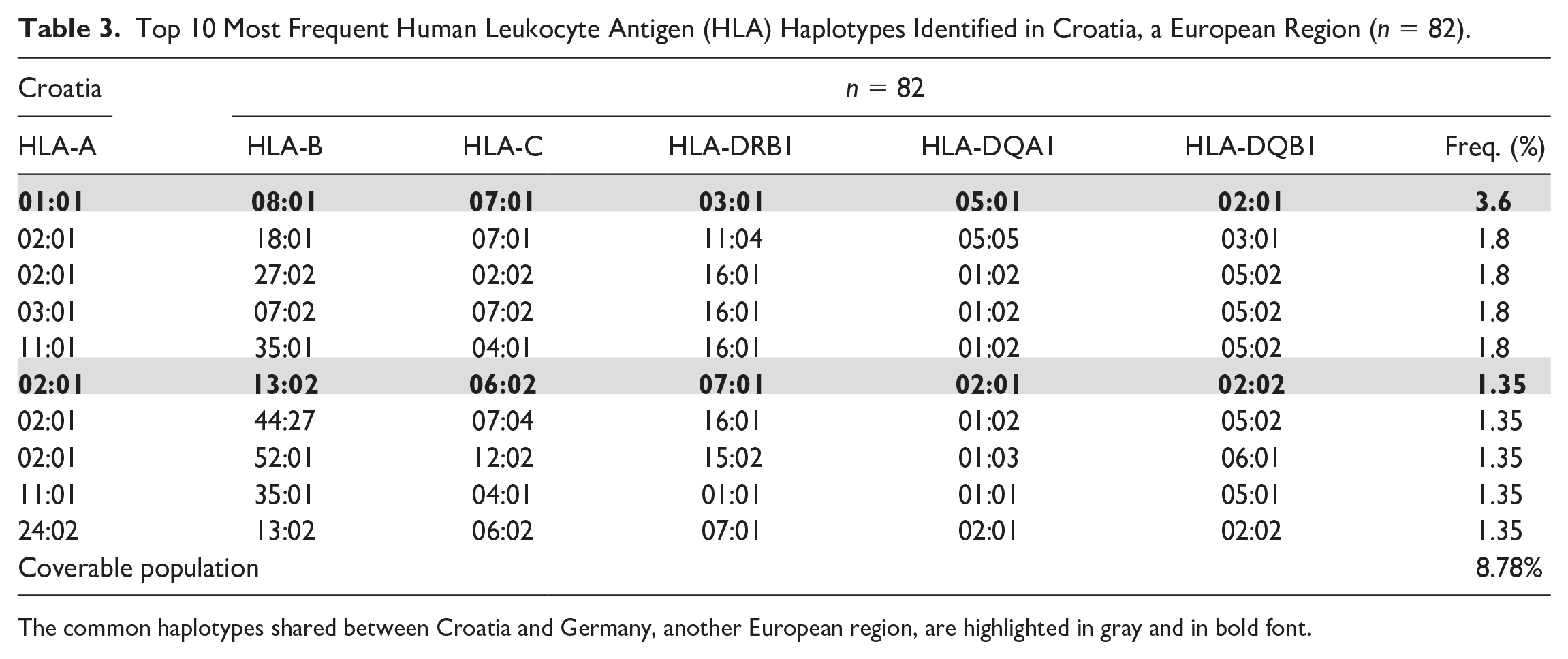
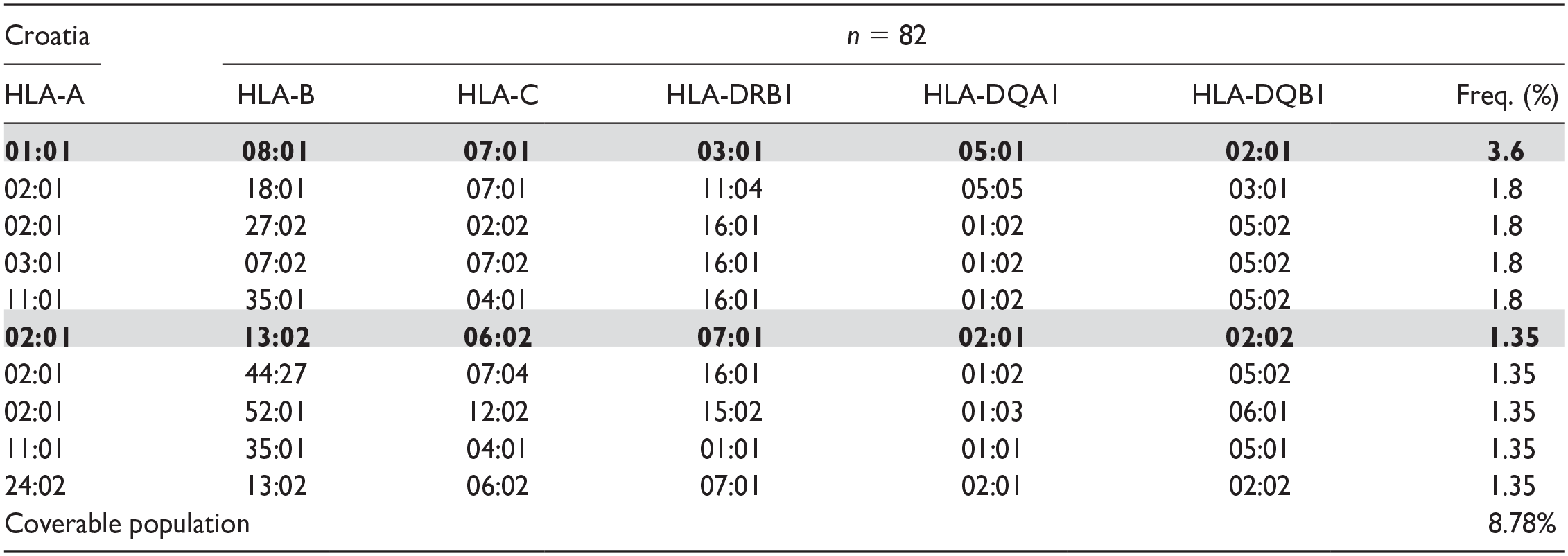
The common haplotypes shared between Croatia and Germany, another European region, are highlighted in gray and in bold font.
Centrally and northwardly located on the European continent, Germany covers an area of approximately 357,000 km2, with a population of approximately 84,200,000 as of 2023 32 . The official language is German, with the ethnic composition being 85.4% German, followed by Turks (1.8%), Ukrainians (1.4%), Syrians (1.1%), and others, with a sex ratio of approximately 0.98 32 . The referenced study focused on 8,862 donors from the German Bone Marrow Donor Center and examined HLA-A, HLA-B, HLA-C, and HLA-DRB1 genotypes 33 . The most frequent HLA haplotype was 01:01-08:01-07:01-03:01 (corresponding to HLA-A, HLA-B, HLA-C, and HLA-DRB1, respectively), with a frequency of 5.826%. Among the top 20 most frequent HLA haplotypes, those shared with Croatia, another country in the same region, included 01:01-08:01-07:01-03:01 and 02:01-13:02-06:02-07:02, with frequencies of 5.826% and 0.822%, respectively. Based on the methodology used, these two HLA haplotypes were considered to apply to 12.92% of the German population (Table 4).
Top 20 Most Frequent Human Leukocyte Antigen (HLA) Haplotypes Identified in Germany, a European Region (n = 8,862).


The common haplotypes shared between Germany and Croatia, another European region, are highlighted in gray and in bold font.
HLA Frequencies in the East Asia Region
South Korea, a peninsular country located at the eastern edge of the Asian continent, has a territory of approximately 100,000 km2 and a population of approximately 52,000,000 as of 2023 34 . It is a homogenous nation with a sex ratio of approximately 1.01 34 . A referenced study conducted at Asan Medical Center in Seoul in 2003 surveyed 128 unrelated adult volunteers, focusing on the HLA-A, HLA-B, HLA-C, and HLA-DRB1 genotypes 35 . The most frequent HLA haplotype identified was 33:03-44:03-14:03-13:02 (corresponding to HLA-A, HLA-B, HLA-C, and HLA-DRB1, respectively), with a frequency of 3.9%. Among the 19 HLA haplotypes with frequencies exceeding 1%, 4 haplotypes, including the most frequent one, were also identified among the top 20 most frequent haplotypes in Japan and China, showing the highest commonality among the data sets surveyed. Based on the methodology applied, these nine HLA-homozygous cell lines could potentially be applied to 17.92% of the South Korean population (Table 5).
Top 19 Most Frequent Human Leukocyte Antigen (HLA) Haplotypes Identified in South Korea, an East Asian Region (n = 128).


The common haplotypes shared between South Korea and Japan, another East Asian region, are highlighted in gray and in bold font.
Japan, an archipelago located east of Asia, spans approximately 378,000 km2, with a population of approximately 124,000,000 as of 2023 36 . Similar to South Korea, Japan is a largely homogenous nation with a sex ratio of approximately 0.95 36 . The referenced study surveyed families distributed across all regions of Japan, examining the HLA-A, HLA-B, HLA-C, and HLA-DRB1 genotypes 37 . The most frequent HLA haplotype identified was 24:02-52:01-12:02-15:02 (corresponding to HLA-A, HLA-B, HLA-C, and HLA-DRB1, respectively), with a frequency of 8.377%. Among the top 20 most frequent haplotypes, four were also commonly found in South Korea and China. Based on the methodology applied, these nine HLA haplotypes could potentially apply to approximately 19.41% of the entire Japanese population (Table 6).
Top 20 Most Frequent Human Leukocyte Antigen (HLA) Haplotypes Identified in Japan, an East Asian Region (n = 4,500).
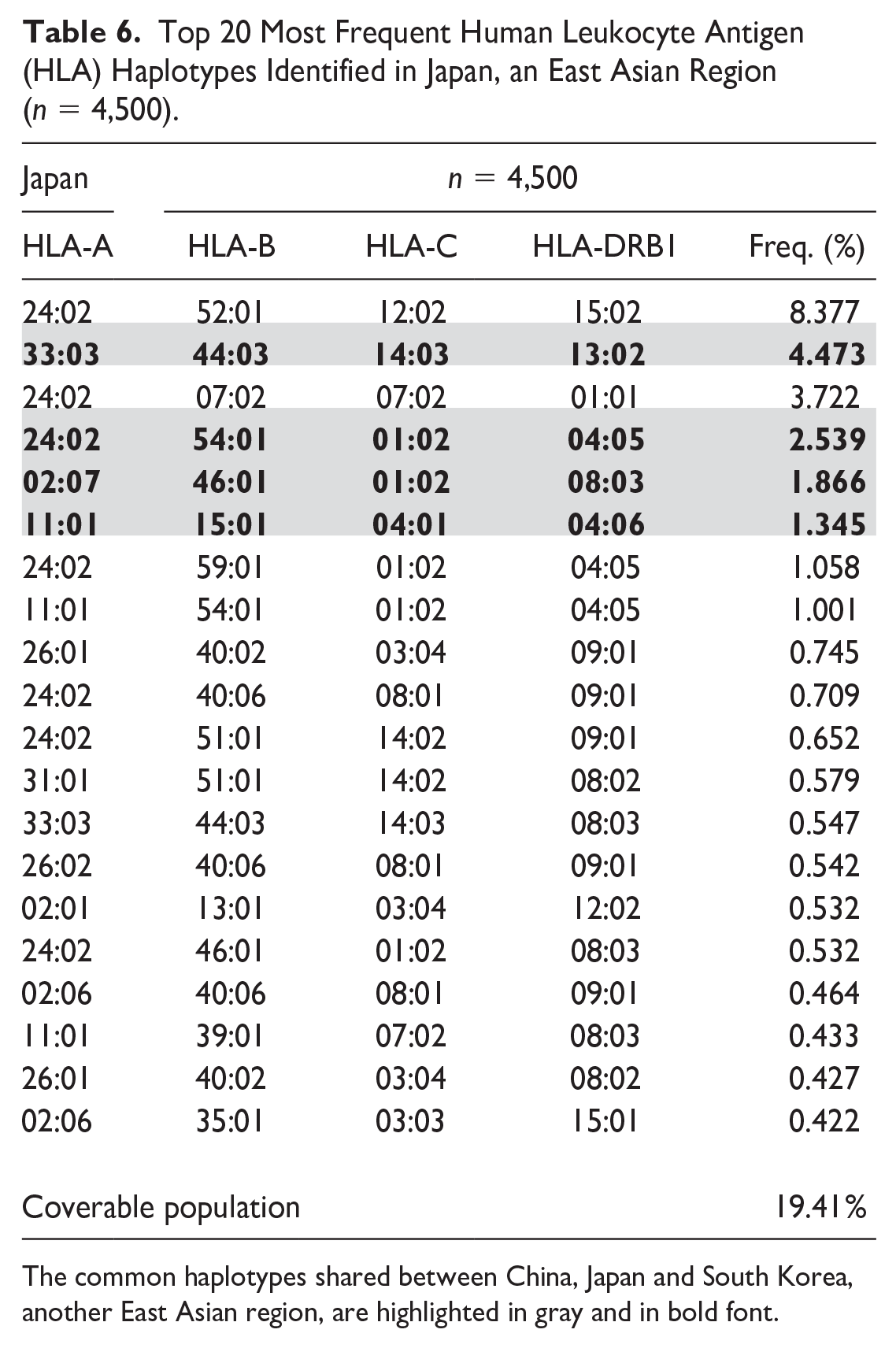

The common haplotypes shared between China, Japan and South Korea, another East Asian region, are highlighted in gray and in bold font.
China, located in East Asia, borders Mongolia and India by land and the East China Sea and Yellow Sea by water. The country spans approximately 9,326,000 km2 and has an estimated population of about 1.4 billion as of 2024. Approximately 90% of the population is Han Chinese, with various ethnic minorities making up the rest 38 . The referenced study analyzed the frequency of HLA alleles and haplotypes in 169,995 participants from the China Marrow Donor Program. The genotypes surveyed were HLA-A, HLA-B, HLA-C, HLA-DRB1, and HLA-DQB1, but for comparison with South Korea and Japan, only HLA-A, HLA-B, HLA-C, and HLA-DRB1 were considered in the Table. The most frequent HLA haplotype was 30:01-13:02-06:02-07:01-02:02 (corresponding to HLA-A, HLA-B, HLA-C, HLA-DRB1, and HLA-DQB1 respectively), with a frequency of 37%. Among the top 20 most frequent HLA haplotypes, four were commonly found in South Korea and Japan. Using the methodology’s formula, it was calculated that four HLA-homozygous cell lines could potentially be applied to 46.12% of the Chinese population (Table 7) 39 .
Top 20 Most Frequent Human Leukocyte Antigen (HLA) Haplotypes Identified in China, a East Asia Region (n = 169,995).
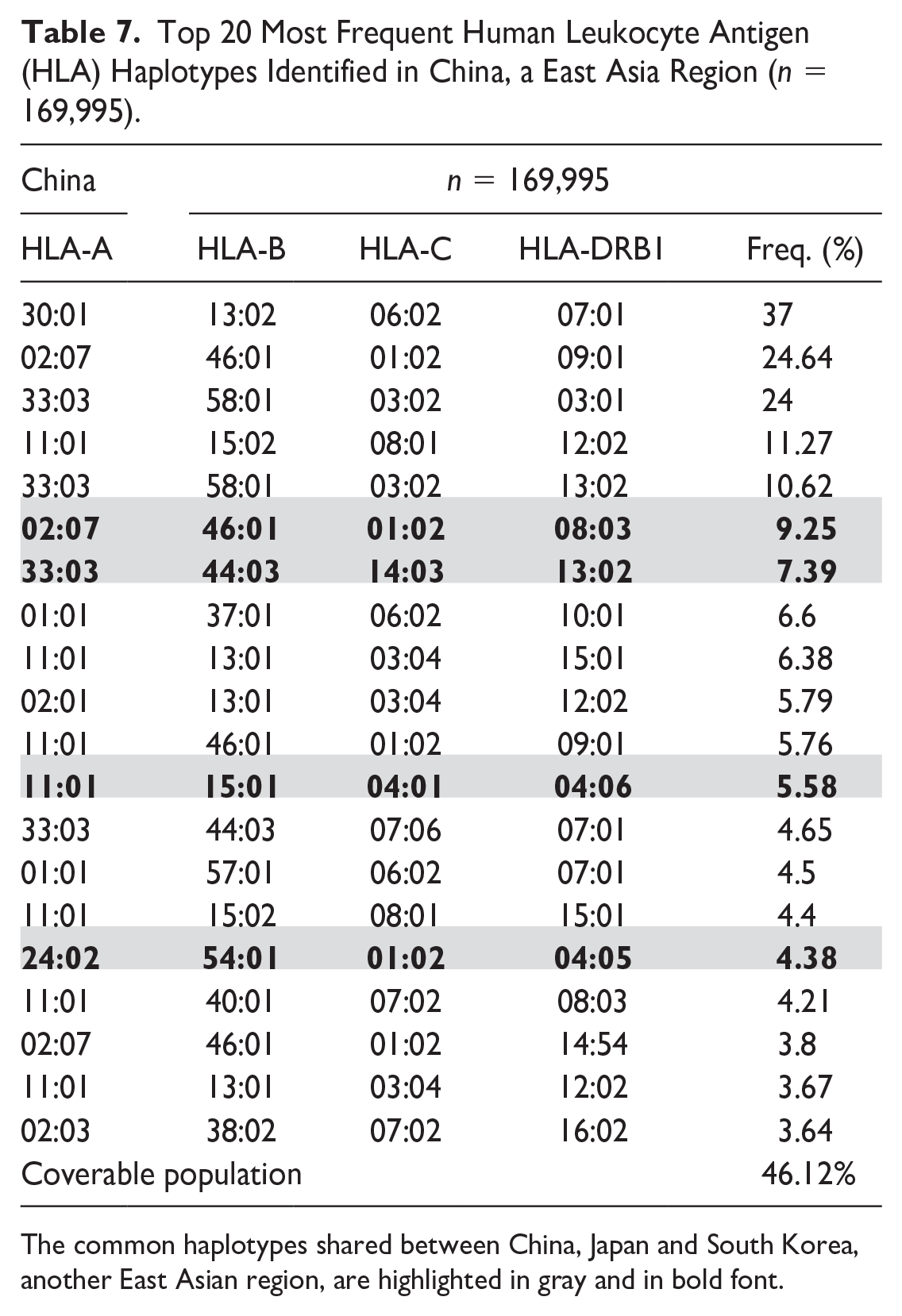

The common haplotypes shared between China, Japan and South Korea, another East Asian region, are highlighted in gray and in bold font.
HLA Frequencies in the South Asia Region
India is located in South Asia, bordered by Pakistan, Myanmar, and Bangladesh. It shares land borders with Pakistan, China, and Nepal, and is bordered by the Indian Ocean to the south. The country spans approximately 2,973,000 km2 and has an estimated population of approximately 1,410,000,000 as of 2024. Three-quarters of the population are of Aryan descent, with Dravidians and other ethnic groups making up the remainder 40 . A referenced study investigated 2,491 cord blood samples from urban populations in India. The HLA types surveyed were HLA-A, HLA-B, HLA-C, HLA-DRB1, and HLA-DQB1. The most frequent HLA haplotype identified was 01:01-57:01-06:02-07:01-03:03 (corresponding to HLA-A, HLA-B, HLA-C, HLA-DRB1, and HLA-DQB1, respectively) with a frequency of 3.63%. Among the top 20 most frequent haplotypes, the one commonly found in Iran, another surveyed country, was 33:03-58:01-03:02-03:01, with a frequency of 1.08%. Using the methodology’s formula, it was calculated that a single homozygous cell line could potentially be applied to 2.15% of the total population (Table 8) 41 .
Top 20 Most Frequent Human Leukocyte Antigen (HLA) Haplotypes Identified in India, a South Asia Region (n = 2,491).


The common haplotypes shared between India and Iran, another South Asia region, are highlighted in gray and in bold font.
Iran is located in Southwestern Asia, bordered by Pakistan and Afghanistan to the east, and Iraq and Turkey to the west. The country spans approximately 771,000 km2 and, due to its historical position between China and Europe, has seen significant population movements and is home to a diverse array of ethnic groups 42 . The referenced study focused on the Baloch ethnic group, which resides in both Iran and Pakistan and numbers around 8 million people. The study sampled 100 unrelated Baloch individuals living in Iran, identifying 16 HLA haplotypes with frequencies exceeding 1%. The most frequent HLA haplotype was 33:03-58:01-03:02-03:01 (corresponding to HLA-A, HLA-B, HLA-C, HLA-DRB1, and HLA-DQB1 respectively), with a frequency of 2.9%. This haplotype was also commonly found in the Indian population. Using the methodology’s formula, it was calculated that the HLA-homozygous cell line with a 2.9% frequency could potentially be applied to 5.71% of the total population (Table 9) 43 .
Top 16 Most Frequent Human Leukocyte Antigen (HLA) Haplotypes Identified in Iran, a South Asia Region (n = 100).


The common haplotypes shared between India and Iran, another South Asia region, are highlighted in gray and in bold font.
HLA Frequencies in Northern South America
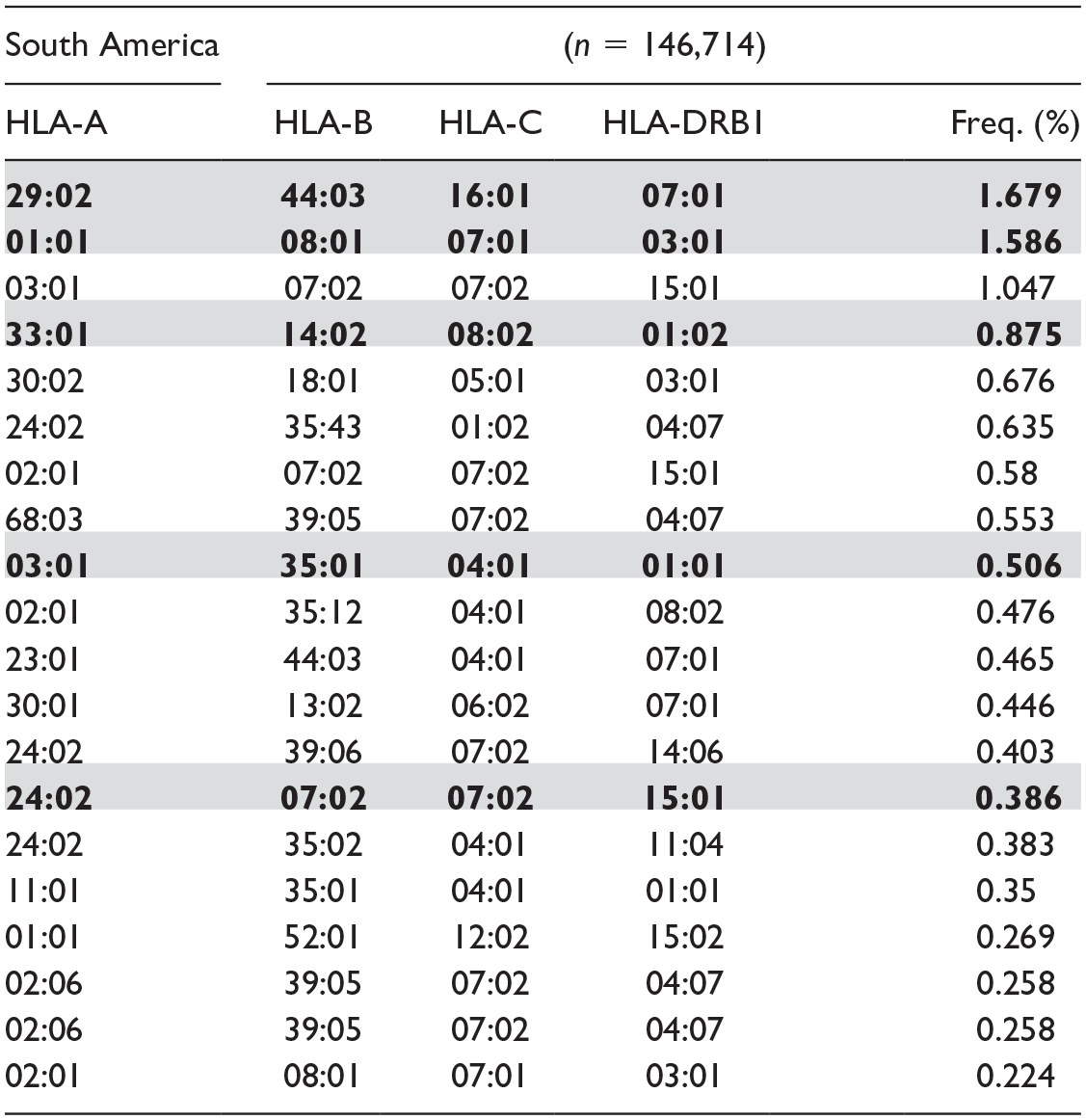
Located in the eastern part of South America, Brazil covers an area of approximately 8,500,000 km2, with a population of approximately 219,000,000 as of 2023 44 . Owing to its history of colonization and immigration, South America, and Brazil in particular, exhibits a high degree of ethnic diversity, with the population comprising 45.3% mixed race, 43.5% White, 10.2% Black, and other ethnicities, including indigenous people and Asians, as of 2022 44 ; the sex ratio is approximately 0.97 44 . A referenced study aimed at high-resolution analysis of HLA loci in healthy adults from southern Brazil involved 108 participants 45 . The HLA genotypes examined were HLA-A, HLA-B, and HLA-DRB1, with the most frequent HLA haplotype being 29:02-44:03-07:01 (corresponding to HLA-A, HLA-B, and HLA-DRB1, respectively), with a frequency of 2.5%. Among the top 20 most frequent HLA haplotypes, six were also commonly found in Colombia. Based on the methodology applied, these six types of homozygous cell lines could potentially apply to 16.28% of the entire population (Table 10). Located in the northern part of South America, Colombia covers an area of approximately 1,140,000 km2, with a population of approximately 49,300,000 as of 2023 46 . Similar to Brazil, Colombia exhibits high ethnic diversity, with Mestizos and Whites making up 87.6% of the population, Afro-Colombians 6.8%, and indigenous people 4.3%, with a sex ratio of approximately 0.96 46 . The referenced study used 1,779 samples donated to Colombia’s bone marrow registry between 2018 and 2021, examining the HLA-A, HLA-B, HLA-C, HLA-DRB1, and HLA-DQB1 genotypes 47 . The most frequent HLA haplotype was 24:02-35:43-01:02-04:07-03:02 (corresponding to HLA-A, HLA-B, HLA-C, HLA-DRB1, and HLA-DQB1, respectively), with a frequency of 3.335%. As the reference study for Brazil did not include HLA-C and HLA-DQB1, comparisons were made based on HLA-A, HLA-B, and HLA-DRB1. Among the top 20 most frequent HLA haplotypes, six were also commonly found in Brazil. Based on the methodology applied, these six types of homozygous cell lines could potentially be applicable to 12.63% of the entire population (Table 11).
Top 20 Most Frequent Human Leukocyte Antigen (HLA) Haplotypes Identified in Brazil, a South American Region (n = 108).
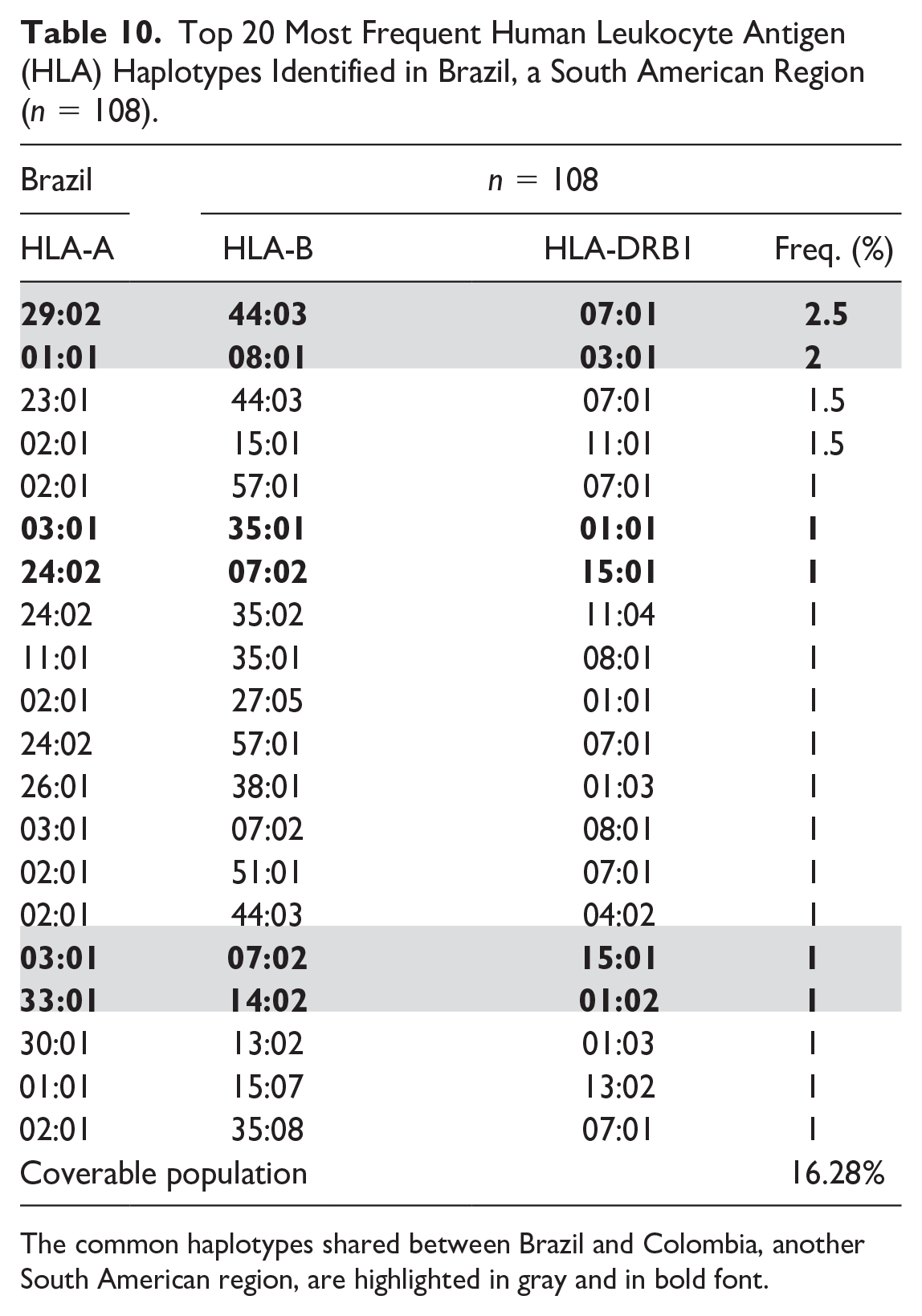
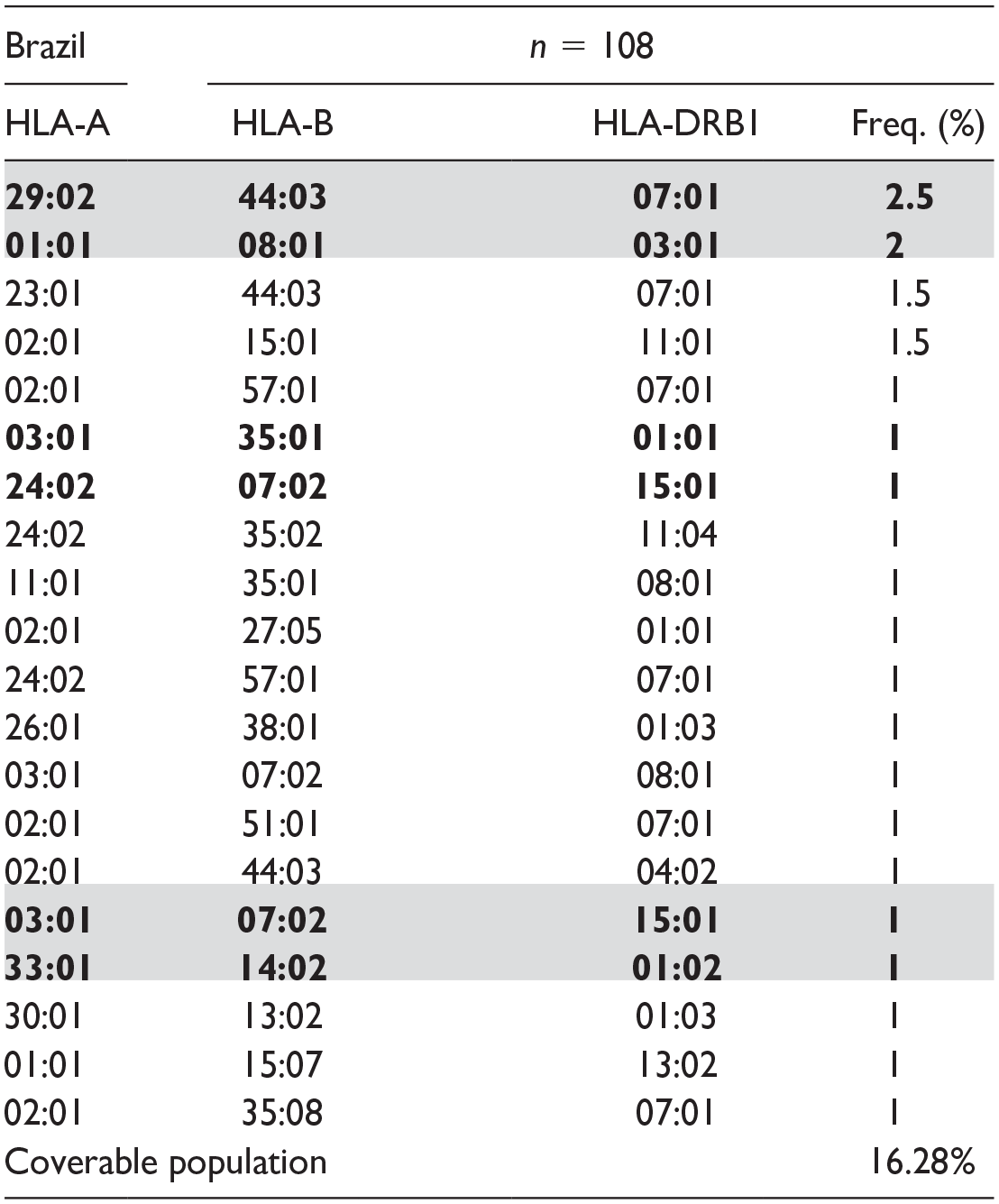
The common haplotypes shared between Brazil and Colombia, another South American region, are highlighted in gray and in bold font.
Top 20 Most Frequent Human Leukocyte Antigen (HLA) Haplotypes Identified in Colombia, a South American Region (n = 1,779).
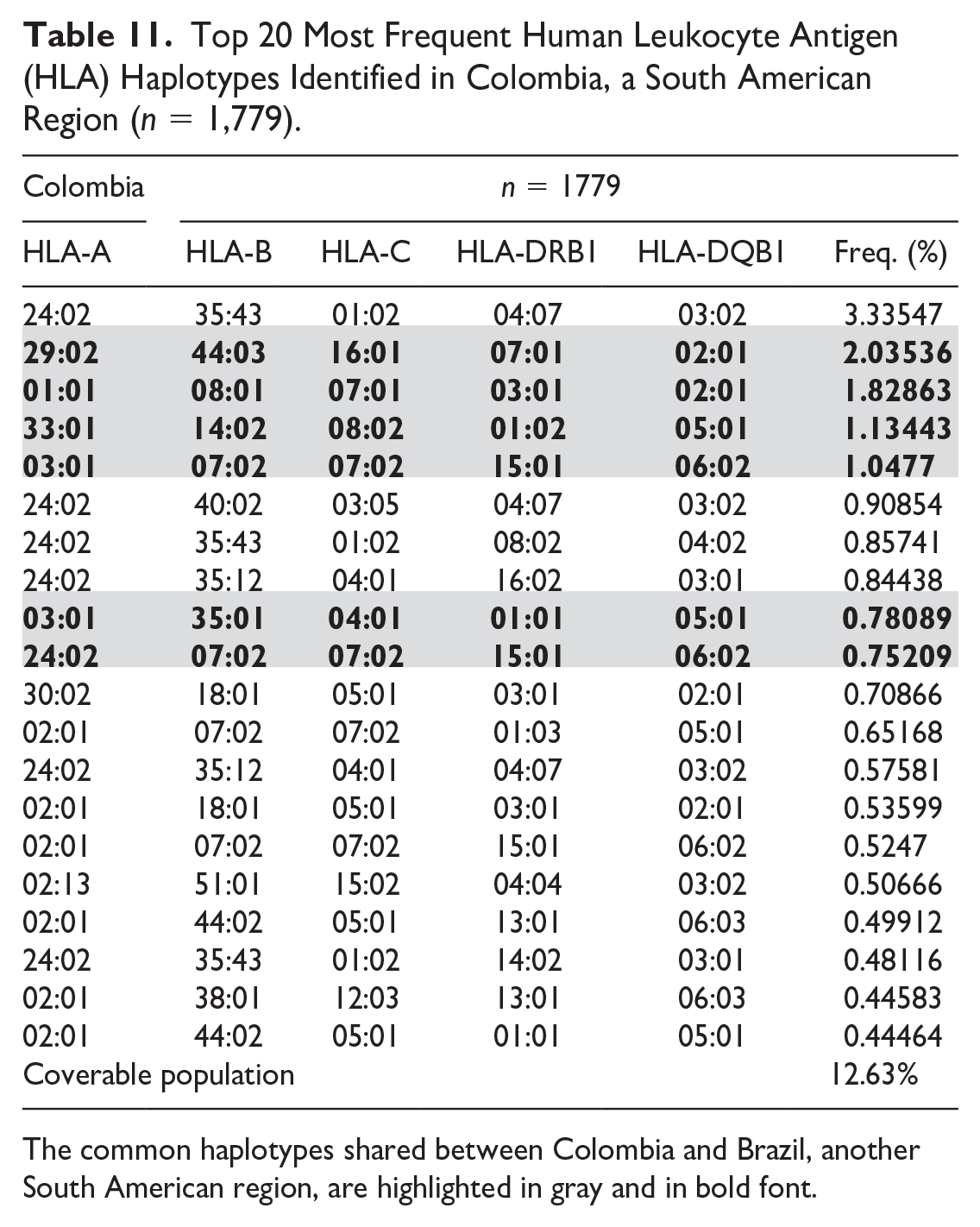
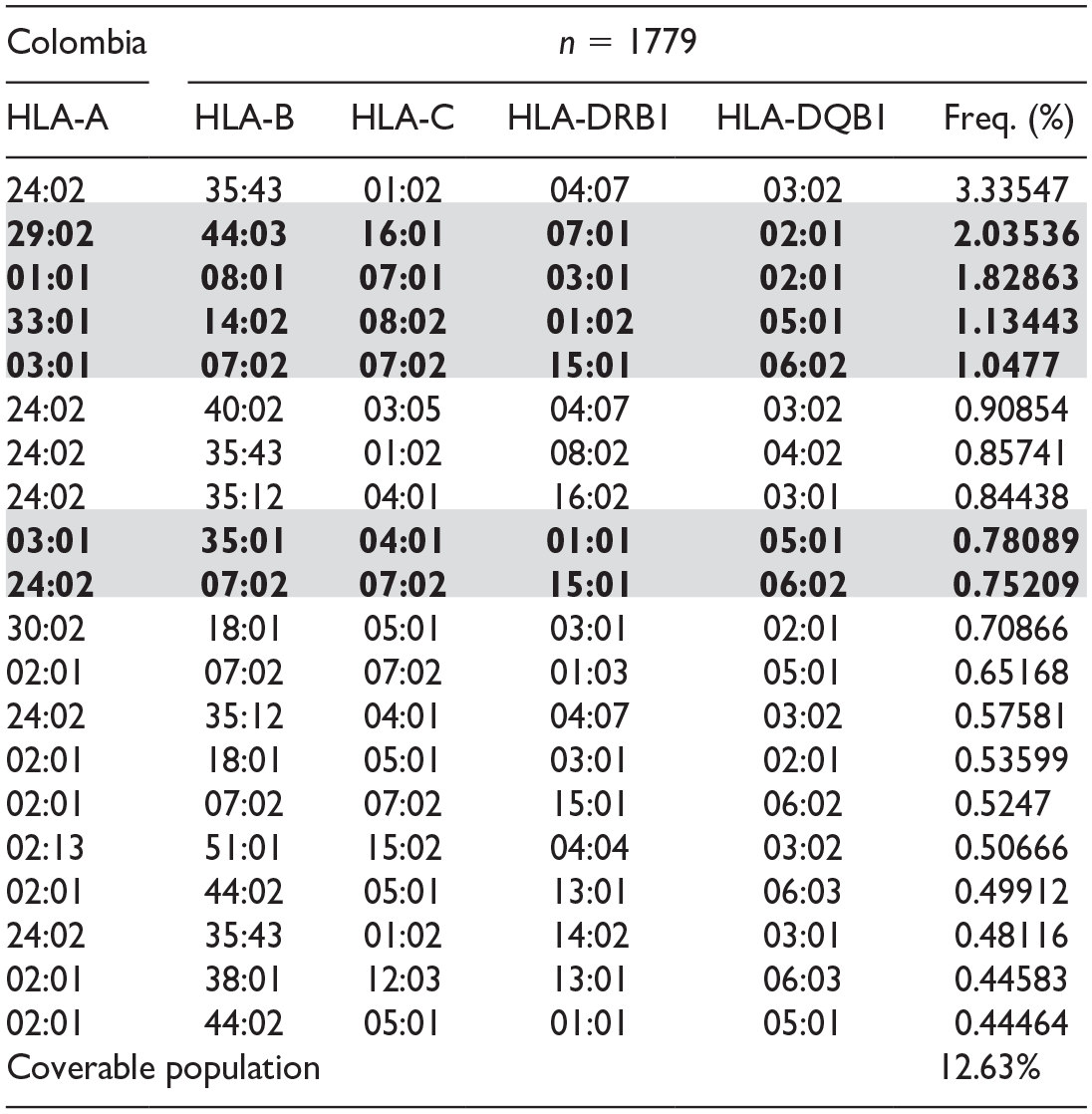
The common haplotypes shared between Colombia and Brazil, another South American region, are highlighted in gray and in bold font.
Racial HLA Frequencies in the USA
The referenced study was conducted using the volunteer donor registry managed by the National Marrow Donor Program in the United States, classifying the data into 21 ethnic groups and investigating the frequency of HLA haplotypes for each ethnicity 48 . Although the study analyzed six genotypes, this study only focused on HLA-A, HLA-B, HLA-C, and HLA-DRB1, summarizing findings for these four genotypes. From the 21 ethnic groups surveyed, the five ethnicities most similar to those in the regions studied were selected for comparison. Table 12 presents the top 20 most frequent HLA haplotypes and their frequencies among individuals of Middle Eastern and North African descent living in the United States. The common high-frequency HLA haplotypes found in the Middle East and North Africa did not overlap with the top 20 most frequent haplotypes among individuals of Middle Eastern and North African descent in the United States. This outcome, compared with that of other previously surveyed regions, aligns with the relatively high diversity of HLA haplotypes characteristic of the Middle East and North Africa.
Top 20 Most Frequent Human Leukocyte Antigen (HLA) Haplotypes in Individuals of North African and Middle Eastern Descent Living in the United States (n = 70,890).

Table 13 outlines the top 20 most frequent HLA haplotypes among individuals of European descent residing in the United States. Among the high-frequency HLA haplotypes commonly found in the European region, as shown in Tables 3 and 4, the haplotype 01:01-08:01-07:01-03:01 (corresponding to HLA-A, HLA-B, HLA-C, and HLA-DRB1, respectively) was also prevalent among European Americans, with a frequency of 6.526%, making it the most common among the European-descended population in the United States. Based on the methodology used, the percentage of European Americans who could potentially benefit from the 01:01-08:01-07:01-03:01 haplotype was determined to be 12.63%.
Top 20 Most Frequent Human Leukocyte Antigen (HLA) Haplotypes Among Individuals of European Descent Residing in the United States (n = 1,242,890).

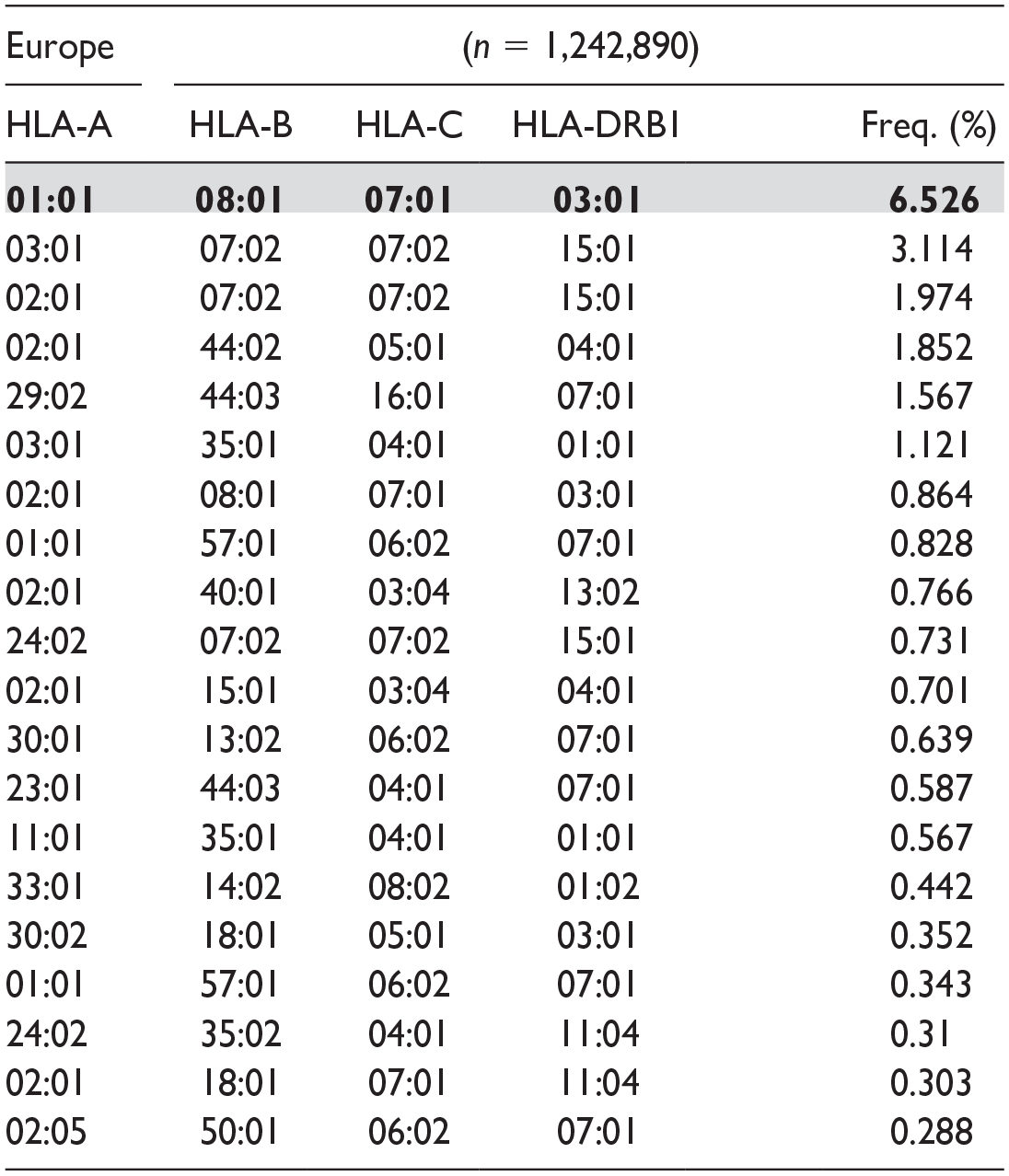
Table 14 lists the 20 most frequent HLA haplotypes among East Asians living in the United States. The most common HLA haplotype is 24:02-52:01-12:02-15:02 (corresponding to HLA-A, HLA-B, HLA-C, and HLA-DRB1, respectively). Four HLA haplotypes are commonly found among East Asians in both the East Asian region and the United States. These four haplotypes can be applied to approximately 16.77% of the population.
Top 20 Most Frequent Human Leukocyte Antigen (HLA) Haplotypes Among Individuals of East Asian Descent Residing in the United States (n = 24,582).


The haplotypes shaded in gray and in bold font are commonly present in East Asians and East Asian Americans.
Table 15 presents the data on the frequency of HLA haplotypes among South Asians living in the United States (n = 185,391), listing the top 20 most frequent haplotypes. The genotypes surveyed were HLA-A, HLA-B, HLA-C, and HLA-DRB1. The most common haplotype found in the South Asian region, including India and Iran, was 33:03-58:01-03:02-03:01. The percentage of the population that could potentially benefit from using this homozygous cell line is approximately 2.11%.
Top 20 Most Frequent Human Leukocyte Antigen (HLA) Haplotypes Among Individuals of South Asian Descent Residing in the United States (n = 185,391).


The haplotypes shaded in gray and in bold font are commonly present in South Asians and South Asian Americans.
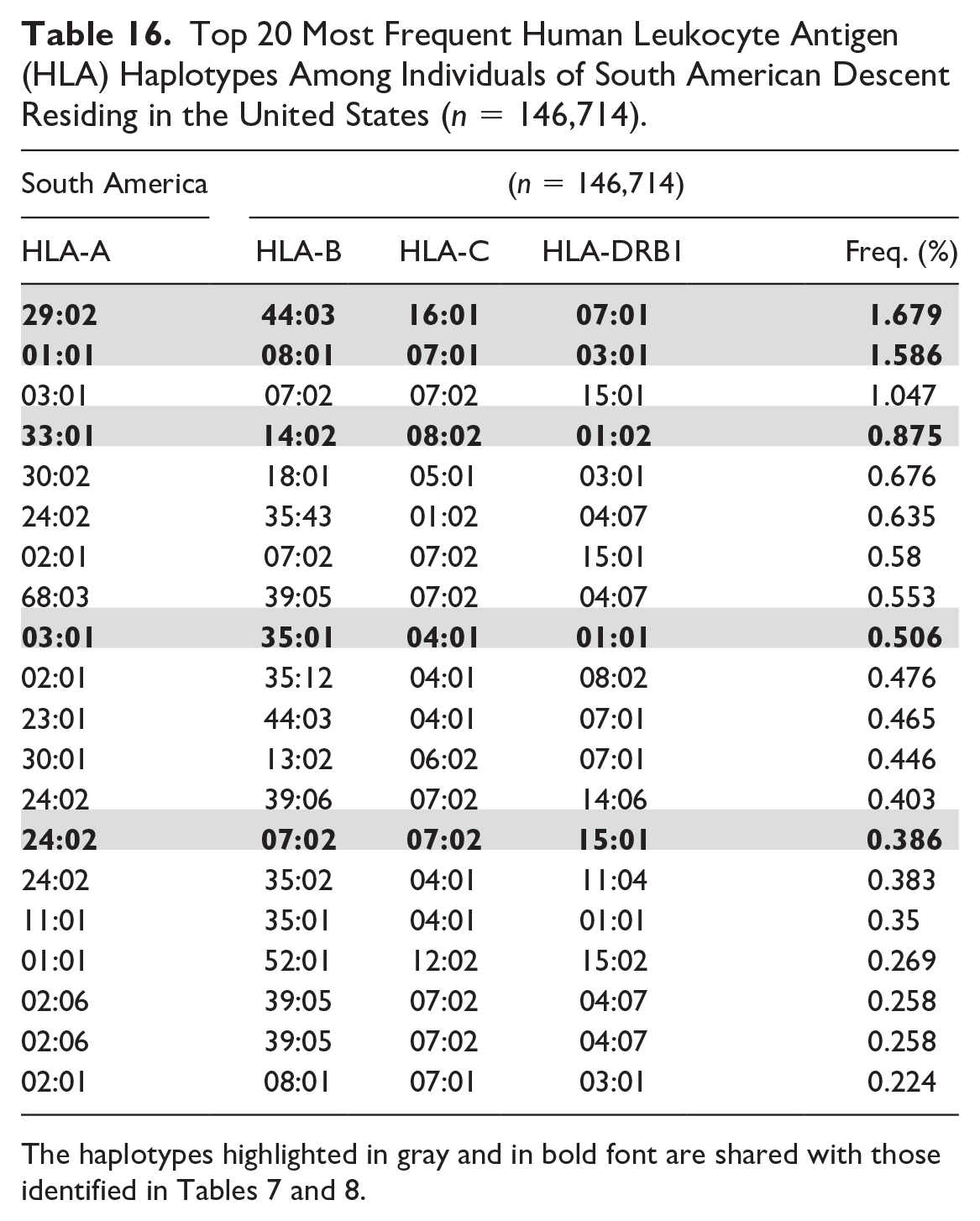
Table 16 outlines the top 20 most frequent HLA haplotypes among individuals of South American descent residing in the United States. Including the most common haplotype, 29:02-44:03-16:01-07:01 (corresponding to HLA-A, HLA-B, HLA-C, and HLA-DRB1, respectively), five HLA haplotypes were commonly present both in South America and among South American Americans. The population applicability of these five homozygous cell lines was estimated to be approximately 11.83%.
Top 20 Most Frequent Human Leukocyte Antigen (HLA) Haplotypes Among Individuals of South American Descent Residing in the United States (n = 146,714).
Conclusion
Stem cell–based cell therapies, including those using iPSCs, are actively being researched as fundamental treatments for many currently incurable diseases. These therapies have shown positive effects in various conditions, including arthritis 49 . However, the widespread adoption of these therapies faces significant challenges, with high costs being one of the major barriers. This study aimed to address this issue by identifying the frequencies of commonly occurring HLA haplotypes worldwide, with the goal of forming the most efficient and cost-effective cell lines.
In the United States, the proportions of the European, East Asian, South Asian, and South American populations capable of using homozygous cell lines derived from commonly identified HLA haplotypes in each region are 12.63%, 16.77%, 2.11%, and 11.83%, respectively (Fig. 1). The accompanying map delineates the studied regions and highlights the high-frequency HLA haplotypes commonly occurring within these areas. Specifically, one haplotype was identified in North Africa and the Middle East, two in Europe, four in East Asia, one in South Asia, and six in South America (Fig. 2).

Applicability rate of common human leukocyte antigen (HLA) haplotypes to diverse ethnic groups in the United States. This figure illustrates the percentage of the population within each ethnic group in the United States that could potentially benefit from homozygous cell lines of HLA haplotypes commonly found in their respective regions. The applicability rate is 12.63% for individuals of European descent, 16.77% for those of East Asian descent, and 11.83% for individuals of South American descent.
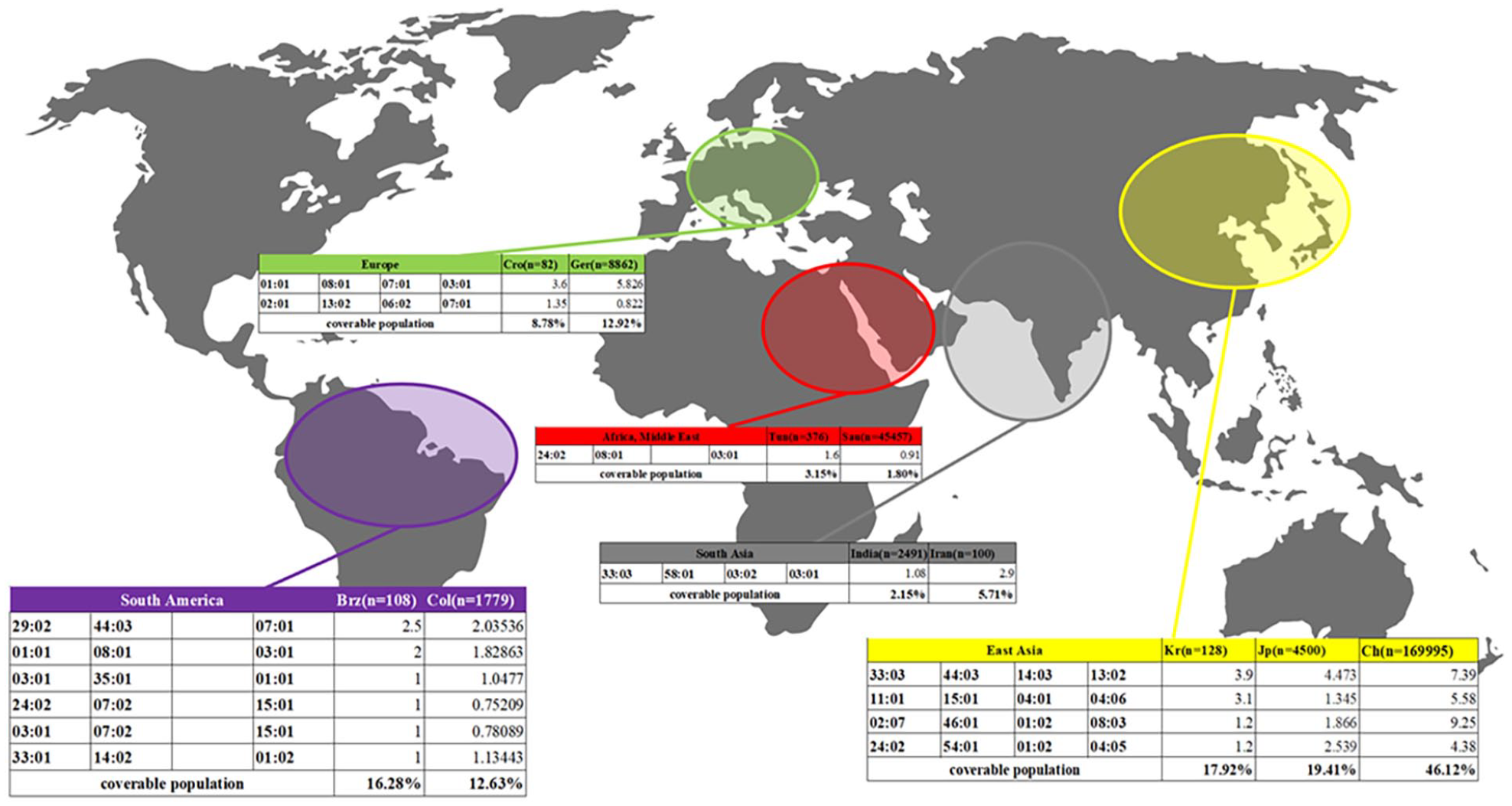
Map depicting common high-frequency human leukocyte antigen haplotypes in the surveyed regions.
In the North African and Middle Eastern regions, only one common HLA haplotype was identified, whereas in Europe, East Asia, and South America, two, four, and six common HLA haplotypes were identified, respectively. Among the five regions surveyed, including the United States, East Asians and East Asian Americans exhibited a higher number of common high-frequency HLA haplotypes compared with people of other regions and ethnicities, with relatively high frequencies as well. The investigation targeting South Korea and Japan revealed that banking the nine common haplotypes as homozygous cell lines could potentially benefit 17.92% of the population in South Korea, 19.41% in Japan and 46.12% in China. Furthermore, seven of these haplotypes were highly prevalent among East Asians residing in the United States, making them applicable to approximately 16.77% of this group. While the top 20 high-frequency haplotypes did not include the 2 remaining cell lines, considering their frequencies could potentially allow for approximately 40% of East Asian Americans to benefit from these cell lines. Theoretically, this observation suggests that compared with the cost of developing individualized cell therapies, approximately 40% of costs could be saved, with the potential for greater savings through international collaboration. Although not as efficient as in East Asia, securing common HLA-homozygous cell lines in Europe and South America could still benefit approximately 9%–16% of these populations. This percentage is significant considering the high costs of producing clinical-grade iPSCs or cells, as well as the populations in Europe and South America. Identifying common and high-frequency HLA haplotypes to create homozygous cell lines could circumvent some major barriers in cell therapy, such as high costs and immune rejection issues. As more regions or countries participate, the population that can benefit from these cell lines will increase. Therefore, creating a cell bank through international cooperation, where various countries can share their homozygous cell lines, would significantly bolster cell therapy development and clinical application.
The limitations of this study include focusing on common HLA haplotype frequencies without accounting for genes that may influence specific diseases. In addition, the research was constrained by the inability to study more diverse and detailed ethnic groups, due to variations in sample sizes, locations, and regions across the surveyed countries.
Footnotes
Author Contributions
P.S. and Y.N. designed the study and wrote the manuscript. Y.A.R., Y.S., and Y.N. edited the manuscript. Y.N. and J.H.J. approved the final manuscript. All authors have read and approved the final draft of this manuscript.
Data Availability
All data pertaining to this manuscript are included within the article.
Declaration of Conflicting Interests
The author(s) declared no potential conflicts of interest with respect to the research, authorship, and/or publication of this article.
Funding
The author(s) disclosed receipt of the following financial support for the research, authorship, and/or publication of this article: This research was supported by a grant from the Korea Health Technology R&D Project through the Korea Health Industry Development Institute (KHIDI), funded by the Ministry of Health & Welfare, Republic of Korea (grant number: RS-2022-KH129299), and by the Korea Technology and Information Promotion Agency for SMEs (TIPA), Ministry of SMEs and Startups, Tech Investor Program for Scale-up (TIPS) (RS-2023-00304053).
