



Abstract
Advancements in New Plant Breeding Techniques have emerged as promising tools for enhancing crop productivity, quality, and resilience in the face of global challenges, such as climate change and food security. However, the successful implementation of these techniques relies also on public acceptance of this innovation. Understanding what shapes public perception and acceptance of New Plant Breeding Techniques is crucial for effective science communication, policymaking, and the sustainable adoption of these innovations. The objective of this systematic review was to synthesize existing research on the public perception of New Plant Breeding Techniques applied to food crops and explore the psychosocial determinants that influence acceptance. Twenty papers published between 2015 and 2023 were included on various New Plant Breeding Techniques and their reception by the general public. Determinants affecting the acceptance of food crops derived from New Plant Breeding Techniques were categorized into six areas: sociodemographic factors, perceived benefits and risks, attitudes toward science, communication strategies, personal values, and product characteristics.
Keywords
1. Introduction
New technologies and public perceptions
As societal reliance on technologies continues to grow, it becomes imperative to investigate the dynamic interactions between society and technological innovation. It is worth noting that the introduction of new technology can have profound effects on society, yet its ultimate success or failure is determined by the society in which it is implemented. Negative societal responses can arise due to the fact that while many technologies offer societal benefits, they may also introduce new risks and worries (Gunter and Harris, 2011; Smykov, 2023; Todaro et al., 2023).
Consequently, such advancements are frequently shaped by public controversies and concerns, for example, with technologies for the cloning of living organisms, or more simply, for their genetic modification (Christiansen et al., 2017; Horst, 2005). The topic of resistance to technologies and the factors that influence public acceptance of these technologies has garnered significant attention in academic circles, particularly in the realm of social and behavioral research (Sjöberg, 2002). Extensive research has been conducted on the perceptions of risks and, more recently, benefits and public attitudes, as these are considered major psychosocial determinants affecting public acceptance of technological innovation.
What are and what could offer the new plant breeding techniques
As a case in point, the example of new plant breeding techniques (NPBTs) presents a privileged and compelling opportunity to study the public understanding of science. Under the “umbrella term” of NPBTs are included a heterogenous group of tools such as RNA interference (RNAi), agro-infiltration, trans grafting, RNA-dependent DNA methylation, cisgenesis/intragenesis, and genome editing (GE; Qaim, 2020). The latter involves the use of site-directed nucleases like zinc finger nucleases (ZFNs), transcription activator-like effector nucleases (TALENs) and the most advanced clustered regularly interspaced short palindromic repeat (CRISPR)/CRISPR-associated protein 9 (CRISPR/Cas9; Knott and Doudna, 2018). Further achievements have been gained in the last years, including two additional breakthrough techniques that can efficiently install precise changes into target sites without requirement of double-stranded break formation (base editing) or donor DNA templates (prime editing; Anzalone et al., 2019; Hua et al., 2022). These approaches present advantages over the first-generation of transgenic breeding techniques because they modify existing genes instead inserting genes from other species and the resulting modifications are more precise, fast and safe (Grohmann et al., 2019).
NPBTs, especially genome editing, represent noteworthy opportunities to accelerate development of climate smart crop varieties with enhanced yield and lower environmental impact, improved nutritional values, and higher resistance to abiotic and biotic stress (Borrelli et al., 2018; Siva et al., 2021).
The problems for their development and dissemination
As genome editing is a relatively new technology, only a few gene-edited crops and food have reached commercialization. In Japan, for the first time, the company Sanatech sold CRISPR/Cas9 modified tomatoes, which contain a higher γ-aminobutyric acid content and determine health beneficial effects, as lower blood pressure and relaxation (Waltz, 2022).
Despite the great potential of NPBTs to increase the resilience of food systems and ensure food security and safety, in 2018, they were ruled as genetically modified organisms (GMO) by the European Court of Justice in accordance with the European Commission (EC) Directive 2001/18 (Callaway, 2018). However, after this decision, a strong debate at political, scientific, and public level was fomented, with many researchers calling for a revision of the Directive, judged too stringent and obsolete (Gupta et al., 2021). On the 29th of April 2021, the EC published a new study on NPBTs based on the opinions of European Food Safety Authority and main stakeholders from Europe member countries (European Commission, 2021). The document expressed concerns about the current legislation and highlighted possible limitations for Europe in international trade relations with countries such as the United States and Brazil that did not specifically regulate genome-edited crops. Last 5th of July 2023, the EC published the regulatory proposal for plants obtained by certain new genomic techniques and their food and feed (European Commission, 2023). This represents an important step in creating a proportionate regulatory environment that would enable the use of genome-edited crops for sustainable agriculture and food production. Two of the main concerns about the current EU GMO legislation are addressed: (1) the fact that under the present legislation state, it is virtually impossible to get a crop authorized for cultivation, and (2) the regulatory discrimination of plants with targeted edits that similarly occur in conventionally bred plants.
Very recently, a significant advance was the vote cast on 7th February 2024 by the European Parliament to lessen regulatory oversights of GE crops. The proposed regulation revisits the classification of GE plants, breaking down into the following two categories: some remain subject to the current GMO regime, while others, which include genetic alterations that could also occur naturally or result from conventional breeding, are essentially deregulated. Therefore, in the coming months, Parliament will start negotiations with EU member states on the final law.
The need to delve deeper
In light of these regulatory challenges, consumers’ opinions and attitudes toward crops and food derived from NPBTs need to be investigated.
These techniques involve complex scientific concepts and tools, requiring effective communication and engagement with the public. By examining the public understanding of NPBTs, researchers can gain insight into broader issues related to science literacy, public engagement with complex scientific topics, and the influence of societal values and attitudes on the acceptance of scientific innovations.
The successful utilization of these techniques depends not only on their scientific validity and regulatory frameworks, but also on the acceptance of these innovations by society. It is urgent to understand the psychosocial determinants that shape public perception and acceptance of NPBTs to facilitate effective science communication, informed policymaking, and the sustainable adoption of these technologies.
While numerous studies have examined public perception and acceptance of GMOs (Sendhil et al., 2022; Wunderlich and Gatto, 2015), a significant gap exists in comprehensive research specifically focused on the newer plant breeding techniques. These emerging techniques necessitate a distinct investigation into how the public perceives and engages with this evolving landscape of agricultural innovation. Recent works suggest that consumers may be more willing to accept genome-edited crops over transgenesis and are more inclined to consume food products labeled as CRISPR than GM (Muringai et al., 2020).
The purpose of this review
In this context, this systematic review aims to synthesize the existing literature on the public perception of NPBTs. By employing rigorous search strategies, systematic data extraction, and quality assessment, we will identify and analyze relevant studies published within a specified timeframe. The review will delve into the key psychosocial determinants that influence public acceptance, encompassing cognitive, affective, and sociocultural factors. By examining the psychosocial determinants of acceptance, this review aims to illuminate the factors that shape public attitudes and inform strategies for promoting informed decision-making and responsible adoption of NPBTs. The findings will contribute to our understanding of the current state of public perception and the factors that affect acceptance, thus informing strategies for effective communication, stakeholder engagement, and policymaking in the field of agricultural biotechnology. Ultimately, a nuanced understanding of public perceptions and acceptance will facilitate the sustainable integration of these innovative technologies into agricultural practices.
2. Methods
Search strategy
A comprehensive literature search was conducted to identify relevant studies investigating the factors that influence the acceptance of NPBTs. Databases such as Scopus, Web of Science, PubMed, and CAB Abstract were systematically searched using a combination of keywords related to NPBTs, public perception, acceptance, and psychosocial factors. The study protocol was preregistered with the PROSPERO database (ID: CRD42023427753, and the review was reported in accordance with the Preferred Reporting Items for Systematic Reviews (PRISMA 2020 statement; Page et al., 2021).
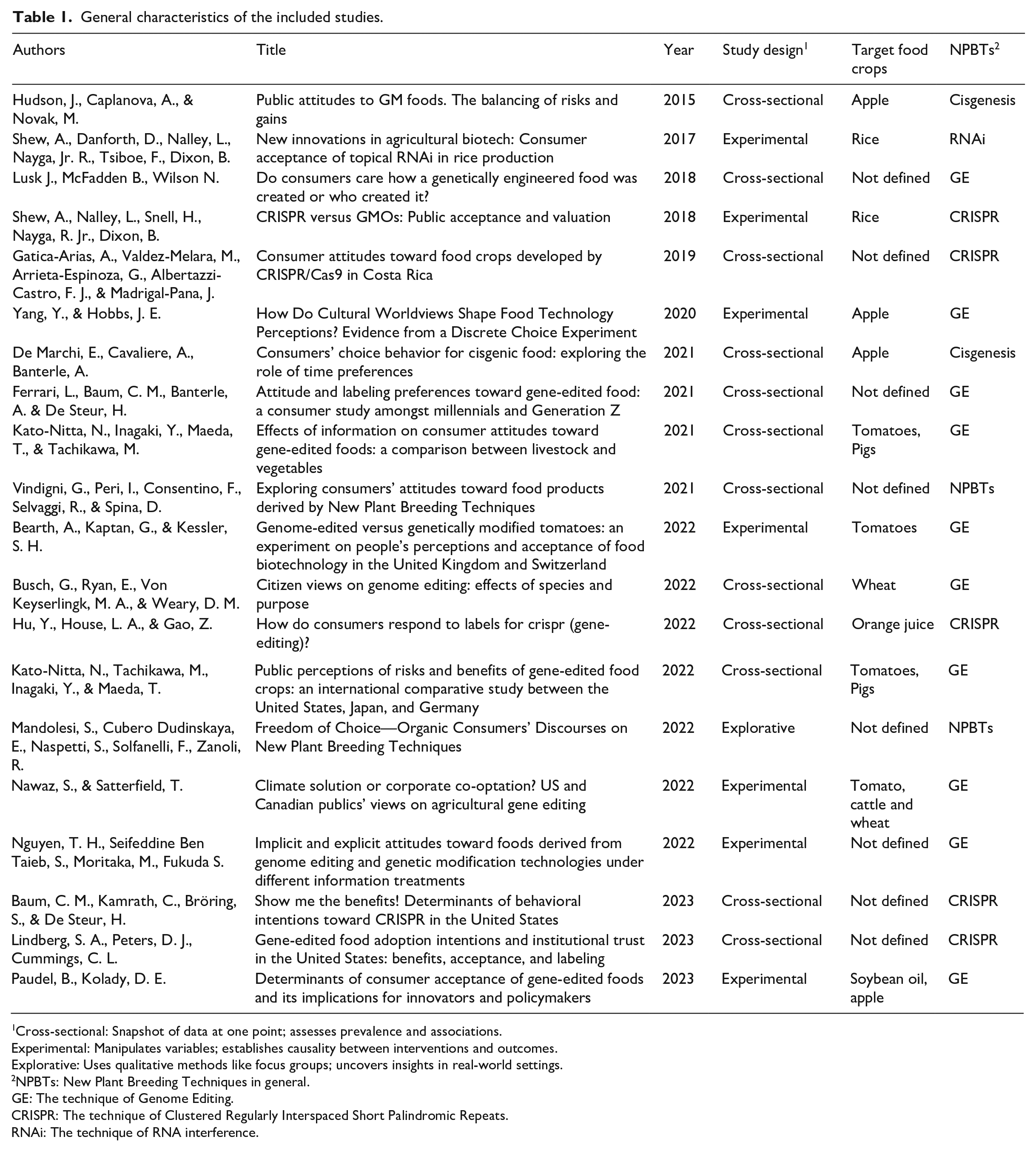
The search items were as follows: TITLE-ABS-KEY((person* OR citizen* OR public OR society OR consumer* OR farmer* OR producer* OR adults OR individual*) AND (“genome editing” OR “gene editing” OR “GE” OR “cisgenic” OR “cisgenesis” OR “intragenic” OR “intragenesis” OR “RNAi” OR “RNA interference” OR “Zinc Finger Nucleases” OR “ZFNs” OR “Transcription Activator-Like Effector Nucleases” OR “TALEN” OR “Clustered Regularly Interspaced Short Palindromic Repeats/CRISPR-associated protein 9” OR “CRISPR/Cas9” OR “CRISPR” OR “NPBTs” OR “new plant breeding technique”) AND (agri* OR crops OR farm*) AND (attitude* OR belief* OR acceptance OR awareness OR behavior OR behaviour OR behaviors Or behaviours OR opinion* OR sentiment* OR willingness OR motivation OR disposition OR inclination OR perception*)). The original search was conducted in April 2023 and 653 records were identified. After removing duplicate articles and scanning abstracts, a total of 66 papers were obtained. In the next step, the authors further screened out 46 articles through full-text assessment, as articles only about theoretical discussions and not involving citizens/consumers were excluded. The final sample for review contained 20 research articles as shown in the Prisma Flow chart (Figure 1) and reported in more detail in Table 1.
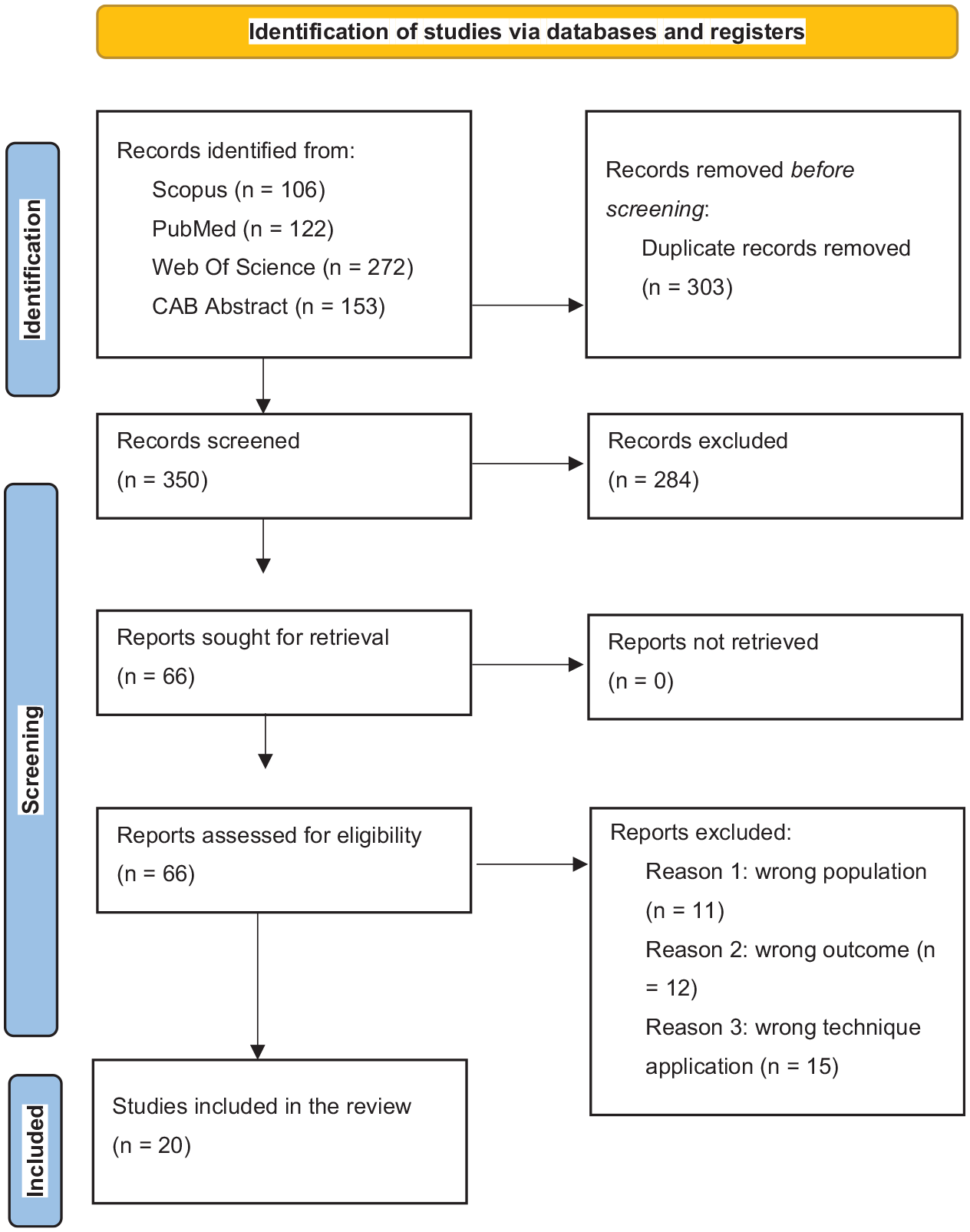
PRISMA flow chart.
General characteristics of the included studies.
Cross-sectional: Snapshot of data at one point; assesses prevalence and associations.
Experimental: Manipulates variables; establishes causality between interventions and outcomes.
Explorative: Uses qualitative methods like focus groups; uncovers insights in real-world settings.
NPBTs: New Plant Breeding Techniques in general.
GE: The technique of Genome Editing.
CRISPR: The technique of Clustered Regularly Interspaced Short Palindromic Repeats.
RNAi: The technique of RNA interference.
Studies were screened based on predefined inclusion and exclusion criteria. Inclusion criteria included empirical studies, surveys, qualitative research, and opinion polls that investigated public perception and acceptance of NPBTs published in English or Italian. Studies had to focus on psychosocial determinants such as cognitive, affective, and sociocultural factors. Exclusion criteria involved studies that primarily examined acceptance among specific professional groups or with limited relevance to the research objective.
Data extraction and analysis
Data were collected from the selected studies using a standardized form capturing key information such as study characteristics (e.g. authors, publication year, country), study design, sample size, participant demographics, data collection methods, main findings, and psychosocial determinants explored. These extracted data were then synthesized to present an overview of the current state of research, emphasizing similarities, differences, and trends observed across studies. Thematic analysis, following the guidelines outlined by Braun and Clarke (2006), was employed to analyze the synthesized data, focusing specifically on the identified psychosocial determinants influencing public perception and acceptance of NPBTs. Overarching categories and sub-themes were derived from the extracted data to offer a comprehensive understanding of the factors influencing acceptance. The findings were presented in a narrative format, supplemented with tables and figures to support the reported information.
3. Findings
Overview
Year of publication and journal area
The scoping review encompassed a total of 20 papers published from 2015 to 2023, with the majority (14 out of 20) being published after 2021 (Table 1). Studies were published across 17 distinct journals. All the included studies were written in English. For a comprehensive list of these journals, please refer to Table S1 in the Supplemental Materials.
Population, sample, and study design
In the studies included, data were collected from populations in 34 different countries, as depicted in Figure S2 in the Supplemental Materials. The total sample size across all studies was 46,607 individuals. While the percentages of males and females were not provided in seven studies (Baum et al., 2023; Hu et al., 2022; Lindberg et al., 2023; Lusk et al., 2018; Nawaz and Satterfield, 2022; Nguyen et al., 2022; Shew et al., 2018), in the remaining cases, the percentage of females ranged from 49% to 66%, with a weighted average of 54.8%.
Regarding the age of the sample, mean values were only provided in the studies by Bearth et al. (2022) and Yang and Hobbs (2020). In the other studies, frequencies for different age groups were reported instead of mean values (Bearth et al., 2022; De Marchi et al., 2021; Ferrari et al., 2021; Gatica-Arias et al., 2019; Hudson et al., 2015; Mandolesi et al., 2022). Due to the absence of mean values across the studies, we opted not to analyze the data regarding age demographics.
Except for one case (Mandolesi et al., 2022), which adopted a mixed-methods approach, the majority of the included studies followed a predominantly quantitative research design. Out of the selected studies, 12 (57.9%) were cross-sectional studies, 7 (36.8%) were experimental studies, and 1 (5.3%) was an explorative study. In all cases, a survey instrument was utilized as the primary data collection tool, and in one case (Mandolesi et al., 2022), a focus group was also incorporated.
New plant breeding techniques and food crops target of study
It is notable that two cases did not target one specific technique, but instead investigated perceptions about NPBTs in general (Mandolesi et al., 2022; Vindigni et al., 2022). However, the majority (75%) of the studies included in the scoping review focused on GE techniques, with approximately one-third of those studies specifically examining CRISPR. The cisgenesis technique was examined in only two papers, and the RNAi was the subject of just one.
In terms of the food crops examined, the authors did not specify any particular target in seven cases (Baum et al., 2023; Ferrari et al., 2021; Gatica-Arias et al., 2019; Lindberg et al., 2023; Lusk et al., 2018; Mandolesi et al., 2022; Vindigni et al., 2022). However, in three other studies, multiple food crops were indicated, resulting in a total of six food crops targets (Nawaz and Satterfield, 2022; Nguyen et al., 2022; Paudel et al., 2023). Among these, apples and tomatoes were the most frequently considered, being included in four studies each (Bearth et al., 2022; De Marchi et al., 2021; Hudson et al., 2015; Kato-Nitta et al., 2021; Nawaz and Satterfield, 2022; Paudel et al., 2023; Yang and Hobbs, 2020), as illustrated in Figure S3.
Psychosocial determinants that affect public perceptions and acceptance of NPBTs
The studies included in the analysis investigated the impact of different factors on perceptions and acceptance of food crops derived from NPBTs. These factors can be categorized into six main groups, as presented in Figures 2 and 3, which respectively present the positive and negative factors associated with acceptance of food crops derived from NPBTs. Figures 2 and 3 illustrate these themes and their respective subthemes. The size of each theme represents the quantity of studies included in the review reporting these results, thus indicating a stronger association when the size is larger.
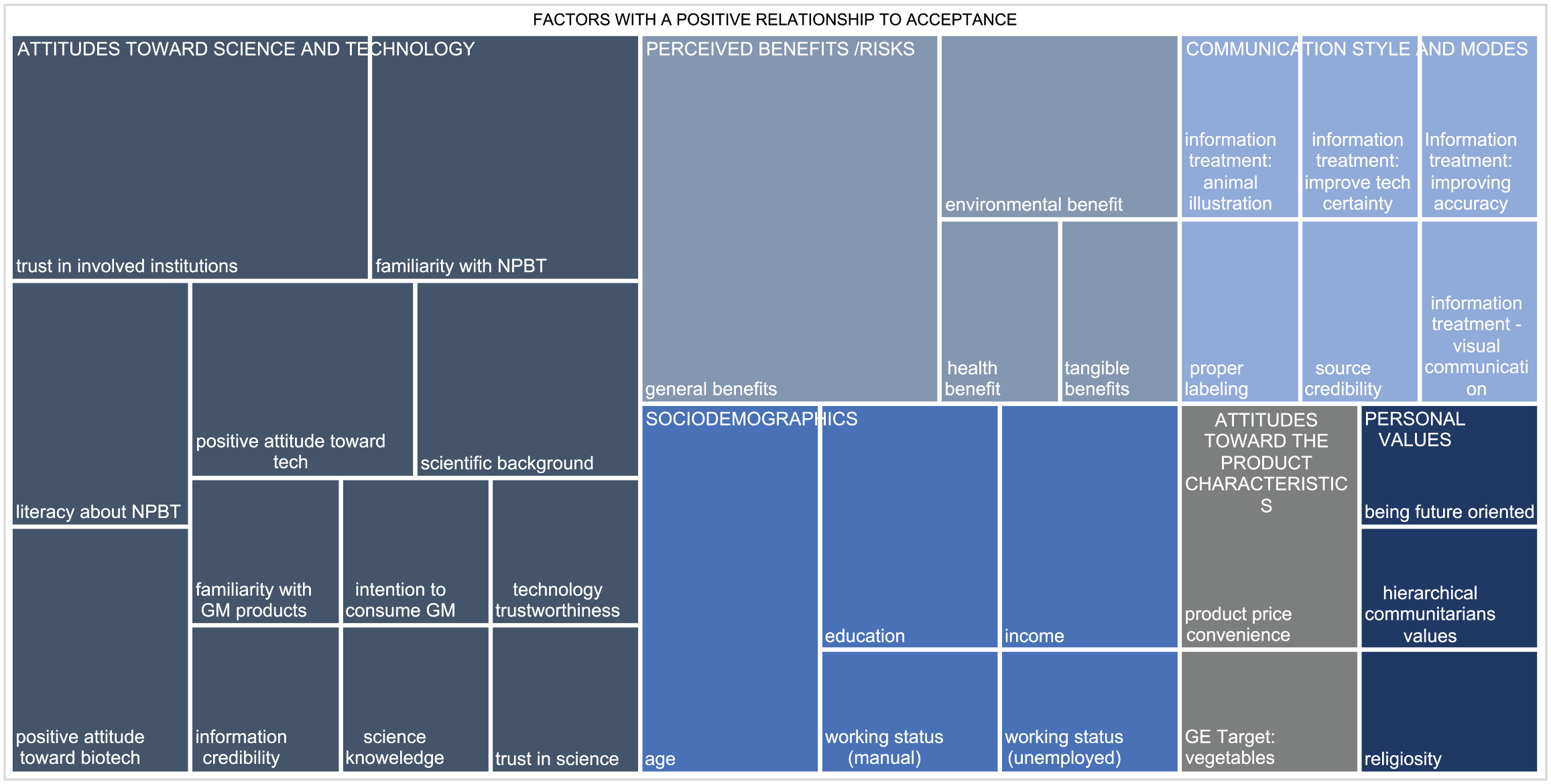
Chart of the determinants with a positive relation with acceptance of food crops derived from NPBTs in the included studies.
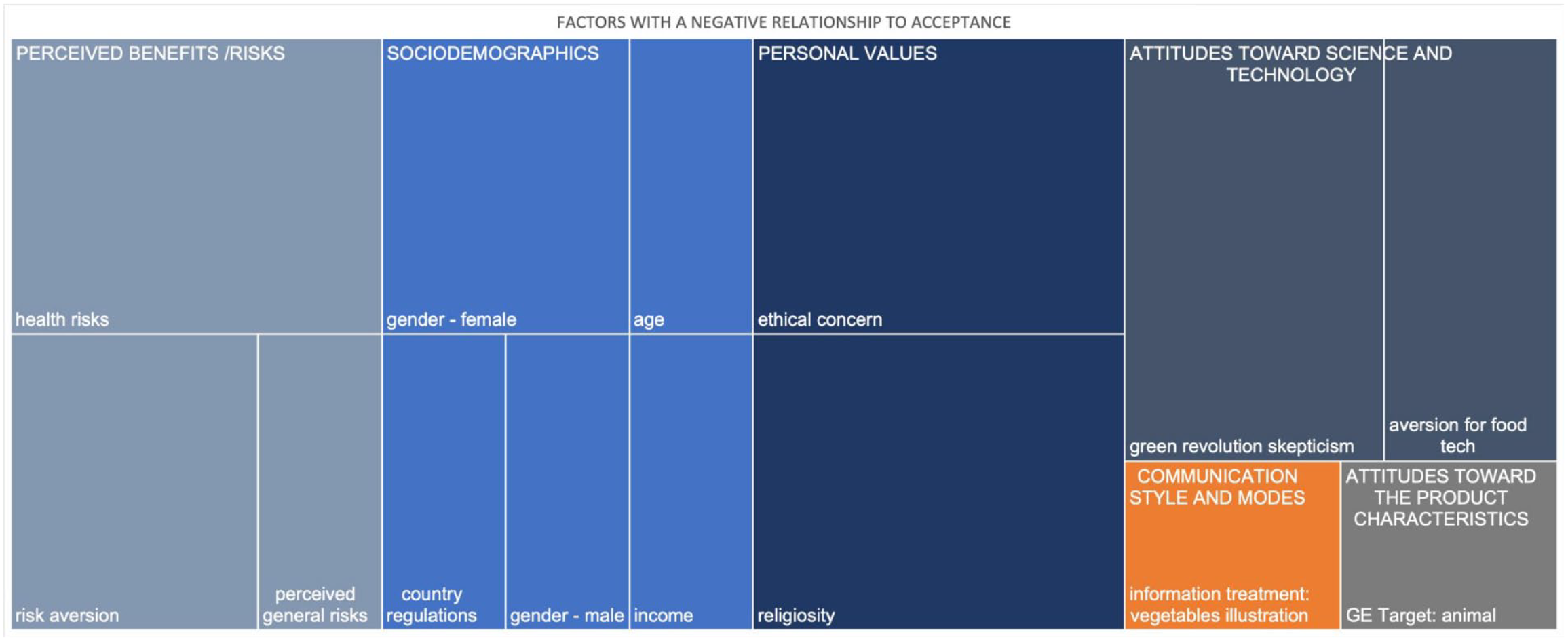
Chart of the determinants with a negative relation with acceptance of food crops derived from NPBTs in the included studies.
Please refer to Table S2 in the Supplemental Files for comprehensive information about the identified factors, including whether they were found to have a positive, negative, or null relationship in the respective studies.
Sociodemographics
Age was extensively investigated as a sociodemographic variable, but the results yielded partially contradictory findings. In two studies, a positive correlation between age and acceptance of GE food crops was reported (Lindberg et al., 2023; Nawaz and Satterfield, 2022). However, in one of those, a negative correlation was found between age and preference for GE compared to pesticide use or biodiversity loss (Nawaz and Satterfield, 2022). Conversely, some studies did not identify a significant correlation between age and acceptance (Ferrari et al., 2021; Gatica-Arias et al., 2019; Hudson et al., 2015). Similarly, the results regarding gender also showed partial contradictions. Certain studies indicated higher acceptance among males (Lindberg et al., 2023; Paudel et al., 2023) and lower acceptance among females (Hudson et al., 2015), but in other cases, no significant correlation between gender and acceptance was found (Bearth et al., 2022; Ferrari et al., 2021; Gatica-Arias et al., 2019).
In terms of education, some studies included in the scoping review did not find a significant correlation between education and acceptance (Ferrari et al., 2021; Gatica-Arias et al., 2019). However, two studies demonstrated a positive correlation, suggesting that as educational attainment increased, acceptance levels also rose (Hudson et al., 2015; Paudel et al., 2023).
Conflicting results were observed regarding the influence of income on acceptance. One study demonstrated a positive correlation (Hudson et al., 2015), while another study indicated a negative correlation (Paudel et al., 2023), and one further study found no significant correlation (Gatica-Arias et al., 2019).
Regarding the country of residence, two studies suggested that it had no effect on the acceptance of NPBTs in food crops (Bearth et al., 2022; Ferrari et al., 2021). However, in another case, the United States and Canada exhibited higher acceptance compared to European countries (Shew et al., 2018). Moreover, when examining the influence on perceived benefits in Asian countries, like Japan, it was observed that stricter regulations in a country may decrease acceptance (Kato-Nitta et al., 2023).
Other demographic characteristics, including parental status and marital status (Hudson et al., 2015) and area of residence were found to have no significant effect on acceptance (Gatica-Arias et al., 2019; Hudson et al., 2015). However, the type of work emerged as a significant factor, with manual laborers and unemployed individuals demonstrating a positive influence, while being a farmer did not emerge as a significant factor in another study (Hudson et al., 2015).
Perceived benefits and risks
The perceived benefits associated with the use of NPBTs in food crops production were consistently found to have a positive impact on acceptance, as observed across all examined studies. While some studies lacked detailed specifications of the perceived benefits (Baum et al., 2023; Busch et al., 2022; Vindigni et al., 2022), leaving them open to interpretation by the participants, others explicitly mentioned environmental (Paudel et al., 2023; Shew et al., 2018) and health-related benefits, such as increased nutritional value of the products (Gatica-Arias et al., 2019).
In contrast, the influence of risk perception on the acceptance of food crops derived from NPBTs varied. Only one study reported no significant influence of risk perception on acceptance (Baum et al., 2023), while in all other cases, risk perception had a negative effect. Most studies primarily focused on the perception of risks related to food safety and human health (Busch et al., 2022; Lusk et al., 2018; Shew et al., 2018), while two studies examined a more general risk aversion (Bearth et al., 2022; Gatica-Arias et al., 2019).
Furthermore, various works explored factors that influenced the perception of benefits or the perception of risks (Baum et al., 2023; Kato-Nitta et al., 2021). These factors were often used to operationalize the acceptance of food crops products derived from NPBTs. The subsequent sections will provide further descriptions of these factors.
Attitudes toward science and technology
Confidence in science was observed in various forms among the studies included in the scoping review. Factors such as scientific literacy knowledge and specific awareness about NPBTs (Busch et al., 2022; Ferrari et al., 2021; Hudson et al., 2015; Lindberg et al., 2023), as well as positive attitudes and trustworthiness toward technology (Bearth et al., 2022; Hu et al., 2022; Mandolesi et al., 2022; Paudel et al., 2023), especially NPBTs (Nawaz and Satterfield, 2022; Shew et al., 2018), emerged as positive influences. In addition, familiarity with genetic modification techniques and intention to consume products derived from them were positively associated with acceptance (Paudel et al., 2023), while aversion to the use of technology in food crops had a negative influence (Baum et al., 2023). Furthermore, confidence in science positively influenced acceptance, along with confidence in various entities involved in food production through the use of NPBTs. These entities included producers, processors, scientists, and government or simply trust in science (Lindberg et al., 2023; Lusk et al., 2018; Nawaz and Satterfield, 2022; Yang and Hobbs, 2020). In contrast, two additional studies found a null relationship between such trust and acceptance (Baum et al., 2023; Bearth et al., 2022).
Finally, another theme regarding confidence in science is skepticism toward the green revolution, which emerged with a negative relationship with the acceptance of NPBTs in food crops (Nawaz and Satterfield, 2022).
Communication
Numerous studies included in this review investigated the influence of various information treatments on perceptions related to NPBTs (Bearth et al., 2022; Hu et al., 2022; Kato-Nitta et al., 2021; Nguyen et al., 2022; Paudel et al., 2023). Detailed textual descriptions or information emphasizing the health and environmental benefits of NPBTs, or the technique itself, did not result in significant changes in attitudes (Paudel et al., 2023). However, other types of information treatments had a positive impact such as visual communication (Hu et al., 2022) or improving the perception of technology accuracy (Bearth et al., 2022; Nguyen et al., 2022). Moreover, the credibility of the information source yielded positive effects on perceptions (Bearth et al., 2022).
Regarding factors influencing the perception of benefits, it is important to consider the potential contrast effect (Sherif et al., 1958) that information treatments may have. For example, visual communications depicting the use of GE on animals resulted in increased acceptance of this technique for animal products, while the same type of communication had the opposite effect when representative of plants. This observation is noteworthy, particularly considering that the initial acceptance of using NPBTs for animal food production was lower compared to plants, as observed in the same survey (Kato-Nitta et al., 2021).
Personal values
The influence of value aspects on acceptance of NPBTs yielded diverse results, including investigations into religiosity, which revealed contradictory findings. Hudson et al. (2015) discovered that individuals identifying as Catholic, Orthodox, or Muslim exhibited lower acceptance, whereas Gatica-Arias et al. (2019) found no significant influence of religiosity on acceptance. In another study, religiosity was positively correlated with a preference for GE over biodiversity loss (Nawaz and Satterfield, 2022). Other value aspects have also emerged as significant factors in influencing acceptance. It appears that citizens with a hierarchical-communal value view tended to have higher acceptance of NPBTs in food (Yang and Hobbs, 2020), while individuals with a future-oriented perspective exhibit lower acceptance (De Marchi et al., 2021). In addition, ethical concerns regarding the moral implications of these techniques had a negative influence on acceptance in two instances (Busch et al., 2022; Mandolesi et al., 2022).
Product characteristics
Product characteristics, particularly affordability, have been identified as significant factors in influencing acceptance. Affordability consistently emerged as a motivating factor in all studies that investigated it, leading to an increased intention to purchase when a discount was offered compared to a product not derived from NPBTs (Yang and Hobbs, 2020). Furthermore, the application of NPBTs in the production of animal-derived foods was found to have lower acceptance compared to plant-derived foods (Kato-Nitta et al., 2021).
4. Discussion
This study presents a comprehensive systematic review that synthesizes existing research on the public perception of NPBTs, with a specific focus on exploring the key psychosocial determinants that influence their acceptance. The findings of this research have several important implications for understanding the acceptance of food crops derived from NPBTs and can inform policy, communication strategies, and future research in this area.
The inconsistency of sociodemographic characteristics
First, the inconsistent findings regarding age and gender suggest that these sociodemographic factors may not be strong predictors of acceptance, mirroring other studies on factors determining the acceptance of products derived from GMOs (Costa-Font et al., 2008). While some studies found age and gender to be associated with acceptance, other studies did not observe significant correlations. This highlights the need for further research to better understand the nuanced relationships between sociodemographic factors and acceptance of NPBTs. From the results, even regarding education, inconsistent findings emerge. It seems instead that specific educational initiatives and literacy efforts may be more influential in increasing familiarity with biotechnologies and NPBTs and so acceptance. Indeed, attitudes toward science and technology emerged as significant predictors of acceptance. Individuals who had confidence in science and perceived NPBTs as credible and accurate were more likely to accept these technologies. This underscores the importance of effective science communication efforts to build public trust and understanding of NPBTs. Communicating the benefits, safety measures, and rigorous regulatory oversight of NPBTs can help alleviate concerns and increase acceptance, as demonstrated to be effective in the case of GMOs (Lucht, 2015; Scholderer and Frewer, 2003).
Money: It is not the income that matters but the prices
The conflicting results regarding income highlight the complexity of the relationship between income and acceptance. It suggests that factors beyond financial considerations, such as values, attitudes, and perceptions, may also play a role in shaping acceptance. Future research could delve deeper into the underlying mechanisms and contextual factors that influence the relationship between income and acceptance.
The affordability of NPBT-derived products emerged as a significant factor influencing acceptance. Lower prices and discounts increased the intention to purchase these products. This suggests that addressing affordability concerns and ensuring that NPBT-derived products are accessible to a wide range of consumers can enhance acceptance.
Differences between countries require attention
The differences in acceptance across countries indicate that cultural, regulatory, and social factors influence public perceptions and attitudes toward NPBTs. Stricter regulations in certain countries may contribute to lower acceptance, while more permissive regulatory environments may foster greater acceptance. These findings underscore the importance of considering national and regional contexts when designing communication strategies and policy frameworks to promote acceptance of NPBTs. Furthermore, these results also suggest the importance of not generalizing the findings of studies conducted in Western countries to a global level (Henrich et al., 2010) and require more investigation to explain these differences.
The influence of non-rational factors
The influence of personal values, such as religiosity and hierarchical-communal values, on acceptance indicates the importance of considering ethical and moral perspectives in discussions surrounding NPBTs. Engaging with diverse value systems and addressing ethical concerns can help foster dialogue and understanding among different stakeholder groups (Burbi et al., 2016).
For this latter reason, a decisive factor contributing to strengthening public acceptance of new genomic techniques is undoubtedly the opening of deliberative spaces to address political controversies and ethical concerns. What is increasingly necessary is the organization of bottom-up engagement processes, taking the concrete form of open and transparent dialogues among scientists, technologists, and representatives from a broad spectrum of civil society organizations (Poort et al., 2022). Open deliberative processes are also extremely useful in allowing individuals to reassess and potentially change evaluations based on implicit and automatic mental associations. For example, when relying on implicit associations, gene editing and genetic modification are substantially treated as similar; however, through public discussion processes, consumers are able to differentiate their levels of preferences in an informed manner. Some studies, in particular, show that personal beliefs about the perceived naturalness of breeding techniques remain one of the main drivers of resistance to public acceptance: ultra-processed food products are perceived as unnatural and, consequently, as unhealthy. However, thanks to the information received during the discussions, consumers seem to attenuate the initial equation NPBTs = unnaturalness (Nales and Fischer, 2023).
The influence of naturalness indeed appears to be a fundamental factor in the acceptance of products derived from alternative biotechnologies, such as GMOs (Lucht, 2015).
The importance of communication
The findings also highlight the importance of communication strategies in shaping perceptions and attitudes toward NPBTs. Information treatments that enhance credibility, accuracy, and certainty have positive effects on acceptance. Visual communication strategies can be particularly effective in conveying complex scientific concepts and engaging the public (Franconeri et al., 2021).
The results of this study underscore the importance of considering the diverse subsets of the population and their current acceptance of NPBTs, as well as their potential responses, a consideration that has proven effective in fostering acceptance of GMOs as well (Ceccoli and Hixon, 2012; Loner, 2008; Mallinson et al., 2018).
As highlighted earlier, many of the results from the studies included in this review point to the same determinants of acceptance for products derived from NPBTs and GMOs. However, in several cases, there is also greater acceptance of the former compared to the latter, suggesting that perhaps the times are riper and that proceeding with appropriate communication and engagement initiatives on the subject could be even more effective. In fact, the difference in the acceptance of the two technologies may be due to a different reaction of the media and politics, which have been hostile to GMOs and only absent in the case of NPBTs (McCluskey et al., 2016; Smith et al., 2021).
Overall, this research provides valuable insights into the factors that influence acceptance of NPBTs in food crops and highlights the multidimensional nature of these determinants. The findings have implications for policymakers, scientists, and communicators working to promote public acceptance of NPBTs. By understanding and addressing the specific concerns and perceptions of different stakeholder groups, it is possible to develop effective strategies to foster informed decision-making and responsible adoption of NPBTs in food crops production. Further research is needed to explore these factors in greater depth and to assess the long-term impacts of acceptance on consumer behavior and market dynamics.
5. Conclusion
Despite the valuable insights provided by the included studies, there are still some research gaps that need to be addressed in future researches. First, there is a need for more longitudinal studies to examine the stability and changes in public perceptions and acceptance of NPBTs over time. This would provide a more comprehensive understanding of how attitudes and beliefs evolve and the factors that contribute to these changes.
In addition, while this review focused on psychosocial determinants of acceptance, there is a need for further research exploring the role of cultural, economic, and political factors in shaping public perceptions of NPBTs. Understanding the broader contextual influences can provide a more holistic understanding of acceptance and inform targeted interventions and policy recommendations.
Furthermore, most of the studies included in this review relied on self-report measures, which may be subject to response bias and social desirability effects. Future research could benefit from incorporating more objective measures or behavioral indicators to assess acceptance and actual consumer choices related to NPBT-derived products, such as the Implicit Association Test (IAT) or visual attention through eye-tracking, as well as through an analysis of spontaneous discourse on the topic found on social media platforms.
It is important to acknowledge the limitations of this scoping review. First, the inclusion criteria focused on peer-reviewed articles published in English, which may have resulted in the exclusion of relevant studies published in other languages or in non-peer-reviewed sources. This could introduce potential language and publication bias.
Second, the synthesis of findings relied on the information reported in the included studies, and variations in study design, measurement tools, and reporting formats across studies may have influenced the comparability and generalizability of the results. Careful consideration of these methodological differences should be taken into account when interpreting the findings.
In addition, the majority of the studies included in this review employed a quantitative approach, limiting the depth of understanding that can be gained from qualitative research or mixed-methods studies. Incorporating a greater variety of research designs could provide a richer and more comprehensive understanding of the factors influencing acceptance.
Finally, the scoping review focused specifically on the psychosocial determinants of acceptance and did not comprehensively cover other aspects such as regulatory frameworks, market dynamics, or consumer behavior. Future research could explore these additional dimensions to provide a more comprehensive understanding of the complex factors influencing acceptance of NPBTs in food crops.
These limitations should be considered when interpreting the findings and further highlight the need for more research to address these gaps and strengthen the evidence base in this area.
Supplemental Material
sj-docx-1-pus-10.1177_09636625241254981 – Supplemental material for Public perception of new plant breeding techniques and the psychosocial determinants of acceptance: A systematic review
Supplemental material, sj-docx-1-pus-10.1177_09636625241254981 for Public perception of new plant breeding techniques and the psychosocial determinants of acceptance: A systematic review by Michele Paleologo, Alessandra Lanubile, Marco Camardo Leggieri, Guendalina Graffigna, Paolo Gomarasca and Serena Barello in Public Understanding of Science
Footnotes
Declaration of conflicting interests
The author(s) declare no potential conflicts of interest with respect to the research, authorship, and/or publication of this article.
Funding
The author(s) disclosed receipt of the following financial support for the research, authorship, and/or publication of this article: This work was supported by Università Cattolica del Sacro Cuore within the project D.3.2 (2022) entitled: “Comunicare la scienza. Mediazione e mediatori del sapere scientifico nella società complessa.”

Supplemental material
Supplemental material for this article is available online.
Author biographies
References
Supplementary Material
Please find the following supplemental material available below.
For Open Access articles published under a Creative Commons License, all supplemental material carries the same license as the article it is associated with.
For non-Open Access articles published, all supplemental material carries a non-exclusive license, and permission requests for re-use of supplemental material or any part of supplemental material shall be sent directly to the copyright owner as specified in the copyright notice associated with the article.
