



Abstract
During the COVID-19 pandemic, virologists gained a prominent role in traditional and social media in Germany; several participated in regular podcasts. Using a two-wave survey (n = 696/361 at Time 1/2), we explore which impact the strong media presence of virologists had on media users and what role parasocial phenomena (asymmetric interactions and relationships with virologists) played. People who favored a specific virologist scored higher on various cognitive, affective, and behavioral outcomes. Exposure to the virologist was related to these outcomes and parasocial phenomena turned out as an intervening variable between exposure and subjective and objective knowledge (time 1), solace, and behavioral engagement (both times). We did not, however, find effects over time when controlling for the time 1 values, which rather speak against more long-term media effects. A higher need for leadership also predicted the formation of parasocial phenomena. We discuss the theoretical implications for the role of parasocial phenomena in science communication via digital media.
Professor Drosten has become the figure of #coronavid19 for me! Objective, not hectic, and comforting!
The COVID-19-pandemic had a major impact worldwide and required far-reaching actions such as school closures and social distancing. The pandemic was also a time of uncertainty in which up-to-date information about scientific findings became important for the general public. In Germany, several virologists played an important role during this period. They were important advisors for political decision-makers and were omnipresent in traditional and digital media.
The popularity of virologists increased very quickly, as expressed, for example, in their rising number of Twitter followers, fan groups on social media, or articles in major newspapers. Three of the most popular virologists (Prof. Dr Christian Drosten, Prof. Dr Alexander Kekulé, Prof. Dr Hendrik Streeck) also had regular podcasts which allowed them to discuss scientific topics in more depth and in a more interactive way than traditional media would allow. At the time of data collection for this study, the most popular podcast, Das Coronavirus-Update [The coronavirus update] with Christian Drosten, head of the Institute of Virology at the Charité in Berlin, had 25 episodes and more than 15 million streams (MEEDIA, 2020). This prominent role of scientists on traditional and social media went beyond traditional science communication; a previously unknown scientist personality cult emerged (Wormer, 2020).
In this article, we aim to assess the effects of the virologists’ communication on knowledge, preventive behaviors, and self-efficacy, but also affective outcomes. We argue that under pandemic circumstances, people were prone to develop a parasocial relationship with these virologists, that is, that they perceive an asymmetrical interpersonal relationship between themselves and media figures, in this case, the virologist (Horton and Wohl, 1956; Turner, 1993). Such parasocial phenomena (PSP) had in turn important consequences for the users’ knowledge, emotions, and behaviors.
Previous research on PSP focused mainly on PSP with newscasters, actors, or other celebrities, while in the domain of science communication, PSP rarely played a role (see Cohen, 2020 for a recent exception). In this article, we examine the relevance of PSP with scientists as an intervening factor between the exposure to science communication and cognitive, affective, and behavioral outcomes, thereby extending prior work on factors influencing the effectiveness of science communication.
In addition, we explore the role of an individual characteristic, namely, the need for leadership. During times of crisis, often a stronger need for leadership emerges (Mulder and Stemerding, 1963). Scientists could be experts who satisfy this need during a pandemic. We explore whether people with a higher need for leadership were more likely to listen to/watch virologists in the media and to develop parasocial bonds.
To do so, we surveyed a German sample twice during the first wave of COVID-19 infections in March and April 2020. By looking at the role of PSP and need for leadership, we extend the scope of variables considered in science communication and open avenues for future research.
1. Theoretical background
The personalization of science communication
With the rise of social media, science communication has changed. Formerly, journalists functioned as gatekeepers who decide how and what to write about science. Scientists depended on journalists when they wanted to get their results communicated to the public (Dudo, 2015). Different developments changed this pattern. Funders and universities have increasingly pushed scientists to communicate their findings to the public; and the rise of social media made it easier for scientists to gain control over the communication flow (Dudo, 2015). Today, many scientists share their findings and opinions on social media as Twitter directly with the interested public (e.g. Büchi, 2017). While this direct communication increases access to science information, finding orientation about what is relevant and correct became more difficult.
The COVID-19-pandemic and the associated “infodemic” (i.e. the spread of misinformation on digital media; Evanega et al., 2020), amplified this orientation problem. In Germany, many journalists as well as laypeople turned to scientists when evaluating the relevance and trustworthiness of information. During the pandemic, virologists received more time in talk shows and news than ever before. In addition, several podcasts were introduced by public broadcasters. The podcasts had the format of the virologist talking with a science journalist, and the virologists received much time for unfiltered long explanations. Their prominent role led to a personalization of science communication and a “personality cult” (Wormer, 2020: 468).
In this article, we explore the consequences of this personalized science communication. We aimed to assess to which cognitive, affective, or behavioral variables exposure to science communication by the virologists was associated. We, moreover, focus on two factors that could be of particular relevance in times of personalized science communication: PSP and need for leadership. We will first focus on potential cognitive effects of exposure to the science communication of virologists before we turn to potential affective and behavioral effects.
Cognitive effects
Cognitive effects of science communication such as learning about a specific topic or science have been considered as most central in science communication (Maier et al., 2014; Schäfer, 2011). In line with that, informing, classifying, and providing background information to as many people as possible without spreading unnecessary panic was the declared aim of the podcast Das Coronavirus-Update (NDR, 2020). We therefore consider self-rated knowledge about COVID-19 and how to prevent it (subjective knowledge) and objective knowledge, assessed by actual knowledge questions, as important dependent variables.
Szczuka et al. (2020) found that exposure to communication of scientists (vs general COVID-19-related communication) was positively related to knowledge about COVID-19. We thus expected that more frequent exposure to the communication of virologists is positively associated with subjective and objective knowledge about COVID-19.
Another important cognitive outcome during a pandemic is self-efficacy, the belief that one can influence one’s outcomes with one’s behavior (Bandura, 1986). In the context of COVID-19, it comprises, for example, the belief that one can minimize the infection risk by social distancing. The COVID-19 pandemic required collective action (i.e. collective adherence to social distancing rules for the greater good). We therefore also considered collective efficacy as a relevant outcome. Collective efficacy refers to people’s beliefs that their group can obtain desired results through collective action (Bandura, 2000). It plays an important role, for example, in fighting the climate crisis (Jugert et al., 2016); since social distancing also only affects flattening the curve when many people engage in it, we theorize that collective efficacy is also highly relevant during COVID-19. There is first evidence from a survey (Szczuka et al., 2020) that exposure to scientists is also positively related to COVID-19-related self-efficacy. We expect to replicate this effect and extend it to collective self-efficacy.
Affective effects
The affective effects of science communication were mainly examined in the domain of risk perceptions, with the effectiveness of fear appeals as a major area of research (Maier et al., 2014). This holds also for work on COVID-19. Cohen (2020), for example, who investigated the effects of Tom Hanks’ infection on COVID-19-related risk cognitions, emotions, and preventive behavioral intentions, showed that information about a celebrities’ corona infection increased anxiety more than information about a noncelebrities’ corona infection, and anxiety, in turn, increased intentions to engage in preventive behaviors. Although anxiety was likely omnipresent during spring 2020, provoking more fear was unlikely the aim of the virologists. When it comes to the podcast by Drosten, avoiding unnecessary panic was a goal (NDR, 2020) and “listening to a potential rescuer from the threatening virus should make many users feel good” (Wormer, 2020: 468). Thus, we focus on the positive emotion of solace. Solace retrieved from media use has recently received attention in work on eudaimonic entertainment, i.e. entertainment stemming from experiences of meaningfulness and inspiration (Rieger and Klimmt, 2019); it is characterized by relieved sorrows and a more positive look in the future. In times of a severe threat such as COVID-19, finding solace instead of experiencing fears would be an important outcome. We expect that exposure to a virologist is positively related to solace.
We also examined how well people coped with the stress caused by the COVID-19 pandemic. Coping efficacy describes if an individual has successfully coped with a stressful situation (Wolfers and Schneider, 2020). Information seeking and finding emotional support and comfort are important coping strategies (Skinner et al., 2003); listening to the virologists could, therefore, be an effective way to cope with stress from the pandemic. A qualitative analysis of the comments given to the podcast of Drosten on YouTube indicates that the podcast helped very involved listeners to deal with the pandemic, especially by reducing fear (Gaiser and Utz, 2021). We expect that higher exposure to communication of virologists is positively related to affective effects.
Behavioral effects
When it comes to behavioral effects, preventive behaviors such as social distancing are the central outcomes studied in COVID-19 studies conducted when vaccines were not yet available. Lep et al. (2020) found in a Slovenian sample that medical scientists were considered as more credible than government sources during COVID-19 and that this credibility positively affected preventive behaviors. In a similar vein, we expect that exposure to the communication of virologists is positively related to preventive behaviors.
In addition, we looked also at follow-up communication about the media appearances of virologists on social media as indicators of behavioral engagement (Dubovi and Tabak, 2021) with the communication of virologists. Social media make it easy to like, share, and comment. Especially at the beginning of the crisis, information about hand hygiene rules, or the importance of flattening the curve were frequently shared on social media. Sharing the messages from the virologists is an important outcome for two reasons. First, as prior work on the Middle East respiratory syndrome (MERS) showed, information received on social networking sites increased preventive behaviors (Yoo et al., 2016). Second, during the COVID-19 pandemic, there was also an “infodemic” (WHO) of misinformation on social media (Evanega et al., 2020). Sharing valid information from trustworthy experts can help to fight misinformation. It seems likely that people who are more exposed to virologists are more likely to engage in liking, sharing, or commenting on their posts on social media. That sharing messages increased with familiarity with the source has been found, for example, for sports news (Boehmer and Tandoc, 2015).
Taken together, based on prior work on the cognitive, affective, and behavioral effects of science communication and more specific studies on pandemic-related science communication (Maier et al., 2014; Szczuka et al., 2020; Yoo et al., 2016), we propose:
H1. Exposure to communication from the target virologist is positively related to knowledge about COVID-19, perceived individual and collective efficacy, coping efficacy, solace, preventive behaviors, and behavioral engagement with communication of the virologist (= outcome variables).
In the next step, we look at a potential underlying mechanism that has barely been studied in the context of science communication: PSP.
Parasocial phenomena
Parasocial interactions (PSI) and parasocial relationships (PSR) are one-sided forms of interactions with media figures (Horton and Wohl, 1956). For example, if viewers answer greetings of a news anchor or talk to media figures in a movie to tell them what (not) to do in a specific situation, they are engaging in a parasocial interaction. The concept “deals with users’ immediate illusionary feeling of being in a real social interaction with a media character, despite knowing that they are not” (Hartmann, 2016: 131) and is restricted to behavior shown during a specific media reception situation. Parasocial relationships go beyond a specific media exposure and continue over a longer time (Dibble et al., 2016; Hartmann et al., 2008). An example is when people are thinking or talking about a character or TV-host outside the actual viewing or listening situation as if they were friends or when people are looking forward to the next encounter with the figure. Both concepts form a continuum and are interrelated since parasocial interactions can lead to parasocial relationships, and parasocial relationships can in turn strengthen parasocial interactions (Hu, 2016).
Since, we do not focus on where users are specifically situated on the range from PSI to PSR concerning the virologists and are more interested in the general processes, we use the overarching term PSP for the remainder of this article (see also Liebers and Schramm, 2019).
PSP research has often focused on PSP with fictional characters such as characters in TV series; only recently, with the shift to social media, PSP with non-fictional characters such as celebrities or social media influencers have been the dominant focus. On social media, PSP are no longer completely one-sided because the media figure can also respond to comments from their fans; the relationships are, however, still asymmetric because the media figures usually respond at best to a small number of fans and do not perceive a relationship with the specific fan (Jarzyna, 2021). Research on the effects of PSP has usually focused on attitude toward the media figure, emotional experiences, or well-being indicators such as loneliness (Hartmann et al., 2008; Liebers and Schramm, 2019; Rubin et al., 1985; Utz et al., 2021).
PSP with scientists take place in a different context than PSP with actors or social media influencers and shifts the focus to other target variables. In the specific context during the COVID-19 pandemic, increasing knowledge, better coping with the stressful situation, or stronger adherence to social distancing rules were more relevant outcomes than entertainment or reduced loneliness. In addition, the reduced physical contact due to social distancing or lockdowns, might make people even more prone to engage in PSP (Jarzyna, 2021).
PSP literature assumes that higher exposure to a certain media figure is positively related to building a parasocial relationship (Bond, 2016; Giles, 2002; Utz et al., 2021). Although findings might not transfer directly from the entertainment context, we expect that frequency of exposure to a virologist in general, exposure on more channels, and, especially, exposure to the longer podcasts fosters the development of a PSP with the respective virologist (= target virologist).
H2. Exposure to communication from the target virologist is positively related to PSP with the target virologist.
The mediating role of PSP
Moreover, we assume that PSP with virologists also have an important function during the pandemic. Fostered by the longer communication formats and due to the evolving personality cult, scientists leave their role as sole communicators of facts and become a figure of orientation and a friend who helps through a difficult situation for individuals.
Prior studies have found mediating effects of PSP on attitudes and behavior (e.g. political attitude, donation intention, see review by Liebers and Schramm, 2019), which means that exposure to media figures has effects on people due to the PSP they form with the media figure. Most relevant to the pandemic context, albeit on a much more local scale, are studies on PSP with weather forecasters. Sherman-Morris (2005) found that people develop PSP with their local weather forecasters and build trust in them. PSP and trust, in turn, predicted the likelihood of taking shelter during a tornado when the weather forecasters recommended doing so. Klotz (2011) extended this work to social media and argued that interactions with meteorologists on social media strengthen the PSP people build with their weather forecasters and increases adherence to their warnings. PSP, therefore, seemed to be relevant for taking protective actions.
Cohen (2020) similarly found positive relationships between PSP with celebrities and prevention behavior intentions. Depending on the experimental condition, people read either that Tom Hanks or a businessman had contracted the coronavirus. PSP was only measured for Tom Hanks, but parasocial attachment with him was positively associated with risk perception and intentions to engage in preventing behaviors. Cohen’s results additionally show that emotional outcomes as anxiety can be amplified by PSP. Assuming that PSP with celebrities can be explained with prior exposure to the celebrity, this pattern indicates a potential mediating role of PSP for the relationship between exposure and behavioral and affective outcomes.
Taken together, we expect that PSP play a mediating role between exposure to the communication of a scientist and science communication outcomes. We expect the development of PSP to be positively related to our cognitive, affective, and behavioral outcome measures. Our third hypothesis is thus:
H3. PSP with the target virologist mediate the effects of exposure on the outcome variables (knowledge about COVID-19, perceived individual and collective efficacy, coping efficacy, solace, preventive behaviors, and behavioral engagement with communication of the virologist).
Need for leadership
When it comes to individual characteristics that influence the effects of science communication, prior work has focused mainly on factors like education or media use (Schäfer et al., 2019). We explore the role of an individual characteristic that might be especially relevant during severe crises like a pandemic: need for leadership. Need for leadership is defined as the extent to which an individual “wishes [a] leader to facilitate the path towards individual, group, and/or organizational goals” (De Vries, 1999: 113). In times of crisis, often a need for strong leadership emerges (Mulder and Stemerding, 1963). People might look for advice about what to do in the crisis. Often, politicians take this role, but in the case of the novel coronavirus we expected that the virologists with their deeper knowledge about COVID-19 might have fulfilled this role. We expect that people higher in need for leadership are more likely to attend to the media appearances of the virologists and that they would be more willing to follow the suggestions for preventive behavior. We, therefore, predict:
H4. Need for leadership is positively related to exposure to the virologist.
H5. Need for leadership is positively related to preventive behavior.
We were, however, not sure whether need for leadership also affects cognitive and affective outcome variables and posed an open research question:
RQ. Is need for leadership also related to the other outcome measures?
The study’s hypotheses and RQ are summarized in Figure 1. The hypotheses, the sample, and planned analyses were preregistered at https://aspredicted.org/93xp8.pdf. 1 The questionnaire (German original and rough English translation), the dataset, and the analysis script are available at https://osf.io/fkdgx/?view_only=8f37898476464e548c68867622279df2.
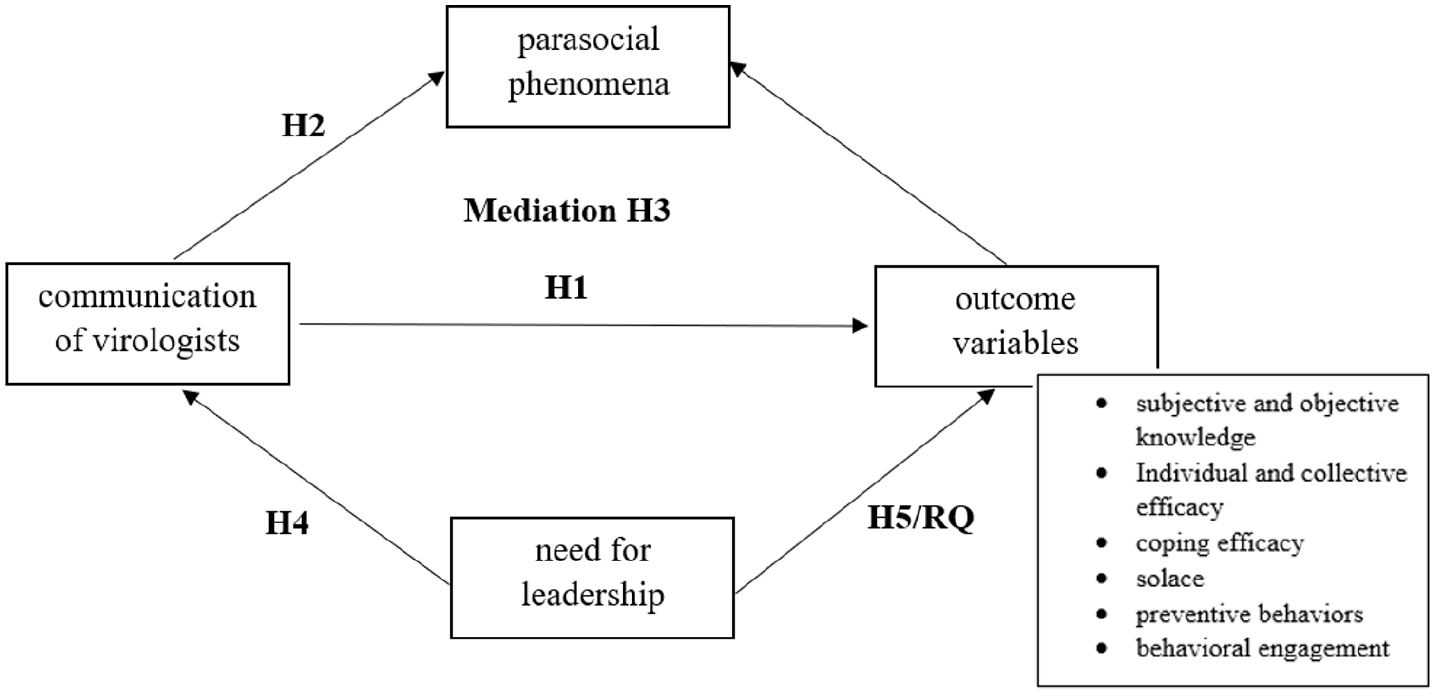
Conceptual model.
2. Method
Participants
The study was approved by the local ethics committee. Participants were recruited via the mailing list of the University of Tübingen that included all students and staff and via snowball sampling on Twitter, YouTube, and Instagram, posting the link in relevant groups on Facebook or using hashtags related to the virologists and their podcasts. We aimed to recruit many listeners of the podcasts. However, we also included people who only knew the virologists from other media. Respondents who agreed to participate also in a second wave 2 weeks later were asked for their email address. In wave 1, 696 people participated. Of the 516 participants who agreed to participate in the second survey, 361 completed it. The sample consisted of 67% females, 32% males, and 1% others with a mean age of 31 (SD = 11.74, range from 18 to 93). The sample was highly educated: 41% Abitur (highest school-leaving qualification), 15% bachelor, 26% master, and 16% PhD. Due to problems with the code connecting answers between waves, only the answers of 215 participants could be matched across both waves.
Data collection for wave 1 started by the end of March/beginning of April during the peak of the first wave of COVID-19 infections. At this time, schools, restaurants, and all non-essential shops were closed in Germany (new infections when starting wave 1: 4615). During data collection for wave 2, the number of infections went down (new infections when starting wave 2: 2082; Coronavirus SARS-CoV-2, RKI, 2020).
Procedure
The order of the scales, which scales were presented to which subsample, and changes from wave 1 to wave 2 are also visualized in Figure 2.
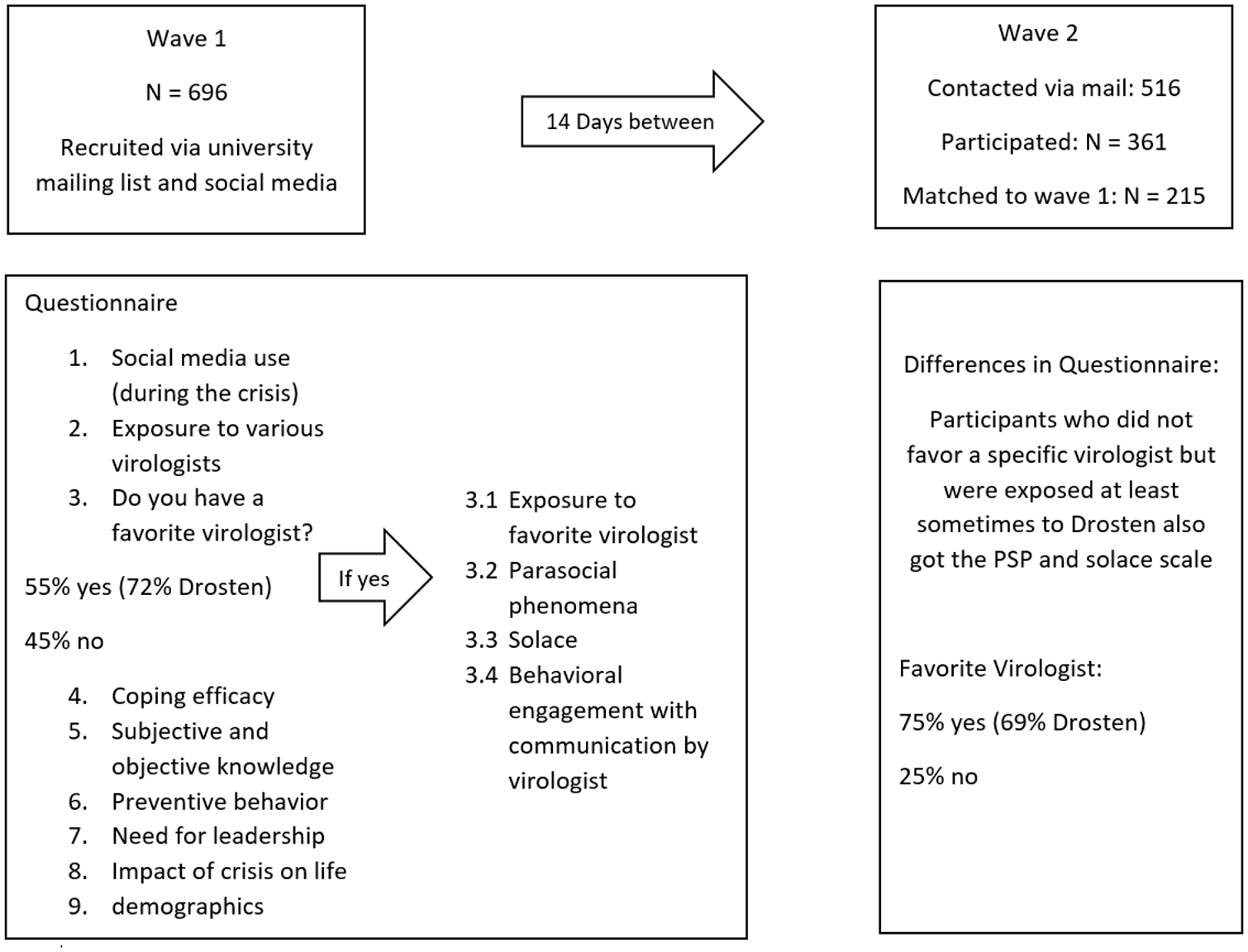
Procedure and questionnaires for (sub)samples.
Respondents first filled in questions on their social media use and their change in media use during the corona crisis. Next, they indicated their exposure to various virologists and were asked whether they favored one of those. Only respondents who did so were asked about their exposure to this virologist, PSP, solace, and behavioral engagement with communication by this virologist. All participants received questions on perceived coping efficacy, individual and collective efficacy, subjective and objective knowledge, and preventive behaviors. We assessed the need for leadership before collecting information on the impact the crisis had on participants’ life and demographics.
Measures
Before running structural equation models, we estimated a confirmatory factor analysis (CFA) modeling two correlated variables for each timepoint with constraint factor loadings for the same items over time for all latent variables. Following a data-driven approach, we excluded items if the CFAs did not show a good fit. Also, same-item correlations over time were added depending on model fit. For model fit we followed the recommendations by Hair et al. (2010). Unless indicated otherwise, measures were treated as continuous.
General exposure to virologists
Participants indicated how often they had seen or heard each of seven virologists who were very present in the media during the time of data collection (Profs Drs Melanie Brinkmann, Jonas Schmidt-Chanasit, Christian Drosten, Alexander Kekulé, Hendrik Streeck, Maria Vehreschild, Lothar Wieler) in the last weeks (wave 1) or the last 2 weeks (wave 2), respectively. Answer options in wave 1 were 1 = “never,” 2 = “once a month or less often,” 3 = “several times in the (last) month,” 4 = “several times a week,” 5 = “daily,” and 6 = “several times a day.” In wave 2, options 2 and 3 were labeled “once” and “once a week” but correspond to the old variables when projected on a month.
Favorite virologist
Respondents were asked which of these virologists they preferred and informed that they would receive further questions on this virologist. They could also choose “I don’t know any of these virologists well enough to answer questions.”
Exposure to preferred virologist
All participants who named a preferred virologist were asked to indicate on which channel(s) they have been exposed to this virologist: television, newspapers (print or online), radio, Facebook, Instagram, Twitter, YouTube, or other. Participants who chose Drosten, Kekulé, or Streeck and indicated to have listened to their podcast were asked how many of these podcasts they have heard.
PSP
PSP with the preferred virologist was assessed with the German translation (Gleich, 1996) of the parasocial interaction scale by Rubin and Perse (1987). Although this scale is called parasocial interaction scale, it has been criticized to contain elements of parasocial relationships (Schramm and Hartmann, 2008). We used it because we were interested in a broader range of PSP and the items fitted better to scientists than items from other scales. Respondents indicated their agreement with statements such as “<Name favorite virologist> makes me feel comfortable, as if I am with a friend.” on 7-point scales ranging from 1 = “strongly disagree” to 7 = “strongly agree.” Deviating from the preregistration, in wave 2, we also administered the PSP and solace scales to participants who did not favor a specific virologist but were exposed at least sometimes to Drosten to increase the variance on this measure and sample size. The CFA including all items showed a poor model fit. Only using five items led to a good fit (χ2(33) = 44.33, p = .09; comparative fit index (CFI) = .97, root mean square error of approximation (RMSEA) = .054, α(t1) = .79, α(t2) = .82).
Solace
We adapted three items such as “The posts from <name favorite virologist> take away some of my anxiety about the future” from Rieger and Klimmt (2019) to assess solace. Respondents again agreed on these statements on 7-point scales ranging from 1 = “strongly disagree” to 7 = “strongly agree.” The CFA with same-item-correlations for the first and third item showed not a good but an acceptable fit (χ2(9) = 15.64, p = .075; CFI = 0.98, RMSEA = .079, α(t1) = .87, α(t2) = .89).
Behavioral engagement
Social media users among the participants indicated on three items whether they have liked, shared, or responded to posts from their favorite virologist (1 = “never,” 5 = “very often”). The CFA showed a satisfactory fit (χ2(10) = 9.81, p = .46; CFI = 1.00, RMSEA = .000, α(t1) = .80, α(t2) = .84).
Coping efficacy
Coping efficacy during the last week was measured with five self-developed items. An example is “My way of coping with stress helps me feel better.” Agreement was given on 7-point scales from 1 = “does not apply at all” to 7 = “fully applies.” The second item showed poor fit and was excluded from the analyses. The remaining items showed satisfactory fit in in the CFA with same-item correlations for the first item (χ2(18) = 29.58, p = .042; CFI = .98, RMSEA = .055, α(t1) = .88, α(t2) = .90).
Individual and collective efficacy
We adapted the procedure by Jugert et al. (2016) to the context of the corona crisis and presented each of the six items in the “I” version to measure individual efficacy and in a “we in Germany” or “we as society in Germany” version to measure collective efficacy (e.g. “I trust that I [we as society in Germany] can help to contain corona”). Items were again answered on 7-point scales ranging from 1 = “strongly disagree” to 7 = “strongly agree.” The CFA did not show a good fit. Thus, a four-item version was used for both scales, which showed adequate fit in a CFA with same-item correlations for the first item (individual efficacy: χ2(18) = 17.37, p = .498, CFI = 1.00, RMSEA = .000, α(t1) = .85, α(t2) = .84; collective efficacy: χ2(18) = 20.81, p = .289, CFI = .99, RMSEA = .027, α(t1) = .82, α(t2) = .85).
Subjective knowledge
We asked respondents to rate their knowledge about COVID-19, how to prevent it, and how to treat it. Answers to the three items were given on a 7-point scale; the endpoints were labeled 1 = “very poor knowledge” and 7 = “very good knowledge.” We understand subjective and objective knowledge as well as preventive behavior as observable and not as latent constructs. We, therefore, use sum scores in the structural equation model.
Objective knowledge
In wave 1, we asked questions concerning the knowledge about COVID-19, for example, regarding risk groups, official estimation of risk in Germany, measures to reduce the spread, or symptoms. In wave 2, we used one question on germs that are related to the corona-virus that causes COVID-19, a general item on viruses, one item on a symptom of COVID-19 that has been discussed recently, and one item on antibody tests.
Preventive behaviors
To assess preventive behaviors, participants indicated for twelve statements to which degree they applied to them on scales from 1 = “does not apply at all” to 5 = “fully applies.” An example item is “I wash my hands more often.” Two fillers that were not part of the official recommendations (e.g. “I take medication or food supplements (e.g. vitamin D) to strengthen my immune system”) and two reverse coded items (e.g. “I haven’t really changed my behavior since the corona-crisis broke out”) were excluded.
Need for leadership
At time 1, we measured the need for leadership by adapting five items from Mast (2005) to the context of the corona crisis (e.g. “If people work together on a task like the corona-crisis now, it’s best when one person is taking over the lead.”). Respondents indicated their agreement with the statements on a 7-point scale ranging from 1 = “strongly disagree” to 7 = “strongly agree.” The CFA did show satisfactory fit (χ2(5) = 8.782, p = .118; CFI = .99; RMSEA = .033, α(t1) = .75).
Demographics
We assessed gender, age, education level, and religiosity (1 = not at all, 4 = very).
Additional measures
In addition, we assessed source credibility (see OSF), impact of the crisis on the personal life, and whether people have shared information on hand hygiene or flattening the curve. To end the survey with something positive, we asked whether people perceived some silver lining.
The means, standard deviations, and intercorrelations of the measures at timepoint 1 are displayed in Table 1.
Descriptives and intercorrelations: Wave 1.
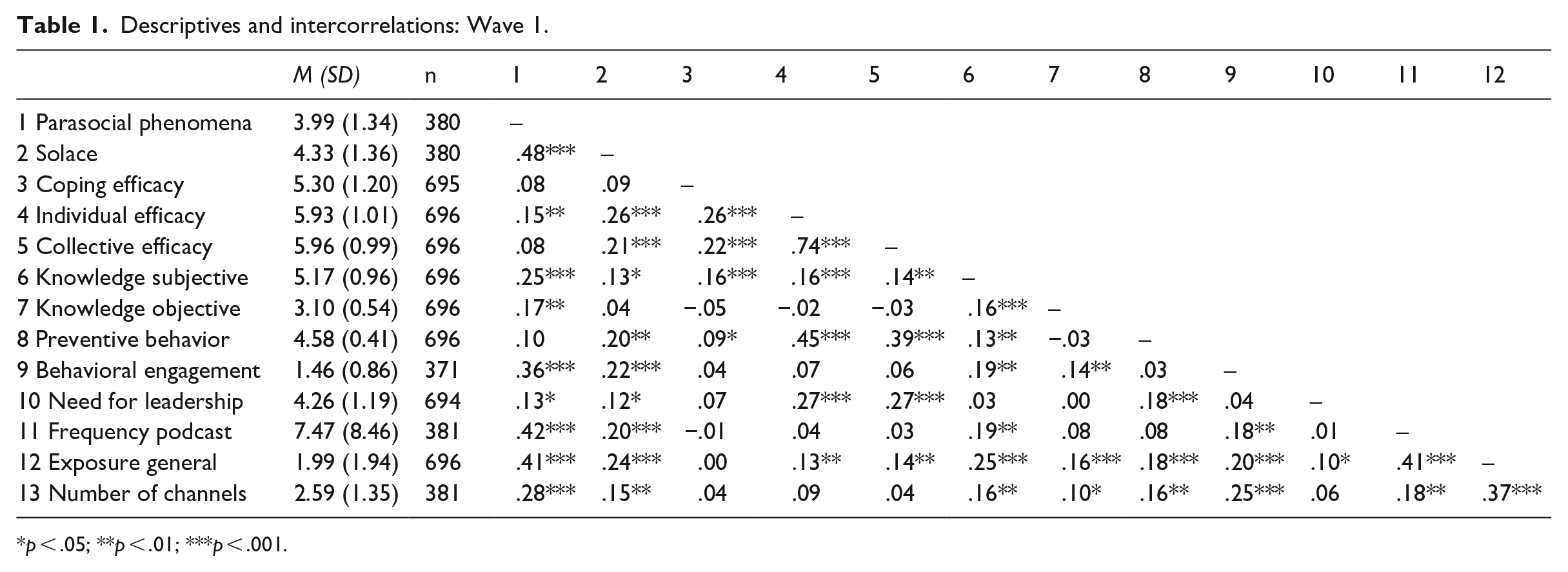
p < .05; **p < .01; ***p < .001.
3. Results
Favorite virologist: descriptive results
Most respondents with a favorite virologist named Christian Drosten (t1 = 72%; t2 = 69%); the numbers for the other virologists were too small to compare different virologists. We, therefore, collapsed this measure across the virologists.
Before testing the hypotheses, we examined whether people who favored a specific virologist differed from people who did not. People with a favorite virologist scored significantly higher on almost all outcome variables. They reported higher subjective (M = 5.37, SD = 0.92 vs M = 4.93, SD = 0.96; t(657) = 6.08, p < .001) and objective knowledge (M = 3.17, SD = 0.51 vs M = 3.02, SD = 0.57; t(641) = 3.53, p < .001), higher individual self-efficacy (M = 6.02, SD = 0.93 vs M = 5.81, SD = 1.10; t(619) = 2.69, p < .01) and collective self-efficacy (M = 6.07, SD = 0.92 vs M = 5.82, SD = 1.06; t(627) = 3.19, p < .01), and higher preventive behavior (M = 4.64, SD = 0.37 vs M = 4.51, SD = 0.44; t(620) = 3.95, p < .001). Only on perceived coping efficacy, did the two groups not differ.
Structural equation models
We first ran a cross-sectional model with the data of time 1. Next, we aimed to replicate this pattern with the data of the second data collection. We had preregistered to only conduct a model across both waves if we could include enough participants. Because only 215 participants could be matched, we decided to run a reduced two-wave model including only variables that turned out as significant in both cross-sectional models. All analyses were conducted using R and the lavaan package (Rosseel, 2012).
Cross-sectional model at T1
H1 stated that exposure to the communication of the virologists would be positively associated to the different outcome variables. In the cross-sectional model from t1, two direct effects were significant: the number of channels on which the favorite virologist was received was associated positively with both behavioral measures (preventive behavior and behavioral engagement). As can be seen in Figure 3 and in line with H2, the various exposure indicators were all positively related to PSP.
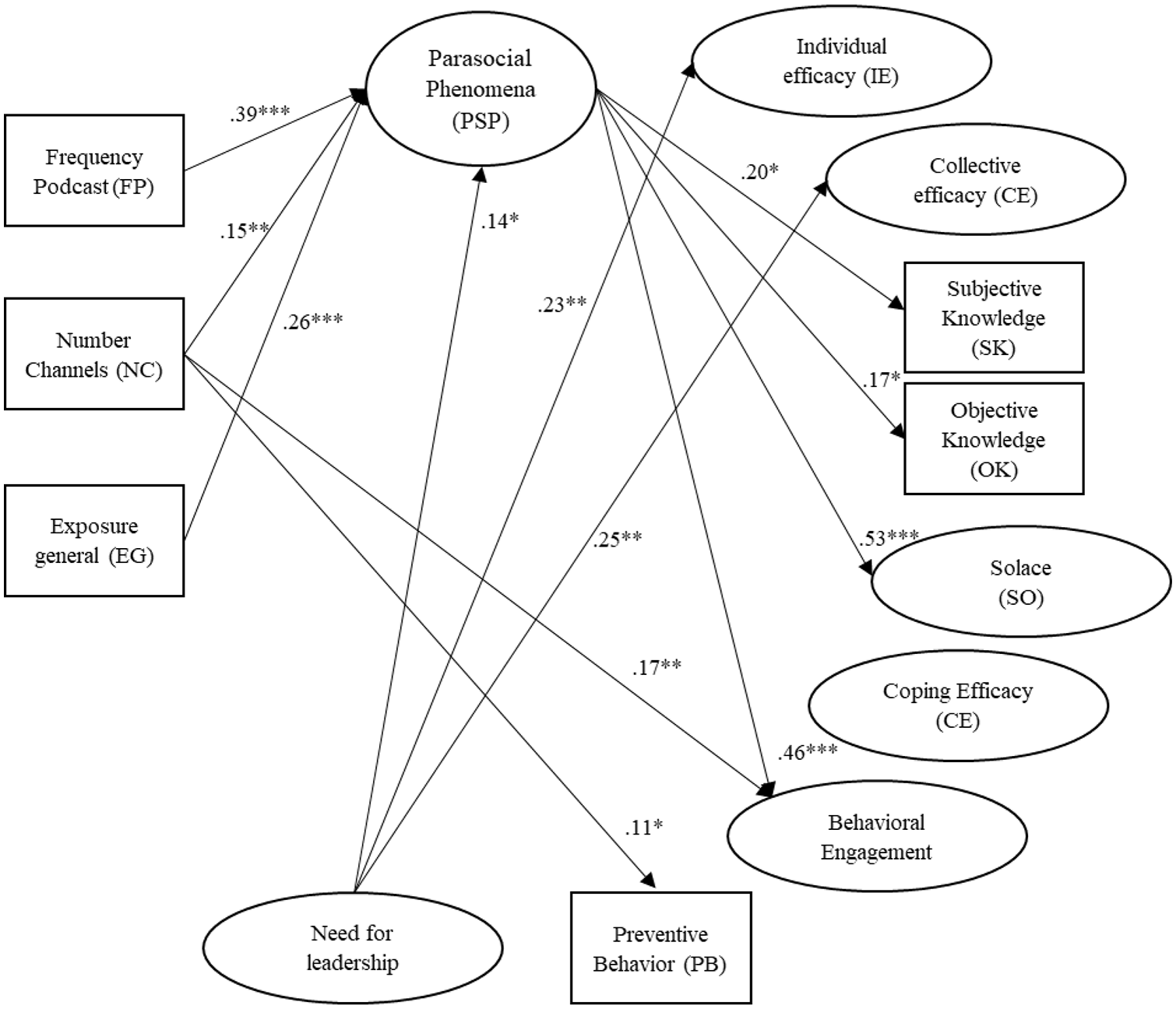
Cross-sectional model at t1.
In H3, we proposed that PSP with the target virologist would mediate the effects of exposure on the outcome variables. There were several indirect effects of exposure via PSP. For both knowledge and solace, we found complete mediation, that is, no longer a significant relationship between exposure indicators and the respective dependent variable (see Table 1 for correlations). For behavioral engagement, we found a partial mediation; that is, there was still a direct effect of exposure. H2 and H3 are thus partially supported.
In H4 and H5, we proposed that need for leadership is positively related to the exposure to the virologist and preventive behavior, which could not be supported. Instead, we found positive relationships with individual and collective efficacy as well as a positive relationship with PSP (RQ).
Cross-sectional model at T2
Deviating from the preregistration, at t2 we also asked participants who did not favor a specific virologist but were exposed to Drosten at least occasionally to fill in the PSP and solace items to increase the variance on these measures and sample size. Using this broader sample, we could replicate many of the effects of t1 (model fit: N = 235, χ2(329) = 455.34, p < .001; CFI = .96; RMSEA = .040). Concerning H2, we again found that being exposed to the communication of the favorite virologist was associated with more frequent behavioral engagement while preventive behavior was no longer associated with any of the exposure variables. In contrast to the cross-sectional model from t1, general exposure now directly predicted subjective knowledge and solace. H1 is thus partly supported. In support of H2, all exposure variables significantly predicted PSP. Concerning H3, we found partial mediation effects of exposure variables via PSP on solace and behavioral engagement; however, there were no significant indirect effects on subjective and objective knowledge anymore although PSP still predicted subjective knowledge. Again, H3 was only partially supported. The figure and detailed results can be found in the OSF file.
Two-wave model
Due to the smaller sample which could be used for the two-wave analysis, we only tested the effects over time on the variables which showed significant relationships with PSP in both cross-sectional models. More specifically, we examined whether the exposure variables measured at wave 1 predicted the outcome variables subjective knowledge, solace, or behavioral engagement at wave 2 when controlling for their values at wave 1. As can be seen in Figure 4, we could not find any effects of PSP on the three outcomes over time; instead, their wave 1 values predicted the wave 2 values. H1 and H3 are thus not supported for the analysis across both waves.
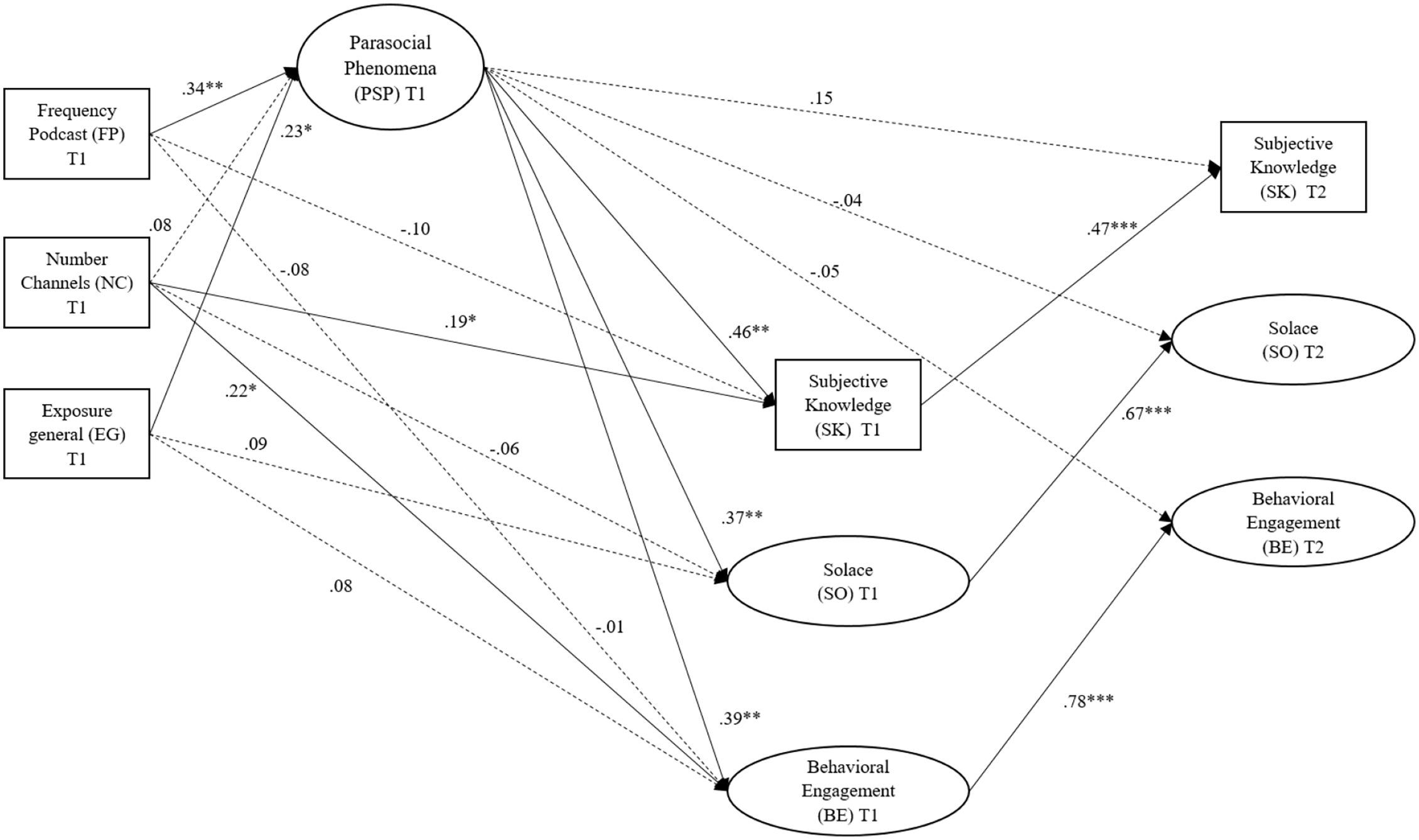
Model across both waves.
4. Discussion
We explored the effects of science communication by German virologists during the COVID-19 pandemic. Most importantly, we were able to show that exposure to the virologist was indirectly related to subjective and objective knowledge, solace, and behavioral engagement with communication from the virologist via PSP, indicating that parasocial processes play an important role. We additionally found that people who favored a specific virologist (in most cases: Christian Drosten) also scored higher on subjective and objective knowledge, individual and collective efficacy, and preventive behaviors. We replicated this pattern for solace and behavioral engagement in the second wave of our study, but did not find effects over time when controlling for the values of time 1. Besides exposure, the need for leadership predicted the formation of PSP.
These results have several theoretical implications. First, they support the notion of a personality cult around virologists because several respondents clearly favored a specific virologist (Wormer, 2020). The majority favored Christian Drosten, indicating that the virologist also matters. Other virologists who were also featured in news channels and had podcasts did not get the same attention. Christian Drosten was also the only one who got several prizes for his engagement and science communication during the pandemic. In general, people who favored a specific virologist showed higher scores on almost all outcome measures, including sharing the posts of the virologist. This points to the important role of fans of a specific virologist as multipliers spreading the knowledge also within their (social media) networks. This opens new avenues for science communication research, but also for other areas. Future research could, for example, explore whether similar processes can be found for politicians.
Second, we shed light on the causality with our two-wave design. As prior cross-sectional studies (Lep et al., 2020; Szczuka et al., 2020), we found positive associations between exposure to communication by virologists and cognitive, affective and behavioral outcomes. We did not, however, find relationships over time when controlling for the values of the outcome variables at time 1. This rather speaks against long-term effects of media exposure and indicates that there also selection effects such that people with higher knowledge are more likely to seek out science communication. People who experienced more solace at time 1 and tended to engage with the messages of the virologists did so also at time 2. However, considering that not much was known about the coronavirus at the beginning of 2020, it seems plausible that participants also learned from the virologist. This knowledge gain might not, however, have been captured by our knowledge questions. It could also be that 2 weeks was not the appropriate timeframe to capture knowledge effects.
Third and more important, we shed light on underlying processes. Our structural equation models show that several of the relationships between exposure and outcome variables were partially or completely mediated via PSP. This is in line with prior work on weathercasters (Klotz, 2011; Sherman-Morris, 2005), but we show for the first time that developing bonds with communicators also matters for science communication. The frequency of listening to podcasts showed descriptively the highest relationship with PSP, demonstrating the value of longer conversational formats for science communication. Jarzyna (2021) proposed that people might be especially prone to develop PSP in times of social distancing; our findings on need for leadership indicate that it might not only be a desire for social contact, but also a desire for clear guidance that fosters the development of parasocial bonds.
The finding that the relationship between exposure and knowledge is mediated via PSP is remarkable when considering that our sample was highly educated. Thus, even academics might feel that they learn more when they experience a parasocial bond with a communicator. PSP were stronger related to solace and behavioral engagement than to knowledge. This is not surprising when considering that these variables are closely related to relational outcomes. Providing solace is an important function of relationships; liking and commenting on messages from the virologist can be considered as an attempt of relationship building or expressing affect.
We did not find mediating effects of PSP on preventive behaviors. We already noted in our pre-registration that there might be a ceiling effect due to the lockdown that restricted many behaviors and fined non-compliance. We also did not find indirect effects on coping efficacy; an explanation is that coping efficacy relates more to daily stress coping with issues such as home-schooling, which are less affected by scientific explanations of the virus. It is more surprising that individual and collective efficacy were not affected, especially because Szczuka et al. (2020) report a positive relationship between exposure to German virologists and individual efficacy in a study conducted roughly at the same time. Again, our findings might be due to a ceiling effect. We found, however, that individual and collective self-efficacy were instead predicted by need for leadership. It could be that strong political leaders (vs virologists) who implement effective measures are better suited to fill the need for leadership.
Finally, our work makes also a major contribution to affective effects of science communication. In contrast to prior studies which found that anxiety is positively related to engaging in preventive behaviors (Cohen, 2020), we found that people whose fears have been eased by the virologist were more likely to engage in preventive behaviors (see Table 1). This opens new avenues for research on affective processes in health communication. This work hitherto mainly focuses on fear appeals; our work suggests that positive emotions such as solace might also be relevant. Future work could examine whether this only holds for the COVID-19 pandemic or whether this pattern can also be found in other contexts.
Limitations and future research
A limitation of our study is the sample which is not representative for Germans. Highly educated people were overrepresented—partly, because we used the university mailing list for recruitment. We also, however, broadly advertised the survey on Twitter and Facebook, using the names of the virologists and the podcasts as hashtags. The overrepresentation of highly educated people is thus a result in itself, indicating that academics are more likely to listen to the podcasts by virologists.
Another limitation is the surprisingly high number of participants who did not enter the same code at waves 1 and 2, so that we could only use a reduced sample for the analysis across both waves. The reduced power of the analysis makes it more difficult to disentangle selection effects from media effects. For behavioral engagement and solace, it seems likely that exposure predicts these variables as posts of virologists can only be shared after being exposed to them, and the solace items clearly referred to the media contributions of the virologists in their wording. For the other variables, however, the direction of causality is less clear.
Moreover, some of the scales were developed for this study and not validated in other datasets. This applies in particular to the knowledge scales that do not correspond to a detailed and validated knowledge test with predefined measurement models (e.g. formative or latent). Such knowledge tests were not available for COVID-19 at the time of the study. These results should therefore be replicated using better developed and validated knowledge.
The generalizability of the findings to other cultures and other domains might also be limited. Germany handled the first wave of COVID-19 infections relatively well, and virologists had a prominent role in the media. It might be more difficult to establish PSP with a virologist in a culture in which the input of scientists during the crisis was less valued. Wormer (2020) argues that the personality cult around scientists might be specific to the COVID-19 pandemic. However, it seems quite possible that further crises such as climate change might also lead to high visibility of scientists. Moreover, the visibility of scientists could remain high after the corona pandemic, as relationships have developed between journalists and scientists and between the public and scientists (e.g. followers on Twitter) that could last beyond the corona pandemic. PSP could therefore continue to have great relevance and potential for science communication.
5. Conclusion
We examined the role of PSP in mediated science communication by conducting a two-wave study conducted during the first wave of the COVID-19 pandemic in Germany. We found that exposure to communication by virologists was related to cognitive and behavioral outcomes. Our results, moreover, point to the role of affective processes for science communication. First, we demonstrate the importance of solace in science communication, showing that not only negative emotions like fear matter in science communication. Solace was positively related to preventive behaviors and should thus receive more attention in future research. Second, we showed that several of the effects were mediated by PSP. Especially listening to the longer podcasts fostered developing a PSP, but also a stronger need for leadership.
Supplemental Material
sj-pdf-1-pus-10.1177_09636625221093194 – Supplemental material for Guidance in the chaos: Effects of science communication by virologists during the COVID-19 crisis in Germany and the role of parasocial phenomena
Supplemental material, sj-pdf-1-pus-10.1177_09636625221093194 for Guidance in the chaos: Effects of science communication by virologists during the COVID-19 crisis in Germany and the role of parasocial phenomena by Sonja Utz, Franziska Gaiser and Lara N. Wolfers in Public Understanding of Science
Footnotes
Declaration of conflicting interests
The author(s) declared no potential conflicts of interest with respect to the research, authorship, and/or publication of this article.
Funding
The author(s) received no financial support for the research, authorship, and/or publication of this article.

Supplemental material
Supplemental material for this article is available online.
Notes
Author biographies
References
Supplementary Material
Please find the following supplemental material available below.
For Open Access articles published under a Creative Commons License, all supplemental material carries the same license as the article it is associated with.
For non-Open Access articles published, all supplemental material carries a non-exclusive license, and permission requests for re-use of supplemental material or any part of supplemental material shall be sent directly to the copyright owner as specified in the copyright notice associated with the article.
