




Abstract
In Western literature, there is evidence that museum explainers offer significant potential for enhancing visitors’ learning through influencing their knowledge, content, action, behaviour and attitudes. However, little research has focused on the role of explainers in other cultural contexts. This study explored interactions between visitors and museum explainers within the setting of Thailand. Two questionnaires were distributed to 600 visitors and 41 museum explainers. The results demonstrated both potential similarities and differences with Western contexts. Explainers appeared to prefer didactic approaches, focussing on factual knowledge rather than encouraging deep learning. Two-way communication, however, appeared to be enhanced by the use of a ‘pseudo-sibling relationship’ by explainers. Traditional Thai social reserve was reduced through such approaches, with visitors taking on active learning roles. These findings have implications for training museum explainers in non-Western cultures, as well as museum communication practice more generally.
1. Introduction
Many of our Thai students do not participate in lessons; they sit quietly and do not raise their hands to answer questions. Is this behaviour part of being ‘Thai’ or is it just shyness?
There is evidence to show that Thai students can behave in a different manner from Western students; formal educational settings in Thailand retain a focus on traditional teaching and learning (Deveney, 2005; Hongladarom, 1999), and Thai students are taught to be quiet and to refrain from speaking in class in order to pay attention to the teacher. Students are not encouraged to question or to have discussions, even though they are keen to learn (Nguyen, n.d.). Shyness can be one reason for non-participation, but students are also afraid of making mistakes or replying with incorrect answers. This article explores, via a questionnaire survey of visitors and explainers, whether an informal educational setting such as a science museum provides opportunities for Thai people to interact with science in a more expressive manner.
Social interaction is an important aspect of museum learning (Dewitt and Hohenstein, 2010; Hein, 1998; Hooper-Greenhill, 1999; King, 2009), and though museum exhibitions focus the attention and time of visitors, they are not the only aspects which attract visitors’ attention. Visitors’ recollections are often influenced by social interactions that they have experienced during a visit to a museum (Falk, 2009). Experience in a museum can vary according to who the visitor interacts with, across different age groups (Melber, 2007; Puchner et al., 2001), among solitary visitors compared to those with company (Packer and Ballantyne, 2005) and in respect of personal situations such as economic and social factors (‘Culture has influences on explainer needs’, personal communication, Rodari, May 2011). However, it is also likely that there are cultural variations in such experiences: ‘the Western assumptions of behaviour are not necessarily mirrored by Eastern assumptions’ (Deveney, 2005: 169), and this is worthy of further exploration.
Most of the existing social context research focuses on family groups (Falk and Dierking, 1992). Over 10 years ago, Falk and Dierking (2000) noted that ‘... it is amazing how little research exists on the role that museum staff-volunteers, guides, explainers ... play in facilitating learning from museums’ (p. 107), and suggested that ‘a better understanding of how social interaction between staff and visitor effects learning and under what circumstances could lead to significantly better practice’ (p. 108).
This study not only explores such social interactions between visitors and museum explainers but also explicitly investigates the outcomes of that interaction within the Thai context. There is substantial evidence that science explainers can enhance visitor museum experience within Western museums (see, for example, Ash et al., 2012; Castle, 2001; King, 2009), and there is a small amount of existing research by Thepthepa (2007) demonstrating that Thai science explainers both attract and hold visitors’ attention. Building on this work, this article will particularly explore the interaction of explainers with visitors in a Thai context.
2. Who are the explainers?
Explainers have multiple functions and their definition can require explanation. Typical labels used in English-speaking museums include ‘explainer, interpreter, pilot, educator, demonstrator, presenter, enabler, interactor, host’; their roles can be similar at different locations (Rodari and Xanthoudaki, 2005: 2), though the definitions of their roles can differ. Explainers often welcome, facilitate and encourage visitors to be actively involved in activities. In museums and science centres with science laboratory facilities, they might prepare material, facilitate visitors to conduct experiments and ensure the safety of visitors. Their specific tasks vary depending on their contract or the purpose of their role; however, explainers – regardless of the specifics of their role – are the main group of people that directly interact with the majority of science museum visitors (Massarani et al., 2008; Richard, 2010).
Rodari and Xanthoudaki (2005) point out that the role of teacher-educator in a formal context like a school is different from the role of an explainer-educator in a museum or science centre. Explainers should not see themselves as a teacher (Ash et al., 2012), but they do facilitate visitor learning. Similarly, some teachers take on facilitator roles to actively encourage students (Hooper-Greenhill, 1999). It is frequently expected that explainers should motivate rather than explain (Gomes da Costa, 2005) and an active learning approach is commonly favoured.
Active learning provides the learner with an opportunity to interact, explore and experiment while engaging the mind (Hein, 1998). In contrast, passive learning infers the mind receives, absorbs and learns facts; the learner is seen as ‘the empty vessel to be filled’ (Hooper-Greenhill, 1999: 68). In the museum’s context, explainers often facilitate ‘active learning through the handling and questioning of objects, and through discussions linked to concrete experiences’ (Hooper-Greenhill, 1999: 68). Posing questions is one important way to encourage visitors to find answers for themselves; in some centres, there is a belief that explainers should answer a question by asking another question (Johnson, 2005).
Previous research has identified a variety of other mechanisms that allow explainers to interact more effectively with visitors, such as linking science to visitors’ daily lives (Johnston and Rennie, 1994; Mullahy, 2004). Almost 20 years ago, Johnston and Rennie (1994) highlighted that learning occurred most effectively when the science demonstrated by an exhibition linked to the visitors’ experience. Where it associated to their work or profession, for example, visitors were seen to have a better understanding. More recent work by Mullahy (2004) supported this approach, noting that if the visitors could see how science relates to them, they were more likely to want to learn science. Furthermore, she suggests that storytelling is a particularly useful technique when communicating science to a wide-ranging audience (e.g. in terms of demographics and background experience); the trick is to put the science into context and make it more relevant for the visitor. The use of analogy can also be helpful when visitors have difficulty in understanding the scientific concepts of an exhibit (Johnston and Rennie, 1994).
It is noticeable that all of the above ‘effective’ approaches to communication between explainers and visitors were identified within Westernised contexts. In the context of this Special Issue of Public Understanding of Science (PUS) it is crucial to ask, ‘are such approaches and advice valid within other cultures?’
3. Cultural perspectives to Thai communication
With regard to the context in Thailand, prior work has suggested that Thai communication styles and social interactions are unique (Holmes and Tangtongtavy, 2003; Thapatiwong, 2011). In brief, Thai people are perceived to be friendly and often smiling. Being polite, calm and considerate and to show care for the feelings of others are highly valued attributes within Thai society. Thai communication styles seek to avoid conflict or complaint and to demonstrate respect for people in higher social or professional positions.
Within their wider cultural framework, Hofstede and colleagues (2010) describe such qualities as being associated with femininity 1 and high power distance. 2 Within this framework, Thai people are seen to recognise and see as important qualities on the femininity dimension, whereby they seek strong social harmony and avoid disagreement or criticism when communicating with others (Hallinger and Kantamara, 2010; Pimpa, 2012). Thai people consider non-verbal communications that are attributed to ‘positive’ responses in other cultures, such as smiling, appropriate when disagreeing with the opinions of others (Holmes and Tangtongtavy, 2003). It is frequently difficult for Thai people to verbalise disagreement and it would be unusual to hear a Thai person say ‘NO’, especially with those who are considered superior to their own position. Thai people often compromise as much as possible in order to be sensitive and respectful to the feelings of others; this concept is called Rak Sa Nam Jai. 3
Thai people show sensitivity in protecting the feelings and respecting others (face-saving) as a key way to maintain their relationships socially. For example, Thai students are seen to prefer sitting quietly and listening to their teachers (Deveney, 2005), reluctant to signal a contribution even through their body language. Whereas in Western classrooms it would not be unusual for students to highlight or discuss mistakes, in Thai culture, a student would be reluctant to highlight any form of error on the part of others. Despite social acceptance that errors should not be highlighted, students avoid answering questions, even when they are confident of a correct answer, in case they feel foolish and ‘lose face’ to their friends if the answer is incorrect. Therefore, a contradiction of social pressures is in operation: on the one hand, mistakes and confusion are to be avoided, while, at the same time, they would not be socially acknowledged should they occur.
Thai culture also values a hierarchy system, which influences the communication process and is described as a high power distance (Bogart, 2012; Deveney, 2005; Hofstede et al., 2010; Thapatiwong, 2011). This concept refers to the extent to which individuals with ‘less’ power accept and/or respond to perceived social or professional inequalities (Hofstede et al., 2010). Within a ‘high power distance’ society such as Thailand, children are taught to be respectful to their elders from childhood, and the way people talk to elders, teachers or those in superior positions is governed by social norms which emphasise respect and deference. Social position could be based on a variety of factors, such as age, knowledge level, social class or, more specifically, the individual’s position within the family, workplace or social setting (Pimpa, 2012). People who are seen to have a lower social position are culturally encouraged not to disagree or argue with those in a higher position; within Thailand, such behaviour is traditionally known as the Krang Jai 4 concept.
This hierarchy system has been seen to have an impact on the learning of Thai students in classroom environments. Bogart (2012) reiterates that students do not like to ask or answer teacher’s questions and Thai students are taught to be respectful, non-aggressive, accepting, tolerant, non-confrontational team-players, who are positive in their learning interactions with teachers (Deveney, 2005). Previous studies (e.g. Bogart, 2012; Deveney, 2005) have found that this is also the case in some other Asian cultures; for instance, students in China are often quiet and diligent and do not like to disturb the classroom environment, while such behaviour does not appear as frequently in students from more Westernised countries such as Taiwan, Japan or Korea.
Burapharat’s (2009) study found that Krang Jai and face-saving behaviours can be released by the building of pseudo-sibling 5 relationships, and this is common practice in Thai contexts. Such sibling social bonding is facilitated through the formation of Pii (see Note 5, big brother/sister) and Nong (see Note 5, little brother/sister) relationships. This relationship creates trust, and a friendly environment for communication, releasing any tensions and concerns of losing face during conversation as it adopts a supportive familial style in relationships. When two people start interacting in a conversation, and one of them wishes to create a more informal relationship, then they can begin to use the Pii/Nong labels within that conversation (Burapharat, 2009). While such an approach would not be appropriate in all circumstances (e.g. where professional or social respect needs to be maintained), the use of Pii/Nong acts as an icebreaker, reducing the perceived distance and/or reserve. Such mechanisms are just one social tool that Thai people use to negotiate their communicative interactions.
The adoption of science in Thailand occurred from the middle of the 19th century through trade and economic routes, though its history of communicating science is less extensive. The Science Society of Thailand originated in 1948 to promote the development of science and works closely with the Ministry of Education and the Ministry of Science and Technology, who are the two main organisations directly responsible for promoting public awareness and interest in science and technology through learning within science museums/centres (National Science and Technology Development Agency, 2005). Thailand has mechanisms to strengthen people’s knowledge of science; however, Thailand has far to go when it comes to scientific thinking (Hongladarom, 1999; Tinnaluck, 2005), as people are still seen to hold considerable superstitious beliefs (Tinnaluck, 2005; Wongchalee, 2007), which can be challenging to overcome in a science communication context.
Within this Thai cultural context, it is of interest then to explore the relationships between visitors and explainers. How do Thai visitors perceive the explainers’ roles and do those perceptions differ between visitor groups? How do Thai visitors want to interact with explainers and does this differ among different types of visitors? What learning experiences do Thai visitors report and does this differ between visitor groups? Such questions have formed the stimulus for this work, involving investigations with both visitors and explainers via two surveys within a specific science museum context in Thailand.
4. Methods
The data that this article draws upon originate from a study that in part aimed to investigate Thai visitors’ expectations, communication approaches and experience of explainer interactions during their visit to a Thai science museum. In particular, the research explored wider cultural aspects of museum interactions: whether there was evidence of Krang Jai in the contact between explainers and visitors or examples of other elements unique to the Thai context.
In this article, we focus on the data collected via two predominantly electronic face-to-face surveys (survey completed with the researcher/s on an iPad) conducted over a period of 10 days (8–30 June 2011) at the National Science Museum (NSM), Thailand. A total of 600 visitors and 41 explainers completed the questionnaires while visiting or working at the Museum during the data collection period. The questionnaires covered aspects relating to the perceived role(s) of explainers, the respondents’ experiences of interaction and what explainers and visitors felt were the outcomes of such interactions. Both questionnaires were
Questionnaires were selected as the most appropriate medium due to their potential to gather broad yet comparable information from a relatively large group (Bell, 2005; Buckingham and Saunders, 2004). The ability of questionnaires to quickly collect a range of data, including the demographics of the respondents, their social environment and activities and their opinions and attitudes, was also highly advantageous to the present work (Bell, 2005; Buckingham and Saunders, 2004; Fink, 2009), but questionnaires of course have limitations in the type of data that can be collected; for instance, they included few open questions. Inclusion of separate questionnaires for visitors and explainers enabled a greater understanding of both perspectives regarding the interaction of visitors and explainers in the museum (Diamond et al., 1987). The questions used within the surveys built upon recommendations from previous work and adapted where appropriate to the NSM/Thai context (see, for example, Diamond et al., 1987; Johnston and Rennie, 1994; Mullahy, 2004; Museums, Libraries and Archives Council (MLA), 2008; Richard, 2010). For example, some questions used directly comparable response categories based on existing work, a question on impacts of interacting with explainers was framed around Generic Learning Outcomes (GLOs) or results raised in prior qualitative research were used to frame survey questions.
A quota sampling approach was utilised in recruiting visitors to respond to the study. The population was divided by gender, with an equal population selected from each in order to provide a representative demographic spread (Blaikie, 2000; Fink, 2009). Visitors of each gender stratum were selected at random to ensure individuals had an equal chance to participate in the study. Every fifth visitor who passed the information desk was invited to contribute. If the visitors were in a group, the protocol was to select the person who was positioned fifth within the group. This randomised sampling procedure was followed until the quota for each gender was filled (approximately 30 males and 30 females each day), resulting in a total of 600 participants over the 10 days. Data were deliberately collected at both weekends and weekdays in order to avoid bias due to possible differences in visitor backgrounds on different days. All respondents were of Thai origin to ensure that the results appropriately reflected Thai cultural perspectives.
In terms of demographics, respondents were approximately representative of visitor profiles to the museum more broadly. Similar numbers of ‘Youth’ (15–24 years) and ‘Adults’ (more than 25 years) participated in the survey, with 42% and 41% of the overall sample respectively (n = 251 and n = 243). Children (less than 15 years) made up the final 18% of respondents (n = 106). In terms of educational backgrounds, the highest proportion of participants were degree educated, with over 40% (n = 260) of visitors holding a ‘Bachelor’ degree. However, there were also a large number of survey respondents (22%, n = 130) who had qualifications at a level ‘less than high school’, and a further 21% had ‘high/vocational school’ (n = 125) as their main qualification; 14% (n = 85) of visitors had studied to ‘Master/PhD’ level. The data collection period selected was also able to uncover visitors who attended the museum in a variety of social groupings. Just over 35% (n = 223) of visitors came with a ‘school/university trip’; similar numbers attended with their ‘family’ (35%, n = 207), and just over a quarter of visitors came with ‘friend/s’ (26%, n = 157). Only 2% (n = 13) of visitors came alone to their visit. One reason for the low number of visitors attending alone may be that the museum is not very accessible by public transportation. Most visitors therefore choose to attend in pre-organised groups.
The explainers were recruited via self-selection sampling methods. It was important that explainers were able to consent to participate of their own accord (Laerd, 2012); some explainers may have been concerned that their responses might affect their work despite the project’s confidentiality procedures. Via the ethics process for the research, and following some prior data collection carried out at the NSM in 2009, we anticipated that explainers could be nervous that the survey was compulsory and/or that the results of the study could have a negative impact on their employment. Therefore, the explainers participated in this study voluntarily.
The statistical significance of differences in response between groups of visitors was investigated using Chi-squared tests when there were two visitor groups and using Kruskal–Wallis tests when there were three or more. These tests were used because they test for differences between groups of non-parametric data (Pallant, 2007), such as those we aimed to investigate.
The project had received ethical approval from the University of the West of England, Bristol, with particular care taken around consent procedures for children and young people.
5. Results
Visitors’ perceptions of the role of explainers
Data from this study suggest there are a range of expectations on the part of Thai people as to the explainers’ roles. Many visitors expect explainers will take on some form of presentation role within their interactions (see Table 1); over half of the visitors (59%, n = 352) said explainers should ‘introduce the highlights or major concepts of the exhibition’, followed by ‘explain every part of the exhibition’ at 34% (n = 206). However, a small proportion (7%, n = 42) of visitors were happy for the explainers to leave them alone to explore and learn by themselves. This suggests that although many visitors saw the explainers’ role as being to communicate to them, rather than necessarily with them, very few visitors preferred to avoid contact completely.
Visitors’ expectations of explainers’ roles (values provided are percentage). Category headings were developed from the results of Diamond et al. (1987).
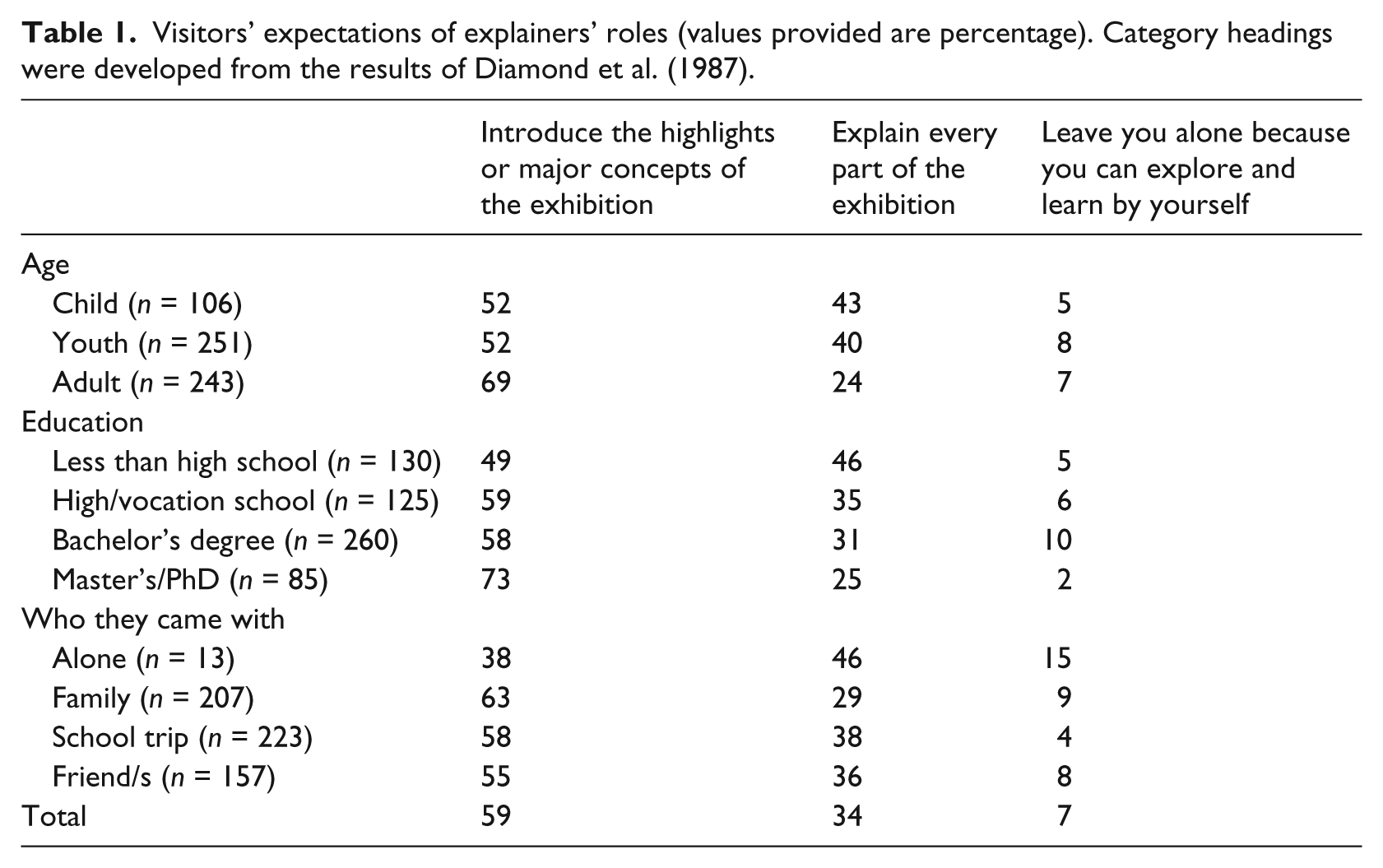
It is unsurprising that over half of ‘Family’ visitors (63%, n = 130), those on a ‘School trip’ (58%, n = 130) and visitors with ‘Friend/s’ (55%, n = 87) indicated in the visitors’ questionnaire that the explainers’ role should be to ‘introduce the highlights or major concepts of the exhibition’ as this would perhaps contribute to their learning experience from each other and discussions they might have around an exhibit. Interestingly, however, visitors who attended ‘Alone’, though far fewer in number, also suggested that they would like explainers to ‘explain every part of the exhibition’ (46%, n = 6). It is possible that those who visited alone were particularly open to the opportunity to talk with someone during their museum visit. Only two of the 13 visitors in the ‘Alone’ group felt that the explainers should leave them alone to learn by themselves. However, there were no statistically significant differences between the ‘Alone’ group and those accompanying others in terms of desirability to be left to explore independently.
There were some significant differences in preferences to interact based around age groupings (df = 4, n = 600, p < .001) and education, (df = 6, n = 600, p = .001). ‘Adult’ respondents (69%, n = 167) demonstrated a higher preference to simply have the explainers ‘introduce the highlights or major concepts of the exhibition’ than any other age and were much less inclined than the other groups to be interested in having every part of the exhibition explained to them. ‘Child’ (43%, n = 46) and ‘youth’ (40%, n = 101) visitors preferred the explainers to ‘explain every part of the exhibition’ compared to ‘adults’ (24%, n = 59). This is perhaps not an unexpected outcome, as with increased age and education it is likely that visitors might require less support in their understanding of an exhibition. Within a Western context, adults have their own interests and choose voluntarily to participate in museum activities during their leisure time (Falk et al., 2007), and it would appear that adults are also independent during their visit within a Thai context.
Visitors who had a level of education ‘less than high school’ were split between preferring the explainers to ‘explain every part of the exhibition’ (46%, n = 60) or to simply ‘introduce the highlights or major concepts of the exhibition’ (49%, n = 64). This latter proportion was far lower when compared to those who had been educated to postgraduate level, with 73% (n = 62) of visitors who had a ‘Master’s/PhD’ feeling that explainers should just ‘introduce the highlights or major concepts of the exhibition’. These data suggest that the majority of visitors felt they wanted some information from explainers but different approaches were apparent in different visitor demographics. Such differences are not surprising on an initial inspection.
As with most modern museums, NSM provides a variety of activities during the museum visit which offer opportunities for more interactive experiences than merely the explanation of a particular exhibit. These include activities where visitors can experiment by themselves such as in the science laboratory, or via games, workshops and science shows. We were keen to explore respondents’ thoughts about these different types of approach. Visitors were asked in which scientific activities they would like to interact with explainers, based on lists of scientific activities developed from the Pilots project (Richard, 2010).
Nearly half of the respondents felt that they would like to interact with explainers in ‘Science laboratories’ (49%, n = 292), through ‘Games’ (47%, n = 282) and ‘Science shows’ (46%, n = 277) (see Table 2). ‘Explaining in exhibitions’ was rated very low in comparison, with about 20% (n = 112) despite previous answers suggesting this was often desirable.
Visitor preferences regarding where they would like to interact with explainers (values provided are percentage).
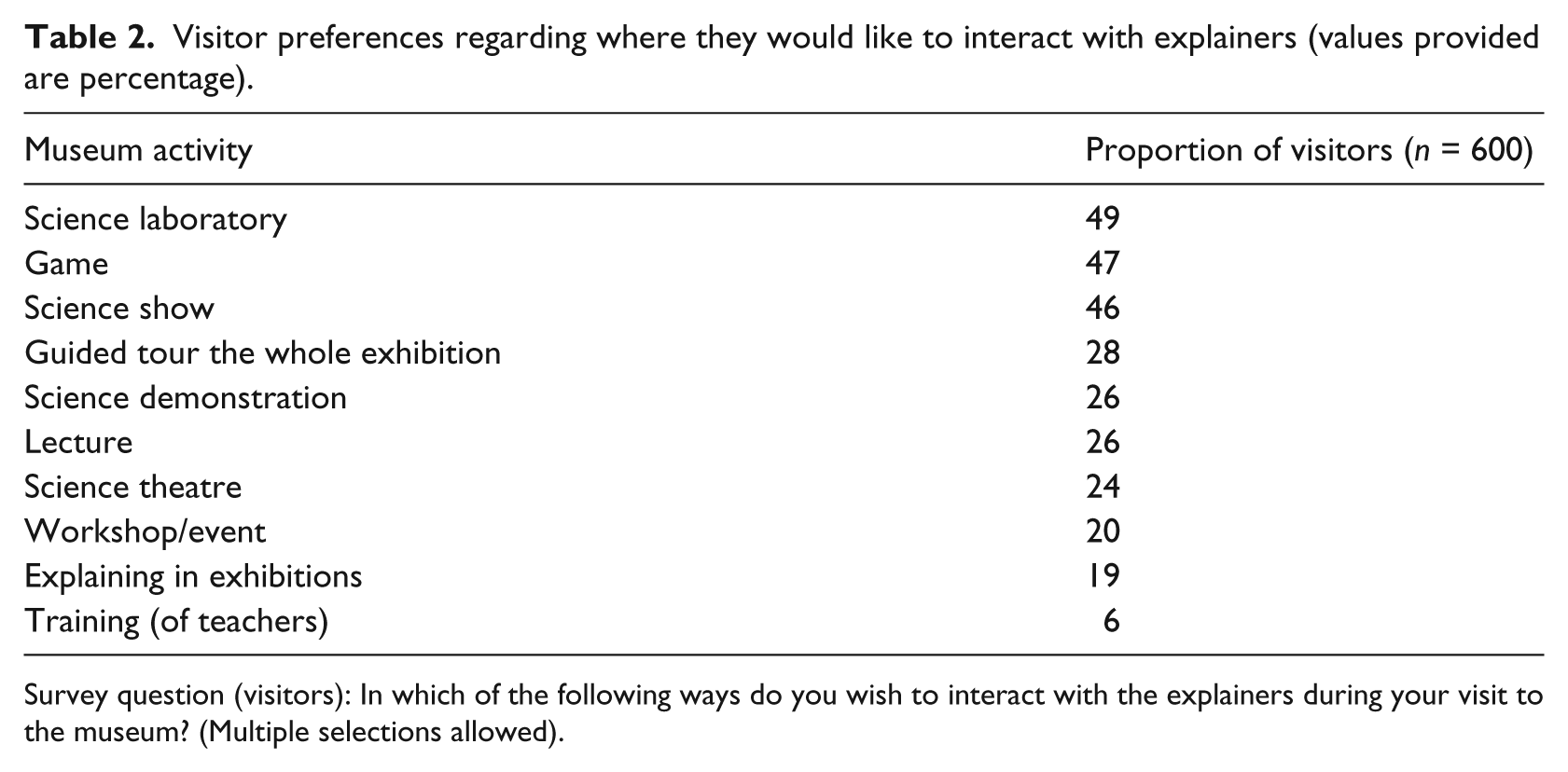
Survey question (visitors): In which of the following ways do you wish to interact with the explainers during your visit to the museum? (Multiple selections allowed).
Interestingly, the activities with high percentage responses were those that involved active participation with explainers rather than passive participation. For example, ‘Explaining in exhibitions’, where visitors tended to take on a ‘listener’ role, was less popular (19%, n = 122), whereas nearly half of the visitors (49%, n = 292) appeared open to interact with the explainers in a ‘Science laboratory’ setting. Such interactions involve not only listening to the explainers but also allowing the visitors to communicate both with the explainer and other people. It is possible that visitors are more open to interaction in settings where interaction is more permissible and likely. For example, due to Krang Jai a visitor might feel more relaxed to ask questions or request direction from an explainer in a laboratory or interactive setting, compared to an experience where the explainer is seen to be presenting information around an exhibition in a didactic fashion.
Visitors’ experience of and approach toward interaction
In order to understand the potential of interaction between visitors and explainers, it is important to know more regarding the details of the interactions between them. In this study, visitors and explainers were asked for their views regarding approaches and behaviour during interaction. Visitors were given a list of different approaches that the explainers might have used to communicate, and explainers were asked about visitors’ behaviours that they commonly encounter when interacting with visitors.
These lists (see Table 3) were developed from existing literature (see Gomes da Costa, 2005; Johnson, 2005; Johnston and Rennie, 1994; Mullahy, 2004), and had been previously applied within a similar Thai context (Kamolpattana, 2009).
Visitors’ experiences of different interaction approaches (values provided are percentage).
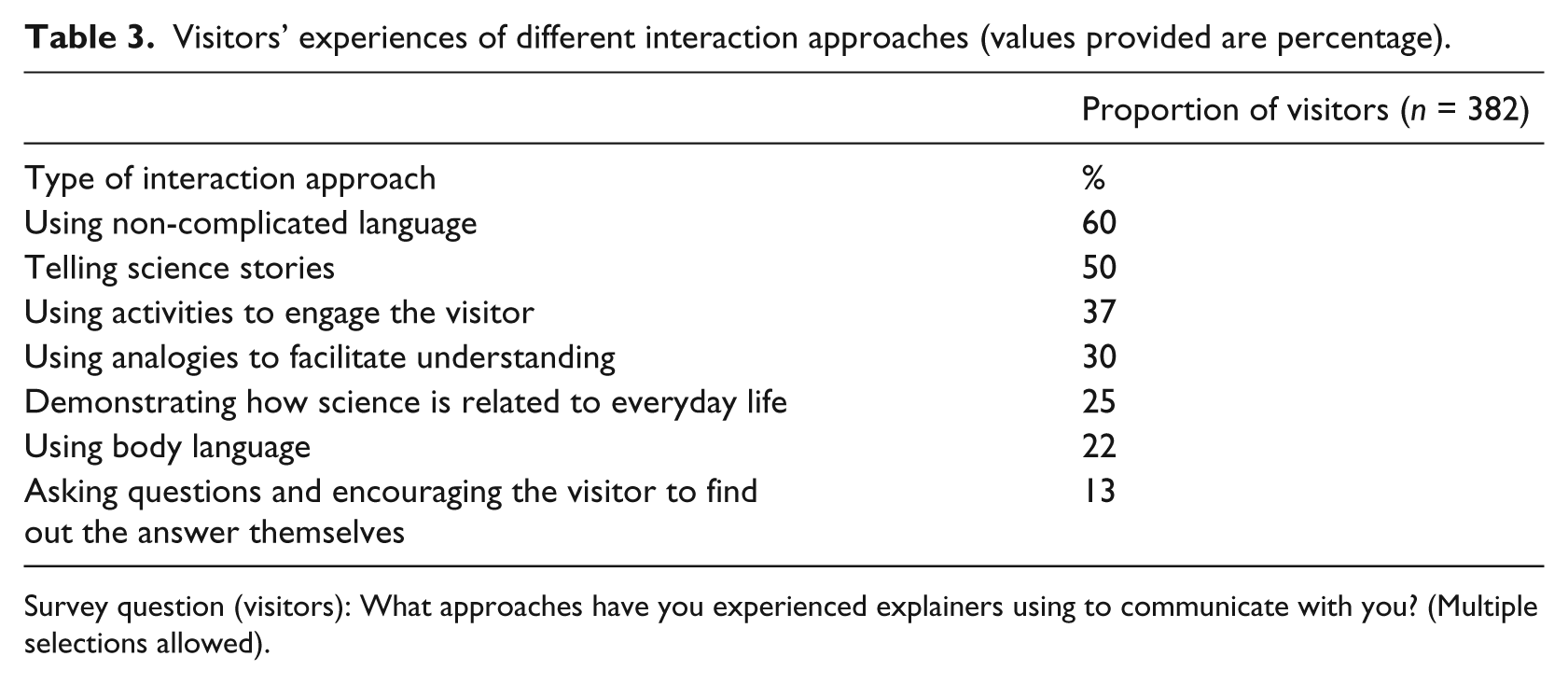
Survey question (visitors): What approaches have you experienced explainers using to communicate with you? (Multiple selections allowed).
As highlighted in Table 3, visitors reported that explainers most often used simple, uncomplicated language as a technique to interact verbally with them (60%, n = 229). Narrative principles such as ‘telling science stories’ (50%, n = 190) were also used to relate information to visitors. Perhaps most notable here though were other aspects that appeared less readily utilised; for example, only around a quarter of visitors (25%, n = 97) noted any demonstration of how ‘science is related to everyday life’. ‘Using body language’ (22%, n = 85) and ‘asking questions and encouraging the visitor to find out the answer themselves’ (13%, n = 49) also appeared to be less well utilised in terms of encouraging interaction with the explainers. It is possible that all three of these approaches might be useful in the Thai context, in terms of encouraging people to suggest their own ideas and feel relaxed to both ask and answer questions. However, it is important to remember that the approaches suggested have emerged from a Western setting. It may also be the case that explainers are avoiding such techniques to prevent discomfort with forced interaction among explainers and visitors alike.
With regard to explainers’ views on visitors’ behaviour, a list of possible Thai visitors’ behaviour (see Table 4) was developed from the results of previous observations conducted with NSM staff (National Science Museum, 2001). Within this study, the explainers mentioned that they found visitors could at times both ‘avoid’ but also ‘approach’ explainers. In terms of ‘avoidance’, 63% (n = 26) of explainers agreed that ‘visitors avoid interacting with the explainer’ (see Table 4). There are two possible interpretations of this ‘avoidance’. It is possible that visitors tend to prefer to reflect on their experience independently, without the aid of an external facilitator. Although some of the visitor data collected would suggest other intentions, it is feasible that intention to interact does not necessarily translate to behaviour. Alternatively, it might also be the case that, in the Thai context, visitors feel shy and cautious in asking for assistance and feel they will lose face if they request help.
Explainers’ views on visitors’ behaviour (values provided are percentage).
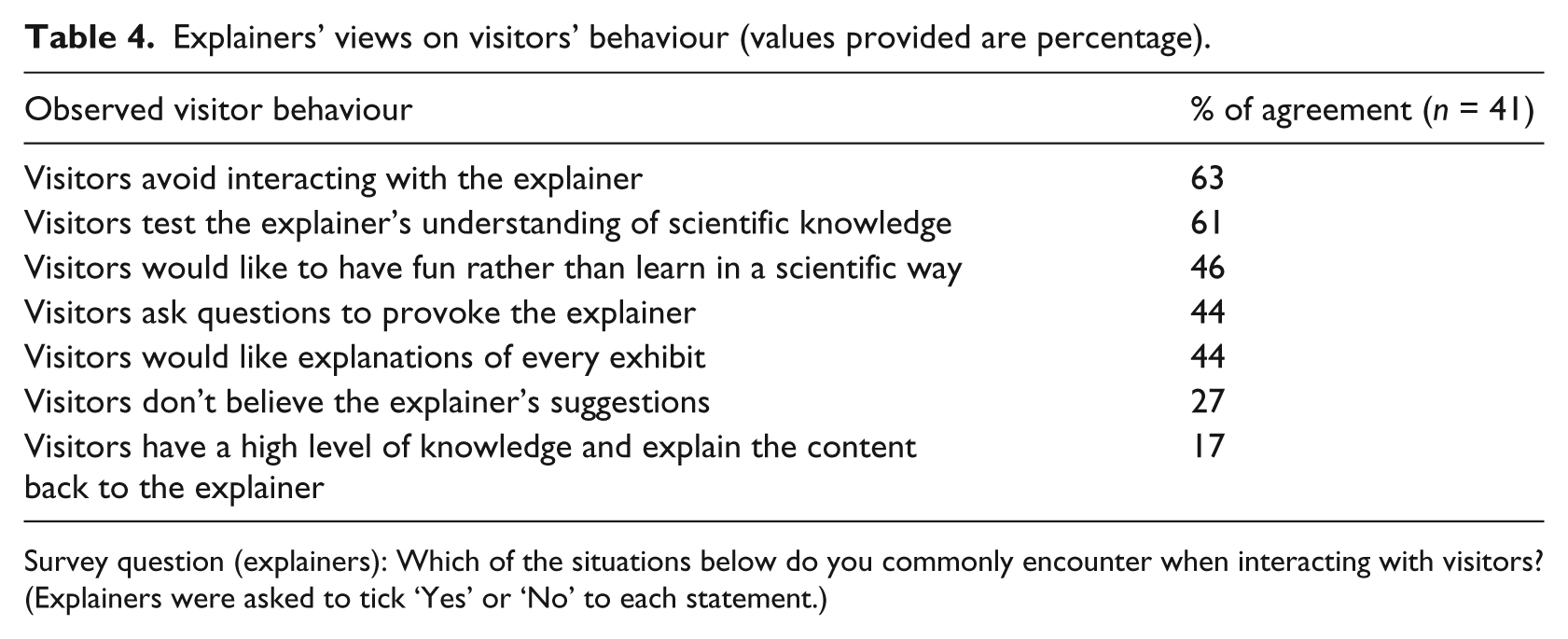
Survey question (explainers): Which of the situations below do you commonly encounter when interacting with visitors? (Explainers were asked to tick ‘Yes’ or ‘No’ to each statement.)
It was then surprising to see that despite the sense of avoidance among some visitors, many explainers also noted that ‘visitors test the explainer’s understanding of scientific knowledge’ (61%, n = 25) and ‘visitors ask questions to provoke the explainer’ (44%, n = 18) from the explainer’s perspective. These results could suggest that there are more active learners present within the Thai museum context than might be expected, as, from the explainer’s perspective, when they do interact, over half of the visitors are engaging with materials and asking questions. Such findings contrast evidence from a formal learning environment which suggests that Thai people have a passive learner culture, and are taught to respect and adhere to social norms rather than question content presented to them (Deveney, 2005; Holmes and Tangtongtavy, 2003). However, it is also important to remember that in contrast to Western, for example, Australian, American or many European countries, visitors and explainers will have been taught not to question individuals in a teacher role (Holmes and Tangtongtavy, 2003) and to ask for advice or information from someone who is younger than you is inappropriate (Thapatiwong, 2011). Therefore, provocative questions in a Thai content might be much more passive than how they would be interpreted in other locations.
Additionally, the use of pseudo-sibling relationships leading to a friendly communication environment may result in a reduction of Krang Jai at least where question asking is concerned. Visitors who are younger than the explainer were called Nong, while elder visitors were called Pii. Within this environment, the majority of visitors did not appear to see explainers as a teacher or professional, but instead identified them as someone comfortable to talk with as indicated by the high response from the explainer’s perspective on visitors’ engagement in question asking. This might suggest, from the explainer’s viewpoint, that visitors avoided Krang Jai in some circumstances and were less concerned about losing face if they did not know something related to the museum content. Such interactions between explainers and visitors could imply that in entering the lower power distance of the science museum environment, some Thai visitors appear to take active learning roles when compared to traditional patterns of Thai behaviour in educational contexts.
Visitors’ learning experiences
Finally, visitors were asked a series of questions about their learning experiences from interacting with the explainers. A list of impact indicator statements was provided, based on the GLOs five categories: knowledge and understanding, enjoyment-inspiration-creativity, attitudes and values, action-behaviour-progression and skills (MLA, 2008).
The results (see Table 5) suggest that more than 90% of visitors within NSM that interact with explainers gain ‘knowledge and understanding’, for instance, learning new scientific facts, and ‘action, behaviour, progression’. The majority of respondents indicated that they ‘agreed’ with all of the impact indicator statements provided (Table 5), with relatively high proportions additionally indicating they ‘strongly agreed’. It seems useful to initially explore the areas where visitors reported somewhat fewer personal gains. Those experiences included ‘I had a chance to share my knowledge with the explainer/s’, where 16% of visitors (n = 64) disagreed with the statement in some way, of whom 27 visitors were educated to Bachelor degree level (and therefore might be assumed to have some level of knowledge to offer). This result suggests that some visitors did not identify an opportunity to share their own understandings, though it does not tell us why that might be the case. Additionally, ‘the explainer/s inspired me to find out more scientific information when I go back home’ (13% ‘disagree’ or ‘strongly disagree’, n = 49) and ‘the explainer/s raised my curiosity in science during the visit’ (10% ‘disagree’ or ‘strongly disagree’, n = 37) were also relatively low in number. This suggests that a minority of Thai visitors may need more reassurance that the science featured in the museum is relevant and accessible to them and their sustained interest, though the vast majority reported positive reactions.
Visitors’ self-reported impacts from interacting with the explainers (values provided are %).
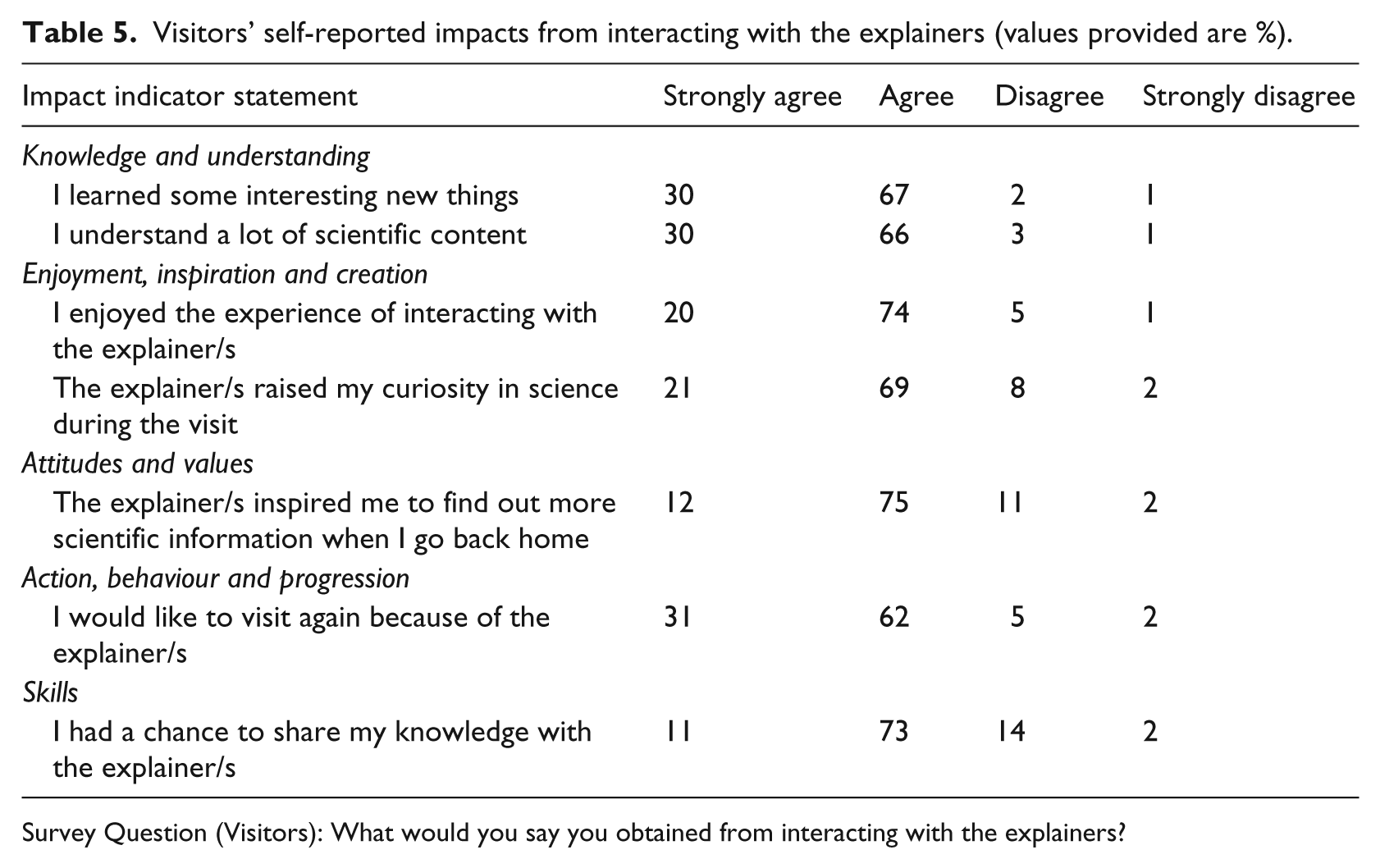
Survey Question (Visitors): What would you say you obtained from interacting with the explainers?
There was a statistically significant difference according to age (df = 2, n = 600, p = .01) and education (df = 3, n = 600, p = .008) for ‘I learned some interesting new things’. Children rated the importance of interaction with the explainers in this context significantly higher than older people. 6 Similarly, visitors who had ‘less education than high school’ rated the importance of interactions with explainers significantly higher than those who had higher education. 7 Age group (df = 2, n = 600, p = .009) and education level (df = 3, n = 600, p = .008) also produced significant differences in whether respondents agreed that ‘I would like to visit again because of the explainer/s’. Children were more likely to feel that the interaction with explainers was an important contribution to their interest in returning to the museum again. 8 In the same way, visitors who had ‘less education than high school’ were more like to rate the importance of interactions with explainers in encouraging them to return than those who had experienced higher education. 9
Additionally, the group with whom a visitor had attended the museum (i.e. alone or with a school trip, friend/s or family) had a statistically significant effect on whether the respondent agreed that ‘I had a chance to share my knowledge with the explainer/s’, (df = 3, n = 600, p = .01). Visitors who attended the museum ‘alone’ were more likely to feel that their interaction with the explainers provided them with the chance to share their own knowledge than visitors attending as a group. 10
6. Discussion
Interactivity and creating two-way communication
The results from this research suggest that while Thai visitors demonstrate some wariness around interacting in a multi-directional fashion, there are signs that they prefer to interact with the explainers via activities that naturally adopt two-way communication styles. Thai people’s behaviours are conditioned to be quiet and relatively passive (Deveney, 2005), and it is therefore possible that when interacting in sessions which are mindful of more traditional communication formats, similar styles of behaviour are likely to be deemed appropriate.
The results of this study show that activities that include the chance for audience participation and input to occur naturally, such as science laboratories, can sanction a style of interactive communication. Science museums in Thailand are thus potentially creating a situation where there is a lower power distance relationship (Hofstede et al., 2010) in certain activities, when compared to a Thai classroom. Western literature (see, for example, Bell et al., 2009; Bultitude and Sardo, 2012; MacDonald, 2004) identifies that activities occurring in relaxed environments can promote participants’ willingness to learn, as well as their intention to continue learning. The same trends appear to hold true within Thailand. Explainers are using the pseudo-sibling relationship to create a perceived ‘friendliness’ of the environmental setting; for instance, visitors attending alone appear particularly encouraged to speak to an explainer. However, the social and environmental setting needs to be considered at a much deeper level to explain the success (or otherwise) of such activities within Thailand. By actively taking into account local cultural perspectives, explainers can encourage visitors to express their curiosity more freely. It is therefore very important that museums and science centres take such cultural aspects into consideration when designing activities and opportunities for explainer interactions with visitors.
Thai Visitors: what do their learning experiences reveal?
Our analysis suggests that from the explainers’ perspective, visitors’ behaviour in the NSM did not always conform to Thai cultural norms; visitors were not always quiet, they asked questions to test explainers’ knowledge and they did not always believe explainers’ suggestions, though there were still groups of visitors who avoided interacting with explainers completely. These findings suggest some evidence of active learners in the Thai museum context, but as these analyses have been conducted only within the Thai context, it is not clear how this would compare with behaviours of visitors in other settings.
This raises a wider point regarding methods within this research and the challenges of seeking to make comparisons across different cultural contexts. First, it was noticeable in responses to certain questions that cultural factors were at play. For instance, returning to the relatively high proportion of explainers who reported visitors asking probing questions, what these data do not provide is a comparison as to how this provocation and exploration of knowledge is framed. It is possible that Thai explainers’ conceptions of ‘questioning’ are informed by cultural upbringing, and it would be useful to compare the exact nature of the questioning with the experiences of explainers in other cultural contexts. Similarly, there were high responses among visitors (93%), suggesting they would visit the museum again due to explainers. It is possible that such responses, while not dishonest, were influenced by high power distance factors within the process of research. Such cross-cultural comparisons form part of ongoing work by the lead author, but are worthy of more extensive consideration within the field.
Explainer-enhanced visitor experiences in NSM Thailand
The results from this work demonstrate visitors’ self-reported positive learning experiences and other beneficial impacts from their interactions with explainers at NSM. Such findings are consistent with previous studies within various Western science museums, for example, those described by Diamond et al. (1987) and Tran (2006). However, if we link back to visitors’ experiences of different interaction approaches (Table 3), the data suggest that explainers were less likely to be asking questions, using body language, making connections to everyday life or encouraging the visitors to find out the answers themselves, and they tended to use traditional one-way communication methods. What is less clear is whether explainers were doing this purposely, as a traditional Thai approach to education, or reactively, when working with visitors who might be more passive and accepting of particular types of formats for communication. The focus on one-way communication styles, lesser use of examples from everyday life or activities which we know to be important (Johnston and Rennie, 1994; Mullahy, 2004) may explain why for some visitors it was difficult to see how science learning could be sustained, relevant or continued after the museum visit. Such reactions would no doubt lead to less development of ‘attitudes and values’ and ‘skills’ regarding science within the visitor cohort.
7. Conclusion and implementation
Visitors’ experiences of explainers in this study revealed very positive feedback, with some specific key areas identified for further improvement. NSM, as well as science centres and museums working in similar cultural settings, could continue to enhance visitors’ experiences through their interaction with explainers in a variety of ways. First, the Thai pseudo-sibling relationship appears to have some influence on building a friendly environment, reducing the ‘power distance’ between visitors and explainers, increasing trust and reducing concerns related to ‘saving face’. Some visitors feel able to express their ideas and to question and participate in science-related activities. This suggests an informal education setting such as a science museum might be one place to encourage Thai people to interact with science in an expressive manner.
In addition, in order to achieve visitors’ deep learning, museums can provide training to explainers focusing on relating scientific issues to everyday life and identifying and asking questions of visitors; at present, such questions appear to be used minimally. However, such approaches would need to be conducted sensitively, in a manner mindful of Thai cultural norms, in order to avoid setting up a Krang Jai situation and/or making visitors uncomfortable. While this study appears to show that many Westernised approaches are relevant in Thailand, there were also particular cultural contexts that would not be apparent in other countries.
In conclusion, this study demonstrates that Thai visitors do take on active learning approaches when science museums, centres and explainers are mindful of the cultural context in operation. If Thai explainers use naturally interactive and informal mechanisms and activity styles, are conscious of key cultural factors such as Krang Jai and employ the pseudo-sibling relationship when approaching visitors, there are excellent opportunities for interaction. However, from a research perspective, there is still work to be done to acknowledge, respect and apply non-Western framings within science communication settings. It is important that any such observations and recommendations do not in themselves become reflections of a high power distance, encouraging the adoption of a Western model alone, but vocalise the existing effective cultural practices occurring in museums and centres around the world.
Footnotes
Funding
This research was funded by a PhD scholarship from the Royal Thai Government.