




Abstract
Whilst the phenomenon of ‘plant blindness’ is often problematised, conceived of as a negative phenomenon, whereby plants are overlooked in favour of animal kin, I would like to make the case for a kind of positive plant blindness, which takes into account the necessary blind spots requisite for our aesthetic appreciation of plants. Namely, I shall demonstrate that the phenomenality of growth and the elusiveness of what I shall call ‘plant emergence’, qua plant movement, necessarily involves certain ‘blind spots’ in our perception, which moreover shape our aesthetic appreciation of plants. By looking at plant blindness phenomenologically, we can begin to recover what Merleau-Ponty calls the ‘perceptual sense’ of our aesthetic appreciation of plants, as to eventually cultivate this appreciation. Accordingly, we shall demonstrate that the perceptual sense of our appreciation of plant ‘movement’ is a plant's growth. Whilst perceptual aids such as time-lapse photography might well help to accentuate the movement of plant growth, I shall argue that it is the unfolding nature of plant emergence, which stretches out over time, that underpins our aesthetic appreciation. With emphasis on the movement of vegetal growth, I shall explore the ways that this phenomenon shapes our aesthetic appreciation of our environments in general. In turn, I hope to illustrate how environmental aesthetics will benefit from a richer analysis of plant life.
Introduction
The term plant blindness was first coined by J.H. Wandersee and E.E. Schlussler in a paper entitled ‘Preventing plant blindness’ (Wandersee and Schlussler, 1999). Both botanists made the claim that there is a visual, cognitive and social bias towards animals over plants. As they write: We define plant blindness as (a) the inability to see or notice the plants in one’s environment; (b) the inability to recognize the importance of plants in the biosphere and in human affairs; (c) the inability to appreciate the aesthetic and unique biological features of the life forms that belong to the Plant Kingdom; and (d) the misguided anthropocentric ranking of plants as inferior to animals and thus, as unworthy of consideration. (85)
Both Wandersee and Schlussler identify a neurophysiological reason why humans tend to overlook plants, suggesting that the visual cortex filters out certain information which may well lead one to perceive plants as a homogeneous green backdrop, namely, when plants are not in their stage of flowering. Moreover, they also suggest that this phenomenon can in part be eschewed by learning more about plants, either with increased funding into the plant sciences, or by galvanising children's attention towards plants from a young age. For Bethan Stagg and Justin Dillon, their ethnobiological research suggests that engaging with plants is concomitant with plant relevance; for example, communities that engage in foraging are seemingly less likely to be ‘blind’ to plants (Stagg and Dillon, 2022). Kathryn M. Parsley even offers a different term altogether and suggests that the term plant blindness should be reconfigured to ‘plant awareness disparity’, to avoid any ableist implications of using the word ‘blindness’ to denote ignorance (Parsley, 2020). 1
What is interesting is that of all the foregoing areas delineated in Wandersee and Schlussler's initial formulation, no response – to my knowledge – addresses the issue of aesthetics head-on. It is therefore ‘the inability to appreciate the aesthetic’ features of plants that we shall be tackling. First, I shall introduce some prevalent and influential ideas in environmental aesthetics, underscoring a gap in the extant literature between plants within environmental aesthetics more broadly, with particular emphasis on the phenomenon of movement (Environmental aesthetics and the emergence of living beings). This will then lead me to develop a phenomenological account of plant growth, qua plant movement, which I shall argue is at the basis of our aesthetic appreciation of plants (A phenomenology of vegetal growth). I will then discuss the temporality of growth, looking at time-lapse photography as a way of understanding the significance of movement, and compare this mediated perception with our ordinary perception of a plant's gradual growth (Time lapse: the temporality of plants). Finally, I will explore practices that help us to cultivate this aesthetic appreciation, demonstrating that the phenomenon of plant growth plays a significant role in shaping our aesthetic appreciation of our environments generally, constitutive of what I shall call ‘the wildness of the everyday’ (Cultivating an apprecaition of growth: the wildness of the everyday).
Environmental aesthetics and the emergence of living beings
Outlining the different ways that we aesthetically experience art-objects as opposed to the natural world, Ronald Hepburn paved the way for the sub-field of environmental aesthetics in the latter half of the 20th century. As he suggests, whilst we might ‘confront natural objects as a static, disengaged observer’, we typically, however, experience the natural world in a more ‘involved’ manner to art-objects, which are often framed and ‘set apart from their environment’ according to Hepburn (Hepburn, 1963: 196). Illustrating this aesthetic experience with examples of the natural world, Hepburn writes: In a forest, trees surround him; he is ringed by hills, or he stands in the midst of a plain. If there is movement in the scene, the spectator may himself be in motion and his motion may be an important element in his aesthetic experience. (197)
A certain kind of open-endedness appears to be characteristic of our aesthetic experience of nature in Hepburn's account, namely, because it is irreducible to any particular object. Even if one's aesthetic appreciation begins centred upon a particular object, such as a flower, tree, insect or pebble, for example, one's mobile engagement with the environment invites the appearance of other phenomena. Regarding these unfolding appearances, Hepburn writes that ‘a sound or a visible intrusion from beyond the original boundaries of our attention can challenge us to integrate it in our overall experience’. Whilst we might think of more immersive art forms or art pieces that break down the division between the art object and its environs, as demonstrated in many instantiations of earth art, which potentially helps to contest Hepburn's point that art-objects are set apart from their environment, Hepburn's emphasis on the interactive quality of an aesthetics of nature is a salient point notwithstanding, for helping to make sense of aesthetic experiences of our environments (see Bannon, 2011).
It is interesting to note for our purposes, however, that Hepburn mentions the aesthetic qualities of environments using trees as an example. Instead of being a detached observer, our experience of the natural world, as Hepburn suggests, involves being enveloped on all sides. In the case of a forest, for instance, trees are the surrounding medium; in other words, they are the environment and environ us and other creatures. Here, Hepburn touches upon the immersive quality of our aesthetic experience of environments such as forests, a quality especially potent where towering broadleaves shadow us with dense canopies, for example. With another reference to trees, Hepburn suggests that the aesthetic impact they make on us is ‘part-determined by the context we include in our view of it’ (Hepburn, 1963: 198). Here, he refers to the viewer's spatial orientation and proximity towards the tree which indeed alters the aesthetic impact that the view of the tree provokes. As Hepburn writes ‘A tree growing on a steep hill-slope, bent far over by the winds’ might be perceived of as ‘tenacious’ or ‘grim’, whilst seeing this tree from a greater distance, whereby one can perceive the ‘numerous similar trees on the hillside’ which form a ‘delightful stippled patterned slope’ may well engender ‘quixotic’ or ‘cheery’ feelings. With this account, Hepburn foregrounds the environing and immersive quality of trees themselves, a quality we might identify with plants more broadly, and also focuses in particular on the aesthetic impacts that trees have in relation to our spatial orientation within an environment. In this sense, particular emphasis is placed on the movement of the perceiver themselves.
Hepburn's interactive approach to environmental aesthetics can be seen as laying the foundations for Arnold Berleant's more phenomenologically oriented model, which takes cues from a Merleau-Pontian conception of bodily and sensuous engagement. Divergent from the ‘disinterested’ or detached approach to aesthetics, notably Kantian, Berleant proffers his ‘aesthetics of engagement’ model, which not only elucidates the ways that we orient ourselves in our environments, but how these environments orient us (Berleant, 2005). For example, he refers to the ways that curves in pathways ‘tempt the walker forward to see what lies around the bend’ or the ways that a ‘climbing path may invite the walker to move upward to reach its height’ (21). These are enticing features of our environments that invite us to engage aesthetically with an unfolding and interpenetrating experience between body and milieu. Importantly for Berleant, however, in order to recognise the truly participatory nature of environmental aesthetics, we must attune to the ways that our environments engage all of our senses, in lieu of merely being a visual experience. Developing a coastal aesthetic of the environment, for example, Berleant describes the manifold nature of our aesthetic experience, invoking the sound of the waves and ‘The feel under one’s feet of a boardwalk or of the sand and stones on a beach’ (80).
Berleant certainly alludes to the ways that plants emerge in our experience and how this aesthetic appreciation is rooted in our sensual engagement, referring to the aromas of ‘meadow’, ‘pine needles’ and ‘wet soil’, in ways that bring us closer to these natural objects and our environment, rather than keeping us disengaged and at bay. However, whilst plants are considered as significant parts of our aesthetic experiences of our environments, their perceptual qualities for Berleant are not necessarily unique to the phenomenal character of these beings, as he compares the ‘background hum of traffic’ to the ‘wind rushing ceaselessly through the trees’ and ‘pushing one's way through a crowd’ to ‘pressing through thick vegetation’ (65). In this sense, our appreciation of plants in Berleant's account appears to have less to do with plants themselves and more to do with our aesthetic appreciation of the perceptual qualities of our environments broadly speaking.
Broaching an aesthetics of flora, John Charles Ryan invokes Berleant's multi-sensory and engagement model as a way of undermining an aesthetic tendency to objectify plants, rather than appreciating plants through the senses of taste, touch and smell, in contrast to the ostensibly disproportionate privileging of vision in our aesthetic appreciation (Ryan, 2011). However, Ryan argues that Berleant's model ‘provides uncertain ground for a corporeal aesthetics of plants’ because ‘By encompassing the appreciation of nature and of art within an aesthetic of engagement, Berleant marginalises the immanence of living creatures’ (232). Ryan's point is that there is something very particular about the ways we experience living beings to art-objects and that Berleant does not sufficiently attend to these differences. This relates to my previous point, in that the perceptual qualities that Berleant speaks of in plants do not seem to pertain to the unique manner that we come to aesthetically appreciate these living beings but are constitutive of our general appreciation of the environment, whether ‘natural’ or human built.
By emphasising the unique qualities of plants, Ryan's aesthetics of flora examines the ways that we interact with plants and in turn come to aesthetically appreciate them. As he writes, ‘the body acts as a plenum of contact with plant life through the faculties of smell, taste, touch, hearing and movement’ (235). Whilst Ryan's multi-sensory approach is helpful for the purposes of developing a phenomenological account of the ways we come to aesthetically appreciate plants through our senses, as he focuses in particular on the ways we interact and immerse ourselves with plants as to break down the boundaries that lead to their objectification, his account is concerned with aesthetic qualities and responses instead of a characterisation of their particular phenomenality, that which makes these qualities and judgements manifest. This is why we shall now turn to Tom Greaves’ phenomenological analysis of animal aesthetics, which begins to identify what grounds our aesthetic appreciation of nonhuman animals, by attending to their particular phenomenality (Greaves, 2019).
Whilst Greaves’ phenomenological analysis of animal aesthetics takes cues from a Berleant style of environmental aesthetics, he also wishes to go beyond the more general approach to our aesthetic appreciation of environments and attend to the distinctive characteristics that underlay our aesthetic appreciation of animals in particular. As he says, Berleant does not provide ‘any detailed consideration of the aesthetic significance of wild animal encounters’, and we might even add vegetal encounters (450). For Greaves, much of animal aesthetics has been preoccupied with the question of aesthetic responses, without attending to what grounds the ‘perceptual basis’ for aesthetic appreciation. This is why he characterises movement as the ‘primary perceptual sense of our encounters with animals’ and that the ‘“aesthetic side” of this perceptual sense is animal wildness’. Perceptual sense – à la Merleau-Ponty – as Greaves suggests, refers to the ‘meaning of things as they unfold in perception, prior to conceptualisation and judgement’. With Merleau-Ponty's example of perceiving a bird in flight, Greaves contends that ‘movements draw our attention not first to the qualities and forms of their bodies[…]but to their unfolding relations to those around them and the open-ended environments they move through’ (454). In this sense, aesthetic experiences of animals is not rooted in the aesthetic appreciation of a certain kind of quality or property that we recognise but is guided by the open-ended and ‘wild’ movements of animals who reveal themselves and their environments to us in perception.
For Greaves, there is a primacy to movement in our aesthetic appreciation of animals, and yet this does not mean that animals have to constantly be in motion for our appreciation to be rooted in movement itself. Invoking Heidegger's reading of Aristotle's physis, Greaves contends ‘Movement and stillness together manifest fundamental “movedness”’ (462). Even when a muntjac, for example, is still amongst a thicket of bracken, movement is not entirely absent but always already underpins our aesthetic encounter, as we anticipate the muntjac's movement, not in a predetermined way, but in a necessarily open-ended one. Wildness for Greaves does not equate with the privation of human interaction or influence but rather refers to the very open-endedness of expressive and responsive movement in the context of an animal's environment, which have ‘not been made to “fit” with human desires and expectations’. In this sense, wildness is a constitutive feature of an animal's expressive-responsive movement, movements that are able to manifest in environments which are not carved out in predetermined ways.
Whilst Greaves suggests that ‘Appreciation of the primacy of wild movement for aesthetic appreciation of animals leaves a number of paths open for further exploration,’ namely, in terms of thinking of other elements of the natural world, it would potentially be inappropriate to classify the primal aesthetic quality of movement in plants as ‘expressive-responsive’ movements in the way that Greaves does with animals (467). This is why he qualifies that ‘The growth of plants, together with their generally unperceived movements, has another such character’. One such distinguishing character is the sessile nature of plants. 2 Rooted to the spot, movement isn’t entirely absent but is far more gradual than the expressive-responsive movement of animals, and this very rootedness is intimately related to the very shaping of the environment and phenological cycles. It will be important for our purposes to distinguish between animal and plant movement as to do justice to the very particular phenomenality of plants, which moreover underpins our aesthetic appreciation. We shall now attend to the nature of this phenomenality in greater detail.
A phenomenology of vegetal growth
Gaze on them as they grow, see how the plant Burgeons by stages into flower and fruit, Bursts from the seed so soon as fertile earth Sends it to life from her sweet bosom, and Commends the unfolding of the delicate leaf. (Goethe, The Metamorphosis of Plants)
Regarding the movement of metamorphosis in plants, Goethe writes ‘Anyone who has paid even a little attention to plant growth will readily see that certain external parts of the plant undergo frequent change and take on the shape of the adjacent parts’ (Goethe, 2009: 5). Analysing the cumulative steps of plant movement, he refers to the continuing changes that emerge with its metamorphoses, as he describes the way that each part of a plant, including leaves, calyx, corolla and stamens develop out of one another. Blending poetry with botany, Goethe's descriptions of the metamorphosis of plants evoke a nascent kind of aesthetics particular to flora, as he compares the beauty and power of friendship to the unfolding of the leaf. Goethe's account of metamorphosis in plants attunes us to the ways that plants constantly unfold in our experience through movement, as he urges us to gaze at the plant as it develops from flower to fruit. If we think of this process phenomenologically, we can imagine performing en epoche in the vein of Husserl, whereby our naturalistic ways of thinking are bracketed (Husserl, 1973: 31). For Husserl, in order to understand things phenomenologically, we must set aside our preconceptions, including any knowledge we may have about things and look at the phenomenon as it appears to us. In terms of plants, we may want to bracket what we know about them botanically speaking, including the name of the species and genus, and look at how plants appear to us in our experience. Once we start to look at plants in this way, we seem to get closer to what Goethe is describing when he refers to the phenomenon of growth. Our perception of plants becomes less intellectual and scientific and taps into something more primal still, a perceptual sense of growth. Like the growth of a child, which stretches out over time, the phenomenon of vegetal growth is illuminated gradually. We shall discuss the temporal nature of this phenomenon later on.
What is troubling in Goethe's account, however, is its teleological implications. This is because all of the developments and changes in a plant are, however, according to Goethe, based on one organ changing form; namely, the leaf whose movement is based on contraction and expansion respectively, seen in the leaf embryo of the cotyledon and achieving its ‘greatest expansion in the fruit’ (65). If there is an aesthetic of flora to be gleaned from Goethe's analysis, it could be that beauty culminates in the fruit, as the highest expression of the plant's leaf structured ontology. This appears to act as a synecdoche for an aesthetics of nature itself as Goethe writes ‘By changing one form into another, [the plant] ascends—as on a spiritual ladder—to the pinnacle of nature’ (6). The problem with this account is that an aesthetics of flora would appear to have some kind of finishing stage, reducing the aesthetic features of metamorphosis to one particular state of optimal growth. Moreover, by reducing the plant to its leaf structure, Goethe appears to narrow down the plant's heterogenous parts to an individual whole. According to Hegel, however, ‘every branch is a new plant and not at all, as in the animal organism, just a single member’ (Hegel, 1975: 137). This says something about the very different kinds of ways we experience plants compared to animals, with the former perceived as more of a multiplicity than an individual. Regarding the movement of growth, Hegel suggests that unlike the animal whose growth ‘stops at a definite point of size’, a plant ‘grows without ceasing’. As he continues, ‘only when it withers does the increase of its branches, leaves, etc., cease’.
Even with these differences in mind, however, Hegel identifies a strong link between natural beauty and ‘inner animation’, which he recognises in plants as well as animals (130). This is why for Hegel, the plant stands higher in natural beauty than the crystal, as in his words, the plant ‘has already developed to the beginning of an articulation and it consumes material in its continually active process of nourishment’ (136). The difference between animals and plants for Hegel, however, lies fundamentally in the relationship between the being in question and its relation to itself; for Hegel, a plant lacks any kind of ‘ensouled life’ and is, in turn, totally ‘drawn out into externality’. A plant's inner animation is therefore inextricable to its reliance on inorganic nature, meaning that plants are ranked as inferior to animals on Hegel's hierarchy of aesthetics, finally culminating in the beauty of art itself, as reaching the creative force of the ‘inner life of mind’ (163). Notwithstanding these ostensibly negative representations of plant life, Hegel's comments on the movement of growth are helpful, insofar as they touch upon the specific kind of movement at least unique to plants, which are concomitantly at the basis of our aesthetic appreciation. 3
Juxtaposing the animal's putative ‘peaceful maintenance…complete in itself’, Hegel emphasises the ways that a plant's movement is inextricably connected with their growth. Being less like individuals, plants emerge and move by extending themselves and in turn proliferating themselves into multiple appearances. In Hegel's words, plant movement is constitutive of ‘a continual new production of itself outwards’. Interestingly, by invoking a plant's ceaseless growth, Hegel avoids the same kind of teleology that troubles Goethe's account. In this sense, the aesthetic nature of plant appearances are arguably less rooted in the culmination of a particular appearance, but in the inner animation of plant growth or in the very unfolding of what we shall call ‘plant emergence’. Because, as Hegel says, animals reach a definite point of size, their growth appears as less of an acute movement than in plants. Whilst growth ceases with decay, Hegel writes that ‘plants spring from their seed, they germinate, grow, blossom, produce fruit, and then the fruit decays and brings forth new seeds’ (350). In this sense, decay continues the process of plant emergence, allowing for the proliferation of novel appearances.
Delineating the differences between the intentionality of animals and plants, Michael Marder writes ‘When animals intend something, they enact their directedness-toward by moving their muscles; when plants intend something, their intentionality is expressed in modular growth and phenotypic plasticity’ (Marder, 2012: 3). In this sense, the ‘comportment’ of plants or their very manner of revealing themselves and relating to their environment is rooted in growth itself, whether this be in the vertical growth of the aboveground parts of the plant or in the lateral and underground movements of their roots. Whilst Marder investigates the implications for our thinking on plant intentionality or subjectivity in regards to the ways that plants communicate to one another through their root systems and potentially show goal-directed behaviour through their growth, we wish to outline the ways that these features are revealed to us in our experience and what this says about our aesthetic appreciation of plants. However, it is also important to state that by doing so, we are not attempting to cut plants down to the size of human experience. Whilst our phenomenological analysis will help us to identify the ways that plants appear to us, it will also involve identifying the ways that plants disappear and indeed evade our experience entirely.
Growth does not seem to have the same kind of phenomenal character as it does in plants, because as Hegel reminds us, growth is definite in an animal, and the ways that animals reveal themselves is rooted in their locomotive movements, qua expressive-responsive movements. Whilst the lilac colour of Wisteria, for example, might be considered an aesthetic property of the climbing plant that we consider beautiful, this property is reflective of the primal movement of growth which allows for such qualities to manifest. What is open ended in animals, however, is not growth as such, but locomotion. These movements, as Greaves suggests, draw attention to an animals ‘unfolding relations to those around them and the open-ended environments they move through’. Growth plays an analogous role in the case of plants. If growth is inextricable to plant movement, then it also constitutes the ways that plants relate to and in turn reveal their environment, such as when a climbing French bean elongates its tendrils through circumnutation, making contact with the surface of a bamboo stick (See Figure 1, where the shortest plant has outgrown its support and is reaching its tendril out towards the neighboring plant's pole, which is wrapped firmly by the plant) .
4
The environments revealed by plant growth are then something that we come to aesthetically appreciate, such as a garden wall or facade of a house that a wisteria plant spreads itself across luxuriantly. By relating to its environment, the plant in turn grows, and this growth is in some sense open ended, in a way that Hegel deems as ceaseless. This can be contrasted with Kant's treatment of the beauty of plants, where he focuses on the purity of colour and in turn a plant's properties, as he writes: the green of a grass plot…are by most people described as beautiful in themselves’ and that ‘the sensations of colours and of tone have a right to be regarded as beautiful only in so far as they are pure. (Kant, 1951: 59)
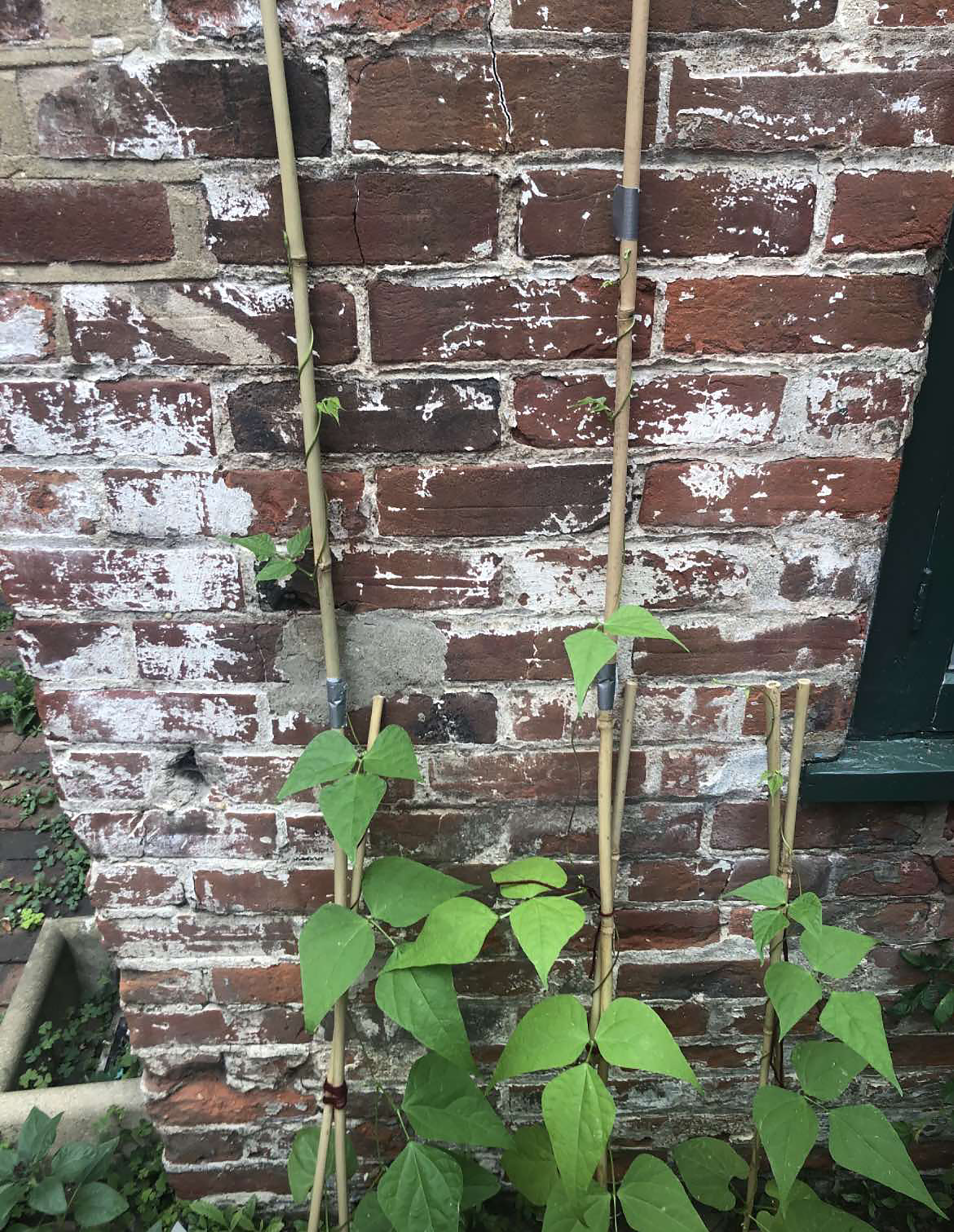
French Bean climber. Photograph by author, 2022.
Invoking the difference between a ‘natural’ and an ‘artificial’ flower, Kant suggests that ‘our intuition and reflection on beauty’ in the case of the former pertains to the thought ‘that nature has produced it’ (142). This is why Kant suggests that one could be tricked into thinking that an artificial flower was a natural one. However, once it is unveiled that the flower is artificial, this interest for Kant would ‘disappear at once’. The reason for this is that the aesthetic judgement would be exposed as being ‘impure’, as the artificiality of the flower for Kant would mean that the flower was a mere adornment rather than a ‘free natural beauty’ and therefore was inextricable to a purpose in lieu of being a beautiful natural object. Describing a tulip as beautiful (73), Kant, as Derrida reminds us, plucks the ‘wild flower’ from de Saussure's Journey in the Alps, and as Derrida suggests, it is ‘extremely important’ that Kant's tulip be ‘utterly wild’ so that it can be seen as without an end or purpose (Derrida, 1987: 85). Therefore, the very wildness that Kant attributes to the flower appears to have little to do with the plant's movement and unfolding within its environment, but with the privation of human interference that constitutes our appreciation as a pure aesthetic judgement. Furthermore, this purity may well have more to do with the aesthetic value that Kant ascribes to pure colours than it does with the growth that made such qualities manifest. Whilst Kant's aesthetic judgement frees the tulip from its cycle of fecundation, making it irreducible to a purpose, this in turn cuts it from the process of growth that enabled it to appear in the first place.
One way of avoiding this aesthetic conundrum between naturalness and artificiality is to focus less on the properties of plants, that is, their colours and patterns and more on their phenomenality of growth and even decay. For example, astro turf can be distinguished from a grassy plain when we consider how the two different objects appear in the first place, and even disappear for that matter, through the processes of growth and decay. These are not just objective processes, but phenomenal ones, which are distlled by our intuitive grasp of living and growing beings. We shall now turn to the temporal nature of this phenomenality, as to understand the ways that plant growth occurs over a stretch of time, which is perhaps at odds with our own temporal sensibilities.
Time-lapse: the temporality of plants
In the documentary Green Planet, England's most famous naturalist, David Attenborough, narrates the spectacular movements of ivy-leaved toadflax as it grows out of and across a soilless wall.
5
Here, the use of time-lapse photography illuminates the powers of movement that perhaps might go unnoticed if we were to pass the wall in our everyday lives. This is a technology that plant neurobiologist and philosopher Paco Calvo has revered (Calvo and Lawrence, 2022). Regarding the impressive navigational qualities of climbing plants, Calvo concedes: I was aware that when I watched plants with my naked eye, I was less immediately impressed by their abilities than when I watched back time-lapses that I had taken. The plants at artificial speed still appealed to my biased animal mind in a way that effortful slow observation could not. (54) We are not artificially trying to make plants seem like animals by using time-lapse, we are simply making plant behaviour easier to perceive as a result of collapsing time, rendering it visible to us so that we can uncover the intelligence underlying it. (62)
There is a fundamental hiddenness in the very meaning of emergence, as a process of becoming visible after being concealed. Accordingly, time-lapse photography makes plant movement conspicuous, and yet it concurrently risks effacing the very inconspicuousness at the heart of the phenomenon of plant emergence. Whilst we potentially eschew the lapse in our attention, by having this movement pointed out to us in a very obvious way, we also risk another kind of lapse in attention, one that obscures the phenomenality of plant emergence. This is why the inconspicuous parts of a plant's movement are so important for cultivating an aesthetic appreciation, because they help us to recover the perceptual sense of our appreciation. Therefore, it’s not just movement that we find aesthetically pleasing in plants, but the way plants move in our ordinary perception that is the way they gradually emerge and unfold over time. Time-lapse photography could therefore act as a helpful tool in cultivating an aesthetic appreciation of plants, with the proviso that we fold back self-reflexively on the way we ordinarily perceive them, with a heightened awareness of movement. The important thing is that we recover the phenomenality of this movement, as something that isn’t as conspicuous as an animal's expressive-responsive movement but is something that emerges over time. In this sense, time-lapse photography could more importantly remind us that our aesthetic appreciation is actually grounded in the gradual and imperceptible movements that manifest in differing stages of growth in plants. As Merleau-Ponty writes: Just as Bergson waits for the morsel of sugar to dissolve, I am sometimes obliged to wait for the organization to produce itself. This is even more the case in normal perception, where the sense of the perceived appears to me as instituted within it and not constituted by me. (Merleau-Ponty, 2012: 275)
Whilst Calvo is right to point out the fruits of time-lapse photography in aiding the limitations of perception, he runs the risk of devaluing this ordinary perception. Slow, effortful observation will of course lack the scope to encapsulate the full story of a plant's movement, and yet it also plays an important role in cultivating an aesthetic appreciation of plant emergence. This is why there is a danger that our perception of growth becomes so sped up that we fail to appreciate the pace of these nonhuman beings. Therefore, we might say that our aesthetic appreciation is grounded in the very act of waiting or at least experiencing this unfolding emergence over time, an appreciation of the differential temporalities of plants as they emerge and constitute their environments in their ‘own’ time. Accordingly, the perceptual ‘sense’ of such a phenomenon is therefore instituted within the perceived, as Merleau-Ponty says above, rather than constituted by the perceiver through an embellished and mediated perception. In this sense, we needn’t collapse time, flattening out these differential temporal scales in order to appreciate their differences, but conversely we must learn to appreciate these different temporal scales, by perceiving them as they unfold.
The phenomenality of the movement displayed through time-lapse, as we have suggested, is in danger of suspending the inconspicuous phenomenon of plant emergence, making us perceive the movement of plants in a more ‘animalistic’ way, so to speak. This does not mean that time-lapse photography has no part to play in illuminating plant movement, but it certainly demonstrates the limitations of such an approach in recognising and indeed appreciating the alterity of plants. In this sense, phenomenology helps to elucidate the fruits of intuition and ordinary perception, in terms of helping us to appreciate the movements and capacities of plants in a way that is divergent from the scientific methods utilised by plant neurobiologist. Yogi Hendlin has made an analogous critique of plant neurobiology in the context of ethics as opposed to aesthetics. As he asks, ‘why must we make plant animal analogues in order to respect them?’ (Hendlin, 2022: 267). Here, he is referring to the equivalences that plant neurobiology makes between plant structures and neurotransmitters and synapses. Whilst we are doing something rather different, we have also challenged the methods of plant neurobiology. Namely, we have asked whether time-lapse photography is conducive for cultivating an aesthetic appreciation of plant movement and have suggested that a phenomenological perspective is better suited to cultivating an appreciation of a plant's alterity. I share Hendlin's concerns that an approach consisting of plant animal analogues could serve to negate plant neurobiology's ostensible intentions to evince the wonder of plants. However, in spite of my critique, I am not discrediting the fact that time-lapse photography has elucidated many features of plant behaviour. As plant neurobiologist Anthony Trewavas has shown, certain observations of plant behaviour would not be possible without the aid of this technology; for example, capturing the inner workings of circumnutation and its relationship to memory processing and ‘decision’ making in seeking conditions for optimal growth (Trewavas, 2017). With a particular focus on aesthetics, however, I have demonstrated that ordinary perception can tell us a great deal about our appreciation of plant movement, which time-lapse does not capture.
Because living beings ‘counterfeit immobility so well’, including plants, Bergson suggests that we often wrongly conceive of them as a ‘thing rather than as a progress’ and, in turn, forget that ‘their form is only the outline of a movement’ (Bergson, 1911: 128). Yet, as Bergson writes ‘At times, however, in a fleeting vision, the invisible breath that bears them is materialized before our eyes’. We could think here of coming back to a grove of elders, previously bare, to find that they have sprung out into a fragrant white and yellow blossom. Amidst the very familiarity of vegetal surroundings, one can be struck, through multiple senses, by aesthetic features of plant emergence, like rambling through a familiar copse, only to be met by the potent aromas of wild garlic, which direct us earthwards toward the unassuming leaves of green to forage and later eat. With these examples, plants emerge from an ostensible backdrop, and yet this emergence is gradual and is intimately connected to our aesthetic appreciation of our environments and its connection to the changing seasons, as dormant buds of elder wait for the requisite amount of sun in spring to blossom, and the green shoots of daffodils and crocuces poke out of the frosty soil of late winter. Invoking carnivorous plants such as the dionaea or venus flytrap, as well as the so-called sensitive plant, the mimosa, whose leaves are known to close up when touched, Bergson suggests that animal-like mobility lies dormant in plants, just as animals can bear a plant-like ‘fixity’ (109). Going back to Greaves’ remarks on animal movements, we might say that ‘Movement and stillness together manifest fundamental “movedness”’ in an analogous way to plants, as we perceive the perceptual sense of the movement of growth in plants through an extended kind of anticipation, even when we cannot perceive their movement in ‘real time’. This is evinced by Merleau-Ponty in his Nature Course Notes, where he makes a relatively novel reference to plants, writing that ‘In accelerated films, the growth of the flower appears as a movement, but one could say here that movement appears as a particular case of growth’ (Merleau-Ponty, 2003: 154). As a ‘particular case of growth’, the accelerated film of the flower that Merleau-Ponty references, appears in some sense to betray the sense that unfurls in our normal perception of a plant’s movement, as we ‘grasp the imminence of what is going to follow in what has already begun’ and in turn perceive the movement contained in any such snapshot of a plant’s life.
In one respect, we might say that time-lapse photography helps to eschew plant blindness. But what if some level of blindness was requisite for our aesthetic appreciation of plants, a kind of positive plant blindness? For Sarah B. Jose et al., ‘People tend to overlook plants as living organisms, usually viewing them as unassuming backdrops’, and this is ostensibly confirmed when images of animals are perceived of as a figure, with plants being perceived as a background (Jose et al., 2019: 169). Here, they use the image of a rooster amidst some foliage as an example (See Figure 2 for an analogous example). However, for Merleau-Ponty, the background is indispensable for any perception, and yet he is critical of empiricist philosophy ‘which treats this part of the background as invisible’ in accordance with a physiological definition of vision that conceives of it merely as a ‘weakened sensation’ (Merleau-Ponty, 2012: 26). For Merleau-Ponty, ‘The background continues beneath the figure, is seen beneath the figure even though it is covered over by it’. Therefore, even if plant blindness is explained on neurophysiological terms, for Merleau-Ponty, it would seem that these accounts miss the perceptual sense that the background engenders in our lived experience. When describing one's pre-reflective engagement with the environment, Merleau-Ponty writes that ‘my body, in a familiar surrounding, finds its orientation and makes its way among objects without my needing to have them expressly in mind’ (387). Although the background is seen beneath the figure, Merleau-Ponty is not suggesting that the background needs to be present to one's consciousness or sense of vision but that the background continues to have a perceptual sense.
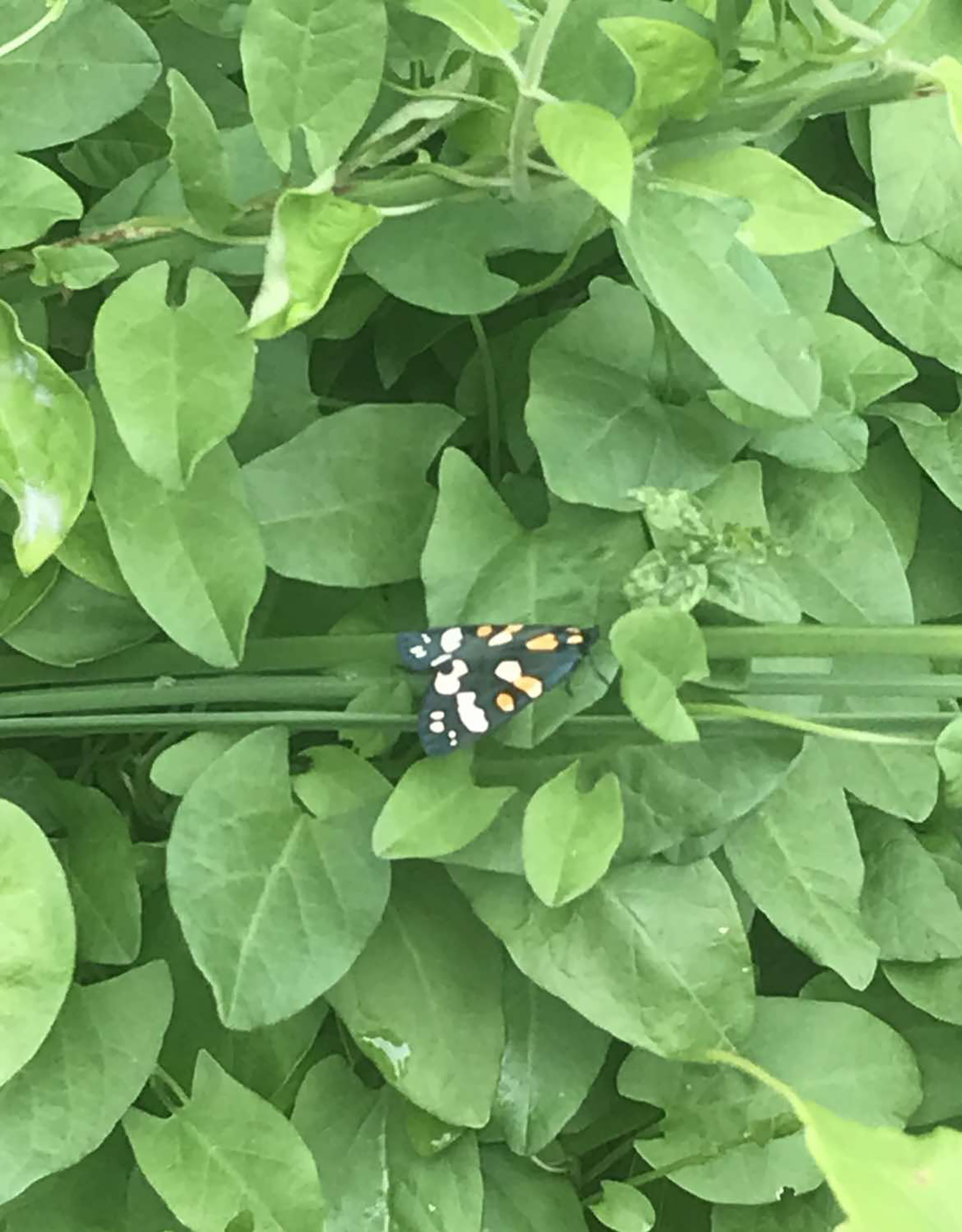
Moth amid bindweed. Photograph by author, 2024.
We could think of this in terms of the ways that plants continue to impact our senses in cases where we are not necessarily conscious of them. Without requiring direct attention, the perceptual sense of the grass beneath our feet, the ferns prodding gently against our legs and the smell of vegetation and blossom is still felt notwithstanding the lack of conscious awareness of them or their taxonomy. These vegetal features of our environment are not necessarily indicative of a homogenous backdrop but help shape the very sense of the background as something that is felt beneath the figure. This is not to suggest, however, that plants remain in the background of our experience. Because of its dynamic nature, the background and figure, as Gestalt psychology demonstrates, constitutive of what Merleau-Ponty calls the perceptual field, mean that plants can appear as the foreground in our perception, with animals playing a more background role, such as a bloom that conceals or perhaps becomes more prominent in our perception than the body of an animal. 6
Describing a bird taking flight off the branch of a tree, Merleau-Ponty writes that we read the ‘flexibility’ and the ‘elasticity’ of the branch itself, allowing us to immediately distinguish between the branch of an apple tree and the branch of a birch (238) . Here, Merleau-Ponty is recognising the ways that the senses inform our experience of our environment, albeit in relationship with the ‘sedimentation’ of botanical knowledge. Whilst the movement of the bird is what caused the elastic bending of the branch, Merleau-Ponty's phenomenological description of movement seems to have less to do with causality itself than to the dynamic and relational field of appearances. This is why he suggests that while the physicist defines movement by its ‘antecedents’, perceived movement is a movement ‘that goes rather from its point of arrival to its point of departure’ (Merleau-Ponty, 2003: 153) It is the bird's movement in this case that reveals the flexibility of the branch, and yet whilst we might jump at the sight and sound of the bird's flight, this movement also draws our attention to the tree itself, in particular the elasticity of a branch. Even if such cognitive or social biases suggest that we respond to seeing a rooster instead of the foliage, the use of this image doesn’t necessarily take stock of the ways that other life forms, such as plants, are themselves revealed to us by animal movements, which may involve multiple senses. For example, this movement may well direct us to more emergent features of trees themselves, as we feel the girth of the paper white bark of a birch and smell the catkins that dangles from its crown. Or we may come to notice the blossom of an apple tree and the emergence of unripened and astringent fruits, soon to be found fermenting below our feet, qualities that are rooted in the perceptual sense and the phenomenon of growth.
As Ryan reminds us, there may well be times when the smell of plant growth or decay may have an ‘unseen perceptibility of smell’ and ‘unlocalised odour’ (Ryan, 2011: 231). Therefore, the focus on imagery, not to mention the very term ‘plant blindness’, only seems to uphold the very ‘ocularcentrism’ which Ryan thinks is problematic in the case of an aesthetics of flora. By contributing to the perceptual sense of the background, plants might well be responsible for an atmosphere which is seemingly anonymous and yet by remaining ‘blind’ to its unlocalised odour, we are able to appreciate its capacity to submerge from view. However, in cases where plants do come to the foreground of our perception, we might say that their emergent features invite us to, in Merleau-Ponty's words, ‘contemplate [the] object with the sole intention of watching it exist and unfold its riches’, and here he refers to the way a tree is perceived not as a mere ‘allusion to a general type’ but as a singularly existing and dynamic entity which contributes to the unfolding arrangement of the perceived scene (Merleau-Ponty, 1962: 50–51). 7
Now that we have demonstrated the significance of the phenomenality of growth for understanding our aesthetic appreciation of plants, it will be pertinent for us to investigate ways that this attunement towards growth can be cultivated. Therefore, we shall now explore some practices which potentially sharpen our attention towards the phenomenon of plant growth, looking in particular at the role that plant growth plays in our aesthetic appreciation of our ‘everyday’ environments, in turn contributing to what we shall call the wildness of the everyday.
Cultivating an appreciation of growth: the wildness of the everyday
The spring was always enchantment to me- I would get away from suffering- in watching the growth of a little flower, it was a delight to me - it was part of my very soul - perhaps the only happiness I have had in the world has been the silent growth of flowers. (John Keats, Joseph Severn Letters and Memoirs)
In these kinds of environments, plant growth plays a significant role in shaping its wildness. We could think here of environments such as one's home, suburban garden, local park, or cracks in the pavement, for example. This is indicative of what Yuriko Saito calls ‘everyday aesthetics’ (Saito, 2001). With this notion, she highlights the ways that everyday activities are infused with aesthetic sensibilities that have significant ethical and ecological consequences. Drawing attention to a ‘Japanese aesthetic sensibility’ for ‘transience and impermanence’, Saito invokes the cultural and aesthetic symbols of ‘falling cherry blossoms’, ‘autumn leaves’ and ‘other materials […that] signify the effects of aging’ (91). Whilst the blossom itself might be an ephemeral aesthetic experience of growth and decay, the age of the cherry tree signifies a temporal dynamic that is constitutive of the very project of rewilding at large, as trees span across ‘intergenerational stretches of time’ (Brady and Prior, 2017: 42) meaning that our aesthetic experiences rely paradoxically on what Greaves refers to as imagining an ‘unimagined future’ (Greaves, 2019: 464). Cultivating an appreciation of the sheer temporality of rewilding is therefore congruous with cultivating an appreciation of the temporality of plant growth, as we acknowledge the ways that growth unfolds gradually and open-endedly throughout our own lives and the lives of future generations, both human and nonhuman.
By taking notice of this open-ended dynamic of growth, we can begin to cultivate an aesthetic appreciation of the wildness of the everyday, which the growth of plants plays an integral role in shaping. Struck by the emergence of ‘green weeds’ shooting through a crack in the pavement in Tokyo, Japanese poet Junzaburo Nishiwaki intimates a kind of ‘aesthetics of weeds’ which evinces the durability and beauty of growth in all manners of environments (Oishi and Kobayashi, 2022: 145). In some sense by abstaining partially from the sediments that constitute a deeply pervasive cultural perception of ‘weeds’ and other ‘invasive’ species, for example, we can learn to cultivate an appreciation of their open-ended movements of growth, appreciating the impressive movements of a field bindweed as it wraps itself earnestly around the legs of a garden chair, for example, as well the blossoming of its pink and white trumpet shaped flowers, as we become attuned to the primal sense of growth that makes such qualities manifest. 9 Whilst we might think of wildness as typically referring to particular beings, divorced from human influence, there is a sense that even domesticated house plants display a kind of ‘wild’ movement in their capacity to emerge in open-ended and striking ways. For example, we could think of the way that the Monstera deliciosa or Swiss Cheese plant surprises us with the sudden emergence of a new bud, as it unfurls itself imperceptibly, only to burst into a new leaf. Therefore, the phenomenal qualities of plant wildness are not so much rooted in the particular nature of the species, but in the very open-endedness of vegetal growth itself.
In this sense, the aesthetic side of plant wildness needn’t be seen as oppositional to other more conventional methods of growing cultivated plants. The phenomenality of plant wildness is perhaps dampened, however, the more estranged we are from the very process or rather phenomenon of growth. By attending to the growth of a potted herb on a window sill, for example, perhaps watering it daily, as it germinates from seed, we are able to appreciate the gradual and imperceptible movements of plants as they unfold over time. In cases where this process is abstracted, such as in the very act of buying herbs or vegetables from a supermarket, it may be that the phenomenality of growth is weakened. In the context of industrial agriculture, there may be cases where ‘vegetal temporality’, as Marder calls it, is manipulated to achieve greater yields (Marder, 2013: 101–102). Here, the phenomenon of vegetal growth is aggressively supplanted by the capitalist phenomenon of rampant economic growth. Accordingly, we not only become cut off from the very phenomenon of plant emergence, as we are estranged from the process of growth that led to the cultivation of a particular fruit or vegetable that has landed in our basket and onto our plates but we also come to expect and insist that plants grow at the pace of our economies, dangerously out of sync with the seasons. As Marx illustrated, ‘it by no means follows from this that the most fruitful soil is the most fitted for the growth of the capitalist mode of production’ (Marx, 1887: 360). On the contrary, capitalist economics of growth constitutes a way of being that is based on the ‘dominion of man over nature’, according to Marx, one in which the open-ended growth of plants is kept in check. As Marx writes, ‘Where nature is too lavish, she “keeps him in hand, like a child in leading-strings”’. Comparing the biodiversity of the Global South, with the burgeoning monocultures of Western Europe, Marx contends that ‘It is not the tropics with their luxuriant vegetation, but the temperate zone, that is the mother-country of capital’. The flourishing of diverse ecosystems and open-ended growth of plants is therefore not necessarily concomitant with the phenomenon of economic growth.
Ryan draws comparisons between this technological attitude towards plants and Heidegger's concept of ‘Ge-stell’ or ‘enframement’, whereby plants are ontologically reduced to an endless source of extraction (Ryan, 2011: 233–234). As Heidegger writes, propounding a more meditative style of being: At times it requires a greater effort. It demands more practice. It is in need of even more delicate care than any other genuine craft. But it must also be able to bide its time, to await as does the farmer, whether the seed will come up and ripen. (Heidegger, 1966: 47) The potency of phytocriticism derives not exclusively from its highlighting of anti-ecological treatments of plants but also in its foregrounding of the heterogeneous ways vegetal life has been integral to literary invention. (Ryan, 2018: 15) Urban wildflowers. Photograph by author, 2023.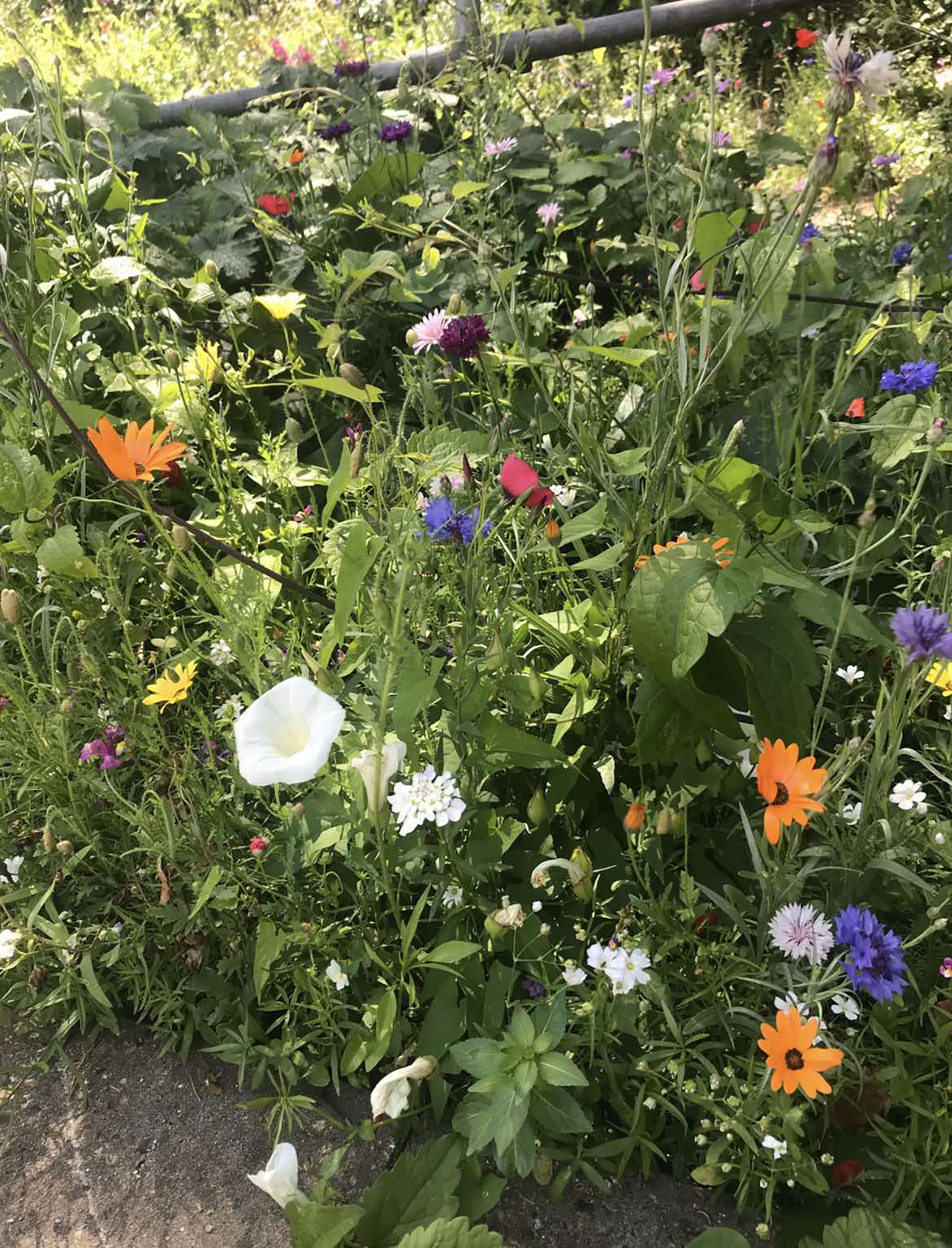
If plants emerge or indeed are ‘allowed’ to emerge in our everyday experience, both in the actual and perceptual sense, then our aesthetic and everyday experience of our environments will become infused with wildness. Whilst certain normative aesthetic sensibilities may be challenged by wildness, it is important that we understand the aesthetic sense of plant wildness and indeed vegetal rewilding to be growth. Therefore, by accentuating the importance of living and growing beings, we believe that environmental aesthetics will become more attuned to what constitutes much of our aesthetic appreciation of our environments, regardless of whether this environment is ‘natural’ or human built. Whilst the very concept of rewilding in the case of plants is perhaps more ambiguous than with animals, it potentially confounds the very prefix of the term, as we become aware of the always-already wildness of plants and in turn, our environments. Growth, or vegetal ‘physis’, is therefore an intrinsic ‘layer’ of of the life that encompasses what Merleau-Ponty calls ‘wild being’, which reminds us of the always latent wildness of our perception (Merleau-Ponty, 1968: 177–178). It is no coincidence that Merleau-Ponty describes the primal emergence of life through the image of the plant’s gradual and active movement, writing ‘life is like a bouquet that opens itself’ (Merleau-Ponty, 2003: 59). While this bouquet unfurls too slowly to capture, Merleau-Ponty demonstrates that our perceptual and intuitive capacities are fecund with possibilities for appreciating non-human living beings, including plants, notwithstanding. In allowing for this dynamic field of vegetal appearances and disappearances to manifest, we are able to recover the perceptual sense of a significant layer of our appreciation of wildness. There may well be cases where this dynamic is required to be kept in check through restoration and intervention, with necessary ecological benefits, but it is salient for us to recognise that this dynamic is itself both indeterminate and necessarily open-ended. 11
Conclusion
In this paper, I have made the case for rethinking the notion of plant blindness, looking in particular at the necessary blind spots at the heart of our perception of plant growth and in turn, aesthetic appreciation of what I have characterised as plant emergence. This has consisted of a phenomenological investigation of plant growth as an aesthetic phenomenon. I have discussed the role and limitations of the popular usage of time-lapse photography in highlighting a plant's movement and in turn helping us to cultivate an aesthetic appreciation of plants. I have argued that cultivating an aesthetic appreciation of plants will therefore involve recovering and in turn cultivating an appreciation of this perceptual sense of growth as it unfolds over time. Moreover, we have looked at how the phenomenon of growth plays an aesthetic role in the project of rewilding or of the wildness of our everyday environments more broadly. By focussing on the movements of plants, we have demonstrated how environmental aesthetics can benefit from a richer analysis of living and, in turn, dying beings. This also leaves room for an exploration of other beings such as fungi, perhaps most notably mushrooms, whose phenomenality, whilst commensurate with plants, deserves a richer consideration of its own.
Using the works of Merleau-Ponty in particular, we have demonstrated the fruits of phenomenology for critically engaging with plant neurobiology. Whilst phenomenology has helped environmental philosophers to conceptualise the agency and make sense of the ‘cognition’ of plants (Marder, 2012; Parise, 2022;, Aguilera de Toledo; Thiago Francisco de Carvalho Oliveira; et al)), it also plays an important role in elucidating the limitations of such an approach, evincing and preserving the alterity of plants. This is why we have tried to conceptualise the temporality of plants as something wholly ‘other’. Furthermore, phenomenology has an important role to play in how we understand the very phenomenon of vegetal growth, one that can be analysed in a multifarious and dynamic way, in combination with the fields of biology, economics and philosophy, areas that intertwine with the very complexity of plant life. I have also intimated the potential of poetry, literary fiction and videography in capturing this aesthetic phenomenon of plant growth, something that leaves room for further exploration.
If what we have called ‘plant emergence’ underlies our aesthetic appreciation of plants, who reveal themselves and their environments to us over time, then a diverse range of fields and analyses may well be pertinent for cultivating such an appreciation. Due to the practical limitations of this paper, we have not had room to explore in detail the rich diversity of differential biomes and ecosystems. This area of study could therefore benefit from a multitude of phenomenological descriptions and analyses of heterogeneous landscapes and biomes, where plants play a pivotal aesthetic part, in a further exploration of the aesthetic project of rewilding. By foregrounding the phenomenon of plant growth, we have sought to emphasise the importance of plant life for the beauty of all lived environments.
Footnotes
Acknowledgements
This paper is based on material developed in my Masters of Research thesis. I would like to thank Tom Greaves for his encouragement and his insightful suggestions on early versions of this work. Thanks also goes to the two anonymous reviewers.
Declaration of conflicting interests
The author declared no potential conflicts of interest with respect to the research, authorship, and/or publication of this article.
Funding
The author received no financial support for the research, authorship, and/or publication of this article.
