




Abstract
For several decades, there has been interest in traditional ecological knowledge (TEK) in ecological research and conservation. Traditional knowledge and practices are recognized as essential for understanding sustainable uses of natural resources and for developing enduring eco-social policies and cross-cultural conservation ethics. In addition, there has been a growing effort in environmental policy to recognize aesthetic and spiritual values that indigenous peoples attribute to nature. In philosophy, some Western aestheticians have turned their attention to aesthetic diversity and initiated cross-cultural approaches. Nonetheless, environmental aestheticians have so far paid little attention to the potential of TEK in nature appreciation. In this article, I examine Sámi notions of landscape, the environmental knowledge of Sámi reindeer herders, and their appreciation of what is commonly referred to as the natural environment. I challenge scientific cognitivism, arguing that Sámi TEK employs perceptual categories that could provide the basis for a robust ‘cognitivist’ approach and, furthermore, that Sámi appreciation of nature exemplifies a unified view that Allen Carlson called for in his late work. However, I also argue that for cultural outsiders, acquiring TEK is fraught with epistemic and ethical challenges and requires humility and diligence.
Introduction
For several decades, there has been interest in traditional ecological knowledge (TEK) or indigenous and local knowledge (ILK) in ecological research and conservation (see, e.g. Agenda 21 1992; Berkes et al., 2000; Brundtland, 1987; Gadgil et al., 1993; Huntington, 2000; Oviedo et al., 2000; Posey, 1985; Posey, 1999; Rio Declaration, 1992). Traditional knowledge and practices are recognized as essential for understanding sustainable uses of natural resources and for developing enduring eco-social policies and cross-cultural conservation ethics (see, e.g. Berkes, 2004; Buschman, 2022; Cámara-Leret and Dennehy, 2019; Drew and Henne, 2006; see CBD, 2024; Forest Peoples Programme, 2020; IPBES, 2019, 2022).
TEK is considered particularly valuable for enhancing scientific understanding of climate and biodiversity change by providing observations on shifts in species distribution and behaviour, ecosystem dynamics, and environmental conditions (Gómez-Baggethun et al., 2013; Molnár et al., 2024; Lyver et al., 2017; Ramstad et al., 2007; Skroblin et al., 2019). Furthermore, many indigenous lands are thought to be rich in biodiversity partly due to indigenous ecosystem management practices (Berkes et al., 1995). Special scientific attention is focused on indigenous observations in the Arctic, where the impacts of climate change are particularly evident, as the region is warming nearly four times faster than the global average (see Rantanen et al., 2022; Riseth et al., 2011). In these remote environments, conventional scientific research can be challenging and costly, whereas indigenous observational methods are recognized as efficient, cost-effective, and relatively reliable (Møller et al., 2004).
In addition, there has been a growing effort in environmental policy to recognize the cultural values (e.g. aesthetic and spiritual values) that indigenous peoples and local cultures attribute to nature. In philosophy, some Western aestheticians have turned their attention to aesthetic diversity and initiated cross-cultural approaches (e.g. Carlson, 2010, 2018; Higgins, 2017; Jarosz, 2023). Nonetheless, as Nanda Jarosz (2023: 11) aptly notes, ‘an environmental aesthetic based on the wisdom of ILK is long overdue’. The topic is also socially and politically timely, as much aesthetic-based nature tourism is directed toward places on indigenous lands, where indigenous land management practices may have significantly shaped the environment.
In Western environmental aesthetics, philosophical theory has traditionally emphasized the role of knowledge in nature appreciation, though this has predominantly been from a Western scientific, universalizing perspective (see Maskit, 2014). This article explores whether the inclusion of TEK could enrich Western philosophical theorizing on the aesthetic appreciation of natural environments, with a focus on the environmental knowledge possessed by Sámi reindeer herders in Guovdageaidnu (Kautokeino), Northern Norway, and Gilbbesjávri (Kilpisjärvi), Northern Finland. 1 The Sámi (also ‘Sami’ or ‘Saami’) are an indigenous people who have traditionally lived in a region known as Sápmi (Samiland), which spans the northern parts of Finland, Sweden, and Norway, as well as the Kola Peninsula in northwest Russia. The Sámi are the only officially recognized indigenous people within the European Union, traditionally earning their livelihood from nomadic and semi-nomadic hunting, fishing, gathering, reindeer herding, and traditional crafts (duodji).
In what follows, I will examine Sámi notions of landscape, the environmental knowledge of Sámi reindeer herders, and their appreciation of what is commonly referred to as the natural environment. I will challenge scientific cognitivism, arguing that Sámi TEK employs perceptual categories that could provide the basis for a robust ‘cognitivist’ approach and, furthermore, that Sámi appreciation of nature exemplifies a unified view that Allen Carlson (1943–2025) called for in his late work. Nonetheless, I will also argue that for cultural outsiders, acquiring TEK is fraught with epistemic and ethical challenges and requires a humble and diligent attitude.
The cultural–natural landscapes of the Sámi
In Western environmental aesthetics, there is a widespread expectation to appreciate natural environments ‘as nature’, that is, as shaped by non-human forces (see, e.g. Budd, 2002: 2, 91). Moreover, the influential ‘cognitivist’ tradition in aesthetics views knowledge about nature and its origins as fundamental to the aesthetic appreciation of natural environments. In Carlson's (1979: 273) influential natural environmental model, the relevant knowledge is prioritized as scientific, with common sense playing a secondary role. Nevertheless, Carlson (2009: 115) also argues that in landscape appreciation, essential knowledge comes from the social sciences, which offer insights into the history of the places and the cultural practices that have shaped them.
What may appear as pristine nature to the Western aesthetic tourist, and which calls for a scientifically informed aesthetic appreciation according to the cognitivist tradition, may have actually been inhabited and managed by humans for centuries, making it a cultural landscape for some communities. Evidence shows that early human activities have shaped the mountain areas of Northern Fennoscandia, specifically Sápmi. For instance, the Lake Gilbbesjávri region in northern Finland has been inhabited since the Stone Age. In this region, low-intensity land use has altered forest ecosystems at semi-nomadic settlement sites and their surroundings, promoting treeless areas and open forests (Josefsson et al., 2009: 1032; Staland et al., 2011: 379–380). Furthermore, reindeer (Rangifer tarandus) husbandry has existed in the area since at least the 9th century AD, evolving within a hybrid or fully pastoral economy (Seitsonen and Viljanmaa, 2021: 175). As a result, northern Fennoscandian landscapes have been impacted by centuries of nomadic and semi-nomadic reindeer herding. Conversely, deer and other cervids have been a central part of northern Fennoscandian nature since the Ice Age (Stark et al., 2023; Tuomi and Ravolainen, 2016: 142–143), and the semi-domesticated reindeer continues the historical role of herbivores in shaping tundra vegetation (Egelkraut et al., 2018). Because of this continuum, from an ecological perspective, it is nearly impossible to pinpoint when reindeer husbandry started to alter the area and how it manifests in vegetation composition, for instance.
The Sámi scholar Audhild Schanche (2002: 157, 159) has argued that the Western notion of nature, in which nature is perceived as separate from human habitation, excludes indigenous concepts of landscape that do not distinguish between nature and culture. Taarna Valtonen (2016: 45, 46), a scholar in Sámi studies, remarks that cultural landscape theory, originally developed to study agricultural communities, focuses on landscapes that are actively modified and cultivated by humans; however, it is challenging to differentiate between ‘natural’ and ‘cultural’ landscapes when a community's way of life leaves few visible marks on the environment, as is the case with the Sámi. The Sámi scholar Päivi Magga (2007: 10–11) describes the Sámi landscape as a paradox: it is both a natural and a cultural landscape, yet in the Western sense, it is neither modified and cultivated enough to be considered a cultural landscape nor pristine nature because of its use. In contrast, the Arctic scholar Sari Stark and her colleagues (2023: 9) maintain that natural and cultural landscapes are not mutually exclusive categories in reindeer pastoralism. Nevertheless, the distinction between natural and cultural environments is made in environmental governance in the Nordic countries, and it has a serious impact on indigenous peoples’ lives, as these different environments are governed by different laws (Figures 1 and 2).
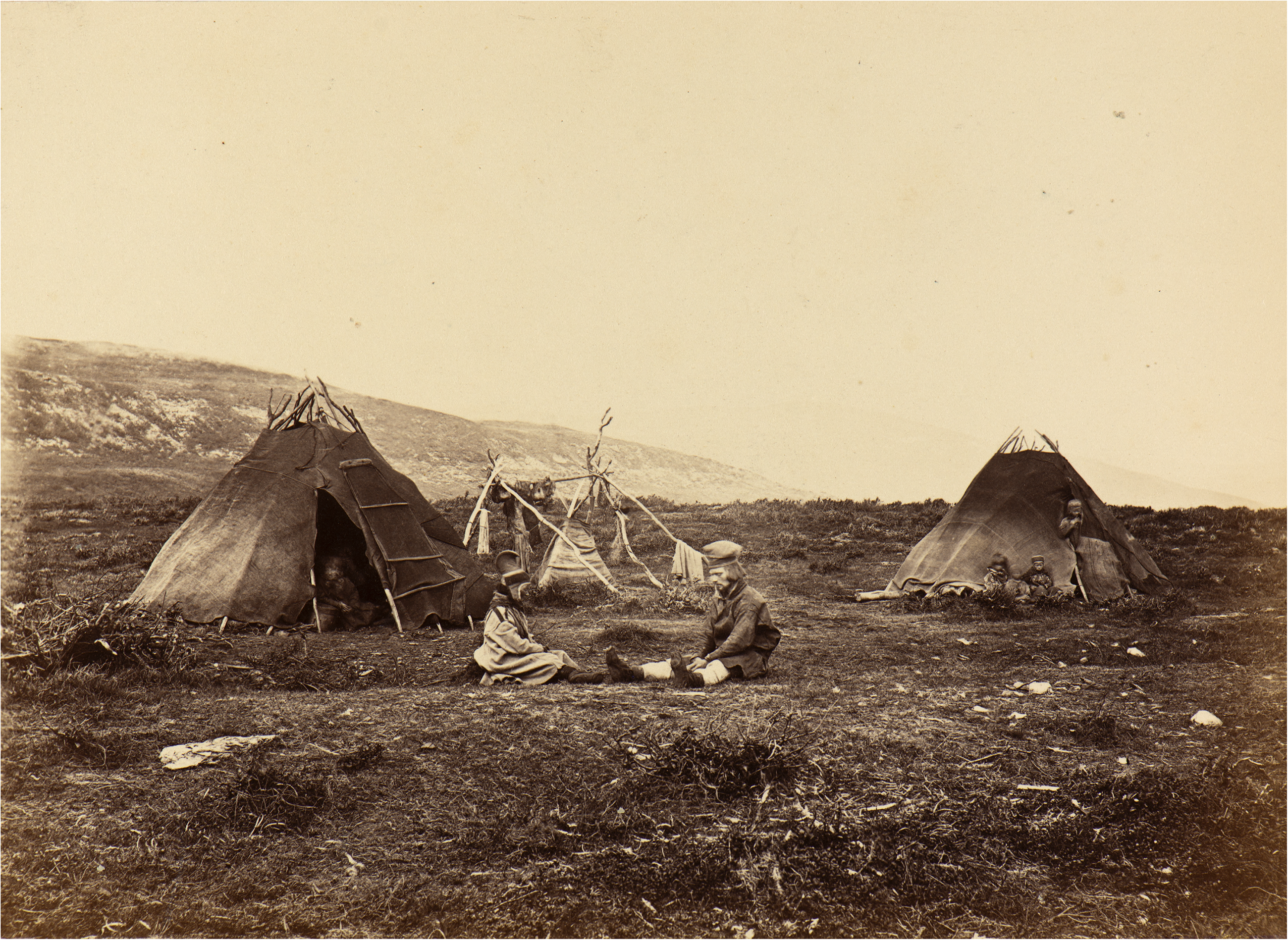
Norwegian mountain Sámi by their summer tents on the coast. Photograph: J. A. Friis, 1867. Finnish Heritage Agency, Finno-Ugric Picture Collection. CC BY 4.0.
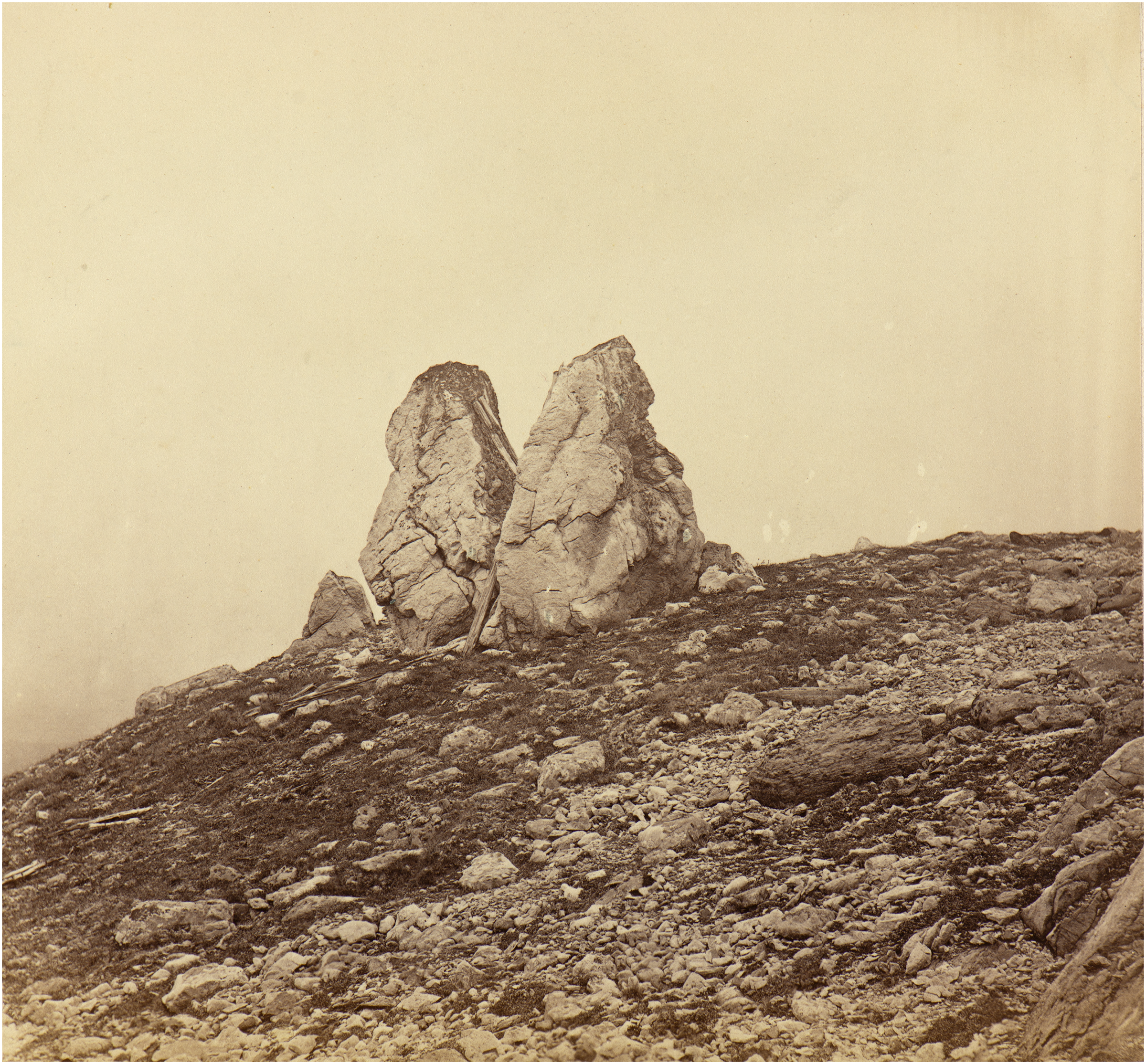
Possible sieidis in a fell. Photograph: J. A. Friis, 1867. Finnish Heritage Agency, Finno-Ugric Picture Collection. CC BY 4.0.
In contemporary landscape studies, a cultural landscape does not necessarily need to be physically modified, but may derive its cultural character from the traditions with which it is associated (Valtonen, 2016: 47).
2
Sámi landscape research, for instance, has been particularly influenced by the work of Tim Ingold and his concept of a ‘dwelling perspective on a landscape’. In this perspective, ‘the landscape is constituted as an enduring record of – and testimony to – the lives and works of past generations who have dwelt within it, and in so doing, have left there something of themselves’ (Ingold, 2002: 189). According to him: A place owes its character to the experiences it affords to those who spend time there – to the sights, sounds and indeed smells that constitute its specific ambience. And these, in turn, depend on the kinds of activities in which its inhabitants engage. It is from this relational context of people's engagement with the world, in the business of dwelling, that each place draws its unique significance (Ingold, 2002: 192).
Among the cognitivists, Yuriko Saito argues that natural science is not the sole source of knowledge about nature, suggesting that indigenous traditions could be considered relevant attempts at understanding natural objects and phenomena (Saito, 1998: 147). In what follows, I will critique the epistemic narrowness of scientific cognitivism, arguing that Sámi TEK can provide a foundation for appreciating landscapes in ways that also account for direct and indirect human impacts. For Sámi landscapes, such an informed appreciation would recognize, for example, subtle changes caused by long-term human and reindeer activity. Moreover, I contend that TEK is rich in resources when it comes to explaining animal behaviour and environmental conditions, for instance.
Herders’ knowledge
There are numerous terms used to describe indigenous peoples’ knowledge systems, such as ‘traditional ecological knowledge’, ‘indigenous knowledge’, ‘native knowledge’, ‘local ecological knowledge’, and ‘practical knowledge’ – along with a divergence of opinion regarding their definitions and differences. 6 In Sacred Ecology (2008 [1999]), ecologist Fikret Berkes formulates his widely used definition of TEK as ‘a cumulative body of knowledge, practice, and belief, evolving by adaptive processes and handed down through generations by cultural transmission, about the relationship of living beings (including humans) with one another and with their environment’. 7 Berkes (2008: 7, 16–18) maintains that TEK is a way of knowing that includes (a) empirical knowledge about the land and animals (e.g. species taxonomy and animal behaviour); (b) land management practices; (c) social institutions; and (d) a worldview that gives meaning to observations. Although the word ‘tradition’ is sometimes seen to imply an idea of a static or archaic culture, TEK is dynamic and adaptive, continuously assessed and subject to development (see Berkes, 2008: 3–4, 7; Warren, 1995). In addition, it ought to be emphasized that TEK is not developed in isolation but may be influenced or co-produced through interactions with other peoples and communities. 8
For Arctic indigenous peoples, such as the Sámi, traditional knowledge has been vital for enduring challenging conditions and navigating the frequent, and sometimes extreme, seasonal and annual changes in weather and landscape. It has equipped them with the skills to interpret fluctuating conditions and respond to sudden crises. (Eira et al., 2013: 118; Magga, 2006: 31; Markkula and Helander-Renvall, 2014.) The Sámi scholar Inger Marie Gaup Eira (2022: 181 and Eira et al., 2023: 68–71) asserts that Sámi reindeer herding is deeply rooted in specialized knowledge systems and traditional practices passed down through generations, centred on a profound understanding of nature. Successful herding relies on daily awareness and long-term insights into seasonal changes, as well as expertise in reindeer behaviour, environmental topography, and the interactions between climate, land, and the needs of reindeer.
Sámi reindeer herders continuously observe vegetation changes caused by reindeer grazing, climate change, forestry, and land use (see Eilola et al., 2024; Horstkotte et al., 2017; Lähteenmäki et al., 2023: 109; Roturier, 2011). 9 However, comparing their knowledge to Western scientific knowledge is highly challenging due to differences in epistemological frameworks and methodologies. From an ecological perspective, the impact of reindeer grazing on ecosystems is highly context-specific and often idiosyncratic (Bernes et al., 2015). Impacts of reindeer grazing can be influenced by factors such as site edaphic and abiotic conditions, variation in plant species composition, the timing and duration of grazing, site grazing history, reindeer population density, reindeer movements, and plant–herbivore dynamics (Eskelinen and Oksanen, 2006; Gibson et al., 2021; Ravolainen et al., 2011; Vowles et al., 2017). 10 As Dagmar Egelkraut and her colleagues (2020: 477) put it, the effect of reindeer herding ‘is the sum of a number of activities that can generate highly contrasting responses such as defoliation, trampling, and the addition of urine and faeces’.
Of course, herders’ and scientists’ perspectives on environments differ radically. While herders across different regions share extensive knowledge of the forage plants preferred by reindeer, their ability to identify individual plant species appears less detailed than their understanding of reindeer behaviour or snow conditions. For herders, identifying specific moss or lichen species is less important than assessing a site's overall suitability, as reindeer graze relatively freely (Inga and Danell, 2012). For example, the Lule Sámi word roavve refers to a lichen-rich heath that forms after a forest fire or the type of vegetation that develops in its aftermath (Cogos et al., 2019). Additionally, herders assess pasture conditions based on multiple environmental factors, including vegetation types and their maturation, insect pressure, heat, weather conditions, and the composition of the reindeer population (Benjaminsen et al., 2015: 226): Pastures may […] be described using terms such as varas eana (fresh pastures, not grazed this year), čilvi (areas that have already been significantly grazed this year), doldi or smurvi (areas that have been thoroughly grazed, with no plants left to graze), guorba eana (pastures, particularly lichen pastures, that have been worn out over long periods of time, or where the quality of the soil limits the grazing), and duolmmus eana (pastures that have been worn down by trampling rather than grazing) (Benjaminsen et al., 2015: 226–227).
11
Reindeer herding requires a deep understanding of climate, weather, and snow and ice conditions, as these affect the land, the animals, and the herding process (Eira, 2022: 183; Magga, 2006: 25). In the region of Guovdageaidnu, Sámi reindeer herders have developed an extensive technical vocabulary, with at least 318 terms describing different types of snow conditions (Eira, 2022: 183). For instance, North Sámi terms for precipitated and metamorphosed snow include ‘čuorpmas (frozen raindrops), ráššu (cold rain or sleet), šlahtti (wet snow that is almost rain), čáđgit (precipitation of very wet snow), and goahpálat (new wet snow that immediately sticks to things)’ (Eira, 2022: 185). Additional terms describe wind-drifted snow, as well as various types of ice, including their formation and the ability of reindeer to break through them to access lichen (Eira, 2022: 191). Sámi reindeer herders possess a profound understanding of their local environment, developed through long-term, detailed observations of it. Their knowledge is particularly nuanced in relation to natural phenomena directly tied to their livelihood.
From a Western perspective, one could argue that Sámi TEK, as illustrated by reindeer herders’ knowledge, easily satisfies the minimal epistemic conditions for a knowledge-based appreciation of nature (cf. Carlson, 2000: 90 12 ). As Patricia Matthews (2002: 40) has argued, empirical knowledge might even outperform overly abstract scientific knowledge in the aesthetic appreciation of nature, as it ‘give[s] us perceptual norms, i.e., indicate[s] which features are standard, contrastandard, and variable’. Traditional practices are particularly rich in this kind of knowledge. For example, in his study of North Sámi terminology for reindeer, the Sámi linguist Ole Henrik Magga explains how herders describe reindeer by their age, sex, appearance (including the body, head, antlers, and feet), personality, and behaviour. Magga (2006: 25–31) provides an extensive account of these terms, such as beavrrit (‘reindeer with longer legs and a slimmer build than usual’), čálggat (‘young animal who is so far advanced that he can accompany his mother even in difficult conditions’), šnilži (‘reindeer with quite short hair (just after changing its coat)’), skoaldu (‘reindeer with a big head and a long nose’), ápmil (‘reindeer (esp. female) that never grows more than one horn’), stáipečoarvi (‘reindeer with disproportionately long antlers’), biltu ('shy and wild (usually of female reindeer)’), and goaisu (‘male reindeer who keeps apart all summer and is very fat when autumn comes’). The basic terms can be combined, and over a thousand individual terms for reindeer have been reported, excluding terms concerning ear marks that signify ownership (Magga, 2006: 31).
Many cognitivists have demanded an ‘objective’ epistemic ground for appreciation for moral reasons, fearing that uninformed appreciation risks causing ecological harm. 13 The moral demand for objective knowledge seems however misplaced in the case of many indigenous peoples (see Jarosz, 2023: 13). Sámi relationships with nature, for example, are characteristically spiritual and reciprocal (see Helander-Renvall, 2010; Kuokkanen, 2007: 34–35, 38–39). The northern environment is low-yielding, with scarce natural resources, and overexploitation would quickly lead to destruction. A culture directly dependent on its surrounding nature (fishing, hunting, and herding) must be ecologically sustainable to survive. 14 While we do not yet have an example of a sustainable industrial Western culture, many Sámi cultures have lived in an ecologically sustainable manner for countless generations.
Nevertheless, it is important to note that Sámi TEK is firmly grounded, being practical knowledge that is constantly ‘carried out, tested, and renewed’ (Sara, 2009: 175). 15 It is knowledge that matters: for instance, Jernsletten (1997: 90) observes that poor decisions stemming from inadequate knowledge can have catastrophic consequences for a herding society. While I do not advocate for defending TEK according to Western standards of objectivity, 16 it is worth highlighting that objectivity itself is a highly debated and contested concept in contemporary philosophy of science (for an overview, see Koskinen, 2021). Consequently, it remains unclear what standards of objectivity an ‘appropriate’ appreciation of nature should fulfil. If we understand objectivity roughly as intersubjective agreement achieved through communication (see Brady, 2006: 279), appreciation based on TEK could meet such standards within the community (cf. Ludwig, 2016). Moreover, as I will demonstrate in the next section, the Sámi perception of the beauty of a landscape is rooted in a broad consensus – namely, the recognition of animal and community welfare.
Beauty: unity, fittingness, and effective living
Carlson (2010: 297–301) argues that appropriate aesthetic appreciation must be acentric (rather than anthropocentric), environmentally focused (rather than scenery focused), serious (rather than trivial), morally engaged (rather than morally vacuous), and objective (rather than subjective). Thus far, I have sought to demonstrate that Sámi TEK provides a foundation for appreciation that is environmentally focused, serious, and morally engaged. In this section, I aim to show how Sámi appreciation of nature is also acentric and comprehensive.
Jarosz (2023: 12) has recently suggested that an environmental aesthetic based on TEK could offer a ‘truly dynamic understanding of the relationship between humans and nature’. According to her, such an approach could encompass human–nature unity, a reciprocal relationship with non-human nature, an ‘ecological’ understanding of the environment, and social aspects, including community adaptation to changing conditions. I am, admittedly, very sympathetic to this idea. However, it is important to emphasize that from the perspective of our topic, the holism celebrated in TEK also presents a challenge, making it difficult for cultural outsiders to study indigenous aesthetic appreciation, let alone ‘apply’ TEK in their own aesthetic engagement with the environment. This difficulty arises because language, practices, stories, and social systems are integral to TEK.
Päivi Magga, for instance, argues that in Sámi cultures, the beauty of a landscape is grounded in its perceived auspiciousness. According to her: For a reindeer herder, a beautiful landscape is one that provides food and shelter for the reindeer. For a fisherman, a good and beautiful lake is one that yields plenty of catch. Beauty is an easily traversable, smooth mountainside. Ugliness is a rocky or brushy area that is difficult to traverse (Magga, 2013: 11). [In Gilbbesjávri] the local Sámi reindeer herders are well aware of the aesthetic and experiential values that tourists associate with the landscape, but these values seem relatively unimportant to them. From the reindeer's perspective, a beautiful landscape is one that is easy to traverse and has good forage plants for that particular season. As a result, the increasing exploitation of Saana fell for tourism purposes is distressing – a crucial grazing area for reindeer during the critical transition period between spring and summer is continually shrinking (Valtonen, 2019: 217; emphasis added).
The gaze of a reindeer herder, however, is not objectifying, and reindeer are not viewed as mere resource.
17
Rather, the fates of the herder and reindeer are intertwined, forming a whole. For the herder, reindeer are companions, each protecting the other (Helander-Renvall, 2010: 50).
18
As Valtonen asserts, in contemporary Sámi communities, ‘many emotions are still felt through the reindeer: when the reindeer are well, the reindeer herder feels well too’ (Valtonen, 2019: 220; see also Kuokkanen, 2007: 33). In An Account of the Sami (Muitalus sámiid birra, 1910), the herder and writer Johan Turi (1854–1936) explains: The Sámi call the lands or dwelling areas duovdagat [lands on which to live].
They say: Here there are beautiful duovdagat, and good reindeer duovdagat. And also: These duovdagat are so beautiful that they laugh. And when a person finds things pleasant and everything is going well, then it seems to that person that the duovdagat are rejoicing. And when things are bad or sorrowful, it seems like the duovdagat are crying: all the lands and the rocks, the trees and everything – the whole world. Nothing that used to be pleasant seems pleasant at all anymore. And the days are so long now that they seem interminable. And when a particular place has poor lands, they are poor duovdagat (Turi, 2012: 62).
Glenn Parsons and Allen Carlson (2024) note that a challenge for projects drawing on TEK is ‘to connect the European/North American ideas of “the aesthetic”, which remain the touchstone of much contemporary philosophizing, to sets of ideas, values and practices from very different cultural contexts’. This would certainly be a challenge if we were pursuing a compartmentalized notion of the aesthetic. In contrast, Lena Kappfjell, Harald Gaski, and Thomas A. DuBois (2024: 21) suggest that while their use of the term ‘aesthetic’ differs from Western perspectives, the values and processes they describe may be profitably compared with Western notions. Furthermore, the Sámi concept of ‘effective living’ (dåajmijes vuekie in South Sámi) is closely related to Parsons and Carlson's ideas about functional beauty, as well as Carlson's outline of a unified aesthetics.
According to Parsons and Carlson (2008: 96, 101, 104–106), the aesthetic quality of ‘looking fit’ emerges from an object's ability to fulfil its function: (aesthetically) pleasing objects appear fit for their purpose. The notion of functional fit also underpins Sámi conceptions of beauty in human artefacts, animals, and landscapes. To begin with, Sámi authority Kristoffer Sjulsson (1828–1908) described human-made objects that the Sámi considered beautiful (čáppat in North Sámi) as ‘symmetrical and streamlined, with no protruding corners or edges, well adapted for their intended purpose’ (in Kappfjell et al., 2024: 6).
Moreover, there are notable similarities between herders’ appreciation of animals and Parsons and Carlson's (2008: 120–121) concept of the functional beauty of a living organism and its ‘looking fit’. Reindeer herders evaluate reindeer based on various factors, such as their behavioural roles within the herd (e.g. ability to lead) and the phenotypic diversity within the herd. Ole Henrik Magga and his colleagues (2011: 36) argue that a beautiful herd of reindeer (čáppa eallu in North Sámi) manifests diversity in population structure and ‘reflects a strategy aimed at reducing their vulnerability to the consequences of unfavourable – and unpredictable – conditions’. The Sámi scholar Nils Oskal (2000: 176) contends that a good reindeer herd is ‘healthy, well provided for and beautiful’. According to Oskal, a ‘herd is beautiful if it is composed of many reindeer of different shapes and colours giving it a picturesque unity with contrasting black and white in different patterns. In addition, it should contain many adult bulls and animals of all ages’ (Oskal, 2000: 177). A colourful reindeer (North Sámi: girjjat) or one with large contrasting spots (NS: lamsku) may not be beautiful in itself, but such individuals are memorable and noticeable, aiding in locating a herd during the summer. While the ideal herd is both beautiful and large (but not too large), Oskal argues that ‘it is preferable to have a small and beautiful herd rather than just a large herd’. Furthermore, he asserts that ‘[i]f there are too many calves in relation to cows, and too many young cows in relation to adult cows, a herd is ugly both aesthetically and morally’ (Oskal, 2000). 19
Carlson (2018: 407) sought to combine the central ideas of scientific cognitivism with the aesthetics of engagement, advocating for an overarching framework that integrates aesthetic appreciation, ecological awareness, and ethical values. While Carlson himself turned toward Chinese ecoaesthetics, other potential approaches are worth exploring. For instance, the Sámi view of effective living reflects a perspective grounded in the ideas of fittingness and unity, as illustrated by Kappfjell, Gaski, and DuBois: In traditional Sámi society, beauty did not exist without some sort of practical significance. The term dåajmijes vuekie [effective living] reflects this fact: more important than any set of outward appearances was the ideal of acting in a useful, socially efficacious, ethically significant manner, all expressed as dåajmijes vuekie. To behave in such a way was to be ‘beautiful’, if beauty is to be understood as fulfilling the highest ideals and evaluative criteria of one's culture. […] Making something ideal entailed making it functional, ensuring that it was grounded in a solid foundation of knowledge, competence, and technique but also in a humility that signaled awareness of others and cognizance of one's role in a wider collective. In terms of ethics and philosophy, drawing carefully on traditional knowledge to create things of effectiveness and usefulness was the correct Sámi way to behave, the aesthetically ideal way, the most beautiful course of action (Kappfjell et al., 2024: 5).
Parsons and Carlson (2008: 230) argue that functional beauty may ‘enhance the unity of an aesthetic theory’, helping us recognize commonalities in different kinds of appreciation rather than focusing on their differences. They maintain that pre-theoretically, the appreciation of art, artefacts, and nature appears fundamentally the same and that functional beauty could explain ‘this continuity in aesthetic appreciation by providing a common sort of appreciation applicable to a wide variety of different sorts of things’ (Parsons and Carlson, 2008: 231). Similarly, Gaski (2017: 186) asserts that in an indigenous understanding, everything relates to ‘the wholeness of what is being regarded as an accepted and functional/“beautiful” way of living and behaving’. For our purposes, a relevant question, however, is the possibility of cultural outsiders to acquire TEK and apply it in their aesthetic appreciation of indigenous landscapes.
Challenges in outsider application of TEK in nature appreciation
In Western environmental governance, there is a significant interest in collecting and documenting TEK, which, like species and ecosystems, is at risk of disappearing. Similarly, many indigenous communities feel an urgent need to preserve and promote traditional knowledge and skills. Yet, how can cultural outsiders acquire such knowledge? How can they learn what has been described as ‘dynamic, practice-based, culturally embedded, and tacit “hands-on” traditional knowledge’ (Helander and Markkula, 2011: 45)? First, TEK is possessed by individuals with lifelong understanding and firsthand experience of specific environments (see Usher, 2000: 186; Nuttall, 1998: 57–58), and it is inseparable from its bearers and the contexts in which it is acquired and practiced (Riseth, 2011: 129). Ingold and Kurttila argue that rather than applying their knowledge in practice, Sámi people ‘know by way of their practice’ (Ingold and Kurttila, 2000: 191–192; emphasis in original). They assert that TEK is best understood as a skill that must be studied in the context of actual practice and can only be vaguely articulated outside of that context (Ingold and Kurttila, 2000: 193; see also Joks and Law, 2016: 10).
TEK encompasses both communal and subjective dimensions. Helander-Renvall (2007) argues that herding knowledge should not be seen as something possessed solely by an individual; rather it is centred on the herding unit siida. While this kind of knowledge is ‘collective by nature, born in a community and cumulated in social processes’, it also incorporates subjective elements influenced by the knowledge holder's profession, gender, engagement with nature, and locality (Markkula and Helander-Renvall, 2014: 6). People acquire knowledge from diverse sources, including tradition, personal experiences, and formal education. TEK is closely tied to one's profession and interaction with specific environments, and it is characteristically language-bound. Reindeer herding knowledge, for instance, may be transmitted through songs (joik), which serve as both a medium for conveying knowledge and a method of communication in the dark (Bongo and Eira, 2023: 116). Additionally, as Sara (2009: 159) explains, herders’ discussions can be challenging even for fluent Sámi speakers to follow, not only because of the abundance of terms related to the environment, herding activities, and reindeer but also because Sámi words may carry different meanings in the herding context. Moreover, the meanings of words can vary between families within the same region.
The diversity of environments and their uses has produced varied livelihoods, cultures, and languages within the Sápmi, resulting in no homogeneous Sámi culture or cultural environment (Magga, 2007; Markkula and Helander-Renvall, 2014: 14; Valtonen, 2016: 48). A failure to recognize the local specificity of a culture can easily lead to misunderstandings. For instance, in 2017, Saana fell in Kilpisjärvi (Gilbbesjávri), Finland, was illuminated by a light art installation as part of the celebrations for Finland's centenary. This act faced opposition for several reasons, including the claim that Saana was sacred to the Sámi people, making the blue-and-white illumination not only colonialist but also sacrilegious. Nevertheless, Valtonen argues that the notion of Saana's sacredness was likely a construct of the Finnish tourism industry in the 1960s. She further highlights how the narrative of Saana's sacredness was amplified by a younger generation of Sámi activists from outside the area, who drew on transnational indigenous discourses that often emphasize idealized notions of ecological lifestyles and sacredness. ‘The idea of Saana's sacredness’, Valtonen recounts, ‘puzzled local Saami, who had not heard of such a thing from their older relatives, even though knowledge about pre-Christian religious sites is still largely passed down orally’ (Valtonen, 2019: 215, 216).
Furthermore, Helander-Renvall and Markkula maintain that TEK is largely based on tacit understanding, making it difficult to explain to others. They note that it can be challenging for older Sámi to share their knowledge even with younger Sámi if the latter do not share the experiences and values necessary to fully comprehend it. This challenge becomes even greater, if not insurmountable, when attempting to convey certain aspects of TEK to cultural outsiders (Helander-Renvall and Markkula, 2017: 117). Colonialist attitudes among scholars, such as historists, geographers, ethnographers, and linguists, have exacerbated these difficulties. Indigenous people may be secretive about their traditions, fearing that outsiders might misappropriate or exploit their knowledge (Kuokkanen, 2007; Porsanger and Guttorm, 2011: 30, 38). Moreover, some aspects of TEK may be sacred and concealed for that reason (Helander-Renvall and Markkula, 2017: 118–121) (Figure 3).
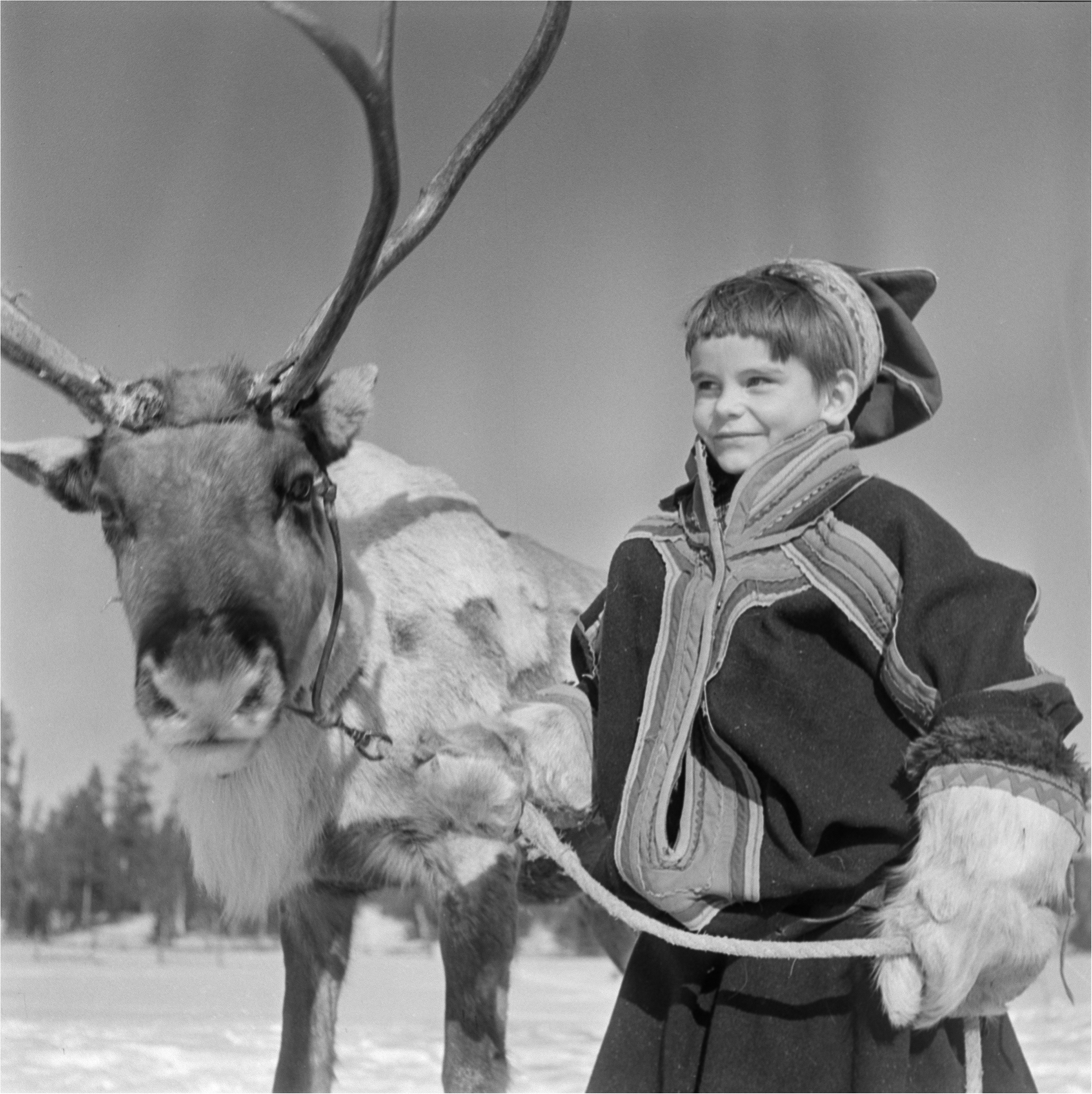
Reindeer herder Markku Kurkkio handling a reindeer. Photograph: U. A. Saarinen, 1954. Finnish Heritage Agency, Finno-Ugric Picture Collection. CC BY 4.0.
Berkes characterizes TEK by contrasting it with scientific knowledge. According to him, TEK is qualitative rather than quantitative; intuitive rather than rational; holistic rather than reductionist; moral rather than allegedly value-free; and spiritual rather than mechanistic. He argues that TEK is based on empirical observation and trial-and-error learning rather than systematic experimentation; it relies on diachronic data (long time-series of observations in a specific locality) rather than synchronic data (short time-series of observations across large areas), and it is produced by resource users themselves rather than by specialized researchers (Berkes, 1993: 4). Moreover, Berkes claims that TEK lacks an inherent drive to continuously accumulate information and engage in theory-building (Berkes et al., 1995: 283). While these broad characterizations and contrasts may be intuitively appealing, they have been criticized as overly simplistic and problematic for understanding the nature of TEK and fostering dialogue between Western and indigenous approaches (see, e.g. Agrawal, 1995; Sara, 2009; Slikkerveer, 1999: 161–162).
A key issue is how traditional knowledge could be operationalized within Western aesthetics while preserving its cultural identity. 20 It is crucial to recognize that TEK cannot be fully translated or seamlessly incorporated into Western systems without significant risks (see, e.g. Johnsen et al., 2017). Attempts at integration typically prioritize Western notions of knowledge and criteria for relevance, often leading to the distortion, dissection, and compartmentalization of information, thereby removing it from its cultural context, which is essential to its meaning (Heyd, 1995: 69–70; Nadasdy, 1999: 15). Conversely, some scientists may struggle with the spiritual foundations of TEK, finding them incompatible with Western scientific thought. Furthermore, scientific enterprises may have difficulty accepting dreams and omens as relevant sources of information, even though such visions may play a central role in TEK (see, e.g. Mustonen and Huusari, 2020 on Finnish professional fishermen's traditional knowledge).
In northern Finland, many national landscapes, national parks, and wilderness areas are situated on Sámi lands, where indigenous knowledge of the histories, uses, and conditions of these environments is essential for understanding, interpreting, and appreciating them. As a result, an informed appreciation should recognize these environments as both natural and cultural. In his biography of the Sámi hunter Aslak Ola Aikio (1931–2004), Finnish environmental leader, scholar, and fisherman Tero Mustonen recounts how a springtime stay with the Sámi profoundly changed his perspective on the environment. Although Mustonen had travelled widely in Finnish Lapland since childhood, the Sámi stories of place names, family territories, rocks, lakes, and trees reshaped his understanding of the landscape. At the same time, he came to realize that he would always remain a visitor, unable to perceive the environment with the same depth and breadth as the locals, whose family lives had been embedded in it for generations (Mustonen, 2012: 26).
Considering Berkes's four-level model of TEK, the term ‘knowledge’ may be too grandiose to describe the snippets of information that regular travellers may acquire during visits to the North. Perhaps ‘insights’ would be a more appropriate term. Nevertheless, there is considerable value in building an understanding of the differences between Western and indigenous landscape appreciation, or in obtaining new perceptual concepts, such as those describing the behaviour of reindeer or the unique characteristics of individuals such as biltus and goaisus. For winter activities such as skiing, northern knowledge of snow and ice conditions also holds practical importance. Learning about TEK requires substantial effort and openness, including the opportunity to spend time in a specific place and an attitude that fosters the earning of others’ trust. However, self-education is rarely straightforward, whether one is learning about art history, a natural science, or reindeer herding.
Conclusion
In this article, I have explored Sámi landscape appreciation and the environmental knowledge of Sámi reindeer herders. I have criticized the epistemic narrowness of scientific cognitivism, arguing that Sámi TEK can provide a foundation for a rich, unified view of appreciation. Importantly, the transcultural discussion I aim to foster requires a sympathetic engagement with the idea of beauty as functional fittingness. Additionally, I have highlighted the epistemic and ethical challenges faced by outsiders attempting to acquire Sámi TEK, underscoring the need for a respectful and diligent approach. It is worth noting, however, that transcultural approaches must be cautious of both generalizations and idealizations, such as portraying the Sámi as ‘ecologically noble savages’. As Berkes and his colleagues (2000) put it, ‘exaggerated claims on behalf of traditional ecological wisdom require a reality check’. TEK may also be inadequate, and not all indigenous practices are ecologically sustainable – especially now that environments and animal populations are changing in rapid and unpredictable ways. Another issue with romanticization is that it demands ‘naturalness’ and ‘authenticity’ from indigenous peoples, disallowing them from engaging in any modern practices (Mathisen, 2003; Schanche, 2002: 158; Schanche, 2004: 3). While the endeavour of bridging TEK with Western aesthetics is undoubtedly complex and fraught with challenges, it remains an important area for further exploration.
Footnotes
Acknowledgements
The author expresses deep gratitude to Taarna Valtonen and Anu Kilpeläinen for their correspondence on Sámi matters; Tero Mustonen for discussions on local ecological knowledge; Tere Vadén and Pablo Fernandez Velasco for their philosophical insights; and Maria W. Skalska-Tuomi and Kaisa J. Raatikainen for their comments on reindeer grazing.
Declaration of conflicting interests
The author declared no potential conflicts of interest with respect to the research, authorship, and/or publication of this article.
Funding
The author disclosed receipt of the following financial support for the research, authorship, and/or publication of this article: This article is part of the Aesthetics in Environmentalism project, funded by the Kone Foundation (Koneen Säätiö).
