




Abstract
In this essay, I propose the use of itinerant encounter spaces as educative agents for teaching time studies experientially. My work is informed by an arts-based methodology, conducted as part of a PhD, which used a mobile shepherd's hut as host for instances of temporal reflexivity. This specific wooden caravan, a venue for shared and introspective stillness, invites participants to embrace non-linearity within formal educational environments that are generally structured by calendars, clocks and bells. By offering unaudited room and time for reflective activities such as storytelling and subjective mapping, I encouraged my research participants, student teachers in Scotland, to nurture the temporalities of self-care that may or may not be part of their personal journeys into ‘meaningful teaching’ during an Initial Teacher Education (ITE) programme. My role was to open up an extracurricular atmosphere which disrupted the temporal standardisations required by many curricular designs for modular fit in university degrees. Curating a vehicle for methodological acts of temporal dissensus offered me insights into teaching time beyond a focus on input and outcomes. The prevailing instrumental logic in formal education rarely acknowledges itinerancy as a dynamic sphere for the pedagogical encounter. My session plans were loosely structured by the provision of a ‘shelter in public’ as a gesture of hospitality and not by a fixed schedule of activities or content to be delivered. This gave research participants the chance to narrate their own intrinsically perceived student teacher trajectories. The improvisation through public pedagogy and the ‘vagueness’ of indirect pedagogy cultivated playful detours. I suggest taking steps aside from dominant curricular formats and explore further how time studies can be taught through the coexistence of movement and stillness, as temporal reflexivity on wheels.
Keywords
Curating a vehicle for methodological acts of temporal dissensus offered me insights into teaching time beyond a focus on input and outcomes. The prevailing instrumental logic in formal education rarely acknowledges itinerancy as a dynamic sphere for the pedagogical encounter. My session plans were loosely structured by the provision of a ‘shelter in public’, as a gesture of hospitality and not by a fixed schedule of activities or content to be delivered. This gave research participants the chance to narrate their own intrinsically perceived student teacher trajectories. The improvisation through public pedagogy (Charman and Dixon, 2021) and the ‘vagueness’ of indirect pedagogy (Sæverot, 2022) cultivated playful detours. I suggest taking steps aside from dominant curricular formats and explore further how time studies can be taught through the coexistence of movement and stillness, as temporal reflexivity on wheels.
A pop-up space not featured on the central room bookings system
A shepherd's hut is installed on campus. It includes a wood fire stove with its distinct sensory features, art materials, music instruments and many other small treasures to be discovered at one's own pace. As a pop-up encounter space, the hut's presence invites the curious to take time off. On some days, there are storytelling sessions taking place inside the hut and the smoke of the wood fire travels between the university buildings. On other days, the hut is closed, but its presence interrogates those who pass by. And then there are the days when the hut is absent, on the road to a different campus or away in another community. The shepherd's hut is ‘scheduled’ differently. The flexibility of a wheeled vehicle offers an intriguing retreat venue which escapes the need for room bookings and linear management of space/time. The venue plays with temporalities of departures, returns, and unavailabilities in a distinctly vagabond way. Hut sessions are situated at timetabling margins in their liminal extracurricularity, but they are also centrally visible in the fast-paced campus zone. The vehicle comes and goes and sparks more and more encounters, between students, lecturers and all kinds of people who move around in the School of Education's central area. The pedagogical on-the-road-ness and public visibility of this ‘outdoor classroom’ asks questions about the civic dimension of teaching time. How can we ‘secure a democratic accommodating of multiplicities of times’ (Valkenburg, 2022: 449) which can be immersive, open-ended, full of wonder and surprise?
Positioning my research as a side lane of fast-track qualification routes into teaching
Funded as part of a large-scale research project for curricular reform in Scottish Initial Teacher Education, my PhD explored the contemporary existential challenges in the teaching profession. The difficulty of maintaining a sense of meaning across a long-term teaching career is well documented (Palmer, 2018) and has become a primary concern in debates around teacher retention and early career attrition (Hulme and Menter, 2014). My research took its starting point from the observation of a lack of regenerative space: ‘Most teachers do not even have an office, let alone a true studio space and the time to explore and renew their craft’ (Higgins, 2011: 7). Temporal aspects informed my motivation to relocate the research process from the obvious choice of school settings into an on-campus but outdoors locality (Figures 1 and 2). The silent quitting of early career teachers is a process which may start with quiet, emotional disconnection, but may lead to the choice to leave the field altogether after just a few years in service. Exploratory methodological imagination is necessary to create a proximity with teacher's life worlds which job satisfaction questionnaires cannot provide. The spatio-temporal scarcity of meaningful rest in teaching lives is receiving increased scholarly attention in recent years: Perhaps the single most crucial shift we might make is to widen our focus from a concern largely with the wellbeing of students and take an equal interest in the wellbeing of the hard-pressed staff who work with them. Student wellbeing is not going to be cultivated by burnt out and cynical staff, overwhelmed by pressures from having to deliver the instrumental curriculum. (Weare, 2022: x)
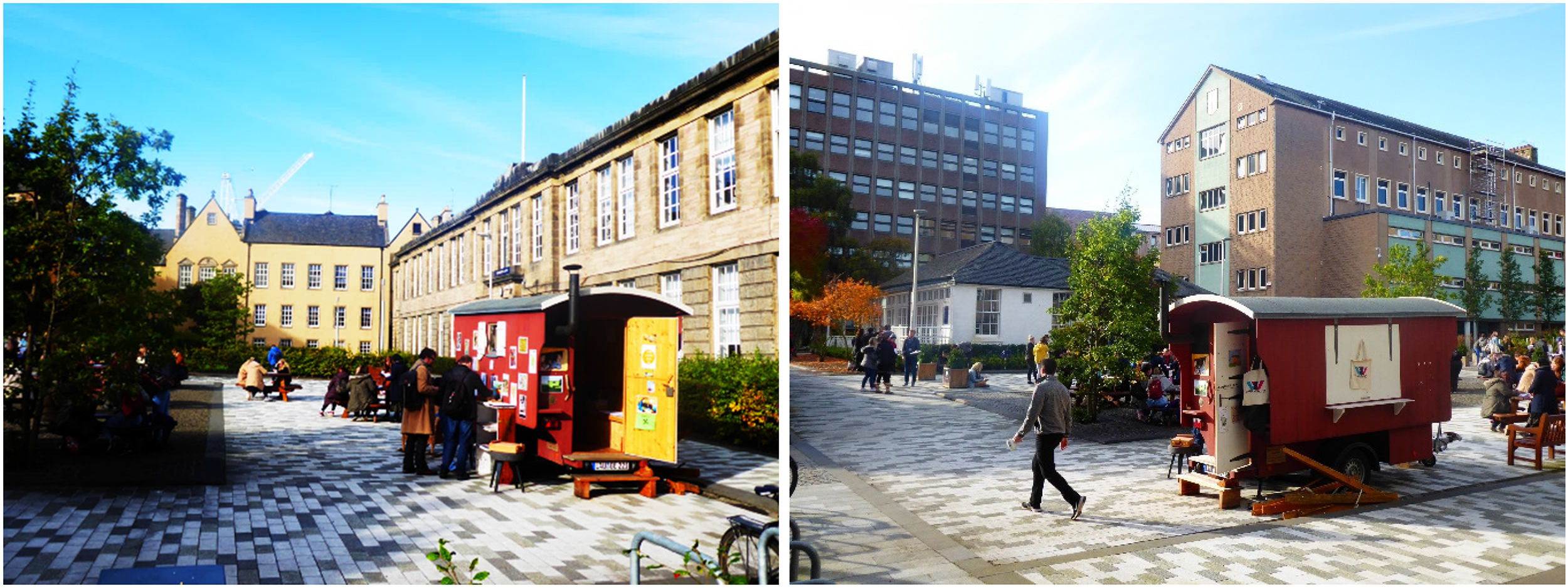
A shepherd's hut installed as ‘shelter in public’ within Moray House School of Education and Sport.
Individualised trainings that prepare teachers to effectively manage workloads often fail to challenge the logics of self-optimisation by narrowing the focus down to the solitaryresilience of selected teaching staff. I therefore opted for a de-optimised stance towards the increasingly results-driven, managerial roles that professionals have to play in instrumental teaching models (Bröckling, 2018). My research participants were not expected to respond to me during the daily ITE rush of to-do-lists between course assignments and school placements, but to engage as a peer group within an affective atmosphere of ‘suspended’ time and stillness (Conradson, 2013) which I could provide through the portability of the shepherd's hut venue. The immersive, arts-based field work of my doctoral research aimed at nurturing a practical approach to temporal reflexivity with a cohort of student teachers – a multisensory experience coexisting as a side lane during the more results-driven and credit-bearing parts of their postgraduate ITE education.
From ‘what exactly is happening?’ to ‘what perception of time is held in our daily educational spaces?’
Where research designs in education often focus on the mastery of meticulously planned activities, opening a shepherd's hut was a deliberate search for non-mastery: ‘that (at least sometimes) we start with “spaces” and not groups’ (Gee, 2004: 71). None of the encounters was built around the idea of a fixed set of content and input to be delivered. The focus each time was the environment of the hut which held each person's experience, inspired by the way the same shepherd's hut had been used in my previous community work (The Welcome Hut, 2022) prior to the start of my PhD research. The features of the environment enabled a shift into the existential sphere. As Bergdahl and Langemann (2022) argue: pedagogical publics as holding environments […] bring adults and young people together in spaces where existential questions can be asked, loss and grief transformed, and visions of a more sustainable future thought out without having all the answers […] and offer a structure in which we can all be ‘existentially held’ in troubling times. (p8)
To cultivate informal, unrecorded and unscripted storytelling as peer care, student teachers were given a frame in which to allow wonder, surprise, daydreaming and improvisation: ‘Enjoy not having made any plans. To have the freedom of doing precisely what feels right at that moment, or deciding not to do anything at all’. (Nilsson et al., 2015: 56). Participants were explicitly encouraged to take a step away from the continuous immediacy of lesson plan preparations, without a guilty conscience. The materiality of the wood fire stove, of the fire's smells, the sounds, the tactile dimension of the wood and other sensory elements of the shepherd's hut (Figures 3 and 4) can be conceptualised as a more-than-cognitive educative agent in its own right which helped to create an affective atmosphere for temporal reflexivity: Sometimes the place or the context may hold the knowledge. The relationship may not involve an ‘other’ in the role of teacher or pedagogue […] The teacher may not be human. It may be the knowledge itself or the land/place/objects which teaches. (Charman and Dixon, 2021: 31)
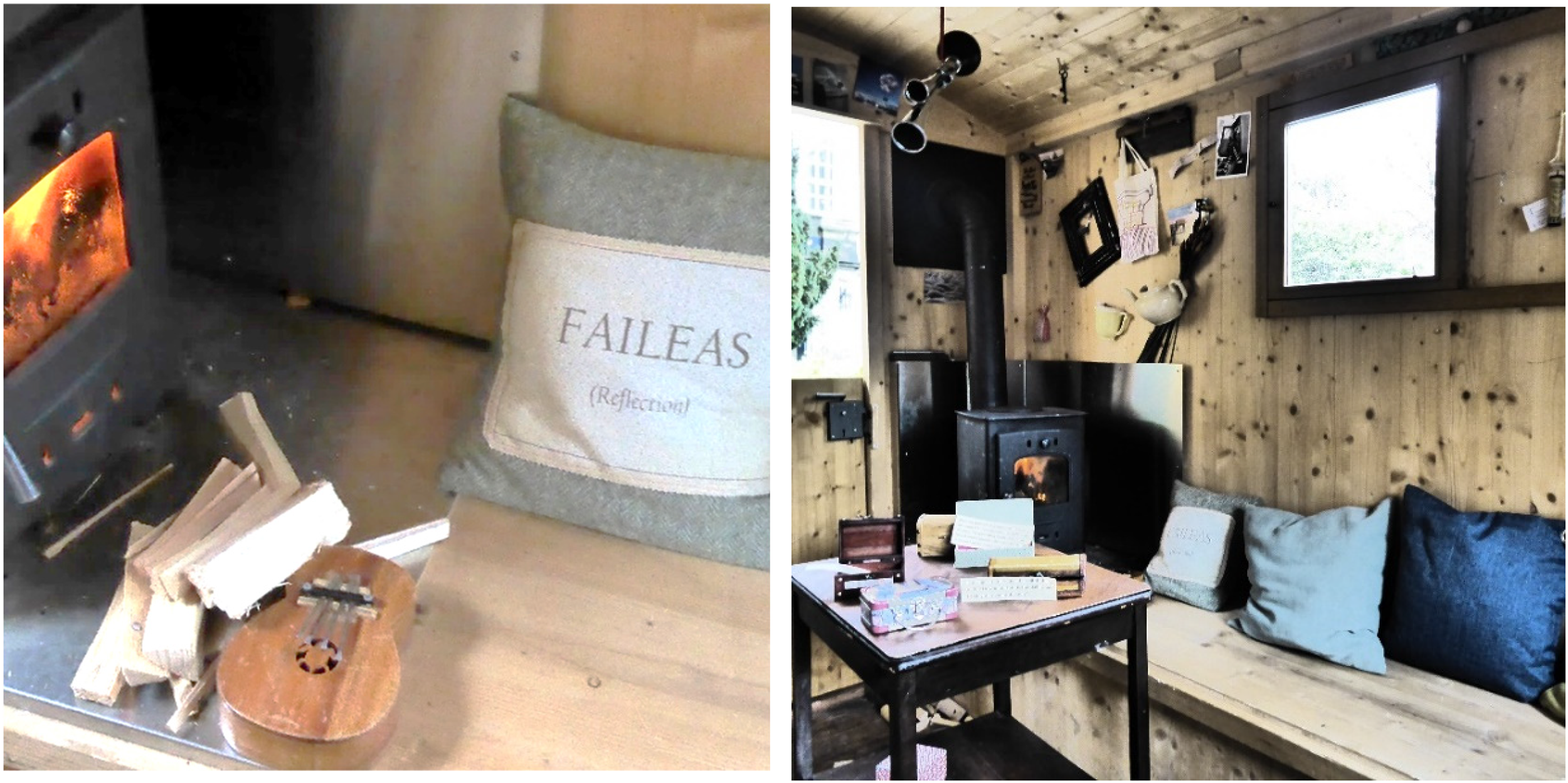
The shepherd's hut and wood fire stove as immersive educative agents.
A less activity-centred temporal perception can be conveyed when the more-than-object of the vehicle as teacher becomes the primary host of the experiences to come. This approach also raises a wider question: what dominant perceptions of time are held in our daily educational spaces and conventional classroom designs?
From instrumental to existential time
Time in my proposed sessions of peer care was therefore conceptualised as ‘existential time’. This understanding can be found in the indirect approach to pedagogy theorised by Sæverot (2013; 2022) which stresses the importance of holding open a space in which other temporalities form part of an horizon of possibility but do not steer the pedagogical encounter into frameworks of outcome and predictability: to create a room where the student is given the opportunity, notably on a voluntary basis, to take the leap into the existential sphere. […] there is no guarantee that such a form of subjectification will happen, but as long as the door is kept open there is such an opportunity, after which existential time can occur (without end). (Sæverot, 2013: 20)
The notion of self-care temporalities was grounded in an idea of existential time as unoccupied by a distinct ideology in order to make room for the singular expression of the student teachers: ‘above all of avoiding that the time and space in which the question of meaning arises be filled (occupied or closed). It is a matter of giving a chance to the disquietude that keeps the mind alert and so also attentiveness to the world’ (Masschelein, 1998: 382). I did not seek to develop a module to transmit slow pedagogies which had been ‘effective’ in other contexts (Carlsen and Clark, 2022). This specific scholarly literature enriched my own reflections, but emphasising the slow would already have approved a specific answer in response to the accelerations of society and of the teaching professions. I was curious what the very uncertainty of a ‘suspended’ activity (Baraitser, 2017) might reveal. The cosiness of the shepherd's hut was intended as a pedagogy of temporal discomforts, as a subtle form of unsettling. I therefore invited research participants to wander off into their own existential perception of journeying with time, in the hope that this freedom may reveal something ‘more fundamental than mere acceleration or deceleration’ (Valkenburg, 2022: 448), providing a space to unlearn these established antagonisms and dichotomies.
Providing a framework in which existential time becomes a possibility
The concrete context helps to understanding the teaching approach which is mediated by a vehicle. In a first field work activity (January 2019), I invited a whole first year cohort of student teachers registered in a two-year teaching qualification (MSc Transformative Learning and Teaching) to a ‘hut experience day’ on the School of Education's campus. Small groups of student teachers had short sessions inside the hut which had to be to a certain extent scheduled and timed (around 45 minutes) to allow everyone from the cohort to enter, followed by a collective reflection on the use of this unusual classroom for the own teaching practice. During 2019, the hut was frequently used with other groups and institutes on the same campus, which reminded this cohort of the possibility to use the hut across their studies. At the start of their second year (September 2019), the same student teachers could now sign up to use the shepherd's hut with children in their placement schools or for a series of four hut ‘mapping’ sessions to creatively draw their own trajectories into ‘meaningful teaching’. From this MSc cohort of 27 student teachers, five signed up to work with the hut in their school placements, while 12 signed up for the series of reflective mapping sessions. It was possible to organise these more structured meetings in the spirit of the pop-up public pedagogy which had been visible to them in the previous months on the university campus.
Two small groups (eight and four participants) were formed for the mapping meetings and four dates were fixed for October 2019, November 2019, January 2020 and March 2020, requiring flexibility due to the constantly contested availabilities and generalised time poverty (Szollos, 2009) during ITE studies. Although the meetings in the hut were an optional, extracurricular activity, attendance remained stable with a high intrinsic motivation to attend. In one case, the formal timetabling for the MSc had to be shifted at short notice to a time slot that conflicted with the third scheduled hut mapping session. The small group of student teachers then immediately communicated to the programme coordinator that ‘this is when we have the hut’, leading to the rescheduling of the MSc session, not to the cancellation of the extracurricular hut. This hints at the agency that my research participants mobilised in preserving a time slot, which was neither formal and essential for assessment nor purely leisure activity. Being based outdoors and not making formal timetabling claims could be a weak, vulnerable position in the institutional hierarchies of curricular design. However, the field work continuously confirmed that the in-betweenness of the hut sessions was perceived with curiosity and respect by staff within the School of Education. This confirmed what Franch and Souza have suggested, namely that ‘other temporalities can be constructed, often in the gaps between institutional temporalities’ (2015: 420). During the initial onset of the global pandemic in 2020, some participants of my research continued the subjective-reflective mapping that had started in the shepherd's hut. Although the vehicle could no longer be made accessible during the time of social distancing and lockdown, some student teachers maintained that ‘hut time’ at home, in the reshuffling of daily routines. Half of the participants who had initially signed up still attended the fourth and final meeting which had to be rescheduled as an online MS Teams session in April 2020, introduced with a virtual wood fire video.
Journeying through subjective-reflective mapping inside the shepherd's hut
The following visual elements indicate how the mapping sessions were offered as possibilities for a form of internal journeying that arises through the itinerancy in and connection with one's own introspective landscapes, therefore accepting a possible asynchronicity with the more linear progression expected in the external ITE curriculum. Before the student teachers signed up, I explained the purpose of the optional hut mapping sessions by crafting a map of narrative ITE landscapes (Figure 5) that are rarely discussed with regards to their existential depth in ITE courses.
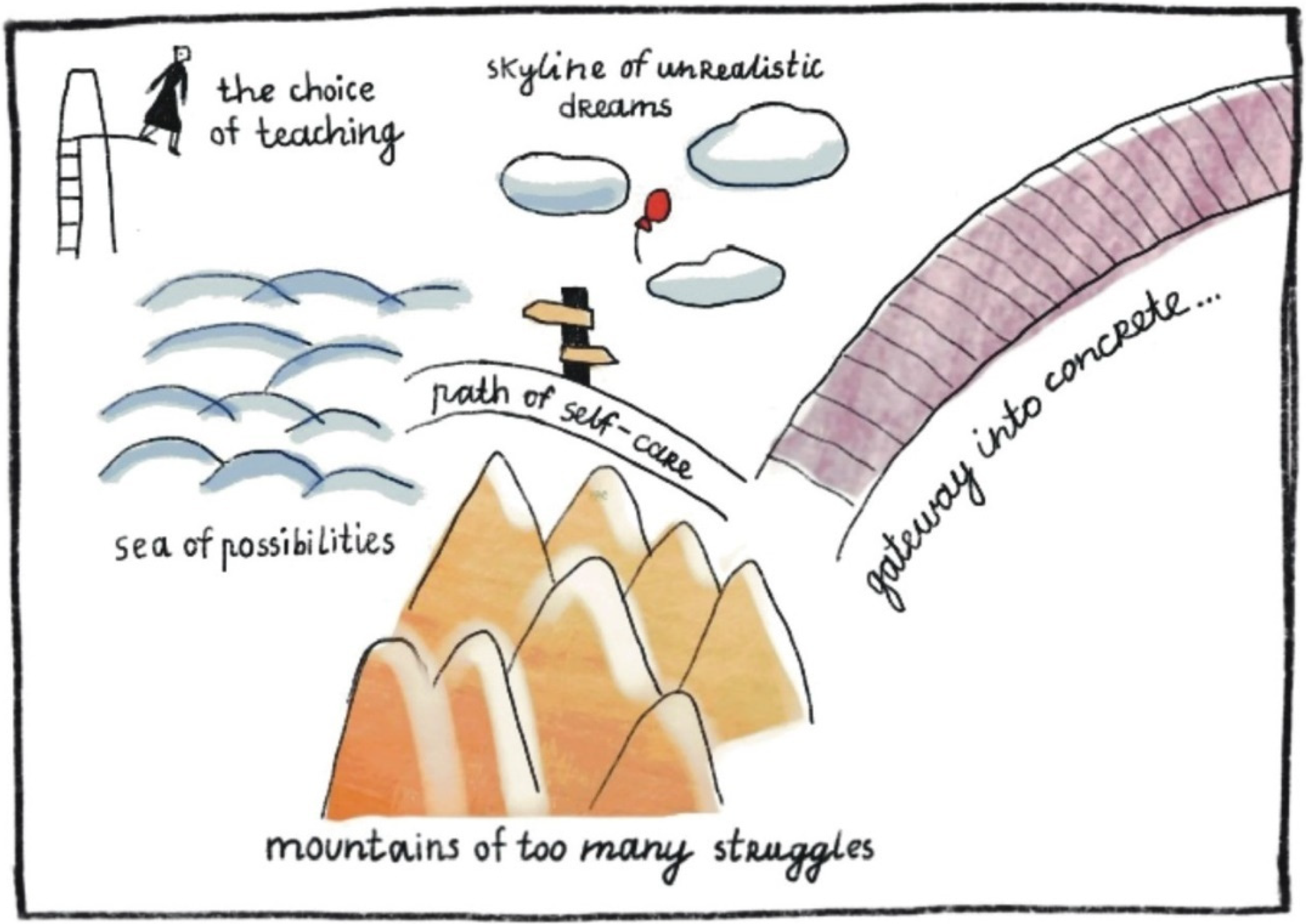
Fluid thematic invitations for four meetings in the shepherd's hut (© Tanya Kuznetsova).
The ‘activity’ for temporal reflexivity, sitting together in a holding environment, nurtured overlapping, interconnected existential landscapes of questioning rather than clearly programmed units of content. The path of self-care was interwoven with other roads to roam. The design of this series of sessions was about wandering as craft (Vannini and Vannini, 2020) and pedagogical bricolage (Campbell, 2019) and therefore focused on decelerated attentiveness to the concrete meaning in teaching emerging around the fire within the hut. I suggested to the cohort that we would take time to discuss their own ‘path of self-care’, voice their ‘too many struggles’ and relate internalised hero narratives around being ‘resilient’ to the need of personal boundaries. This discussion could then move from the ‘skyline of unrealistic dreams’ to the ‘gateway into concrete’ transformative learning and teaching.
One can question the prevailing assumption that teacher education has to prepare pre-service teachers how to function in ‘clock time’ (Franch and Souza, 2015) in order to nurture aptitude for the later job. The dominant temporal and spatial order legitimises a tangible type of educational trajectory: ‘Temporality in schooling is grounded in concepts like development, progress, outcomes, and improvement, all of which serve to move particular bodies forward, while removing others in their path’ (Springgay and Truman, 2019: 551). What would be learned from questioning the taken-for-granted benefits of ‘tidy chronological time’ (Shelton and Melchior, 2020: 54) which teachers are asked to perpetuate when trained to efficiently integrate, and cope with, their new school environments?
The mapping sessions that the 12 research participants agreed to attend lasted around an hour and a half to two hours, involving collective story time as existential care (Figure 6), silent time to reflect and to draw their intrinsic cartographies (Figure 7), and an opportunity to share elements of these maps with others (Figure 8). While there was no strict timing of these three phases, the first phase dedicated to sharing the own stories usually lasted from half an hour to an hour, and the other phases around half an hour each. The fact that the hut often left the university setting and then returned to campus in between the scheduled sessions helped me to question each time anew what kind of timing for the phases within a session was appropriate. The hut transported the awareness for multiple temporal routines from diverse community locations. I cannot recall any student teacher ever looking at their watch during the sessions or asking for the exact clock time, but I usually checked the clock several times in each session's second part for myself to make sure that each student could speak to the group about their maps.
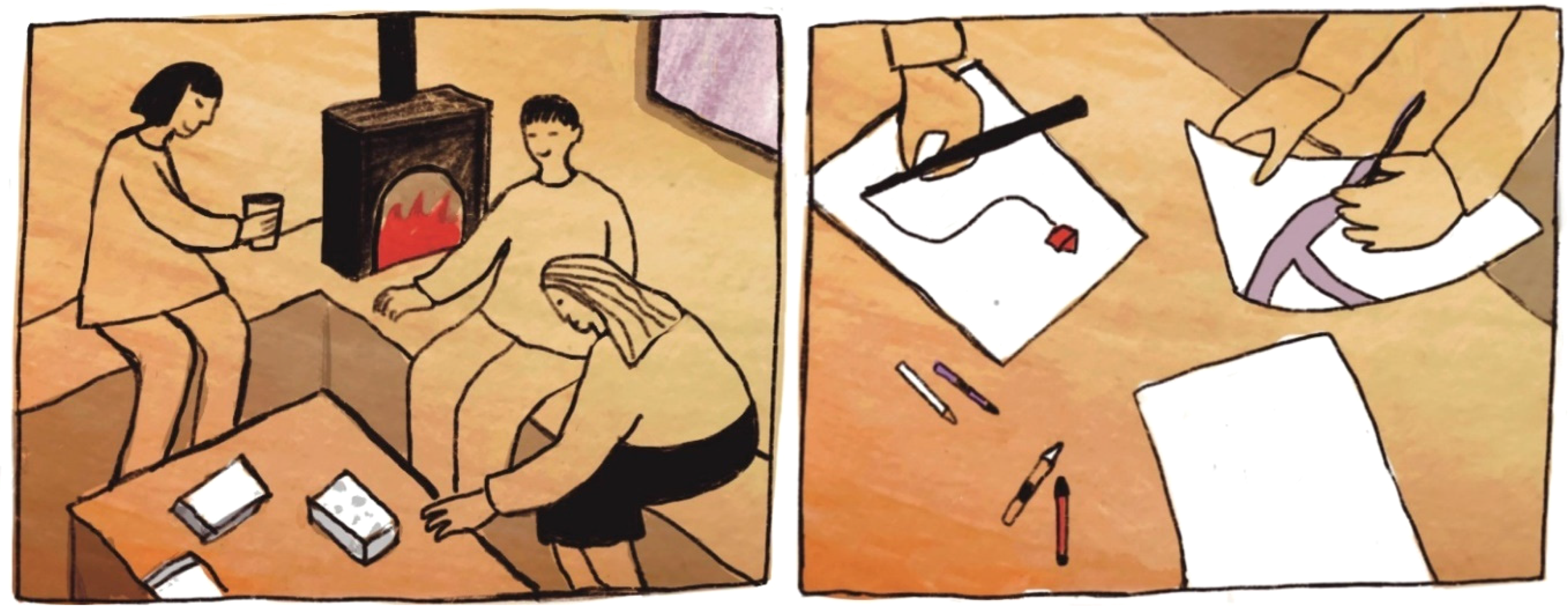
Arriving in a wood fire venue without input, time for intuitive output (©Tanya Kuznetsova).
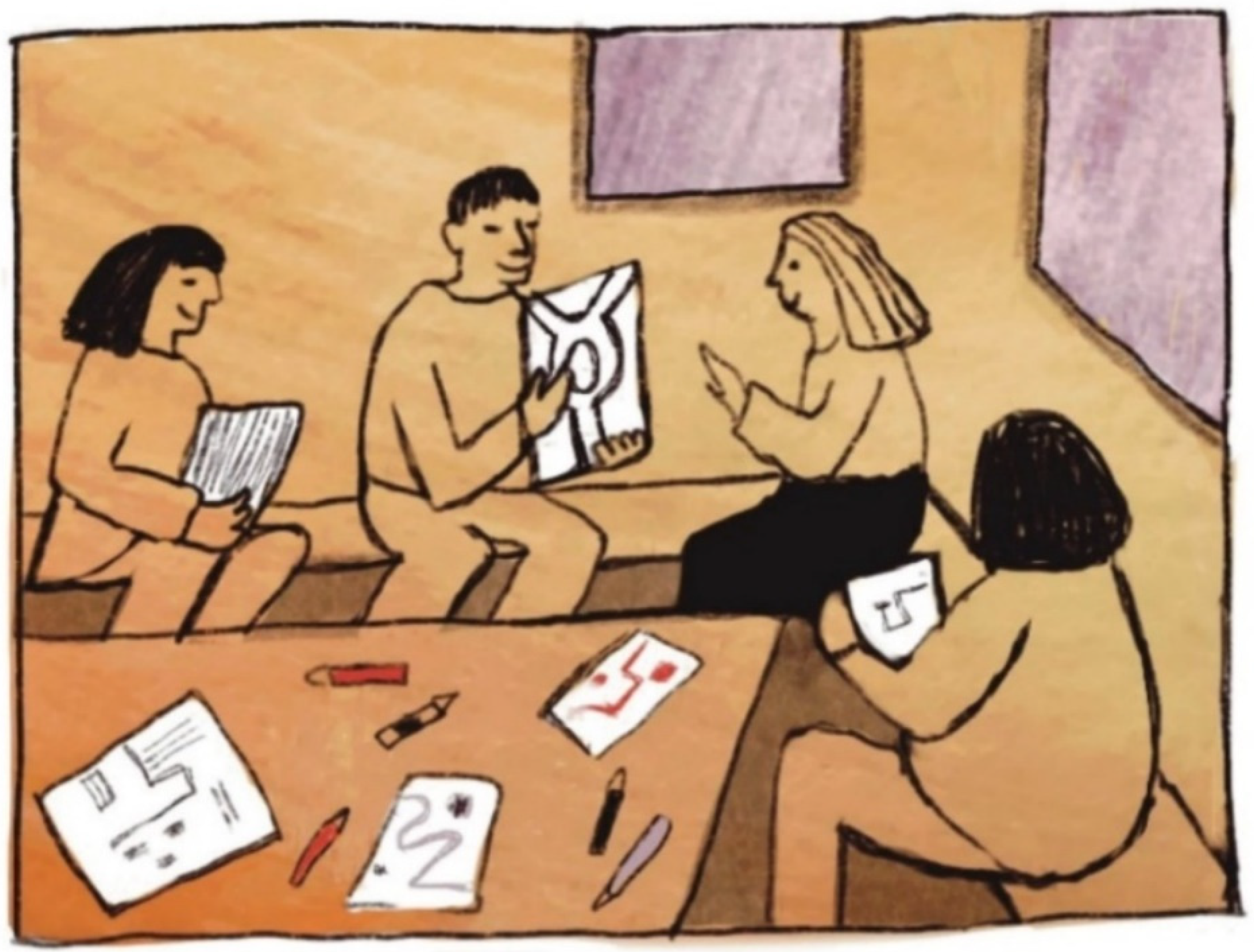
Sharing subjective cartographies with peers at the end of a hut meeting (©Tanya Kuznetsova).
I brought artistic prompts into this situation, but their intention always was to keep open the space for student teachers to talk and to create intuitively in their own terms. It was necessary to resist the urge to immediately provide input and instead trust in the role of the distinct environment to enable multiple lenses to experience time. I did not primarily aim at teaching time studies theoretically, but constantly asked myself how I could connect to the life worlds of student teachers, their own intrinsic perceptions of temporal pressures and find out how they negotiated the externally scheduled temporal regimes of schools and university with their introspective spatio-temporal meaning-making.
Unoccupied time slots of ITE and (no) time to rant
Feedback from student teachers about their hut experience highlighted the way it encouraged a multi-layered playfulness with temporality: So it transported us into a different dimension. Even though it meant we were focusing only on the present moment, this ‘unreal’ aspect of the hut also meant we were removed from the present moment.
One theme emerging from the shared storytelling activities showed the importance of building schemes where the modular timescales of ITE open up room for experiential self-care temporalities. The conversations around the wood fire stove at some point led to a discussion about the necessity in student teacher lives for a ‘time to rant’. The need for ‘ranting’ after a challenging day of in-school placement was mentioned collectively in one group, where those working at the same placement school even got into the habit of a ‘train commuter rant’: letting those emotions out that do not have their space and time during the compressed school day. In another group, one participant expressed this lack of (time)space by drawing the rant on the way back home after a constant day ‘on air’ with the children (Figure 9). With a duty to perform without the possibility to retreat, there is an urgent need to let off steam. This has to take place in the out-of-school spaces and the time zones of private lives. The meetings in the hut enabled shared reflexivity as peer care, welcoming emotions that are generally taboo in the staff rooms (Shapiro, 2010). Student teachers crafted artefacts that portray a more nuanced range of emotions – of the whole human behind the daily professional role of the teacher.
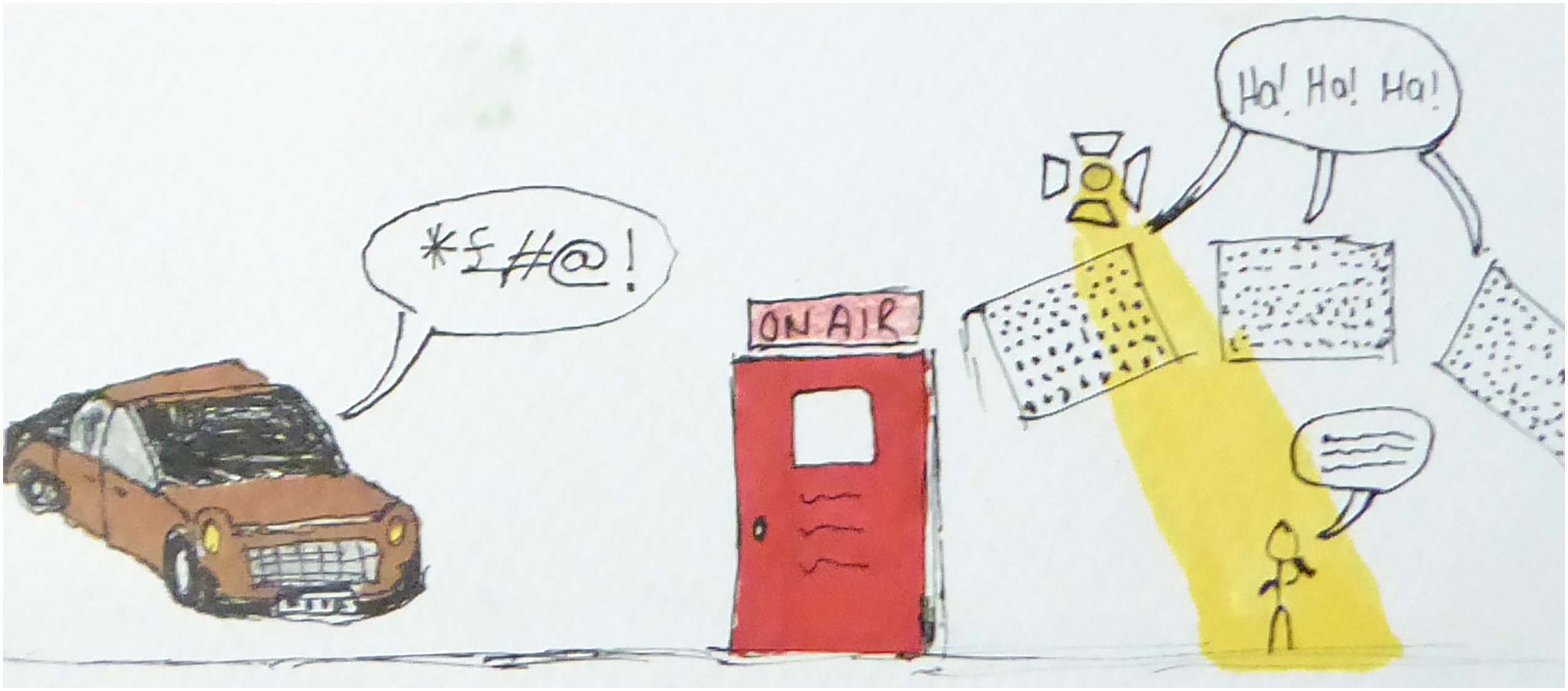
The drawing of the commuter rant after a day ‘on air’ (David, Shared with permission).
While it would go beyond the scope of this text to discuss the art works created by the student teachers in the mapping sessions, a more formal indicator of the significance of this dedicated time for teaching can be highlighted. Several participants included their crafted subjective-reflective cartographies in the final MSc portfolio which connects the students’ own value base with the standards of the General Teaching Council for Scotland (GTCS). The playful detour to facilitate an experience of existential time can match with the increased attention to values such as integrity in the professional teaching bodies.
Limitations: pop-up curiosity or long-term disruption
There are limitations to an approach to teaching where nothing has to happen, and because of this, a lot can occur. A major challenge during my research was to negotiate the often-disjointed realities of (pandemic) PhD life with the expectations of immediate and impactful curricular innovations for teachers as desired throughout the high-stakes collaborative research project. A lot of energy had to be invested to preserve my research design's own temporalities within what Keri Facer diagnoses as academia's: temporality of urgency, in which the demand to respond to rapid and seemingly transformative change impedes slow reflection and analysis while requiring new thinking, diverse perspectives, and the radical questioning of existing assumptions. (2022: 206)
Because of the room for manoeuvre built into a doctoral training route, it was possible to hold a certain pluralism of temporalities open. But research funding often stops just when the challenging epistemic questions emerge. A next step is not to immediately scale up innovative modules, but to anticipate in what ways temporal pressures built into curricula can be reduced to preserved the emancipatory potential of existential time. The translation from the optional and extra-curricular into a curricular institutionalisation may decide if teaching temporal reflexivity then primarily becomes efficient and optimised for existing metrics or if curricular integration of existential time actually allows to step away from the linearity which is widely expected but also limiting: many forms of time are, in fact, institutionalisations. Therefore, it is vital to think about how the times that structure social practices are, in fact, supportive or detrimental to specific ways of knowing. (Valkenburg, 2022: 441).
Although critiques of the instrumental educational logic can be abundantly found in theoretical discussions and public debates (Biesta, 2006; Lingard, 2010), the continuity of hands-on experimentations with multiplicities of time in university degrees is far from guaranteed. Existential time has to constantly find justification and legitimacy against prevailing evidence that the work of interiority is too inexact, complex, and costly within an educational paradigm dominated by economies of time and scale, and demanding the immediate transference of teacher learning to the classroom setting (Keck, 2020: 417).
The interplay between disappearance and reappearance is a feature of the micro-vehicle maintaining a certain vagabond mobility (Ray, 2022). One student teacher wrote in their feedback about using the hut in schools: when I remember my school days, one-off experiences/ excursions were fantastic, but they were seen as ‘other’ to ‘real’ learning in the classroom. I would hate for the Hut to become an ‘extra-curricular’ space which children see as separate to their classroom experiences. How can I try and do this? There must be genuine/ authentic links made with pupils lived experiences.
Both the subjective-reflective mapping with student teachers as well as the use of temporal vehicles as classrooms in school placements are fragile schemes and could be one-off sparks. A major challenge then is to negotiate the undomesticated and ‘vagabond’ approach with a long-term vision inside an institution for the prolonged ‘rupturing of normative time’ (Springgay and Truman, 2019: 549). Would the educational status quo sustain such approaches which do not provide scripted solutions? While I am not providing robustly quantifiable answers from my small-scale experiment, I would however like to draw attention to the expansion of temporal knowledges that the case of a temporally disruptive vehicle as experiential educative agent provides.
A vehicle for temporal imagination: teaching time on wheels
The portability of alternative ways of perceiving and knowing time becomes possible when a vehicle is carrier of temporal dissensus (Berg, 2018). In order to prevent the shepherd's hut from becoming an extra-curricular add-on, and at the same time to accompany a translation of the approach into the formal curriculum, debate is necessary about the question of what counts as meaningful knowledge for teaching time. My argument is that the circulation through novel schemes of experiential temporality-focused learning is as important as the building of a canon of text-based time studies reference points: ‘How can knowledge be reconceptualised, not so much as something new but a recognition of the ways of knowing from which the new can arise?’ (Charman and Dixon, 2021: 41). A challenge is to open up curricular space for a movement-based way of knowing which is open to detours. One ambition to create itinerant time studies schemes can be, as Sarah Sharma argues, ‘to seek to exist outside of the dominant temporal order rather than find a way to get back in time’ (2022: 47). As we gain confidence about teaching time in messy ways that embrace temporal errancy, we may leave the instructional modus operandi and build unscripted vehicular schemes.
Inspiration can come from artists who often invite reflection about time through performances but who are not immediately linked to the scientific or teaching spheres. The unusual case of the shepherd's hut on the campus of a School of Education can sharpen the awareness for other circulating approaches to temporal reflexivity. One example is a theatre company's public action for the civic donation of time taking place around a mobile caravan (Figure 10) and enacted by a fictional Ministry of Time as new French public service (TéATr'éPROUVèTe, 2022). Here, a playful participatory scheme with a temporal vehicle pops up as ‘a space in which the limits and potentials of time are flexible, and all members of the space have a voice in constructing the temporal means of participation’ (Wood, 2017: 277). Inspired by such arts of engaging with open debate around temporal aspects of life, time studies can ask what novel vehicles could be envisioned to roam the curricular roads which teach time as a form of experiential transformation. Temporal vehicles can become tangible dwelling-places of ‘what we might call futures-in-the-making, which arise from contingencies, symbiosis, and emergence and cannot be fully known in advance’ (Facer, 2022: 204). We can invite our students to imagine their own temporally disruptive vehicles as part of assignments, then help them to translate the acquired temporal knowledge into concrete experimentation on wheels, to elaborate a grassroots infrastructural plan to make small-scale initiatives thrive as carriers of alternative temporalities and as student-led activism within specific societal contexts. If time studies were limited to teaching time in elective modules at very few, ambiguously neoliberal universities, temporal knowledge would be unequally distributed. By conceptualising time studies through open circuits, tours and itinerancies, the civic dimension of teaching time comes to the foreground, transported by university knowledge and continuously applied on wheels and beyond institutional walls.
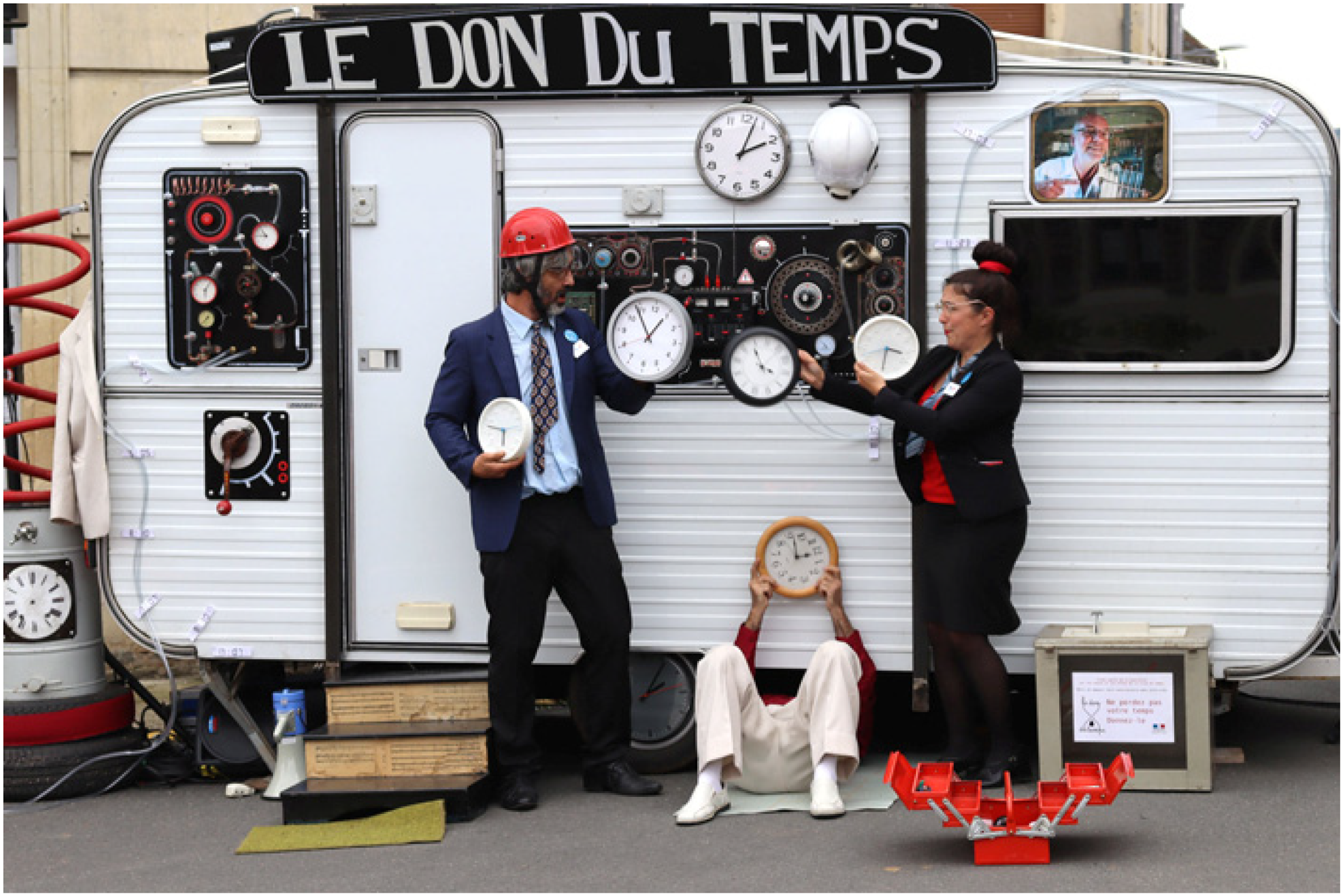
Street theatre tour ‘Le don du temps’ ©Nina Faulquier – TéATr'éPROUVèTe.
Footnotes
Acknowledgement
The author wants to thank the reviewers of this article for their supportive feedback and the participating cohort of student teachers and members of staff of the MSc Transformative Learning and Teaching (MSc TLT) for their continuous interest in this research.
Declaration of conflicting interests
The author declared no potential conflicts of interest with respect to the research, authorship, and/or publication of this article.
Funding
The author received the SCDE Attainment Challenge Project's PhD scholarship at the University of Edinburgh (Developing pedagogies that work for Pre-Service and Early Career Teachers to reduce the Attainment Gap in Literacy, Numeracy and Health and Wellbeing) from 2018 to 2021.
