




Abstract
Objective
This study aimed to identify distinct cardiovascular risk phenotypes in systemic lupus erythematosus (SLE) using an unsupervised cluster analysis, and to compare the risk of incident cardiovascular events and subclinical atherosclerosis progression in the identified subgroups.
Methods
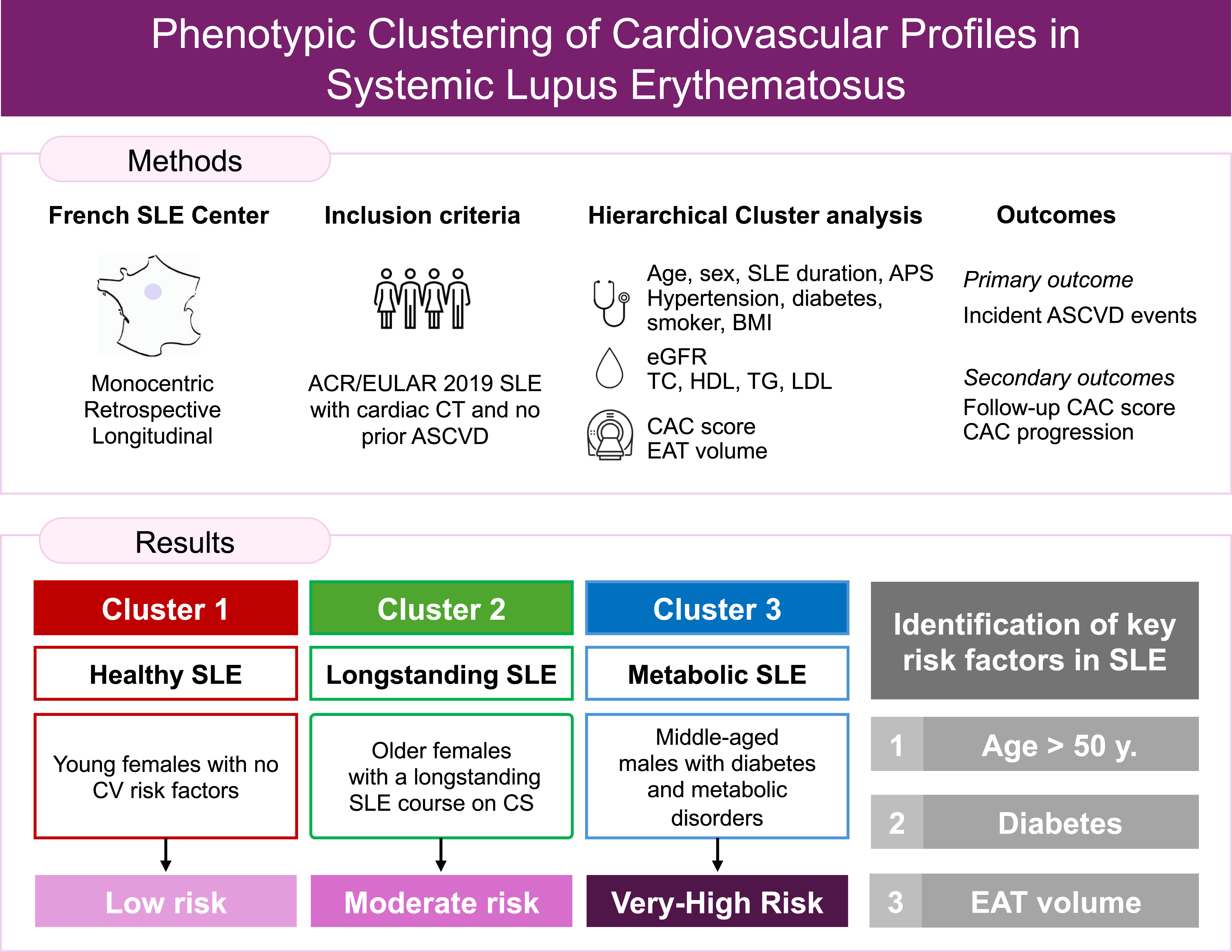
Consecutive SLE patients who underwent a comprehensive cardiovascular risk assessment at the French National Referral Center for SLE between 2014 and 2024 were retrospectively included. An unsupervised analysis was performed using a hierarchical clustering algorithm on clinical, biological and imaging variables. Incident atherosclerotic cardiovascular disease (ASCVD) event rates, follow-up coronary artery calcium (CAC) scores and annualized CAC progression rates were compared across the identified clusters.
Results
A total of 226 patients were included (91% females, 45 ± 13 years). Three clusters were identified. Cluster 1 (N = 123) included young female patients with very few traditional cardiovascular risk factors, normal body-mass index (BMI) and low CAC scores. Cluster 2 (N = 78) included older female patients with a longstanding SLE course, high low-density lipoprotein levels and increased CAC scores. Cluster 3 (N = 25) included middle-aged male and female patients with frequent diabetes mellitus, increased BMI, triglycerides levels, epicardial adipose tissue volume and CAC scores. Overall, incident ASCVD events rates, follow-up CAC scores and annualized CAC progression rates significantly differed between the three clusters (C3>C2>C1, all P < .01). A post-clustering decision tree identified age, diabetes mellitus, and epicardial adipose tissue volume as key determinants of cluster membership.
Conclusion
SLE cardiovascular risk profiles encompass three subgroups with distinct cardiometabolic phenotypes and risk of incident cardiovascular events.
Get full access to this article
View all access options for this article.