




Abstract
In Africa, decolonisation remains a highly debated concept that aims to restore African identity and culture by challenging colonial legacies. Higher education institutions in Africa endorse the decolonisation agenda and continually raise their voices through growing campaigns to integrate indigenous culture, practice and heritage into society. Higher Education libraries in Africa, as support structures, have a critical role to play in the decolonisation agenda through the integration of indigenous languages into their services and resources. This corroborates with the resolution of the International Decade of Indigenous Languages, which advocates for the revitalisation, preservation and promotion of indigenous languages. In addition, this article aligns with the United Nations Sustainable Development Goals (SDGs), particularly Goal 4 (Quality Education), Goal 10 (Reduce Inequalities) and Goal 16 (Peace, Justice and Strong Institutions), by underpinning the importance of integrating indigenous languages into teaching, learning and research in HE libraries in South Africa. Within this context, the authors sought to ascertain the role of HE libraries in fostering linguistic diversity and inclusivity, thereby contributing to the decolonisation of education in South Africa. A qualitative approach was utilised using a desktop study to determine the level of integration of indigenous languages through the scanning of literature and document analysis. Based on the findings, the authors present four themes: (a) Collection Development, (b) Marketing Efforts, (c) Library Systems and (d) Information Literacy, which focus on the integration of indigenous languages into South African higher education libraries rather than preservation. Findings reveal that HE libraries focus more on the preservation rather than the integration of indigenous languages into library services and resources, such as collection development, information literacy, marketing and library systems. The article concludes with recommendations to stimulate further discussions and advocacy on the integration of indigenous languages in supporting teaching, learning and research at HE libraries.
Introduction and background
Africa, a gentle giant, slept while Western superpowers plundered and pillaged the continent during the colonialist years. From the Berlin Conference, which resulted in the scramble for Africa and decades of slavery, to the emergence of liberators in Ghana, South Africa and Mozambique, the fight for justice, equity and freedom spurred the continent toward independence (Van den Bosch, 2021). Eventually, the liberators fought and claimed what always belonged to the people of Africa (Aguoru and Odugbemi, 2022). However, the damage was extensive, and the rebuilding process was adopted with an imperialist agenda (Nwobodo, 2022; Sioh, 2024). Fast-forward 24 years into the new millennium, tides of change seem to favour Africa through organisations such as the United Nations Educational, Scientific and Cultural Organisation (UNESCO) and the African Union (AU). Recent developments suggest that African languages are also being incorporated in the South African educational system (Kretzer and Kaschula, 2022).
Globally, UNESCO’s 2030 Agenda has unequivocally mapped a distinct path for the public and private sectors (de Pablo Valenciano et al., 2024). The UNESCO 2030 Agenda comprises seventeen Sustainable Development Goals (SDGs) that ingeniously outline a distinct path for public and private sectors to address issues such as poverty, quality education, inclusivity and food security. Juxtaposed, the UNESCO 2030 Agenda is the African Union (AU) 2063 Agenda, which is much broader in scope and seems to provide realistic timeframes for the African continent (Mushoriwa, 2023). Like the SDGs, the AU’s 2063 Agenda focuses on eradicating poverty, creating jobs, improving access to necessities such as water and energy, and transforming the African economy. Interestingly, Makokera and Tigere (2030) state that the UNESCO SDGs are incorporated within the AU’s 20 goals of Agenda 2063, although not directly aligned. Thus, both the UNESCO and AU agendas share a common goal underpinned by principles of strengthening humanity or within the African context Ubuntu. The philosophy of Ubuntu, which originates from South Africa, simply means ‘Umuntu ngumuntu ngabantu’ I am because we are. Omodan and Diko (2021) further elaborate that Ubuntu is grounded in humanism, seeking to conscientise and empower indigenous communities through a value-laden approach. Similarly, when decolonisation is impressed upon as a philosophical approach, it provides a nexus between Ubuntu and HEIs. Decolonisation in higher education delinks from Western epistemologies, intending to transform and take ownership of language, identity, culture and heritage. It is a humanistic approach that is inclusive and strengthens the philosophical notions of Ubuntu to promote Africanised higher education systems (Chisita et al., 2020; Masuku and Makhanya, 2023).
One cannot use the word ‘humanity’ and not emphasise the role of Higher Education Institutions (HEIs) vis-a-vis the UNESCO and AU agendas regarding quality education. Worldwide, HEIs emancipate society and remove individuals from the clutches of poverty towards social, economic and political freedom. HEIs are brick-and-mortar and provide graduates with a lifeline to enter the workforce and improve their living conditions (Ivemark and Ambrose, 2021). The decade of indigenous languages provides higher education institutions with the impetus to address historically Western philosophies through the lens of Ubuntugogy. Ubuntugogy primarily focuses on delinking Western pedagogies and the promotion of centred and inclusive education (Omodan and Diko, 2021). Ubuntugogy emphasises the key role of HEIs in producing graduates that align with the SDGs and AU Agenda. This cannot be overstated as education is key to dismantling inequalities and injustices, especially within historically oppressed indigenous communities in Africa (Ledbetter and Manchikanti, 2023; Levy et al., 2024). While at strategic levels, HEIs are busy driving the agenda of educating society, subsidiaries within African universities must aim to preserve cultural heritages and identities through academic structures (Woldegiorgis, 2022). This is a vital cog as it will not only preserve but also integrate the cultural norms of African indigenous knowledge into the teaching, learning and research agendas within African HEIs. One such academic structure is Higher Education Libraries (HELs), which are pivotal to preserving and integrating cultural heritage and identity at universities. HELs, like UNESCO and AU, drive a humanistic agenda to uplift society through information accessibility, technology, facilities, services, marketing and information or digital literacy to support university structures (Omarsaib et al., 2023). Information accessibility ensures that Africa’s rich cultural heritage and identity are openly available, whilst technology preserves digitally archived library collections for university communities. Facilities and services allow library users to access archived collections within a conducive learning environment in African university systems. Marketing strategies ensure that users know how to access these collections, and which facilities and services are available to support teaching, learning and research. Information literacy training provides library users with skills to access, find, evaluate and use indigenous collections in print and digital formats. However, there appears to be a missing link, as HELs are focused on preservation rather than integration to support African Universities in teaching, learning and research (Antwi and Frimpong, 2020; Stein, 2023). The academic integration of HELs in Africa means Africanising library systems, facilities, services, marketing strategies and information literacy training through African languages to preserve cultural identity and heritage (Zimu-Biyela and Chisita, 2023). European hegemonic university libraries such as the French, German and Spanish have never had issues preserving their culture and identity through their languages (Kubota, 2022). UNESCO SDGS and the AU Agenda 2063 recognise the rights of indigenous people through quality university education (Van Norren, 2020; Zickafoose et al., 2024). However, for these rights to be protected in an ecosystem such as African HELs, the integration of indigenous languages needs to be promoted and integrated to support the agenda at African universities.
Theorising the integration of indigenous languages into public HELs
The study is grounded in a conceptual framework by Mhlongo (2021) on the Integration of IK into Services of Public Libraries which has its philosophical notion from critical theory. The framework advocates for integration, transformation, social inclusion, accessibility and community involvement. Mhlongo (2021) concepts framed the authors worldview in understanding how public HELs in South Africa can move beyond the preservation of indigenous languages towards integration. The conceptual framework further suggest that libraries should make impactful changes such as integrating indigenous languages into library resources and systems design (Mhlongo, 2021). Based on the concepts adapted from Mhlongo (2021), the study explored how higher education libraries are integrating indigenous languages into library services in South Africa. Lykes and Murphy (2023) suggest that learning from indigenous knowledge offers a way of living, learning and relating that is deeply rooted in the land, the body and the territory. This further suggests that there are major benefits in learning in indigenous languages. However, bringing indigenous languages into higher education libraries is far from simple, as it involves political and institutional challenges. From a decolonial perspective, it means unsettling long-standing systems that place Western knowledge at the centre (Mormina and Istratii, 2021). Juxtapose, from a sociolinguistic standpoint, it raises inquiries about why only Western languages are considered valid in educational institutions (Macedo, 2019). According to epistemic justice, the absence of indigenous languages promotes systemic marginalisation by suppressing the knowledge and lived experiences of communities whose voices are not recognised (Crilly, 2024; Stroud and Kerfoot, 2021). This shows that integration is not just a technical exercise but a deeply political process that calls for a real commitment and structural changes within institutions. With this understanding, the study seeks to answer how higher education libraries in South Africa are approaching the integration of indigenous languages, focusing on four areas: Collection Development, Language Policy, Library Marketing and Library Systems.
Literature review
This section explores the integration of indigenous languages with a special focus on collection development, marketing, library systems and information literacy.
Collection development
Globally, HELs have realised the need for collections that represent indigenous languages and cultures (Anderson and Christen, 2019; Ashiq et al., 2021). Achieving this requires collaboration with indigenous communities, support from governments, and focused approaches by libraries when incorporating indigenous materials into their collections (Chankseliani and McCowan, 2021). In New Zealand, higher education libraries are ensuring the inclusion of Māori literature by being culturally conscious, especially in the creation of Māori literature collections, both pre- and post-colonial (Lilley, 2023). Hunter and Hunter (2020) concur that the New Zealand government actively promotes and supports the publication of books in the Māori language, recognising its cultural and linguistic significance. In alignment with this initiative, libraries collaborate with Māori authors to develop materials that effectively meet the specific needs and interests of Māori communities. This is in addition to the provision of bilingual books and resources that acknowledge the Māori language and culture (Lilley, 2023).
Similarly, in Australia, libraries are building up collections on the languages of Aboriginal and Torres Strait Islander people (Thorpe, 2021). This includes procuring items in the form of traditional stories, songs or any records of cultural practice. Libraries in Australia also often collaborate with local indigenous communities to ensure that the collections are representative of the languages spoken in the area (Mocatta et al., 2024). In the United States, many libraries emphasised building collections to aid in the process of revitalisation of indigenous languages, including procuring books, educational materials and information in indigenous languages (Blume and Roylance, 2020). Furthermore, Blume and Roylance (2020) and Ortega (2020) posit that universities are developing language learning products relevant to local communities. In Finland, there is a process of diversifying library collections mainly for the Sámi people by incorporating the literature in the Sámi languages (Kataja, 2020). The Finnish government provides subsidies for publishing materials in Sámi languages, and libraries adhere to making these books accessible to the community. These include traditional stories, teaching materials and modern literature by Sámi writers, such as Kataja (2020). The universities and language organisations have partnered and are supporting the libraries in building these collections. Similar strategies of incorporating indigenous languages are also used in Latin America (Ibacache, 2021).
Afful-Arthur et al. (2022) conducted a desktop review with a focus on managing and accessing indigenous knowledge for national development in Ghana. The study also viewed the topic through the lens of academic librarians via interviews and explored the promotion and accessibility of indigenous collections. The finding revealed that academic librarians in Ghana have limited resources to manage indigenous languages. A significant hurdle identified includes a lack of funding for indigenous collection development. Furthermore, the study recommends that HELs should increase the integration of indigenous collections based on user demand and needs.
In Zimbabwe, Chigwada and Ngulube (2024) highlight efforts by academic libraries to preserve indigenous languages through collection development. A study by Orji and Udeze (2021) at the University of Nnamdi in Nigeria suggests that the preservation of indigenous languages was a priority over integration. Using a mixed-methods approach in Ethiopia, Chali and Parapatics (2024) explored language policy and practice in libraries. Findings confirmed a strong emphasis on the preservation of the collection, with limited efforts directed towards the integration of indigenous collections. In South Africa, a study by Kariyana and Mtwa (2022) in the Eastern Cape found that libraries are working on decolonising their collections by actively collecting and documenting indigenous knowledge (IK). This includes gathering materials in indigenous languages to ensure that these languages are represented and accessible within library resources.
Ocholla (2020) argues that academic libraries fulfil a crucial function in the decolonisation agenda through responsibilities such as knowledge and cultural preservation. Chigwada and Ngulube (2024) concur that libraries are entryways to knowledge and can contribute to the decolonial process by diversifying the collection offered as part of their services. However, most academic libraries in South Africa are still biased towards English collections, with little provision for indigenous languages (Ocholla, 2020). To address this imbalance, academic libraries should consider expanding collections that are inclusive of indigenous languages (Anderson and Christen, 2019).
Library marketing
The marketing of library services and resources in indigenous languages in HE libraries encompasses a range of strategies that could be applied to enhance both the preservation and integration of these languages (Ibacache, 2021). In New Zealand, the government introduced a marketing campaign known as ‘Te Wiki o te Reo Māori’ (language week), the use of the Māori language in everyday life (Lilley, 2023; Trye et al., 2022). Academic libraries participate in promoting resources in Māori by facilitating the organisation of events such as Māori storytelling and Māori art workshops during the Te Wiki o te Reo Māori. Furthermore, academic libraries in New Zealand advocate for resources to be available in the Māori language and for custodians of knowledge to collaborate and learn more from Māori communities (Lilley, 2023). Interestingly, Canadian research libraries have also adopted Māori marketing strategies to preserve culture and heritage. This is implemented by engaging indigenous communities in outreach programmes to support the development of resources and materials in indigenous languages (Meighan, 2021; McCarty, 2021; McIvor et al., 2022). Evident in Australian academic libraries, collaboration with indigenous cultural citizens is a key marketing strategy to preserve indigenous language resources (Mamtora et al., 2021). Additionally, Australian academic libraries are involved in marketing indigenous languages through organising cultural functions, carnivals, teaching classes and storytelling sessions, as well as utilising social media channels, websites and local newspapers to spread awareness about various events (Mamtora et al., 2021).
In the African context, the literature points to how marketing strategies are used to promote and preserve indigenous languages in public libraries (Diko, 2023; Mhlongo, 2021). However, the same diegesis does not play out for higher education institutions in Africa, as the marketing and promotion of indigenous languages are limited. Therefore, Ugwu et al. (2023) assert that academic libraries as subsidiaries of higher education institutions in Africa should promote indigenous languages. Similarly, Ocholla (2020) further suggests that academic libraries in South Africa should promote their indigenous collections and services through community outreaches, websites, exhibitions, social media and other educational programs. Oyelude (2023) concurs that cultural events such as storytelling, language classes and festivals can create the impetus to increase visibility and inclusivity. It is the authors’ belief that increasing visibility and inclusivity have numerous merits. Nevertheless, purposively integrating marketing strategies could enhance the adoption, usage and preservation of indigenous languages in academic libraries to support the teaching and learning agenda at African universities.
Library systems
Academic libraries have increasingly recognised the importance of indigenous languages and have taken various steps to incorporate them into their services, systems and resources (Chukwu et al., 2020). Some academic libraries, such as the Frontera University Library in Chile, have collected sounds of the Mapudungun language and developed policies to support the acquisition of materials that represent indigenous cultures and languages, which in turn enhance the adoption of multilingual cataloguing practices to include indigenous languages (Ibacache, 2021). This involves creating catalogue entries in both the dominant language and the indigenous language, making it easier for Chileans to find relevant materials in their Chilean language. In Hawaii, university library systems are designed to support citizens as an alternative method of sustaining heritage, with a significant focus on the relationship that exists between the people of Hawaii and their history (Komeiji et al., 2021). In so doing, the Hawaiian language ʻŌlelo Hawai’i is used as part of instructions for users who speak the language when searching the library catalogue (Komeiji et al., 2021). Similarly, the National Library of Australia has made concerted efforts with indigenous communities to ensure that Aboriginal languages are accurately represented in library catalogues (Miniter and Vo-Tran, 2021). At the University of New Mexico in America, there is a strong focus on indigenous studies. Consequently, the University of New Mexico library offers resources in Navajo and Zuni to support the module. The library also supports the teaching, learning and research of indigenous studies by ensuring the catalogues include entries in these languages, thereby promoting usage and preservation (Frederick, 2022; Kostelecky et al., 2017).
Zooming into Africa, Chukwu et al. (2020) state that academic libraries in Nigeria are focusing on promoting indigenous languages through innovative tools and strategies by integrating indigenous languages into library systems to enhance accessibility and relevancy for local communities. However, contrary to this statement, a limited body of literature exists that depicts or shares how such initiatives are achieved in Africa. In South Africa, Ocholla (2020) and Omarsaib et al. (2023) highlight that there is limited capacity in the library systems to support indigenous languages. Ocholla (2020) and Ajani et al. (2024) elaborate that many library systems are designed with Western languages in mind, making it difficult for the full integration of indigenous languages. Diko (2023) concurs by stating that academic libraries in South Africa still do not cater for South African indigenous languages in their library systems and library services. This highlights the ongoing discourse on the intellectualisation and archiving of indigenous South African languages, which remains a complex and contested issue in academic libraries (Diko, 2023; Mlambo and Matfunjwa, 2024). A significant challenge is the limited capacity to systematically and effectively preserve materials produced in these languages. Furthermore, Turner (2023) posits that the lack of integration of indigenous languages into academic library systems demonstrates a continuous legacy of decolonisation and colonialism that undermines African languages and the indigenous people of South Africa.
Information literacy
Academic libraries play a critical role in supporting information literacy by providing access to resources, fostering research skills and promoting lifelong learning. The integration of indigenous languages into information literacy instruction enhances the accessibility and relevance of library services, ensuring that Indigenous Knowledge Systems are recognised and valued within academic environments (Laverty and Berish, 2022). Information literacy and indigenous literacy intersect in powerful and nuanced ways, especially when we expand our understanding of what counts as ‘information’ and how knowledge is created, shared and respected (Littletree et al., 2023). Recently, information literacy has appeared in extant literature supporting the decolonisation agenda at academic libraries with the aim to eradicate Western systems and promote cultural preservation (Campbell and Sich, 2023; Crilly, 2024; Laverty and Berish, 2022). A study by Littletree et al. (2023) explored the practices and perspectives of seven Indigenous librarians who provide IL instruction in colleges and universities in the United States, Canada and Aotearoa. The study reports that librarians often incorporate indigenous languages into their teaching methods to honour and preserve cultural heritage. This can involve using indigenous terms and concepts during instruction, which helps students connect with their cultural identity and understand the significance of language in their communities. Littletree et al. (2023) elaborate that by embedding indigenous languages within the context of the subject matter, librarians create a richer learning experience. Such an approach allows students to see the relevance of their language in academic discourse and research, fostering a deeper appreciation for their cultural roots (Littletree et al., 2023). This correlates with the findings in a study by Ibacache (2021) in Latin America, where libraries are collaborating with academic departments to incorporate Indigenous languages into the curriculum. This includes developing information literacy programmes that teach students how to access and utilise resources in these languages, thereby enhancing their understanding of indigenous cultures and knowledge systems. Within the African context, a study by Ocholla (2020) posits that IL often operates within Western knowledge paradigms, sidelining indigenous knowledge systems. The study further emphasises the necessity of integrating indigenous languages into information literacy programmes. The authors lament the limited extant literature on indigenous language integration into information literacy in African academic libraries.
Method
A qualitative approach was used to determine the level of indigenous language integration within HELs in South Africa. Philosophically, qualitative studies are underpinned by interpretivism and, at times, constructivism (Burns et al., 2022). Within the context of this desktop study, the authors’ worldview was positioned through the microscopic lens of interpretivism. The reason for selecting interpretivism as the underpinning agent was that the authors were interested in gaining insightful glances into multiple realities of indigenous language integration through secondary data from scanned literature over a decade and a selected cohort of South African HELs’ websites.
Simple random sampling, a form of probability sampling technique, was employed in exploring 26 South African public HELs. The authors utilised Microsoft Excel to create a list of the 26 public HELs. Further, a formula was applied to shuffle and select a sample of 10 HELs. The purpose of selecting simple random sampling was to ensure all participating institutions had an equal chance of being selected, thus reducing bias and reflecting a subset of the total population (Creswell and Creswell, 2023; Tashakkori et al., 2020). The decision to randomly select the 10 HELs is due to their homogenous nature and service to similar communities.
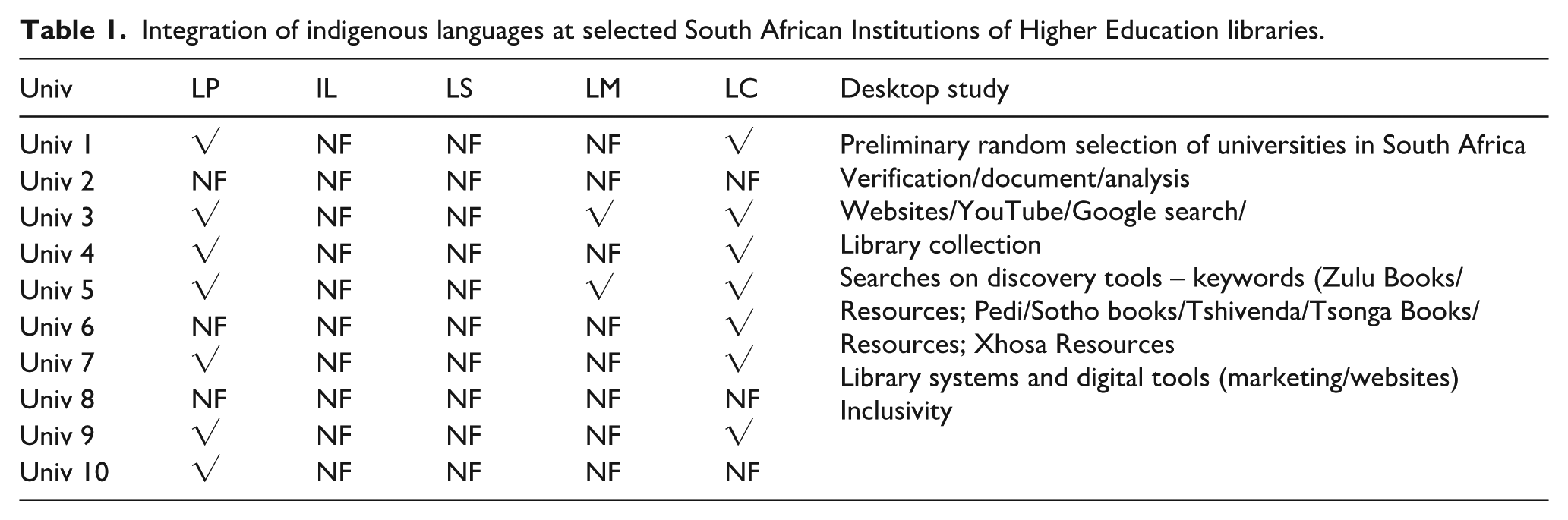
In keeping with the philosophy and research approach, the secondary data was reviewed, evaluated and assembled through document analysis, as depicted by Figure 1. Steps 1 and 2, the authors charted a path and navigated the extant literature from a global and South African perspective. Inclusion criteria were applied to focus on literature on HELs published within the 10-year period. The study excluded non-academic and private higher education libraries. The authors justify their position of scanning the literature from the past decade as this is in keeping with the SDGs’ 2030 Agenda, incorporating quality education, inclusivity, equity and justice. During Step 3, the global context and South African literature on the topic were compared and reviewed. The findings from Step 3 are reflected in the outcomes of Step 4, wherein textual and visual data from a selected cohort of ten South African HELs’ websites were evaluated, with special emphasis on language policy, library systems, information/digital literacy, marketing and collection development (Table 1). As part of executing Step 5, the descriptive terms used to search for content on websites, YouTube, and repositories varied based on the region in which the institutions are located in South Africa. For example, when searching content from institutions located in KwaZulu-Natal and the Eastern Cape Provinces, the following terms were utilised: ‘Zulu Books’, ‘Books in IsiZulu’, ‘IsiXhosa language Book’, information literacy AND Zulu OR Xhosa, ‘IL in IsiZulu’, ‘IL in Xhosa’, ‘Library instructions AND Indigenous Language’, ‘Library Marketing in IsiZulu’, ‘Library Marketing in Xhosa’, ‘Library Service AND Xhosa’, ‘Library Marketing Zulu’.
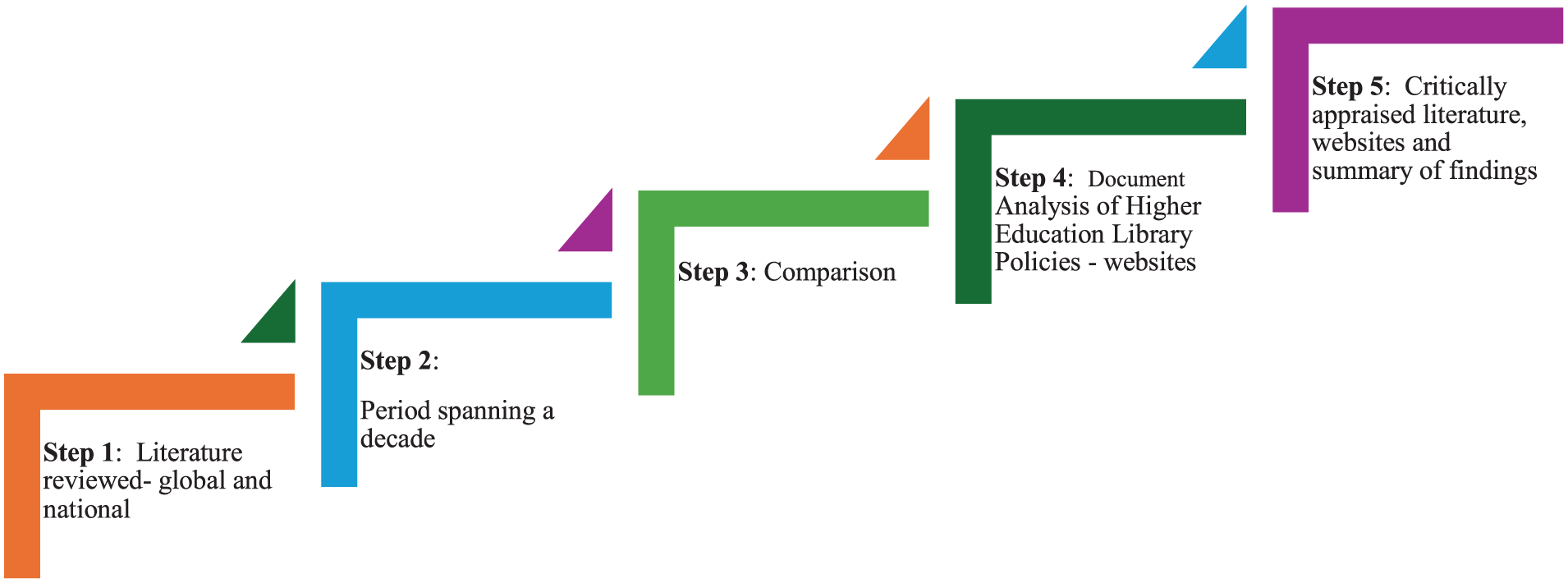
Summary of steps.
Integration of indigenous languages at selected South African Institutions of Higher Education libraries.
Stage 5 highlights the culmination of this step-by-step systematic process as the secondary data from the literature were reviewed and HELs are appraised to provide an understanding of the topic.
Document analysis of selected public university libraries in South Africa
Document analysis is a process that allows researchers to use existing resources to analyse the current situation (Morgan, 2022). The purpose of this study was to examine the integration of indigenous languages into these higher education institutions. Document analysis provided the lens for the authors to scan and examine the representation and promotion of indigenous languages in South African public university libraries. The authors visited university library websites, library YouTube channels, library guides and library repositories to verify and analyse the content through five dimensions, namely: the existence of language policy; information services (including IL Programme and material), library systems; marketing strategies and library collection. This document analysis provided a lens to scan and evaluate the representation and promotion of indigenous languages in South African HELs.
Table 1 provides a review of the integration of indigenous languages in academic contexts, analysed through five core labels. These five labels were assigned codes to systematically analyse university library website contents, library YouTube channels, library guides and library repositories. Labels were coded as follows: Language policy (LP); Information Literacy (IL); Library Systems (LS); Library Marketing (LM); Library Collection (LC). Higher Education Libraries that had content available were marked with a tick (√). In instances wherein content was not found, the abbreviation (NF) was used to represent the code in Table 1. To ensure anonymity and within the parameters of ethical consideration, participating institutions were presented as Univ and a number (Univ-1 up to Univ-10). Table 1 further points out the extent to which libraries embrace transformation and cultural inclusivity in their communication, systems, resources and services. This multi-faceted approach highlights the extent to which indigenous languages are embedded within institutional frameworks and services.
Findings and discussion
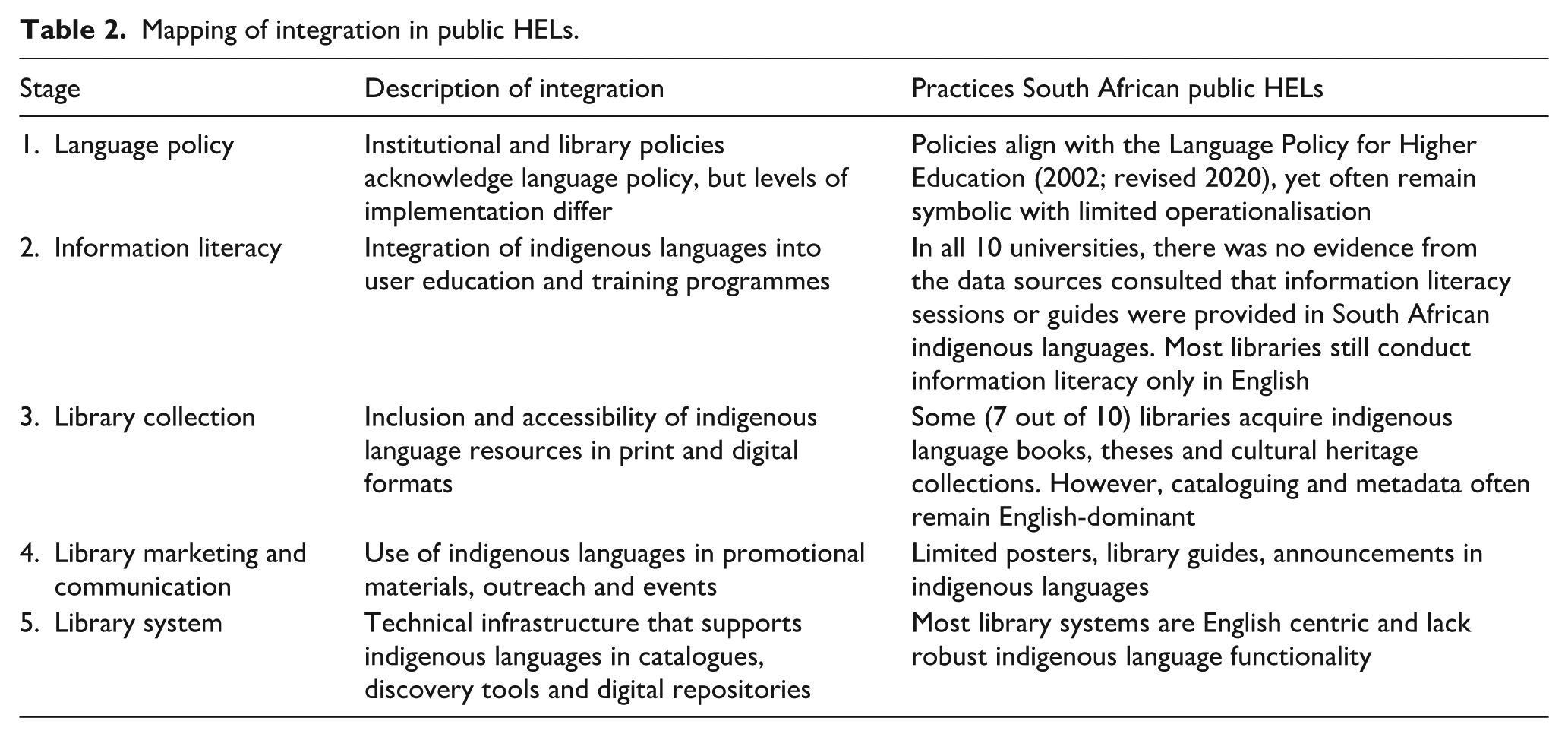
Table 2 presents an overview of the current state of practice in South African public HELs.
Mapping of integration in public HELs.
Language policy
The South African government developed the language policy to help celebrate the rich linguistic and cultural heritage of a nation, recognising its diversity as a strength (Republic of South Africa, 2002). However, Cele (2021) argues that the language policy has failed to address imbalances of the past and suggests that for the policy to be effective, a transformative and inclusive approach in HEIs is essential. Language policies that embrace indigenous languages at universities play a vital role in creating inclusive and equitable academic environments (Trinick et al., 2020). Salmi and D’Addio (2021) aver that having inclusive language policies goes beyond symbolism to address the historical neglect of indigenous communities. Within the context of inclusivity, the indigenous deaf South African communities have been historically marginalised due to apartheid (Du Toit and Masenya, 2025). Du Toit and Masenya (2025) further assert that although the South African language policy aims to elevate sign language, South African deaf students are still isolated and lack support in HEIs. Language policies should ideally underpin the moral compass of higher education institutions to reflect on the current state and to meaningfully infuse indigenous languages within the teaching, learning and research agenda (Makoni et al., 2022). By so doing, universities not only preserve cultural legacies but also open doors for more meaningful engagement and understanding amongst academic communities (Phyak and De Costa, 2021).
The findings in Table 1 reveal that 7 of the 10 public university libraries in South Africa have language policies that explicitly support the inclusion and use of indigenous languages. This highlights a significant majority of institutions that recognise the importance of linguistic inclusivity in their frameworks. It is the authors’ view that concerted efforts are being made in South African university libraries in terms of providing guidance that contributes towards the integration of indigenous languages. However, while it is important to have language policies, it is equally important to monitor and implement other elements such as collection development, library systems, information literacy and marketing that would possibly showcase the integration of indigenous languages in South African university libraries, as indicated in Table 1.
Interestingly, policies are primarily utilised as a mechanism for preservation, with limited emphasis on the integration of these indigenous languages into teaching, learning and most importantly, in library services. This correlates with the findings from the literature, where there was evidence of integration in collection development in terms of preserving indigenous collections. However, this has not translated into all library services (Diko, 2023; Ocholla, 2020; Mhlongo and Ngulube, 2020). The authors infer that more emphasis is placed on preservation whilst neglecting the integration of indigenous languages to support teaching, learning and research.
Information literacy
The delivery of information literacy is a critical component of the library services offered by university libraries (Aharony et al., 2020). A study by Nyitray and Reijerkerk (2022) explored how indigenous languages are included in information literacy materials like Libguides to promote a culture of inclusivity in terms of languages. In Africa, literature (Diko, 2023; Ocholla, 2020; Orji and Udeze, 2021) revealed a gap in integrating indigenous language material to teach information literacy skills. In South Africa, a study by Gonthier (2021) found that IsiXhosa-speaking students at the University of Cape Town encountered various difficulties with language use in education, particularly when transitioning to English as the primary medium of instruction. The need to learn and operate in a second language significantly affected their academic performance as they struggled to grasp complex concepts while adapting to learning everything in English. The question begs: could this be the same challenge that students face when attending information literacy sessions or reading information literacy materials provided by librarians? This calls for case studies within specific geographical contexts in South African HELs, exploring the availability, visibility and use of indigenous resources in information literacy sessions. As alluded to in the method section of this study, a variety of keywords were used for different sections and depending on different regions. The study found very little integration of indigenous languages into information literacy. The analysis conducted in selected South African Higher education libraries, as highlighted in Table 1, showed the unavailability of material such as video tutorials, lesson plans, guides or library instructions that confirm or demonstrate the integration of indigenous languages in the delivery of information literacy. It is concerning that after years of democracy in South Africa, there is limited material provided in indigenous languages when teaching information literacy at HELs (Ocholla, 2020). Furthermore, the authors find this disappointing given the fact that English language speakers constitute less than 20% of the total South African population, with over 80% of South Africans belonging to groups practising the various indigenous languages (Posel et al., 2022).
The absence of documented practices highlights a critical area for development, particularly in a region such as Africa, where there is rich linguistic diversity. South Africa, with its remarkable linguistic landscape comprising over 11 indigenous languages, presents a unique opportunity to explore the practical application of information literacy integration. The country’s diverse languages, including isiZulu, isiXhosa and sePedi, amongst others, could serve as a foundation for developing information literacy programmes that are culturally relevant and accessible to a broader audience. Implementing information literacy programmes that incorporate indigenous languages could enhance the educational experience for students. Such programmes would not only promote language preservation but also foster a deeper understanding of cultural contexts in which information is created and disseminated. By utilising indigenous languages, academic libraries could create a more inclusive environment that respects and values the linguistic heritage of all South Africans. The integration of indigenous languages into information literacy programmes could empower university students by providing them with the tools to navigate information in their African mother tongues (Marsh, 2022; Muñoz-Díaz et al., 2024; Ocholla, 2020; Turner, 2023). This empowerment is crucial in a globalised world where access to information is often dominated by Western languages.
Library systems
Globally, although there are libraries that have attempted to incorporate indigenous languages into library systems, there are few studies that have assessed the extent of effectiveness of such efforts (Frederick, 2022; Ibacache, 2021; Komeiji et al., 2021). In Africa, the findings from the literature reveal minimal integration into the library system (Chukwu et al., 2020; Ocholla, 2020; Omarsaib et al., 2023). The struggle for integration can be attributed to library systems being designed to house knowledge with limited support for indigenous languages (Ocholla, 2020). This is evident in a South African context where the findings from the 10 scanned HELs in Table 1 show that there was no visible integration of indigenous languages into library systems such as catalogues, databases and websites, thus suggesting that integration has not taken place. Ibacache (2021) points to a solution by suggesting that digital repositories and open access platforms can be a solution, as they can be configured to support indigenous languages. However, at the current juncture, there remains a gap in academic libraries. There is little known from the literature on how to practically develop or adapt systems that accommodate indigenous languages. It is the authors’ view that there is a need for greater investments in technological infrastructure and software development to ensure that indigenous languages are not just represented but are functionally integrated into library systems.
The strategies pointed out in literature to integrate indigenous languages into library systems include incorporating indigenous languages into the cataloguing process, the catalogue and the website (Chigwada and Ngulube, 2024; Fullmer, 2021). Within HELs, there seems to be a strong focus on integration in cataloguing; however, there is limited literature focusing on how library resources, such as databases and ebooks, are infused into Indigenous languages to support academic programmes at HELs in South Africa. Further, the authors infer through their findings that library resources on HELs are not visibly integrated into library systems in South Africa. This reflects a need for more studies detailing the integration of indigenous languages in other library systems aside from cataloguing. A notable global example that South African academic libraries can benchmark against is noted in a study by Ibacache (2021), where the practical implementation of how an indigenous language was incorporated in the library cataloguing process is shared, which allowed users and librarians to utilise the indigenous language to catalogue library material. Whilst it is interesting that academic libraries are adopting these practices globally, studies that measure user engagement and satisfaction with these resources are lacking. This can assist libraries in the process of integration to understand how the integration impacts indigenous communities in academic institutions.
Library marketing
Marketing plays a critical role in the promotion of library service, resources and spaces. Integrating IL into marketing effort encourages inclusivity and promote cultural relevance. Ibacache (2021) acknowledges the importance of indigenous languages and makes recommendations to strategically position marketing strategies to enhance the integration of indigenous languages. Ofori et al. (2020) also point out that marketing efforts such as social media, campus events and preserving cultural heritage digitally are strategies that can be adopted to fast-track the integration of indigenous languages into equitable and inclusive library services. However, this desktop study found a lack of clarity on effective marketing strategies for promoting IL in the selected South African HELs. Further, there was also limited visibility of marketing resources and materials that promoted Indigenous culture and heritage. As highlighted in Table 1, only 2 of the 10 university libraries reviewed had marketing materials available in an indigenous language. This significant gap reflects the broader challenge of integrating indigenous languages into communication strategies, necessitating targeted efforts to promote linguistic inclusivity in library outreach and engagement. The limited availability of literature on the use of indigenous languages in marketing library services underscores the urgent need for research and development in this area within higher education libraries.
It is not clear whether the lack of visibility is due to the non-availability of material or that nothing is being done at HELs in South Africa. This is similar to the findings from the literature, where there is limited visibility and documentation on how libraries are incorporating indigenous languages in the delivery and marketing of library services. The authors believe that this could be a missed opportunity as marketing is an influential tool that could assist in accelerating the integration of indigenous languages (Hangshing and Laloo, 2021; Meighan, 2021). However, there are challenges, as outlined by Orji and Udeze (2021), that hinder the successful adoption of marketing strategies that incorporate indigenous language in the communication of library services. Challenges highlighted by Orji and Udeze (2021) include the multiplicity of indigenous languages, non-proficiency and the preference for English language by university library users. The study by Chizwina et al. (2025) also came to similar conclusions, finding that students prefer the English language over indigenous languages. It is the authors’ view that where users prefer English due to content being mostly marketed in the English language, in places where users are English speakers.
Library collection
The extant literature confirms that academic libraries have been instrumental in the preservation of indigenous collections (Arts, 2024; Chigwada and Ngulube, 2024; Hangshing and Laloo, 2021; Oyelude, 2023). The document analysis revealed that the inclusion of materials written in indigenous languages was observed in most of the libraries reviewed. A comprehensive search of library systems, including catalogues, institutional repositories and electronic databases, was conducted to assess the availability of such materials. Of the 10 libraries reviewed, three did not have any indigenous language collections. Where no material was found, the term ‘NF’ was used. Although the analysis of African university libraries, as highlighted by Asamoah and Ngulube (2023), shows a significant move in providing indigenous book collections, Diko (2023) reiterates that there are still challenges facing South African university libraries when it comes to supporting transformational processes, such as developing and providing a collection that caters for Indigenous languages. This reveals that there is a need for further research on Indigenous language collections with a focus on supporting curriculum design and integration by HELs at South African institutions.
Authors are of the view that although there is preservation of indigenous collections, there is little emphasis on the integration of these collections to support teaching, learning and research at higher education institutions. Interestingly, Lilley (2023) and Chisita (2024) support the authors view by stating that an important aspect of indigenous knowledge integration in the curriculum is the incorporation of indigenous collections to support teaching and learning. Mutesasira and Aphane (2024) agree that the integration of indigenous collections into teaching and learning is a crucial component that could be used to promote cultural and educational inclusivity, as well as decolonising the old habits enforced by old regimes aimed at belittling indigenous knowledge and their communities. Subsequently, it is the author’s view that libraries in African universities should engage with indigenous communities in the selection process of library collections, as this could assist in ensuring that collections reflect linguistic and cultural identity. This is crucial to address challenges related to information resources, such as books and journals, which should be purchased in indigenous languages to support the curriculum. (Lilley, 2023).
Furthermore, it is the authors’ view that the integration of indigenous collections in Africa could be implemented in various segments, as indicated in Figure 2 below.
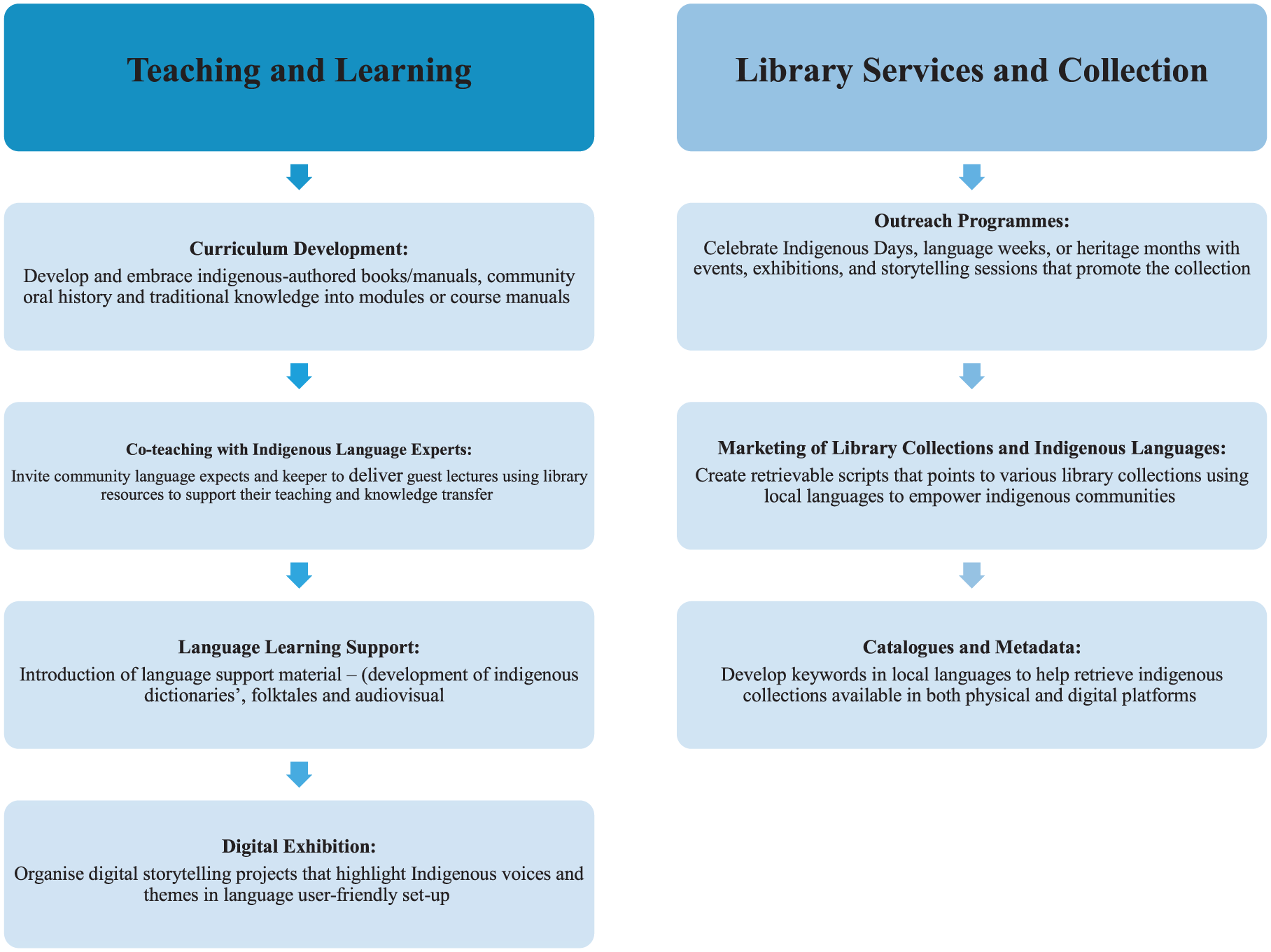
Examples of how indigenous collections could be integrated into teaching, learning, research and the provision of library services.
Recommendations and future studies
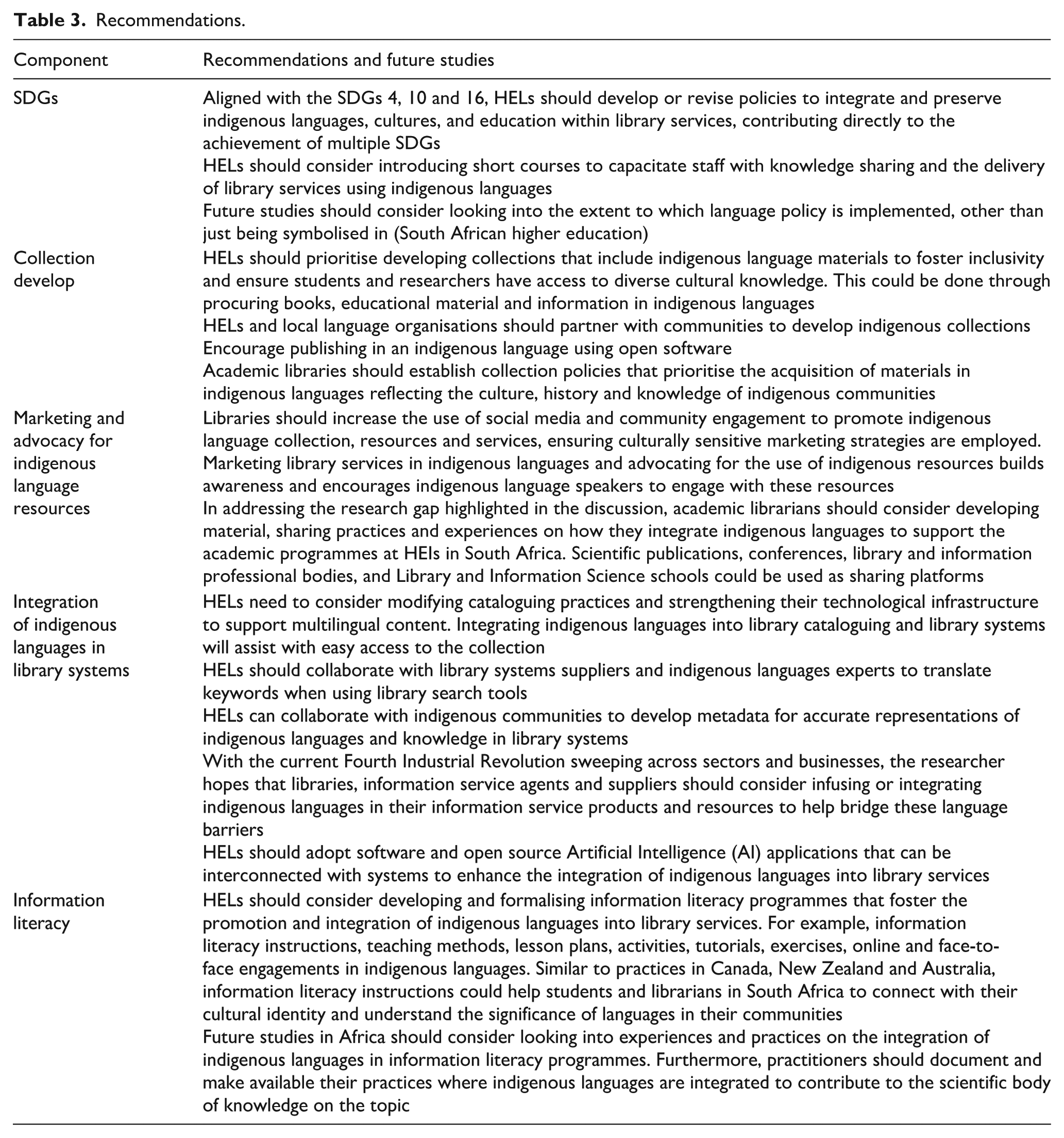
To effectively support the integration of indigenous languages, the authors recommend that HELs in South Africa should prioritise the development or revision of policies on collection development, marketing and advocacy, information literacy, library systems and professional development, to be inclusive of indigenous languages. Further recommendations are included in Table 3.
Recommendations.
Proposed conceptual model for integrating indigenous languages
Based on the findings and discussions, in Figure 3, the authors suggest a conceptual model that public HELs can use to prioritise and increase integration instead of focusing on preservation. The proposed conceptual model in Figure 3 comprises six constructs to guide the integration of indigenous languages into library services.
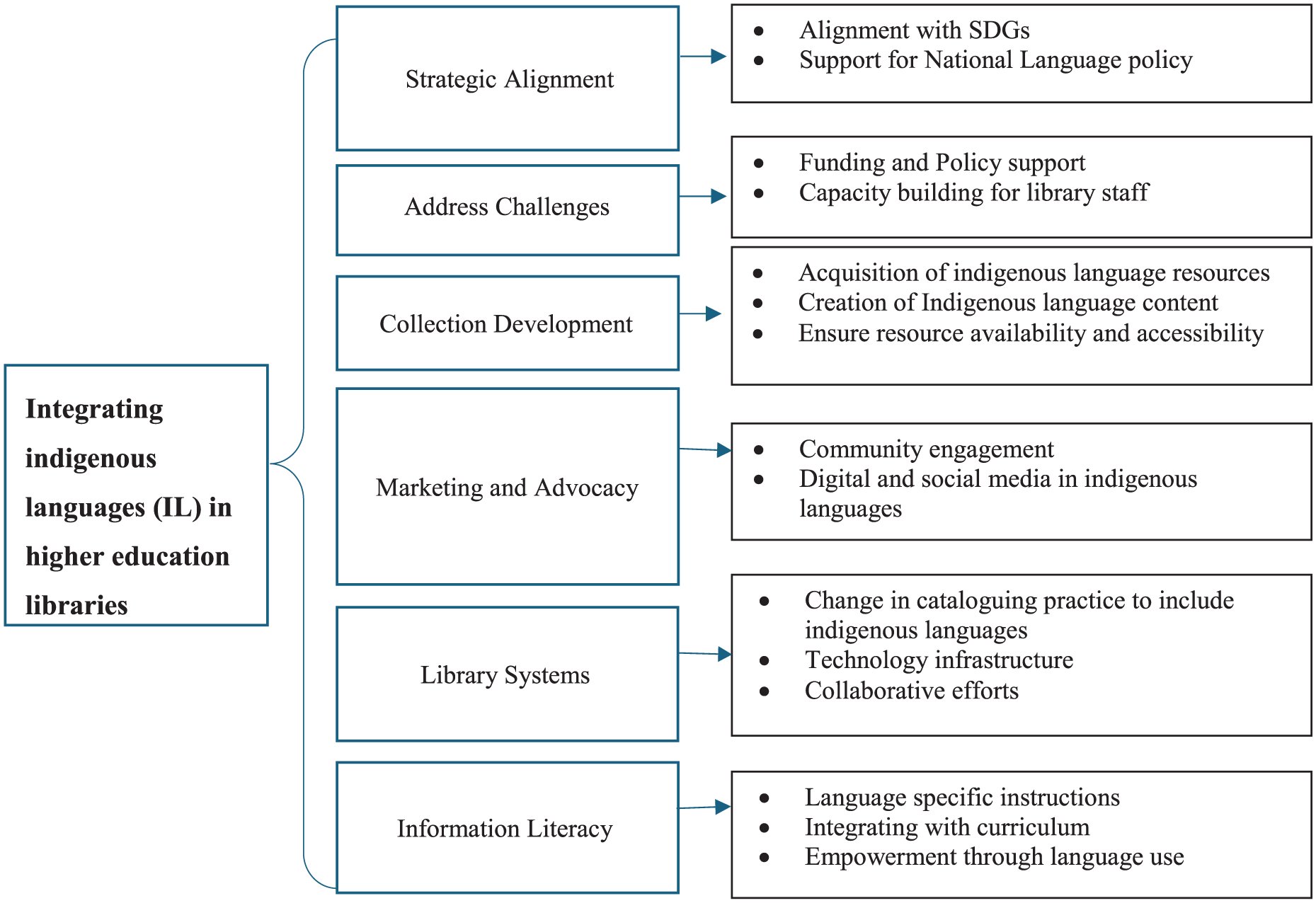
Conceptual model for the integration of indigenous languages into HELs.
At the forefront of the model is the construct ‘strategic alignment’, which pertains to governance. This construct has the potential to mandate academic libraries in South Africa to develop policies in a transformative, inclusive and equitable manner that highlights Indigenous languages. Mhlongo (2021) agrees that policy is essential as it underpins and perpetuates Indigenous languages in libraries.
Governance filters into the remaining constructs, ‘address challenges’, ‘collection development’, ‘marketing and advocacy’, ‘library systems’ and ‘information literacy’ in Figure 3. The authors deliberately placed ‘address challenges’ as the second construct, as challenges such as funding and capacity can create barriers to the integration of Indigenous languages at South African HELs. Therefore, challenges in HELs need to be addressed with the guidance of library professional bodies such as the Library and Information Science Association of South Africa, the Committee of Higher Education Libraries of South Africa, and the International Federation of Library Associations and Institutions. Further, HELs need the financial support from their universities in South Africa when addressing funding, policy development and staff development issues. The authors believe that rigorous empirical testing of the remaining constructs in Figure 3, which are ‘marketing and advocacy’, ‘collection development’, ‘library systems’ and ‘information literacy’, will provide a lens on how integration of Indigenous languages can be viewed in South African HELs.
Conclusion and future implications
This desktop study explored the integration of indigenous languages in selected South African HELs. Findings concluded that HELs are focusing more on the preservation of indigenous collections rather than the integration of indigenous languages into library services such as library systems, marketing and information literacy. The authors believe that the integration of indigenous languages is still in gestation at HELs. Future research should assess the viability of aligning institutional language policies with library service practices, ensuring that such policies move beyond symbolic representation to meaningful implementation. This includes engaging key stakeholders in higher education to promote inclusivity and equitable access to library services. Additionally, studies across Africa should share experiences and best practices on integrating indigenous languages into information literacy programmes, fostering a more collaborative and contextually responsive approach across the continent. The study was limited in its nature as it looked at selected institutions in South Africa and the integration of indigenous languages into library services. This desktop study used secondary data and was dependent on available and published information. As a suggestion, broader studies can consider using different methodologies that will provide valuable insights into the topic.
Footnotes

Funding
The authors received no financial support for the research, authorship, and/or publication of this article.
Declaration of Conflicting Interests
The authors declared no potential conflicts of interest with respect to the research, authorship, and/or publication of this article.