



Abstract
The Russian invasion of Ukraine in February 2022 led to Europe’s largest displacement of people since World War II, with significant substantial numbers of Ukrainian refugees seeking shelter in neighbouring countries. International research attests to the crucial roles public libraries can play in the reception and integration of refugees. However, diverse professional and geographical contexts and sociopolitical landscapes in which libraries work to support refugee reception and integration processes, necessitate ongoing and renewed focus on the topic. Therefore, this study examines how public libraries in Hungary and Poland responded to the influx of Ukrainian refugees, investigating their roles, programmes and partnerships. Using mixed methods, the study analyses previously unexamined 2018 questionnaire results and conducts 12 subsequent interviews with library staff. Findings reveal that libraries addressed a spectrum of user needs falling into three broad phases. Initially, they focussed on primary needs during the first phase, transitioning to settlement-related needs in the second phase. Variances between Poland and Hungary emerged during this phase, with Hungary primarily serving transient refugees and those with Hungarian backgrounds, while Poland saw a higher number of refugees of Ukrainian background settling. In the final phase, libraries emphasized literacy, integration and cultural support, aligning with reading and collection-oriented services. Service provision was characterized by nontraditional services in the first phase, non-collection-oriented services in the second phase and collection-oriented services in the third phase, with information provision central to all three phases. The study underscores public libraries’ role in addressing community needs, rooted in their core values of inclusivity and community engagement. However, their effectiveness hinges on inclusion in community-level efforts, awareness among new groups and securing economic and political support. Further research is warranted to explore library services to refugees globally amid increasing global migration and to understand the experiences of refugees using library services.
‘We knew what we had to do, and we just did it. We wanted to help them’ (Polish interviewee)
Introduction
The escalating number of refugees and displaced individuals constitutes a growing global humanitarian crisis, posing significant societal, cultural and economic challenges. The full-scale invasion of Ukraine by the Russian Federation in February 2022 further exacerbated this crisis, triggering the fastest and largest displacement in Europe since World War II. As of mid-2023, an estimated 11 million Ukrainians remained displaced. Just under half of the displaced Ukrainians have stayed within the country, while the rest have fled to other European countries (UNHCR, 2023b). Emerging international research, as will be discussed, attests to the crucial roles public libraries can play in refugee reception and integration (Kosciejew, 2019). However, the diverse professional and geographical contexts, as well as sociopolitical landscapes in which libraries operate to support refugee reception and integration processes, necessitate ongoing and renewed focus on the topic. Thus, this study investigates how public libraries in Hungary and Poland responded to the influx of Ukrainian refugees following the onset of the Russia-Ukraine war. Despite minimal experience in accommodating refugees during the 2015–2016 humanitarian crisis, both countries, due to their proximity to Ukraine, became primary recipients of Ukrainian refugees at the conflict’s outset. The research aims to examine the roles of libraries in responding to the arrival of Ukrainian refugees, focussing on the development of specific programmes and information services, partnerships formed, implications for library management and staff and the associated professional responsibilities and competencies. To address this overarching research question, the study pursued the following sub-questions:
What roles did libraries play in the broader response to the arrival of the Ukrainian refugees?
What specific types of programmes and information services did they develop, and what kinds of partnerships did libraries form, if any?
What were the implications for library management and staff and their professional responsibilities and/or competencies?
The study’s findings are relevant internationally for library management, staff, immigration workers and policymakers serving immigrants and refugees to ensure awareness of public libraries as a potential resource in this area.
Background: migration trends in Hungary and Poland
As discussed below, quite different migration patterns were observed in Hungary and Poland (Figure 1). Migrant decisions are complex, shaped by dynamic interactions among macro, meso and micro-level factors, encompassing historical ties, economic resources and favourable visa conditions. The relationship between policies and destination preferences is nuanced, involving both migration and non-migration policies. Labour market access significantly influences preferences, while social networks, including family and friends, play a crucial role in the relationship between individuals and communities during migration (Crawley and Hagen-Zanker, 2019, p. 21). Additional factors influencing the society of settlement include its orientation towards immigrants, a positive multicultural ideology, institutional social support and economic support, which may collectively influence settlement patterns and contribute to the dynamic of societal integration and acceptance (Berry, 1997, p. 16). Nevertheless, determinants influencing immigrants’ initial location preferences remain poorly understood (Mossaad et al., 2020, p. 1). Thus, it is not possible to determine the exact reasons for the different migration patterns observed in the two countries. However, an attempt is made to mention a few of the more relevant factors.
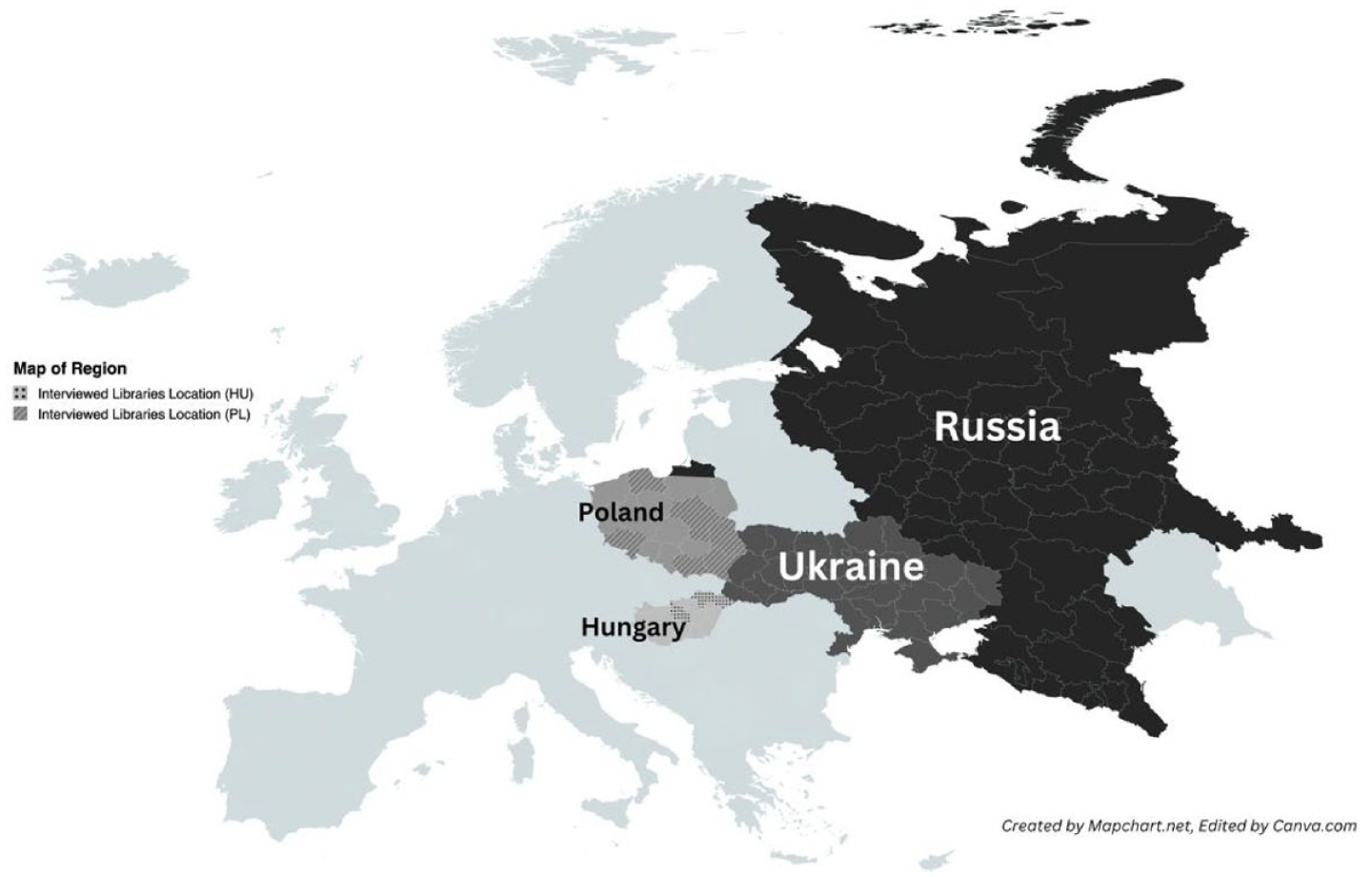
Map displaying the countries relevant to the study and the regions in Poland and Hungary where the interviews were conducted.
Hungary
In 2015, Europe faced an influx of refugees due to conflicts in Afghanistan, Syria and other regions of Africa and the Middle East. The Hungarian government capitalized on the perceived ‘refugee crisis’ to gain political support, depicting refugees as a threat to the security of both Europe and Hungary, effectively restricting their entry (Pepinsky et al., 2024). The Russian invasion of Ukraine led to a subsequent wave of refugees; however, this time, the Hungarian government did not impose entry or settlement restrictions and expressed a commitment to supporting refugees from Ukraine (Tóth and Bernát, 2022). From February 2022 to June 2023, 2,933,814 Ukrainians entered Hungary, with 52,336 recorded by April 2023 and 36,315 registered for temporary protection (UNHCR, 2023a).
Several factors likely contributed to the disparity between the low number of registered refugees and the high number of border crossings in Hungary. Firstly, the Hungarian language may be perceived as a barrier, prompting some refugees to seek countries with similar or known languages (Kovács et al., 2023). Secondly, estimating the actual refugee count is complicated by the significant Hungarian national minority residing in Ukraine near the border. Since 2010, the Hungarian government has permitted dual citizenship for Hungarians in surrounding areas, resulting in many people seeking refuge in Hungary without needing to apply for refugee status, thus eluding inclusion in migration statistics.
A third possible reason is Hungary’s limited asylum system. As suggested by international lawyer and professor Nagy (2023), the Hungarian government outsourced the task of meeting the needs of asylum seekers to five Church-based organizations, the Red Cross and the National Directorate-General for Disaster Management. Nagy (2023, p. 158) noted that these efforts, along with the liberalization of civil society’s capacities, preserved what he termed ‘the honour of Hungarian society’. While the general Hungarian public previously opposed accepting international refugees, there was widespread acceptance for those fleeing Ukraine, which was attributed to their direct escape from the war in a neighbouring country and alignment with the white, European, Christian identity and values, resonating with prevailing sentiments (Pepinsky et al., 2024).
Poland
Poland’s stance on the global refugee crisis shifted significantly after Russia attacked Ukraine. Before this event, Poland had a relatively passive approach, with a modest foreign population of approximately 110,000 reported in the 2011 National Census. However, the annexation of Crimea in 2014 led to a notable increase, with estimates suggesting over 2 million immigrants by 2019, primarily Ukrainians (Bukowski and Duszczyk, 2022). In 2015, the Polish PiS (Law and Justice) party incorporated the European ‘refugee crisis’ into its political strategy, adopting an anti-immigration stance (Krzyżanowski, 2018), similar to Hungary.
The Russia-Ukraine war significantly altered Poland’s approach. The government eased regulations for Ukrainian refugees, and citizens played a notable role in assisting them. Centre Public Opinion Research survey findings from April 2022 indicated that 63% of Poles reported personal involvement in helping refugees (Centrum Badania Opinii Społecznej, 2022). Border Guard records showed 3.5 million Ukrainian border crossings into Poland from February 24 to mid-May 2022 and 11.591 million by May 2023 (Straż Graniczna, 2023). However, this figure does not reflect the number of individuals remaining, as it does not account for further migrations and temporary visits to Ukraine by those in Poland. The Office for Foreigners registered almost 1 million individuals benefitting from temporary protection, with women and children comprising about 87% of this group (Urząd do Spraw Cudzoziemców, 2023). As of spring 2023, the precarious situation of this group was evident, with many refraining from making long-term decisions due to forced family separation and war-induced trauma (Jaroszewicz et al., 2022).
Considering the differences in migration patterns between Hungary and Poland, it has been reported that before the war, many Ukrainians had already settled in Poland, while far fewer had done so in Hungary. Consequently, more refugees had friends or relatives in Poland, enabling them to receive additional individual support (Kovács et al., 2023). This may have been an additional pull factor for their decision to go to Poland. Accordingly, based on a survey of Ukrainian refugees, 44% indicated that they sought refuge in Poland due to family, friends and the cultural and linguistic affinity between the countries (Długosz et al., 2022).
Review of international literature
Public libraries’ role in assisting refugees
A core value of public libraries is their commitment to being inclusive, emphasizing that libraries are for everyone. This principle has led librarians to offer extensive and ongoing support to individuals in vulnerable and marginalized situations (Muddiman et al., 2000; Rasmussen and Jochumsen, 2003). This commitment is reflected in concepts such as empowerment (Grace et al., 2011), social inclusion (Dalmer et al., 2022; Muddiman et al., 2000) and social justice (Pateman and Vincent, 2016), which are frequently used in both professional and public discourses on public libraries. The current version of the IFLA-UNESCO Public Library Manifesto (2022) also emphasizes the role of public libraries for inclusion. Therefore, it is not surprising that services for refugees have become a growing focus in the literature on public libraries (see Serra and Revez, 2024; Shephard et al., 2023).
Library services related to the sudden arrival of refugee groups are discussed in works such as Nilsson (2016), Pilerot and Hultgren (2017), Pilerot (2018) and Kosciejew (2019). Olson (2022) discusses how Swedish public libraries’ services to Ukrainian refugees were designed based on the experience of the 2015–2016 refugee crisis. Two comprehensive literature reviews have been conducted on library services for refugees. Grossman et al. (2022) provide a broad mapping of the various ways public libraries can support refugees, while Kosciejew (2019) maps literature addressing refugees’ information needs. A recurring theme in the literature is the crucial role of refugees’ trust in libraries and library staff for success. According to Chai (2022), refugees generally perceive libraries as safe places. Vårheim (2014a, 2014b) points out that library programmes can play an important role in facilitating and expediting trust-building processes for refugees and immigrants.
Critical success factors in librarians’ provision of services to refugees include trust, creating a welcoming atmosphere and outreach (Gonzalez, 1999, 2001). Additionally, public libraries play a role in helping refugees adapt and build a new cultural identity (Dancs, 2018) and can support them in establishing a sense of belonging in their new societies (Bronstein, 2019; Johnston, 2019).
Library programming and services for refugees
Library research has revealed a significant increase in various activities and services for refugees across public libraries during the last two decades. This trend is evident in three main areas.
Firstly, traditional library services offered to refugees, such as lending books and other materials and providing internet access, have been well-received and utilized by refugee groups (Hosoya-Neale, 2016; Kosciejew, 2019; Shoham and Rabinovich, 2008). However, multilingual library collections are often perceived as outdated and, as a result, are used less frequently (Nekolová et al., 2016; Sirikul and Dorner, 2016).
Secondly, public libraries go beyond providing access to collections by serving as meeting places for immigrant women (Audunson et al., 2011; Branyon, 2017) and offering various social activities for unaccompanied children (Nilsson, 2016). Language programmes, a common service for immigrants and refugees, not only provide an opportunity to practice language skills with native speakers but also offer forums for discussion and the development of social networks (Johnston, 2018, 2019; Johnston and Audunson, 2019; Rodriguez, 2019). Additionally, support for various literacies, including public health (Grossman et al., 2022; Hines-Martin et al., 2020; Lenstra et al., 2023), financial literacy and digital literacy (Fenton, 2016; Igarashi et al., 2023), is commonly provided.
Thirdly, the sudden arrival of displaced people has prompted libraries to offer services not typically associated with public libraries. These include providing transportation, distributing aid (e.g. clothing, food, etc.), serving as temporary shelters, obtaining information about family and friends, assisting with insurance claims and other forms and more (Bishop and Veil, 2013; Jaeger et al., 2006; Nilsson, 2016; Vårheim, 2017).
Information needs and fractured information landscapes
The information needs of refugees are diverse, encompassing everyday life activities, forming social connections and engaging in financial and professional pursuits (Bronstein, 2019; Kosciejew, 2019). Information plays a crucial role in the lives of refugees; however, they often face barriers to accessing the information needed due to language and sociocultural challenges (Bronstein, 2019; Martzoukou and Burnett, 2018).
Importantly, refugees come from diverse backgrounds, resulting in varying levels of informational competencies and support needs within and across different groups (Martzoukou and Burnett, 2018). Lloyd (2017) introduces the concept of a fractured information landscape to explain how individuals undergoing significant life changes, as often experienced during migration and settlement processes, may find their customary information behaviours ineffective in the new context. Consequently, they are often compelled to reshape their information-related behaviours to adapt to the new information environment.
Research indicates that public libraries can assist refugees in navigating the challenges of this new and complex informational landscape by providing information and access to information technology (Kosciejew, 2019). Libraries also play a role in helping refugees develop information practices necessary for becoming information resilient (Lloyd, 2015). This study offers insights into the library services provided and the roles undertaken by information professionals in addressing the needs of Ukrainian refugees who form a user group with fractured information landscapes.
Methodology
This study utilizes a mixed-method approach in which quantitative and qualitative data are integrated at the interpretation and reporting level via ‘joint displays’ (Fetters et al., 2013, p. 2142). The quantitative data is visualized to show the degree of importance of roles associated with services to immigrants among Polish and Hungarian public librarians, and the qualitative data explores the response of public libraries in noted countries to the influx of Ukrainian refugees. Initial questionnaire findings indicate limited emphasis on refugee services roles in libraries in Hungary and Poland. Qualitative interviews later reveal how libraries in these countries have tailored services to meet refugee needs, providing valuable insights into service development.
Questionnaire
As a starting point for this study, an analysis was conducted of previously gathered data from a questionnaire distributed to librarians working in multiple European countries, including Hungary and Poland. The questionnaire was part of the international research project The ALM-Field, Digitalization and the Public Sphere (ALMPUB), funded by the Norwegian Research Council’s KULMEDIA Programme. The overarching project aimed to investigate the different roles of libraries, archives and museums in creating a public sphere in the age of digitalization. The results of the questionnaire administered to librarians have undergone diverse analyses, exploring connections to various topics and issues (Audunson et al., 2020; Johnston et al., 2022, 2023; Khosrowjerdi et al., 2024; Rydbeck et al., 2022; Tóth et al., 2024). This study does an isolated analysis of the findings from Hungary and Poland.
The online questionnaire was distributed to public libraries in the spring and autumn of 2018. The key questions mirrored those from a prior ALMPUB survey conducted in 2017, which explored the general public’s perceptions of public libraries. The 2017 survey was tested and administered by a professional survey company located in Norway. Response options for the online questionnaire to librarians were devised by researchers from partner countries and were informed by previous research and input from library professionals. While the questionnaire findings cannot be generalized due to non-random sampling, they offer indicators of professional practices and attitudes with refugees and immigrants before the war, thereby setting a baseline for understanding subsequent changes.
Obtaining samples of librarians was not possible as no registers of librarians were available in either country. Therefore, email addresses of public libraries were obtained from the Polish Library Association’s register, and invitations were sent requesting the forwarding of the questionnaire to library branches. In Hungary, professional mailing lists were utilized for distribution.
Interviews
The interviews, 12 in total, 6 in each country, took place in the first quarter of 2023, from January 26th to February 3rd in Poland and from January 12th to February 24 in Hungary, approximately a year after the start of the war. The selection of interviewees aimed to capture a diverse range of perspectives and experiences related to the research topic. A sample of six interviews was agreed upon based on the capacity of local research teams; however, interview saturation ultimately determined data sufficiency. No additional interviews were deemed necessary at this research phase, as further interviews were unlikely to yield new themes, patterns, or perspectives. While the findings from the interviews are not generalizable, they offer valuable insights into how libraries responded to the arrival of Ukrainian refugees. They will be used to conduct a broader quantitative survey of public libraries in different countries to understand how libraries in Europe have tailored their services for refugees and immigrants.
Development of interview guide
As the goal was to understand library practices and librarians’ experiences related to the provision of library services to Ukrainian refugees, the interview guide was designed to cover a range of library activities and relevant experiences. Preliminary visits to public libraries in Hungary and Poland were conducted before and during the development of the interview guide to gain initial insights. The guide (see Supplemental Appendix 1) was then collaboratively developed by a research team from Denmark, Hungary, Iceland, Norway, Poland and Sweden, all with expertise in public libraries, librarianship and international migration, with some members having firsthand experience of migration. Additionally, insights and findings from the ALMPUB questionnaire informed the guide’s development. Lastly, feedback on the interview guide was sought from librarians in Denmark, Hungary and Poland to ensure its comprehensibility and relevance.
Sample characteristics
Libraries that actively served newly arrived Ukrainian refugees were purposefully chosen to include a minimum of two libraries from larger urban areas, two from medium-sized communities or suburbs and two from smaller communities. This selection aimed to explore how libraries in different contexts responded to refugee influxes, especially those lacking resources typically found in larger urban centres and capital cities. Additionally, at least one community in each country bordered Ukraine, serving as temporary stops for refugees to regroup before moving on or as temporary bases for those considering returning to Ukraine. The sample comprised six Polish and six Hungarian institutions, including two Polish and one Hungarian library near the border, two Polish and three Hungarian libraries in mid-sized communities or rural areas along migration routes to European countries and two Polish and two Hungarian libraries or branches in major urban centres.
Interview subjects and procedures
Interviewees consisted of library staff or managers at the selected libraries who were directly involved in providing services to refugees following the onset of the Ukrainian conflict. Interviewees were individually invited to participate via mail. Interviews were conducted online and recorded with consent from all participants. The interviews were conducted in Polish and Hungarian, transcribed, and then translated into English using machine translation (DeepL). The translations were verified by the research team for accuracy and clarity before analysis.
Analysis
Interview analysis as bricolage was employed. Within this approach, researchers navigate through a mix of technical discourses, shifting between different analytic techniques. They may conduct multiple readings of the interviews to form an initial impression before delving into specific sections of interest, which may entail the use of techniques such as noting statements reflecting diverse attitudes or approaches towards a phenomenon, crafting narratives based on interview excerpts, creating metaphors to encapsulate key insights, or visualizing findings using flow diagrams or charts (Kvale, 2007, p. 115).
The analysis commenced by establishing broad categories informed by the development of the interview guide. This guide was shaped by a comprehensive approach, incorporating preliminary visits to libraries in Hungary and Poland, a literature review, input from international experts on public libraries, information science, international migration and inclusion processes, as well as feedback from experienced librarians working with immigrants and refugees to ensure relevance and comprehensibility. This methodological rigour ensured the consideration of all relevant aspects of library services and professional roles. The categories encompassed Library Response Activities, User Needs and Services (including collection development and facilitation of trust) and Professional Role (including collaboration with other entities). While providing predetermined categories, the semi-structured interview technique allowed for additional points to be included, enhancing flexibility and adaptability.
The analysis of the interview transcripts began with a method akin to theoretical reading (Kvale, 2007, p. 117) by research group members, aimed at discerning approaches, activities and experiences related to the defined categories and determining the necessity of additional categories. This initial phase affirmed the relevance and adequacy of the established categories in covering the interview findings. The research team was divided into three groups corresponding to the interview guide sections. Researchers within each group were assigned questions from their section of the interview guide to review the text, identifying and quantifying activities, professional practices, service categories and/or collaborations for ad hoc analysis of the transcripts (Kvale, 2007, p. 115). This facilitated the identification of emergent trends, comparisons and pattern recognition. The findings from each group were compiled, with interview passages interspersed, allowing the interviews to speak for themselves while also serving to qualify or elaborate upon the quantified aspects. Lastly, the findings underwent a final round of review and discussion by the entire research team, enhancing trustworthiness and internal validity through peer validation and consensus-building.
Ethical considerations
The questionnaire and interview guide were submitted to Sikt, the Norwegian Agency for Shared Services in Education and Research, for assessment of the use and handling of personal data, as well as ethical research practices. Informed consent was obtained from interviewees based on anonymous reporting of research findings. As the interview questions concerned the work practices and roles of public library employees, the subject matter was deemed to be of low sensitivity.
Findings and analysis
The findings and analysis are presented, beginning with the questionnaire and progressing to the interviews. This has been done to offer insight into the status of programming and services for immigrants and refugees before the war and to demonstrate how they evolved upon the refugees’ arrival following the outbreak of the war.
Questionnaire findings and analysis
The total number of questionnaire respondents was 1448, with 646 from Poland and 810 from Hungary. The majority of respondents were female (91.4%) and had an educational background in LIS (79.3%). Nearly all respondents (95%) indicated they do not have an immigrant background.
Librarians were given a list of 15 professional responsibilities and asked to indicate on a scale from 0 (not important) to 10 (very important) the importance or centrality of each responsibility to their daily work. Most Polish librarians (53.9%) and the vast majority of Hungarian librarians (69.3%) scored professional responsibility for services to immigrants and/or refugees as zero or not important (Figure 2).
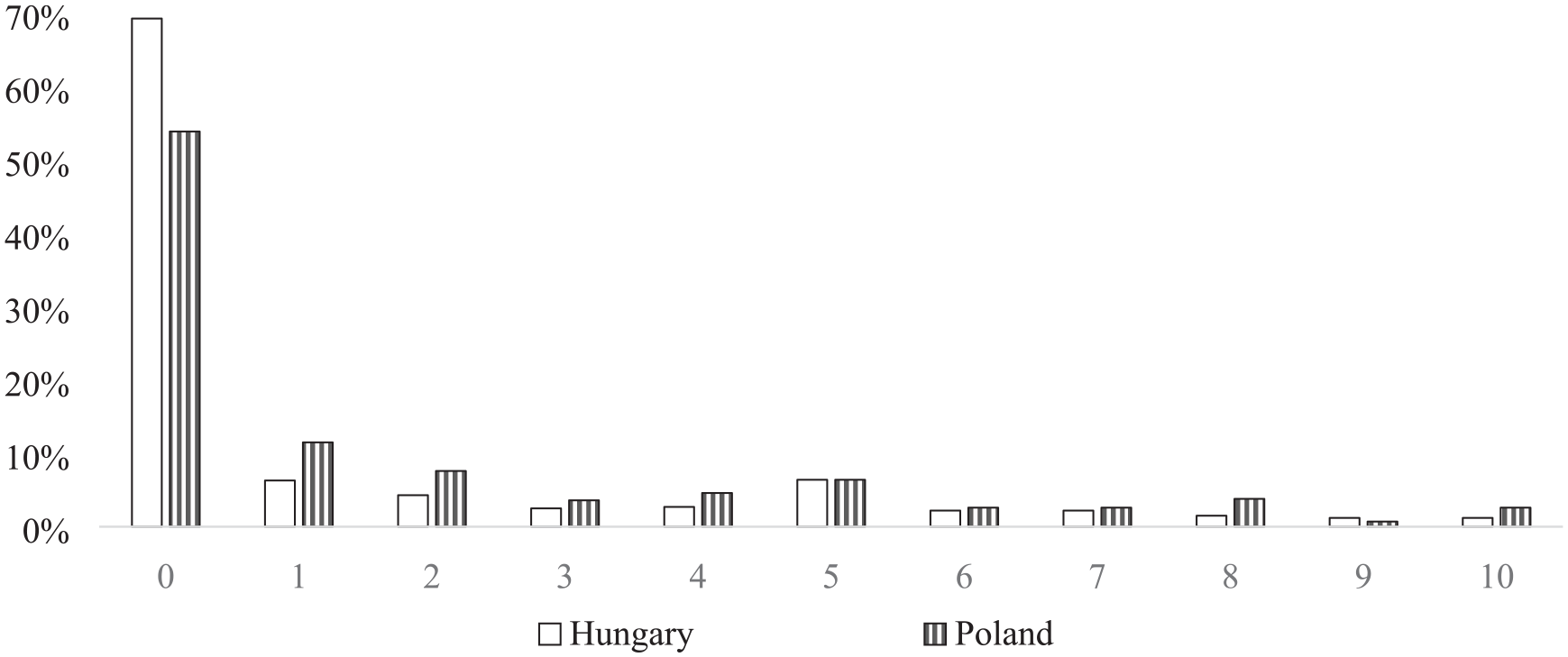
Services to immigrants and refugees by Country (in percentages).
Librarians were then asked how they perceive their role as professionals in their local community in relation to those of related professions. They were provided with a list of 25 roles and asked to rate on a scale from 0 (very little) to 5 (very high) the extent to which each role corresponded to their work. Integration consultant was the primary role among the 25 related to services for immigrants and refugees (refer to Johnston et al., 2022, for more detailed information about the roles). The mean score for ‘integration consultant’ in Hungary was 2, making it the third-lowest ranking role out of the 25. In Poland, it scored 2.4, tying with ‘archivist’ and ‘interior architect/decorator’ as the seventh-lowest ranking role.
Geographical variations in librarians’ perceptions of immigrant services (Figure 3) and integration consultant roles were observed (Figure 4). In Poland, larger communities prioritized immigrant services, while in Hungary, these responsibilities scored low across all community sizes. Smaller Hungarian communities gave slightly higher scores than larger ones. The integration consultant role in Hungary scored moderately across all sizes, while Poland scored higher with decreasing community size. This suggests that larger Polish communities emphasized formalized services, while smaller ones adopted a more informal, individual-focussed approach. In Hungary, fewer respondents emphasized immigrant services compared to a role similar to an integration consultant, indicating a generally more informal approach. Caution is needed in interpreting Hungary’s integration consultant role, as policies primarily target socially excluded groups like the Roma, potentially explaining the emphasis on integration in smaller communities where the Roma are overrepresented.
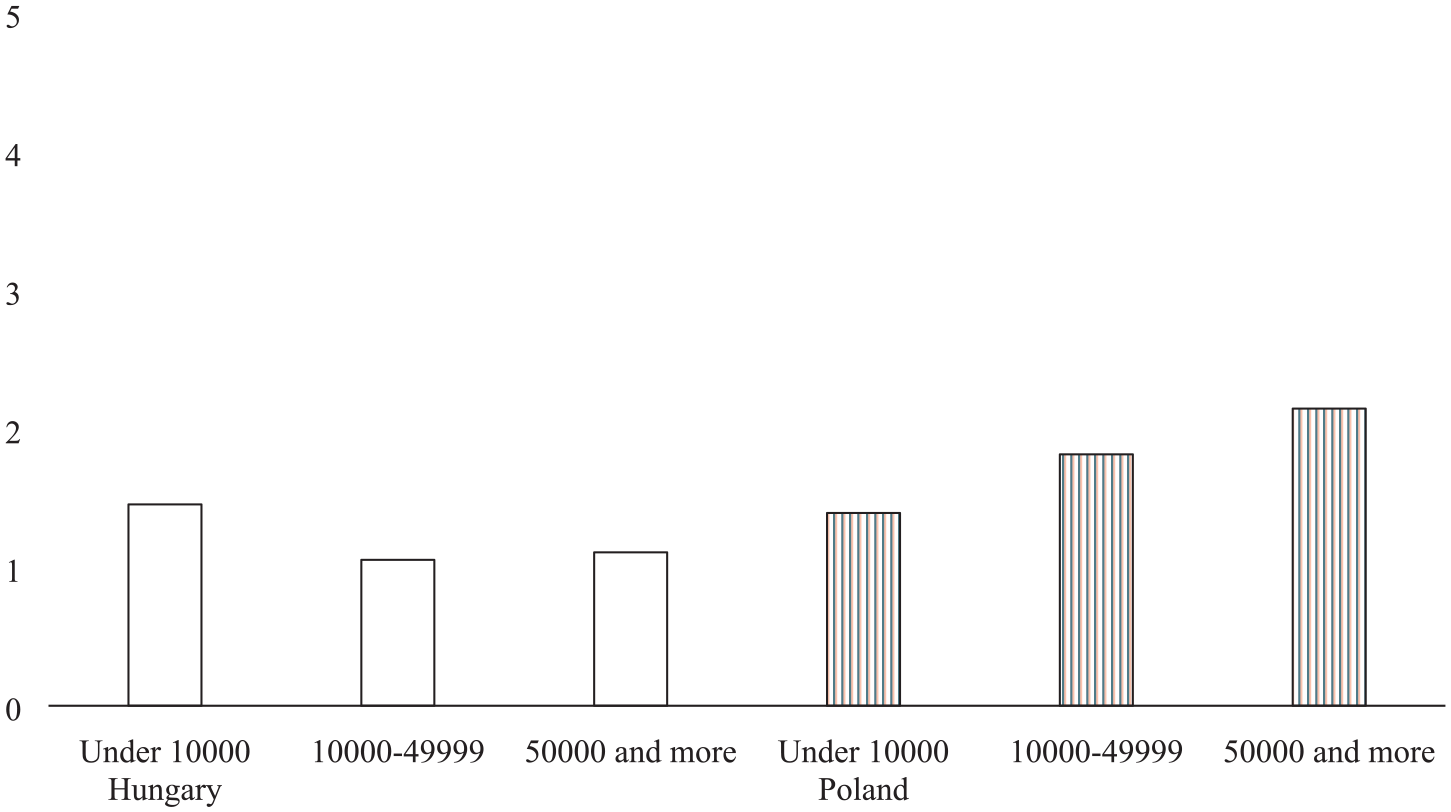
Professional responsibility for services to immigrants and refugees according to community size (mean scores).
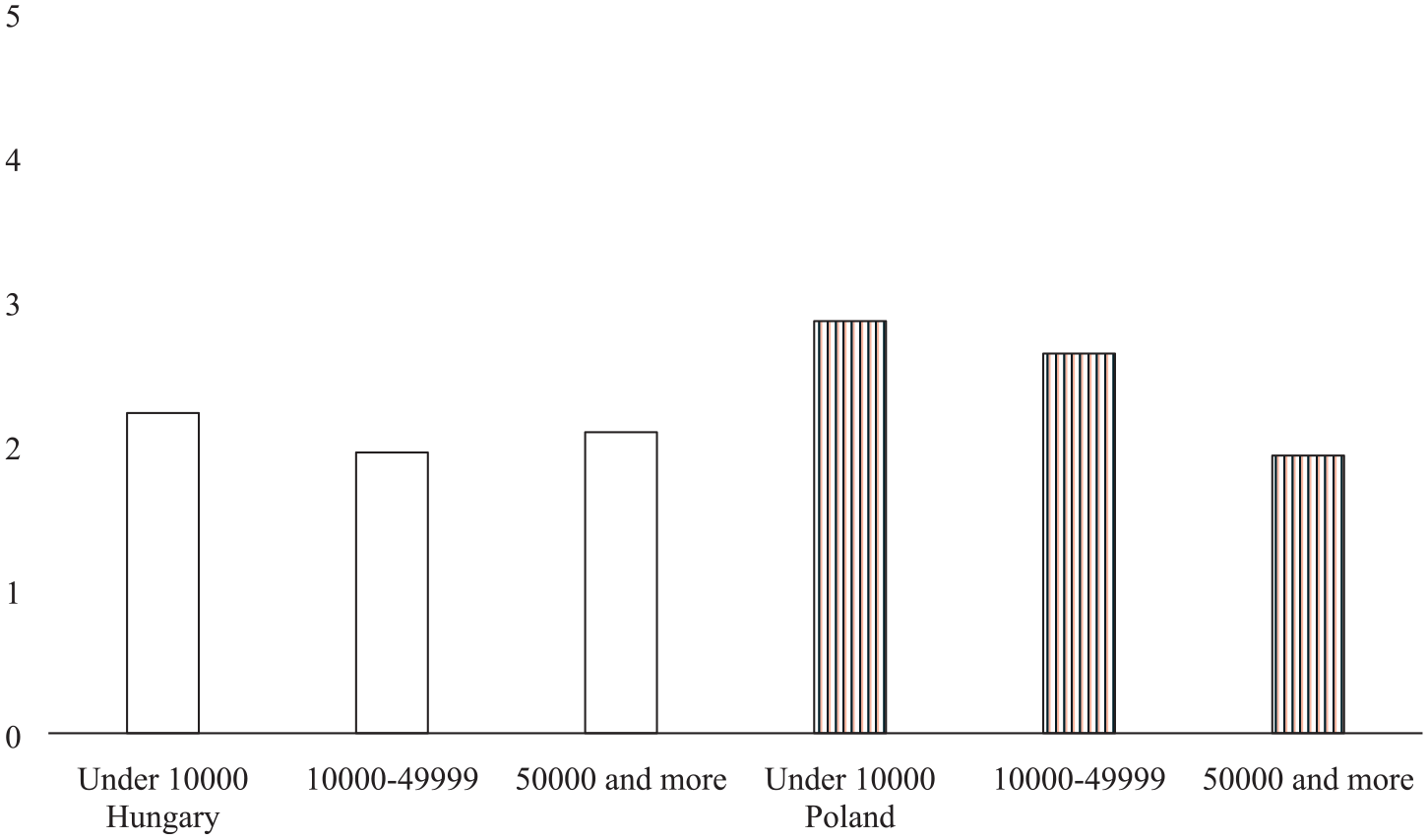
Role of integration consultant according to community size (mean scores).
Lastly, the librarians were asked if their libraries offered certain services related to libraries serving as public spaces and if these services play an important or marginal role within the library’s service portfolio. The service most closely associated with support for immigrants and refugees and integration was conversation-based programmes, such as language cafes.
Altogether, less than a fourth of the respondents’ libraries in Hungary offer these types of programmes, and, in most cases, they only play a marginal role (Figure 5). A little over a third of respondents in Poland indicated that these programmes play an important role in the library’s service portfolio, and a little under a third indicated that they play a marginal role.
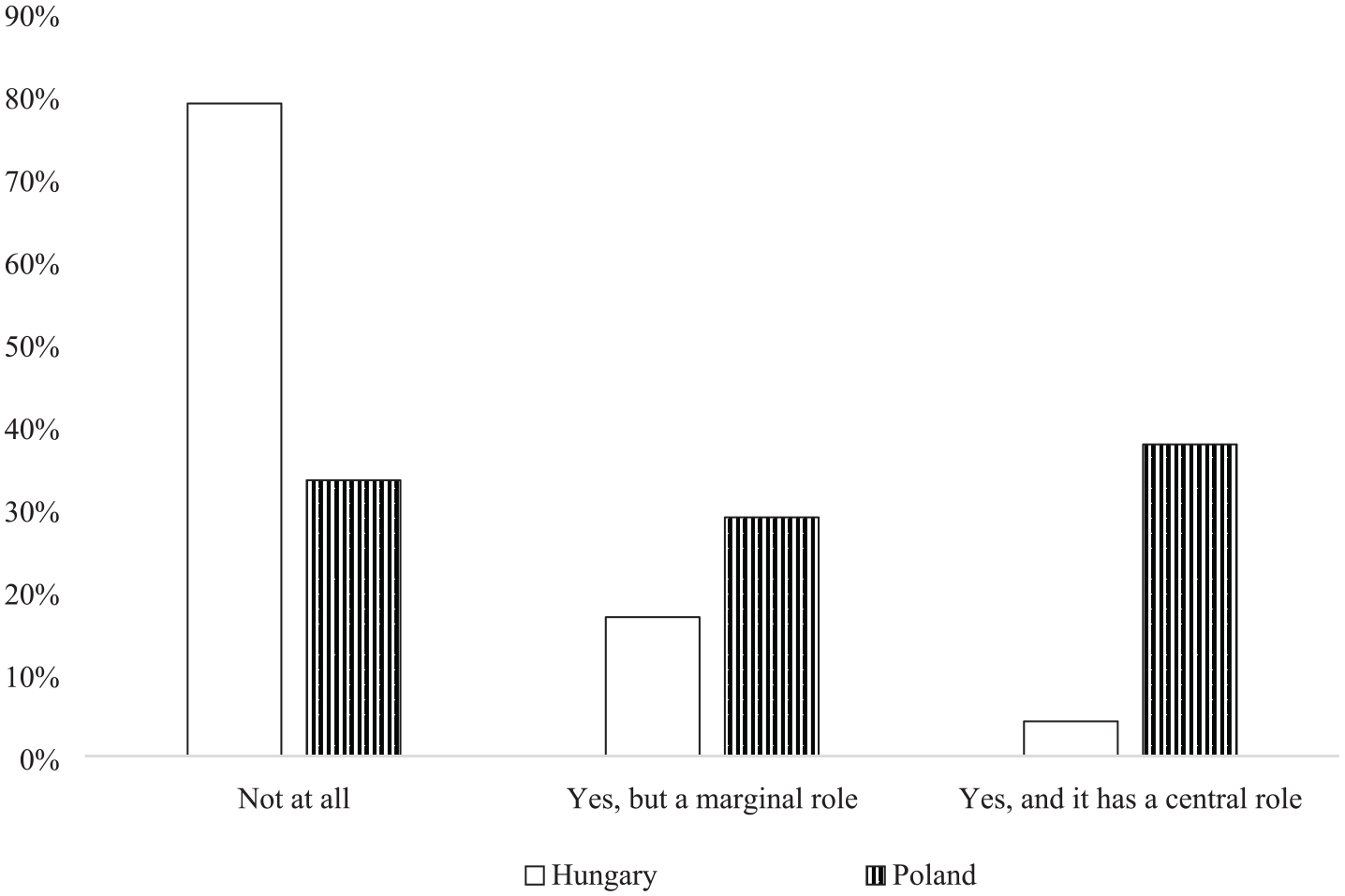
The importance of conversational programming among investigated countries (in percentages).
These patterns align with the countries’ responses to the reception of refugees during the 2015 humanitarian crisis and provide a snapshot of these services before the onset of the COVID-19 pandemic. Lockdowns and limitations on gathering in public places due to the pandemic generally began in Europe in March 2020, about 2 years after the questionnaire was administered. In general, library services were minimal during the pandemic, and it can be expected that these types of services would have been generally reduced or simply unavailable (National Authorities on Public Libraries in Europe (NAPLE), 2020). However, significant changes were imminent following the Russian invasion of Ukraine in February 2022.
In summary, the questionnaire findings indicate that there was a limited provision of services for immigrants and refugees in both countries. Larger Polish cities exhibited slightly more activity than Hungarian cities, while smaller Hungarian communities showed a bit more engagement. Poland had a higher percentage of libraries offering conversation-based programmes.
Interview findings and analysis
In Poland, two directors of municipal public libraries, two directors of public libraries in local communities, one senior librarian and one manager of a specific municipal library department responsible for transnational cooperation were interviewed. The respondents comprised five females and one male, with professional experience ranging from 3 to 35 years. In Hungary, a librarian in a small town where the library is integrated into the community centre, two directors, one deputy director, a head of a branch in the capital area and a department head in a middle-sized town’s library were interviewed. All of whom were responsible for managing services for refugees. The respondents in Hungary consisted of five females and one male with professional experience ranging from 5 to 25 years.
The findings are presented according to the interview guide and the broad categories that were established, including Library Response Activities, User Needs and Services (including collection development and facilitation of trust) and Professional Role (including collaboration with other entities). This is done to maintain the natural progression of the interview conversations.
Navigating chaos: the commencement of libraries’ response efforts
The interviewees in Poland and Hungary all reported that the situation became very chaotic at the beginning of the war due to the high number of Ukrainian refugees arriving in a very short time. Interviewees spoke about the need for quick decision-making regarding the actions to be taken and their role in local community response efforts. In one of the Polish libraries, the library’s response commenced even before the arrival of the people fleeing Ukraine: As we learned there was a conflict, we started these activities by preparing to collect food, clothing, and first aid supplies at our institution, at the community center. . . And we planned it for Monday. The conflict started. I don’t remember; was it Thursday or Wednesday? It was all chaotic at the beginning because we didn’t know what it would look like because these people hadn’t reached us yet in those first days. . .already from Sunday, we started collecting all these necessary funds, materials, clothes. . .Everywhere, there were sorted clothes, sorted hygiene products, painkillers, and bandages because we didn’t know what we would actually be faced with.
Similarly, one of the Hungarian interviewees indicated an immediate support response: In the beginning, we were involved, especially the first two or three or four days, we were making sandwiches day and night, because not only for those who were staying here but also for those who were going to the station, we took out packets of units, in which we made sandwiches, drinks, masks, hand sanitiser. We tried to put a little chocolate in each pack to give them energy.
Library employees also reflected that professional roles often merged with more personal desires to help. When asked if they had taken such measures before, one Polish interviewee stated, ‘No, not so much. It was probably the first situation of such total mobilization, the desire to also participate in these events and activities. Because we all felt angry. . . that in the 21st century, such a situation occurs’. Similarly, another Polish librarian described the deep emotions associated with the initial outreach efforts at a local train station, which placed library staff at the front lines of the response effort: It’s hard to describe the emotions we experienced here in the beginning. . .because of the frightening sights, terrible stories, people crying, and being terrified. For example, I sat with children, and we were trying to draw something and the children, for instance, painted tanks and shelters from bombs because they had to sit in basements and wait for the shelling of the city to stop. . . It’s impossible to convey these emotions. So, looking at these needs, connecting with these people, and having a lot of empathy, we made decisions and asked if you needed anything.
Accordingly, most library response activities appeared to be based on spontaneous personal initiatives by library staff. All the interviews expressed that the library directors were highly committed to being involved in the broader community response efforts and that library staff were eager to help. As a Polish interviewee said: ‘We knew what we had to do, and we just did it. We wanted to help them’. A Hungarian interviewee also stated, ‘Nobody asked. What we started was entirely an internal initiative, but what got us started was the local solidarity actions, the twinning actions, which were essentially organized here in the city. There were and still are strong movements’.
Responding to evolving needs: the development of library services and programs
Two interviewees described a progression in the development of programmes and services for Ukrainian refugees at their libraries. As one Polish interviewee described: In the beginning, it was known that it was mainly material needs and the need for shelter . . .then it was definitely housing and work. . .Later school, so ID numbers, how to enroll a child in school. . .And now I observe just such a solidification, such already a bit of normality, everyone to themselves. . .these needs are so standard, for example, to come to the library, to borrow a book. Also, now it has become so normal, there is not this chaos that we experienced in the beginning.
This appeared to be a common progression at many of the libraries. The initial responses by the interviewees’ libraries generally focussed on the refugees’ basic needs and information related to food, shelter and health, primarily mental health. Interviewees in both countries indicated that their libraries were heavily involved in collecting donations for refugees, such as clothing, strollers, food, hygiene products and household items. They provided information to community members about where and how to make donations. Polish interviewees noted that their libraries were involved in organizing support activities and served as information points for other organizations that were involved in support activities.
Many interviewees in both countries indicated that early in the response, their libraries made available information in Ukrainian about their services and offered the refugees access to computers and the Internet to find and obtain needed information, which was especially important in the beginning. The interviewees also said that printing and copying services were offered, as well as the possibility to charge digital devices such as phones and laptops. As one Hungarian interviewee described: . . .especially in the beginning, they used the internet, they could connect to the wifi, and they could charge their phones because there were people who were stationed here for several days. And in the first few days, the [community center] served as a shelter. . .So they came to the library itself only if they wanted to ask for help, to get information on the internet, or to print, if they needed to print or to connect to helplines.
Similarly, the Polish interviewee also recollected the library’s role as an information provider: My library reacted quickly. . .we were one. . .of the first institutions in the city that simply reacted in such a way that we are this public space, accessible, one that people have probably in every country [and] in some way [are] familiar with and so on, [that is] associated with information.
Interviewees in both Hungary and Poland said that their libraries created calm, welcoming spaces where the refugees could rest and relax, which they indicated was especially important in the beginning because many of the refugees were staying in very basic and crowded accommodations with limited privacy. Some interviewees even said that special relaxation rooms were created for the refugees. In one exceptional case, a Polish library located at a train station in a large city was temporarily closed to residents due to the high number of refugees arriving and needing assistance. They indicated that the library served as a daytime shelter for refugees, and a local art gallery served as a nighttime shelter. Some Polish libraries offered psychological help to the refugees, mainly to the children and, in some cases, the mothers, or the libraries provided information on how they could get such help elsewhere. This account from one of the Polish interviewees describes this initial response period: The library. . .was a place where you could not only relax, but you could also get help from psychologists, you could photocopy and print the documents you needed, you could recharge your phone, use the computer. . . In the relaxation area, board games were available; there were lots of toys, colouring books, and blocks. We set up deck chairs and children’s cribs/strollers. Of course, we were already getting cribs/strollers from some organisation. . .Also in the station room on our floor is the [art exhibition space], and with their help, we created a cinema area for children.
Similarly, a Hungarian interviewee also reported the creation of a relaxing space for families: We set up a room upstairs [in the community centre], an office for a baby waiting room, where parents could take the small babies and the older children upstairs and spend their time in a more cultured environment.
This progressed to assistance with finding jobs, enrolling in schools and obtaining identification, as one Polish interviewee noted: The moment came to register Ukrainians on Polish territory. That is, ID cards had to be made. . .It was the municipal public library that took care of taking photos for the ID cards for all those people who lived in our municipality.. . .in parallel to these activities. . .we tried to help get jobs for parents. . .it was one phone call somewhere to some company, another phone call to a company. . .later it became more systematic. . .we were making a list of those interested in working in some larger institution, in some company that could simply hire these people.
Many of the Polish interviewees noted an early interest by those arriving from Ukraine in learning the language, as it is central to navigating daily life, workplace integration and school participation. They indicated that efforts to support language learning developed relatively quickly. As one Polish interviewee said: The first thing is learning the language. . .we provided Ukrainians. . .materials for learning the language because it was very important for them to master the language to a degree, let’s say, satisfactory at the beginning so that they could communicate in Poland with Poles.
Reading, integration and support for Ukrainian culture and language quickly followed. Providing language education in the form of language cafes or as more traditional language education. Some libraries focus more on helping Ukrainian refugees and children, in particular, maintaining their cultural identity and mother tongue. It appears language education activities have been more common in Poland than in Hungary because quite many refugees coming to Hungary belong to a Hungarian minority from the western region of Ukraine close to the Hungarian border, and they already speak Hungarian. As one librarian noted: The children who come to the library are all looking for storybooks and young people’s books; they all have the same interests. I can’t tell the difference. . .Those who stayed in [city name] are Hungarian; at least they speak Hungarian. I don’t usually ask how Ukrainian they are or how Hungarian they are; they are typically from areas with a Hungarian population.
The interviewees generally reported that the arrival of refugees did not significantly change the needs of local library users, and some indicated that service provision continued as usual. However, two interviewees, one from Hungary and one from Poland, mentioned that the community members who hosted Ukrainian refugees in their homes needed information about how to obtain ID cards, how to enrol children in school and other information about various practical issues; all of which required new or different routines than under normal circumstances. One Hungarian interviewee noted that reference questions emerged in the children’s department about how to explain war and the situation in Ukraine to children.
Identifying new user groups and their needs: A dynamic process
The Polish and two Hungarian interviewees initially saw all Ukrainian refugees as one group with everyday needs. However, most interviewees subsequently talked about specific user groups, including mothers, families with small children, single-parent families and Ukrainian children aged 5–10. As one Polish librarian reflected: I can’t single out because we really have people of all ages coming to sign up. We even have 70+ people who come regularly, reading. Mothers with children come, with families who have lived here in [city name] for many years, so it’s hard to somehow distinguish a specific age group. But I perceive such a trend that reading is very popular among young people. Young people often come to borrow books, they ask about various events and mothers ask if there are any events for children. So, if it’s a question of singling out a certain group, I would say it is the youth and children.
Accordingly, about two-thirds of the interviewees, mainly Polish, emphasized the importance of Ukrainian children aged 5–10 as a distinct user group for library activities. One Hungarian interviewee identified Ukrainian children aged 10–16 as a separate user group, noting that only those aged 10–12 borrowed books. Some Polish interviewees identified school-age children using the library for online learning as a user group. Three of the Polish interviewees noted that Ukrainian youth aged 15–18 seemed not to use their libraries, while one interviewee considered them a specific user group.
Other user groups were occasionally mentioned in the interviews, including remote workers, adults learning Polish or Hungarian, organized groups of small children and individual readers looking for books. Four Polish interviewees mentioned Ukrainian seniors (grandparents, 50+) as a user group. There was no mention of minority groups from Ukraine using the libraries.
Interviewees employed various methods to discern the needs of Ukrainian refugees. More than half directly gathered information from these library users, and one interviewee noted their openness, stating that ‘they are not very shy people’. About a quarter relied on library staff for insights, and in Poland, a quarter received valuable input from Ukrainian volunteer psychologists working within the libraries. Additionally, three informants derived information from refugee reception points. Two interviewees acquired data from surveys conducted in collaboration with NGOs; one drew from prior experiences with other groups, and another obtained insights from contacts at local schools concerning the specific needs of the Ukrainian children.
Maintaining a balance between addressing the needs of refugees as a new user group and those of the local community appeared largely unproblematic for most libraries. Hungarian interviewees attributed this to the relatively low number of Ukrainian refugees, as many simply travelled to other countries, preventing significant competition for local services. As one Hungarian librarian explained, ‘We were just a transit country for refugees’. Furthermore, as one interviewee noted previously concerning children’s books, many of the refugees who stayed had a Hungarian background, making it difficult to determine if people were refugees or not, as they appeared like any other library user. Another Hungarian interviewee emphasized that services to the refugees posed no issue since local library users could continue using the library as usual. Similarly, other Hungarian interviewees asserted that they did not distinguish between services for refugees and the local community, highlighting the library as a universal service accessible to everyone.
Polish interviewees reported that the provision of services to the incoming refugees was generally accepted. One interviewee specifically mentioned that achieving a balance was not problematic due to the local community’s eagerness to help and get involved. Two other interviewees from Poland reported that the local community generally accepted the arrival of the refugees as an exceptional situation. Moreover, an interviewee in Poland and one in Hungary noted that the local community expressed positive sentiments regarding the libraries’ increased efforts to serve the refugees. However, it is worth noting that a couple of isolated incidents in Polish libraries involved negative expressions from community members who felt that everything was geared towards the Ukrainians.
Trends in programming and services
Polish libraries demonstrate a greater provision of programmes and services associated with long-term settlement support, including language learning assistance, psychological support, clothing donations and other necessities such as household items, as well as settlement assistance related to finding jobs and accommodation (Figure 6). Interestingly, Hungarian libraries appear to have coordinated financial support to a greater extent than Polish libraries, possibly reflecting the needs of transient refugees. Despite these differences, both Hungarian and Polish libraries exhibit equally high levels of programming and activities for children, a primary user group coming from Ukraine. However, while these findings partly corroborate previous interview findings, they should be viewed as preliminary, reflecting only the aspects deemed important by the interviewees and may lack exactness or nuance.
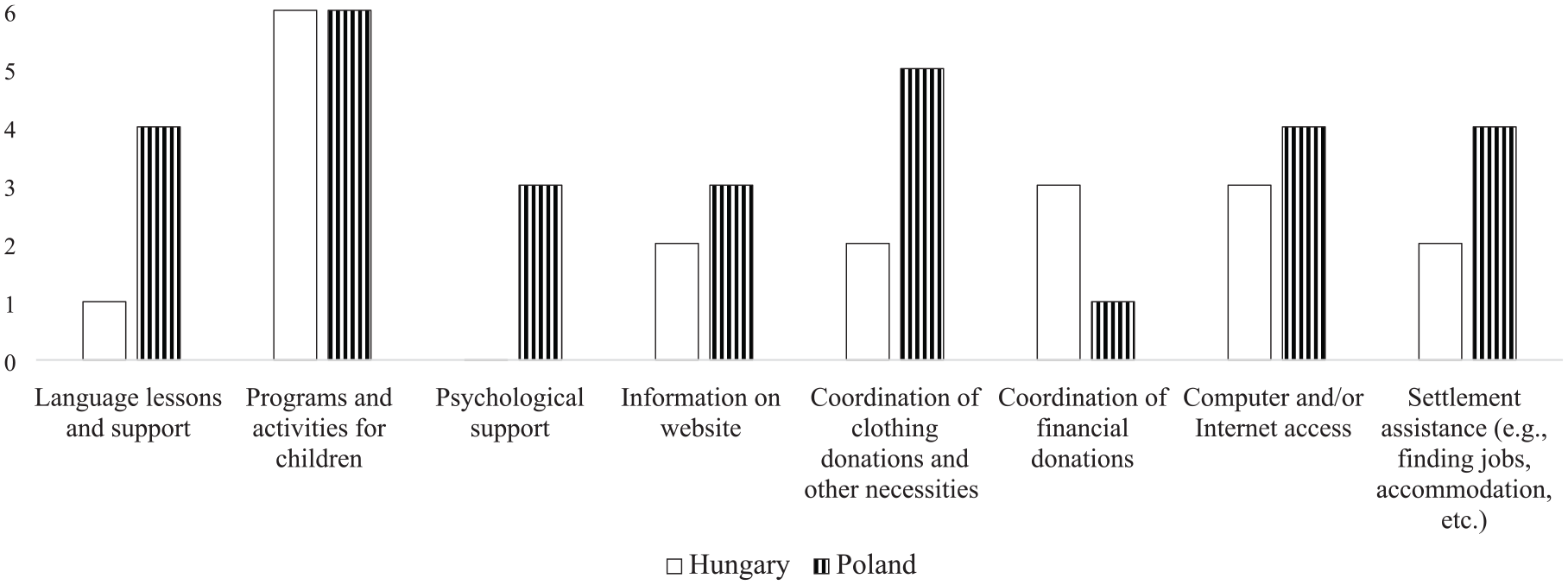
Programmes and services provided by Polish and Hungarian public libraries to Ukrainian refugees.
Collection development: Navigating disrupted distribution channels and linguistic taboos
After the onset of the war, the Ukrainian book market faced significant challenges as normal distribution channels were disrupted before stabilizing somewhat when Ukrainian publishers relocated to Poland. In the initial upheaval, competition intensified, presenting hurdles for libraries to obtain Ukrainian language materials (Olson, 2022). Nevertheless, most Hungarian and Polish interviewees mentioned that their libraries acquired new materials in response to the Ukrainian refugees’ arrival. Despite small pre-existing collections, all libraries displayed materials in Ukrainian. Many appealed for book donations, emphasizing the importance of children’s books for those enrolled in local schools to aid language learning. Interviewees emphasized providing Ukrainian materials to support families’ aspirations of returning to Ukraine when possible.
Polish interviewees quickly acquired children’s books for libraries due to their accessibility and high demand, with materials for adults proving more challenging to obtain. One library reported no acquisitions for adults. Print materials were universally preferred over digital, although some libraries acquired e-books and audiobooks (e.g. via Legimi and Empik). However, two libraries reported no digital acquisitions. Polish interviewees also mentioned acquiring activity books, games and non-traditional materials for libraries. Acquisition methods varied from traditional avenues, such as the library system, to unconventional approaches, including obtaining books from a Ukrainian bookstore through local contacts. Donations, both material and financial, were received through organizations, project collaborations, publishers and local community members. One interviewee explained the dynamic acquisition approach, saying: We started covering books very quickly. . .wherever information appeared that you could get books in Ukrainian, we acquired them. We also acquired them through slightly less formal channels, in the sense that, for example - people who were here, for example, when someone from the family went there, no?
Conversely, half of the Hungarian interviewees acquired little or no Ukrainian materials due to the few Ukrainian-speaking refugees staying in Hungary. Libraries that did acquire materials took diverse approaches, expanding existing collections through purchases and donations. Some received Ukrainian literature donations from the national library, a publisher and a Ukrainian organization. The central library in one city increased Ukrainian language book purchases, and libraries shared materials within systems to meet demand. Similar to Poland, Hungarian libraries focussed primarily on printed materials and children’s materials. Lastly, in Hungary, one library organized online Hungarian language support in response to a request from the Hungarian reading society.
Many Hungarian and Polish libraries had small collections of Russian literature, attracting refugees from Russian-speaking parts of Ukraine. However, the focus of library staff was on expanding Ukrainian collections rather than Russian. Six interviewees observed that refugees, even if they spoke Russian, preferred not to use it anymore. Some Polish interviewees noted a growing avoidance or ‘taboo’ around the use of Russian, unlike Hungarian interviewees. Libraries also offered materials in other languages spoken by Ukrainians, including English collections in Poland. Ukrainian users’ language needs and preferences were described by one of the Polish interviewees concerning the development of their Ukrainian collection: We have most of the books in Ukrainian precisely because we have had Ukrainian books since 2017, and this book collection has grown. . .we also have books in Russian. Much less, maybe up to 40 copies or less there. . .Users from Ukraine after February 24 rather prefer books only in Ukrainian, Polish, or English, God forbid in Russian. But, of course, there are users who read in Russian because they have been speaking this language since childhood, and for them, it is easier to read.
Similarly, a Hungarian interviewee noted: There is a foreign language document service in the [branch name] foreign language library. These are mostly books. There is a Russian-language weekly newspaper, which they were happy to rotate, but it also said that Ukrainians were not so keen to read it, because it contained plenty of Russian state propaganda.
Transferring trust: From one library to the next
The general impression of the Polish interviewees is that the Ukrainian refugees had a high level of trust in the library. However, one interviewee emphasized that they had not directly asked the refugees about this. Nevertheless, trust appears to be manifested differently by children and adults, and the mechanisms creating trust seem to be varied. The impression from a Polish interviewee in a large city is that the refugees transferred their trust in Ukrainian libraries to Polish libraries. Another Polish interviewee observed very high trust levels, and reflected, ‘I think that here we are friends. I mean we are good friends. Because here we have formed some such connections between people, and they appreciate that this is how it is. . .it all comes from the heart. . .Anyway, we never treat anyone, even our residents [better] - everyone is treated equally’. An interviewee at another Polish library suggested that the help and openness that libraries have provided ‘in various such very important matters related to the functioning or at least this contact [the contact is the help provided by the library], that they [the refugees] also have quite a lot of trust’. But the impression is that trust is highest among adults who accompany children to the library and are drawn in: ‘It’s so that if the child wants to be there, the parent is willing then to come too’. At yet another Polish library it was observed that children are less quiet and become more confident with time.
Three Hungarian interviewees noted that their general impression is that the refugees from Ukraine are treated and behaving as local Hungarian users. However, several of the libraries have had few Ukrainian visitors. One interviewee described the refugees visiting the library as grateful and open, happy with the library as a place to come, and that Ukrainian books are available. An interviewee at another library emphasized that the children’s programmes were successful and also so was obtaining trust from the children library users, even though there have been difficulties communicating with them due to language barriers.
Libraries for all: Solidification, intensification and continuity in library roles
The interviewees indicated that they adopted various methods to learn how to work with refugees, including training. Most of the Polish interviewees indicated that their libraries participated in external training organized as part of larger projects like ‘Library for Everyone’ and ‘Library for All’, and, in one case, organized by the regional government. These training sessions covered methods for including minority groups, psychological consultations on working with traumatized people, as well as methods for working with children. Internal training was less common but also occurred.
The interviewees also sought support for communication, cataloguing books using the Cyrillic alphabet and other skills within their teams or external working groups. They drew on each other’s competencies and provided instructions. Some competencies, particularly language skills, were self-taught. They also highlighted gaining competencies through contacts and conversations with refugees from Ukraine. Thus, individuals using library services supported the competencies of those providing these services.
When asked if they had taken on new roles or competencies, many of the interviewees’ responses indicated that the work related to the library’s core social mission. One Polish interviewee, a library director, stated, ‘No, because we have such a mission that the library is a place for everyone who wants to use it, and we treat these people [Ukrainian refugees] as new readers. In this respect, absolutely not, though I certainly learned a lot’, while another Polish interviewee stated, ‘We’ve always had this sense of helping others, and it’s further solidified. . . maybe in this way - it’s solidified that what we’re doing, the way we’re doing it, is right’.. A Hungarian librarian even stated: I don’t think I have learned anything new. We’ve helped where we needed to. But there are people in the [local] area who need help, and we help them where we can. It is common practice here to involve the library in social assistance.
A few of the interviewees indicated that national-level refugee and asylum policies or guidelines did not influence their library’s practice. The following statement from a Hungarian interviewee generally sums up the answers: To be honest, we did not perceive much national policy. The ministry had no vision. The national library tried to collect good practices on how to care for refugees, but that initiative didn’t really succeed either. The libraries were rather trying to come up with something in their own communities, I don’t really remember any central guidance.
One Polish interviewee expressed frustration about the library not receiving any guidance. Another Polish interviewee agreed that national policies or guidelines were lacking but noted that the local government played an important role from the start in organizing local response efforts. However, a Polish interviewee noted the broader influence of the political climate rather than specific policies: A lot depends, I would say, on regional politics, then surely this favor of the authorities allowed us to open up, because if we felt that the authorities were hostile to refugees, then perhaps we would not have opened up so far. We were concerned that our organiser might be displeased, thinking that we were dedicating our time to others and neglecting the local community. And the mission of our business is really to be friendly and provide a full range of services to that local community first and foremost.
Building networks and collaborations: Interactions between library professionals and community organizations
Interviewees also highlighted a lack of support from formal professional networks despite some libraries receiving Ukrainian materials through such channels. One Hungarian interviewee expressed a proactive approach, stating, ‘I’m the kind of person who always asks if there are professional guidelines to follow’. However, many library professionals reported limited time for guideline considerations due to increased workloads and additional duties, particularly in the first month following the outbreak of the war.
Interviewees indicated reliance on informal networks for support, with a Polish interviewee emphasizing communication through Facebook groups, such as ‘The Initiative Group’, where library directors discussed issues related to the arrival of refugees. Some interviewees found support and experience exchange within the local community more beneficial. At the war’s outset, a library director mentioned networking with local friends and later engaging in informal meetings with directors from various local public institutions, emphasizing the value of exchanging experiences and mutual assistance in the face of the war’s impact on all institutions.
The interviewees in both countries reported extensive collaboration with diverse community organizations as well as local governments. Overall, the majority of collaborations were established early on in the response efforts, with some later on as the refugees were becoming more settled in the communities. Polish libraries collaborated with local authorities, public service institutions and various non-governmental organizations, providing support for community initiatives, including the cycling tourism association, ethnic minority organizations, and the Baptist church. Respondents also mentioned partnerships with national NGOs such as the Polish Red Cross and the Polish Migration Forum. Some libraries participated in the ‘Library for All. Different. Equal. Important’ programme organized by Save the Children, managed in Poland by the Information Society Development Foundation.
Hungarian libraries reported similar collaborations. Nearly all respondents mentioned local authorities and various local organizations (e.g. Family Support Service, Goethe Institute), as well as ethnic minorities’ local governments. Respondents mentioned both national NGOs (e.g. Hungarian Red Cross) and local ones (e.g. Back to the Wilderness Foundation; Noha Vilja Association). Other partnerships were also mentioned, including schools, the Baptist church, the local zoo and a swimming pool.
Discussion
The research investigates the roles played by Hungarian and Polish libraries in responding to the arrival of Ukrainian refugees, shedding light on the specific programmes, information services developed, partnerships formed and the implications for library management and library professionals’ competencies. The initial questionnaire findings from 2018 highlighted a limited provision of services for immigrants and refugees in both Poland and Hungary. However, the situation quickly transformed with the onset of the war and the subsequent influx of Ukrainian refugees, prompting a significant shift in library activities. Swift mobilization by libraries in Poland and Hungary, even before the refugees’ arrival, was deeply rooted in the library professionals’ commitment to being inclusive and offering support to individuals in vulnerable and marginalized situations. In the following discussion, each of the research questions will be considered.
What roles did libraries play in the broader response to the arrival of the Ukrainian refugees?
In response to the arrival of Ukrainian refugees, libraries assumed roles that addressed a broad range of user needs, thereby significantly expanding upon previously offered services to immigrants and refugees. Specifically, Hungarian and Polish libraries undertook multiple roles, functioning as shelters and places of refuge, aid and resource collection points, information providers, ICT access points, mental health support centres, job search facilities, education and learning centres, cultural providers, social gathering points and reading and literacy promoters. These findings corroborate previous assertions in the literature review, suggesting that libraries’ efforts concerning immigrants and refugees can generally be categorized into three areas: reading and collection-oriented, non-collection-oriented (libraries serving as community hubs and meeting places) and non-traditional services. The fostering of information resilience is found to be central across all three areas and the services provided.
In the findings, non-traditional services were most apparent in the immediate chaos following the outbreak of the war, followed by non-collection-oriented services or libraries as community hubs, and lastly, services related to the collection and reading appeared to follow, in other words, from the non-traditional services to the traditional. Fostering of information resilience appeared present across all phases, relating to the needs of users in each of the phases. This progression will be discussed further in relation to the specific types of programmes and information services that libraries offer.
Libraries demonstrated their capacity for prompt responses, often acting immediately, and in some instances, even before Ukrainians escaping the war arrived in their respective countries. Moreover, libraries exhibited a high level of responsiveness and adaptability in tailoring their services to address the needs of both refugees and their local communities—traits not typically associated with public service provision. This adaptation often occurred through direct conversations with arriving refugees and other community members, surpassing a one-way service provision model. The libraries in both countries actively monitored community needs, functioning as dynamic and responsive community hubs, thereby serving as crucial social infrastructure, albeit to varying degrees.
Importantly, this research indicates that even in times of extreme urgency and chaos, trust in libraries and their capacity to foster trust remains steadfast, even when individuals are coming directly from distressing and highly traumatizing situations. As asserted by one of the Polish librarians, this may be a result of refugees transferring their trust from Ukrainian libraries to Polish libraries.
What specific types of programmes and information services did they develop, and what kinds of partnerships did libraries form, if any?
The findings suggest that the types of services and activities provided by libraries followed a general progression. Initially, they addressed primary or basic needs related to food, shelter/refuge and mental health, characterized by non-traditional services. These services were generally confined to the first phase of the libraries’ response and/or are significantly reduced in subsequent phases, such as mental health support.
In the second phase, settlement-related needs were addressed, including assistance with finding jobs, enrolling in schools and obtaining identification. In this phase, differences in user needs between Poland and Hungary emerged, with refugees from Ukraine typically transiting through Hungary, having primary needs without progressing to settlement needs. In contrast, Poland experienced a higher number of people staying and settling, at least temporarily. Moreover, people of Hungarian background coming from Ukraine quickly assimilated into the community, requiring less support from libraries compared to those from Ukraine. This phase was marked by non-collection-oriented services, focussing on the library as a meeting place and community hub, roles that appeared to evolve into the next phase.
In the third and final phase, literacy, integration and support for culture and language became more central. This last phase primarily aligns with reading and collection-oriented services. Although the development of Ukrainian collections and book displays occurred earlier, overlapping with the other phases, the services and primary reading initiatives generally were given more attention and developed after meeting the refugees’ basic and settlement needs.
Overall, these findings highlight the extensive array of services developed by the libraries in Hungary and Poland and emphasize how the nature of migration and the backgrounds of the migrants play a significant role in shaping their library-related needs. As information and the development of information resiliency is an element in all the phases, this research provides insights into the diverse ways libraries assist refugees in navigating new and complex informational landscapes (Kosciejew, 2019) and support them in becoming information resilient (Lloyd, 2015).
Regarding partnerships, libraries in both Poland and Hungary engaged in a broad spectrum of collaborations, falling into distinct categories, with the majority of the collaborations established in the first and second phases of the libraries’ response efforts. Firstly, they actively collaborated with local authorities, especially in the early stages of the response efforts. Additionally, partnerships with various non-governmental organizations (NGOs) at the national and local levels played a crucial role in providing aid and necessary services to arriving refugees. These collaborations also served as sources of information regarding the refugees’ needs, which the libraries could use to develop their services further. The libraries also joined forces with a diverse array of organizations and local initiatives to provide aid and initial services. This includes groups related to cycling tourism and ethnic minorities, as well as collaboration with the Baptist church. Participation in specific programmes, exemplified by involvement in Save the Children’s ‘Library for All. Different. Equal. Important’-initiative, provided training and professional support for library staff, aligning with the core ethos of libraries being for everyone. Furthermore, libraries in both countries fostered relationships with educational institutions, engaging in collaborations with schools. These collaborations aided libraries in supporting families enrolling their children and served as sources of information for the libraries, proving, once again, useful for developing services and programming. Lastly, beyond educational partnerships, recreational collaborations featured prominently, with libraries working alongside local entities like zoos and swimming pools.
What were the implications for library management and staff and their professional responsibilities and/or competencies?
Notably, in the absence of policies and guidelines, librarians’ response to the needs of arriving Ukrainian refugees reflected their professional commitment to the universal service of libraries being for all. Some Hungarian interviewees perceived this as consistent with their usual work, aligned with the core ethos of libraries serving their communities. Conversely, certain Polish interviewees felt an intensified or revitalized role. Despite these nuanced perspectives, the shared emphasis on creating inclusive library services suggests the enduring strength of the core professional ethos of libraries being for everyone. These findings reinforce the earlier-mentioned research, affirming that the unwavering commitment of public libraries to inclusivity motivates librarians to consistently support individuals facing vulnerability and marginalization (Muddiman et al., 2000; Rasmussen and Jochumsen, 2003).
While librarianship, like other professions, is service-based, there was a significant demand for library staff’s so-called soft skills and the development of those skills. This encompassed their ability to communicate with new user groups and engage them in dialogue—sometimes even requiring them to learn a new language. Additionally, they needed to network within local and professional communities, collaborate and coordinate with other organizations and local governments, develop and lead new initiatives and foster trust. All of these aspects relate to the more social dimensions of library services, aligning with what has been theorized as the social turn (Johnston et al., 2022; Söderholm and Nolin, 2015).
While librarians demonstrated significant grassroots initiative, there was also considerable overlap between professional and personal motivations for their response, which may, to some extent, be situation-specific. As highlighted by one of the Polish librarians, the libraries were operating within a supportive political context that enabled them to uphold their professional ethos and moral compulsion, in stark contrast to the situation in the 2015 humanitarian crisis. Future waves of immigrants and refugees will determine whether this role for librarians is solidified and if the new programmes and services developed, specifically which ones, become a permanent part of librarians’ professional toolkit. Additionally, further quantitative research will be needed to determine if any changes have occurred in relation to the quantitative findings of this study, including the percentage of librarians responsible for services to refugees and immigrants and the related role of an integration consultant.
Conclusion
The study illuminates the roles assumed by Hungarian and Polish libraries in responding to the influx of Ukrainian refugees, highlighting their adaptability, resilience and commitment to inclusive service provision. Libraries served as multifaceted hubs, offering shelter, aid, information and support across a range of needs, evolving from immediate assistance to language and cultural integration services. The development of partnerships with local authorities, NGOs, educational institutions and community organizations attests to the collaborative capacity of libraries. Library professionals demonstrated a high degree of responsiveness, communication skills and the ability to foster trust, evidencing their evolving professional competencies in the face of a humanitarian crisis. The study underscores the critical role of libraries in supporting vulnerable populations and communities, a role rooted in the ethos of libraries as inclusive spaces for all. Moving forward, continued exploration of implications for library management and professional competencies, experiences of immigrant and refugee user groups, as well as further research on the long-term impact of library programmes, will be vital to inform future library practices and policies in times of crisis.
Supplemental Material
sj-docx-1-lis-10.1177_09610006241259490 – Supplemental material for Public libraries’ role in supporting Ukrainian refugees: A focus on Hungary and Poland
Supplemental material, sj-docx-1-lis-10.1177_09610006241259490 for Public libraries’ role in supporting Ukrainian refugees: A focus on Hungary and Poland by Jamie Johnston, Anna Mierzecka, Máté Tóth, Magdalena Paul, Małgorzata Kisilowska-Szurmińska, Mahmood Khosrowjerdi, Andreas Vårheim, Kerstin Rydbeck, Henrik Jochumsen, Casper Hvenegaard Rasmussen, Ágústa Pálsdóttir, Anna Olson, Roswitha Skare and Mia Høj Mathiasson Mathiasson in Journal of Librarianship and Information Science
Footnotes
Acknowledgements
In heartfelt appreciation, this article is dedicated to Charlotte Brandt-Møller, who played a central role in advancing services for refugees and immigrants in Denmark. Her extensive experience and profound insights into library-related matters have enriched our work, especially in this study. Her absence will be deeply felt. The PubLIB research group extends their deepest condolences to her family.
We also thank Ragnar Audunson for his support, feedback during the writing process and leadership of the ALMPUB research, which served as the starting point for this study.
Declaration of conflicting interests
The author(s) declared no potential conflicts of interest with respect to the research, authorship and/or publication of this article.
Funding
The author(s) disclosed receipt of the following financial support for the research, authorship, and/or publication of this article: The research was funded in part by the Norwegian Research Council’s KULMEDIA Programme, project number: 259052.
ORCID iDs

Supplemental material
Supplemental material for this article is available online.
Author biographies
References
Supplementary Material
Please find the following supplemental material available below.
For Open Access articles published under a Creative Commons License, all supplemental material carries the same license as the article it is associated with.
For non-Open Access articles published, all supplemental material carries a non-exclusive license, and permission requests for re-use of supplemental material or any part of supplemental material shall be sent directly to the copyright owner as specified in the copyright notice associated with the article.

