




Abstract
This article describes, discusses, and evaluates an educational program aimed at building resilience in public libraries. The program focuses on personal and organizational resilience and builds upon four themes: trust, stress and uncertainty, group identity, and character strenghts. Eighty-seven Swedish public library professionals participated in it. A mixed-method approach was used to study how the program supported employees in discussing and reflecting on resilience, as well as how they experienced what the program had given them in terms of knowledge and insights. Two main results are addressed; (i) the value of an educational program lies both in its power to make employees jointly discuss and reflect on their own roles and situations and in library-management using this information to change the organization, and (ii) staff gaining new insight and knowledge from the program experienced improvements in a number of outcomes related to the content of the program. Overall, this study implies that locally designed educational programs facilitate both personal and organizational resilience at public libraries.
Introduction
Organizations are finding themselves in complex environments, with constant societal and technological conditions putting pressure on and affecting employees’ working situations. This also applies to library professionals, who are constantly needing to adapt to developments in society, for example, technological changes (Huvila et al., 2013) or changing working roles (Shupe and Pung, 2011); not least during the COVID-19 pandemic, when an extensive number of librarians, like many other employees, were recommended, or ordered, to either partly or fully work from home. This novel situation brought new challenges for many of them (Salvesen and Berg, 2021). Hence, because actors such as librarians operating in highly-complex environments, dealing with a changing environment is a relevant part of library management: They are in need of developing strategies for understanding, reflecting on and coping with the negative effects of uncertainty, worry and anger originating from such a work environment (Düren, 2013). The ability to handle the negative effects of a complex environment is called resilience (Barasa et al., 2018)
Resilience is not a new concept in organizational studies. Studies investigating personal resilience suggest that being resilient entails lower negative affective symptoms, such as anxiety and depression, as well as fewer physical symptoms (Smith et al., 2008). Additionally, personal resilience at work is related to greater commitment, a better relationship with the most immediate leader, a better contribution to the work team, a higher level of support from team members, and less burnout (Meng et al., 2019). It has also been shown that team resilience relates to better role performance within the team and that the relationship between collective positive emotions in the workplace and team role performance is mediated by team resilience (Meneghel et al., 2016). Furthermore, resilience at the organizational level has been linked to an adaptive system of learning from negative experiences, such as the library organization viewing errors and mistakes as an opportunity for improving and as having a positive reporting culture. Additionally, resilience at the organizational level has also been linked to a just climate, with blaming and punishment being used wisely when negative things happen (Reason, 1998). These studies suggest that, when dealing with change, the focus should be on building both personal and organizational resilience in public libraries. This is also in line with guidelines given in burnout research focusing on the assumption that preventive work should be leader-governed and focus on solutions not only intended for the individual but also for the organization (Maslach et al., 2001). For instance, in research on disaster resilience interventions, it has been found that educational programs are more successful when the focus is on building local knowledge and expanding existing capacity, instead of focusing on risk assessment and how to react to negative situations (Manyena, 2006).
Studies addressing librarians’ resilience mainly focus on the library professional’s role in building resilience within the local community, and less on how to build resilience to uncertainty and stress in the work environment. For example, the aim of the Special Task Force on sustainability, in the American Library Association, is to encourage libraries to play a role in sustainability, resilience and the regeneration of society (Tanner et al., 2019). Similarly, Aldrich (2018) discusses the resilience of libraries on the basis of factors such as educational involvement, equality, service for the public good, and social responsibility. In this context, it is also frequently mentioned how library staff can create social capital in their communities (see, e.g. Miller, 2014). With regard to building a more resilient workplace, studies of librarians usually focus on factors important to resilience, for example, involvement at work (Martin, 2020) or burnout (Linden et al., 2018; Smith et al., 2020). This current study has a different focus and covers four psychological themes that are essential for resilience, according to previous research; that is, (a) trust, (b) stress and uncertainty, (c) group identity, and (d) character strengths.
Consequently, it can be assumed that public libraries will benefit from developing organizational support, for example, educational programs that enable employees to build up their resilience, by using the knowledge and capacity of staff, something which also contributes toward improving existing workplace resilience. However, to our knowledge, there is only limited research on how to build the resilience of public libraries and on how educational programs can support employees in building resilience. Hence, the aim of this article is to gain a preliminary understanding of what an educational program targeted at enabling employees and organizations to build resilience will result in. We do this by describing, discussing, and evaluating a program for building resilience. More concretely, two research questions are addressed: (1) How can public library employees be supported in discussing and reflecting on resilience through the program? (2) To what extent do the personal insights and knowledge emerging from the program relate to the experiencing of improvements on a number of outcomes related to the four themes? In doing so, this study contributes to the body of literature on librarians’ resilience through knowledge of whether or not locally-designed programs are an effective way to enable employees and organizations to build resilience.
On the one hand, the development of the program is based on current research on organizational and personal resilience, while on the other, being based on library professionals’ experiences, local needs, and situation of their own working place. By adopting a parallel mixed-method design, we make it possible to obtain data that enable us to answer the question of how the program supports discussions and reflections between employees. This study design also gives us the opportunity to statistically measure whether or not the program is perceived as being supportive. The use of a mixed-method approach contributes toward enhancing the integrity of the findings (Bryman, 2006).
The study is a collaboration between Lund University and the Public Library of the City of Helsingborg, Sweden, which serves around 150,000 citizens. At the time of the program, the article’s second author was director of the Public Library of Helsingborg. The second author’s contribution to the study is knowledge of the organization and the program’s development and implementation. The four psychological themes mentioned above have formed the basis of the developed program, and its implementation and evaluation at this public library. The main aim of the public library, constituting the empirical data in this study, is to create a more resilient work organization, a better working environment, and a higher level of staff wellbeing. The article’s practical contribution, in a general sense, lies in generating new scientific knowledge for the library community.
The article is structured as follows: In the next section, the theoretical framework of the study is presented. Thereafter, we provide an overall description of the program. Since this is a mixed-method study, the qualitative and quantitative studies are presented in parallel in terms of method and findings. This is followed by an overall discussion, a conclusion, and, finally, a discussion of the limitations of the study.
Building resilience
Trust
An important factor in building resilience is trust. Most definitions used in the scientific literature define trust as a form of risk-taking or a willingness to take risks. We use the following definition, based on Mayer et al. (1995): “The willingness of a party to be vulnerable to the actions of another party based on the expectation that the other will perform a particular action important to the trustor, irrespective of the ability to monitor or control that other party” (p. 712). Scientific analyses of crisis incidents reveal that trust is related to a better level of preparedness, better crisis communication, and more effective leadership when something “surprising” happens at a work organization (Kim, 2021; Longstaff and Yang, 2008). Over and above that, a high level of trust among employees has positive benefits for the work organization, for example, better perceived teamwork performance (Costa, 2003), better perceived organizational support, higher organizational commitment, lower quit rate (Ferres et al., 2004), and a greater willingness to cooperate and act in ways that extend normal working roles (Kramer, 1999). In a library resilience context, it has been shown that trust in immediate supervisors is related to a greater level of work commitment among employees (McAuliffe et al., 2019). Further, it has been suggested that transformative library managers working in a trust-based organizational culture can better handle major changes to libraries than more authoritarian leaders (Düren, 2013). Hence, these results imply that working with trust is important when it comes to building the resilience of the library organization.
When trust is investigated scientifically, and in a leadership context, the concept is often divided into the three dimensions; that is, (a) ability, (b) benevolence, and (c) integrity. Ability focuses on the employee’s perception of the leader’s skills and knowledge, while benevolence focuses on the leader’s interest in the employee’s wellbeing and integrity, that the leader has a sense of fair play, keeps his/her word and is fair (Mayer and Davis, 1999). Lifting the perspective to the organizational level, workplaces with a higher level of trust are generally characterized by open communication (i.e. leaders always provide information to all stakeholder groups and are open as regards feedback), with leaders being involved in important issues and their intentions generally being trusted (i.e. having integrity/being fair and showing a caring attitude toward employees; Cox et al., 2006).
Stress and uncertainty
Uncertainty can be described as the feeling that arises when a situation is experienced as unclear, but decisions still have to be made. For a librarian, this feeling can cause hesitation that blocks or delays action, also being connected with a perception of greater risk (Lipshitz and Strauss, 1997). Two examples from the Corona pandemic include the uncertainty connected with meeting visitors (i.e. the risk of contagion) and handling changing guidelines on a daily basis (i.e. not knowing which rules to follow as there were quick and frequent changes on the national and regional levels). The feeling of uncertainty is connected with a range of negative outcomes, for example, active attempts to cope with the situation (Lipshitz and Strauss, 1997) and more stress (Michie, 2002). Generally, situations that elicit a feeling of uncertainty occur when information is missing, ambiguous or too complex (Klein, 1999). However, it is important to state that, due to the complex work environment facing public library professionals today, it is not possible to remove uncertainty completely from that workplace. Therefore, it has been suggested that interventions should be aimed at training employees to be experts at handling uncertainty, and not to be experts at risk-avoidance (Stalker, 2003). There are many formal methods that can be used at a public library to decrease the level of uncertainty experienced by the staff. Examples include checklists, guidance documents, and different control systems for handling information. For decision-makers, however, it is important to remember that handling uncertainty should not be based solely on “cook-book” thinking, that is, following a checklist in all types of situations (see Taylor and White, 2005). The reason for this is that such an approach increases the risk of important information being overlooked if a situation is diffuse or complex. From a resilience perspective, it would be more optimal for the organization to strive toward being proactive rather than reactive when it comes to handling uncertainty. Research shows that this can be achieved, for example, by strengthening coworkers’ personal skills as regards handling uncertainty, something that relates both to effective coping strategies (Lipshitz and Strauss, 1997) and their ability for good and critical judgment (Macdonald and Macdonald, 2010). Over and above that, suggestions from library research indicate that both communication and transformational leadership are important during this process (Düren, 2013).
Group identity
In a number of studies, group identity has been related to organizational resilience (Steffens and Haslam, 2017). The concept has its origin in social identity theory (SIT; Tajfel, 1982), being based on the assumption that the experience of the self can be divided into a personal part and a part that concerns groups. In the context of a library, the personal part is all staff members view of themselves as unique individuals. The group part, or social identity, is the view that each staff member has of him-/herself as part of a group. At a library, coworkers usually belong to several groups, for example, sections (i.e. children’s books vs IT staff), professions (i.e. librarians, leaders, or IT experts), gender and age, and thus they have many social or group identities. Social identity is what makes library staff experience being a “we” or an “us” within the organization. Research shows that a high level of identification with a group, at a workplace, makes the organization more resilient; some examples here being better health and less burnout (Steffens et al., 2017), and the fact that co-workers do more than is expected of them in their working roles (so called extra-role behavior; Riketta and Dick, 2005). From a leadership perspective, it should be noted that social identity plays an important role when it comes to integrating the goals of the workgroups with the goals of the organization (Korte, 2007). That said, work on developing a resilient social identity should focus on finding an overall identity for the whole library organization.
Many methods are available when attempting to reach this goal. One such method is working toward keeping the distinctiveness of the workgroup intact, while simultaneously showing that identity is shared as regards some other factors (Hogg, 2016). Another method is focusing on building an identity based on what workgroups share. A third method is focusing on strategies and interventions that give workgroups autonomy, or the opportunity to make their own decisions (e.g. as regards furnishing around workstations). Yet another method is the ASPIRE model (Actualizing Social and Personal Identity Resources; Peters et al., 2013). In its basic form, this includes four steps aimed at building a common identity within the organization. During the first step, coworkers are instructed to describe their group/groups, and then an identity-map is created. During the second step, the group members identify what characterizes their workgroups, which goals are important to these groups, and which barriers exist to achieving these goals. During the third step, all workgroups jointly identify common issues and how distinct group goals can be integrated within these issues. Over and above this, they also try to identify all the obstacles within the organization that can stop compromises regarding the goals. Finally, during the last step, all the workgroups agree upon a number of collective goals that are important to the different parts of the workplace, as well as a common strategy for achieving these goals.
Character strengths at work
Character strengths are human dispositions to act, desire and feel in a way that leads to personal excellence or flourishing. Several character strengths have been identified and these can be distinguished from other individual difference factors in a number of aspects. For example, they are recognized across cultures, they are related to individual fulfilment and satisfaction, they are morally valued in themselves, and they are trait-like and missing from some individuals. They are also conscious and non-automatic in the sense that people deliberately choose to be virtuous (Park et al., 2004). Character strengths are important for resilience in the workplace. For example, it has been shown that character strengths, as measured by emotional strength and restraint, directly predict resilience even when factors such as optimism, support and self-efficacy are controlled for during analysis (Martínez-Martí and Ruch, 2017). It has also been shown that character strengths are related to factors known to be correlated to resilience, for example, improved stress management (Harzer and Ruch, 2015), greater job-satisfaction (Peterson et al., 2009), and greater pleasure and involvement at work (Harzer and Ruch, 2013). There are many ways to assess character strengths, for example, the VIA Survey of Character Strengths. This is a survey developed by Peterson and Seligman (2004) and focusing on 24 character strengths, categorized under the six virtues of; (a) Wisdom and Knowledge, (b) Courage, (c) Humanity, (d) Justice, (e) Temperance, and (f) Transcendence. Studies investigating the effect of character strength interventions also suggest that deliberately working with strengths leads to greater positive affect and life-satisfaction and also to less depression (Schutte and Malouff, 2019).
Method
Participants and themes of the program
The program started in January 2021 and lasted until December 2022. A working group of five was organized; that is, one from Lund University (the first author), one senior manager (the second author), one departmental manager, an HR representative from the library, and a union representative. All the employees (N = 87) of the public library participated in the program. Sixty-six of the participants were women and 21 were men. The Helsingborg Library consists of a main library, nine branch libraries, a book bus, and a digital library.
The program contains four main themes inspired by the scientific resilience context, that is, having a direct influence on resilience and the status of the organization at the given point in time (see the section “Building resilience” above). The program was based on good knowledge of the organization and its needs and situation (thus making the reader aware that other themes could also be used in courses focusing on building resilience). Based on the theoretical background, the program was developed on the basis of the following themes; (a) building trust in the work organization; (b) handling uncertainty and stress in the work environment; (c) building a resilient group-identity, and (d) fostering character strengths at work.
Mixed method
The rationale behind using a mixed methods design in this study is complementarity (Saunders et al., 2019). To understand what such a program can generate, and how employees can experience it, we argue that the integration of both a qualitative and quantitative method is beneficial (Bell et al., 2022). Thus, to capture what happens during the program, a qualitative study was performed (Research Question 1). In order to capture employee insights and knowledge from the program, and how that was related to how improvement was experienced in a number of outcomes, a quantitative study was performed (Research Question 2).
The basic package and procedure of the program
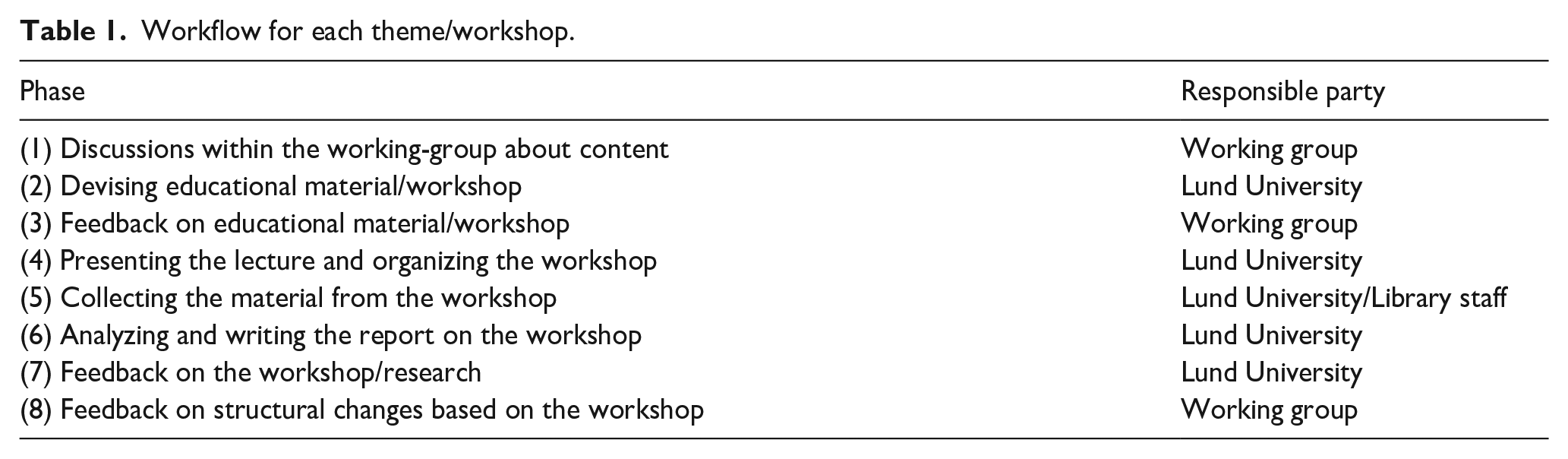
The basic package of the program involved four occasions when employees (staff and managers) worked actively with the four themes described above. Each occasion involved a lecture focusing on both personal and organizational aspects, as well as a workshop where the employees discussed the theme on the basis of their own roles at the library. The material from the workshops was collected, analyzed, and compiled into small reports by Lund University and fed back to the working group at the library. After viewing the content, the working group gave verbal feedback to the staff on ideas that they wanted to follow up on. The workflow for each occasion is presented in Table 1.
Workflow for each theme/workshop.
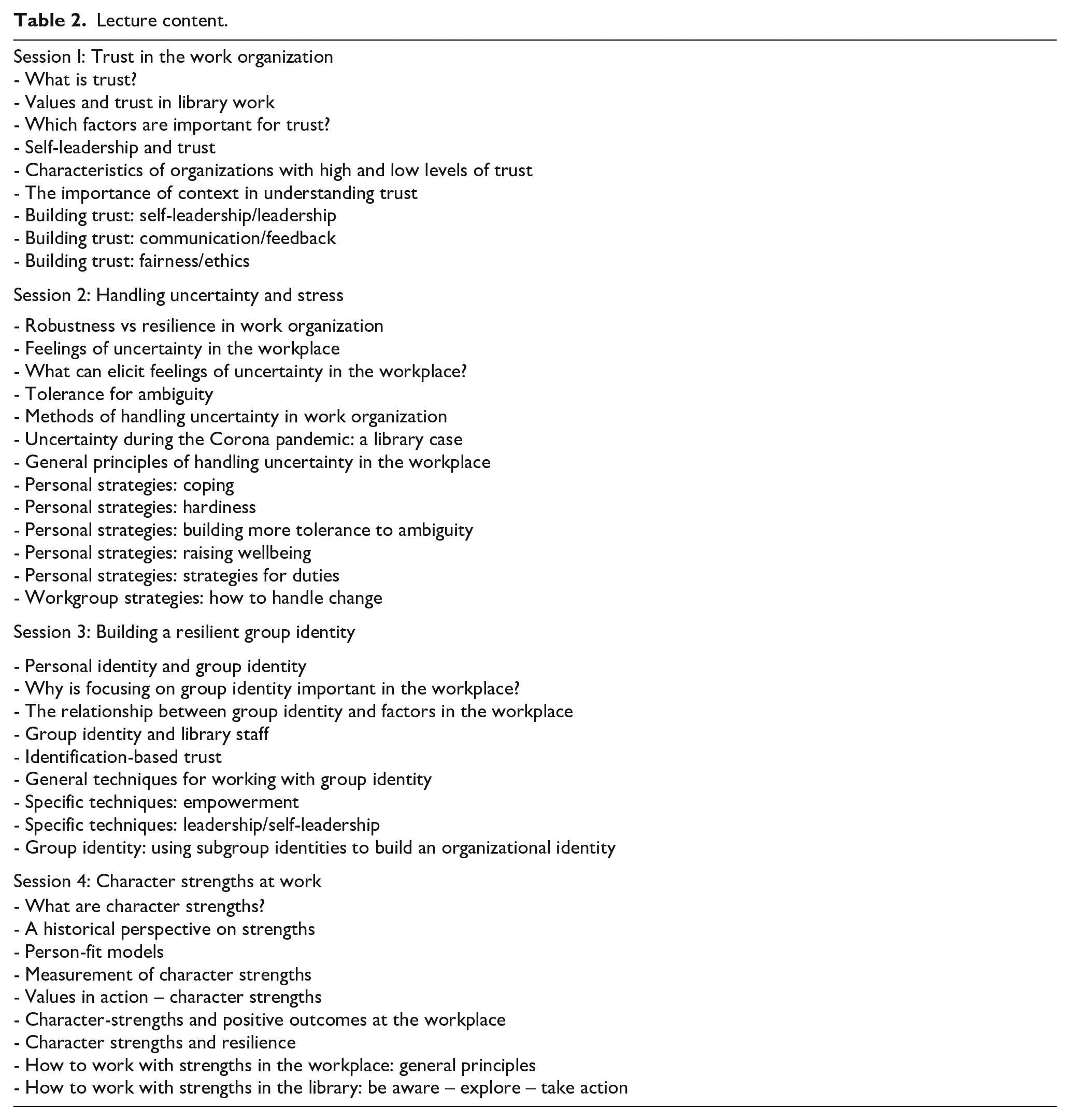
Each session began with a 1.5 hour lecture given by the first author, see Table 2. All the lectures followed the same structure. The first part framed the topic for the session. Here, it was important to show the participants that working with the concept had positive implications, both for their own wellbeing and for the library organization.
Lecture content.
The second part of the lecture focused on how to work with topics practically (see Table 3). Here, both personal and organizational strategies were usually presented. This was followed by a 1-hour workshop, including a “working-break” for coffee/tea. Due to the Corona pandemic, session one was conducted online using Teams. Sessions 2 and 3 were conducted in the main library’s assembly hall, while session 4 was conducted at a conference hotel in the center of Helsingborg.
Workshop task.
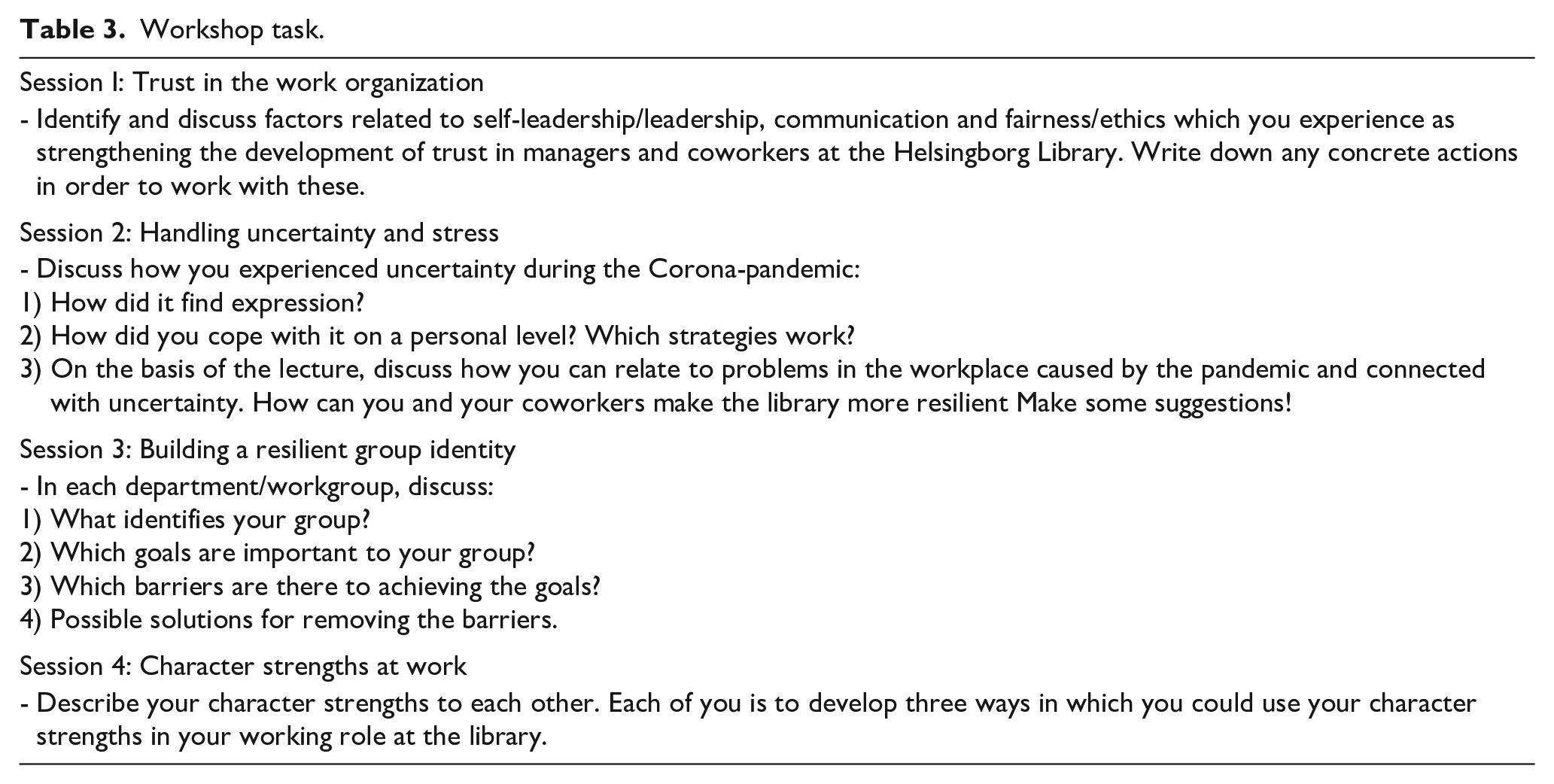
The membership of each employee group was planned by the working group and based on theme and role at the library. The mean number of groups for the sessions was 11 and there was a minimum of four employees in each group. Managerial staff were also represented in these groups. The focus of the first workshop was trust on both the personal and organizational levels and, since organizational trust had been negatively affected by the pandemic, we focused on letting the employees themselves identify and recommend to senior management which factors to work with in order to increase how trust in managers and employees was experienced within the library organization. During the second workshop, based on the experience that the pandemic was connected with a feeling of greater uncertainty, the employees were instructed to discuss how uncertainty was expressed in their work as well as how they coped with it on a personal level, in particular focusing on strategies that worked. They were also instructed to discuss and make recommendations to management on how to make the library more resilient to uncertainty. The third workshop was based on the ASPIRE model (as described earlier). In our workshop on building a resilient group identity for the whole library organization, we used a reduced variant of steps 1 to 3. We instructed each section/workgroup to discuss what identifies that group, to identify which goals were important to each group, and which barriers there are to achieving these goals. Finally, they were to come up with possible solutions for removing these barriers. During the workshop on character strengths, we applied a method called the “aware, explore and take action” model. This method is based on the idea that employees first identify their strengths through the VIA inventory (aware), then structuring how these can be applied to their working roles at the library (explore). Finally, based on the second step, the strengths are used by staff in their day-to-day work (take action: Polly and Britton, 2015).
The workshops concluded by allotting 30 minutes to feedback from each group on the task assigned to it. One representative of each group was instructed to write down that group’s responses to each question without revealing the names of the group members and to then email them to the first author (Session 1), or to a representative of the library (Sessions 2–3) who in turn transmitted the responses to the first author by email. The responses were then analyzed by the first author by means of qualitative thematic analysis (Braun and Clarke, 2006). During this process, the first author viewed and categorized the raw data independently. This was done by identifying the common themes under each response set. For example, during workshop I, the theme “improved communication” consisted of suggestions such as “learn how to get positive feedback,” “make a distinction between person and thing” and “practical training in communication.” During the next step, the other members of the working group critically viewed the themes based on their experience of library organizations. In dialog with the first author, adjustments were made to the themes. Since Workshop 4 focused solely on each member of staff, and how they could work individually with their personal strengths over the following months, no data was collected during this session. The group discussion and the personal implementation of character strengths at work were evaluated quantitatively in connection with the final evaluation of the program (see below). After each workshop, a report was written and sent to the management group, which then made decisions regarding which measures would be implemented on the organizational level and reported this back to the staff.
Results
Research Question I
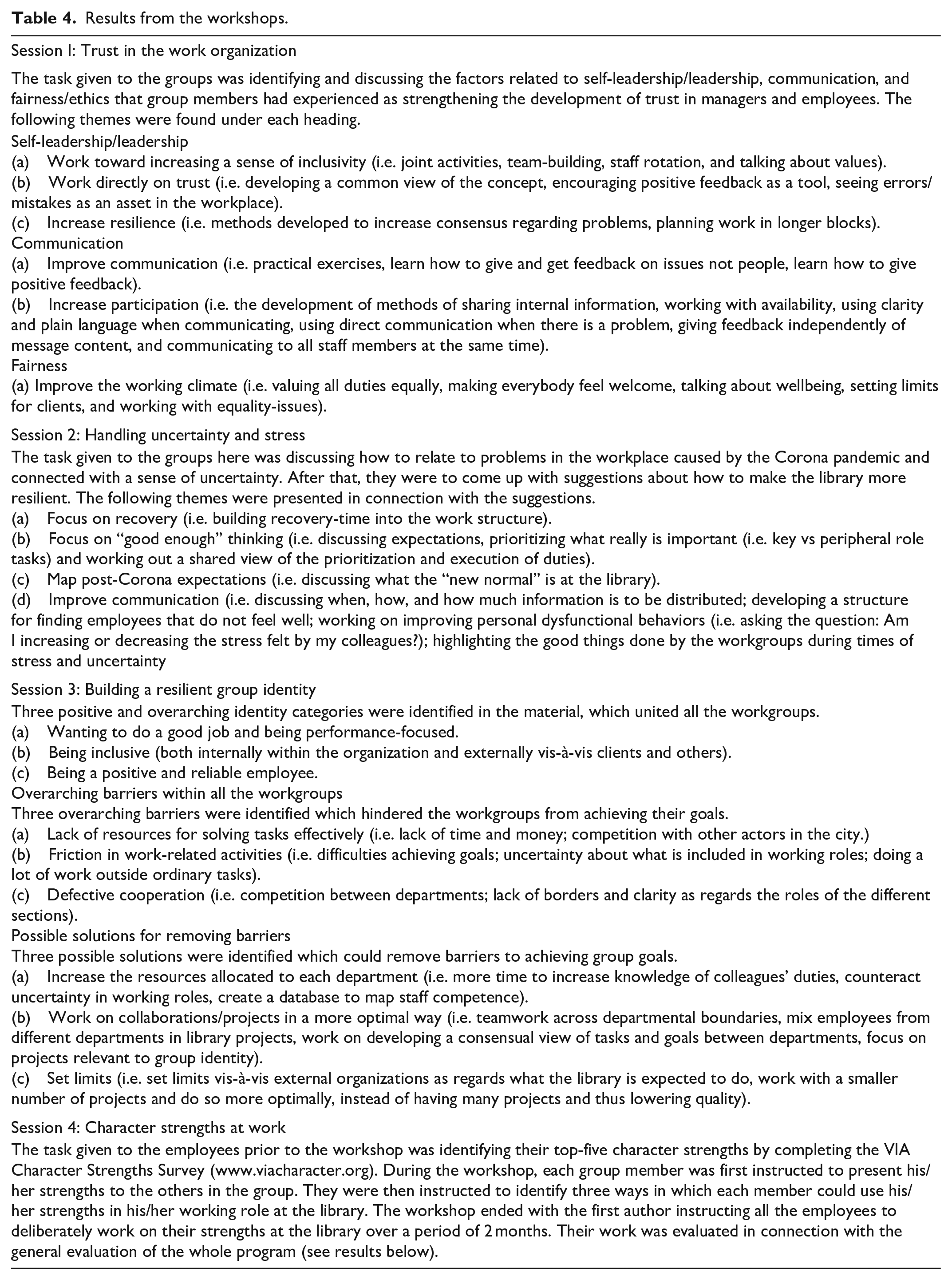
The first research question concerned how public library employees could be supported in discussing and reflecting on resilience through the program. The results from the workshops (see Table 4) provide a substantial basis for understanding the importance of providing a conceptual framework in order to give the participants the prerequisites for discussing and reflecting on their own work practice. Due to the extent of the material collected, we are limiting our description to the general conclusions reported back to library staff.
Results from the workshops.
The program was also continuously raised in other contexts like staff meetings, individual staff dialogs and in collaboration with the union. The involvement of the employees in improving organizational resilience by means of the workshops led to several management-governed changes, for example, improvements in both internal communication and the feedback culture. Hence, each employee’s personal expertise in his/her working role was made use of.
During the program, there were ongoing changes to management based on the feedback from the workshop. In order to build trust, it was decided that managers should improve new employee introductions using digital media. The routines for transfers regarding work-location inside the library were also reviewed. Voluntary feedback training was given to all staff. Further, a workgroup was formed with the aim of improving internal digital communication within the organization. To work with equality issues, all staff were given the opportunity to sign up for, or register their interest in, working on temporary assignments concerning the entire organization. Furthermore, a number of common activities, both social and formal, were also carried out with the aim of building group cohesion. Also, the employees became increasingly aware that they are capable of adapting to new circumstances, reporting a greater focus on the importance of highlighting the positives about their colleagues and looking at the important work that library staff carry out for democracy.
To handle stress and uncertainty, a follow-up was made of the lessons from the pandemic, focusing especially on the issue of working remotely versus going in to work, and a common approach for all the employees was decided upon. Second, to prevent chronic stress, an effort was made to highlight the need for recovery at work, and the fact that this is, and should be, a normal part of working life. Third, to manage workload, a discussion was initiated which highlighted the need for developing a “good-enough” mindset on both the individual and organizational levels. From that discussion, one important conclusion was that all library employees have an important part to play in cultivating a culture whereby employees have reasonable expectations regarding each other in order to achieve/maintain a sustainable working life. To decrease the friction with group goals, a lecture was given by a representative of the municipality on political governance and on how library professionals could influence politicians through their day-to-day work. Further, information was also given on how economic resources were distributed within the organization and on the different types of resources, that is, competence, recovery, work tools and collegial support. Another effort was a discussion on the recruitment process aimed at increasing understanding of how this is done and why it usually takes a long time. Finally, in a sample of 48 library professionals, we found that the participants who had worked more actively with their character strengths reported that their work performance had improved over the same period (r = 0.63; p < 0.001), and that they had a higher level of wellbeing at work (r = 0.58; p < 0.01; N = 42).
Research question II
The second research question concerned whether the new personal insights and knowledge emerging from the program were related to the experiencing of improvements to a number of outcomes related to the themes. To investigate this issue, we evaluated the program in December 2022, using a brief, anonymous on-line questionnaire sent to all participants. The instructions given were that the evaluation was the final part of the program and would only be used in subsequent scientific reports and presentations. It also stated that participation was voluntary and that none of the information collected would be used to identify employees. The questionnaire was made using the Qualtrics software and contained 17 items (including items related to evaluating Workshop 4). No data on gender and age was collected. Forty-two of the employees responded to the whole survey, 48% of the total workforce. The evaluation focused on three outcomes: The first of these was the participants’ perceptions of their learning during the program. Here, we developed three items: The project has given me: a) New and better insights into myself and my relationship with my work, b) New knowledge of how to think or act to increase my personal resilience at work, and c) New knowledge of how the library, as an organization, can become a more resilient workplace.
The second outcome was a statistical group comparison between those reporting they had benefited from the program and those who had not or did not report any changes in their learning. We based the groups on the analysis of the three items on Outcome 1. Hence, we conducted three group analyses using t-tests for independent means. However, to statistically safe-guard for the low number of participants in each group, we also made non-parametrical group-comparisons using Mann-Whitney U tests. The results were the same using the two test-techniques, implying that there were no problems with sample size. The comparisons were made using the following theme-based items: The project has given me: (a) A higher level of wellbeing at work, (b) A higher level of trust in managers and coworkers, (c) An increased ability to handle stress and uncertainty at work, (d) A greater feeling of “inclusivity” in the workplace, and (e) An increased ability to be more effective in my working role. We also investigated group differences using two measures of resilience. The first measure was one item from The Brief Resilience Scale (Smith et al., 2008; α = 0.91); I tend to bounce back quickly after hard times (at work), (b) The second was a six-item-scale measuring work commitment (Taylor et al., 2019; α = 0.84). Examples of items include; (a) I feel I’m bursting with energy. (b) I feel strong and vigorous, and (c). I’m proud of the work that I do. For all measures, we used a five-point response scale ranging from “1 Do not agree at all” to “5 Agree totally.”
Our analysis revealed that a relatively large percentage of the participants reported having gained new insights or knowledge from the program. Forty-seven % of the sample either partly or wholly agreed that they had gained new and improved insights into both themselves and their relationship with their work during the program. Furthermore, 46% either partly or wholly agreed they had gained new knowledge of how to think or act in order to increase their personal resilience at work. Finally, 38% either partly or wholly agreed that they had gained new knowledge of how the library, as an organization, can become a more resilient workplace. Our analyses of the t-tests revealed many relevant differences between those reporting they had benefited from the program and those who did not, on the theme-based items. We present the results in Table 5. Starting with new and improved insights into both oneself and one’s working relationship with the library, we found that the group that benefited (N = 18) reported a significantly higher mean value on all six items compared to the group that had not benefited (N = 24). Hence, they had experienced the program as giving them a higher level of wellbeing at work, an improved level of trust in their coworkers and managers, an increased ability to handle stress and uncertainty, a greater feeling of “inclusivity” in the workplace, an increased ability to be more effective in their working roles, a higher level of personal resilience, and a higher level of commitment. Second, the group that had increased its knowledge of personal resilience (N = 22) had a significantly higher mean value on the items measuring whether the program had provided a higher level of wellbeing at work, whether the program had increased the group members’ ability to be more effective in their working roles, and personal involvement, compared to the group not benefiting (N = 20). Finally, the group that had increased its knowledge of organizational resilience (N = 16) had a significantly higher mean value on the items measuring whether the program had improved the level of trust in co-workers and managers, an increased ability to handle stress and uncertainty, a greater feeling of “inclusivity” in the workplace, and an increased ability in the group members to be more effective in their working roles, compared to the group not benefiting (N = 26). Summing up, what these results suggest is that the employees gaining insights into themselves during the program seem to benefit more from the program than those reporting increased knowledge.
Group comparisons.
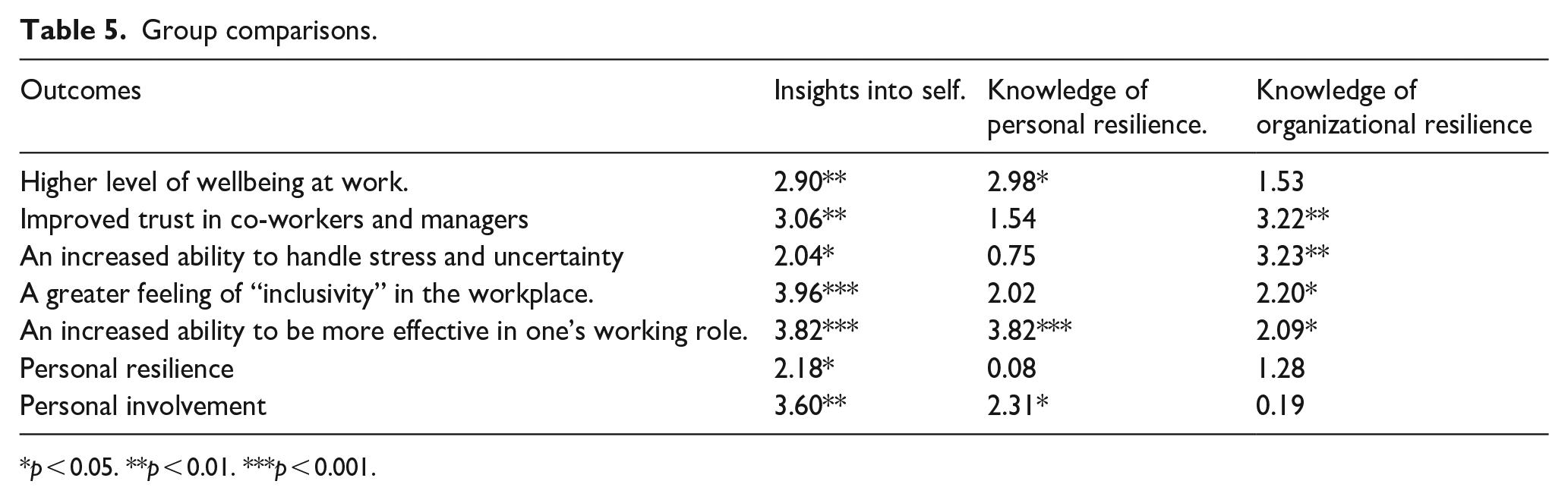
p < 0.05. **p < 0.01. ***p < 0.001.
Discussion
In the current article, we have described, discussed, and evaluated a program developed to build resilience at a Swedish public library in order to understand how an educational program enables employees and organizations to build resilience. Two issues were addressed:
(1) How public library employees could be supported in discussing and reflecting on resilience through the program and (2) the extent to which the personal insights and knowledge emerging from the program relate to improvement of a number of outcomes related to the themes.
The program has combined lectures with workshops whereby library professionals’ local knowledge and capacity were used as a resource for the organization. To our knowledge, no such educational program has previously been presented in research on public librarianship and we hope that doing so can inspire others to collaborate with social scientists in attempts to build resilience into their library organizations.
The first research question concerns how to support employees in discussing and reflecting on resilience using the program. We argue that the lectures presented by the first author played an important role in providing the participants with both knowledge of resilience and a common conceptual apparatus as a framework for discussion. This in turn gave the participants a common language and the confidence to engage in discussions aimed at reducing the risk of misunderstandings and potential conflicts; in doing so, strengthening their ability for good and critical judgment (Macdonald and Macdonald, 2010). Trust, uncertainty and stress, group identity and character strengths are aspects open to interpretation; how they are experienced is highly individual. To provide the employees with meaning and direction, both clear communication (Düren, 2013) and the direct support of managers (cf. McAuliffe et al., 2019) are required. However, we also argue that supporting library professionals in discussing and reflecting upon their own working situations requires that the organization has a pre-existing positive feedback culture whereby employees feel safe enough to report negative information to management (cf. Reason, 1998). Also of importance is the fact that the program took place over a 2-year period, which contributed to the sustained support of management. The length of the program, with its recurring four sessions, also gave the participants the opportunity to see that management was implementing the suggestions being presented in the workshop reports.
The analysis related to the second research question showed that more than 45% of the participants reported having benefited, to varying degrees, from content related to personal resilience (i.e. insights and knowledge). The number was somewhat smaller when it came to the participants’ improved knowledge of organizational resilience. The analysis also showed that the participants benefiting from the program, in terms of insights into themselves and knowledge of personal and organizational resilience, had a higher mean-value on a range of theme-based outcomes. What we think might be especially interesting here is that employees reporting that the program had given them greater insight into themselves and their working roles had a significantly higher mean on all theme-based outcomes, while this was not found for increased knowledge of resilience. The importance of insight in improving personal performance at work has been highlighted in other studies. For example, in a medical context, Hays et al. (2002) suggested that insight into one’s level of performance is necessary when it comes to enabling change in one’s work performance. Beyond that, the employee needs to be motivated to change his/her performance. However, it is also important to point out that less than 50% of staff reported having benefited from the educational program. At this point, we do not know whether these numbers should give cause for concern about the effectiveness of the program (or similar programs) and we can only speculate about the underlying reasons. It is without doubt that the level of effectiveness could have been influenced by our study design, and we deal with that in the limitations section below. We also frequently heard that some participants were tired or exhausted due to working under the Corona restrictions and from chronic stressors over a long period of time. Although we don’t have any data on this issue, we argue that a higher level of stress could have influenced some participants’ motivation to participate in the program in a negative way. Further, feedback from some participants suggested that, when using questionnaires to evaluate trust, managers should be grouped differently from employees. We did not do that, and it seems to have been a mistake since there were some participants that declined to fill in the evaluation with the attitude that there were major differences between the categories. On the other hand, we also heard that the staff, as a group, generally had a high level of wellbeing, suggesting that many of the participants were able to cope with their working environment. Since the issue of effectiveness lies at the heart of all educational programs, we need to incorporate these observations into our future studies. Nevertheless, as a model for improving the resilience of library professionals, we think the program shows some promising results. Our evaluation has revealed that employees who reported benefiting from the program returned a higher score in many of the resilience-related themes, compared to those that had not benefited, and that many positive management-governed changes had been made to the library organization as a consequence of the program. We think that this knowledge is important when it comes to being able to increase the wellbeing and commitment of library professionals worldwide. Understanding which factors improve the working conditions of public library professionals is a key mission for the social sciences.
Conclusion
This study is of a preliminary nature and provides new understanding of what it is that can enable employees and organizations, within the library context, to build resilience. Based on the previous discussion, we draw the following conclusions: Firstly, this study shows that an important aspect of an educational program lies in its power to get employees to jointly discuss and reflect on their own roles and situations, and then to provide this information in a systematic way to the management of the library organization. Secondly, it shows that new insights and knowledge regarding personal and organizational resilience relate to a higher level of self-reported trust in co-workers and leaders, a greater ability to handle stress and uncertainty, a stronger feeling of inclusivity in the workplace, a higher level of effectiveness in the working role, a higher personal resilience, and greater commitment to work. Thirdly, using character strengths in day-to-day work seems to have a good effect on performance and commitment. Overall, this study implies that locally designed educational programs facilitate, at least for some public library staff, personal resilience, in addition to increasing the general level of organizational resilience.
Limitations
To our knowledge, the present study is one of the first examining how to build resilience at public libraries. However, we also advise caution due to the limitations of this study. First, the validity of the thematic analysis of the workshop material could be questioned. A thematic analysis usually requires two or more raters that independently judge the content of the data (see, e.g. Linden et al., 2018). However, since the analysis was carried out by the first author alone, and the themes were validated by the program’s working group, no interrater reliability was calculated. Although there were some discussions concerning the content of some of the themes, it remains an open question as to whether or not this procedure is reliable enough. Second, from a descriptive perspective, it goes without saying that a lot of information from the workshops and the evaluation will be useful in library development. However, the structure of the program and the method we used to evaluate the project do not allow us to draw any conclusions regarding causality, that is, whether or not the content of the program can explain the positive effect on the employees. To achieve that goal, an experimental design is needed which ideally contains a pre-test and a control group. Implementing such a design would have allowed us to compare the two groups both before and after the program. Further, it would also have allowed us to compare the groups internally. Therefore, even if the outcome statistics suggest that the program seems to have had an effect, this conclusion must be considered preliminary and in need of further attention. Third, although we focus on both the personal and organizational levels during the course, we only evaluated the perspective of the individual. Hence, we have not seen any objective indications that the organization has become more resilient, independently of the perceptions of the individual employees.
Additionally, during the teaching and workshops, the two perspectives were often mixed. For example, when lecturing about the effectiveness of “good-enough” thinking, as a coping-strategy, some librarians’ focus shifted away from the perspective of the individual toward the role of leadership that is, managers should be the ones setting the limits of performance or defining what “good enough” means. It turned out to be the case that the feedback sessions after each workshop were important in terms of clarifying issues that could transform into criticism. Also connected with this is the limitation that the concept of resilience is vague. Disaster research states, for example, that there is no real consensus in the scientific field concerning how to define resilience, and that its relationship with vulnerability is somewhat problematic. Further, it is not clear which level it should be applied on (i.e. people or structures; Manyena, 2006). Here, it should also be pointed out that there are other ways to organize resilience training for library professionals. One such example is a program structure aimed at preventing burnout in clerics (Abernethy et al., 2016). Another example is working with concepts such as planned resilience (i.e. planning and preparing for future crises) and adaptive resilience (i.e. adapting to different stressors; Barasa et al., 2018). Fourth, since the first author was working closely with library management, there was a risk of social desirability potentially influencing the workshop data, or the evaluation, negatively. Although the ethical requirement for anonymity was met, and the participants’ feedbacks suggested no socially desirable responding, it would have been more suitable if a third party handled the data collection. Despite the study’s limitations, we hope it is a “door opener” in terms of how to design educational programs to support employees in building up resilience using their knowledge and capacity, something which will also contribute toward improving existing workplace resilience so that it meets the challenges of a complex environment.
Footnotes
Acknowledgements
None
Declaration of conflicting interests
The author(s) declared no potential conflicts of interest with respect to the research, authorship, and/or publication of this article.
Funding
The author(s) disclosed receipt of the following financial support for the research, authorship, and/or publication of this article: The program was supported by a grant from the Cultural Department of Region Skåne.
