



Abstract
The objective of identifying the scenario of the spread of misinformation in the second decade of the present century permeates the analysis of the work of the scientific community supported by technological, educational, and social demands. This issue has become even more relevant in a context of COIVID-19 pandemic. In this article, we investigate the most relevant research themes connected with misinformation addressed in Brazilian research in the field of information science, as well as data on the number of publications per analyzed journal, per year, main keywords, in addition to crossing different data collected in order to better understand this scenario, and the impact of the Pandemic on research about disinformation. This study used descriptive research in compliance with the proposed objective and bibliographic research as a procedural methodology, therefore, aimed at surveying articles in Brazilian journals on Information Science and areas of knowledge such as Library Science, Communication, and Journalism. We collected paper published in 28 Brazilian Journals of Information Science, with results between 2015 and 2021, giving a total of 114 papers. We have identified a number of core topics that are most frequent, allowing for an organization into thematic categories and subcategories. We understand that this phenomenon is not new and characteristic only of contemporary society, but must be investigated in light of recent facts that have driven the publicity of research on the subject. Allied to the misinformation scenario in the last decade, we registered the occurrence of events related to the infodemic and the pandemic responsible for changing the direction of politics, economy, health, and education worldwide.
Introduction
With the expansion of the use of new technologies, access to information occurs with greater intensity in contemporary times and, along with it, the propagation of content in the media grows. If, on the one hand, information and communication technologies expand the traditional means of disseminating news and other newspaper, television and radio content and facilitate the dissemination of information in specialized archives, libraries, and documentation centers, on the other hand, the equation usually reveals little of the dark side that the digital age brings with it.
The new structure of production, communication, and dissemination of information affects the face-to-face space of community, cultural, family, professional, and educational institutions, requiring a careful assessment of what is read, heard, and viewed in order to differentiate information composed of data and relevant knowledge of falsehoods, those spread based on rumors, fragmentation, misrepresentation, and lies that historically feed misinformation.
Through experience and with the help of information technologies, researchers and information professionals must know how to seek, evaluate, and ethically use information, thus allowing content such as news and informative works made available on digital networks be mediated for those who need them when contemplating issues related to work, health, and education (Araújo and Valentim, 2019).
Given the contribution of Information Science studies to the knowledge areas of Library Science and Communication, we highlight the relevance of their publications that follow the changes in the information, policy, and public health scenario in times of infodemic and pandemic (world health crisis). The theoretical basis is formatted according to the maximization of the publication of this science, dialoguing with interdisciplinary areas of health and information technology.
In order to identify the effects of COVID-19 Pandemic on the scenario of misinformation research in Information Science in Brazil, we analyzed the growing interest of the scientific community whose work is supported by technological, educational, and social demands. In this sense, we resorted to descriptive research in compliance with the proposed objective and bibliographical research as a procedural methodology, therefore, aimed at surveying articles in Brazilian journals on Information Science. The following guiding question orientated our analysis: How has the COVID-19 pandemic affected Brazilian research on misinformation? To answer it, we assessed studies published between 2015 and 2021, identifying how they addressed our topics of interest over the years.
Information and misinformation in cyberspace
Cyberspace can disseminate information at great speed and volume. However, it facilitates access not only to information but also to misinformation (and the repercussions of the latter). Bourricaud and Bourricaud (2007) lead us to the perception that information disseminated repeatedly by the press and/or social media (alternative media) tends to allow the number of informed subjects to be proportional or even disproportionate to the quantitative of the population affected by distorted and fake news.
The ability of digital social media to disseminate, strengthen, and empower ideas is immeasurable. This is directly linked to the communicational structure resulting from this dynamic, whose valuation lies in its metrics and message structure. Thus, engagement becomes its main parameter. The legitimacy and structure of messages can determine its reliability and their rhetoric can prove irresistible (Mounk, 2019: 179).
Fake and distorted news is enhanced by the opening of social networks and news media. We emphasize, therefore, “The viralization inherent to the internet makes it possible for more people to learn about fake news and share it” (Moscoso, 2020: 3). To increase the transparency of information, data protection, and the reliability of news constantly shared in cyberspace, as well as to protect the privacy of citizens and contribute to educational campaigns during periods of health crisis and political decisions, it is also necessary to combat the spread of misinformation on digital platforms.
It is increasingly evident that reliability is no longer connected to the knowledge of individuals or the reputation of a platform, which is now associated with its number of views, triggering a crisis in the foundations of truth. Engagement with some information affects readers’ perception, generating a herd effect disregarding the importance of the information source. Sampaio et al. (2018: 1666) point out that this crisis is directly linked to “[. . .] the weakening of the power of authorities, specialists, and people who know certain fields of knowledge in depth,” leveraged by a technocentric paradigm which naturalizes the intense use of technologies.
The very idea of legitimacy changes in this context of social media platforms and in a dynamic in which sharing and validating information is linked to its high dissemination. This legitimation parameter contrasts with methods which intermediaries directly control via their specialized knowledge, responsibility for verifying and sharing information, and ethical commitment (Limaye, 2020: e277).
Araújo (2021) points out that how information is produced has drastically changed and that this issue is also connected with the phenomenon known as Big Data. Studies have sought to analyze the production of data on scales too large for traditional systems to analyze. Research has increasingly found automatically generated data sets (i.e. whose programming dispenses with individuals), “[. . .] which questions the conceptual models in information science that imagined a subject sending a message to someone” (Araújo, 2021: 96).
Digital technologies integrate structural changes in informational dynamics from its production and distribution to its decoding. This still occurs at an unprecedented volume and speed, which is only possible in the digital context. The problems involved in this new dynamic become even more complex as this exponential increase in information circulating from multiple sources fails to only include correct information. Thus, information circulation gains new proportions, with a possibility of gigantic reach, even for false information.
Serrano (2010) exposes that there are several mechanisms that strengthen misinformation, with the manipulation of facts being more difficult to identify than the gross lie that feeds fake news. For Recuero (2020b), misinformation would consist of all kinds of false or misleading content, rather than only fabricated information. The author highlights the greater frequency of “[. . .] ways of framing real facts with a false interpretation or joining two facts that are not related to each other and presenting a false connection” (Recuero, 2020b, no pagination). It is essential to show that, within science and health, “[. . .] misinformation is disseminated amid the persistence of beliefs which are incompatible with scientific evidence” (Massarani, 2021: 5).
Misinformation may not be entirely fake; “often, these are distortions or parts of the truth” (Brisola and Romeiro, 2018: 3319). By propagating the ruling class ideology through distortions, manipulation, and fragmentation it tends to confuse, decontextualize, and remove information from the historical context to which it belongs. The misinformation scenario is nothing new since over the centuries false and distorted information circulates in a diversity of social groups that can be located in world history (Serrano, 2010; Silva, 2019).
The foregoing allows us to consider that, currently, the spread of misinformation is strengthened by the difficulty of discerning what is true or false in the media and social environment and, increasingly, misinformation campaigns intensify when related to the dispute of power in the field of politics and in sensitive issues of great repercussion, such as the campaign against the use of vaccines and health care, medicines without scientific validation and false promises of a cure (Valero and Oliveira, 2018).
We should point out, as stated by Mata and Gerlin (2019: 5), that the current context is “[. . .] surrounded by information that aims to cause misinformation,” continuously impacting different sectors of contemporary society. This widespread manipulation of the population leads to a crisis regarding information reliability, which can lead individuals to distrust factual information rather than manipulated or distorted content (Mata and Gerlin, 2019: 5), weakening the very concept of truth.
Studying information sometimes means “[. . .] understanding misinformation as part of the issue” (Santana and Simeão, 2021: 521), which brings the need for an investigative process involving assumptions in information science, communication, psychology, education, and other related areas. In this context, the importance of a transdisciplinary approach is once again reinforced, providing “[. . .] a greater possibility of eliminating borders through the superposition and interpenetration of a diversity of methodologies and experiences” (Gerlin and Simeao, 2017: 53), considering the complexity of this methodological transgression.
Researching misinformation is essential to find alternatives for monitoring and controlling it, identifying its multiple effects on user behavior. This problem had already come to the fore in recent years but the pandemic illustrated the impact disinformation has on the behavior of information users, triggering research on its various related aspects, such as politics, elections, behavior information, health information, among others. In this pandemic context, it is important to highlight one aspect in particular, the infodemic.
The infodemic and the pandemic
The pandemic was triggered by COVID-19 in China at the end of 2019 and, in Brazil, it was strongly propagated at the beginning of 2020, leading to the death of nearly half a million of the country’s population. The global health crisis has become more perverse with the sharing of distorted or false information that fueled and still fuels the ignorance and authoritarianism present in power relations, which restricts political rights and civil liberties of the contemporary subject, now cornered by the risk of contamination by COVID-19 at a time when distorted information and false news appear as a “by-product” of digital platforms serving economic, political, and ideological interests (Moscoso, 2020; Recuero, 2020a).
The spread of information linked to COVID-19 has a very specific characterization, which reminds us of the virus itself. As the spread of the virus intensified, another phenomenon grew in parallel, with proportions even greater than the pandemic itself: the infodemic. Journalist David J. Rothkopf coined this term in 2003, in an article in which he discussed the epidemic of severe acute respiratory syndrome (SARS). The journalist emphasizes that, rather than the story of one epidemic, we see the story of two, in which the second, which went almost unnoticed, would have much greater implications than the disease itself. It was an “information epidemic” that turned a regional health crisis originating in China into a global economic and social disaster (Rothkopf, 2003). The journalist defines infodemic as the combination of fear, speculation, and rumors with some facts (disseminated throughout the world at a great speed and volume), which would have the ability to disproportionately affect economies, politics, and even security (Rothkopf, 2003).
Amaral and Santos (2019: 51) state that “Generalized misinformation is one of the main symptoms of the acute pathologization of collective communicative life,” enabling the recognition of such context of false and distorted news as a process which greatly contributes to withdrawing citizens’ autonomy, guiding them by market logics based on private rather than collective interests.
Therefore, it is necessary to intensify the creation of strategies to promote actions stressing the ethical access to information to combat the sharing of malicious news and the spread of this reckless informational crisis due to the excess of information which viralizes “misinformation” on social networks, recently characterized as an infodemic.
Zarocostas (2020) defines Infodemic as the excess of information that is associated with a huge volume of reliable or false content with a tendency to propagate in a short period of time. The use of this term is strengthened by the enormous flow of information that prevents the effective retrieval of information, responsible for repressing opportunities to improve the quality of life and reduce inequality and poverty. “The main way to minimize infodemic is to guide people to verify the source and veracity of information before sharing it. In other words, quality should be prioritized over quantity of information” (Garcia and Duarte, 2020: 1).
Investigations into misinformation and infodemic enable users, professionals, and information scientists to contribute to combat the huge flows of false reports, rumors, distortion, omission of relevant facts, and dispersive details on social networks (Baptista, 2019).
We add to the aforementioned context, the impossibility of wide mobility due to the pandemic globally strengthened instantaneous and non-instant distance communication such as teleconferences, web conferences, text, and voice messages, intensifying the use of a variety of communication tools such as Skaype, Web of digital platforms has resulted in the production and increased sharing of a diversity of multimodal information (composed of various textual, sound, and image languages) in the area of culture, education, spirituality, artistic expressions, politics, health, religion, among others not mentioned.
Methods
A descriptive research approach using mixed-methods (i.e. with qualitative analysis and quantitative data) was used to assess the main topics addressed by studies on misinformation. The analyzed database was consolidated from information collected within studies retrieved by surveying online journal portals via the keyword “misinformation” (with no field filter) to recover all studies containing this keyword.
During the development of this descriptive and bibliographic study, the information science databases Capes Journals portal, Oasisbr, and Brapci were searched. Initially, 37 journals were selected. However, after refinement, based on an initial search for the term “misinformation” in the given period (from 2010 onward), only 28 journals showed results. Those that failed to retrieve any study were excluded from our analysis.
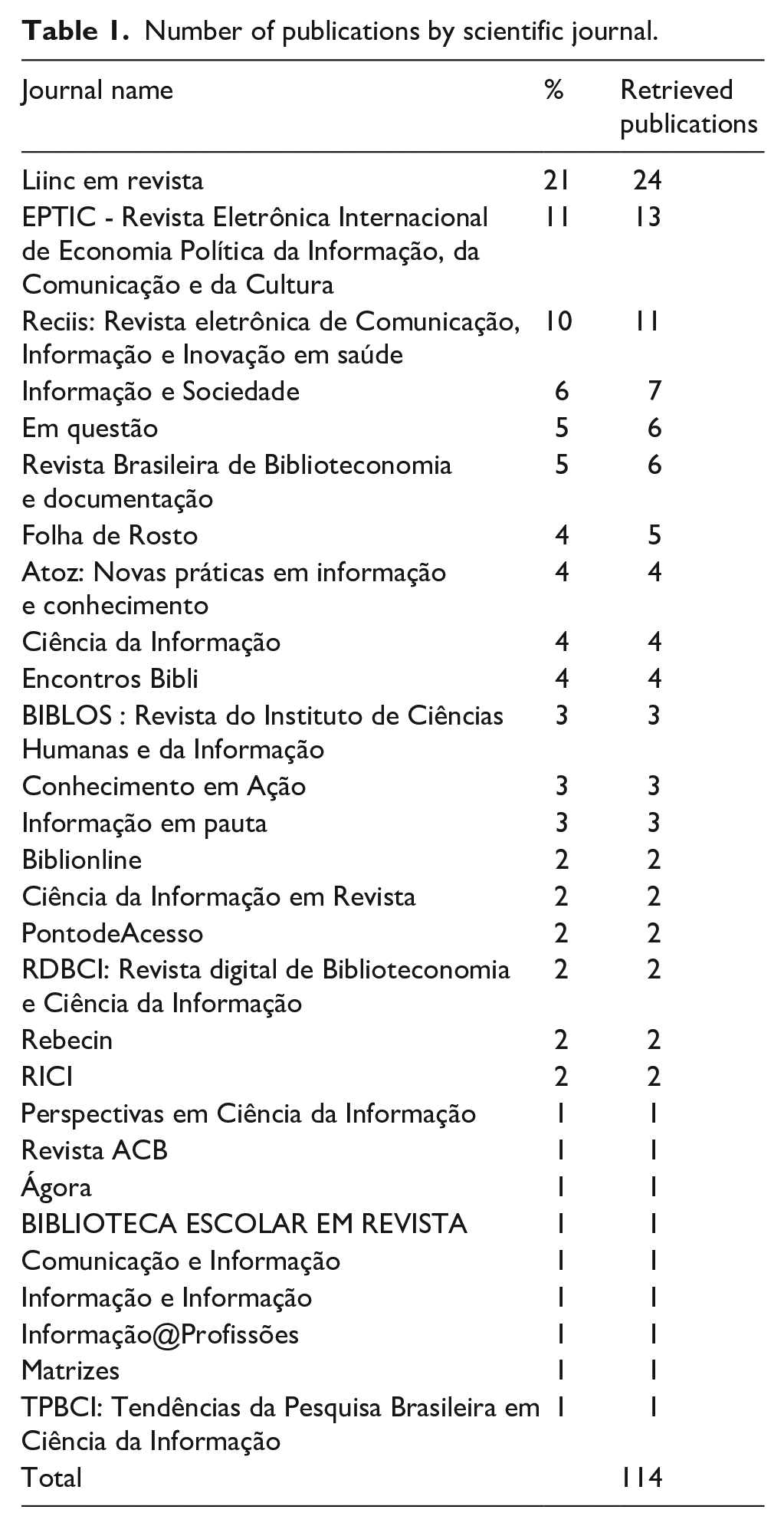
From the search conducted in the 28 remaining journals, 114 publications were retrieved. Regarding number of studies, we highlight the journals Liinc em Revista (24), Revista Eletrônica Internacional de Economia Política da Informação, Comunicação e da Cultura (13), and Revista Eletrônica de Comunicação, and Informação e Inovação em Saúde (11; Table 1).
Number of publications by scientific journal.
This research was grounded on the content analysis methodology, proposed by Bardin (1977), which consists of three stages: pre-analysis, material exploration, and result treatment, inference, and interpretation.
Following the methodology proposed by Bardin (1977), the first stage started by collecting data from the 114 retrieved publications, listing them in a .csv spreadsheet by title, year of publication, journal, type of publication, keywords, abstract, and link to the study. Then, data were processed to enable an initial filtering. Once data were collected, the collected material was superficially analyzed, focusing on their titles, keywords, abstracts, and when necessary, the body of their text was perused, in which some of their keywords were sought.
To refine our sample, exclusion criteria were defined. Starting from the “Type” column in our spreadsheet, only articles and research reports from scientific journals were selected. Summaries, interviews, among others, were excluded. Then, a new sorting column was created based on the previous perusal, categorizing the collected studies on misinformation, with the criterion “articles unrelated to the theme.” Studies in that column were also excluded from our sample. After proper filtering, a total of 81 publications (100%) in 28 information science journals were used for analysis.
Following the second stage proposed by Bardin (1977), material exploration consists of codifying and categorizing our sample, in which a thorough analysis was conducted. In this stage, a new column was created via inductive coding to assess the main topics of the chosen studies. Given our initial classification, categorization treated, organized, and grouped the identified codes, generating 4 categories and 17 subcategories. In the final stage, supported by the evaluated literature, results were treated and analyzed, organizing data by graphs and tables.
Results
From the data collected and the analysis of publications, the main information was selected for representation through graphs and tables. The first chart was drawn up based on the year of publication of the collected materials, with a cutout of the period from 2010 to 2021. Based on the sample surveyed, the absence of publications on misinformation in Brazilian Information Science journals was observed in the first 5 years of the period analyzed, with only one research being retrieved in 2015. It was from 2017 that publications on this topic began to appear more frequently in journals in this area of knowledge, but it remained in an embryonic state until 2019. In 2020, an exponential increase in the number of publications was observed, with a growth of 237.5% compared to the number of 2019. This trend continued in 2021, with a growth of 40.7% compared to the previous year (Figure 1).
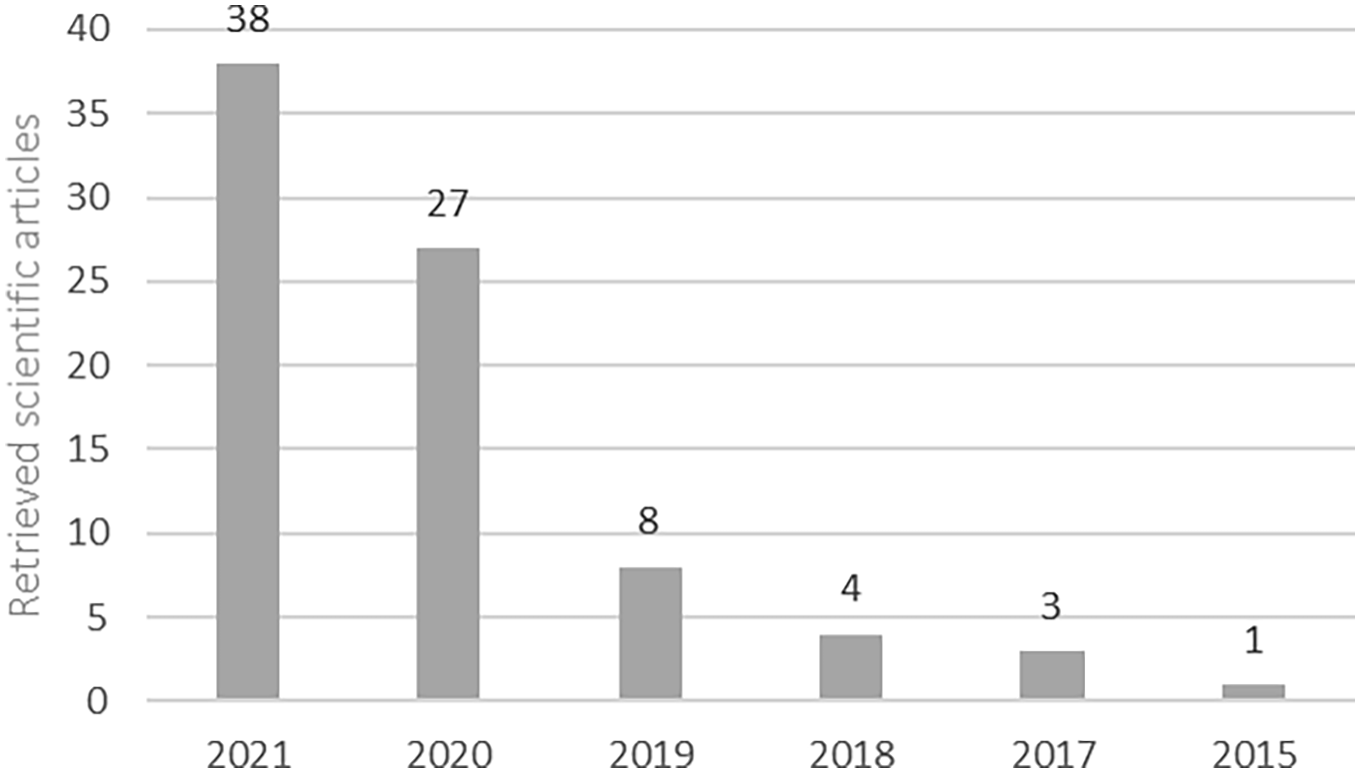
Representation of retrieved scientific articles by year of publication.
To understand the focus of the publications retrieved on the concept of misinformation, the percentage of the sample that used the term in the title, keywords, and abstract was counted. From this analysis, it is possible to see the relevance that this concept has in the retrieved publications. Based on the frequency with which the term appears in the titles, we observed its presence in 57% of publications. In terms of keywords, the frequency was found in 74% of the publications, while in abstracts it was found in 88%. There is a trend toward an increase in the frequency in which the term appeared with a decrease in the specificity of the variables (Figure 2).
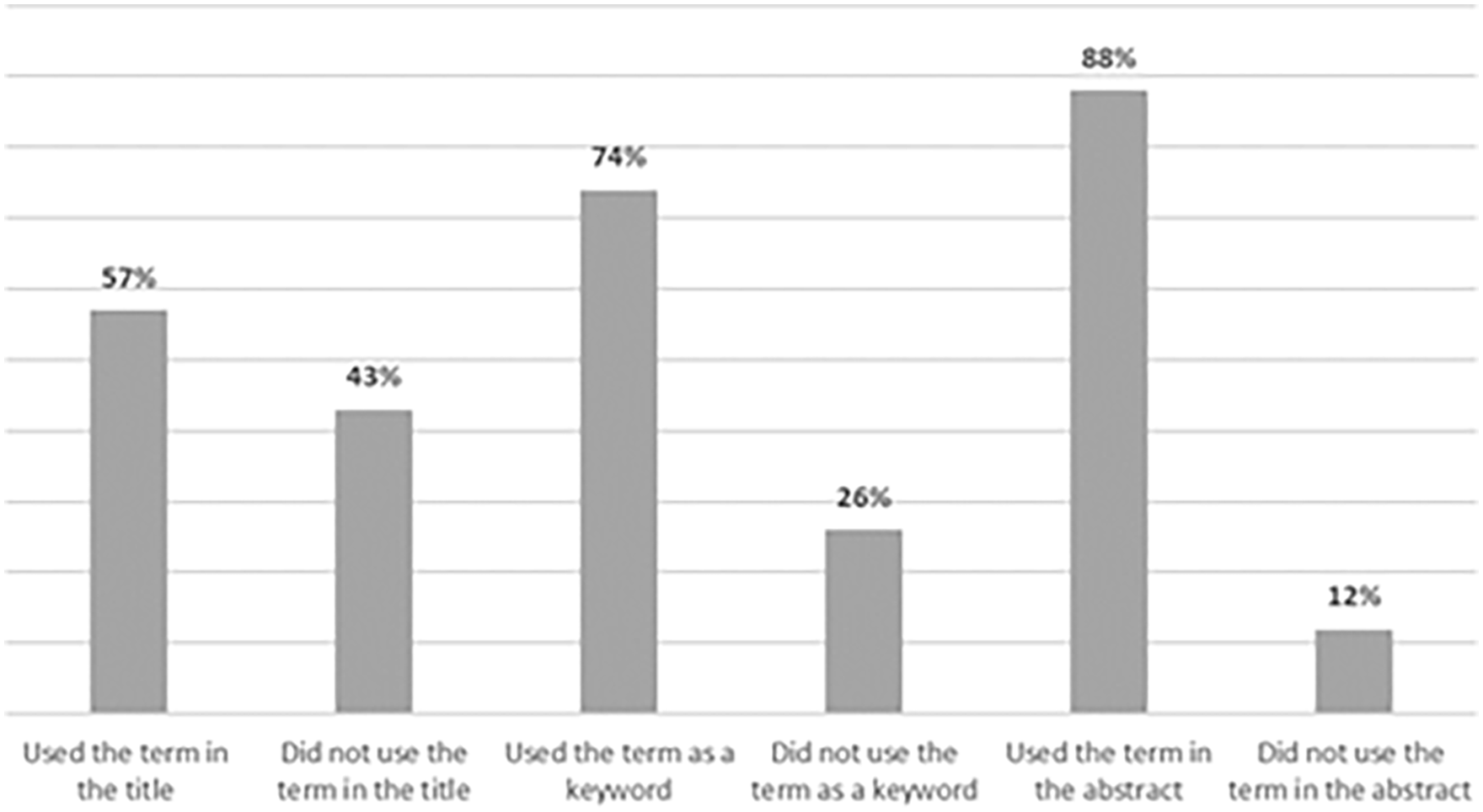
Percentage representation of publications with the term “misinformation” highlighted.
Entering the analysis of keywords used in publications, a sample of 354 terms was retrieved. After filtering the duplicates, this amount dropped to 203. With a manual analysis, excluding the same terms not counted by filtering, in addition to unifying similar words and/or with the same meaning, this number dropped to 162 terms, which had the frequency counted. After that, we performed a selection of terms that appeared in more than one publication for analysis purposes, establishing a sample of 33 keywords for the construction of the graph, which represent 63.8% of the total number of keywords retrieved in the publications.
As already observed in Figure 2, there is a high percentage of publications that used the term “misinformation” as a keyword, which was consolidated as the most used. Then, the term “COVID-19” was observed, and not too far away, “COVID-19 pandemic,” demonstrating a high percentage of publications working with this current theme. The terms “Post-truth,” “Fake News,” and “Infodemic,” highly related to the concept of misinformation, were also highlighted in the sample.
Also noteworthy is the presence of the term “Misinfodemic,” unifying the concepts of misinformation and infodemic. The keywords related to skill and information literacy were unified, totaling a frequency of 15 repetitions, consolidating as the fifth most repeated concept. As for the areas of knowledge, highlighted among the keywords, first in frequency we find Communication, followed by Journalism, Information Science, and Library Science (Figure 3).
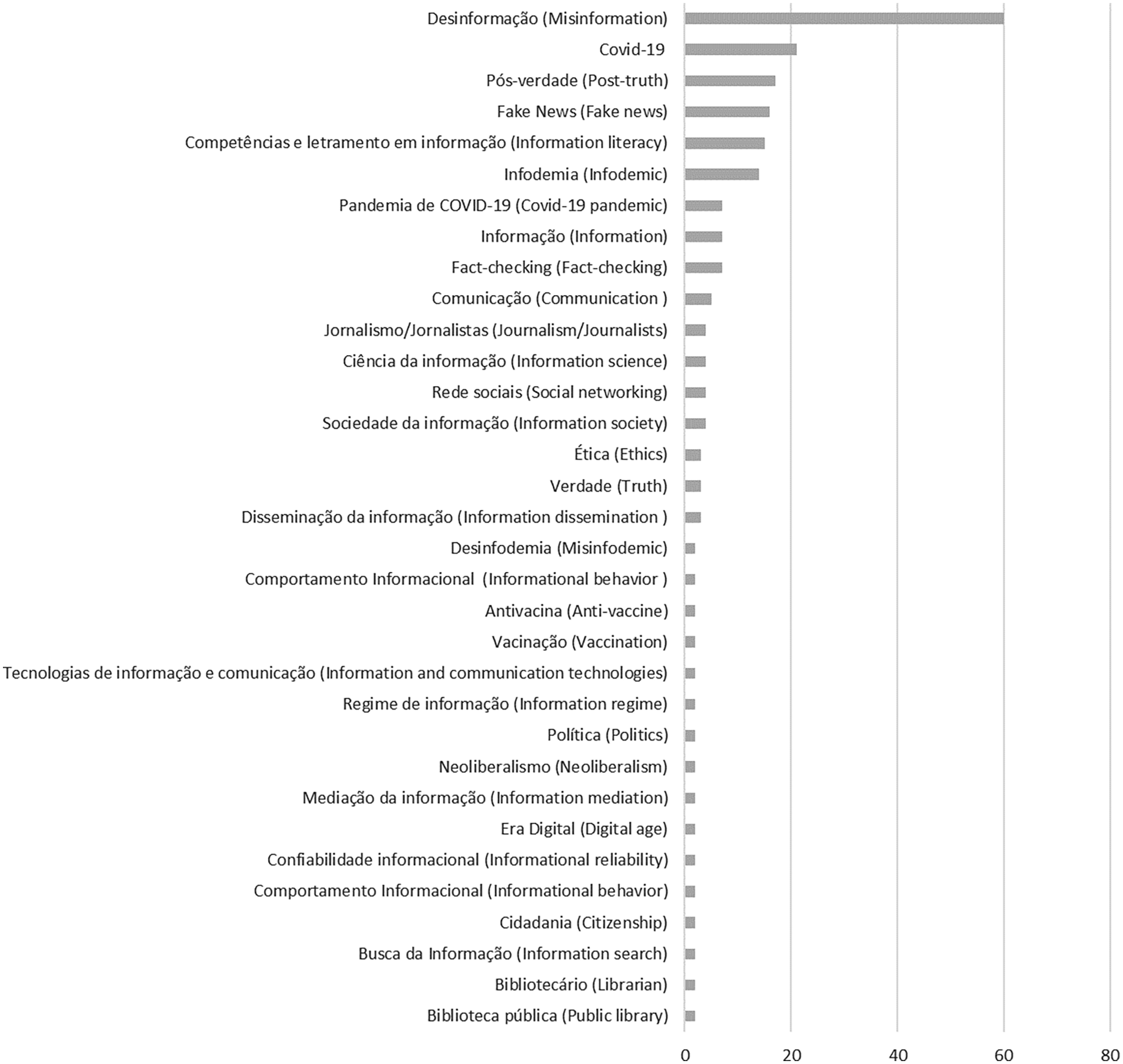
Most frequent used keywords in the sampling.
Drawing a percentage comparison of keywords, considering that 100% represents the total amount of 354 keywords retrieved in 81 publications, it is possible to observe that the six most frequent terms exert a significant representativeness in the sample, adding up to 40% of repetitions. While the term “misinformation” alone represents 17% of total repetitions (Figure 4).
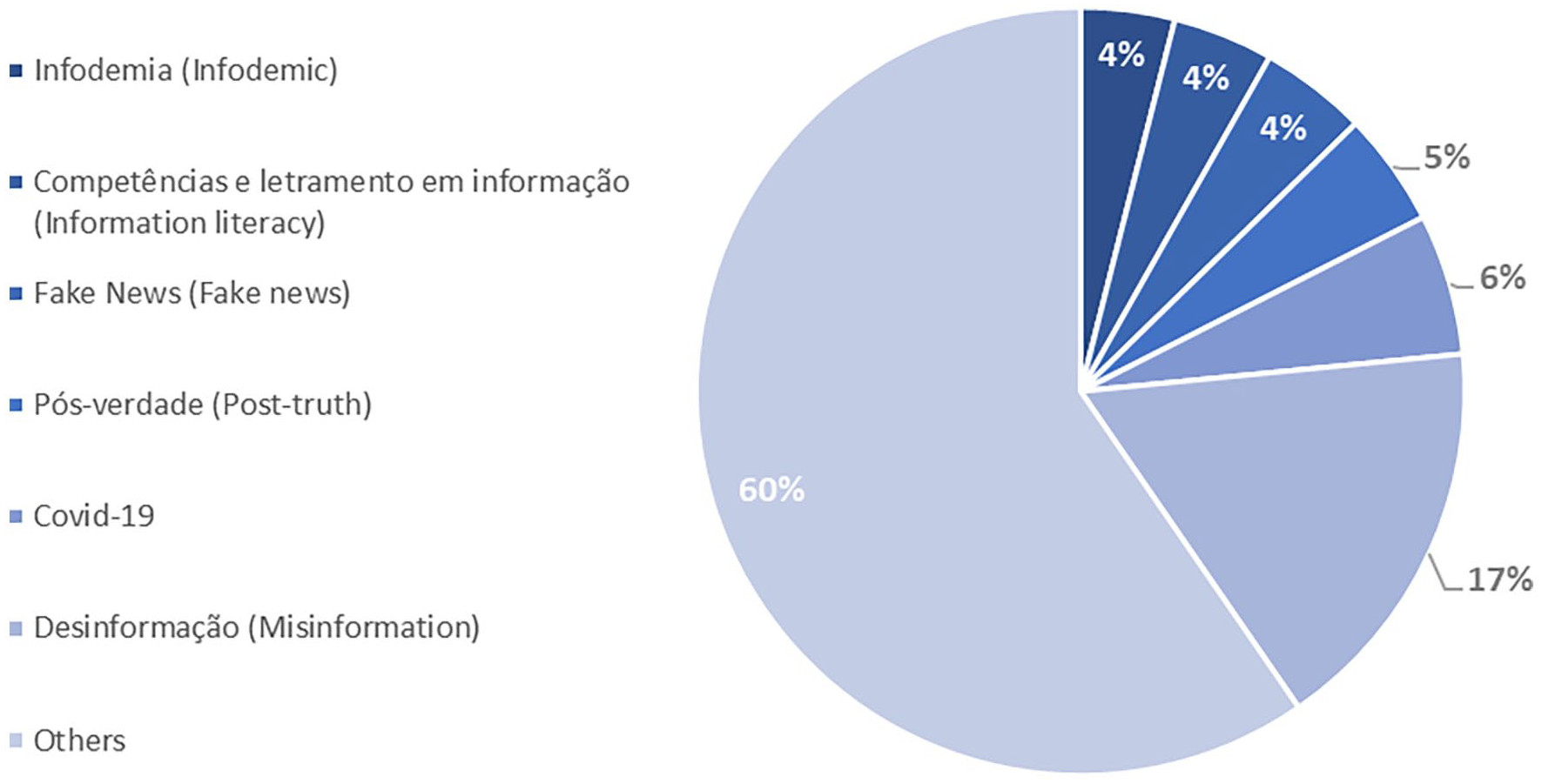
Percentage comparison of keywords with the highest frequency in the sample.
Aiming to understand the main themes linked to the researched scenario, a conceptual categorization of the publications was carried out, as seen in Figure 4. In a scenario in which the term “fake news” (4%) is widely questioned in scientific research, the concept of “misinformation” (17%) extrapolates it considering that false reports, rumors, distortion, and omission of facts relevant to the understanding of an event are examples that characterize it. The phenomenon of misinformation receives greater attention from professionals and researchers in the area of information and communication, exploring the phenomena of infodemic (4%), and the “COVID-19” pandemic (6%) to touch on conceptual and social issues.
Faced with the perception that false and distorted information and news reinforce the misinformation scenario, users, researchers, producers, and information professionals need training processes to assist in the search, retrieval, evaluation, and ethical use of information. The skills (4%) in information and media worked on by Library Science and Communication are experiences commonly published in periodic journals of Information Science.
To strengthen the fight against misinformation, producers, users, and information and communication professionals such as Librarians and Journalists must recognize the importance of their educational and social role in the face of the phenomenon of misinformation, contributing with actions and training programs aimed at the types of information commonly sought by the population to resolve health, politics, education, and culture issues.
The actions and programs of these skills are strategies that information and communication professionals can use to change the infodemic and misinformation scenario by presenting guidelines so that training is adequate to the scenario of spreading false and distorted information and news.
Based on the second stage of the content analysis methodology proposed by Bardin (1997), codification and categorization organized the chosen themes into 4 categories and 17 subcategories. The categories established were misinformation in a COVID-19 pandemic context; misinformation and related concepts; Areas of knowledge and research on misinformation; Others (Table 2).
Categories and subcategories of the themes of publications.
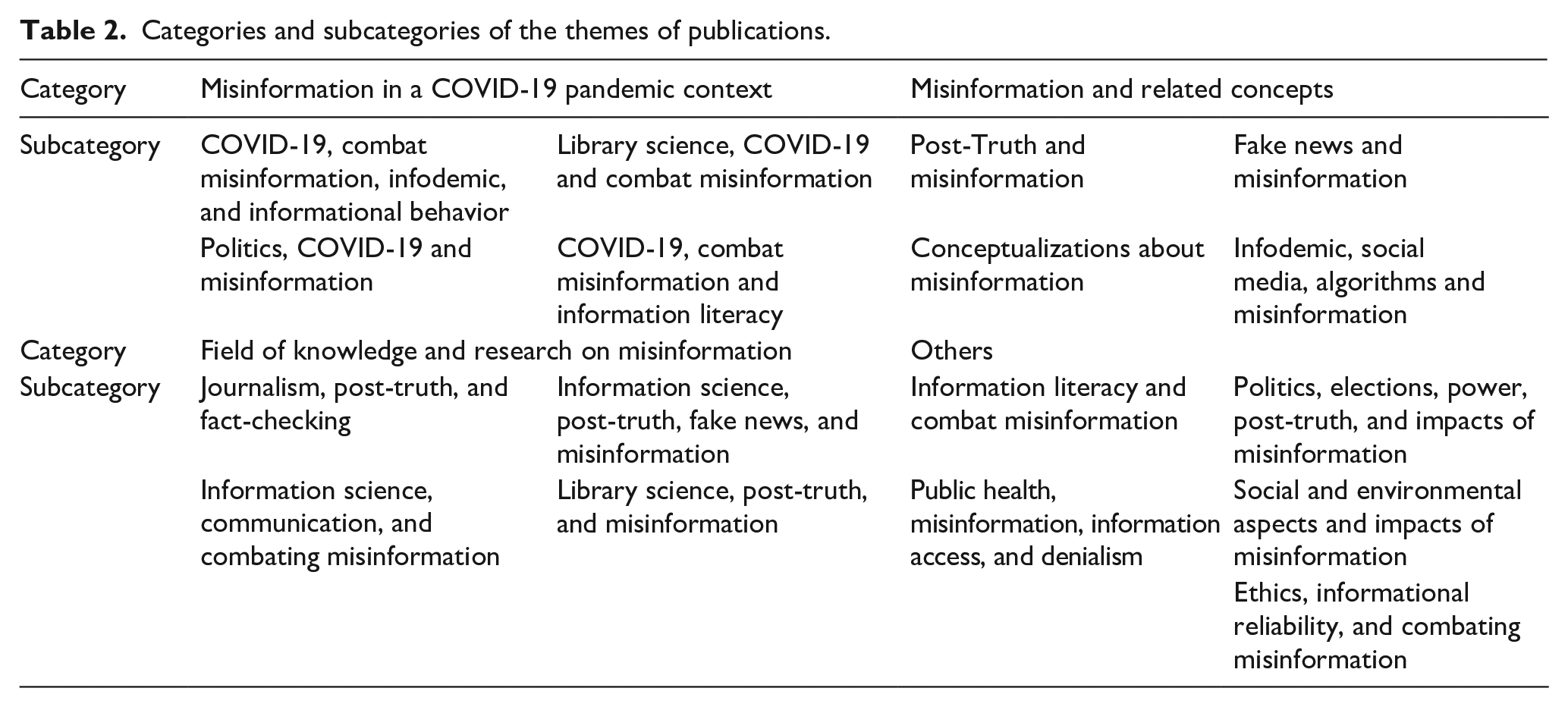
As seen in Table 2, the subcategories were: COVID-19, combat misinformation, infodemic, and informational behavior (i); Politics, COVID-19, and misinformation (ii); Library science, COVID-19, and combat misinformation (iii); COVID-19, combat misinformation, and information literacy (iv); Post-Truth and misinformation (v); Conceptualizations about misinformation (vi); Fake news and misinformation (vii); Infodemic, social media, algorithms, and misinformation (viii); Journalism, post-truth, and fact-checking (ix); Information science, communication, and combating misinformation (x); Information science, post-truth, fake news, and misinformation (xi); Library science, post-truth, and misinformation (xii); Information literacy and combat misinformation (xiii); Public health, misinformation, information access, and denialism (xiv); Politics, elections, power, post-truth, and impacts of misinformation (xv); Social and environmental aspects and impacts of misinformation (xvi); Ethics, informational reliability, and combating misinformation (xvii).
Based on data analysis, we identified that the scenario of the spread of misinformation calls for the attention of Information Science researchers and professionals who have historically worked with the technological, informational, and social demands of the population, who must agree to adopt the inter and transdisciplinary approaches (Buckland and Liu, 1998; Capurro and Hjorland, 2007; Gerlin and Simeao, 2017; Ortega, 2004).
Transdisciplinary transgression is necessary to exchange the themes identified in the categories and, in particular, in the “areas of knowledge and research on misinformation,” requiring that the scientific production of different areas be questioned, as evidenced in the survey of periodical articles, as they are important to combat misinformation that permeates knowing how to ethically seek and critically evaluate informative content that is precious to the sharing of reliable information.
Crossing data between categories and years of publication, it was possible to draw up a graph representing the evolution of themes per year. It is observed that the most frequent categories are “Misinformation in a COVID-19 pandemic context” and “Others,” with a higher volume between 2020 and 2021 (Figure 5).
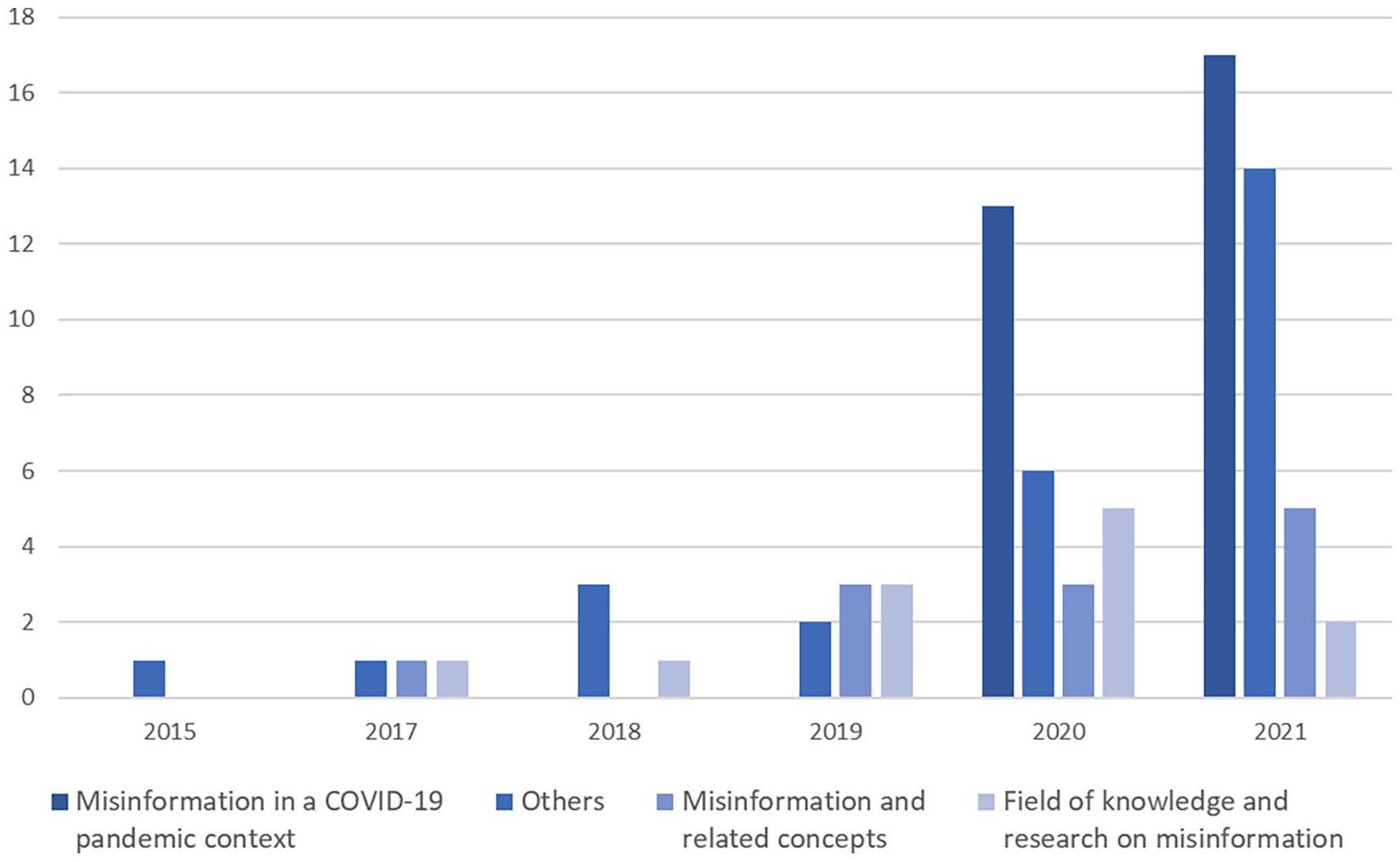
Representation of categories by year of publication.
We believe that distorted and false information flows contributed to the maximization of publications on misinformation and related concepts, supported by articulation with other areas of knowledge, as well as fallacious communications (Brisola and Bezerra, 2018; Nemer, 2019). The practice of viralizing misinformation also gains visibility during the pandemic, and can be viewed within a pandemic context due to the new coronavirus (Soares et al., 2020).
Among the 17 subcategories created, some stood out due to their frequency among the 81 publications. They were: COVID-19, combating misinformation, infodemic, and informational behavior; Skills in information, literacy, and Combating misinformation; Politics, COVID-19, and misinformation; Public Health, misinformation, access to information, and denialism; Politics, elections, power, post-truth, and impacts of misinformation. Together, these five subcategories represent 54% of publications (Figure 6).
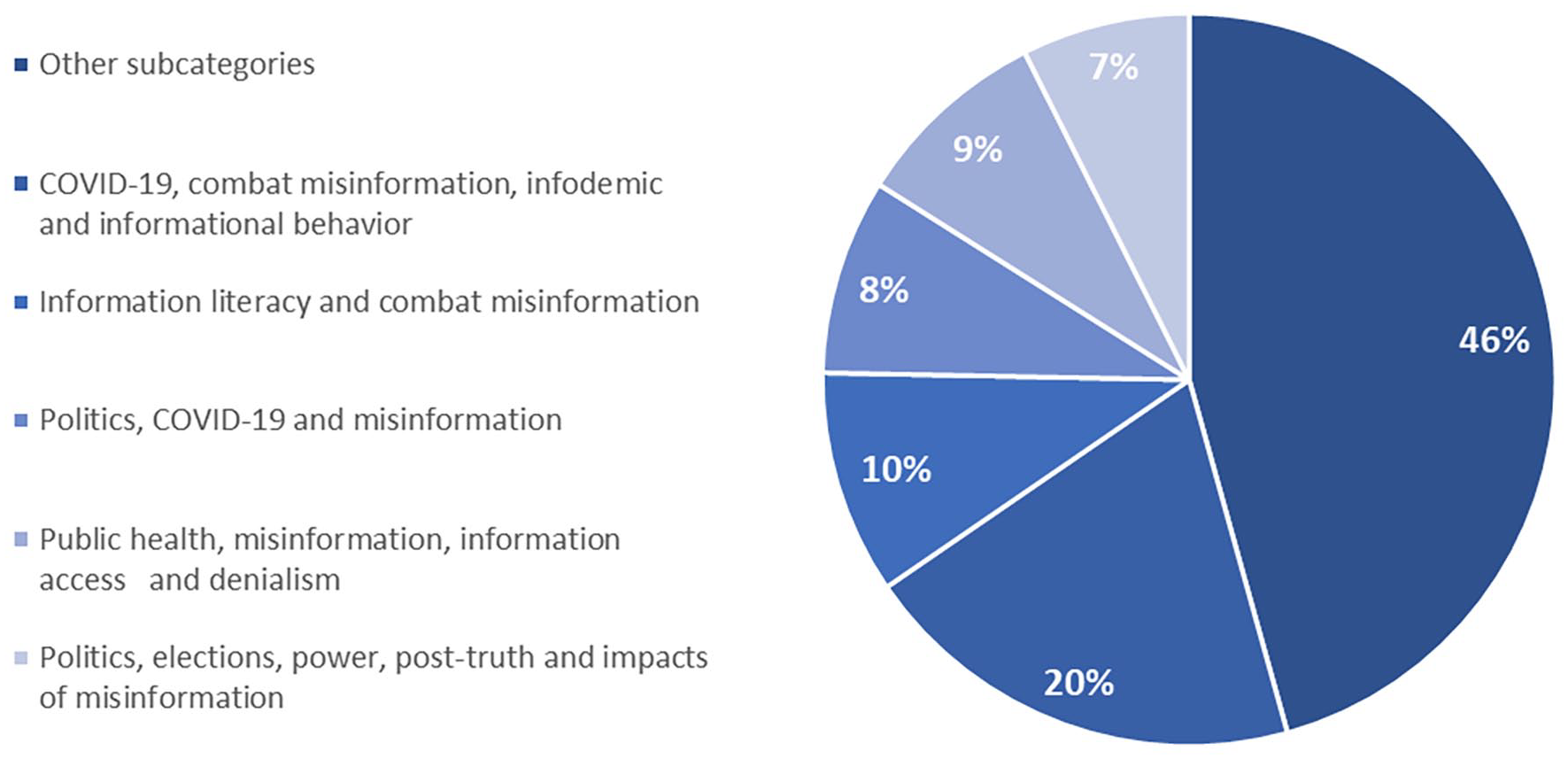
Representation of the frequency of subcategories.
Using again the cutout of the five most frequent subcategories, a graph of their representation by year of publication was also drawn up. A greater consistency was observed in publications related to information skill, present in all years studied from 2017 onwards. The literature produced by Information Science provides elements to represent the need for training processes in the field of skill necessary for the development of critical reading and the ethical use of information (Brisola and Romeiro, 2018).
Thematics related to the pandemic stand out again, exerting great representation in the years 2020 and 2021. Thematics related to politics also have a concentration between 2020 and 2021, which leads us to the study by Recuero (2020a: 403) after the 2018 electoral process in Brazil, in which “The legitimacy of these discourses can impact credibility of the voting machine and in the democratic process itself, as it creates suspicions about it.” Finally, it is interesting to highlight the presence of themes related to public health, without even counting the themes that involve the COVID-19 pandemic, showing the relevance of conducting research on misinformation and health (Figure 7).
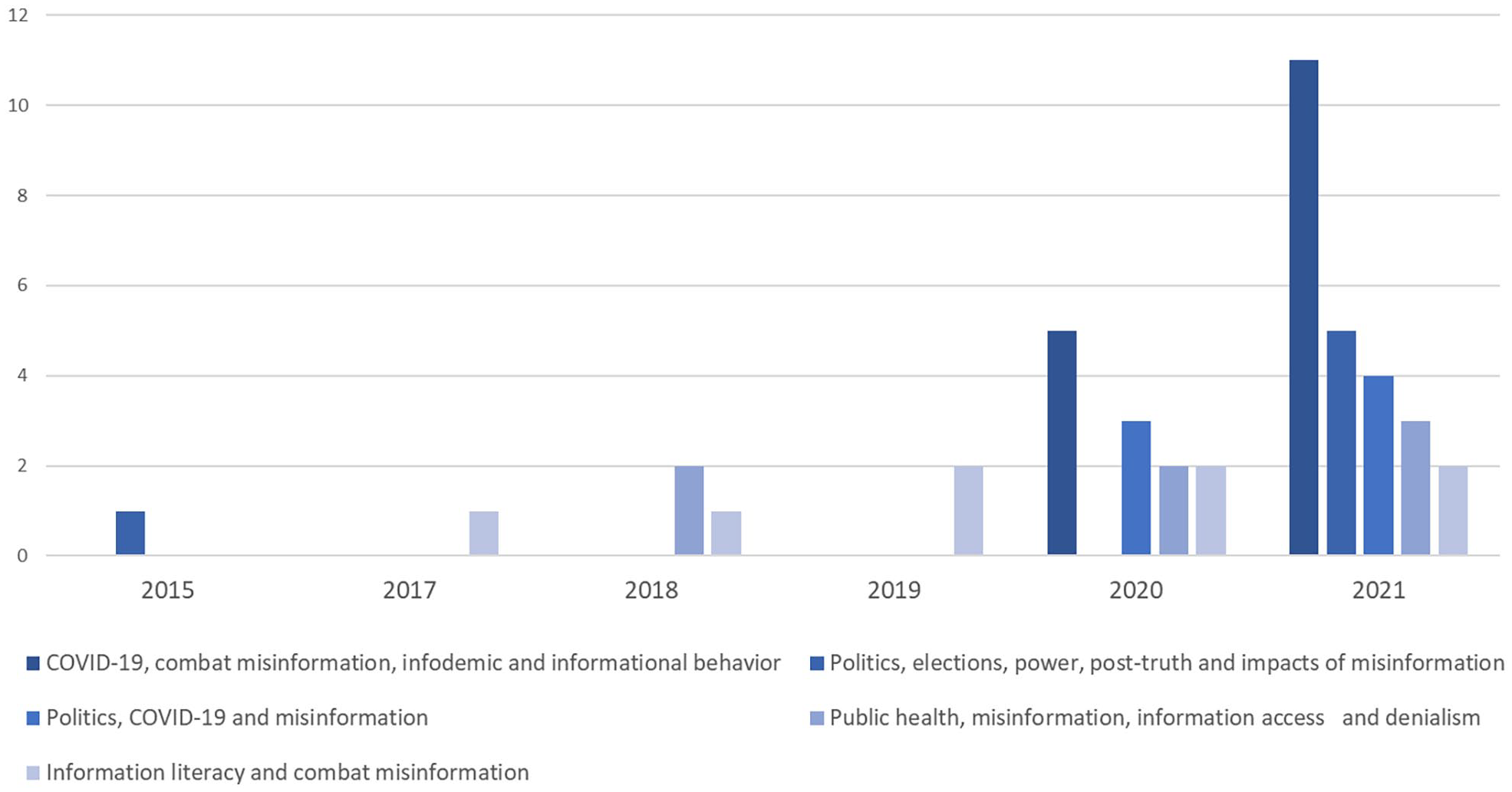
Representation of subcategories by year of publication.
As previously noted, themes related to the COVID-19 pandemic were highly representative in the years 2020 and 2021, representing 46% of publications in those years. This information is important because it shows that this theme was largely responsible for the exponential growth in the number of studies focused on misinformation in the area of Information Science (Figure 8).
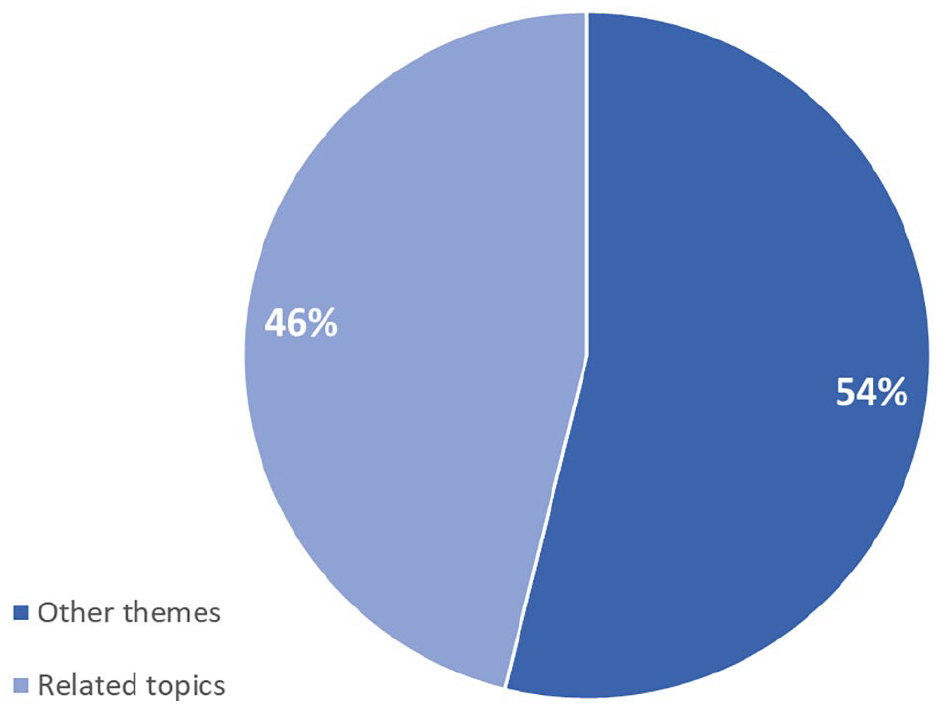
Percentage of publications involving the pandemic between 2020 and 2021.
The data from this analysis allow us to understand that in recent years research in this science has been related to the field of health and information, adding to this effort investigations linked to the pandemic, infodemic, and misinformation scenario. We realize that due to the infodemic and pandemic faced with greater force in the second decade of the 21st century, we understand the need to analyze the veracity of disseminated information before sharing it in digital environments that are largely responsible for the spread of misinformation (Garcia and Duarte, 2020).
Discussion
Just as during the global health crisis, as a result of COVID-19 at the end of the second decade of this century, there was a considerable increase in studies and research due to the negative effects of fake news in periods of vaccination campaigns and other demands in the area of health. Social networks function as a fertile ground for the circulation of information without scientific evidence during the pandemic period (Soares et al., 2020).
Through processes of scientific and professional investigations in the field of information and communication, the reliability of news shared in cyberspace is called into question from the perspective that information should contribute to educational campaigns during periods of health crisis, political decisions and other situations that demand citizen mobilization and not the opposite, as has been the case.
We understand that this phenomenon is not new and characteristic only of contemporary society, but must be investigated in light of recent facts that have driven the publicity of research on the subject. Allied to the misinformation scenario in the last decade, we registered the occurrence of events related to the infodemic and the pandemic responsible for changing the direction of politics, economy, health, and education worldwide.
An important concept raised in several studies is post-truth. It received great attention among the surveyed keywords and established categories. Araújo (2021) highlights that this expression emerged to characterize the current infodemic and that this great flow of information is shaping individuals’ decision-making in an unprecedented level and speed. Lewandowsky (2017) highlight that “The problem of post-truth is not a stain in the mirror. The problem is that the mirror is a window to an alternate reality.” Thus, post-truth not only disseminates misinformation but also appropriates alternative realities which deconstruct the concept of truth and transform it into what individuals desire and believe.
Tiburi (2017) points out that this context shows such post-ethics concept, “a set of disvalues taken as values,” the author emphasizes that this notion is based on the inversion of these concepts, mischaracterizing the ethical issue and displacing it into the background, in which it loses its meaning and importance.
Information shared on networks shows that changes in ways of reading and appropriating information require significant dynamics within search and understanding processes, as well as in the mode of use and communication in distributed networks sharing “all for all” content (Lévy, 2010). To the extent that citizens who are assiduous readers and producers on social networks use and/or share malicious, fragmented, manipulated, and biased news, it contributes to strengthening misinformation (Baptista, 2019; Brisola and Bezerra, 2018).
In private networks, it is difficult to monitor rumors and lies, as in the large WhatsApp groups responsible for spreading misinformation. This point of analysis gives visibility to the need not only to monitor open and closed social networks, but also to work information literacy, as pointed out in the categorizations of the studies of the analyzed journals.
Information and communication professionals are responsible for the retrieval and transmission of informative content, and should therefore focus on creating instituting actions while using strategies to combat false information and news and, with that, providing material for future themes and research in the field of Information Science.
There is a need to work on combating misinformation with multiple approaches, which is also observed in the collected sample, especially in publications in the category “Areas of knowledge and research on misinformation,” which has subcategories related to Information Science, Communication, Library Science, and Journalism. Publications that work specific focuses of each area and others that correlate and connect the perspectives offered by working with inter- and transdisciplinary approaches were analyzed. Thinking that misinformation is a problem that affects different areas and uses multiple strategies, it is necessary to unite knowledge in order to combat it.
Thus, we observe a dominant information search and retrieval model propagated by retrieval systems, traditional media, and alternative channels in social networks that has as its goal the propagation, influencing its transmission regardless of whether they are reliable or not, requiring librarians to propose strategies against misinformation and that journalists present reliable news.
Conclusion
The intensification of publicity for research on misinformation should be investigated along with the phenomenon of the spread of misinformation in recent years as represented in the analysis process based on categories and subcategories, which occurred due to events related to the infodemic and the pandemic changing significantly the scenario of politics and health in Brazil.
Based on COVID-19’s Misinformation in a Pandemic Context categories; Misinformation and related concepts; Areas of knowledge and research on misinformation; Others, we conclude that the 17 subcategories allow us to reflect that the growth of publications on the subject follows the context of the spread of misinformation, explored worldwide with greater intensity by subjects in a situation of “vertical and/or horizontal confinement” during the health crisis in Brazil. Thus, we observe that the identified scenario precedes political campaigns for a period that is announced, in which we must continue with the investigative processes combined with the knowledge and actions of information and communication professionals.
We should especially highlight this relation of misinformation during the pandemic, as it is a context of health promotion in which the dissemination of information and the production of knowledge play a fundamental role. Communicating health information not only refers to a communicative process but also to human beings’ fundamental rights to information and health. A problem of great impact in this process is information disorder. “The lie and manipulation of information in the pandemic, in several situations, proved that there is total inability or even incapacity in the management of essential services” (Simeão, 2022: 22). Thus, the impact of informational disorder goes beyond distorted worldviews; it is a direct risk to health, causing deaths which the use of reliable information could avoid.
During the COVID-19 pandemic, information disorder has had a strong impact on how this public health crisis was faced, precisely because, at first, the only effective measures were non-pharmacological interventions, that is, “[. . .] observance of certain patterns of behavior by the population” (Machado, 2020: 9). Disseminating misinformation (or any type of manipulated information) risks individuals’ belief in reliable information. These noises not only harm the population’s adherence to factual information guaranteeing the effectiveness of these measures (Cezar and Maciel, 2021; Machado, 2020) but can even lead to risky behaviors which intensify the problem.
The Brazilian political, economic, and social instability—marking the country since 2015 and intensified during this period (Lima et al., 2020)—greatly impacted its management of the pandemic. Its president not only neglected the pandemic, spread fake news, and belittled and minimized COVID-19 but also strengthened and legitimized such scenario of denialism, often by federal measures. Political clashes between the President of the Republic, governors, and mayors grew as the pandemic worsened, becoming progressively more evident and fiercer (Lima et al., 2020) precisely because of their disagreements regarding the management of the pandemic.
An important initiative to combat misinformation during the pandemic was fact-checking platforms, which were gaining strength around the world. In Brazil, several initiatives suggest this practice, often with investment from the media themselves (Santana and Simeão, 2021).
As the government greatly failed to disseminate information, the media played an essential role during this period due to the great negligence of the Ministry of Health, which, at various times, reduced data quality and quantity, imposed limitations on access to pandemic data, and change the date of their publication, hindering its dissemination in the main television news in the country. With the imposed impositions, the main communication vehicles in the country formed a consortium which aimed to accurately inform citizens, collaboratively sharing information, and collecting and consolidating data which were collected by state health secretariats (Tito and Ferreira, 2021).
Regarding controlling the dissemination of misinformation, we evince the need for investment from the government toward fact-checking measures, public awareness campaigns regarding the verification of information, and an intense and continuous effort to disseminate reliable information. Information science and communication research provides elements so we can assess this scenario of misinformation. Even though this study found an increasing number of studies on the subject, we must emphasize that their numbers are still limited and highlight the need for further research focusing on disinformation, especially within communication of health information.
Footnotes
Conflict of interest
The author(s) declared no potential conflicts of interest with respect to the research, authorship, and/or publication of this article.
Funding
The author(s) disclosed receipt of the following financial support for the research, authorship, and/or publication of this article: We thank the Research Support Fund of Universidade Federal do Espírito Santo (FAP/Ufes) for its contribution to the language editing from the manuscript.
