




Abstract
The main objectives of the study were to identify key features of the digital library management system (DLMS) for developing and managing digital libraries, to reveal the satisfaction level of the library professionals in using digital library management system, and the problems being encountered in using these systems. The current study was quantitative in nature as quantitative measures were applied through a survey research strategy. Keeping in view the nature of the study, a purposive sampling technique was used to collect data from the target librarians who had been involved in operating digital library systems for building digital libraries in their respective libraries. Descriptive and inferential statistical tests were used to analyze the data. Findings revealed that in most of the university libraries in Pakistan, free and open source software (FOSS) had been implemented. DSpace was the most widely used software by library professionals in Pakistan. Key features of the digital library software included a user-friendly interface, customization, reliability and security, use of metadata standards (Dublin Core), web-based, advanced searching, consultancy and technical support, sharing e-books to devices (mobile, tabs), full-text searching, use of Boolean operators, and access control. The study recommended that library professionals of universities should be careful in planning library digitization and they should consider the above features before implementing any digital library software in their libraries.
Keywords
Introduction
Digital library is an online system of information that provides access to digital information resources (Lynch, 1995). Although there is not a fixed definition of digital library due to several aspects of diverse disciplines, nonetheless, digital library may broadly be defined as “an extension and enhancement of information storage and retrieval systems that manipulate digital data in any medium (texts, images, sounds, static or dynamic images) and exist in distributed networks” (Borgman, 1999: 234). A digital library may satisfy the information needs of the community through various moods of services (Ralston et al., 2000). It offers relevant digital information resources to all types of users from anywhere and around the clock. It provides several benefits to the potential users and researchers through the satisfaction of their information and research needs (Allard, 2002). It facilitates in accessing information remotely through the best practices having developed interoperability for the general easiness of end-users (International Federation of Library Association, 2005). Digital libraries are a major need of academic institutions and the future of librarianship is bright due to the availability of well-managed digital repositories providing access to digital content in full-text format. (Choi and Rasmussen, 2006).
Educational institutions may develop collections through free digital library software instead of implementing costly system for providing access to digital content to the end users remotely (Gkoumas and Lazarinis, 2015). Libraries serving the academic community should digitize available information resources not only for long-term preservation but also for the proper dissemination to the online information users. Archival collections, rare books, historically significant literature, institutional publications, and other content of unique nature need to be digitized keeping in view the changing needs (Emmanuel Baro et al., 2013). Open source software (OSS) movement is gaining popularity in developing countries due to several benefits. OSS assists in developing digital communities to facilitate the end users through modern driven techniques and approaches (Hasan, 2009; Krishnamurthy, 2008). Library users may access to required digital resources depending upon the availability of content of the institutional library off campus to make completion to the assigned tasks (Baro, 2010; Sanjeeva and Powdwal, 2017). Open source digital library management systems provide opportunities to library professionals working in the universities to develop digital institutional repositories for offering access to library’s resources remotely via internet (Islam, 2019). Free software are being mostly implemented in university libraries instead of commercial software due to financial constraints (Kabir Khan and Sheikh, 2022).
In Pakistan, the utilization of internet-based information resources is increasing due to advancements in information technology. Smartphones, the latest personal computers, laptops, iPhones, tabs, and other high-tech gadgets are being utilized by the researchers of the modern age to access information anywhere, anytime, and to work from any place (Higher Education Commission, 2012). National Digital Library Program (NDLP), Pakistan has brought a wonderful innovation in the provision of digital databases and tools which provide access to thousands of peer-reviewed journals and millions of digital books and dissertations in full-text format. (Ameen and Gorman, 2009).
In Pakistan, many researchers have investigated different studies on several aspects of digital libraries. Khan and Ahmed (2013) evaluated the efficiency and effectiveness of HEC digital library resources among researchers in Pakistan. The study included that usage of the digital library resources should be increased in order to uplift research output. Rafiq and Ameen (2013) analyzed practices being adopted in Pakistan for the implementation of digital libraries. The authors inferred on the basis of study-results that it was a must to control issues related to digital library software implementation to gain multiple benefits. Khan and Qutab (2016) researched the factors that influenced the implementation of the HEC National Digital Library among researchers in different universities in Pakistan. It was revealed that remote access to digital content around the clock was a pertinent factor leading toward the implementation of digital resources library. Khan and Bhatti (2017) explored the digital skills of library professionals for the development and management of digital libraries. Results manifested that training programs were highly significant in creating required digital skills in library professionals for the development and management of digital library management systems. Khan et al. (2017) explored the impact of digital library usage on research productivity in the discipline of Engineering. Raza et al. (2019) conducted a study on the application of linked data technologies in digital libraries. The study found out that semantic based digital technologies facilitated researchers in the compliance of research based projects effectively and efficiently. Anser et al. (2021) researched the role of e-service quality and e-trust among the users of digital libraries. Mubeen et al. (2021) investigated factors leading to the implementation of digital library initiatives. Findings mirrored that digital library system provided customer satisfaction and facilitated in the acquisition of quality results. Shahzad and Khan (2022) conducted a systematic review of the factors influencing toward the implementation of integrated semantic digital libraries (SDLs). The findings of the study indicated that semantic digital libraries were vital as they offered context-based information resources. Advancement in bilateral transfer modules, interoperability of the systems, folksonomy, and machine-controlled indexing were pertinent factors in developing integrated semantic digital libraries.
Internationally, several studies have also been conducted to investigate various aspects of digital libraries by different researchers around the world. Yanez (2009) assessed the role of academic libraries in making digital repositories of the dissertations through metadata and providing easy access to the users. The study concluded that a specialized skills-set was required for managing digital libraries in academic settings. Veronica Anunobi and Ignatius Ezeani (2011) mentioned the significance of digital projects for the university libraries for providing innovative services to the community. The paper showcased that digital libraries strengthened the universities. Emmanuel Baro et al. (2013) highlighted the importance of digital collection for academic libraries for the long-term preservation of the library’s information resources. Esmaeili et al. (2021) conducted a study on the roadmap of Iranian digital academic libraries in the context of cloud infrastructure and the development of cloud libraries. Cao et al. (2021) investigated the role of digital libraries and academic search engines to support the educational mission of the institutions. The study revealed that modern age users frequently utilized digital information resources to make completion of the assigned educational and research-based tasks.
Statement of problem
From the above literature, it becomes evident that many studies have been conducted by different researchers belonging to different regions of the world for investigating various aspects of a digital library. Past studies also revealed that different authors investigated the status of digital libraries in different academic libraries of the institutions, the implementation of different digital library software in the libraries and information centers. The investigators reported the adoption of digital repositories and national digital library program initiatives etc. However, not a single comprehensive study has been conducted to investigate the key features of the digital library management system (DLMS) for developing a digital library. Prior literature showed that so far no research had been conducted in Pakistan to fill this literature gap that exists in such an important area.
Significance of the study
Current research has practical implications for library professionals who are working in any digital library or planning to develop it. This study provides a checklist of various features that must be considered while choosing any digital library system. This study is a framework and benchmark to get awareness about several features of DLMS for selecting the best software for developing a digital library.
Objectives and hypothesis of the study
The instant study aims to investigate the following objectives in light of the gap found through literature analysis:
(1) To investigate the key features of digital library management systems for developing digital libraries.
(2) To explore different types of digital library management systems being utilized in the university libraries of Pakistan.
(3) To inquire about the satisfaction level of library professionals with digital library management systems being used in their libraries.
(4) To identify common problems being encountered by university library professionals in using various DLMS.
(5) To study significant differences in the preferences of library professionals related to key features of digital library management systems based on their university-type.
For completing research objective five, the following research hypothesis was shaped:
(1) There is no significant difference in respondents’ preferences related to the key features of digital library management systems based on their university type.
Literature analysis
Need and importance for developing digital libraries
Revolution of digital technology has raised the importance of digital libraries to facilitate the end users of the university libraries. Integrated library systems are significant in the performance of all functions and operations of the libraries. Adoption of integrated digital systems is necessary to offer user satisfactory services through modern driven techniques (Han, 2004; Madhusudhan and Singh, 2016; Mittal and Mahesh, 2008). Open source based digital libraries play a great role in bringing comfort to end-users via digital services with zero budget. Free digital library systems satisfy information and research needs of the users quickly and efficiently (Rathee et al., 2020).
Digital libraries assist in preserving intellectual assets of the universities. Long term conservation of library materials is ensured through digital library system (Abu Sirhan et al., 2019). Digital library management system (DLMS) saves the cost of storage. Modern librarianship is incomplete without a digital management system particularly in university-level libraries where information professionals are expected to perform unconventional services due to ever happening technological innovations (Hazarika et al., 2020). The demands of the modern age may not be met without the development of digital libraries in the universities (Koch et al., 2019). Digital repositories enhance work efficiency and visibility of the libraries in the community. Universities across the world are adopting digital library management systems to facilitate their users and to strengthen the vision of respective organizations (Kampa and Patra, 2020). Digital libraries prove fruitful in developing and managing institutional repositories to provide access to institutional assets to the users (Gurikar and Hadagali, 2021) and extremely helpful in the storage and preservation of rare material to transmit to future generations (Rafique et al., 2021; Barrueco and Termens, 2022).
Various kinds of digital library software
Various types of digital software are utilized for developing and managing digital libraries keeping in view diverse requirements of different universities. Greenstone digital library software offers effective full-text searching and meta-data-based browsing. End users may create a new collection and keep it updated (White, 2002; Witten et al., 2001). CDSware, EPrints, and Fedora software include the features of content management, user interface, user administration, system administration, interoperability, use of XML for representation of information, HTML for web pages, GIF, TIFF, JPEG for image, Unicode for multilingual support, use of Dublin Core, and MARC 21 for meta-data (Hoe-Lian Goh et al., 2006).
DigiTool digital library software is used for developing an open-access digital repository. It is found suitable for developing a digital archive of university documents, e-theses, and research papers (Stevenson and Hodges, 2008). Greenstone is the best free and open-source digital library software for managing digital content and QuickScan software is a good software for image capturing (Londhe et al., 2011).
ABCD; digital library open source software, is also used for developing union catalogs and repositories of electronic theses and dissertations. It is free of cost and available for all libraries and utilizes the OAI-Metadata Harvesting protocol (Namdev Dhamdhere et al., 2014). SociaLib system enriches the library by providing users’ feedback regarding its contents and strengthens the searching through social tagging. The most important feature of the software includes the accessibility of the library portal/OPAC via mobile devices from anywhere (Ahmed et al., 2014).
Dspace is the most widely used institutional repository development software in academic libraries (Cherukodan et al., 2013; Hanumappa et al., 2014; Siddique and Mahmood, 2014). DSpace digital software assists in flourishing open educational resources to serve the community. It is user friendly system and provides ample benefits not only to the university library workforce but also to the users’ community (Ahammad, 2019).
Key features of digital library software
Attributes of reliability, testability, usability, extensibility, and maintainability are of high importance in good software. Quality software may be tested and modified for enhancing its functioning (Han, 2006; Helio Yang, 2001). Open-source digital library management tools present new operations and support for metadata and interoperability protocols with user-friendly interfaces. They are used under various settings and are available for more than one operating system (Gkoumas and Lazarinis, 2015). Most of the digital library software offer browsing, simple search and advance searching, full-text search, cataloging, OPAC, and advanced searching and full support. They use Z39.50 and MARC21 interoperability protocols (Parichi and Nisha, 2015). Free digital library software systems flourish the movement of open access resources without considering users’ nationality, religion, race, and color etc. (Bell, 2018). Open source software systems prove dynamic in developing digital institutional repositories. These systems are cost effective as well as user-friendly (Ahammad, 2019).
An analysis of the various studies conducted at international level
Intelligent selection of software for digital libraries need careful evaluation of internal needs and library resources. The choice of digital library software affects its usability, interoperability, support, and costs (DeRidder, 2007). Librarians must understand the core issues involved in a digital library management. They should develop a good understanding and know-how of metadata and related standards (Joint, 2009).
According to the study conducted by Shuva (2013), inadequate funds, technological infrastructure support, and shortage of skilled professionals were the main hindrances in Bangladesh to create a digital library. Han et al. (2016) pointed out that the security of information in DLMS was a matter of great concern as most of the library professionals working in the libraries in China thought that information security was a great challenge in the digital library system. Poole (2016) emphasized that digital curation was an emerging concept in DLMS. Library professionals needed to follow the procedure of digital curation as per best practices adopted by the libraries of progressive countries.
Digital library system was a great need of modern librarianship. Library professionals might not perform well without getting expertise to develop digital library systems for showing their strong role in the organization through innovative methods (Mitropoulos et al., 2014; Patra, 2017). Sheikhshoaei et al. (2018) in their study on the design of DLMS presented challenges and complications that took place while building digital repositories. Financial shortage and unavailability of technical assistance were the key challenges for digital library system adoption. Jabeen et al. (2018) explored the perceptions of library professionals about DLMS. Adoption of Open Source Software (OSS), problems being faced by librarians, and strategies being followed for the best possible solutions to gain advantages from digital library systems were also measured. It was revealed that librarians in China mostly depended upon commercial software for digitizing collection instead of availing OSS. They needed adequate training for successful implementation of DLMS. Shjitha (2020) concluded through his study that digital preservation provided through DLMS was a pertinent feature which offered long term conservation of the library’s information resources.
Review of studies conducted in Pakistan
Rahman (2015) discussed that Asian countries had embraced digitization for archiving their theses and dissertations and making them available via the Internet. DSpace and E-Prints digital library software were the widely used software for creating repositories of electronic theses and dissertations in Asian countries. The study emphasized the need for training programs, workshops, and seminars at the national level to create awareness among library professionals about creating ETDs. Khan and Qutab (2016) studied factors that attracted technology acceptance to university-level library professionals. The findings of the study revealed that digital resources were frequently used by the researchers and this factor influenced library professionals to develop a Digital Library Software System for providing services under the perceptions and expectations of end-users.
Hassan et al. (2018) indicated that systematic planning was of great value in designing digital software. Without proper planning and trials, the implementation phase was very complex. Scope, traits, features, characteristics, and modules of the system should be carefully considered so that bugs might be avoided and troubles should be managed well. Rafiq et al. (2018) mentioned that technological changes were taking place at a rapid speed so library professionals needed to carefully implement digital software systems so that in upcoming times, the system might be switched over to a new one without having lost precious data.
Raza et al. (2020) elaborated that the implementation of efficient software covering all aspects for university libraries. Proper sustainability of the software was required as new features kept happening in any software over time. Option of customization should exist in digital software. Abdul Rahman and Mohezar (2020) identified the continued usage of digital content. It was shown that several changes had taken place in the present era due to technological innovations and librarians needed to embrace changes willingly otherwise other professionals could replace librarianship and libraries. Rafi et al. (2020) emphasized that librarians must implement modern technologies to better facilitate their users. Knowledge might be managed and disseminated properly through efficient Digital Library Software (DLS). Shahzad and Khan (2022) concluded through their study that library schools should include the course of semantic digital libraries in the curriculum to provide practical expertise to future librarians and skilled manpower should be recruited in the universities for the adoption of DLMS.
Research methodology
The current study is quantitative as quantitative measures have been applied. The core objective of this study was to investigate the key features of the Digital Library Management System (DLMS) for developing digital libraries. Keeping in view the nature of the study, the purposive sampling technique was used to collect data from the university librarians who were involved in operating digital library systems to manage and develop a digital library in their respective organizations. A total of 127 respondents were identified for data collection who were working in 79 HEC-recognized university libraries. Tool of questionnaire was developed to gather required data. The questionnaire was passed through the peer-review process and pilot testing to ensure the validity of the contents. Experts in the field with established repute in the area of digital library development having adequate work experience and expertise in using digital library software were selected to review the questionnaire. They provided impactful insights to improve the quality of the questionnaire. Their expert suggestions were incorporated into the questionnaire and the final version was pilot-tested on a group of 30 respondents to get their opinion about questions formulated to obtain data.
The first section of the questionnaire was based on the demographic information of the participants. The second part was about general information about the status of digital library development. The third phase was shaped to get responses from the participants about key features of the digital library management system. The fourth section of the questionnaire was based on the satisfaction level of the respondents in utilizing digital library software to develop a digital collection and the fifth phase included different challenges that were faced while developing DLMS.
Out of a total of 127 respondents, 106 respondents submitted the duly filled questionnaire. Hence, the response rate was 83%. The gathered data were analyzed through Statistical Package for Social Sciences (SPSS) software. Descriptive and inferential statistical tests were used to analyze data and achieve results.
Analysis of data
Demographic information of the respondents
Results of the study revealed that the majority of the participants 59 (55.7%) were males and 47 (44.3%) respondents were females (Table 1).
Descriptive analysis of demographic information of respondents (N = 106).
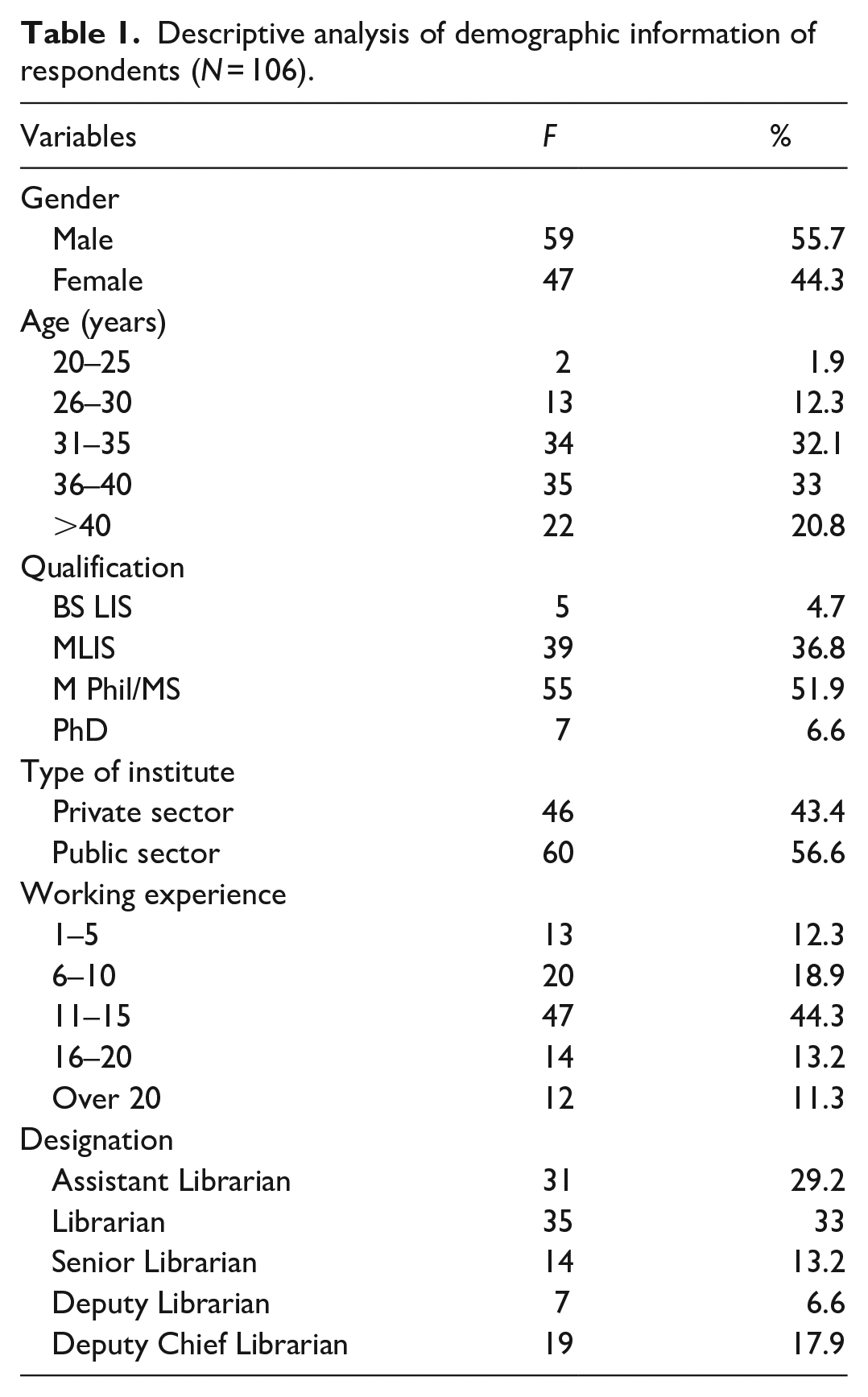
Findings showed that most of the respondents (n = 35) had their ages between 36 and 40, followed by 34 respondents (32.1%) who belonged to the age group of 31–35. However, some respondents were above 40 years old, 13 (12.3%) respondents fell in the age group of 26–30 while only two (1.9%) respondents had their ages between 20 and 25 years old (Table 1).
Qualification of the majority of respondents n = 55, (51.9%) were M. Phil/MS, while some respondents n = 39 (36.8%) had a master’s degree in LIS, there were some respondents n = 7 (6.6%) who had a PhD degree and n = 5 (4.7%) participants had Bachelor degree in Library and Information Science. It can be judged that the majority of the respondents had adequate knowledge of library science (Table 1).
Results indicated that the majority of the participants n = 60 (56.6%) were working in public sector universities and n = 46 (43.4) were working in private sector universities. Findings of the study showed that the majority of the respondents n = 47 (44.3%) had professional job experience of 11–15 years. Respondents n = 20 (18.9%) had professional work experience of 6–10 years, 14 (13.2%) respondents had professional experience of 16–20 years, while respondents n = 13 (12.3%) had experience between 1 and 5 years, and n = 12 (11.3%) respondents had their professional experience over 20 years (Table 1).
Results reflected that the majority of the respondents n = 35 (33%) were Librarians and 31 (29.2%) respondents were Assistant Librarians. There were respondents n = 19 (17.9%) working as Deputy Chief Librarian. On the other hand, n = 14 (13.2%) respondents were Senior Librarians and n = 7 (6.6%) respondents were Deputy Librarians (Table 1).
Status of the digital library management system (DLMS) in university libraries
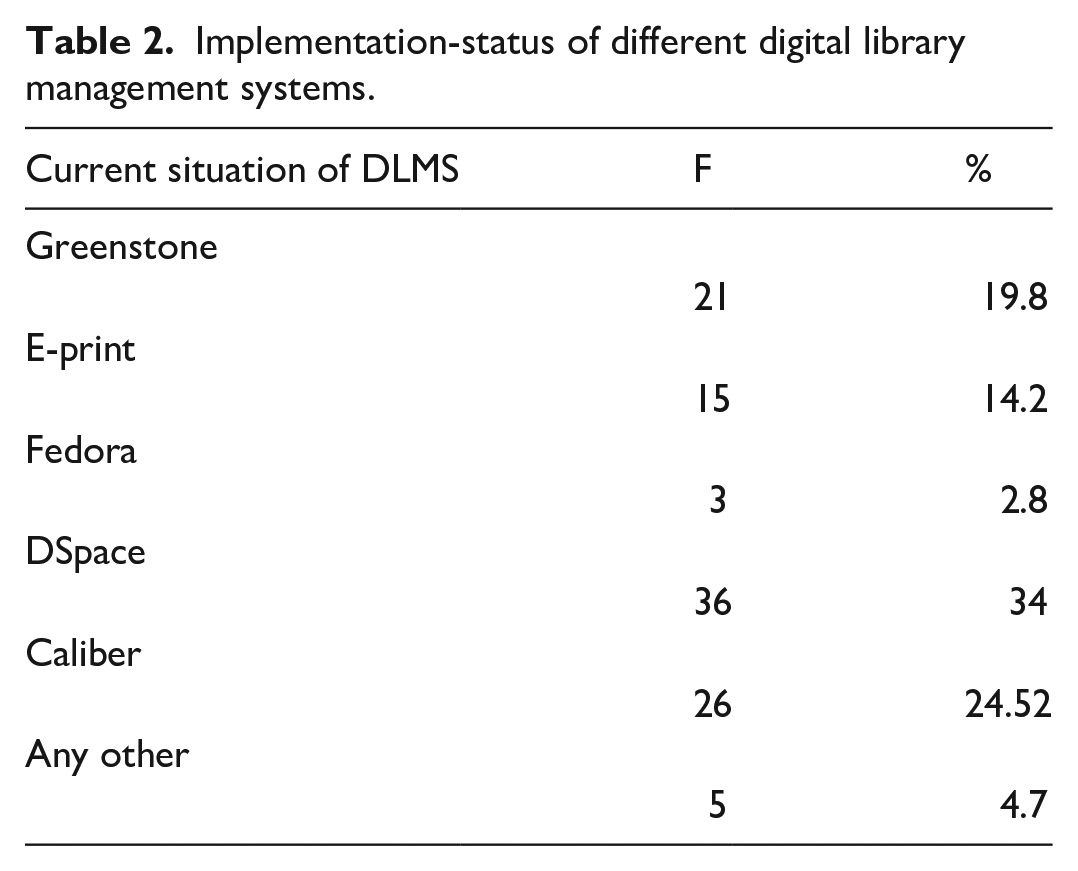
Results of the study revealed that the majority of the libraries were utilizing DSpace for digitizing collections. The second majority of the libraries were utilizing Caliber Software for managing digital content. The third preferred software was Greenstone while a few libraries had implemented E-print, Fedora, and other software for developing digital libraries of the collections (Table 2).
Implementation-status of different digital library management systems.
Key features of the digital library management system (DLMS) considered by library professionals
The findings of the study revealed key features of the digital library management system (DLMS) which were considered critically by library professionals in Pakistan to select any digital software. Results showed that the highest mean score remained for the feature: User-friendly interface (M = 4.50); customization/modification (M = 4.37); and software reliability and security (M = 4.30). Mean score ranging from 4.21 to 4.0 was received for 15 key features of the DLMS which included the use of metadata standards (Dublin Core), web-based, free and open-source, advance searching, consultancy & technical support, up-gradation with the new version, online downloading of metadata, metadata editing, add books (single, directory folder, ZIP/RAR, ISBN), file conversion in different formats, sharing e-books to devices (mobile, tabs), sending books via e-mail, blue tooth, social media apps, provision of a user account, provision of the interface in various languages (Urdu, Persian, Arabic), publishing digital library on DVDs, CDs, CD ROM. It meant that these features were considered essential while making a selection of DLMS by the library professionals working in the universities. No mean score was lower than 3.50 on the five-point Likert scale. Hence, almost all responses were ranging from “prefer and highly prefer.” Statistics proved that all features were considered essential by the respondents of the study who were quite versed in the implementation of the digital library system in their libraries (Table 3).
Key features of DLMS considered by library professionals.
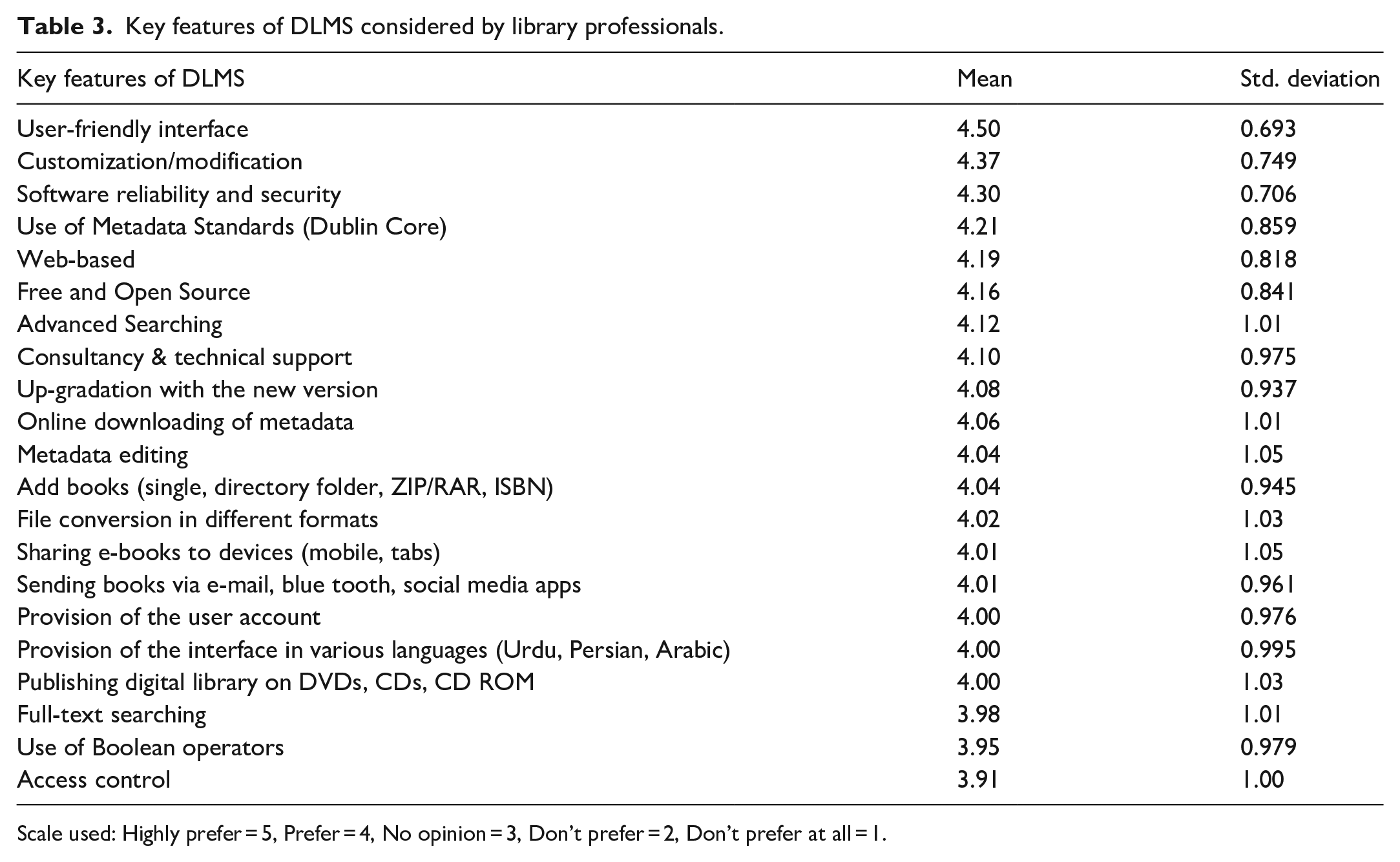
Scale used: Highly prefer = 5, Prefer = 4, No opinion = 3, Don’t prefer = 2, Don’t prefer at all = 1.
Results related to research hypothesis
An attempt was also made to find out significant differences in the opinions of library professionals related to key features of digital library management systems based on the participants’ university type. For this purpose, independent samples t-test was applied. Findings revealed that no significant difference was found in the opinions of library professionals related to key features of digital library management systems based on the type of their university. Hence, the hypothesis is accepted as statistically no significant difference has been observed (Table 4).
The difference in opinions of library professionals related to key features of DLMS based on university type.
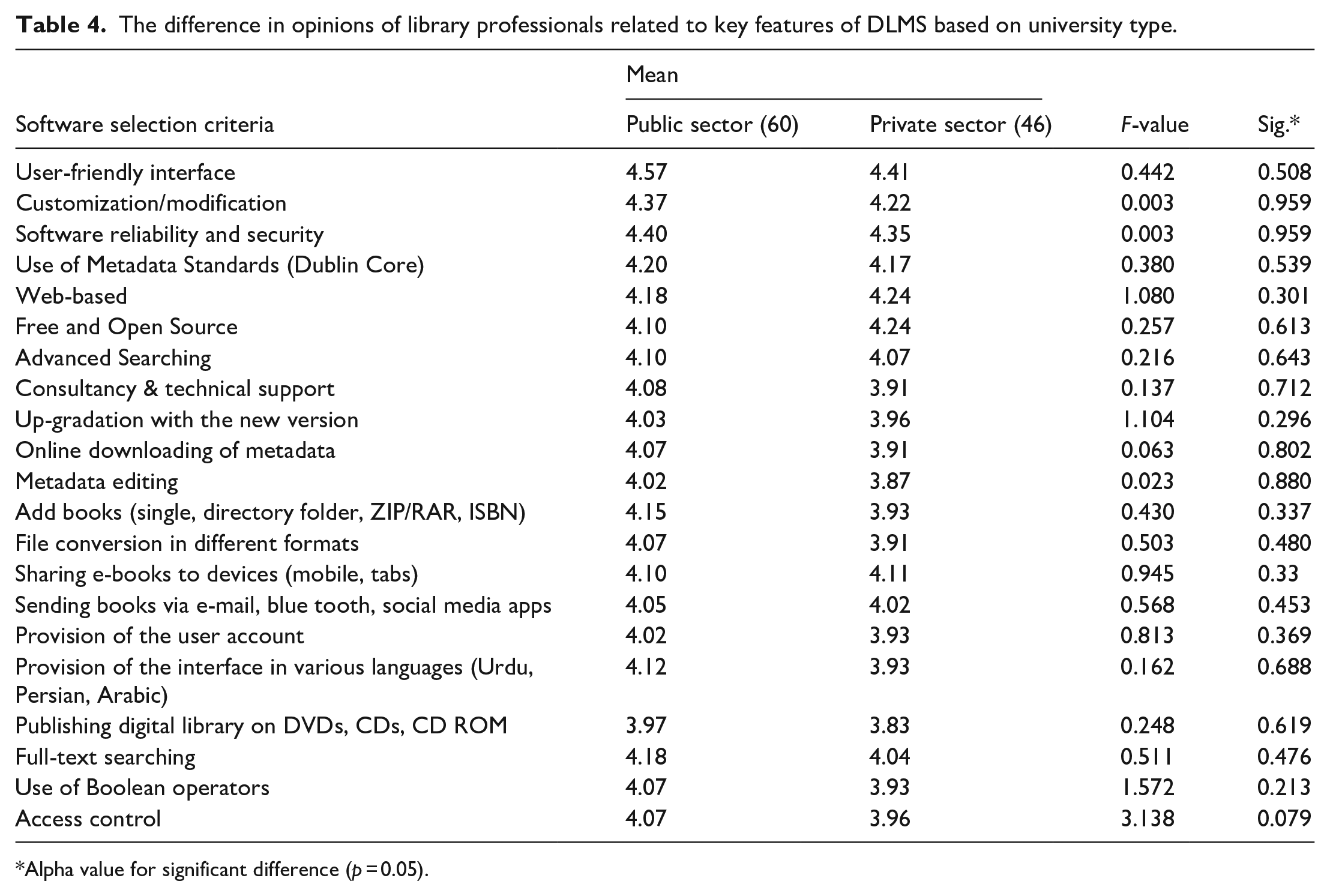
Alpha value for significant difference (p = 0.05).
Satisfaction with various facilities in DLMS
Respondents of the study showed satisfaction with various facilities in the digital library management systems. This satisfaction was related to different attributes of the DLMS which included installation, metadata assigning, searching facility, technical support, building collecting, developing users accounts, user-friendly interface, customization/modification web-based, developing a backup of the digital collection, sharing material to various digital devices via Whatsapp, Facebook, Bluetooth, and accessibility through social media apps. Results showed that the highest mean score remained for the statements installation (M = 4.24); metadata assigning (M = 4.19), and searching facility (M = 4.11). The overall mean score for all the facilities in the DLMS remained above value three which meant that the respondents were satisfied with various facilities of DLMS (Table 5).
Satisfaction with various facilities in DLMS.
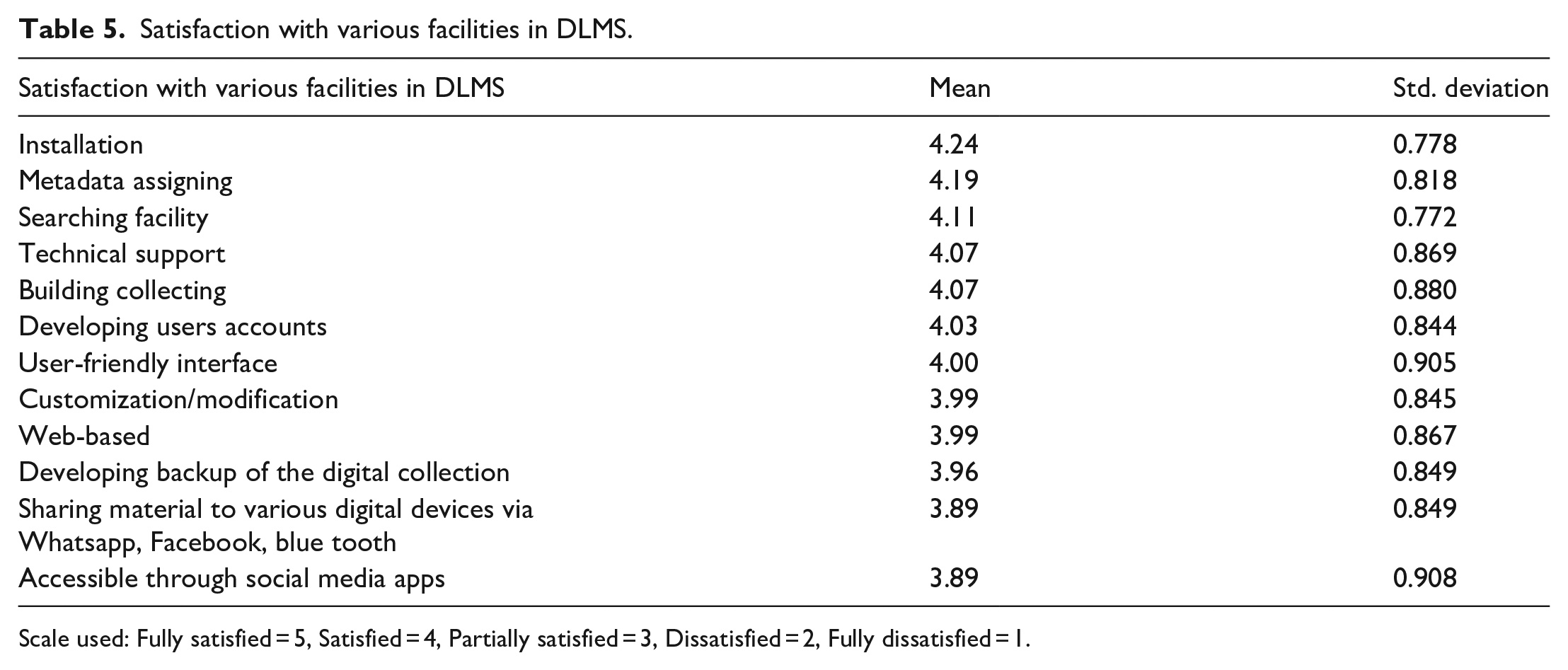
Scale used: Fully satisfied = 5, Satisfied = 4, Partially satisfied = 3, Dissatisfied = 2, Fully dissatisfied = 1.
Problems in developing a digital library
The findings of the study mirrored different common problems which were faced by the respondents in developing a digital library. These problems included inadequate IT-oriented skilled staff, inadequate IT infrastructure, scanner, computer systems, server, inadequate training opportunities, lack of funds, copyright issue for digitization, lack of institutional policy to develop the digital library, lack of support from higher authorities, lack of interest among staff and issues in operating digital library software due to bugs, error, abnormal behavior, slow speed etc. Results reflected that the top three mean scores were received for the statements, IT-oriented skilled staff (M = 4.12); inadequate IT infrastructure, scanner, computer systems, server (M = 4.08), and inadequate training opportunities (M = 4.06). It meant skilled manpower, adequate IT equipment, and adequate training opportunities were major factors that played a vital role in the development of digital libraries in the universities, and without these essential elements, a digital library management system could not be implemented effectively and efficiently. Respondents of the study agreed that they faced the problems of lack of support from higher authorities and lack of interest among staff in their work to develop an efficient digital library management system. The overall mean score for all the statements related to the common problems in developing a digital library is above 3.50 (Table 6).
Common problems in developing a digital library.
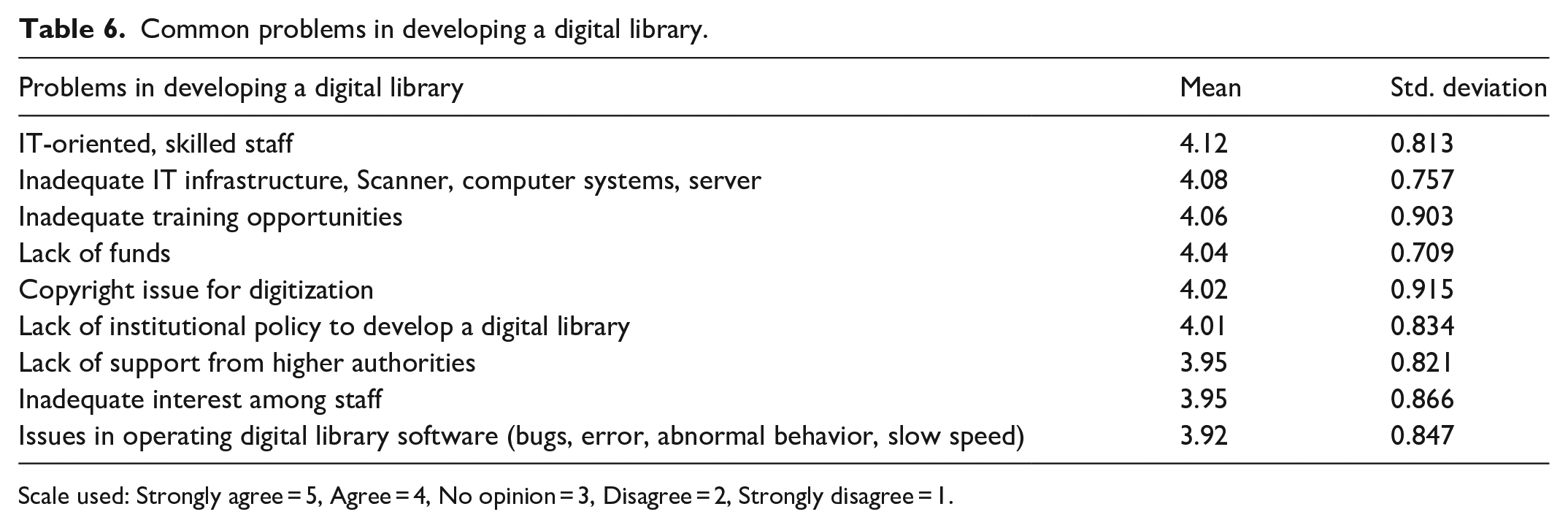
Scale used: Strongly agree = 5, Agree = 4, No opinion = 3, Disagree = 2, Strongly disagree = 1.
Discussion
Results of the study revealed that the majority of the participants were having adequate experience of working in digital libraries and they had good knowledge regarding the functioning of digital libraries and operating various functions such as digitization, online downloading of metadata, sharing e-books to devices (mobile, tabs), full-text searching, use of Boolean operators, developing user accounts, developing a backup of digital collections, sharing material to various digital devices via Whatsapp, Facebook, blue tooth, and social media apps through the digital library management system. These results are similar to the study conducted by Gkoumas and Lazarinis (2015) on digital library management tools. Okuonghae (2021) also concluded through his empirical study that library professionals were well-positioned to transform into digital content creators keeping in view the demands of digital era.
The majority of the library professionals were working on digital library projects and digitizing their information resources. D-Space was the most frequently implemented system for developing digital libraries in the universities. The majority of the respondents had implemented free and open-source DLMS in their university libraries. Reasons behind the implementation of a free and open-source system for developing digital libraries were its free availability and the availability of all features that usually existed in proprietary systems. Institutions and universities in the public sector in Pakistan usually couldn’t afford proprietary software. FOSS provided the source code and enabled library professionals for making essential customization in the systems according to the different needs of the library. Therefore, university librarians in Pakistan usually implement free systems for the provision of digital services to the end-users quickly and efficiently. The findings of the studies conducted by Rathee et al. (2020), Kato et al. (2021), Gurikar and Hadagali (2021), and Barrueco and Termens (2022) are at par with the above findings who concluded in their research that OSS played a positive role in the development of digital libraries with zero budget. Open access to educational resources was provided to the end users. Precious intellectual assets of the institutions were preserved effectively. Certain benefits were offered for the diverse needs and demands of the parent organizations. Multiple features of the free DLMS provided benefits to the end-users in the provision of easy access to required information resources.
Pakistan is an under developing country and the majority of the university libraries particularly in the public sector are facing an acute shortage of financial resources and on account of inadequate budget, proprietary software can’t be purchased to implement. DSpace is a FOSS software for developing digital libraries and the majority of the libraries were using this software. It has all the features of a proprietary DLMS and provides a good opportunity for the university library workforce to develop digital collections for the provision of innovative services to the end-users. Hanumappa et al. (2014) also found similar results in their study that DSpace was the most used institutional repository development software in 102 academic libraries in India. Shjitha (2020) also inferred that free digital library software ensured long term preservation of the institutions’ information resources and full text access to the content was provided to the users via modern methods.
The findings of the current study showed that library professionals working in university libraries in Pakistan had a sound experience of working in fully digitized libraries. They mentioned certain key features that should be available in DLMS to develop the digital libraries. Respondents of the study indicated that DLMS should offer a user-friendly interface so that users might search and explore required literature/content/material without having faced any ambiguities. Option of different languages that is English, Urdu, Persian, Arabic, etc. should be available in the interface to facilitate the diverse digital needs of the users. Advanced searching options should exist in the system for bringing easiness to the users. Full-text searching should be provided to the end-users so that they might be facilitated during the process of performing certain tasks. Availability of advanced searching is always considered a pertinent feature of any good online information retrieval system. Advanced searching provides multiple options and filters to the users for searching documents according to desired type that is according to the title, author, publisher, date, place of publication, edition, specific range of years, language, content type, discipline, etc. It enables users to retrieve results according to relevant queries and saves their precious time from the retrieval of irrelevant content. It is obvious that a user-friendly interface of the DLMS proves productive for the end-users and if relevant material is not found by the users after the search process then the software cannot serve the purpose of the digital library. A good DLMS is always considered user-friendly in terms of a well-designed interface, search queries, basic & advanced search options, availability of search history, etc. Feature of the interface is highly necessary as recommended by respondents. Rathee et al. (2020) also recommended similar features in their study which are essential to developing digital institutional repositories. Moreover, Hazarika et al. (2020) also mentioned resembling features of an open source digital library system in his study. The authors stated that digital library system not only stored the intellectual assets for long term preservation but also provided customized services to the users for their facilitation.
Participants mentioned that DLMS should have the feature of customization because technological innovations keep on changing quickly and new versions of the software replace the old ones with time so in this context; the feature of customization/modification is vital for any DLMS. Customization is a pertinent feature of the DLMS as reported by the respondents of the current study. It enables library professionals to make additions to the system according to the changing needs of the users and with the arrival of new patterns and approaches in the services. If DLMS does not offer the feature of customization, then the system will become outdated due to rapid technological developments and users’ information needs will not be satisfied and it will cast a negative effect on the satisfaction level of the working librarians as well as library users. This feature is very vital for any digital software for meeting future needs. FOSS makes provision of the unique feature in customizing any required option to the library professionals as compared to any proprietary software. This feature is similar to the results of the study conducted by Miller and Khera (2010) on the features of digital library management systems. Paskali et al. (2021) also mentioned that DLMS provided customized services to the users and information and research needs of the researchers were satisfied in a friendly manner.
Respondents recommended that a good DLMS should possess the features of reliability and security. Reliable software functions accurately in performance and produces relevant results to the users when they search for any topic. If required material is not provided to the end-users then DLMS may not be reliable. Security of the DLMS is of great concern as precious data exists in digital library collections so there should be a safe and sound security mechanism so that hackers may not attack the system. This result is similar to the results of the study conducted by Sheikhshoaei et al. (2018) on digital library features. Wu et al. (2021) also recommended the features of security privacy and reliability of the DLMS in their study. They concluded that DLMS should ensure readers’ privacy protection when they accessed to digital content.
An important feature of the DLMS reported by the respondents was the availability of a web-based facility in the software for the development of a server to keep information resources of the library on the web. This feature enables library professionals to make online visibility of digital collections around the world for ensuring remote access to bibliographic and full-text content to the interested users. The web-based facility is a major feature that must be available in any DLMS as it facilitates the library workforce to supervise and operate the system from any venue. This feature has also been mentioned by Hoe-Lian Goh et al. (2006) who developed a checklist to evaluate the features of four open-source digital library software. Mandal (2022) also stated that web-based provision in a DLMS saved readers’ time and enabled them to access to required content quickly and efficiently anytime and from anywhere.
Findings of the current research mirrored that the feature of metadata standard (Dublin core) should be available in any DLMS for the digitization of library collections. Through the availability of metadata in DLMS, library manpower can migrate and share digital collections with other systems without working manually. This feature saves precious time for library professionals and brings efficiency to different operations of the digital library. Metadata standard assists library professionals to avoid duplication of records and support in sharing library resources efficiently. It provides the facility to receive cataloging data that is reliable and predictable. Feature of metadata standard was also reported by Gkoumas and Lazarinis (2015) who found that open-source digital library management tools provided support for metadata and interoperability protocols. Mehta (2021) also concluded that metadata standards determined users’ satisfaction with the DLMS.
Other worth mentioning features recommended by respondents of the study include the usage of Dublin core, online downloading of metadata, sharing e-books to devices (mobile, tabs), provision of the user account, and consultancy & technical support. All these features are highly essential for any digital library management system (DLMS). Technical consultancy & support is a leading feature of any software for developing a digital library. For proper maintenance and smooth functioning of the system, technical assistance is highly essential because library professionals very often can’t manage all operations involved in the DLMS single-handedly and they depend upon technical experts for removing any bugs in the system which occur due to certain reasons. A technical team is highly required for the implementation of any digital library management system. The feature of consultancy & technical support is also highlighted in other studies conducted by Hassan et al. (2018), DeRidder (2007), Jabeen et al. (2018), Koch et al. (2019), and Ahammad (2019).Without adequate technical support of the experts, successful functioning of the DLMS is difficult to sustain; therefore, university leadership should allocate separate budget for seeking constulancy and technical support at the time of need.
Conclusion
In most of the university libraries in Pakistan, FOSS has been implemented. DSpace, Greenstone, and Caliber are widely utilized in the libraries. DSpace is the most frequently used software by university library professionals in Pakistan. Key features of the digital library management system (DLMS) include the availability of all important modules, user-friendly interface, customization/modification, software reliability and security, use of metadata standards (Dublin Core), web-based, free and open-source, advanced searching, consultancy & technical support, up-gradation with the new version, online downloading of metadata, metadata editing, add books (single, directory folder, ZIP/RAR, ISBN), file conversion in different formats, sharing e-books to devices (mobile, tabs), sending books via e-mail, blue tooth, social media apps, provision of the user account, provision of the interface in various languages (Urdu, Persian, Arabic), publishing digital library on DVDs, CDs, CD ROM, full-text searching, use of Boolean operators, and access control.
It is concluded that the above-described features are very essential, and a good DLMS must have the availability of all these features for the provision of innovative digital library services to the community.
Given Figure 1 provides a graphical representation of key features of DLMS for the successful projects related to the digitization of university libraries.
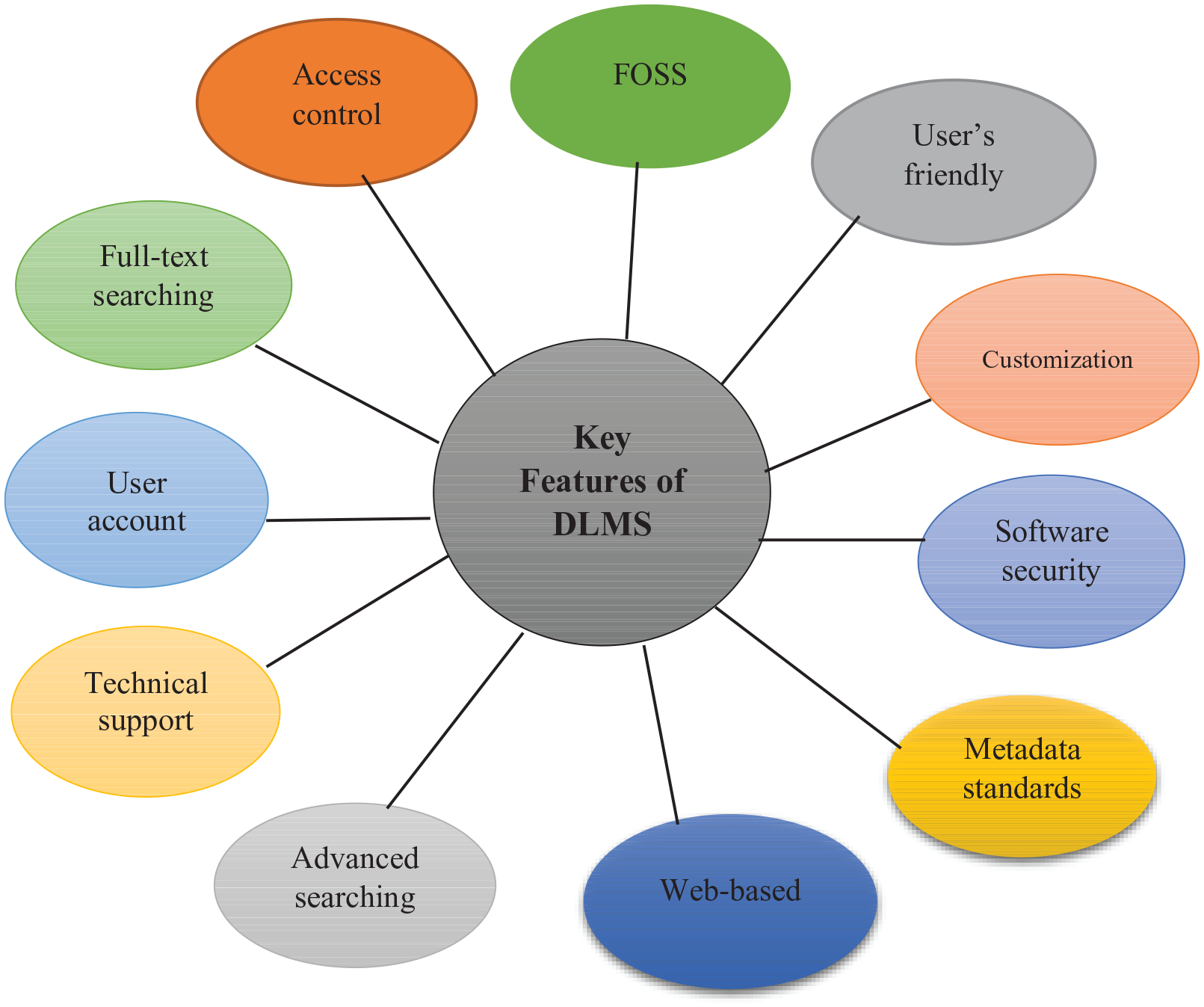
Key features of DLMS for library digitization.
Recommendations
Library professionals should be careful while choosing any digital library software for the development of a digital library. The selection and implementation of a poor system possessing inadequate features and unavailability of essential modules can create a great barrier in developing a digital library. All key features, essential modules, and important attributes of the DLMS should be considered carefully. As in most of the libraries, DSpace software is being utilized for developing digital libraries due to its free accessibility and the availability of all key features so it is recommended that librarians must consider the use of DSpace because it meets all basic needs which are necessary for library digitization. Uniform policy regarding the development of digital libraries should be shaped by relevant stakeholders for implementing similar standard software for creating digital library systems.
Limitations and future research
This study is based upon key features of the digital library management system (DLMS) for developing digital libraries in Pakistan. Future researchers may research comparative analysis of different digital library management systems.
This study covered the population of the Punjab province of Pakistan. Future studies can cover the other three provinces of the country to empirically measure the opinions of expert library professionals engaged in digital library projects about key features of DLMS.
This study is limited to the key features, different digital library systems, satisfaction levels, and problems being faced to build digital libraries in Pakistan. Future researchers may explore other dimensions related to digital libraries that is digital rights management, digital content disaster management, and the relationship between digital efficacy and adoption of the digital library system in the universities.
Footnotes
Declaration of conflicting interests
The author(s) declared no potential conflicts of interest with respect to the research, authorship, and/or publication of this article.
Funding
The author(s) received no financial support for the research, authorship, and/or publication of this article.
