



Abstract
New technological developments, the availability of big data, and the creation of research platforms open a variety of opportunities to generate, store, and analyze research data. To ensure the sustainable handling of research data, the European Commission as well as scientific commissions have recently highlighted the importance of implementing a research data management system (RDMS) in higher education institutes (HEI) which combines technical as well as organizational solutions. A deep understanding of the requirements of research data management (RDM), as well as an overview of the different stakeholders, is a key prerequisite for the implementation of an RDMS. Based on a scientific literature review, the aim of this study is to answer the following research questions: “What organizational factors need to be considered when implementing an RDMS? How do these organizational factors interact with each other and how do they constrain or facilitate the implementation of an RDMS?” The structure of the analysis is built on the four components of Leavitt’s classical model of organizational change: task, structure, technology, and people. The findings reveal that the implementation of RDMS is strongly impacted by the organizational structure, infrastructure, labor culture as well as strategic considerations. Overall, this literature review summarizes different approaches for the implementation of an RDMS. It also identifies areas for future research.
Keywords
Introduction
Technological advances, such as new measurement devices, conjunction of measurement platforms, and the utilization of artificial intelligence, open new opportunities to generate, store, and analyze research data (Royal Society, 2012). Publicly funded universities and research institutes (HEI) are increasingly required to implement a research data management system (RDMS) to ensure the sustainable usage of research data and to utilize the full potential of it. To ensure such an implementation, both technical and organizational solutions need to be combined. With regard to technical solutions, it will be for example necessary to develop and maintain an adequate IT-infrastructure that ensure tasks like long-term storage and curation of the generated data (Gonzalez and Peres-Neto, 2015). Yet, these technical solutions require organizational solutions such as the development of support services, further education courses, as well as a sustainable financial base to ensure a long-term deployment of the IT-infrastructure and support services. Furthermore, the sustainable handling of research data requires a change in the behavior of scientists and creates new responsibilities and tasks (RfII, 2016). To foster this cultural change, scientists, support staff, as well as the management, need to understand the complexity that make up an RDMS.
A deep understanding of the requirements of research data management (RDM), as well as an overview of the different stakeholders, is a key prerequisite for the implementation of an RDMS. However, prior research mainly addressed individual components of an RDMS such as technical issues (e.g. Mayernik, 2016; Willmes et al., 2014) and single organizational factors such as the implementation of policies (e.g. Ahmadi et al., 2016; Higman and Pinfield, 2015), definition of roles of different institutional units (e.g. Cox and Verbaan, 2016; Verbaan and Cox, 2014), user needs (e.g. Anderson et al., 2007; Wiley and Mischo, 2016), as well as the various perspectives of different actors such as librarians (e.g. Corrall et al., 2013; Tenopir et al., 2014) or scientists and their attitudes toward data sharing (e.g. Fecher et al., 2015; Tenopir et al., 2011). While all these topics are individually relevant for the implementation of an RDMS, they do not capture RDMS’ complexity. Therefore, the purpose of this study is to identify and examine the main organizational factors that need to be considered when implementing an RDMS in HEI. In particular, this study investigates the following two research questions “What organizational factors need to be considered when implementing an RDMS? How do these organizational factors interact with each other and how do they constrain or facilitate the implementation of an RDMS?”
To address these research questions, this study utilizes a systematic literature review. Based on a document analysis of position papers about RDM and information infrastructure from scientific commissions, the organizational factors for an RDMS were identified and a search strategy for the review created. The review aims at summarizing the existing research findings about the organizational factors of RDMS, including an illustration about the interrelation of them. Furthermore, it discusses the potential future role of the library within RDMS.
This study contributes to the existing literature on RDM (e.g. Cox and Pinfield, 2014; Joo and Peters, 2020; Perrier et al., 2017; Pinfield et al., 2014; Tenopir et al., 2014). In particular, it identifies and systematizes the components that make up RDMS implementation. It will also help to better understand the complexity of this politically driven topic which could be seen as one brick of the open science movement (OECD, 2007; RfII, 2016; Royal Society, 2012). In addition, it will support the management of HEI in order to decide about the next steps for the implementation of an RDMS and the libraries to enhance their service profiles.
Research context
RDM in HEI
The claim to make data findable, accessible, interoperable, and reusable (FAIR) as well as to produce publicly accessible knowledge (OECD, 2007), could be understood as foundation for HEI to implement an RDMS to coordinate, store, and utilize research data. Research funding agencies like the American National Science Foundation (2020), the Australian National Health and Medical Research Council (2021), or the German Research Foundation (DFG, 2019) integrated the necessity to manage and share research data already in their policies. HEI need to take these requirements into account to apply for third-party funding as well as to stay competitive (RfII, 2016). Scientific commissions argued that the adoption of a strategy for RDM with a definition of responsibilities and aims would be appropriate (DFG, 2018; RfII, 2016). Furthermore, policies and guidelines should operationalize the strategy (RfII, 2016).
An RDMS is based on the implementation of adequate infrastructure as well as support services, like the curation of data and access control. These need to be user-oriented and assigned by a clear definition of responsibilities and role profiles (KII, 2011; RfII, 2016; Wissenschaftsrat, 2001). With the definition of new responsibilities, the importance of collaboration and incorporation of different institutional units like the IT-department, research office, legal department, and library increases (RfII, 2016). In addition, further education courses for researchers in all career stages and support staff (DFG, 2018; European Commission, 2010; KII, 2011; RfII, 2019; Wissenschaftsrat, 2012) as well as potential incentives for researchers (RfII, 2019) need to be established. The running expenses of infrastructure as well as support services underline the importance to ensure long-term financing (Wissenschaftsrat, 2011) and to decide strategically about the configuration of an RDMS (RfII, 2016).
In summary, the scientific commissions presented that the implementation of an RDMS will influence the organizational structure, technology, as well as employees. Moreover, HEI are compelled to establish technical and organizational solutions under a limited budget. The requirements for an RDMS are manifold and interact with each other. A separate consideration does not appear to be purposeful. The application of an organizational change model can help to visualize the complexity and to assess the current level of the HEI.
Models of organizational change
Organizations are part of the environment and characterized by a variety of sociocultural constructions (Draft, 2013). Due to the strong connection between the organization and the environment, the occurrence of exogenous disturbance can be a trigger for organizational change (Micelotta et al., 2017). To understand the characteristics of organizational change, the context, content, process, as well as outcomes need to be considered (Pettigrew et al., 2001). Depending on its aim, organizational change models visualize change processes or highlighting influencing factors. Dating back to 1950, several models emerged to describe organizational change from various perspectives like Lewin’s (1951) episodic change model, the Burke-Litwin causal model of organizational performance and change (Burke and Litwin, 1992), Nadler-Tushman congruence model (Nadler and Tushman, 1997), or Leavitt’s (1965) classical model of organizational change. In a literature review, Rosenbaum et al. (2018) argued that within the past 50 years organizational change models did not develop into anything completely new, but the existing models does reflect the interplay between context, processes, and outcome with varying depth. Thus, the models appear to be outdated, but they are still applied in research.
With the initiation of an organizational change, like the implementation of new technologies, impacts on a variety of processes and factors within the organization can be expected (Leavitt, 1965). It is appropriate to assess the current level of the organizations’ activities and processes beforehand. Leavitt’s classical model of organizational change defines organizations as multivariate systems with the components task, structure, technology, and people. These components are interwoven and the change of one component will influence the other components. The model highlights the impact of organizational change through the technological, structural, and human perspective. It suggests that organizational change can be realized when the four components are balanced. The component “task” describes the products and services an organization wants to offer. Hence, the other components are influencing factors. “Structure” addresses the division of labor and its coordination (Mintzberg, 1979), whereas “technology” sheds light on the tools to realize the task. The component “people” refers to the employees and stakeholder of the organization.
Due to the component “technology,” the model was especially adopted by research about knowledge management and information systems in the previous years (e.g. Dahlberg et al., 2016; Liao and Teo, 2018; Lyytinen and Newman, 2008; Sluyts et al., 2010; Zhao and Yang, 2017). Furthermore, it was expanded and further developed in different ways (e.g. Dahlberg et al., 2016; Rockart and Scott Morton, 1984). Although the model does not explain the particular steps for organizational change, it is useful to emphasize the complexity of a change process.
The recommendations of the scientific commissions underlined that an RDMS need to combine organizational and technical solutions. Leavitt’s classical model of organizational change opens the opportunity to explain and visualize the interrelation of the challenges for the implementation of an RDMS and reflects the complexity of it. For this literature review the component “task” of the model was defined as the responsibility of HEI to ensure research under good scientific practice. The component “structure” addresses the organizational factors which influence the division of labor and its coordination within the RDMS but also on the organizational level of the HEI. The component “technology” reflects the need to establish an adequate infrastructure for the implementation of an RDMS. The component “people” represents the necessity to develop a culture for data handling (cf. Figure 1).
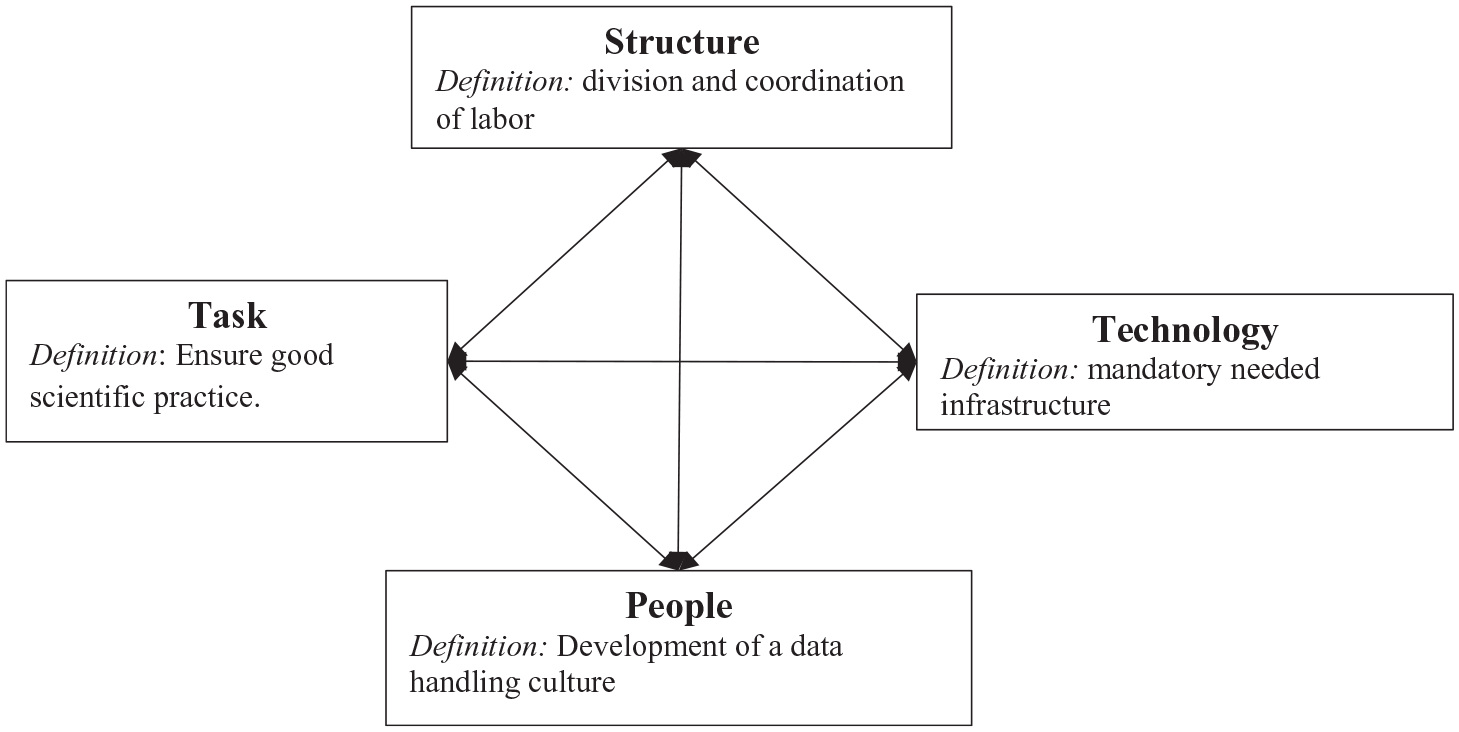
Leavitt’s classical model of organizational change supplemented by the definition of the components for the literature review.
Method
In defining the scope for this literature review, position papers which focused on information infrastructures and RDM of scientific commissions like the RfII (2016, 2019) or the Wissenschaftsrat (2001, 2011, 2012) in Germany as well as the European Commission (2010, 2018) were analyzed and organizational factors for the implementation of an RDMS identified. Based on these recommendations and Leavitt’s (1965) classical model of organizational change, organizational factors for the implementation of an RDMS were identified and a search strategy was developed (cf. Figure 2).
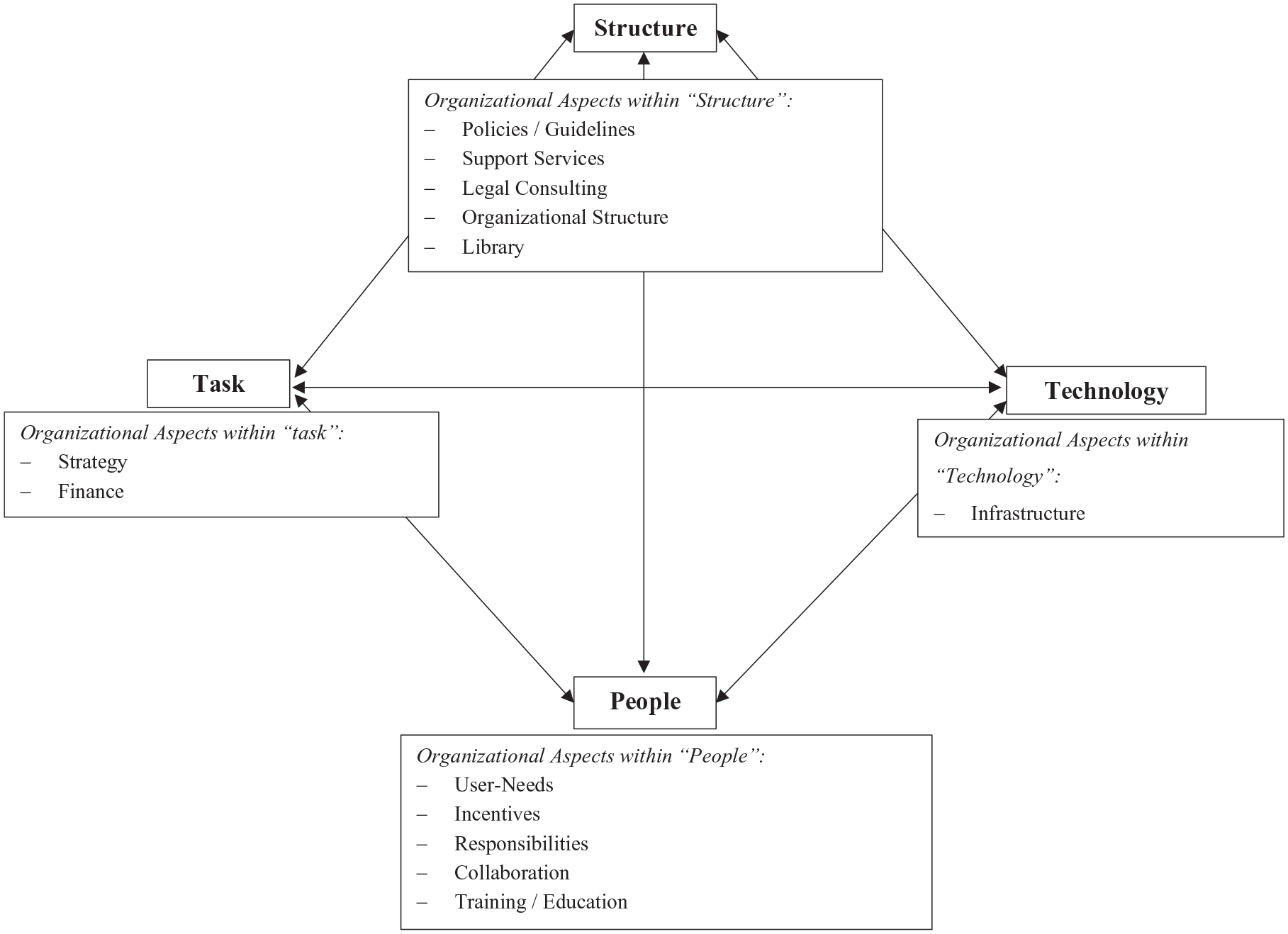
Leavitt’s classical model of organizational change and the assigned organizational factors.
The search strategy was performed with the help of Boolean operators with the focus on the terms “Research Data Management,” “Research Data Management System,” and “Research Data Service.” Following the identified organizational factors, keywords like “infrastructure” or “strategy” were added. The following search string was conducted: ((“research data management” OR “research data management system*” OR “research data service*”) AND (guideline* OR manual* OR policy OR policies OR “data culture” OR infrastructure OR “user needs” OR “legal advice” OR “legal consult” OR “legal cooperation” OR “data privacy” OR “data protection” OR copyright* OR “author* right*” OR education OR training OR library* OR reputation OR incentive* OR citation* OR strateg* OR finance))
To find appropriate literature to answer the research questions, the search was conducted in the digital libraries Web of Science, Scopus, and EBSCO host on 21 April 2021. It was not limited by research discipline or study design and focused on published articles till 2020. It included research studies, conference papers, practice papers, and books. Literature in English as well as German were included. Furthermore, the search was supplemented by reference checking, hand searching, and author searching.
The PRISMA statement and the appropriate flow diagram were used for the selection of the studies (Moher et al., 2009). Following the identification of the literature body, duplicates, and studies in other languages than English or German were excluded. 1.021 abstracts were screened. In this screening stage an exclusion of 733 studies took place because they did not focus on the organizational factors in regard to the implementation of an RDMS. Subsequently 288 studies in full-text were screened. All identified studies highlighted at least one interrelation between the identified organizational factors. Following the practice of serval prior literature reviews, studies were excluded which did not mainly focus on the purpose of the research questions. For example, Meineke et al. (2018) or Lee and Stvilia (2017) were excluded because of their focus only on technical aspects. Moreover, studies which only investigated the role of libraries and did not focus on further organizational factors were excluded (e.g. Johnson, 2019; Koltay, 2019; Payal et al., 2019). Hence, 187 studies were excluded in the eligibility stage. Using this systematic approach, 101 studies out of 1.021 research results were identified (Figure 3). Appendix Table A1 outlines the criteria for inclusion and exclusion of the studies.
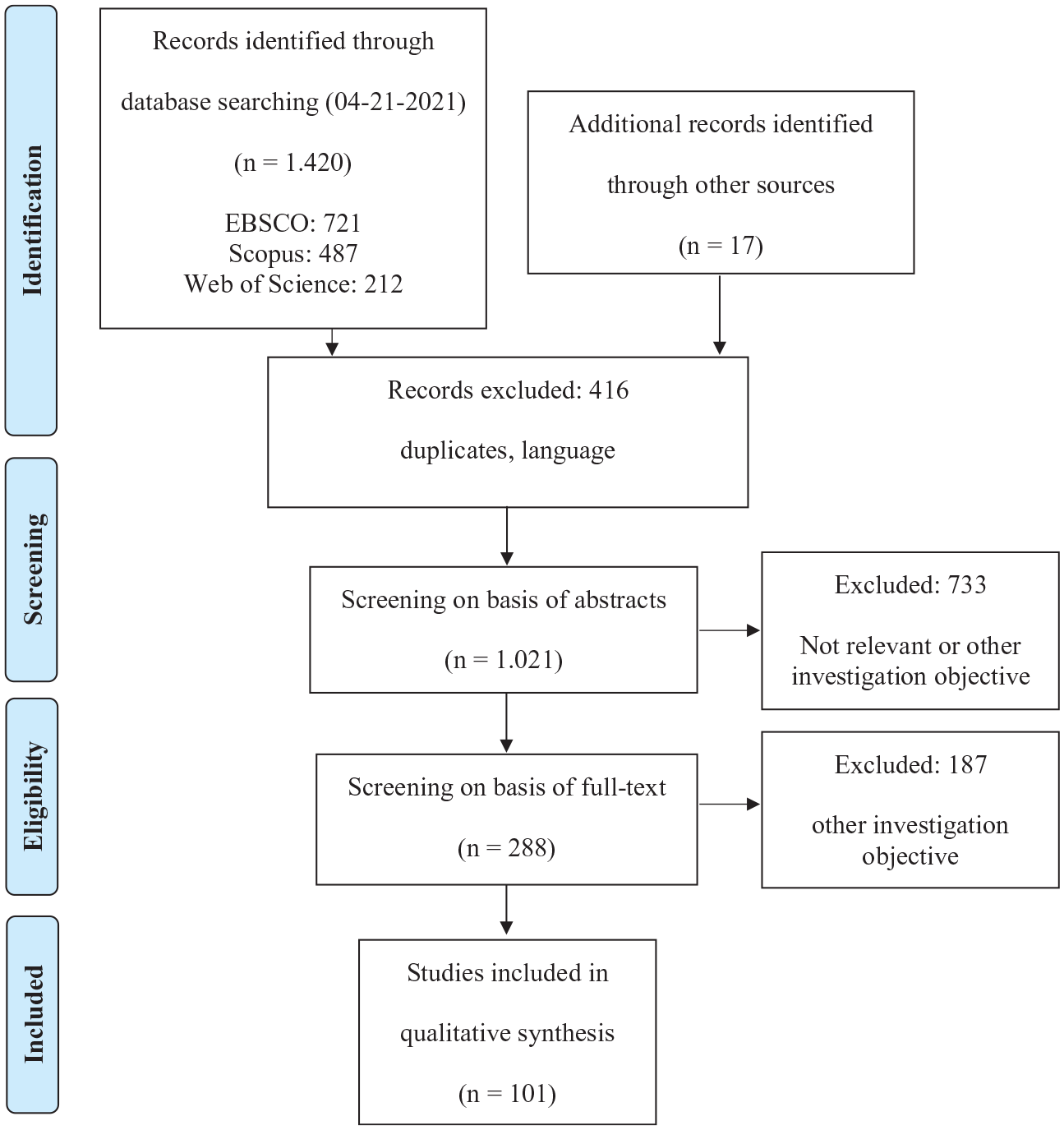
PRISMA flow diagram.
Findings
Bibliographic findings
Although the discussions about RDM are young and organizational issues seem not to be the focus, the earliest relevant study of this literature review was published in 1980 by van Hoose and Leaders (1980). Not until 2010, further studies relevant for the sample were identified. 70% of all identified studies were published from 2016 to 2020, which reflects the increasing relevance of RDM (cf. Figure 4).
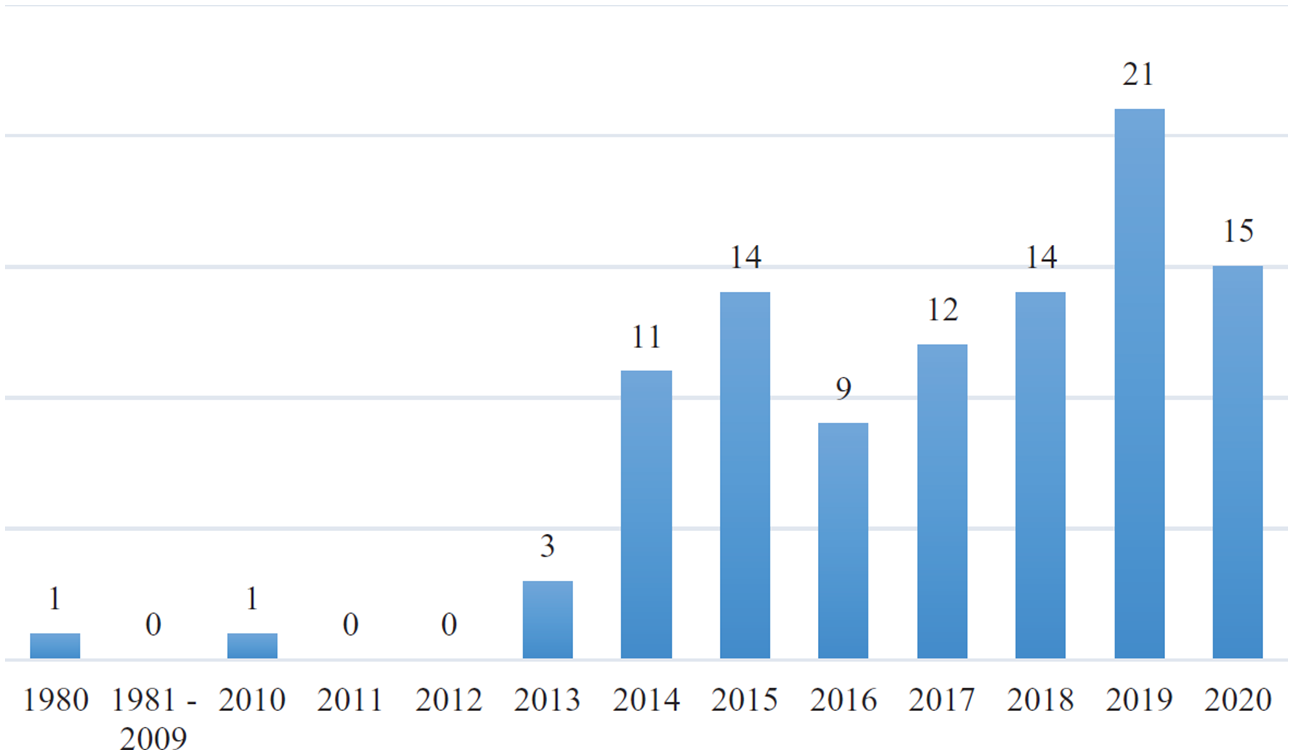
Distribution of studies over time.
The studies of the literature review were published in 49 journals, four books, and eight conference volumes. Most studies (61%) were published in journals with the focus on “library” or “library and information science.” The remaining studies were published in research fields like “information management,” “business management,” “medicine,” or “multi research fields.” Case studies were the most prominent research design (36%). The sample is completed by descriptive, quantitative, qualitative studies, as well as two literature reviews.
Most of the studies (69%) were published by lead authors from North America, UK, Australia, or Europe. This focus on the “global north” is complemented by lead authors from China, Singapore, and Japan (6%), from India, Pakistan, Saudi Arabian, Jordan, and Iraq (14%) as well as from Africa (11%).
To get an idea how the studies defer to the components of Leavitt’s (1965) organizational change model (task, structure, infrastructure, people), every study was read and organizational factors were assigned to them. Based on the differences within the research design and origin, the studies discussed the identified organizational factors with varying depth. The necessity to focus on user-needs as well as the importance of collaborations for the implementation of an RDMS were the organizational factors with the most attention. The importance to develop policies/guidelines as well as education courses were frequently highlighted, too. Although the scientific commissions emphasized the need to ensure a sustainable financial base for an RDMS as well as to consider incentives (Wissenschaftsrat, 2011, 2012), these two organizational factors were barely in the focus of the study sample. Furthermore, data handling is related to legal issues like data security, protection, or copy rights. Nevertheless, just 12 studies discussed this organizational factor. Especially the practice and conference papers highlighted the importance to deal with legal issues.
Component: Task
Based on the definition of the component “task,” to ensure good scientific practice, the need to develop a strategy and to ensure a sustainable financial base for RDM were assigned. Authors which addressed the development of an RDM strategy named the definition of institutional goals, responsibilities, potential incentives, and the allocation of resources as cornerstones (Aydinoglu et al., 2017; Bellgard, 2020; Coates, 2014; Jones, 2014; Pryor, 2014a; Shen and Varvel, 2013). Jones (2014) proposed to analyze the current position of the HEI and to describe possible activities to reach the goals concerning RDM as starting point. Due to the large number of aspects to consider, Cox et al. (2016) as well as Cox and Verbaan (2018) discussed the development of an RDM-strategy under the interpretation of RDM as a wicked problem. This could help to manage expectations, to adapt a creative approach and to ensure openness for the variety of aspects. Whyte (2014) emphasized the necessity to provide a flexible RDMS which can react to technical developments and changing needs. It can be concluded that the strategy needs to be initiated by the management as a top-down approach. The implementation of an RDMS will lead to financial expenses for infrastructure and human resources. Singh et al. (2018) underlined the importance to analyze necessary investments. Furthermore, these investments are related to running expenses which need a secure financial base (Pryor, 2014a). Especially two studies agreed that core elements of the infrastructure and services need to be financed by the institutional budget (Shen and Varvel, 2013; Wilson and Jeffreys, 2013). Moreover, Wilson and Jeffreys (2013) discussed the option to charge further services for RDM against research projects. Shen and Varvel (2013) approved this idea and suggested to finance the costs by charging RDM-services with a small percentage against the awarded grant. Moreover, Clare et al. (2019) summarized exemplary activities of bottom-up and top-down approaches for the implementation of an RDMS which were supplemented by information about costs for the initiatives, target audience and ease of implementation.
These organizational factors already highlight the strong interrelation to the other components of Leavitt’s classical model of organizational change, like the implementation of new infrastructure, services, or further education. Furthermore, the operationalization of a strategy will influence the culture for RDM within the HEI and could be realized through policies and guidelines.
Component: Structure
The component “structure” can be interpreted in two ways which are not completely selective. On the one hand, the implementation of an RDMS could lead to changes within the organizational structure of HEI, like a new service profile of the library, the offer of legal consulting or changes in the allocation of resources. On the other hand, the component “structure” summarizes the organization of an RDMS which is influenced by policies/guidelines, support services, as well as the coordinating unit.
With the requirement to handle public funded data in a sustainable way (OECD, 2007), researchers face new responsibilities. The implementation of an RDMS will support researchers but could also lead to a change within the organizational structures of HEI. These changes can be realized through new services or the reconfiguration of existing ones to support researchers in the handling of data (Blask and Förster, 2020; Castle, 2019; Cruz et al., 2019; Verbaan and Cox, 2014), the collaboration between different institutional units to realize or advance services and infrastructure (Mohammed and Ibrahim, 2019; Whyte, 2014) or the reallocation of resources in favor of infrastructure or human resources/further education for RDM activities (e.g. Chiware and Mathe, 2016; Cox et al., 2019; Schirrwagen et al., 2019). In addition, the organizational structure of a HEI will be influenced by the degree of an RDMS’ centrality, too. Castle (2019) distinguished between a centralized, discipline-specific, or mixed approach for an RDMS. A centralized RDMS can realize the communication of the strategy, the development of a policy and general support in an efficient way, whereas a discipline-specific RDMS responds to the specific needs of the scientists (Castle, 2019). A mixed approach combines general education courses with very specific consultation offers for different research disciplines but could increase the complexity for the implementation process.
The study sample agreed that RDM is a multi-stakeholder process. Its implementation will influence the responsibilities and tasks of various institutional units. Especially libraries were mentioned as ideal coordinator for RDM activities because they already manage and link research output (e.g. Cox and Pinfield, 2014; Guss, 2016; Joo and Peters, 2020). Although the library has good preconditions for RDM, additional technical skills are needed as well as collaborations with other institutional units (e.g. Cox and Pinfield, 2014; Saade and Rahme, 2017). The potential impact of an RDMS on the service profile of the library will be presented in the discussion section.
Quantitative and qualitative studies emphasized that researchers interpret legal issues as a main barrier to share and handle their data (e.g. Bunkar and Bhatt, 2020; Saeed and Ali, 2019; Singh et al., 2018; Tripathi and Pandy, 2018). The establishment of legal consulting could decrease these barriers. Hence, the importance to incorporate the legal department or ethic review boards for specific question in the research process increases (Blask and Förster, 2020; Jackson, 2018) and can enhance the responsibilities as well as service profiles of this unit. Copy rights, intellectual property rights, data security, or data ethics were named as examples for legal issues (e.g. Bunkar and Bhatt, 2020; Ostendorff and Linke, 2019; Singh et al., 2018). Helbig et al. (2019) emphasized the variety of legal issues and concluded that HEI need to create structures which combine existing and new expertise for these specific questions.
Apart from the impact of an RDMS on the organizational structure of the HEI, the organization of the RDMS itself is important, too. Policies or guidelines lay the foundation for the organizational structure because they operationalize the strategy and define specific activities as well as responsibilities (Pinfield et al., 2014). A policy could be developed together with an RDM strategy. Cruz et al. (2019) as well as Hiom et al. (2015) proposed the development after the implementation of several support services or investments in infrastructure. Cox and Verbaan (2018) confirmed this perspective and explained that pilot services could be useful “to prove the nature of need” (p. 96). Furthermore, Schmidt and Dierkes (2015) as well as van Zeeland and Ringersma (2017) emphasized the importance to incorporate users for the development of policies and guidelines because these documents must correspond to various needs of the research disciplines. In addition, the studies revealed that besides the institutional policy also the funder as well as the journal data policy influence the behavior of scientists (Briney et al., 2017; Higman and Pinfield, 2015). In the development of an institutional policy, it will be necessary to be aware of existing funder and journal policies to prevent contradictions.
Services for RDM will characterize the RDMS, can increase the acceptance of researchers to adapt the new requirements in data handling (Plomp et al., 2019), and underline the commitment of the management for RDM. These services can include training, consultation, as well as data management planning services (e.g. Buys and Shaw, 2015; Jones, 2014; Joo and Peters, 2020; Pinfield et al., 2014; Yu et al., 2017). The study sample underlined that these services need to be user-friendly and should be oriented on the needs (Eifert et al., 2016; Hofeditz et al., 2020; Palumbo et al., 2015) which emphasizes the strong interrelation between the components “structure” and “people” of Leavitt’s model.
Component: Technology
Besides policies and culture, the study sample considered infrastructure as important pillar for RDM (Chawinga and Zinn, 2020a; Cruz et al., 2019; Krahe et al., 2020). The studies named various tools like long-term storage, communication tools or software solutions as infrastructure for RDM and underlined the necessity to consider costs for investments and running expenses (e.g. Bardyn et al., 2018; Henderson and Knott, 2015; Macdonald and Martinez-Uribe, 2010). Makani (2015) emphasized that tools for RDM need to go beyond the differences among research disciplines and have to enable information connection. The study sample emphasized that investments in infrastructure depend on the strategy, organizational structure and budget of the HEI (e.g. Bardyn et al., 2018; Clare et al., 2019; Macdonald and Martinez-Uribe, 2010; Willaert et al., 2019). Again, the involvement of users and the orientation on the research process are essential to decide about new infrastructure (Blask and Förster, 2020; Willaert et al., 2019). To use resources as efficient as possible, the sample proposed that HEI should collaborate and share services as well as infrastructure (Grasse et al., 2018; Schmidt and Dierkes, 2015).
Component: People
The description of the previous components implied the strong interrelation with the component “people.” An RDMS have to respond to user-needs. Moreover, responsibilities for new services or infrastructure need to be defined. In addition, an RDMS will only come to live with an appropriate data handling culture, collaboration between institutional units, as well knowledge by the users.
The study sample agreed about the importance to incorporate user-needs (e.g. Clements, 2013; Knight, 2015; Schmidt and Dierkes, 2015; Syn and Kim, 2019). With the incorporation of researchers their willingness to comply as well as their sensitivity for the topic can be increased. This incorporation can take place through questionnaires, interviews, or workshops (e.g. Clements, 2013; Cruz et al., 2019; Eifert et al., 2016; Knight, 2015; Liu and Ding, 2016; Mohammed and Ibrahim, 2019; Plomp et al., 2019; van Zeeland and Ringersma, 2017).
Incentives can be seen as an additional factor to support a cultural change in data handling as well as to increase the awareness of researchers for RDM (Burgi et al., 2017; Chawinga and Zinn, 2019). Whereas monetary incentives could be a successful way, in the most cases they are not realized due to budget restrictions (Grynoch, 2016). But the implementation of Data Steward and Data Champion programs that incorporate researchers and support their data management activities was described as quite successful incentive (e.g. Adika and Kwanya, 2020; Plomp et al., 2019; Savage and Cadwallader, 2019).
While researchers were seen as responsible for their data, the study sample emphasized that services will only come to life when the responsibilities and roles of all participants are defined, communicated, and a deep understanding for RDM exists (e.g. Chiware, 2020; Cox and Verbaan, 2016; Faniel and Connaway, 2018; Pinfield et al., 2014; Verbaan and Cox, 2014). Pryor (2014b) concluded that the responsibilities for RDM are distributed between the management, administrative units, and researchers. The study sample named libraries, IT-departments, and research offices as units with the main responsibilities (e.g. Faniel and Connaway, 2018; Piracha and Ameen, 2019). This underlines that RDM depends on multi-contributors. It can be expected that the collaboration between institutional units which had not collaborated before will be challenging at the beginning. Another form of collaboration, already mentioned within the component “technology,” can take place among HEI to use resources as efficient as possible (Grasse et al., 2018; Henderson et al., 2014; Pryor, 2014a; Sánchez-Solís and Budroni, 2015) and to learn from the experiences of other HEI (Hamad et al., 2021).
Although technical developments and changes within organizational structures are already challenging, discipline-specific differences increase it even more. Further education courses can contribute to increase the awareness for the importance of data management (Bunkar and Bhatt, 2020; Schmidt and Dierkes, 2015). Yu et al. (2017) concluded that these courses need to take discipline-specific differences into account to provide tailored workshops. The study sample agreed that they should be open to researchers of every career stage (e.g. Adika and Kwanya, 2020; Avuglah and Underwood, 2019; Krahe et al., 2020). Furthermore, education courses for support units were described as necessary to ensure efficient services (Avuglah and Underwood, 2019; Cole and Evans, 2014; Henderson and Knott, 2015).
The presentation of the organizational factors already reveals the strong connection between them and underlines that a separate consideration of them will not fit the purpose to implement an RDMS. To emphasize the complexity of an RDMS, the consideration of all aspects within Leavitt’s classical model of organizational change appears to be useful. The main findings to be considered for the implementation of an RDMS are summarized in Appendix Table A2.
Discussion
This literature review set out to emphasize the importance of organizational factors for the implementation of an RDMS in HEI. It synthesized the existing literature under the focus of Leavitt’s (1965) classical model of organizational change. Based on the insights from the position papers toward RDM of various scientific commissions as well as on Leavitt’s model, the search terms for this literature review were defined (cf. Figure 1). The model was chosen because it underlines the strong interrelation between the identified organizational factors. The study sample highlighted that the implementation of an RDMS can take place under varying perspectives and with different priorities on the identified organizational factors. In average the studies discussed almost five organizational factors with varying depth and presented their interrelation.
With the increasing attention for data handling under the FAIR principles (Wilkinson et al., 2016) as well as the aim of the European Commission to establish the European Open Science Cloud (European Commission, 2018), new requirements to ensure good scientific practice appear which can be interpreted as reason to implement an RDMS (Funamori et al., 2018). The study sample underlined that RDM depends on the behavior of the researchers. Hence, HEI are required to increase the awareness for it as well as to support its researchers. The number of the identified organizational factors and how they interact with each other revealed the complexity of the implementation of an RDMS Thus, it is reasonable to interpret the implementation of an RDMS as an organizational change process.
RDMS combine technical with political, economic, and political issues (Cox et al., 2016). Technical developments in previous years opened new opportunities for researchers to collect, analyze, and store their data. These developments seem not to have reached the end point, yet. Cruz et al. (2019) described data management as a moving target. Therefore, an RDMS needs to be as flexible as possible. This can be realized through the frequently review of services and policies to ensure their relevance (Cox and Verbaan, 2018). Additionally, further education courses for researchers and support units are a main factor. They are important to raise the awareness and increase knowledge among the researchers. They also contribute to the understanding of support units regarding their own role in RDM as well as the complexity and importance of these activities (Ashiq et al., 2020; Avuglah and Underwood, 2019; Bunkar and Bhatt, 2020). Besides further education, the Cruz et al. (2019) underlined that an institutional policy, infrastructure, and support services influence the day-to-day actions of the researchers, too. This presents the interrelation between the technical component, support services, education, and culture. But the implementation of them is also connected with financial challenges (Cox et al., 2019; Hamad et al., 2021; Zondergeld et al., 2020). Under this perspective a strategy which takes the potential investments, long-term costs, options for financing, and aims into account is important (Jones, 2014; Whyte, 2014). This emphasizes the strong connection between all components of Leavitt’s model (cf. Figure 2). The task to ensure research under good scientific practice will be influenced by changes in data handling. HEI can support their researchers with an adequate infrastructure and support services. But the implementation of them is accompanied by new responsibilities of the support staff, the necessity to develop the culture toward sustainable data handling and costs.
Thirty-seven studies discussed the necessity to enhance the service profile of libraries with the implementation of RDMS. The studies described the library as an ideal coordinator for RDM because they already manage and link research output (e.g. Cox and Pinfield, 2014; Guss, 2016; Joo and Peters, 2020). The studies characterized RDM as a process with multi contributors. Various institutional units need to be incorporated to run an RDMS. Besides the libraries the IT-departments were named as main contributors (e.g. Buys and Shaw, 2015; Faniel and Connaway, 2018; Jackson, 2018; Piracha and Ameen, 2019; Sesartic and Töwe, 2016; Steel et al., 2019; Zondergeld et al., 2020). But a potential competitive component between libraries, IT-departments, and others (Cox and Pinfield, 2014) as well as the requirement that the collaborators speak the same language will challenge the promotion of these collaborations. To ensure an efficient collaboration, it will be necessary that the contributors get a deeper understanding for RDM and their own role in it which underlines the need for further education (Bardyn et al., 2018; Cox and Verbaan, 2016; Hiom et al., 2015; Verbaan and Cox, 2014). Furthermore, before starting to design an RDM service portfolio, the coordinator needs to adapt technical skills. Especially when the libraries shall adopt this new responsibility (Cox and Pinfield, 2014). The role of the library in RDMS was also highlighted with the description of potential tasks like consultancy and support for the development of data management plans (Bishoff and Johnston, 2015; Wittenberg and Elings, 2017), the definition of institutional data standards and policies (Briney et al., 2017), as well as the conceptualization of education and training offers for researchers (Castle, 2019; Gunjal and Gaitanou, 2017). The study sample draws a clear picture in which direction libraries could enhance their service-profile in the future. It seems to be important that researchers see the library as counterpart for RDM, otherwise the demand for services will be low (Faniel and Connaway, 2018). Chawinga and Zinn (2020b) argued that libraries should be more proactive in promoting RDM services to influence this perception. In addition, libraries do not enjoy a good reputation in every country. In China, they have the role to evaluate research proposals for their novelty to ensure funding. Therefore, they are placed above researchers which seem to make them less service-oriented and are seen suspiciously by researchers (Huang et al., 2021). Further influencing factors for the library service portfolio were identified as lack of technical and human resources, missing commitment by the management as well as communication, collaboration, and coordination (Faniel and Connaway, 2018). Furthermore, to what extent a library could provide services also depends on the organizational structure as well as the size of the HEI (Shelly and Jackson, 2018). Although RDM provides an interesting opportunity for libraries to enhance their service profile and to define their role in a new way, they will also face a variety of challenges. With strategy for the RDM and the support by the management, these challenges could be overcome more easily (Chawinga and Zinn, 2021; Eifert et al., 2016; Jones, 2014). The future role of the libraries presents once again how strong the organizational factors are interrelated.
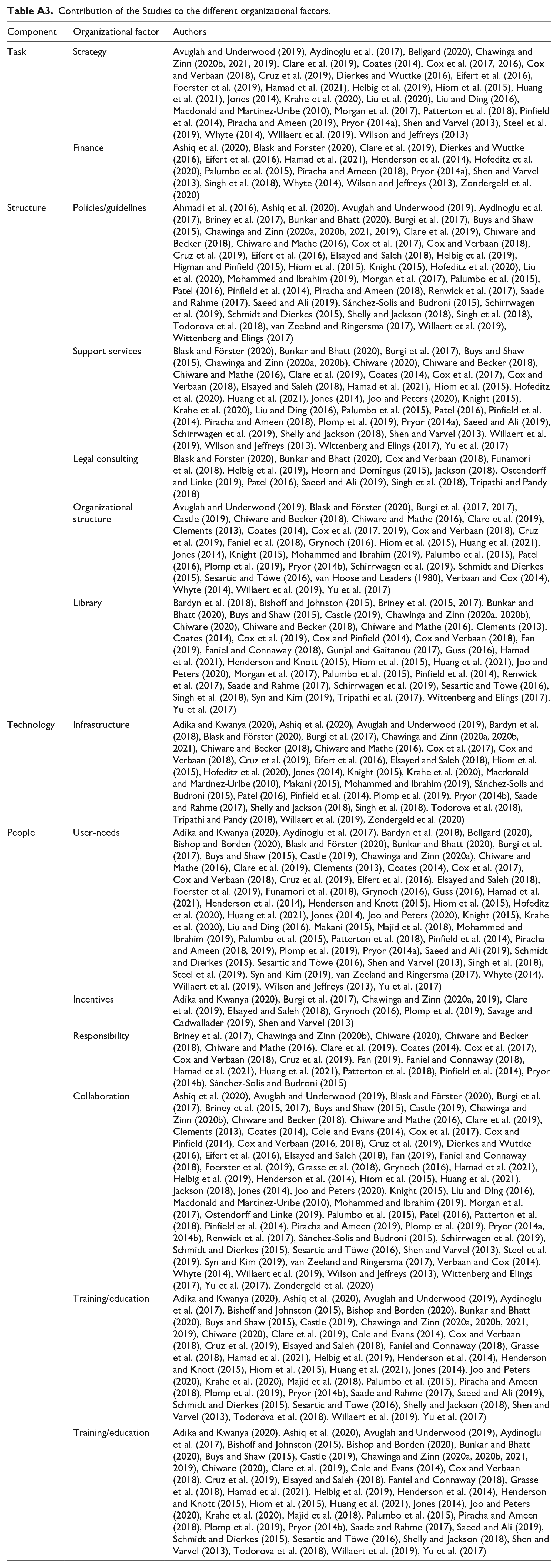
In conclusion, the implementation of RDMS depends on a variety of organizational factors. HEI face a major challenge to provide user-oriented services under the restriction of the existing budget. The study sample provide numerous examples for the implementation of an RDMS within HEI. Appendix Table A3 presents the contributions of the particular studies to the organizational factors.
Conclusion
Previous studies investigated particular components of an RDMS, like technical issues, policies, or user-needs. This literature review not only identified organizational factors but also underlined the interrelation between them. The findings emphasized that the implementation of an RDMS will cause changes in the organizational structure of HEI. Furthermore, the interrelation between the different organizational factors increases the complexity. To get a comprehensive understanding of the interrelation between these organizational factors Leavitt’s classical organizational change model was employed.
Based on the findings, several open research areas can be identified. First, future research should investigate the relationships and capacities between the identified organizational factors with more depth. Studies which discussed the need to establish services for RDM often emphasized the interrelation with user-needs, to provide RDM-infrastructure, as well as to develop policies or guidelines. But the discussion under the consideration of financial belongings were often left open. Moreover, the interrelation between an RDM-strategy and other organizational factors were barely addressed. Second, the study sample discussed multiple organizational factors but the role of the management and the interplay of top-down and bottom-up approaches were barely investigated. The sample presented its findings under different levels of analysis, like the perspective of the organization, researchers, support staff, and policies. It could be useful to amplify the level of analysis by the perspective of the management. This could yield approaches that bring top-down and bottom-up activities together. Third, financial consequences caused by the implementation of RDMS as well as potential approaches to finance support services in a long run should get more attention in future research.
The findings of this literature review revealed that organizational processes which are already closely connected with research are discussed more often, like the implementation of an adequate RDM-infrastructure (e.g. Adika and Kwanya, 2020; Bardyn et al., 2018; Macdonald and Martinez-Uribe, 2010), the future service-profile of the library (e.g. Fan, 2019; Gunjal and Gaitanou, 2017; Tripathi et al., 2017) or the development of further education courses (e.g. Bishop and Borden, 2020; Plomp et al., 2019; Yu et al., 2017). Processes that are not directly related with the scientific work are less focused on, like the adjustment of job-profiles, financial aspects or legal issues. Especially the challenge to ensure long-term services and to finance them were mentioned (e.g. Ashiq et al., 2020; Hamad et al., 2021; Whyte, 2014) but solutions were barely presented (e.g. Shen and Varvel, 2013; Wilson and Jeffreys, 2013). These less focused organizational factors need to be investigated in more depth by the scientific community.
Although future research regarding specific organizational factors is needed, the study sample highlighted that the organizational structure of HEI will be influenced by the implementation of an RDMS. To ensure a data handling under the FAIR-principles (Wilkinson et al., 2016), HEI need to implement support services, increase the awareness of their researchers, and ensure a financial security. Depending on the existing organizational structure and strategy of the HEI, different approaches for the implementation of RDMS were presented. Furthermore, especially the libraries were often seen as an important stakeholder for support services. This opens new opportunities for them to define their service profile under the increasing digitalization.
This study is influenced by various limitations. The analysis of the position papers to define the scope of the literature review focused only on scientific commissions from Germany and the European Commission. Although the identified organizational factors are not country-specific, scientific commissions in other countries could discuss additional factors. The languages of studies were restricted to English or German. The study sample included studies from a variety of countries, like South Africa, Ghana, China, Japan, Pakistan, Saudi Arabia. But the literature search also revealed promising studies in other languages. Hence, future literature reviews should consider the option to include material in Spanish, Chinese, Russia, or other languages. Nevertheless, this study provides important insights into the field of RDM which could be understood as one brick for the development of the open science movement.
Footnotes
Appendix
Contribution of the Studies to the different organizational factors.
Declaration of conflicting interests
The author declared no potential conflicts of interest with respect to the research, authorship, and/or publication of this article.
Funding
The author received no financial support for the research, authorship, and/or publication of this article.
