



Abstract
The aim of this paper is to explore and to make visible how the information work of hospital librarians is enacted in key practices where services of the hospital library are employed to support evidence-based practice. The empirical material was produced at three hospital libraries in three different regions in Sweden between January and March 2020. A practice-oriented approach using the theoretical lens information work is employed to analyze nine semi-structured interviews with hospital librarians and hospital library managers, together with field notes from observations of interactions between hospital librarians and healthcare practitioners. The analysis investigates the conditions for information work performed by hospital librarians as they participate in three key practices: clinical practices, information seeking practices, and HTA-practices. The results of the analysis are related to four categories of invisible information work, and the nature of the information work done to counter different types of invisibilities within the key practices is discussed. The findings suggest that a substantial amount of the information work of hospital librarians is invisible to clinicians. At the same time, considerable efforts are made by hospital librarians to counter different types of invisibility, for example through building relationships with healthcare staff and to develop and make specialized competencies visible. In particular, the importance assigned to evidence-based practice in healthcare allows for the librarians to be regarded by clinicians as legitimate partners with clearly defined competencies in specific situations.
Keywords
Introduction
Historically, hospital libraries have primarily served patients with fiction, and later also with medical information. This primary focus on patients has changed in recent years with new demands for evidence-based practice (Egeland, 2015). In Sweden, one of the first countries to systematically adopt evidence-based practices in healthcare (Banta and Jonsson, 2009), scientific, medical evidence, and efforts to standardize treatments to provide safe and equal healthcare are focused. In this context, of vital importance for the health sector is to enable professionals to continuously find and learn about new scientific medical evidence among increasing amounts of scientific studies and reports. The health sector is affected by a pressure to develop and adopt new forms of treatments and health technology, but also the need to provide safe and rigorously tested healthcare with patients as active agents in their treatment. Against this background, hospital libraries could arguably be considered important actors in efforts to facilitate information seeking and use of scientific findings within the health sector (e.g. Chaturvedi, 2017; Egeland, 2015; Sollenberger and Holloway, 2013).
However, in 2019, a national network for Swedish hospital libraries presented results from a survey on information seeking and use of library services within healthcare and hospitals, collecting some 2.200 returned questionnaires primarily from doctors, nurses, and paramedics (Inera, 2019). The results highlight two main issues: health professionals generally consider lack of time the main obstacle for their information seeking (they lack the time to seek scientific evidence); and 27% of the respondents do not use any service provided by hospital libraries (due to hospital libraries being closed, or due to unawareness of the existence of hospital libraries). Furthermore, several of the respondents do not know what sort of services the hospital library provides.
In other words, there appears to be a discrepancy between the information needs of health professionals and the relatively high amount of health professionals that do not use—or know of—the services provided by hospital libraries, that exist primarily to support information seeking and use of scientific results within the mother-organization. This recent survey reflects two related problems identified in previous literature on hospital libraries that warrant further investigation: visibility of hospital libraries within hospital organizations (Lewis et al., 2011), and how services offered by hospital librarians for medical information seeking are underused (Egeland, 2015), despite demands for evidence-based practice. The problem of invisibility corresponds with findings from previous research showing how the work of information mediators, such as librarians, often is invisible to users (Ehrlich and Cash, 1999). To shed light on the often-invisible work done by hospital librarians, we employ a practice-oriented approach using the theoretical lens information work (Corbin and Strauss, 1985, 1988; Dalmer and Huvila, 2019) to study three different hospital libraries. The aim of this study is to explore and to make visible how the information work of hospital librarians is enacted in key practices where services of the hospital library are employed to support evidence-based practice. Two research questions guide this investigation where information work is analyzed through a framework of four categories (McKenzie and Dalmer, 2020), framing invisible work in terms of: location, activity, worker, and structural invisibility. What information work is:
performed by hospital librarians as they participate in key practices where services of the hospital library are employed to support evidence-based practice?
done to counter different types of invisibilities (location, activity, worker, and structural invisibility) within these practices?
The Swedish context
In Sweden, healthcare is decentralized and mainly organized by 21 regional councils. In every region, there is at least one hospital with a hospital library serving health professionals with medical information, and most of the regions also offer public library services focused on health information and fiction for patients (Thomas, 2012). Allocation of resources and how hospital libraries are organized varies between regions. Therefore, the three hospital libraries included in this study are organized and operated in different ways, meaning that the professional role of the hospital librarians varies between these libraries. A hospital library is generally defined as a library located in a hospital. The main function is that of a medical library for health professionals. Hospital libraries can also offer a public library part, primarily for patients, and their relatives. Currently, five Swedish regions do not provide any public library services (Ranemo, 2019). A medical e-library, on the other hand, is a division at a university library that solely provides medical library services (mainly e-services) to the health professionals within a region according to a contractual agreement. One of the three libraries included in this study constitutes a medical e-library. In the following, we use hospital librarian to describe a librarian working at a hospital library or a medical e-library.
On policy level, hospital libraries are generally less visible compared to other types of publicly funded libraries. Hospital libraries are not specifically mentioned in the Swedish Library Act, but the legislation applies to all publicly funded libraries. However, there is no national policy regulating the existence or function of hospital libraries in Sweden. Instead, regional library and culture policy documents are often used to clarify the role of hospital libraries. Hospital library services are generally outlined in local policy documents in each region, including all hospitals and other health centers in the region.
Literature review: Hospital libraries and hospital librarians
The first hospital libraries appear in the early 1800s, focusing on entertaining and educating patients in areas such as philosophy, religion, and morals—but not providing information about medical conditions (Perryman, 2006). The history of hospital libraries in Sweden is similar: up until the last decades of the twentieth century, hospital libraries primarily focus on providing hospitalized patients with fiction (Ranemo, 2019). However, a recent report (Ranemo, 2019) shows how hospital libraries during the past decades have gradually changed from being libraries primarily for patients to instead function mainly as medical libraries for health professionals.
There are few scientific studies of hospital libraries (and none from a Swedish context), but studies and reports from practicing hospital librarians and professional organizations are more common. In the following, literature focusing on the professional role of hospital librarians and the nature of their function and position within the hospital organization and in relation to evidence-based practice is discussed.
Voices from the profession describe how the professional role of hospital librarians is multi-faceted, including working with clinicians and medical information, with patients to provide them with secure information, as well as collaborating with researchers for publication strategies and finding scientific information (Willis and Gassaway, 2018). Egeland (2015) claims that hospital librarians gradually have become a crucial element in healthcare, contributing to increased patient safety through evidence-based literature searches for health professionals. As mentioned above, modern healthcare is increasingly focused on implementing and developing evidence-based practice and research to provide equal and secure healthcare (e.g. Chaturvedi, 2017; Sollenberger and Holloway, 2013), a trend that affects the role and function of hospital librarians. Hallam et al. (2010) observe how hospital librarians increasingly are transformed into specialists, similar to academic librarians, due to the growing importance of research support services and clinical librarianship. Clinical librarianship gives librarians a more direct role in patient care as hospital librarians work in teams with clinicians, such as doctors and nurses (Chaturvedi, 2017; Hallam et al., 2010). Other forms of collaboration can include participation in research groups together with health professionals where librarians not only search for information but also work with researchers in other ways (Lewis et al., 2011). This type of collaboration will be discussed in greater detail when we analyze the HTA-practice below. Health Technology Assessment (HTA) synthesizes evidence through systematic reviews (see Banta and Jonsson, 2009).
The pedagogical role of hospital librarians is increasing in importance (Hallam et al., 2010), and hospital libraries are reportedly essential facilitators of information skills training for health professionals (Ayre et al., 2015; Chaturvedi, 2017). At the same time, Harrow et al. (2019) argue that by using electronic resources, an increasing number of health professionals are able to do their own searches for medical information. Notably, Rubenstein (2012) points out how the professional role of hospital librarians lies in mediating information, not in educating users in health-related issues—something that is more connected to the role of clinicians. In the domain of nursing education, previous research identifies three themes on librarians’ expertise in relation to information literacy: technical-administrative, information searching, and source evaluation expertise (Sundin et al., 2008). Source evaluation expertise in particular demands contextual understanding. The mediating role of hospital librarians, partly related to contextual understanding, will be discussed further below when the results of the present study are presented.
One of the main issues discussed in the literature on hospital libraries is related to visibility and outreach and why healthcare staff do not use the support from hospital librarians when seeking medical information. Lack of time and wanting to avoid finding conflicting information could partly explain this (Egeland, 2015), but possibly even more important is the relationship between hospital libraries and the parent organization with its organizational policies, decision-making and the clinical environment (Lewis et al., 2011). The visibility of hospital librarians can increase when librarians meet patients on the clinical floors and when interaction between patients, librarians, clinicians, and nurses is promoted (Willis and Gassaway, 2018). We will return to the issue of visibility when the findings of the study are presented.
Theoretical perspective
This article explores practices and activities of hospital librarians using the theoretical lens of information work (Corbin and Strauss, 1985, 1988; Dalmer and Huvila, 2019; McKenzie and Dalmer, 2020). The origin of the concept information work emanates from studies of the processes between doctors and patients. Dalmer (2020) mentions a range of activities that can be categorized as information work connected to health and illnesses, for instance information seeking about persons, places, and symptoms, creating and maintaining networks, as well as explaining instructions or treatments advice (cf. Corbin and Strauss, 1985). The conceptual understanding of information work has been broadened by several LIS-researchers, for example taking into consideration the large amount of time behind information seeking (Hogan and Palmer, 2006). In this broader understanding, information work is regarded as the total number of resources and activities used to seek and find information. Information work thus comprises different kinds of communication, seeking, and evaluating. Some activities can be invisible according to Corbin and Strauss (1985), but Hogan and Palmer (2006) assert that information work solely includes intended and purposive activities. In this study, we adopt Dalmer’s (2020) view on information work that adds affective and passive information work, and potentially also avoidance of information, to the definition. Furthermore, we recognize how information work often has the character of an “infrastructural secondary activity that supports the principal activity” (Dalmer and Huvila, 2019: 99).
In line with this broad and inclusive definition of information work, we understand information work to include a considerable amount of information activities undertaken by hospital librarians. In this study, we focus on information work comprising some key work practices of hospital librarians related to evidence-based practice. Consequently, we combine the concept of information work with a practice approach where we consider routinized information activities and ways of thinking as practices (Reckwitz, 2002; Talja and Hartel, 2007). A practice approach offers a conceptual framework for the understanding of peoples’ sayings and doings and how they are constituted. Even though practices change and reconstitute, they appear as frequent activities connected to for example work tasks, which makes it possible to study practices through observing people. Since routine activities are more likely to be invisible (Nardi and Engeström, 1999), we argue that the practice approach and the notion of information work can fruitfully be combined to make routinized, and potentially invisible, information activities visible.
To make invisible information work visible generates an increased understanding and valuing of the often-invisible information work performed, through naming and making explicit these different dimensions of information work (Dalmer and McKenzie, 2019). As such, applying the theoretical lens of information work can be said to have political dimensions since activities and actors not usually recognized by influential actors and decision-makers are made visible. In this study, the concept of information work is used as a lens to deeper understand different dimensions, including efforts and intentions, of the information activities carried out by hospital librarians in different settings and practices. By using the concept of information work we aim to provide a holistic perspective and a deeper understanding of the work tasks and the professional practices of hospital librarians.
The visibility or invisibility of information work depends on the observer and the context. Following Nardi and Engeström’s (1999) conceptualization of four kinds of invisible work, McKenzie and Dalmer (2020) present a framework for identifying and revealing invisible information work through four categories of information work: invisible location (work performed in invisible places); invisible activity (work considered routine or manual); invisible worker (work performed by invisible actors); structural invisibility (significant but informal work not explicitly recognized within the organization). These four categories of invisible work have guided our study and we will return to them in the next section where the empirical study is presented.
Research design
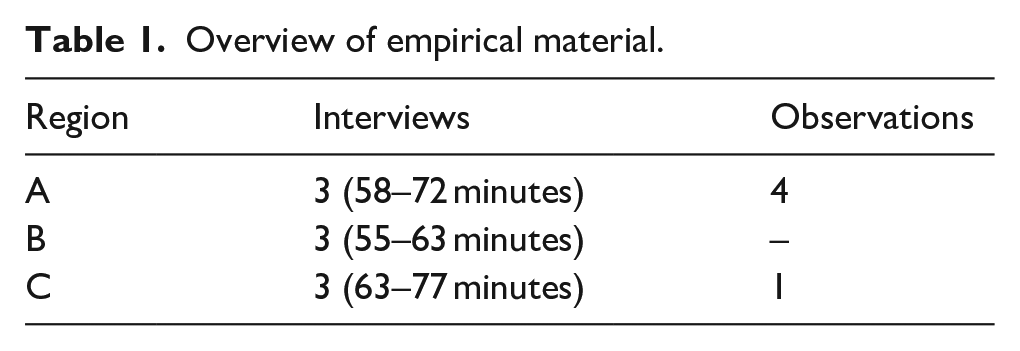
The empirical material of this study includes nine interviews with six hospital librarians and three hospital library managers in three different regions in Sweden conducted during January–March 2020, and field notes from five observations of hospital librarians during different work tasks at two of these libraries in regions A and C. The hospital library services in the three different regions are organized in different ways. In Region A, the library is placed within the research department together with the clinical training center. In Region B, a medical e-library is provided in collaboration with a university library. The hospital librarians are employed by the university and media resources at the university library are available for healthcare staff together with digital information resources provided by the region. In Region C, we conducted interviews and observations at one of the main hospital libraries of the region, where the manager leads both hospital library and the HTA-unit.
The participating libraries were contacted through an initial e-mail to the library manager asking if they would be willing to participate in the study, and if some librarians would consider participating. In the initial e-mail and during interviews, we secured informed consent and asked for permission to conduct observations. In total, we conducted nine interviews at three libraries and five observations at two of the hospital libraries, as summarized in Table 1. From each region, one library manager and two librarians have been interviewed. From Region A, observations include interactions between hospital librarians and healthcare practitioners in the hospital library during search instructions and search introductions, and at a clinical training center. Observations from Region C include interactions during an HTA project-group meeting. Informed consent was secured from all participants. During the observations, we focused on observing unobtrusively and did not take initiatives to participate in the interactions. Field notes were taken during all observations.
Overview of empirical material.
In line with the theoretical perspective of this study, we have focused on sayings and doings illustrating different dimensions and efforts of information work connected to hospital librarians’ professional practices. Since much information work is invisible, we apply a combination of empirical methods suitable to make information work visible (McKenzie and Dalmer, 2020). Specifically, our empirical material was produced through interpersonal interaction during interviews (Mishler, 1988), and observations of hospital librarians in different work situations, for example search instructions or HTA-work. Reports and other documents discussed by our informants have been included in the analysis to provide additional background information and practical examples.
After transcribing the interviews and the field notes from the observations we closely read through the material, taking the starting point of our qualitative analysis in the empirical material (cf. Charmaz, 2006). By identifying recurring information activities related to evidence-based practice, we identified recurring patterns that formed practices and information work related to these practices. Through interaction between the theoretical perspective and the empirical material, the four different categories of information work suggested by McKenzie and Dalmer (2020) were used in the analysis to categorize and elucidate conditions and intentions of information work done by hospital librarians, in turn making three distinct practices visible. We now turn to the results and analysis of the study where we discuss information work performed in three practices.
Results and analysis
The main mission of hospital libraries is to provide support for healthcare staff in their daily work practices. This study concentrates on the visible, and sometimes invisible, information work in different practices of hospital librarians, focusing on practices aimed at collaborating with and supporting healthcare professionals in efforts related to evidence-based practice. Information work provides a lens that allows for an understanding of the different efforts performed by hospital librarians. Using a practice approach, we have identified three types of main practices where information work is performed by librarians: the clinical practices, the information seeking practices, and the HTA-practice. In the following sections, information work in these practices is presented and analyzed.
Information work in the clinical practices
The daily work of hospital librarians comprises several clinical practices where librarians engage in clinical activities in different ways. The clinical practices can be divided into three types of practices: (1) daily communication with healthcare staff, where hospital librarians try to communicate their services to clinicians; (2) clinical librarianship, where hospital librarians work in teams with clinicians and are available in clinical activities; and (3) work at a clinical training center.
Daily communication with healthcare staff
Within the parent organization, hospital libraries are often connected to a research department. In Region A, the manager of the hospital library has a clinical background and is also manager of the clinical training center, and both units are organized within the research department. The librarians are present at the research department once a month to learn about the work of researchers and specialized clinicians, and their different information needs. There “are spontaneously asked questions when we’re present. Seize the opportunity, now the library’s here, run past and check how you could twist your PubMed search or something” (A:2 20200204). Researchers can also communicate search questions in advance, allowing for the librarian to prepare.
The librarians’ presence at the research department might also contribute to an increased visibility of the hospital librarians’ competencies and services. Their presence might be recognized as strategies to counteract the hospital library as an invisible location and the invisibility of hospital librarians. There is considerable demand for library services at the research department, indicating a certain affinity between librarians and researchers. However, some of the hospital librarians explain that they struggle to build a network and initiate collaboration with the research department, often failing due to the low status of the library services. An exchange might be facilitated by a common manager and in the same way, it might also facilitate participation and the emergence of collaborative practices. Overall, lack of knowledge about library services causes problems for teamwork and collaboration.
There are several examples of difficulties connected to the interaction between librarians and healthcare staff, both concerning the establishment of new partnerships and maintaining already existing teamwork. The librarians’ experiences tell us about difficulties reaching healthcare staff and becoming a natural part of their work practices. Significant insecurity exists within the parent organization about the role of hospital librarians and the library’s place in the organization. Connected to this, both administrators and healthcare professionals reflect a lack of interest in communicating with the hospital librarians and sharing information about library services among healthcare staff. To spread knowledge about hospital library services and clarify the librarians’ competencies the librarians aim to maintain a continuous dialog with managers as well as clinicians. Interactions focused on building relationships between hospital librarians and healthcare staff could be regarded as part of all the four categories of hospital librarians’ information work, to prevent invisibility of the librarians’ formal and informal work tasks. Not surprisingly, healthcare staff are more likely to interact with other healthcare professionals due to shared knowledge and practices. Hospital librarians with a background in healthcare practice are therefore able to participate to a greater extent in the clinical practices, meaning these librarians experience less of being an invisible worker (McKenzie and Dalmer, 2020).
Hospital librarians explain that they sometimes meet healthcare staff asking if the library services still exist. “We still get the question: ‘Oh, you are still here?’ – and that is tough” (B:3 20200213). The reason might be that hospital libraries are quite invisible to healthcare staff working at medical centers instead of the hospital: If you work at a medical centre, then you don’t meet the librarians, but it is about making the hospital library visible on the intranet in some way [. . .], it’s difficult and we’re not alone, rather we understand that this problem exists among all our colleagues nationwide regardless of the library’s place, it really is a problem (B:3 20200213).
The internal website of the healthcare organization, where library information rarely is conveyed to healthcare staff, represent an example of how hospital libraries lack visibility within the parent organization. Librarians try to interact with healthcare managers to highlight the problem, but library information seems not to be a priority on the website of the organization. Arguably, the origin of this problem is connected to how hospital libraries are small entities within the parent organizations representing a secondary activity supporting the principal activity (cf. Dalmer and Huvila, 2019). One solution is to communicate using newsletters tailored for certain groups of healthcare staff. This kind of targeted information tends to reach healthcare staff to a larger extent than more general information.
To hospital librarians it is crucial to prove their role as information mediators in the parent organization and make visible how they can support healthcare. Of particular importance in the interaction between hospital librarians and healthcare staff is the word spread by mouth. This informal and relational interaction represents an example of how structural invisibility could be characterized as activities that are not explicitly part of any work description. The hospital librarians often ask the healthcare staff to share information about the library services at their clinic. Here, the information work is associated with both creating relations between librarians and healthcare staff, and to inform the healthcare staff about the library’s services. As Dalmer and Huvila (2019) point out, information work supports the main activities in healthcare (cf. Dalmer and McKenzie, 2019). In this case the information sharing, a vital part of information work (Dalmer, 2020), is carried out both by the librarians and the healthcare professionals, who spread the information about the library services to their colleagues.
Clinical librarianship
Some hospitals have ongoing projects focusing on clinical librarianship. These current initiatives aim to develop new forms of collaboration with healthcare staff. The purpose with clinical librarianship is to closely connect librarians to healthcare and further bridge the gap between clinicians and librarians, as well as promoting the librarians’ participation in the healthcare team. Clinical librarianship might be recognized as a strategy to prevent invisibility in terms of invisible location and invisible worker. Librarians can be associated to a certain clinic, allowing the librarians to develop more specialized competencies and to respond to current issues within the healthcare team. One librarian points out that “you are always available when questions arise in a more direct way. And not ‘oh no, the library is closed’ and then they forgot to ask, instead you are right there when they need help” (A:1 20200130).
These initiatives are in most cases taken by librarians, and there is some resistance toward librarians participating in discussions directly related to healthcare practice, presenting a challenge to librarians: “the doctors prefer to sit on their own and talk, to have a librarian sitting with them too and listening to them, that can be a HUGE step for them” (A:3 20200130). The hierarchical traditions in healthcare add barriers, and clinicians may be reluctant to letting librarians into their discussions. Striving to establish better report between clinicians and librarians can be related to how invisible activities are considered routine but in fact includes complex actions (see also below where search activities are discussed). The hierarchical structure of healthcare also causes structural invisibility as work done by librarians is not considered truly important.
Work at a clinical training center
In Region A, the librarians are planning for a closer collaboration with the clinical training center at the hospital, where clinicians and students can practice their professional skills and develop new methods in healthcare, for example by relocating the medical part of the library services to the clinical training center. When healthcare staff or students are practicing their skills at the training center, the librarian can participate in the team responding to questions and needs for information searches and evidence-based information. Librarians also aim to be available at the training center for drop-in searches from staff and students: “the clinical training centre constitutes a meeting place for librarians and healthcare staff who usually do not visit the library” (A:3 20200130). The presence of librarians might serve as a strategy countering invisibility of the library as a location and the librarians as workers. One of the librarians explained that “this will clarify our mission, and that the [medical] part is our main mission” (A:1 20200130). Thus, the clinical training center might develop in a way that connects hospital librarians and healthcare staff more closely to each other.
One of the features of information work is that it emphasizes the deeper dimensions in information seeking activities (Dalmer and Huvila, 2019), which enables a focus on not just the basic and most apparent activities related to the information seeking of hospital librarians. For example, through the lens of information work, librarians’ thoughts about learning strategies among healthcare staff can be understood as information work connected to the clinical training center, comprising both efforts and intentions from librarians, not always apparent to healthcare staff. This information work is not fully visible, but important for understanding librarians’ practices.
Information work in the information seeking practices
A main activity for hospital librarians is to support medical information seeking of healthcare professionals. In this section we identify three different types of information seeking practices: search instructions, including significant interaction between librarian and clinician; search introductions, where clinicians are being introduced to literature searches and other library services; and search assignments, where librarians receive search questions from clinicians. The information seeking practices are connected to both the clinical practices as well as to the HTA-practice. In this study, we have identified the information seeking practices as certain types of practices including various dimensions of information work related to supporting medical information seeking.
Search instructions
During search instructions, the hospital librarian meets clinicians with search-related problems, or an information need connected to a certain area. Search instructions are aimed at healthcare staff being active searching with the help of the librarian. Usually, the search instructions start from a question from healthcare practice, but there are cases when healthcare staff need information related to professional training or research. Hospital librarians need to be somewhat knowledgeable in medical terminology to help formulate relevant search terms. One librarian explains: [We] search together and we usually sit next to them so they will be able to try out on their own and we show, refer to where to go and how it works and so on quite specifically and give them some advice on how to come up with search terms and such. This is usually the most difficult! [laugh] We’ve noticed! And how to narrow [the searches] (A:1 20200130).
In one observation, the librarian meets a nurse working at the intensive care department (A:200206, field notes from search instruction). The nurse asks for information about a certain project about oral care. First, the nurse is asked to start the searches in a database indexing Swedish medical information. The librarian and the nurse together negotiate search terms and try different search terms to further limit the search results. Then they continue in PubMed, a comprehensive database indexing international medical research. During the search session the librarian suggests various medical search terms, demonstrating knowledge of these terms. Additionally, the librarian shows how to search using subject index terms, for example MeSH (Medical Subject Headings 1 ), hereby illustrating how use of subject index terms can be a way to visualize specialized but often invisible search-activities accomplished by librarians.
Search introductions
Part of the librarians’ information seeking practices is introducing healthcare staff to literature searches and other library services. The librarian usually starts by acquainting the staff with the library’s information resources such as medical research databases, services for e-books (A:200205, field notes from search introduction) and databases for clinical decision making. As a part of the introduction librarians show how to set up an Real Simple Syndication (RSS)-flow to receive the latest news from different databases, something that can save time for healthcare staff. Before setting up an RSS-flow the librarians usually consult with the staff on which areas they are interested in and which websites they normally visit to get a picture of the news they require. The demand for services like this has expanded in recent years since healthcare practice has become more stressful and access to information resources has increased as medicine is a knowledge intensive field. One librarian explains: “[a]nd these issues concerning which information can I use [. . .] so we also notice a difference, they need a guide in this jungle” (A:1 20200130). As needs for medical information increase, clinicians need access to information resources, but also someone to guide them among these resources.
These examples from our observations show how librarians act when introducing healthcare staff to medical information seeking, efforts that make both activities, workers, and locations visible. Another example is from an observation of a hospital librarian at the research department, meeting a specialist doctor working with a research project (A:200317, field notes from search instruction). The doctor is already familiar with some of the databases and has conducted some searches before the meeting. This enables the librarian to move on to the advanced search functions in PubMed such as Boolean search techniques. This meeting emerged spontaneously when the librarian visited the research department and started talking to the doctor about the project. This shows that information work in the information seeking practices can include unplanned activities enabling greater flexibility and responsiveness in interactions between librarians, clinicians and researchers. This also shows how librarians’ information seeking practices are closely connected to the clinical practices, where librarians aim for inclusion in clinical activities. The information seeking practices support both the need of medical information in healthcare, as well as the visibility of the library in the organization.
The purpose of search instructions is to enable healthcare staff to continue the searches on their own. For this reason, the option to save searches to the user’s account is always activated during search instructions. This helps healthcare staff when they need to go back to a certain search term. At one of the hospital libraries in this study the librarians always save their searches on the intranet, so that all librarians can access them if similar questions should arise in the future, or if the staff needs more guidance. These activities might be invisible to healthcare staff but are an important part of the information work of librarians in information seeking practices.
Search assignments
Besides search instructions, another option for healthcare staff is to formulate a specified search assignment that the hospital librarians work with and then report the results from their searches in different databases: The principal work task [of healthcare staff] is to care for the patients and then we can help them search for information so they might instead focus on their tasks, you simply work with what you’re best at (A:2 20200204).
Thus, the librarians report the results from the searches, but they do not put much effort in evaluating the search results, since “we don’t really have the right competence to make that kind of evaluation” (B:2 20200213).
The search assignments comprise a wide range of topics, but usually, the search assignments concern new research about a practice-related issue. Librarians often collaborate to cover different areas before reporting the results. All searches are saved by the librarians and “if we’ll come across more questions, we’ve already done the job, and we’ll be able to fill in the gaps” (A:1 20200130). When new search assignments reach the librarians, they look it up to see if there have been similar search questions before. This is an essential activity of the information seeking practices and an example of information work not visible to healthcare staff. At the same time, it is also an activity that saves the librarians a lot of time and improves the quality of their services.
Search assignments often comprise discussions between hospital librarians and healthcare staff, but the difference between search instructions and search assignments is the guiding part, which is excluded in search assignments. There is however always an opportunity to continue with some search instructions if need be: [They] might have contacted us, ‘we’ve heard that there should be some kind of new treatment, could you please check that, we don’t have the time [. . .].’ And then we send a small form where we show our search strategies and our results. We believe that if they wish to go further into the searches, they will be able to observe our searches (A:1 20200130).
Sometimes the search assignments concern very wide topics and then discussions between librarian and healthcare staff are necessary: “[w]e know how the databases work but we don’t always know the medical terms in the same way as the healthcare staff, so for that reason there is a need for giving and taking” (A:2 20200204).
Usually, healthcare staff contact the library when having tried out searching on their own and grinding to a halt in their searches. Next time they need help they might contact the library earlier in the search process: We notice if they appreciate what we do then they usually come back later. ‘Maybe you could have a go searching about this’ or. . . so if we’ve caught them once it feels like they might come back and that’s good (A:1 20200130).
For these reasons, search assignments might be a useful way to demonstrate the library’s place in the hospital organization and increase awareness among healthcare staff of library services and how they contribute to evidence-based practice. Proving the library’s role through search assignments could be understood as contributing to the visibility of activities, workers, as well as locations.
The activities in the information seeking practices often focus on mediating information rather than educating healthcare staff in information seeking, due to hospital libraries’ supporting function. What also characterizes the information seeking practices is that librarians know medical terms, which means that they can negotiate search terms. The negotiation itself might contribute to the visibility of the librarian’s knowledge and value for clinicians. Overall, the information work of hospital librarians in the information seeking practices includes several visible activities, in particular during search instructions; but also, some invisible, for example when librarians archive earlier searches.
Information work in the HTA-practice
The HTA-unit in Region C works in line with a model for knowledge management in the health sector aiming to harmonize and structure the process of gathering new medical knowledge and to avoid redundant practices, centering on synthesizing evidence through systematic reviews (see Banta and Jonsson, 2009). The HTA-unit is explicitly commissioned (unlike the hospital library) by the regional authorities to provide HTA-services. The unit uses a review method developed by the independent national authority Swedish Agency for Health Technology Assessment and Assessment of Social Services (SBU) for assessing the relevance and quality of scientific studies (SBU, 2020).
The HTA-process spans over several months, sometimes more than a year. The starting point of the HTA-process is when a clinical question is submitted to the HTA-unit by health professionals. During an HTA-meeting, one of the doctors provides an example of how a clinical question may arise: Exercise tests for chest pain - currently, 10 000 tests are made every year in [the region] for [patients with] chest pain. The same method has been used since the 19th century (you cycle until EKG-change or when pains in the chest occur). Is the method today obsolete and should it be phased out? A clinical question from the practice. A project that engages (C:200212, field notes from HTA-meeting)!
The purpose of the HTA-process is to provide an answer to a clinical question by finding and reviewing relevant research, providing a systematic literature review with an overview and an analysis of current scientific medical evidence. When a clinical question is submitted a project-group is formed, including medical doctors, librarians, and specialists relevant for the clinical question representing the health practitioners. The head of the HTA-unit and the hospital library, who has a library background, describes the role of the librarians in these project-groups as multifaceted: the librarians are part of both the process concerning how the meetings are to be used, how to best encapsulate all the information into convenient snippets that then can become a report. And they are included in all the work on the text (C:1 200131).
A project may result in different types of reports ranging from complete HTA-reports (the most comprehensive report) to partial HTA-reports and literature reviews with only a basic medical analysis. After an HTA-report is finished, it is submitted to a council that assesses the gravity of the report. Given the assessment made, a formal consideration may be written with a recommendation to implement what the HTA-report suggests in the health sector.
Similar to the activities in search assignments, the main role of the librarian in the HTA-process is to conduct advanced information searches, primarily in scientific medical databases, and to review and make a selection among the high number of search results. The key activities the librarians engage in during the course of an HTA-project are: initial searching when a question is submitted, negotiating a search strategy in the project-group, conducting the main searching, making a selection, and providing documentation of the search process. As seen below, these activities are situated in a health context where librarians perform critical, but often invisible or supportive, information work.
The initial searching
In the beginning of a project, when a clinical question has been submitted to the HTA-unit, an initial search is conducted by the librarian. One librarian explains: you receive a written question, and you try to understand - what is it that they want? We try to get a sense of the field, and at that point we make quite a broad search (C:2 200212).
This initial, probing search constitutes an important step in the preparations the librarian makes before the first meeting of the project-group that is appointed to perform the HTA-process. A key challenge at this point is to understand the clinical question, which leads to the next type of activity: negotiating a search strategy.
Negotiating a search strategy
In evidence-based medicine, the PICO framework (Patient, Intervention, Comparison, Outcome) is commonly used as a tool to negotiate and formulate literature search strategies to do systematic reviews (SBU, 2020). The PICO framework is a critical tool in the HTA-process. To decide on the proper PICO, the entire project-group is involved in discussing the clinical question and what the main areas of interest are. The process resembles the dialogic process during a reference interview (Stover, 2004); in this case, the librarian provides knowledge about processes connected to information searching and evaluation, and specialists from the health professions provide in-depth medical knowledge. The different areas of expertise are combined to understand the clinical question and to negotiate a suitable PICO: we sit with the group and go through this - which patient group is it, what intervention/treatment are they interested in, what should we compare with, and what outcomes do they want to look at, that is what measures of outcome (C:2 200212).
When a suitable PICO, the foundation of an appropriate search strategy, has been discussed and negotiated, it is time for the librarian to conduct the main search.
The main searching
The most time-consuming part of the main searching is to make sure the individual searches are as broad as possible to include as much existing and relevant material as possible. In this effort, the location of all feasible synonyms for relevant concepts is a key aspect: most times when you are searching, it isn’t that important if you miss, just as long as you get a portion of hits that is big enough [. . .] But we really want to try and get as much as possible, to include the whole basis. So it is very important that you find all different synonyms for those concepts we are interested in. So, it is a fairly drawn-out process [. . .] (C:2 200212).
To facilitate the identification of suitable keywords, the health professionals who submitted the clinical question nominate 3–5 scientific papers judged to be qualitative and relevant. Using MeSH-terms assigned to these papers, the librarian then reviews what other subject headings that lie near these MeSH-terms in the hierarchic vocabulary. These additional terms are then included in the search to make the search as broad and exhaustive as possible. The searches—for they are several—are then conducted in various medical databases. If a relevant review already exists, the librarian can in some cases use previous work as a starting point and complement with updated and/or broadened searches.
In this stage of the process, the librarian uses the P and I from the negotiated PICO: the patient-group and the type of intervention/treatment specified by the project-group. Using a wide selection of relevant MeSH-terms, the P and I-part of the main search often results in a high number of search results. After duplicate records have been removed, the next stage presents what is normally the most time-consuming part of working with HTA for librarians: making a selection.
Making a selection
The results from the broad search based on the P and I from the set PICO are now downloaded to a software program for further processing: [. . .] in that program, then we go through all these, sometimes thousands, articles on abstract level. And there we will see that - no, now, now they have no control group, for example, this study has no control group, or the wrong control-, or it doesn’t measure the outcomes we are interested in. Then we deselect those (C:2 200212).
As seen in this example, the C and the O from the PICO are used to make a selection in this stage of the process. The control group and the outcomes need to be aligned with the scope of the clinical question submitted. In this process of exclusion based on the PICO, the high number of abstracts are reviewed by two different librarians individually. After the individual reviewing of abstracts based on the search strategy is completed, the two librarians discuss cases where they have landed in different verdicts on what to include or exclude and negotiate to achieve consensus.
Next, the medical experts of the project-group review the records submitted. A second review of these records on abstract level is made, and then a selection of papers is reviewed in full. This process of selection narrows the number of studies in several steps: suppose that we are down to - perhaps there are only 5 papers left, or there are 300 left, but they are sent over to the expert-group who then looks in the same way: first on abstract-level, and then for those that are selected, in full text. So, they do both reviews of abstracts, then they do an assessment of relevance on full text level, and then they do a review of the quality of the studies remaining. So, there are like fewer and fewer [. . .] (C:2 200212).
After reviewing abstracts, the project-group assess the relevance of the selected full-text papers, and the studies are assessed based on quality of research.
Documenting the search process
The search process generates a great deal of additional work for the librarians, both before and after the actual searching has been conducted. Apart from reviewing and screening a high number of search results, the librarians are assigned the task to document the search process. The goal of this activity is to document how the different steps of the information searching have been performed, to secure a transparent account of “which studies have been included in the report, and which studies have been excluded, and why” (C:2 200212). Another goal is to provide an account with enough detail to enable the repetition of the same searches in the future, so that other systematic reviews can benefit from the work already done for this project. When the HTA-report is being prepared, the librarians participate in the discussions when drafts are presented in the project-group, but the primary role of the librarians is to describe how the searches were made, the databases used—step by step. In the HTA-report, the steps of the search process performed by the librarians are described. Additionally, the librarians document every search string entered into a database in an appendix. After the report is finished, in the words of a librarian, it is “the practitioners who own the report” and decide how to use it (C:2 200212).
The role of the librarian in the HTA-process
Considering the full HTA-process, the information work performed by the librarians in the efforts to identify all relevant scientific literature available—with all the activities connected to this cycle of searching, selecting, and documenting—is indeed “an infrastructural secondary activity that supports the principal activity” (Dalmer and Huvila, 2019: 99). The main role of the librarian is to facilitate the work of the medical experts in the project-group; the principal activity of the HTA-process is arguably to analyze and synthesize the selected studies, to arrive at a recommendation for the health professionals who submitted the clinical question. Another type of secondary activity performed by the librarian is to support the HTA-process with structure and routines. Every week, the HTA-unit convenes to discuss current projects and topics related to their work in the unit. Talking about these weekly meetings, the head of the HTA-unit and the hospital library emphasizes how the different competencies of the unit works together: librarians are often extremely good at so many other things than just literature searches. They have an enormous sense of structure, processes, routines. So together, we have been - really together - this group of really different competencies, experiences, perspectives on work [. . .] we bring entirely different points of departure. Together, we have been able to work out a model that works for a larger unit, and in this, the librarians have done a really good job (C:1 200131).
In this example, the nature of this type of secondary activity emerges. The librarians are ascribed a specific value connected to their ability to provide structure and organize a process with several different activities and routines, something that is considered valuable in the wider context of managing the HTA-unit. Consequently, the HTA practice is used to legitimize the library services since this practice is closely connected to both research and clinical practice. Most of the librarians’ attempts at establishing a collaboration between the library and the research department do not appear as visual to colleagues in the organization and could be regarded as a secondary activity upholding the main activities of the library. Hence, the HTA practice can be used to make the library services more visible since HTA appears as more concrete and directly related to healthcare practice.
Discussion
In the following section, we answer the research questions by presenting an overview of the three main practices identified in the previous section and relate the information work done in these practices to four categories of information work proposed by McKenzie and Dalmer (2020): invisible location, invisible activity, invisible worker, and structural invisibility. This synthesis of the results from the analysis is connected to previous studies and presented in two stages. First, we discuss conditions for information work of hospital librarians, including conditions or activities that can make information work in the three practices invisible. In the next section, we discuss the nature of information work of hospital librarians, focusing on activities that can counter different types of invisibilities.
Conditions for information work of hospital librarians
Previous research shows that a key challenge for hospital librarians is to reach out and communicate with clinicians (Egeland, 2015). In the clinical practices, information work during daily communication is affected by a lack of knowledge of library services that can be connected to the categories invisible location and invisible activity. Previous research (McKenzie and Dalmer, 2020) connects this category to informational work outside of the library. In our study, hospital libraries as such frequently appear as invisible locations within the parent organization of the hospital: invisible places where skilled behind-the-scenes work takes place (cf. Nardi and Engeström, 1999). One example of this type of invisibility is how hospital libraries are not allowed to be visible on the internal website of the hospital. During daily communication, difficulties to reach healthcare staff and to become a natural part of healthcare practices is an example of how hospital librarians in some situations might be understood as invisible workers, illustrating how the work of information mediators often is invisible to users (Ehrlich and Cash, 1999). Examples of structural invisibility include a perceived lack of interest among administrators and healthcare professionals to communicate with, and about, hospital librarians. In our findings, this lack of interest to engage with hospital librarians is connected to the low status of the library services within the parent organization. This perceived lack of interest and status is also reflected when librarians engage in clinical librarianship: experiences of resistance toward librarians taking part in discussions directly connected to healthcare practice can be related to both structural invisibility, and to invisible activity as the information work of librarians is not ascribed definite value in the often hierarchical healthcare environment. Lewis et al. (2011) describe the disparity between the hospital library and the parent organization as an important factor contributing to invisibility, including differences in organizational policies, decision-making, and the clinical environment.
In the information seeking practices, information work during search assignments can be categorized as invisible work in terms of invisible location as the informational work—from the perspective of clinicians—is done in invisible places. From another perspective, the hospital library can come across as an invisible location during search introductions as these interactions visualize (and respond to) a lack of knowledge of library services. Likewise, lack of time is a common reason not to use library services, due to the stressful environment in healthcare today (Egeland, 2015). A common challenge for hospital librarians in the information seeking practices is a perceived lack of competence to evaluate medical information, a condition that can explain why librarians tend to be invisible workers from the perspective of clinicians. Information-searching expertise, for example search strategies and Boolean logic, is generally attributed to librarians while source evaluation expertise can be questioned as subject knowledge is required for content evaluation (Sundin et al., 2008). This condition may also partly explain why clinicians do not fully recognize the competencies of librarians, in effect making the information seeking activities of librarians an invisible activity more associated with routines and manual work rather than work requiring considerable problem solving and knowledge (McKenzie and Dalmer, 2020).
In the HTA-practice, the probing search to understand the clinical question during the initial searching can be related to invisible location as these activities are done out of sight from clinicians and other members of the HTA-team. Also, Lewis et al. (2011) stress that the hospital librarians are rarely included in the strategic planning of the parent organization, or the clinical activities, which contributes to the invisibility of hospital librarians’ actions. During the main searching, a considerable amount of information work is done to find all feasible synonyms for relevant concepts. Similar to the initial searches, this work is largely an invisible activity, despite the substantial efforts and knowledge required. In the process of making a selection, another example of a mostly invisible activity is the information work done in discussions between the librarians concerning cases where they have landed in different verdicts on what to include or exclude, and negotiations to achieve consensus. In terms of structural invisibility, an informal but important part of the work process is how librarians support the HTA-process with structure and routines. These are elements that are not part of any job description, but these efforts are arguably instrumental for the HTA-process.
Information work of hospital librarians: Countering invisibility
A substantial amount of the information work done by hospital librarians are activities that may serve to counter the different forms of invisibility outlined above. In the clinical practices, activities connected to daily communication are in several cases interactions focused on building relationships between hospital librarians and healthcare staff, something that may counteract all four types of invisibility. For example, connected to how information work of hospital librarians can be invisible in terms of location, hospital librarians engage in awareness raising activities concerning hospital library services both through available official channels and by word of mouth. Being present at the research department is another way to make both the hospital library (as a service function) visible, and the librarians visible as workers (as information service providers). A background in healthcare practice can enable participation, as pointed out by one informant, something that may improve visibility as workers. Furthermore, having a common manager for the hospital library and research department may alleviate the structural invisibility of much information work done by hospital librarians through fostering collaborative practices.
In clinical librarianship, similar to Chaturvedi (2017) our findings suggest that promoting the librarians’ participation in the healthcare team can make the hospital library (as a service function) visible, for example through associating a librarian with a certain clinic. This can also counter invisibility in terms of invisible worker, and by belonging to a certain clinic, a librarian might be able to develop more specialized, or visible, competencies (e.g. to evaluate medical information) countering invisibility in the shape of invisible activity. Presence at clinical training centers also serves to make librarians visible as workers. Clinicians and students might notice how librarians can support their learning, making otherwise invisible activities and the library as a service function and a location visible. Hallam et al. (2010) and Willis and Gassaway (2018) argue that clinical librarianship gives librarians a more direct role in patient care as they participate in healthcare teams. The direct interaction between patients, clinicians, and librarians provides numerous opportunities for promoting the benefits of including hospital librarians in clinical activities (Willis and Gassaway, 2018).
The information seeking practices are characterized by the support given by librarians to healthcare staff in medical information seeking, providing a link between health professionals and the information they need in their daily work (e.g. Hallam et al., 2010). When introducing healthcare staff to the library’s services and to medical information seeking, the librarians are doing information work that makes the library as location visible. By introducing healthcare staff to medical information seeking, the practice of search instructions makes otherwise invisible activities connected to searching visible in several ways, for example through offering advice on searching (e.g. how to come up with search terms) and advanced search functions (e.g. Boolean search techniques).
While less interactive compared to search instructions, the reporting of search strategies and results from the searches during search assignments makes the library as a service function visible to clinicians, as well as the complex information seeking skills of the librarians, mainly related to information-searching expertise (Sundin et al., 2008). Information assignments are considered as major work tasks of hospital librarians, providing healthcare staff with information upon request (Lewis et al., 2011). This, together with discussions between librarian and healthcare staff about assignments, enables healthcare staff to “discover” the library, counteracting the invisibility of the librarians’ activities as well as acknowledging the librarians and their competencies. As an example of a structurally invisible type of information work, but still crucial to the functioning of the workplace, librarians always save searches from previous search assignments. This type of information work can be made visible during search instructions and search assignments.
In the HTA-practice, several types of otherwise invisible information work are made visible through the explicit focus on advanced, systematic searching in scientific medical databases. The HTA-practice also suggests that hospital librarians are involved in the strategic planning process in a more distinct way (cf. Lewis et al., 2011), where the librarian at many stages is regarded as a legitimate collaboration partner. When the literature search strategy is negotiated, the librarians provide knowledge about processes connected to information searching and evaluation. This counteracts invisibility both in terms of location (the potential usefulness of the library is showcased), activity (work otherwise considered routine or manual is highlighted), and worker (the librarian becomes visible as a useful colleague). As for making information work during searching and selecting visible activities, to use the PICO can be seen as a way to make searching and selecting tangible. The otherwise somewhat ephemeral nature of searching and selecting is given shape and legitimacy by this medical research strategy commonly used within medicine and accepted by clinicians. In contrast to the search assignments described above, where librarians do not engage in any selection process, in the HTA-practice with a detailed step-by-step procedure and a set PICO guiding the selection process, the librarians are doing a substantial part of the selection. In previous research, use of evidence-based research results to provide equal and secure health care is discussed as affecting the role and function of hospital librarians (e.g. Chaturvedi, 2017; Sollenberger and Holloway, 2013). The involvement of librarians in the systematically oriented search and selection processes in the HTA-practice provides an example of how the role of hospital librarians has developed into a more active one, where librarians are regarded as key actors.
In the stage of documenting the search process, the librarian as a worker is made visible through participating in the discussions when drafts of the HTA-report are presented in the project-group. Also, invisibility as a worker is counteracted at this stage when librarians describe the details of the search process (why studies have been included or excluded), again tapping into the credibility of the medical research strategy of using a PICO. Previous studies (e.g. Lewis et al., 2011) discuss new opportunities for collaboration, for example in research groups, that may enhance both use and the strategic importance of hospital librarians. HTA is arguably one example of such an opportunity that overall may help to increase the visibility and legitimacy of hospital librarians within the hospital organization.
Conclusions
Our findings contribute to previous research on hospital librarians by providing detailed accounts of how information work of hospital librarians is enacted in key practices where services of the hospital library are employed. Information work is in this study combined with a practice-oriented approach and used as a theoretical perspective to highlight and analyze hospital librarians’ activities, both visible and invisible, in key practices connected to to evidence-based practice. Our findings illustrate how the lens of information work in this way can be applied to focus and study less visible professions, activities, or work tasks in different types of organizations.
A substantial amount of the information work of hospital librarians is invisible to clinicians. Overall, this can be attributed to the secondary, supportive nature of hospital librarians’ information work (cf. Dalmer and Huvila, 2019). At the same time, considerable efforts are made by hospital librarians to counter different types of invisibility, for example through building relationships with healthcare staff and to develop and make specialized competencies connected to search visible (cf. Sundin et al., 2008). Notably, in several stages of HTA and clinical practices, librarians are regarded as legitimate collaboration partners with clearly defined competencies. This contributes to framing librarians as an important profession in health care, a significance which is often missing in other key practices hospital librarians engage in. In this context, the importance assigned to evidence-based practice in healthcare allows for the librarians to be regarded by clinicians as legitimate partners with clearly defined competencies in specific situations.
The evidence-based paradigm, favoring quantitative and predictive studies, is strong within healthcare and contributes to shaping practices and professional roles of hospital librarians (e.g. Chaturvedi, 2017; Sollenberger and Holloway, 2013). In this study, we have focused on studying this ongoing development, and for that reason, we have not studied less frequent, but still significant, information work done by hospital librarians such as culturally oriented activities (e.g. shared reading or exhibitions in psychiatric care). While the evidence-based paradigm enables visibility and legitimacy of hospital librarians in certain practices, such as HTA or clinical practices, other parts of hospital librarianship not as easily measured or based in evidence risk becoming marginalized. Future research should continue to study how the evidence-based paradigm interacts with and shapes the practices and professional roles of hospital librarians, both in terms of evidence-based library practices and practices of importance that do not find immediate support within the evidence-based epistemology.
Footnotes
Funding
The author(s) received no financial support for the research, authorship, and/or publication of this article.
