




Abstract
The utilization of infrared (IR) spectroscopy, particularly near-infrared (NIR) spectroscopy, has grown in South America in recent years, as demonstrated by the wide range of recent applications. While NIR spectroscopy is gaining traction in many fields, it is not yet a widely adopted technology in South America as in other regions of the world due to the cost of instrumentation as well as the lack of critical mass and training (e.g. university level) in both spectroscopy and chemometrics. Efforts have been made by different research groups and universities in Argentina, Brazil, and Chile. However, small countries like Uruguay did not have the opportunity to access to formal training due to many reasons. Consequently, the first seminar and workshop in Spanish on the application of NIR spectroscopy and chemometrics was organised by the Faculty of Agronomy (Montevideo, Uruguay) in May 2025.
Keywords
Introduction
The utilization of infrared (IR) spectroscopy, particularly near-infrared (NIR) spectroscopy, has grown in South America in recent years as demonstrated by the wide range of applications and publications available in the scientific literature. These applications include, among others, the utilization of NIR spectroscopy to analyse soil chemical composition, the assessment of composition and quality in different foods and feeds, as well as its utilization in a diverse range of application in agriculture and the pharmaceutical industries. 1
Most of the scientific publications available in the literature are mainly from Argentina, Brazil, and Chile, with minor contributions from other countries. While NIR spectroscopy is gaining traction in many fields, it is not yet considered a widely adopted technology as in other regions of the world due to the cost of instrumentation as well as the lack of critical mass and training (e.g. university level) in both spectroscopy and chemometrics. 1 Both access to and utilization of IR instruments in Uruguay have focused on the purchase of dedicated instruments for analysing milk and wine samples, primarily using mid-infrared (MIR) instruments supported by the FOSS company. The grain and feed industries have also incorporated NIR instruments to analyse the chemical composition of grains and feeds (e.g. QC control). However, many instruments are found unused (e.g., left on laboratory benches) for various reasons, with lack of training and support considered one of the main factors. Consequently, the first seminar and workshop in Spanish on the application of NIR spectroscopy and chemometrics was organised by the Faculty of Agronomy (Montevideo, Uruguay) in May 2025.
Rapid methods course in Uruguay
In the Southern Cone of South America, countries like Argentina, Brazil, and Chile have invested in NIR spectroscopy since the early 1990s. However, Uruguay has been at the tail end of this wave. The cost of instrumentation has been usually one of the main reasons/excuses used to justify the lack of investment in the technology. However, training of human resources in countries such as Uruguay is lacking due to several reasons, including access to technical resources and support as well as the availability on training courses in the same language. To overcome these issues, the first course and workshop in NIR spectroscopy and chemometrics was organised by the Faculty of Agronomy, Si va a ir en inglés: University of the Republic (Montevideo, Uruguay), in May 2025. During the past two years, Dr Galietta has started working in the field of NIR spectroscopy with a group of young researchers, most of them finishing the bachelor’s degree. This group is currently working in application of NIR spectroscopy for the analysis of grains (barley) and fruit juice composition, and honey authentication.2,3 It is in this context that Dr Galietta and his team proposed organizing a tailored course in NIR spectroscopy and chemometrics for current and potential users of the technology, delivered in Spanish. This endeavour was made possible by the financial support of the Agencia Nacional de Investigation e Innovacion (ANII) of Uruguay and the Creo que lo mejor sería ponerlo en inglés of the Faculty of Agronomy (Montevideo, Uruguay). The course provided with an opportunity to know and learn about the utilization of NIR spectroscopy and chemometrics in Spanish.
More than 15 academics and researchers participated in the course with interest that varies from a wide range of fields (e.g. winemaking, grape analysis, environment, nutrition, and food applications) (see Figures 1 and 2). The participants contributed with their experiences as well as discussed potential uses of the technology in the different applications.
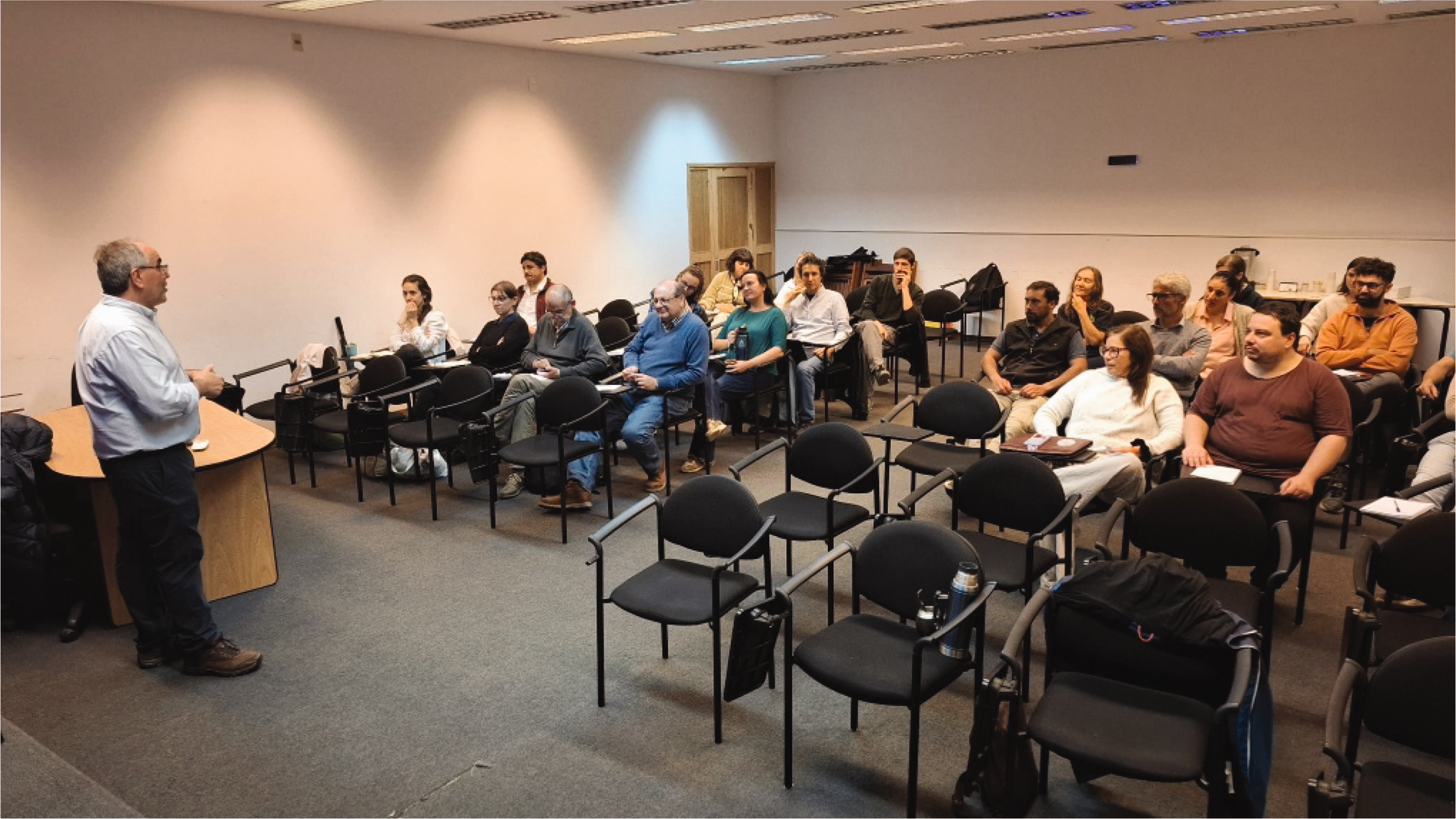
Open seminar with academic staff and students, Faculty of Agronomy, Montevideo, Uruguay.
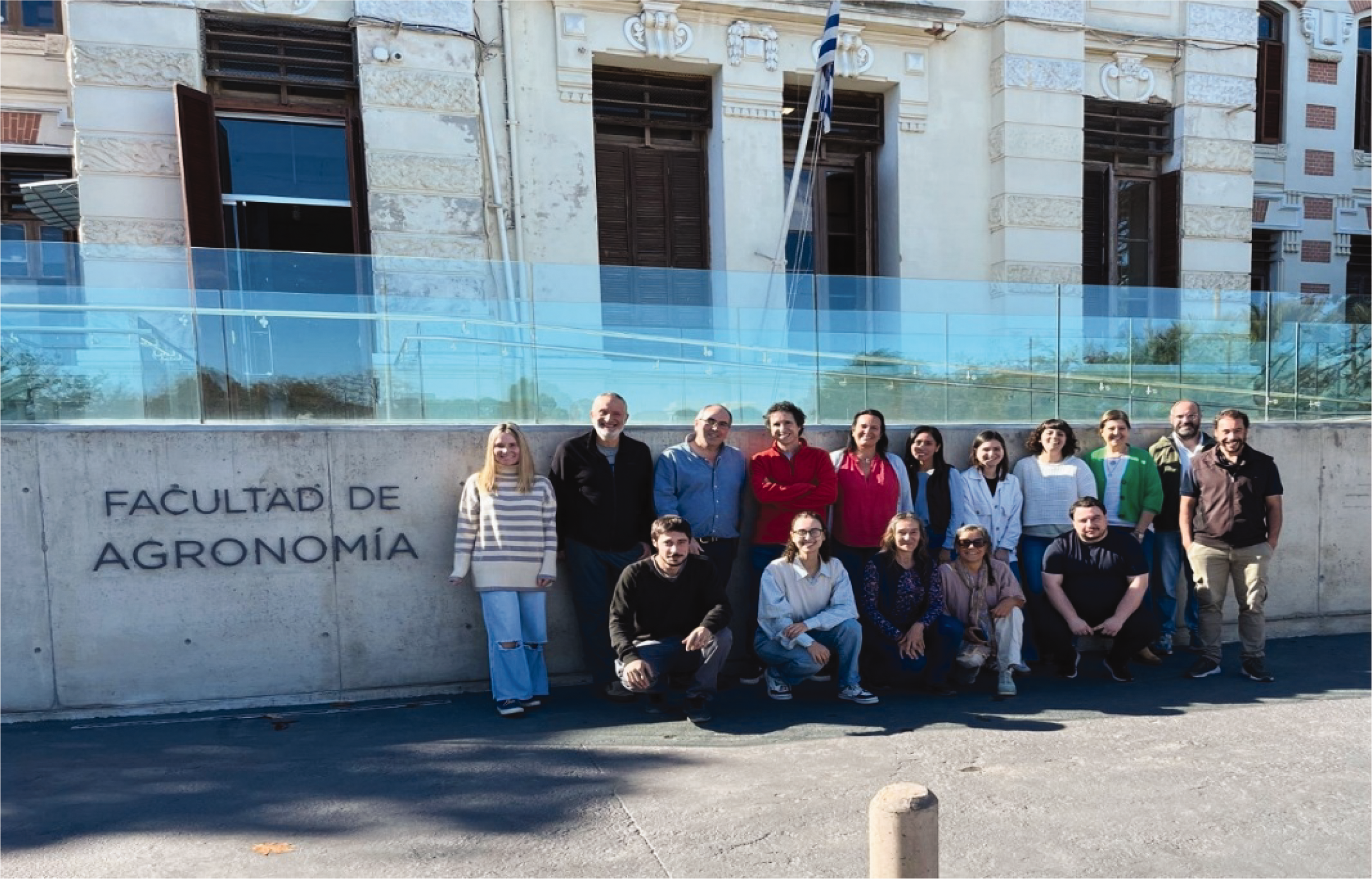
Participants of the workshop in front of the Faculty of Agronomy building, Montevideo, Uruguay.
The course provided an opportunity to introduce the basic aspects of vibrational spectroscopy, instrumentation and sampling, the role and use of chemometric tools in quantitative and qualitative analysis, as well as to present an overview of current and future applications of NIR spectroscopy in agriculture and food. The course had a practical component where the participants could explore the possibilities to analyse different types of samples, and to evaluate the effect of sample presentation.
Multidisciplinary research group in fruits and vegetables – Faculty of Agronomy
As stated above, the Faculty of Agronomy and the group led by Dr Galietta have evaluated the use of NIR spectroscopy in different applications. The Grupo Disciplinario de Tecnología de Frutas y Hortalizas is one of the three main teams that belongs to the Unidad de Tecnología de Alimentos (Food Technology). The Unit is also integrated by the Dairy-Milk products and Oenology groups. The Fruits and Vegetable Unit has evaluated the use of non-thermic technologies (e.g. ultrasound and UVC) and their effect on the bioactive compounds in fruit juices (e.g. orange, grape, and pomegranate). In these studies, NIR spectroscopy has been utilised to evaluate the chemical composition (e.g. total soluble solids, pH, DPPH, and ABTS), vitamins (e.g. vitamin C) and hydroxy-methyl furfural. Another line of work of this group is the one on the characterisation of the physicochemical characteristics of honey from different regions and production systems from Uruguay. In addition, the group has been also collaborating with other researchers and groups in the analysis of eggs, vegetables, and meat and meat products for several compounds such as amino acids, vitamins, polyphenols, carotenoids, etc.
Summary
The seminar and workshop had an impact on the participants. Furthermore, the training was able to raise awareness of the potential and limitations of NIR spectroscopy. This type of activity is considered important for improving the competitiveness of Uruguayan products in regional and international markets. It also aims to foster the creation of a critical mass that can contribute to the development of new research areas and the training of advanced-degree candidates. It is interesting to note that most participants were highly surprised to learn that one of the most important figures in the field of NIR spectroscopy, Tomas Hirschfeld, was born in Montevideo, Uruguay, and studied at the Faculty of Chemistry there before moving to the United States.
Footnotes
Declaration of conflicting interests
The author(s) declared no potential conflicts of interest with respect to the research, authorship, and/or publication of this article.
Funding
The author(s) received no financial support for the research, authorship, and/or publication of this article.