Connecting to the very nature of spectroscopy, February this year brought a burst of color to the city of San Diego (CA, USA), where Pittcon 2024 conference provided an engaging scene for scientific exchange, collaboration, and exploration of cutting-edge photonic technologies. Among the diverse array of topics discussed, vibrational spectroscopy, including NIR technique, attracted significant attention, reflecting its dynamic growth in importance among various fields. The technical program refelected the continued evolution and growing importance of these techniques in diverse fields.
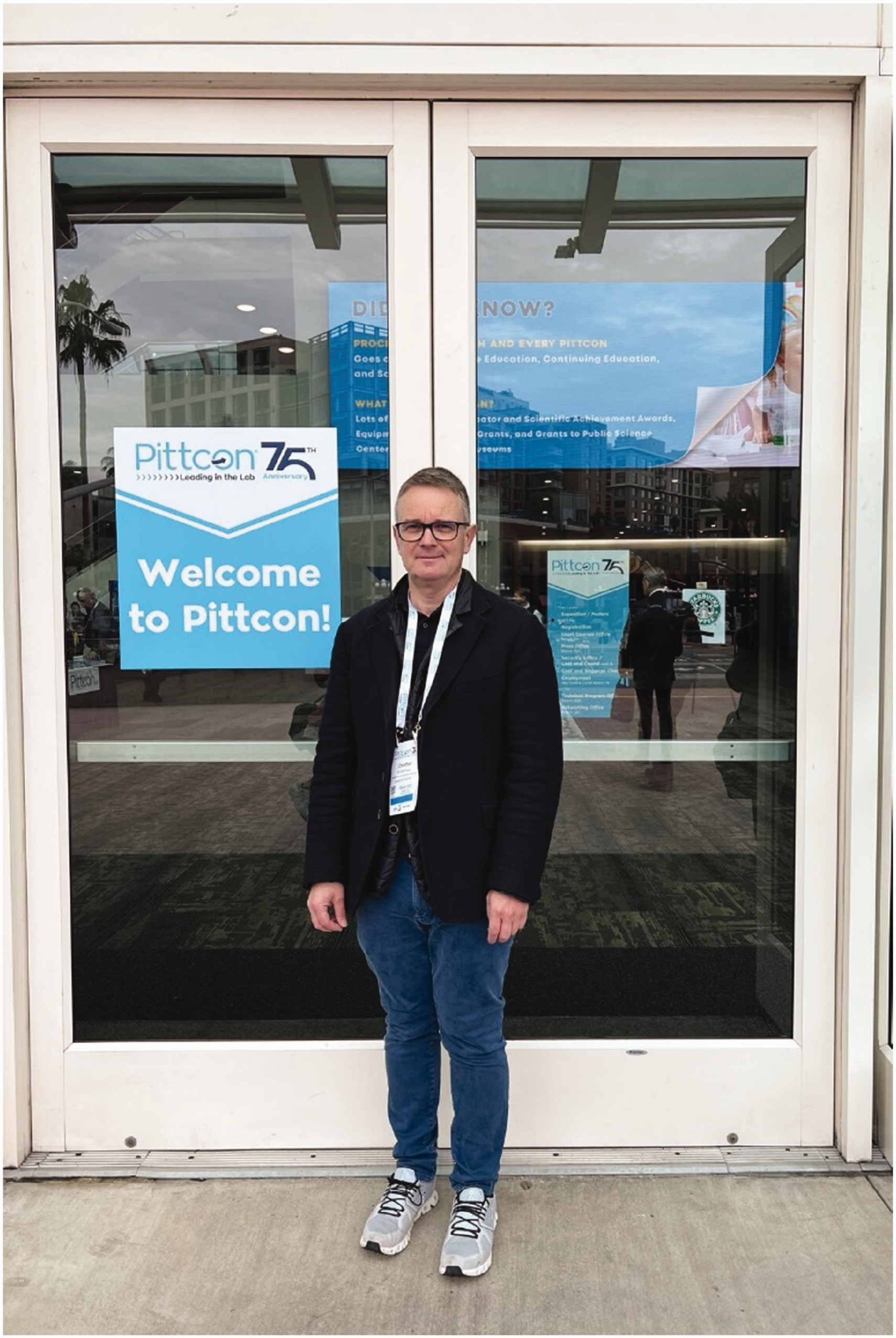
Pittcon is a major annual conference and exposition on laboratory science, organized by The Pittsburgh Conference on Analytical Chemistry and Applied Spectroscopy, a Pennsylvania non-profit organization. Co-sponsored by the Spectroscopy Society of Pittsburgh and the Society for Analytical Chemists of Pittsburgh, Pittcon serves as a leading platform for showcasing advancements in analytical chemistry and applied spectroscopy. Pittcon 2024 took place from 24 to 28 February 2024 in San Diego, CA, USA. This time, the gathering was special as it marked Pittcon’s 75th anniversary. This milestone event provided an opportunity for scientific exchange, collaboration, and exploration of emerging technologies and the latest innovations in analytical chemistry and applied spectroscopy (Figure 1).
The Editor-in-Chief of NIR News, Christian Huck at the front of Pittcon 2024 conference venue, San Diego Convention Center; San Diego, CA.
As an integral part of modern science, vibrational spectroscopy continues to be the indispensable tool in basic research, bioscience and analytical chemistry, among other areas of its prominent applications. At Pittcon 2024, this field was prominently featured, reflecting the dynamic progress that vibrational spectroscopic techniques continue to enjoy. This emphasis on vibrational spectroscopy at Pittcon 2024 highlights its versatility and growing importance in various fields, including pharmaceutical and material industry, and critically important areas of public interest such as environmental monitoring. While mid-infrared (MIR; i.e., Fourier transform infrared spectroscopy) and Raman spectroscopy, alongside the near-infrared (NIR) spectroscopy, are matured cornerstone techniques with general and decades-lasting importance, a continued dynamic progress is evident.
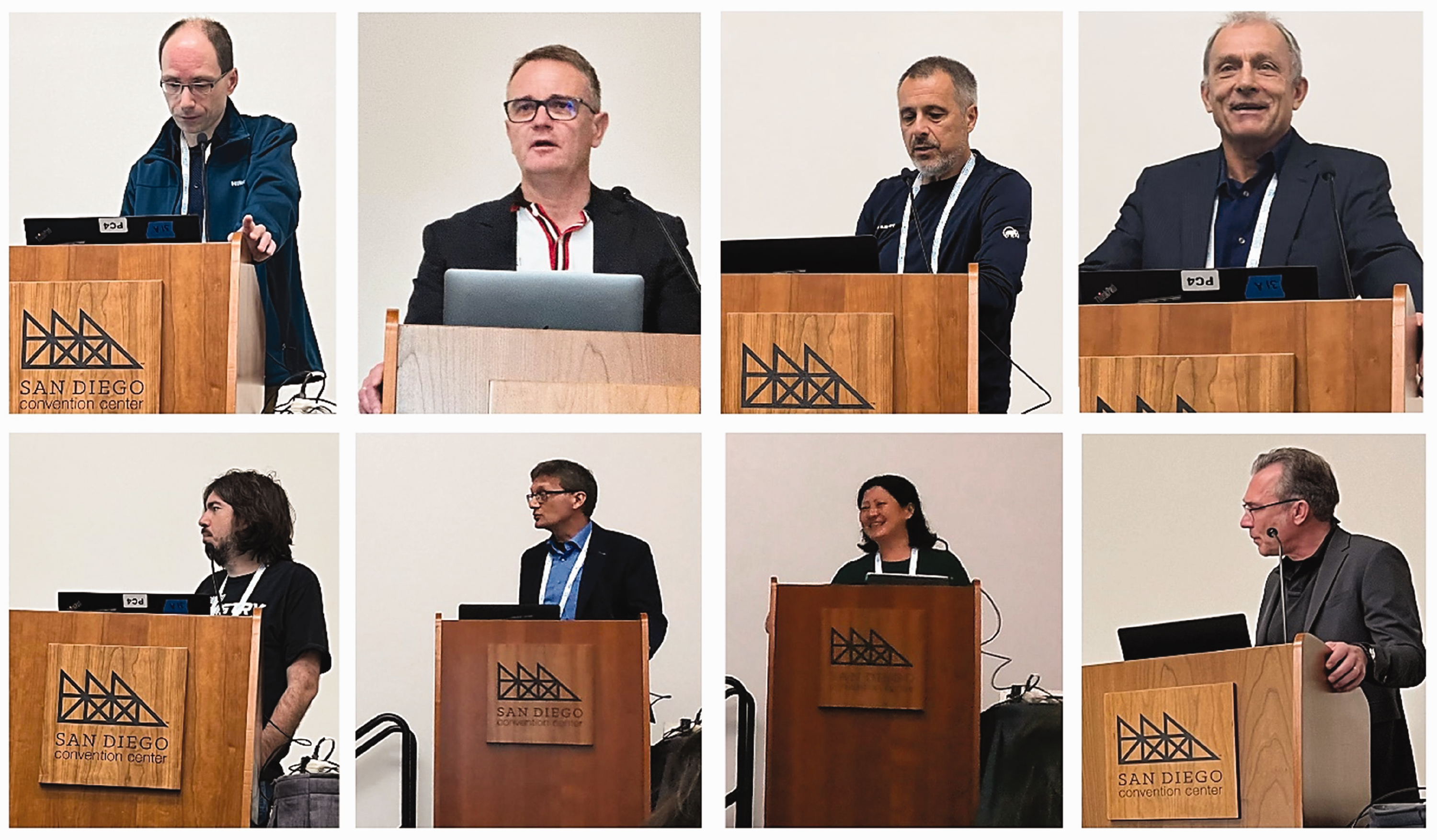
Pittcon 2024 provided a comprehensive overview of recent developments and practical applications in these techniques. Organized symposia, invited talks, contributed presentations, and focused Short Courses directed attendees’ attention to modern sensors, miniaturized spectrometers, and the integration of data science and artificial intelligence (AI) into spectroscopic methods. The recent development trends and new practical applications in these techniques were well-represented at Pittcon 2024 in the presentations from prominent Speakers (Figure 2). These discussions reflected contemporary demands in real-life applications, ranging from pharmaceutical analysis to materials characterization and environmental monitoring. Among those, the applications reflected the utilization of vibrational spectroscopy and related techniques across diverse fields such as pharmaceuticals, natural drug analysis, biodiagnostics, RNA therapeutics, functional materials, bioanalytical studies and combating microplastic pollution. The glimpse into frontiers of vibrational spectroscopy at Pittcon 2024 highlights its versatility and growing importance in various fields.
Selected illustrative images of the Invited Speakers featured in the vibrational spectroscopy sessions at Pittcon 2024.
Organized session – Novel vibrational spectroscopy empowered by AI
Organized and chaired by Igor Lednev (University at Albany, SUNY, USA) and Jürgen Popp (Leibniz Institute of Photonic Technology, Germany), the session on “Novel Vibrational Spectroscopy Empowered by Artificial Intelligence” was held on Sunday, 25 February, 2024. The event focused on the cutting-edge intersection of vibrational spectroscopy techniques and AI in bioanalytical instrumentation.
The convergence of AI with vibrational spectroscopy techniques represents a paradigm shift in bioanalytical instrumentation, enabling unprecedented levels of precision, sensitivity, and efficiency. AI algorithms excel at processing vast amounts of spectroscopic data in real-time, facilitating rapid and accurate analysis of complex biological samples. By employing machine learning models, vibrational spectroscopy techniques can overcome traditional challenges associated with data interpretation and quantification, particularly in the presence of intricate molecular structures and diverse sample matrices. Moreover, AI-driven spectral analysis enables the identification of subtle spectral patterns and correlations that may elude human perception, leading to enhanced diagnostic capabilities and novel insights into molecular interactions. Ultimately, the integration of AI with vibrational spectroscopy techniques holds immense promise for revolutionizing bioanalytical research, diagnostic medicine, and therapeutic development, ushering in a new era of precision healthcare and personalized treatment strategies. This Organized Session well-reflected that convergence, particularly evident in the bioanalytical field.
The session featured the following Speakers.
AI driven multimodal imaging for tumor diagnosis and therapy
Jürgen Popp’s (Leibniz Institute of Photonic Technology, Germany) presentation elucidated the potential of multimodal imaging bolstered by AI algorithms for precise intraoperative tumor resection. By harnessing innovative spectroscopic instrumentation in tandem with AI-driven image analysis, Popp demonstrated the capability to provide real-time diagnostic information during surgery. The integration of label-free multimodal spectroscopic imaging with AI facilitates the visualization of tissue morphology and molecular structure, offering invaluable insights for accurate tumor margin delineation and subsequent removal.
Sensitive and selective bioanalysis using SERS and SESORS
Karen Faulds (University of Strathclyde, UK) presented the remarkable sensitivity and selectivity of surface-enhanced Raman scattering (SERS) in bioanalysis. Faulds’s discussion elucidated the advancements in SERS-based detection methods, emphasizing its utility in pathogen detection and cancer cell screening. By leveraging functionalized nanoparticles and innovative data analysis techniques, Faulds demonstrated the capability to identify and quantify multiple analytes within complex biological samples, paving the way for enhanced diagnostic accuracy and personalized medicine approaches.
Multi-wavelength resonance Raman spectra of chromophore mixtures
Judy Kim’s (UC San Diego, USA) presentation centered on the application of multi-wavelength resonance Raman spectroscopy to characterize chromophore mixtures. Through the acquisition of multi-wavelength resonance Raman spectra, Kim elucidated the structural nuances and local environments of chromophores within complex matrices. By leveraging the spectral variations induced by different excitation wavelengths, Kim explained in detail the potential of resonance Raman spectroscopy as a powerful tool for elucidating molecular interactions and compositional heterogeneity in biological and commercial samples.
NIR spectroscopy combined with machine learning as a time-tested tool of analytical chemistry
Christian Huck (University of Innsbruck, Austria) presented the exciting synergistic integration of NIR spectroscopy with machine learning techniques for analytical chemistry applications. Huck’s presentation underscored the versatility of NIR spectroscopy augmented by machine learning algorithms in diverse fields such as food quality assessment, agriculture, natural medicines, and environmental monitoring. By harnessing the analytical potential of NIR spectroscopy in conjunction with AI-driven data analysis frameworks, Huck highlighted the transformative impact of this technology on enhancing analytical accuracy, efficiency, and accessibility across various domains.
Organized session – Redefining vibrational spectroscopy: From legacy to innovation in mainstay techniques of analytical chemistry
On Tuesday, 27 February 2024, another Organized Session devoted to frontiers of vibrational spectroscopy took place at Pittcon 2024. “Redefining Vibrational Spectroscopy: From Legacy to Innovation in Mainstay Techniques of Analytical Chemistry” organized and chaired by Krzysztof Bec and Christian Huck (both from the University of Innsbruck, Austria) aimed to reflect the current reformative potential of novel developments that are brought to matured and well-established methods and approaches in this area of science and technology.
Vibrational spectroscopy, including MIR, NIR, and Raman techniques, continues to be pivotal in analytical and bioanalytical applications, providing profound insights into molecular composition and qualitative and quantitative properties of diverse samples. Despite its maturity, the field is experiencing a transformative era marked by advancements in data analytics, sensor technology, and understanding of spectral signatures, especially in the intricate NIR region. This evolution includes the enhancement of existing applications and the emergence of novel ones, often driven by pressing needs and emerging challenges in diverse fields such as medical diagnosis, natural product analysis or environmental concerns.
The following Speakers presented in this session.
The sensor matters – Instrumental variability in NIR spectroscopy for discriminating microplastics in soil
Krzysztof Bec (University of Innsbruck, Austria) discussed the practical aspects and major challenges of vibrational spectroscopy techniques in the analysis of microplastics pollution. Focused on rapid, high-throughput and on-site capable method, the utility of handheld NIR spectroscopy in discriminating microplastics in soil was dissected, addressing a pressing environmental concern. The performance of a number of miniaturized spectrometers was assessed in the discriminative power against microplastics in soil based on covariance analysis, PCA and mid-level data fusion. The study revealed a profound instrumental variability among different NIR spectroscopy instruments and underscored the significance of instrumental performance for accurate analysis.
NIR spectroscopy in phytopharmaceutical and natural drug analysis – The evergreen application area for spectroscopic techniques
Christian Huck (University of Innsbruck, Austria) elucidated the indispensable role of NIR spectroscopy in phytopharmaceutical and natural drug analysis, emphasizing its non-destructive nature, rapidity, and versatility. He highlighted the synergy between NIR spectroscopy and phytopharmaceutical analysis, especially in ensuring the quality, efficacy, and safety of medicinal plants and their derivatives. The specific challenges that phytopharmaceutical industry faces, distinct to those known in the traditional pharma, also urge for new, potent analytical methods. In the realm of a rapidly growing market of natural drugs, NIR spectroscopy stands out as a particularly, fitting, rapid, on-site capable tool for continuous monitoring of the medicinal plans condition and product quality from the field to the shelf.
Infrared photonics: From emerging tool to enabling technology
Boris Mizaikoff (Ulm University, Germany), in his talk, explored the evolution of infrared photonics from an emerging tool to an enabling technology in biodiagnostics. He underscored the versatility of MIR photonic concepts, facilitated by advancements in laser technology and multivariate data evaluation, enabling label-free molecular analysis with unprecedented detail and selectivity. Mizaikoff emphasized the transformative role of infrared photonics in modern science, solidifying its position as an indispensable tool in modern analytical chemistry.
An in-situ stability test for mRNA vaccines based on deep–UV resonance Raman spectroscopy
Igor Lednev (University at Albany, SUNY, USA) spoked about an innovative in-situ stability test for mRNA vaccines using deep–UV resonance Raman (DUVRR) spectroscopy. With the recent success of mRNA-based COVID-19 vaccines, maintaining RNA stability becomes crucial. The presented methods offer a nondestructive, in situ approach to probe mRNA vaccine stability, providing valuable insights without sample destruction, forming a decisive advancement in biomedical spectroscopy.
Good vibrations: How vibrational spectroscopy can profit from chemometric tools
Federico Marini (University of Rome “La Sapienza”, Italy) detailed in his talk the synergy between advanced chemometric tools and vibrational spectroscopy, particularly in the NIR range, across various application fields. His discussion encompassed methods for experimental design, variable selection, preprocessing, and marker identification, emphasizing the role of techniques like ANOVA-simultaneous component analysis and locally linear models for regression and classification.
Raman spectroscopic characterization of soft matter embedded active centers
Michael Schmitt (Friedrich-Schiller University, Germany) explored in depth the characterization of soft matter embedded active centers using Raman spectroscopy coupled with tailored spectral analysis routines in his presentation. He discussed the application of Raman-2DCOS in analyzing shape-memory and self-healing polymers, elucidating molecular mechanisms and interplay between mass transport and chemical reactivity. Schmitt also investigated surface-responsive polymers and polymer-integrated photocatalysts, providing insights into their behavior under perturbation. This work provided a deeper understanding of the dynamic nature of these materials, paving the way for advancements in various applications ranging from shape-memory polymers to surface-responsive systems.
Probing biomolecules with UV resonance Raman spectroscopy
Judy Kim (UC San Diego, USA) highlighted in her talk the utility of UV resonance Raman (UVRR) spectroscopy in probing biomolecules, particularly aromatic amino acids, in complex mixtures. Her focus on membrane proteins and model compounds provided insights into the structures and local environments of tryptophan and tyrosine residues, showcasing UVRR spectroscopy as an ideal tool for label-free analysis in biological systems. The presented research evidenced the significance of the local environments, underscoring UVRR spectroscopy’s efficacy as a label-free analytical technique in biological contexts.
This session reflected very well the dynamic evolution of vibrational spectroscopy techniques, spanning from cutting-edge innovations to pioneering applications, and evidencing their continued relevance and potential in analytical chemistry and solving real-life problems. Topics included novel methodologies and cutting-edge applications, which ranged from stability testing for mRNA vaccines and probing biomolecules with UVRR spectroscopy to natural drug analysis and environmental monitoring.
Oral session – Bioanalytical applications of vibrational spectroscopy
On Tuesday, 27 February 2024, another Oral Session “Bioanalytical Applications of Vibrational Spectroscopy” took place as well. Chaired by Justyna Grabska, this event explored in depth various techniques, including Raman and SERS in application for detecting, quantifying, and characterizing biomolecules. The goal was to discuss innovative approaches for characterizing substances of biological interest and diverse application potential of vibrational spectroscopy in bioanalytical landscape. Topics included the characterization of glycosylated peptides, quantification of drugs and metabolites, multiplex detection of cancer protein biomarkers, structural and functional characterization of peptides using NIR spectroscopy, and the development of chemical imaging tools for investigating amyloid fibrils associated with diseases like Alzheimer’s. Overall, the session aimed to highlight the potential of vibrational spectroscopy in advancing bioanalytical research and diagnostics.
The following Speakers presented in this session.
Differentiating glycosylated peptides by surface enhanced Raman spectroscopy
Hannah Schorr (The Ohio State University, USA) elucidated the application of surface enhanced Raman spectroscopy (SERS) in characterizing glycosylated peptides. By leveraging chemometric tools such as partial least squares discriminant analysis and principal component analysis, Schorr demonstrated the differentiation of peptides based on attached monosaccharides. This innovative approach allows for rapid and online detection, quantification, and analysis of glycosylated peptides, offering insights into complex molecular structures.
SERS for the quantification of drugs and their metabolites
Roy Goodacre (University of Liverpool, UK) presented a SERS methodology for quantifying drugs and their metabolites. The presented approach, which enhances SERS signals through gold nanoparticle aggregation, enables accurate and precise measurements with excellent predictive values. By achieving low limits of detection, this approach holds promise for rapid and sensitive drug testing, particularly in point-of-care settings.
SERS-based immunosensor for multiplex detection of cancer protein biomarkers in serum
Mehmet Kahraman (Gaziantep University, Turkey) introduced a SERS-based immunosensor for the multiplex detection of cancer protein biomarkers in serum. Utilizing a diatomite-based SERS active platform and silver nanoparticles, the presented approaches offer a simple, cheap, and sensitive method for detecting PSA, HER2, and MUC4 proteins simultaneously. This technology holds potential for revolutionizing cancer diagnostics by providing a non-invasive and rapid method for early detection and monitoring of cancer progression.
Amide band anharmonicity: Peptide structure and function from NIR region
Justyna Grabska (University of Innsbruck, Austria) presented the current state-of-the-art and the challenges and opportunities of using NIR spectroscopy for structural characterization of peptides. While NIR spectroscopy poses challenges in deciphering molecular vibrations, Grabska highlighted the synergy between NIR spectroscopy and computational chemistry in interpreting complex spectral data. Through simulations, this work unveiled new perspectives on NIR band assignments of peptides, shedding light on the manifestation of amide bands in the NIR spectrum. These findings enhanced the understanding of the role of anharmonicity in shaping spectral features of amides in NIR and MIR regions.
Towards developing chemical imaging tools to investigate the molecular etiology of Alzheimer’s disease
David Punihaole (University of Vermont, USA) discussed the development of chemical imaging tools using Raman spectroscopy to investigate amyloid fibrils associated with Alzheimer’s disease and other disorders. The presented research aims to monitor the toxic activities of amyloid fibrils directly in their native biological environments. By measuring dihedral and bond orientation angles in fibrils and investigating low-frequency modes, the presented work provided insights into the structure–toxicity relationships of different amyloid polymorphs.
Vibrational spectroscopy methods to structurally characterize polymer gene delivery vehicles
David Punihaole also presented on the use of vibrational spectroscopy methods, such as FTIR and Raman scattering, to structurally characterize polymer–DNA complexes in gene delivery applications. His research focuses on understanding the nucleic acid delivery mechanisms of polymers, which have the potential to be safer and more cost-effective than conventional viral vectors. The discussed methodologies offer quantitative, molecular-level structural information about these complexes, aiding in the development of efficient gene delivery systems.
Other focused thematic sessions, which also included the vibrational spectroscopy context, should also be mentioned. Here, Pittcon 2024 events such as “Spectroscopy for Wearables and Human Health (Society for Applied Spectroscopy)”, organized by Richard Crocombe (Crocombe Spectroscopic Consulting, USA) should be highlighted. On the other hand, the topics essential in vibrational spectroscopy, its fundamentals, instrumentation, methods, and applications were also very well reflected in the Short Course suite offered at Pittcon 2024.
Pittcon 2024 Short Courses focused on vibrational spectroscopy
NIR spectroscopy, with its wide-ranging applications in various fields, including pharmaceuticals, agriculture, food science, and environmental monitoring, has become indispensable in modern analytical chemistry. As a vibrational spectroscopic technique with unique practical potential, NIR spectroscopy is increasingly demanded in everyday scenarios. From pharmaceutical manufacturing to food quality control, agriculture, environmental monitoring, and beyond, NIR spectroscopy provides valuable insights quickly and efficiently. A successful application relies heavily on knowledgeable use of the technique and its and the accompanying data analysis techniques. Understanding the principles behind NIR spectroscopy, as well as the intricacies of data analysis and interpretation, is crucial for obtaining accurate and reliable results in any circumstances.
In that context, the courses in the area of NIR spectroscopy are particularly valuable as they provide participants with essential theoretical understanding, practical skills, and hands-on experience necessary for effective application of this analytical technique.
Heinz Siesler (University Duisburg-Essen, Germany) offered two short courses with distinct focuses and valuable insights into the practical applications of vibrational spectroscopy techniques. “Handheld Near-Infrared Spectroscopy: Anywhere, Anytime by Anybody” (Monday, 26 February) explored the development and realistic potential of handheld NIR spectrometers, dispelling exaggerated claims and providing clarity on their performance. Meanwhile, “Industrial Applications of Raman, Mid-/Near-/Far-Infrared Spectroscopy in Material and Life Sciences” (Sunday, 25 February) provided a comprehensive overview of theoretical principles, instrumentation, and practical examples across various industries, empowering participants to efficiently evaluate vibrational spectroscopic data and its relevance in research and quality control.
Also on Monday, 26 February, a comprehensive short course focused on the interpretation of NIR spectra was held. “Decoding the Enigma of Overtone and Combination Bands: An Accessible Guide to Interpreting NIR Spectra” by Krzysztof Bec (University of Innsbruck, Austria) dissected the intricacies of NIR spectroscopy, offering a deep understanding of its fundamental characteristics and broad application potential. Participants explored recent advancements in theoretical NIR spectroscopy, debunked myths surrounding overtones and combination bands, and gained insights into practical differences between NIR spectroscopy and other techniques. Designed for both beginners and professionals, the course covered essential topics such as spectra treatment, chemometrics, and potential pitfalls, catering to a diverse community of analytical chemists, scientists, managers, and technicians. Through interactive sessions and discussions, participants enhanced their proficiency in utilizing NIR spectroscopy and developed tailored applications with improved efficacy.
Summary
Pittcon 2024, commemorating its 75th anniversary this year in San Diego, CA, USA, served as a major platform for scientific exchange in the area of analytical sciences (Figure 3). The technical program of the conference reflected well the importance of vibrational spectroscopy in contemporary landscape of science and technology. Despite its maturity, vibrational spectroscopy continues to evolve dynamically, driven by advancements in technology, methodologies, and interdisciplinary applications. With advancements in sensor technology, data analytical approaches, growing synergy with AI, and continuously expanding application potential and real-life importance, vibrational spectroscopy, including NIR technique, continues to evolve dynamically. It was well evidenced through a broadly scoped suite of invited oral talks, contributed presentations, and short courses, as well as during spontaneous discussions during breaks at the conference venue and outside.
Amid the scenic landscape of San Diego, this February Pittcon 2024 celebrated its 75th anniversary while reflecting on the pivotal role of vibrational spectroscopy in analytical sciences.
In February of this year, spectroscopy brought burst of colors to the city of San Diego (Figure 3), where Pittcon 2024 provided a phenomenal opportunity for scientific exchange and collaboration. We eagerly look forward to reconnect with you during the vibrational spectroscopy sessions at Pittcon 2025, which this time will take place in Boston, Massachusetts, from 1 to 5 March.
Footnotes
Declaration of conflicting interests
The author(s) declared no potential conflicts of interest with respect to the research, authorship, and/or publication of this article.
Funding
The author(s) received no financial support for the research, authorship, and/or publication of this article.