




Abstract
The polybrominated diphenyl ether flame retardants decabromodiphenyl ether (BDE-209) and bisphenol A (BPA) are environmental contaminants that can cross the placenta and exert toxicity in the developing fetal nervous system. Copy number variants (CNVs) play a role in a number of genetic disorders and may be implicated in BDE-209/BPA teratogenicity. In this study, we found that BDE-209 and/or BPA exposure decreased neural differentiation efficiency of human embryonic stem cells (hESCs), although there was a >90% induction of neuronal progenitor cells (NPCs) from exposed hESCs. However, the mean of CNV numbers in the NPCs with BDE-209 + BPA treatment was significantly higher compared to the other groups, whereas DNA methylation was lower and DNA methyltransferase(DNMT1 and DNMT3A) expression were significantly decreased in all of the BDE-209 and/or BPA treatment groups compared with the control groups. The number of CNVs in chromosomes 3, 4, 11, 22, and X in NPCs with BDE-209 and/or BPA exposure was higher compared to the control group. In addition, CNVs in chromosomes 7, 8, 14, and 16 were stable in hESCs and hESCs-derived NPCs irrespective of BDE-209/BPA exposure, and CNVs in chromosomes 20 q11.21 and 16 p13.11 might be induced by neural differentiation. Thus, BDE-209/BPA exposure emerges as a potential source of CNVs distinct from neural differentiation by itself. BDE-209 and/or BPA exposure may cause genomic instability in cultured stem cells via reduced activity of DNA methyltransferase, suggesting a new mechanism of human embryonic neurodevelopmental toxicity caused by this class of environmental toxins.
Keywords
Introduction
Many industrial environmental contaminants have been identified as neurotoxic hazards, with decabromodiphenyl ether (BDE-209) and bisphenol A (BPA) being of particular concern. 1,2 BDE-209, a polybrominated diphenyl ether (PBDE), is commonly added as a flame retardant in plastics, textiles, clothes, and electric and electronic equipment despite evidence from animal studies demonstrating its potential developmental neurotoxicity. 3,4 In recent years, BDE-209 has been detected in human serum, semen, placenta, cord blood, and notably in aborted fetuses, 5 –7 consistent with preclinical findings of its presence in brains of rats born to dams with BDE-209 exposure during pregnancy. 8,9 As such, it is worrisome that prenatal or postnatal exposure to BDE-209 may potentially delay neurological development in human neonates. 10 The environmental contaminant BPA has been used in the production of plastics since the 1950s, and several million tons are now produced worldwide every year. 11 Many studies indicate that human exposure to BPA is ubiquitous, with more than 90% of the population presenting detectable levels of BPA in different biological matrices. 12 –14 Like BDE-209, BPA can cross the placenta and enter the fetus, 15 –18 having been consistently detected in human amniotic fluid and cord blood. 19,20 In recent years, increasing attention has been given to the impact of prenatal BPA exposure on neurological development and behavioral disturbances such as hyperactivity, aggression behavior, anxiety, depression, attention problems, and/or other cognitive function impairments, as reviewed by Mustieles et al. 21
Given this information, it is important to establish the teratogenic potential of BDE-209 and BPA. Small deletions or duplications in the genome, which are known as copy number variants (CNVs), are implicated in diverse nervous system diseases, especially developmental disorders. Notable examples of CNV-related disorders include a deletion at 7q11.23 in Williams syndrome, intellectual disability, autism, and schizophrenia. 22,23 These associations suggest that CNVs mediate a strict regulation of gene dose in neurodevelopment and present a mechanism for understanding disease susceptibility. 24 Recent research has shown that hypo-methylation increases genomic instability, resulting in DNA copy number changes. Specifically, Li et al. showed that genomic hypo-methylation in the human germ line imparts selective structural mutability in the genome. 25 Environmental pollutants, such as the heavy metals arsenic and cadmium, and carcinogens, such as benzene, can reduce DNA methylation. 26 Chen et al. found that BDE-209 decreased global levels of gene DNA methylation in primary cultured neonatal rat hippocampal neurons. 27 Epigenetic actions of BPA toxicity also include alteration of DNA methylation patterns. 28,29 In general, animal experiments and epidemiological investigations indicate that the widely used flame retardants BDE-209 and BPA exert neurodevelopmental toxicity. Specifically, these agents cause deleterious effects on cognitive function in offspring that are exposed in utero. However, the specific molecular mechanisms by which BDE-209 and BPA exposure can perturb neural development are not clear.
To better define the mechanisms underlying BDE-209 and BPA neurodevelopmental toxicity, we investigated the neurodifferentiation efficiency of human embryonic stem cells (hESCs) upon exposure to low doses of BDE-209 and BPA. We also measured the toxic effects on the neuronal markers, Nestin, and the transcription factor, Paired box protein Pax6. We further measured effects on DNA methylation and CNV in hESCs, as additional indicators of genomic effects of these environmental toxins.
Materials and methods
Chemicals and reagents
BDE-209 (CAS NO. 1163-19-5, 99% purity) was purchased from Accustandard Inc. (New Haven, CT, USA), and BPA, dimethyl sulfoxide (DMSO), and diethyl pyrocarbonate (DEPC) were obtained from Sigma-Aldrich (St. Louis, Missouri, USA). BPA and BDE-209 stock solutions were prepared in DMSO and adjusted to a final concentration of 10 µM in 0.1% (V/V) DMSO.
Cell culture
All experiments were approved by the research ethics committee of The Third Affiliated Hospital of Guangzhou Medical University. hESC lines (FY-hES-17, FY-hES-26, and FY-hES-37) were cultured on Matrigel-coated tissue culture dishes (ES qualified; BD Biosciences, USA) with mTeSR1 (STEMCELL Technologies, Vancouver, British Columbia, Canada) at 37°C and 5% CO2. The culture medium was refreshed daily until the cells were ready for passage or harvest. The cells were passaged using 1 mg/ml dispase (Gibco, Life Technologies, USA) every 3–4 days.
Neural induction
Neuronal progenitor cells (NPCs) were obtained using a modified version of the differentiation protocol developed by Chambers et al. and Drury-Stewart D et al.
30,31
In brief, hESCs cells were seeded as single cells on Matrigel (BD Biosciences)-coated dishes in mouse embryonic fibroblasts feeder cells (MEF)-conditioned medium, supplemented with 10 ng/ml basic fibroblast growth factor and 10 μM ROCK inhibitor (Y27632; Sigma-Aldrich). When cells reached confluence, they were grown in KSR medium (Knockout Dulbecco’s modified Eagles medium (DMEM), 15% knockout serum replacement,
The hESCs seeded as single cells were treated with BDE-209 (10 nM), BPA (10 nM), BDE-209 (10 nM) + BPA (10 nM), or 0.1% DMSO vehicle control. There was continuous BDE-209 or BPA exposure during neural induction.
Flow cytometry analysis of Nestin
On day 11, the neural induction cells were fixed in 4% paraformaldehyde (Sigma-Aldrich), permeabilized with Triton-X-100 (G-Biosciences, St. Louis, Missouri, USA), and blocked with 1% bovine serum albumin (Sigma-Aldrich) prior to overnight application of anti-Nestin (1:100, R&D systems, USA) at 4°C in phosphate buffered saline (pH 7.4). Alexa Fluor 594-conjugated antibodies (1:1000, Life Technology, USA) were applied for 1 h at room temperature, and the number of Nestin-positive cells was quantified with a flow cytometer (BD Biosciences).
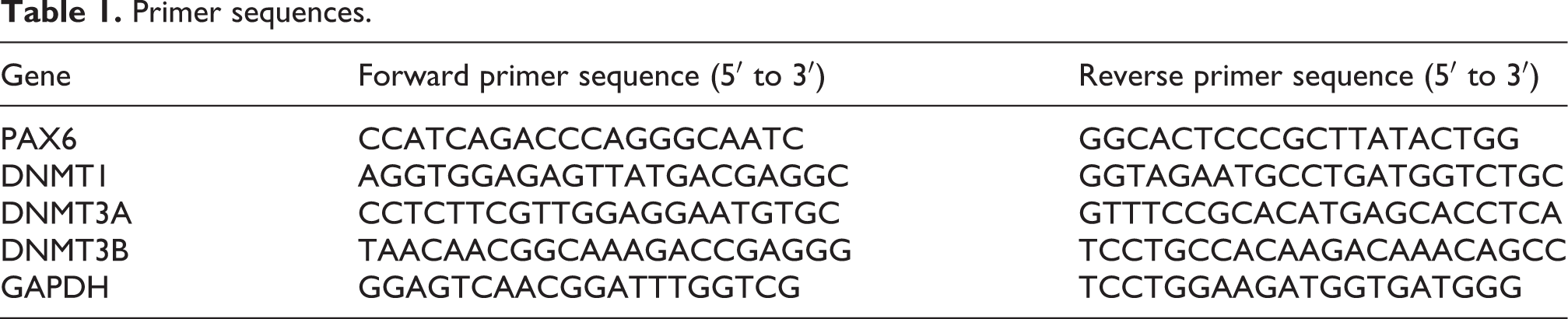
RNA extraction, reverse transcription, and Quantitative real time polymerase chain reaction (qPCR) Total RNA was extracted from cells on day 11 of neural induction using TRIzol (Invitrogen, Thermo Fisher Scientific, USA) according to the manufacturer’s protocol. Extracted RNA was diluted with sterile DEPC-treated water and quantified from the ratio of optical density measurements at 260 and 280 nm. All qPCR reactions were carried out on StepOnePlus Real-Time System (Applied Biosystems, Foster City, California, USA) according to the manufacturer’s instructions for quantification of gene expression. RNA samples (1 µg) were reverse transcribed to cDNA in a final volume of 25 μl using a PrimeScript™ RT reagent Kit with gDNA Eraser (Perfect Real Time; Takara, Japan) according to the manufacturer’s instructions. The expression levels of genes were measured using SYBR® Premix Ex Taq™ (Tli RNaseH Plus; Takara), with the primer sequences listed in Table 1. All oligonucleotide primers were synthesized by Invitrogen (Shanghai).
Primer sequences.
DNA extraction and purification
Genomic DNA was extracted and purified with QIAamp DNA Blood Mini Kit (QIAGEN, Germany) according to the manufacturer’s instructions. RNA digestion was performed at 37°C for 1 h using RNase (QIAGEN). The concentration and quality of the DNA samples were determined by spectrophotometry (Nanodrop 2000; Thermo Scientific, Waltham, MA, USA) and 1% agarose gel electrophoresis.
DNA methylation
Global gene DNA methylation was measured with the MethylampTM global DNA methylation quantification kit (Epigentek Group Inc., New York, USA). This kit uses an anti-5-methylcytosine antibody to recognize the methylated portions of DNA, which is quantified through an enzyme-linked immunosorbent assay-like reaction. The assays were performed according to the manufacturer’s instructions, with quantitation at absorbance 450 nm on a microplate reader.
CNV analysis
The Affymetrix Cytoscan HD array (Affymetrix, Santa Clara, California, USA), which interrogates 2,696,550 copy number markers across the human genome, was used to characterize cells harvested on day 11 of neural induction to quantify de novo CNVs provoked by BDE-209 or BPA exposure. For each sample, 250 ng of input genomic DNA was amplified and labeled according to the manufacturer’s instructions. 32 Hybridization of the labeled product using a GeneChip Hybridization Oven 645 (Affymetrix) was followed by washing using the GeneChip Fluidics Station 450 (Affymetrix) and scanning using the GeneChip Scanner 3000 7G (Affymetrix). Data processing was performed in Chromosome Analysis Suite2.0 (CHAS2.0) software (Affymetrix), via the standard reference library provided by the manufacturer, based on the hidden Markov model.
Statistical analysis
Statistical analysis was performed with the SPSS software (version 20; SPSS, Chicago, IL, USA). Data were analyzed by one-way Analysis of variance (ANOVA) followed by Fisher’s least significant difference; a p-value <0.05 was considered statistically significant. GraphPad Prism 5 (GraphPad, La Jolla, CA, USA) was used for plotting graphs.
Results
Effect of BDE-209 and/or BPA on morphology and efficiency of neural differentiation in hESCs
We examined the effects of BDE-209 and/or BPA exposure on both morphology and efficiency of neural differentiation in cultured hESCs. Following neural differentiation, we observed neural rosette structures in control cells. There were rosette structures present in the BDE-209 exposure group, although fewer in number compared to the control groups. There were no rosettes in the BPA and BDE-209 + BPA groups Figure 1(a).

Effect of BDE-209 and/or BPA exposure on morphology and efficiency of neural differentiation in hESCs. (a) Morphology of neural differentiation in hESCs with or without BDE-209 and/or BPA exposure; (b) and (c) Expression of nestin measured by flow cytometry in BDE-209 and/or BPA-exposed groups; (d) Expression of PAX6 by qPCR in BDE-209 and/or BPA-exposed groups. *p < 0.05, n = 6. BDE: decabromodiphenyl ether; BPA: bisphenol A; hESCs: human embryonic stem cells.
After 11 days of induction, cells expressed the neural precursor markers Nestin and PAX6. Flow cytometric analysis revealed a significant decrease in Nestin levels in the BDE-209 and/or BPA exposure–treated groups compared to the control groups Figure 1(b) to (c). qPCR results showed a significant decrease in PAX6 expression in BDE-209 and/or BPA treatment groups (p < 0.05; Figure 1(d)).
Effect of BDE-209 and/or BPA on CNV in NPCs derived from hESCs
Previous studies have shown that CNVs are generated during hESC differentiation. Figure 2 shows the CNVs in all of the samples. Large deletions (>1 Mb) of chromosome X were observed in the NPCs from FY-hES-17 with or without BDE-209/BPA exposure. Large duplications (>1 Mb) of chromosome 20 were observed in the NPCs from FY-hES-26 with or without BDE-209/BPA exposure. The maximum sizes of the duplication and deletion were 1119 kb and 3580.3 kb, respectively, and both were found in the NPCs with BPA exposure; the total number of CNVs was greater in the NPCs of the BDE-209 + BPA treatment group compared to the other groups Figure 3(a). The median number of CNVs (>100 kb) in the NPCs with BDE-209 exposure (5) was approximately the same as that in the NPCs with BDE-209 exposure (5.5) and control cells (5.5), but significantly lower compared to the NPCs with BDE-209 + BPA exposure (10.5; Figure 3(b)). Despite the considerable variation in the CNV sizes among these samples, the mean number of aberrations in the NPCs with BDE-209 + BPA treatment was significantly higher compared to the other groups (Figure 3(b)). For the NPCs from the three hESC lines, CNVs were detected in chromosomes 3, 4, 7, 8, 11, 14, 16, 20, 22, and X with or without BDE-209/BPA exposure Figure 3(c). CNV numbers in chromosomes 3, 4, 11, 22, and X in NPCs with BDE-209 and/or BPA exposure were higher compared to the control group. Compared to FY-hESC-26 and FY-hESC-17, CNVs were detected in chromosomes 7, 8, 14, and 16 p11.2, implying they might be stable in hESCs and hESCs-derived NPCs irrespective of BDE-209/BPA exposure, and that CNVs in chromosomes 20 q11.21 and 16 p13.11 might be induced by neural differentiation.

CNV loss and gain in NPCs from hESCs (FY-hES-17, FY-hES-26, FY-hES-37) cultured in the presence of BDE-209 and/or BPA. CNV: copy number variants; NPCs: neuronal progenitor cells; hESCs: human embryonic stem cells; BDE: decabromodiphenyl ether; BPA: bisphenol A.

CNV analysis in NPCs from hESCs cultured in the presence of BDE-209 and/or BPA. (a) Comparison of total numbers and average sizes of CNVs between different groups. (b) Detailed numbers of CNVs in each group and the average value of particular groups. (c) Analysis of CNV distribution among chromosomes in different groups. CNV: copy number variants; NPCs: neuronal progenitor cells; hESCs: human embryonic stem cells; BDE: decabromodiphenyl ether; BPA: bisphenol A.
Effects of BDE-209 and/or BPA on DNA methylation and DNMT expression level of hESC-derived neuroprogenitors
The relative level of global DNA methylation in different treatment groups is shown in Figure 4(a). DNA methylation was lower in the BDE-209 and/or BPA exposure groups compared to the control groups (p < 0.05). Due to the significant downregulation of DNA methylation after BDE-209 and/or BPA exposure, we further analyzed DNMT expression via qPCR; we detected a significant decrease in DNMT1 and DNMT3A expression in all of the BDE-209 and/or BPA treatment groups (p < 0.05) relative to the control groups (Figure 4(b). However, DNMT3B expression was upregulated in the BDE-209 exposure group, even though it was downregulated in the BPA and BDE-209 + BPA exposure groups.

The effects of BDE-209 and/or BPA exposure on DNA methylation and DNMT expression in hESC-derived neuroprogenitors. (a): Relative level of global DNA methylation in the different treatment groups. (b) to (d): DNMT expression measured by qPCR in the BDE-209 and/or BPA treatment groups (b: DNMT1, c: DNMT3A, d: DNMT3B). *p < 0.05, n = 6. BDE: decabromodiphenyl ether; BPA: bisphenol A; hESCs: human embryonic stem cells.
Discussion
Neural differentiation from pluripotent stem cells presents an ideal system for evaluating neurodevelopment toxicity of environmental pollutants in vitro. The present study is unique in having made combined use of hESCs and NPCs derived from hESCs to detect genomic aberrations in a high-resolution microarray platform to test the genetic effects of BDE-209/BPA exposure. We primarily aimed to evaluate changes in the genomic stability upon neural differentiation. Nestin is an intermediate filament protein that is expressed in the embryonic neuroepithelium and in neural precursors throughout the central nervous system. 33,34 PAX6 is an important transcription factor in cortical development 35 and is necessary for thalamocortical tract development. 36 We found decreases in both markers, Nestin and PAX6, in the treatment groups, indicating that BDE-209 and/or BPA exposure decreases neural differentiation efficiency in hESCs. Although BDE-209 and/or BPA exposure decreased neural differentiation efficiency in hESCs, more than 90% of NPCs were induced from hESCs after exposure to the toxins. However, CNV numbers in chromosomes 1, 3, 4, 11, 15, 22, and X in NPCs after BDE-209/BPA exposure were higher compared to the control group, whereas the DNA methylation level was reduced. Our findings imply a causal mechanism, whereby CNVs proliferate in response to a primary DNA hypo-methylation provoked by the environmental toxins BDE-209 and BPA.
CNVs are defined as deletions or a duplication/multiplication of a genomic fragment spanning more than 1 kb relative to a reference genome. 37 Approximately 37,000 sites of common CNVs have been identified in the human genome, accounting for 12% of the entire genome. 38 Several recent reports have indicated that somatic CNV or genomic DNA instability contributes to neuropathologies. 39,40 Thus, aneuploidy appears to be increased in neurons with the onset of Alzheimer’s disease. 41 Chromosome 1, 18, and X aneuploidy was also identified in brains of schizophrenia patients. 40 Interestingly, environmental pollutants are emerging as a factor in disease-related CNVs. Mitchell et al. observed that Dup15q genetic diagnosis in children with autism was the strongest predictor of polychlorinated biphenyl (PCB) 95 exposure. 42 BDE-47 levels tended to be higher in patients with Dup15q autism genetic neurodevelopmental disorder compared to control patients. However, BDE-209 was not detected in the brain samples from American populations in that study, likely due to the fact that BDE-209 is banned from consumer products in the United States. However, their results indicated that several environmental toxins could induce genomic instability in neural tissues. Consistent with these results, we now report that CNVs are present in hESC-derived NPCs following BDE-209 and/or BPA exposure. These CNVs arose in part from hESCs in relation to neural differentiation and in part due to BDE-209 and/or BPA exposure. CNVs in chromosomes 7 q35, 8 p11.22, 14 q21.1, 14 q32.33, 8 p11.22, and 14 q32.33 in NPCs with or without BDE-209/BPA exposure were also detected in hESCs-17 or hESCs-26, suggesting a widespread phenomenon. The amplification at 20 q11.21, a common CNV in NPCs derived from induced pluripotent cells, 43 was also detected in our NPCs with or without BDE-209 or BPA exposure. In contrast, CNVs in chromosomes 4 q13.2 and 11 p11.12 were induced by BDE-209/BPA exposure, whereas CNVs in chromosomes 4 q13.3, 4 q31.3, 7 p11.2, 22 q13.2, X q21.1, X q22.1, and X q24 were only induced following combined exposure to BDE-209 and BPA, suggesting a super-additive effect. Overall, BDE-209/BPA exposure emerges as a potential source of CNVs distinct from neural differentiation by itself.
Global DNA hypo-methylation plays a crucial role in genomic instability and carcinogenesis. 44,45 Several environmental toxins, such as diethylstilbestrol, BPA, and dioxin, are associated with reduced levels of repetitive DNA methylation. 46 Dao et al. found decreased human cord blood Tumor necrosis factor alpha (TNFα) methylation to be associated with high maternal BDE-47 exposure. 47 In a previous investigation of perinatal BDE-47 exposure in a Mecp2 mutant mouse model, deficits in social behavior corresponded to reduced levels of DNA methylation in brains of female offspring. 48 Chen et al. found that the BDE-209 exposure deceased cell viability, superoxide dismutase activity, and global gene DNA methylation in primary cultured neonatal rat hippocampal neurons. 27 BPA might enhance global DNA demethylation in gonads of zebra fish by regulating transcriptional changes of the DNA methylation/demethylation-associated genes. 49 BPA exposure also significantly altered the methylation levels of differentially methylated regions (DMRs), including the Snrpn imprinting control region and Igf2 DMR1, and significantly reduced genome-wide methylation levels in the mouse placenta. 50 Furthermore, low-dose BPA significantly promoted DNA damage in breast cells in culture. 51 In our study, we found that DNA methylation was lower in BDE-209 and/or BPA exposure groups compared to control cells; similarly, DNMT1 of DNMT3A was decreased in response to BDE-209 and BPA.
In conclusion, we found that exposure of hESCs to the environmental toxins, BDE-209, and/or BPA decreases neural differentiation efficiency and induces CNVs in NPCs. The change in CNVs can be attributed to DNA hypo-methylation caused by decreased activity of specific DNMT enzymes. Overall, these findings provide insight into human embryonic neurodevelopmental toxicity that may result from BDE-209 and/or BPA exposure in utero.
Footnotes
Acknowledgments
The authors would like to thank Medjaden Bioscience Limited for its linguistic assistance to edit and proofread this manuscript.
Declaration of Conflicting Interests
The author(s) declared no potential conflicts of interest with respect to the research, authorship, and/or publication of this article.
Funding
The author(s) disclosed receipt of the following financial support for the research, authorship, and/or publication of this article: This work was supported by National Natural Science Foundation of China (nos 81671533, 81571518, 81302399 and 81370775) and China Postdoctoral Science Foundation (nos 2012M521587 and 2014T70798). This work was also supported by Natural Science Foundation of Guangdong Province (no S2013040013853) and Special Funds for the Science and Technology Program for Public Wellbeing of Guangzhou (no 2014Y2-00182).